UK offshore wind becomes cheaper than nuclear and gas
Das concluded: “Over the next few years, the offshore segment is expected to boom. More than 19GW of offshore wind projects are in the pipeline, either in the nascent or advanced stages of development. Players such as SSE Renewables, Scottish Power Renewables, Orsted, Engie and many more have flocked this space, trying to grab a piece of the pie. Many would be constructed as deep sea projects at more than 40km from the shore, at depths ranging from 20-70m – making the most of favorable wind speeds of 7-10m/s. Some of them are expected to have turbine capacities of more than 10MW, and rotor diameters ranging from a mere 113m to over 200m.
Extinction Rebellion’s protest demonstration against building of Sizewell nuclear plant
beach at Sizewell against the planned expansion of the nuclear power
station. The group laid out pairs of shoes in the form of its ‘XR’ logo
in the sand to represent what it says will be future lives devoid of
wildlife and a stable climate due to the planned construction of Sizewell C.
local environment, which includes an Area of Natural Beauty and a Site of
Special Scientific Interest surrounding nearby RSPB Minsmere.
took place on Sunday August 9 and Extinction Rebellion East of England
spokesperson Rachel Smith-Lyte said 15 members had taken part in the
action. “There were some members of the public on the beach who saw what
we were doing and some of them were genuinely interested in what we were
doing and why.”https://www.eadt.co.uk/news/extinction-rebellion-holds-beach-protest-against-sizewell-c-1-6784523
UK Chancellor evasive on the involvement of China in building Bradwell nuclear plant
|
LBC 7th Aug 2020 The Chancellor refuses to rule out a U-turn on the involvement of China in
the building of the Bradwell nuclear power station in Essex. Tom Swarbrick asked Chancellor Rishi Sunak if the Government would still allow a Chinese state-owned nuclear power company to build a nuclear power plant at Bradwell, in Essex. Rishi Sunak said the Government’s position hasn’t changed adding “decisions haven’t been made” for the project. The
Chancellor said the Business Secretary would be the lead minister on this issue and he thought a paper would be published on it in Autumn. When LBC host Tom asked if the Chancellor thought Chinese president Xi Jinping was a “reliable partner,” Mr Sunak said he thought the UK should have an “eyes wide open relationship with China.” He added the country was “obviously
important to us in many ways” for supply of goods and as a trading partner. But, the senior Minister said, “we should be eyes wide open where we have different values and interests and we should be robust in standing up for those things.” The Chancellor cited Huawei as an example of the Government taking “quite strong, and significant action over time.”https://www.lbc.co.uk/radio/presenters/tom-swarbrick/chancellor-says-uk-needs-eyes-wide-open-relationship-with-china/ |
|
|
Germany’s ‘very, very tough’ climate battle
|
Germany’s ‘very, very tough’ climate battleEnvironment Minister Svenja Schulze aims to steer tough talks over upping the bloc’s 2030 climate goal. Politico, By KALINA OROSCHAKOFF, 08/09/2020, BERLIN — EU leaders last week agreed to increase the bloc’s 2030 climate target by the end of the year. Now it’s up to German Environment Minister Svenja Schulze to make it happen.
That’s a big change for Berlin, which has traditionally been wary of higher EU climate targets. Germany holds the rotating presidency of the Council of the EU, which means Schulze chairs meetings of environment ministers until the end of December. She’ll have to oversee tricky negotiations on raising the bloc’s 2030 emissions reduction goal from 40 percent to as high as 55 percent — something that pits rich countries against poor and East against West. “We have to deliver an updated [EU climate commitment] in 2020. It’s only six months [but] we have to deliver,” Schulze told POLITICO from her Berlin office after hosting a first informal meeting with her peers in mid-July. “The pressure is huge … We need very, very tough negotiations. There are no summer holidays for anyone.” The issue will heat up in late September when the European Commission is due to come out with a plan for reaching the 2030 target, and map implications for the energy sector. The 2030 goal is also part of the bloc’s commitment under the Paris Agreement, and there’s pressure for countries to submit updated and ideally higher emissions reduction objectives by the end of the year. “Not to fulfill the Paris Agreement, not delivering, that’s a global signal the EU shouldn’t give … It’s not an option,” Schulze said. “The Paris Agreement is clear, we need to deliver in 2020 … that’s the challenge for the German presidency.” Busy fall……the German minister faces a massively complex political puzzle in the next months. “Yes, there are some states who worry how they’re supposed to manage it all. They have corona, are dealing with its impacts, they have to revive the economy … and have to do more about climate protection. To bring it all together isn’t easy,” Schulze said. https://www.politico.com/news/2020/08/09/germany-climate-change-goals-393035 |
|
|
Surprisingly Rapid Increase in Scale and Intensity of Fires in Siberia
|
NASA/NOAA Satellites Observe Surprisingly Rapid Increase in Scale and Intensity of Fires in Siberia, SciTech Daily By KASHA PATEL, NASA EARTH OBSERVATORY AUGUST 7, 2020 Abnormally warm temperatures have spawned an intense fire season in eastern Siberia this summer. Satellite data show that fires have been more abundant, more widespread, and produced more carbon emissions than recent seasons.The area shown in the time-lapse sequence above includes the Sakha Republic, one of the most active fire regions in Siberia this summer. The images show smoke plumes billowing from July 30 to August 6, 2020, as observed by the Visible Infrared Imaging Radiometer Suite (VIIRS) on NASA/NOAA’s Suomi NPP satellite and the Moderate Resolution Imaging Spectroradiometer (MODIS) on NASA’s Terra satellite. Strong winds occasionally carried the plumes as far as Alaska in late July. As of August 6, approximately 19 fires were burning in the province……
Estimates show that around half of the fires in Arctic Russia this year are burning through areas with peat soil—decomposed organic matter that is a large natural carbon source. Warm temperatures (such as the record-breaking heatwave in June) can thaw and dry frozen peatlands, making them highly flammable. Peat fires can burn longer than forest fires and release vast amounts of carbon into the atmosphere. …… “The destruction of peat by fire is troubling for so many reasons,” said Dorothy Peteet of NASA’s Goddard Institute for Space Studies. “As the fires burn off the top layers of peat, the permafrost depth may deepen, further oxidizing the underlying peat.” Peteet and colleagues recently reported that the amount of carbon stored in northern peatlands is double the previous estimates. Fires in these regions are not just releasing recent surface peat carbon, but stores that have taken 15,000 years to the accumulate, said Peteet. They also release methane, which is a more potent greenhouse gas than carbon dioxide. “If fire seasons continue to increase in severity, and possibly in seasonal extent, more peatlands will burn,” said Peteet. “This source of more carbon dioxide and methane to our atmosphere increases the greenhouse gas problem for us, making the planet even warmer.”…… https://scitechdaily.com/nasa-noaa-satellites-observe-surprisingly-rapid-increase-in-scale-and-intensity-of-fires-in-siberia/ |
|
Russia will regard any incoming missile as a nuclear attack
|
Russia warns it will see any incoming missile as nuclear VLADIMIR ISACHENKOV
MOSCOW (AP) 7 Aug 20, — Russia will perceive any ballistic missile launched at its territory as a nuclear attack that warrants a nuclear retaliation, the military warned in an article published Friday. The harsh warning in the official military newspaper Krasnaya Zvezda (Red Star) is directed at the United States, which has worked to develop long-range non-nuclear weapons. The article follows the publication in June of Russia’s nuclear deterrent policy that envisages the use of atomic weapons in response to what could be a conventional strike targeting the nation’s critical government and military infrastructure. In the Krasnaya Zvezda article, senior officers of the Russian military’s General Staff, Maj.-Gen. Andrei Sterlin and Col. Alexander Khryapin, noted that there will be no way to determine if an incoming ballistic missile is fitted with a nuclear or a conventional warhead, and so the military will see it as a nuclear attack. “Any attacking missile will be perceived as carrying a nuclear warhead,” the article said. “The information about the missile launch will be automatically relayed to the Russian military-political leadership, which will determine the scope of retaliatory action by nuclear forces depending on the evolving situation.”……….https://apnews.com/888e0816c6fa7f58b9ad4f1e97993643 |
|
|
Conservative politicians in UK gathering opposition to China’s involvement in nuclear projects
|
China tensions raise doubts over UK nuclear projects
After Huawei’s ban, rebel Tory MPs turn their sights on CGN and its plans to build a new plant Ft.com
Jonathan Ford and Jim Pickard in London and Nathalie Thomas in Edinburgh AUGUST 6 2020 Flushed with their success at changing UK government policy towards Huawei, rebel Conservative MPs are now turning their attention to a proposed Chinese project to build a nuclear power station at Bradwell-on-Sea in the south-east of England.
In their sights is an agreement forged by the government of David Cameron, that would allow the Chinese nuclear group CGN to build its own nuclear plant in return for backing two giant French-led nuclear projects in Britain. The first of those French projects — a plant at Hinkley Point in the south west of England that could cost £22.5bn — is well under way and CGN has already pumped billions into the scheme.
“There are an awful lot of Tory MPs who will use their summer break to get their heads around the CGN situation,” said one person close to the rebel MPs. “Bradwell will be the focus of attention.” Just as with the decision to remove telecoms company Huawei from Britain’s 5G mobile phone networks by 2027, they are being encouraged by a US administration vocal in its opposition to China’s involvement in Britain’s nuclear programme.
In 2018, the US assistant secretary for international security and non-proliferation, Christopher Ashley Ford, warned the UK against partnering with the company, saying Washington had evidence it was taking civilian technology and converting it to military uses. CGN declined to comment.
At a private meeting with MPs last month, the subject of CGN’s activities was raised by US secretary of state Mike Pompeo, according to one person in the room. The senior Tory MP, Iain Duncan Smith has called for a review of nuclear contracts on the grounds that China is not a “trusted vendor”, and has likened Britain’s commercial dealings with Beijing to 1930s appeasement.
The closer scrutiny of China’s role in Britain’s nuclear programme comes at a crucial moment. The UK’s Committee on Climate Change has said that the country might need 38 per cent of its power from non-weather-dependent sources to help achieve “net zero” carbon emissions by 2050. Supporters of nuclear say it is the only proven technology capable of delivering that target. Yet despite this, plans to build a fleet of new reactors using private sector funding have stalled. ……..
Some MPs believe that Britain no longer needs CGN’s money because Boris Johnson’s government may be willing to contemplate public subsidies. The government last year launched a consultation on an alternative funding model, Regulated Asset Base (RAB), which is used for other infrastructure such as the Thames Tideway “super sewer” and would see consumers pay for nuclear plants upfront via their energy bills. Some experts have also floated the idea of the state taking direct stakes in schemes. …….
So far CGN has invested £3.8bn in the UK, the majority in Hinkley. CGN is funding a third of the construction costs for Hinkley and 20 per cent of the development costs of Sizewell C in Suffolk. ………
Ministers are yet to deliver their verdict on the RAB funding model and have continuously delayed a white paper on energy, originally expected last year, and which nuclear industry executives hope will emerge in October.
Last week the managing director of Hinkley Point C, Stuart Crooks, said the UK government “needs to decide if it wants nuclear or not.” ……..
environment groups such as Greenpeace insist there are far cheaper, greener ways of meeting the future country’s energy needs, such as offshore wind power. …… https://www.ft.com/content/9d0d3a75-d3f4-4cab-9176-be582140987c
|
|
Problems with Russia’s hype about “super weapons”- and risk of escalating war
|
The Hypersonic Hype and Russia’s Diminished Nuclear Threshold, Jamestown Foundation, Eurasia Daily Monitor Volume: 17 Issue: 116, By: Pavel Felgenhauer, August 6, 2020 President Vladimir Putin used the July 26, 2020, Navy Day and the Main Navy Parade in St. Petersburg to once again promote Russia’s “superweapons,” which will ostensibly give the Russian Military-Maritime Fleet (Voyenno-Morskoy Flot—VMF) “a unique advantage” over its Western counterparts. According to Putin, “The deployment of advanced technologies that have no equals in the world, including hypersonic strike systems and underwater drones, will increase naval combat capabilities” (Interfax, July 26). The Main Navy Parade displayed some 46 vessels. Smaller, satellite parades were also held in six other Russian naval base cities as well as at Russia’s foreign naval base in Tartus, Syria (Militarynews.ru, July 26).
The Ministry of Defense used the Navy Day festivities to announce that the nuclear-powered super-torpedo “Poseidon” is now in its final stages of development and will be soon tested using the specially designed nuclear submarine Belgorod—a modified Oscar II–class cruise missile submarine……… Together with the Poseidon, Russia’s president has been touting the Zircon hypersonic missile, which is also reportedly in its final stages of development. The Zircon, according to Putin, can fly at speeds exceeding Mach 9, with a range of up to 1,000 kilometers. …… The Zircon has been in development since the 1970s and 1980s. It is apparently a weapon specifically designed to strike US carriers or other large, high-value seaborne assets. Aiming the hypersonic missile at land targets would be impractical since its radar is apparently only able to distinguish large-contrast targets on the open sea. ……. its chances of hitting a moving ship directly seem to be remote—a carrier would have moved a mile or two away while the Russian hypersonic missile blindly traverses its distance to the original target (Vpk-news, March 24). The extended-range Zircon thus makes sense only as a nuclear weapon with a 200+ kiloton warhead—an underwater massive nuclear explosion would disable a carrier with shockwave even from a mile or two away. The Russian VMF had not received a new destroyer in 30 years, and it is presently struggling to build frigates like the Gorshkov because Ukraine stopped selling it frigate engines after 2014…….. The main problem with Putin’s superweapons is that they are truly doomsday devices, valuable only for deterrence. The Kremlin is constantly plying the deterrence game by trying to scare the West. But this situation has two dangerous ramifications. First, the nuclear threshold is becoming lower: in any serious skirmish, the Russian navy would either need to go nuclear or risk being sunk. And second, while the Russian leadership believes it has surpassed the West militarily thanks to its dazzling superweapons, Moscow’s threshold for employing military force in conflict situations may also drop further. https://jamestown.org/program/the-hypersonic-hype-and-russias-diminished-nuclear-threshold/ |
|
Russia plans removal of its nuclear trash from Arctic waters
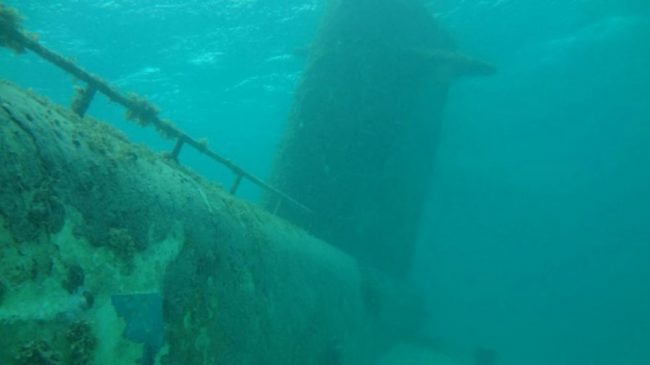
Russia to Remove Hazardous Nuclear Objects Dumped in Its Arctic Waters,
The country’s nuclear energy company will over the next eight years lift two submarines and four reactor compartments from the bottom of the Barents and Kara Seas. By The Barents Observer 5 Aug 20, Russia’s state nuclear agency plans to remove several nuclear objects from the depths of Russia’s Arctic waters in an effort to reduce environmental hazards, Rosatom said this week as it presented a clean-up plan for the region.
Russia’s state nuclear agency plans to remove several nuclear objects from the depths of Russia’s Arctic waters in an effort to reduce environmental hazards, Rosatom said this week as it presented a clean-up plan for the region.
From the late 1960s to the late 1980s, about 18,000 radioactive objects were dumped into Russia’s remote northern waters. Most of them present little environmental risk. But some are increasingly seen as a hazard to Arctic ecosystems.
“Rosatom over the next eight years intends to lift from the bottom of Russia’s Arctic waters six objects that are most dangerous in terms of radioactive pollution,” the company’s spokesperson told the state-run TASS news agency.
The company plans to lift the reactors from the K-11, K-19 and K-140 submarines as well as spent nuclear fuel from the reactor that served the Lenin icebreaker.
In addition, two entire submarines will be lifted: the K-27 from the Kara Sea and K-159 from the Barents Sea. While the former was deliberately dumped by Soviet authorities in 1982, the latter sank during a towing operation in 2003.
The K-27 is located in 33-meter depths east of the Novaya Zemlya archipelago. It has been described by experts as a potential radioactive “time bomb.” The K-159 is located in 200-meter depths off the coast of the Kola Peninsula.
These six objects represent more than 90% of radioactive sources dumped at sea, Rosatom said………
Lifting the six hazardous nuclear objects will not only be technically difficult, but also very expensive.
A recent report made for Rosatom and the European Commission estimated the costs of lifting these six objects at 278 million euros. That includes the cost of bringing them safely to a yard for decommissioning and long-term storage.
Lifting the K-159 alone is estimated to cost 57.5 million euros. Lifting the K-27 and transporting it to a shipyard for decommissioning and long-term storage in Saida Bay will carry a price tag of 47.7 million euros, the report said.
It’s unlikely that Russia’s increasingly cash-strapped treasury will have the 278 million euros needed for the cleanup.
Several countries have previously allocated billions to assist Russia’s post-Soviet efforts to cope with nuclear waste.
Norway has since the mid-90s granted about 1.5 billion kroner (140 million euros) to nuclear safety projects in the Russian part of the Barents region. https://www.themoscowtimes.com/2020/08/05/russia-to-remove-hazardous-nuclear-objects-dumped-in-its-arctic-waters-a71060
Hosting nuclear weapons is a danger to Germany
Nuclear bomb in Germany would kill hundreds of thousands, Greenpeace warns, euronews, By Alice Tidey 05/08/2020 – A nuclear bomb detonating in Germany would instantly kill hundreds of thousands of people, Greenpeace has said, calling on the US to withdraw the small arsenal of atomic weapons it currently has in the country.
The environmental non-profit released a study it had commissioned simulating the impact of a nuclear weapon exploding in Germany on the eve of the 75th anniversary of the Hiroshima bombing.
“The Federal Government must ensure that US atomic bombs are withdrawn from Buchel with the US soldiers,” he added.
Washington announced last week that it would start withdrawing nearly 12,000 of the 36,000 US troops currently stationed in Germany over the coming weeks.
A threat to Germany’s security
Greenpeace’s NUKEMAP study calculated the impact of various strengths of nuclear bombs in several locations: Berlin, the seat of the country’s political power; Frankfurt, the country’s financial centre; and Buchel, a municipality in south-west Germany where several US atomic bombs are stored at an airbase.
The strength of an atomic bomb is measured in kilotons (kt) and megatons (mt) which means that a nuclear weapon with a detonation energy of one kiloton generates the same amount of energy as 1,000 tons (1 Kt) of TNT.
NUKEMAP found that a 20 kt bomb exploding in Berlin would instantly kill 145,000 people, with an additional 120,000 dying from the radioactive fallout and a further 50,000 passing away from cancer.
A 550 kt bomb — commonly found in Russia’s nuclear arsenal — dropped over Frankfurt would instantly kill half a million people, while 300,000 more would die from radioactive fallout and 160,000 would succumb to cancer at a later date.
Von Lieven argued that “the bombs in Buchel threaten the security of people in Germany and Eastern Europe.”
“Germany must no longer be a potential aggressor and a possible target for a nuclear attack,” he went on.
In another Greenpeace study conducted by pollster Kantar and released last month, 83 per cent of the 1,008 German respondents said they favoured the US withdrawing the bombs kept in Buchel.
Nine countries, 13,800 warheads
Between 90,000 and 160,000 people are believed to have died int he first few months following the Hiroshima bombing, according to the Centre for Nuclear Studies at Columbia University. Another 60,000 to 80,000 are thought to have died in Nagasaki.
Most figures are best estimates as the devastation unleashed by the explosions and uncertainty over the actual population before the bombings make it difficult to have an accurate estimate.
The world’s arsenal of nuclear weapons was estimated at 13,865 at the beginning of 2019 by the Stockholm International Peace Research Institute (SIPRI).
Only nice countries have atomic warheads. These are China, France, India, Israel, North Korea, Pakistan, Russia, the UK, the US. Washington and Moscow each have more than 6,000 nuclear warheads.
Between 90,000 and 160,000 people are believed to have died int he first few months following the Hiroshima bombing, according to the Centre for Nuclear Studies at Columbia University. Another 60,000 to 80,000 are thought to have died in Nagasaki.
Most figures are best estimates as the devastation unleashed by the explosions and uncertainty over the actual population before the bombings make it difficult to have an accurate estimate.
The world’s arsenal of nuclear weapons was estimated at 13,865 at the beginning of 2019 by the Stockholm International Peace Research Institute (SIPRI). https://www.euronews.com/2020/08/05/nuclear-bomb-in-germany-would-kill-hundreds-of-thousands-greenpeace-warns
Grim financial news for weapons maker Magnox/Babcock
Times 5th Aug 2020, One of Britain’s main defence contractors has delivered more grim news
for investors after axing its dividend for last year. Babcock said that it
was cancelling the payout for the financial year that ended in March in an
attempt to preserve cash.
In June the company suspended the final dividend
until it had “greater certainty” on the impact of the pandemic.
Yesterday it laid bare the cost of the Covid-19 slump, revealing that
underlying revenues in the three months to the end of June had fallen by 11
per cent.
Underlying operating profit for the first quarter fell by 40 per
cent from last year’s level. Babcock attributed half of the lost profits
to a slide in productivity as the coronavirus outbreak forced it to change
working practices. The remainder was down to the loss of a contract with
Britain’s Nuclear Decommissioning Authority to clean up 12 Magnox reactor
sites and weakness in South Africa and at its land division. Shares in
Babcock fell by 29p, or 10 per cent, to 260p last night.
https://www.thetimes.co.uk/edition/business/dividend-sunk-by-babcocks-profit-woes-dz6qc872f
Flamanville -the costly bloated shoddy leaky white elephant in France’s nuclear room
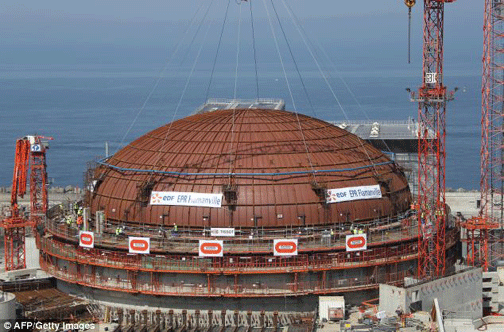
France’s Revolutionary Nuclear Reactor Is a Leaky, Expensive Mess
With a bloated budget, endless delays, and shoddy construction, EPR looks like a big mistake. BY CAROLINE DELBERT, AUG 3, 2020
- A revolutionary French reactor design is 10 years overdue and nearly four times over budget.
- Taking big technology swings requires risk, but this huge miscalculation looks bad.
- The reactor uses less uranium and aims to replace a decommissioned reactor at an existing plant.
France’s new energy minister has called a major French nuclear project “a mess” in public interviews. The European pressurized reactor (EPR) that was commissioned for the Flamanville nuclear power plant, where it joins two existing pressurized water reactors, has been delayed and plagued by problems. The latest extension takes the project timeline from 13 years to 17 at least.
The goal with the EPR design was to continue to kit out the world’s highest-output nuclear plants, with individual reactors that were more powerful and safer. The EPR uses less uranium because its chemical design is more efficient. And it’s not any kind of major technological leap; instead, it’s an iteration on a previous design that’s just a little bit better.
The engineers are so eager to keep iterating that they already have an EPR 2 design in the works. This sounds pretty straightforward … right?
That puts Flamanville 10 years past its original due date. One of the more alarming causes for delay is a break in the “main secondary system penetration welds,” which has contributed to a budget that’s bloated from a planned $3.9 billion to $14.6 billion.
Barbara Pompili was just appointed France’s minister of ecological transition, which is the department that includes energy as well as environmental issues like biodiversity. Pompili is publicly and avowedly anti-nuclear, even for civilian energy. With a new spotlight on her office, she told a French radio station, “We have made a commitment to reduce the share of nuclear power to 50 [percent] by 2035.”
Pompili said the critiques of Flamanville’s overdue EPR reflect broad industry consensus from different reports, not her own anti-nuclear views.
Fire at the Belleville nuclear power plant reveals the disorganization of EDF
  Le Journal de l’Energie 30th July 2020 A fire at the Belleville nuclear power plant reveals the disorganization of Le Journal de l’Energie 30th July 2020 A fire at the Belleville nuclear power plant reveals the disorganization ofEDF. A fire broke out at the Belleville-sur-Loire (Cher) nuclear power plant in April 2020 during a routine maintenance operation carried out by subcontractors, which should not have been left unattended. An incident that was largely avoidable if EDF had followed basic safety rules. An
inspection by the Nuclear Safety Authority (ASN), after the incident, identified “many deviations”. Although the incident did not have an impact on the operation of the plant, it calls into question the safety culture of EDF, the world’s leading nuclear operator. https://journaldelenergie.com/nucleaire/incendie-centrale-nucleaire-belleville-desorganisation-edf/ |
|
Ballooning by $billions – UK’s costs for its nuclear weapons
 The Ferret 2nd Aug 2020 The cost of UK programmes to replace Trident and nuclear submarines on the
Clyde increased by over £1 billion in a year, according to data released
by the Ministry of Defence (MoD).
The construction of new reactor cores,
replacement submarines and major new facilities at the Faslane and Coulport
bases in Argyll are also facing prolonged delays, with growing doubts over
whether some projects can be successfully delivered.
Most of the delays are
unrelated to the coronavirus pandemic. Four major nuclear projects have
been officially rated as “amber” or worse, meaning that they have
“significant issues”. Two have been “rebaselined” by the MoD,
meaning that costs have risen significantly and timescales lengthened.
https://theferret.scot/trident-nuclear-submarine-costs-1bn-delays/
The continuing and ever more expensive saga of Britain’s Hinkley Point C nuclear project

Times 3rd Aug 2020, The first thing you notice as you approach Hinkley Point C is the sea of
cranes. There are dozens of them, jutting into the Somerset sky from the
site where EDF, of France, and CGN, the Chinese state nuclear group, are
building Britain’s first new nuclear plant in a generation. One stands
out: a 250 metre-tall yellow beast known as “Big Carl”. It is the
world’s largest crane and is central to the companies’ battle to
deliver the project successfully.
£18 billion, the plant was slated to generate its first power before the
end of 2025. Four years on, the budget has risen to between £21.5 billion
and £22.5 billion and EDF says that there is a risk that first power may
be delayed until 2027, adding £700 million in costs; thanks to disruption
from Covid-19, that risk is now “high”.
another big risk, with EDF warning last week that productivity at the site
and in supply chain factories were still being affected. The company said
that it had done what it could to minimise delays, from bringing in extra
buses to transport workers to sending contractors to France to bring back
parts from a factory laid low by the pandemic. EDF believes that it can
catch up on Covid-19 delays by the end of next year, so long as operations
and its supply chain are back to normal by the end of 2020. How confident
was Mr Crooks that the plant would start up in 2025 as planned?
“There’s a long way to go yet. It is a big, complex project.”
https://www.thetimes.co.uk/article/no-let-up-in-heavy-lifting-at-hinkley-point-plant-3s02wmscp
1 This Month
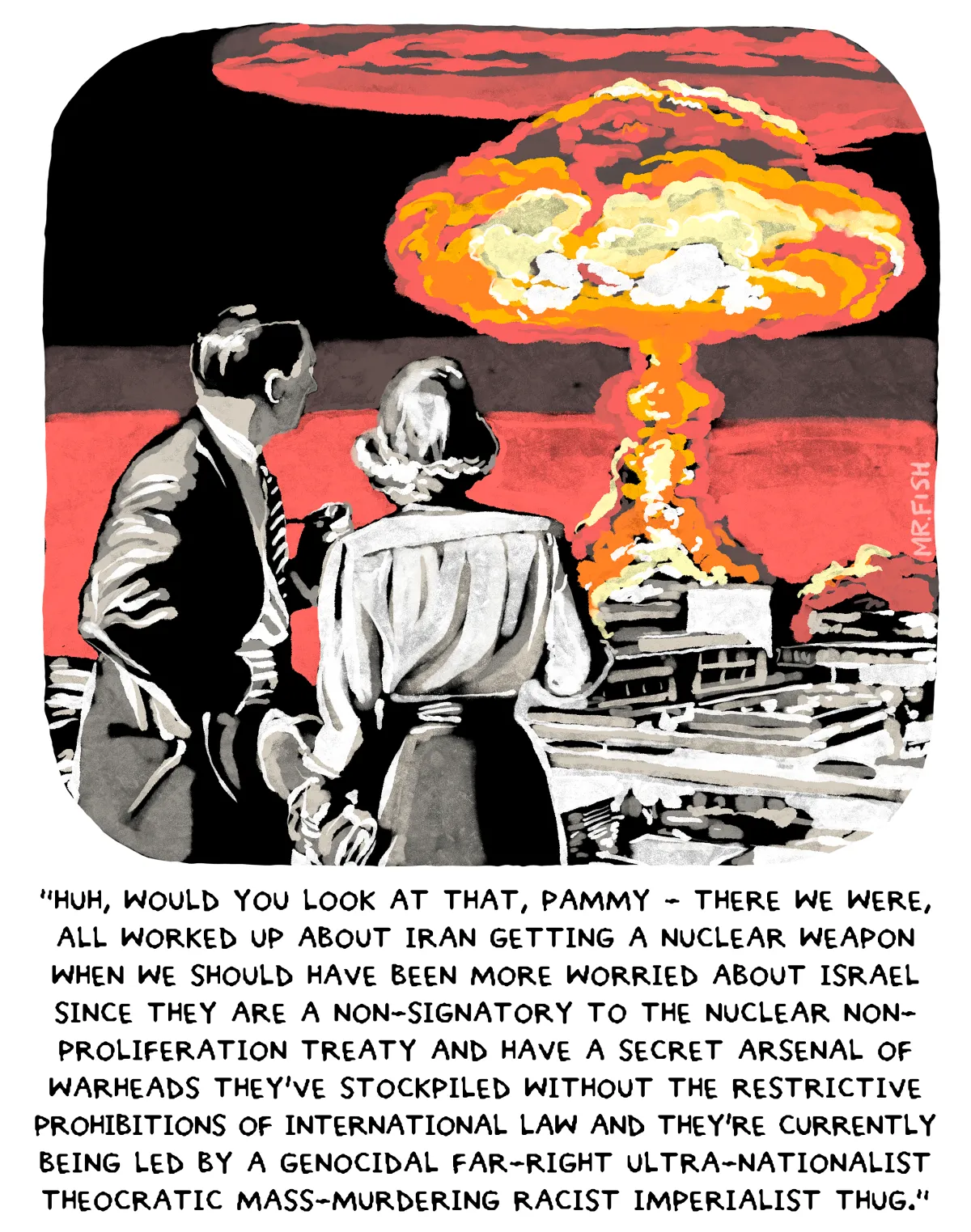
1 June Webinar – The High Cost of Nuclear Power – Register
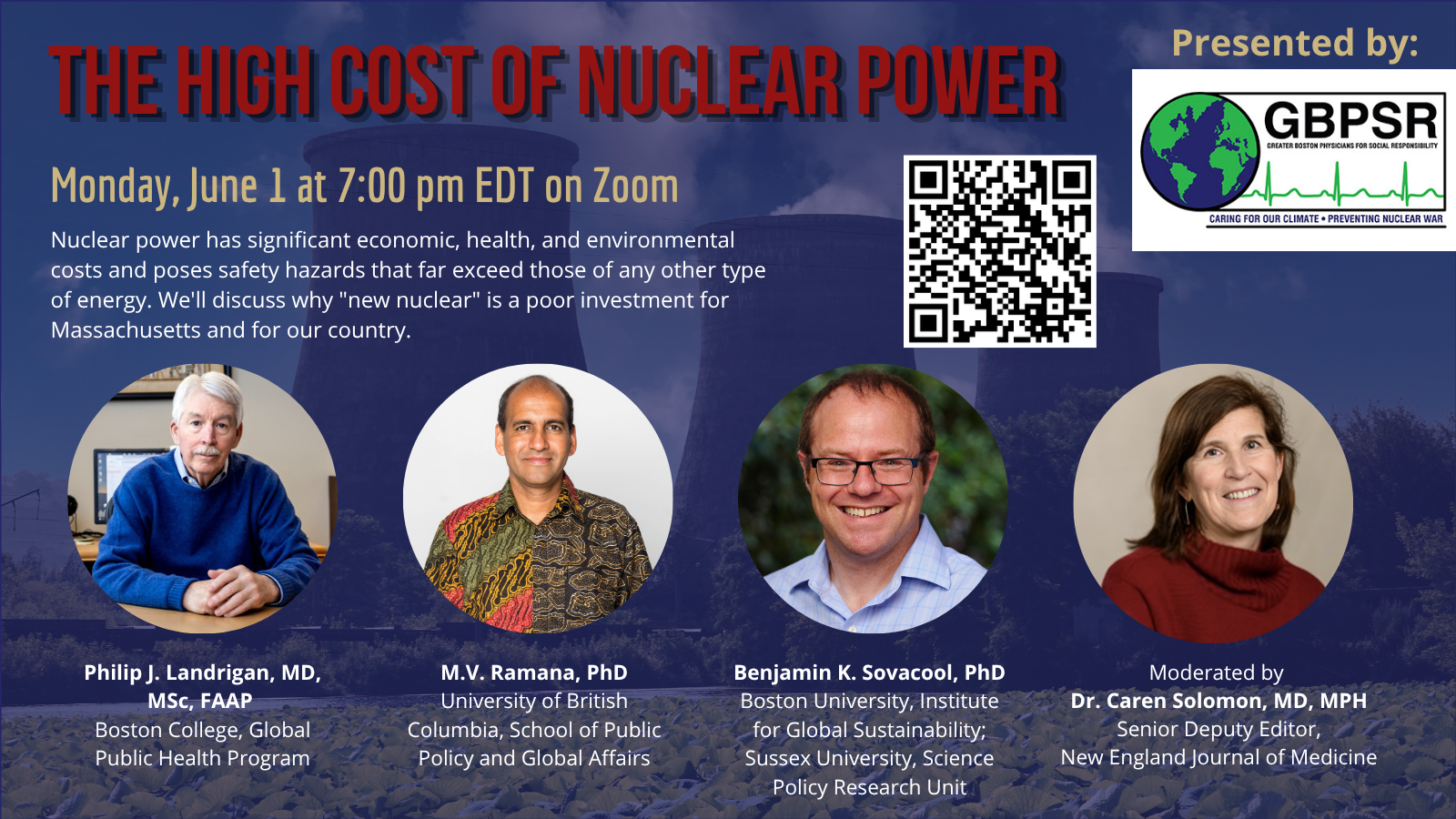


of the week– Nuclear Reactor Information Task Force
To see nuclear-related stories in greater depth and intensity – go to https://nuclearinformation.wordpress.com
-
Archives
- May 2026 (235)
- April 2026 (356)
- March 2026 (251)
- February 2026 (268)
- January 2026 (308)
- December 2025 (358)
- November 2025 (359)
- October 2025 (376)
- September 2025 (257)
- August 2025 (319)
- July 2025 (230)
- June 2025 (348)
-
Categories
- 1
- 1 NUCLEAR ISSUES
- business and costs
- climate change
- culture and arts
- ENERGY
- environment
- health
- history
- indigenous issues
- Legal
- marketing of nuclear
- media
- opposition to nuclear
- PERSONAL STORIES
- politics
- politics international
- Religion and ethics
- safety
- secrets,lies and civil liberties
- spinbuster
- technology
- Uranium
- wastes
- weapons and war
- Women
- 2 WORLD
- ACTION
- AFRICA
- Atrocities
- AUSTRALIA
- Christina's notes
- Christina's themes
- culture and arts
- Events
- Fuk 2022
- Fuk 2023
- Fukushima 2017
- Fukushima 2018
- fukushima 2019
- Fukushima 2020
- Fukushima 2021
- general
- global warming
- Humour (God we need it)
- Nuclear
- RARE EARTHS
- Reference
- resources – print
- Resources -audiovicual
- Weekly Newsletter
- World
- World Nuclear
- YouTube
-
RSS
Entries RSS
Comments RSS
 nuclear-news