Nuclear radiation – potential danger in East Ukraine
Coal mines and the metallurgical plants associated with them are the backbone of the economy in the self-proclaimed republics of Donetsk and Luhansk in eastern Ukraine, where the conflict between the central government and the Russian-backed separatists rages on. Closing them deprives the local population of their livelihoods and threatens these and the neighboring regions in Ukraine with ecological disaster.
Pumps cut off
In 2017, the “Donetsk People’s Republic” (“DPR”) developed a plan, according to which only 17 of the profitable mines in the region were kept in operation.
But reality decided to throw a wrench in the works, primarily because Russia did not invest in the Donetsk industry.
The mines were closed by a simple method: the pumps that pump out the water were turned off. The equipment was cut and handed over for scrap.
And it will inevitably affect the situation on the territory controlled by Ukraine – the mines on Ukrainian territory and the Donbass mines form a single water pumping system.
No radioactive contamination…yet
Of particular concern is the Yunkom mine, which in 1979 carried out an experimental nuclear explosion with a yield of 0.3 kilotons.
After the explosion, a glassy capsule with liquid radioactive waste was formed at a depth of 903 meters. It was flooded just after the pumps were turned off in April 2018.
None of the experts really know how the radioactive capsule will react with water, when it will naturally collapse, or where its contents will end up. Neither the authorities of the self-proclaimed republics nor the government of Ukraine are monitoring the radioactive contamination. Nor are they in the Rostov region, where the waters of the Seversky Donets River flow……… https://jam-news.net/ukraine-conflict-miness-ecology/
Portuguese party PAN lodges complaint to U.N. about Spain’s ageing Almarez nuclear power station
The risks associated with Almaraz have been making headlines for years (click here).
So has the perceived ‘inertia’ of the Portuguese government in tackling them (click here).
As PAN’s leading MP André Silva stresses, what’s crucial at this point is a ‘transfrontier evaluation of the environmental impact” of the decision to prolong the life of the 41-year-old power station running two very old fashioned reactors beyond the 2023/ 2o24 limit previously established.
The latest approval by Spain extends the reactors’ lives to 2027 and 2028 respectively.
Says Silva: ‘We have on the one hand’ Spain that is violating two conventions, and on the other a Portuguese government and a Portuguese environment minister that does nothing about it.
Spain’s unilateral decision to further extend the lifespan of a plant that sits so close to Portuguese territory – not to mention on the banks of the river Tejo – is “an affront to Portuguese people” who, according to a study conducted by the Portuguese army, would be severely impacted in the event of any kind of serious incident (click here).
The two conventions André Silva refers to are the Espoo Convention, which requires environmental impacts in situations like these, and the Arhus Convention, which obliges Madrid to ‘inform and consult’ Portuguese counterparts before making any decisions.
Says Silva, “it is fundamental that the international community is alerted to this problem, which is not simply environmental but social and political as well”.
‘Ideally’ Almaraz should have been mothballed 10 years ago “but Spanish authorities have successively renewed its continuation”, despite the increasing risks of a nuclear accident, which as Silva stresses, would have a “disastrous impact” on Portugal.
This is in fact the second time a formal complaint has been lodged against Spain over activity at Almaraz. A bid to stop a warehouse for nuclear waste being constructed in 2017 resulted in the creation of a commission, but this has never presented any ‘material’ / findings or reports to speak of.
UK is lobbying USA for a controversial new warhead for Trident missiles
UK lobbies US to support controversial new nuclear warheads
Letter from defence secretary seen by Guardian draws Britain into debate pitting Trump administration against many Democrats, Guardian, Julian Borger in Washington, 2 Aug 20,
The UK has been lobbying the US Congress in support of a controversial new warhead for Trident missiles, claiming it is critical for “the future of Nato as a nuclear alliance”.
A letter from Britain’s defence secretary, Ben Wallace, seen by the Guardian, urged Congress to support initial spending on the warhead, the W93.
The letter, sent in April but not previously reported, draws the UK into a US political debate, pitting the Trump administration against many Democrats and arms control groups over whether the the $14bn W93 programme is necessary. The US navy already has two warheads to choose from for its submarine-launched Trident missiles.
The close cooperation on the W93 casts further doubt on the genuine independence of the UK deterrent – parliament first heard about it when US officials accidentally disclosed Britain’s involvement in February – and the commitment of both countries to disarmament.
The UK is also supporting the administration’s efforts to speed up work on the warhead and its surprise $53m request for initial weapon design work in the 2021 budget, two years ahead of the previous schedule.
Sceptics believe the rush is intended to lock in funding before the election. A Biden administration would be likely to review or even cancel the W93 programme……..
The demand for funding for the W93 is particularly controversial in the US as the W76 and a higher-yield submarine-launched ballistic missile (SLBM) warhead, the W88, have already been subject to multibillion-dollar upgrades.
“This is excess on top of excess,” Kingston Reif, director for disarmament and threat reduction policy at the Arms Control Association, said. “We already have two SBLM warheads. The W76 just went through a major life extension programme and is slated to be good into the early 2040s, and the W88 is going through a major alteration.
“The US can continue to assist the UK’s arsenal without rushing the development of an unnecessary, at least $14bn new-design, third SLBM warhead,” Reif added.
The total cost of the US nuclear weapons modernisation programme is expected to be far in excess of $1tn.
The US and Russia, which is also upgrading its arsenal and developing new weapons, together account for more than 90% of all the nuclear warheads on the planet, and both countries are putting increasing emphasis on them in their rhetoric and defence postures.
Under Donald Trump, the US has now left three nuclear agreements and his administration is reluctant to extend the last major arms control deal with Russia, the 2010 New Start treaty, which is due to expire in February.
The bonfire of nuclear accords, combined with the huge amounts spent on weapons like the W93, are a threat to the 1968 nuclear non-proliferation treaty, the fundamental bargain by which countries without nuclear arms pledged not to acquire them on condition the recognised nuclear powers (the US, UK, France, Russia and China) took steps to disarm, under article six of the treaty………
Alexandra Bell, a former state department official and now senior policy director at the Center for Arms Control and Non-Proliferation, said the US-UK special relationship had shown greater solidarity in promoting new weapons than in arms control. ………. https://www.theguardian.com/world/2020/aug/01/uk-trident-missile-warhead-w93-us-lobbySun
For the nuclear industry, coronavirus is helpful, as nuclear wastes go quietly from Germany to Russia
 FoE Europe 25th June 2020, Russia and Germany have taken advantage of the coronavirus crisis to resume
shipping radioactive waste to dump in the Urals and Siberia in northern
Russia.
Germany was exporting radioactive waste from it’s nuclear power stations to
Russia, via the harbor of Amsterdam, they directly organized protests in
the three countries.
and sea of uranium – a waste product of nuclear fuel production by Urenco
Germany – was put on hold. That was before the coronavirus crisis hit.
in March 2020, when Covid-19 lockdowns restricted people’s right to protest
in Russia even further, the shipments of radioactive waste were set to
resume.
French company EDF fined – it spread false information on cost of Hinkley nuclear power project
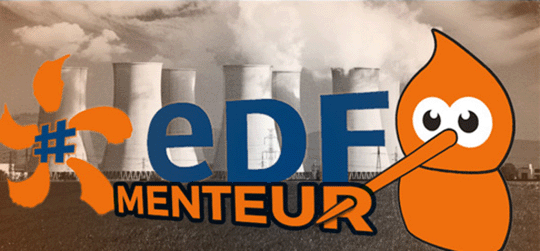 Bunham-on-sea.com 1st Aug 2020, The French market watchdog has levelled a £4.5m fine against energy giant
EDF for misleading investors about the cost of the Hinkley Point C nuclear
project. Regulators say the French state-owned energy company spread
“false information” about its agreement with the Government to build
the nuclear plant near Burnham-On-Sea.
AMF, France’s financial markets
authority, says the company may have set EDF’s share price “at an
abnormal or artificial level” by claiming in a news release dated October
2014 that the terms of its deal with the UK government were “unchanged”
from the 2013 agreement.
Chinese minority owner of Hinkley nuclear project appoints CEO from China’s military area
New head of Chinese investor in Hinkley nuclear plant brings military links
China General Nuclear’s role in the Hinkley Point C nuclear power station has come under scrutiny recently
Telegraph ByEd Clowes1 August 2020 China General Nuclear, the
minority owner of the Hinkley Point C power station, has appointed a chairman with close ties to the Chinese Communist Party and the country’s military nuclear programme.
leader of the state-owned conglomerate last week, speaking on the virtues
of Communism and the value of a strong nuclear industry. He previously
served as deputy general manager at China National Nuclear Corporation, the
organisation responsible for developing the country’s nuclear weapons.
and called on his colleagues to build a company that was more infused with
Communist ideals.
strategy held at its own university, which is designated as an official
Communist Party school. Mr Changli spoke of “in-depth implementation of
general secretary Xi Jinping’s important expositions on high-quality
development”, and said: “We must be good commanders and good
combatants.” CGN owns a 33.5pc stake in the £22.5bn Hinkley Point C
project in Somerset where it has partnered with EDF, the French energy
giant.
Westminster and stoke speculation that the civil nuclear company will be
merged with CNNC.https://www.telegraph.co.uk/business/2020/08/01/new-head-chinese-investor-hinkley-nuclear-plant-brings-military/
Does UK nuclear energy have any future? The industry has big doubts

 Ministers challenged on future of UK nuclear energy
Industry dogged by doubts about China and rise of renewables calls for clarity, Ft.com, Harry Dempsey in Somerset and David Sheppard in London 31 Jul 20,
Global heating now causing nuclear reactor shutdowns in France

 EDF warns heatwave may force brief outage for 2.6 GW Golfech reactors, S and P Global, London — Rising temperatures may lead to output restrictions at France’s 2.6 GW Golfech nuclear power plant from July 31, operator EDF warned. “Due to the temperature forecasts on the Garonne, production restrictions are likely to affect EDF’s nuclear power plant at Golfech,” it said July 27. 28 Jul 2020 Author Andreas Franke , Editor Felix Fernandez
HIGHLIGHTS
Restrictions focus on July 31 to August 3 period.
Mini-heatwave only forecast to last until weekend
July’s nuclear average above expectations at 30 GW
London — Rising temperatures may lead to output restrictions at France’s 2.6 GW Golfech nuclear power plant from July 31, operator EDF warned.
“Due to the temperature forecasts on the Garonne, production restrictions are likely to affect EDF’s nuclear power plant at Golfech,” it said July 27.
This could lead to “unavailability of both units” until August 2.
France’s most southerly reactors, located between Toulouse and Bordeaux on the Garonne river, were some of the most impacted units during an extended heatwave last summer when air temperatures rose above 40 C in late June.
The current spell of hot weather is not forecast to stretch beyond the weekend with Meteo France not yet characterizing it as heatwave despite measuring the highest temperature so far this year at nearby Albi at 39.9 C on July 27.
In 2019, temperatures briefly peaked in late June above 40 C amid extended spells of extreme hot weather, increasing river temperatures above critical levels.
Grid operator RTE forecasts power demand to peak above 55 GW on July 31 with average weighted temperatures 7 C above norms.
In June 2019, French demand spiked close to record summer highs of 59.5 GW as temperatures reached 45 C in some regions of southern France.
Around two-thirds of France’s 56 reactor units are river-cooled, with some restrictions due to high temperatures stretching into autumn during past summers…. https://www.spglobal.com/platts/en/market-insights/latest-news/electric-power/072820-edf-warns-heatwave-may-force-brief-outage-for-26-gw-golfech-reactors.
Electricite de France fined for lying about Hinkley nuclear project, faces costs and delays due to pandemic
 France’s markets regulator for providing false information on the Hinkley
Point C nuclear project. EDF and former Chief Executive Officer Henri
Proglio, who was fined 50,000 euros, failed to properly disclose new
circumstances concerning the U.K. project’s financing, the Autorité des
Marchés Financiers said in a statement on Thursday.
announced it would build the U.K.’s first nuclear reactors since 1995
after reaching a deal with the government on guaranteed prices for the
power they’d generate. The energy firm also said the project would
benefit from a British credit guarantee on conditions that were yet-to-be
agreed. EDF and Proglio should have specified in a statement a year later
that there had been significant changes on the guarantees, the AMF said.
accusation brought forward by AMF investigators. The AMF’s enforcement
committee assesses civil market-abuse cases ranging from insider trading to
publishing misleading information.
facing delays at the Hinkley Point C nuclear plant as the coronavirus
pandemic hampered work on-site and hit supply chains. The largest and most
advanced infrastructure project in the U.K. will miss three key milestones
this year, one of them critical — risking the 2025 completion deadline.
wave of coronavirus and lockdowns could cause more long-term set-backs.
“We’ve absorbed a lot of factory delays but we had some margin in our
program to do so,” Hinkley Point C’s managing director Stuart Crooks
said in an interview on-site in the southwest of England. EDF still expects
Hinkley to be finished on time.
assumption that the virus peters out by the end of the year so supply
chains and work at Hinkley can return to normal. There are about 4,500
staff currently on the site that covers an area equal to 245 soccer fields.
Initial plans were to ramp-up the number of workers to around 6,000 but
that depends how long social distancing rules stay in place.
Dismantling nuclear reactors in Snowdonia; should be cleaned up by 2083, if We’re lucky
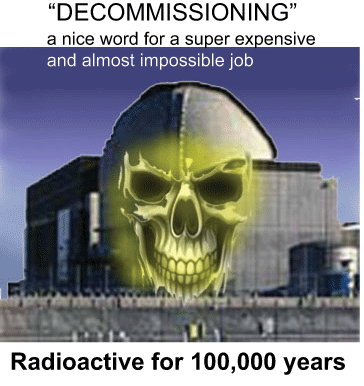 Trawsfynydd: Nuclear reactors to go under new decommissioning plan, By George Herd, BBC News, 30 July 2020
Plans have been unveiled to remove nuclear reactors and towers at a former power plant in Snowdonia.
It follows a decision to name Trawsfynydd in Gwynedd as the lead project for former Magnox stations in the UK.
The twin reactors will become the very first in the UK to be fully decommissioned.
It should safeguard hundreds of jobs at the plant for 20 years, and help drive decommissioning plans at other sites.
There are 10 former Magnox nuclear power stations in the UK, which have all now stopped generating electricity – the last being Wylfa on Anglesey in 2015.
Trawsfynydd was shut down in 1991 after operating for a quarter of a century.
Under original plans, the twin reactor buildings that tower over the landscape were due to be reduced in height by two-thirds, and then left in a care and maintenance phase, before the site is completely cleared in 2083.
The new programme will see the remaining reactor buildings demolished, while a new low-level radioactive waste store is built on the site to hold the material.
Magnox, which operates the site on behalf of the UK’s Nuclear Decommissioning Authority, said it estimated there would be 50,000 cubic metres of very low or low-level waste retained, until a new geological waste disposal site is identified by the UK government. …..
Magnox said it was still in the “early days” of planning the next phase of active decommissioning at Trawsfynydd, and would be launching consultations with stakeholders, including the community.
It said it envisaged a 20 year programme to:
- Remove the reactor building’s concrete panel outer shell down to ground level
- Remove the six 1,000 tonne boilers stored in sections and the 45 tonne overhead crane from each reactor, for off-site disposal
- Remove the reactors, their components and the reactor core
- Demolish the remaining reactor buildings
State of the art robotics and remote handling will be used to dismantle Trawsfynydd’s twin reactors and “minimise the risk of radiation dose to workers”.
Magnox said it still expected the site to be completely cleared by the 2083 target……
“There is a duty on the nuclear sector and today’s electricity users to take responsibility for the clear-up of sites, and Trawsfynydd’s twin reactors will be the first to be completely decommissioned in the United Kingdom,” said the Plaid Cymru MP for Dwyfor Meirionnydd. “In this respect, work undertaken here will lead the entire sector, and open opportunities for a whole new generation of engineers.”…. https://www.bbc.com/news/uk-wales-53595839
Assange appears in court, as lawyers warn case may be delayed by new US indictment
 Assange appears in court, as lawyers warn case may be delayed by new US indictment https://www.wsws.org/en/articles/2020/07/28/assa-j28.html By Thomas Scripps, 28 July 2020WikiLeaks founder Julian Assange’s case management hearing yesterday continued the travesty of legal due process to which he has been subjected for more than a decade. Assange appears in court, as lawyers warn case may be delayed by new US indictment https://www.wsws.org/en/articles/2020/07/28/assa-j28.html By Thomas Scripps, 28 July 2020WikiLeaks founder Julian Assange’s case management hearing yesterday continued the travesty of legal due process to which he has been subjected for more than a decade.
The journalist and publisher is fighting extradition to the United States, where he faces politically motivated frame-up charges of espionage with a combined potential sentence of 175 years. He has not attended hearings via videolink for the last three months on the advice of doctors, due to his fragile state of health and the threat of exposure to coronavirus. At the previous hearing on June 29, District Judge Vanessa Baraitser had scolded Assange for not being present, demanding medical evidence to justify his non-appearance in future. But yesterday, Baraitser ruled the hearing could go ahead without Assange after Belmarsh prison disrupted his plans to attend. Prison authorities claimed to have forgotten to arrange videolink facilities for the world-famous political prisoner. Edward Fitzgerald QC, the lead defence lawyer, said he would prefer his client to be present. The hearing was adjourned for ten minutes to allow him to contact Assange. When court resumed, Fitzgerald confirmed his wish to see his client attend. The hearing was then adjourned for another hour and a quarter. When Assange was finally produced via videolink he appeared tired and downcast, according to reporters in the court room. The brief exchanges between Fitzgerald, Baraitser and prosecuting lawyer Joel Smith, centred on the superseding indictment against Assange issued by the US Department of Justice on June 24. The new indictment is based on the testimony of Sigurdur Thordarson, described by WikiLeaks as a “sociopath, convicted conman and sex criminal involved in an FBI entrapment operation against WikiLeaks.” It alleges that Assange recruited and incited hackers against a range of classified, official, and private computers between 2009 and 2015. It contains no new charges but significantly expands the scope of allegations against WikiLeaks, deepening the assault on freedom of the press being waged by the US government. Assange’s support for whistleblower Edward Snowden and transparency of information are alleged in the superseding indictment to constitute solicitation and theft of classified information. Former WikiLeaks section editor Sarah Harrison and former WikiLeaks spokesperson Jacob Applebaum are targeted on the same basis. But the new indictment had not been served in the UK courts at the time of the last hearing (June 29) and had still not been submitted as of yesterday. Baraitser noted, “As it stands no further superseding indictment is before this court.” Smith responded for the prosecution that “It has been disclosed to the defence” and Baraitser confirmed, “It has only been disclosed to the court via email from the defence but not formally.” Smith said that he could not commit to a timeline for serving the new indictment, before absurdly claiming that the “usual procedures” would be followed. There is nothing “usual” about this case, including the procedures surrounding the new indictment. As Fitzgerald said during the hearing, “We’ve had it sprung on us.” Kristinn Hrafnsson, Editor-in-chief of WikiLeaks, explained in a statement yesterday, “What the US is doing is truly unprecedented. A new indictment is being introduced halfway into extradition proceedings, which have been a year in the making. The Assange extradition case started in February and was scheduled to resume in May but was then forced to adjourn until September due to the COVID lockdown. “The ‘new’ superseding indictment actually contains nothing new. All the alleged events have been known to the prosecution for years. It contains no new charges. What’s really happening here is that despite its decade-long head-start, the prosecution are still unable to build a coherent and credible case. So, they’ve scrapped their previous two indictments and gone for a third try. They are wasting the court’s time and flagrantly disregarding proper process.” As it stands, the UK courts are continuing with Assange’s extradition process based on an outdated indictment. The new version has been significantly adjusted and can only raise new and substantial legal issues that must be responded to. The defence are due to serve their skeleton argument on August 25. At the last case management hearing, Summers noted that that the superseding indictment “has the obvious capacity to derail the September date [for the next phase of the hearing].” Fitzgerald told the court yesterday that it would be “improper” if the US government’s actions led to a delay in the case, particularly beyond the November US presidential election, in which he expected Assange to serve as a political football. He continued, “We are concerned about a fresh request being made at this stage with the potential consequence of derailing proceedings and that the US attorney-general is doing this for political reasons.” Baraitser told him to “reserve his comments” on the new request, as it had not yet been served. Fitzgerald indicated the defence may need a fourth week to fully present their arguments during the second phase of the extradition hearing—currently scheduled to last three weeks. Smith said that chief lawyer for the prosecution, James Lewis QC, would not be available for a fourth week and Baraitser agreed that it would be a “real concern” for the court if the case stretched to an additional week. Both parties agreed the court could decide later if a fourth week would be needed. Journalists and monitors from political, legal, and medical organisations attempting to access the court via conference call were again unable to hear proceedings. The audio quality is routinely terrible, but on this occasion not even snatches of conversation where audible since, for the second time, the call was somehow left on hold after the adjournment. Space in the court is still strictly limited by social distancing measures. As Assange appeared in court yesterday from Belmarsh prison, his partner Stella Morris gave evidence in a Spanish court over the spying activities of UC Global. The Spanish security company was hired by the CIA to spy on Assange and his closest associates during his final years of political asylum at the Ecuadorian embassy in London. It recorded Assange’s privileged meetings with lawyers, and his private consultations with medical doctors and journalists. The activities of UC Global, including plans to kidnap or murder Assange, expose the criminal and all-encompassing character of the US vendetta against Assange and WikiLeaks. Assange’s final case management hearing will take place at 10am at Westminster Magistrates Court on August 14, ahead of the resumption of the extradition hearing proper on September 7 at Central Criminal Court. It was agreed that Assange, the judge, the defence, and the prosecution will all attend in person, but it remains unclear what the arrangements will be for the public, press and international observers. |
|
|
Czech Republic and CEZ sign nuclear power plant expansion agreement: require EU approval
|
Czech Republic and CEZ sign nuclear power plant expansion agreement, Power Technology 29 July 20, The Government of the Czech Republic has signed agreements with state-controlled utility company CEZ for the expansion of the Dukovany nuclear power plant.
Reuters reported that the agreement includes a general framework as well as details of the expansion’s initial phase. It will also include a tender in which CEZ will outline a preferred list of its suppliers by 2022. It would then finalise the contract with a supplier by 2024. CEZ has planned to launch the supplier tender by the end of 2020. It is estimated that the construction of the new unit would cost $7.04bn (€6bn). The nuclear power plant expansion would require approval from the European Commission to ensure the project meets EU state aid rules……. https://www.power-technology.com/news/czech-republic-cez-sign-agreement-dukovany-nuclear-power-plant-expansion/ |
|
|
Huge, costly, enormous effort, ITER nuclear fusion far from ready
|
France’s global nuclear fusion device a puzzle of huge parts, AP, By ELAINE GANLEY. 29 Jul 20,
“…….. Billed as the world’s largest science project, ITER is gigantic. The circular device, called a tokamak, has a 30-meter circumference, stands 30 meters (100 feet) high, and is made up of more than a million parts constructed in numerous countries. ………Some pieces transported to France weigh several hundred tons. Tools to put the reactor together match that size, with giant lifts that must transfer components over the walls and down into “the pit.” A key component being built by the U.S., the Central Solenoid, is the most powerful of ITER’s numerous magnets. Together, they will be strong enough to lift an aircraft carrier. The project begun in 2006 is far from over. The experimental reactor is to head for another landmark moment in five years, described as a “trial run” when scientists launch what is called “First Plasma” showing that the machine functions, including magnetic fields and other operations……
The project’s estimated cost just for the EU was about 20 billion euros ($23.5 billion), Bigot told reporters. He said a full price tag was difficult to estimate because participating countries make their own contributions. https://apnews.com/c9e1780864431c3edcd1cc2c17568c54
|
|
|
US-Russia launch talks in Vienna on nuclear arms control
The talks come less than a year before the expiration of New START, the last remaining nuclear arms control deal. The United States and Russia have entered a new phase of talks on nuclear arms control in Vienna, with working groups comprising government experts from both sides starting to meet for the first time.Over the course of three days, starting Tuesday, the groups of experts will deal with military doctrines and potentials, transparency and verification, as well as with security in space, according to the Russian foreign ministry.
The new format was set up in June in negotiations between US arms-control envoy Marshall Billingslea and Russia Deputy Foreign Minister Sergei Ryabkov in the Austrian capital.
The talks are taking place less than a year before the expiration of the New START agreement, the last remaining nuclear arms-control deal between the countries, which together possess about 90 percent of the world’s nuclear weapons.
The US-Russia Intermediate-Range Nuclear Forces (INF) treaty, which had banned nuclear-capable, land-launched missiles with a range between 500km (310 miles) and 5,500km (3,417 miles), ended last year, after the US initiated a pull-out, accusing Moscow of cheating.
Washington also wants China to take part in the arms control negotiations, but Beijing has made it clear that it is not interested.
Lithuania urges EU to convince Belarus not to hurry with nuclear power plant start
1 This Month

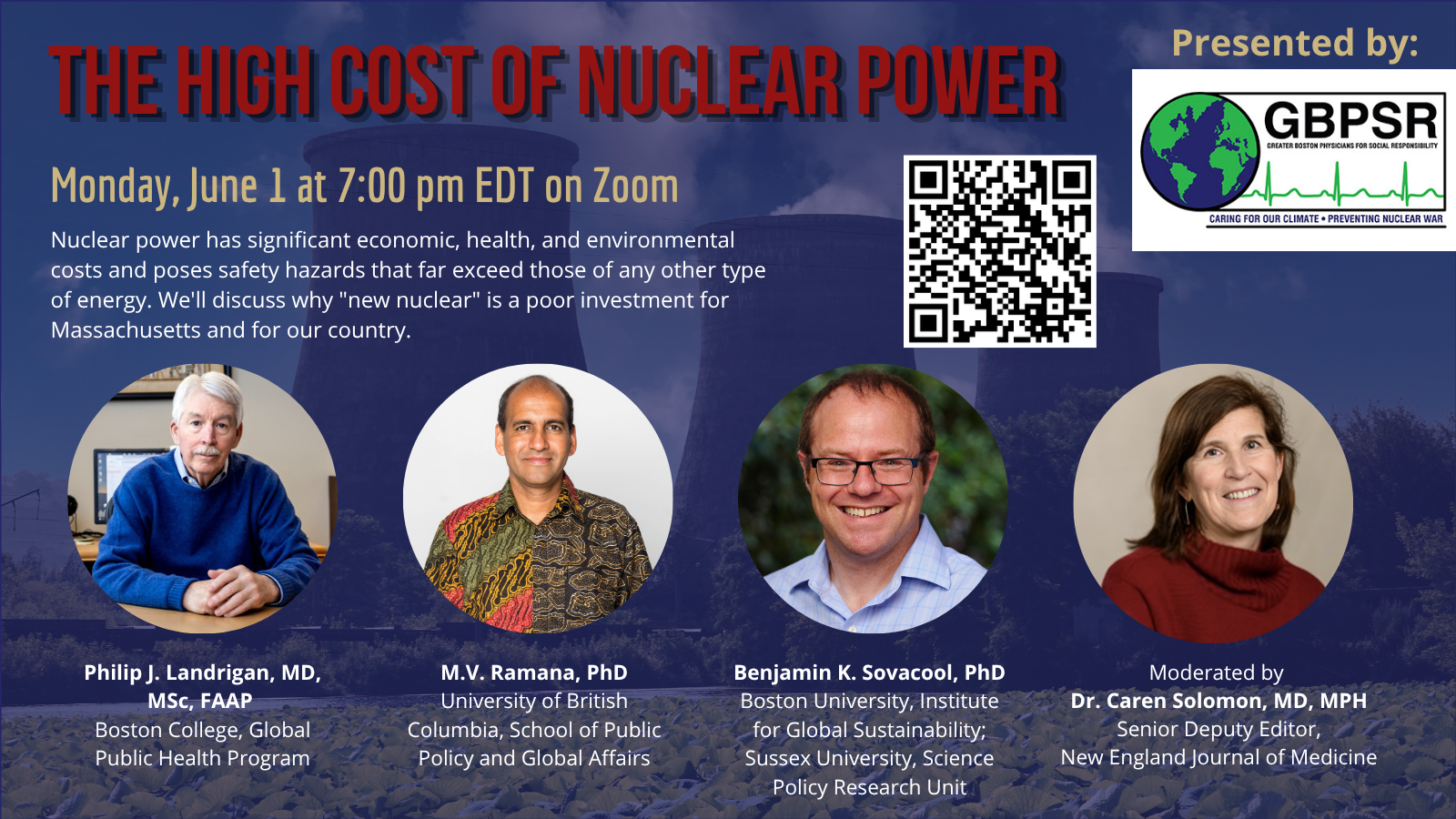
1 June Webinar – The High Cost of Nuclear Power – Register


of the week– Nuclear Reactor Information Task Force
To see nuclear-related stories in greater depth and intensity – go to https://nuclearinformation.wordpress.com
-
Archives
- May 2026 (235)
- April 2026 (356)
- March 2026 (251)
- February 2026 (268)
- January 2026 (308)
- December 2025 (358)
- November 2025 (359)
- October 2025 (376)
- September 2025 (257)
- August 2025 (319)
- July 2025 (230)
- June 2025 (348)
-
Categories
- 1
- 1 NUCLEAR ISSUES
- business and costs
- climate change
- culture and arts
- ENERGY
- environment
- health
- history
- indigenous issues
- Legal
- marketing of nuclear
- media
- opposition to nuclear
- PERSONAL STORIES
- politics
- politics international
- Religion and ethics
- safety
- secrets,lies and civil liberties
- spinbuster
- technology
- Uranium
- wastes
- weapons and war
- Women
- 2 WORLD
- ACTION
- AFRICA
- Atrocities
- AUSTRALIA
- Christina's notes
- Christina's themes
- culture and arts
- Events
- Fuk 2022
- Fuk 2023
- Fukushima 2017
- Fukushima 2018
- fukushima 2019
- Fukushima 2020
- Fukushima 2021
- general
- global warming
- Humour (God we need it)
- Nuclear
- RARE EARTHS
- Reference
- resources – print
- Resources -audiovicual
- Weekly Newsletter
- World
- World Nuclear
- YouTube
-
RSS
Entries RSS
Comments RSS
 nuclear-news