In so many ways, Sizewell C nuclear plan is a bad deal for Britain, and especially for climate action
 Why Sizewell C is a bad deal for the UK public and our net zero goals
https://bhesco.co.uk/blog/stop-sizewell-c-nuclear-power by Dan Curtis on 21/12/2020 It has been a tumultuous few weeks for the UK’s energy policy, with the Prime Minister’s Ten Point Plan for achieving Net Zero by 2050 followed swiftly by the Government’s long overdue Energy White Paper.
Then, the news broke that the UK Government has begun discussions with French utility EDF for the development of a new nuclear reactor at Sizewell, “C” in Suffolk, basically scrapping their 10 year policy that “there will be no levy, direct payment or market support for electricity supplied or capacity provided by a private sector new nuclear operator, unless similar support is also made available more widely to other types of generation”.
The site at Sizewell contains two existing nuclear power facilities, Sizewell A (decommissioning and site restoration until 2098 at taxpayers’ cost) and Sizewell B (still active). The new proposals are to build an extension to the site, implementing the same reactor design as that Hinkley Point “C” in Somerset.
Defenders of the project invariably claim that expanding the UK’s nuclear fleet will contribute to the decarbonisation of the energy supply, ensure energy security, while providing consumers with long-term affordable electricity – all arguments which fail to stand up to scrutiny, as we shall demonstrate.
Nuclear power does not provide good value for money
It takes a phenomenal amount of money to develop new nuclear power stations, before we even begin to consider the additional cost of storing and managing the radioactive waste material.
Hinkley C was originally estimated to cost £18 billion but the project has been mired in delays and is now vastly over-budget, predicted to cost up to £3 billion more than initially forecast – a quite remarkable overspend.
To address this vulnerability to financial losses for the project developers EDF and Chinese firm CGN, who are considering withdrawing their investment, the UK Government are considering investing directly in Sizewell C, shifting risk and cost to the British taxpayer.
This is in addition to a suggestion of implementing a “regulated asset base” financing model which would enable EDF to charge energy customers for the cost of construction as well as the cost of electricity generation (thereby exposing both customers and taxpayers to the risk of project cost overruns).
Adding to the financial nonsense of new nuclear power is the sky-high cost of the electricity that is produced to the end user. The government has granted a guaranteed, inflation linked price of £92.50 per megawatt hour for the electricity to be produced by Hinkley Point C.
Compare this to the cost of offshore wind, which under a 2019 contract for difference auction, saw prices come in at £39.65 per megawatt hour – less than half the cost of energy from Hinkley.
In contrast to the ever-increasing costs of nuclear (Sizewell C has an estimated starting price tag of £20 billion, which will no doubt balloon), the cost of solar and wind power continue to fall year on year, with solar costs having declined by an astonishing 87% since 2010.
A primary motivation for nuclear power is its value for military applications
The astronomical construction and decommissioning costs of nuclear power does not make financial sense when looking at it from a UK taxpayer/ consumer viewpoint. It is only when considering the wider potential applications of a nuclear programme that we can begin to understand why successive UK governments have been so supportive of the industry.
Researchers at the University of Sussex found compelling evidence that the UK’s domestic nuclear power programme is only supported by the Government because of its value in contributing towards the military nuclear weapons programme, which would otherwise be financially unviable without such subsidised support from domestic energy customers.
Prof Andrew Stirling of the university’s Science Policy Research Unit (SPRU) said:
”The exclusion of these issues from the consultation remit reflects a serious military-driven bias in UK Government attachments to nuclear power. This is not only making carbon emissions reductions slower and more expensive, but also impeding possibilities for the UK post-COVID economic recovery”.
We believe that the arguments in favour of nuclear power are disingenuous. Backers of nuclear power should be honest that they want to build more nuclear plants not because they will provide energy security or a good deal for customers, but because they are necessary for maintaining the UK’s fleet of nuclear submarines, and all of the sabre rattling ‘seat at the table’ geo-political bravado that goes along with retaining our position as a nuclear power.
New nuclear power takes too long to build to have any meaningful role in tackling the urgent climate crisis
Wherever new nuclear power stations are being built we see long delays and broken promises.
Hinkley Point C has suffered setbacks and complications ever since development began in 2017 and it is not expected to come online until 2025. It’s the same story at other locations where this type of reactor is being built, such as in Flamanville in France which is seven years overdue and the Olkiluoto plant in Finland which is ten years late! There is only one EPR nuclear reactor operational in the world. This is the Taishun plant in China, built on the same sea where Fukishima exploded in 2011.
Clearly, new nuclear power plants will not address the issue of urgent and radical carbon emissions reductions needed to be achieved by 2030 if we are to avoid irreversible climate breakdown.
It is also worth noting the gigantic carbon footprint that would result from the construction of Sizewell C. When considering the pros and cons of nuclear power, it is vital to honestly account for the enormous quantities of cement (which has a huge carbon footprint) and other hazardous materials required to build the facility in the first place.
Adding insult to the assertion that Sizewell C will be a long-term benefit to the environment is the fact that the site is to be located adjacent to an RSPB nature reserve Minsmere, a AONB site that EDF has already started demolishing.
Nuclear power produces nuclear waste which lasts for thousands of years
The by-product of nuclear fission is hazardous nuclear waste which remains radioactive for thousands of years. This presents an extraordinary liability and storage risk to future UK taxpayers and residents.
The current liability cost of decommissioning and safely storing our existing nuclear waste is estimated to be in the region of £232 billion – a truly eye-watering sum, and one that will only continue to increase as more nuclear reactors such as Hinkley and Sizewell contribute additional toxic waste materials for every year that they are operational.
The UK already has the largest stockpile of radioactive plutonium in the world, estimated to be between 112 and 140 tons, stored in an area of outstanding natural beauty in Cumbria. Future generations will not think kindly of us if we continue to add to this dangerous legacy with more hazardous nuclear waste that costs billions each year to manage to avert disaster.
The UK does not need Sizewell C or any other nuclear power stations – we can meet our energy needs with 100% clean renewable energy
We already have the means at our disposal to meet our heat and power needs through a combination of renewable energy and energy storage technologies.
Combine this with a comprehensive programme to reduce demand through energy efficiency improvements and we can conclude with confidence that there is no reason to develop new nuclear power stations in the UK. In fact, the alternatives will deliver lower energy prices for the consumer and better taxpayer value over the long term.
A common defence for nuclear power is the need for a steady supply of ‘base load’ power in the event that intermittant renewables cannot meet demand.
But this way of thinking is obsolete. Our future energy supply in the UK will be based on dynamism and flexibility, where consumers adapt their behaviour in sync with variable generation output. As Steve Holliday, former CEO of National Grid said in 2015:
“The idea of baseload power is already outdated. I think you should look at this the other way around. From a consumer’s point of view, baseload is what I am producing myself. The solar on my rooftop, my heat pump – that’s the baseload.”
The Government’s recent announcement that it is entering into talks with EDF regarding Sizewell C is, we are told, the beginning of a long consultation process which will consider the long-term costs and benefits of such a project before reaching a conclusion on whether to give it the go ahead.
These talks are by no means a ‘green-light’ to the project. We hope that it is not naïve to believe that due diligence will be done, that the information will be honest and transparent, and that logical, rational thinking for the benefit of all residents of our small island will prevail.
But this way of thinking is obsolete. Our future energy supply in the UK will be based on dynamism and flexibility, where consumers adapt their behaviour in sync with variable generation output. As Steve Holliday, former CEO of National Grid said in 2015:
“The idea of baseload power is already outdated. I think you should look at this the other way around. From a consumer’s point of view, baseload is what I am producing myself. The solar on my rooftop, my heat pump – that’s the baseload.”
The Government’s recent announcement that it is entering into talks with EDF regarding Sizewell C is, we are told, the beginning of a long consultation process which will consider the long-term costs and benefits of such a project before reaching a conclusion on whether to give it the go ahead.
These talks are by no means a ‘green-light’ to the project. We hope that it is not naïve to believe that due diligence will be done, that the information will be honest and transparent, and that logical, rational thinking for the benefit of all residents of our small island will prevail.’
Sources ……
Small Nuclear Reactors – the Big New Way – to get the public to fund the nuclear weapons industry
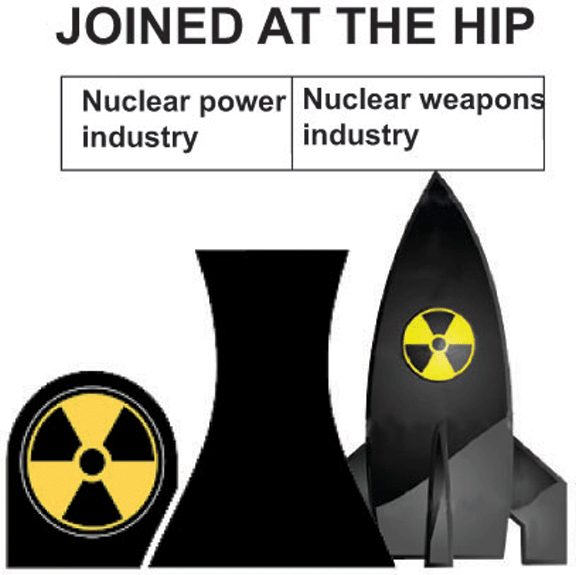
so-called “small nuclear reactors”
Downing Street told the Financial Times, which it faithfully reported, that it was “considering” £2 billion of taxpayers’ money to support “small nuclear reactors”
They are not small
The first thing to know about these beasts is that they are not small. 440MW? The plant at Wylfa (Anglesey, north Wales) was 460MW (it’s closed now). 440MW is bigger than all the Magnox type reactors except Wylfa and comparable to an Advanced Gas-cooled Reactor.
Only if military needs are driving this decision is it explicable.
”Clearly, the military need to maintain both reactor construction and operation skills and access to fissile materials will remain. I can well see the temptation for Defence Ministers to try to transfer this cost to civilian budgets,”
Any nation’s defence budget in this day and age cannot afford a new generation of nuclear weapons. So it needs to pass the costs onto the energy sector.
 How the UK’s secret defence policy is driving energy policy – with the public kept in the dark. https://www.thefifthestate.com.au/energy-lead/how-the-uks-secret-defence-policy-is-driving-energy-policy-with-the-public-kept-in-the-dark/ BY DAVID THORPE / 13 OCTOBER 2020
The UK government has for 15 years persistently backed the need for new nuclear power. Given its many problems, most informed observers can’t understand why. The answer lies in its commitment to being a nuclear military force. Continue reading
The Mayak nuclear reprocessing plant: Rosatom’s dirty face- and the courageous opposition
 problems, protests, reprisals” Produced by RSEU’s program “Against nuclear and radioaсtive threats”
In the city of Krasnoyarsk, Rosatom plans to build a national repository for high–level radioactive waste. A site has been selected on the banks of Siberia’s largest river, the Yenisei, only 40 km from the city. Environmental activists consider this project, if implemented,to be a crime against future generations and violates numerous Russian laws. Activists are also concerned that waste from Ukraine,Hungary, Bulgaria (and in the future from Belarus, Turkey, Bangladesh, and other countries) could be transported there as well. (47)
Russia’s nuclear-powered ice-breaker in trouble
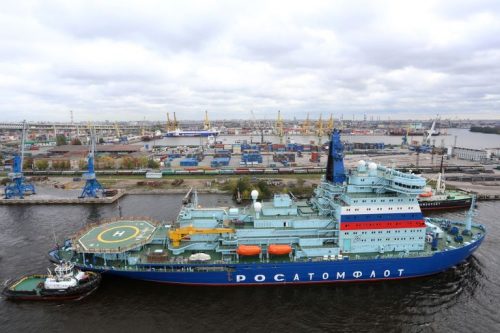 Strategy Page 25th Dec 2020 , The world’s only nuclear-powered non-military ships are operated by Russia. These include five nuclear powered icebreakers and one cargo ship,nthe Sevmorput.
oldest Russian nuclear-powered ship, the Sevmorput was stranded off thewest coast of Africa as emergency repairs are undertaken so it can continuenits trip to Antarctica where it will deliver 5,000 tons of supplies and construction materials for a new Russian research base in Antarctica.
https://www.strategypage.com/htmw/htseamo/articles/20201225.aspx
Moscow Times 16th Dec 2020, A Russian nuclear-powered cargo ship bound for Antarctica has been forced to turn back after sustaining damage, and will bypass Europe before undergoing repairs, state nuclear agency Rosatom said Wednesday. Green activists have expressed concern that the vessel will be sailing past several European countries on its way home during the winter storm season.
Storage of Chernobyl nuclear waste – in reality unsafe for 1000s of years

Tsunami-crippled Tokyo Electric Power Co. (TEPCO)’s Fukushima Daiichi nuclear power plant No.4 (R) and No.3 reactor buildings are seen in Fukushima prefecture February 28, 2012. Members of the foreign media were allowed into the plant on Tuesday ahead of the first anniversary of the March 11, 2011 tsunami and earthquake which triggered the world’s worst nuclear crisis since Chernobyl. REUTERS/Kimimasa Mayama/Pool (JAPAN – Tags: DISASTER ENVIRONMENT ENERGY) – RTR2YKOE
Paul Waldon Fight to Stop a Nuclear Waste Dump in South Australia, 28 Dec 20,
Russia marketing small nuclear reactors to the Arctic , (who cares about the toxic wastes?)

Rosatom to build small-scale land-based Arctic nuclear plant by 2028
Rosatom said it has reached an agreement with the government of the Republic of Sakha (Yakutia) setting out parameters for pricing energy that will be produced by the nuclear plant, which is expected to be completed by 2028……….
“I am convinced that a small-scale nuclear power plant will give a qualitative impetus to the development of the Arctic regions of Yakutia, stimulate the development of industry in Ust-Yansky ulus and improve the living standards of local residents,” said in a statement Head of the Sakha Republic Aysen Nikolayev.
The nuclear plant is expected to operate for 60 years but the press release did not specify how Rosatom plans to deal with the nuclear waste produced by it.
Rosatom officials said the small-scale nuclear plant is based on a proven technology that has already been tested in Arctic conditions.
RITM-200 reactors are already being used on the recently commissioned Arktika nuclear-powered icebreaker and six other 22220 design heavy Russian icebreakers that are being built, Rosatom officials said…….
“The implementation of this project strengthens the leading position of Rosatom in the world market of small nuclear power plants.”…….
Rosatom is also actively marketing the technology for export overseas, Likhachev said. https://thebarentsobserver.com/en/nuclear-safety/2020/12/rosatom-build-small-scale-land-based-arctic-nuclear-plant-2028
Russian Army Chief Warns of Nuclear Risks in Cyber Hacks, Space
 Russian Army Chief Warns of Nuclear Risks in Cyber Hacks, Space https://www.bloombergquint.com/politics/russia-general-warns-cyber-attacks-pose-nuclear-risks-tass-says Stepan Kravchenko December 25 2020, (Bloomberg) — The extension of military confrontation into the cyber sphere and space raises the risks of incidents involving nuclear weapons, Russia’s top general warned Thursday, highlighting concerns about growing tensions.
Read more at: https://www.bloombergquint.com/politics/russia-general-warns-cyber-attacks-pose-nuclear-risks-tass-says
Copyright © BloombergQuint
UK’s quest for nuclear fusion.
|
he science of nuclear fusion was proven in the early 1930s, after fusion of hydrogen isotopes was achieved in a laboratory. And we see fusion in action every day. The stars, including our Sun, are giant self-sustaining fusion reactors. ……..
Unlike nuclear fission, which breaks heavy atoms apart, nuclear fusion compresses light atoms together. This means there is far less harmful waste created by fusion. Neutron bombardment causes a fusion plant to become slightly radioactive, however these radioactive products are short-lived. Fusion therefore offers the tantalising potential for near-limitless, climate-friendly energy production that doesn’t come with a shadow of radioactive waste. Test reactors, such as the Joint European Torus (Jet) at Culham in England, have proved fusion is possible, albeit for short periods of time. The challenge is turning these experimental reactors into an ongoing process that is commercially viable. For this, it would need to generate more power than is needed to keep the fusion reaction going.
For decades, we have been promised that commercial fusion power plants will exist within 30 years. As far back as 1955, the physicist Homi J Bhabha claimed we would have fusion power within two decades. This claim, and many others since, have repeatedly failed to be achieved. The promise is eternal, but fusion always seems that same distance away………. https://www.bbc.com/future/article/20201214-the-uks-quest-for-affordable-fusion-by-2040
|
|

Marketing nuclear technology to Slovakia
 Mochovce new-build project receives loan boost, WNN, 24 December 2020
Italy’s Enel has announced that its subsidiary Enel Produzione and the Czech company Energetický a Průmyslový Holding (EPH) have agreed to a provide additional loans for the completion of Mochovce 3 and 4 in the Slovak Republic, and altered the terms for EPH to eventually buy out Enel’s stake in Slovenské elektrárne. They and EP Slovakia BV have signed a new agreement that modifies some of the terms and conditions of the 2015 contract concerning the sale of the stake held by Enel Produzione in the Slovak utility…….
Construction on the two Mochovce units was restarted in 2008 and aimed at having both units in operation by 2013, at a total cost of EUR2.8 billion. This was increased at the start of this month to about EUR6.2 billion. Fuel loading at unit 3 is expected by April 2021 and at unit 4 in 2023. ………. https://www.world-nuclear-news.org/Articles/Mochovce-new-build-project-receives-loan-boost
Russia keenly marketing nuclear technology to Bolivia
|
Rosatom may put stages I, II of nuclear center in Bolivia into operation in 2021, TASS, 25 Dec 20, On March 6, 2016, Russia and Bolivia concluded an inter-governmental agreement on cooperation in the peaceful use of nuclear energy and construction of a nuclear research center in El Alto MOSCOW, December 25. /TASS/. The Rosatom State Nuclear Energy Corporation is continuing the construction of the Center for Nuclear Research and Technologies in Bolivia, despite the difficult political situation in that country. Next year the company plans to commission the first and second stages of the facility, Head of Rosatom Alexey Likhachev said on Friday.”Despite two revolutions, work continues in Bolivia. Next year we will start commissioning facilities of the first and second stages of the Center for Nuclear Research and Technologies,” he said…….. Nuclear project in BoliviaOn March 6, 2016, Russia and Bolivia concluded an inter-governmental agreement on cooperation in the peaceful use of nuclear energy and construction of a nuclear research center in El Alto, at an altitude of 4,100 meters above sea level. The Bolivian government-funded $300-million project will be implemented jointly with Russia’s nuclear power corporation Rosatom………. https://tass.com/economy/1239807 |
|
Chinese demands on nuclear power investment complicate EU talks
Chinese demands on nuclear power investment complicate EU talks – WiWo, Reuters Staff BERLIN (Reuters) 23 De 20, – Negotiations between the European Union and China on an investment agreement have stoche reported on Wednesday.
The issue of nuclear power is controversial among EU countries because such invealled at the last stretch because China is raising additional demands on nuclear energy, German magazine WirtschaftsWstments could put sensitive infrastructure under Chinese control.
“China wants to invest in European nuclear power plants and use Chinese technology in this area,” WirtschaftsWoche cited EU sources as saying.
During the negotiations, China had indicated to its European counterparts that it viewed its own technology in this field as more advanced, the report said
|
Several EU member states reject nuclear energy or have decided to withdraw from the technology within the next few years.
The EU and China aim to reach an investment accord by the end of the year that would grant European companies greater access to the Chinese market, according to German and EU officials.
The EU-China Comprehensive Agreement on Investment would put most EU companies on an equal footing in China, potentially a big step in repairing Sino-European ties after the coronavirus outbreak in China and Beijing’s crackdown on dissent in the former British colony of Hong
|
|
|
Dredging of the Pripyat river poses danger of Chernobyl radioactivity to drinking water of 8 million people.
Guardian 23rd Dec 2020, The river running past the Chernobyl nuclear reactor is being dredged to
create an inland shipping route, potentially resurfacing radioactive sludge
from the 1986 disaster that could contaminate drinking water for 8 million
people in Ukraine, scientists and conservationists have warned.
The dredging of the Pripyat began in July and is part of an international
project to create the 2,000km (1,240-mile) long E40 waterway linking the
Baltic and Black seas, passing through Poland, Belarus and Ukraine. The
river – which snakes within 2.5km of the reactor responsible for the
world’s worst nuclear disaster – has already been dredged in at least
seven different places, five of which are within 10km of the reactor,
according to the Save Polesia coalition.
Are forest fires unlocking radiation in Chernobyl?
The firefighters sent in to tackle the blazes in the radioactive forests agreed to speak to BBC anonymously, scared of losing their jobs.
Their accounts expose a month of chaos in which fires almost reached the nuclear reactors.
Journalism: Zhanna Bezpiatchuk and Charlotte Pamment
Unacceptable secrecy by the nuclear industry in Sizewell documentation
|
Sizewell C documentation secrecy just a continuation of lack of transparency by the nuclear industry http://drdavidlowry.blogspot.com/2020/12/sizewell-c-documentation-secrecy-just.html Dr David Lowry, 22 Dec 20, Between 18 November and 18 December 2020, NNB Generation Company (SZC Co.) carried out a public consultation on the proposed changes (dated 23 October 2020) for an Order Granting Development Consent for The Sizewell C Project. The document launching this supplementary consultation noted: “In January 2021, SZC Co. will submit a formal application to change the Sizewell C DCO application, as well as some Additional Information (i.e. information that has been developed in response to continuing engagement with stakeholders and which adds to the detail available within the application (but does not change it)).”
One of the supplemental documents submitted by SZC co. was on “Main Development Site Flood Risk Assessment,” a not inconsequential matter, in the context of climate change –induced sea-level rise, and greater perturbations in extreme weather ( storms, rainfall increase etc) over the time period SZC would operate, if ever built. (https://infrastructure.planninginspectorate.gov.uk/wp-content/ipc/uploads/projects/EN010012/EN010012-001715-SZC_Bk5_5.2_Appx1_7_MDS_Flood_Risk_Assessment_Part_1_of_14.pdf) The new mini-consultation letter then added under the headline Information Redacted or Marked as Confidential, the following: “The Procedural Decision requested clarification on the reasons for redactions and confidential marking on a number of the application documents. A summary of reasons is provided in Table 2. SZC observes in these reasons for redaction that “comprehension of the report is not affected by this redaction.”
The Planning inspectorate was not convinced by this assertion, and responded in a rejoinder letter on 22 December stating it was dissatisfied with “the extent and nature of the commercially sensitive aspect of these documents” and pointedly asked “why this could not be redacted without rendering them incomprehensible?”
Here is the full section outlining the Planning Inspectorate’s disquiet with SZC Co’s secrecy. Request for further clarification and documents from the Applicant Confidential documents “The Applicant’s response letter dated 16 November 2020 [AS-006] to the ExA’s procedural decision [PD-005] sets out at Table 2 a summary of its reasons for redactions and confidential markings. For certain documents [APP-292 to APP-295], the Applicant states that: “As these reports are not required in order for the Examining Authority to examine the application, we therefore request that these reports are withdrawn from the application.”
However, the commercial sensitivity of the investigations and data set out in these Environmental Statement (ES) Appendices is not immediately apparent. Furthermore, they comprise part of the ES which was submitted as part of the application and considered as such when the decision [PD-001] to accept the application was made. The Applicant is therefore requested to provide a further explanation in relation to:
(i) The extent and nature of the commercially sensitive aspect of these documents and why this could not be redacted without rendering them incomprehensible;
(ii) The justification for them not being required in order for the ExA [Examining Authority] to satisfactorily examine the application and to properly assess the basis for the related conclusions and findings in the main parts of the ES.” It adds: The additional information that is sought in respect of these confidential documents will assist the ExA to assess the potential implications of that course of action and reach an informed decision on the question of their withdrawal.” (National Infrastructure Planning, Planning Inspectorate, Document Reference: EN010012, 22 December 2020; https://infrastructure.planninginspectorate.gov.uk/wp-content/ipc/uploads/projects/EN010012/EN010012-002699-Sizewell%20PD4%20-%20Rule%2017%20VE%20Q.pdf)
This is just the latest of a very, very long line of unacceptable secrecy incidents by nuclear power plant operators, and demonstrates that notwithstanding their protestations as to transparency, they remain in fact addicted to secrecy.
|
|
EU visit to Belarus nuclear plant called off, deepening safety concerns
EU visit to Belarus nuclear plant called off, deepening safety concerns
A visit by European experts to the controversial and newly-operational Belarusian nuclear plant was cancelled after local officials failed to participate in an organizational meeting, Bloomberg reported, citing the European Union energy commissioner. Bellona, December 23, 2020 by Charles Digges
The Belarusian nuclear power plant.Credit: Rosatom
A visit by European experts to the controversial and newly-operational Belarusian nuclear plant was cancelled after local officials failed to participate in an organizational meeting, Bloomberg reported, citing the European Union energy commissioner.
Belarus’s nuclear energy regulator responded by saying it was willing to hold the meeting at a later date, the agency said.
The plant, located in Ostrovets, was expected to be visited by the European delegates after neighboring Lithuania alleged safety issues while the first reactor was coming into service in November. During a summit earlier this month, EU leaders emphasized the importance of ensuring safety at the site, Bloomberg said.
Among the alleged safety violations at the plant, Lithuania said in a memo circulated ahead of the summit, was cooling system malfunction that occurred on November 30. That was preceded on November 8 by a breakdown of four voltage transformers, which forced the plant to go offline shortly after it was started.
Lithuania also complained that the plant had come online without implementing the vast majority of EU or International Atomic Energy Agency recommendations, the EU Observer reported, citing the memo.
Warning that the plant could pose “significant risks” to the EU, the Lithuanian memo said that the nuclear plant’s “hasty commissioning and growing incidents indicate a real risk, which is amplified by limited management and competence abilities.” The memo went on to urge EU nations to boycott electricity produced by the Belarusian plant………….
In comments reported by Bloomberg last week, EU Energy Commissioner Kadri Simson called the delay “very regrettable.”
Commenting at a European Parliament committee meeting last Wednesday, she said, “The Belarusian regulator didn’t participate in the necessary preparatory technical meeting” to prepare the visit and “in these circumstances the physical visit to the Ostravets site would have no value.” As a result, the team called off the visit.
“The mission continues to call on Belarus to act responsibly and cooperate so that the peer-review exercise can be completed safely and in full transparency,” she said. The EU Commission aims to reschedule the visit as soon as possible and complete the review before the station begins commercial operations, she said…….https://bellona.org/news/nuclear-issues/2020-12-eu-visit-to-belarus-nuclear-plant-called-off-deepening-safety-concerns
1 This Month
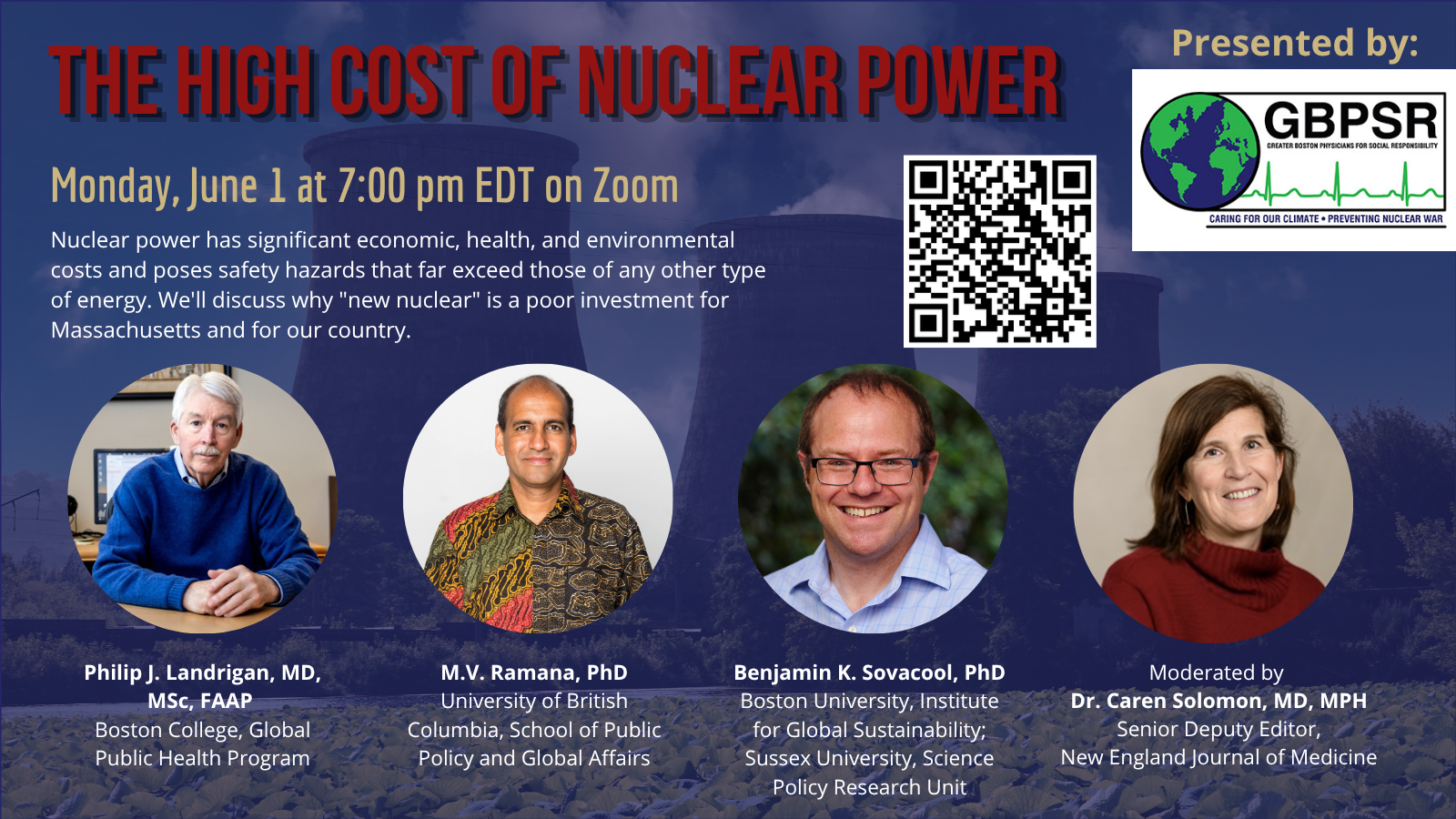
1 June Webinar – The High Cost of Nuclear Power – Register


of the week– Nuclear Reactor Information Task Force
To see nuclear-related stories in greater depth and intensity – go to https://nuclearinformation.wordpress.com
-
Archives
- May 2026 (225)
- April 2026 (356)
- March 2026 (251)
- February 2026 (268)
- January 2026 (308)
- December 2025 (358)
- November 2025 (359)
- October 2025 (376)
- September 2025 (257)
- August 2025 (319)
- July 2025 (230)
- June 2025 (348)
-
Categories
- 1
- 1 NUCLEAR ISSUES
- business and costs
- climate change
- culture and arts
- ENERGY
- environment
- health
- history
- indigenous issues
- Legal
- marketing of nuclear
- media
- opposition to nuclear
- PERSONAL STORIES
- politics
- politics international
- Religion and ethics
- safety
- secrets,lies and civil liberties
- spinbuster
- technology
- Uranium
- wastes
- weapons and war
- Women
- 2 WORLD
- ACTION
- AFRICA
- Atrocities
- AUSTRALIA
- Christina's notes
- Christina's themes
- culture and arts
- Events
- Fuk 2022
- Fuk 2023
- Fukushima 2017
- Fukushima 2018
- fukushima 2019
- Fukushima 2020
- Fukushima 2021
- general
- global warming
- Humour (God we need it)
- Nuclear
- RARE EARTHS
- Reference
- resources – print
- Resources -audiovicual
- Weekly Newsletter
- World
- World Nuclear
- YouTube
-
RSS
Entries RSS
Comments RSS
 nuclear-news