Should £25 billion Hinkley C plant go ahead, with so many safety issues not solved?
David Lowry’s Blog 4th Jan 2021On Christmas Eve last year I received a detailed response to a Freedom of Information request I had made to the UK Office for Nuclear Regulation
[ONR] (I am a member of the chief nuclear inspector’s independent advisory
panel) on the 415 unresolved nuclear safety issues outstanding for the
nuclear licence for the Hinkley Point C nuclear power plant the north
Somerset coast, 18 miles from the Welsh capital city, Cardiff, across the
Bristol channel. It contains an alarming number of extremely important
unresolved matters.
Should this £25 billion plant really have been given
the regulatory green light with so many safety issues unfinished? It is
nonetheless reassuring that the ONR has been so thorough in flagging up key
matters that need safety resolution.
http://drdavidlowry.blogspot.com/2021/01/hinkley-point-c-new-nuclear-plant-still.html
Massive nuclear waste storage construction at Dounreay
Press & Journal 4th Jan 2021, Work on Dounreay’s newest radioactive waste store has reached new heights
following a marathon efforts by staff. The construction project was one of
the first to re-start work in June, following the easing of lockdown
restrictions. The 60-strong team has had to learn Covid-19 compliant ways
of working, sometimes in close proximity with each other, to keep
themselves and their colleagues safe on site.
Since then they have poured
1,500 tonnes of concrete and the building walls have now risen to above the
first floor level. Last week the team embarked on the biggest concrete pour
of the project so far, working for nine hours to lay the floor slab in the
crane maintenance bay (CMB) on the first floor of the building, with 27
lorries delivering 425 tonnes of concrete. An overnight shift completed the
job in the early hours of the morning.
The new intermediate level waste
store will hold drums of waste in safe long term storage at Dounreay in
accordance with Scottish Government policy. The £22 million contract,
awarded to Graham Construction Ltd, started in 2018 and is expected to take
around three years to complete. Dounreay project manager Dave Busby said
that casting the CMB floor slab was a significant construction milestone as
it will allow the team to install the 170 tonne CMB shield door early next
year.
France’s declining nuclear production
Les Echos 4th Jan 2021, Nuclear: EDF production at its lowest for nearly thirty years. The year
2020 was marked by extremely low nuclear production, very slightly above
335 TWh. The impact of the Covid-19 crisis on the maintenance of power
plants and the extent of the work already in progress explain this
situation, which should continue in 2021 and 2022.
Legal case on extradition of Julian Assange an alarming precedent for freedom of speech

|
Assange hearing outcome could set an “alarming precedent” for free speech https://www.indexoncensorship.org/2020/12/assange-hearing-outcome-could-set-an-alarming-precedent-for-free-speech/Benjamin Lynch, 2 Jan 2021, People need to “forget what they think they know” about WikiLeaks founder Julian Assange and recognise that if he is extradited to the USA, it would set a worrying precedent for media freedom. We speak to his partner about the case. Assange’s partner, Stella Moris, is remaining resolute despite his extradition hearing decision being less than a month away and him being held in a prison that has recently had a Covid-19 outbreak.
Speaking over the phone to Index, Moris discusses the hearing’s details and what it could mean for the future of freedom of expression. And she talks about the deep implications it has had for her and her young family. “Obviously it is very difficult. I speak to Julian on a daily basis unless there is a problem. [But] he is in prison. Soon to be for two years. He has been there for longer than many violent prisoners who are serving sentences. All in all, he has been deprived of his liberty for ten years now,” she told Index. She adds: “The kids speak to their father every day; we try to normalise it as much as we can for them. But of course, this is not a normal situation and our lives are on hold. It is inhumane and shouldn’t be happening in the UK.” The current hearing – which will decide whether there are grounds for Assange to stand trial in the USA – should reach a conclusion on 4 January. A trial in the USA (should the decision go against Assange) will have major ramifications for free speech and whistleblower journalism. The WikiLeaks founder is charged with conspiring with US intelligence analyst Chelsea Manning and hackers from groups such as Anonymous and LulzSec to obtain and publish classified information. Each of the 18 charges laid by US authorities, if Assange is extradited and convicted, carry a maximum penalty of 10 years. The allegations brought forward under the 1917 Espionage Act, alongside one other under the Computer Fraud and Abuse Act, mean Assange could face up to 175 years in prison – effectively a life sentence. Manning was initially sentenced to 35 years, but under the Obama administration her sentence was commuted to less than seven years. It is easy to get sidetracked about the current extradition hearing and get into arguments about whether Assange is a journalist, whether he is guilty of other crimes or whether the publication of the documents brought harm to anyone involved. Instead people’s attentions should focus on the precedent that will be set should the case go to trial in the USA. As it stands the case is unprecedented. No publisher has ever been tried under the Espionage Act, which itself was essentially created for spies imparting official secrets either for profit or otherwise. This is perhaps a direct contradiction of rulings of the courts in the UK. In December 2017, the UK’s information tribunal recognised WikiLeaks as a media organisation, in direct contradiction to the view of the US State Department. Australia’s media union, the Media, Arts and Entertainment Alliance, also presented an honorary member card to Assange’s Melbourne-based lawyer. Amidst the noise of the separate matters around the case, Moris insists people need to “forget what they think they know” and assess the issues involved. “There are a lot of assumptions being made over what this case is really about. There are all these sideshows. It is not about people being harmed because the US has admitted it has no evidence to make this argument. It comes down to the fact that the material published was classified. People who care about free speech and press freedom need to forget what they think they know about this case and look at it afresh and understand Julian is in prison for publishing. This is not something that democracies do.” “Are they saying what he published was not in the public interest? They say that is irrelevant. They can’t deny [what he published] wasn’t in the public interest because he was publishing information and evidence of state crimes, of state abuse, torture, of rendition, blacksites and of illegal killings. What they are arguing is that Julian published information that was secret and therefore he can be prosecuted over it.” ournalists publishing secret information is not new (nor is pressure for them not to publish) and can often be key to upholding democracy and ensuring states act properly. The Watergate revelations relied heavily on news organisations pressing on with publication despite attempts by the USA to stop them, including the threat of jail time. It proved a significant victory for free speech. If Assange is extradited and tried the case will impact journalists and the media “for years to come”, says Rebecca Vincent, director of international campaigns at Reporters Without Borders (RSF). “It feels like many in the media do not see the implications of this case as something that will possibly affect them,” she told Index. “This case will have ramifications on the climates for journalism and press freedom internationally for years to come.” “This is the first time we have seen the US government prosecute anybody for publishing leaked information. If they are successful, they will not stop with Assange and WikiLeaks. This could be applied, in theory, to any media outlet.” It’s common for journalists and publishers to cite a public interest defence for disputed documents. It is a centrepiece of a defence case against libel, for instance. “The information published was certainly in the public interest; it served to inform extensive public interest reporting that exposed war crimes and other illegal actions by states,” said Vincent. “The Espionage Act lacks a public interest defence. He cannot use it if he is sent to the United States and tried.” Essentially, what this means is that Assange is being treated as a spy not a publisher. If Assange is extradited and loses his case against the US government, any time classified information is published by a journalist there will be a precedent set that they can be charged and tried as a spy in the same way. “These sorts of cases are really highlighting the need for more robust legislation that cannot be manipulated to be used against journalists, whistleblowers and other sources. Ultimately, it is the public’s right to access information that is being impacted,” Vincent added. “You can see this for what it is; this very much feels like a political prosecution by states that are not meant to engage in this behaviour. The reason our states can get away with this is because of a lack of public pressure. A lack of public sympathy has resulted in a lack of widespread public pressure to hold our governments to account.” |
|
Bechtel, Westinghouse and Southern Company’s hopeless case to save shambolic Wylfa nuclear project

 People Against Wylfa B 31st Dec 2020, On the last day of troubled 2020, the Westminster Government has deferred a decision on a Development Consent Order for a nuclear power station at Wylfa until the end of April 2021. This is the fourth time this has happened, and the second time in a row for Duncan Hawthorne, chief executive Horizon, to ask for a deferral.
‘saviours’ of the radioactive poisoning project that would threaten the health of everyone on the island and beyond are three US companies.
was the V C Summer nuclear plant in South Carolina. It was abandoned
unfinished in 2017, and is still being paid for by taxpayers. https://www.stop-wylfa.org/news/
How a Soviet spy helped to avoid nuclear war
|
When a Soviet spy helped avert nuclear war Tim Rowland, HM Media, 2 Jan 2021,
……..December also marked the passing of George Blake, a spy who kept the Soviets abreast of just about everything the West was doing during the hottest years of the Cold War. ……
In Blake, the KGB knew what they had. As a prisoner in North Korea, he later said he was driven into the arms of the Communists after watching American bombers destroy villages and the civilians who lived in them. ………..
……..At a time of high tension, its intelligence showed the West that the Soviets were not interested in launching a first-strike nuclear attack. Blake had showed the Soviets that this aversion to war was shared by the West. It may have been just enough assurance, in times of high tension, to keep everyone’s missiles in their silos. As dysfunctional as the profession at times could seem, the spies had done their job. https://www.heraldmailmedia.com/opinion/tim_rowland/when-a-soviet-spy-helped-avert-nuclear-war/article_4b527a8b-67f3-5d70-9a71-d5e78743853b.html
|
|
With all the costs and delays – why not scrap the Wylfa nuclear project right now?
|
Wylfa, more problems, more delay. Scrap it now https://www.stop-wylfa.org/2020/04/01/wylfa-more-problems-more-delay-scrap-it-now/ By Stop Wylfa 2 Jan 21, The London government has pushed back any decision on the Wylfa B power plant planning application until the end of September 2020.
The Secretary of State for Business, Energy and Industry says he has not been satisfied by answers given by Horizon Nuclear on environmental issues and other considerations. PAWB proposes that Horizon Nuclear’s planning application should be totally rejected. The national policy statement for nuclear power adopted several years ago is completely outdated and rather than approving this obviously defective application, the Westminster government should start from scratch with a thorough review of their energy policy and to recognise that reneweable technologies like wind, solar and marine have totally undermined any reason for investing billions of pounds in nuclear power. The COVID 19 crisis has already forced big changes in the Government’ s way of operating. They should now take the opportunity to take a fundamental review on investing in renewable technologies which offer clean and safe electricity. A green revolution can create thousands of jobs in Wales and the other countries of Britain without the threat of nuclear disasters and poisonous radioactive waste and their effects on human and environmental health for thousands of years. |
|
Trump’s nuclear construction deal with Poland – strained with Biden victory ?
Poland plays down fears over nuclear power plans despite Biden victory. Rightwing government’s relations with incoming US administration strained after Trump construction deal, Ft.com 3 Jan 2021,
However, Michal Kurtyka, climate minister, played down concern that the change would have a significant impact on Poland’s plans.
Glenn Greenwald: Julian Assange’s Imprisonment Exposes U.S. Myths About Freedom
|
Glenn Greenwald: Julian Assange’s Imprisonment Exposes U.S. Myths About Freedom The real measure of how free is a society is not how its mainstream, well-behaved ruling class servants are treated, but the fate of its actual dissidents. By Glenn Greenwald January 2, 2021
Persecution is not typically doled out to those who recite mainstream pieties, or refrain from posing meaningful threats to those who wield institutional power, or obediently stay within the lines of permissible speech and activism imposed by the ruling class. Those who render themselves acquiescent and harmless that way will — in every society, including the most repressive — usually be free of reprisals. …….. Those who do not seek to meaningfully dissent or subvert power will usually deny — because they do not perceive — that such dissent and subversion are, in fact, rigorously prohibited. They will continue to believe blissfully that the society in which they live guarantees core civic freedoms — of speech, of press, of assembly, of due process — because they have rendered their own speech and activism, if it exists at all, so innocuous that nobody with the capacity to do so would bother to try to curtail it………..
powerful officials in Washington can illegally leak the most sensitive government secrets and will suffer no punishment, or will get the lightest tap on the wrist, provided their aim is to advance mainstream narratives. ……..
those like Julian Assange who publish similar secrets but against the will of those elites, with the goal and outcome of exposing (rather than obscuring) ruling class lies and impeding (rather than advancing) their agenda, will suffer ………..
the ongoing imprisonment of Julian Assange not only a grotesque injustice but also a vital, crystal-clear prism for seeing the fundamental fraud of U.S. narratives about who is free and who is not, about where tyranny reigns and where it does not.
Assange has been imprisoned for almost two years. He was dragged out of the Ecuadorian Embassy in London by British police on April 11, 2019. That was possible only because the U.S., U.K. and Spanish governments coerced Ecuador’s meek President, Lenin Moreno, to withdraw the asylum extended to Assange seven years earlier by his staunch sovereignty-defending predecessor, Rafael Correa. The U.S. and British governments hate Assange because of his revelations that exposed their lies and crimes, ………
Assange is not currently imprisoned because he was convicted of a crime. Two weeks after he was dragged out of the embassy, he was found guilty of the minor offense of “skipping bail” and sentenced to 50 weeks in prison, the maximum penalty allowed by law. He fully served that sentence as of April of this year, and was thus scheduled to be released, facing no more charges. But just weeks before his release date, the U.S. Justice Department unveiled an indictment of Assange arising out of WikiLeaks’ 2010 publication of U.S. State Department diplomatic cables and war logs that revealed massive corruption by numerous governments, Bush and Obama officials, and various corporations around the world. That U.S. indictment and the accompanying request to extradite Assange to the U.S. to stand trial provided, by design, the pretext for the British government to imprison Assange indefinitely.
A judge quickly ruled that Assange could not be released on bail pending his extradition hearing, but instead must stay behind bars while the U.K. courts fully adjudicate the Justice Department’s extradition request. No matter what happens, it will takes years for this extradition process to conclude because whichever side (the DOJ or Assange) loses at each stage (and Assange is highly likely to lose the first round when the lower-court decision on the extradition request is issued next week), they will appeal, and Assange will linger in prison while these appeals wind their way very slowly through the U.K. judicial system. …..
Assange will be locked up for years without any need to prove he is guilty of any crime. He will have been just disappeared: silenced by the very governments whose corruption and crimes he denounced and exposed. Those are the same governments — the U.S. and U.K. — that sanctimoniously condemn their adversaries (but rarely their repressive allies) for violating free speech, free press and due process rights. These are the same governments that succeed — largely due to a limitlessly compliant corporate media that either believes the propaganda or knowingly disseminates it for their own rewards — in convincing large numbers of their citizens that, unlike in the Bad Countries such as Russia and Iran, these civic freedoms are guaranteed and protected in the Good Western Countries.
. (The ample evidence showing that the indictment of Assange is the single gravest threat to press freedoms in years, and that the arguments mounted to justify it are fraudulent, has been repeatedly documented by myself and others, so I will not rehash those discussions here………. https://wordpress.com/read/feeds/34005311/posts/3108045730
|
|
|
How the USA and Soviet Union planned to use nuclear radiation as a weapon.
 This was initially seen as a great idea – you could kill all the people while leaving the omfrastructure intact for your own use.
For decades, the thought of radiological weapons has conjured terrifying images of cities covered in “death dust.” Classified as a weapon of mass destruction — alongside chemical, biological, and nuclear weapons — it has remained a point of mystery as to why these devastatingly indiscriminate weapons were not pursued in earnest by more state and non-state actors alike.
What did early radiological weapons (RW) programs look like? How and why did they arise, and what accounts for their ultimate demise? Aside from a handful of known cases, why have RW programs not proliferated with the same alacrity as other weapons programs?
Thanks to the rigorous and rich historical work of Samuel Meyer, Sarah Bidgood, and William Potter of the Middlebury Institute of International Studies at Monterey, we now have more answers. Focusing on the United States and Soviet Union in the 1940s and 1950s, the authors, in a recent study published in the journal International Security, trace the unique origins of these RW programs, as well as explain why they were subsequently abandoned. Their study, “Death Dust: The Little-Known Story of U.S. and Soviet Pursuit of Radiological Weapons,” reveals a fascinating web of causes, including organizational and bureaucratic politics, international competition, economic and technological constraints, and even the powerful initiatives of well-placed individuals.
While the authors’ work examines the past, it speaks directly to the present and future trajectory of RW programs. If you are interested in military innovation, the history of weapons of mass destruction, the sociology of technology, and science fiction (yes, science fiction!), the exchange featured below is for you.
Samuel Meyer, Sarah Bidgood, and William C. Potter: We define a radiological weapon as one intended to disperse radioactive material in the absence of a nuclear detonation. ……..
……….. May 1941 — the first reference to RW appeared in a U.S. government document: the Report of the Uranium Committee. The report identified three possible military aspects of atomic fission, the first of which was “production of violently radioactive materials … carried by airplanes to be scattered as bombs over enemy territory.” (The other two possible applications noted in the report were “a power source on submarines and other ships” and “violently explosive bombs.”) ………
Technological advances were among the major drivers of RW programs in both the U.S. and the Soviet Union, and RW were initially pursued in tandem with nuclear weapons and chemical weapons (CW) programs. The anticipated promise of RW as a weapons innovation, however, never materialized in either country due to a combination of factors, including technical difficulties in the production and maintenance of the weapons, diminution in the perceived military utility of RW relative to both CW and nuclear weapons, and low threat perceptions about adversary RW capabilities. ……..
the parallelism in many respects between the rise and demise of the U.S. and Soviet RW programs; and (5) the serious but ultimately unsuccessful effort by the United States and the Soviet Union to secure a draft convention at the Conference on Disarmament prohibiting radiological weapons.
MK: Are radiological weapons a thing of the past or do they remain an attractive option for some countries and non-state actors today?
The authors: We are encouraged that no country has either used RW in war or has incorporated them into a national military arsenal. We are concerned, however, that the Russian Federation, despite its own unsuccessful history with RW, has shown renewed interest in advanced nuclear weapons that seek to maximize radioactive contamination. We also worry that some countries may conclude that RW serve their perceived national interests, especially in the absence of international legal restraints. It therefore is important, we believe, to revive U.S.-Russian cooperation to ban radiological weapons and strengthen the norm against their use.
Morgan L. Kaplan is the Executive Editor of International Security and Series Editor of the Belfer Center Studies in International Security book series at the Belfer Center for Science and International Affairs at the Harvard Kennedy School. https://thereader.mitpress.mit.edu/death-dust-the-little-known-story-of-radiological-weapons/
New delay in planning decision for £16bn Wylfa nuclear development on Anglesey
months for talks with potential new investors to continue. Japanese
multi-national Hitachi announced in September they were pulling out of
funding the £16bn nuclear development on Anglesey. At that point BEIS
Secretary of State Alok Sharma delayed the Development Consent Order (DCO)
decision for the application to December 31. Now following a letter from
Duncan Hawthorne, chief executive of Wylfa developer Horizon Nuclear Power,
that date has been extended to April 30.
Cover-up! how consumers will be forced to pay for cost-overruns for Sizewell C nuclear construction
 Cover-up! how consumers will be forced to pay for cost-overruns for Sizewell C construction, https://100percentrenewableuk.org/cover-up-how-consumers-will-be-forced-to-pay-for-cost-overruns-for-sizewell-c-construction–by David Toke, 30 Dec 20, In a historic change of policy the Conservatives have announced that consumers, not EDF, will pay for cost overruns in building Sizewell C. The crucial phrase in the Government’s document on the so-called ‘Regulated Asset Base’ (RAB) model is ‘Cost overruns that were not excluded from the RAB would be shared between investors and consumers through suppliers’ (para 47 page 14). Note: ‘consumers’ means electricity consumers who will have to pay twice for Sizewell C; extra on their bills long before any power is generated and for many years after generation begins. Cover-up! how consumers will be forced to pay for cost-overruns for Sizewell C construction, https://100percentrenewableuk.org/cover-up-how-consumers-will-be-forced-to-pay-for-cost-overruns-for-sizewell-c-construction–by David Toke, 30 Dec 20, In a historic change of policy the Conservatives have announced that consumers, not EDF, will pay for cost overruns in building Sizewell C. The crucial phrase in the Government’s document on the so-called ‘Regulated Asset Base’ (RAB) model is ‘Cost overruns that were not excluded from the RAB would be shared between investors and consumers through suppliers’ (para 47 page 14). Note: ‘consumers’ means electricity consumers who will have to pay twice for Sizewell C; extra on their bills long before any power is generated and for many years after generation begins.The RAB document was produced alongside the Government’s new Energy White Paper. This should be compared to the Government position in the 2011 White Paper which stated that ‘new nuclear stations should receive no public support unless similar support is available to other low-carbon technologies’. (page 8) Under the Government’s RAB proposals it is claimed that clear criteria are going to be set for what cost overruns will be payable by the consumer and what by the developer, with the outcomes carefully monitored by a ‘Regulator’. But of course once the construction juggernaut for Sizewell C starts rolling where information, not to mention armies of lawyers and hired consultants of various sorts, will be controlled by EDF, I do not seriously believe that EDF will be stopped from passing on virtually whatever costs it wants to pass on to the consumer. It is not even certain that the ‘Regulator’ will be able to stop costs of building (the still uncompleted) Hinkley C being passed onto the consumer through the books assigned to Sizewell C- that is given that workers are likely to be switched from one operation to the other. In other words, it is a blank cheque for EDF for a power plant that is not only unnecessary but which will actually cause large quantities of renewable energy to be wasted because of nuclear power’s inflexible operation (see our report on this). In effect not just consumers but renewable energy operators will be paying for the cost-overruns of building Sizewell C. Laughingly, in a world where no (at least western) nuclear power plant has been attempted this century without massive construction cost overruns being generated, the RAB document talks about ‘low probability risks such as cost overruns above a certain threshold’ (page 12). In the case of Hinkley C the cost overruns are mounting already. The most charitable explanation for the RAB document is that Treasury officials are allowing themselves to be engaged in an exercise of self-deception in order to launder a policy that if stated plainly would be deemed politically unacceptable. Reading between the lines of the RAB document and the Energy White Paper itself, the only substantial barrier stopping EDF being handed a blank cheque contract is the payment that EDF would receive for electricity generated. The White Paper says ‘We expect the sector to deliver the goal it set for itself in our Nuclear Sector Deal, published in 2018, to reduce the cost of nuclear new build projects by 30 per cent by 2030’ (page 49). So in other words the Treasury wants EDF to accept less than £65 per MWh in 2012 prices. (2012 prices, the year in which Hinkley C’s contract was priced is the funny money basis for electricity contracts these days!). Obviously EDF wants more, but with the RAB mechanism it may not need more. This is because RAB mechanism is a piece of political jelly that will allow any nuclear developer to offer to complete Sizewell C for a low sum when in reality British electricity consumers will pay for what will be called ‘cost overruns’ over and above such a figure. The RAB mechanism is a flexible political device that allows Sizewell C to be built regardless of cost realities. It is an act of public manipulation and mystification worthy of the best traditions of ‘Yes Minister’. But even so these plans are likely to cause mounting opposition when consumers realise they are likely to have to start paying extra on their bills without getting any electricity in return. Then they will have to pay extra again for the power when (evenutally) it does start being generated. Professor Tom Burke, the founding Director of E3G commented: ‘Constructing Sizewell will cost just over £20 billion. If EDF borrow this money it will double the cost to over £40 billion. EDF is negotiating with the government to make consumers pay the construction cost in advance by a levy on everyone’s energy bills. They will then have to pay again for the electricity which will still be more expensive than that from renewables.’ In effect consumers will have to pay twice for the project – first for several years before the plant has generated anything, and then again for up 40 years afterwards.
|
|
|
Slovakia: Krško nuclear power station shut down as a precaution after quake
Krško nuclear power station shut down as a precaution after quake | Slovenska tiskovna agencija https://english.sta.si/2849550/krsko-nuclear-power-station-shut-down-as-a-precaution-after-quake Krško, 29 December 20, –
The Krško Nuclear Power Station was shut down as a precaution Tuesday after a strong 6.4-magnitude earthquake hit near Petrnija, Croatia, around midday. Such a shutdown is standard procedure in the event of a strong earthquake, the company told the STA.
Brexit: UK and Euratom have signed a Nuclear Cooperation Agreement (NCA)
World Nuclear News 29th Dec 2020, The UK and the European Atomic Energy Community (Euratom) have signed a
Nuclear Cooperation Agreement (NCA). This is separate from the wider UK-EU Trade and Cooperation Agreement that was also announced on 24 December and which has since been approved by ambassadors from the 27 EU Member States, paving the way for it to take effect on 1 January. UK lawmakers will tomorrow return to the House of Commons, the lower chamber of parliament,
to vote on the so-called post-Brexit trade deal.
https://www.world-nuclear-news.org/Articles/UK-and-Euratom-sign-Nuclear-Cooperation-Agreement
Scotland wants no part in the Tories’ latest nuclear energy folly
|
Douglas Chapman: Scotland wants no part in the Tories’ latest nuclear energy folly https://leftfootforward.org/2020/12/douglas-chapman-scotland-wants-no-part-in-the-tories-latest-nuclear-energy-folly/ Douglas Chapman MP, 30 Dec 20,
As Scotland moves away from nuclear power, the UK Government is trying to impose this costly distraction, writes Douglas Chapman MP. The UK Government’s publication of their new Energy White Paper shows that they are still very much out of sync with Scotland.With nuclear power at the centre of Johnson’s great green revolution, Scotland and Westminster are once more at loggerheads. The UK Government argues that we must examine all renewable and low to zero carbon options as we turn from fossil fuels and face the climate crisis head on. But the White Paper reveals that the UK government are in discussions with French energy giant, EDF, to build a £20bn nuclear power plant at Sizewell in Suffolk. In addition, they plan to develop Small Modular Reactors (SMRs) or pop-up nuclear power plants built in factories rather than involving heavy construction, as well as research and development into more advanced nuclear technologies. This is a problem for Scotland given that energy is a reserved power and we have very different plans for our renewable development. The Scottish Government rejects the case for nuclear power to be included in the push to net zero, arguing that our future clean energy ambitions can be met by far safer, more affordable and more environmentally sound means. Scotland is in the fortunate position of having an abundance of natural resources with 25% of Europe’s tidal and wind resource for instance. We are aware of our responsibility to the natural environment as well as our citizens and our updated Climate Plan reflects these values of fairness, wellbeing and a just transition to a greener future. White elephant Right now, nuclear power is still included in our current energy mix and is sourced from two stations at Torness and Hunterston. The Scottish Government is moving towards decreasing this output and increasing solar, offshore and onshore wind sources, with our wind turbines having already produced nearly twice of our entire nations domestic power with some left over for export back in 2019. When wind and solar are by far the cheaper option as compared to nuclear, at £39.65/MWh to Hinkley’s £92.50, it’s a no brainer on cost. Overall, the nuclear industry is a slow and expensive business. Given we are facing a climate emergency of terrifying proportions, turning to nuclear energy and the development of new technologies like SMR’s will not be a quick fix. The vast sums pledged by Johnson to support EDF at Sizewell are even more controversial given that the government is examining a “regulated asset base” approach to funding, or in other words putting the financial risk on to the UK consumer. No to nuclear Results from the recent UK wide Citizens Assembly on Climate Change indicate that it’s not just the Scots who are concerned with nuclear power. Nearly half – 46% – of assembly members strongly disagreed that nuclear should be part of the renewable energy plan citing concerns with cost, safety, long-term waste management, and damage to the local environment. For Scotland, it’s more personal than that. We already carry the weight of responsibility as home to the UK’s domestic nuclear power base; a key tenant of SNP policy is ridding Scotland of the burden of Trident when we become independent, a hugely popular pledge with the Scottish electorate. And then there’s the not insignificant matter of toxic waste and the decommissioning debacle of existing nuclear reactors such as Dounreay in Thurso, which, according to the Nuclear Decommissioning Authority, will take another 313 years before its regarded as a “safe site”. In addition, in 2018, the nuclear reactors at Hunterston were shut down due to concerns over cracks in the graphite core. People living close by had every right to be worried. Big plans Now Johnson’s government is forcing through the Internal Market Bill and the blatant devolution power grab, Scotland will have even less say in how we manage our renewable resources, as devolved powers such as grant of consent and planning permission could be deliberately reserved in the name of Brexit. We may be a small nation, but we have big plans in fulfilling our obligation to the planet and our responsibility in this global climate challenge. New nuclear power stations are not and never will be part of these plans. The UK Government will have a fight on their hands if they try to derail our ambition. Douglas Chapman is the Scottish National Party MP for Dunfermline and West Fife. |
|
1 This Month
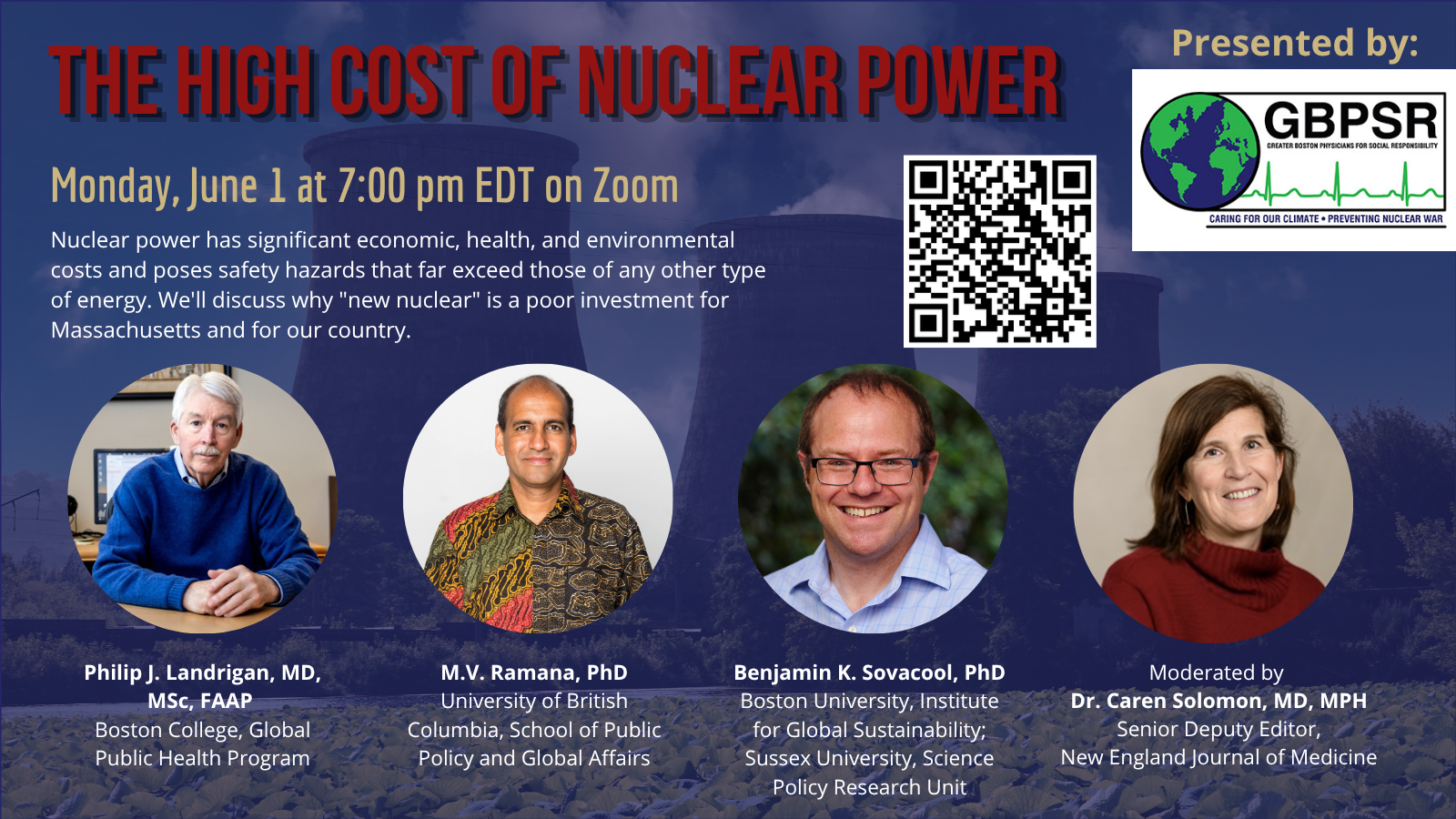
1 June Webinar – The High Cost of Nuclear Power – Register


of the week– Nuclear Reactor Information Task Force
To see nuclear-related stories in greater depth and intensity – go to https://nuclearinformation.wordpress.com
-
Archives
- May 2026 (225)
- April 2026 (356)
- March 2026 (251)
- February 2026 (268)
- January 2026 (308)
- December 2025 (358)
- November 2025 (359)
- October 2025 (376)
- September 2025 (257)
- August 2025 (319)
- July 2025 (230)
- June 2025 (348)
-
Categories
- 1
- 1 NUCLEAR ISSUES
- business and costs
- climate change
- culture and arts
- ENERGY
- environment
- health
- history
- indigenous issues
- Legal
- marketing of nuclear
- media
- opposition to nuclear
- PERSONAL STORIES
- politics
- politics international
- Religion and ethics
- safety
- secrets,lies and civil liberties
- spinbuster
- technology
- Uranium
- wastes
- weapons and war
- Women
- 2 WORLD
- ACTION
- AFRICA
- Atrocities
- AUSTRALIA
- Christina's notes
- Christina's themes
- culture and arts
- Events
- Fuk 2022
- Fuk 2023
- Fukushima 2017
- Fukushima 2018
- fukushima 2019
- Fukushima 2020
- Fukushima 2021
- general
- global warming
- Humour (God we need it)
- Nuclear
- RARE EARTHS
- Reference
- resources – print
- Resources -audiovicual
- Weekly Newsletter
- World
- World Nuclear
- YouTube
-
RSS
Entries RSS
Comments RSS
 nuclear-news