Dust with French nuclear test residue threatens Turkey
|
Dust with French nuclear test residue threatens Turkey https://www.dailysabah.com/turkey/dust-with-french-nuclear-test-residue-threatens-turkey/news
BY DAILY SABAH WITH AGENCIES, ISTANBUL TURKEY , MAR 03, 2021 France is not the only country to be affected by sandstorms carrying the residues of cesium 137, used in nuclear tests by the country in the 1960s in the Sahara desert. Experts warn the dust, expected to move eastward and make a landing in Turkey soon, may be harmful for the population. Bekir Taşdemir, a nuclear medicine expert from Dicle University, says though it is unclear how much cesium residue there is in the dust sandstorms brought, people need to be cautious. “Possible high rate (of cesium) will necessitate people to stay indoors. They should not breathe the air outside and not open their windows,” Taşdemir warned. French experts had revealed that cesium was found in dust hailing from the Sahara Desert after a sandstorm on Feb. 6 traveled to the Jura Mountains. The same pattern of sandstorms is forecast for Turkey in the coming days. Taşdemir told Demirören News Agency (DHA) on Wednesday that the movement of dust particles, when combined with rainfall, will be more dangerous. “You should take an umbrella or have protective clothing if it is necessary to go out. If it rains, you should rapidly remove your clothes and wash them and take a shower when you return home. If radioactive residues are accumulated on your body or clothes, it poses a risk. There is also the possibility that those residues will settle on fruits and vegetables and you should be careful washing them thoroughly before consumption, in case of such a sandstorm,” he added. Cesium 137, a lethal chemical element, is used in the nuclear industry. When touched with bare hands, it can kill the person within seconds. It was emitted into the atmosphere after the 2011 nuclear plant accident in Fukushima, according to researchers. France had conducted its first nuclear test in the Sahara desert on Feb. 13, 1960. It carried out 17 nuclear explosions in the Algerian part of the Sahara Desert between 1960 and 1966. Eleven of the tests came after the 1962 Evian Accords ended the six-year war of independence and 132 years of French colonial rule. The issue of nuclear tests remains a major bone of contention between France and Algeria which claims the nuclear tests claimed the lives of a large number of people among the local population and damaged the environment. The Sahara dust that has blanketed parts of southern and central Europe last month has caused a short, sharp spike in air pollution across the region according to researchers. |
|
Russia’s most high-tech multi-purpose nuclear submarine further delayed
Russia’s most high-tech multi-purpose nuclear sub further delayed
The first upgraded cruise missile submarine of the Yasen-M class, the Kazan, will for unknown reasons have to sail another test-voyage before being handed over to the Northern Fleet. Barents Observer, 3 Mar 21, By Thomas Nilsen
New date for possible handover is set for May-June 2021, TASS reports with a source in the military-industrial complex. The state-affiliated news agency is known voicing military insights, but also for sugarcoating facts.
Another factory sea trial is planned, to be followed by an audit of the components and mechanisms, the source said without elaborating on which technical design flaws are to be fixed this time.
The “Kazan” was expected to be handed over from the submarine builder Sevmash yard to the Northern Fleet last Friday.
“The lead nuclear submarine “Kazan” can be handed over to the Russian Navy on February 26, the head of the United Shipbuilding Corporation, Aleksey Rakhmanov told RIA Novosti as late as on February 10.
Why the prestigeous submarine is hold back for more testing is unkown……..
Since first scheduled for delivery to the navy in 2017, the submarine has been notoriously delayed. A planned delivery in 2018 was postponed to 2019. That year came with another announcement that the “Kazan” would probably need all of 2020 to fix a number of auxiliary parts and assemblies which did not met the tactical and technical requirements set by the Ministry of Defense, the Barents Observer reported at the time……… https://thebarentsobserver.com/en/security/2021/03/russias-most-high-tech-multi-purpose-nuclear-sub-further-delayed
Opinion poll – 77% of Ayshire public support a total ban on all nuclear weapons.
Ayrshire CND are greatly encouraged by recent polllling which shows that 77 per cent of the public support a total ban on all nuclear weapons.
1 March 2021 Anti-nuclear campaigners across Ayrshire have been given a huge boost in their battle to force an end to the arms race, writes Stewart McConnell.
Ayrshire CND are greatly encouraged by recent polling which shows that 77 per cent of the public support a total ban on all nuclear weapons.
The survey also showed that almost 60 per cent of people want Britain to sign up to the United Nations Treaty on the Prohibition of Nuclear Weapons which came into force last month.
Group secretary Arthur West, pictured, said: “This recent polling was organised by CND at UK level in conjunction with the professional polling company Survation and the results are hugely encouraging for our campaign to rid this country and our world of the scourge of nuclear weapons.”
“The government’s own figures show that the cost of maintaining Britain’s nuclear weapons based at Faslane is an eye watering 2 billion pounds a year.
“This is frankly money which could be better spent on decent things like health and education and creating quality jobs in areas such as renewable energy and affordable house building.”
The opinion poll referred to was organised by CND at UK level in conjunction with polling company Survation and was conducted on January 12-13.
Labour’s nuclear weapons stance needs a rethink
Labour’s nuclear weapons stance needs a rethink, Guardian, Richard Norton-Taylor
London 28 Feb 21,
Readers respond to the shadow defence secretary’s announcement that his party’s commitment to Trident is ‘non-negotiable’
You report (Labour to state ‘non-negotiable’ support for UK’s nuclear weapons, 25 February) that the shadow defence secretary, John Healey, says his party’s commitment to nuclear weapons is “non-negotiable”, seemingly taking a harder line even than successive Conservative governments, which have at least supported talks on multilateral nuclear disarmament.
The new Labour leadership in its rhetoric seems more frightened of being accused at home of being weak on defence than a nuclear attack by a foreign power. For years, Whitehall analysts have considered a pandemic more likely than any real threat of a nuclear attack. Yet for years, ministers and opposition frontbenchers ignored the former while exaggerating the latter. Trade union leaders, meanwhile, back a new Trident missile programme and spending more than £200bn on unusable weapons, citing the need to preserve highly skilled jobs. Yet Britain has had to bank on French engineers for civil nuclear power stations of which Britain now appears to be in dire need. https://www.theguardian.com/world/2021/feb/28/labours-nuclear-weapons-stance-needs-a-rethink
Jeremy Corbyn – Britain Should Join Nuclear Ban Treaty and Scrap Nukes.
 Jeremy Corbyn – Britain Should Join Nuclear Ban Treaty & Scrap Nukes. https://labouroutlook.org/2021/02/27/jeremy-corbyn-britain-should-join-nuclear-ban-treaty-scrap-nukes/, 27th February 2021 “From coronavirus to environmental destruction to economic inequality, we face threats that the war machine cannot fix, & can only worsen.”
Jeremy Corbyn used a speech at the Stop the War Coalition AGM today to make the case for the labour movement taking a stand against nuclear weapons and US-led wars of intervention.
Speaking to Labour Outlook he said, “The public consensus is changing. One hundred and twenty countries have signed the Treaty on the Prevention of Nuclear Weapons at the UN this year.”
In his speech at the AGM, Jeremy pointed out how three out of five people in the UK think we should join them, and four out of five people support a total ban on all nuclear weapons globally.
Jeremy added, “Something else has happened. People have begun to understand where the real threats to our security are.
From coronavirus to environmental destruction to economic inequality, we face threats that the war machine cannot fix, and can only worsen.”
Yesterday saw Labour members across the country oppose the Party’s leadership decision to say support for nuclear weapons was not negotiable, including Emma Dent Coad and Diane Abbott MP in interviews with this publication.
Radioactive dust over Europe – from France’s nuclear bomb tests in the Sahara!
France slow to leave nuclear power, (cheaper to extend lives of reactors)

France to extend lifetime of old nuclear power plants https://au.finance.yahoo.com/news/france-extend-lifetime-old-nuclear-102331756.html
Thu, 25 February 2021, French safety officials on Thursday gave the green light to extend the lifetime of the country’s oldest nuclear power plants as it seeks to boost the share of renewables in its power mix.
Nuclear energy currently provides nearly 70 percent of French electricity, more than in any other country.
France, hoping to reduce that share to 50 percent by 2035 — a target pushed back from an earlier 2025 date — with the help of renewables, has been holding off from building new reactors.
The number of French reactors, at 56, is second in the world only to the United States which operates 85.
French safety officials on Thursday gave the green light to extend the lifetime of the country’s oldest nuclear power plants as it seeks to boost the share of renewables in its power mix.
Nuclear energy currently provides nearly 70 percent of French electricity, more than in any other country.
France, hoping to reduce that share to 50 percent by 2035 — a target pushed back from an earlier 2025 date — with the help of renewables, has been holding off from building new reactors.
The number of French reactors, at 56, is second in the world only to the United States which operates 85.
The safety of French nuclear plants is checked every decade.
ASN asked state-controlled electricity provider EDF, which manages the country’s nuclear plants, to undertake any necessary work to safeguard their security.
The main target was to “limit the consequences of any accident, especially any serious accident involving the meltdown of a reactor”, ASN’s deputy director-general Julien Collet told AFP.
Another objective was to improve the resistance of the plants to outside shocks including earthquakes, floods, extremely hot weather, or a fire in the reactor.
Anti-nuclear campaigners have long demanded the closure of veteran nuclear power stations, and last year obtained the decommissoning of France’s oldest plant at Fessenheim in the east of the country.
“Active French nuclear power plants were built to operate for 30 or 40 years. Beyond that, nuclear reactors enter an unknown ageing phase,” said NGO Greenpeace, calling for more plants to be closed.
ASN president Bernard Doroszczuk told the Ouest France newspaper that there were still “weak points” in the stations’ security equipment, requiring “vigilance”, but that there had been improvements.
France’s nuclear reactors, grouped in 18 sites, are all second-generation pressurised water reactors.
EDF in 2015 estimated the cost of dismantling all the reactors at 75 billion euros ($92 billion) but a parliamentary report said the real cost would be more.
A third-generation reactor called EPR and under construction since 2007 in Flamanville in northern France was supposed to go online in 2012, but the launch date has been delayed repeatedly and is now fixed for next year.
Flamanville’s cost has run over 10 billion euros, more than three times the initial estimate. Once operational, it will have an estimated life span of 60 years.
France’s nuclear reactors’ lives to be extended beyond 40 years
Le Monde 25th Feb 2021, The oldest nuclear reactors extended by ten years. EDF’s 32 900-megawatt reactors are the oldest in operation in France. They were originally designed to operate for forty years. This is a decision that officially opens the way to extending the life of the oldest reactors in France’s nuclear fleet beyond forty years. In an opinion published Thursday, February 25, the Nuclear Safety Authority (ASN) considers that “all the planned provisions open the prospect” of a continuation of the activity of the 32 French 900 megawatt (MW) reactors for a ten-year period. While French regulations do not provide for a maximum “lifespan” for reactors, an assumption of forty years of operation was adopted during their design.
Assange’s partner exposes ongoing denial of his legal and democratic rights,
|
Moris provided a succinct summary of the issues of democratic principle at stake, in the US attempt to prosecute Assange for lawful publishing activities that exposed war crimes, and updated his supporters on the current stage of the legal campaign to secure his freedom. The January 4 verdict, forbidding extradition, had “taken into account” the “extensive medical evidence” presented during last year’s trial, Moris explained. Assange’s dispatch to the US had been blocked on the grounds that it would be “oppressive.” His health issues, including serious depression, and the brutal character of the US prison system, meant there would be a great risk of Assange taking his own life if he were extradited. The US immediately responded, in the final days of the administration of President Donald Trump, by formally signalling an appeal. Trump’s Democratic Party successor, President Joe Biden, in his first weeks in office, rejected calls by civil liberties and press freedom organisations for the US Department of Justice to drop its pursuit of Assange, demonstrating the bipartisan character of the persecution. The High Court will decide after March 29 whether prosecutors, acting on behalf of the US state, will be permitted to proceed with their appeal. Moris stated that the next stage for the defence was to submit a response to the US grounds of appeal. She then reviewed the anti-democratic implications of Judge Vanessa Baraitser’s January 4 ruling. It had denied Assange’s extradition on health grounds, but “did not side with him on the wider public interest arguments.” Baraitser had upheld virtually all of the prosecution’s substantive arguments, effectively green-lighting future attempts by governments to prosecute journalists and publishers for exposing material that they deem to be “classified” and of “national security” significance, regardless of the public interest of what is exposed. Continue reading |

Luxembourg’s continued fight against nuclear power in Europe
How do you remember the nuclear incident at Fukushima?
Some countries still see it as a cheap, emissions-free source of power. What will it take to change their minds?
It’s a constant battle. Some countries, also in Europe, see nuclear energy as a solution to the climate crisis. That is a fallacy. First, it’s not cheap. Hinkley Point in the UK, for example, will only work out economically at a fixed tariff that is higher than the price for renewable energy. The waste problem hasn’t been solved.
The European Commission is technology neutral, leaving it up to member countries to decide whether to use nuclear power. What challenges does this pose?
Luxembourg still uses nuclear energy in its network. By when would you like to see this phased out?
You came out strongly against Belgium exploring nuclear waste storage sites near Luxembourg, with the Belgian environment minister citing a “serious diplomatic incident”. Would you react in the same way again today?
France is in the process of exploring lengthening the lifespan of some of its reactors. What do you hope will happen with the Cattenom site in the next ten years?
Obviously, I want Cattenom to close and for there to be no extension. If I look towards the future, the best solution would be a switch to renewables, to new jobs and in favour of a circular economy. It’s about enabling a transition for the people working in this sector, too. Cattenom is a big power station.
Significant safety incident at EDF nuclear power plant in Flamanville
La Presse de la Manche 19th Feb 2021, The EDF power plant in Flamanville (Manche) declared, on Friday February 19, 2021, a level 1 event concerning the diesel of production unit n ° 1, still at a standstill. The management of the Flamanville 1-2 nuclear power plant (Manche) declared, on Friday February 19, 2021, a significant safety event at level 1 of the INES scale, with the Nuclear Safety Authority .
Lobbyists from West Cumbria Mining appointed to Committee on Radioactive Waste Management (CoRWM)
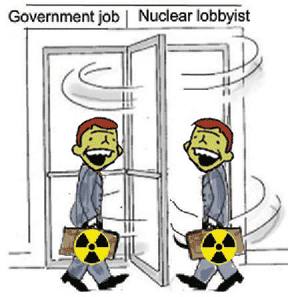 Radiation Free Lakeland 19th Feb 2021, Letter
 sent today to MP Tim Farron from Radiation Free Lakeland. We haven been looking at West Cumbria Mining’s lobbying over the last several years. While WCM class themselves as a “small company” in order it seems to avoid full filing of company finances, they have been afforded incredible access to key government departments. Access that other Cumbrian small businesses could only dream of.
wonder how CoRWM expect Mark Kirkbride’s business interests of a coal mine in the same area will make the already complex and faulted geology in the Eastern Irish Sea area safer?)
Problems in decommissioning legacy nuclear waste silos
Jonathan Lamb: “We wanted to increase productivity but realised that further improvements to the machining process were impossible using conventional machinery and fixturing.
City giant Legal and General will not be funding Sizewell nuclear project
 Telegraph 20th Feb 2021, Sizewell C proves to be a turn-off for City giant Legal & General. Legal & General has ruled out helping to fund the new Sizewell C nuclear power plant, dealing a blow to EDF as it seeks backers for the £20bn project.
L&G has not spoken publicly about its plans but in a written response to a pension-holder, one of its investment service consultants said: “I have had it confirmed that Legal & General will not be investing in the Sizewell C nuclear power plant.” L&G declined to comment further. It comes after Aviva Investors expressed concerns about the potential ESG (environmental, social and governance) risks of nuclear power. It said the ESG impact of nuclear was “far from clear at this time.” L&G’s boss Nigel Wilson reportedly described Hinkley in 2016 as a “£25bn waste of money”. https://www.telegraph.co.uk/business/2021/02/20/sizewell-c-proves-aturn-off-city-giant-legal-general/
Relief that Bradwell nuclear project has stalled
altogether.
announced engagement and active project work on Bradwell B will be paused
for at least a year and says it indicates a “significant reversal” for
the project.
Generation Company – a collaboration between China General Nuclear (CGN)
and EDF – have stalled. The Bradwell group said, in order to tightly
control expenditure, it needs to pause aspects of the project it is not yet
ready to progress. But BANNG chairman Prof Andy Blowers said: “Despite
urging the developer to suspend public engagement during the pandemic,
BANNG was told the national need was urgent and it was in the public
interest that the proposed development is not indefinitely or even
substantially delayed.
https://www.gazette-news.co.uk/news/19094101.baang-reacts-positively-bradwell-b-talks-paused/
1 This Month
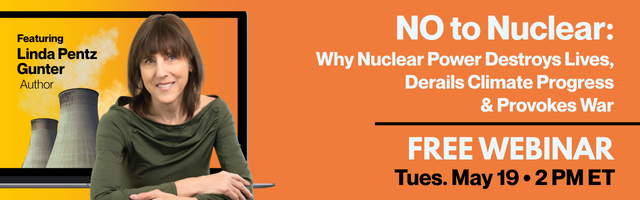
19 May – Webinar No To Nuclear: Why Nuclear Power Destroys Lives, Derails Climate Progress and Provokes War
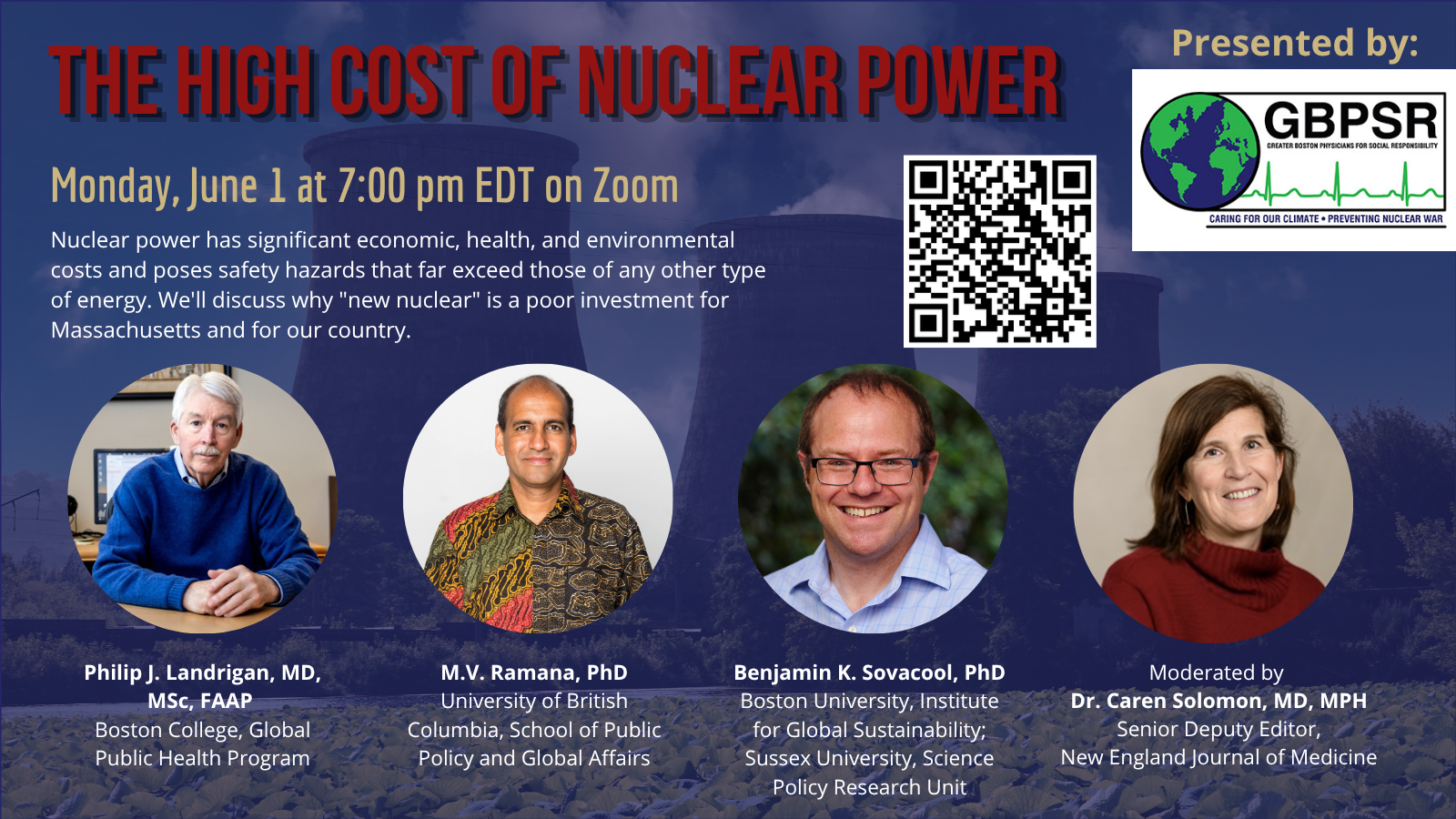
1 June Webinar – The High Cost of Nuclear Power – Register


of the week– Nuclear Reactor Information Task Force
To see nuclear-related stories in greater depth and intensity – go to https://nuclearinformation.wordpress.com
-
Archives
- May 2026 (211)
- April 2026 (356)
- March 2026 (251)
- February 2026 (268)
- January 2026 (308)
- December 2025 (358)
- November 2025 (359)
- October 2025 (376)
- September 2025 (257)
- August 2025 (319)
- July 2025 (230)
- June 2025 (348)
-
Categories
- 1
- 1 NUCLEAR ISSUES
- business and costs
- climate change
- culture and arts
- ENERGY
- environment
- health
- history
- indigenous issues
- Legal
- marketing of nuclear
- media
- opposition to nuclear
- PERSONAL STORIES
- politics
- politics international
- Religion and ethics
- safety
- secrets,lies and civil liberties
- spinbuster
- technology
- Uranium
- wastes
- weapons and war
- Women
- 2 WORLD
- ACTION
- AFRICA
- Atrocities
- AUSTRALIA
- Christina's notes
- Christina's themes
- culture and arts
- Events
- Fuk 2022
- Fuk 2023
- Fukushima 2017
- Fukushima 2018
- fukushima 2019
- Fukushima 2020
- Fukushima 2021
- general
- global warming
- Humour (God we need it)
- Nuclear
- RARE EARTHS
- Reference
- resources – print
- Resources -audiovicual
- Weekly Newsletter
- World
- World Nuclear
- YouTube
-
RSS
Entries RSS
Comments RSS
 nuclear-news