USA to join in multilateral talks with EU and Iran, on return to nuclear deal
Guardian 19th Feb 2021, The US has agreed to take part in multilateral talks with Iran hosted by the EU, with the aim of negotiating a return by both countries to the 2015
nuclear deal that is close to falling apart in the wake of the Trump
administration.
RESIDENTS fear nuclear waste is buried beneath land being earmarked for development.
 Lancashire Telegraph 18th Feb 2021, RESIDENTS fear nuclear waste is buried beneath land being earmarked for development. Blackburn with Darwen Council has included 94 acres of Lancashire Telegraph 18th Feb 2021, RESIDENTS fear nuclear waste is buried beneath land being earmarked for development. Blackburn with Darwen Council has included 94 acres ofcountryside on the edge of the borough in its draft local plan as suitable for employment uses. But residents and West Pennine Tory councillor Julie
Slater fear nuclear waste was dumped on old mineshafts in the 1950s. The green belt land between Belthorn and Guide is included in the draft local plan which runs until 2037 as ideal for business, commercial and job-creating development. Cllr Slater, Darwen MP Jake Berry, his Hyndburn Tory colleague Sara Britcliffe want the 94 acres removed from the blueprint while the nuclear waste concerns are investigated. Blackburn with Darwen
Council’s growth boss Cllr Phil Riley said preliminary investigations found no evidence of any atomic material. Cllr Slater said: “The site is located in a Coal Authority ‘High Risk Area’ and there are a number of mine shafts along the Grane Road. “In the early 1950s residents believe a large amount of nuclear waste was dumped into the shafts along the roadside. “There was no formal and very little informal regulation so it is unclear as to the exact location, amount and what it contains, but sources suggest up to 900 tonnes. “It is unclear where the tunnels from these shafts are but there is a high chance they run into the proposed site and our fear is the waste could be disturbed when work begins. https://www.lancashiretelegraph.co.uk/news/19099926.blackburn-nuclear-waste-fears-development-plans/ |
|
New documentary explores Chernobyl Exclusion Zone
explore the Chernobyl Nuclear Power Plant itself where the explosion
happened and live in the surrounding areas and danger zones that were
destroyed in the disaster and are still to this day radioactive. The plant
exploded on the 26th April 1986 sending massive amounts of radioactive
material across Europe. It is the worst nuclear accident in history, even
after over 30 years there’s still too much radioactivity in the area for
people to be there for long periods of time. Ben will live inside the
Chernobyl Exclusion Zone for 7 days, they have even been granted access to
film in the power plant and the control room but they can only spend 5
minutes inside the control room, due to radiation safety restrictions.
Over 100,000 people sign petition to stop Sizewell nuclear, save nature reserve

East Anglian Daily Times 16th Feb 2021, More than 100,000 people have signed a petition calling for the proposed Sizewell C nuclear power station to be rejected because of its fearednimpact on an internationally-important nature reserve.
The RSPB Love Minsmere campaign launched a national advertising campaign last week
targeting EDF Energy offices with more experts and wildlife campaigners backing its fight against the £20billion project.
https://www.eadt.co.uk/news/rspb-love-minsmere-petition-hits-100000-target-7327452
Accidents in both USA’s and Russia’s use of nuclear power in space
 Nuclear Rockets to Mars?, BY KARL GROSSMAN– CounterPunch, 16 Feb 21”…………There have been accidents in the history of the U.S.—and also the former Soviet Union and now Russia—using nuclear power in space.
And the NAS report, deep into it, does acknowledge how accidents can happen with its new scheme of using nuclear power on rockets for missions to Mars.
It says: “Safety assurance for nuclear systems is essential to protect operating personnel as well as the general public and Earth’s environment.” Thus under the report’s plan, the rockets with the nuclear reactors onboard would be launched “with fresh [uranium] fuel before they have operated at power to ensure that the amount of radioactivity on board remains as low as practicable.” The plans include “restricting reactor startup and operations in space until spacecraft are in nuclear safe orbits or trajectories that ensure safety of Earth’s population and environment” But, “Additional policies and practices need to be established to prevent unintended system reentry during return to Earth after reactors have been operated for extended periods of time.”
The worst U.S. accident involving the use of nuclear power in space came in 1964 when the U.S. satellite Transit 5BN-3, powered by a SNAP-9A plutonium-fueled radioisotope thermoelectric generator, failed to achieve orbit and fell from the sky, disintegrating as it burned up in the atmosphere, globally spreading plutonium—considering the deadliest of all radioactive substances. That accident was long linked to a spike in global lung cancer rates where the plutonium was spread, by Dr. John Gofman, an M.D. and Ph. D., a professor of medical physics at the University of California at Berkeley. He also had been involved in developing some of the first methods for isolating plutonium for the Manhattan Project.
NASA, after the SNAP-9A (SNAP for Systems Nuclear Auxiliary Power) accident became a pioneer in developing solar photovoltaic power. All U.S. satellites now are energized by solar power, as is the International Space Station.
The worst accident involving nuclear power in space in the Soviet/Russian space program occurred in 1978 when the Cosmos 954 satellite with a nuclear reactor aboard fell from orbit and spread radioactive debris over a 373-mile swath from Great Slave Lake to Baker Lake in Canada. There were 110 pounds of highly-enriched (nearly 90 percent) of uranium fuel on Cosmos 954.
Highly-enriched uranium—90 percent is atomic bomb-grade—would be used in one reactor design proposed in the NAS report. And thus there is a passage about it under “Proliferation and security.” It states that “HEU [highly enriched uranium] fuel, by virtue of the ease with which it could be diverted to the production of nuclear weapons, is a higher value target than HALEU [high assay low enriched uranium], especially during launch and reentry accidents away from the launch site. As a result, HEU is viewed by nonproliferation experts as requiring more security considerations. In addition, if the United States uses HEU for space reactors, it could become more difficult to convince other countries to reduce their use of HEU in civilian applications.”
As for rocket propulsion in the vacuum of space, it doesn’t take much conventional chemical propulsion to move a spacecraft—and fast……..more https://www.counterpunch.org/2021/02/16/nuclear-rockets-to-mars/
Germany concerned about Poland’s nuclear energy plans
|
Germany concerned about Poland’s nuclear energy plans, DW, 17 Feb 21, The Polish government wants to start producing nuclear energy in 2033 and has agreed to deals with the US and France. But Germany is increasingly alarmed by its neighbor’s energy plans……….
A seemingly perfect solutionNuclear reactors are considered by many to be the perfect solution. Plans to develop nuclear energy go back to the 1970s and construction had begun on two reactors of Soviet design in Zarnowiec, some 80 kilometers (50 miles) northwest of Gdansk, but was stopped after the 1986 Chernobyl disaster. All subsequent attempts to relaunch the project failed. Now, the new reactors will probably be built in Zarnowiec and nearby Lubiatowo-Kopalino. However, Poland cannot fund the reactors, whose capacity will be six to nine gigawatts and which are estimated to cost €30 billion ($36 billion). Last year, Prime Minister Mateusz Morawiecki said that the ideal partners for the project, both in terms of technology transfer and funds, would be “proven partners from NATO and the western world.” US or France?An ideal partner for Poland would be the US. Former President Donald Trump raised great hopes when he visited his Polish counterpart Andrzej Duda in June 2020 and promised support from US companies. The prime minister said that the meeting had “moved Poland in the right direction.” The two countries signed a preliminary agreement to cooperate on the development of Poland’s nuclear energy program less than a month before Trump’s election defeat. But with Trump out of office, Poland lost its closest ally. Now France has come into play. On February 2, the day the government approved the energy strategy, French Foreign Trade Minister Franck Riester visited Poland to offer support. The CEO of the state-owned Electricite de France (EDF) spoke to the Polish media and proposed a deal to fund two-thirds of the project while promoting the European Pressurized Reactor (EPR), which is already in operation in Taishan, China. With a capacity of over 1000 MW (1 GW) the gigantic reactor corresponds to what the government is looking for. Potential risks…..Other experts said that Poland’s plans went against the current trend in the EU to move towards gas and renewable energies. “With current technologies, it would not be difficult to raise the share of renewables in the energy mix to 80%. The missing 20% is due to the Polish winter, when there is little wind and little sun,” Marcin Popkiewicz, a nuclear physicist at Warsaw University, told DW, pointing out that it’s also very expensive to build nuclear power plants. “For customers, the cost of nuclear energy could be five times the cost of renewables.” Lagging behindThe government’s energy strategy already includes renewables, but progress has been slow. Their share of the energy mix has stagnated at 14% for years. This is lower than the EU average of 20% (2020). This could change in 2025 when Poland’s first wind farm on the Baltic coast goes into operation. It’s slated to reach a capacity of 8 GW by 2040……….. For the time being, fossil fuels account for the bulk of Poland’s energy supply Germany wants to be kept in the loopPoland’s plans are already causing resentment in neighboring Germany. According to an expert report commissioned by the Green Party’s parliamentary faction in the German Bundestag in January, the Polish nuclear power plants, just a few hundred kilometers from the German border, would pose a high risk to the population. “Experts evaluated everything on the basis of weather data over the past three years. There is a 20% probability that Germany would be affected by an accident at the planned nuclear power plant,” the chairwoman of the Bundestag Committee on the Environment, Ursula Kotting-Uhl, told DW. “In the worst-case scenario, 1.8 million Germans would be exposed to radiation of over 20 millisieverts. At that level, we would have to start evacuating. Berlin and Hamburg could be affected, which are densely populated.” https://www.dw.com/en/germany-concerned-about-polands-nuclear-energy-plans/a-56603782 |
|
Is this the end of the road for UK’s Bradwell nuclear project?
|
16 February, 2021, The Blackwater Against New Nuclear Group (BANNG) considers the announcement by BRB, the UK division of China General Nuclear (CGN), that engagement and all active project work on Bradwell B will be paused for at least a year indicates a significant reversal for the project. Despite urging the developer to suspend public engagement during the pandemic, BANNG was told the national need was ‘urgent’ and it was in the public interest that the proposed development ‘is not indefinitely or even substantially delayed’.
‘Now it seems, the project is slowing down and no longer so vital. The indefinite pause makes one wonder if this could be the beginning of the end for a project for which there is no vital need and which will create irretrievable damage and danger to the coastal communities of Essex’, said Prof. Andy Blowers, Chair of BANNG. Until a year ago CGN was claiming it was ramping up its plans for Bradwell B to take pole position in the UK’s civil nuclear programme as other projects fell by the wayside. This acceleration has apparently been impeded by the problem of travel for engineers between the UK and China during the pandemic and the risk that work is being delayed and getting out of sequence. It may be that this is the precipitating cause of the delay but there were already signs that the project was encountering difficulties that could lead to ultimate abandonment. First among these was the massively negative public reaction to the proposals that were revealed on the eve of the first lockdown. People were shocked by the sheer scale of the project and its massive impact on environment, communities and wellbeing. Even the Environment Agency (EA) was scathing in its criticism emphasising the contrast between the plan’s economic ambitions and the inadequate ambition for the environment and lack of detailed information given by the developer. In the last few weeks the EA has produced a cautious assessment of the reactors planned for Bradwell indicating there are a number of issues to be resolved before the project gets design approval. On top of this came the loss of political support. Initially, all the main local authorities welcomed the power station for the potential jobs and wealth it would bring but making clear support was contingent on environmental protection and improvement. First Colchester Borough and then Maldon District, which had been a major protagonist for Bradwell B, declared total opposition to the proposals. Maldon went further, turning down BRB’s planning application for land investigations at the site. The company has appealed but the long delay by the planning inspector in determining the appeal suggests there may be problems with environmental impacts. Elsewhere, the nuclear industry is running into trouble. The recent decision by the infrastructure planning inspectorate to recommend refusal of planning for the Wylfa project in North Wales on environmental grounds bodes ill for both Sizewell and Bradwell where environmental sensitivities are at least as strong. The threat to the iconic Colchester Native Oyster and Brent Geese are among the many environmental impacts posed by Bradwell B. The potential suitability of the Bradwell site has long been contested by BANNG and it is currently under review by the Government. Recent climate change predictions indicate that the site could be overwhelmed by sea-level rise and storm surges before the end of this century and well before the site could be cleared of spent fuel and other highly radioactive wastes during the next century. And the Government’s support for nuclear power as set out in its Energy White Paper is hardly evangelical: the Government ‘will remain open to other projects if the nuclear industry demonstrates that it is able to reduce costs and deliver to time and budget’. On Bradwell B specifically the White Paper is silent. Lastly, in the geopolitical sphere, there are serious concerns about security risks in inviting Chinese participation in the development of the UK’s critical infrastructure. It is quite possible, some would say likely, that the project will be withdrawn as part of the fall out in deteriorating Chinese and UK relations. Andy Blowers commented: ‘Taking all these issues together, it is quite possible that the pause will provide the prelude to final abandonment of the project. Covid-19 may be the final straw. For far too long this black cloud has been hanging over the Blackwater. At last there are signs of a silver lining’. |
|
Lancaster City Council will call on UK to join nuclear weapons ban
 Lancaster City Council will call on government to join nuclear weapons ban
City councillors have voted in favour of writing to the government to urge it to sign up to the United Nation’s Treaty on Prohibition of Nuclear Weapons, which came into force last month. Lancaster Guardian, By Nick Lakin, Monday, 15th February 2021, The motion was brought to council by Green Councillor Mandy Bannon, who represents Marsh ward.
South Lakeland and Lancaster District Campaign for Nuclear Disarmament (CND), has praised the council for its decision.
The motion brought to council was in response to a global campaign organised by the International Campaign for the Abolition of Nuclear Weapons (ICAN) which was awarded the Nobel Peace Prize in 2017………
Lancaster will join 16 other UK councils who already support the ICAN campaign including Leeds, Manchester, Edinburgh, Oxford, Norwich, and several authorities in London and Scotland…….https://www.lancasterguardian.co.uk/news/uk-news/lancaster-city-council-will-call-government-join-nuclear-weapons-ban-3134898
Bulgaria prosecutes former energy ministers over mismanagement of Belene nuclear power project
Intellinews 13th Feb 2021, Bulgaria’s prosecution has filed charges against former energy ministers Rumen Ovcharov and Petar Dimitrov over mismanagement that led to a loss of around BGN500mn (€250mn) related to the project to build the Belene nuclear power plant, the Anticorruption Fund NGO said in a statement on February 12.
There was no official statement from the prosecution, but the NGO has published a photo of the documents. The accusations against the two former ministers and two former executive directors of the state-owned National Electricity Company (NEC), Mardik Papazyan and Lyubomir Velkov, were raised back in 2016 when the prosecution launched an investigation. It
claims the two former ministers failed to exercise sufficient control over the executive directors of NEK when they allowed them to sign a deal with Atomstroyexport on the nuclear power plant at Belene.
Covid-19 ”Hell” on UK nuclear submarine

‘HELL’ AT SEA Sailors on Royal Navy nuclear submarine come through ‘patrol from hell’ 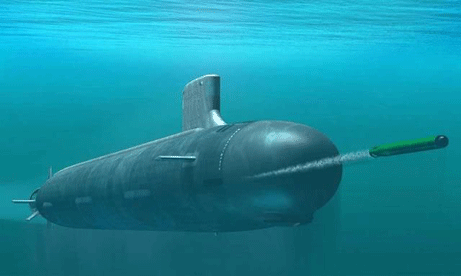 after Covid outbreak at sea, The Sun, Jerome Starkey, 12 Feb 2021,
Dozens on board HMS Vigilant reported sick but, with no access to a test lab, the precise number is not known. They had little chance to escape the bug while working in hot and cramped conditions.
A source said: “Imagine being cooped up underwater and breathing the same air when a killer virus is on the loose. It really was the patrol from hell.”
HMS Vigilant was on patrol as part of the Navy’s continuous at-sea deterrent.
The £3billion sub was the designated “bomber boat” and armed with Trident nukes.
“People sleep in bunks in tiny six-man cabins. They work on top of each other.”…….. https://www.thesun.co.uk/news/14036051/sailors-navy-nuclear-sub-covid-outbreak/
UK’s Freedom of Information law revealed Israel nuclear link, but now FOI is under threat
|
From duck houses to nuclear weapons: what we know because of Freedom of Information law, Open Democracy, Over the past 20 years, the ‘right to know’ legislation has helped expose many abuses of power, but now it’s under threat, Adam Bychawski11 February 2021 ”………. Since the act passed, politicians have repeatedly threatened to limit its powers. Recently, we revealed that an ‘Orwellian’ Cabinet Office unit has been coordinating Freedom of Information (FOI) responses across government departments, and screening journalists’ requests in ways that experts say could be breaking the law. The unit has blocked the release of files about the contaminated blood scandal that claimed the lives of thousands across Britain and information about high-rise buildings that have potentially lethal aluminium cladding. It’s not just journalists and rights campaigners who should be worried – the public should be too. Many of the biggest abuses of power have come to light only because of Freedom of Information requests. Here are just a few examples of what Freedom of Information requests have revealed over the years…………. Britain’s role in Israel’s nuclear weapons program……While the West has for decades been attempting to rein in Iran’s nuclear ambitions, another Middle Eastern state is believed to have quietly built a covert nuclear bomb. Israel has long had a policy of neither confirming nor denying the existence of its nuclear programme. Despite this, it is thought to have established a clandestine arsenal on par with India and Pakistan. How did Israel achieve this with a minimum of international outcry? Freedom of Information disclosures from the 1960s revealed that Britain was among many countries that secretly made hundreds of shipments of nuclear materials to Israel. The documents showed that the nuclear industry played a key role in securing the transfer of the materials, despite warnings by British intelligence that it might be used to make a bomb. ……… A pandemic might seem like an unusual time to plan a “radical shake-up” of the NHS, but a freedom of information request by openDemocracy revealed that is exactly what the government has been preparing. The disclosure showed that Munira Mirza, the controversial head of Boris Johnson’s policy unit, has been apportioned to oversee the plan. Mirza, who previously worked for Johnson during his time as mayor of London, has no background or policy experience in health. The government initially declined to confirm reforms, it took a freedom of information request to confirm they are happening. In February, a leaked document revealed plans to give the government substantially more control over the NHS, prompting concerns from health works about the timing of the changes. Who’s behind a hardline Brexit pressure group?………The public has a right to know who is trying to influence government policy, so Ministers should not prevent this information from being released because it may be politically awkward,” said Transparency International’s research manager, Steve Goodrich. https://www.opendemocracy.net/en/freedom-of-information/duck-houses-nuclear-weapons-what-we-know-because-freedom-information-law/ |
|
European Parliament calls for a halt to Belarus nuclear plant in Ostrovets
|
MEPs call for suspension of the launch of the Belarus nuclear plant in Ostrovets, European Parliament News, 12 Feb 21, MEPs voice serious concerns over the safety of the Ostrovets nuclear plant in Belarus and demand that its commercial launch be suspended.
In a resolution adopted with 642 votes to 29, with 21 abstentions, Parliament criticises the hasty commissioning of the Ostrovets nuclear plant and the continued lack of transparency and official communication regarding the frequent emergency shutdowns of the reactor and equipment failure. Despite outstanding safety concerns, the plant started to generate electricity on 3 November 2020 without fully implementing recommendations made in the 2018 EU peer review and by the International Atomic Energy Agency (IAEA), MEPs say, expressing their discontent with the rush to start commercial operation of the plant in March 2021. MEPs voice serious concerns over the safety of the Ostrovets nuclear plant in Belarus and demand that its commercial launch be suspended. In a resolution adopted with 642 votes to 29, with 21 abstentions, Parliament criticises the hasty commissioning of the Ostrovets nuclear plant and the continued lack of transparency and official communication regarding the frequent emergency shutdowns of the reactor and equipment failure. Despite outstanding safety concerns, the plant started to generate electricity on 3 November 2020 without fully implementing recommendations made in the 2018 EU peer review and by the International Atomic Energy Agency (IAEA), MEPs say, expressing their discontent with the rush to start commercial operation of the plant in March 2021……..https://www.europarl.europa.eu/news/en/press-room/20210204IPR97126/meps-call-for-suspension-of-the-launch-of-the-belarus-nuclear-plant-in-ostrovets |
|
Iran warned by France, Germany, UK, over uranium metal production
France, Germany, UK warn Iran over uranium metal production, Iran is undermining the chance for renewed diplomacy to fully realise the 2015 nuclear deal objectives, the trio says. https://www.aljazeera.com/news/2021/2/12/france-germany-uk-slam-iran-for-uranium-metal-production
The United Nations’ nuclear watchdog said earlier this week that Iran had followed through on its plan to make uranium metal, after Tehran had alarmed Western nations with its intent to produce the material with which the core of nuclear weapons can be made.
There have been hopes that the 2015 nuclear deal between Iran and world powers could be revived through new talks under the administration of United States President Joe Biden, after his predecessor Donald Trump walked out of the deal in 2018.
The European trio, who are signatories to the deal formally known as the Joint Comprehensive Plan of Action (JCPOA), said in a joint statement on Friday that Iran’s move to produce uranium metal was a violation of the accord that endangers the chance to fully realise the deal, which aims to reduce international sanctions on Iran in exchange for limits to its nuclear programme
“We strongly urge Iran to halt these activities without delay and not to take any new non-compliant steps on its nuclear programme. In escalating its non-compliance, Iran is undermining the opportunity for renewed diplomacy to fully realise the objectives of the JCPOA,” said the European trio in a statement.
The IAEA report
The International Atomic Energy Agency (IAEA), the UN nuclear watchdog, said on Wednesday Iran has started producing uranium metal, in a fresh breach of the limits laid out in the 2015 deal……..it will require the most delicate diplomacy to move forward, with the White House insisting Iran must move to full compliance before the US can return to the deal, but Tehran wanting no preconditions.
Iranian President Hassan Rouhani on Thursday said he was disappointed with the Biden administration over the lack of progress to date.
“We have still not seen any goodwill from the new government,” Rouhani told state television.

Not mentioned? Nuclear fusion is hugely expensive, and this quest has produced much toxic waste

|
Radiation Free Lakeland 11th Feb 2021, The local News and Star and other press have reported uncritically that ….“The Moorside Clean Energy Hub came out on top in the mini
competition. Cumbria LEP will now work with Copeland Borough Council in a bid to bring the cutting edge technology to Copeland. If successful, a prototype of the fusion reactor, which Professor Stephen Hawking has called “the key to the future” could be housed at Moorside; along with the Small Modular Reactors that are already in the works. This is right at the cutting edge of green energy” said deputy chairman of Copeland Borough Council David Moore.” What NuSpeak is this! Nuclear is not clean and
Fusion is Expensive as in off the richter scale ..it uses huge energy, needs tritium etc ..doesnt work (as in produce net energy) despite decades of funding and produces waste even tho they claim it doesnt. There was a telling article framed as a Brexit story in the Financial Times but the big reveal was that Fusion research reactors (RESEARCH reactors!) have produced enormous amounts of nuclear waste.https://mariannewildart.wordpress.com/2021/02/11/fusion-profligate-nuclear-waste-and-tritium-tainted-nightmare-for-cumbria-and-lancashire-no-thanks/ |
|
As UK govt desperate to promote nuclear industry, it’s even more desperate to solve nuclear waste dilemma

in north-west England asked to consider hosting sites to bury radioactive material. In recent weeks the UK government has invited residents from two communities in north-west England to a “virtual exhibition” to gauge their views on whether they would be prepared to solve one of the biggest environmental challenges facing the country: what to do with more than half a century’s worth of toxic nuclear waste.
campaigned against the facility last time.
there [yet] a functioning deep geological repository for spent nuclear fuel,” said Dr Paul Dorfman of University College London’s Energy Institute.
strategy in place,” said Corkhill.
https://www.ft.com/content/2321bfae-839a-468f-b933-d699b6ff6864
1 This Month
19 May – Webinar No To Nuclear: Why Nuclear Power Destroys Lives, Derails Climate Progress and Provokes War

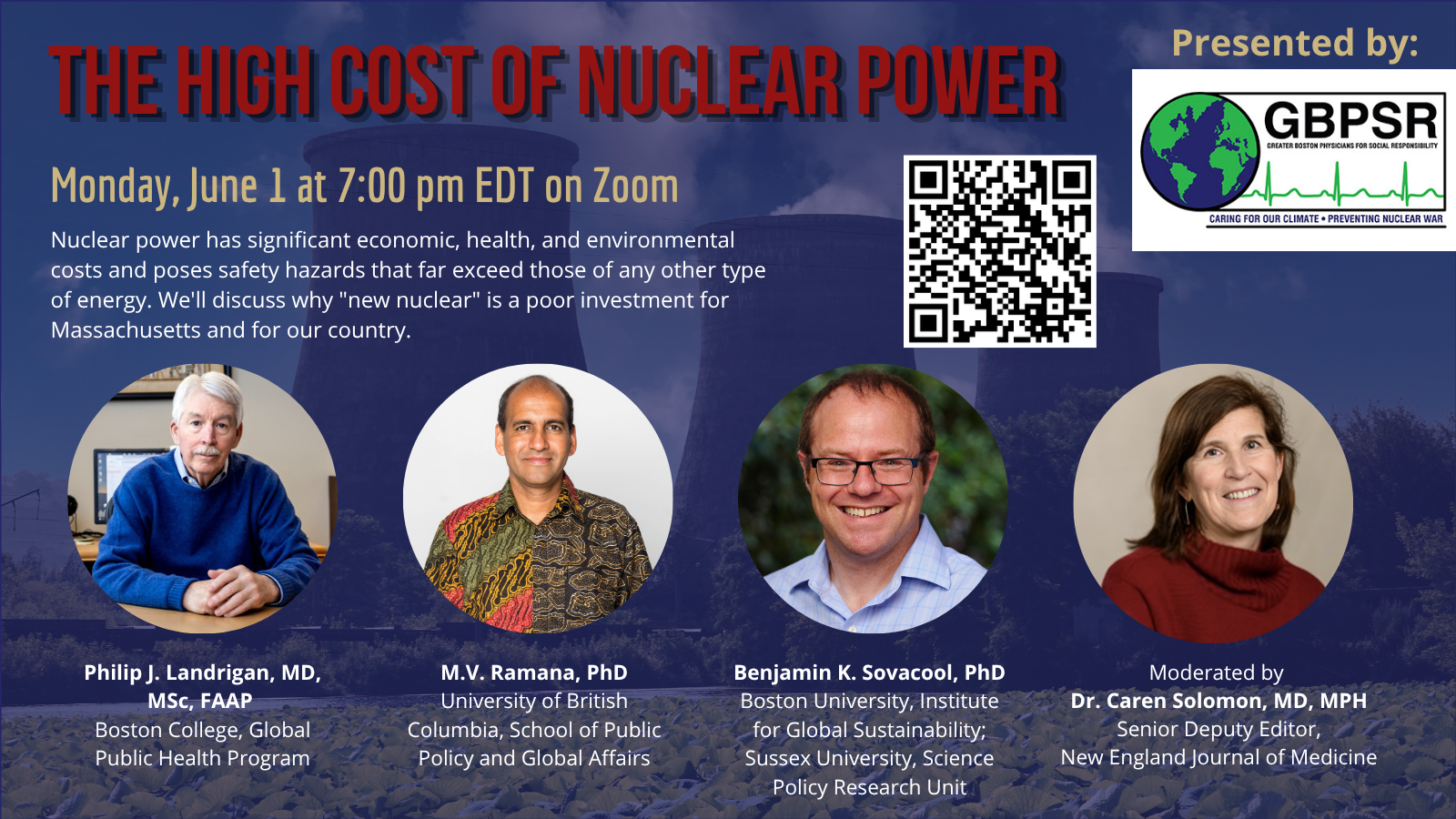
1 June Webinar – The High Cost of Nuclear Power – Register


of the week– Nuclear Reactor Information Task Force
To see nuclear-related stories in greater depth and intensity – go to https://nuclearinformation.wordpress.com
-
Archives
- May 2026 (211)
- April 2026 (356)
- March 2026 (251)
- February 2026 (268)
- January 2026 (308)
- December 2025 (358)
- November 2025 (359)
- October 2025 (376)
- September 2025 (257)
- August 2025 (319)
- July 2025 (230)
- June 2025 (348)
-
Categories
- 1
- 1 NUCLEAR ISSUES
- business and costs
- climate change
- culture and arts
- ENERGY
- environment
- health
- history
- indigenous issues
- Legal
- marketing of nuclear
- media
- opposition to nuclear
- PERSONAL STORIES
- politics
- politics international
- Religion and ethics
- safety
- secrets,lies and civil liberties
- spinbuster
- technology
- Uranium
- wastes
- weapons and war
- Women
- 2 WORLD
- ACTION
- AFRICA
- Atrocities
- AUSTRALIA
- Christina's notes
- Christina's themes
- culture and arts
- Events
- Fuk 2022
- Fuk 2023
- Fukushima 2017
- Fukushima 2018
- fukushima 2019
- Fukushima 2020
- Fukushima 2021
- general
- global warming
- Humour (God we need it)
- Nuclear
- RARE EARTHS
- Reference
- resources – print
- Resources -audiovicual
- Weekly Newsletter
- World
- World Nuclear
- YouTube
-
RSS
Entries RSS
Comments RSS
 nuclear-news