110, 000 people in French Polynesia affected by the radioactive fallout from atomic bomb tests
BBC 9th March 2021, Researchers used declassified French military documents, calculations and testimonies to reconstruct the impact of a number of the tests. They
estimated that around 110,000 people in French Polynesia were affected by
the radioactive fallout. The number represented “almost the entire”
population at the time, the researchers found.
France has consistently underestimated the devastating impact of its nuclear tests in French Polynesia
Guardian 9th March 2021, France has consistently underestimated the devastating impact of its nuclear tests in French Polynesia in the 1960s and 70s, according to
groundbreaking new research that could allow more than 100,000 people to
claim compensation. France conducted 193 nuclear tests from 1966 to 1996 at
Moruroa and Fangataufa atolls in French Polynesia, including 41 atmospheric
tests until 1974 that exposed the local population, site workers and French
soldiers to high levels of radiation. By crunching the data from 2,000
pages of recently declassified French defence ministry documents, analysing
maps, photos and other records, and carrying out dozens of interviews in
France and French Polynesia, researchers have meticulously reconstructed
three key nuclear tests and their fallout.
A dangerous and toxic culture of bullying at Britain’s Sellafield nuclear site
BBC 10th March 2021, A “toxic culture” of bullying and harassment at Sellafield could let
serious safety concerns go unreported, whistleblowers have told the BBC. In
a leaked letter, the nuclear site’s group for ethnic minority staff
described “shocking stories” of racial abuse.
Other workers said sexist and homophobic bullying had become routine. Sellafield said it was committed to eradicating unacceptable behaviour from the workplace.
A BBC investigation found: Multiple claims of serious bullying and sexual harassment among its
10,000-strong workforce. Allegations of racial abuse outlined in a leaked
letter to senior management. Concerns about the working culture at the site
and how it could impact nuclear safety.
“When I started working there, it quickly became apparent there was rampant bullying in the organisation,” said Alison McDermott, a senior consultant hired in 2017 to work on
Sellafield’s equality strategy. She said staff interviews and focus groups
revealed serious allegations of sexual harassment at the sprawling site on
the Cumbrian coast.
Scottish Council calls on big pension fund to stop investing in weapons makers

The Ferret 5th March 2021, Inverclyde Council has called on Scotland’s largest council pension fund to stop investing in arms and to commit to ethical investments. A motion was passed this week after Inverclyde Council was told that Strathclyde Pension Fund (SPF) held shares in 11 of the world’s 20 biggest arms manufacturers, including some involved in the production of nuclear weapons. The council’s decision has been welcomed by Campaign Against Arms Trade, Nuclear Free Local Authorities (NFLA) and Don’t Bank on the Bomb.
https://theferret.scot/inverclyde-council-pension-fund-invest-ethically/
A new setback for France’s Flamanville nuclear reactor
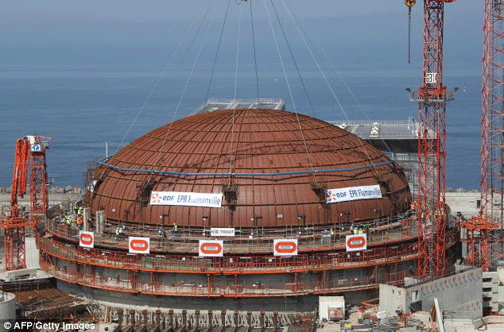 La Presse de la Manche 5th March 2021, Nuclear: a new setback for the Flamanville EPR. A “significant event” was declared on March 2, 2021 to the Nuclear Safety Authority, concerning taps on the main primary circuit of the EPR reactor. While the file of the welds to be resumed on the main secondary circuit , the steam circuit in fact, is still being examined by the Nuclear Safety Authority , EDF declared on March 2 to ASN a new “event”. significant “. It concerns deviations from the study reference system on three taps of the main primary circuit of the La Presse de la Manche 5th March 2021, Nuclear: a new setback for the Flamanville EPR. A “significant event” was declared on March 2, 2021 to the Nuclear Safety Authority, concerning taps on the main primary circuit of the EPR reactor. While the file of the welds to be resumed on the main secondary circuit , the steam circuit in fact, is still being examined by the Nuclear Safety Authority , EDF declared on March 2 to ASN a new “event”. significant “. It concerns deviations from the study reference system on three taps of the main primary circuit of theFlamanville EPR reactor. |
How Scotland’s Dunoon became an American nuclear base, and a target
|
60 years on: The day the US Navy came armed with nuclear missiles https://www.heraldscotland.com/news/19140712.60-years-day-us-navy-came-armed-nuclear-missiles/ By Sandra Dick 7 Mar 21, THE sun shone brightly over the calm Holy Loch on a beautiful early March day in 1961, as USS Proteus – 18,000 tons of American might – glided towards her foe.
By late afternoon, she was passing Islay. And as the US Navy vessel drew closer to her final destination, anti-nuclear demonstrators who had been waiting for weeks for the chance to pounce, braced themselves for their attack. The first salvo of a David versus Goliath battle saw protesters in dinghies and canoes pitted against the most menacing of modern warfare, and it would rage – on and off – for months to come. It’s now 60 years since USS Proteus, soon followed by a fleet of US Navy Polaris submarines, set up base close to Dunoon. And although the area was not unfamiliar with submarine activity – Royal Navy submarines were based in the area throughout the Second World War – the Americans, with their terrifying nuclear arsenal, a raging Cold War and the relatively fresh memories of Hiroshima and Nagasaki, meant this was no normal military manoeuvre. The US Navy and Polaris would remain a feature of the Dunoon landscape for the next 31 years. For those who could put aside any concerns of living with nuclear missiles on their doorstep, it brought economic and social benefits – and more than a few weddings between US sailors and local women. For others, the presence of the American nuclear force put a picturesque and peaceful corner of the country in Soviet crosshairs, and propelled Scotland into the very core of a deadly nuclear war machine. The announcement that the Americans were coming was completely unexpected, recalls historian Trevor Royle, who has written about the Holy Loch base in his book on the Cold War in Scotland, ‘Facing The Bear’. “It came as a great surprise to people of Scotland – it was a shock to suddenly have the Cold War on their doorstep,” he says. America needed an operating base for their Polaris fleet,” he adds. “At the time Britain’s nuclear deterrent was V Bomber Force, obsolete bombers that could fly to Moscow and drop bombs but couldn’t get back. It was a one-way mission, and Britain wanted a system which worked better than that.” Faced with being left behind as a nuclear nation, Prime Minister Harold Macmillan struck a deal with President Dwight D. Eisenhower for the Holy Loch to become an extension of US territory and a berth for nuclear bombs. In return, Britain would acquire the Polaris nuclear delivery system, enabling the Royal Navy to operate its own fleet from Faslane. However, the announcement in November 1960, propelled Holy Loch communities into a world of US and Soviet war games, which would see submarines play cat and mouse across fishing grounds and Atlantic waters. Most Scots, says Trevor, accepted what was heading their way. Some, among them taxi drivers and bed and breakfast businesses around Dunoon who had feared cheap foreign holidays were set to scupper the tourist trade, were more than happy. Others were outraged. Isobel Lindsay was just 17 years old at the time and secretary of Lanarkshire CND. Soon, she’d be among hundreds to descend on Dunoon to express outrage at the arrival of nuclear weapons in Scottish waters. “The announcement came out of the blue,” she recalls. “Until then, there had been a small anti-nuclear movement in Scotland. But this ignited it.” The arrival of the Polaris fleet’s support ship, USS Proteus, with its crew of 980 officers and men and the prospect of up to 500 dependent families on the way, signalled a call to action; protestors took to the water in tiny crafts to wave anti-nuclear banners and flags and 1,000 protesters marched along the loch. A week later, the Patrick Henry arrived, the first of ten Polaris submarines and with its 135 crew primed at a minute’s notice to blast off up to 16 Polaris rockets, each capable of destroying a city 1500 miles away. It was greeted by a lone canoeist who, after a valiant 15-minute chase by eight patrol vessels, was deliberately tipped in the water. Isobel, whose father had been among the first British forces to enter Hiroshima in the wake of the 1945 atomic bomb, remembers the protest movement growing in size. “Very quickly there were demonstrations in Glasgow and at the Holy Loch,” she says. “One march was organised from London to a 24-hour sit down that blocked Ardnadam pier. “The police tactics were to leave us sitting there – the sailors had to clamber over us to get to the pier.” Protest songs were hastily written, including Ding Dong Dollar, which set those keen to benefit financially from the base against those opposed to nuclear weapons, while protests were laboriously organised by letter, calls from phone boxes and plotted on maps. By May, a two storey floating barracks had been towed to the Holy Loch, providing accommodation for up to 350 personnel, and attitudes towards the protestors hardened. Canoeists who dared to approached US vessels were sprayed with jet hoses, on land, demonstrators were met by dozens of police, wire mesh, iron railings, barbed wire and ‘black Marias’. In Dunoon, locals picked their way between protestors and US Navy sailors. And while taxi drivers enjoyed a boom in business and generous tips, Glasgow’s prostitutes also descended. “It was a great culture shock,” adds Trevor. “Until then, the only knowledge most people had of Americans came from the movies. The Americans came with the crew cuts and smart clothes. It was like Hollywood had come to Dunoon.” Up to 4,000 Americans were attached to the Holy Loch base, their children attended local schools and accommodation was snapped up. But, says Trevor: “Dunoon was very much a target in the event of any nuclear hostilities. “In addition to Polaris submarines, the Holy Loch was home to Hunter Killer submarines, and they all played the most dangerous games of cat and mouse with their Soviet opposite numbers. “Many fishing boats were caught up, among them the Antares.” The small trawler sank in November 1990 after its nets became tangled with an RN submarine. All four crew lost their lives. By that time, Polaris protestors had turned their attention to Faslane instead. And as the Cold War ended, the US Navy packed up. The last ship left in March 1992. “They left nothing behind,” adds Trevor. “Apart from the American sailors who found themselves in a foreign country and made friends with the local girls, fell in love and married, you would have to search hard to know there had been a US presence there at all.” |
|
Women in government – the key to getting rid of nuclear power

Nuclear withdrawal was thanks to women, says former energy minister, https://www.swissinfo.ch/eng/nuclear-withdrawal-was-thanks-to-women–says-former-energy-minister/46423854 5 Mar 21, Having four women in Switzerland’s seven-person  government played a key role in the decision to phase out nuclear energy ten years ago, according to Doris Leuthard, who was energy minister at the time of the nuclear disaster in Fukushima on March 11, 2011.
The three other female cabinet ministers at the time were Micheline Calmy-Rey and Simonetta Sommaruga from the left-wing Social Democratic Party and Eveline Widmer-Schlumpf from the centre-right Conservative Democratic Party.Leuthard, from the centre-right Christian Democratic Party, admitted that she didn’t immediately realise the scale of the disaster at Fukushima.
“My first reaction was to say that that’s very far away from us, in Japan, in a country that deals seriously and professionally with events of this kind. I didn’t realise right away that it was a major disaster,” she told Le Temps.
In an interviewExternal link with Swiss newspaper Le Temps on Thursday, Leuthard said she would have had a hard time convincing men on the political right to abandon nuclear power.
“I think women are generally more sensitive to the environment and to the risks to which the population is exposed. When safety is at stake, they are willing to look at new solutions, even if it means paying a little more. They were more quickly convinced that we could opt for a new energy mix,” said Leuthard, who stepped down from the government at the end of 2018.
Only gradually did it become clear how serious the disaster was and that Switzerland had to act. On March 14 the government imposed a moratorium on nuclear projects.
“It was a decision that had to be taken quickly because, at the time, we intended to replace the three oldest [nuclear] plants with a modern, new-generation facility. We had to carry out a new risk analysis and see whether we could maintain the nuclear option in our energy policy. We informed the owners of the Swiss power plants, who had submitted applications to build this new-generation facility. It was a difficult moment, as our decision could cause them significant damage. […] I must admit that I didn’t sleep very well for two nights.”
In the end Switzerland did decide in 2011 to phase out nuclear power, which supplies about a third of the country’s electricity production.
In 2017 Swiss voters endorsed a new energy law that aims to promote renewable energy by banning new nuclear power plants and reducing energy consumption.
In December 2019 the 47-year-old Mühleberg nuclear power plant near Bern was permanently switched off – the first of five Swiss nuclear power reactors to be decommissioned. The event was considered so important that viewers could follow the progress live on Swiss television.
French report on the unfairness of France’s nuclear history in Algeria

French report grapples with nuclear fallout from Algerian War https://thebulletin.org/2021/03/french-report-grapples-with-nuclear-fallout-from-algerian-war/?utm_source=Newsletter&utm_medium=Email&utm_campaign=ThursdayNewsletter03042021&utm_content=NuclearRisk_AlgerianWar_03042021&__cf_chl_captcha_tk__=32bfe924bf6171eab26d9deb08cd73459b5e69dc-1614896664-0-AWxxiguytXLkG_ERcOpFeDyCqmv7X1FYZmZBNGAnlwY6ZlI8PgWd2By Austin R. Cooper | March 4, 2021 n January, the French historian Benjamin Stora filed a report commissioned by the French President Emmanuel Macron aimed at “reconciliation of memories between France and Algeria,” which France ruled as the jewel of its colonial empire for more than 130 years.
The Stora Report addressed several scars from the Algerian War for Independence (1954–62), a bloody struggle for decolonization that met savage repression by French troops. One of these controversies stems from French use of the Algerian Sahara for nuclear weapons development.
France proved its bomb in the atmosphere above this desert, naming the inaugural blast , or Blue Jerboa, after the local rodent. Between 1960 and 1966, France detonated 17 nuclear devices in the Algerian Sahara: four atmospheric explosions during the Algerian War, and another 13 underground, most of these after Algerian Independence.
French nuclear ambitions became inextricable from the process of Algerian decolonization. The Saharan blasts drew international outrage, stalled ceasefire negotiations, and later threatened an uneasy peace across the Mediterranean.
The Stora Report signaled that radioactive fallout from the Algerian War has remained a thorn between the two nations. But the document comes up short of a clear path toward nuclear reconciliation.
A United Nations dispute. The French bomb collided with the Algerian War before the first mushroom cloud rose above the Sahara. In November 1959, Algerian allies representing independent states in Africa and Asia contested French plans for the desert in the First Committee on Disarmament at the United Nations.
Part of the French strategy at the United Nations was to drive a wedge between the nuclear issue and what French diplomats euphemistically termed the “Question of Algeria.” French obfuscation continued for decades.
France would not, until 1999, call the bloodshed a war, preferring the line that what happened in Algeria, as part of France, amounted to a domestic dispute, rather than UN business. Macron became, in 2018, the first French president to acknowledge “systemic torture” by French troops in Algeria.
The Afro-Asian challenge to Saharan explosions hurdled France’s diplomatic barricades at the United Nations. The French delegation tried to strike references to the Algerian War as irrelevant. But their African and Asian counterparts painted the desert blasts as a violation of African sovereignty.
The concern was not only for contested territory in Algeria, but also for independent states bordering the desert, whose leaders warned that nuclear fallout could cross their national borders. Radiation measurements taken in the wake of Gerboise bleue proved many of them right.
Nuclear weapons represented another piece of French imperialism on the continent.
Secret negotiations resumed in September 1961, with US Ambassador to Tunisia Walter N. Walmsley serving as France’s backchannel. The US State Department worried that French attachment to the test sites might thwart the decolonization process.
Lead Algerian negotiator Krim Belkacem asked Walmsley if prospects for a ceasefire still hinged on France retaining control of the test sites. Krim got his answer when Franco-Algerian talks resumed the following month, at the end of October 1961.
France did not abandon its goal to continue nuclear explosions in the Sahara. But the Algerian position appeared to have softened. So long as further blasts did not impinge on Algeria’s “eventual sovereignty” over the desert, as one archival document put it, a deal looked possible.
The Evian Accords marked a nuclear compromise. Finally signed in March 1962, the landmark treaty granted France a five-year lease to the Saharan test sites but did not specify terms of use.
Going underground. Advice from the French Foreign Ministry played a key role in pushing France’s weapons program beneath Saharan mountains. French diplomats suggested that underground explosions would present, according to one archival document, “significantly less serious” challenges than atmospheric ones for future relations with Algeria and its African neighbors.
This did not stop Algeria’s first president, Ahmed Ben Bella, from winning political capital with the nuclear issue. In public, Ben Bella cast Saharan blasts as an intolerable violation of Algerian sovereignty, as had his allies at the United Nations. In private, however, Ben Bella acquiesced to the Evian terms and reportedly tried to squeeze French financial aid out of the deal.
The Hoggar Massif shook 13 times before France handed over its two Saharan test sites to Algeria in 1967. An accident occurred during one of these underground blasts, dubbed Béryl, when containment measures failed. Several French soldiers and two high-ranking French officials suffered the highest radiation exposures, but roughly 240 members of “nomadic populations” in the region received lower doses.
Meanwhile, France began construction on its Pacific test range in French Polynesia, the site of nearly 200 nuclear explosions between 1966 and 1996. Most took place underground, but France also conducted atmospheric detonations in Polynesia, and these continued into the 1970s. Even though the Limited Test Ban Treaty had gone into effect in 1963—prohibiting nuclear blasts in the atmosphere, underwater, and in outer space—France refused to sign it.
Contamination and compensation. As part of its reconciliation proposal, the Stora Report encouraged Franco-Algerian cooperation on environmental remediation of the Saharan test sites. An expert report from the International Atomic Energy Agency, however, concluded in 2005 that environmental interventions were “not required” unless human traffic near the sites should increase.
The Stora Report briefly mentioned compensation linked to radiation exposure from French nuclear weapons development, but this deserves a closer look. In 2010, the French Parliament passed a law recognizing these victims and establishing funds and procedures to provide compensation for illness and injury. So far, France has earmarked 26 million euros for this purpose, but almost none of that has gone to Algerians.
Decades earlier, France’s nuclear allies turned to compensation programs in an attempt to reconcile with marginalized groups affected by weapons development without disclosure or consent. In 1993, for example, the United Kingdom settled with Australia as redress for indigenous people and personnel involved in UK explosions conducted in the former colony.
Facing similar lawsuits, the United States provided monetary compensation and health benefits to the indigenous people of the Marshall Islands, where US nuclear planners “offshored” their most powerful blasts during the Cold War arms race. Other US programs have made compensation available to communities “downwind” of the Nevada Test Site and surrounded by the uranium mines fueling the US nuclear arsenal, including Tribal Nations in the Four Corners region.
Compensation programs map a global history of colonial empire, racial discrimination, and dispossession of indigenous land, but postcolonial inequalities look particularly stark from the Sahara. Including appeals, France has granted 545 of 1,739 total requests filed by French soldiers and civilian participants in the nuclear detonations, as well as exposed populations in Algeria and Polynesia. Only 1 of 52 Algerian dossiers has proven successful.
French officials responsible for evaluating these files report that the ones from Algeria often arrive incomplete or in a shoddy state, and pin the blame on the Algerian government’s inability or unwillingness to provide the geographical, historical, and biomedical evidence that French assessment procedures demand. Claims must demonstrate that an individual worked or lived in a fixed area surrounding one of the two Saharan test sites, between February 1960 and December 1967, and suffered at least one of 21 types of cancer recognized as radiation-linked by French statute.
A step toward reconciliation. If Macron really wants to tackle France’s nuclear history in Algeria—and its aftermath—his government should start here. The French Parliament opened the door to Algerian compensation in 2010, and important revisions to the evaluation procedures took place in 2017, but there has never been a level playing field. Macron could, for example, require that French diplomats posted in Algeria help Algerians build their cases and locate supporting documents.
Another option: Macron could declassify archival materials documenting the intensity and scope of radioactive fallout generated by French nuclear blasts. Draconian interpretations of French statutes on the reach of military secrecy continue to block access to the vast majority of military, civil, and diplomatic collections on France’s nuclear weapons program—including radiation effects. Foreign archives have provided useful information, but official documentation from the French government would help exposed populations—like those in the Sahara—understand what happened, evaluate the risks, bolster their claims, and likely find these more successful.
The Stora Report did well to acknowledge nuclear fallout from the Algerian War. Giving Algerians a fair shot at compensation should mark France’s first step toward reconciliation.
Hinkley Point B nuclear station to close ‘early’ due to aging graphite blocks

 Nuclear Engineering International 3rd March 2021, REPORTS IN THE UK THAT EDF Energy’s Hinkley Point B station would close ‘early’, in 2022, sounded a strange note for nuclear industry veterans. They knew that the venerable advanced gas-cooled reactor (AGR) on the west coast, on its startup in 1979, was originally expected to have a lifetime of around 25 years.
https://www.neimagazine.com/features/featurewhy-close-hinkley-point-b-early-8565897/
France’s Nuclear Safety Authority (ASN) has safety concerns about Flamanville nuclear power plant
Montel News 3rd March 2021, The Nuclear Safety Authority (ASN) is worried about “inadequacies” in EDF’s capacity to manage an extreme crisis at its Flamanville plant (2.6
GW), where an EPR is under construction, it reported Wednesday. On the night of January 11 to 12, ASN carried out an unannounced inspection to test the organization of the crisis by simulating an emergency situation resulting from extreme natural aggression, resulting in congestion on the road network and isolation. partial site, it said in a statement
Hopes in Luxembourg for the closure of Cattenom nuclear power plant.
L’Essentiel 3rd March 2021, Luxembourg has an idea to shut down Cattenom. Claude Turmes hopes the German Greens will come to power to put pressure on France and obtain the
closure of the Cattenom nuclear power plant.
Armenia should shut down, not repair, its dangerous nuclear power station
Is there an argument that could work now?
The EU might urge Armenia to consider a closure in light of recent developments. Post-war road, railway, and energy-development plans should increase trade and transportation linkages in the South Caucasus region after the recent conflict between Armenia and Azerbaijan. The new infrastructure and financing provide Armenia with a fresh opportunity to tap newer, safer, and more diverse energy supplies. By closing Metsamor, Armenia would not only contribute to the safety of its own citizens and those in neighboring countries but strengthen peace in the South Caucasus.
Metsamor nuclear power plant. Metsamor is located in a major seismic zone close to Armenia’s capital, Yerevan, and near Armenia’s border with Turkey. The original, Soviet-built plant included two 400 megawatt reactors. Unit 1 began commercial operation in 1977. Both units were closed by the Soviet authorities in 1989, following the Chernobyl accident and the massive Spitak earthquake in Armenia in 1988, which killed over 25,000 people.
In 1995, following Armenia’s independence, Metsamor Unit 2 was restarted at 375 megawatts electrical with Russian funding and technical support. The plant’s original operating license was supposed to end in 2016, but Yerevan extended it to 2021, and late in 2020 announced its intent to extend the plant’s operation even longer. Unit 1 has remained closed.
Metsamor is one of five of the last operating Soviet-era reactors without a containment vessel, which is a requirement of all modern reactors. …………..
In 1995, following Armenia’s independence, Metsamor Unit 2 was restarted at 375 megawatts electrical with Russian funding and technical support. The plant’s original operating license was supposed to end in 2016, but Yerevan extended it to 2021, and late in 2020 announced its intent to extend the plant’s operation even longer. Unit 1 has remained closed……..
Following the Fukushima Daiichi nuclear disaster in Japan, Germany and other key EU states shut down their nuclear power production. Also, the EU has succeeded in closing dangerous Soviet era plants among its new members. However, EU citizens remain in danger when problematic plants in their neighborhood remain operational. The EU now has an opportunity to remove one of these dangers while strengthening regional cooperation, but only if it convinces Armenia to scrap plans to repair Metsamor in favor of shutting it down altogether.
https://thebulletin.org/2021/03/armenias-nuclear-power-plant-is-dangerous-time-to-close-it/
Safety expert recommends shutdown of several of France’s old, dubiously safe, nuclear reactors
Widespread public support for Germany’s nuclear phaseout, as renewable energy expands
TechXplore, 5 Mar 21, ”……….By the end of 2022, Germany will have achieved its goal of completely phasing out nuclear power, set by Chancellor Angela Merkel on May 30, 2011.
The plan represented a dramatic change of course by Merkel’s ruling conservatives, who just a few months earlier had agreed to extend the lifespan of Germany’s oldest power stations.
It was met with widespread public support in a country with a powerful anti-nuclear movement, fuelled first by fears of a Cold War conflict and then by disasters such as Chernobyl.
Yet it also prompted a lengthy legal battle with major energy companies, which ended Friday with Berlin’s agreement to pay 2.4 billion euros worth of compensation to nuclear power plant operators………
The German government is still looking for a long-term storage site for the country’s residual nuclear waste.
Renewables have seen a spectacular rise since 2011 and in 2020 made up more than 50 percent of Germany’s energy mix for the first time, according to the Fraunhofer research institute—compared with less than 25 percent 10 years ago.
The declining importance of nuclear power (12.5 percent in 2020) “has been compensated for by the expansion of renewable energies”, Claudia Kemfert, an energy expert at the DIW economic research institute, told AFP.
Nuclear power stations have therefore not been replaced by coal, though the fossil fuel does still represent almost a quarter of the electricity mix.
Germany to pay nuclear operators 2.4 bln euros for plant closures
|
Germany to pay nuclear operators 2.4 bln euros for plant closures, https://www.reuters.com/article/germany-nuclear-settlement/germany-to-pay-nuclear-operators-24-bln-euros-for-plant-closures-idUSS8N2IR026 By Reuters Staff, (Reporting by Vera Eckert, Tom Kaeckenhoff and Markus Wacket, editing by Thomas Escritt)
FRANKFURT, March 5 21, (Reuters) – The German government has agreed to pay nuclear operators 2.4 billion euros ($2.86 billion) in compensation for forcing them to shut their nuclear plants early in response to the the Fukushima disaster, ministries said on Friday.The Frankfurter Allgemeine Zeitung daily had reported on Thursday that a sum of 2.4 billion euros will be made available from the general budget, citing government sources. The four affected companies are the German listed utilities RWE, which will get 880 million euros, and E.ON , which will get 42.5 million euros, as well as Swedish state-owned rival Vattenfall, which will get 1.425 billion euros, and mainly publicly-owned German EnBW , which will get 80 million euros. A Constitutional Court ruling in November had found in favour of the companies in their complaint that the government’s previous offer had not gone far enough. The court called for a speedy settlement of the dispute, which was mainly pursued by Vattenfall. The court had already ruled in 2016 that while the nuclear phase-out was legal, the operators needed to be better compensated for lost production. ($1 = 0.8389 euros) |
|
1 This Month
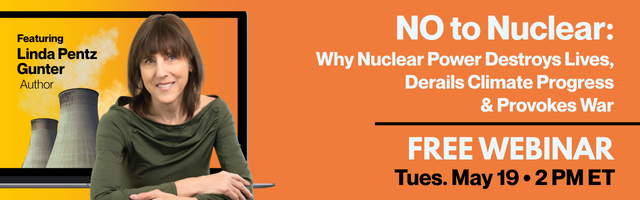
19 May – Webinar No To Nuclear: Why Nuclear Power Destroys Lives, Derails Climate Progress and Provokes War
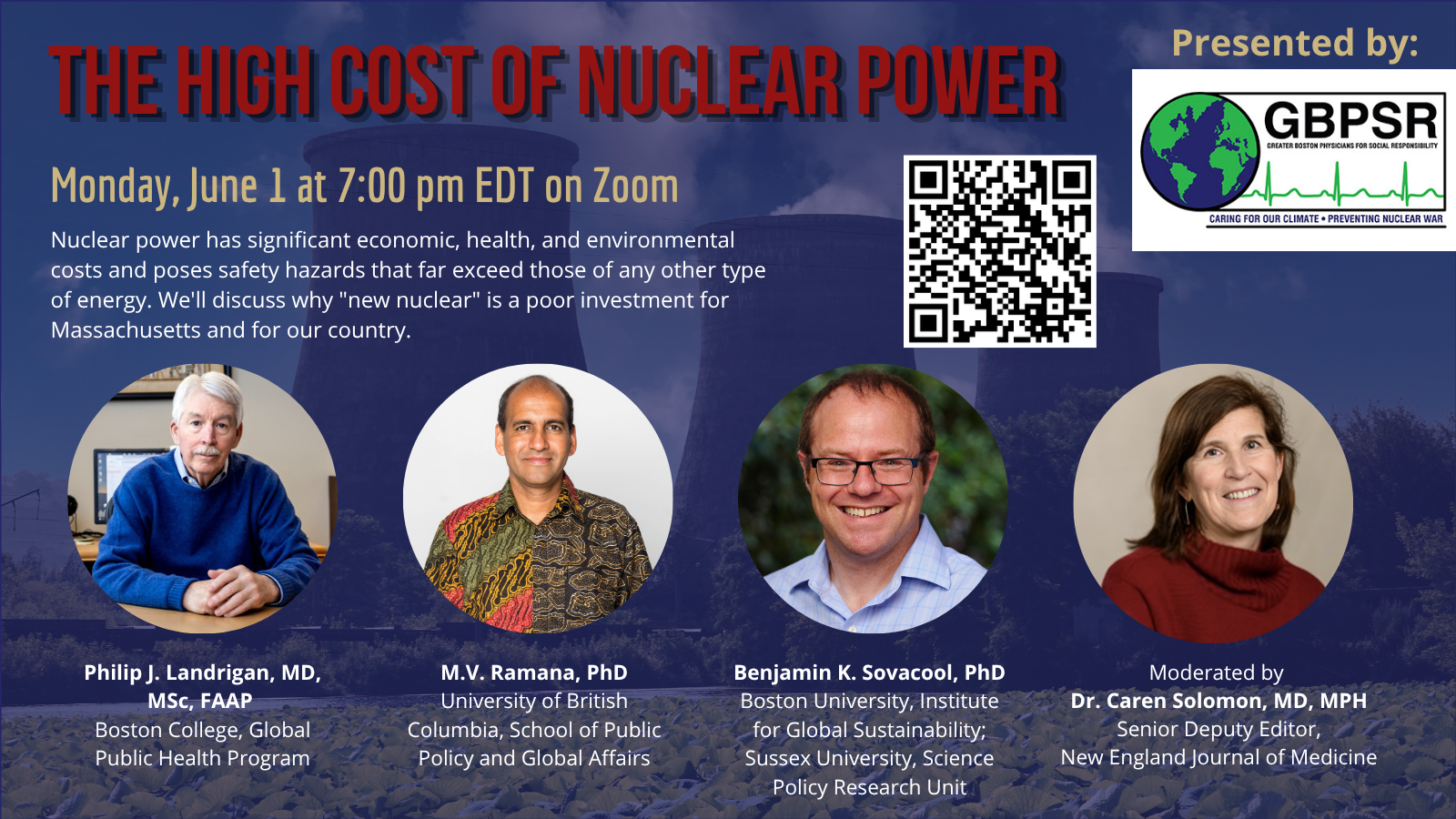
1 June Webinar – The High Cost of Nuclear Power – Register


of the week– Nuclear Reactor Information Task Force
To see nuclear-related stories in greater depth and intensity – go to https://nuclearinformation.wordpress.com
-
Archives
- May 2026 (211)
- April 2026 (356)
- March 2026 (251)
- February 2026 (268)
- January 2026 (308)
- December 2025 (358)
- November 2025 (359)
- October 2025 (376)
- September 2025 (257)
- August 2025 (319)
- July 2025 (230)
- June 2025 (348)
-
Categories
- 1
- 1 NUCLEAR ISSUES
- business and costs
- climate change
- culture and arts
- ENERGY
- environment
- health
- history
- indigenous issues
- Legal
- marketing of nuclear
- media
- opposition to nuclear
- PERSONAL STORIES
- politics
- politics international
- Religion and ethics
- safety
- secrets,lies and civil liberties
- spinbuster
- technology
- Uranium
- wastes
- weapons and war
- Women
- 2 WORLD
- ACTION
- AFRICA
- Atrocities
- AUSTRALIA
- Christina's notes
- Christina's themes
- culture and arts
- Events
- Fuk 2022
- Fuk 2023
- Fukushima 2017
- Fukushima 2018
- fukushima 2019
- Fukushima 2020
- Fukushima 2021
- general
- global warming
- Humour (God we need it)
- Nuclear
- RARE EARTHS
- Reference
- resources – print
- Resources -audiovicual
- Weekly Newsletter
- World
- World Nuclear
- YouTube
-
RSS
Entries RSS
Comments RSS
 nuclear-news