Flamanville nuclear reactor: 3 new welds do not meet safety requirements
Actu Environnement 17th March 2021, Flamanville EPR: three new welds are a problem. Three new welds do not meet
all of the requirements that significantly reduce the risk of breakage. However, if they broke, the breach would be greater than envisaged in the .safety studies.
https://www.actu-environnement.com/ae/news/non-conformites-soudure-piquages-EPR-37225.php4
France must restructure debt-laden EDF (Electricite de France) and reform nuclear sector by October
Reuters 17th March 2021, France’s parliament must pass a bill on reforming utility EDF and the country’s sprawling nuclear sector by October if the plan is to be agreed in time for a presidential election in 2022, the prime minister’s office said on Wednesday.
The reforms, which have sparked wrangling with the European Union and labour unions, involve raising price guarantees on nuclear power that state-controlled EDF sells to third-party providers, helping the debt-laden utility cover its costs.
The government has recapitalised EDF in the past and has for now agreed to take dividend payouts in shares to alleviate pressure on the company’s finances.
A crowded parliamentary agenda is piling pressure on France to reach a deal quickly with antitrust authorities in Brussels over the restructuring of EDF, the first step needed before reforms can go ahead. Sources told Reuters last week that talks between Paris and the European Commission had entered a make-or-break phase, with end-March seen as a deadline to reach an agreement over antitrust and state aid issues or abandon the plan for now.
UN expresses concern over UK’s move to increase nuclear weapons arsenal
|
UN expresses concern over UK’s move to increase nuclear weapons arsenal https://www.business-standard.com/article/international/un-expresses-concern-over-uk-s-move-to-increase-nuclear-weapons-arsenal-121031800241_1.html
The UN has expressed concerns over the UK’s decision to increase its nuclear weapons arsenal, as part of the country’s foreign policy overhaulThe UN has expressed concerns over the UK’s decision to increase its nuclear weapons arsenal, as part of the country’s foreign policy overhaul. The UK’s decision is contrary to its obligations under Article VI of the Nuclear Non-Proliferation Treaty (NPT), Xinhua news agency quoted Stephane Dujarric, spokesman for UN Secretary-General Antonio Guterres, as saying at a briefing on Wednesday. It could have a damaging impact on global stability and efforts to pursue a world free of nuclear weapons, he said.
“At a time when nuclear weapon risks are higher than they have been since the Cold War, investments in disarmament and arms control is the best way to strengthen the stability and reduce nuclear danger,” Dujarric was quoted as further saying. The UK government on Tuesday announced its plan to increase the number of nuclear warheads to not more than 260, reversing its previous policy of reducing its overall nuclear warhead stockpile ceiling to not more than 180 warheads by the mid-2020s. Outlining the strategy to MPs, Prime Minister Boris Johnson said the UK would have to “re-learn the art” of competing against countries with “opposing values”. But he added the UK would remain “unswervingly committed” to the NATO defence alliance and preserving peace and security in Europe. Speaking to the BBC on Tuesday, Beatrice Fihn, head of the International Campaign to Abolish Nuclear Weapons, described the UK’s decision to change its nuclear provision as “outrageous, irresponsible and very dangerous”. She said it went against international law and did not address the real security threats faced by the UK such as climate change and disinformation. |
|
‘Toxic masculinity’ – Britain to build more nuclear weapons

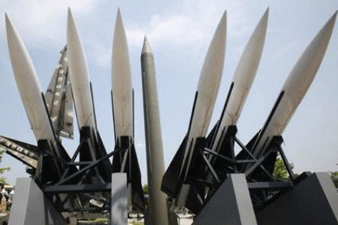
Boris Johnson ‘violating international law’ with plan to build more nuclear weapons, Defence review appears to breach Article 6 of nuclear non-proliferation treaty, Independent, Jon Stone Policy Correspondent, 16 Mar 21,
”………..Reacting to the new policy, Beatrice Fihn, executive director of the International Campaign to Abolish Nuclear Weapons (ICAN), said: “A decision by the United Kingdom to increase its stockpile of weapons of mass destruction in the middle of a pandemic is irresponsible, dangerous and violates international law.
“While the British people are struggling to cope with the pandemic, an economic crisis, violence against women, and racism, the government choses to increase insecurity and threats in the world. This is toxic masculinity on display.
“While the majority of the world’s nations are leading the way to a safer future without nuclear weapons by joining the Treaty on the Prohibition of Nuclear Weapons, the United Kingdom is pushing for a dangerous new nuclear arms race.”
In a further statement, the organisation suggested the UK would face censure at the next NPT review conference, which is due to take place in August at the United Nations.
“The United Kingdom is legally obligated under the nuclear non-proliferation treaty to pursue disarmament. States will meet soon to review the NPT’s success and when they do, the UK will have to answer for its actions,” the statement said.
ICAN won the Nobel Peace Prize in 2017 for its “ground-breaking efforts to achieve a treaty-based prohibition” of nuclear weapons.
Article 6 of the NPT, to which Britain is a signatory, commits countries to “pursue negotiations in good faith on effective measures relating to cessation of the nuclear arms race at an early date and to nuclear disarmament”.
Kate Hudson, general secretary of the UK’s Campaign for Nuclear Disarmament, said: “A decision to increase Britain’s nuclear arsenal absolutely goes against our legal obligations under the nuclear non-proliferation treaty.
“Not only is the UK failing to take the required steps towards disarmament, it is willfully and actively embarking on a new nuclear arms race – at a time when presidents Biden and Putin have renewed their bilateral nuclear reductions treaty. Britain must not be responsible for pushing the world towards nuclear war. This is a dangerous and irresponsible move, and must be reversed.”….. https://www.independent.co.uk/news/uk/politics/boris-johnson-uk-nuclear-weapons-international-law-b1817827.html
UK should build foreig policy on aid, conflict resolution, not on reversing nuclear disarmament
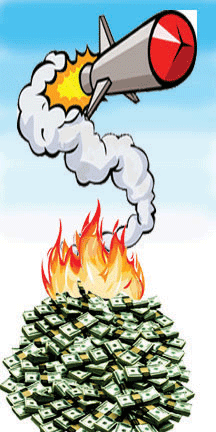 Tax Research UK 16th March 2021. Billions will be wasted, nuclear waste will be created, a dangerous precedent of reversing disarmament will have been set, and the world will be more unsafe, all for no gain. If the UK was wise now (and but isn’t) it would be pursuing a very different foreign policy, based on that of
Norway.
That country does punch above its weight. It has a strong foreign policy based on aid. It uses that to build strong diplomatic links around the world. And in the process it works, quietly, on conflict resolution.
That’s the way foreign policy should be done. We are just aggressively waving colonial flags. And that’s a disaster as well as being nuclear insanity.
https://www.taxresearch.org.uk/Blog/2021/03/16/nuclear-insanity/
Dilemma over plan to dump Himkley nuclear mud off Cardiff coast

Nation Cymru 15th March 2021, Proposals to dump hundreds of thousands of tonnes more mud from theconstruction of a new nuclear power plant two miles off the Cardiff coast
will be discussed in the Senedd tomorrow. Last year a petition opposing EDF
Energy’s application demanded a full Environmental Impact Assessment
(EIA) before the dump could be licensed. The petition gained almost 10,700
signatures and forced a Senedd debate. In 2018 EDF were granted permission
to dump at the Cardiff Deep Grounds inshore disposal site despite fierce
opposition and an earlier debate in the Senedd.
https://nation.cymru/news/battle-to-block-hinkley-c-mud-dump-returns-to-the-senedd/
New report on human and environmental impact of Hinkley Point C nuclear project

group, has raised concerns around its potential impact on Wales. Among the concerns of the group of expert panellists are its effects on the Severn estuary off the South Wales coast. The estuary has one of the most extensive inter-tidal wildlife habitats in the UK and is the point where several of the UK’s longest rivers meet, including the River Usk near Newport.
https://www.walesonline.co.uk/news/wales-news/hinkley-c-nuclear-severn-estuary-20165575
Nuclear power losing out in the UK – not a good omen for the global nuclear industry
 Seeking Alpha 13th March 2021, My comments on offshore wind making other forms of energy uncompetitive in 2017 have only become more clear in the past 3 years. Now the adoption ofnoffshore wind is happening elsewhere around the world including in the US, Japan, South Korea, Taiwan, China, India.
not one, but 16 of these plants with a capacity of 440 MW at a cost of 2 billion pounds each.
The Rolls Royce strategy is that by building multiple SMRs it will get good at it and the cost might go down. The reality behind this proposal is that it seems pretty ambitious to set out to build 16 plants before one has been successfully constructed. Time seems against this concept as the UK will have largely exited nuclear power by 2030.
Safety breaches at Sellafield have raised fears of a Chernobyl-style disaster.
Fears of Chernobyl-style disaster after 25 safety breaches at Sellafield nuclear plant There have been burst pipes, unstable chemicals, radiation leaks, a cooling tower failure and two plant evacuations in less two years at the site in Cumbria. Mirror John Siddle, 13 MAR 2021
Safety breaches at Sellafield have raised fears of a Chernobyl-style disaster.
Campaigners worry that incidents at Europe’s largest nuclear plant in Cumbria could lead to a blast bigger than the 1986 Ukraine horror.
An official report logs 25 breaches in less than two years, including burst pipes, unstable chemicals, radiation leaks, a cooling tower failure and two plant evacuations.
The bomb squad was called in last August after chemicals “changed state”.
Janine Allis-Smith, of a local anti-nuke group, says campaigners “fear an explosion that would make Chernobyl look like a tea party”.
Sellafield – which now splits spent nuclear fuel into plutonium, uranium and waste – said incident reports were published to reassure the public….
https://www.mirror.co.uk/news/uk-news/fears-chernobyl-style-disaster-after-23709599
In Germany, the Greens are likely to be propelled into government in the national vote
Times 14th March 2021, The national vote is expected to propel the Greens into government for the first time since 2005 — either as junior partner to the CDU/CSU or even as the leader of a so-called “traffic light coalition” with the Social Democrats (red) and the liberal Free Democrats (yellow).
The Baden-Württemberg poll — and another today in neighbouringRhineland-Palatinate — are the first key indicators of what lies ahead. Tucked in the southwest corner of Germany between France and Switzerland, Baden-Württemberg is at first sight an unlikely Green stronghold. The
state is home to Mercedes-Benz and Porsche, and hundreds of thousands of jobs in the area around Stuttgart, the state capital, depend on the car industry. But in 2011, in the wake of the Fukushima nuclear disaster in Japan, Kretschmann became Germany’s first — and so far only —Green state premier after running on a platform to shut nuclear plants, impose speed limits on the autobahn and reform an elitist school system. He was re-elected five years later after his party’s share of the vote surged to a record 30 per cent.
https://www.thetimes.co.uk/article/greens-set-to-redraw-germanys-political-landscape-b6xmvnspt
UK govt set to increase Trident nuclear warheads, despite commitment to decrease nuclear weaponss stockpile
The National 13th March 2021, THE UK Government is expected to set out plans to increase the number of Trident nuclear warheads next week in what has been described as a “highly provocative” move.
In 2015 the UK’s strategic defence review committed to “reduce the overall nuclear weapon stockpile to no more than 180” by the 2020s – but Whitehall sources indicated this cap may
increase.
Trident nuclear warhead numbers set to increase for first time since cold war
|
Trident nuclear warhead numbers set to increase for first time since cold war https://www.theguardian.com/uk-news/2021/mar/12/trident-nuclear-warhead-numbers-set-to-increase-for-first-time-since-cold-war
Defence and foreign policy review expected to signal rise, in move analysts say is diplomatically provocative Dan Sabbagh Defence and security editor Downing Street’s integrated review of defence and foreign policy is expected next week to signal a potential increase of the number of Trident nuclear warheads for the first time since the end of the cold war.
Whitehall sources indicated that a cap on total warhead numbers – currently set at 180 – is expected to increase, although the exact figure is not yet known, in a move that analysts said was diplomatically provocative. The UK’s stockpile of nuclear weapons peaked at about 500 in the late 1970s, but had been gradually decreasing ever since as the perceived threat from the Soviet Union and now Russia had been assumed to be decreasing. The last strategic defence review, in 2015, committed the UK to “reduce the overall nuclear weapon stockpile to no more than 180 warheads” by the mid 2020s – and reducing the numbers of operationally available warheads to 120. Each warhead is estimated to have an explosive power of 100 kilotons. The atomic bomb dropped on Hiroshima at the end of the second world war was about 15 kilotons. The full reasons for the anticipated move are not yet clear but it comes amid speculation it is designed to help persuade the US to co-fund aspects of a Trident replacement warhead for the the 2030s. Its costs, too, are uncertain. “If this is confirmed, this would be a highly provocative move,” said David Cullen, the director of the Nuclear Information Service. “The UK has repeatedly pointed to its reducing warhead stockpile as evidence that it is fulfilling its legal duties under the nuclear non-proliferation treaty. “If they are tearing up decades of progress in reducing numbers, it will be a slap in the face to the 190 other members of the treaty, and will be regarded as a shocking breach of faith.” Britain has operated its own nuclear weapons since the 1950s but for the past 60 years, following an agreement between the then prime minister, Harold Macmillan, and the then US president, John F Kennedy, the UK has been heavily dependent on US technology. Trident missiles are deployed in four submarines, one of which is continuously at sea to make sure it can strike back in the event of an unprovoked nuclear attack. It relies on an existing US W76 warhead, based on a 1970s design, called Holbrook. However, the W76 is ageing, and the US has proposed developing a more powerful replacement, called the W93. The UK is particularly keen for the US to start work on the W93 and last summer the defence secretary, Ben Wallace, lobbied Congress for the work to go ahead. British MPs voted to renew Trident in principle in 2016, but the Commons is expected to have to vote on a new warhead at some point. In 2016, the Conservatives almost uniformly backed renewal, the SNP voted against, while Labour was split. The MoD has said developing the next generation of Dreadnought submarines to carry the new warhead would cost £30bn plus a £10bn contingency. But officials have so far refused to say how much the warhead would cost. An MoD spokesperson said: “The UK is committed to maintaining its independent nuclear deterrent, which exists to deter the most extreme threats to our national security and way of life. “Replacing the warhead and building four new Dreadnought class submarines are UK sovereign programmes that will maintain the deterrent into the future. We will not comment on speculation about the integrated review, which will be published on Tuesday.” |
|
Slovenia’s hazardous old nuclear reactor in an earthquake zone
|
A nuclear reactor in an earthquake zone NEW EUROPE
By Otmar Lahodynsky, President of the Association of European Journalists (AEJ) and former European Editor of the Profil news magazine in Austria , 12 Mar 21, Ten years after the Fukushima nuclear disaster, an old power plant in Slovenia is about to be allowed to run till 2043. Austrian politicians and environmental organizations want to prevent that.The Slovenian nuclear power plant in Krsko actually should be decommissioned in two years. The reactor, built 40 years ago in the old Communist-era Yugoslavia with technology from the American company Westinghouse – has reached the end of its life. Nevertheless, the Slovenian-Croatian operating company, GEN Energija d. o. o., wants to keep the reactor running for 22 more years – until 2043. This week, an environmental impact study has started, a procedure that is being run under international scrutiny.
The nuclear power plant is located on the Croatian-Slovenian border, but what is truly alarming is that it is located in an area that is particularly at risk from earthquakes. Krsko is 85 kilometres from the epicentre of an earthquake that shook Croatia on December 29, 2020. The previous March, the Croatian capital Zagreb was hit hardest by an earthquake; with an epicentre that was only 40 km away from Krsko. Earthquake safety has always been one of the most discussed concerns regarding the Krsko plant. …….. https://www.neweurope.eu/article/a-nuclear-reactor-in-an-earthquake-zone/ |
|
Germany pledgse to work towards a nuclear free Europe
Ten years after the Fukushima nuclear disaster in Japan, German environment minister Svenja Schulze insisted that the country does not consider nuclear energy an option for low-carbon power production. “Nuclear power is neither safe nor clean,” Schulze said, rejecting the “myth” that the technology could help to find a way out of the climate crisis. “The future is for renewable energy,” she said. Germany’s phase-out decision, originally taken in the year 2000 and confirmed after the 2011 meltdown of the power plant in Japan, had “brought peace to a social conflict that raged for decades” and helped minimise a major risk at least nationally, Schulze said.
Nuclear power could not be in Germany’s interest when it is generated abroad either, “be it in our immediate neighbourhood, in the EU or globally”, the minister said, adding that “our work has not ended with the German nuclear exit”. The environment ministry published a position paper listing 12 key objectives required to reduce nuclear risk even further. They include actions under the three sections of a) completing the German nuclear phase-out: Close nuclear plants, promote final storage, accelerate the expansion of renewable energies; b) reducing nuclear risks in Europe, strengthen cooperation; and c) increasing nuclear safety worldwide, maintain nuclear risk competence and provide appropriate information.
Today we commemorate the catastrophic #nuclear accident that took place in #Fukushima 10 years ago. This disaster has shown us the risks of #NuclearEnergy. Also @SvenjaSchulze68
With a view to the decision by Germany’s largest neighbour country France to extend the running time of old nuclear reactors, she said that while the “principle of energy sovereignty” would have to be respected, there are “technical and economic limits to retrofitting”. Especially plants near the German border would be “monitored very closely and critically”, the minister said, adding that the German government expected France to enable “comprehensive cross-border cooperation” on the matter. More than half of all EU states do not use nuclear power at all or are considering a phase-out, Schulze said.
“Together with likeminded countries in Europe, I will actively work towards more countries joining the phase-out of nuclear power,” she stated. Schulze minister colleagues from Austria and Belgium, Leonore Gewessler and Tinne van der Straeten, joined her German counterpart in a joint message published on Twitter, in which the three state representatives said they will work towards ending the use of nuclear power in Europe and pave the way for an energy system solely based on renewables.
Nuclear “poison for a secure and climate-just future” – NGOs
Ten years after the disaster, Japanese officials in Fukushima still grapple with key questions regarding the removal, storage and processing of the plant’s nuclear waste. These problems remain unresolved and many former residents are still not allowed to return to their homes, Schulze said. “If we’ve learned something from all this then it has to be the common goal to protect people from further devastation from nuclear power.” For Germany, nuclear power’s “residual risk” simply had been too significant to carry on with the technology, she argued. Of the six remaining reactors in the country, three will go offline as planned in 2021 and the remaining three at the end of 2022. A 2019 survey found that 77 percent of people in Germany support the nuclear phase-out and 60 percent also its quick finalisation by the end of next year.
A group of more than 50 civil society and environmental groups backed the government’s stance on excluding nuclear energy from Germany’s emissions reduction plans, arguing that claims about the technology being “climate neutral” and “environmentally friendly” would be “poison for a secure and climate-just future”. In a joint letter, the group including NGOs like Germanwatch, BUND, NABU or PowerShift said nuclear power could have no future in energy systems and called on the government to double down on its efforts to phase-out the technology, including a shutdown of uranium enrichment facilities in Germany and an end of EU nuclear power project funding. Investments instead should flow into renewable power, storage technology and efficiency gains, the group argued.
French Nuclear tests: revelations about a cancer epidemic

|
Nuclear tests: revelations about a cancer epidemic https://www.mediapart.fr/journal/international/090321/essais-nucleaires-revelations-sur-une-epidemie-de-cancers MARCH 9, 2021 BY DISCLOSE
In a confidential report, the Polynesian government acknowledges the existence of a “cluster of thyroid cancers” directly linked to French nuclear tests.On July 2, 1966, in the greatest secrecy, France carried out its first nuclear test in the Polynesian sky. That day, at 5:34 am, Aldebaran, the name given to the bomb, was fired from a barge installed on an azure lagoon, near the Mururoa atoll. A few microseconds after the explosion, a fireball appears. This incandescent mass of several thousand degrees rises in the sky and forms, as it cools, a huge cloud of radioactive dust dispersed by the winds. No less than 46 “atmospheric” tests like this one have been carried out in the space of eight years. Each time, the explosion generated fallout contaminating everything in their path. Starting with the inhabitants of the islands. In total, they were exposed 297 times to intense levels of radioactivity. The general staff have always held to the same line of defense. The atmospheric tests, presented as “clean”, would not have had “consequences for the health” of the Polynesians. For years, the associations defending the victims of the trials have been convinced to the contrary. As for the scientific community, it has tried several times to verify this position through in-depth analyzes of official data, without success. Latest illustrations of this failure: the study published by the National Institute of Health and Medical Research (Inserm) on February 18. At the end of this work commissioned by the Ministry of Defense eight years ago, Inserm considered that the “links between the fallout from atmospheric tests and the occurrence of radiation-induced pathologies” were difficult to establish, due to a lack of data. reliable on the contamination of the archipelagos. Cluster of cancers ” However, a confidential report submitted to the Polynesian government a year earlier, in February 2020, argues the opposite. Disclose has obtained a copy of this never-before-released document. Soberly titled “Health consequences of French nuclear tests in the Pacific”, this eight-page report was written by a French military doctor at the request of the Monitoring Medical Center, an administration created in 2007 by the French and Polynesian governments and responsible for screening radiation-induced diseases. In other words, pathologies linked to repeated exposure to ionizing radiation. According to the author, some 10,000 Polynesians, including 600 children under the age of 15 living in the Gambier Islands, Tureia or even Tahiti have thus received a dose of radioactivity of 5 millisieverts (mSv), that is to say five times more than the minimum threshold (1 mSv) above which exposure is considered dangerous for human health. But the most embarrassing information is on page 5 of the document. For the first time, an official report establishes a direct link between nuclear tests and the extent of the number of cancers in the population. “The presence of a ‘cluster’ of thyroid cancers focused on the islands subjected to fallout during aerial shots, and in particular in the Gambier Islands, leaves little doubt about the role of ionizing radiation, and in particular of thyroid exposure to radioactive iodine, in the occurrence of this excess of cancers, ”says the author. The thyroid, an organ at the base of the neck, is particularly sensitive to ionizing radiation, especially in childhood, when the risk of developing thyroid cancer is greatest. The incidence of thyroid cancer and the link with the atmospheric gunfire campaign were precisely the subject of an Inserm analysis in 2010. According to this study, 153 thyroid cancers were diagnosed between 1985 and 1995 in the population born before 1976 and residing in French Polynesia. As a result, the number of people with thyroid cancer was two to three times higher than in New Zealand and Hawaii. Without being able to establish a direct link with nuclear tests, the college of experts already deplored the lack of available data. Based on data from the time, Disclose and Interprt, in partnership with the Science and Global Security program at Princeton University (United States), reassessed the doses of radioactivity received in the thyroid by the inhabitants of the Gambier, of Tureia and Tahiti during six of the most contaminating nuclear tests. Our estimates show that the doses received would be between two and ten times higher than the estimates established by the French Atomic Energy Commission (CEA) in 2006. How can we explain such a gap between our results and those of the CEA? The answer lies in the details of the calculation options chosen by the scientists at the Atomic Energy Commission. Take the example of Aldebaran, the first test in the open air. The CEA estimated that the population of the Gambier Islands, very exposed to toxic fallout, only drank river water, but no rainwater, which is much more loaded with radioactive particles. Many witnesses met in Polynesia question this assertion. This is the case with Julie Lequesme, 12 years old at the time of the events. “We had only that, rainwater,” says the resident of Taku, a village northeast of Mangareva, the main island of the Gambier archipelago. The same goes for Rikitea, the capital of the island, where “the running water network was not completed until the end of the 1970s”, specifies Jerry Gooding, the former president of the association. , the main organization supporting civilian victims of nuclear tests. Rainwater consumption is also confirmed by at least four official documents we obtained. A study by the Office for Scientific and Technical Research Overseas (Orstom) published in August 1966, one month after the start of the tests, thus notes that some of the islanders only consumed rainwater, in particular in because of their isolation. Same conclusion in a report from the Joint Biological Control Service (SMCB), an army service, dated April 24, 1968. By reintegrating the consumption of rainwater after Aldebaran, our estimates for the exposure of a child aged 1 to 2 at the time are 2.5 times higher than official calculations. Of the six tests we reconstructed, the consumption of rainwater was the main source of exposure to radioactivity for five of them. By choosing not to incorporate this data or by minimizing its importance, the state has therefore knowingly underestimated the extent of the contamination. In the Gambiers, cancer as a legacy According to the Ministry of the Armed Forces, the Gambier Islands have been affected by atmospheric fallout 31 times. In fact, the archipelago was struck by all the tests carried out between 1966 and 1974. Since then, cancer has spread everywhere. From Rikitea to Taku, to the shore of Taravai, the inhabitants are convinced: this plague is directly linked to atomic experiments. By investigating the field and meeting dozens of witnesses, Disclose was able to map the disease in Mangareva, the main Gambier island. Although we have not been able to establish a direct link between the trials and the number of cancers on site, the result is instructive. Yves Salmon developed carcinoma, a radiation-induced cancer of the blood, in 2010. His wife contracted breast cancer. She was recognized as a victim of French nuclear tests. The same goes for his sister. Utinio, Yves Salmon’s neighbor, contracted thyroid cancer in 2001. The man, who still lives near the village of Taku, spent his childhood in the Gambiers. In 2010, the French state finally recognized him as a victim of nuclear tests. Monique, 69, is Utinio’s cousin. She was a thyroid cancer survivor after two years in hospital and received state compensation in August 2011. Monique has six children, four of whom have thyroid cancer. Her two daughters have sought compensation from the Nuclear Test Victims Compensation Committee (Civen) without having received any answers yet. Sylvie (first name has been changed) and her older sister, born in 1972 and 1971, both suffered from breast cancer. “It was when our elders started dying that we really began to wonder,” said the eldest. Their mother died of the same disease in 2009. She was recognized as a victim of nuclear tests, just like Sylvie. This resident of Mangareva now fears for her daughter. Julie Lequesme’s father, an elder from Taku village, died of throat cancer in 1981 after working in Mururoa. “The island doctor told me that based on my father’s X-rays, he was a heavy smoker,” she says. However, my father never touched a cigarette. Her husband, a CEA alumnus, also died of cancer in 2010. In the family of Catherine Serda, a former resident of the small village of Taku, eight people suffered from cancer between the end of the 1970s and the beginning of the 1990s. Their common point: they all lived in Mangareva at the time. tests. If you have any information to give us, you can contact us at enquete@mediapart.fr. If you wish to send documents through a highly secure platform, you can connect to the frenchleaks.fr site |
|
1 This Month
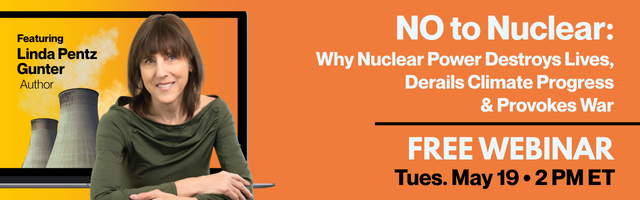
19 May – Webinar No To Nuclear: Why Nuclear Power Destroys Lives, Derails Climate Progress and Provokes War
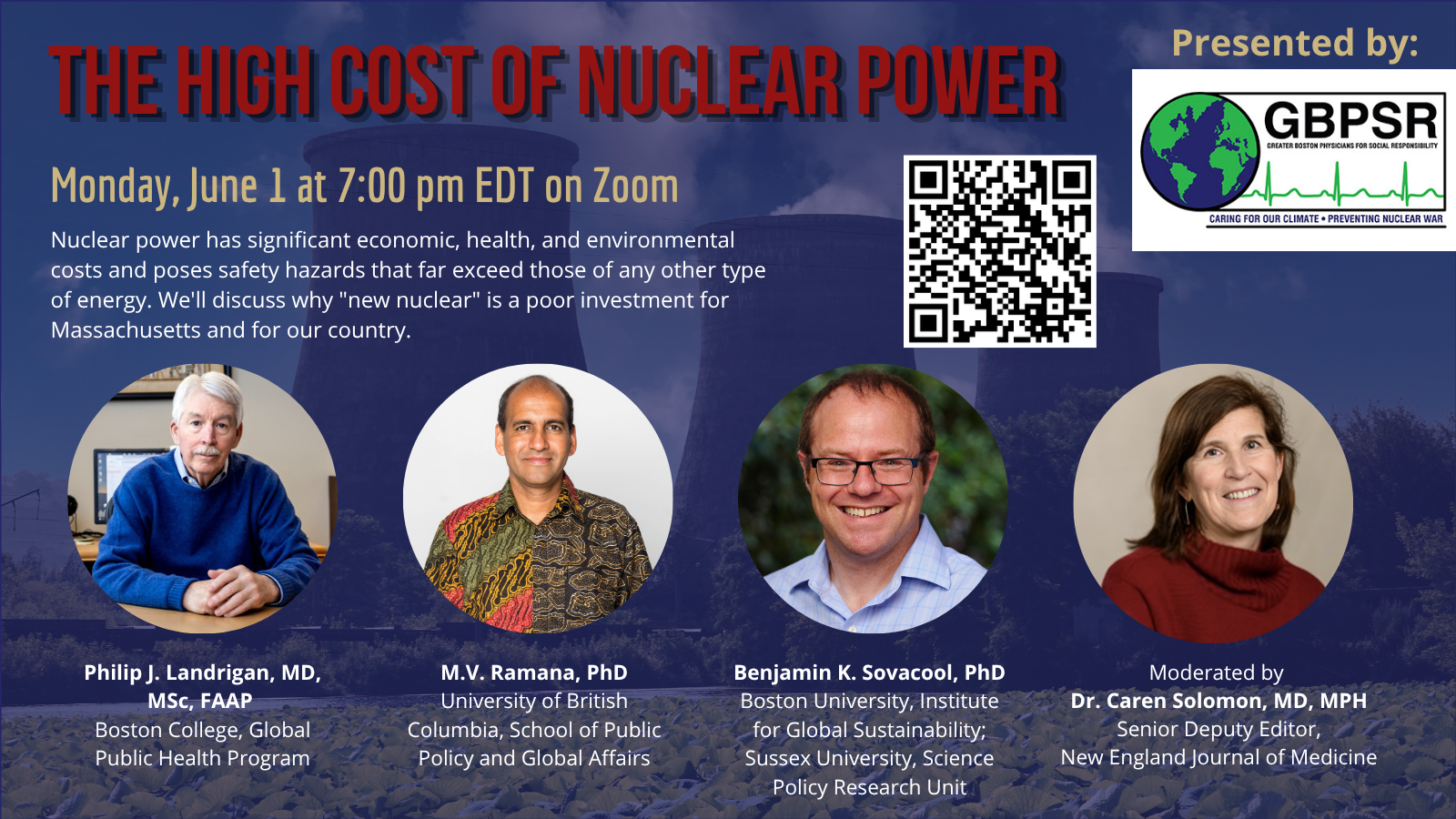
1 June Webinar – The High Cost of Nuclear Power – Register


of the week– Nuclear Reactor Information Task Force
To see nuclear-related stories in greater depth and intensity – go to https://nuclearinformation.wordpress.com
-
Archives
- May 2026 (211)
- April 2026 (356)
- March 2026 (251)
- February 2026 (268)
- January 2026 (308)
- December 2025 (358)
- November 2025 (359)
- October 2025 (376)
- September 2025 (257)
- August 2025 (319)
- July 2025 (230)
- June 2025 (348)
-
Categories
- 1
- 1 NUCLEAR ISSUES
- business and costs
- climate change
- culture and arts
- ENERGY
- environment
- health
- history
- indigenous issues
- Legal
- marketing of nuclear
- media
- opposition to nuclear
- PERSONAL STORIES
- politics
- politics international
- Religion and ethics
- safety
- secrets,lies and civil liberties
- spinbuster
- technology
- Uranium
- wastes
- weapons and war
- Women
- 2 WORLD
- ACTION
- AFRICA
- Atrocities
- AUSTRALIA
- Christina's notes
- Christina's themes
- culture and arts
- Events
- Fuk 2022
- Fuk 2023
- Fukushima 2017
- Fukushima 2018
- fukushima 2019
- Fukushima 2020
- Fukushima 2021
- general
- global warming
- Humour (God we need it)
- Nuclear
- RARE EARTHS
- Reference
- resources – print
- Resources -audiovicual
- Weekly Newsletter
- World
- World Nuclear
- YouTube
-
RSS
Entries RSS
Comments RSS
 nuclear-news