University of Sheffield researchers do detailed study of radioactive materials inside the wrecked Chernobyl nuclear reactor
Yorkshire Post 26th April 2021, University of Sheffield scientists to help clean up waste from ‘world’s
worst’ nuclear accident. On the 35th anniversary of one of the world’s worst nuclear disasters, new Yorkshire-led research has been published that could help to clean up the most dangerous radioactive materials that still
remain at the site in Chernobyl.
Scientists say the revealing findings – which are the most “detailed results” into the chemical makeup of the
radioactive materials inside the plant’s melted core to date – could ”pave the way” to safely remove hazardous waste from the site and help prevent future nuclear disasters.
Dr Claire Corkhill, the project lead, from the University of Sheffield, stressed the urgency to the research as until now only a very limited number of samples have been analysed by scientists round the world. This is because the most dangerous materials that remain inside Chernobyl are so hazardous, hampering efforts to safely contain or remove the materials from the disaster zone. Dr Corkhill, told The Yorkshire Post: “This is such a big breakthrough because it opens up a world of possibilities to develop a deeper understanding of some of the most dangerous materials that still remain in Chernobyl.
Getting the facts straight about Chernobyl, nuclear disasters, and ionising radiation
Fact check: 5 myths about the Chernobyl nuclear disaster
Monday marks the 35th anniversary of the Chernobyl nuclear disaster. What happened in the former Soviet Union on April 26, 1986, is no longer a secret. DW,
Is Chernobyl the biggest-ever nuclear disaster?
The 1986 nuclear disaster at the Chernobyl nuclear power plant near the city of Pripyat in northern Ukraine is often described as the worst nuclear accident in history. However, rarely is this sensational depiction clarified in more detail.
The International Nuclear and Radiological Event Scale (INES) does classify nuclear events on a scale of zero to seven, breaking them down into accidents, incidents and anomalies. It was introduced in 1990 after being developed by the International Atomic Energy Agency (IAEA) and the Nuclear Energy Agency of the Organization for Economic Cooperation and Development (NEA/OECD). Level seven denotes a “major accident,” which means “major release of radioactive material with widespread health and environmental effects requiring implementation of planned and extended countermeasures.”
Both the Chernobyl and 2011 Fukushima disaster have been categorized as such. But INES does not allow for nuclear events to be classified within a level.
If the term nuclear disaster is not only used to describe events, or accidents, in nuclear reactors but also radioactive emissions caused by humans then there are many occasions when human-caused nuclear contamination has been greater than that of the Chernobyl disaster, explained Kate Brown, professor of science, technology and society at the Massachusetts Institute of Technology.
“Let’s take the production of plutonium,” she told DW, referring to the American and Soviet plants that produced plutonium at the center of a nuclear bomb. “Those plants each issued as part of the normal working everyday order at least 350 million curies [a unit of radioactivity — Editor’s note] into the surrounding environment. And that was not an accident.
“Let’s look at, even more dire, the issuance of radioactive fallout in the detonation of nuclear bombs during the periods of nuclear testing ground, which were located throughout the world, ” she continued. “Those just take one isotope, one radioactive iodine, which is harmful to human health because it’s taken up by the human thyroid, causing thyroid cancer or thyroid disease.
“Chernobyl issued 45 million curies of radioactive iodine just in two years of testing, in 1961 and 1962. The Soviets and the Americans issued not 45 million curies, but 20 billion curies of radioactive iodine,” she said. And these tests, she added, were by design — not due to an accident or human error.
Are there mutants in the exclusion zone?
………….. “The influence of ionizing radiation may cause some restructuring in the body, but mostly it simply reduces an organism’s viability,” he explained, giving the example of high embryo fatalities in rodents due to genomic defects that prevented the organism from functioning. Those animals that survive the womb sometimes have disabilities that prevent them from staying alive in the wild. Vishnevsky and his colleagues have conducted research into thousands of animals in the exclusion zone, but have not found any unusual morphological alterations.
“Why? Because we were always dealing with animals that had survived and had won the fight for survival,” he said. He added that it was difficult to compare these animals with creatures that scientists had deliberately exposed to radiation in laboratories.
“That’s a very seductive idea, that human messed up nature and all they have to do is step away and nature rewrites itself,” she said. In reality, however, biologists say that there are fewer species of insects, birds and mammals than before the disaster. The fact that some endangered species can be found in the exclusion zone is not evidence of the area’s health and vitality.
Has nature reclaimed the site of the disaster?
Reports entitled “Life Flourishing Around Chernobyl” and photo series suggesting that the exclusion zone has become a “natural paradise” might give the impression that nature has recovered from the nuclear disaster. But Brown, who has been researching Chernobyl for 25 years, is adamant that this is “not true.”
“That’s a very seductive idea, that human messed up nature and all they have to do is step away and nature rewrites itself,” she said. In reality, however, biologists say that there are fewer species of insects, birds and mammals than before the disaster. The fact that some endangered species can be found in the exclusion zone is not evidence of the area’s health and vitality.
On the contrary: there has been a significant increase in the mortality rate and a lowered life expectancy in the animal population, with more tumors and immune defects, disorders of the blood and circulatory system and early ageing.
Scientists have attributed the apparent natural diversity to species migration and the vastness of the area. “The exclusion zone comprises 2,600 square kilometers [about 1,000 square miles]. And to the north are another 2,000 square kilometers to the north is Belarus’ exclusion zone,” said Vishnevsky. “There are also areas to the east and west where the human population density is extremely low. We have a huge potential for preserving local wild fauna.” That includes lynxes, bears and wolves which need a great deal of space.
But even 35 years after the disaster the land is still contaminated by radiation, a third of it by transuranium elements with a half-life of more than 24,000 years.
Is it safe for tourists to visit Chernobyl?
The exclusion zone was already a magnet for disaster tourists, but in 2019 annual numbers doubled to 124,000 after the success of the HBO miniseries Chernobyl. The State Agency of Ukraine on Exclusion Zone Management has set up a number of routes so tourists can visit the region by land, water or air. It has also drawn up a number of regulations to protect visitors, stipulating that people must be covered from head to toe. They shouldn’t eat any food or drink outside, and they should always follow official paths. It’s estimated that the radiation dose received over a one-day visit does not exceed 0.1 millisievert (mSv) — roughly the same dose that a passenger would be exposed to on a long-distance flight from Germany to Japan, according to Germany’s Federal Office for Radiation
Are there people living in the area?
Today, Pripyat, the closed city built to serve the nuclear plant and house its employees, is often described as a ghost town, as is the nearby city of Chernobyl.
However, neither has been entirely empty since 1986. Thousands of people, usually men, have stayed there, often working two-week shifts and ensuring that the crucial infrastructure in both cities continues to function. After the explosion in reactor No. 4, reactors 1, 2 and 3 continued to operate, closing down only in 1991, 1996 and 2000. Special units of the Ukrainian Interior Ministry police the zone. There are also stores and at least two hotels in Chernobyl, which are mainly for business visitors.
There are also a number of unofficial inhabitants, including people who used to live in the area and have chosen to return. They have settled in villages that were evacuated after the disaster. The exact number of people is unknown: when DW asked the State Agency of Ukraine on Exclusion Zone Management how many people lived in Chernobyl, the official answer was “nobody.”
In 2016, about 180 people were thought to be living in the entire exclusion zone. Because they tended to be older, this number may well have fallen. Even though these locals are officially only tolerated, the state does support them in their everyday lives. Their pensions are delivered once a month, and every two to three months they are supplied with food by a mobile store. https://www.dw.com/en/fact-check-5-myths-about-the-chernobyl-nuclear-disaster/a-57314231
Below – a video from past years tells the earlier story of the chernobyl disaster
Scots financial firms invested £7bn in nuclear weapons

Scots financial firms invested £7bn in nuclear weapons, Billy Briggs The Ferret, April 25, 2021, Three major Scottish financial institutions — NatWest Group, Lloyds Banking Group and Standard Life Aberdeen — invested a total of £7bn in nuclear weapons over a two year period.
A new report, seen by The Ferret, also reveals two Scots universities held £2.4m of investments in companies that undertake work related to nuclear weapons, while 11 council pension funds together had £275m invested in 20 firms in the sector.
The study is by Don’t Bank on The Bomb Scotland, a network of organisations campaigning for banks, universities, pension funds and public bodies to divest from companies involved in the production of nuclear weapons. It says these organisations together held investments worth £7.2bn in nuclear weapons producers between 2018 and 2020.
Don’t Bank on the Bomb is calling for divestment. It argues that organisations investing in nuclear weapon producers are “supporting activities that contravene commitments made under the Nuclear Non-Proliferation Treaty”……
Medact Scotland, Scottish CND, Pax Christi Scotland and the Edinburgh Peace and Justice Centre are all members of Don’t Bank on the Bomb Scotland.
The umbrella group says there is a heightened global nuclear risk at the moment. It points to tensions between the US, Israel and Iran over the latter’s nuclear programme, and deadly clashes between nuclear-armed nations India and China in the western Himalayas. ……..
International law on nuclear weapons was strengthened in January 2021 by the UN Treaty on the Prohibition of Nuclear Weapons (TPNW), the study says. The treaty prohibits the development, production, testing, possession, transfer, use and threat of use of nuclear weapons.
Don’t Bank on the Bomb’s report says the treaty is important to note for investors because financial assistance may be viewed as unlawful under international law.
The roles of three major financial groups based in Edinburgh are highlighted by the report. It says Natwest Group, formerly RBS, held investments worth £2bn in 15 companies between January 2018 and January 2020. These investments were made primarily in the form of loans and through the underwriting of bond issuances, while shareholdings make up a small proportion of the total.
Natwest has a policy which “only partially restricts investment in nuclear weapons producers”, the report claims. Meetings were held with the bank in 2020 and March 2021 and Don’t Bank On The Bomb said it sent an open letter to it, drawing attention to the “catastrophic humanitarian and environmental consequences of nuclear weapons” and the recent entry into force of the TPNW.
The letter called on the bank to exclude nuclear weapons from investment and was co-signed by over 40 civil society organisations, including trade unions, faith organisations and environmental NGOs.,……
Lloyds Banking Group, which is registered in Edinburgh, is also named. It invested £3.4bn in 10 nuclear weapons producers between January 2018 and January 2020, the report says. These investments were made primarily in the form of loans and through the underwriting of bond issuances. ……….
Standard Life Aberdeen, headquartered in Edinburgh, is also cited. The report says the company offers customers some socially responsible investment funds that exclude nuclear weapons producers but adds that most of its funds do not.
“The company owned or managed shares worth over £1.5bn in 20 of the world’s top 28 nuclear weapons producers between January 2018 and January 2020. Standard Life Aberdeen should stop investing in weapons of mass destruction,” the report says. ……..
Both Glasgow University and Strathclyde University also invest in the nuclear weapons industry. The former held shares worth £1.9m in 16 companies as of 30 September 2020. Strathclyde University owned shares worth £473,633 in two companies – BAE Systems and Thales.
Don’t Bank on The Bomb calls for “student activism” to “persuade” these universities to change their investment strategies. It claimed the University of Edinburgh changed its policy on arms investments in 2016 in response to a five year “responsible investment campaign”, led by students. ……….
The report adds that at least six Scots universities have policies that either explicitly or implicitly restrict investment in nuclear weapons producers. “It is clear that the University of Glasgow and the University of Strathclyde are outliers when it comes to nuclear weapons investments in the Scottish higher education sector,” the study says……….
On council pension funds, the study found that 11 funds collectively held shares worth over £275m in 20 companies that undertake work related to nuclear weapons as at 30 September 2020.
Lothian Pension Fund was the largest investor in nuclear weapons, holding shares worth nearly £126m in five nuclear weapons producers. This includes £102m invested in the world’s largest arms company, Lockheed Martin. Strathclyde Pension Fund came second, holding shares worth £120m in 16 companies.
Don’t Bank On the Bomb Scotland said: “Most Scottish local authority pension funds are reluctant to exclude harmful industries from investment. However, a growing number of Scottish councils are taking a stand against nuclear weapons investments by passing a resolution that calls on their pension fund to divest from nuclear weapons producers……. https://theferret.scot/scots-financial-firms-invested-7bn-nuclear-weapons/
Remarkable new photos inside the Chernobyl nuclear power station
PetraPixel.com, ARKADIUSZ PODNIESIŃSKI 25 Apr 21, ”/…………… The reason for my regular visits remains the same: the desire to document the changes taking place in the Chernobyl Exclusion Zone. And there’s been quite a few: from the construction of the New Safe Confinement (which I wrote about in more detail here), to the construction of several new industrial facilities that will make the decommissioning of the plant, including the damaged Reactor 4, possible and much safer. I hope that, under the influence of slow but systematic changes, eventually Chernobyl will not only be known as the site of the largest nuclear disaster in the world………
before we are allowed to enter the main part of the complex, aka the dirty zone, we have to change into protective gear and masks. We are also given a dosimeter that counts the dose of radiation absorbed. When we exit, the procedure is repeated in reverse order and so on in every complex we visit. Sometimes, the procedures take longer than our stay inside the facility.
…….. First, we got to the largest hall where there is a huge pool with more than 21,000 spent fuel assemblies from reactors 1-3. Depending on the location, radiation levels vary from 40 to 800 μSv/h, which is about 200-400 times higher than normal. The ISF-1 is a wet-type spent fuel storage facility, meaning that the fuel assemblies are stored in water. The huge pool consists of five reinforced concrete tanks covered by hundreds of steel plates. As I step on them, I feel rather strange and insecure because I know what lies beneath them. Additionally, every step I take causes the steel flaps to move, causing a sound that echoes throughout the hall. I’m only calmed by the sight of the engineer, who confidently steps on the plates, not looking at me at all. After a moment, the engineer bends down and opens one. The radiation increases, but only slightly. The lack of a cover doesn’t change all that much; the greatest barrier against the radiation is the water.

The fuel assemblies are pulled out in the hall next door. Now I can stay here freely, but the radiation levels during this procedure are very high – about 2 Sv/h. This is already a dose that can cause serious radiation sickness or even death. Due to this, the entire process is controlled remotely through a small window made of thick leaded glass or through a system of monitors and cameras from a small room located several meters above us…..
ISF-2 – the Interim Spent Nuclear Fuel Storage Facility 2
The ISF-2 complex serves as an interim storage facility for dry-type spent fuel assemblies. Before the spent fuel goes there, it is processed first in a building located on the premises.
Inside, my attention is drawn to the “hot chamber”, the heart of the entire building. A huge, hermetically sealed room, completely isolated from the external environment by thick concrete walls; you can look inside through small leaded glass windows located on both sides of the chamber. Cameras resistant to high levels of radiation and remote-controlled machinery and tools have been installed inside. It is here that the spent fuel assemblies from the defunct reactors will be cut in half, dried, and later packed into double-layered steel canisters.
The view of the hot chamber makes me realize how dangerous a task we have before us. And a long-term one, since the radioactive isotopes in the fuel will take thousands of years to decay. 100 years, the storage period for the processed fuel in ISF-2, is just a blink of an eye for radioactive isotopes. What’s next? ISF-3? We don’t know yet…….. This is the problem we will face – well, not us but future generations.
In December 2020, the “hot tests” for the whole complex concluded. At that time, 22 containers with 186 fuel assemblies had been processed for the first time and then packed into two steel canisters and stored in concrete modules behind the main building. It is estimated that the entire fuel processing process will take about 10 years, and the complex will become the world’s largest dry spent fuel storage facility.
ICSRM – the Industrial Complex for Solid Radwaste Management
In addition to the ISF-1 and ISF-2, which deal with spent nuclear fuel, another two facilities have been built on the site for the treatment of solid and liquid radioactive waste collected from the operation and decommissioning of the power plant and from the sarcophagus.
In addition to the ISF-1 and ISF-2, which deal with spent nuclear fuel, another two facilities have been built on the site for the treatment of solid and liquid radioactive waste collected from the operation and decommissioning of the power plant and from the sarcophagus. I visit the first, where low-, intermediate- and high-level waste is processed for temporary or final storage, including concrete, sand, and metal. The huge building contains a system of airtight caissons, hot chambers, and other areas where radioactive waste is cut, fragmented, shredded, sorted by radioactivity level, compressed, and incinerated. All of the work is done using remote-controlled machines to which interchangeable tools can be attached — including a jackhammer, concrete crusher, chainsaw, and hydraulic shears. The processed waste is then encapsulated and sealed in concrete containers before being sent to a radioactive waste repository. Like the ISF-2, the plant has already processed its first batch of radioactive waste and currently is in the final stages of hot testing and certification.
New Safe Confinement
The New Safe Confinement (NSC) is a huge 110-meter-high steel construction that was built to cover the old, worn-out sarcophagus. ………………..

In this labyrinth of near-identical corridors, I quickly lose my sense of direction and, after a while, I stop paying attention to the signs. I blindly follow the dosimetrist. Although the masks prevent us from breathing in radioactive dust, there is nothing we can do to protect ourselves from the gamma radiation penetrating our bodies. Unseen dangers may lurk around every corner. In such a situation, the dosimeters are our eyes; thanks to them we know how far we can go.

The thought that I’m moving through a mysterious labyrinth of radioactive corridors covered by two sarcophagi stresses me out and increases my feelings of uncertainty and confusion. …….
About the author: Arkadiusz Podniesiński is a Polish photographer and filmmaker, a technical diver, and a graduate of Oxford Brookes University in Great Britain. You can find more of his work on his website. This photo essay was also published here. https://petapixel.com/2021/04/24/exclusive-photos-inside-the-chernobyl-nuclear-power-plant/
Extinction Rebellion exposes Zion Lights as yet another nuclear propaganda front

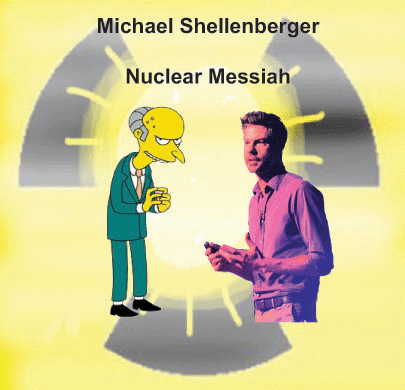
Extinction rebellion 16th Sept 2020, There have been a number of stories in the press in the last few weeks with criticisms about Extinction Rebellion by Zion Lights, UK director of the pro-nuclear lobby group Environmental Progress. It appears that Lights is engaged in a deliberate PR campaign to discredit Extinction Rebellion.
lobbyists such as The Global Warming Policy Foundation and the Genetic Literacy Project (formally funded by Monsanto). The founder of Environmental Progress, Michael Shellenberger, has a record of spreading misinformation around climate change and using marketing techniques to distort the narrative around climate science. He has a reputation for downplaying the severity of the climate crisis and promoting aggressive economic growth and green technocapitalist solutions.
France’s EDF imposes conditions on India, re massive nuclear station planned for Jaitapur. EDF will be “Neither investor in the project nor responsible for construction”.
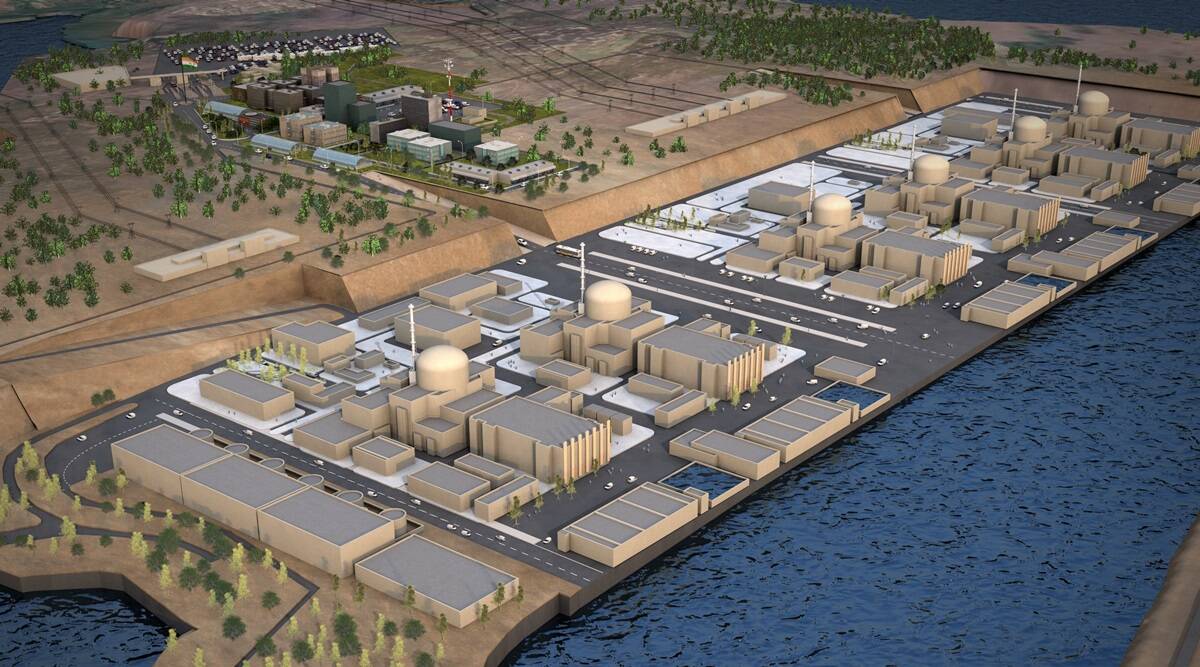
World Nuclear News 23rd April 2021, French company EDF has submitted to Nuclear Power Corporation of India Ltd (NPCIL) its binding techno-commercial offer to build six EPRs at Jaitapur in Maharashtra. The offer is the culmination of work that began with the 2018signature of an agreement between the two companies and paves the way for discussions towards a binding framework agreement.
https://world-nuclear-news.org/Articles/EDF-submits-offer-for-Jaitapur-project
Le Monde 23rd Aprilo 2021, It is believed to be the largest civilian atomic infrastructure in the world, with an installed capacity of 9,600 megawatts. This offer should initially have been submitted at the end of 2018 to the Nuclear Power Corporation of India Limited (NPCIL) group, the future operator of the plant.
But the approach of India’s spring 2019 general elections had made it untimely in the eyes of nationalist Prime Minister Narendra Modi, who is a candidate for his return to power. If the drafting of the document, more than 7,000 pages, finally took much longer than expected, it is also because of the sensitivity of its central subject: the distribution of responsibilities between the French corporation and the public operator. Indian.
In this case, EDF intends to impose its conditions. While the company chaired by Jean-Bernard Lévy originally said that it would build the entire Jaitapur plant, it now proposes to provide only “engineering studies and equipment”,
without being “Neither investor in the project nor responsible for construction”.
UK govt has a ”contingency plan”, in case Scotland becomes independent, and wants removal of nuclear weapons bases.
UK nuclear subs could leave Scotland for Devon as Indy referendum fears rise
MINISTRY of Defence planners have re-examined a contingency plan to move the Navy’s nuclear deterrent submarines from Scotland to Devon, according to senior sources last night.
EXPRESS, UK, By MARCO GIANNANGELI 25 Apr 21, It comes as the SNP prepares to fight next month’s Scottish Parliament elections on a manifesto that promises a fresh referendum on independence from the UK. Britain’s nuclear weapons system, made up of four Vanguard-class submarines which carry Trident strategic missiles, has been based at HM Naval Base Clyde on Scotland’s west coast since the 1960s. The base is made up of two sites – Faslane on Gareloch, where the submarines are based, and Coulport on Loch Long two miles away, where the warheads are stored.
Last month’s Integrated Review announced the most significant change to its nuclear weapons policy in at least two decades with the decision to abandon a self-imposed cap of 225 warheads, increasing it to 260.
In 2014 the Government ruled out moving the location of its nuclear deterrent bases ahead of Scotland’s referendum, citing the large costs involved, and still outwardly holds to that line.
But the SNP continues to pledge that it would ban nuclear weapons on Scottish soil, should it become independent…….
One senior Whitehall source confirmed last night: “A contingency plan is now in place should circumstances change and an independent Scottish government decide it no longer wants to host Britain’s nuclear deterrent.”
While the SNP is not expected to have a majority at next month’s Holyrood elections, support from Scottish Greens would still ensure a mandate to seek independence…….https://www.express.co.uk/news/politics/1427576/UK-nuclear-submarines-Scotland-devon-faslane
The Chernobyl story continues
Chernobyl: The next phase https://www.ebrd.com/news/2021/chernobyl-the-next-phase.html By Axel Reiserer, 23 Apr 2021
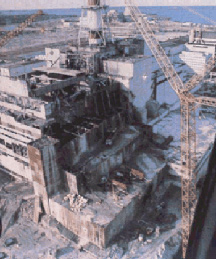
At 01:23:40 on 26 April 1986, the failure of a routine test at the Chernobyl Nuclear Power Plant in Ukraine, then part of the Soviet Union, caused reactor 4 to explode, releasing parts of its radioactive core. It was the worst nuclear accident the world had ever seen, with far-reaching political, economic and ecological consequences. Thirty-five years on, Chernobyl is still as well-known as it was a generation ago.
Fires broke out, causing the main release of radioactivity into the environment. Wind carried contaminated particles over Ukraine, Belarus and Russia, as well as parts of Scandinavia and wider Europe. The 50,000 inhabitants of the adjacent town of Pripyat were evacuated, never to return.
The accident destroyed reactor 4, killing 30 operators and firemen within three months and causing numerous other deaths in weeks and months that followed. To this day, it remains the only accident in the history of the civil use of nuclear power when radiation-related fatalities occurred. The precise number of short- and longer-term victims remains heavily disputed.
By 06:35 on 26 April, all fires at the power plant had been extinguished, apart from the fire inside reactor 4, which continued to burn for many days. Some 5,000 tonnes of boron, dolomite, sand, clay and lead were dropped from helicopters in a bid to extinguish the blaze. When the destroyed reactor was later enclosed in a provisional structure – the so-called sarcophagus – these fuel-containing materials were also walled in.
The sarcophagus was built under extremely hazardous conditions and unprecedented time pressure. By November 1986, a steel and concrete shelter was in place to lock away the radioactive substances inside the ruined reactor building and to act as a radiation shield. It was always intended as a temporary measure, with an estimated lifespan of 20-30 years
The search for a long-term solution started soon after, alongside the massive challenge of cleaning up the accident site. By the end of 1991, the Soviet Union had dissolved and newly independent Ukraine had been left with the Chernobyl legacy. Following a G7 Action Plan to improve nuclear safety in central and eastern Europe, the Nuclear Safety Account was set up at the European Bank for Reconstruction and Development (EBRD) in 1993. Two years later, the scope of the programme was extended to include Chernobyl.
A breakthrough came with the Shelter Implementation Plan in 1997, which provided a road map of how to the tackle the immediate and longer-term tasks. In the same year, the G7 officially invited the EBRD to set up and manage the Chernobyl Shelter Fund, which became the main vehicle for all efforts to ensure that the destroyed reactor 4 remained in an environmentally safe and secure state.
Emergency repairs in 1998 and 1999 prevented the imminent collapse of the sarcophagus, as well as a vent stack that was endangering the adjacent turbine hall over reactor 3, which was still in operation. It was only at the end of 2000 that all nuclear power generation in Chernobyl ceased. The following year saw a landmark decision to build an arch-shaped steel structure, called the New Safe Confinement (NSC), to seal off reactor 4.
In the subsequent years, several tasks were carried out simultaneously. Detailed technical work on the NSC started. The site had to be stabilised and prepared for the construction work. The first project the EBRD managed was the construction of a liquid radioactive waste treatment plant (LRTP) to handle some 35,000 cubic metres of low- and intermediate-level liquid waste at the site. Meanwhile, the safe storage of the spent fuel assemblies from reactors 1, 2 and 3 came into focus.
All this has been achieved. The LRTP has been operational since 2014. A new interim storage facility for the treatment and storage of spent fuel has been built and, after successful hot tests, is currently awaiting a permanent licence from the Ukrainian regulator. The NSC, the most visible Chernobyl project, was slid into position in late 2016 and then handed over to the Ukrainian authorities.
In total, the Bank has managed close to €2 billion in donor funds through the Chernobyl Shelter Fund and Nuclear Safety Account. Of this, the EBRD provided €715 million of its own resources to complete the Interim Storage Facility and New Safe Confinement.
Today, the New Safe Confinement dominates the skyline over Chernobyl, as the sarcophagus once did. The steel structure is 108 metres high and 162 metres long, with a span of 257 metres and a lifetime of at least 100 years. It was assembled in two stages in a cleaned area near the accident site and, despite its size and weight of 36,000 tonnes, was pushed 327 metres into position. It is the largest moveable structure ever built.

This is not where the story ends, however. The fact that the NSC has a lifespan of 100 years means that the next phase of work now has to be planned, agreed and implemented. The estimated 200 tonnes of radioactive nuclear fuel inside reactor 4 are now shielded by the New Safe Confinement. However, parts of the sarcophagus are becoming unstable and will have to be removed at some point. Once this is done, work will come closer to the reactor’s interior.
The EBRD remains a key partner in these efforts. Following a request by Ukraine, in November 2020, the Bank established the new International Chernobyl Co-Operation Account, aimed at creating an integrated plan for the site to serve as the basis for developing and implementing longer-term projects. The new fund will hold it first assembly meeting on Tuesday – fittingly one day after the 35th anniversary. The Chernobyl story continues.
New research on papillary thyroid cancer confirms the accepted science on the harmful effects of ionising radiation.

Our work provides a foundation for further investigation of radiation-induced cancer, particularly with respect to differences in risk as a function of both dose and age, and underscores the deleterious consequences of ionizing radiation exposure.
Radiation-related genomic profile of papillary thyroid cancer after the Chernobyl accident, Science Magazine, Lindsay M. Morton, Danielle M. Karyadi et al. 23 Apr 21,
Abstract
The 1986 Chernobyl nuclear power plant accident increased papillary thyroid cancer (PTC) incidence in surrounding regions, particularly for 131I-exposed children. We analyzed genomic, transcriptomic, and epigenomic characteristics of 440 PTCs from Ukraine (359 with estimated childhood 131I exposure and 81 unexposed children born after 1986). PTCs displayed radiation dose-dependent enrichment of fusion drivers, nearly all in the mitogen-activated protein kinase pathway, and increases in small deletions and simple/balanced structural variants that were clonal and bore hallmarks of non-homologous end-joining repair. Radiation-related genomic alterations were more pronounced for those younger at exposure. Transcriptomic and epigenomic features were strongly associated with driver events but not radiation dose. Our results point to DNA double-strand breaks as early carcinogenic events that subsequently enable PTC growth following environmental radiation exposure.
The accidental explosion in reactor 4 at the Chernobyl (Chornobyl in Ukrainian) nuclear power plant in April 1986 resulted in the exposure of millions of inhabitants of the surrounding areas of Ukraine, Belarus, and the Russian Federation to radioactive contaminants (1). Epidemiologic and clinical research in the ensuing decades has demonstrated increased risk of papillary thyroid carcinoma (PTC) with increasing thyroid gland exposure to radioactive iodine (131I) from fallout, which was deposited on pastures with grazing cows and ingested through milk and leafy greens, particularly during early childhood (2). Together with data from populations exposed to other types of radiation, compelling evidence indicates that PTC risk increases following childhood exposure to ionizing radiation, a recognized carcinogen (2–5)……….
The majority of individuals with PTC were female (n = 335, 76.1%), resided in the Kiev (Kyiv in Ukrainian) region at the time of the accident (n = 286, 65.0%), and were diagnosed during young adulthood (mean = 28.0 years, range: 10.0-45.6),,……..
The pronounced evidence of radiation-related damage that we observed for individuals exposed at younger ages is consistent with epidemiologic analyses that have identified higher thyroid cancer risks with radiation exposure at younger ages …………
our data are consistent with a linear dose-response for the key molecular characteristics associated with radiation dose in the range examined in our analysis (≤1 Gy), which aligns with the extensive radiobiological literature and other epidemiologic evidence regarding DNA damage and cancer risk following ionizing radiation exposure………….
Our work provides a foundation for further investigation of radiation-induced cancer, particularly with respect to differences in risk as a function of both dose and age, and underscores the deleterious consequences of ionizing radiation exposure. https://science.sciencemag.org/content/early/2021/04/21/science.abg2538.full
”Advanced” nuclear reactors not necessarily better. NuScale’s ”small” nuclear reactors not really small

Johnson Loves Pie in the Sky nuClear News N0. 131 April 2021 ………….. NuScale In Jan 2021, a UK company, Shearwater, announced a partnership with US NuScale to develop 3GW hybrid off-shore wind/SMR plant to produce electricity & hydrogen. (9) The NuScale option, whether as a standalone plant or a hybrid with offshore wind, suffers from the fact that while the individual reactors are small, they are designed to be in as cluster of 12 – about 1GW capacity – making it effectively a large reactor. Until a project being built in the USA is completed and operating efficiently and economically, it will remain an unproven and risky investment.
The NuScale SMR design is further ahead than Rolls Royce’s, since they have been working on it since 2003. It is a 77MW reactor designed to be deployed in clusters of 12 – so 924MW altogether. NuScale has only one potential project – Utah Associated Municipal Power Systems (UAMPS) – with USDOE funding for part of the project but not sufficient investors yet for rest of project.
M.V. Ramana (Liu Institute for Global Issues, School of Public Policy and Global Affairs, The University of British Columbia) argues that higher construction and operational costs per unit of electricity generation capacity will make electricity from SMRs more expensive than electricity from large nuclear power plants. An assessment of the markets for these technologies, suggests they are inadequate to justify constructing the necessary manufacturing facilities. (10)
Economics of scale would suggest that SMRs would be more expensive per unit of electricity than large-scale reactors. Proponents argue that they can make up for the lost economies of scale by savings through mass and modularized manufacture in factories and resultant learning. Learning in this context refers primarily to the reduction of cost with increased construction. It is often quantified through a learning rate, which is defined as the percentage cost reduction associated with a doubling of units produced. Sustained learning would require just one or two standard reactor designs to be built in large quantities. However, there are roughly six dozen SMR designs are in various stages of development in multiple countries.
Although there is no data on jobs from SMRs—because SMRs have not been deployed at any meaningful level to measure employment figures—the literature is clear that nuclear power generates fewer jobs than renewables like solar and wind energy per unit of energy generated. (11) (12)
Several advocates have argued that SMRs are capable of load following to balance intermittent renewables. From a technical point of view, shutting down, restarting, or varying the output power are all more challenging for nuclear power plants, especially water-cooled reactors, compared to other electricity sources. Further, although load following may be technically possible, operating reactors in this mode would decrease their economic competitiveness. The challenge arises from the fact that nuclear power plants have high fixed (capital) costs. Therefore, it makes more economic sense to operate them continuously near their maximum capacity in order to improve the return on investment. Given the already poor economic prospects for SMRs, this penalty will essentially rule out deployment of these technologies in a load-following mode.
Ramana concludes that pursuing SMRs will only worsen the problem of poor economics that has plagued nuclear power and make it harder for nuclear power to compete with renewable sources of electricity. The scenario is even more bleak as we look to the future because other sources of electricity supply, in particular combinations of renewables and storage technologies such as batteries, are fast becoming cheaper. Finally, because there is no evidence of adequate demand, it is financially not viable to set up the manufacturing facilities needed to mass produce SMRs and advanced reactors. All of these problems might just end up reinforcing The Economist magazine’s observation from the turn of the century: ‘‘nuclear power, which early advocates thought would be ‘too cheap to meter’, is more likely to be remembered as too costly to matter’’.
Professor Dave Elliott is also sceptical about claims that SMRs can reduce costs. Delivery of power at £40-60/MWh is promised, but there is still some way to go before any project actually goes ahead and we can see if the promises hold up in practice. He says most designs are basically variants of ideas proposed, and in some cases tested, many decades ago, but mostly then abandoned. The most developed is the NuScale reactor, which is basically PWR technology. Rolls Royce is also promoting a mini-PWR design, which, it is claimed, will be ready for grid use by 2030. Some of the other SMR proposals are less developed and may take more time to get to that stage. But it is claimed that one of the more novel design, the Natrium fast reactor system, proposed by Terrapower and backed by Bill Gates, will be on line this decade. Given that this makes use of liquid sodium and molten salt heat storage, that is quite a claim.
If they are going to be economically viable, some say that SMRs will have to be run in Combined Heat and Power ‘Cogen’ mode, supplying heat for local used, as well as power for the grid. That implies that they will have to sited in or near large heat loads i.e. in or near urban areas. Will local residents be keen to have mini-nuclear plants nearby? That issue is already being discussed in the USA, with some urban resistance emerging. A key issue in that context is that it has been argued that since they allegedly will be safer, SMRs will not need to have such large evacuation zones as is the norm for standard reactors, most of which are sited in relatively remote area. (13)
“Advanced” is not always better The Union of Concerned Scientists (UCS), examines all the proposed new types of reactor under development in the US and fails to find any that could be developed in time to help deal with the urgent need to cut carbon emissions.
The US government is spending $600 million on supporting these prototypes. While the report goes into details only about the many designs of small and medium-sized reactors being developed by US companies, it is a serious blow to the worldwide nuclear industry because the technologies are all similar to those also being underwritten by taxpayers in Canada, the UK, Russia and China. This is a market the World Economic Forum claimed in January could be worth $300 billion by 2040. Edwin Lyman, who wrote the report, and is the director of nuclear power safety in the UCS Climate and Energy Program, thinks the WEF estimate is extremely unlikely. He comments on nuclear power in general: “The technology has fundamental safety and security disadvantages compared with other low-carbon sources.” He says none of the new reactors appears to solve any of these problems. The industry’s claims that their designs could cost less, be built quickly, reduce the production of nuclear waste, use uranium more efficiently and reduce the risk of nuclear proliferation have yet to be proved. The developers have also yet to demonstrate that the new generation of reactors has improved safety features enabling them to shut down quickly in the event of attack or accident. (14)
One of the industry’s ideas for using the power from these reactors to produce “green hydrogen” for use in transport or back-up energy production is technically feasible, but it seems likely that renewable energies like wind and solar could produce the hydrogen far more cheaply, the report says.
“Advanced” reactors often present greater proliferation risks, says Lyman. “In many cases, they are worse with regard to … safety, and the potential for severe accidents and potential nuclear proliferation. ‘Advanced’ Isn’t Always Better”. (15)
Lyman says, if nuclear power is to play an expanded role in helping address climate change, newly built reactors must be demonstrably safer and more secure than current generation reactors. Unfortunately, most “advanced” nuclear reactors are anything but. A comprehensive analysis of the most prominent and well-funded non-light-water reactor (NLWR) designs concluded that they are not likely to be significantly safer than today’s nuclear plants and pose even more safety, proliferation, and environmental risks than the current fleet. (16) https://www.no2nuclearpower.org.uk/wp/wp-content/uploads/2021/04/nuClearNewsNo131.pdf
Britain’s unlikely-to-succeed bet on Rolls Royce small nuclear reactors

…..Advanced Modular Reactors are unlikely to be available before 2045 if ever – much too late to be any help in tackling the climate emergency. .….
Small Modular Reactors s will only proceed if the risk to RR money is minimal. That means RR will only put serious effort into design development with government guarantees given now, before the design exists, and it has been reviewed by ONR, a demonstration plant has been completed, and costs are known.
SMRs will only proceed if the risk to RR money is minimal. That means RR will only put serious effort into design development with government guarantees given now, before the design exists, and it has been reviewed by ONR, a demonstration plant has been completed, and costs are known.
UK taxpayers would have to provide a large proportion of the cost of design development, navigating the regulators design assessment and assist in the setting up of component production lines. It would also have to guarantee orders for a minimum of 16 reactors, which, even on Rolls Royce’s unrealistic cost estimate, would be a commitment to spend nearly £30bn before it has progressed beyond a conceptual design.
Johnson Loves Pie in the Sky nuClear News N0. 131 April 2021, We saw in June 2020 (nuClear News No. 126) how the Nuclear Innovation and Research Advisory Board (NIRAB) has been advising the Department for Business, Energy and Industrial Strategy (BEIS) that we need three streams of nuclear product development and deployment:
• large-scale Light Water Reactors (LWRs), which are currently available and suitable for baseload electricity generation;
• small modular reactors (SMRs), which are based on the same proven technology and can offer additional flexibility to meet local energy needs;
• advanced modular reactors (AMRs), which typically have a higher temperature output, enabling them to contribute to decarbonisation through heat and hydrogen production, as well as generate electricity at competitive costs.
Small modular and advanced nuclear reactors are proposed, supposedly, as potential ways of dealing with some of the problems of large nuclear reactors —specifically economic competitiveness, risk of accidents, link to proliferation and production of waste. Yet Gregory Jaczko, Former Chair US Nuclear Regulatory Commission, says Advanced Nuclear Technologies should only be supported “if they can compete with renewables & storage on deployment cost & speed, public safety, waste disposal, operational flexibility & global security. There are none today.” (1)
The UK Government’s Policy Paper on ‘Advanced Nuclear Technologies’ (ANTs) specifies two broad categories of ANT. Firstly, Generation III water-cooled reactors similar to existing nuclear power station reactors but smaller, it calls Small Modular Reactors (SMRs). This is despite the fact that the Rolls Royce design which it is supporting is 470MW – much larger than the maximum 300MW defined by IAEA as small.
Secondly, Generation IV which use novel cooling systems or fuels to offer new functionality (such as industrial process heat) it calls Advanced Modular Reactors (AMRs). (2)
In July 2019 the UK Government gave an initial £18m to Rolls-Royce to help them develop the design for an SMR. This was to be matched with funding from the consortium led by Rolls-Royce (and including Assystem, SNC Lavalin/Atkins, Wood, Arup, Laing O’Rourke, BAM Nuttall, Siemens, National Nuclear Laboratory, and Nuclear AMRC). (3)
A year earlier, in June 2018, as part of the UK government’s £200 million Nuclear Sector Deal, £56 million was put towards the development and licensing of advanced modular reactor designs. Eight non-light water reactor (non-LWR) vendors each received £4 million to perform detailed technical and commercial feasibility studies. Those vendors were Advanced Reactor Concepts, DBD, LeadCold, Moltex Energy, Tokamak Energy, U-Battery Developments, Ultra Safe Nuclear Corporation (USNC), and Westinghouse Electric Company UK. (4) This was Phase One of the Advanced Modular Reactor (AMR) Feasibility and Development Project. Then in July 2020 Phase Two was announced with 3 AMRs receiving a share of £40m: U-Battery (4MW hig temperature reactor), Westinghouse (450MW lead-cooled fast reactor) & Tokamak (fusion). A possible further £5m was also made available to regulators to support this. (5) In November 2020, Boris Johnson’s 10 Point Plan confirmed the Government’s commitment to advancing large, small and advanced reactors, and announced an Advanced Nuclear Fund of up to £385 million which included:
• funding of up to £215 million for Small Modular Reactors (SMRs); • up to £170 million for Advanced Modular Reactors (AMRs); • up to £40 million to develop regulatory frameworks and support UK supply chains to help bring these technologies to market.
According to the Energy & Climate Change Intelligence Unit (ECIU) the investment in small modular reactors (SMRs) was less than expected. “If I was in the SMR game I’d be disappointed with this because £2bn support for a small initial fleet of reactors has been paired back to just over £500M.” (6)
Professor Steve Thomas says the 3 AMRs are unlikely to be available before 2045 if ever – much too late to be any help in tackling the climate emergency. (7)
The Rolls Royce (RR) SMR design is still at an early stage. It was only announced in 2016. It is slightly larger than the first unit at Fukushima (470MW vs 439MW) and much larger than the Trawsfynydd Magnox reactors, which were 250MW. Rolls Royce claims the first reactor could be operational by 2030, but it’s hard to see how this can be achieved. Even if achieved it is probably too late. By 2030 only Sizewell B and possibly Hinkley Point C will be operating and if the UK is to meet its targets of reducing greenhouse gas emissions by 68% by 2030 and 78% by 2035, we should by then be well on the road to a low carbon economy with a limited nuclear capacity
Thomas says SMRs will only proceed if the risk to RR money is minimal. That means RR will only put serious effort into design development with government guarantees given now, before the design exists, and it has been reviewed by ONR, a demonstration plant has been completed, and costs are known.
Rolls-Royce told the House of Lords Science and Technology Committee in 2016 that 7GW of power would “be of sufficient scale to provide a commercial return on investment from a UKdeveloped SMR, but it would not be sufficient to create a long-term, sustainable business for UK plc.” Therefore, any SMR manufacturer would have to look to export markets to make a return on their investment.
Rolls Royce is making extraordinary demands on the UK Government that it must commit to before further significant development work takes place. Thomas says RR would need:
- Exclusive access to UK market;
• Matched funding (minimum) up to end of Generic Design Assessment;
Sharing of costs for production line facilities (to produce 2 reactors per year);
• Guaranteed orders for 7GW (16 reactors).
UK taxpayers would have to provide a large proportion of the cost of design development, navigating the regulators design assessment and assist in the setting up of component production lines. It would also have to guarantee orders for a minimum of 16 reactors, which, even on Rolls Royce’s unrealistic cost estimate, would be a commitment to spend nearly £30bn before it has progressed beyond a conceptual design. The first plant must be made using production lines so all 16 reactors must be ordered now & by the time the first is completed, another 8 will be on their way. (8)
Rolls Royce claims a construction time of 4 years & costs (after 5 units) of £1.8bn (£3800/kW), which means electricity at £40-60/MWh. These claims are extraordinary but very similar to those made for Hinkley Point C. In 2000, it had been claimed the EPR would be built in four years or less and would cost $1000/kW (about £800/kW). In fact, all EPR’s that have been built have gone far over budget and all will take much more than 4 years to construct. The latest cost estimate for Hinkley Point C is about £27bn (2020 money) or about £8400/kW. Rolls Royce’s claims must therefore be taken with a very large pinch of salt.
Steve Thomas comments:
“The UK Government’s ‘Green Industrial Revolution’ 10-point plan of November 2020 seemed to include a major strengthening of the commitment to Small Modular Reactors (SMRs). However, closer examination shows much of the money is far from committed and the focus is on technologies that have little chance of contributing to meeting the UK’s target of zero-carbon by 2050. There remains no firm commitment to the Rolls Royce SMR and it must be hoped the government is unwilling to gamble the huge sums of money Rolls Royce is demanding to be promised if it is to progress the design from the early stage it is currently at.” ……… https://www.no2nuclearpower.org.uk/wp/wp-content/uploads/2021/04/nuClearNewsNo131.pdf
Czechs exclude Rosatom from nuclear tender after dispute with Russia
Czechs exclude Rosatom from nuclear tender after dispute with Russia, Reuters, 19 Apr 21,
The Czech government will not invite Russia’s Rosatom to take part in security assessments before a planned tender for a new unit at the Dukovany nuclear power plant, Industry Minister Karel Havlicek said on Monday.
The decision, which effectively excludes Russia from the multi-billion dollar tender, was announced two days after Prague expelled 18 Russian embassy staff, saying it suspected Russian intelligence was involved in explosions at an ammunition depot in 2014.
Russia has dismissed the accusation as absurd. Rosatom called the decision to exclude it regrettable and politically motivated……….. https://www.reuters.com/world/europe/czechs-exclude-rosatom-nuclear-tender-after-dispute-with-russia-2021-04-19/
*Net Zero Without Nuclear**

Jonathon Porritt 15th April 2021, Jonathon Porritt: Even as the prospects for nuclear power continue to decline, the industry is spending more and more money seeking to persuade Governments, commentators and ‘gullible greenies’ that we’re going to need new nuclear power to get us to a Net Zero economy by 2050.
I’ve spent the last six months looking into this mismatch: declining prospects, escalating hype. All captured in my new Report, ‘Net Zero Without Nuclear’ – accessible here: Net Zero Without Nuclear 15.04.21 ‘Net Zero Without Nuclear’ has been generously endorsed by Greenpeace, Friends of the Earth, the Green Party, CND and a host of experts in this critical scientific and policy area.
http://www.jonathonporritt.com/net-zero-without-nuclear-the-case-against-nuclear-power/
French MPs urge Macron to provide data about nuclear waste buried in Algeria
French MPs urge Macron to provide data about nuclear waste buried in Algeria https://www.middleeastmonitor.com/20210415-french-mps-urge-macron-to-provide-data-about-nuclear-waste-buried-in-algeria/, April 15, 2021 Nine French MPs have called on President Emmanuel Macron to provide data and maps about nuclear waste sites in Algeria, agencies reported yesterday. The French conducted nuclear tests in the Algerian Sahara in the 1960s You now have the opportunity to take concrete action in favour of the civilians and the environment which continue to be affected by nuclear waste buried by France in the sands of the Algerian Sahara,” the MPs told Macron. “You must seize it.”They pointed out that the fifth session of the Algerian-French high level intergovernmental committee, which should have held on 11 April, has been postponed indefinitely. The committee works to resolve historical disputes between France and Algeria.
In February, the MPs said, the sky over a large part of France had an orange hue which was the result of sand carried by strong winds from Algeria. “This meteorological episode reminded us once again that France has left an indelible radioactive imprint in the heart of the Sahara… Seventeen nuclear explosions were carried out in [Algeria] between 1960 and 1966, both above ground and underground, to test the French atomic bomb.”Key information is still missing about the waste for the most part buried in the sand, added the MPs. “Providing the details requested,” they insisted, “will ensure the health and safety of the people living in the areas in question, protect future generations and take the necessary and appropriate measures for the restoration of the environment.”
Nuclear power combined with nuclear weapons – confronts Britain with an intractable problem.
Electrical Review 14th April 2021, Nuclear waste has been an intractable problem ever since nuclear power was
developed over 60 years ago. It has become a very expensive and politically embarrassing issue all around the world.
Not that the Johnson Government would admit this. Many in it still argue that nuclear power is the answer
to climate change, conveniently forgetting that they are passing the waste buck onto future generations. To those in power, the solution to the waste problem is always just around the corner, to be resolved just beyond their term of office.
But the history of nuclear over the last six decades, across the globe, is of dozens of failed schemes. Currently the UK is
undertaking its sixth search in 42 years for a nuclear waste dump site. Yet again wrestling with the problem of years of public consultations, planning inquiries and geological investigations, only to be finally rejected, even as scientists warn that continued neglect of the issue is placing citizens in increasing danger.
The problem is that civil nuclear industries, especially when, as in Britain, they are combined with a weapons programme, produce plutonium and other by-products in spent fuel that take as long as 100,000 years to decay. International law requires the country that produced the waste to dispose of it within its own boundaries. Identifying
somewhere to put this waste, where they could be safe for that length of time, requires stable geological formations that are very hard to find anywhere.
Nuclear power’s waste problem complicates it as a green energy solution
1 This Month
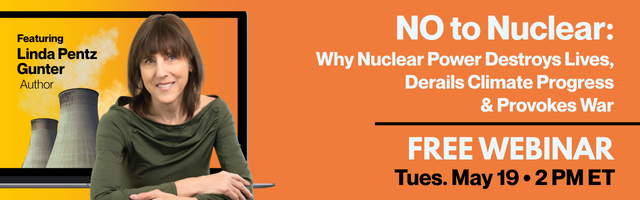
19 May – Webinar No To Nuclear: Why Nuclear Power Destroys Lives, Derails Climate Progress and Provokes War
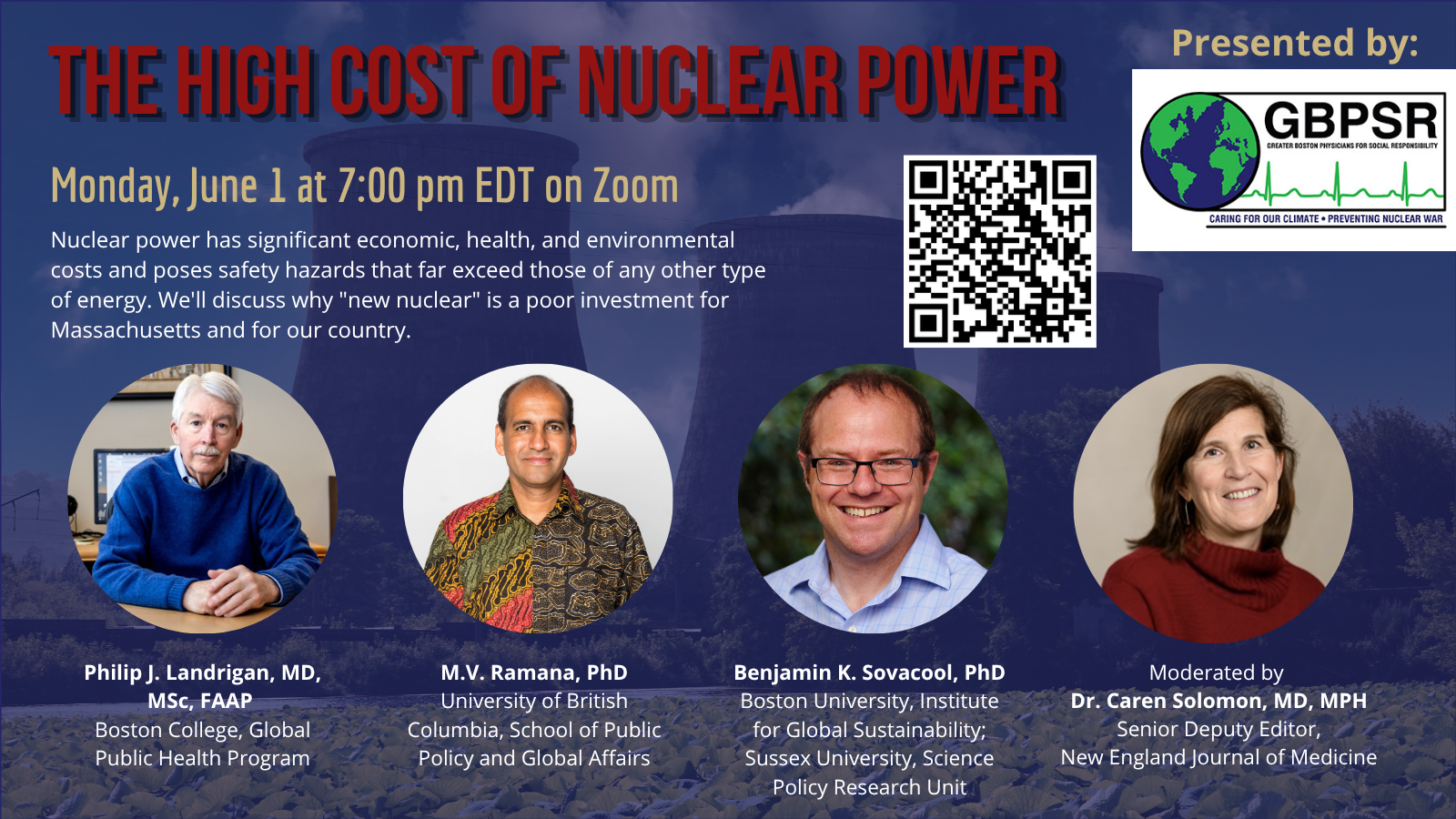
1 June Webinar – The High Cost of Nuclear Power – Register


of the week– Nuclear Reactor Information Task Force
To see nuclear-related stories in greater depth and intensity – go to https://nuclearinformation.wordpress.com
-
Archives
- May 2026 (211)
- April 2026 (356)
- March 2026 (251)
- February 2026 (268)
- January 2026 (308)
- December 2025 (358)
- November 2025 (359)
- October 2025 (376)
- September 2025 (257)
- August 2025 (319)
- July 2025 (230)
- June 2025 (348)
-
Categories
- 1
- 1 NUCLEAR ISSUES
- business and costs
- climate change
- culture and arts
- ENERGY
- environment
- health
- history
- indigenous issues
- Legal
- marketing of nuclear
- media
- opposition to nuclear
- PERSONAL STORIES
- politics
- politics international
- Religion and ethics
- safety
- secrets,lies and civil liberties
- spinbuster
- technology
- Uranium
- wastes
- weapons and war
- Women
- 2 WORLD
- ACTION
- AFRICA
- Atrocities
- AUSTRALIA
- Christina's notes
- Christina's themes
- culture and arts
- Events
- Fuk 2022
- Fuk 2023
- Fukushima 2017
- Fukushima 2018
- fukushima 2019
- Fukushima 2020
- Fukushima 2021
- general
- global warming
- Humour (God we need it)
- Nuclear
- RARE EARTHS
- Reference
- resources – print
- Resources -audiovicual
- Weekly Newsletter
- World
- World Nuclear
- YouTube
-
RSS
Entries RSS
Comments RSS
 nuclear-news