Electricity customers pay excessive costs for nuclear power – Egypt, Turkey, UK, France, Russia

Part two | Nuclear energy in Africa, The second in this three-part series looks at how power purchase agreements raise the cost of electricity for consumers and act as major sources of inflationary pressure in economies. New Frame, By: Neil Overy, 1 Dec 2020 Recent deals brokered between host nations and nuclear power companies show how consumers ultimately bear the cost of building nuclear power plants because of power purchase agreements, which favour the vendor and lower their financial risk but often lead to hugely inflated electricity costs for consumers.
No official details have yet been given to indicate what the price will be for electricity generated by the El Dabaa plant that Russia’s state-owned Rosatom is building in Egypt. But in 2016, one Egyptian energy expert predicted that prices per megawatt hour – how much it costs to produce one megawatt of energy for one hour – from El Dabaa would be at least four times more than from renewable power sources. Renewable energy prices have fallen significantly since 2016, while nuclear power has become more expensive.
British consumers will pay excessive amounts for electricity from the Hinkley Point C nuclear power station that EDF is building for decades after the plant is completed. While construction does not follow the Build-Own-Operate model, EDF negotiated a 35-year power purchase price linked to inflation with the British government in 2016 to extract as much profit as possible. The British government’s Public Accounts Committee conservatively estimated that this deal will cost consumers an additional $40 billion (about R615 billion) over the 35 years of the contract compared with alternative energy sources such as solar and wind.
A similar story is playing out in Turkey. Critics have pointed out that the price the government has agreed to pay Rosatom for electricity generated by the Akkuyu plant the Russian vendor is building will cost the country an additional $27 billion over the 15-year period of the power purchase agreement. This is because the price that has been agreed between Rosatom and the Turkish government is significantly above current electricity costs. A 2019 report by the Union of Chambers of Turkish Engineers and Architects notes that electricity purchased from the plant will be at least 275% more expensive than alternatives.
Financial trouble
Despite such deals being signed, the long-term financial viability of state-owned nuclear vendors is questionable. EDF received significant cash injections from the French government and secured favourable loans backed by the British Treasury for Hinkley Point C, but was still forced to sell a third of its stake in the project to the China General Nuclear Power Group in 2016 because it was running out of money.
And EDF remains in serious financial trouble. It is about $52 billion in debt and two major agencies have given it a negative credit rating. The French energy company’s problems stem from delays in the construction of Hinkley Point C, which is said to have cost it at least another $4 billion so far, and at other nuclear power stations it is building. The Flamanville 3 project in France is now four times over budget and 10 years late. In Finland, the Olkiluoto 3 project is also four times over budget and is now only expected to be running in 2022, 13 years after its original start-up date. Further delays at Hinkley Point C and Flamanville 3 are strongly anticipated, which will plunge EDF further into the mire, meaning that more bailouts from the French government are likely.
Rosatom has experienced serious problems financing the Akkuyu nuclear power station. In 2016, it tried to sell a 49% share in the project because it could not raise the necessary capital to complete the plant. After failing to find any buyers, Rosatom was saved, at least in the short term, late last year by a $400 million loan from another Russian state-owned enterprise, Sberbank. Unsurprisingly, the completion of this plant is also delayed. Originally scheduled to be operational by 2019, its completion has already been pushed back twice and it is now predicted to be partially operational by 2023.
That companies like EDF and Rosatom are reliant on the willingness of their respective governments to fund their survival is troubling. The economic consequences of the Covid-19 pandemic perfectly illustrate how susceptible both the global economy and individual economies are to unexpected shocks. Falling electricity sales in France owing to Covid-19 are resulting in intense speculation that EDF will need a significant emergency bailout from the French government sometime in early 2021 or face financial ruin. It is not clear what would happen to the plants it is currently building if EDF were to collapse. They could be abandoned, or taxpayers in host countries could be forced to pay even more for their completion.
These financial difficulties are often the result of problems that emerge during the construction phase of nuclear power stations, which lead to delays. A study completed in 2014 revealed the extent of this problem, saying only 3% of nuclear power stations have been built on schedule. In 2018, researchers from the Centre for Environmental Policy at Imperial College London found that between 1955 and 2016, construction delays increased the cost of nuclear power plants by 18% on average over their original budgets.
Consumers as cash cows
In effect, the public pays twice for these delays. In vendor countries such as France and Russia, taxpayers contribute to the bailouts of state-owned companies like EDF and Rosatom. In recipient countries, such as the United Kingdom, Egypt and Turkey, the public pays through artificially inflated electricity bills.
Rather than reflecting on this double burden, vendors and compliant governments are inventing new ways to squeeze yet more money out of the public. To fund additional nuclear power plants in Britain, the government is now considering a new funding model called Regulatory Asset Base (RAB).
The RAB model basically gives a blank cheque to vendors, allowing them to start charging customers for electricity during the construction phase of a power plant, before the station even produces electricity. In addition, it covers vendors for construction cost overruns of up to 30%, all of which would be paid for by consumers. It is proposed that the British government would cover any construction cost overruns of more than 30%. In effect, this funding model transfers almost all financial risk from investors to consumers, through hugely inflated electricity bills or tax transfers to vendors, or both.
In September, EDF appeared to indicate that it would only bid for the contract to build the proposed $25 billion Sizewell C nuclear plant in Britain if the British government adopted the RAB funding model…………………https://www.newframe.com/part-two-nuclear-energy-in-africa/
Secrecy over new conditional coal mine licence applications for Cumbria – no public scrutiny.
Keep Cumbrian Coal in the Hole 13th April 2021, Nuclear safety group Radiation Free Lakeland have asked for and been refused sight of the new conditional coal mine licence applications from
West Cumbria Mining to the Coal Authority. The controversial Irish Sea coal
mine developers had originally been granted conditional exploration
licences eight years ago over the heads of Cumbria County Council and the
public, with no public scrutiny at all.
These have now lapsed and the
developers have applied for new licences. Radiation Free Lakeland have
asked for sight of the licence applications from West Cumbria Mining. The
Coal Authority have refused sight of the licence applications based on two
clauses in the Freedom of Information Act 2000: Section 43(2) Commercial
Interests and Section 44(1)(a) Prohibition by Enactment. Campaigners say
that there is no justification offered by the Coal Authority for the
protection of the developers at the expense of public scrutiny into the new
licence applications.
COAL AUTHORITY REFUSE RIGHT TO SEE LICENCE TO DRILL UNDER IRISH SEA
The National 12th April 2021
The National 12th April 2021, When Scotland becomes an independent country, weapons of mass destruction
will be removed from the Clyde.
Nuclear warheads are only stored at HMNB Clyde for the sole purpose of being mated to Trident II D-5 missiles before
they are loaded onto nuclear submarines. As is widely known, as part of the agreement made by the Thatcher and Reagan governments, the UK’s missiles are maintained by the United States at Kings Bay Georgia, as part of a
shared pool.
Two years since Julian Assange was seized from the Ecuadorian Embassy
the Biden administration has continued Trump’s pursuit of the WikiLeaks founder—in 2010, Biden had labelled him a “high-tech terrorist”.

Two years since Assange was seized from the Ecuadorian Embassy, World Socialist Website, Thomas Scripps, 9 April 2021 Two years ago on Sunday, WikiLeaks founder Julian Assange was seized from the Ecuadorian embassy in London. He has been incarcerated ever since, fighting extradition to the United States where he faces life imprisonment in barbaric conditions for exposing war crimes, coup plots, mass state surveillance, torture and corruption.
On April 11, 2019, Assange’s political asylum status was revoked by the Ecuadorian government and British police entered the embassy building, dragging him away. The recently published diaries of former Foreign Office minister Sir Alan Duncan confirm the involvement of the highest levels of the state in this lawless operation.
Duncan explains how he watched the police raid on a live feed from the “Operations Room at the top of the Foreign Office.” Codenamed “Pelican”, Duncan recalled how one of its officials looked on, “wearing a pelican-motif tie.” Duncan’s diary entry concludes, “So, job done at last—and we take a commemorative photo of Team Pelican. It had taken many months of patient diplomatic negotiation, and in the end it went off without a hitch. I do millions of interviews, trying to keep the smirk off my face.”
The sadism of the British state’s snatch-and-grab operation was matched only by the degraded efforts of the pseudo-left to vilify Assange and blacken his reputation in support of a manufactured sexual assault investigation launched by Sweden in 2010. Rightly fearing that his extradition to Sweden would be a stepping-stone to US extradition, Assange sought asylum in the Ecuadorian embassy. While he was there, his former “media partners”, most prominently the Guardian, and an international roll call of pseudo-left groups, launched a despicable years’ long slander campaign to smear him as a sexual predator………………
The Trump administration, it was later revealed, was working with the CIA to spy on Assange, including his privileged communications with lawyers and doctors, and to steal his personal documents. CIA operatives discussed plans for Assange’s kidnap or assassination, until Ecuadorian President Lenin Moreno agreed to turn him over to the UK police.
Once in the hands of the British state, Assange was subjected to two years of pseudo-legal persecution, culminating in a degrading show trial. Hauled in front of Westminster Magistrates Court just hours after he was seized from the embassy, Assange was found guilty of violating bail. District judge Michael Snow declared, “His assertion that he has not had a fair hearing is laughable. And his behaviour is that of a narcissist who cannot get beyond his own selfish interests.”………..
Assange’s time in Belmarsh was characterised by the repeated and flagrant denial of his legal rights, aimed at crushing him and which left him suicidal. He was repeatedly denied proper access to his lawyers and to materials necessary to prepare his defence. When Assange reached the end of his sentence, District Judge Vanessa Baraitser ordered that he continue to be held in Belmarsh on remand. During the initial week of Assange’s extradition hearing, held in February 2020 at Woolwich Crown Court, he was held in a glass box, with Baraitser preventing him from speaking or communicating effectively with his lawyers. He was stripped twice and handcuffed 11 times on the first day.
In the run-up to the main hearing at Westminster Magistrates Court in September 2020, Assange was repeatedly denied bail, even as COVID-19, to which he is especially vulnerable on account of a respiratory condition, ripped through Belmarsh prison.
The US government used this time to develop its monstrous assault on democratic rights. The initial indictment of the WikiLeaks founder, unsealed on the day of his seizure from the embassy, charged him with conspiracy to commit computer intrusion, with a maximum sentence of five years. On May 23, 2019, the US unveiled 17 new charges under the 1918 Espionage Act with a combined potential sentence of 170 years. These charges have chilling implications for freedom of the press, criminalising basic journalistic practices and holding them tantamount to treason or espionage.
Another superseding indictment was issued on June 24, 2020, after one phase of Assange’s hearing had been completed and a matter of weeks before the defence was due to submit its skeleton argument for the second. Besides being a gross abuse of due process, the new indictment, based largely on testimony from FBI informants with histories of fraud and entrapment, expanded the framework of the charges to an even wider range of journalistic activity.
The immense significance of WikiLeaks’ and Assange’s journalism, and the criminality of their persecution, was underscored at his hearing in September. Dozens of witnesses spoke to WikiLeaks’ pioneering source protection and the global impact of releases like the Collateral Murder video, revealing the massacre of Iraqi civilians, journalists and first responders by a US Apache helicopter gunship. The US case was exposed as a groundless, vindictive witch-hunt designed to destroy Assange and set a dictatorial precedent for what will happen to any journalists who dare expose imperialist crimes.
With a ruling in favour of extradition considered all but assured, Baraitser delivered a surprise decision against on January 4 of this year. But her politically calculated ruling blocked the extradition request solely on the grounds that it would be oppressive by reason of Assange’s compromised mental health and his risk of suicide if he were imprisoned in the US. She accepted every other element of the prosecution’s case, including its denial of free speech and freedom of the press, and its justification of the abuse of Assange’s democratic rights.
This left the gate wide open to a US appeal. The US Department of Justice quickly responded, “While we are extremely disappointed in the court’s ultimate decision, we are gratified that the United States prevailed on every point of law raised. In particular, the court rejected all of Mr. Assange’s arguments regarding political motivation, political offense, fair trial, and freedom of speech. We will continue to seek Mr. Assange’s extradition to the United States.”………
the Biden administration has continued Trump’s pursuit of the WikiLeaks founder—in 2010, Biden had labelled him a “high-tech terrorist”. As the World Socialist Web Site and the International Committee of the Fourth International (ICFI) have warned, Assange’s persecution is integral to the war drive of US imperialism, escalated by Trump and now intensified by his successor.
Biden has engaged in an aggressive anti-China campaign and is whipping up anti-Chinese xenophobia at home, promoting conspiracy theories on the origin of COVID-19. The US and its allies stand on a cliff edge with Russia over Crimea and eastern Ukraine, with NATO’s endless anti-Russia provocations and proxy incursions threatening to spill into war.
Military conflicts of such catastrophic scope can only be pursued abroad by destroying democratic rights at home. WikiLeaks’ releases of the Afghanistan and Iraq war logs were a spark to mass anti-war sentiment all over the world. The ruling class in the imperialist countries around the world are determined to prevent their war plans and crimes being reported and have sought to crack down on left-wing, socialist and anti-war opposition. The Assange case is emblematic of this turn to dictatorship.
In the two years since Assange’s arrest, two sharply opposed political perspectives have defined themselves in the fight for his freedom. The official campaign, run by Don’t Extradite Assange (DEA), has based itself on rotten appeals to the state and its representatives. The DEA’s first champion was former Labour leader Jeremy Corbyn. Throughout the 2019 general election, as leader of the Labour Party, Corbyn maintained a politically criminal silence on Assange, blocking the development of a mass movement against British and US imperialism to secure his freedom. When Corbyn did finally speak, it was to appeal to Boris Johnson and the British justice system that had trampled Assange’s democratic rights………..
The pandemic has proved beyond all doubt that there is no constituency in the ruling class for even the most basic democratic rights, including the right to protest and assembly and the right to life. It has responded to the virus with a policy of social murder and by advancing its preparations for state repression and war on a vast scale……….
On the second anniversary of the WikiLeaks founder’s seizure, we reaffirm our demand for Assange’s immediate, unconditional freedom and our commitment to a programme of class struggle to achieve it. https://www.wsws.org/en/articles/2021/04/10/assa-j01.html?pk_campaign=assange-newsletter&pk_kwd=wsws
Chinese-French nuclear power station planned for Bradwell UK – issues raised that might prevent its construction

Maldon Nub News 10th April 2021, Bradwell B: The public consultation on the reactor design is over – but there is still a chance to find out more and make comments. Both the company behind the proposals for Bradwell B new nuclear power station and a campaign group against the development have given their response to the end of the Environment Agency’s (EA) public consultation on the design of the nuclear reactor. The public consultation on the Generic Design Assessment (GDA) of the ‘UK HPR1000’ reactor, which is planned for use at Bradwell B, closed on Sunday, 4 April. The EA’s 12-week consultation asked the public’s views on its preliminary conclusions and assessment reports for the reactor design. The design has been put forward by General Nuclear System Limited, a joint venture between CGN (China General Nuclear Power Group) and the French power company EDF. “The EA raised a total of six “issues” which if not resolved would prevent the reactor design from being constructed here in the UK. It’s interesting to note that the HPR1000 design is not yet operational anywhere in the world, with four units currently under construction in China including the reference design unit for the Bradwell B reactors.” https://maldon.nub.news/n/bradwell-b-the-public-consultation-on-the-reactor-design-is-over—but-there-is-still-a-chance-to-find-out-more-and-make-comments |
Sleekit’ increase in Trident nuclear warheads on the Clyde
Sleekit’ increase in Trident nuclear warheads on the Clyde, The Ferret Rob Edwards, April 11, 2021 The UK Government has secretly boosted the number of Trident nuclear warheads stored on the Clyde over the last five years, according to an analysis of bomb convoys.
| Nukewatch, which monitors the transport of nuclear weapons, estimated that 37 new warheads were delivered from England to Scotland between 2015 and 2020. Nine were added in 2019 and 13 in 2020, it said. In March the Ministry of Defence (MoD) reversed a ten-year-old disarmament plan by announcing the “ceiling” on the UK’s nuclear weapons stockpile would increase from 225 to 260 because of “technological and doctrinal threats”. But Nukewatch argued this increase has already happened without the public being told. It accused Westminster of failing to provide a “fully accurate picture” and of risking “catastrophic consequences”. The Scottish National Party (SNP) warned of a “moral and democratic outrage”. Campaigners lambasted UK ministers for being “sleekit” and treating parliaments and public with “utter contempt”. The MoD did not deny that more warheads had been sent to Scotland. It declined to comment on nuclear transports, and stressed that warhead numbers were “kept under review”. The MoD’s “integrated review” of nuclear weapons policy on 17 March 2021 abandoned a pledge made in 2010 “to reduce our overall nuclear warhead stockpile ceiling from not more than 225 to not more than 180 by the mid-2020s.”It said: “In recognition of the evolving security environment, including the developing range of technological and doctrinal threats, this is no longer possible, and the UK will move to an overall nuclear weapon stockpile of no more than 260 warheads.”.. https://theferret.scot/sleekit-increase-trident-nuclear-warheads/ This prompted Nukewatch to examine its recorded sightings of 78 nuclear bomb convoys between 2010 and 2020. There were 43 trips from the nuclear weapons factory at Burghfield, Berkshire, to the Royal Naval Armaments Depot at Coulport on Loch Loch, and 35 in the other direction………………. The Scottish Campaign for Nuclear Disarmament blamed a series of “sleekit” prime ministers for misrepresenting nuclear realities. “It is now clear that a succession of UK governments have treated parliaments and the public with utter contempt,” said campaign chair, Lynn Jamieson.“They have deceived their own people by this covert escalation and they have attempted to hoodwink the world at large with a show of compliance with the requirements of the Non-Proliferation Treaty.”The suggestion that nuclear weapons brought security was an “arrogant delusional absurdity”, Jamieson argued. Instead they meant “more capacity for mass extinction, life-extinguishing climate change, genocide and risk of irrecoverable accidental https://theferret.scot/sleekit-increase-trident-nuclear-warheads/ |
Nuclear nation France exerted pressure on European Commission. Climate taxonomy deal threatened by possible inclusion of nuclear as ”virtuous”

The future of the European nuclear industry is playing out in Brussels. https://reporterre.net/Le-nucleaire-tente-de-forcer-la-porte-europeenne-de-la-taxonomie-verte 9 Apr 21, The Commission is due to unveil this month the list of energies that will be considered “green” for investors. But an entry of nuclear and gas into this “taxonomy” risks weakening the ambitions of the EU and its Green Deal.
Brussels (Belgium), correspondence
This is a decision that will weigh on the future. For several months, the European Commission has been working on an important tool, supposed to support the energy sector and the Member States in reducing the continent’s CO2 emissions. This involves establishing a classification (called “taxonomy”) of energy sources that will be considered “virtuous” for the environment and the fight against global warming. While gas and nuclear power were initially ruled out, these two sectors are making an unexpected comeback in the discussions, on the eve of the publication by the Commission of its position, scheduled for April 21.
Initially, what is called “green taxonomy” was established on “scientifically defined” sustainability criteria, explained to Reporterre Neil Makaroff, Europe manager for the Climate Action Network. This is how the nuclear sector was sidelined mainly due to the impact of radioactive waste on the environment. But over the months, and following the adoption this summer of the European recovery plan (of which 30% of expenditure will have to be directed towards actions for the climate), taxonomy has become the object of political and economic interests. States. “It is a tool that should be neutral, but by introducing political issues into it, we are trampling on what scientific experts have established,” said Neil Makaroff.
The financial stakes are indeed very important for the sectors since, even if the classification will not prevent investors from supporting the sectors of their choice, the “green taxonomy” should be widely used as a reading grid by public investors, to start with the European Investment Bank (EIB) and the Member States subject to their climate targets. For private investors, the criteria of the taxonomy will also be benchmarks for obtaining labels on sustainability and highlighting their environmental commitments. In fact, proposing such a list amounts to directing a windfall of several billion towards the infrastructures officially dubbed for their contribution to the energy transition.
France wants to save its nuclear power hero.
In this context, the nuclear industry would like not to be forgotten by this great banquet. It initially had little hope of being invited, as several European states are hostile to her – Austria in the lead, but also Germany. Since the issue has been politically very sensitive within the Union for a long time, it was expected that nuclear power would be treated separately, later than taxonomy, with another text. Nuclear power was therefore not included in the first version of the green taxonomy project, revealed in November 2020.
However, France, a European country which has by far the largest nuclear fleet, expects that expenditure to support an industry with aging infrastructure will only increase, while private financing is increasingly difficult. to find. There is therefore a general French mobilization to try to influence the Commission. The French President, Emmanuel Macron, thus took the head of a group of seven European leaders to write, in mid-March, a letter to the European executive asking him to carefully consider the low carbon content of the production of atomic energy. “We call on the European Commission to ensure that the EU’s climate and energy policy takes into account all avenues towards carbon neutrality in accordance with the principle of technological neutrality,” wrote the seven authors.
What has given nuclear supporters hope, observers say, is the fact that the Commission seems to be backing down on the gas issue, under political pressure from ten Member States unhappy that it had not been retained as “transitional energy”. As the timetable has thus been delayed, France would like nuclear power to no longer be treated separately – which would risk excluding it from the central tool of green finance – but that it already appears in the second version of the delegated act to be published shortly. She thus found an alliance of interests with gas advocates to serve the nuclear cause. “It is very rare for heads of state to write a joint letter on this kind of subject to the Commission,” said Neil Makaroff. But that France, which shows so much its ambitions in terms of green finance, joins forces with States which want to include fossil energy in the taxonomy, it shows that it is the political game which is weighing on the Commission. “
“A last minute, opaque and politicized process”
Another recent event has also come to show how much the turn of the debate has changed. Wishing to spare the pronuclear a little and save time, the European Commission had ordered a report several months ago from its scientific committee, the Joint Research Center (JRC or JRC in English), on radioactive waste. At the end of March, rumors reported that the JRC had favorably concluded a “green” labeling for nuclear power, which should be recognized as a “transitional fuel”.
In this context, in early April, nine members of the technical expert platform (five NGOs and four experts) who had helped establish the original criteria for the taxonomy threatened to slam the door of the working group with the Commission. Faced with pressure to reintroduce fossil gas and nuclear power, they denounced a “last minute, opaque and politicized process”. “On the concept of what can be considered scientifically sustainable is not for politicians to decide,” said one of the scientists who signed the warning letter.
Originally conceived with the objective of giving clear guidelines, and presented as a world first in the field, taxonomy is therefore now in danger of being blurred by the political and strategic considerations of the Member States. For the defenders of an ambitious climate policy in Europe, if the European executive fails to keep this promise, it could ultimately affect the credibility of its “green deal” and, by extension, the Union itself in the world leadership it intended to take in the fight against global warming.
Dodgy European Taxonomy report was favourable to nuclear power – but it’s far from a done deal.

About EU Taxonomy Report , Joint Research Centre , JD Supra 9 Apr 21,
”……..While the JRC report has been well received by the nuclear industry, there are further administrative hurdles to be cleared prior to nuclear energy being deemed sustainable under the EU Taxonomy Regulation. The JRC report needs to be reviewed by two additional expert groups: (a) the group of experts on radiation and protection and waste management under Article 31 of the Euratom Treaty, and (b) the Scientific Committee on Health, Environmental and Emerging Risks, who deal with environmental impacts. These two groups are expected to issue their reports within the next three months and will inform the EU Commission’s final decision on the matter. There could of course be some delay as the Scientific Committee on Health, Environmental and Emerging Risks remains very occupied with COVID matters at the current time……”
France fully nationalises debt-laden EDF nuclear company, – EDF can now focus on renewable energy.
France reportedly to spend $12bn to buy out EDF minority shareholders
NS Energy 7th April 2021
POWERNUCLEARINVESTMENTBy NS Energy Staff Writer 07 Apr 2021
The move is part of the proposed restructuring of the multinational electric utility company
The French government is reportedly anticipating to spend around 10 billion euros ($11.87bn) to buy out minority shareholders in EDF.
The move is part of the proposed restructuring of the multinational electric utility company, in which the current ownership of the French government stands at 83.7%.
Currently under discussion between Paris and the European Commission, the restructuring is expected to result in the formation of a holding company, EDF SA, Reuters reported.
The holding company will be fully state-owned and the proposed restructuring of EDF is codenamed “Project Hercules.”
CGT union executive Sebastien Menesplier was quoted by the news agency as saying: “We are told the state will invest 10 billion euros to buy back the shares held by minority shareholders in order for EDF SA to become 100% state-owned.”
The French government has initiated Project Hercules in order to secure the future of the debt-laden nuclear unit of EDF.
The project was also conceived to enable more attractive part of the business not get impacted by the group’s liabilities.
The proposed restructuring is planned to include nationalisation of the holding company that will incorporate nuclear assets.
As part of the plans, a separate entity, which will be controlled by the holding company, will be created to hold more lucrative businesses.
EDF earlier said that it would be able to double its growth target for renewable energy if the planned restructuring was given go ahead.
The company expected to expand its renewable energy capacity to 100GW by 2030, if Project Hercules is rolled out.
In February, EDF Renewables, along with its partners Enbridge and wpd, started the construction activities at the 448MW Calvados offshore wind farm in France.
Uncertain future for EDF’s Dungeness nuclear power station. It may have to shut down early.
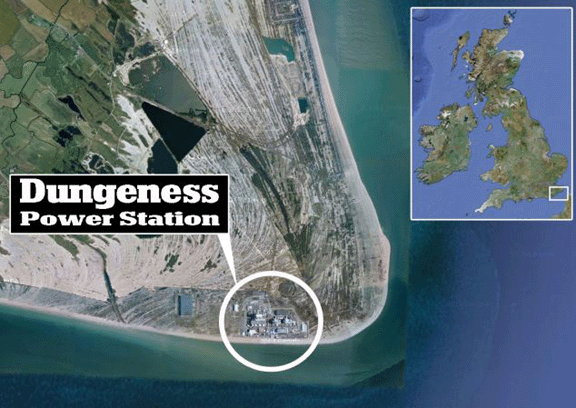
Reuters 8th April 2021, DF Energy, owned by French utility EDF, is exploring a range of scenarios for its Dungeness B nuclear plant in Britain, including bringing forward its decommissioning date of 2028, it said on Thursday. The 1.1 gigawatt Dungeness B plant, in Kent on the south coast of England, has been offline since 2018 as the company has been carrying out inspections and maintenance of pipes carrying steam to the turbine. EDF Energy has also been trying to complete repair work on corrosion identified during inspections of safety back-up systems.
The plant is currently forecast to return to service in August. It was designed in the 1960s and first started generating
electricity in 1983. EDF Energy said it has spent more than 100 million pounds ($138 million) on the plant during its current outage and it has a number of ongoing technical challenges that make its future uncertain.
New defects in France’s Flamanville nuclear project. Doubts that it will start-up on time, – or indeed ever!
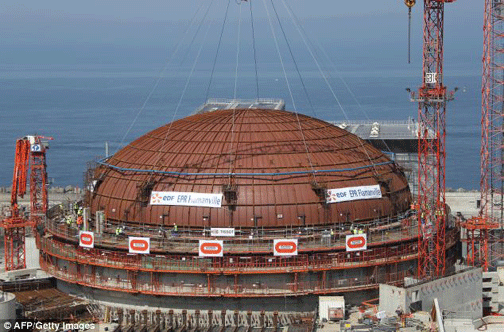
France Info 7th April 2021, Flamanville EPR: “The start-up does not seem possible before 2023” and we can doubt “that it will start one day”, according to negaWatt. “The decision to stop the costs is extremely difficult to take because we are talking about an investment of around 20 billion euros,” said energy expert and spokesperson for the association, Yves Marignac.
La Presse de la Manche 6th April 2021, The Nuclear Safety Authority was notified on March 17, 2021 of the late detection of faults in several pieces of equipment in reactors 1 and 2 at the Flamanville nuclear power plant, in the English Channel.
French Prime Minister visiting Algeria. The question of radioactive dust from nuclear tests will be on the agenda.
*Algeria – French Nuclear Testing**
French atomic tests in Algeria: so much brings the wind. The wind regularly
blows radioactive particles from the Sahara over Europe, a memory of the
atomic tests carried out in Algeria in the 1960s. Will the responsibility
of Paris be on the menu of Jean Castex’s visit to Algiers this weekend.
end?
Liberation 7th April 2021
On April 10 and 11, French Prime Minister Jean Castex will travel to
Algiers, accompanied by eight ministers – including the ministers of
foreign affairs and the armed forces to participate in the 5th session of
the France-Algeria High Level Intergovernmental Committee (CIHN). The
question of the health and environmental consequences of the 17 nuclear
tests carried out by France in the Sahara between 1960 and 1966, as well as
that of nuclear and non-nuclear waste left by France, will be on the menu
of discussions.
ICAN France 7th April 2021
http://icanfrance.org/alerte-presse-les-consequences-des-essais-nucleaires-francais-en-algerie/
Putin amassing, testing, huge military arsenal in the Arctic
Daily Mail 5th April 2021, Satellite images appearing to show Russia beefing up its military presence
in the Arctic have emerged just days after three of Moscow’s nuclear ballistic missile submarines smashed through the polar region in a show of strength. The images show the Russian military has been rebuilding and expanding numerous facilities across the Arctic in recent years.
From
revamping runways to deploying additional surveillance and air defence assets, the satellite images reveal a continuous effort to expand Moscow’s capabilities in the polar region.
Russia planning to test a ‘doomsday’ nuclear-powered torpedo in the Arctic.
Russia sends ‘doomsday’ nuclear-powered torpedo for test in the Arctic, Marc Bennetts, Moscow, Wednesday April 07 2021, 12.00pm BST, The Time The United States has said that it is watching Russia’s military build-up in the Arctic “very closely” as the Kremlin presses ahead with the testing of a nuclear-powered torpedo.
Russia is believed to be planning to deploy the Poseidon 2M39 missile, nicknamed the “doomsday nuke”, to its Arctic region by the summer of next year. The underwater drone has a range of 10,000km and is designed to detonate off the coastline of enemy cities, flooding them with radioactive waves that would render them uninhabitable for decades. In February President Putin asked the defence ministry for an update on a “key stage”’ of the tests of the Poseidon torpedo. Additional testing is due this year……… (Subscribers only) https://www.thetimes.co.uk/article/russia-sends-doomsday-nuclear-powered-torpedo-for-test-in-the-arctic-wf5ttr260
UK losing credibility with its new, ambiguous, nuclear weapons policy.
U.K. NUCLEAR WEAPONS: BEYOND THE NUMBERS, War On The Rocks, HEATHER WILLIAMS, APRIL 6, 2021, Sometimes numbers only tell part of the story, even when talking about nuclear weapons. For instance, the United Kingdom recently announced that it was increasing the cap on its nuclear stockpile from 225 to 260 warheads. The move — outlined in its government’s highly anticipated review of security and defense policy, Global Britain in a Competitive Age: The Integrated Review of Security, Defence, Development and Foreign Policy — largely took nuclear policy experts by surprise and reversed decades of British reductions. The government explained that the decision to increase its nuclear stockpile for the first time in decades was due to a worsening strategic landscape and technological threats, particularly Russian advances in missile defense and hypersonic weapons. The fact that the United Kingdom decided to make this decision now should be a wakeup call to those concerned about the security of the West and the global nuclear order.
The decision to boost the number of warheads in its arsenal wasn’t the only major nuclear policy change that the United Kingdom included in the Integrated Review. The document explained that the United Kingdom would no longer provide specifics about its nuclear stockpile or the conditions under which it would consider nuclear weapons use. In other words, the United Kingdom has now fully committed to a doctrine of strategic ambiguity. This approach is similar in some respects to what the United States, NATO, Russia, and China have done. But the increase in the warhead stockpile and reliance on strategic ambiguity come at a cost to nuclear diplomacy, and it will be difficult for the United Kingdom to balance these changes with its commitment to being a responsible nuclear power.
The announcement of an increase in the warhead stockpile, in particular, could not have come at a worse time for nuclear diplomacy. In August 2021, the United Kingdom and 190 other states will gather for a meeting of the parties to the Nuclear Non-Proliferation Treaty, which includes a commitment to the “cessation of the nuclear arms race” and “general and complete disarmament.” It will be a challenge for the United Kingdom to demonstrate progress towards nuclear disarmament five months after it has announced an increase in its stockpile cap. The reliance on strategic ambiguity also potentially undermines the country’s efforts to promote nuclear transparency among the treaty’s signatories. Obviously there are other considerations for the United Kingdom’s nuclear doctrine than the Nuclear Non-Proliferation Treaty, but these changes could damage its credibility on disarmament matters. The United Kingdom, therefore, should take additional steps to demonstrate its commitment to transparency, including providing more information on its nuclear modernization plans and leading on risk reduction efforts in the context of the Nuclear Non-Proliferation Treaty.
Reasons for a Larger Stockpile: Security and Technology
In its strategic reviews published in 2010 and 2015, the United Kingdom set a cap of 225 warheads and committed to reducing its stockpile ceiling to 180 warheads by the mid-2020s. The new Integrated Review increases the country’s nuclear stockpile ceiling to 260 warheads, a potential increase of approximately 15 percent from the current stockpile and 45 percent from the previous target.
The U.K. decision reverses decades of progress towards nuclear disarmament. …………
The Price of Ambiguity
Alas, the increased nuclear stockpile and the doctrine of strategic ambiguity will undermine the United Kingdom’s nuclear diplomacy. The move will open the country up to charges of hypocrisy. Future British delegations to international nonproliferation and disarmament negotiations should expect to be asked why other countries should make progress on these issues when the United Kingdom is building up its own nuclear arsenal. While this may seem relatively inconsequential compared to deterring Russian nuclear forces, it will make it harder for the United Kingdom to advance its interests in other areas that it cares about, especially within the Nuclear Non-Proliferation Treaty…………………….. https://warontherocks.com/2021/04/u-k-nuclear-weapons-beyond-the-numbers/
1 This Month
19 May – Webinar No To Nuclear: Why Nuclear Power Destroys Lives, Derails Climate Progress and Provokes War

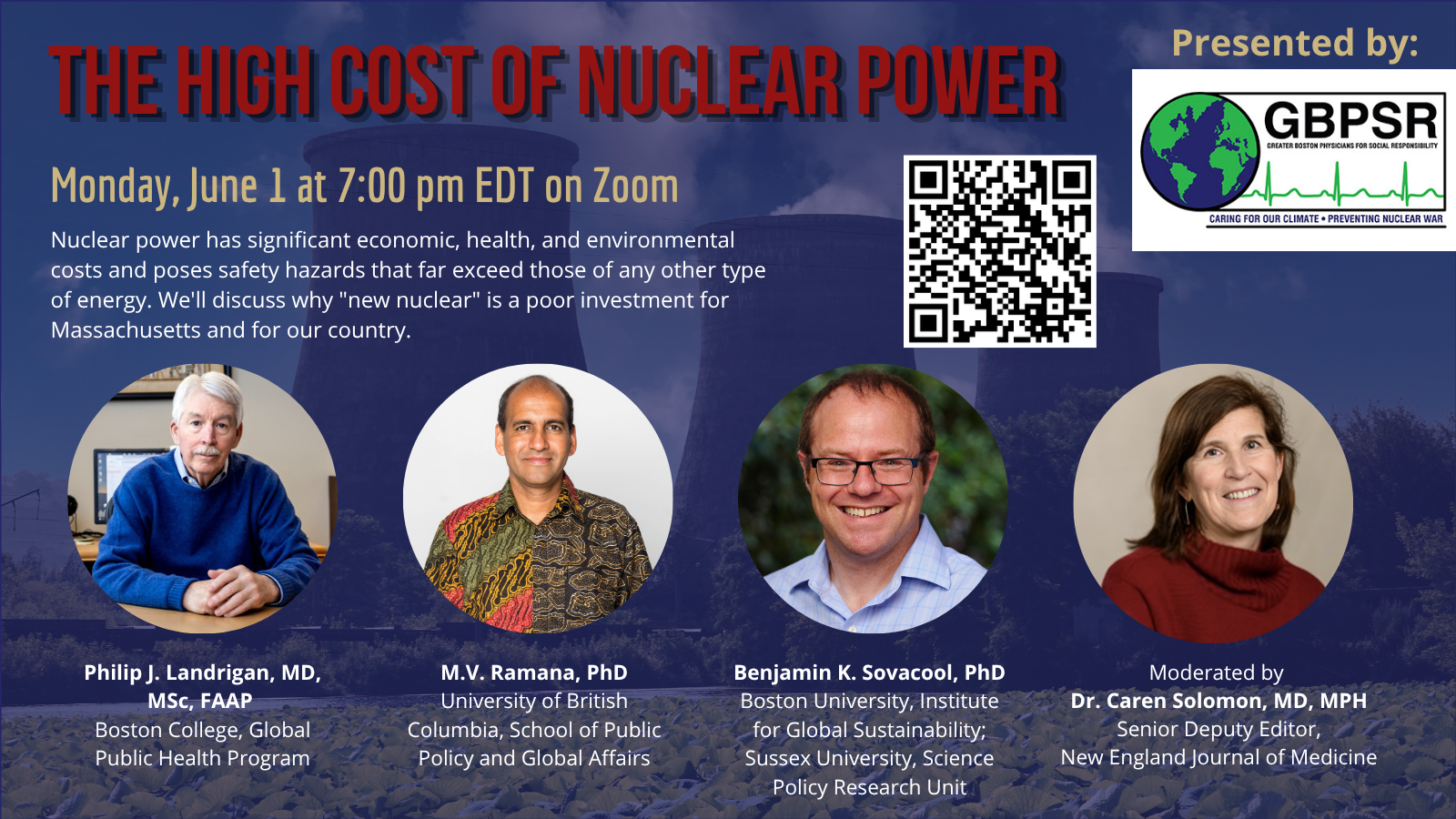
1 June Webinar – The High Cost of Nuclear Power – Register


of the week– Nuclear Reactor Information Task Force
To see nuclear-related stories in greater depth and intensity – go to https://nuclearinformation.wordpress.com
-
Archives
- May 2026 (211)
- April 2026 (356)
- March 2026 (251)
- February 2026 (268)
- January 2026 (308)
- December 2025 (358)
- November 2025 (359)
- October 2025 (376)
- September 2025 (257)
- August 2025 (319)
- July 2025 (230)
- June 2025 (348)
-
Categories
- 1
- 1 NUCLEAR ISSUES
- business and costs
- climate change
- culture and arts
- ENERGY
- environment
- health
- history
- indigenous issues
- Legal
- marketing of nuclear
- media
- opposition to nuclear
- PERSONAL STORIES
- politics
- politics international
- Religion and ethics
- safety
- secrets,lies and civil liberties
- spinbuster
- technology
- Uranium
- wastes
- weapons and war
- Women
- 2 WORLD
- ACTION
- AFRICA
- Atrocities
- AUSTRALIA
- Christina's notes
- Christina's themes
- culture and arts
- Events
- Fuk 2022
- Fuk 2023
- Fukushima 2017
- Fukushima 2018
- fukushima 2019
- Fukushima 2020
- Fukushima 2021
- general
- global warming
- Humour (God we need it)
- Nuclear
- RARE EARTHS
- Reference
- resources – print
- Resources -audiovicual
- Weekly Newsletter
- World
- World Nuclear
- YouTube
-
RSS
Entries RSS
Comments RSS
 nuclear-news