Many hurdles to jump before Bradwell nuclear station starts construction. Meanwhile renewables race ahead
| Nuclear Engineering International 29th April 2021. JUST BEFORE THE TURN OF the year, on 18 December, UK energy regulator Ofgem granted an electricity generation licence to Bradwell Power Generation Co Ltd. The company is planning to build a new nuclear station at Bradwell on the UK’s Essex coast, near where one of the country’s first nuclear stations is in a ‘care and maintenance’ decommissioning phase. The licence was welcomed by Bradwell Power Generation chief executive Alan Raymant, who called it, “an important milestone on the journey to completing the Bradwell B project and demonstrates our continued progress”. But what may sound like the culmination of a process is in fact an early step, and Raymant admitted, “The generating licence is one of many licences and permits we will need in order to develop, construct and operate Bradwell B”. Support for the Bradwell project is mixed. The UK government generally acts on the assumption that nuclear will continue to supply around a fifth of electricity supply, as it has over the last two decades. But that is largely because it was thought that replacing this large tranche of zero-carbon power with renewables sources was too ambitious. The scale of the renewables roll-out has put that assumption under pressure in some quarters. The GDA process has been under way since January 2017 and in February 2020 it reached step four, the final step, which ONR describes as “Successful completion of the high-level technical assessment of the design”. ONR estimates that step 4 will be completed by the start of 2022. As part of this process, in January the Environment Agency opened a consultation on its assessment of the design. The EA’s role is to regulate “specific environmental matters at nuclear sites in England by issuing environmental permits to cover site preparation, construction, operation and decommissioning”. EA provides a statement about a design’s acceptability at the end of the GDA. During the GDA, it works by identifying concerns. So-called ‘GDA Issues’ are significant, but resolvable, and must be resolved before construction of the reactor starts and before GDA can be completed. ‘Assessment Findings’ are matters best resolved at the site- specific stage. In a consultation now under way EA has listed six potential GDA Issues and 40 Assessment Findings. The GDA Issues are: While operational experience is used to support safety case documentation, the Environment Agency and ONR have noted that it is not used consistently across the project. The Requesting Party has not addressed a Regulatory Observation about this. The Requesting Party has shown that it has considered the environmental aspects of the station design. However, it still has to demonstrate that it has adequately considered the safety aspects of the design. Where safety aspects are still under review the Requesting Party must ensure that environmental protection is given appropriate consideration. The Requesting Party has proposed using rectangular filters in the heating, ventilation and air conditioning system. It must demonstrate that these are equivalent or better than cylindrical types, which are considered best practice in the UK. ONR/EA have not yet received design requirements for the spent fuel, which define the specifications for an interim store which will be used before the fuel is disposed of in a geological disposal facility. The Requesting Party has yet to confirm its strategy for disposing of the in-core instrument assemblies and that this will not affect disposal of the waste in-core instrument assemblies. The Requesting Party has still to get advice from Radioactive Waste Management Ltd on whether the higher activity waste from the UK HPR1000 will be able to be disposed of in the latter’s planned geological disposal facility. No date for submission of the final application to the Planning Inspectorate have been published by Bradwell Power Generation, but it is likely to be after 2022. https://www.neimagazine.com/features/featurethe-development-clock-is-ticking-on-bradwell-b-8707354/ |
France and Russia portray nuclear hydrogen as ”green”- arousing anger of several European nations.

Atomic giants EDF and Rosatom push plan to sell nuclear-powered hydrogen as ‘green’Labelling nuclear hydrogen as green is likely to cause irritation among countries without atomic power or exiting it, 28 April 2021 By Bernd Radowitz , Recharge
French and Russian state-owned nuclear energy giants EDF and Rosatom have teamed up to develop low carbon hydrogen projects in Russia and Europe in order to decarbonise mobility and industrial sectors – but their labelling of H2 produced from nuclear power as ‘green’ is likely to cause irritation elsewhere in Europe.
As part of a strategic cooperation agreement signed last month, the hydrogen is slated to be produced both from nuclear power and from methane conversion linked to carbon capture and storage (CCS) technologies……..
Any massive use of nuclear hydrogen on an EU level is strongly opposed by countries without atomic power, or exiting it, such as Germany and Austria. Andreas Feicht, secretary of state in Germany’s economics and energy ministry, at a late-2020 virtual conference on hydrogen organised by his ministry stressed nuclear is not an option for Germany’s energy system or for the production of hydrogen.
The French government (backed by some Eastern European countries), by contrast, is trying to push nuclear hydrogen and wants it to be entitled for state support, which would be a way to use French or EU funds to help its highly-indebted nuclear utility EDF and give new life to its ageing nuclear fleet.
…… Béatrice Buffon, group executive vice-president in charge of EDF’s International Division.
“The agreement with the Rosatom Group, our historical partner in Russia and one of the country’s key players in the field of decarbonised hydrogen, illustrates EDF’s desire to develop a new energy model with lower CO2 emissions wherever we operate.”
The two nuclear companies didn’t provide more detail on specific projects being studied. https://www.rechargenews.com/energy-transition/atomic-giants-edf-and-rosatom-push-plan-to-sell-nuclear-powered-hydrogen-as-green/2-1-1002350
Ukraine’s nuclear industry in crisis – corrupt, unsafe, with politicised decision-making

Could Ukraine’s nuclear industry face another Chernobyl?
Thirty-five years after the disaster, the nuclear industry is Ukraine’s most reliable economic lifeline. But critics say it faces a perennial crisis caused by corruption, safety problems and politicised decision-making. Aljazeera, By
Mansur Mirovalev, 26 Apr 2021 ”…………………. The nuclear industry remains Ukraine’s most reliable economic lifeline.
But domestic and international critics claim that the industry faces a perennial crisis caused by corruption; safety problems with ageing, worn reactors; disruption of ties with a Russian nuclear monopoly; and a politicised switch to US-made nuclear fuel.
Industry insiders, environmentalists and politicians claim that the construction of a spent fuel storage facility near the capital, Kyiv, and the proximity of Europe’s largest nuclear station in the southern city of Zaporizhzhia to Europe’s hottest armed conflict add to their concerns about the possibility of a nuclear incident, particularly in a nation that went through two popular uprisings since 2005 and lost a chunk of its territory to Russia.
……….. uranium dioxide sealed in zirconium alloy tubes in the rods emits radiation that has to be contained in hermetically sealed reactors. Ukraine’s Soviet-designed rods are hexagonal, resembling bee cells, while Western-made rods are square.
The switch is far from simple – but necessary, because Rosatom, Russia’s nuclear monopoly that charged Ukraine hundreds of millions of dollars a year, is controlled by the Kremlin. And the Kremlin has a well-known proclivity to use energy supplies as a political cudgel.
The switch to Westinghouse fuel is potentially dangerous,” Oskar Njaa, the Russia and Eastern Europe adviser for Bellona, a Norway-based nuclear industry monitor, told Al Jazeera.
In 2012, Westinghouse fuel rods had to be removed from the South Ukrainian power station after protective envelopes in two reactors were damaged.
Ukraine asked Rosatom for fuel and help – prompting Russian President Vladimir Putin to remark gloatingly that Rosatom experts had “to solve complex technical problems, take [the Westinghouse fuel] out and load the Russian fuel back in”.
Ukraine’s losses amounted to $175 million, Mikhail Gashev, Ukraine’s top nuclear safety inspector at the time, claimed – and banned the use of Westinghouse fuel.
Ukrainian experts doubted his assessment, and his decision was overturned after he was fired among hundreds of pro-Russian officials following Ukraine’s second anti-Russian popular uprising, the 2014 Revolution of Dignity.
Former Prime Minister Nikolay Azarov, another pro-Russian political figure who fled Ukraine after the revolt, said in 2017 that the decision was made “in spite of Ukraine’s security interests”.
Westinghouse modified the rods – and no further incidents were reported.
“That might be a sign of a better culture for safety and security in the industry,” Njaa said adding that his group is, however, “worried that incidents might become more severe and greater in numbers due to the ageing equipment at the plants.”………
Apart from the fuel, observers are also concerned about Ukraine’s ageing, worn reactors, 12 of which began operating in the 1980s and were supposed to be shut down in 2020. But Energoatom extended their lifespan spending hundreds of millions on each, thanks largely to loans from the European Union.
This is a common practice worldwide – the average lifespan of almost 100 nuclear reactors in the US is 40 years, and 88 have been approved for another 20 years. But some experts are worried about the safety measures and upgrades.
“What we witness every time a decision [to extend the lifespan] is made, some of the safety upgrades have either not been made or have not been made in full,” Iryna Holovko, the Ukraine coordinator for Bankwatch, a Prague-based environmentalist group, told Al Jazeera.
Bankwatch has for years been urging Ukraine to stop extending the lifespan of its “zombie reactors” without correcting “safety deviations” and detailed assessments of all the environmental risks for the people living around the stations and in neighbouring nations……….
The fuel switch brought about another problem; unlike Rosatom, Westinghouse does not take the spent fuel back for processing or storage.
Until December, Ukraine had two pretty problematic storage facilities – and an unfinished third one. One at the shut-down Chernobyl station is almost full. At the second one, an open-air yard outside the Zaporizhzhia nuclear plant, thousands of spent fuel rods are stored in ventilated concrete containers. In 2014, the plant was about 200 kilometres (125 miles) southwest of the front line of the separatist conflict.
The sight was horrifying to a visiting expert.
“I suddenly stood in front of the utterly unprotected interim storage,” Patricia Lorenz of Friends of the Earth, an environmentalist group that visited the plant on a fact-finding mission in 2014, told Al Jazeera. “It is basically unprotected against war and terrorism, while the front was close by back then.”
In May 2014, the station’s security and police turned away dozens of armed and masked far-right nationalists who tried to enter the plant to “protect” the station from the separatists.
Since then, the front line has moved eastward, and in December, Energoatom opened a third facility a mere 70 kilometres (43 miles) north of Kyiv, in the Chernobyl exclusion zone that is scheduled to receive the first batch of spent fuel in June.
But plans to transport spent fuel via Kyiv, the city of more than two million, drew sharp criticism.
“This will be happening in a country where everything turns upside-down, collides, explodes, and where lawlessness rules,” Kyiv-based environmentalist Vladimir Boreiko told reporters……………. https://www.aljazeera.com/features/2021/4/26/does-ukraines-nuclear-industry-face-another-chernobyl
The dangers of extending the operating lives of old nuclear reactors

INRAG 26th April 2021, Risks of lifetime extension of old nuclear power plants – A look at the age structure of existing nuclear power plants shows the importance of analysing risks of life-time extension and long-term operation.
Some of the world’s oldest plants are located in Europe. Of the 141 reactors in Europe, only one reactor came into operation in the last decade, and more than 80 percent of the reactors have been running for more than 30 years . Nuclear power plants were originally designed to operate for 30 to 40 years. Thus, the operating life-time of many plants are approaching this limit, or has already exceeded it.
https://www.inrag.org/risks-of-lifetime-extension-of-old-nuclear-power-plants-download
UK’s £41 billion nuclear submarine project beset by delays, safety problems, cost overruns
Times 25th April 2021, HMS Anson trundled out of Devonshire Dock Hall on Tuesday to a ripple of
applause, before its 7,400-tonne bulk slipped into the water for the first time. The launch of the Royal Navy’s fifth Astute submarine was a milestone for the defence giant BAE Systems, which builds the boats at its cavernous factory at Barrow-in-Furness on the Cumbrian coast.
But despite the fanfare, it was also a reminder of the growing risks that haunt this most sensitive corner of the defence industry. HMS Anson, a hunter-killer submarine powered by a nuclear reactor but armed with conventional weapons,
has been almost a decade in the making. It is years late and is still some way off being ready. It may have to undergo years of trials before being accepted into service. Its launch was delayed by problems with HMS Audacious, the fourth Astute.
It sat in the water for almost three years before leaving Barrow last year. Delays to the Astutes illustrate the
challenges facing Britain’s submarine enterprise, the biggest cost to the Ministry of Defence. Crucially, they point to the risks around the successor programme: the construction of four Trident nuclear warhead-armed submarines, Dreadnoughts, which are needed to sustain the UK’s policy of continuous at-sea deterrent.
Those risks range from delays refuelling the ageing Vanguard submarines they will eventually replace, to setbacks and
cost overruns on vital infrastructure projects, to management churn and weak scrutiny. They suggest that without drastic action, the MoD may have to adjust its expectations for the £41 billion project, particularly the assumption that the first boat will be in service in the “early 2030s”.
https://www.thetimes.co.uk/article/are-britains-nuclear-subs-slipping-below-the-waves-3zt7658zq
Call for debate and scrutiny of proposed nuclear fusion power plant
Call for debate and scrutiny of proposed nuclear fusion power plant, 28 Apr 2021 Nation CYMRU, Alex Seabrook, local democracy reporter
A call has been made for a proper debate and scrutiny over a proposed nuclear fusion power plant near Barry.
Vale of Glamorgan council put forward Aberthaw, a recently closed coal-fired power plant, as a potential site for a fusion prototype.
The UK government last year called for suggestions for possible sites to pioneer the technology which could generate electricity with low carbon emissions.
But opposition councillors on the Vale council have claimed the cabinet has “rushed through” its decision to suggest Aberthaw as a site.
Plaid Councillor Ian Johnson said: “It was strange that the council leadership did not consult with other parties or ask a cross-party scrutiny committee to consider issues before making the expression of interest about a possible future use of the Aberthaw plant.
“Even though it is an early point, many people will have questions about the technology, the impact of the development and the process, and discussing this in scrutiny would open up the debate and ensure transparency.”
Fusion technology is still in its infancy and no fusion reactor has ever created more power than it consumes. But scientists say it could be cleaner and safer than fission, the nuclear technology currently used to generate electricity.
If Aberthaw is chosen, the council is hoping the power plant could bring lots of high-tech high-paid jobs to the region. Westminster should decide on a site by the end of next year, and the power plant would be built by 2040, costing about £2 billion.
Controversial’
But the Vale’s cabinet used controversial emergency powers last month to put forward Aberthaw as a site, without consulting the full council or any scrutiny committees. Council leader Neil Moore said this was due to the deadline for suggestions at the end of last month.
However, Westminster made the initial call for suggestions in December last year, meaning the council had four months in total to debate and scrutinise the decision to put forward Aberthaw. The council debated the issue in a meeting this week, after the deadline passed.
Conservative Cllr Gordon Kemp said: “This is being dealt effectively without allowing any proper consideration or scrutiny. It’s an extremely significant matter, even if we ignore the issue of public concern over such a proposal.
“We’re looking at potentially a colossal, massive investment in the Vale. It could create many jobs, so I think it’s something that should have been discussed.
“I appreciate there are always deadlines on this. But I’m very concerned and surprised this wasn’t put before cabinet and scrutiny committees [earlier].”… https://nation.cymru/news/call-for-debate-and-scrutiny-of-proposed-nuclear-fusion-power-plant/
Sizewell C nuclear plant could kill 500m fish
Sizewell C nuclear plant could kill 500m fish, campaigners say
Environmental groups claim planned Suffolk power station will devastate marine life and key bird habitat, Guardian,
Karen McVeigh 27 Apr 21,
More than 500 million fish, including protected species, could be sucked into the cooling system of a proposed £20bn nuclear power plant in Suffolk if construction goes ahead, environmental campaigners say.
A local campaign group, Together Against Sizewell C (Tasc), claims the subsequent deaths of millions of fish is “inhumane and unacceptable” and flies in the face of the government’s green agenda. Also opposing the development, the bird conservation group RSPB expressed concern over predicted levels of fish loss on the marine birds that feed on them…….
environmental campaign groups, including Greenpeace, argue that nuclear reactors are unnecessary and expensive, compared with a combination of renewable energy and battery storage technology. The RSPB and the local community group Stop Sizewell C said the reactor poses a risk to the natural habitats along the Suffolk coast and the adjacent Minsmere nature reserve.
Planning documents published by EDF have revealed that almost 8 million fish were “impinged” – or sucked into the cooling system – by the existing plant Sizewell B each year between 2009 and 2013. Extrapolating from these figures, Tasc has estimated that 28 million fish could be impinged in the cooling system of both plants each year, which is 560 million over the two decades the plants are expected to operate, between 2035 and 2055. The proposed plant is larger than Sizewell B and will take in 2.5 times the amount of seawater, Tasc said.
Pete Wilkinson, the chair of Tasc and a co-founder of Greenpeace UK, said the estimates were “staggering”. Such wildlife loss was the “tip of the iceberg”, he said, as it did not take into account fish fry, eggs, crustacea and other aquatic life.
“Tens of millions of fish, crustaceans and other marine biota will be sacrificed for the purposes of cooling a plant which is not needed to keep the lights on, which will do nothing to reduce global carbon emissions, which will be paid for from the pockets of all UK taxpayers and bill-paying customers, leaving future generations with a lasting legacy of an impoverished environment,” he said.
Wilkinson said he expected Cefas (The Centre for Environment, Fisheries and Aquaculture Science) to condemn the impact on fish at the inquiry stage of the Sizewell C planning process.
“Cefas’s stated aim is ‘to help keep our seas, oceans and rivers healthy and productive, and our seafood safe and sustainable … ’ Instead, it seems that Cefas appears quite at ease presiding over the deaths of millions of fish and clearly feels the huge number of fish deaths is acceptable in that the overall health of fish stocks will not be compromised.”
Adam Rowlands, the RSPB’s Suffolk area manager, said: “It is our position that the project should not go ahead. The potential impacts on the environment are too great. Fish impingement is one of our concerns. These fish provide a valuable food supply to rare birds nesting and breeding in the area.”
Protected species breeding in the area include little and common terns and in the winter there are a number of internationally important red-throated divers. “They won’t feed on dead fish,” Rowlands said…….
If the plant goes ahead, it will be built on part of Sizewell marshes, a site of special scientific interest. It will also be adjacent to the southern boundary of the RSPB-owned Minsmere nature reserve, a Ramsar (internationally important wetland) site and special protection area. Minsmere is one of only five sites in Britain to receive the Council of Europe European Diploma for protected areas award, whose renewal depends on Sizewell C not causing any damage………
The Sizewell C planning process began in May 2020 and an examination is now under way by the Planning Inspectorate. This stage of the process is expected to take about six months, during which local people and organisations can make representations. https://www.theguardian.com/environment/2021/apr/28/sizewell-c-nuclear-plant-could-kill-500m-fish-campaigners-claim
Does Uzbekistan really need a nuclear power plant?
Analysis: Does Uzbekistan really need a nuclear power plant? Uzbekistan’s
planned nuclear reactors raise serious concerns about critical wetland
sites, safety, financing and transboundary relations.
Third Pole 27th April 2021
Not to be forgotten – the 1957 nuclear explosion in Mayak centre, Russia, that continues to poison the region.

Reporterre 26th April 2021, While the Chernobyl nuclear disaster occurred thirty-five years ago,
another explosion, which occurred in Russia in 1957 in the Mayak military
nuclear center, continues to poison the region. A look back at this
disaster kept secret for more than twenty years.
https://reporterre.net/Trente-ans-avant-Tchernobyl-la-catastrophe-nucleaire-de-Kychtym
City of Geneva calls for the closure of French nuclear station in Bugey
Boursorama 27th April 2021, Nuclear: the city of Geneva calls for the closure of the French power plant
in Bugey. Located about 70 kilometers as the crow flies from Geneva, it is
accused by the cantonal and municipal authorities of Geneva of causing
serious danger to the population because of its obsolescence.
Nuclear safeguards changed, new regulations to fit in with Brexit
Reuters Practical Law 26th April 2021 , Nuclear safeguards regulations amended to take into account Amending
Protocol to UK-Japan nuclear agreement: Brexit SI. The Nuclear Safeguards
(Fissionable Material and Relevant International Agreements) (EU Exit)
(Amendment) Regulations 2021 (SI 2021/492) came into force on 22 April
2021.
The health effects of Chernobyl nuclear disaster as far away as Scotland

SCND 23rd April 2021. Ian Fairlie: April 26, 2021 marks the 35th anniversary of the world’s largest nuclear disaster at Chernobyl. Several days later, clouds containing the radioactive caesium-137 released by the reactor passed over Scotland about 1,400 miles or 2,500 kilometres away.
Although we got off lightly in comparison to nearer neighbors, rain brought radioactivity to the ground contaminating parts of southern and central Scotland. Understandings of the impact of radioactivity on human health are constantly being revised but scientists generally agree that any additional radiation over natural levels in the environment can have negative effects particularly on women and children. Even here, it is likely that some cancers will have been caused by Chernobyl.
https://www.banthebomb.org/index.php/news/2138-chernobyl-at-35
Soviet Documents Reveal Cover-Ups At Chernobyl Nuclear Plant Before 1986 Disaster
Soviet Documents Reveal Cover-Ups At Chernobyl Nuclear Plant Before 1986 Disaster https://www.ndtv.com/world-news/soviet-documents-reveal-cover-ups-at-chernobyl-nuclear-plant-before-1986-disaster-2422532 26 Apr 21, After a botched safety test in the fourth reactor of the plant, located in what was then Soviet Ukraine, clouds of radioactive material from Chernobyl spread across much of Europe in what remains the world’s worst nuclear disaster.
The Soviet Union knew the Chernobyl nuclear plant was dangerous and covered up emergencies there before the 1986 disaster, the Ukrainian authorities said as they released documents to mark the 35th anniversary of the accident on Monday.
After a botched safety test in the fourth reactor of the plant, located in what was then Soviet Ukraine, clouds of radioactive material from Chernobyl spread across much of Europe in what remains the world’s worst nuclear disaster.
The archives show there was a radiation release at the plant in 1982 that was covered up using what a KGB report at the time called measures “to prevent panic and provocative rumours”, Ukraine’s security service (SBU) said in a statement on Monday.
There were separate “emergencies” at the plant in 1984, it added.
“In 1983, the Moscow leadership received information that the Chernobyl nuclear power plant was one of the most dangerous nuclear power plants in the USSR due to lack of safety equipment,” the SBU said.
When a French journalist collected water and soil samples from the Chernobyl area after the accident in 1987, the KGB swapped the samples for fake ones in a special operation, the SBU cited another KGB report as saying.
Thirty-one plant workers and firemen died in the immediate aftermath of the 1986 disaster, mostly from acute radiation sickness.
Thousands more later succumbed to radiation-related illnesses such as cancer, although the total death toll and long-term health effects remain a subject of intense debate.
The present day government in Kyiv has highlighted the Soviet authorities’ bungled handling of the accident and attempts to cover up the disaster in the aftermath. The order to evacuate the area came only 36 hours after the accident.
“The 35th anniversary of the Chernobyl tragedy is a reminder of how state-sponsored disinformation, as propagated by the totalitarian Soviet regime, led to the greatest man-made disaster in human history,” the foreign ministry said.
Ukraine opens new nuclear waste site
On 35th anniversary of Chornobyl disaster, Ukraine opens new nuclear waste site,
Ukraine president vows to transform Chornobyl exclusion zone into a revival zone. Ukraine’s president on Monday unveiled a new nuclear waste repository at Chornobyl, the site of the world’s worst civilian nuclear disaster that unfolded exactly 35 years ago…….
Moving forward, the Ukrainian authorities announced they will use the deserted exclusion zone around the Chornobyl power plant to build a storage facility for Ukraine’s nuclear waste for the next 100 years.
The ex-Soviet nation currently has four nuclear power plants operating and has to transport its nuclear waste to Russia. The new repository will allow the government to save up to $200 million US a year…… https://www.cbc.ca/news/world/chornobyl-35th-anniversary-1.6002314
1 This Month
19 May – Webinar No To Nuclear: Why Nuclear Power Destroys Lives, Derails Climate Progress and Provokes War

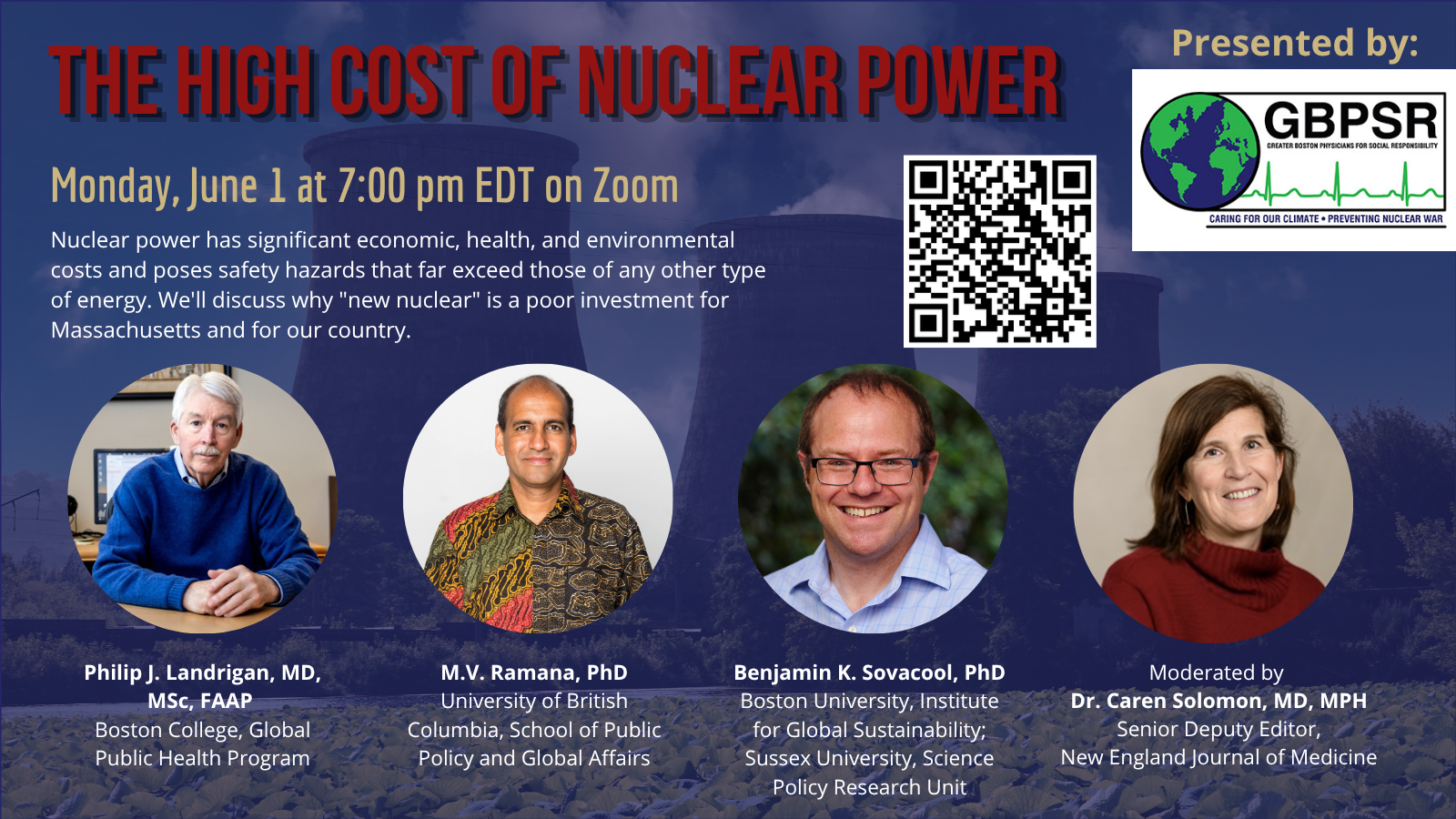
1 June Webinar – The High Cost of Nuclear Power – Register


of the week– Nuclear Reactor Information Task Force
To see nuclear-related stories in greater depth and intensity – go to https://nuclearinformation.wordpress.com
-
Archives
- May 2026 (211)
- April 2026 (356)
- March 2026 (251)
- February 2026 (268)
- January 2026 (308)
- December 2025 (358)
- November 2025 (359)
- October 2025 (376)
- September 2025 (257)
- August 2025 (319)
- July 2025 (230)
- June 2025 (348)
-
Categories
- 1
- 1 NUCLEAR ISSUES
- business and costs
- climate change
- culture and arts
- ENERGY
- environment
- health
- history
- indigenous issues
- Legal
- marketing of nuclear
- media
- opposition to nuclear
- PERSONAL STORIES
- politics
- politics international
- Religion and ethics
- safety
- secrets,lies and civil liberties
- spinbuster
- technology
- Uranium
- wastes
- weapons and war
- Women
- 2 WORLD
- ACTION
- AFRICA
- Atrocities
- AUSTRALIA
- Christina's notes
- Christina's themes
- culture and arts
- Events
- Fuk 2022
- Fuk 2023
- Fukushima 2017
- Fukushima 2018
- fukushima 2019
- Fukushima 2020
- Fukushima 2021
- general
- global warming
- Humour (God we need it)
- Nuclear
- RARE EARTHS
- Reference
- resources – print
- Resources -audiovicual
- Weekly Newsletter
- World
- World Nuclear
- YouTube
-
RSS
Entries RSS
Comments RSS
 nuclear-news