France’s nuclear output slumped – they had to import power
French nuclear output slumps to 6-month low in April, Power, SOPHIE TETREL, Paris, 04 May 2021 (Montel)
France’s nuclear power generation slumped to a six-month low at 27.1 TWh in April, making it a net power importer for two weeks when cold weather buoyed demand, national TSO data showed on Tuesday.
Nuclear output last month was just 276 GWh or 1% higher than in April last year when it plunged to a record low during the first wave of the coronavirus pandemic, and it was 4.6 TWh below the level reached in March this year.
Average power plant availability dropped about 9 percentage points month on month to 37.3 GW or 61% of installed capacity in April, due to maintenance and fail… (subscribers only) https://www.montelnews.com/en/story/french-nuclear-output-slumps-to-6-month-low-in-april/1218663
How Chernobyl’s radioactive dust blanketed Europe in 1986

Radiation high over Europe after Chernobyl disaster – archive, 1986
3 May 1986: Mainland Europe experiences higher than normal radiation, with Poland, East Germany and Sweden bearing the brunt of contamination Michael SimmonsFrom the Guardian archive Mon 3 May 2021 By dusk last night, every country in mainland Europe had experienced higher than normal radiation as a result of the Chernobyl disaster. Only the Iberian peninsula was still clear, as governments in East and West, having recovered from the initial panic, started to count the medium-term costs.
Changes in wind direction from the epicentre at Kiev created fresh uncertainties throughout the day. The consensus among meteorologists was that the south-east wind which had done its worst earlier in the week in parts of Poland and Scandinavia was now veering towards due east, affecting Greece, Yugoslavia, and south-west Germany.
France reported “a minor increase” in atmospheric radioactivity, while Holland reported yesterday that, for the first time since the disaster, radiation levels were markedly higher than normal. In that country, government plans to air details of a proposed shift to nuclear power in the 1990s were shelved indefinitely.
The brunt of the contamination continued to be borne by the countries closest to the disaster area – notably Poland and East Germany – as well as Sweden, which has been seeking to take remedial measures since the beginning of the week.
The Swedish authorities ordered farmers to keep their cattle indoors – possibly for some weeks – and said people should not drink rainwater or eat wild vegetables or mushrooms. One fear in Stockholm is that the wind could veer back towards Sweden early next week……..
The brunt of the contamination continued to be borne by the countries closest to the disaster area – notably Poland and East Germany – as well as Sweden, which has been seeking to take remedial measures since the beginning of the week.
The Swedish authorities ordered farmers to keep their cattle indoors – possibly for some weeks – and said people should not drink rainwater or eat wild vegetables or mushrooms. One fear in Stockholm is that the wind could veer back towards Sweden early next week…….
Italy yesterday prohibited the sale of salad greens and barred a variety of imports from northern Europe. The Health Minister, Mr Costante Degan signed an order that forbade vendors from selling fresh leafy vegetables. https://www.theguardian.com/environment/2021/may/03/radiation-high-over-europe-after-chernobyl-disaster-1986
Russia’s Rosatom launches the nuclear lobby’s propaganda push for ”climate change credibility” – ”Atoms For Humanity”
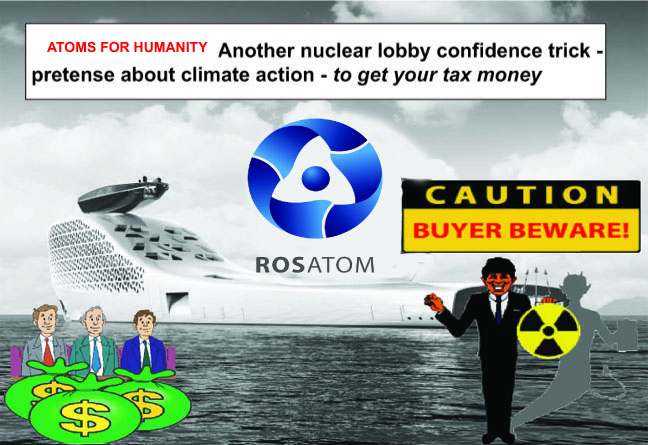
Thousands Join Launch Of Rosatom’s Atoms For Humanity Nuclear Awareness Campaign, By India Education Diary Bureau Admin May 3, 2021 Moscow: On April 30, over 3200 people from some 40 countries watched Rosatom’s Atoms for Humanity new nuclear awareness campaign launch event. The project is aimed at demonstrating the importance of nuclear technologies in achieving the UN Sustainable Goals through human-centered stories.
The project launch event Why Humanity Needs Nuclear brought together Polina Lion, Chief Sustainability Officer at Rosatom, Sama Bilbao y León, Director General of the World Nuclear Association, Dr. Maher Aziz, member of the World Energy Council, Ben Heard, founder of the Bright New World and Sergio Orlandi and Head of Central Engineering and Plant Directorate at ITER. Heroes of Atoms for Humanity joined the event to share their experiences participating in the campaign.
The [?] esteemed speakers discussed social, economic and environmental benefits of nuclear technologies and their invaluable contribution to solving the most urgent challenges of today and tomorrow.
Nuclear anxiety in Luxembourg – expanding their emergency evacuation plan
Lorraine Actu 30th April 2021, Luxembourg. Evacuation, prohibited zone … Here is the emergency plan in
the event of a nuclear disaster in Cattenom. In the Grand Duchy, concern about nuclear power is growing. So much so that the Minister of the Interior of Luxembourg had to explain the emergency plan in the event of a nuclear disaster.
Britain is now undermining the Nuclear Non Proliferation Treaty (NPT)
ICAN (accessed) 3rd May 2021, Five Ways the UK is Undermining the NPT. The NPT has played an unparalleled
role in curtailing the nuclear arms race and it continues to play a role in keeping the world safe. It is at the centre of international efforts to stop the spread of nuclear weapons, to create a nuclear weapon free world,and to enable access to the peaceful use of nuclear energy.”
But the UK has now taken steps which dangerously undermine this crucial treaty. In its Integrated Review of Security, Defence, Development and Foreign Policy, the UK government announced that it will increase the maximum size of its
nuclear arsenal and reduce the information it provides about it.
Having consistently committed itself over the past decade to reducing its stockpile to a maximum of 180 warheads by the mid 2020s, the UK has now raised this limit to 260, an increase of over 40%. At the same time, the UK will no longer release operational stockpile, deployed warhead or deployed missile numbers.
https://www.icanw.org/five_ways_the_uk_is_undermining_the_npt
Serious concerns about China’s role in Hinkley Point nuclear power station
Independent 3rd May 2021. Chinese investors have amassed nearly £134bn of assets in key UK industries ranging from energy companies and transport hubs to breweries and schools. Nearly 200 British companies are either controlled by groups or individuals based in China and Hong Kong or count them as minority shareholders, according to an analysis of business data. The list of investments drawn up by the Sunday Times includes Hinkley Point C nuclear power station, Heathrow Airport, Northumbrian Water, pub retailer Greene King and Superdrug.
Serious concerns have been raised about the security implications of China’s investment in UK assets, most notably in relation to Hinkley Point nuclear power station which is owned by French energy firm EDF. In 2016 Theresa May’s government briefly put the project on hold before attaching new conditions to the £18bn deal. Nick Timothy, one of
the Ms May’s chief advisers, had warned that China “could use their role to build weaknesses into computer systems which will allow them to shut down Britain’s energy production at will”. China General Nuclear Power holds a 33.5 per cent stake in the plant, which is owned by the French state-owned energy firm EDF.
Bangor City Council supports the U.N. Treaty on the Prohibition of Nuclear Weapons, as do over 400 other jurisdictions.
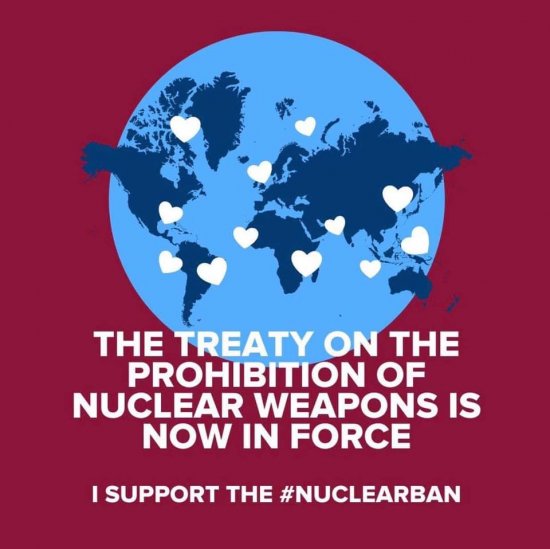
Nation Cymru 1st May 2021, Bangor City Council has become the first Welsh Council to support the
Treaty on the Prohibition of Nuclear Weapons. The treaty came into force in
January and seeks to start a process for effective nuclear disarmament and
to unlock the ongoing stalemate in discussions at the Nuclear
Non-Proliferation Treaty (NPT) Review Conferences.
There are currently 54 states that have ratified the TPNW, including the Irish Republic, Austria,
South Africa, New Zealand, Mexico and the Vatican State. A further 32
states have signed it and are in the process of ratifying it. To date over
400 towns, cities, counties and federal states have passed TPNW
resolutions, including Paris, Berlin, Oslo, Barcelona, Washington DC,
Sydney, Amsterdam, Bruges, Geneva, Montreal, Hiroshima and Nagasaki.
French nuclear giant EDF unveils first wind and battery project in Australia — RenewEconomy

French nuclear giant EDF buys 280MW wind project in central Queensland, the first of a major pipeline of wind, solar and storage projects in Australia. The post French nuclear giant EDF unveils first wind and battery project in Australia appeared first on RenewEconomy.
French nuclear giant EDF unveils first wind and battery project in Australia — RenewEconomy
China’s big stake in UK’s new nuclear projects
Times 2nd May 2021 , How Beijing bought up Britain. China has quietly spent £134bn hoovering up
UK assets, from nuclear power to private schools and pizza chains. Research
reveals that almost 200 British companies are either controlled by Chinese
investors or count them as minority shareholders. The value of Chinese
investments totals £134 billion.
Some of the biggest sums have been spent
in the energy sector, notably nuclear power. Chinese state-owned China
General Nuclear (CGN) bought a 33.5 per cent stake in Hinkley Point C power
station in Somerset, the first new nuclear facility to be built in the UK
in more than 20 years.
The main investor is France’s EDF. CGN, which has
been blacklisted in America for allegedly helping to acquire US tech for
military use in China, has also joined with EDF on the proposed nuclear
plant at Sizewell C in Suffolk. CGN will take a 20 per cent stake during
the plant’s development. Plans for a third plant, at Bradwell in Essex,
have China hawks up in arms, because CGN intends to take a majority 66.5
per cent stake during development and will use its own reactor technology.
https://www.thetimes.co.uk/article/how-beijing-bought-up-britain-hqll9tjtx
Most Scots feel unsafe about having nuclear weapons base on the Clyde
The National 1st May 2021, ONLY a quarter of Scots voters have said they feel safer having nuclear
weapons based on the Clyde, according to a new opinion poll. The latest
survey from James Kelly asked people the question: “The UK Government
argues that its nuclear weapons protect the public due to a ‘deterrent’
effect. However, others argue that the presence of nuclear weapons on the
Clyde puts the public in greater danger by making the area a target for
nuclear attacks, and by creating a risk of serious accidents.
https://www.thenational.scot/news/19272880.less-quarter-scots-feel-safer-nuclear-weapons-clyde/
UK anti-nuclear groups plan to stand candidates for elections, opposing Bradwell new nuclear station
Maldon Standard 30th April 2021, ANTI-NUCLEAR campaign groups have urged political candidates standing for
the Essex County Council elections on Thursday to support their cause
against the building of a new nuclear power station Bradwell B
.TheBlackwater Against New Nuclear Group and the Bradwell Action Network hope
to get candidates on their side in time for the elections, with responses
being posted on the groups’ respective websites. Both groups are
encouraging residents opposed to the Bradwell B project to contact their
Essex County Council candidates asking them to make their views known.
Czech Republic’s nuclear plan hangs on hope for European Commission to call nuclear ”green”

The EU’s Nuclear Showdown Comes to a Head in Czechia, World Politics Review, Tim Gosling Friday, April 30, 2021 A fight over nuclear power is heating up in the European Union. While the Czech Republic and other Central and Eastern European states insist that the technology is vital to their transition from coal-generated energy, others in the bloc want to cut it out of the equation. The outcome of the debate could also help determine the fate of a stalled tender to build a new reactor at Dukovany, one of the country’s two existing nuclear power plants.
[Nuclear] Hopes in Prague were boosted in March when the Joint Research Center, an expert group for the European Commission, delivered a report stating that nuclear power qualifies as a “sustainable” source of energy………
However, the commission was quick to state that the Joint Research Center’s opinion is far from the final word, indicating that the tussle would continue. And indeed, on April 21, when the commission finally published its first list of sustainable energy sources—known as the EU taxonomy for sustainable activities in Brussels’ policymaking circles—nuclear power was not included. Some member states, as well as lawmakers in the European Parliament, had threatened to veto an earlier draft that included nuclear and gas-powered energy.
But that’s still not the end of the story. Referring to “a delicate compromise on whether or not to include nuclear energy,” the EU executive said it would make a final decision based on further expert opinions. That could be presented in June, said Vladis Dombrovskis, the European Commission vice-president in charge of the economy.
That gives the nuclear lobby two months to push its side of the debate……
Germany will switch off its last nuclear plant next year, as part of a phased drawdown adopted in the aftermath of the 2011 Fukushima disaster. But Berlin’s anti-nuclear drive isn’t limited to its own reactor fleet. Environment Minister Svenja Schulze pledged in March that the country plans to quash nuclear power globally, with a particular focus on its neighborhood.
“Nuclear power is neither safe nor clean,” she said at the time, as she unveiled a 12-point plan that argues the technology cannot be considered part of any solution to the climate crisis. “The future is for renewable energy.”
……….. in the wake of the Fukushima disaster, the challenges and costs of building new nuclear reactors have risen dramatically, and that’s what makes the EU classification key. Classification as “sustainable” would significantly lower the cost of financing for private investors, according to industry lobbyist Foratom.
Such a classification is also crucial to staying on the right side of the EU’s competition regulations, as it’s now all but impossible to build new nuclear reactors without state aid.
“The Czech government does not hope to use EU funds to build new nuclear reactors,” says Vit Havelka of the Prague-based think tank Europeum. “They’re worried that Brussels will block [the provision of] state aid, which would make it economically unfeasible.”…….
critics contend that the alternatives haven’t been properly researched. Global consultancy Deloitte suggests that renewables could deliver the same capacity of new energy generation as Dukovany 2—which is optimistically earmarked for completion in 2038—more quickly and less expensively, helping to modernize the energy sector and support the economy along the way. According to another study, it is the focus on nuclear that is helping to keep renewable power-generation underutilized.
Jiri Jerabek from Greenpeace says in an interview that the Czech government has “no proper support schemes for most types of renewables.” Moreover, its target to raise the share of renewables in its energy mix from around 16.2 percent in 2019 to 22 percent by 2030 is well below the EU’s goal of 32 percent, earning it reprimands from the European Commission…….. https://www.worldpoliticsreview.com/articles/29616/for-eastern-europe-nuclear-power-depends-on-eu-taxonomy
Extinction Rebellion climate activists block Faslane nuclear base

Extinction Rebellion block Faslane nuclear base entrance, Climate activists set up a blockade at the Faslane nuclear base by attaching themselves to plant pots. https://www.bbc.com/news/uk-scotland-glasgow-west-56941041 30 Apr 21,
Members of Extinction Rebellion Scotland staged the protest at the north gate of the base on the Gare Loch in Argyll and Bute.
The all-female group placed three planters painted with the words “Safe”, “Green”, and “Future” on the road.
Police Scotland said they were made aware of the incident at 06:20 and officers were at the scene.
HMNB Clyde – known as Faslane – is the Royal Navy’s main presence in Scotland.
It is home to the core of the submarine service, including the UK’s nuclear weapons, and the new generation of hunter-killer submarines.
The protest group said they were demanding a future “safe from the threat of nuclear weapons and environmental destruction”.
Extinction Rebellion said the action was part of the Peace Lotus campaign, a global day of anti-war resistance celebrating the anniversary of the end of the Vietnam War.
An HMNB spokesman confirmed police were in attendance and assisting Ministry of Defence officers in dealing with the protest. He added: “Well-established, fully co-ordinated procedures are in place to ensure the effective operation of HMNB Clyde is not compromised because of protest action.”
Delays, increased costs and geopolitical uncertainties throw doubt on construction of nuclear power station in Finland.
Nuclear power plant construction in north Finland faces delay, increased costs and geopolitical uncertainties
Costs for the partly Russian-owned controversial plant will be €1 billion more than previously estimated. Barents Observer, By Thomas Nilsen , April 29, 2021
“Further deterioration of political and commercial relations between the EU, the USA and Russia could lead to more sanctions between the parties. Such deteriorated international affairs and sanctions could influence the project’s schedule and financing, in particular,” Fennovoima writes in its updated construction license application to Finnish authorities on Wednesday.
Work on the site in Pyhäjoki south of Oulu is in full swing despite final permission for the reactor itself at Hanhikivi 1 nuclear power plant is not yet granted.
The original application was delivered in 2015, but as Fennovoima sees “changes in boundary conditions,” an updated application was made. Among other things, the application includes an additional survey on the power plant’s impact on the marine environment and fishery during operation.
Other changes are related to security and preparedness arrangements and design solutions, although, no changes to the key principles of the power plant, Fennovoima underlines…….
Russia’s state-owned nuclear corporation holds a 34% stake in the plant. For Moscow, export of civilian nuclear power reactors is both a commercial revenue and a source of symbolic technology pride.
Last week, government officials in the Czech Republic said they were kicking Rosatom out of the play for bidding at a planned new reactor for the Dukovany nuclear power plant. The move came amid the diplomatic turmoil between Prague and Moscow following a 2014 blast in a weapons storage which Czech intelligence blames Russian military spies for being involved.
Like with the Czech nuclear power plant, also Fennovoima’s Hanhikivi 1 reactor is planned to receive uranium fuel supplies from Russia…….. https://thebarentsobserver.com/en/nuclear-safety/2021/04/construction-nuclear-power-plant-runs-delay-costs-increase-and-geopolitical#.YIp3J6ITqk0.twitter
High level of radioactivity near France’s uranium processing factory
France Info 29th April 2021, Residents of the largest uranium processing site in France, in Narbonne
(Aude), are worried: samples taken near the plant and analyzed in the laboratory show a high level of uranium. The site manager, however, says there is no danger to residents.
The most important uranium processing site in France is located three kilometers from Narbonne (Aude). Concerned local residents regularly check the level of radioactivity in the vicinity of the plant.
At the barrier that limits access to the site, the meter is racing and exceeds four times the natural level of radioactivity. The Orano Malvési plant is the entry point for nuclear power in France. Uranium arrives from all over the world in the form of yellow powder and must be purified and transformed into nuclear fuel. In 60 years, already more than 300,000 m3 of radioactive waste have been produced and are contained in basins, in the form of sludge.
1 This Month
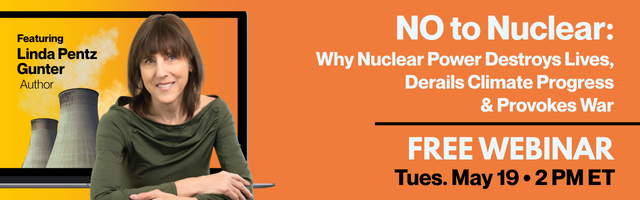
19 May – Webinar No To Nuclear: Why Nuclear Power Destroys Lives, Derails Climate Progress and Provokes War
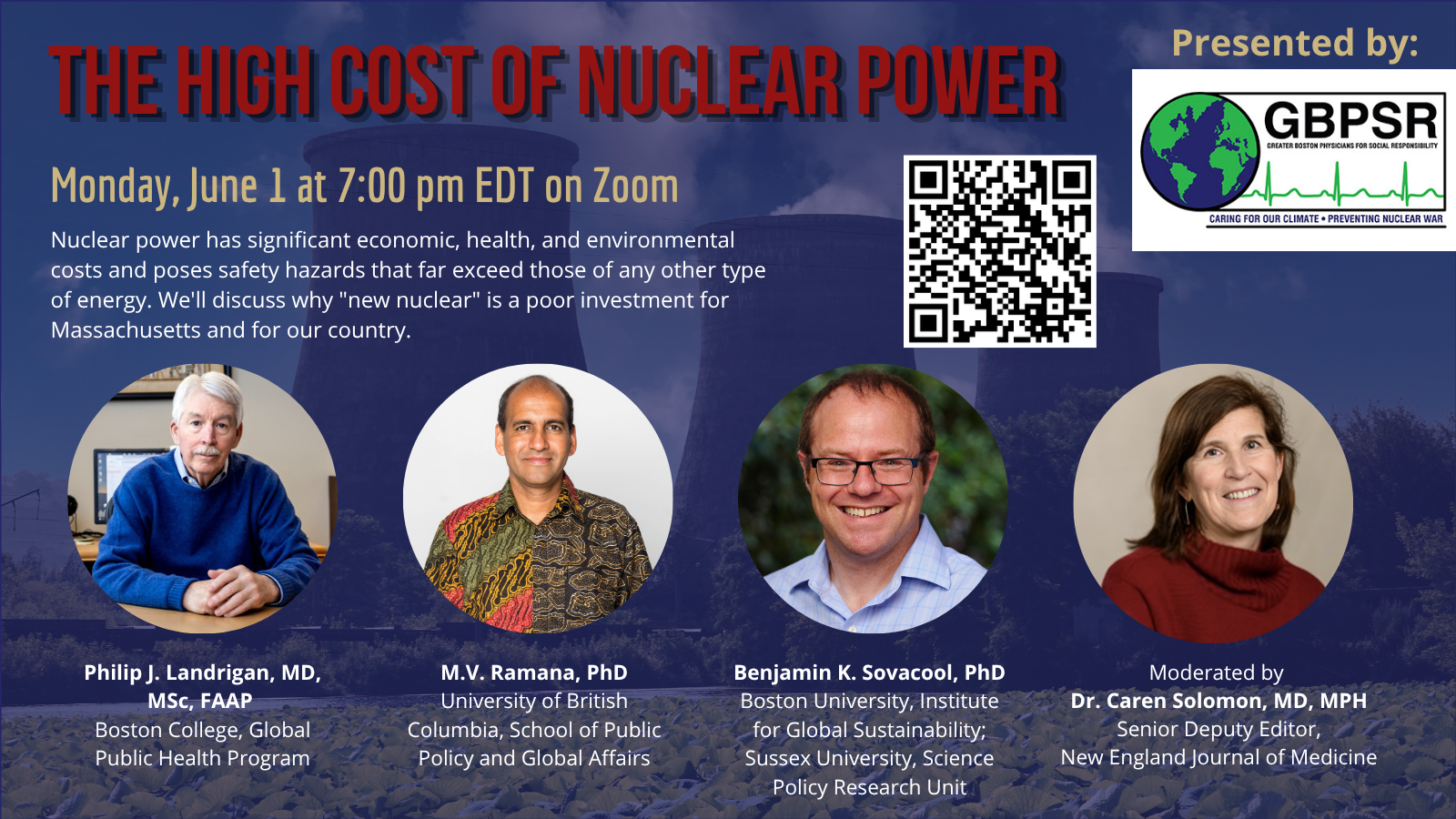
1 June Webinar – The High Cost of Nuclear Power – Register


of the week– Nuclear Reactor Information Task Force
To see nuclear-related stories in greater depth and intensity – go to https://nuclearinformation.wordpress.com
-
Archives
- May 2026 (211)
- April 2026 (356)
- March 2026 (251)
- February 2026 (268)
- January 2026 (308)
- December 2025 (358)
- November 2025 (359)
- October 2025 (376)
- September 2025 (257)
- August 2025 (319)
- July 2025 (230)
- June 2025 (348)
-
Categories
- 1
- 1 NUCLEAR ISSUES
- business and costs
- climate change
- culture and arts
- ENERGY
- environment
- health
- history
- indigenous issues
- Legal
- marketing of nuclear
- media
- opposition to nuclear
- PERSONAL STORIES
- politics
- politics international
- Religion and ethics
- safety
- secrets,lies and civil liberties
- spinbuster
- technology
- Uranium
- wastes
- weapons and war
- Women
- 2 WORLD
- ACTION
- AFRICA
- Atrocities
- AUSTRALIA
- Christina's notes
- Christina's themes
- culture and arts
- Events
- Fuk 2022
- Fuk 2023
- Fukushima 2017
- Fukushima 2018
- fukushima 2019
- Fukushima 2020
- Fukushima 2021
- general
- global warming
- Humour (God we need it)
- Nuclear
- RARE EARTHS
- Reference
- resources – print
- Resources -audiovicual
- Weekly Newsletter
- World
- World Nuclear
- YouTube
-
RSS
Entries RSS
Comments RSS
 nuclear-news