How many nuclear weapons does Britain have? Non-Proliferation explained

How many nuclear weapons does Britain have? Non-Proliferation explained https://www.express.co.uk/news/uk/1437927/How-many-nuclear-weapons-does-Britain-have-non-proliferation-ev
BORIS JOHNSON has been accused of infringing international laws with his plans for British nuclear proliferation. How many nuclear weapons does Britain have?, By LIAM DOYLE May 18, 2021
The current crop of roughly 195 warheads sits in an ocean-based fleet of Vanguard-class ballistic missile submarines.
They operate on a continuous patrol to preserve the UK’s deterrence policy from the sea.
Britain has previously committed to non-proliferation and intended to limit its stockpile.
Mr Johnson’s predecessors outlined these intentions in the 1968 Treaty on Non-Proliferation and the Strategic Defence and Security Review.
The latter policy, brought forward by the Conservative-Liberal Democrat coalition, aimed to reduce national stockpiles by 65 percent during the 2020s.
The Government’s 2021 Integrated Review found it could no longer commit to this policy.
The Prime Minister intends to push the UK’s stockpile up by 40 percent to “no more than 260 warheads”.
The review cites the current “security environment” as its primary reason for proliferation.
And this is where the earlier 1968 treaty comes into play.
Nuclear and non-nuclear powers alike signed the Treaty on Non-Proliferation as a collaborative pledge to limit nuclear technologies.
The treaty attracted the UK, US, the then Soviet Union and a further 59 other signatories.
The ratified document prevents non-nuclear states from acquiring weapons, commits nuclear states to push for disarmament, and allowed all participants to access technology for peaceful purposes.
Hans Kristensen, director of the Nuclear Information Project, said the Government’s latest pursuit would break parameters set by the treaty.
He cited Article 6, which commits signatories to step-by-step disarmament, specifically.
Beatrice Fihn, executive director of the International Campaign to Abolish Nuclear Weapons (ICAN), added the “dangerous” decision “violates international law”.
She added: “While the majority of the world’s nations are leading the way to a safer future without nuclear weapons by joining the Treaty on the Prohibition of Nuclear Weapons, the United Kingdom is pushing for a dangerous new nuclear arms race.”
New study on children, wives and widows of UK nuclear test veterans
Kent Online 18th May 2021, The children, wives and widows of nuclear test veterans in Kent are being
urged to sign up for a ground-breaking study. During the 1950s and 1960s,
around 22,000 British Servicemen – many of them called up for National
Service – witnessed nuclear tests on mainland Australia, the Montebello
Islands off Western Australia and Christmas Island in the South Pacific.
Rolls Royce plans fleets of small nuclear reactors. At approx £2billion per reactor (that’s approx $2.8billion) how much will each fleet cost?

Rolls-Royce expects the first five reactors to cost £2.2bn each, falling to £1.8bn for subsequent units.
SMRs could not achieve economies of scale unless developers secured a large number of orders. “How are you going to get orders for 16 of an unproven reactor type and if you don’t have orders for 16 how are you going to build a factory?”

Rolls-Royce courts investors for mini nuclear plants, Consortium led by engine group seeks £300m in funding as it prepares application for small modular reactors, Nathalie Thomas in Edinburgh and Sylvia Pfeifer in London Ft.com, 17 May 21,
A consortium led by Rolls-Royce that is hoping to build a fleet of mini nuclear power stations across Britain is talking to investors to secure £300m in funding as it prepares to submit its design to regulators later this year. The consortium, which also includes Jacobs and Laing O’Rourke, hopes to be the first “small modular reactor” developer to put its design through the UK’s rigorous nuclear regulatory assessment. The process is expected to take up to four years but would keep the companies on track to complete their first 470MW plant by the early 2030s, which would be capable of generating enough low-carbon electricity for about 1m homes.
UK prime minister Boris Johnson backed SMRs as part of his 10-point plan for a “green industrial revolution” last year. The technology is viewed within the government as a good way to create manufacturing jobs as well as delivering on Johnson’s “levelling up” agenda. Rolls-Royce believes at least 16 SMRs could be installed at existing and former nuclear sites in Britain and more could potentially be built at locations such as former coal mines. It estimates the programme could create as many as 40,000 jobs in the UK regions by 2050.
Environmental groups say the technology is unproved and point out that nuclear energy leaves behind a legacy of waste, the most toxic of which takes at least 100,000 years to decay The prime minister has promised £215m in public funds, which the consortium hopes will help it secure the £300m in private match funding needed for the project to progress.
Rolls-Royce, which has been working on SMRs since 2015, expects the first five reactors to cost £2.2bn each, falling to £1.8bn for subsequent units.
It has argued that its design, which uses pressurised water reactors similar to existing nuclear power stations and boasts an increased generation capacity from 440MW previously, is more commercially viable and lower-risk than rival plans. The company has also claimed it could compete with renewable technologies such as offshore wind. Tom Samson, chief executive of the Rolls-Royce-led consortium, said “the way we manufacture and assemble our power station brings down its cost to be comparable with offshore wind at around £50/MWh”.
But Tom Burke, chair of climate change think-tank E3G, argued that SMRs could not achieve economies of scale unless developers secured a large number of orders. “How are you going to get orders for 16 of an unproven reactor type and if you don’t have orders for 16 how are you going to build a factory?” If sufficient private funding is secured, the consortium intends to set up a special purpose vehicle this summer in which Rolls-Royce is expected to retain a significant interest. The programme could give Rolls-Royce an important new revenue stream as it looks to reduce its exposure to the commercial aerospace sector, which has been severely dented by the coronavirus pandemic.https://www.ft.com/content/11ba5955-2f75-4eb5-b3e9-73f74684eb10
Weatherwatch: does nuclear power really keep the lights on?
Weatherwatch: does nuclear power really keep the lights on? With nuclear fading away, Britain must learn how to carefully manage renewable energy https://www.theguardian.com/news/2021/may/15/weatherwatch-does-nuclear-power-really-keep-the-lights-on, Paul BrownSat 15 May 2021 1
The nuclear industry is fond of telling us the sun does not always shine and the wind does not always blow, as if people living in Britain did not already know that. But the point atomic enthusiasts are making is that wind and solar electricity generation is not reliable, while nuclear will keep the lights on.
But things are a bit more complicated than that. This is partly because large-scale batteries, pump storage in reservoirs and other ways of topping up electricity supplies mean that baseload power provided by nuclear reactors is no longer needed. Another reason is that nuclear output is falling while renewables get ever stronger.
Output of electricity over a year is measured in terawatt hours (TWh). In 2020, generation from nuclear was 50.3TWh, down 11% from 2019, partly because of cracks and rust in ageing reactors. Renewable output reached a record high of 120.3TWh.
Significantly, 2020 nuclear generation was 13TWh less than in 1989, when nuclear provided 20% of the nation’s electricity, and wind and solar contributions were hardly measurable.
Even with the massive station Hinkley Point C being built in Somerset, nuclear power is fading away. To keep the lights on we will have to increasingly learn to carefully manage the power produced by our unreliable weather.
Despite Germany’s nuclear phaseout, the secure supply of electricity in Germany will remain guaranteed at the current high level for the foreseeable future.
Renew Economy 16th May 2021 Germany’s target of achieving greenhouse gas neutrality by 2045 has a very important sub-goal: The expansion of renewable energy capacity to provide green power for transport, heating and making hydrogen. But running such an integrated energy system on fluctuating renewables alone will require not just more wind turbines and solar panels, but a power network that ensures the delicate balance of supply and demand at all times, while conventional capacities are shut down. So far, the power supply in Germany remains one of the most reliable in the world. The government and grid operators are confident it will stay this way despite the challenges of electrifying the nation and experts highlight the importance of European power grid integration. But others predict that the country will soon be in need of back-up capacity. Germany’s conventional power generation capacity is beginning to dwindle. In December 2022, the country will have over 23 gigawatts (GW) less nuclear power capacity than ten years ago. In a reply to parliamentarians, it wrote in March 2021: “All analyses of supply security known to the federal government and carried out in accordance with the latest scientific findings come to the conclusion that the secure supply of electricity in Germany will remain guaranteed at the current high level for the foreseeable future. The analyses also take into account the phase-out of nuclear energy and the end of coal-fired power generation. https://reneweconomy.com.au/shutting-down-nuclear-and-coal-can-germany-keep-the-lights-on/ |
OVER 440 safety incidents have been recorded at Scotland’s nuclear bases over the last three years,
The National 16th May 2021, Faslane and Coulport** OVER 440 safety incidents have been recorded at Scotland’s nuclear bases over the last three years, with events becoming increasingly more frequent.
More than 80% of the incidents occurred at HM Naval Base Clyde at Faslane,
where most of the UK’s nuclear submarine fleet is located. A number of
safety incidents were also recorded at the Royal Naval Armaments Depot at
Coulport, home to the nuclear warheads. SNP MP Deirdre Brock, who obtained
the figures, told The Scotsman: “This is an appalling safety record and
it just should not be tolerated. Scotland has an arsenal of weapons of mass
destruction sitting just a few miles from our biggest city.
Both Germany and Britain are decarbonising while nuclear production is greatly reducing
Nuclear Phase-Out – UK & Germany**
Even-handed analysis of data from Germany and the UK indicates that it is
still easily possible to dramatically reduce carbon emissions whilst
greatly reducing the amount of energy coming from nuclear power.
One thing not usually appreciated in the arguments about the impact of nuclear power
plant retirements in Germany is that in reality much the same process has
occurred, for different reasons, in the UK.
In both Germany and the UK the
falling proportion of electricity coming from nuclear power has gone along
with dramatic reductions in carbon emissions from electricity in both
countries.
Peering through the fog of the current debate one would almost
think that ‘pro-nuclear’ UK was busy cutting its carbon emissions by
increasing nuclear output whilst ‘anti-nuclear’ Germany was busy
increasing them, or at least not reducing them, by its phase-out policy.
Yet nothing of the sort has been happening. Both the cases of Germany and
the UK knock the pro-nuclear arguments on the head that say that increases
in renewable energy cannot reduce carbon emissions without maintaining
nuclear production. Clearly they can!
100% Renewables 16th May 2021
EDF’s Sizewell B nuclear station: steel components wearing out. EDf to close Hinkley Point B in Somerset and Hunterston B in Scotland early.
Times 17th May 2021, Steel components in the heart of Britain’s most modern nuclear power
station are wearing out more quickly than expected, forcing EDF to carry
out lengthy unscheduled repairs.
The French energy giant is having to keep
Sizewell B in Suffolk offline for three months longer than planned to deal
with the safety issues. …
EDF said it had found wear to some of Sizewell’s stainless steel “thermal sleeves”, which form part of
the mechanisms that insert control rods into the reactor core to shut it
down. Experience at a reactor in France has shown that extreme wear could
eventually result in parts of the thermal sleeves coming loose and
obstructing the control rods. EDF is assessing the cause and extent of the
wear at Sizewell and how many components need to be replaced before it
seeks permission to restart the plant. It insisted the damage was
“nowhere near” the stage where it would prevent control rods
functioning, and that in any event the reactor could still be shut down
safely.
EDF has said it will close Hinkley Point B in Somerset and
Hunterston B in Scotland permanently by next year, earlier than planned,
because of cracks in their graphite cores. It is also considering closing
Dungeness B in Kent as soon as this year. The plant was not scheduled to
close until 2028 but has been offline since 2018 because of corrosion.
Rolls Royce desperate for investors for its £2bn Small Nuclear Reactors

It’s not a good look, as Rolls Royce is in a financial crisis
Consortium led by Rolls-Royce on hunt for orders for its £2bn nuclear reactors after redesign that means each will power 100,000 more homes https://www.thisismoney.co.uk/money/markets/article-9581899/Rolls-Royce-starts-hunt-buyers-nuclear-reactor-boost.html By ALEX LAWSON, FINANCIAL MAIL ON SUNDAY 16 May 2021
A consortium led by Rolls-Royce is on the hunt for orders for its £2billion nuclear reactors after a redesign that means each will power 100,000 more homes.
The Mail on Sunday can reveal that the UK Small Modular Reactor (SMR) project has revamped the proposed mini reactors to increase their output. The factory-built reactors will now generate 470 megawatts, enough to provide electricity to a million homes.
The project, launched in 2015, aims to bring ten mini nuclear reactors into use by 2035, with the first due to enter service around 2030.
Tom Samson, chief executive of the UK SMR Consortium, said negotiations had begun with potential investors to fund the creation of the mini reactors – signalling that the project may move more rapidly than previously thought.
He said it was looking for customers, which could include energy, industrial or technology companies, to operate the sites. He added: ‘We’re ready to take this technology to market. We’re going to be pursuing orders. We’re hoping to get orders soon.’
The UK’s nuclear power industry has had a chequered recent past with the future of some huge plants thrown into doubt. Rolls-Royce hopes to create a nimbler solution to complement big power stations.
Rolls-Royce is the major share holder in the venture, which has been developed through a consortium that includes Atkins, Jacobs and Laing O’Rourke. The Government has so far invested £18million to support its design and £215million has been earmarked for the SMR programme as part of a ‘Green Industrial Revolution’.
Samson said a further £300million of private capital is now being sought to develop the reactors, which it hopes will be located both in the UK and overseas.
The initial ‘two to three’ units are likely to require Government support, but Samson hopes to move to ‘traditional debt and equity’ to fund following orders. Last week, the Government updated its nuclear policy to open its Generic Design Assessment to new nuclear technologies. UK SMR hopes to be the first to submit a proposal to Government and regulators.
Samson said 220 engineering decisions had been made in the latest designs. He said the switch from an ‘armadillo’-shaped building to one with a ‘faceted’ top allowing the roof to wrap around the inner workings made it more efficient.
The Prime Minister’s former chief adviser Dominic Cummings was a champion of the UK SMR programme, but Samson said No10 remained behind the project and it chimed with current policy.
He added: ‘We unashamedly wrap ourselves in the Union Jack. This is a really proud UK innovation that we’ve developed here at low cost. And that’s what consumers need.
We’re contributing to the Government’s levelling-up agenda. We’re also contributing to its post-Brexit global Britain agenda.’
Samson is running the rule over sites for factories to build the mini reactors, and said they were most likely to be in the North of England and the East Midlands, where Rolls-Royce is based. He is also studying potential locations for the reactors, which could include former nuclear sites in West Cumbria and Anglesey, where Japanese giant Hitachi pulled the plug on plans for a £20billion plant last year.
Samson described renewable energies such as solar and wind power as ‘weather dependent’, adding: ‘We’re not intermittent. These plants will run for 60 years. They will operate 24/7.’
Rolls-Royce rocked by a £4 billion loss

Rolls-Royce rocked by a £4 billion loss: But upbeat boss says firm is in a position to ‘thrive, not just survive’ after lockdown, This is Money, By FRANCESCA WASHTELL FOR THE DAILY MAIL, 12 March 2021 Rolls-Royce plunged to a £4billion loss last year after the collapse in air travel hammered its engines business.
The UK’s premier engineering firm warned the recovery this year would be even slower than expected after a second wave of the pandemic led to more flight cancellations.
But boss Warren East was in fighting mood and said the company was in a position to ‘thrive, not just survive’ and had built up enough cash to deal with any further setbacks.,,,,,,,
The £4billion loss – which compares with a £583million profit in 2019 – was worse than analysts had expected.
In an effort to get through the crisis, Rolls kicked off a huge restructuring last May that included cutting 9,000 jobs from its 52,000-strong workforce and selling parts of the business worth £2billion.
Rolls has also raised £7.3billion – which included arranging loans and selling new shares – and has access to £9billion.
But at its lowest point last year, the Derby-headquartered company admitted it could struggle to survive if the downturn continued.
Rolls has been burning through cash, £4billion in total last year, and expects to go through another £2billion in 2021……..
Away from civil aerospace, Rolls is also trying to establish itself as a leader in building small nuclear reactors and developing green flight technology…… https://www.thisismoney.co.uk/money/markets/article-9352005/Rolls-Royce-hit-4bn-loss-Boss-says-firm-thrive-post-lockdown.html
Chernobyl nuclear tomb will eventually collapse. Sellafield, too, will need £132 billion, at least, to decommission.

LADBible 15th May 2021, A scientist has warned that Chernobyl nuclear power plant must be dismantled in the next 100 years or else it will collapse.
Professor Neil Hyatt is the Royal Academy of Engineering and Nuclear Decommissioning Authority’s research chair in radioactive waste management. Speaking to LADbible about recent developments that nuclear reactions had been detected from deep within the mummified plant – 35 years after its core exploded in what is widely viewed as history’s worst nuclear disaster – he says it’s time to act.
“If we don’t take it down, it’s going to fall down,” says Professor Hyatt, who teaches at Sheffield University. “The original shelter was built as a temporary facility to stabilise a situation and the New Safe Confinement is essentially the same thing – to buy us time. [But] it only buys us around 100 years or so.
“If you think about nuclear decommissioning, which I do all the time, look at the projects that are going on around the world. “There’s the Sellafield site in the UK – that’s one hundred years to decommission the Sellafield site at a cost of £132 billion, at least. “That probably tells you it’s going to take at least 50 years, if we started today, probably at a cost of about £900 million, to decommission Chernobyl.
“These are orders of magnitude, and the reason is because we still don’t know everything we need to know to decommission it, about the material inside.” He adds: “If we don’t take it down, it’s gonna collapse eventually. If you’ve bought yourself 100 years, you really need to start cracking on with the dismantling – probably in the next 20 years.
Glascow City Council calls on UK Government to scrap plans to replace nuclear arsenal
Glasgow Evening Times 15th May 2021, GLASGOW City Council is calling on the UK Government to pursue nuclear
disarmament. Councillors have backed a motion which supports the Treaty to
Prohibit Nuclear Weapons – and urges the government to scrap plans to
replace its Trident nuclear arsenal.
It was presented by Councillor Feargal
Dalton, the convener of the Nuclear Free Local Authorities Scotland Forum
(NFLA). A letter will be sent to the UK Government to inform it of the
resolution. Cllr Dalton, who has a military background, said: “There is
no moral justification for nuclear weapons; I never heard one in all my
years in the submarine service.
https://www.glasgowtimes.co.uk/news/19304352.council-calls-trident-replacement-plans-scrapped/
UK’s radioactive pollution at Dalgety Bay to be cleaned up after 31 years
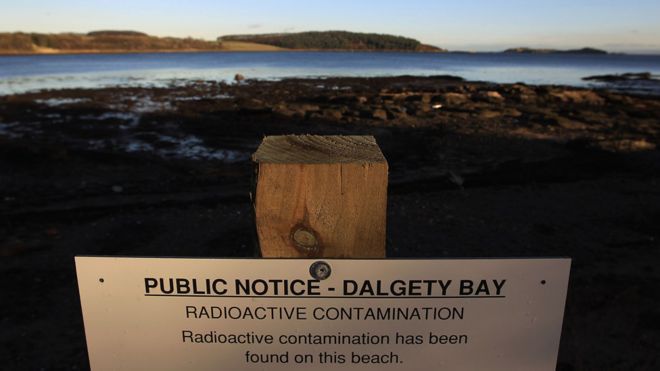
Radioactive pollution at Dalgety Bay to be cleaned up after 31 years,The Ferrret, Rob Edwards, May 14, 2021, The clean-up of radioactive pollution by the Ministry of Defence (MoD) at Dalgety Bay in Fife is to start — 31 years after it was first discovered.
The Scottish Environment Protection Agency (Sepa) has announced that work to decontaminate a stretch of foreshore on the north of the Firth of Forth near a popular sailing club will begin on 17 May. It is expected to be finished in 2022.
Sepa promised that the clean-up would provide a “permanent and positive resolution” to the decades-old pollution. It was “an important milestone for Dalgety Bay”, the agency said.
Campaigners have welcomed the news, but said that it was “utterly disgraceful” that it had taken so long to deal with the contamination. Locals and visitors had been put at risk for “many unnecessary years”, they argued
The £10m clean-up has long been the subject of fierce arguments and delays. Local politicians have repeatedly accused the MoD of refusing to take responsibility, and dragging its heels.
The contamination comes from second world war planes, and was accidentally detected during monitoring in 1990. Luminous, radioactive radium was used to make plane dials glow in the dark so they could be read at night.
After the war the planes were incinerated and dumped as landfill, on which part of the town of Dalgety Bay was built in the 1960s. Since 1990 more than 3,000 radioactive particles have been found on the beach and in local gardens.
Hundreds of particles, many of them potentially hazardous, keep being washed ashore from a headland being eroded by the sea. To protect public health, access to contaminated areas was restricted in 2011, and fishing was banne…………
According to Friends of the Earth Scotland, the area had been “blighted” by radioactive pollution that was “dangerous” to people and wildlife. “It is great news that a clean up is about to get underway but it is utterly disgraceful that it has taken more than thirty years to begin properly dealing with the problems,” said the environmental group’s director, Dr Richard Dixon.
“MoD denial and foot dragging has left locals and visitors at risk for many unnecessary years. A big part of the problem has been the MoD’s fear that if they admit they have to pay to clean up Dalgety Bay they’ll be on the hook for massive bills for similar work that needs to done throughout the UK.”……….
According to Friends of the Earth Scotland, the area had been “blighted” by radioactive pollution that was “dangerous” to people and wildlife. “It is great news that a clean up is about to get underway but it is utterly disgraceful that it has taken more than thirty years to begin properly dealing with the problems,” said the environmental group’s director, Dr Richard Dixon……..
The 50-strong group of Nuclear Free Local Authorities has been working with Fife Council to help get the Dalgety Bay foreshore decontaminated…………https://theferret.scot/radioactive-pollution-dalgety-bay-cleaned-up/
Nuclear fusion is an energy mirage, and these are the reasons why .

Welsh councils warned over experimental nuclear fusion reactor plans https://nation.cymru/news/news-in-brief-welsh-councils-warned-over-experimental-nuclear-fusion-reactor-plans/14 May 2021 Two Welsh local authorities that are considering bids to host a nuclear fusion reactor have been warned of concerns about the proposals being put forward by the UK Atomic Energy Authority.
In recent weeks, councillors from the Vale of Glamorgan and Pembrokeshire County Council have shown public interest in potentially putting a site forward to host an experimental fusion reactor.
The UKAEA has been provided with £200 million of initial funding from the UK Government to create a plant that will harness electricity from fusion and has written to councils suggesting ‘billions’ of pounds will be invested in the project with an aim to help deliver nuclear fusion within the next 30 years.
Fusion technology is still in its infancy and no fusion reactor has ever created more power than it consumes. But scientists say it could be cleaner and safer than fission, the nuclear technology currently used to generate electricity.
Nuclear Free Local Authorities, a body that seeks to increase local accountability over national nuclear policy and identify the impact of national nuclear policy on local communities, has written to both councils highlighting the experimental nature of the project and warning of the environmental and economic consequences of the project.
The conclusions of the NFLA briefing provided to the councils include:
Nuclear fusion, like nuclear fission, still produces significant quantities of radioactive waste.
Radioactive tritium emissions would be released as part of the fusion process into the environment.
A large water source for cooling would be required.It costs huge sums of money that the public exchequer cannot afford after this pandemic.
Any local jobs are a long way off. The target is to have a demonstration plant developed around 2040, so any local construction jobs would not take place for at least 15 years.
As with fission, in operation, the number of jobs working on such a reactor would be small and highly specialist. Those jobs that come will likely be from staff at the existing site in Oxfordshire moving to the new plant.
The site requires a large footprint, with over 100 hectares being requested by the UKAEA. This takes away a large amount of land that could be used for other useful activity, such as developing new renewable energy technology, energy storage or smart energy endeavours.
- Given the technology will also not make any energy (if at all) till the late 2040s, it will provide the local council or the country with no low carbon benefit in the next two decades, when tackling the climate emergency is required now.
“I can understand why the Vale of Glamorgan and Pembrokeshire Council is considering putting an interest in hosting a nuclear fusion reactor, as any call at present which dangles the prospect of money and jobs will interest any council in these difficult economic times,” NFLA Welsh Forum Chair, Councillor Ernie Galsworthy said.
“However, nuclear fusion is an energy mirage. For seven decades it has been worked upon, and it still remains a distant prospect that fusion will ever be developed successfully. The climate emergency though needs to be sorted out now, not in some distant future.
Councils should be given support to develop their critical work in mitigating it, not having their time wasted on a project that could well be a white elephant. I call on councillors to not express an interest in these proposals and call instead for more central government support to them in developing decentralised energy.”
Human intervention may be required at Chernobyl as radiation levels spike
Unilad 13th May 2021, Scientists monitoring increased radiation levels at Chernobyl Nuclear Power Plant are considering whether human intervention may be required to prevent a further catastrophe.
It was reported last week that sensors in one of the basement rooms containing solidified fuel (FCMs) from the remains of the destroyed nuclear reactor had been picking up increased levels of neutrons over the past four years, signalling the nuclear fission process has restarted. Nuclear scientists monitoring the activity say they aren’t
sure why the reactions are increasing, and they can’t rule out the possibility of an accident should levels continue to rise. Now, authorities are working to figure out a solution.
1 This Month
19 May – Webinar No To Nuclear: Why Nuclear Power Destroys Lives, Derails Climate Progress and Provokes War

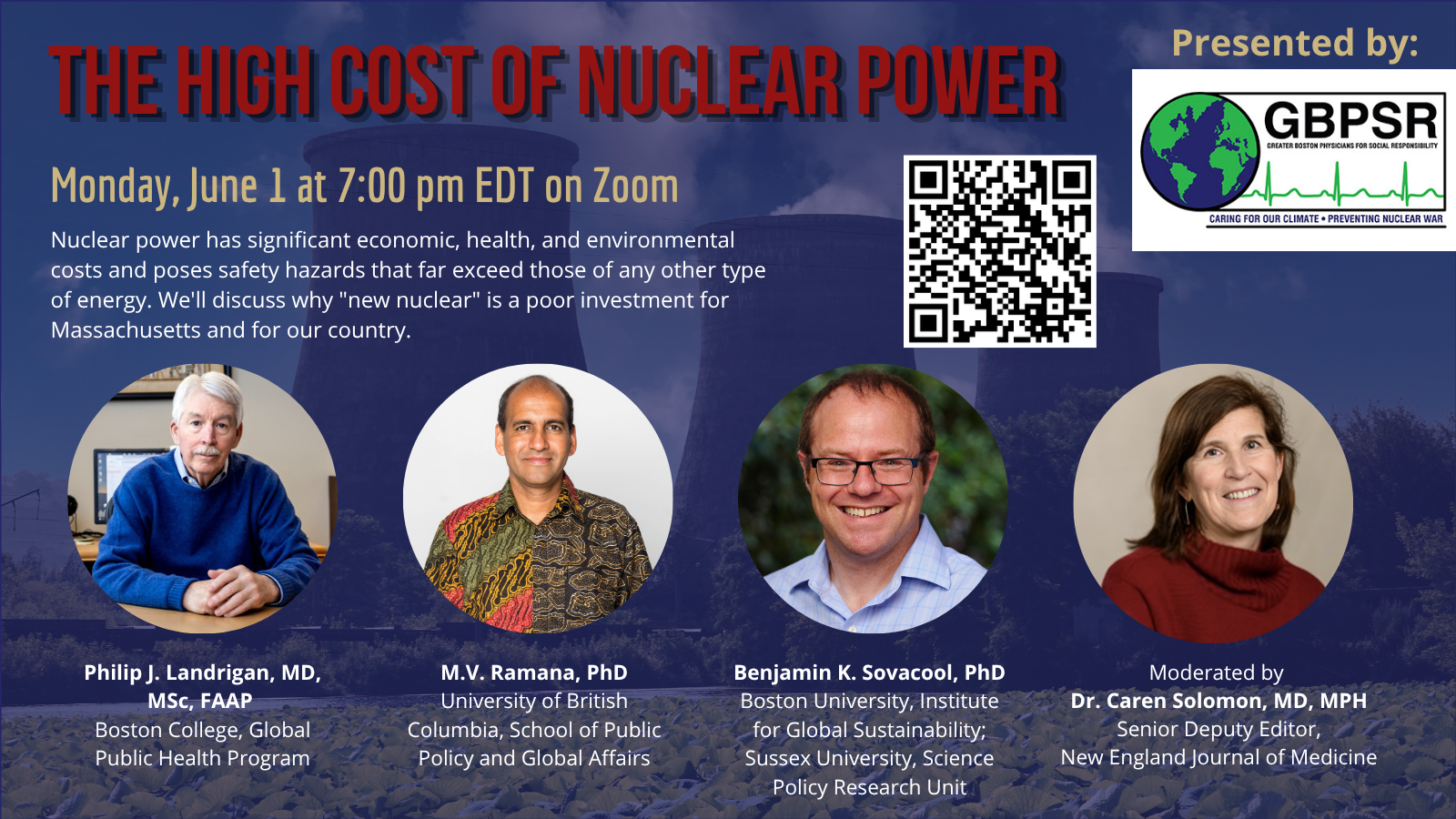
1 June Webinar – The High Cost of Nuclear Power – Register


of the week– Nuclear Reactor Information Task Force
To see nuclear-related stories in greater depth and intensity – go to https://nuclearinformation.wordpress.com
-
Archives
- May 2026 (211)
- April 2026 (356)
- March 2026 (251)
- February 2026 (268)
- January 2026 (308)
- December 2025 (358)
- November 2025 (359)
- October 2025 (376)
- September 2025 (257)
- August 2025 (319)
- July 2025 (230)
- June 2025 (348)
-
Categories
- 1
- 1 NUCLEAR ISSUES
- business and costs
- climate change
- culture and arts
- ENERGY
- environment
- health
- history
- indigenous issues
- Legal
- marketing of nuclear
- media
- opposition to nuclear
- PERSONAL STORIES
- politics
- politics international
- Religion and ethics
- safety
- secrets,lies and civil liberties
- spinbuster
- technology
- Uranium
- wastes
- weapons and war
- Women
- 2 WORLD
- ACTION
- AFRICA
- Atrocities
- AUSTRALIA
- Christina's notes
- Christina's themes
- culture and arts
- Events
- Fuk 2022
- Fuk 2023
- Fukushima 2017
- Fukushima 2018
- fukushima 2019
- Fukushima 2020
- Fukushima 2021
- general
- global warming
- Humour (God we need it)
- Nuclear
- RARE EARTHS
- Reference
- resources – print
- Resources -audiovicual
- Weekly Newsletter
- World
- World Nuclear
- YouTube
-
RSS
Entries RSS
Comments RSS
 nuclear-news