European Commission worried that Belarus will start the Astravets nuclear power plant without the recommended EU safety guidelines
The safety of nuclear power plants is a topic very closely followed by the
Commission, Member States and the EU public. The situation in Astravets has
been a source of heightened concern in the EU.
It is regrettable that Belarus has decided to start the commercial operation of the Astravets
nuclear power plant, without addressing all the safety recommendations
contained in the 2018 EU stress test report. As the Commission has
repeatedly stated, all peer review recommendations should be implemented by
Belarus without delay.
European Commission 2nd June 2021
Secret papers reveal the British spying on Scottish anti-nuclear activists, who were labelled as ”terrorists”
The National 5th June 2021, Secret papers reveal the UK spied on anti-nuclear campaigners. SCOTTISHnanti-nuclear groups were spied upon by the British state in the 1970s and 1980s, according to documents released by police to the spycops inquiry.
Previously secret papers reveal that undercover police officers, known as spycops, claimed to have “penetrated” the Scottish Campaign to Resist the Atomic Menace (SCRAM), Friends of the Earth and the Torness Alliance during protests against the building of a nuclear power station at Torness in East Lothian.
Activists involved with the protests told The Ferret that spycop units had been a “threat to democracy” and “outrageous”. Anti-nuclear campaigners had been wrongly branded as a terror threat “second only to the IRA”, they said. The Metropolitan Police said that undercover policing is “vital” to fight terrorism and “serious crime” in order to keep the public safe. Undercover officers infiltrated campaign groups using dead children’s identities. Some had sexual
relations with women they were spying on and at least three officers fathered children.
They included an officer called Bob Lambert, who operated undercover in Scotland. Lambert’s alter ego was that of a
long-haired anarchist by the name of Bob Robinson. The ongoing inquiry is mostly focused on two disbanded undercover Metropolitan Police units – the Special Demonstration Squad (SDS), which was set up in 1968 by Special
Branch, and the National Public Order Intelligence Unit (NPOIU).
There were calls for the inquiry to be extended north of the Border after it emerged these units operated in Scotland, as reported by The Ferret. But the calls were rejected. The Scottish Government refused to have a public inquiry.
Instead ministers agreed to a review by Her Majesty’s Inspectorate of Policing in Scotland (HMICS), which victims of spycops boycotted.
Pete Roche, who worked at Friends of the Earth (Edinburgh) and SCRAM in the 1970s and 1980s, described the activities of the spycops as a “threat to democracy”.He said: “We always suspected that SCRAM had been infiltrated by the security services, but would have expected them to be a bit more organised and less London-centric than is demonstrated here. “We were always totally open and transparent about what we were planning, so they could have picked up most of this information by attending a couple of our meetings. We can only hope that the kinds of protests we were organising are now seen more as a normal part of the democratic process.”
https://www.thenational.scot/news/19352858.headline/
The Ferret 6th June 2021
Old nuclear grinding to a halt in Britain
nuClear news, No 1333 5 June 21 In February it was reported that Centrica had suspended the sale of its nuclear business. Centrica owns a 20% interest in the UK’s 8.25 GW of operational nuclear power generation fleet. In 2018 it announced it was looking for a buyer for the stake. The Company continues to look at options, but the divestment process has now been paused mainly because of the graphite cracking issue at Hunterston and Hinkley and pipe corrosion at Dungeness.
The company’s nuclear output for 2020 was down 10% year on year to 9.134 TWh, while the achieved price was up 4% to £51.30/MWh. Centrica’s nuclear segment made an operating loss of £17 million, down from a £17 million operating profit in 2019. A £525 million impairment charge on power assets included £481 million relating to nuclear, “largely as a result of a reduction in price forecasts and availability issues at the Hunterston B, Dungeness B and Hinkley Point B power stations.” (1)

Dungeness
EDF Energy is reported to be exploring a range of scenarios for Dungeness B, including bringing forward its decommissioning date of 2028. The Company may decide to start defuelling the reactors seven years early unless a number of “significant and ongoing technical challenges” are overcome.
On 27 August 2018 Dungeness B shut down Reactor 22 for its planned statutory outage. On 23 September 2018 Reactor 21 was also shut down for the planned double reactor outage. Both reactors have been shut since while a multi-million-pound maintenance programme was carried out. This work was due to be completed last year but that timeline changed to August 2021 following a series of delays.
Now EDF say the ongoing challenges and risks “make the future both difficult and uncertain”. As a result, the energy company is now exploring a range of options – including shutting the station down later this year, seven years ahead of schedule. A statement from EDF reads:
“Dungeness B power station last generated electricity in September 2018 and is currently forecast to return to service in August 2021. The station has a number of unique, significant and ongoing technical challenges that continue to make the future both difficult and uncertain. Many of these issues can be explained by the fact that Dungeness was designed in the 1960s as a prototype and suffered from very challenging construction and commissioning delays. We expect to have the technical information required to make a decision in the next few months, as it is important we bring clarity to the more than 800 people that work at the station, and who support it from other locations, as well as to government and all those with a stake in the station’s future.”
EDF Energy said it has spent more than £100 million on the plant during its current outage. (2)
EDF’s latest announcement was that Reactor 21 might restart on June 6, 2022 instead of Aug. 2 this year and Reactor 22 reactor might restart on May 27, 2022 instead of July 23 this year. (3) Dungeness B was the first AGR to be ordered in 1965. It was expected to begin operation in 1970/1, but didn’t produce commercial electricity until 1989. It is thought to have exceeded its budget by 400%. (4)

Hunterston
In April the Office for Nuclear Regulation (ONR) gave EDF permission for reactors 3 and 4 at the Hunterston to return to service for a limited period of operation after scrutiny of EDF’s safety case. Operation is permitted for up to a total of 16.7 terawatt days for reactor 3 and 16.52 terawatt days for reactor 4 – approximately six month’s of operation for each. This will be the final period of operation before the reactors are shut-down and the spent fuel removed. (5)
Reactor 3 has already re-started but Reactor 4 is not expected to be back on-line until 9th June. The end date for Hunterston B will be 7 January 2022 at the latest.

Hinkley Point B
On 17th March Hinkley Point B’s two reactors were granted permission by ONR to restart. Reactor 4 and Reactor 3 were taken offline on 21 February and 8 June 2020, respectively, for a series of planned inspections of the graphite core. The company plans to run Hinkley’s two reactors for six months, pause for further inspections and, subject to ONR approval, generate power for a second six-month period. Last November EDF announced that Hinkley Point B would operate no later than July 2022 before moving into the defuelling phase. EDF has spent £3 million over the past year upgrading the plant while detailed assessments have been completed on the graphite in the nuclear reactors. (6)

Sizewell B
EDF Energy extended the outage at Sizewell B by three months to carry out ‘additional work’. The reactor went offline for planned refuelling and maintenance work on April 16, initially scheduled to end on May 29. This has been updated to 30th August following additional work required on some components identified during the shutdown. (7) This is because some steel components are wearing out more quickly than expected, forcing EDF to carry out lengthy unscheduled repairs. (8)
Plant Life Extensions
A look at the age structure of existing nuclear power plants shows the importance of analysing risks of life-time extension and long-term operation. Some of the world’s oldest plants are located in Europe. Of the 141 reactors in Europe, only one reactor came into operation in the last decade, and more than 80 percent of the reactors have been running for more than 30 years. Nuclear power plants were originally designed to operate for 30 to 40 years. Thus, the operating life-time of many plants are approaching this limit, or has already exceeded it. The ageing of nuclear power plants leads to a significantly increased risk of severe accidents and radioactive releases.
A new study has analysed the risks of life-time extensions of ageing nuclear power plants. At present, life-time extensions in Europe do not have to be comprehensively relicensed according
to the state of the art in science and technology. Time limited licenses can be extended by decision of the competent authorities. However, such decisions do not meet the requirements of Nuclear Power Plant licensing procedures in regard to public participation. More often than not environmental impact assessments with public participation are not carried out. However, the situation has changed with the ruling of the European Court of Justice of 29th of July 2019 on the life-time extension of the Doel NPP (Belgium) and the new guidance under the ESPOO Convention. Accordingly, environmental impact assessments with transboundary public participation are now required for life-time extensions.
However, there are still no binding assessment standards for life-time extensions. It is still up to each regulatory authority to decide what and how to assess. In particular, the authorities are not obliged to carry out a comprehensive licensing procedure in which all safety issues are comprehensively examined according to the current state of knowledge. (9) https://www.no2nuclearpower.org.uk/wp/wp-content/uploads/2021/06/nuClearNewsNo133.pdf
Critique No 3 [a boys-with-toys view] -BBC documentary Building Britain’s Biggest Nuclear Power Station

Building Britain’s Biggest Nuclear Power Station, BBC2, review: A boys-and-their-toys view of a divisive build. Much of the programme is devoted to emphasising just how big the plant will be: we are shown a tunnelling machine so enormous it requires a police cavalcade; we are treated to front-row seats for the “largest continuous cement pour in the UK”; we learn that Hinkley’s canteens consume 316 tons of baked beans a year.
iNews 2nd June 2021
Critique No 2 of BBC documentary Building Britain’s Biggest Nuclear Power Station

Building Britain’s Biggest Nuclear Power Station, review: why didn’t this film ask the real questions? It seemed a little odd for one local’s (admittedly very valid) complaints about traffic to be given more airtime than, say, worries over industrial espionage in a project part-funded by the Chinese state, or of ballooning budgets (from £18 billion to
£22 billion).
Two of its three intended predecessors in Finland and France remain on ice owing to “concerns over cost and quality”, a phrase both vague and serious enough to warrant further enquiry, yet any doubts were confined to the voiceover and not put to the people involved.
Telegraph 2nd June 2021
Critique No 1 of BBC documentary Building Britain’s Biggest Nuclear Power Station
One cynical but reliable rule of thumb when reporting official statements is that the more often a fact is emphasised, the less likely it is to be true. The first time we were told on Building Britain’s Biggest Nuclear
Power Station (BBC2) that the new Hinkley Point C reactor will be able to withstand the impact of a plane crash, I was mildly reassured.
After the third or fourth repetition, I was quite uneasy. And when the last 15 minutes of the opening episode in this two-parter were devoted to explaining exactly how marvellously plane-proof the design is, panic was setting in. For all the talk of double-skinned, nuclear-grade concrete and X-rayed metal seals, it was pretty obvious that one misplaced Airbus is all it takes, and Goodbye Somerset.
Daily Mail 3rd June 2021
Lakes Against Nuclear Dump (LAND) call to Boris Johnson for a moratorium on the push for ”Delivery of a Geological Disposal Facility”
Lakes Against Nuclear Dump (LAND) have sent a letter to Boris Johnson
urging him to issue a Moratorium on the push for “Delivery of a
Geological Disposal Facility” – Cumbria is in the frame once again with
the salt water infused complex geology under the Irish Sea being touted as
a “possible” site.
Radiation Free Lakeland 4th June 2021
Titanic Microbes and Request for Moratorium on “Delivery” of Deep Nuclear Waste Dump
Germany’s search for a nuclear waste solution
Aus Politik und Zeitgeschichte 25th May 2021, Search for a repository. In June 2011 the German Bundestag voted with alarge majority in favor of Germany’s complete withdrawal from nuclear energy under the impression of the reactor disaster in Fukushima, Japan. Of the 17 German nuclear power plants at the time, eleven have now been switched off and they will be closed by 2022. last pile from the network.
An end to German nuclear policy, at the latest has been accompanied by polarization and mass protests since the 1970s, That doesn’t mean, however, that the task at hand is to find one for the approximately 27,000 cubic meters of high-level radioactive waste from six decades of nuclear power plant operation To find the safest possible repository location – for a million years. The repository question is not new. While international from the late 1950s Years of disposing of nuclear waste in the world’s oceans, ice sheets or was discussed in space, crystallized early in the Federal
Republic underground storage emerged as the preferred solution.
In 1977 the Salt dome in Gorleben in Lower Saxony named as the location for a “National Waste Disposal Center” – although the weighting is more scientific Findings, political agendas and economic interests. The violent one
Resistance that soon broke out in the region spread throughout the country and became a well-networked movement, made “Gorleben” on the code for anti-nuclear protest in Germany and the pitfalls of Search for a repository.
Launch of bigger Stop Sizewell C campaign in UK
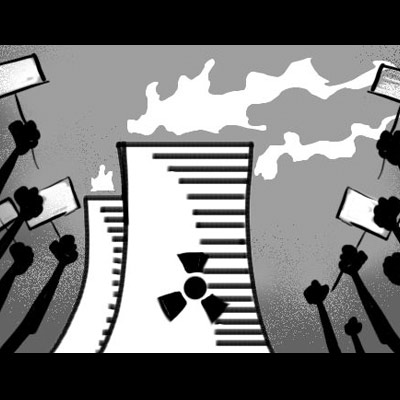
East Anglian Daily Times 31st May 2021, Campaigners are going on the offensive against plans for two new nuclear
reactors on the Suffolk coast – saying “it’s not too late to Stop
Sizewell C”. The new advertising campaign is launched today by Stop
Sizewell C, part of a fight-back to highlight the reasons it claims why the
£20billion power project should be opposed.
The campaign will include a touring digital “Advan” visiting tourism and leisure hotspots on the
Suffolk coast between 10am and 6pm with striking and colourful imagery by
award-winning advertising creative Antony Easton and featuring the voices
of residents and campaigners, including Bill Nighy, Diana Quick, Bill
Turnbull and Charlie Haylock.
https://www.eadt.co.uk/news/stop-sizewell-c-ad-campaign-launch-8015014
How decentralised energy will massively reduce grid costs

How decentralised energy will massively reduce grid costs,
100% Renewables 30th May 2021
There’s lots of information being pumped out by the anti-renewables lobby about how renewable energy causes great increases in the costs of upgrading electricity networks, but in fact there’s a lot of ways in which decentralised energy will actually REDUCE network costs. A recent study from California emphasizes how the cheapest path to clean energy is a mixture of large renewable energy projects and small decentralised renewables (mainly solar pv) linked to battery storage systems. Solar pv-battery systems can exist as a mixture of domestic systems and larger ground-mounted systems.
There isn’t yet a similar study for the UK (the big energy companies who fund these things won’t want the truth leaking out!), but there’s logic to suggest that much the same thing might be the case in the UK. Sure, the UK isn’t as sunny as California, although in winter there’s a lot of wind power. But in any case the untold secret of a decentralised solar-plus-battery system is that the batteries will soak up electricity produced from whatever sources so as to even out the pressures on the electricity network. By reducing pressure on the electricity network both transmission and distribution network costs can be reduced.
Of course the rub is that these battery systems which will reduce network costs are themselves made economic by being associated with the solar pv systems – and the same things works the other way around. The solar pv systems are made more economic by being alongside the batteries. Indeed these sorts of systems are so cheap that they are being installed already in the UK at two levels without even any incentives for the Government.
First, as reported in the trade press, companies like Gridserve are doing solar pv-battery systems. The batteries can soak up energy from the solar panels when there is a lot of electricity being generated and electricity prices are low and then sell it back to the grid at other times of the day or night when electricity prices are higher.
This sort of ‘arbitrage’ trading can now also be done at the second, domestic household, level. An even quieter revolution is taking place as ordinary households can now install solar pv plus battery systems for costs that would have been regarded as fancifully low five years ago. One company called ‘Growatt‘ is currently offering a system comprising 5.5 kW of solar pv and a 6.5 kWh battery for less than £9000 (note: five or so years ago you could have been doing well just to get the solar pv for that price!). This system works best with a supplier like Octopus who offers a time-of-use tariff so that you can charge the batteries when it is cheapest to do so whether from the grid or the solar panels. Solar pv is used when buying electricity from the network is expensive and stored in the battery when network prices are cheap. Then the batteries can power consumption when prices are higher and it isn’t sunny enough to generate much solar pv.
Of course there’s also a novel energy storage company, Sunamp, that is offering the possibility the use solar pv to heat and store water. As they say: ‘SunampPV stores excess electricity from a Solar PV
array as heat. This delivers high flow rate hot water on demand, so that your instant water heater or combi boiler can operate much less, saving you money’
So, you’d expect the Government to be shouting about all of this and giving this nascent new decentralised energy industry a boost? No way! The Government will be told what is needed by the big energy companies who definitely want to keep decentralised energy a secret – especially as it gets in the way of their incessant demands for featherbedding, whether it is for capacity payment subsidies for large power stations or massive handouts to nuclear power plant.
Secrecy and connivance between UK’s coal and nuclear lobbies in Cumbria
There are high-level omissions in all the reporting and I fear that our
Government are only too happy for the focus to be myopically on climate
rather than the blatant cronyism of the coal mine boss having been
appointed to ADVISE the government on nuclear dump plans.
How on earth can
the forthcoming public inquiry be impartially decided upon by a government
minister when the most powerful tier of government, the Dept of Business,
Energy and Industrial Strategy is taking advice from the coal mine boss,
Mark Kirkbride? Not only that but the Coal Authority (who are under BEIS)
are deferring to the coal boss’s wish not to place the new Coal Authority
licence applications in the public domain. Again how on earth can there be
a public inquiry in which the public don’t know what the developer has
planned?
Keep Cumbrian Coal in the Hole 28th May 2021
Mr Nuclear Waste and Mr Coal – Top Cronies..Shhh
The USA-UK nuclear cabal

A toxic relationship that could destroy the world
The USA-UK nuclear cabal — Beyond Nuclear International The USA-UK nuclear cabal
May 30, 2021 by beyondnuclearinternational
A “special relationship” in nuclear collusion
By Leonard Eiger On March 16th the United Kingdom announced (in its Integrated Review of Security, Defence, Foreign Policy and Development titled Global Britain in a Competitive Age) that it will increase the limit on its nuclear arsenal for the first time in decades. Instead of maintaining a cap of 180 warheads (as it had previously stated), the UK will increase its stockpile cap to 260 warheads — a 40% increase. The review also broadens the role of nuclear weapons to include the possible use of nuclear weapons to address emerging technologies (cyber attacks). This is shocking and unacceptable! Indeed, it seems the British Empire is flexing its imperial muscles as it breaks away from the rest of Europe.
The announcement comes at a precarious time. A new nuclear arms race is brewing. The US and Russia, the two largest nuclear powers (with some 93 percent of global nuclear warheads) are failing to lead the world away from reliance on nuclear weapons, and other nations are following their lead. At a time when most nations are calling for an end to nuclear weapons (UN Treaty on the Prohibition of Nuclear Weapons), rather than setting a positive example and supporting the treaty, the UK is instead fanning the flames of proliferation. And, it is getting loads of help along the way.
Just prior to the announcement a spokesperson for the UK Ministry of Defence reiterated the longstanding claim that the “UK is committed to maintaining its independent nuclear deterrent, which exists to deter the most extreme threats to our national security and way of life.” The British have been claiming their nuclear weapons systems to be “independent” for so long that the world seems to have accepted this fraudulent claim. In fact, the UK’s nuclear forces are anything but independent, and there is ample evidence to disprove the governments claim. To more fully understand the situation, we need to study a bit of history.
Although the US declared its independence when the original 13 American colonies severed their political connections to Great Britain, the two countries have since found it mutually beneficial to develop a strong alliance; what has become known as the “Special Relationship,” an unofficial term used to describe certain aspects of their relationship including political, diplomatic, cultural, economic, and military.
And nowhere has their relationship been quite as special as is the case involving nuclear weapons. The two countries signed the Mutual Defence Agreement (MDA) in 1958, a secretly negotiated bilateral treaty on nuclear weapons cooperation under which both countries agreed to exchange classified information to develop their respective nuclear weapon systems.
The treaty permits “the transfer between the United States and the United Kingdom of classified information concerning atomic weapons; nuclear technology and controlled nuclear information; material and equipment for the development of defence plans; training of personnel; evaluation of potential enemy capability; development of delivery systems; and the research, development, and design of military reactors.”
The MDA was last amended in 2014. In 2018, officials from the UK and US met to celebrate the 60-year anniversary of the MDA. The official statement from the US State Department referred to “promoting peace to fighting terrorism” and “advancing each nations’ mutual understanding of the safety, security, and reliability of their respective nuclear weapon stockpiles,” while making no mention of the direct transfers of nuclear warheads and their delivery systems (missiles) currently deployed on British Trident submarines.
The MDA only came about after the UK developed its own thermonuclear weapons, and the US then agreed to supply delivery systems, and designs and nuclear material for British warheads. Both countries’ ballistic missile submarines are commonly referred to as “Trident” due to the missiles they both carry, which are the Trident II D5 submarine-launched ballistic missile manufactured by Lockheed Martin Aerospace, a US-based corporation.
The UK leases the Trident missiles, deployed on its four Trident submarines, from the US government. Those submarines return regularly to the US Trident submarine base in King’s Bay, Georgia, for the maintenance and replacement of the missiles. As of 2017, the UK paid an annual contribution of approximately $16.7 million towards the operations cost of Kings Bay.
Both the Trident missile’s navigation and guidance systems are the same on both US and UK versions, and utilize US software. The US Navy supplies weather and gravity data to both US and UK submarines, which is vital to ensuring missile accuracy. Both hardware and software for the fire control system (used to assign targets to warheads) are produced by US companies. The hardware is produced by General Dynamics, a US-based corporation.
All test launches of Trident missiles from British Trident submarines are conducted off the Florida coast and under US supervision. The test data is analyzed by the Applied Physics Laboratory (APL) at Johns Hopkins University and by the Charles Stark Draper Laboratories.
The UK’s warheads are what the UK calls “Holbrook”, and are mounted on Trident II D5 missiles carried on British Vanguard-class “Trident” nuclear submarines. The “Holbrook” thermonuclear warhead is nearly identical to the US W76 warhead deployed on those same Trident II D5 missiles on US OHIO-class “Trident” submarines. Is this a case of plagiarism or just an all-too cozy, mutually beneficial relationship between two nuclear-armed nations?
According to the British government, their nuclear warheads are designed, manufactured and maintained by the Atomic Weapons Establishment (AWE) in the UK. AWE has been managed since 2000 by AWE Management, of which US-based Lockheed Martin Corporation is a partner, holding a 51 percent stake in the operation. It was announced in late 2020 that the British government will regain direct control of operations and development of AWE as of June 2021.
A UK Ministry of Defence fact sheet states that their warheads are “designed and manufactured in the U.K.” However, a declassified U.S. Department of Energy (DOE) document obtained by the Federation of American Scientists (FAS) under the Freedom of Information Act directly links the warhead designs on U.S. and U.K. Trident missiles. Alas, the British nuclear warheads are not so British (if at all)……………
Looking into the future, both the US and UK are engaged in programs to build the next generation of ballistic missile submarines to replace their current fleets. Both new subs will incorporate the US-built Common Missile Compartment. There has been talk about a replacement missile for the D5, and a new warhead called the W93 is already being planned, and the British government is engaged in extensive lobbying for it.
The evidence is abundantly clear. The British Trident system is dependent on and, in many ways controlled by, the US in essentially every aspect. It is by no means an “independent nuclear deterrent,” even if you believe in deterrence theory. And this has deeply important meaning under international legal norms.
Article I of the Treaty on the Non-Proliferation of Nuclear Weapons (NPT), to which the US and UK are both signatories, explicitly prohibits the “transfer to any recipient whatsoever nuclear weapons or other nuclear explosive devices or control over such weapons or explosive devices directly, or indirectly…” Under international law the NPT should take precedence over the the US-UK mutual defence agreement, and therefore the agreement would be in violation of the NPT.
The US and UK have, for decades, undermined both the letter and intent of the NPT through their special nuclear relationship. They have found ways to make their nuclear arsenals more effective and continue to modernize in the name of deterrence and national security. And now, the UK has announced an increase in its nuclear warhead cap. While the UN and a number of countries have chimed in with grave concerns about the UK’s announcement, the US has been noticeably silent. Might the US be pondering such an increase? After all, aren’t treaties meant to be broken (as we saw in the prior US administration)?
sn’t it time to end the special nuclear relationship? Isn’t it time to re-think “deterrence” theory and “national security”? Isn’t it time to recognize that so long as nuclear weapons exist, humanity teeters on the brink of disaster?
And speaking of history, we need to learn the lessons of the past. We have come close to the nuclear precipice far too many times, and the (Doomsday) clock is still ticking. We can’t stop the Clock until we abolish nuclear weapons. Empires come and empires go, yet humanity has only one chance. As for the US and UK, it is time for citizens of both nations to come together to pressure our governments to end the special nuclear relationship, and sign and ratify the Treaty on the Prohibition of Nuclear Weapons, showing real leadership towards a world free of the threat of nuclear annihilation.
Leonard Eiger is a student and practitioner of nonviolence, working for the abolition of all nuclear weapons. He coordinates media and outreach for Ground Zero Center for Nonviolent Action, the Puget Sound Nuclear Weapon Free Zone and the NO To NEW TRIDENT Campaign.
Headline photo by Nicholas Raymond/Creative Commons/www.freestock.ca https://beyondnuclearinternational.org/2021/05/30/the-usa-uk-nuclear-cabal/
UK’s Sizewell B nuclear complex continues to be offline for safety reasons
East Anglian Daily Times 29th May 2021 , Sizewell B will not generate electricity for three months to enable
essential repairs – and EDF will have to submit a “robust safety case” to
regulators before it is switched back on. The nuclear power station – which
supplies electricity for 2.5million homes and businesses – has already been
offline for six weeks for regular maintenance and refuelling and it was
hoped it would be working again next week.
However, signs of wear have been
found on a thermal sleeve – and the repairs needed will mean keeping the
complex offline until August 30. The problem was anticipated and EDF
engineers worked with specialists to assess the issue.
https://www.eadt.co.uk/news/sizewell-nuclear-power-station-switched-off-for-repairs-8013660
Further outages at UK’s Dungeness nuclear power plant: its future in doubt
Nasdaq 28th May 2021, EDF Energy has extended outages at the two nuclear reactors at its
Dungeness B nuclear power plant in Britain to next year, company data
showed. The Dungeness B-21 reactor is expected to restart on June 6, 2022
instead of Aug. 2 this year and the Dungeness B-22 reactor is expected to
restart on May 27, 2022 instead of July 23 this year. The reactors have
been offline since 2018. The company previously said Dungeness B has a
number of unique, significant and ongoing technical challenges that
continue to make the future both difficult and uncertain.
NATO’s U.S. nuclear weapons in Europe not safe. U.S. soldiers’ Flashcard Apps reveal secrets

“secrecy about US nuclear weapons deployments in Europe does not exist to protect the weapons from terrorists, but only to protect politicians and military leaders from having to answer tough questions about whether NATO’s nuclear-sharing arrangements still make sense today. This is yet one more warning that these weapons are not secure.”
US Soldiers Expose Nuclear Weapons Secrets Via Flashcard Apps, Bellingcat, Foeke Postma, May 28, 2021,
For US soldiers tasked with the custody of nuclear weapons in Europe, the stakes are high. Security protocols are lengthy, detailed and need to be known by heart. To simplify this process, some service members have been using publicly visible flashcard learning apps — inadvertently revealing a multitude of sensitive security protocols about US nuclear weapons and the bases at which they are stored.
While the presence of US nuclear weapons in Europe has long been detailed by various leaked documents, photos and statements by retired officials, their specific locations are officially still a secret with governments neither confirming nor denying their presence.
As many campaigners and parliamentarians in some European nations see it, this ambiguity has often hampered open and democratic debate about the rights and wrongs of hosting nuclear weapons.
However, the flashcards studied by soldiers tasked with guarding these devices reveal not just the bases, but even identify the exact shelters with “hot” vaults that likely contain nuclear weapons.
They also detail intricate security details and protocols such as the positions of cameras, the frequency of patrols around the vaults, secret duress words that signal when a guard is being threatened and the unique identifiers that a restricted area badge needs to have.
Like their analogue namesakes, flashcard learning apps are popular digital learning tools that show questions on one side and answers on the other. By simply searching online for terms publicly known to be associated with nuclear weapons, Bellingcat was able to discover cards used by military personnel serving at all six European military bases reported to store nuclear devices.
Experts approached by Bellingcat said that these findings represented serious breaches of security protocols and raised renewed questions about US nuclear weapons deployment in Europe.
Dr Jeffrey Lewis, founding publisher of Arms Control Wonk.com and Director of the East Asia Nonproliferation Program at the James Martin Center for Nonproliferation Studies, said that the findings showed a “flagrant breach” in security practices related to US nuclear weapons stationed in NATO countries.
He added that “secrecy about US nuclear weapons deployments in Europe does not exist to protect the weapons from terrorists, but only to protect politicians and military leaders from having to answer tough questions about whether NATO’s nuclear-sharing arrangements still make sense today. This is yet one more warning that these weapons are not secure.”
Hans Kristenssen, director of the Nuclear Information Project at the Federation of American Scientists, broadly agreed and said that safety is provided by “effective security, not secrecy.”
Some flashcards uncovered during the course of this investigation had been publicly visible online as far back as 2013. Other sets detailed processes that were being learned by users until at least April 2021. It is not known whether secret phrases, protocols or other security practices have been altered since then.
However, all flashcards described within this article appear to have been taken down from the learning platforms on which they appeared after Bellingcat reached out to NATO and the US Military for comment prior to publication.
………………For nuclear disarmament activists, however, the information revealed by US soldiers emphasises what they see as the dangers of hosting nuclear weapons in Europe as well as the lack of strategic sense in doing so.
When contacted to comment on these findings Susi Snyder, project leader of the No Nukes program at Dutch peace organisation PAX and coordinator of the Don’t Bank on the Bomb campaign, remarked “The public in European countries hosting B61 bombs overwhelmingly support the Treaty on the Prohibition of Nuclear Weapons. Policies of secrecy that deny democracy can’t last, and risk the security of the population. Secret stationing, like nuclear weapons, are no solution to the threats of today, or tomorrow.”
Kristensen of the Federation of American Scientists added: “There are so many fingerprints that give away where the nuclear weapons are that it serves no military or safety purpose to try to keep it secret. Safety is accomplished by effective security, not secrecy. Granted, there may be specific operational and security details that need to be kept secret, but the presence of nuclear weapons does not. The real purpose of secrecy is to avoid a contentious public debate in countries where nuclear weapons are not popular.” https://www.bellingcat.com/news/2021/05/28/us-soldiers-expose-nuclear-weapons-secrets-via-flashcard-apps/
1 This Month
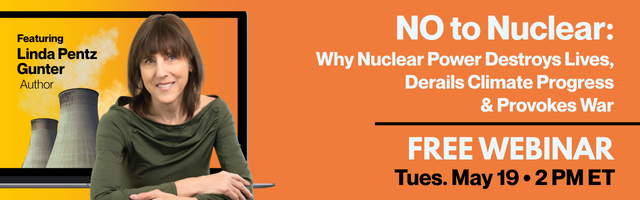
19 May – Webinar No To Nuclear: Why Nuclear Power Destroys Lives, Derails Climate Progress and Provokes War
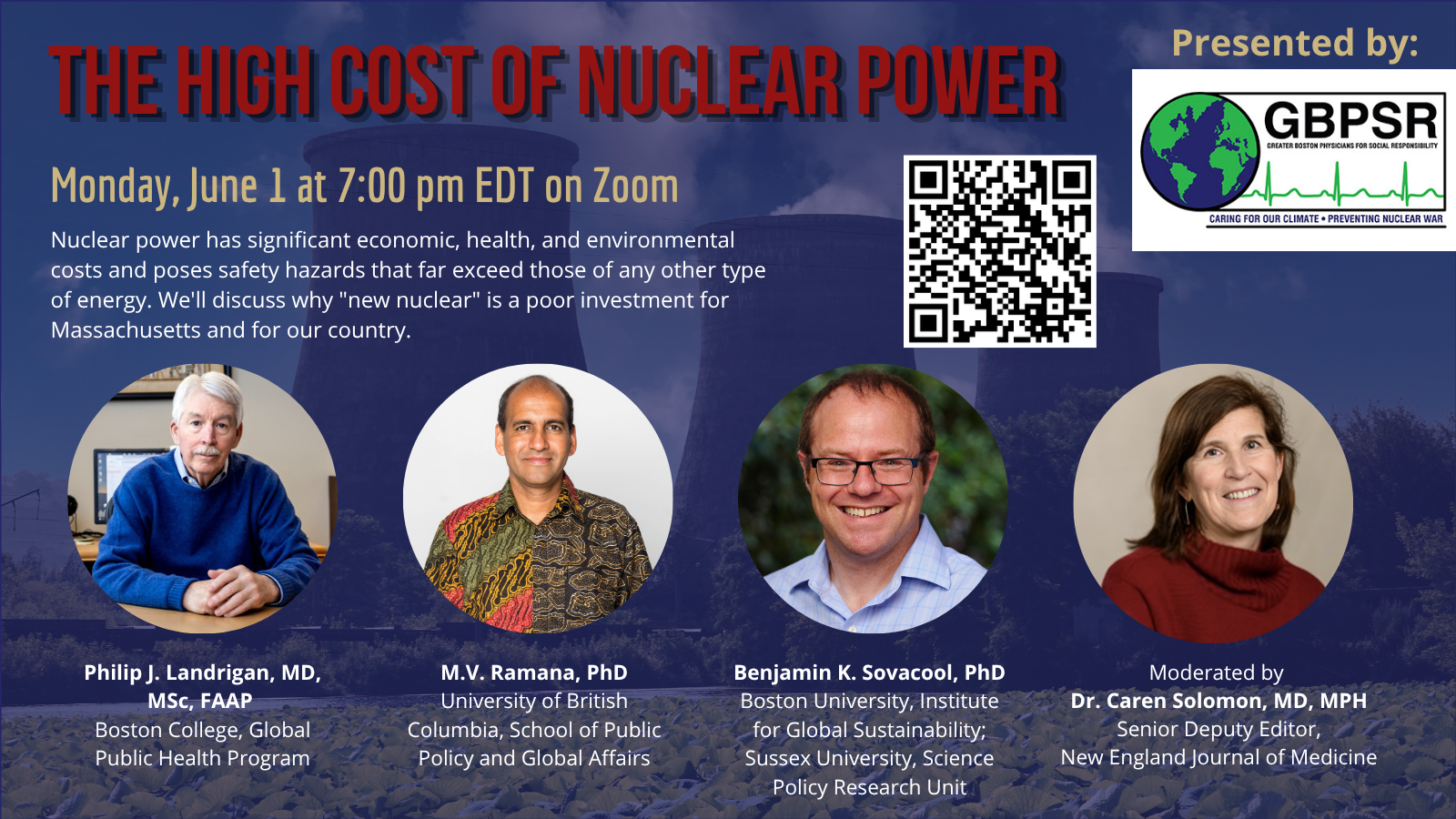
1 June Webinar – The High Cost of Nuclear Power – Register


of the week– Nuclear Reactor Information Task Force
To see nuclear-related stories in greater depth and intensity – go to https://nuclearinformation.wordpress.com
-
Archives
- May 2026 (211)
- April 2026 (356)
- March 2026 (251)
- February 2026 (268)
- January 2026 (308)
- December 2025 (358)
- November 2025 (359)
- October 2025 (376)
- September 2025 (257)
- August 2025 (319)
- July 2025 (230)
- June 2025 (348)
-
Categories
- 1
- 1 NUCLEAR ISSUES
- business and costs
- climate change
- culture and arts
- ENERGY
- environment
- health
- history
- indigenous issues
- Legal
- marketing of nuclear
- media
- opposition to nuclear
- PERSONAL STORIES
- politics
- politics international
- Religion and ethics
- safety
- secrets,lies and civil liberties
- spinbuster
- technology
- Uranium
- wastes
- weapons and war
- Women
- 2 WORLD
- ACTION
- AFRICA
- Atrocities
- AUSTRALIA
- Christina's notes
- Christina's themes
- culture and arts
- Events
- Fuk 2022
- Fuk 2023
- Fukushima 2017
- Fukushima 2018
- fukushima 2019
- Fukushima 2020
- Fukushima 2021
- general
- global warming
- Humour (God we need it)
- Nuclear
- RARE EARTHS
- Reference
- resources – print
- Resources -audiovicual
- Weekly Newsletter
- World
- World Nuclear
- YouTube
-
RSS
Entries RSS
Comments RSS
 nuclear-news