British court ruling heightens danger of Assange extradition to the US
British court ruling heightens danger of Assange extradition to the US, WSWS, Oscar Grenfell, 12 July 21, Last week’s ruling by the British High Court allowing prosecutors to appeal an earlier judgment blocking Julian Assange’s extradition, poses the very real danger that the WikiLeaks publisher will be dispatched to his American persecutors in the not-too-distant future.
The ruling is a microcosm of the Assange case as a whole. As they have for the past decade, the British courts have thrown aside the WikiLeaks founder’s legal and democratic rights. They have granted a US appeal that is both duplicitous and irregular under conditions in which the entire attempt by the American state to prosecute Assange has been exposed as an illegal frame-up.
The US appeal is a damning refutation of those, including among Assange’s own supporters, who have peddled dangerous illusions that the US administration of President Joe Biden may drop the prosecution if a sufficient number of moral pleas are addressed to the new occupant of the White House.
The appeal was first issued in the dying days of the Trump administration but it was continued, honed and argued for by Biden’s Justice Department. Assange remains in London’s maximum-security Belmarsh Prison and faces the prospect of lifetime incarceration in the US because Biden is determined to press ahead with the prosecution of a journalist and publisher for exposing American war crimes, human rights violations and illegal spying operations.
That is because the Assange prosecution is viewed as a crucial precedent by the imperialist powers for the suppression of dissent and anti-war opposition amid a ratcheting up of the preparations for military conflict, including the Biden administration’s threats and provocations against China, and the first signs of a resurgence of working-class struggle.
The appeal also confirms the warnings made by the World Socialist Web Site about January’s British District Court decision that barred extradition.
Judge Vanessa Baraitser accepted all the substantive arguments of the US prosecutors, including their right to try a publisher under the Espionage Act. Her ruling, prohibiting extradition, was framed in the narrowest terms. Its purpose was to defuse a groundswell of opposition to the prospect of Assange’s extradition and to provide the US with ample scope for appeal.
Baraitser ruled that extradition would be “oppressive.” Assange’s compromised health and the conditions of his imprisonment in the US would likely result in his suicide.
The deliberate consequence of that judgment was that there was only a legal sliver between Assange and extradition.
The US has exploited this with its appeal claiming that the conditions of imprisonment would not be so oppressive. It has proposed worthless assurances that Assange would not be held under Special Administrative Measures (SAM), regulations that impose almost total isolation on a prisoner, and that he could serve out his sentence in Australia.
The extradition hearing had heard harrowing testimony about the dire psychological consequences of SAMs and conditions at the supermax ADX Florence prison where they are frequently imposed.
The US arguments, accepted as a legitimate basis of appeal by the British court, were demolished by Stella Moris, Assange’s partner and an international human rights lawyer.
In a statement issued on Friday, Moris wrote: “Reports about US undertakings are grossly misleading. On any given day 80,000 prisoners in US prisons are held in solitary confinement. Only a handful are in ADX/under special administrative measures. ADX is just one of dozens of self-described supermax prisons in the United States. The US government also says it may change its mind if the head of the CIA advises it to do so once Julian Assange is held in US custody.
“With regard to the supposed concession of allowing Julian to serve jail time in Australia, it was always his right to request a prisoner transfer to Australia to finish serving his sentence because he is an Australian. It is no concession at all. There are existing agreements between the US and Australian authorities. What is crucial to understand is that prisoner transfers are eligible only after all appeals have been exhausted. For the case to reach the US Supreme Court could easily take a decade, even two.
“What the US is proposing is a formula to keep Julian in prison effectively for the rest of his life. The only assurance that would be acceptable would be for the Biden Administration to drop this shameful case altogether, once and for all. He should not be in prison for a single day, not in the UK, not in the United States, not in Australia—because journalism is not a crime.”
As Moris noted, the US appeal itself reserved the “right” to impose SAMs once Assange is on US soil. Testimony at the extradition hearing, including from a former US prison warden, established that the imposition of SAMs is essentially extra-judicial, often being introduced at the say-so of the intelligence agencies, and with no genuine means of appeal.
“What the US is proposing is a formula to keep Julian in prison effectively for the rest of his life. The only assurance that would be acceptable would be for the Biden Administration to drop this shameful case altogether, once and for all. He should not be in prison for a single day, not in the UK, not in the United States, not in Australia—because journalism is not a crime.”
As Moris noted, the US appeal itself reserved the “right” to impose SAMs once Assange is on US soil. Testimony at the extradition hearing, including from a former US prison warden, established that the imposition of SAMs is essentially extra-judicial, often being introduced at the say-so of the intelligence agencies, and with no genuine means of appeal.
The hearings, moreover, heard evidence of a case in which similar assurances were immediately thrown out the door once extradition was secured……………
Thordarson has now admitted, however, that almost all his testimony consisted of lies proffered in exchange for immunity from US prosecution. The American government thus submitted a false indictment to the British courts……….https://www.wsws.org/en/articles/2021/07/12/assa-j12.html?pk_campaign=assange-newsletter&pk_kwd=wsws
French nuclear company EDF struggles with increasing debt and poor prospects for its nuclear fleet.

Telegraph 11th July 2021, Macron’s battle to rewire EDF. French President Emmanuel Macron wants to restructure EDF and separate the costly nuclear power arm from the rest of the business. Jean-Bernard Lévy has developed a remarkable level of patience in his role leading utilities giant EDF. The French state-controlled company oversees some of the longest-running infrastructure projects in the world, operating 73 reactors globally.
But even Lévy is bound to have grown frustrated by the lack of progress in the French government’s effort to improve the company’s prospects. In what has been code-named Project Hercules, France wants to overhaul competition rules and separate EDF’s costly nuclear power arm from other areas of its business.
It is hoped the move could allow EDF to double its growth target in renewable energy to 100 gigawatts (GW) by 2030 and help it manage its debts. Brussels must first give approval for EDF’s reorganisation, but talks appear to have stalled and time is running out before France’s general election in April.
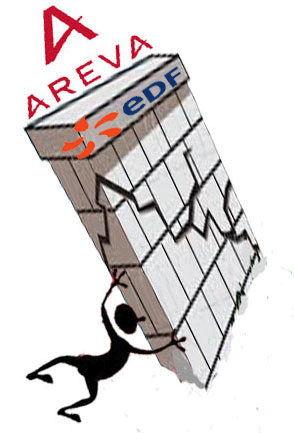
Its expensive nuclear fleet is one reason for its heavy net debt of €42bn. Multi-billion euro investment is needed in coming years to decommission, maintain and build new plants. S&P Global says nuclear projects “represent the highest risk to the group’s credit quality”.
It expects net debt to rise to €50bn-€52bn by the end of 2023. EDF argues it is disadvantaged by rules in France allowing competitors to buy a quarter of the electricity generated by its nuclear fleet at a fixed price of €42 per MwH, to make up for its monopoly in themarket. The price is too low and inflexible, EDF argues.
Meanwhile, EDF’s spending grows. The company is building several large assets without yet getting paid, including the £22bn-23bn nuclear power plant Hinkley Point C Somerset. For its next planned nuclear power station in the UK, Sizewell C in Suffolk, a different funding mechanism is being discussed with the
Government that would allow EDF to recoup costs from household bills during construction, rather than having to wait until the plant is generating.Ministers are believed to be preparing to introduce legislation this
autumn.
https://www.telegraph.co.uk/business/2021/07/11/macrons-battle-rewire-edf/
Green party makes gains in East Suffolk Council by-election – area that includes planned Sizewell nuclear station
The Green Party has taken one of two seats up for grabs in the Aldeburgh and Leiston ward in Thursday’s East Suffolk Council by-election – and came within two votes of winning the other.
Tom Daly is the first Green councillor elected in the area which includes much of the site of the proposed new Sizewell C power station. He will be joined on the council by Conservative Russ Rainger – who was a county councillor for the area before standing down in May.
The second Green candidate, Matt Oakley, came only two votes behind Mr Rainger. Suffolk Coastal Green Party chairman Julian Cusak said on Facebook: “Great result for the Green Party last night.
Aldeburgh and Leiston now has its first Green councillor on East Suffolk Council.
East Anglian Daily Times 9th July 2021
France’s government helps settle the debts of bankrupt nuclear company AREVA (which is now resuscitated as ORANO)

French state helps Areva settle Finnish EPR liabilities. To settle a new additional cost of 600 million euros, the State will buy back from the company, for 994.1 million euros, part of the shares it holds in the capital of Orano, the group responsible for managing the fuel cycle.
Le Monde 8th July 2021
UK residents face higher electricity bills, paying in advance, for the construction of new nuclear reactors
Consumers face higher energy bills to pay for new nuclear power. EDF wants to recoup some of the £20bn cost of the new Sizewell C plant in Suffolk before it starts producing electricity. Households face higher energy bills to help pay for the planned £20bn Sizewell C plant in Suffolk as the Government seeks to replace the UK’s ageing nuclear power stations.
Ministers are preparing to introduce legislation so that nuclear developers can recoup some of their costs through energy bills while a new plant is being built, rather than having to wait until it has been developed, the Financial Times reported. Supporters stress the so-called regulated asset base model can help cut the huge costs of nuclear power because it reduces risk for developers, although critics argue it unfairly heaps risk onto consumers. EDF has been in negotiations with the Government since December over a funding deal for its proposed Sizewell C plant amid public debate about the role nuclear power should play in the energy ecosystem.
It was estimated in 2019 that energy bills could rise by about £6 a year if the regulated asset base model is used for Sizewell. The financing model is used for other infrastructure projects such as the Thames Tideway Tunnel
but not yet for power generation, meaning new legislation is needed. The nuclear industry has been increasingly vocal in recent months about the importance of replacing the UK’s nuclear plants, most of which are due to close by the end of the decade.
Telegraph 7th July 2021
Rapid growth of renewable energy: it’s the major energy source in Europe

Renewable energy capacity around the world grew by a record amount during 2020, even as China continued to build new fossil-fuel burning coal plants. Capacity of wind and solar power grew by 238GW globally – about 50pc larger
than any previous expansion, according to the latest annual review of world energy by oil and gas giant BP.
The jump in renewable output amounts to about seven times the total installed capacity in the UK, and came in a
year marked by a slump in energy use as the pandemic triggered a slowdown in global travel. The share of renewable power, including wind and solar, in the global power mix also rose from 10.3pc to 11.7pc. In Europe, that share reached 23.8pc, making it the first region where renewables are the main source of fuel, BP said.
Telegraph 8th July 2021
https://www.telegraph.co.uk/business/2021/07/08/wind-solar-power-surges-record-year/
Investors won’t back the nuclear ”white elephant”, neither should the UK taxpayers

The City won’t back new nuclear power stations – so why should we? The nuclear industry has a wretched track record when it comes to building new reactors. Giant cost overruns are practically a given; so too extraordinary delays.
Take EDF, the French state-backed outfit. Its nuke in Flamanville, Normandy was originally meant to come on line in 2009. Instead it won’t be ready until next year, 14 years later than originally planned and £10bn over budget.
Then there’s Hinkley Point C, Britain’s first new nuclear plant in three decades. Initially pencilled in for completion in 2017, it is now not expected until 2026 with a £23bn bill instead of £16bn.
No wonder, then, that the City has baulked at helping to finance Sizewell C, a project so radioactive that Sir Iain Duncan Smith has dubbed it “the next Huawei” because of the involvement of Beijing-backed CGN. The politics of
that are enough to put off most investors, but there are plenty of other risks that traditional fund managers will struggle to square with the environmental, social and governance (ESG) guidelines they are increasingly governed by.
But is this really the way to go about it? It is eight years since the influential Energy and Climate Change Committee called for the Government to come up with a plan B because of repeated problems with building new nuclear power. Yet we seem no closer to having one.
T elegraph 7th July 2021
https://www.telegraph.co.uk/business/2021/07/07/city-wont-back-new-nuclear-power-stations-should/
If They Chose, Biden and Putin Could Make the World Radically Safer
If They Chose, Biden and Putin Could Make the World Radically Safer, By David Swanson, World BEYOND War, June 11, 2021
The danger of nuclear apocalypse is at an all-time high. Understanding of the damage that would result from a nuclear war is of a greater horror than ever previously understood. The historical record of threats of nuclear weapons use, and of near-misses through misunderstandings, has mushroomed.
The influence of the Israeli model of aquiring nuclear weapons but pretending not to have done so is spreading. The Western militarism that other nations see as justification for their own nuclear armament continues to expand.
Demonization of Russia in U.S. politics and media has reached a new level. Our luck will not hold out forever. Much of the world has banned the possession of nuclear weapons. Presidents Biden and Putin could very easily make the world dramatically safer and redirect massive resources into benefitting humanity and the earth, if they were to choose to abolish nuclear weapons.
The American Committee for U.S.-Russia Accord has made these three excellent proposals:…….. https://worldbeyondwar.org/if-they-chose-biden-and-putin-could-make-the-world-radically-safer/
Dialogue between Russia and USA must include subject of offensive weapons in outer space – says Russian Foreign Minister
US plans to deploy arms in space should be taken into account in bilateral dialogue-LavrovAmericans are working on a program for the deployment of offensive weapons in outer space in the context of the global missile defense system, Russian Foreign Minister said https://tass.com/politics/1311759
VLADIVOSTOK, July 8. /TASS/. The Russian-US dialogue on strategic stability should reckon with the US program for the deployment of offensive weapons in outer space, Russian Foreign Minister Sergey Lavrov said on Thursday.
“Naturally, when we speak about the necessity to discuss strategic stability in all of its dimensions, we mean all the factors influencing this strategic stability. They include nuclear weapons, non-nuclear strategic weapons, offensive and defensive strategic systems, and, of course, we cannot ignore the fact that the Americans are working on a program for the deployment of offensive weapons in outer space in the context of the global missile defense system,” he said in a lecture he delivered at the Far Eastern Federal University..
The much-awaited Russian-American summit took place in the Swiss capital city of Geneva on June 16. Presidents Vladimir Putin of Russia and Joe Biden of the United States discussed the current state of and prospects for further development of bilateral relations, issues of strategic stability and international matters. The leaders said in a joint statement that the sides planned to launch a comprehensive bilateral dialogue on strategic stability.
“EDF’s Chinese dream seems well and truly over”- a minor nuclear incident becomes a major industrial disaster for the French nuclear firm.
Le Monde 6th July 2021 “EDF’s Chinese dream seems well and truly over”. The minor incident at a Chinese nuclear power plant could have repercussions … on French industrial cooperation with China, explains Frédéric Lemaître, correspondent for “Le Monde” in Beijing, in his column.
Since June 14, Fabrice Fourcade, the head of EDF in China, and the economic service of the French Embassy in Beijing have been absent subscribers. Within hours, an apparently minor technical incident at a Chinese nuclear power plant turned into a perfect crisis for the French electrician.
The cluster bomb came from the United States. Monday June 14, while the American President, Joe Biden, is in Europe, the American channel CNN announces that the French Framatome, a few days earlier, informed the White House of an “imminent radiological threat” to the nuclear power station of Taishan, in the far south of China.
Why Framatome? Because this plant, in which EDF is a 30% shareholder, was built on the model of the French EPR and because Framatome is one of its main architects. “The largest commercial contract signed by the French nuclear industry and, more generally, in the history of civil nuclear power, this project strengthens Framatome’s presence in China, one of the most promising markets in the world,” explains the group on its site.
Why the United States? The answer is complicated. According to Le Figaro, the French engineer in charge of monitoring the file – in fact, a leak of fuel rods supplied by Framatome – warned a colleague across the Atlantic because it is the American subsidiary which manages the database of all incidents in the group.
Problem: Taishan’s majority shareholder, Chinese CGN, is on the US government’s blacklist. In order to work on the
case and possibly come to Taishan’s aid, an American must therefore obtain the approval of the White House. EDF communicators may try to put out the fire by explaining, from Paris, that the incident is minor, while the industrial disaster is major.
The episode proves that EDF, a 30% shareholder in Taishan, has no say in the matter, is not informed of technical problems and cannot get a board meeting. In Xi Jinping’s China, where any situation is the result of a balance of power, a minority has – by definition – no rights.
As wind power becomes half the price of nuclear, nuclear power may not be an election winner.

this is not a time to invest in nuclear technology, but offshore wind looks increasingly attractive.
The problem seems to be that getting the Hinkley Point C reactors off the ground brought out into the open how expensive and delay-prone building a new nuclear plant has become.
Nuclear Resurgence Fades In The UK; Huge Expectations For Offshore Wind, Seeking Alpha 4th July 2021
Approximately, 16% of UK power comes from nuclear reactors, which are almost all due to close soon. The UK Government has gone quiet about nuclear renewal.
In late June, the UK All-Party Parliamentary Group (APPG) on Nuclear Energy has called for urgent action to revitalise the industry, a call which seems too late to be viable.
New UK report suggests massive expansion of offshore wind to 108 GW; this will drive new power needs in the UK. Investors might consider the risks of investing in nuclear technology now and instead consider the rise of companies involved with offshore wind. Four years ago, I wrote about the struggling global nuclear industry and specifically nuclear power in the UK.
I updated the UK situation earlier this year. Very recent developments suggest that a further update is timely because what happens in the UK will impact the global nuclear industry.
Here I suggest that this is not a time to invest in nuclear technology, but that offshore wind looks increasingly
attractive. It takes a long time to get nuclear permitting sorted out and construction commissioned. The clock is ticking for the renewal of the UK nuclear fleet which currently provides ~16% of UK power requirements, but all but one of the existing fleet of 15 reactors plans to close by 2030.
The problem seems to be that getting the Hinkley Point C reactors off the ground brought out into the open how expensive and delay-prone building a new nuclear plant has become.
Probably focusing the Government’s mind is the fact that financing Hinkley Point C has left the public with a “strike price” of 92 pounds/MWh and 35 year inflation adjusted bill, which is already more than double the cost of a major wind farm (e.g. Dogger Bank wind farm has a strike price of 40 pounds/MWh, IRR of 5.6% and payback time 17 years).
No doubt the recently updated 100+ year program to decontaminate the UK’s 17 old nuclear facilities is another confronting fact that may not be an election winner.
Both UK and European Commission want nuclear energy excluded from clean energy investments -”otherwise clean energy finances would not be credible”.

Nuclear energy has been excluded from the UK government’s Green Financing Framework, while several EU Member States have written to the European Commission to oppose nuclear’s inclusion in the bloc’s green taxonomy.
Nuclear energy faces hurdles to be included in clean energy investments, Word Nuclear News, 02 July 2021,
The UK’s Green Financing Framework describes how the government plans to finance expenditures through the issuance of green gilts and the retail Green Savings Bonds that it says will be critical in tackling climate change and other environmental challenges. The framework, which was produced and published yesterday by the Treasury, sets out the basis for identification, selection, verification and reporting of the green projects that are eligible for such financing.
Under ‘exclusions’, the document says: “Recognising that many sustainable investors have exclusionary criteria in place around nuclear energy, the UK government will not finance any nuclear energy-related expenditures under the Framework.”…………
The letter – signed by the environment or energy ministers of Austria, Denmark, Germany, Luxembourg and Spain – points to “shortcomings” in the JRC report, which was published in April.
The ministers said the JRC’s conclusion was “a misconception” and based on “two grave methodological shortcomings”.
The JRC “neglects to address the residual nuclear risk, assessing only the normal operation of nuclear power plants” and “disregards the life-cycle approach”, according to the ministers.
“We recognise the sovereign right of Member States to decide for or against nuclear power as part of their national energy systems. However, we are concerned that including nuclear power in the Taxonomy would permanently damage its integrity, credibility and therefore its usefulness,” they wrote………….. https://world-nuclear-news.org/Articles/UK-excludes-nuclear-from-green-taxonomy
British households will pay for nuclear construction long before it supplies any electricity, under the govt’s new plan
the model is deeply unpopular with nuclear sceptics, who have said it would expose consumers to construction risks, notably any cost overruns.
EDF and its junior partner in Hinkley Point C, the Chinese state-owned company CGN, are financing the plant in return for a generous electricity price of £92.50 per megawatt hour guaranteed by the government.
The price… was agreed in 2012 and rises in line with inflation.
UK households face energy bills surcharge to fund nuclear plants
Ministers plan legislation for new financing model to underpin building of £20bn Sizewell C reactor, Ft.com
Nathalie Thomas in Edinburgh and Jim Pickard in London, 7 jul 21,
British households face paying a surcharge on their energy bills to pay for new nuclear power stations in the UK as the government draws up legislation to underpin the new financing plan. Ministers aim to unveil legislation in the autumn that would enable Sizewell C, a £20bn nuclear power plant proposed by France’s EDF for England’s east coast, to go ahead through a financing model called the regulated asset base, said several people briefed on the government’s thinking. This model would mean that energy bill payers start contributing towards the cost of the plant at Sizewell in Suffolk long before it generates any electricity.
Boris Johnson has said he wants the government to reach a final investment decision on “at least one” new nuclear power station before the next general election ……….
Under the model, owners of a power station could add chunks of the value of a partly built plant to what would be its regulated asset base in stages during the risky construction phase. They could then charge an agreed regulatory return on this value to UK households through their energy bills, in a move designed to cover financing costs. State-backed EDF has said the steady returns guaranteed by the regulated asset base model would allow it to attract low-risk investors such as pension funds and would lead to overall savings for consumers.
But the model is deeply unpopular with nuclear sceptics, who have said it would expose consumers to construction risks, notably any cost overruns.
EDF is planning to use a design called the European Pressurised Reactor at Sizewell C, but budgets have spiralled at other projects deploying similar technology, including the Hinkley Point C plant under construction in Somerset. The Treasury is supportive of the regulated asset base model, said several people briefed on the department’s stance…..
EDF and its junior partner in Hinkley Point C, the Chinese state-owned company CGN, are financing the plant in return for a generous electricity price of £92.50 per megawatt hour guaranteed by the government.
The price, which was controversial with environmental groups, was agreed in 2012 and rises in line with inflation. UK ministers entered formal negotiations with EDF over the financing of Sizewell C in December. The government said at the time that consideration would be given “to the potential role of government finance in construction, provided there is clear value for money for consumers and taxpayers”.
Stephen Thomas, emeritus professor of energy policy at the University of Greenwich, said he imagined that the government would have to take a “strategic stake” in Sizewell C “as a signal to investors that this won’t be allowed to collapse, and ditto EDF”. It is not yet clear what role CGN will play in Sizewell C. CGN is financing 20 per cent of the development costs of the Suffolk plant alongside EDF but some Conservative MPs are opposed to Chinese involvement in critical UK infrastructure. CGN declined to comment. https://www.ft.com/content/d115c0bd-da17-4bbf-a070-b62b525c7fa1
France refuses to hand over maps of nuclear tests in Algeria
France refuses to hand over maps of nuclear tests in Algeria, https://en.mehrnews.com/news/175726/France-refuses-to-hand-over-maps-of-nuclear-tests-in-Algeria 7 Jul 21, France conducted several nuclear tests in the Algerian desert between 1960 and 1966, four of which were conducted on the ground and 13 underground.
Tayeb Zitouni, minister of Mujahideen and Right Holders of Algeria made the remarks on the occasion of the 59th anniversary of the country’s independence from France (July 5, 1962).
According to Al-Quds Al-Arabi newspaper, Zitouni said that the French side refuses to provide a map showing the exact location of the tests and the disposal of nuclear and chemical waste.
He said France had so far taken no action to clear the area of the contaminated areas or pay compensation to the victims of the nuclear tests.
The case of the atomic explosions is one of the most important unresolved cases between Algeria and France, which has reached a stalemate in negotiations, and on any occasion, the Algerian authorities ask Paris to accept responsibility for this sensitive case.
Nuclear fusion – a very unlikely development for Bradwell, UK
Bradwell is no soft touch for Nuclear Fusion’s fantasy. Bradwell looks
an unlikely bet for fusion whoever is behind the scheme. And it will not
happen anytime soon – the 2040s at the very earliest – far too late to
save the planet. Even if the experiment goes ahead it is far more likely to
go to a more welcoming site.
Maylands Mayl July Edition 7th July 2021
1 This Month
19 May – Webinar No To Nuclear: Why Nuclear Power Destroys Lives, Derails Climate Progress and Provokes War
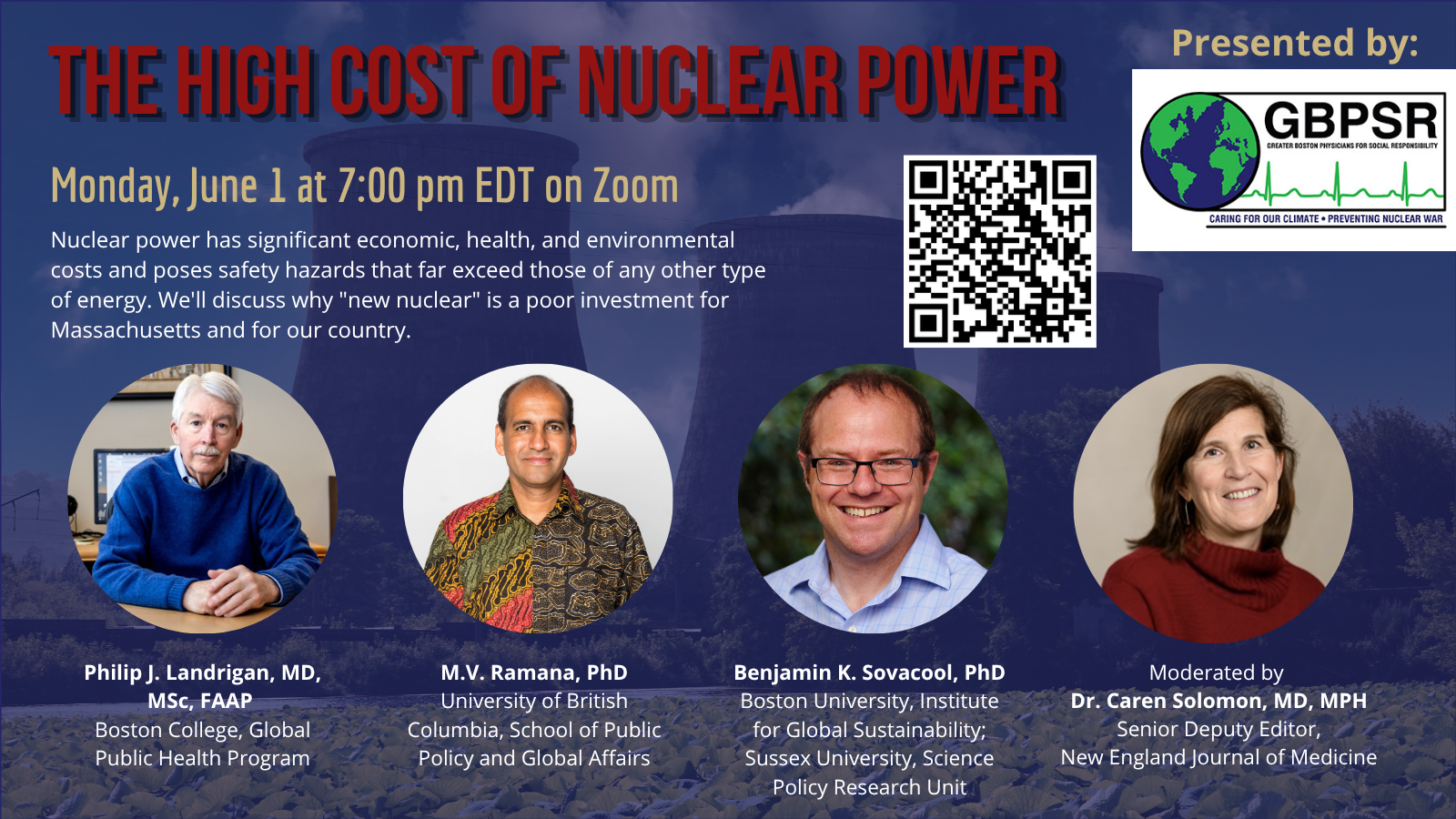
1 June Webinar – The High Cost of Nuclear Power – Register


of the week– Nuclear Reactor Information Task Force
To see nuclear-related stories in greater depth and intensity – go to https://nuclearinformation.wordpress.com
-
Archives
- May 2026 (205)
- April 2026 (356)
- March 2026 (251)
- February 2026 (268)
- January 2026 (308)
- December 2025 (358)
- November 2025 (359)
- October 2025 (376)
- September 2025 (257)
- August 2025 (319)
- July 2025 (230)
- June 2025 (348)
-
Categories
- 1
- 1 NUCLEAR ISSUES
- business and costs
- climate change
- culture and arts
- ENERGY
- environment
- health
- history
- indigenous issues
- Legal
- marketing of nuclear
- media
- opposition to nuclear
- PERSONAL STORIES
- politics
- politics international
- Religion and ethics
- safety
- secrets,lies and civil liberties
- spinbuster
- technology
- Uranium
- wastes
- weapons and war
- Women
- 2 WORLD
- ACTION
- AFRICA
- Atrocities
- AUSTRALIA
- Christina's notes
- Christina's themes
- culture and arts
- Events
- Fuk 2022
- Fuk 2023
- Fukushima 2017
- Fukushima 2018
- fukushima 2019
- Fukushima 2020
- Fukushima 2021
- general
- global warming
- Humour (God we need it)
- Nuclear
- RARE EARTHS
- Reference
- resources – print
- Resources -audiovicual
- Weekly Newsletter
- World
- World Nuclear
- YouTube
-
RSS
Entries RSS
Comments RSS
 nuclear-news