Concern over radioactive particles on Dounreay shoreline – poor monitoring of the nuclear clean-up
Letter Tor Justad: I refer to recent press reports referring to new high
numbers of “harmful” radioactive particles found on the Dounreay
shoreline and Sandside beach which suggested they were related to leaks
between 1958 and 1984, with 73% of the particles described as
“significant”, and 15 particles found between February and March 2022.
Dounreay Site Restoration Ltd (DSRL), responsible for decommissioning the
site, said it was closely monitoring the situation and Sepa (Scottish
Environment Protection Agency) stated “we are content that the monitoring
and retrieval programme in place continues to provide appropriate
protection for the public”. DSRL stated “the foreshore is not used by
the general public”
– this is not a reassurance as nuclear radiation
has no boundaries. Highlands Against Nuclear Transport (Hant) is
represented on the Dounreay Stakeholder Group (DSG) and has regularly asked
for information about the monitoring being carried out and the results –
and has been told that information will be made available when the
monitoring report is provided by an independent body.
Neither the DSG meeting on March 22 nor the Site Restoration Sub Group meeting on October
19 were informed of these findings of concern. Given that this information
has only been made available through press reports to date, Hant would want
the following to be implemented:
i) Regular up-to-date reports provided to
the DSG and by press releases to the local press on the monitoring results,
so that the DSG can provide this information to organisations represented
by members and the general public will be informed by the local press.
Assuming that the results of the monitoring can demonstrate that there is
no danger to the public this will provide reassurance to everyone living in
the area around Dounreay;
ii) That the Dounreay “clean up” reports
provided by DSRL to the Particles Retrieval Advisory Group Dounreay (Prag)
be provided to the DSG and local press – an online search resulted in the
latest information from the Prag online being from 2016 and this is totally
unacceptable;
iii) That a presentation be made to the DSG by the outside
body carrying out the monitoring to describe its methodology and how
regularly it is carried out – to provide local reassurance. Hant looks
forward to the immediate implementation of these proposals and will be
monitoring this issue closely over the next months.
Press & Journal 11th Nov 2022
Sizewell C – proposed coastal area is not suitable for nuclear reactors
Letter: Your leader on Sizewell C ignores a couple of factors that are key
to our local objections. First, the coastline on which Sizewell A and B are
built and Sizewell C is proposed is disintegrating at an increasingly
alarming rate – just two weeks’ ago a building at nearby Thorpeness had
to be demolished due to collapse of the cliffs.
Second, there is insufficient water in Suffolk to build and operate Sizewell C, which was
one of the main reasons the government’s own planning inspectorate
advised against it recently. Water is planned to be found through the
construction of desalination plants – these require huge amounts of
energy, but more importantly the waste salt and other minerals from the
extraction process will be put back into the sea, poisoning the waters
around for miles.
There are other reasons why this is a disastrous
location: it is a site of special scientific interest and an area of
outstanding natural beauty and the prototype for this type of reactor has
yet to be proved at Flamanville – still not operational, years over
schedule and way over budget. Nuclear has moved on since the design of
these reactors. The government should think again.
Observer 13th Nov 2022
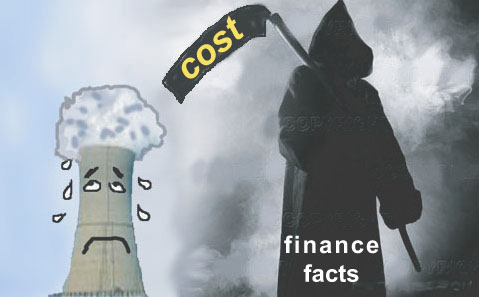
EU Needs $460 Billion Investment Just To Maintain Nuclear Power Capacity, let alone build new
Oil Price.com By Tsvetana Paraskova – Nov 11, 2022,
The European Union will need up to $462 billion (450 billion euros) in investment just to keep the current level of its nuclear power generation capacity, the EU Commissioner for Energy, Kadri Simson, said at a nuclear energy forum this week……..
This year, a year when surging energy prices have highlighted the importance of energy security, the EU is particularly focused on its nuclear power availability.
According to the EU modeling, nuclear power generation will account for around 15%-16% of the EU’s power output in 2030 and 2050, Simson said.
The EU needs a stable generation capacity, at the level of just over 100 GW, in the coming decades. Yet, a lot of investment will be needed to keep that generation capacity in the future.
“Our analysis shows that without immediate investment, around 90% of existing reactors would be shut down around the time when we need them most – in 2030,” Simson noted.
The EU will need between $360 billion (350 billion euros) and $462 billion (450 billion euros) of investment just to maintain the current generation capacity, and another up to $51.3 billion (50 billion euros) in the long-term operation of existing reactors, according to the EU commissioner……… EU Needs $460 Billion Investment To Maintain Nuclear Power Capacity | OilPrice.com
—
‘Tactical’ Nuclear Weapons Could Unleash Untold Damage, Experts Warn
By Ed Holt , BRATISLAVA, Nov 10 2022 (IPS) – Since the start of Russia’s invasion of Ukraine, the conflict’s potential to escalate to the use of nuclear weapons has been highlighted by political analysts and military experts alike.
Now growingly bellicose rhetoric from Russian president Vladimir Putin, particularly following the illegal annexations of four parts of Ukraine at the end of September, has raised fears he may be seriously considering using them. He has been quoted in September this year as saying that Russia would use “all available means to protect Russia and our people”, but last month said there was no need to consider the use of nuclear weapons. This week Russia ordered troops to withdraw from the Dnieper River’s west bank near the southern city of Kherson.
But while much of the media debate around this prospect has focused on the expected use of a so-called low-yield “tactical” nuclear weapon and what this might mean strategically for either side in the war, anti-nuclear campaigners say any discussion should be reframed to reflect the devastating reality of what the use of even the smallest weapons in modern nuclear arsenals would mean.
They say that even if only one such bomb was dropped, be it in Ukraine or in any other conflict, the consequences would cause a country – if not a continent-wide catastrophe, with horrific immediate and long-term health effects and a subsequent humanitarian disaster on a scale almost certainly not seen before.
Moreover, they say, a single strike would almost certainly be met with a similar response, quickly igniting a full-scale nuclear war that would threaten much of human life on earth.
“There is no conceivable reality in which a nuclear weapon is used, and life goes on as normal. It is very, very likely that there would be escalation and additional nuclear weapons used, but even the use of one nuclear weapon would break a decades-long taboo on the use of the most catastrophic, horrific weapon ever created,” Alicia Sanders-Zakre, Research, and Policy Coordinator, at the International Campaign to Abolish Nuclear Weapons (ICAN) told IPS.
“We have already seen the global impacts of the war in Ukraine just using conventional weapons, including worldwide rising inflation, and energy and food shortages. But the use of a nuclear weapon would really have consequences beyond what any of us can imagine,” she added……………………………………………
Campaigners against nuclear weapons worry the global public is not being made properly aware of the scale of the loss of life and ecological damage which would be wrought by the use of such a weapon.
“There has been a lot of discussion about using a tactical nuclear bomb in Ukraine. But the use of the word ‘tactical’ is no more than a rebranding exercise to make a nuclear weapon sound like a conventional one,” Dr Ruth Mitchell, Board Chair of the International Physicians for the Prevention of Nuclear War (IPPNW), told IPS.
“A tactical nuclear weapon would be about the same size as the one dropped on Hiroshima and Nagasaki, and we don’t need to imagine what the effects would be; we have already seen them,” she added.
The death toll itself would be massive, but authorities would also have to deal with radioactive fallout possibly contaminating large areas, while the event itself would trigger massive population dislocation.
And a report by ICAN also shows that even the most advanced healthcare systems would be unable to provide any effective response in such a situation, highlighting the likely destruction of local healthcare facilities and staff and pointing out that the 1945 atomic bombing of Hiroshima destroyed 80% of its hospitals and killed almost all its doctors and nurses………………………….more https://www.ipsnews.net/2022/11/tactical-nuclear-weapons-treat-could-unleash-untold-damage-experts-warn/?utm_source=rss&utm_medium=rss&utm_campaign=tactical-nuclear-weapons-treat-could-unleash-untold-damage-experts-warn
Germany refuses to build nuclear Uniper plant in Sweden
By Charles Szumski | EURACTIV.com, Nov 11, 2022 Nikolaus Kurmayer contributed to reporting
Energy giant Uniper will not build any power plants in Sweden, the company that will be wholly owned by the German state from next year announced Thursday, flouting plans of its Swedish subsidiary Barsebäck Kraft to build a Clean Energy Park.
No new nuclear power plant will be built in Sweden by the German energy company Uniper, Sveriges Radios Ekot reported on Thursday.
“Neither in Sweden nor elsewhere does Uniper have any plans to build a new nuclear power plant, that’s a fact”, spokesman George Oppermann told the radio.
Uniper is part owner of all three active nuclear power plants in Sweden, Oskarshamn, Ringhals and Forsmark. It is also the owner of the Barsebäck powerplant, which is being dismantled…….
From the start of next year, Uniper will be taken over by the German state, who decided to close all remaining nuclear power plants in the country from April next year……….. https://www.euractiv.com/section/politics/news/germany-refuses-to-build-nuclear-uniper-plant-in-sweden/
The three parties making up Sweden’s new ruling right-wing coalition, as well as the supporting far-right Democrats of Sweden, signed a pro-nuclear coalition accord, promising 400 billion SEK (€36 billion) for new nuclear power, with Vattenfall to immediately start planning new nuclear power at Ringhals and other sites.
On Nuclear Treaty, at Least, Biden Aims for Fresh START With Russia
Washington and Moscow look set to keep New START alive with working-level talks, despite historic tensions.
Foreign Policy, By Robbie Gramer, a diplomacy and national security reporter at Foreign Policy. 11 Nov 22
The Biden administration has announced that it will restart nuclear arms control talks with Russia, even as tensions spike over the latter’s war in Ukraine, coupled with the threat of Moscow using nuclear weapons.
The talks are expected to take place in Cairo in the near future, current and former U.S. officials said, and represent the first move by both sides to revive their mutual arms control agenda since U.S. President Joe Biden first halted dialogue after Russia launched its invasion of Ukraine in February…………………………………
The existing arms reduction treaty, New START, caps the number of intercontinental-range nuclear weapons in both Washington’s and Moscow’s arsenals and allows each side to conduct on-site weapons facility inspections in the other country. This allows experts from each country to visit the other country’s weapons sites to view the number of nuclear weapons, launch vehicles, and other details to confirm that both sides are adhering to the treaty. The treaty allows up to 18 on-site inspections per year.
It is the last remaining arms control treaty in place between Russia and the United States, which respectively have the first- and second-largest nuclear arsenals in the world. Under the terms of the treaty, which was first signed in 2010, both countries agreed to cap the number of nuclear warheads they could deploy on delivery systems to 1,550…………………..
Reviving the New START talks has been a quiet goal of the White House and State Department since at least this summer, according to current and former U.S. officials familiar with the matter, and scheduling a new meeting with the Russians on the issue has been in the works for months. Rose Gottemoeller, a former NATO deputy secretary-general and top U.S. arms control envoy who helped negotiate New START in 2009-10, welcomed the move and said the latest nuclear discussions shouldn’t be seen as any sort of concession to Russia.
“We don’t always get to choose with whom we negotiate, but if we’ve got an issue that’s in our national security interest, we have to work it,” said Gottemoeller, now a scholar at Stanford University. “We’ve achieved agreements with the Russians during some very dark hours in our bilateral relationship in the past.” …………….. https://foreignpolicy.com/2022/11/10/nuclear-talks-russia-us-biden-putin-new-start-treaty/
Stress corrosion continues to trouble the French nuclear fleet
This week EDF updated its expectations for its nuclear fleet for this
winter, downgrading its output forecasts to 275-285 TWh, compared to the
previous estimate of 280-300 TWh.
The main driver of the downgraded
forecasts is a refusal by the French nuclear regulator, Autorité de
Sȗreté Nucléaire (“ASN”) to allow EDF to re-start number of reactors
with stress corrosion problems, in line with the planned schedule: Cattenom
1 (1.3 GW) will be offline for a further three and a half months until 26
February 2023; Chooz 1 (1.5 GW) will remain closed for about three months
until 29 January 2023; Penly 2 (1.33 GW) will be delayed by more than two
months until 29 January 2023; Cattenom 3 (1.3 GW) will be closed for a
further two and a half months until 26 February 2023. A couple of other
reactors are likely to have minor delays to their re-start schedules.
Watt Logic 10th Nov 2022
Closed Dounreay nuclear site records its highest number of radioactive particles in nearly two decades
. Fifteen radioactive particles have been discovered at a
nuclear site in Scotland that is currently being decommissioned, marking
the highest reported number in nearly two decades.
The particles contained niobium 94, which has a half life of 20,300 years, Americium-241, which has
a half life of 432.2 years, caesium 137, which has a half life of 30 years,
and cobalt 60, which has a half life of around 5.3 years. Eleven of the
finds were categorised as “significant”, which is the highest hazard
level used.
ENDS 9th Nov 2022
Finland’s Olkiluoto 3 repairs could take several months – expert

CARL-EMIL WICKSTRÖM, Helsinki, 10 Nov 2022, (Montel) Fixing the cracked feedwater pumps at Finnish nuclear reactor Olkiluoto 3 (1.6 GW) could take several months if the parts need to be manufactured, nuclear expert Juhani Hyvarinen told Montel on Thursday………………
The manufacturing of new impellers would take at least a few months. But changing them does not take long, a few days or maximum a few weeks, including testing.”
The Olkiluoto 3 reactor has been in test production since March but was stopped last month after cracks were found in feedwater pump impellers.
Operator TVO is investigating the issue but has not yet provided estimates of how long the repairs will take or details on part replacements……………………………………….
Risk of further issues?
The reactor’s launch is 13 years beyond schedule already and so the turbine had been idle since being installed over a decade ago.
The risk of further complications remained until the project was complete, said Hyvarinen.
“So far, the common denominator with the issues has been that the turbine facility is a prototype, it is not exactly like the ones used in Germany for decades,” he said…………..
However, the issue may be how the reactor was run, he said, pointing to the frequent ramp ups and down during the commissioning phase.
“Ramping up and down”
“The pumps are not really designed for that and the manufacturer might not have considered there would be so much ramping up and down,” Hyvarinen said.
“The initial problems were on the reactor’s side before moving to the turbine, he noted. “There is a wave of issues from inside of the facility towards the outside”, indicating that if any new issues arose, they would likely be linked to electrical equipment such as generators, he added. https://www.montelnews.com/news/1365685/ol3-repairs-could-take-several-months–expert
‘Clear case for inquiry into treatment of men in Britain’s nuclear test programme’
Mirror 10th Nov 2022, https://www.mirror.co.uk/news/politics/clear-case-inquiry-treatment-men-28463111
These brave men were exposed to levels of radiation subsequently linked to higher-than-average rates of cancer and birth defects
There is now a clear case for a public inquiry into the scandalous treatment of the men who took part Britain’s Cold War nuclear test programme.
Throughout our long campaign to win them justice, the Ministry of Defence has sought to confuse the issue and obstruct any inquiries.
These brave men were exposed to levels of radiation subsequently linked to higher-than-average rates of cancer and birth defects.
They have received no recognition, no medals and no compensation.
The MoD allegedly knew full well the dangers and sought to cover them up.
Nuclear test vet heroes denied truth as government ‘committed crimes against own servicemen’
Some documents which would reveal the truth have been withdrawn from the public record. Medical records have reportedly been falsified, withheld or destroyed.
An inquiry must examine not just the test programme but also the culture of secrecy which has added to families’ distress.
The poppy to be worn by Rishi Sunak at the Cenotaph this weekend is meant to be tribute to those who served the nation. If he really wants to support military personnel past and present he will act now
US prolonging Ukraine conflict for profit: Russian envoy
Press TV, 09 November 2022 ,
The Russian ambassador to Washington says the United States has prolonged the war in Ukraine to profit from its sales of military equipment and liquefied natural gas (LNG) to European countries.
“The White House cannot escape responsibility for prolonging the conflict and killing innocent people. However, the United States continues with its maniacal persistence to adhere to the tactics of war of attrition by exhausting everyone — Ukrainians, Russians, Europeans as well as ordinary Americans,” Ambassador Anatoly Antonov said in an interview with Sputnik that was published on Wednesday.
“There are several reasons for this, one of them being the presence of economic interest. The desire to ‘skim the cream’ through the mass sale of military equipment and LNG supplies: only business, nothing personal,” Antonov added……………
The ambassador cited “the macroeconomic course” of Western countries as the root cause of most of the current world problems, while insisting that the Kiev government was a puppet state controlled by a more powerful government or organization.
“The decision-making center on the fate of Ukraine is located somewhere, but not in Kiev. Everyone could see this in March, when one shout from Washington was enough for the [Ukrainian President Volodymyr] Zelensky regime to nullify all the agreements reached during intensive contacts between the two countries,” he said…….. https://www.presstv.ir/Detail/2022/11/09/692403/US-prolonging-Ukraine-conflict-for-profit-Russian-envoy
German Parliament advised not to extend nuclear power beyond springtime 2023
Yesterday Claudia Kemfert, Professor of Energy Economics and Energy Policy
at the German Institute for Economic Research delivered an expert statement
to the German Parliament on why it is neither necessary, nor economical,
nor advisable, to extend German nuclear power beyond next spring. The focus
has to be squarely on renewables.
Radiation Free Lakeland 10th Nov 2022
Welsh Affairs Committee to hear from proponents of nuclear power, on funding plans for Sizewell C project
On 16th Nov, the Welsh Affairs Committee will quiz experts on whether
funding models are adequate to meet the UK Government’s targets to
generate 24GW of nuclear power by 2050. MPs will hear from Aviva Investors,
Sizewell C and the Nuclear Industry Association on the financing of new
nuclear projects covering the Regulated Asset Base model of funding, green
taxonomy and private investment.
They will also be discussing the
importance of the UK Government’s commitment to the nuclear sector and
public funding. The evidence session comes amid reports that the UK
Government is hoping to finalise a deal shortly on the funding of the
Sizewell C nuclear power plant.
Welsh Affairs Select Committee 10th Nov 2022
TODAY. The Times got it right about 5 reasons for hope on climate action, but very wrong on one

I wonder why journalists do this? Presumably, this Times writer is not ignorant, not stupid. And yet, slipped in amongst some genuine factors about clean energy sources and energy efficiency, – we come to his uncritical admiration for nuclear fusion and small nuclear reactors.
The writer does mention the “prototype nuclear fusion” planned for 2040. A fat lot of good that would be – we need action now – not promises for the nebulous far-off future!
As always – I am stunned at the corporate journalists’ complacency – in trotting out the military-industrial-corporate-government line on matters nuclear.
The connection here is that small nuclear reactors have only one genuine use – to assist and promote the nuclear weapons industry
Six reasons to be cheerful about the climate’s future. Times 9th Nov 2022
Growth in emissions is slowing, clean energy is cheaper and electric cars are denting oil, Adam
Vaughan writes.
Between warnings from the Cop27 climate conference in Egypt
that the world is on a “highway to climate hell” and “the planet has
become a world of suffering”, it can be easy to think that no absolutely
no progress has been made on curbing global warming.
It is certainly true
that the world is falling wildly short of its 1.5C climate goal target. But
it is simultaneously true that great strides are being made in the world of
science, business and technology, as the following six examples show.
(1) Global carbon emissions growth has slowed; The emissions from humanity’s
cars, factories and power stations are still going up, when scientists say
they need to have fallen 45 per cent by the end of this decade if the world
is to rein in warming to 1.5C. The silver lining is there are signs that
emissions are hitting a plateau.
(2) Renewable energy is rapidly getting
cheaper. Most authorities, including the International Energy Agency (IEA)
and leading scientists, think that wind and solar power will be the two key
technologies for decarbonising the world’s electricity supplies. Between
2010 and 2019, the costs for solar energy fell by 85 per cent. Wind energy
fell costs fell by 55 per cent. Investment is pouring into renewable energy
at a record rate, with $226 billion invested in the first half of 2022
according to Bloomberg New Energy Finance, which tracks clean energy
spending.
Global energy demand growth will now “almost entirely be met by
renewables, the IEA said recently. In the UK, the cost of offshore wind and
solar has fallen by 80 to 90 per cent over the past decade. “Wind and
solar are now the cheapest way to generate electricity in most of the world
and, in the UK, we get as much electricity from renewables as we do from
gas,” said Evans. In July, five new offshore wind farms due online from
2026 won a government auction to deliver power to consumers at £37.35 per
megawatt hour, a fraction of the cost of gas-fired power plants now.
(3) High gas prices have made cutting emissions cheaper. The UK’s Climate
Change Committee, an independent body which advises the government on how
to meet its carbon targets, said in June that soaring gas prices meant that
meeting net zero would flip from a 0.5 per cent cost to GDP by 2035, to a
0.5 per cent saving by 2035.
(4) Technology can be seen as a breath of
fresh air. Energy efficiency improvements have delivered huge gains, with
better appliances and LED bulbs saving the average UK household £290 a year
between 2008 and 2017. Typical household energy bills today would have been
£40 a year lower if David Cameron hadn’t cut insulation programmes in 2013.
(5) Other countries are passing climate laws: President Biden came to Cop26
in Glasgow with a promise of halving his country’s emissions by 2030, but
no domestic plan to deliver the cuts. This time John Kerry, his special
climate envoy, can boast that America recently passed legislation that
commits the country to spending £318 billion on clean energy. The package,
which largely consists of incentives for key technologies such as wind and
solar power, electric cars and hydrogen, is expected to deliver a 40 per
cent emissions cut by 2030, not far off Biden’s target.
(6) Innovative new
technology is gaining traction: Previously far-off ideas are nearing
commercial reality, and the UK is pioneering many of them. The UK is
planning to build the world’s first prototype nuclear fusion power station
by 2040. A new generation of new nuclear power stations backed by
Rolls-Royce, much smaller and hopefully easier to build than conventional
ones, are working their way through the UK’s nuclear regulatory approval
process. Giant electrolysers are being built next to an offshore wind farm
in northeast England to split water and produce a clean supply of hydrogen.
The UK government is even taking seriously the prospect of space-based
solar power, where solar panels in Earth’s orbit beam a steady stream of
electricity back to the planet’s surface.
https://www.thetimes.co.uk/article/six-reasons-to-be-cheerful-about-the-climate-s-future-9s0wgddkq
Cracks found in feedwater pumps at Finland’s OL3 nuclear plant

by Kerry Hebden, 9 Nov 22
CRACKS of a few centimetres have been identified in all four of the feedwater pumps of the Olkiluoto 3 EPR nuclear power plant in Finland, less than a year after the facility attained first criticality.
Owned and operated by TVO, the Olkiluoto plant consists of two boiling water reactors, each producing 890 MW of electricity, and a third EPR (Evolutionary Power Reactor), dubbed Unit 3 or OL3. The EPR is a “Generation III+” nuclear reactor, “that benefits from significant technological advances in nuclear and occupational safety”, said Framatome (formerly known as Avera NP), the plant’s main contractor.
Unit 3 started construction in 2005, however it only began generating electricity in March 2022 after construction was repeatedly delayed. It was expected to begin commercial operation in September, but after the unit’s boron pumps started unexpectedly during a routine shutdown in April, and following the discovery of material in the turbine’s steam reheater that had detached from the steam guide plates in May, the firm pushed back the start date to December.
Now though, the further damage that has been observed in the inner parts of the feedwater pumps of the OL3 turbine plant, could delay progress further.
The large feedwater pumps are used to pump water from the feedwater tank into the steam generators. TVO said the cracks detected in the impellers of the pumps have no impact on nuclear safety, but so far the cause of the damage, which is currently being investigated in several different laboratories, has yet to be determined. …………………………….
One of Finland’s two nuclear power plants, the other being the VVER Loviisa plant, the Olkiluoto facility has been plagued by issues for years. Built by Areva NP for a fixed price of €3bn (US$3bn), the firm estimated in 2012 that the full cost of building the OL3 reactor would amount to around €8.5bn due to the frequent setbacks encountered during its construction.
The delays led to a bitter dispute between Areva and TVO, with each seeking compensation from the other through the International Court of Arbitration – a scenario which resulted in Areva paying hundreds of millions of euros in compensation to TVO.
Meanwhile the facility’s other reactors have also experienced problems. In July, OL1 was also temporarily shut down due to damaged fuel elements, and in December 2020, the OL2 reactor automatically shut down when a valve failure caused hot water to reach filters in the reactor’s cleaning system. “The plant’s safety systems functioned as planned, and the disturbance did not pose a danger to people or the environment,” TVO said in a statement at the time.
TVO did have plans to build a fourth unit at the Olkiluoto facility, and in 2008 submitted an environmental impact assessment in preparation of applying for a construction license. However delays to OL3 has led the company to put its plans on hold. https://www.thechemicalengineer.com/news/cracks-found-in-feedwater-pumps-at-finland-s-ol3-nuclear-plant/
1 This Month

of the week– Nuclear Reactor Information Task Force

14 May – online event From Bombs to Data Centres: the Face of Nuclear Colonialism
To see nuclear-related stories in greater depth and intensity – go to https://nuclearinformation.wordpress.com
-
Archives
- May 2026 (126)
- April 2026 (356)
- March 2026 (251)
- February 2026 (268)
- January 2026 (308)
- December 2025 (358)
- November 2025 (359)
- October 2025 (376)
- September 2025 (257)
- August 2025 (319)
- July 2025 (230)
- June 2025 (348)
-
Categories
- 1
- 1 NUCLEAR ISSUES
- business and costs
- climate change
- culture and arts
- ENERGY
- environment
- health
- history
- indigenous issues
- Legal
- marketing of nuclear
- media
- opposition to nuclear
- PERSONAL STORIES
- politics
- politics international
- Religion and ethics
- safety
- secrets,lies and civil liberties
- spinbuster
- technology
- Uranium
- wastes
- weapons and war
- Women
- 2 WORLD
- ACTION
- AFRICA
- Atrocities
- AUSTRALIA
- Christina's notes
- Christina's themes
- culture and arts
- Events
- Fuk 2022
- Fuk 2023
- Fukushima 2017
- Fukushima 2018
- fukushima 2019
- Fukushima 2020
- Fukushima 2021
- general
- global warming
- Humour (God we need it)
- Nuclear
- RARE EARTHS
- Reference
- resources – print
- Resources -audiovicual
- Weekly Newsletter
- World
- World Nuclear
- YouTube
-
RSS
Entries RSS
Comments RSS
 nuclear-news