Russia, U.S. Eye Nuclear Arms Reduction Talks in Coming Weeks – Kommersant
https://www.themoscowtimes.com/2022/11/08/russia-us-eye-nuclear-arms-reduction-talks-in-coming-weeks-kommersant-a79313 9 Nov 22, Russia and the United States are discussing resuming nuclear arms reduction negotiations in the coming weeks in the first face-to-face contact since Russian forces invaded Ukraine, the Kommersant business daily reported Tuesday, citing three unnamed sources.
The Strategic Arms Reduction Treaty (New START) talks could take place in an unnamed Middle Eastern country, instead of their traditional venue of Geneva, in late November or early December, Kommersant reported.
The report follows weeks of concern over a possible Russian nuclear escalation in Ukraine fueled by President Vladimir Putin’s thinly veiled threats. Moscow later tamped down its rhetoric following reported talks with U.S. officials.
The last remaining arms reduction pact between the Cold War foes, New START is one of the few areas where Moscow and Washington have said they were open to cooperation despite tensions over the invasion of Ukraine and Western sanctions.
According to Kommersant, Washington is expected to raise the resumption of on-site inspections under New START.
Moscow formally suspended physical inspections by the U.S. in August 2022 after President Joe Biden called on Russia and China to demonstrate their commitment to limiting nuclear weapons.
Russia’s Foreign Ministry indicated at the time that Western sanctions, visa restrictions and airspace closures over the war in Ukraine made it difficult for Moscow to carry out inspections on U.S. soil.
According to Kommersant, Russia and the U.S. have continued to hold remote discussions on New START in lieu of in-person talks.
At one of these remote talks last month, Kommersant reported that Moscow accused Washington of skirting the treaty’s terms by withholding weapons and sites that Russia suspects are still nuclear-capable despite their announced conversions and reclassifications.
Moscow and Washington last year extended New START, which caps the number of deployable nuclear warheads at 1,550, until Feb. 5, 2026.
Ever the optimists… Rolls-Royce chooses four sites for reactor that’s yet to be built
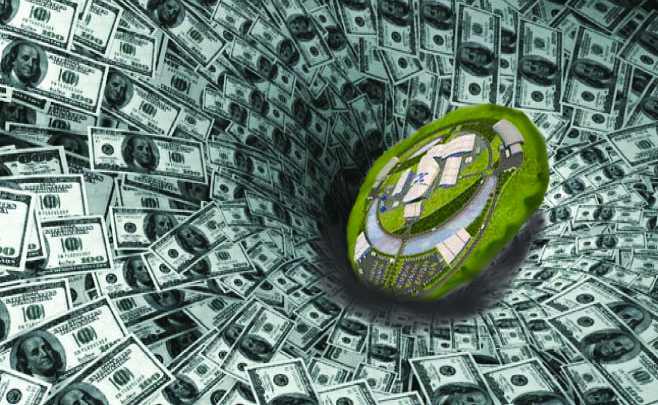
https://www.nuclearpolicy.info/news/ever-the-optimistsrolls-royce-chooses-four-sites-for-reactor-thats-yet-to-be-built/ 9 Nov 22, Rolls Royce SMR, the company behind the development of so-called Small Modular Reactors, has today announced its ambitious plans to deploy new reactors at four sites in England and North Wales by the early 2030’s, but there is a fly in the ointment – it is a reactor that has yet to be built.
Rolls-Royce has been visiting sites in recent months and number-crunching existing data to identify their preferred locations for any future SMRs, and Wylfa and Trawsfynydd in North Wales; Sellafield in West Cumbria; and Oldbury in Gloucestershire have been selected based on ‘existing geotechnical data, adequate grid connection and because each site is large enough to deploy multiple SMRs’.
But the announcement leapfrogs several crucial challenges Roll-Royce will first need to overcome before their SMR vision becomes reality.
Councillor David Blackburn, Chair of the UK/Ireland Nuclear Free Local Authorities, explained: “Rolls-Royce may sound optimistic, but the history of British civil nuclear power is littered with projects delivered late, over budget, whilst compromising safety, or with sub-standard power output. And the SMR concept has its own set of problems.
“For one the design has not even received regulatory approval from the Office of Nuclear Regulation, and it may not, and this is a process expected to take until at least mid-2024.
“It is also conceived to be prefabricated and assembled on site, but factories still have to be built to fabricate the parts; the process of fabrication has to be mastered; all the necessary approvals and permits will have to secured to build on each site, possibly in the teeth of significant public opposition; and the assembly of pre-fabricated reactors on site is still not a perfected art – just think of the challenge of building an IKEA furniture set and multiply that a million fold.”

The NFLA also has real concerns about the radioactive waste future SMRs will bring, with a recent study by the University of Stanford and British Columbia identifying that fission in these smaller reactor types could produce between two and thirty times as much radioactive waste as that produced by a ‘conventional’ larger reactor per unit of electricity generated.[1]
Added Councillor Blackburn: “That is an awful lot of radioactive waste to add to the stockpile Britain has already accumulated from almost seventy years of civil nuclear power generation; toxic waste that must be managed safely at vast public expense and for which a long-term totally safe storage solution has yet to be found. Do we really want to produce more when we can generate our electricity safely and more cheaply using renewables?”
Austria holds the anti-nuclear line
https://www.euractiv.com/section/energy/news/austria-to-continue-anti-nuclear-stance-against-its-neighbours/ 9 Nov 22, Austria, described as “Europe’s most fervent anti-nuclear country,” is now planning protests and blockades in opposition to major nuclear build-out plans in neighboring Czech Republic that would threaten the health and safety of Austrian citizens.
Austria is a nuclear-free country and is currently suing the European Commission for including nuclear power under its so-called “green” taxonomy, allowing nuclear power to benefit from funding that should be going exclusively to truly green energy such as renewables. The law suit is being led by Austrian environment minister Leonore Gewessler, (pictured) who is a member of the Green Party.
The Czech Republic has six reactors in current operation but is chasing after the small modular reactor phantom. It is also planning to build two new full size reactors at Temelin, just 100 kilometers from Linz, Austria’s third largest city. “We will have to take to the streets again to raise awareness and make a difference,” said the mayor of one Austrian village close to the Czech border.
Finland to continue relying on Russia for nuclear fuel
Fortum set to rely on Russian nuclear fuel until 2030, Reuters, 09 NOVEMBER 2022,
THE USE of Russian nuclear fuel is set to continue for at least a few more years at the Loviisa Nuclear Power Plant operated by Fortum, report STT and YLE.
The Finnish majority state-owned energy company has for the past roughly 15 year fuelled the nuclear power plant with uranium acquired from TVEL, a subsidiary of Russian state-owned nuclear energy company Rosatom.
Matti Kattainen, the director of nuclear power at Fortum, stated to STT that the company is operating in line with its supplier contract, declining to speculate on whether and when it could stop the use of Russian fuel. The company has previously stated that it will invite bids from supplier candidates once its operating licences, as well as the current supplier contract, come up for renewal in 2027 and 2030……………
Fortum in March submitted an application for a licence to continue operating the plant until 2050.
Juhani Hyvärinen, a professor of nuclear technology at LUT University, viewed that Fortum is in a difficult position due to the relatively low number of potential suppliers. He added on a general level that the company would likely require a year or two after signing a supplier contract to take the first delivery.
Russian nuclear fuel has accounted for roughly 20–30 per cent of the global market, he estimated in an interview with YLE. The European Commission has reported that Soviet or Russian-made reactors that are fully reliant on Russian fuel remain in use in five countries across the EU: Bulgaria, Czechia, Finland, Hungary and Slovakia.
Hyvärinen stated to both news outlets that there are no insurmountable technical obstacles to replacing the fuel. The Loviisa Nuclear Power Plant, for example, previously ran on fuel from British Nuclear Fuels Limited (BNFL)……
Nuclear fuel is presently not on the sanctions list of the European Union. The possibility of bringing it within the scope of sanctions has reportedly been discussed, but the likelihood of doing so in the midst of the energy crisis appears low. The Ministry for Foreign Affairs told YLE that adding nuclear fuel to the list would require a unanimous decision by the 27-country bloc but declined to comment on the discussions.
Also Hyvärinen refrained from commenting on what he said is a political decision……….
Use of Russia nuclear fuel became a topic of discussion in Finland on Saturday, following the emergence of news reports about police officers overseeing the loading of what turned out to be Russian nuclear fuel onto an aircraft bound for Bratislava, Slovakia, at Lappeenranta Airport………. https://www.reuters.com/business/cop/cop27-nuclear-power-industry-vies-role-decarbonizing-planet-2022-11-09/
France electricity prices surge past €1,000/MWh as more nuclear reactors close for winter
Wholesale electricity prices in France for the middle of winter surged
above €1,000/MWh ($A1,540/MWh) after the operator of the world’s biggest
nuclear fleet revealed more problems, and more outages at its reactors.
The surge in prices for January delivery came after the utility EdF reduced its
forecast output for the fourth time this year, on this occasion due to
extended outages at four reactors and maintenance delays at others caused
by the waves of strikes that have affected the nation this autumn. It also
dramatically reversed weeks of falling spot and futures prices as gas
stocks improved and the weather remained wild.
But as analysts noted in the height of summer, nuclear problems pose just as big a threat to the EU grid
as the gas problems.
Renew Economy 8th Nov 2022
‘It can’t go on like this’: Power restored to Ukrainian nuclear plant but situation untenable, says IAEA
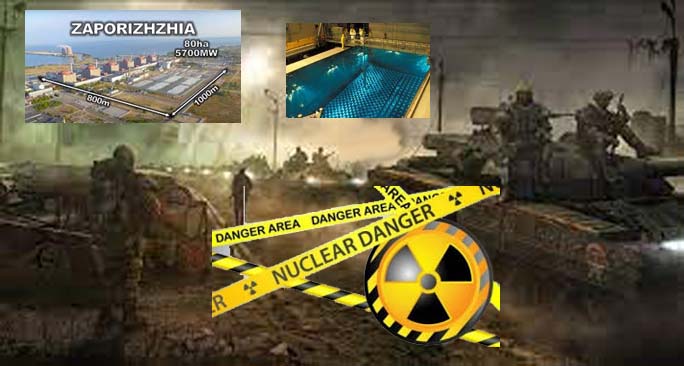
External power has been restored to Ukraine’s Zaporizhzhya Nuclear Power Plant (ZNPP) two days after it
experienced a complete blackout amid Russian shelling, the UN’s
International Atomic Energy Agency (IAEA) said on Saturday. Both of the
plant’s external power lines, a 750kV line and a 330kV back-up line, were
repaired on Friday, re-establishing power to the plant’s six reactors by
10pm.
The reactors have been shut down, although reactors 5 and 6 are in
semi-hot shutdown to provide steam to the site, and arrangements are being
made to further heat-up units 5 and 6 to achieve a “hot shutdown”
state. The other four units in Europe’s biggest nuclear plant remain in
cold shutdown. Ukrainian staff have operated the plant under Russian
occupation since March. The IAEA has had four experts embedded among the
Ukrainian staff since 5 September. It rotated a new team in on Thursday.
Last week, shelling damaged the last two high-voltage lines
connecting ZNPP to the country’s grid, putting it in full blackout mode and
necessitating the activation of all 20 of its diesel back-up generators.
The IAEA said the lines were damaged some 50-60 kilometres from the plant
in Ukrainian-controlled territory.
“The repeated power outages all too clearly demonstrate the extremely serious nuclear safety and security
situation this major nuclear power plant is facing,” said IAEA director
general Rafael Mariano Grossi. He continued: “So far, the brave staff of
the Zaporizhzhya Nuclear Power Plant have always managed to maintain the
safe operation of the six units. But it can’t go on like this. I have
repeatedly called for the urgent establishment of a nuclear safety and
security protection zone around the Zaporizhzhya Nuclear Power Plant to
prevent a nuclear accident. We can’t afford to lose any more time. We must
act before it is too late.”
Global Construction Review 7th Nov 2022
A disaster waiting to happen’: British nuclear-armed sub resurfaces after fire onboard
https://cnduk.org/a-disaster-waiting-to-happen-british-nuclear-armed-sub-resurfaces-after-fire-onboard/?fbclid=IwAR3t-FcdURBZY22Nmf7daG7zZm1F4OTGwxQEQ8hvq0X6RMAt6N9X6OdUgsE A Royal Navy nuclear-armed submarine had to abandon its mission and resurface, after a fire broke out onboard following an electrical fault.
The Ministry of Defence said the incident on HMS Victorious happened six weeks ago. The blaze broke out in an electrical component in one of the submarine’s systems but carbon dioxide injectors built into the module extinguished it. However, all crew were scrambled to tackle the fire and look for others and the sub’s commander had to surface the vessel in the North Atlantic. After the fire was contained, Victorious returned to port at Faslane in Scotland.
Victorious is one of Britain’s four Vanguard-class nuclear-armed submarines with one vessel constantly on patrol ready to launch a nuclear strike. The MoD said the sub wasn’t on patrol during the time of the fire and was en route to the US for wargames.
News of the incident comes after it was revealed in September that another vessel, HMS Vanguard, would remain in dry-dock for the foreseeable future after more technical issues were discovered. Vanguard has been in deep maintenance since 2015 at a cost of £500 million. The delay has compounded problems for the Royal Navy – whose so-called “Continuous at-Sea Deterrence” is reportedly operating at half capacity.
Meanwhile, a whistleblower told STV that staff working at Royal Naval Armaments Depot (RNAD) Coulport – the base where Britain’s nuclear weapons are stored – had to be evacuated due to a “serious radiation breach.”
CND General Secretary Kate Hudson said: “The revelations about HMS Victorious further underline the risks that these weapons present – a disaster waiting to happen. The fact that the sub had to surface and expose itself illustrates both how fallible the technology is and how baseless the myth of ‘invisibility’. The news from Coulport reinforces these concerns. Meanwhile, billions of pounds are being pumped into maintaining these vessels and warheads and billions more in developing news ones. It’s time to stop this irresponsible waste before a real tragedy occurs.”
Incident at France’s Civaux nuclear reactor adds to EDFs problems of stress corrosion crackingin nuclear plants
Stress corrosion cracking: Assessing and remedying cracking problem in
nuclear plants. The full extent of stress corrosion cracking at EDF’s
reactors in France has still to be determined. Nonetheless, lower
production as plants are re-examined has come at the worst possible time
for the company.
Electricite de France SA is investigating an incident
during a test at a halted nuclear reactor last week, just as a series of
repairs jeopardize the country’s power-supply security for the coming
winter. The utility had to stop a high-pressure hydraulic test of the
primary circuit of its Civaux 1 reactor on Nov. 2 when steam was released
in a room of the reactor building. The reactor wasn’t loaded with nuclear
fuel, no one was hurt nor contaminated, and no radioactivity has been
detected outside the building, according to EDF.
The impact of the incident, which is unrelated to so-called stress-corrosion cracks that have
undermined the French nuclear giant’s reactor availability, still needs to
be assessed, Regis Clement, EDF’s deputy-head for nuclear production, said
at a news conference in Paris Tuesday.
The corrosion cracks hobbling EDF
reactors this year have put a hole in its finances and made France —
typically an exporter of power to its neighbors — a net importer. That,
combined with Russia’s dwindling gas deliveries, has contributed to a spike
in energy prices across Europe and stoked concerns of shortages in case of
a windless cold snap this winter.
Bloomberg 8th Nov 2022
EDF nuclear problems increase risk of winter energy shortages
EDF nuclear problems increase risk of winter energy shortages. French
energy prices surge as EDF scales back electricity output predictions
again. The risk of energy shortages in Britain and across the Channel this
winter is growing as French state energy giant EDF faces fresh problems
with its nuclear power stations.
French power prices for January have
surged above €1,000 (£870) per megawatt hour after EDF scaled back
predictions for its nuclear electricity output for the fourth time this
year. Markets were also rattled further on Tuesday as the company warned it
was “too early to say” whether the Civaux 1 reactor would return to
service on schedule following a radiation leak.
Experts said the
developments risked further squeezing the amount of power available in
January and February, the coldest months of the year when demand is usually
highest. That could spell trouble for France and Britain, which hope to
rely on each other for electricity supplies this winter.
Telegraph 8th Nov 2022
EDF Nuclear Reactor Has Test Incident, Deepening Supply Concerns
EDF Nuclear Reactor Has Test Incident, Deepening Supply Concerns, https://www.bloomberg.com/news/articles/2022-11-08/edf-nuclear-reactor-has-test-incident-deepening-supply-concerns#xj4y7vzkg By Francois De Beaupuy, November 9, 2022,
Electricite de France SA is investigating an incident during a test at a halted nuclear reactor last week, just as a series of repairs jeopardize the country’s power-supply security for the coming winter.
The utility had to stop a high-pressure hydraulic test of the primary circuit of its Civaux 1 reactor on Nov. 2 when steam was released in a room of the reactor building. The reactor wasn’t loaded with nuclear fuel, no one was hurt nor contaminated, and no radioactivity has been detected outside the building, according to EDF.
The impact of the incident, which is unrelated to so-called stress-corrosion cracks that have undermined the French nuclear giant’s reactor availability, still needs to be assessed, Regis Clement, EDF’s deputy-head for nuclear production, said at a news conference in Paris Tuesday.
The corrosion cracks hobbling EDF reactors this year have put a hole in its finances and made France — typically an exporter of power to its neighbors — a net importer. That, combined with Russia’s dwindling gas deliveries, has contributed to a spike in energy prices across Europe and stoked concerns of shortages in case of a windless cold snap this winter.
The French nuclear giant so far is keeping the Jan. 8 restart date for Civaux 1 unchanged. It aims to have about 42 of its 56 reactors online in December as repairs at a dozen sites affected by cracks progress, up from 30 on Tuesday morning, Clement said. That number is due to rise to 46 in January.
At Civaux, where heavy repairs of corrosion cracks have been completed, an inner insulation tube of a pipe used to introduce sensors in the reactor vessel was ejected in a room beneath the reactor during the pressure test, Clement said. That’s because equipment installed specifically for the test phase broke, he said.
EDF will send a robot in coming days to put the long radioactive tube in a container, he said. Employees will then be able to access the room, close a valve, and assess damage caused by water that’s still flowing into the room and into a special drain, Clement added.
“It’s way too early to say” how that will affect the restart of the reactor, he said.
Tale Of Two Broken Accords: Oslo And Minsk
Ukraine’s President Zelensky was elected on a platform promising to implement Minsk and end the death toll. Then the neo-Nazis enabled by the U.S. and NATO got to him. I suspect he was threatened with assasination unless he signed on to his country serving as the killing grounds for proxy war to weaken Russia.
https://went2thebridge.org/2022/11/07/tale-of-two-broken-accords-oslo-and-minsk/—
Many people understand that war is hell. That’s why they clamor for negotiated settlements that move belligerents back from the battlefield and set them on a path to reconciliation.
The Oslo Accords established a two-state solution to Israel’s violent occupation of Palestinian homelands and at the time was hailed as a major achievement.
Then came facts on the ground for the last several decades.
It would by now be virtually impossible to create a State of Palestine that was not hopelessly Balkanized into tiny, unconnected territories. At the time of Oslo, many expressed doubt and believed that only a truly democratic one-state solution could work. (Full disclosure: I’m in that camp.)
The insanely belligerent and corrupt Israeli PM Netanyahu has won the recent elections and stands poised to bring even more violence and suffering to the long-occupied Palestinians. And Israel is a nuclear weapons nation. With lots of nuclear threats and innuendoes being thrown around these days, it’s important to keep that in mind.
So we can expect to see a continuation of Israel’s attacks on Palestinians in blockaded Gaza
The Minsk II agreement established a game plan for resolving civil war in Ukraine.
Tens of thousands of civilians and combatants had been killed by missile strikes and more hands-on violence from militias operating freely in the Donbas border region with Russia following a 2014 CIA-sponsored coup in Kyiv. Years later, Ukraine’s President Zelensky was elected on a platform promising to implement Minsk and end the death toll. Then the neo-Nazis enabled by the U.S. and NATO got to him. I suspect he was threatened with assasination unless he signed on to his country serving as the killing grounds for proxy war to weaken Russia.
One wonders why nations sign on to accords and then immediately show no intention of fulfilling them?
It could be a stalling tactic to temporarily reduce international pressure to de-escalate.
Or it could be a case where those who signed on are ousted either by coup or elections, and succeeded by those with a lust for war.
Or maybe diplomatic efforts like accords are doomed in the face of the profit motive provided by modern industrialized killing?
Workers hold the key to stopping wars no matter what the motives of those waging them.
An international general strike would make wars literally impossible.
I pray we are seeing signs of this developing, especially in Europe where the economic impact of the war on Russia via Ukraine has been most intense. Certainly we are seeing signs of alarm from rulers enacting laws that actually criminalize gathering
Campaigners seek early end to Chinese involvement at Bradwell nuclear project

https://www.nuclearpolicy.info/news/campaigners-seek-early-end-to-chinese-involvement-at-bradwell/ 7 Nov 22 Three campaign groups have written to influential parliamentarians asking them to seek an early end to plans by Chinese-state owned CGN to develop a new nuclear power plant at Bradwell in Essex.
In their letter to Conservative MPs, Alicia Kearns and Sir Iain Duncan Smith, the Nuclear Free Local Authorities, the Blackwater Against New Nuclear Group (BANNG), and the Bradwell B Action Network (BAN) have urged them ‘to make urgent representations to government to terminate CGN’s involvement at the Bradwell B site as soon as possible’.
Ms Kearns and Sir Iain are both prominent members of the China Research Group, whose stated position is that ‘Chinese involvement in our nuclear industry is now seen as an unacceptable national security risk’. The three campaign groups are opposed to any new nuclear projects at Bradwell as they believe the site does not meet any of the required national criteria to be suitable for the location of a power plant, however they have especial concerns about a Chinese-led project.
T
n their letter, they state that ‘the construction of a nuclear power plant by a Chinese-state owned entity, using Chinese-designed reactors that are not yet operational anywhere in the world, at a location relatively close to large urban populations, military installations, and other strategic assets and infrastructure, must represent a potentially substantial safety and security risk to the UK’.
Recent pronouncements by the Bradwell project team have contained mixed messages. In a circular to residents, they stated that boreholes dug on site to take soil samples would be filled in; that the site compound would soon be dismantled; and that a second phase of testing would be delayed beyond 2023. However, in a response to the media after the NFLA described this as ‘beating a retreat’, CGN insisted they are going to proceed with further feasibility studies.
This optimism seems ill-judged given the many statements by government ministers that they are hostile to Chinese investment in major British infrastructure projects, including at Sizewell C and Bradwell B. The government has enacted the National Security and Investment Act to allows ministers to restrict or prevent foreign investment in infrastructure projects that could compromise national security. Given the political backdrop, the three campaign groups cannot see how the British government could give the CGN-led Bradwell B development its endorsement
Professor Andrew Blowers OBE, Chair of BANNG, said: ‘For the past fourteen years, we have opposed any nuclear development on the grounds that the site is not in any way ‘potentially suitable’ for a new nuclear power station. We believe the Chinese project will be withdrawn owing to sustained local opposition and security concerns. We are asking politicians to confirm that this is the case.’
Councillor David Blackburn, Chair of the NFLA, added: ‘The Bradwell situation appears to be one in which life imitates art. The Bradwell B team are insisting, like the shopkeeper in the famous Monty Python parrot sketch, that their nuclear power project is ‘not dead, it’s merely resting’, whereas it is highly unlikely that it will ever go forward at a time when parliament believes the Chinese Government is not to be trusted. The NFLA believes it would be best if the government made plain that this is going nowhere to end the uncertainty for staff and the people in the communities surrounding the Bradwell B site.’
France’s Nuclear Power Problems Are Mounting
Oil Price, By ZeroHedge – Nov 07, 2022,
France’s nuclear troubles are mounting due primarily to routine maintenance of the country’s 56 aging reactors. A new update from French electric utility company Electricite de France SA, commonly known as EDF, said an outlook for nuclear power generation was slashed ahead of winter, causing chaos in energy markets.
EDF is the world’s largest owner of nuclear plants. It reported Friday that its fleet of nuclear reactors is expected to produce between 275 and 285 terawatt-hours of energy this year, down from the range of 280 and 300 terawatt-hours.
The reduced outlook comes amid a series of strikes at nuclear plants across the country that delayed planned maintenance work. Nuclear power generation has been sliding all year due to technical issues, and about half of the country’s 56 reactors are shuttered.
“The situation changed drastically this year, when France swung from being one of Europe’s largest exporters of electricity to a net importer because of issues with its reactors. The outages worried officials that France and the broader region might run short of electricity in the winter, when power demand in Europe peaks,” Bloomberg said. …………………………………………………………………………………https://oilprice.com/Latest-Energy-News/World-News/Frances-Nuclear-Power-Problems-Are-Mounting.html
France’s Macron and UK’s Sunak agree on nuclear energy cooperation
https://www.reuters.com/business/energy/frances-macron-uks-sunak-agree-nuclear-energy-cooperation-2022-11-07/ PARIS, Nov 7 (Reuters) – French President Emmanuel Macron and Britain’s Prime Minister Rishi Sunak on Monday pledged “ambitious cooperation” in the field of nuclear energy to cope with the impact on energy supplies of Russia’s invasion of Ukraine.
Reporting by Michel Rose; Writing by Benoit Van Overstraeten; Editing by Andrew Heavens
The two leaders met on the sidelines of climate talks in Egypt, their first meeting since Sunak became prime minister.
The French presidential palace also said Macron and Sunak wanted better coordination on migration.
Finland denies plans to deploy nuclear weapons in the country once it joins NATO
Daniel Stewart, 8 Nov 22. Finland’s President Sauli Niinisto has assured on Monday that Helsinki has no plans to allow the deployment of nuclear weapons on its territory once it joins NATO’s ranks, amid tensions over the war in Ukraine…………………..
he has applauded the efforts of French President Emmanuel Macron and German Chancellor Olaf Scholz to maintain a dialogue with Moscow. “This is solely aimed at stopping the killing. I think it is a worthwhile goal,” he concluded. https://www.msn.com/en-au/news/other/finland-denies-plans-to-deploy-nuclear-weapons-in-the-country-once-it-joins-nato/ar-AA13PjsO
1 This Month

of the week– Nuclear Reactor Information Task Force

14 May – online event From Bombs to Data Centres: the Face of Nuclear Colonialism
To see nuclear-related stories in greater depth and intensity – go to https://nuclearinformation.wordpress.com
-
Archives
- May 2026 (126)
- April 2026 (356)
- March 2026 (251)
- February 2026 (268)
- January 2026 (308)
- December 2025 (358)
- November 2025 (359)
- October 2025 (376)
- September 2025 (257)
- August 2025 (319)
- July 2025 (230)
- June 2025 (348)
-
Categories
- 1
- 1 NUCLEAR ISSUES
- business and costs
- climate change
- culture and arts
- ENERGY
- environment
- health
- history
- indigenous issues
- Legal
- marketing of nuclear
- media
- opposition to nuclear
- PERSONAL STORIES
- politics
- politics international
- Religion and ethics
- safety
- secrets,lies and civil liberties
- spinbuster
- technology
- Uranium
- wastes
- weapons and war
- Women
- 2 WORLD
- ACTION
- AFRICA
- Atrocities
- AUSTRALIA
- Christina's notes
- Christina's themes
- culture and arts
- Events
- Fuk 2022
- Fuk 2023
- Fukushima 2017
- Fukushima 2018
- fukushima 2019
- Fukushima 2020
- Fukushima 2021
- general
- global warming
- Humour (God we need it)
- Nuclear
- RARE EARTHS
- Reference
- resources – print
- Resources -audiovicual
- Weekly Newsletter
- World
- World Nuclear
- YouTube
-
RSS
Entries RSS
Comments RSS
 nuclear-news