France holds up EU energy agreement over nuclear power

Paris withdraws support for renewable targets law as it seeks inclusion of hydrogen produced with atomic power
Ft.com Alice Hancock in Brussels and Sarah White in Paris 17 May 23
France is leading a coalition of countries holding up agreement on EU-wide targets for renewable energy, as it makes a fresh drive for better treatment of its nuclear industry. The move comes amid a broader pushback against the bloc’s climate agenda as the realities of what is required for the green transition become increasingly apparent. The EU’s 27 member states were due to agree an overall target of 42.5 per cent of renewable power in the bloc’s energy mix by 2030 on Wednesday.
But France, which relies on nuclear power for the majority of its electricity, signalled that it would not support the text, citing concerns that “low-carbon” hydrogen generated with electricity from atomic power plants would not be counted as part of the targets.
“It must be possible for nuclear-derived electricity to coexist with renewable electricity without discrimination,” a French diplomat said. The vote, which was pulled from the agenda of an ambassadors’ meeting at 11.30pm on Tuesday night, would have paved the way for the targets to become EU law following their approval in the European parliament.
……………………….. Other member states said that having the bloc’s two largest countries push for last-minute changes to green legislation set a dangerous precedent for the EU’s policymaking process and could affect its path to achieving an overall target of reducing greenhouse gas emissions by 55 per cent by 2030 compared with 1990 levels.
The EU commission said it remained committed to a “rapid rollout” of renewable energy as a critical element of the bloc’s goal to reach zero greenhouse gas emissions by 2050 and to reduce its dependence on Russian fuels. “The new rules need to be adopted and implemented as swiftly as possible.”……………………………
Six pro-nuclear countries, including the Czech Republic, Bulgaria and Hungary, followed Paris’s lead on Wednesday and withheld support for the directive. Meanwhile, anti-nuclear governments, including in Germany and Austria, have been strongly opposed to recognising nuclear power as a clean fuel. Earlier this week, Paris convened a meeting of ministers from 14 countries with nuclear energy capacity along with the EU’s energy commissioner, Kadri Simson……………………………………………. https://www.ft.com/content/b0d3e7e3-a8ae-457b-9482-3282d32973be
UK and Netherlands agree ‘international coalition’ to help Ukraine procure F-16 jets
Guardian 17 May 23
Rishi Sunak and Mark Rutte announced plans a day after Volodymyr Zelenskiy said Kyiv could soon receive fighter jets
Prime minister Rishi Sunak and Dutch leader Mark Rutte have agreed to build an “international coalition” to help procure F-16 fighter jets for Ukraine, the British government has announced.
A Downing Street spokesperson said Sunak and Rutte “would work to build an international coalition to provide Ukraine with combat air capabilities, supporting with everything from training to procuring F-16 jets”.
“The prime minister reiterated his belief that Ukraine’s rightful place is in Nato and the leaders agreed on the importance of allies providing long-term security assistance to Ukraine to guarantee they can deter against future attacks.
“The leaders agreed to continue working together both bilaterally and through forums such as the European Political Community to tackle the scourge of people trafficking on our continent.”
The statement on Tuesday came a day after Ukraine’s president hinted that Kyiv could soon receive F-16 fighter jets, saying he was hopeful of “very important” decisions on the subject with the help of the UK……………………………
At the meeting, Britain also promised to supply “hundreds of attack drones”.
The UK said in February that it would begin training Ukrainian pilots in standard Nato techniques, and No 10 repeated that on Monday, saying the plan was to help “build a new Ukrainian air force with Nato-standard F-16 jets”.
Britain does not use F-16s, which are made by the US defence firm Lockheed Martin in South Carolina…………
Both countries will have to persuade the US if Ukraine is to receive F-16s. Asked later on Monday if the US had changed its position on supplying the jets to Ukraine, John Kirby, a spokesperson for the White House’s national security council, gave a one-word reply: “No.” https://www.theguardian.com/world/2023/may/16/uk-and-netherlands-agree-international-coalition-to-help-ukraine-with-f-16-jets
Zelensky plotted attacks deep inside Russia – Washington Post

https://www.rt.com/russia/576237-zelensky-hungary-russia/ 15 May 23
The Ukrainian leader reportedly wanted to “occupy” Russian cities to gain leverage over Moscow
Despite public assurance that he would limit military action to his own country’s 1991 borders, Ukrainian President Vladimir Zelensky formed plans to conduct attacks deep inside Russia and suggested that Kiev “destroy” the industry of Hungary, the Washington Post reported on Saturday, citing leaked Pentagon documents.
Citing US intelligence reports recently published on a gaming server, the Post described how Zelensky suggested at a meeting in January that his troops “conduct strikes in Russia,” while moving across the border to “occupy unspecified Russian border cities” in order to “give Kiev leverage in talks with Moscow.”
Less than two months later, the Ukraine-based Russian Volunteer Corps launched a cross-border raid that left two civilians dead in Russia’s Bryansk Region. A member of the group told Western media that Kiev had approved the attack, and further assaults have taken place since.
With Ukraine’s Western backers reluctant until recently to provide him with long-range missiles for fear he would use them against targets within Russia, Zelensky suggested to his top military commander, General Valery Zaluzhny, that he use drones to “attack unspecified deployment locations in Rostov” in February, the Post reported.
Prior to and after the alleged meeting, Ukrainian forces used drones to attack infrastructure in Rostov Region, which borders the formerly Ukrainian territory of Lugansk.
In a meeting with Deputy Prime Minister Yulia Svridenko in February, Zelensky reportedly suggested that Ukraine “blow up” the Druzhba oil pipeline, which transports Russian oil to Hungary. According to the US report cited by the Post, Zelensky suggested that “Ukraine should just blow up the pipeline and destroy…Hungarian [Prime Minister] Viktor Orban’s industry, which is based heavily on Russian oil.”
American spies listening to his meeting with Svridenko concluded that Zelensky was issuing “hyperbolic, meaningless threats.” Nevertheless, the Druzhba pipeline has come under attack on several occasions since the meeting, most recently when it was hit by drone-dropped explosives on Wednesday.
The Post’s article corroborates a CNN report last month claiming that US spies have been intercepting Zelensky’s communications.
Contacted by the newspaper, Zelensky dismissed the incidents described in the report as “fantasies,” and claimed that “no one in our country has given orders for offensives or strikes on Russian territory.”
Contacted by the newspaper, Zelensky dismissed the incidents described in the report as “fantasies,” and claimed that “no one in our country has given orders for offensives or strikes on Russian territory.”
France to host pro-nuclear meet to push for EU recognition of climate benefits
Yahoo Sport Kate Abnett and America Hernandez. Mon, 15 May 2023
BRUSSELS (Reuters) -France will host a meeting of ministers from 16 pro-nuclear European states on Tuesday aimed at coordinating expansion of atomic power and urging the EU to recognise its role in meeting climate goals for 2050, the country’s energy ministry said.
The meeting in Paris will include EU Energy Commissioner Kadri Simson and representatives from 14 EU countries including France, Belgium and the Netherlands, plus Italy as an observer and the United Kingdom as a non-EU invitee………………………
Yves Desbazeille, director of EU lobby group Nucleareurope, will also give a presentation, including figures on potential job creation and investment.
A draft of the post-meeting statement seen by Reuters said the countries would encourage the commissioner to integrate nuclear energy into the EU’s energy policy by recognising nuclear alongside other green [?] energy technologies in EU decarbonisation goals.
The talks will cover the EU Net Zero Industry Act, the Hydrogen Bank, definitions of low-carbon hydrogen and hydrogen import strategies among other topics, the French official said.
The draft document also calls for the publication of an EU communication on small modular reactors.
……………………………. EU opponents of nuclear energy – among them Germany, which switched off its last reactors last month, Luxembourg and Austria – cite concerns including waste disposal and maintenance issues that have plagued the French fleet in recent years.
Austria and Luxembourg are taking the EU to court over its decision to officially label nuclear investments as “green”. https://au.sports.yahoo.com/france-host-pro-nuclear-meet-133145776.html
Nuclear power and the technocratic system are not compatible with democracy: France’s group in Grenoble that fights this system
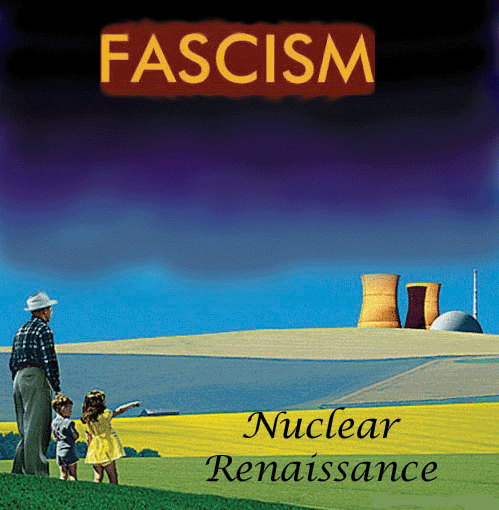
The nuclear renaissance is a repeat of the fiasco of 1974. Published in La Relève et La Peste, Text prepared by Laurie Debove, January 30, 2023, Translation by Dennis Riches
Translator’s introduction
This interview published in January 2023 has a message for Oliver Stone and all the other cheerleaders of a nuclear renaissance. Oliver Stone’s new film Nuclear Now is just a rehash of Nuclear Then. The discussion below illustrates that there is nothing new about the nuclear renaissance being promoted as a solution to global warming and fossil fuel shortages caused by war. Anti-nuclear arguments were valid then and they still are now, and there isn’t really anything new to add to them. ……………………..
Introduction
The government is doing everything to revive the nuclear industry in France at a rapid pace, to the detriment of the public debate underway until February 27, a debate which is supposed to take account of the opinion of the population on this subject. To get a historical and technological perspective on this issue, we interviewed two people from Grenoble who belong to “Pièces et main d’oeuvre.” They have been active in the fight against nuclear power since the 1970s. We met in a Grenoble café, and in the text below their answers have been edited and compiled into one common voice.
LR&LP: Could you introduce yourselves and your organization?
“……………………………………………..We produce ideas and participate in demonstrations because we believe that ideas can change and transform the course of the world, that they can oppose technology.
LR&LP: What led you to look at nuclear, and what are the biggest pitfalls you found?
“………………………………Throughout the 1940s, 50s and 60s, a divisive critique of nuclear power developed……………………. it was at this time that US President Eisenhower launched the program “Atoms for Peace,” saying that the atom can also have a civilian application in the form of nuclear power plants and research. It therefore proposed technology transfers from the United States to more than twenty countries that wanted to manufacture reactors.
……………. The moment we manufacture nuclear power, we manufacture the consequences of nuclear power and especially its waste.
As we supply the whole of society with nuclear power, we must maintain a scientific clergy of nucleocrats because it is a very complicated and dangerous technology, and on the other hand we must protect these nuclear power plants, mineral mines, transport, and waste with a dedicated militia because we do not want it to fall into the wrong hands.
With the civilian atom, there is therefore an entire electro-totalitarian society that is being set up with a state apparatus, a police, and a particular political organization. No more dreams and utopias of self-management or anarchy. Nuclear waste cannot be managed by just anyone. There is a ratchet effect in it where there is no turning back…………………………………………………………..
LR&LP: Here we are in 2022, and the Autorité de Sureté du Nucléaire (Nuclear Safety Authority) has launched an alert on the failures of the French nuclear fleet. Having seen both the establishment and the evolution of this fleet, was this predictable, and what do you think of the French nuclear recovery plan, imposed by the government, while we see that the [nuclear power plant] EPR of Flamanville has ten billion euros of additional cost as well as twelve years of delay in its construction?
P.M.O: That nuclear power plants wear out, like all factories, is a banality. The life cycle of a nuclear power plant is 100 years on average, from the time construction starts to the time it is decommissioned. Nuclear power costs a fortune, but no matter how much cheap French electricity is promoted, it is a lie. Over time, the state has financed EDF less so we have maintained the plants less. We have fewer trained specialists, and the private sector has not taken over of the cost.
Today we are witnessing a repeat of what happened in 1974 after the Yom Kippur War, when Arab countries punished the West by tripling oil prices. We did not have oil, but nuclear was an alternative, so Pompidou, Giscard d’Estaing and the Prime Minister at the time, Messmer, launched a plan to nuclearize France to compensate for the deficit in oil imports. The uranium came from Niger. We had the skills because the CEA existed since 1945 [for the bomb program]. EDF placed the orders and they manufactured nuclear power plants at a rapid rate.
It is striking to observe how Pierre Messmer’s speech on TV in 1974 and Emmanuel Macron’s speech in Belfort in 2021 are like twins! The recovery is justified by a drop in supplies: at the time the cause was the Arab countries and today it is the Russia-Ukraine conflict.
In the same way, there was an increase in demand at the time because people were forced to equip themselves with electric household appliances, and today it is the means of electric transport and gadgets like smartphones that create this additional demand. On the one hand, industry creates the demand and therefore the problem, and on the other hand it comes with the solution that the population cannot refuse.
The surprise is that we re-apply the same old methods with the same old arguments. It is a headlong rush to ignore the current disaster. We cannot have such a demand for electricity. It is neither sustainable nor reasonable.
……………..There is also the denial of the poisoning of the environment with radioactivity. We live in a world where radioactivity is anthropogenic. Physics teaches us that this is not going away. We could have anticipated all this.
………………………………………………….. a technocratic class developed. In the same way that technology has become the real politics of our time, the real ruling class of our time is technocracy: the class that has produced and is the product of technology (engineers, business leaders, some elected officials).
………… These people are keeping citizens in ignorance. The elected official will then surround himself with scientific advisors that he cannot control since he does not know how to solve their equations.
……….. The basic citizen has integrated this and understood that he does not understand anything, or not much. The citizen therefore relies on those who know.
…………………the technocratic system and technology have the power to change the world, yet it is not compatible with participatory democracy.
LR&LP: However, a public debate has been launched to ask citizens for their opinion. In your opinion, can participating in this public debate allow the French population to regain control over the decisions made on energy production in France? If not, what should everyone do for an informed debate on nuclear technology?
P.M.O: Public debates are like the bullfighter’s cape. The authorities know very well that there will be rants, foghorns, banners, and they find it very good since then the protest is confined to the “public debate”. Chantal Jouanno, the president of the National Commission for Public Debate (CNDP) said the banners are welcome in 2022 because of a precedent in the history of French public debate…………………………………………………………..
A yes or no outcome will have no impact. Sociologists themselves have defined public debate by saying “involvement is enforced acceptance.” For us, participation is therefore accepting, as we have written about extensively. To believe that they will take into account the opinion of citizens on such a vast social project is illusory.
The only real public inquiry on nuclear power ended in a fiasco. That was in Plogoff. The Bretons there refused the public inquiry and fought for weeks against the police. Every evening, hundreds of people gathered to throw stones and slurry because, for them, every form of pseudo-consultation was a smokescreen. This explains why there has never been a nuclear power plant built in Plogoff while they have been built everywhere else.
LR&LP: Power is in the hands of technocrats. “Participation is enforced acceptance.” Therefore, how can a citizen regain an influence in energy production?
“………………………………………………………..The only force likely to turn the tide would be a collective realization that it is not sustainable to continue to consume so much energy, physically and materially, because of entropy and its effects. We would then have to decide to get rid of this energy-intensive and material-intensive lifestyle, and give up certain habits, but it remains an abstract goal.
The problem is that people do not necessarily demand democracy. They are like passengers on a train who, of course, don’t want to be able to drive it. Most people just want a society that works. The question is how.
Further reading
The latest book published by Pièces et Main d’oeuvre:
Technocracy: The Ruling Class of the Technological Age https://dennisriches.wordpress.com/2023/05/14/the-nuclear-renaissance-is-a-repeat-of-the-fiasco-of-1974/
Leak reveals Zelensky privately plots bold attacks inside Russia.(Is his halo slipping?)

They reveal a leader with aggressive instincts that sharply contrast with his public-facing image as the calm and stoic statesman.
Zelensky suggested Ukraine “conduct strikes in Russia”
“Zelensky highlighted that … Ukraine should just blow up the pipeline and destroy likely Hungarian [Prime Minister] Viktor Orban’s industry”
Zelensky then “suggested that Ukraine attack unspecified deployment locations in Rostov,” a region in western Russia, using drones instead, according to another classified document.
The Age, John Hudson and Isabelle Khurshudyan, May 14, 2023
Washington: Ukrainian President Volodymyr Zelensky has won the trust of Western governments by refusing to use the weapons they provide for attacks inside Russia and prioritising the targeting of Russian forces inside Ukraine’s borders.
But behind closed doors, Ukraine’s leader has proposed going in a more audacious direction – occupying Russian villages to gain leverage over Moscow, bombing a pipeline that transfers Russian oil to Hungary, a NATO member, and privately pining for long-range missiles to hit targets inside Russia’s borders, according to classified US intelligence documents detailing his internal communications with top aides and military leaders.
The documents, which have not been previously disclosed, are part of a broader leak of US secrets circulated on the Discord messaging platform and obtained by The Washington Post. They reveal a leader with aggressive instincts that sharply contrast with his public-facing image as the calm and stoic statesman weathering Russia’s brutal onslaught. The insights were gleaned through intercepted digital communications, providing a rare look at Zelensky’s deliberations amid Russian missile barrages, infrastructure attacks and war crimes.
The Pentagon, where senior US military leaders were briefed on the matters outlined in the leaked documents, did not dispute the authenticity of the materials.
In some cases, Zelensky is seen restraining the ambitions of his subordinates; in several others, he is the one proposing risky military actions.
In a meeting in late January, Zelensky suggested Ukraine “conduct strikes in Russia” while moving Ukrainian ground troops into enemy territory to “occupy unspecified Russian border cities,” according to one document labelled “top secret.” The goal would be “to give Kyiv leverage in talks with Moscow,” the document said.
In a separate meeting in late February with General Valery Zaluzhny, Ukraine’s top military commander, Zelensky “expressed concern” that “Ukraine does not have long-range missiles capable of reaching Russian troop deployments in Russia nor anything with which to attack them”. Zelensky then “suggested that Ukraine attack unspecified deployment locations in Rostov,” a region in western Russia, using drones instead, according to another classified document.
In a meeting in mid-February with Deputy Prime Minister Yuliya Svrydenko, Zelensky suggested Ukraine “blow up” the Soviet-built Druzhba pipeline that provides oil to Hungary. “Zelensky highlighted that … Ukraine should just blow up the pipeline and destroy likely Hungarian [Prime Minister] Viktor Orban’s industry, which is based heavily on Russian oil,” the document says.
In detailing the conversation, intelligence officials concede that Zelensky was “expressing rage toward Hungary and therefore could be making hyperbolic, meaningless threats,” a qualification that does not accompany the other accounts of Zelensky suggesting bold military action. Though Hungary is nominally part of the Western alliance, Orban is widely considered Europe’s most Kremlin-friendly leader.
When asked if he had suggested occupying parts of Russia, Zelensky, during an interview with The Washington Post in Kyiv, dismissed the US intelligence claims as “fantasies” but defended his right to use unconventional tactics in the defence of his country.
……………. The use of long-range missiles to hit inside Russia is a particularly sensitive topic for the White House, which has long worried that the Ukraine conflict could escalate out of control and force a catastrophic standoff between the United States and Russia, the world’s largest nuclear powers.
Though Washington has given Zelensky billions of dollars’ worth of advanced weaponry, President Biden has steadily rebuffed the Ukrainian leader’s request for long-range ATACMS, shorthand for the Army Tactical Missile System, capable of striking targets up to 185 miles away. Since the start of the war, Biden has said the United States is “not encouraging or enabling Ukraine to strike beyond its borders”.
When asked about the intelligence indicating he had weighed the use of long-range missiles to hit Russia, Zelensky said it is not something Ukraine is entertaining. “No one in our country has given orders for offensives or strikes on Russian territory,” he said.
It is unclear whether the United States has shared accounts of Zelensky’s plotting with allied nations, but the Ukrainian president continues to enjoy the strong support of Western governments, which have provided him with an increasingly sophisticated array of weaponry.
This past week, Britain became the first Western country to provide Ukraine with long-range missiles. The Storm Shadow, a cruise missile system with stealth capabilities, has a range of 155 miles, far exceeding the 50-mile range of the US-provided HIMARS launchers.
British Defence Minister Ben Wallace said Friday that the missile would give Ukraine “the best chance” to defend itself and would be for use only “within Ukrainian sovereign territory.” A spokesman with the British Embassy in Washington declined to comment on whether Zelensky’s leaked remarks might give London pause about its decision.
The Biden administration says Zelensky’s intercepted comments are not the cause for withholding ATACMS.
“Ukraine has repeatedly committed to employ US-provided weapons responsibly and strategically when needed to counter Russian aggression, and we are confident that will continue to be the case,” said a US defence official who, like others interviewed for this report, spoke on the condition of anonymity to discuss a sensitive topic.
Since last year, Zelensky has promised that Ukraine would never use US weapons to strike inside Russia, a pledge the White House says he has fulfilled.
“President Zelensky has kept the promises he has made to President Biden, and we do not believe that that will change,” said a senior administration official.
One reason for not providing the long-range missiles is the “relatively few ATACMS” the United States has for its own defence needs, General Mark A. Milley, chairman of the Joint Chiefs of Staff, told Defence One in March.
Zelensky, however, said he believes the United States isn’t sending the weapons because it doesn’t trust Kyiv.
“I think they are afraid that we might use them on the territory of Russia,” Zelensky told The Post. “But I would always tell our partners … ‘We have a priority target for which we are spending the ammunition packages we receive, and we spend it on the deoccupation of purely Ukrainian territories,’” he said.
While there is no indication that Ukraine has used Western missiles to strike into Russian territory, the same cannot be said for Kyiv’s use of armed drones.
Explosions caused by unmanned aerial vehicles have become a regular occurrence in Russia, including in Rostov, where a drone crashed into an oil refinery this month. Ukrainian officials are often coy about the incidents, hinting that they’re responsible without directly taking credit.
Two drone attacks in December on Russia’s Engels air base in Saratov, more than 590 kilometres from the Ukrainian border, showed “that we have the ability to reach many kilometres farther than they could expect,” Oleksiy Danilov, secretary of Ukraine’s National Security and Defence Council, said in an interview earlier this year.
Russia this month accused Ukraine of staging a drone attack intended to kill President Vladimir Putin in the Kremlin. Videos circulating on social media and verified by The Post show two drones streaking toward the Kremlin at about 2.30am local time. The allegation was forcefully denied by Ukrainian officials, including Zelensky…………………..more https://www.theage.com.au/world/europe/leak-reveals-zelensky-privately-plots-bold-attacks-inside-russia-20230514-p5d87l.html The Washington Post
Luck is not a safety plan
“We must act now,” said International Atomic Energy Agency director general, Rafael Grossi. But what is his plan? IAEA efforts at creating a “safe zone” around the Zaporizhzhia reactors, where no fighting could then occur, have collapsed. On the geopolitical stage, both Russia and Ukraine appear to harbor the conviction that their side can win the war. NATO and its allies show no signs of insisting on a diplomatic solution, given the benefit to those countries of a Russian defeat.
War devastation is bad enough without adding a nuclear disaster
Luck is not a safety plan — Beyond Nuclear International
How much more perilous can the situation at Zaporizhzhia nuclear power plant become?
By Linda Pentz Gunter, 14 May 23
Luck is not a sound basis on which to rely when we are dealing with nuclear risks. But luck is again what me must depend on as we watch and wait for the worst to happen — or not — at the six-reactor Zaporizhzhia nuclear power plant in Ukraine.
The plant, located in the southwestern region of the country — the area most directly embroiled in some of the most intense fighting, and with parts of it already “annexed” by Russia — has already experienced some frightening near-misses. These include shelling and missile attacks and frequent losses of offsite power that, if not restored promptly, could lead to a meltdown.
The plant has been occupied by Russian forces since March 4, 2022. Rumors abound that a severely depleted workforce is laboring under stressful and even violent conditions, while other staff have fled or have disappeared.
Now we learn that mass evacuations are underway from communities close to the nuclear plant. These include residents of Enerhodar, the city that houses most of the plant workers and their families……………………….
Fears of a Ukrainian offensive designed to recapture some or all of the Russian-held territory appear to have prompted the sudden evacuation. But are people evacuating away from the conflict or from the prospect of a catastrophic outcome at the nuclear power plant, should it become fully engulfed by the fighting? And if that does happen, what might the consequences be?
As a precaution, all six Zaporizhzhia reactors are currently shut down — officially their status is called “cold shutdown”, which is not as final as it sounds and does not mean they are out of danger.
The fuel in the reactor core still requires electricity to power cooling, as do the pumps that supply cooling water to the fuel pools. This means a meltdown is still possible. Cold shutdown just buys workers more time to restore power should it become lost, but a reliable supply of electricity to the site is still essential to avoid disaster…………
The consequences of such an outcome would be drastic not only for the people of Ukraine and neighboring Russia, but for all of Europe, should any or all of these reactors melt down or suffer a fuel pool fire. We only have to look at the fallout map from the 1986 Chornobyl disaster, a single unit with a far smaller radioactive inventory, to understand the potential scale of such a tragedy.
Chornobyl contaminated 40% of the European landmass with long-lived radioactive fallout and created an effectively permanent 1,000 square mile Exclusion Zone around the stricken nuclear site.
Beyond electrical power, water supply is also essential to keep nuclear power plants out of danger. The thermally and radioactively “hot” irradiated fuel rods sitting in cooling pools, must stay submerged. Electrically powered pumps can maintain a steady water supply. But access to water is critical.
In late March, alarms were raised about a dramatic drop in water levels at the reservoir that supplies cooling water to the plant. Ukrainian officials said the Russians had drained the reservoir, increasing the risk of a meltdown at Zaporizhzhia.
But this month, headlines warned that record high water levels could threaten a dam that, if breached, would send floodwaters pouring onto the nuclear site, inundating the plant’s pumping systems.
War, flooding, and human error are all potential disasters waiting in the wings that could trigger a nuclear catastrophe. But what can prevent it?
“We must act now,” said International Atomic Energy Agency director general, Rafael Grossi. But what is his plan? IAEA efforts at creating a “safe zone” around the Zaporizhzhia reactors, where no fighting could then occur, have collapsed. On the geopolitical stage, both Russia and Ukraine appear to harbor the conviction that their side can win the war. NATO and its allies show no signs of insisting on a diplomatic solution, given the benefit to those countries of a Russian defeat.
All of this brutality already comes at immense cost to the population of Ukraine, but also to Russia, where mothers, too, are losing sons to an unnecessary war. A major strike on Europe’s largest nuclear power plant would extend that tragedy across thousands of miles, affecting hundreds of millions of lives. All we’ve got between us and that disaster is luck, which, like the deadly uranium that fuels nuclear power plants, will eventually run out.
NATO Weapons Go Boom, British Missiles Strike Russia – Ukraine War Escalates
The NATO vs Russia proxy war in Ukraine recently escalated a notch or two, with simultaneous ‘Ukrainian’ airstrikes downing two modern Russian fighter jets and two helicopters… well inside ‘Russia proper’. This came the day after British-supplied, longer-range, cruise missiles struck the city of Lugansk, and hours after Russian airstrikes obliterated another huge store of NATO supplies for Ukraine’s much-vaunted ‘counter-offensive’.
This week on NewsReal, Joe & Niall discuss the latest deceptions in ‘the Ukraine war…. more https://www.sott.net/article/480219-NewsReal-NATO-Weapons-Go-Boom-British-Missiles-Strike-Russia-Ukraine-War-Escalates#
Risks too high at Zaporizhzhia
May 10, 2023 https://beyondnuclear.org/risks-too-high-at-zaporizhzhia/
Beyond Nuclear has put out a press statement warning that the risks of a nuclear catastrophe at Ukraine’s six-reactor Zaporizhzhia nuclear power plant are too high, with rumors of a Ukrainian offensive reportedly prompting mass evacuations of civilians living near the plant. Only an immediate ceasefire — or, better still, a negotiated end to a likely unwinnable war — can protect us from a potentially catastrophic nuclear incident at the plant, which has already endured shelling, missile attacks, and frequent loss of connection to the electrical grid.
The press release begins:
Fears of an imminent Ukrainian offensive that could put the country’s six-reactor Zaporizhzhia nuclear power plant in even greater danger, should prompt immediate efforts to negotiate a ceasefire, if not an end to the Russian war against Ukraine, urged safe energy group, Beyond Nuclear today.
News reports that civilians around the Zaporizhzhia nuclear power plant are being evacuated suggest that the conflict already consuming the southwestern region of Ukraine could be about to escalate, potentially engulfing the nuclear plant.
The Zaporizhzhia nuclear power plant has already escaped close calls, the target of shelling and missile attacks on at least one occasion and with frequent losses of offsite power that, if not restored promptly, could lead to a meltdown.
The plant has been occupied by Russian forces since March 4, 2022. Rumors abound that a severely depleted workforce is laboring under stressful and even violent conditions, while other staff have fled or have disappeared.
As a precaution, all six Zaporizhzhia reactors are currently shut down, but that does not mean they are out of danger.
“The fuel in the reactor core still requires electricity to power cooling, as do the pumps that supply cooling water to the fuel pools,” warned Beyond Nuclear international specialist, Linda Pentz Gunter. “A meltdown is still possible. Putting the reactors in what is termed ‘cold shutdown’ just buys workers more time to restore power, but a reliable supply of electricity to the site is still essential to avoid disaster.
“The consequences not only for the people of Ukraine and neighboring Russia, but for all of Europe, should any or all of these reactors melt down or suffer a fuel pool fire are unimaginably dire,” Pentz Gunter said.
Counting the rising costs of Scotland’s nuclear testing facility

Alan Laird, 12 May 23
https://www.thenational.scot/community/23516945.counting-rising-costs-scotlands-nuclear-testing-facility/
HOW magnanimous of Andrew Bowie, Westminster’s Nuclear Minister, not to “impose nuclear power on Scotland” (The National, May 4), although he’s a bit late with that assurance. But never mind democracy, let’s look at the cost.
Dounreay was commissioned as a test facility in 1955 on our north coast – in other words, “let’s put it waaaay up there in case something goes wrong”.
The initial research reactor “went critical” – a not very reassuring term for “started working” – in 1958.
The Dounreay Fast Reactor started up in 1959 and shut down in 1977 after 15 years of operation. Its maximum output of 14MW was negligible.
A Fast-Breeder Reactor, now an abandoned technology, began supplying 250MW from 1975 till 1995, enough for about 48,000 homes. Its cooling was by liquid sodium – 1500 tons of the stuff – which explodes instantly in contact with air. Cool.
Then there is the military site, HMS Vulcan, for development and testing the reactors of nuclear-powered submarines. From 1963 to 2015, five generations of small reactors have been tested here, routinely run at greater than operational stress to find out any faults before installation in the subs. How reassuring. As with MoD sites on the Clyde, full disclosure of breaches of health and safety are not disclosed. The site is due for decommissioning next year. Estimates of the costs are not available.
In 1998, following safety and pollution concerns, Norway, Sweden and the Irish Republic demanded the immediate closure of the site. PM Tony Blair was advised it would take £1 billion and 100 years to complete the work. By 2006, 25 years and £2.7bn was the estimate, then in 2007 it was 17 years and £2.6bn. In 2019 contracts worth £400m were awarded to continue the clean-up, with a new estimate of £4.3bn and 60 years. I guess no-one actually knows.
The site also took in foreign spent nuclear fuel for reprocessing. Unsurprisingly, many foreign customers refused to take their nuclear waste back. It’s mostly still there, along with Dounreay’s own.
The expected date of the return of the site to brownfield use is 2330. Yes, that’s more than 300 years from now. Uncountable billions of pounds and nearly 400 years of an unusable bit of Scotland is an astounding price to pay for powering 48,000 homes.
The arguments for nuclear power put forward by the industry and their UK Government lackeys are contradictory, disingenuous and downright dishonest.
Dounreay’s installation is a mere toy compared to Hunterston (both reactors now decommissioned) and Torness (the nuclear regulator thinks it should close by 2024). First estimates for decommissioning these sites is £132 billion and 120 years. I wonder when that estimate will be revised upward?
Just as a footnote, all of the UK’s uranium has to be imported. Much of it from Russia. The real reason the UK Government wants to continue with this outrageous waste of money is for the steady supply of enriched uranium for making atomic bombs. That’s worth it to them at any cost.
Rolls-Royce falls 6% as update lacks oomph and news on small nuclear business
Oliver Haill, 11 May 23, Proactive Investor 11th May 2023
Rolls-Royce Holdings PLC’s (LSE:RR.) shares fell 6% to a month’s low after its trading update contained nothing new, analysts said, with some concern about the lack of updates about its small nuclear reactor business…………
Weatherwatch: concerns over climate impact on UK nuclear power sites
Ex-adviser worries ministers have not taken into account sea level rise and storms in selecting sites
Paul Brown https://www.theguardian.com/news/2023/may/12/weatherwatch-concerns-over-climate-impact-on-uk-nuclear-power-sites
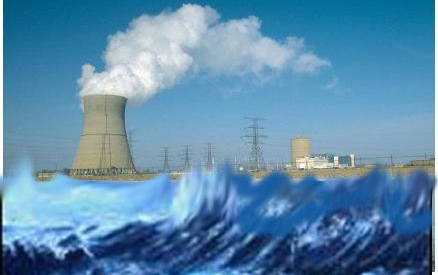
Successive governments since the 1980s have had plans for new generations of nuclear power stations sited around the coasts of the United Kingdom. Although the main reason for building them, according to politicians, is to provide a low-carbon form of electricity to combat the climate crisis, no thought seems to have gone into what the climate crisis might do to the nuclear power stations.
Prof Andy Blowers, a former government adviser on nuclear waste, points out in the Town and Country Planning Association Journal that the eight sites identified in 2011 as suitable for new stations are the same as those identified half a century earlier, on which the first generation of nuclear power stations were built.
The reason the sites were originally chosen was their remoteness, for safety, and their proximity to the sea, for cooling purposes. The latest reasoning is that they would have a better chance of public acceptance because two generations of local people have worked in the industry. The new installations are planned to operate for 60 years and will need another century after closure to cool sufficiently to remove the waste.
Blowers, an opponent of the government plans, worries that ministers seem to have taken no account of sea level rise, intense storms and the prospect of flooding at these sites.
Campaigners against UK nuclear waste dump plan claim victory in local elections
Nuclear storage dump campaigners claim victory in local elections
Call for government to honour wishes
By Daniel Jaines Local Democracy Reporter, The Lincolnite, 11 May 23
Anti-nuclear campaigners have claimed victory in Theddlethorpe after last week’s district and parish council elections.
Opposition councillors, including independent Trais Hesketh, gained a majority of seats with a high voter turnout.
The campaign’s success saw voters “overwhelmingly reject” Nuclear Waste Service’s proposal to build a Geological Disposal Facility beneath the former Conoco gas terminal.
Prior to the election, anti-dump candidates were elected unopposed for eight of the ten available seats on Theddlethorpe Parish Council.
The Guardians of the East Coast campaigners have also claimed support from neighbouring towns such as Mablethorpe, Sutton on Sea, and Trusthorpe.
Ken Smith, chairperson for GOTEC, praised the residents for protesting through the ballot box.
“We now call upon Lincolnshire County Council and East Linsey District Council to honour the people’s decision by withdrawing from the so-called community partnership,” he said.
The Nuclear Free Local Authorities group has also backed the campaigners. Councillor David Blackburn said, “When it comes to a GDF, Mablethorpe, Theddlethorpe, and Sutton on Sea do not represent the ‘willing community’ that the government and nuclear industry say they are looking for to host the dump – instead voters there have clearly said ‘No’.”
………….An NWS spokesperson stated that the GDF would only be built where there was the consent of a willing community.
………………………………………………….. Concerns raised around seismic blasting
There have recently been concerns over the impact of seismic blasting in other areas of the UK as part of exploratory works carried out by NWS ahead of geophysical survey works.
The Lakes Against Nuclear Dump/Radiation Free Lakeland groups fear marine deaths in the Irish Sea and Allerdale’s Solway Firth area as part of Copeland exploration were a result of the seismic tests and have called for them to halt while investigations take place……… https://thelincolnite.co.uk/2023/05/nuclear-storage-dump-campaigners-claim-victory-in-local-elections
Germany’s Nuclear Energy Phase-Out, Explained

NIRS, May 8, 2023
On April 15, 2023 utilities in Germany shut down the country’s three
last remaining nuclear power plants. These closures mark the successful
planned phase-out of German nuclear energy from the nation’s grid. What does this mean for Germany? What lessons should the U.S. take away from the
German energy transition?
Germany’s Energiewende (“energytransition”) is an overarching policy commitment to achieve a low-carbon, nuclear-free economy and transition to renewable energy. While the recently completed phase-out of nuclear power is a major milestone for Germany’s energy transition, it was by no means a perfect process nor is the current
energy system in Germany a perfect example to follow.
But, Germany’s transition shows that an energy policy grounded in environmental values works – and the earlier climate policy is implemented, the sooner the
climate policy goals can be realized. Above all, the German energy
transition shows the tremendous power of active citizenry, organized social
movements, and activism to transform policy and successfully demand change.
more https://www.nirs.org/germanys-nuclear-energy-phase-out-explained/
Nuclear Free Local Authorities issue appeal to King over Lincolnshire Nuke Dump

Save our sceptred isle: NFLAs issue appeal to King over Lincolnshire Nuke Dump. https://www.nuclearpolicy.info/news/save-our-sceptred-isle-nflas-issue-appeal-to-king-over-lincolnshire-nuke-dump/ 11 May 23
Just days after the Coronation, the English Nuclear Free Local Authorities (NFLAs) have written to the nation’s new Sovereign to ask His Majesty King Charles III to intercede over the plan to locate a nuclear waste dump in East Lincolnshire right next to the first Royal nature reserve.
The East Lincolnshire coast has been selected as the first of the ‘King’s Series of National Nature Reserves’ to mark the commencement of His Majesty’s Reign. A formal announcement by Natural England is expected in the summer.
The ‘Lincolnshire Coronation Coast Nature Reserve’ will cover some 21 square miles, centred upon existing protected areas at Theddlethorpe and Saltfleetby comprising mud flats, salt- and freshwater marshes and sand dunes, which support a diverse variety of wintering and breeding birds, natter jack toads, insects, and plants. The establishment of the reserve would enhance the area’s existing offer to visitors, many of whom flock to adjoining Mablethorpe to enjoy the beautiful Blue Flag award winning beaches.
So it was with regret that Councillor David Blackburn, Chair of the English Forum of the NFLAs had to sound a note of caution in his letter to His Majesty that Nuclear Waste Services has plans to locate a Geological Disposal Facility, a nuclear waste dump, right next to the reserve.
This would be the destination for Britain’s high-level, heat emitting radioactive waste, including its huge stockpile of plutonium. This waste has either already been generated through the UK’s military and civil nuclear programmes over the last 70 years or will be generated in the future through their continuance.
The GDF would comprise a surface facility approximately 1 square KM, which would most likely be located on the site of the former Conoco gas terminal in Theddlethorpe. This would be the railhead receiving regular shipments of nuclear waste. This waste would be transported below ground and out through tunnels beneath the North Sea. As nuclear waste is transported by rail, and there is no current infrastructure in place, there would be a necessity to construct a new rail line to serve the location.
The process of selecting a site for this facility could take between 15 and 20 years after which the construction and operation of such a facility would last more than 100 years.
In his letter, Councillor Blackburn contends that the project is ‘of such an immense size and in (such) a wholly inappropriate location’ that it would be ‘massively disruptive and harmful’ to the flora and fauna of the local environment, including that of the Royal Reserve, and to local people, as well as ‘massively ruinous’ to the local tourist and agrarian economy. Councillor Blackburn ends by appealing to the King on behalf of ‘His Majesty’s many loyal and anxious subjects in the affected area to intercede with relevant Ministers of the Crown to end this folly ‘.
Commenting Cllr Blackburn said: “The creation of this Royal Reserve is a wonderful idea and wholly in keeping with His Majesty the King’s known love for the natural environment. I can only hope that by drawing the Sovereign’s attention to the government’s lunatic plan to locate a nuclear waste dump next to the reserve that the King might be able to intervene to end the threat of it.”
1 This Month

of the week– Nuclear Reactor Information Task Force

14 May – online event From Bombs to Data Centres: the Face of Nuclear Colonialism
To see nuclear-related stories in greater depth and intensity – go to https://nuclearinformation.wordpress.com
-
Archives
- May 2026 (102)
- April 2026 (356)
- March 2026 (251)
- February 2026 (268)
- January 2026 (308)
- December 2025 (358)
- November 2025 (359)
- October 2025 (376)
- September 2025 (257)
- August 2025 (319)
- July 2025 (230)
- June 2025 (348)
-
Categories
- 1
- 1 NUCLEAR ISSUES
- business and costs
- climate change
- culture and arts
- ENERGY
- environment
- health
- history
- indigenous issues
- Legal
- marketing of nuclear
- media
- opposition to nuclear
- PERSONAL STORIES
- politics
- politics international
- Religion and ethics
- safety
- secrets,lies and civil liberties
- spinbuster
- technology
- Uranium
- wastes
- weapons and war
- Women
- 2 WORLD
- ACTION
- AFRICA
- Atrocities
- AUSTRALIA
- Christina's notes
- Christina's themes
- culture and arts
- Events
- Fuk 2022
- Fuk 2023
- Fukushima 2017
- Fukushima 2018
- fukushima 2019
- Fukushima 2020
- Fukushima 2021
- general
- global warming
- Humour (God we need it)
- Nuclear
- RARE EARTHS
- Reference
- resources – print
- Resources -audiovicual
- Weekly Newsletter
- World
- World Nuclear
- YouTube
-
RSS
Entries RSS
Comments RSS
 nuclear-news