Germany’s green revolution puts nuclear power in the past

Renewed support for renewables and an end to nuclear power keep Germany on its carbon neutral path
By Linda Pentz Gunter 21 May 23
Germany is a country of sensible shoes. And, I might add, supremely comfortable ones. Germans do buttery leather as well as they do beer.
Germany’s energy policy is similarly sensible. Germans see no reason to choose the slowest, most expensive, most dangerous and decidedly non-renewable energy source with which to address the climate crisis.
Consequently, Germany rejected nuclear power, and on Saturday April 15, it closed the last of its reactors. Germany, like its even more sensible neighbor, Austria — where nothing nuclear may even traverse its terrain — is now a nuclear-free country. Almost. The next step for the German anti-nuclear movement will be to close the URENCO uranium enrichment facility there and the Lingen fuel fabrication plant. And of course there remain nuclear weapons in Germany, not theirs, but ours.
While France continues to wobble along on its high-fashion nuclear stilettos, turning ankles and snapping off heels whenever the going gets rough, Germany will trudge on inexorably, and comfortably, to its stated goal of carbon neutral by 2045.
Germany also plans to end it coal use possibly as soon as 2030, but certainly by 2038. Although, you’d never know it, with all the alarmist hype in circulation post nuclear shutdown. The nuclear lobby, already in propaganda over-drive, has now gone supersonic in its efforts to persuade the world that Germany’s choice to close those last three reactors — never mind that their energy has already been replaced by renewables —will mean burning more coal.
The decision to prolong the operating time of its last three reactors until April 2023 (they were originally due to close at the end of 2022) was largely political, designed to appease rightwing voices within the governing alliance led by the Social Democrats. “We could, in fact, have already shut down the nuclear power plants by January 1 of this year without the lights going out,” said German economist, Claudia Kemfert. “The extension was more like a psychological comfort blanket, as we had an oversupply of electricity,” she told the Washington Post.
Germany didn’t need those last three reactors to keep its green revolution on track. And it especially didn’t need them through this winter, after rejecting the supply of gas from Russia in response to that country’s invasion of Ukraine. German heating is not electric. So nuclear power had no role to play in easing that situation.
Meanwhile, power prices on the European Energy Exchange for the first quarter of 2024 were more than twice as high in France than in Germany. Much of this was due to loss of market confidence in French state energy company, EDF, to get sufficient numbers of their troubled nuclear reactors back on line to meet demand.
This did not change after Germany’s last three reactors closed. As Bruno Burger of Energy Charts noted as a caption to the graphic below [ on original] : “The shutdown of the last three German nuclear power plants has no visible effect on weekly Future Electricity Prices in Germany.”
The nuclear power contribution to Germany’s energy mix has been steadily declining since the renewable energy boom, known as the Energiewende, was launched in 2000 with the Renewable Energy Act. A precondition of the Act’s passage was that as nuclear power was phased out it would be replaced by renewable energy and energy efficiency (although demand should have been brought down much faster, much further) and not by fossil fuels.
In 2000, the renewables share in German electricity was just over 6%. The nuclear share was 30%. In just 23 years, those numbers have more than reversed, with today’s share of on- and off-shore wind plus solar at just over 46% and nuclear at 4.6% in the last week before the final reactor closures. Germany remains on track to achieve its carbon neutral goal by 2045.
The renewable energy boom was greatly helped by the implementation of a feed-in tariff that helped to create confidence and certainty for renewable energy investors who were guaranteed a fixed price for 20 years, above the standard market price. This spurred a big investment, not just by companies, farmers, and coops, but by individuals and many municipalities.
This led to local success stories such as Morbach, a small town about 92 miles west of Frankfurt that boasts 14 wind turbines, 4,000 square meters of solar panels and a biogas plant. Combined, these generate three times more electricity than the community of 11,000 people needs. They sell the surplus back to the grid.
Simply put, the nuclear phaseout opened the way for renewable energy growth in Germany and put the country on the path to a fossil fuel-free future as well. Without the former, the latter would not have happened.
Critics who falsely ascribe Germany’s continued use of coal, including brown coal or lignite, to the nuclear phaseout, fail to understand that these upticks are driven by the export market and are not related to domestic consumption or the nuclear shutdown.
Ironically it is nuclear France, dependent on electric heat, that is partially responsible for the demand for German coal. This was especially so this past winter when the French nuclear sector all but collapsed with more than 50% of its nuclear capacity down due to serious safety issues combined with scheduled maintenance.
In contrast, in 2022, Germany succeeded in weaning itself off Russian gas entirely and supplying France with 15 billion kWh of electricity net.
Furthermore, Germany’s lignite and coal production remains well below earlier levels and Germany is legally committed to end coal use by 2038. The current government is working to advance this date to 2030.
According to the 2022 World Nuclear Industry Status Report: “Lignite peaked in 2013 and then declined—especially in 2019–2020—before increasing again by 20.2 percent in 2021. However, lignite generation remained below the 2019-level and 25 percent below the 2010 level.
“Hard coal also peaked in 2013 then dropped to 64 percent below the 2010-level. While it has seen, at 27.7 percent, the strongest increase in 2021 of any power generation technology, it also remains below the 2019 numbers.
“Natural gas fluctuated since 2010 and peaked in 2020 at 2.6 percent above the 2010-level before dropping by 5.3 percent in 2021.”
In fact, Germany’s struggle to get off fossil fuels lies mainly in the transport rather than the electricity sector. The country’s love affair with the car and speed limit-free autobahns is a long engagement that now needs to be broken.
Germany’s path to a carbon neutral economy is all about the trajectory, which is on track, despite bumps in the road. As always, it is about a political commitment rather than any technological challenges. If the current government sticks to its word to greatly accelerate renewable energy implementation, the Energiewende, by no means a perfect roadmap, will get itself back on track.
Mistakes were undoubtedly made. Even after then Chancellor Angela Merkel had her epiphany in 2011 in light of the Japan nuclear disaster at Fukushima, making an overnight decision to restore Germany on the path to nuclear shutdown, she subsequently made drastic cuts in solar subsidies, something environmentalists described as “nothing less than a solar phase-out law”.
But despite this, Germany remains one of the few Western countries that has demonstrated a consistent commitment both to a nuclear phaseout and to climate chaos abatement.
The German anti-nuclear movement is greatly to be credited with much of this progress. It has long been one of the most powerful and politically effective. Like the sensible shoes they march in, green advocates in Germany understood exactly what their fight was about and the significance of that final nuclear shutdown. I hope they are having a jolly good party. They deserve it. Then it will be back to vigilance over the Energiewende — and hopefully to removing US nuclear weapons from German soil and closing those uranium fuel fabrication plants. Because that is the kind of thing that only people power can get done.
“The German nuclear phase-out is a victory of reason over the lust for profit; over powerful corporations and their client politicians,” read a statement from Greenpeace. “It is a people-powered success against all the odds.”
Linda Pentz Gunter is the international specialist at Beyond Nuclear and writes for and curates Beyond Nuclear International.
The nine hours in which Spain made the 100% renewable dream a reality

Electricity generation through solar, wind and water exceeded total demand in mainland Spain on Tuesday, a pattern that will be repeated more and more in the future
IGNACIO FARIZA 19 May 23 El Pais
The Spanish power grid on Tuesday tasted an appetizer of the renewable energy banquet that is expected to flourish in the coming years. For nine hours, between 10 a.m. and 7 p.m., the generation of green electricity was more than enough to cover 100% of Spanish peninsular demand, a milestone that had already been reached on previous occasions, but not for such a prolonged period. The achievement — which was backed up by figures sent to EL PAÍS by the state electricity provider Red Eléctrica de España (REE) — took place, moreover, on a typical weekday, when the consumption pattern is higher, and not on a holiday or at the weekend, when demand falls sharply.
A huge drive in the installation of renewables — especially photovoltaics — is enabling Europe’s fourth-largest economy to cover an increasing part of its electricity needs with renewable energy, something that not only substantially reduces the country’s carbon footprint but also applies downward pressure on prices during daylight hours. Above all, it increases the incentives — both environmental and economic — to invest in storage and to electrify transport, industry, and heating, which are intensive in oil or natural gas consumption……………………………………………………………….
Xavier Cugat, project manager at a photovoltaic company who is at the origin of the statistic. “The nuclear closure schedule is not only carried out well, but it is also conservative: at the rate at which we are installing renewables, it could even be brought forward. What will provide more flexibility is hydropower and, within hydropower, pumping,” adds the expert.
“By 2030, Spain will have three fewer nuclear reactors and it turns out that renewables are solving the problem on their own,” says Pedro Fresco, former director of Energy Transition in the Valencia region. Not only is nuclear power contributing less but Spain’s waterfalls, another of the country’s biggest sources of electricity, are being severely hit by the drought, which is reducing productive capacity in many areas. “It is true that it is a one-off, and at a time of very good solar and wind production, but with very little water and with hydroelectric power at a technical minimum… even so, we are covering 100%.
. Where will we be in three years, when we will have between 10 and 15 gigawatts more of photovoltaic and another five of wind? There is a huge window of opportunity for hydrogen and electric cars, especially in the central hours of the day,” adds Fresco. “But we need strategies to take advantage of it.” https://english.elpais.com/spain/2023-05-19/the-nine-hours-in-which-spain-made-the-100-renewable-dream-a-reality.html
Russia’s Atomflot added to U.S. sanctions list
FSUE Atomflot, the maintenance base for Russia’s fleet of nuclear-powered icebreakers, can no longer buy products from, or do business with, U.S. or European Union entities.
By Thomas Nilsen Barents Observer 21 May 23
Located two short kilometers north of Murmansk, FSUE Atomflot was for three decades a major receiver of grants from Norway, the United Kingdom, the United States and the European Union. Millions of Euros dedicated to nuclear- and radiation safety projects have helped Russia improve infrastructure and technology at this civilian site that partly has served as a transshipment hub for spent nuclear fuel from dump sites on the Kola Peninsula.
The United States on Friday announced FSUE Atomflot being added to the sanctions list, a move following a similar decision previously undertaken by the European Union in February………………………………………………. more https://thebarentsobserver.com/en/arctic/2023/05/atomflot-added-us-sanctions-list
Russian forces dig in at Ukrainian nuclear plant, witnesses say
Tom Balmforth and Sarah McFarlane, Fri, 19 May 2023,Yahoo! Lifestyle
LONDON (Reuters) -Russian military forces have been enhancing defensive positions in and around the Zaporizhzhia nuclear power plant in southern Ukraine in recent weeks, four witnesses said, ahead of an expected counteroffensive in the region.
New trenches have been dug around the city and more mines have been laid. Surveillance cameras at the plant are pointing north across a wide reservoir towards Ukrainian-controlled territory.
The Russians have had firing positions set up atop some of the plant’s buildings for several months. Nets have been erected in a possible deterrent to drones.
The measures described by two Ukrainians who work at the power plant and two other residents in the city of Enerhodar underline the risks the war poses to the security of the facility.
The sources spoke on condition of anonymity because of fears for their safety in a city under Russian occupation.
Russian state nuclear energy company Rosatom said any possible military action by Ukraine posed a threat to nuclear safety, and that the plant’s equipment was being maintained properly. The Ukrainian military intelligence agency and the Russian defence ministry did not respond to requests for comment.
Some nuclear industry experts said they were alarmed and warned that any damage to the plant could have dire consequences for people, the surrounding area, the war and the global nuclear industry.
………………………………… there is concern in the international community that the six-reactor nuclear plant, Europe’s largest, could be caught up in fighting, particularly as military analysts expect Ukraine to try to push Russian forces back in the Zaporizhzhia region.
The U.N. nuclear watchdog says that the military presence and activity is growing in the region, underlining the need for urgent action. It has warned for months of the danger of a major accident at the plant.
The agency plans to present a deal between Russia and Ukraine to the U.N. Security Council later this month to protect the facility, four diplomats told Reuters…………………………………………………………… https://au.lifestyle.yahoo.com/russian-forces-dig-ukrainian-nuclear-060319771.html
IAEA Warns of Tense Military Situation Near Ukraine Nuclear Plant
Mirage News 19 May 23
The International Atomic Energy Agency (IAEA) continues to warn of the potential nuclear threat in the Ukraine conflict amid rising tensions surrounding the Zaporizhzhya Nuclear Power Plant (ZNPP).
IAEA Director General Rafael Mariano Grossi said on Friday in a statement, that a location near the town of Enerhodar, home of most of the plant’s staff, reportedly came under artillery fire earlier in the day, “in the latest incident indicating an increasingly tense military situation in the area.”
Speculation of military activity
The ZNPP, Europe’s largest nuclear power plant, is located just a few kilometres from Enerhodar.
IAEA experts present at the plant reported that it had not been affected “but the proximity once again underlined persistent nuclear safety and security dangers at a time of heightened speculation of future military operations in the region,” said Mr. Grossi…………………………………………………………… more https://www.miragenews.com/iaea-warns-of-tense-military-situation-near-1010184/
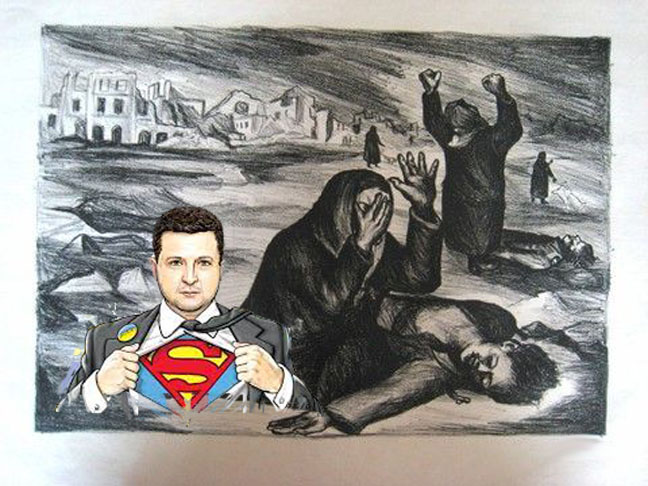
Ukrainian diplomat fears ‘terrible summer’ ahead
 | |||
| |||
https://www.rt.com/russia/576550-terrible-price-ukraine-counteroffensive/
The country’s troops may have to pay a “terrible price” in a planned counteroffensive, envoy Vadim Pristaiko said
Ukraine could suffer heavy losses during its much-anticipated counteroffensive against Russia, Vadim Pristaiko, Kiev’s ambassador to the UK, warned on Thursday.
In an interview with British broadcaster ITV, the diplomat said: “I know that it can be a very terrible summer and the price is terrible.”
Pristaiko also said Kiev’s Western backers have piled “too much pressure” on Kiev and have built up “too much expectations” about the spring campaign.
When asked to comment on why Ukraine maintains its position on not revealing its losses in the conflict, Pristaiko replied: “internally, we understand how many of us are already killed and lost.”
“We understand that it will be extremely difficult to fight with a nation that is 16 times bigger than us,” the envoy said. “But we are determined to do it and we are not going to tell Russians how painful it is – they know it is painful and we know it is painful”.
The Ukrainian ambassador also acknowledged that while US President Joe Biden and his administration have emerged as one of Kiev’s most staunch supporters, his successor might prove to be less willing to help the country.
“One of the weaknesses of democracy is the cyclical nature, and we have the same… we have to take into account this cycle in politics,” he said.
“We understand that the time might come that we won’t enjoy such great support, that is why we have to put all the pressure right now”, Pristaiko said. “That is why we are asking our friends, can you bring everything to the table? Allow us to have a decisive push this time.”
For several months, Ukraine has been speaking about a counteroffensive against Russia to reclaim territories Kiev considers as its own, but some officials have complained about a lack of ammunition, weapons, and even adverse weather conditions.
Last week, Ukrainian President Vladimir Zelensky stated that his country is basically “ready” for its launch, but “still needs a bit more time” as it waits for more Western weapons.
Last month, The New York Times reported that there are no guarantees that the Ukrainian counteroffensive will succeed, adding that an underwhelming outcome would likely prompt Kiev’s backers to press it to negotiate for peace.
Nuclear Free Local Authorities condemn UK Environment Agency’s failure to protect fish in Hinkley Point C’s nuclear project
NFLAs condemn ‘craven climbdown’ by Environment Agency over Acoustic
Fish Deterrent. In response to an ongoing consultation, the UK / Ireland
Nuclear Free Local Authorities has condemned the Environment Agency for
cravenly climbing down when faced with EDF Energy’s demand that it be
excused from providing an Acoustic Fish Deterrent at the new Hinkley Point
C nuclear power project, and has urged them not to waive this requirement.
The Environment Agency’s latest recommendation represents a complete
volte-face on its previous position on the permit requirements, which was
taken after an in-depth examination by an inspection team and by
verification by the Secretary of State. NFLA England Forum Chair,
Councillor David Blackburn said: “The consequences of the Environment
Agency granting this concession will be catastrophic for the local fish
population and marine environment.
NFLA 18th May 2023
Global heating is predicted to trigger more nuclear outages in France every year.

extreme heat and droughts amid
climate change could impact nuclear plants, which use water to cool down.
EDF expects to lose 1.5% of its nuclear output, or about 5 TWh, annually
by 2050 due to the impact of global warming based on an average production
of 400 TWh, an executive said on Tuesday.
This compares with a current
average loss of nuclear power output caused by global warming of 0.3%, or
1.2 TWh, Cecile Laugier, head of environment at EDF’s nuclear branch,
told reporters. This echoes a report released in March by France’s Court
of Auditors, which said global warming could trigger three to four times
more outages than today. Increased risk of extreme heat and droughts amid
climate change could impact nuclear plants, which use water to cool down.
Montel 16th May 2023
https://www.montelnews.com/news/1499729/heat-to-cause-15-yearly-nuclear-output-loss-by-2050–edf
France to speed up nuclear power deployment
By Davide Basso | EURACTIV.fr 17 May 23
A bill to speed up the construction of new nuclear reactors was approved by the French parliament on Tuesday (16 May), with the government hailing it as an environmental step forward.
Lawmakers on Tuesday validated the bill to accelerate the construction of new nuclear reactors. The compromise text struck between the National Assembly and the Senate was voted by 339 votes to 399.
MPs from the majority (Renaissance, Horizons, Modem), the independents (LIOT), the right (Les Républicains) and the extreme right (Rassemblement national) voted in favour of the text, in addition to a dozen communist MPs.
Among the opponents, the Greens, the radical left (La France insoumise) and a handful of Communists voted “against” while the Socialists abstained.
Once it comes into force, the new law will speed up the construction of new nuclear reactors by simplifying the required administrative procedures and planning documents. The Energy Transition Ministry expects future construction times to be reduced by at least two years.
In addition, a 50% cap on nuclear power’s share of France’s electricity mix was removed. The text also provides for tightening the penalties for those who illegally enter a nuclear power plant, now set at a maximum of two years imprisonment.
….. Environmental NGOs denounced “a law that is disconnected from ecological and climatic imperatives”. Greenpeace, in particular, questioned “the slowness of the construction of nuclear reactors”, as well as “the safety” and “the conflicts of water use” that are to be expected………………. https://www.euractiv.com/section/politics/news/france-to-speed-up-nuclear-power-deployment/
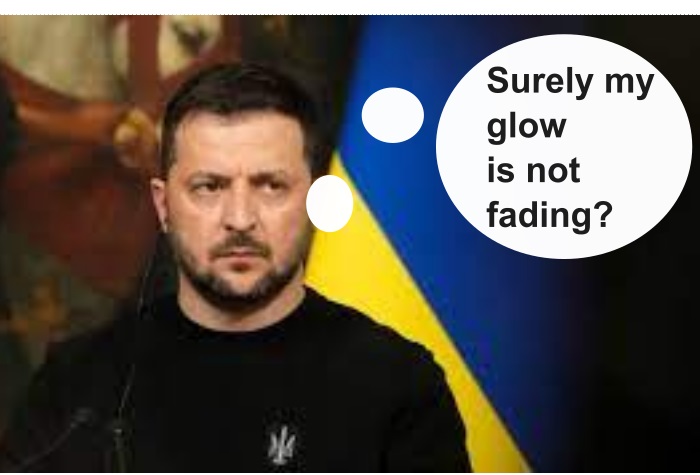
How the West, and Zelensky, derailed the Minsk Agreements between Ukraine and Russia
Adonis Cirillo, commenting on Rt.com, 17 May 23
Everyone knows, or should know, that the ‘Western’ sponsored Maiden Revolution (coup d’état) KILLED Ukraine, and more than 14,000 of its own citizens since 18 Feb, 2014.
If you are undecided or uneducated to the events leading up to the West’s coup d’état, you may download & watch “UKRAINE ON FIRE” 2016 Oliver Stone documentary. (ED. note – Youtube has banned viewers from downloading this film, – but not pro-Ukrainian videos )
(you will see US Deputy Secretary of State for Political Affairs Victoria Nuland (the Maidan ‘midwife’), US Democrat & Republican Congressmen (e.g., Lindsey Graham), US Advisors (e.g., John Bolton), and NGO’s inside Ukraine before, during, and after the coup d’état)
If you continue to unwind history, you will discover that Ukraine of today is inextricably linked to the Bush/Gorbachev Agreements of 1989-90 and the subsequent Western Violations thereof (e.g., The continued expansion of US & NATO forces in Europe).
NOTE : Ex-Ukrainian President Petro Poroshenko said the Minsk Agreements “meant nothing” and claimed credit for giving Kiev enough time to militarize. – RT 17 June, 2022 | Ex-German Chancellor Angela Merkel said the Minsk accords were signed in order to “give Ukraine time” to make the country stronger – Zeit Newspaper 7 Dec, 2022 | Ex-French President François Hollande agreed with Merkel, saying that her comment was “right on this point.” … “It is the merit of the Minsk agreements to have given the Ukrainian army this opportunity,” – RT 30 Dec, 2022 | Ukrainian President Vladimir Zelensky took credit for derailing Minsk Agreements – RT 9 Feb, 2023 https://www.rt.com/news/576436-zelensky-poland-us-hersh/
Ukraine’s neighbors ready to pay off Zelensky to stop conflict – Seymour Hersh
https://www.rt.com/news/576436-zelensky-poland-us-hersh/ 17 May 23
EU nations have privately urged the president of the war-torn country to end the fighting, a US official told the veteran journalist.
Poland is leading a group of European nations that are secretly urging Vladimir Zelensky to find a way to settle the conflict with Russia, veteran journalist Seymour Hersh has reported, citing a “knowledgeable” American official.
According to US intelligence, other EU countries that want to see an end to the fighting include Hungary, Germany, the Czech Republic, Lithuania, Latvia and Estonia, Hersh wrote in an article published on his Substack page on Wednesday.
“Hungary is a big player in this and so are Poland and Germany, and they are working to get Zelensky to come around,” the unnamed official claimed. Those countries have made it clear that “Zelensky can keep what he’s got if he works up a peace deal even if he’s got to be paid off, if it’s the only way to get a deal.”
By “keep what he’s got,” the source was referring to the Ukrainian president’s villa in Italy and interests in an offshore bank, Hersh clarified.
However, Zelensky has so far rejected the proposal, while other major European players – France and the UK – “are too beholden” to the Biden administration, which is continuing to back the Ukrainian leader, the official said.
One of the main reasons why Poland and the others want the conflict to end is because the burden of accommodating Ukrainian refugees has become too much for them, the Pulitzer Prize-winning journalist wrote.
The problem for those countries “is how to get the US to stop supporting Zelensky,” Hersh’s source suggested.
He claimed that US intelligence is well aware that “Ukraine is running out of money and… that the next four or months are critical. And Eastern Europeans are talking about a deal.”
However, he added that “it’s not clear to the intelligence community what the president and his foreign policy aides in the White House know of the reality.”
The US is “still training Ukrainians how to fly our F-16s that will be shot down by Russia as soon as they get into the war zone. The mainstream press is dedicated to Biden and the war, and Biden is still talking about the Great Satan in Moscow while the Russian economy is doing great,” the official explained.
Russia has repeatedly stated that it’s ready to resolve the conflict at the negotiating table. However, it did not receive any proposals from Ukraine and its Western backers that it could consider reasonable.
Zelensky has been promoting his ten-point peace plan, which calls for Russian forces to withdraw to borders claimed by Ukraine, to pay reparations, and to submit to war-crime tribunals.
Moscow has rejected the plan as “unacceptable,” saying it ignores the reality on the ground and is actually a sign of Kiev’s unwillingness to solve the crisis through diplomatic means.
Nuclear Safety Authority identified faults in Olkiluoto nuclear power plant
The Radiation and Nuclear Safety Authority (STUK) informed on its own
website on 14 April under the section Surveillance News that Teollisuuden
Voima, TVO, had detected and subsequently repaired defects and deficiencies in the
seals of the connectors of third unit (OL3) of the Olkiluoto nuclear power
plant.
The seals are required in the event of an accident. Should the seals
be missing, the measurements required for containing the accident could be
affected, compromising the safety functions of the plant.
As the incidentwas accompanied by inadequate guidance and the defect was detected in
several locations, TVO concluded that the incident falls under category one
on the International Nuclear and Radiological Event Scale (INES). According
to the INES, the incident was classified as an Anomaly. The absence of a
single seal as such is not a safety issue, but the recurrence of the error
increased the significance of the incident on the assessment scale. TVO
submitted its own assessment to STUK in connection with the incident report
in April, and STUK made a decision based on its own assessment, in which it
concurs with TVO’s INES assessment.
STUK 15th May 2023
https://www.stuk.fi/web/en/-/tvo-identified-faults-in-ol3-connectors
Finnish nuclear plant throttles production as electricity price plunges
Electricity production must also be profitable for nuclear power plants, according to the facility’s operator Teollisuuden Voima (TVO).
The output of Finland’s newest nuclear power facility, Olkiluoto 3, has been
significantly cut back because electricity has become too cheap, according
to the plant’s owner, Teollisuuden Voima (TVO).
“Electricity productionmust also be profitable for nuclear power plants, and when the price is
particularly low, there may be situations where output is limited,” TVO
communications manager, Johanna Aho, said. Early on Wednesday the market
price for electricity dropped below zero cents per kilowatt-hour (kWh) and
for hours after that the price was only 0.3 cents per kWh at its highest,
according to the country’s grid operator, Fingrid.
YLE 17th May 2023
Depleted uranium won’t end a war that has no winners
It is clear the great powers have no end in sight for the war: toxic munitions that will last even longer than the conflict are the last thing the territory needs, writes TOMASZ PIERSCIONEK
Morning Star, 16 May 23,
THE war in Ukraine is the most devastating conflict in Europe since World War II. As in most conflicts, and in the years leading up to the war, truth became the first causality.
The Western media simplifies the narrative to Nato good — Russia bad, while ignoring pivotal factors such as Nato’s eastward march towards Russia and the US-backed 2014 coup, which in turn set the scene for the war that unfolded in Feb 2022.
Non-mainstream media or independent bloggers who try to peer over the media iron curtain and question Nato talking points face being defamed as pro-Kremlin stooges.
Is the West scared of its citizens thinking independently or fearful that such “wrong think” might outshine pro-Nato propaganda? Do Europe’s citizens need “protection” from the risk of being exposed to unsanctioned thinking lest they draw different conclusions to the official narrative?
A year into the conflict and amidst the dreadful loss of life on all sides, it looks like war between Russia and Ukraine is really a conflict between Nato and Russia, in which the former seeks to challenge the emergence of a new Eurasian-centric capitalist bloc. Remember too that Russia is China’s ally and a defeat of the former would leave the latter in a more vulnerable position vis a vis Nato expansion.
It is clear too that (most of) the nations comprising the EU and Nato are willing to pull out all stops to defeat or greatly weaken Russia, regardless of the human costs to Ukraine, and have already handed over billions of dollars in military aid alongside vast quantities of weapons from their own arsenals. Britain provided £2.3 billion in military aid to Ukraine in 2022 whilst the US has given at least $46.6bn in military aid since the war began.
For the US, at least, this is a perfect war in which it can fight a key geopolitical opponent without getting its hands dirty and having to explain an influx of body bags to the US public like in Iraq and Afghanistan.
n the EU’s case however, reality hits a little close to home — despite its massive support for Ukraine and the 10 rounds of sanctions placed upon Russia, they have failed to bring the country to its knees in economic or military terms (as repeatedly promised), nor have they “inspired” the Russian people to overthrow their rulers. Instead, the anti-Russian sanctions seem to have caused a fair amount of self-harm to the EU whilst Russia is well on the way to finding new markets for its exports.
Hypocritically, despite singing from the pro-Ukraine hymn book, the EU continues to import billions of dollars worth of goods from Russia — $195.56 billion during 2022 and the greatest amount since 2014. Furthermore, despite the EU banning Russian crude oil imports, it purchases oil products from India (eg diesel and jet fuel) that have been refined from Russian crude oil. As Russia is now selling more crude oil to India and India in turn is selling more refined oil to Europe, this is a win-win situation for these two Brics nations.
n an unwise and unneeded escalation to the war in Ukraine, the British government announced in late April 2023 that it had sent Challenger 2 tank shells tipped with depleted uranium (DU) to Ukrainian forces. Such a move is a provocative and dangerous escalation that risks precipitating a regional or global war in which there will be no winner.
It is worth pointing out that at the end of March 2023, James Heappey, British Minister of State for the Armed Forces, responded to a parliamentary question about whether Russia had used DU munitions in Ukraine with the answer: “The Ministry of Defence is unaware of any credible open-source reports of Russia using depleted uranium in Ukraine.”
DU is a by-product of a process whereby uranium is enriched to make nuclear fuel. It remains radioactive, albeit 40 per cent less so than raw uranium. On account of its high density, DU is used to increase the power of armour-piercing munitions and has previously been used by US/Nato forces in several conflicts — the 1991 first Gulf war, Bosnia, the 2003 Iraq invasion, and against Isis forces in Syria in 2015…………………………………..
The Scientific Committee on Health and Environmental Risks formed by the European Commission produced a report in 2010 which noted that “in combat zones, vehicles hit by DU should be made inaccessible to the general public and be properly disposed of. Used DU ammunition should also be collected and disposed of.”
This concurs with advice published by the US Air Force in 1975 which stated that DU ought to only be used against armoured vehicles. However, in Iraq, DU munitions reportedly were not only used against human combatants but also fired in or near to urban areas.
Consequently, hundreds of sites in Iraq were contaminated with DU. Similar consequences are possible in the case of Ukraine: funding a clean-up operation once the war ends is unlikely to be a top priority.
The US Environmental Protection Agency notes that with regards to DU “exposure to the outside of the body is not considered a serious hazard. However, if DU is ingested or inhaled, it is a serious health hazard.”
The risk that DU finds its way into the food chain ought not to be dismissed, alongside the long-term detrimental effects on the ecosystem.
Furthermore, introducing DU (radioactive) munitions into a high-stakes war such as the one in Ukraine breaks a certain psychological barrier whereby the risk of further escalation increases as we take another step down an ever-shortening and dangerous path that ends with the use of conventional uranium weapons — nukes.
Continuing to arm Ukraine so that it can fight Russia down to the last Ukrainian on behalf of Nato (and perhaps after that using Poles to do the job) sets the scene for the conflict to become a regional war or worse.
Realistically, the war is not going the way Nato hoped and promised. The Russian economy has not collapsed, Russia has not run out of missiles, the Russian people have not overthrown their government, and the majority of the world has not turned its back on Russia, which is in the process of securing new trading partners and even sympathisers to offset the effects of any Western sanctions.
The conflict has also shown that the world (including major players such as China, India, Brazil, and Saudi Arabia) is not united behind the West. Indeed, 19 more countries are now seeking to join the Brics group of emerging economies. It would be easy, even convenient, for the US to pull back on funding Ukraine should the upcoming Ukrainian offensive not deliver the promised gains.
After all, 2024 is an election year, a greater number of US politicians are becoming uneasy at Biden’s blank cheque to Ukraine, and frankly sending billions to fund a war abroad rather than investing the money at home is not exactly a vote winner.
It would be tempting for the US to say “mission accomplished” and make the war in Ukraine Europe’s problem, leaving the EU to sort out the mess and come to a disadvantageous settlement with Russia.
It is critical that the anti-war movement, the trade union movement, and more broadly the left work with peace movements within Ukraine, Russia and beyond to call for a swift and just settlement to the war, in which the grievances of all sides are acknowledged.
Concurrently we must condemn rhetoric or action by any world leader that seeks to prolong the war in Ukraine whilst the people of Russia, Ukraine and Europe bear the human and economic cost of the conflict.
We need to be wary too, of forces both within Nato and beyond that are seeking to prolong the conflict in Ukraine for ideological reasons, due to the lucrative nature of war (not least for the arms industry), or for personal ambition. https://morningstaronline.co.uk/article/f/introducing-depleted-uranium-ukraine-conflict-needless-escalation-war-has-no-winners
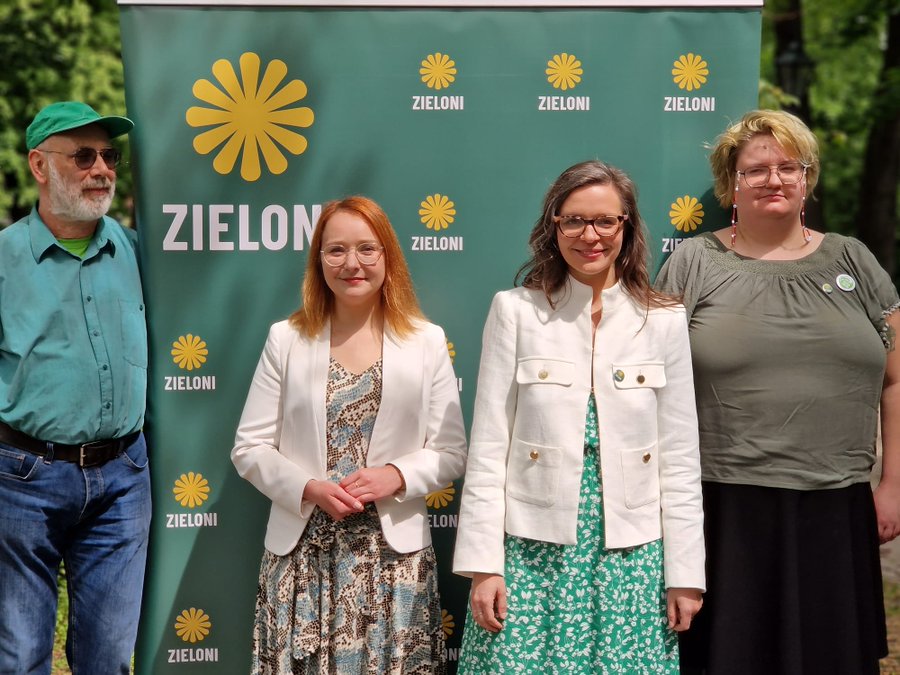
Poland’s Greens oppose construction of small nuclear reactor in Kraków
MAY 17, 2023 https://notesfrompoland.com/2023/05/17/polands-greens-opposes-construction-of-small-nuclear-reactor-in-krakow/
The Greens (Zieloni), who are part of Poland’s largest opposition grouping, have raised concern over the proposed construction of a nuclear small modular reactor (SMR) in Kraków.
They argue that the technology, which is still in development, is not sufficiently tested and produces large amounts of nuclear waste. They have called for investment in renewables instead.
Last month, state energy firm Orlen announced that it would by the end of this year announce 20 potential locations for the SMRs that it is developing in partnership with a group of American and Canadian corporations and with financing from US government agencies.
Of the seven potential sites unveiled already, one is in the Nowa Huta district of Kraków. Yesterday, two Green MPs, Małgorzata Tracz and Klaudia Jachira, organised a protest against those plans, saying that “no one has asked residents of Kraków for their opinion”.
Jachira noted that SMRs are still an experimental technology and “there is no evidence whether they work and what the risks are”, reports Gazeta Krakowska. Tracz cited research from Stanford University indicating that SMRs produce up to nine times more radioactive waste per unit of energy than large reactors.
The pair called for Orlen to provide more information on the costs and benefits of SMRs, to explain how waste will be managed, and to hold consultations with residents.
In response, Orlen Synthos Green Energy, which is responsible for developing the SMRs, noted that. while Nowa Huta is among the preferred locations. no final decision has been made.
“Following studies and consultations with local authorities, [we] will spend two years studying in detail the possibility of building a small nuclear unit in Nowa Huta,” said the firm. “Once the potential is confirmed, priority will be given to inviting local communities to dialogue. Only on this basis will decisions be taken.”
1 This Month

of the week– Nuclear Reactor Information Task Force

14 May – online event From Bombs to Data Centres: the Face of Nuclear Colonialism
To see nuclear-related stories in greater depth and intensity – go to https://nuclearinformation.wordpress.com
-
Archives
- May 2026 (102)
- April 2026 (356)
- March 2026 (251)
- February 2026 (268)
- January 2026 (308)
- December 2025 (358)
- November 2025 (359)
- October 2025 (376)
- September 2025 (257)
- August 2025 (319)
- July 2025 (230)
- June 2025 (348)
-
Categories
- 1
- 1 NUCLEAR ISSUES
- business and costs
- climate change
- culture and arts
- ENERGY
- environment
- health
- history
- indigenous issues
- Legal
- marketing of nuclear
- media
- opposition to nuclear
- PERSONAL STORIES
- politics
- politics international
- Religion and ethics
- safety
- secrets,lies and civil liberties
- spinbuster
- technology
- Uranium
- wastes
- weapons and war
- Women
- 2 WORLD
- ACTION
- AFRICA
- Atrocities
- AUSTRALIA
- Christina's notes
- Christina's themes
- culture and arts
- Events
- Fuk 2022
- Fuk 2023
- Fukushima 2017
- Fukushima 2018
- fukushima 2019
- Fukushima 2020
- Fukushima 2021
- general
- global warming
- Humour (God we need it)
- Nuclear
- RARE EARTHS
- Reference
- resources – print
- Resources -audiovicual
- Weekly Newsletter
- World
- World Nuclear
- YouTube
-
RSS
Entries RSS
Comments RSS
 nuclear-news