J.D. Vance – New York Times: The Math on Ukraine Doesn’t Add Up

The notion that we should prolong a bloody and gruesome war because it’s been good for American business is grotesque.
Mr. Zelensky’s stated goal for the war — a return to 1991 boundaries — is fantastical.
J.D.Vance, The New York Times, Fri, 12 Apr 2024 , https://www.nytimes.com/2024/04/12/opinion/jd-vance-ukraine.html
President Biden wants the world to believe that the biggest obstacle facing Ukraine is Republicans and our lack of commitment to the global community. This is wrong.
Ukraine’s challenge is not the G.O.P.; it’s math. Ukraine needs more soldiers than it can field, even with draconian conscription policies. And it needs more matériel than the United States can provide. This reality must inform any future Ukraine policy, from further congressional aid to the diplomatic course set by the president.
The Biden administration has applied increasing pressure on Republicans to pass a supplemental aid package of more than $60 billion to Ukraine. I voted against this package in the Senate and remain opposed to virtually any proposal for the United States to continue funding this war. Mr. Biden has failed to articulate even basic facts about what Ukraine needs and how this aid will change the reality on the ground.
The most fundamental question: How much does Ukraine need and how much can we actually provide? Mr. Biden suggests that a $60 billion supplemental means the difference between victory and defeat in a major war between Russia and Ukraine. That is also wrong. This $60 billion is a fraction of what it would take to turn the tide in Ukraine’s favor. But this is not just a matter of dollars. Fundamentally, we lack the capacity to manufacture the amount of weapons Ukraine needs us to supply to win the war.
Consider our ability to produce 155-millimeter artillery shells. Last year, Ukraine’s defense minister estimated that the country’s base-line requirement for these shells was over four million per year but that it could fire up to seven million if that many were available. Since the start of the conflict, the United States has gone to great lengths to ramp up production of 155-millimeter shells. We’ve roughly doubled our capacity and can now produce 360,000 per year — less than a tenth of what Ukraine says it needs. The administration’s goal is to get this to 1.2 million — 30 percent of what’s needed — by the end of 2025. This would cost the American taxpayers dearly while yielding an unpleasantly familiar result: failure abroad.
Just this week, the top American military commander in Europe argued that absent further security assistance, Russia could soon have a 10-to-1 artillery advantage over Ukraine. What didn’t gather as many headlines is that Russia’s current advantage is at least 5 to 1, even after all the money we have poured into the conflict. Neither of these ratios plausibly leads to Ukrainian victory.
Proponents of American aid to Ukraine have argued that our approach has been a boon to our own economy, creating jobs here in the factories that manufacture weapons. But our national security interests can be — and often are — separate from our economic interests.The notion that we should prolong a bloody and gruesome war because it’s been good for American business is grotesque. We can and should rebuild our industrial base without shipping its products to a foreign conflict.
The story is the same when we look at other munitions. Take the Patriot missile system — our premier air defense weapon. It’s of such importance in this war that Ukraine’s foreign minister has specifically demanded them. That’s because in March alone, Russia reportedly launched over 3,000 guided aerial bombs, 600 drones and 400 missiles at Ukraine. To fend off these attacks, the Ukrainian president, Volodymyr Zelensky, and others have indicated they need thousands of Patriot interceptors per year. The problem is this: The United States only manufactures 550 every year. If we pass the supplemental aid package currently being considered in Congress, we could potentially increase annual production to 650, but that’s still less than a third of what Ukraine requires.
These weapons are not only needed by Ukraine. If China were to set its sights on Taiwan, the Patriot missile system would be critical to its defense. In fact, the United States has promised to send Taiwan nearly $900 million worth of Patriot missiles, but delivery of those weapons and other essential resources has been severely delayed, partly because of shortages caused by the war in Ukraine.
If that sounds bad, Ukraine’s manpower situation is even worse. Here are the basics:Russia has nearly four times the population of Ukraine. Ukraine needs upward of half a million new recruits, but hundreds of thousands of fighting-age men have already fled the country. The average Ukrainian soldier is roughly 43 years old, and many soldiers have already served two years at the front with few, if any, opportunities to stop fighting. After two years of conflict, there are some villages with almost no men left. The Ukrainian military has resorted to coercing men into service, and women have staged protests to demand the return of their husbands and fathers after long years of service at the front. This newspaper reported one instance in which the Ukrainian military attempted to conscript a man with a diagnosed mental disability.
Many in Washington seem to think that hundreds of thousands of young Ukrainians have gone to war with a song in their heart and are happy to label any thought to the contrary Russian propaganda. But major newspapers on both sides of the Atlantic are reporting that the situation on the ground in Ukraine is grim.
These basic mathematical realities were true, but contestable, at the outset of the war. They were obvious and incontestable a year ago, when American leadership worked closely with Mr. Zelensky to undertake a disastrous counteroffensive. The bad news is that accepting brute reality would have been most useful last spring, before the Ukrainians launched that extremely costly and unsuccessful military campaign. The good news is that even now, a defensive strategy can work. Digging in with old-fashioned ditches, cement and land mines are what enabled Russia to weather Ukraine’s 2023 counteroffensive. Our allies in Europe could better support such a strategy, as well. While some European countries have provided considerable resources, the burden of military support has thus far fallen heaviest on the United States.
By committing to a defensive strategy, Ukraine can preserve its precious military manpower, stop the bleeding and provide time for negotiations to commence. But this would require both the American and Ukrainian leadership to accept that Mr. Zelensky’s stated goal for the war — a return to 1991 boundaries — is fantastical.
The White House has said time and again that it can’t negotiate with President Vladimir Putin of Russia. This is absurd. The Biden administration has no viable plan for the Ukrainians to win this war. The sooner Americans confront this truth, the sooner we can fix this mess and broker for peace.
The Scottish National Party support signing an international treaty banning nuclear weapons, post independence

THE SNP support signing an international treaty banning nuclear weapons
after independence – despite External Affairs Secretary Angus Robertson
refusing to say as much, The Sunday National understands. The news comes
after Robertson repeatedly declined to commit an independent Scotland to
signing the UN Treaty on the Prohibition of Nuclear Weapons (TPNW) at the
launch of a government white paper on Scotland’s place in the world in
March. The SNP have been clear that the UK’s nuclear weaponry, which is
based on the River Clyde, would have to leave the country after a Yes vote.
Former first minister Nicola Sturgeon had said in 2021 that an independent
Scotland “would be a keen signatory” to the TPNW.
The National 14th April 2024
‘Unprecedented infestation’ of rats at Dounreay site
‘Unprecedented infestation’ of rats at Dounreay site. Dounreay has had to
bring in a pest control company to deal with an “unprecedented infestation
of rats over the past few months,” according to a safety rep at the site.
Workers, too, have expressed their concerns about the situation with one
saying hundreds were reportedly seen “scurrying away” when pampas
grass-like plants were removed from around the buildings where they were
nesting.
There have been reports of the rats being seen in vehicles, a
kitchen area and near bins, while concerns have been raised about health
implications.
John O’Groat Journal 11th April 2024
https://www.johnogroat-journal.co.uk/news/unprecedented-infestation-of-rats-at-dounreay-site-347661
Keir Starmer slammed over staunch defence of nuclear weapons

“it’s increasingly clear that Starmer’s offer is just more of the same: billions of pounds wasted on nuclear weapons and nuclear power, and a belligerent foreign policy that includes support for the Aukus pact, Nato, and continuing arms sales to Israel, used to kill Palestinians.
“Putting billions of pounds into the pockets of arms companies and their investors will not reinvigorate the economy in any meaningful way.”
The National By Hamish Morrison @HMorrison97 Political Reporter, 10 Apr 24
KEIR Starmer has said Trident is the “bedrock” of Labour’s defence policy – despite growing concern over the state of the ageing nuclear fleet critics say is a “grotesque” waste of money.
The Labour leader launched a full-throated defence of Britain’s nuclear weapons in an attempt to stress the distance he has taken the party since its leadership under Jeremy Corbyn – who voted against the renewal of Trident while in charge.
During a visit to Barrow today, where nuclear submarines are being built, Starmer is expected to focus on increasing jobs and skills in defence.
Starmer said: “The changed Labour Party I lead knows that our nation’s defence must always come first. Labour’s commitment to our nuclear deterrent is total.
“In the face of rising global threats and growing Russian aggression, the UK’s nuclear deterrent is the bedrock of Labour’s plan to keep Britain safe.
“It will ensure vital protection for the UK and our Nato allies in the years ahead, as well as supporting thousands of high paying jobs across the UK………………………..
Labour will ensure that new UK leadership within Aukus helps make this national endeavour a success for Britain.”
The Aukus pact unites Australia, the UK and the USA in a military pact in the South Pacific, which critics say escalates tensions with the Chinese.
China’s government has described Aukus – which will see Australia provided with nuclear-powered submarines – as indicative of an “obsolete Cold War zero sum mentality”.
The SNP have said Labour’s commitment to Trident was “grotesque”.
Martin Docherty-Hughes (below), the party’s defence spokesperson, said: “Westminster has already wasted billions of pounds of taxpayer’s money on nuclear weapons and expensive nuclear energy.
“It is therefore grotesque that Sir Keir Starmer is prepared to throw billions more down the drain when his party claim there is no money to improve our NHS, help families with the cost of living or to properly invest in our green energy future.
“This money would be better spent on a raft of other things – not least investing in the green energy gold rush, which would ensure Scotland, with all its renewal energy potential, could be a green energy powerhouse of the 21st century.”
He blasted the “misfiring Trident missiles”, drawing attention to a high-profile blunder which saw a test missile dramatically fail to launch, landing just yards from the submarine carrying it.
Docherty-Hughes said the Government should provide more money for “underpaid and under-resourced” armed forces staff and conventional defence systems.
Alba general secretary Chris McEleny, who worked at HM Naval Base Clyde, where nukes are stored, said: “When one in four children in Scotland live in poverty it is obscene that resources are wasted to ensure that we have the best defended foodbanks in the world.”
He added that the “war-mongering Labour Party have now made it clear that independence is the only way to free Scotland of nuclear weapons”.
Healey, Labour’s shadow defence minister, said a “strong defence industrial strategy” would be “hardwired” in the party’s quest to promote economic growth if it gains power at the election.
He added: “We will make it fundamental to direct defence investment first to British jobs and British industry.”……………………………..
Kate Hudson, general secretary of the Campaign for Nuclear Disarmament, said voters were “desperately looking for hope from the Labour Party”.
She added: “However, it’s increasingly clear that Starmer’s offer is just more of the same: billions of pounds wasted on nuclear weapons and nuclear power, and a belligerent foreign policy that includes support for the Aukus pact, Nato, and continuing arms sales to Israel, used to kill Palestinians.
“Putting billions of pounds into the pockets of arms companies and their investors will not reinvigorate the economy in any meaningful way.” https://www.thenational.scot/news/24248069.keir-starmer-slammed-staunch-defence-nuclear-weapons/
UK Government decision to withhold nuclear power plant information unlawful
Government decision to withhold nuclear power plant information unlawful.
A ruling by the Information Commissioner (IC) requiring the Secretary of
State for Energy Security and Net Zero requesting the disclosure of
information in respect of a proposed nuclear power plant on Anglesey was
upheld by the General Regulatory Chamber (GRC) which concluded that the
public interest supported its disclosure.
Planning Resource 11th April 2024
Nuclear energy ‘now an obstacle to delivering net zero’ – Greenpeace.
Nuclear energy has been touted as key to the global transition,
but concerns around costs and timescales have generated scepticism.
According to Greenpeace director of policy Doug Parr: “Nuclear power
can’t bridge the gap between anything and anything. It is too slow. It is
too expensive. It is a massive distraction.”
Speaking about the role of
nuclear energy in the UK’s transition, Parr tells Energy Monitor: “It
doesn’t help with the kind of grid system that we need, which is going to
be renewables heavy. I think the UK focus on nuclear power is now an
obstacle to delivering net zero because it is sucking up time, energy and
political bandwidth, which can be spent on more useful things.”
Parr argues that governments should be investing in more immediate solutions. He
points to investment in Sizewell C – the 3.2GW power station set to be
built in the English county of Suffolk – where construction is set to
commence this year. It is likely to take between nine and 12 years to
complete, but delays at Hinkley C (of which Sizewell C will be a close
copy) have stirred doubt.
“We will be putting a lot of money into
something like Sizewell C, when actually we will find that it is a white
elephant by the time it has opened,” he contends. “We will have spent
all that time, energy and effort, which could have been put into improving
our housing stock, improving our grid or improving the ability of electric
vehicles to meet the needs of people through a proper charging network –
things that would actually would deliver this decade, not in 15 years time.
So, we would cut a lot more carbon, we would get something done that is
useful and we wouldn’t have piles of messy radioactive waste that we
still don’t know what to do with.”
Energy Monitor 10th April 2024, https://www.energymonitor.ai/features/nuclear-energy-now-an-obstacle-to-delivering-net-zero-greenpeace/
Why you probably shouldn’t become a Community Interest Company
by preorg, https://preorg.org/why-you-probably-shouldnt-become-a-community-interest-company/
Imagine you have sacrificed hundreds of hours of your volunteering time to a non-profit organisation doing good work. After years of effort, often exhaustion, you discover that the directors don’t care that much about whether you succeeded in helping those people you intended to help. They care mostly about how much time they can spend at the swimming pool at their second home in Spain. Your volunteer hours have helped fund that lifestyle.
How could such a situation arise? Aren’t charities supposed to have boards of governors that keep the organisation on track? But wait, it wasn’t a charity! It was a Community Interest Company. Now, I should say that I don’t currently know of any such dramatic betrayals of people’s goodwill. But what I will argue here is that this situation arising in some CICs is bordering on inevitable, given the operating parameters of CICs. Given the weakness of regulation of the companies, almost boasted about by the CIC Regulator, it’s only a matter of time.
Why would I think that? Most people seem happy with CICs; Community Interest Companies are a success story, we are told. There are now many thousands of CICs in the UK, all having appeared within the space of ten years. This rapid rise in fact means that many people have chosen a form the long-term resilience of which has yet to be tested. It would be exciting to write an article about all the horribly failed CICs littering the social economy landscape. But I don’t know of any; I can only do a much less exciting job: pointing out what’s wrong with CICs before they start to fail. My contention is that, with the help of an FOI request to the CIC Regulator, we can see that certain types of failure are predictable. As for why we haven’t seen the failures yet, it is largely because CICs are young and in most of them the founders are still in charge.
The CIC was designed for organisations with social goals. It must operate in the ‘community interest’, which is defined in the articles of the organisation. It is also chosen over charities as an organisation that can more easily buy and sell commercially. But among the people I have asked, the main reason for opting for a CIC has been that it is easy. It is a lightweight structure, it is unencumbered by bureaucracy. It can be set up in a couple of days and can adapt quickly to changing conditions since it doesn’t have long lists of rules in its constitution. More like a standard profit-making company then, but with social objectives built in. Supposedly. More on that later.
By comparison both charities and co-operatives or community benefit societies (BenComs) have a lot more rules. Rules! How annoying! How limiting! But hang on a moment, why, if rules are so tedious, do those other organisations bother with them? The answer is that most of the rules are about accountability. In the case of a charity, the board of trustees, who must be consulted on significant matters, exist to keep the charity in line with its social aims. In co-ops and BenComs it is the membership who must constantly be consulted, and who choose who leads the organisation. Democracy certainly can be quite annoying.
By comparison a standard CIC is at the mercy of its directors, who needn’t even be many in number. That’s fine, I hear some say, I am the director, and I trust myself to make good decisions. Perhaps, but do you intend to lead the organisation forever? Even if you plan to live forever, what happens if you get ill, or leave through some other reason beyond your control? The purpose behind many accountability mechanisms is that they transcend the ideals of one particular person. They embed the ethics and goals into the DNA of the organisation, whoever may be running it at a given time. So how long do you want your organisation to last?
There is one supposed accountability mechanism in CICs: the government regulator. In theory the Office of the Regulator of Community Interest Companies has a lot of power to force CICs to stick to their aims. In practice it appears to do very little, priding itself on being a ‘light touch’ regulator. When I contacted the Regulator, they explained that in the last year they received 57 complaints, only 3 of which resulted in an intervention by the regulator. None of these 3 were related to the community benefit requirements. The Regulator has so far never wound up a CIC or stripped one of its CIC status. The Regulator has no records of intervening in a CIC on the basis of the standard paperwork submitted each year, which in part reports on the organisation’s performance under its community benefit requirement. That is to say, there appears to be no pro-active monitoring of whether CICs are operating for community benefit.
Even Social Enterprise UK, a fan of the CIC form, has raised questions over the strength of the Regulator. This accountability mechanism begins to look weak, to say the least. I’m not sure it will ever improve either. I doubt the regulator will ever be well enough funded to investigate what is going on in tens of thousands of organisations. We should not look for accountability in the CIC regulator.
Let’s move on to another question, a special case of the accountability problem: what profits can be made from a CIC, often presented as a non-profit structure? There is a CIC limited by shares that is allowed to make a profit. Previously there was a dividend cap of 20% of share value in any given year. This was considered by the government to be ‘inhibiting investment’ so in 2014 they removed the cap. Say that again? Annual 20% profits inhibiting investment?
Let’s leave that aside. In fact the majority of CICs are limited by guarantee and are more genuinely non-profit in form. There are, however, a couple of massive catches. The directors of a CIC can pay themselves whatever they can argue could reasonably be seen as necessary, as long as they are still fulfilling their social objectives. As determined by the aforementioned ‘light touch’ regulator. A CIC with a turnover of some millions a year could in theory pay the directors a million a year, if they could argue that without the salary they couldn’t retain the talent they need. Is it still a non-profit? This raises the aforementioned scenario of people putting in hundreds of volunteer hours for a supposed non-profit while the directors are buying holiday homes in the Mediterranean.
The second problem is that nobody is paying any attention to who CICs contract out work to. If a CIC pays huge ‘management fees’ or overpays on a cleaning contract to a company that happens to be owned by, say, the partner of a director, any money in the organisation can very easily be siphoned out to profit-making enterprises. In a charity the board and regulator would keep a sharp eye on this type of activity; the CIC regulator barely seems to glance at the paperwork.
You, the current director, might not abuse your position so, but can you be so sure of your successors? We only need to look at Housing Associations for a case study in organisational mission drift, in part driven by the high salaries CEOs have been able to pay themselves.
A word too on putting an informal democratic structure on top of an undemocratic CIC: I’m told that the Centre for Alternative Technology in Wales acted for years like a co-operative, and those involved assumed that’s what it was. But it never took a co-operative legal form, so when it ran into trouble, new leadership bulldozed aside the democracy people had assumed was one of the core values of the organisation. CAT is at least a charity, but the lesson is that informal structures can be dispensed with any time the CIC directors get tired of them.
But surely there must be a right situation for a CIC? Perhaps. A CIC could be right for an organisation that is mostly a trading organisation and is for a short-term project which won’t exist for long. If the project is intended to run long-term, I don’t believe the CIC is a reliable form. It is at the mercy of the leadership that follows you, if not your own leadership. The CIC Regulator is not the safety net you need. For most people it would be worth choosing an organisational type that seems more ‘difficult’ in the short term, but will almost certainly be more sustainable and accountable in the long run.
For existing successful CICs, why would they bother to change if they are doing well as they are? Let’s remember they are still young organisations. Do we want to wait twenty years to see the emergence of accountability and mission-drift problems that are, I am suggesting, rather predictable? Mission-drift that the Regulator will never pick up on unless someone reports it?
There are a few ways to mitigate the risks here. The best option for many would be to convert into a co-operative CIC. Co-ops UK offers one set of model rules for this, and the Somerset Rules can also convert a CIC into a multi-stakeholder co-op. It will cost time and money, it is true, to change the rules, but it will surely not be as painful as the organisation going off track in a few years’ time after the founders have retired.
The second best option is to add democratic rules to the CIC. It is a benefit of CICs that they are very flexible. The CIC Regulator offers model rules of a participatory organisation of large membership, though it is still very much director-controlled. It is theoretically possible to set up a more democratic membership structure without being a co-operative. While this method may miss out on embedding some of the checks and balances that co-ops have developed over the years, it could make the organisation more accountable. But remember, rules that can be added can be taken away. Only co-ops and their cousins, community benefit societies, lock democracy in permamently.
Finally, if actual democracy seems too great a task, it is at least possible to simply install more directors onto the CIC board, preferably those affected by what the organisation does, and so establish a strong democratic culture among the CIC directors. It’s not a perfect fix, but increased collective decision-making will mitigate the problems of a top-down culture reliant on the goodwill of two or three people.
For those who haven’t started their organisation yet, this is a plea to consider that a sustainable organisation is an accountable one, and democracy is one of the best ways to ensure accountability. Thankfully others, in the form of the co-operative movement, have already paved the way for us.
Five Years At Belmarsh: A Chronicle Of Julian Assange’s Imprisonment.

Kevin Gosztola, Apr 11, 2024, https://scheerpost.com/2024/04/12/five-years-at-belmarsh-a-chronicle-of-julian-assanges-imprisonment/
Calls for Assange’s freedom are renewed as the WikiLeaks founder marks five years in Belmarsh prison.
At the behest of the United States government, the British government has detained WikiLeaks founder Julian Assange in His Majesty’s Prison Belmarsh for five years.
Assange is one of the only journalists to be jailed by a Western country, making the treatment that he has endured extraordinary. He has spent more time in prison than most individuals charged with similar acts.
Since December 2010, Assange has lived under some form of arbitrary detention.
He was expelled from Ecuador’s London embassy on April 11, 2019, and British police immediately arrested him. Police transported Assange to Belmarsh, a maximum-security facility often referred to as “Britain’s Guantanamo.”
Around the same time, the U.S. Justice Department unsealed an indictment that alleged that Assange had conspired with U.S. Army whistleblower Chelsea Manning to commit a “computer intrusion.” The following month the DOJ issued another indictment with 17 additional Espionage Act charges.
2019
On May 1, Assange was sentenced by a British court to 50 weeks in prison as punishment for seeking political asylum from Ecuador while Sweden was attempting to extradite him. His sentence was longer than the six-month sentence that Jack Shepherd, the “speedboat killer” received for “breaching bail.”
Continue readingBUSINESS AS USUAL FOR BRITAIN’S WEAPONS EXPORTS
WEAPONS MADE ON MY DOORSTEP ARE HELPING TO KILL PEOPLE IN GAZA
British voters want to stop arming Israel, so why are spineless politicians ignoring them, asks Amy Hall.
This week, Foreign Secretary David Cameron confirmed that the UK government will not join the handful of Western countries that have stopped sending arms to Israel. Weapons exports from the UK will continue. The majority of voters are in favour of a ban and three British aid workers were among the seven killed by an Israeli air strike last week. But for Cameron and his cronies, it’s business as usual.
Britain has a long-standing commitment to arming the violence of the Israeli state and its occupation of Palestine. According to the Campaign Against the Arms Trade, Britain licensed around $556 million worth of arms to Israel between 2015 and 2022.
Those of us in Britain who are devastated and incensed by the endless death and destruction in Gaza are apparently to take reassurance from Cameron’s insistence that government ministers have ‘grave concerns around the humanitarian access issue’ there.
But these concerns appear not to be grave enough to challenge Britain’s own arms industry and its role in Israel’s ongoing genocidal campaign on Gaza. The weapons manufacturing taking place in my city assures me of that.
NO BOMBS FROM BRIGHTON’
Just a few kilometres from where I live in Brighton & Hove, on the South Coast of England, locals have set up a protest camp near to a factory that has been oiling the global war machine for many years. L3Harris makes bomb release mechanisms for F35 and F16 fighter jets, used by government armies including the Israeli Defence Forces.
Since 15 March, Brighton Peace Camp has been welcoming visitors, hosting everything from storytelling for kids to workshops on topics ranging from local antifascist history to Dabke, a Palestinian folk dance. The camp has also hosted an Iftar/Shabbat meal organized by Brighton and Hove Jews Against the Occupation.
‘We need to take every action in our power to stop the genocide in Gaza,’ said Sarah, from the group Brighton Against the Arms Trade. ‘We need to look at where the weapons are produced and disrupt the production and supply chain. L3Harris in Brighton is a critical part of that.
‘We demand a just transition towards the development of renewables, which must and can start now. Production at the factory must stop immediately and all components must be decommissioned.’
Local people have been campaigning against L3 Harris (formerly EDO MBM Technology Ltd) for decades. The company is now seeking to further solidify its mark on the city by making permanent an extension to its factory that was built in 2018. But thanks to intense opposition from local people, including some members of Parliament and city councillors, Brighton & Hove City Council (BHCC) has been under pressure not to grant planning permission. Nearly 650 objections were submitted to the application.
The local campaign against the arms factory, StopL3Harris, is asking people to call on their political representatives to join the calls to refuse the planning request. It was due before BHCC’s planning committee in March but was delayed as the Council seeks legal advice. Two out three of the city’s MPs: the Green Party’s Caroline Lucas and Labour’s Lloyd Russell-Moyle have submitted objections. The third MP, Labour representative Peter Kyle, has not.
Brighton is not the only British city where this kind of manufacturing is taking place. CAAT estimates that British industry makes 15 per cent of every F35 combat aircraft that Israel uses in its assault on Gaza. The campaign has mapped UK companies involved in manufacturing components for the F35 and estimates that the value of Britain’s supplies to be worth at least $422 million since 2016.
EXPORTS TO ISRAEL CAN BE STOPPED
In response to growing pressure, a number of countries have already stopped sending arms to Israel. ‘Denmark and Canada have both recently ruled to halt arms sales to Israel – so why not the UK?’ said Marnie, a Brighton & Hove resident who is taking part in the Peace Camp.
In February, a court of appeal in the Netherlands ordered the Dutch government to stop arms exports to Israel within the F35 programme, stating that it would violate the EU Common Rules for Arms Exports and the UN Arms Trade Treaty.
The UN welcomed the decision and called for arms exports to Israel to ‘stop immediately’, as any transfer of weapons or ammunition that would be used in Gaza is likely to violate international humanitarian law.
More than 600 lawyers have also warned the British government that arms exports to Israel risk legal violations. A senior MP for the leading Conservative party has said that the government has kept under wraps advice from its own lawyers that Israel has broken international law.
Too many of our elected representatives seem to be living in a parallel universe, dismissive of international law and apparently unperturbed by the suffering of the Palestinian people. Yet those of us who support a weapons ban, continue to watch in horror the endless stream of videos of crying children carrying their dead siblings, images of skeletal children starved to death, and the massacres of civilians and aid workers in the simple act of delivering food.
Cameron should be more than ‘concerned’ about the six children killed each day during the current offensive in Gaza. If our politicians were serious about the humanitarian situation, our politicians would be pushing for an immediate and permanent ceasefire, an end to the blockade of the Gaza strip, and an end to Israel’s occupation of Palestine.
Until then, as the money keeps flowing and the bombs keep dropping, we will continue to march, boycott, protest, donate, camp and cry until Palestine is free.
Hunterston: Scottish National Party see no nuclear future due to terrorism risk.
Largs and Millport, 11th April, By Calum Corral @CalumCorral, Senior Reporter
The SNP has warned of a possible terrorism risk in North Ayrshire if Scotland were to return to nuclear power.
The warning came after one of the party’s North Ayrshire Council opponents raised a motion asking the authority to back calls to consider Hunterston and Ardeer as sites for
‘small modular nuclear reactors’ (SMRs). Todd Ferguson (Conservative, North
Coast) lodged a motion asking that the council’s chief executive write to
the UK Government asking them to consider the two North Ayrshire sites for
SMR developments, “thereby protecting our excellent nuclear workforce and
providing vital employment for generations to come.”
During the debate in the council chamber, Councillor Eleanor Collier (SNP, North Coast) praised the contribution of Hunterston A and B nuclear power stations to the
Scottish electricity supply since 1964 and 1976 respectively.
But she said it was “time to move to a safer more acceptable zero carbon alternatives to
meet our energy requirements and look at renewable employment
opportunities”. Cllr Collier added: “The Scottish Government is clear that
nuclear power is not wanted nor needed. “The objective of energy policy is
to progressively increase the generation of renewables and clean energy and
renewables to migrate away from dependency on nuclear power.
“I think we all know that nuclear power generation is more expensive than renewables,
and it leaves the problem of nuclear waste and how to deal with the
redundant facilities afterwards. There are inherent risks with the
process.
“It is important to note that Sellafield [in Cumbria] has shut its
doors to taking in spent nuclear fuel rods, so if we did have nuclear rods
to deal with they would have to be disposed of locally, not to mention the
risk of theft and misuse by terrorists of uranium products.
“There are many questions around the cost effectiveness and safety of these new SMR
designs. “SMRs are smaller, but because of that they lose the economy of
scale, and the unit price rises.” Cllr Collier also cited scientific
studies which stated that SMRs generate more radioactive waste than
conventional nuclear power stations, and use more plutonium.
She said that zero carbon and renewables were the way ahead for Hunterston and pointed to the £1.4bn XLCC cable manufacturing project, which is projected to bring
900 jobs to the area over the coming years. Conservative councillor Tom
Marshall said; “We are talking about a climate change emergency. “The
Scottish Government is missing its targets, but nuclear power could help
meet those targets.
Largs & Millport Weekly News 11th April 2024
**CoRWM**
CoRWM Minutes of Meeting 12th Sept 2023.
CoRWM 11th April 2024
CoRWM Minutes of Meeting 28th November 2023 CoRWM 11th April 2024
Hinkley Point C joins Community Interest Company “Passion for Somerset”

MNR Journal, By Jacob Manuschka, AI Assisted Reporter, 11th April
A NUCLEAR power station that will provide zero-carbon electricity has joined a not-for-profit Somerset organisation as a principal partner.
Hinkley Point C, the first in a new generation of nuclear power stations providing electricity for around six million homes, has teamed up with Passion for Somerset.
Passion for Somerset is a not-for-profit Community Interest Company that works with individuals, communities and businesses throughout the county.
Stacy Walker, Hinkley Point C stakeholder relations manager, said: “Britain’s new nuclear power station at Hinkley Point C has seen another year of incredible engineering from under the seabed to the top of the world’s largest land-based crane, Big Carl………………………………… https://www.bridgwatermercury.co.uk/news/24246032.hinkley-point-c-joins-passion-somerset-organisation/
UN nuclear watchdog’s board sets emergency meeting after Zaporizhzhia attacks
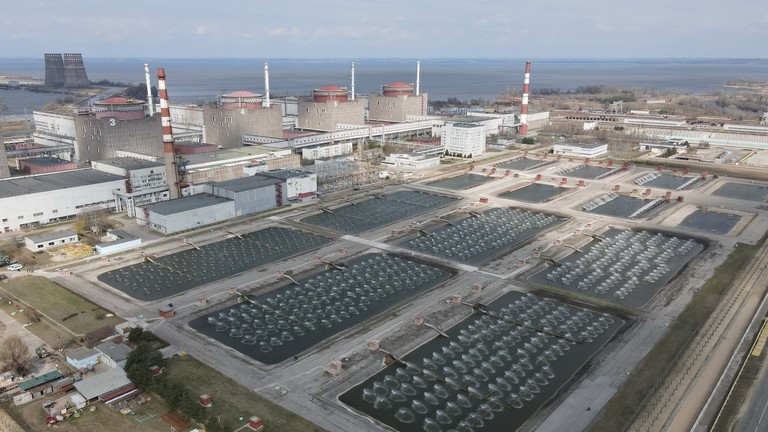
The U.N. nuclear watchdog’s Board of Governors will hold an emergency
meeting on Thursday at the request of both Ukraine and Russia to discuss
attacks on the Zaporizhzhia Nuclear Power Plant, after the enemies accused
each other of drone attacks. The International Atomic Energy Agency has
said drones struck the Russian-held facility in southern Ukraine on Sunday,
hitting one reactor building. It has not ascribed blame but has demanded
such attacks stop.
Reuters 10th April 2024
Rolls Royce taps funding for nuclear-powered space missions
Rolls-Royce has received a funding boost from the UK Space Agency to
develop nuclear-powered projects for the space sector. Some £1.2m is being
offered up to Rolls-Royce Submarines and the US-based nuclear supplier BWX
Technologies as part of a project to use fission nuclear systems for space
missions.
It comes as part of a wider £13m funding package unveiled by the
government to support 11 international space projects, ranging from
capturing high-res photos of the Moon and Mars to X-ray images of the
Earth’s Aurora. Other beneficiaries include Vertical Future, which is
developing a “robotic space arm” facility to grow plants in space, and
the University of Leicester, which is identifying potential space missions
for nuclear powered technologies.
City AM 8th April 2024 https://www.cityam.com/rolls-royce-taps-funding-for-nuclear-powered-space-missions/
New blast at Europe’s largest nuclear plant in Ukraine

EUROPE’S largest nuclear plant was attacked by drones again today,
posing no direct threat to its safety but underscoring the “extremely
serious situation” at the facility in Ukraine, the United Nations has
said. The International Atomic Energy Agency said its team was aware of an
explosion at a training centre next to the Zaporizhzhia Nuclear Power Plant
today.
Morning Star 9th April 2024
https://morningstaronline.co.uk/article/new-blast-europes-largest-nuclear-plant-ukraine
UK revamps Sizewell C nuclear funding to avoid delays
The UK Government has announced revisions to the funding model for the
Sizewell C nuclear plant project in response to concerns over potential
delays and cost overruns. Following a consultation process, adjustments
have been made to the funding mechanisms to ensure the timely completion of
the project while also protecting consumers from financial risks. Sizewell
C is considered critical for enhancing the UK’s energy security.
There have been concerns about the sustainability of the funding model,
particularly in light of challenges faced by similar projects such as
Hinkley Point C, which experienced delays and rising costs. The government
aims to strike a balance that encourages private investment while
minimising the impact on consumers.
Energy Live News 9th April 2024
1 This Month

4 May -West Suburban Peace Coalition to discuss Iran war at May Educational Forum
Monday, May 4, 7:00 – 8:00 PM Central Standard Time
Title: : How Trump’s Narrative Tries to Shape the Reality of the War on Iran.
Contact Walt Zlotow, zlotow@hotmail.com 630 442 3045 for further information
14 May – online event From Bombs to Data Centres: the Face of Nuclear Colonialism
To see nuclear-related stories in greater depth and intensity – go to https://nuclearinformation.wordpress.com
-
Archives
- May 2026 (37)
- April 2026 (356)
- March 2026 (251)
- February 2026 (268)
- January 2026 (308)
- December 2025 (358)
- November 2025 (359)
- October 2025 (376)
- September 2025 (257)
- August 2025 (319)
- July 2025 (230)
- June 2025 (348)
-
Categories
- 1
- 1 NUCLEAR ISSUES
- business and costs
- climate change
- culture and arts
- ENERGY
- environment
- health
- history
- indigenous issues
- Legal
- marketing of nuclear
- media
- opposition to nuclear
- PERSONAL STORIES
- politics
- politics international
- Religion and ethics
- safety
- secrets,lies and civil liberties
- spinbuster
- technology
- Uranium
- wastes
- weapons and war
- Women
- 2 WORLD
- ACTION
- AFRICA
- Atrocities
- AUSTRALIA
- Christina's notes
- Christina's themes
- culture and arts
- Events
- Fuk 2022
- Fuk 2023
- Fukushima 2017
- Fukushima 2018
- fukushima 2019
- Fukushima 2020
- Fukushima 2021
- general
- global warming
- Humour (God we need it)
- Nuclear
- RARE EARTHS
- Reference
- resources – print
- Resources -audiovicual
- Weekly Newsletter
- World
- World Nuclear
- YouTube
-
RSS
Entries RSS
Comments RSS
 nuclear-news