Safety probe at Cheshire-based nuclear cargo firm
By Sophie Zeldin-O’Neill, Senior Journalist, BBC News, 17 Apr 24
A company that transports uranium overseas has been told it must improve the safety of its operations.
Urenco UK Ltd (UUK), based in Capenhurst, Cheshire, had not made proper safety checks or made sure its shipments were correctly approved, industry watchdog the Office for Nuclear Regulation (ONR) said.
The problems were identified during inspections by the ONR.
UUK has until 31 May to comply with the improvement notice……………….
Nick Blackburn, principal inspector from ONR’s Transport Competent Authority, said all
companies involved in transporting radioactive materials needed to make
sure they were working within the law.
BBC 16th April 2024
Fujitsup-ing UK ‘s Post Office IT system, – and now its Nuclear Lab?
The UK government’s National Nuclear Laboratory has given Fujitsu a £155k contract for ‘software support’ IT – for nuclear science and experimental programmes in nuclear power and weapons.
Fujitsu? The Japanese software company that supplied, and apparently is still supplying, the British Post office with software – its bodgy Horizon IT programme being at the root of one of the most widespread miscarriages of justice in UK history.. Yes, that one!
It doesn’t fill you with confidence about the safety of the UK’s nuclear lab activities, does it?
The Post Office’s contract with Fujitsu was, (is) extremely complex, with the Post Office lacking the expertise to understand how the IT system works. Does the nuclear lab have the same problem?
These types of contracts deliberately lock the buyer in, with the supplier having control of all upgrades, fixing of any technical problems. The Post Office contract also limited the amount of information they could get from the system.
This created a dependance by the Post Office on the company Fujitsu. Is the British military and nuclear system also locked into dependance on Fujitsu? A source told the i newspaper that the Japanese firm has been managing a secretive computer system facilitating the “strategic command and control of UK Armed Forces” for decades.
The contract for the National Nuclear Laboratory is the first government contract with Fujitsu in 2024, – to the anger and frustration of many, as the inquiry into the Post Office software scandal is still underway, with more litigation likely to come.
Abrdn and two more City giants shun Sizewell C nuclear project
Three of the City’s largest investment firms have confirmed they are not buying into the delay-stricken Sizewell C nuclear project.
City AM, RHODRI MORGAN, 15 Apr 24,
Emails seen by City A.M. show that representatives from Abrdn, Aviva and Phoenix Group each told anti-Sizewell C campaign group, Stop Sizewell C, that they were not looking to bankroll the project, which is expected to reach around £20bn in costs.
Phoenix Group, which has around £280bn in assets under management, has previously expressed interest in nuclear projects.
The decisions mark a further blow against the UK government’s struggling nuclear programme.
In an effort to shore up cash flows to rescue the delay-ridden Sizewell and Hinkley Point C projects, the government revealed a framework, many years in the making: The Regulated Asset Base (RAB), which would allow institutional lenders to buy into nuclear development.
But Abrdn, Aviva and Phoenix Group’s failure to get onboard adds to a growing list of major financial houses, including pension funds of BT, Natwest and Nest, to snub the project.
“The strategy has not succeeded,” said Stop Sizewell C’s executive director Alison Downes.
“It is hardly a surprise considering the many uncertainties, including what the project will actually cost and we congratulate those pension funds that have steered clear of Sizewell C’s capital raise, and urge the handful that have not decided to hotfoot it out immediately.”
The government is currently the majority shareholder and is currently investing a total of £2.5bn in financial support for the project…………………………
Sizewell is not the only major reactor project hampered by sky-rocketing costs and time delays.
Hinkley Point C, initially due to be operational in 2017 with a £18bn bill is now expected to be completed by 2031 and cost up to £35bn.
Accounting for inflation, this could potentially rise to £46bn and France’s state energy company EDF is on the hook for an £11bn impairment charge on the project. https://www.cityam.com/abrdn-and-two-more-city-giants-shun-sizewell-c-nuclear-project/
You will not BELIEVE what the Tories just gave Fujitsu ANOTHER government contract for
The ‘fallout’ could be disastrous.
by Steve Topple, 11 April 2024, https://www.thecanary.co/trending/2024/04/11/fujitsu-nuclear-uk-contract/
Disgraced Fujitsu – the company behind the Horizon software that helped the Post Office wrongly convict hundreds of subpostmasters – has just been given ANOTHER government contract by the Tories. However, that’s not the worst part – because unbelievably, the deal is for software to support UK nuclear experiments.
Yes. The fallout could be disastrous.
As LBC reported:
The National Nuclear Laboratory, which is owned and operated by the government, has awarded the firm a £155k contract for ‘software support’ until 2025…
The contract, published by procurement data provider Tussell, is for “software support” and is due to run until 31 March 2025.
Hairbrained Tories: we’ve got a great idea… why not give Fujitsu a nuclear contract?
The National Nuclear Laboratory does all sorts of stuff with nuclear energy. As it says on its website, this includes:
four strategic areas: Clean Energy, Environmental Restoration, Health and Nuclear Medicine and Security and Non-Proliferation.
That is, the laboratory dabbles in nuclear science and experiments – including nuclear power and weapons; note its ironic oxymoron that it deals with ‘security’ and ‘non-proliferation’. So, you’d think that the government would want to make sure that the National Nuclear Laboratory was a safe and secure environment.
Clearly fucking not, though – as they’ve now given Fujitsu a contract.
People on X were rightly outraged: (several quotes here)
Christopher Head was the youngest victim of the Horizon Post Office scandal. He told LBC:
When there is a pledge not to bid for contracts you kind of expect them to adhere to that. But the problem is these companies have shareholders, and these shareholders demand profitability. It is frustrating.
Fujitsu made this pledge that they wouldn’t voluntarily bid for contracts within the government while the inquiry is going on – but we all know the size of these companies makes it difficult.
Post Office scandal: you must have been in a nuclear bunker if you missed it
Unless you’ve been in a nuclear bunker for the past 12 months, then you can’t have missed the Post Office scandal.
As the Canary previously reported, Mr Bates vs the Post Office has brought the ongoing scandal over the Horizon IT system, and Post Office and politicians conduct at the time, back into the public eye.
More than 700 people running small local post offices received criminal convictions between 1999 and 2005 after faulty accounting software made it appear that money had gone missing from their branches.
The scandal has been described at an ongoing public inquiry as “the worst miscarriage of justice in recent British legal history”.
Fujitsu: giving the UK its very own Hulk moment?
Yet here we are, with the Tories STILL giving Fujitsu another contract. Worse still, they’ve given it to them on the basis of providing tech support for nuclear technology. So, unless the government fancies itself as creating a league of superhumans, then it needs to revoke the contract.
Fujitsu cannot be trusted to run a piss up in a brewery – let alone software support for a nuclear experiments lab. It could barely handle the tech for provincial Post Offices. The Canary can see an Incredible Hulk moment coming on if this goes ahead – and we hope everyone has their nuclear bunkers ready.
Sign the petition against the contract here.
Post Office Horizon scandal: four reasons why the government’s model for outsourcing is broken
Alice Moore, Assistant Professor in Public Management and Public Policy, University of Birmingham, January 16, 2024 , https://theconversation.com/post-office-horizon-scandal-four-reasons-why-the-governments-model-for-outsourcing-is-broken-220919
For over a decade, the Post Office and its supplier, Fujitsu, insisted that the Horizon system used in its branches was completely “robust”. When discrepancies appeared in hundreds of branch accounts across the country, the Post Office refused to believe the system was at fault and didn’t challenge the information it got from Fujitsu. Instead, it blamed the shortfalls on sub-postmasters, made them pay the losses, and prosecuted over 700 of them.
The multimillion-pound contract between the Post Office and Fujitsu is at the heart of the scandal. The way the contract worked meant that Fujitsu was incentivised to fix bugs quickly rather than well. The Post Office didn’t have the expertise it needed to understand what was going wrong. The Post Office’s dependence on Fujitsu also meant that it protected its relationship with them at the expense of sub-postmasters and the public.
The problems with the Horizon contract underpin one of the most widespread miscarriages of justice in UK history. But they are also replicated across thousands of other government contracts, including for many essential services, from hip replacements on the NHS to school PE lessons.
These problems are in fact produced by fundamental features of the UK’s outsourcing model.
1. The systems are too complex to understand
The Horizon system was incredibly complex. It had to process all kinds of transactions, from selling travellers cheques to managing rent payments, across tens of thousands of disparate branches, using a complicated web of communications systems.
The problem is, by outsourcing such a complex service, the Post Office ended up without the expertise to understand how it worked and what Fujitsu was (or wasn’t) doing. The contract also limited the amount of information they could get from the system. This all meant that the Post Office lacked the understanding and information about Horizon it would have needed to challenge the story it was getting from Fujitsu.
In its most recent statement on the inquiry into what happened at the Post Office, Fujitsu said “the inquiry has reinforced the devastating impact on postmasters’ lives and that of their families, and Fujitsu has apologised for its role in their suffering … Fujitsu is fully committed to supporting the inquiry in order to understand what happened and to learn from it.”
2. Contracts generate perverse incentives
If a service is complex, like Horizon was, it is impossible to specify everything in a written contract. Any buyer has to miss things out. But then how do they get a supplier to do everything they need and not just the things in the contract?
One of the reasons Horizon had major problems was that it was impossible to say in advance how each bug in the system should be fixed. Instead, the contract just stipulated how quickly Fujitsu needed to resolve problems. Bugs either weren’t fixed properly or the fixes introduced different bugs into the system. This kind of “service level agreement” is still standard in many government contracts.
3. The buyer is locked in
Complex services also require a supplier to invest in things like software, equipment and training that are specific to that service. There’s an idea in economics that if a supplier needs to make these “specialised investments”, it’s very difficult to get rid of that supplier. They have a huge advantage over their competitors, because anyone else would need to make these investments all over again.
This is what happened with the Horizon contract. Once Fujitsu had built the system, it couldn’t be replaced by another supplier, even when things went wrong. In the original procurement, it scored bottom on eight of the ten quality criteria, but won the contract because it said it would pay for the up-front development costs. The contract has since changed, but Fujitsu carried on and has just had its contract renewed up to 2025.
Getting locked into complex contracts is quite common for government. In 2014 HMRC announced that it would end its £8 billion contract with Capgemini for the UK’s tax collection system. It had to assign a budget of £700 million just to pay for the cost of transferring the contract to new suppliers. Now, ten years on, Capgemini is still the supplier. Apparently unable to find an alternative, HMRC ended up extending the contract to at least 2025.
4. Suppliers are prioritised over workers and the public
Because it couldn’t replace them, the Post Office depended on Fujitsu. This was compounded by the fact that Horizon was also essential to the Post Office’s business. Horizon was responsible for processing all branch transactions and keeping track of all money coming in and going out.
Losing Fujitsu would cause huge cost and disruption to an essential system. The Post Office depended on keeping Fujitsu onside during contract negotiations and making sure they were financially healthy. Predictably, they protected that relationship over sub-postmasters, who were individually expendable. This also came at the public’s expense, who got a poor service and have had to foot the bill for the Post Office’s mistake.
Essential public services across the UK rely on a few “strategic suppliers”. Government bodies are dependent on protecting their relationships with these suppliers and are invested in their financial stability. The collapse of Carillion in 2018, at a time when it was contracted to build NHS hospitals, brought home just how bad things could be if a major supplier went under.
How far the government would go to protect other strategic relationships remains to be seen. But as long as UK government bodies outsource complex, essential services, it’s unlikely that the Horizon fiasco will be the last public scandal with a government contract at its heart.
Fujitsu ‘managing top-secret military system’ two years after contract expired
Firm embroiled in Post Office scandal reportedly continues to oversee contract that was handed to rival
Fiona Parker, SPECIAL PROJECT CORRESPONDENT, 18 March 2024 , https://www.telegraph.co.uk/news/2024/03/18/fujitsu-managing-top-secret-uk-military-system/
The IT company whose faulty software is at the centre of the Post Office scandal is reportedly still managing a top-secret UK military system.
Defects in Fujitsu’s Horizon platform led to more than 900 sub-postmasters being wrongfully prosecuted, after they were blamed for apparent shortfalls in their accounts, which did not actually exist.
However, a source told the i newspaper that the Japanese firm has been managing a secretive computer system facilitating the “strategic command and control of UK Armed Forces” for decades.
The UK intelligence source also claimed Fujitsu was still overseeing the contract, despite it being reallocated to another firm almost two years ago.
The delay in moving Fujitsu away from the project is reportedly because of the deep ties the IT giant has with UK Government departments, the highly sensitive nature of the contract and waits for new staff to receive security clearance
“The Government doesn’t want to go near them [Fujitsu] after the scandal and they now have the challenge of replacing them across some key areas of defence,” a UK intelligence source told the i.
“But they have been extended time and time again because the new suppliers haven’t been able to get going”.
The newspaper did not reveal further details about the military project, citing national security as a reason for not doing so.
Errors in the Horizon system were confirmed in a 2019 High Court judgement, on a case brought by former sub-postmaster Alan Bates and more than 500 others.
The ruling found that “bugs, errors and defects” in the system caused shortfalls in Post Office branch accounts, which saw some innocent postmasters jailed for theft and false accounting as a result.
Contracts worth billions
Earlier this year, Fujitsu informed the Cabinet Office that it would not bid for UK public contracts while the public inquiry into the Post Office scandal was ongoing.
Yet data published by the Treasury Committee in February showed public organisations affiliated with the Treasury have held more than £3.4 billion worth of contracts with Fujitsu since 2019.
Paul Patterson, the company’s European director, told MPs in January that he was “truly sorry” about the scandal and said the firm had accepted its part in the “appalling miscarriage of justice”.
A UK Government spokesperson told the i that it didn’t recognise the delays caused by security vetting, insisting instead that Fujitsu is “in the transition period between contracts, continuing to deliver their obligations as contractually agreed”.
They added: “More broadly, it is right that Fujitsu has withdrawn from bidding for new public sector contracts until the Post Office Horizon inquiry concludes.”
The Telegraph has contacted Fujitsu for a comment.
Keir Starmer doesn’t speak for Labour members on nuclear weapons
, https://labouroutlook.org/2024/04/14/starmer-doesnt-speak-for-labour-members-on-nuclear-weapons/
‘I am opposed to the use of nuclear weapons. I am opposed to the holding of nuclear weapons. I want to see a nuclear-free world. I believe it is possible.’Keir Starmer, 2015
Labour CND has issued the following statement in response to Keir Starmer’s visit to Barrow, Friday 12 April
Keir Starmer used a visit to Barrow-in-Furness on 12 April to announce Labour’s ‘unshakeable absolute total’ commitment to Trident, Britain’s nuclear weapons system, and Labour’s plan to raise military spending to 2.5% of gross domestic product under a Labour government which means billions of pounds more public funds allocated to the military budget.1
Starmer should be under no illusions. He does not speak for the majority of Labour Party members, however, or even the public on these issues. Nor does this allay Tory voter fears that Labour is a safe pair of hands when it comes to defence.2
Trident is the ‘bedrock of Labour’s plan to keep Britain safe’, he said. The UK’s ‘nuclear deterrent’ was ‘maintained on behalf of NATO’. This was ‘a generational, multi-decade commitment’ from a Starmer government.
International tensions are growing, and with them the risk of nuclear confrontation. Politicians may believe Trident guarantees us a place at the top table. But the assurance of Labour and Tories alike that it brings safety for people in Britain is a cruel illusion. Meanwhile UK domestic politics continues to ignore the true international situation which is that Britain has not signed the UN Treaty on the Prohibition of Nuclear Weapons which came into force in 2021.
Politicians may believe Trident guarantees us a place at the top table. But the assurance of Labour and Tories alike that it brings safety for people in Britain is a cruel illusion.

Starmer doesn’t speak for Labour members on nuclear weapons
Barrow, CND, International, Labour CND, nuclear weapons, starmer, TridentLeave a Commenton Starmer doesn’t speak for Labour members on nuclear weapons
Share
‘I am opposed to the use of nuclear weapons. I am opposed to the holding of nuclear weapons. I want to see a nuclear-free world. I believe it is possible.’Keir Starmer, 2015
Labour CND has issued the following statement in response to Keir Starmer’s visit to Barrow, Friday 12 April
Keir Starmer used a visit to Barrow-in-Furness on 12 April to announce Labour’s ‘unshakeable absolute total’ commitment to Trident, Britain’s nuclear weapons system, and Labour’s plan to raise military spending to 2.5% of gross domestic product under a Labour government which means billions of pounds more public funds allocated to the military budget.1
Starmer should be under no illusions. He does not speak for the majority of Labour Party members, however, or even the public on these issues. Nor does this allay Tory voter fears that Labour is a safe pair of hands when it comes to defence.2
Trident is the ‘bedrock of Labour’s plan to keep Britain safe’, he said. The UK’s ‘nuclear deterrent’ was ‘maintained on behalf of NATO’. This was ‘a generational, multi-decade commitment’ from a Starmer government.
International tensions are growing, and with them the risk of nuclear confrontation. Politicians may believe Trident guarantees us a place at the top table. But the assurance of Labour and Tories alike that it brings safety for people in Britain is a cruel illusion. Meanwhile UK domestic politics continues to ignore the true international situation which is that Britain has not signed the UN Treaty on the Prohibition of Nuclear Weapons which came into force in 2021.
Politicians may believe Trident guarantees us a place at the top table. But the assurance of Labour and Tories alike that it brings safety for people in Britain is a cruel illusion.
The possession of a nuclear weapons system makes the UK a target. The decision to site United States nuclear weapons on British soil – taken without public or even parliamentary debate – puts us on the front line of any nuclear attack.
Britain’s nuclear weapons system is not independent as Starmer claims. Trident is dependent on US technology and know-how.
Even sections of the military recognise that the money spent on Trident would be better deployed elsewhere, arguing for increases in areas of conventional defence.
Disregarding these and many other arguments against nuclear weapons, in a statement shot through with jingoism, Starmer
has made three commitments which he argues will defend the UK economy and prioritise British jobs and skills:
- to build all four new Dreadnought nuclear submarines in the UK, at Barrow-in-Furness;
- to maintain Britain’s continuous at sea nuclear deterrent; and
- to deliver all future upgrades needed to properly equip Trident.
A commitment to increase the military budget means cuts elsewhere in government investment and public spending. Figures released by the Treasury as part of the Spring Budget showed that Core Military Spending was £54.2 billion pounds for the year ending March 2024, around 2.3% of GDP.3 How else will a Labour government, committed to fiscal responsibility as well as lowering taxes, find the extra resources to fund Starmer’s commitment to increase the military budget? It will come at the expense of the NHS, education, and the ability to address child poverty or to abolish the two-child cap on child benefits. It will also come at the expense of dealing with the human security threat of climate change.Labour CND says the next Labour government should not allow its priorities to be dictated by the Conservative Party and their establishment friends. We need is a radical rethink about spending priorities and about British foreign policy.The incoming Labour government will face a range of challenges. None of them will be solved by nuclear weapons or spending ever more money on the military.
Notes
- Keir Starmer, My commitment to the UK’s nuclear deterrent is Unshakeable Absolute Total, Daily Mail exclusive, 11 April 2024 athttps://www.dailymail.co.uk/news/article-13298999/Keir-Starmer-vows-Britains-nuclear-deterrent-safe-hands-promises-unshakeable-commitment- Trident-new-generation-nuclear-submarines-built-UK.htm ↩︎
- See for example the hundreds of reader comments in response to the above, which have appeared within hours of the article being posted online. ↩︎
- Dr Stuart Parkinson, Co-Chair GCOMS-UK (UK branch of the Global Campaign on Military Spending) and Executive Director of Scientists for Global Responsibility, Spring Budget 24: Military Spending Continues to Grow at the Expense of Climate Funds and Overseas Aid, at https://demilitarize.org.uk/spring-budget-24-military-spending-continues-to-grow-at-the-expense-of-climate-funds-and-overseas-aid/ ↩︎
Government could still replace Fujitsu in key nuclear contract
Fujitsu’s first government contract of the year could be just a stay of execution as department says that all replacement options are still being considered.
Karl Flinders, Chief reporter and senior editor EME, 12 Apr 24 https://www.computerweekly.com/news/366580657/Government-could-still-replace-Fujitsu-in-key-nuclear-contract
Fujitsu’s controversial contract with the National Nuclear Laboratory (NNL) was renewed because there were no other suppliers that could meet the regulatory duties required, but the service could be taken in-house next year.
Following the announcement of Fujitsu’s first government contract of the year and a subsequent public backlash, the government has been quick to stress that all options to replace the supplier’s £155,000 software support contract with the NNL, including moving the service in-house, are being considered.
Reacting to criticism for awarding the contract to Fujitsu, which is under intense scrutiny over its role in the Post Office scandal, the Department for Energy Security & Net Zero outlined the reason for Fujitsu’s new deal. “NNL requires bespoke software to ensure its work remains compliant with operationally critical regulations. There are currently no other suitable suppliers and without re-awarding this contract, the NNL would be unable to fulfil its regulatory duties,” said a spokesperson.
But the department added that, “The NNL will consider all options once the contract comes to an end in March 2025, including exploring in-house solutions.
Fujitsu’s huge UK government business is under pressure following public anger at the IT giant’s role as supplier of the Horizon system at the heart of the Post Office scandal. The company has already seen a reduction in public sector contracts this year.
By April 2023, Fujitsu had signed a £25m deal with Bristol City Council, a £16m contract with the Post Office, a deal worth £13m with Northern Ireland Water, an £8m deal with the Ministry of Defence, two deals with the Department for Education totalling £3m, and a contract with Leeds City Council worth up to £100,000. This year the NNL is its sole government contract announced so far.
In another sign of possible reputational damage, earlier this month the Department for Environment, Food and Rural Affairs ended Fujitsu’s role in providing a flood warning system for the UK, two months after signing an extension of up to 12 months.
Read more about Fujitsu’s ‘hollow’ bidding pause
- Leaked comms reveal Fujitsu eyeing huge UK government bounty.
- Fujitsu staff instructed how to bid for government contracts during self-imposed ban.
- Fujitsu should stop bending rules, stop bidding and pay up, says MP.
Fujitsu’s head of Europe, Paul Patterson, promised to pause bidding for government work until after the completion of the statutory public inquiry into the Post Office scandal, following the broadcast of the ITV drama, Mr Bates vs the Post Office, at the beginning of the year.
During questioning by MPs at a business and trade select committee hearing in January, Patterson acknowledged Fujitsu’s part in the scandal, telling MPs and victims: “We were involved from the start; we did have bugs and errors in the system, and we did help the Post Office in their prosecutions of subpostmasters. For that, we are truly sorry.”
But the bidding pause, described as “hollow” by MP Kevan Jones, does not include deals with existing customers in the public sector, of which there are many. Last month, Computer Weekly revealed leaked internal communications that showed Fujitsu is still targeting about £1.3bn worth of UK government contracts over the next 12 months. Further leaked documents revealed that Fujitsu created a spreadsheet instructing staff how to get around its self-imposed ban.
Internal communications seen by Computer Weekly also revealed that Fujitsu is spending heavily on managing the current scandal fallout. It has sought external support in a project known as Holly, where it has engaged PR, ethical business experts and lawyers, at a cost of £27m so far.
The Post Office scandal was first exposed by Computer Weekly in 2009, revealing the stories of seven subpostmasters and the problems they suffered due to the accounting software (see timeline of Computer Weekly articles about the scandal below).
Fresh blow for UK nuclear as the City snubs Sizewell C

By FRANCESCA WASHTELL , 14 April 20 24, https://www.thisismoney.co.uk/money/markets/article-13304269/Fresh-blow-UK-nuclear-City-snubs-Sizewell-C.html
Britain’s flagship nuclear plant could face greater dependence on foreign cash after a string of big-name City firms snubbed a chance to fund the project.
Phoenix, Abrdn and Aviva had said they would consider supporting new nuclear plants and were thought to be in the running to back Sizewell C in Suffolk.
But all have now said they are not in negotiations to take an equity stake in the power station, according to emails sent to campaign group Stop Sizewell C and seen by The Mail on Sunday.
This is a bitter blow for Ministers, who spent years changing the funding model for giant infrastructure works to entice City investors such as Phoenix and Aviva. The model, known as the regulated asset base, enables investors to receive dividends on projects still being built.
Sizewell C has been dogged by delays for years, and the Government has still to finally decide whether it will go ahead.
A series of pension funds, including BT, NatWest, and Nest, have ruled out backing the plant, which will cost at least £20billion.
Alison Downes of Stop Sizewell C said: ‘The Government has spent years planning and legislating to allow the funding model for Sizewell C, with the objective of attracting UK pension funds. The strategy has not succeeded, which is hardly a surprise considering the many uncertainties, including what the project will actually cost.’
In January, the Government committed a further £1.3billion of funding to Sizewell C, which will go on early building work.
Six groups are in talks with the Government over funding the project, with at least one understood to be from the Emirates.
British Gas owner Centrica is also thought to be in the frame.
Pressure is mounting after EDF this year began pressing the Government to help fund cost overruns on Hinkley Point C in Somerset. The French utility group said the price tag for that plant – which is the same type planned for Sizewell C – could hit £46billion from an initial estimate of £18billion. The Suffolk plant could power six million homes for 60 years, but would take nine to 12 years to build.
Ministers have also backed programmes to set up small nuclear reactors, especially a Rolls-Royce-led firm designing these easy-to-assemble plants.
Industry sources say these are likely to be more attractive to investors as they are quicker and cheaper to build.
Zaporizhzhia Nuclear Power Plant: The ‘Sum Of All Fears’
Eurasia Review, , By IDN, By Leonam dos Santos Guimarães
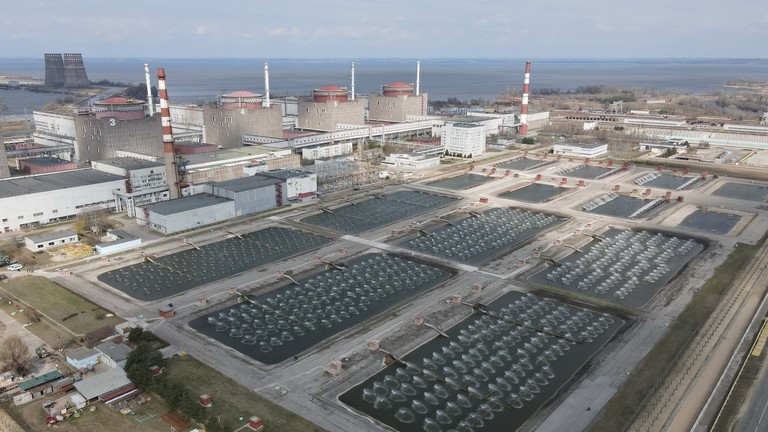
Drone attacks on the Zaporizhzhia nuclear power plant, whether carried out by Ukraine or Russia, introduce a new and dangerous dimension to the conflict between the two largest former Soviet Socialist Republics, with possible far-reaching ramifications, not just for the region immediately surrounding the largest nuclear power plant in Europe, but also for all European Union countries and, more broadly, for the international community.
The biggest concern is the potential risk of a severe nuclear accident, which could have dire effects not only on Ukraine and Russia, but also on neighboring countries. The release of radioactive material knows no borders, and a contaminated cloud could spread across multiple nations depending on weather conditions, putting public health and the environment at risk on a significant scale.
The consequences of attacks on nuclear facilities are potentially severe and vast. A nuclear accident can result in the contamination of large areas, affecting land, water and wildlife, with lasting consequences for the environment and human health. It could also force mass evacuations of affected areas, creating humanitarian and refugee crises. In addition to the direct costs of cleanup and containment, a nuclear disaster can have a substantial economic impact on agriculture, land use, and public health.
Containing a leak at a nuclear power plant is a highly complex and challenging operation, depending on several factors. These include the type of damage to the reactor or other critical parts of the facility, as well as the amount and type of radioactive material released.
A plant’s ability to contain a leak depends on its design, existing safety systems, and how well those systems can handle the specific type of accident. The effectiveness of the immediate response, including confining the area, evacuating personnel, and implementing decontamination measures, is crucial to minimizing the impacts of a spill. The availability of technical, human, and financial resources to manage the situation is essential. This also includes international support, as seen after the Chernobyl accident and the Fukushima disaster.
Several factors
The scope of a nuclear accident in Europe will depend on several factors, including the direction and speed of the wind, which determine the dispersion of radioactive particles in the atmosphere, the amount of material released, which the greater the amount, the larger the area potentially affected, and the effectiveness of containment and decontamination measures, which can significantly limit the scope of contamination………………………………………………………….
The possibility that such attacks could trigger a third world war is a serious and plausible concern. An intricate web of military alliances, geopolitical interests and containment strategies influences the dynamics of the current conflict. Attacks against nuclear facilities are perceived as significant escalations of conflict. If considered acts of war, they may justify severe retaliation. The nature and extent of such retaliations would depend on many factors, including the international perception of the incident and the strategic decisions of major world powers.
The risk of a third world war
The involvement of NATO members providing support to Ukraine further complicates the situation. While NATO has been careful in its approach to avoid direct escalation with Russia, the line between support and direct involvement is fine and delicate. Preventing an escalation into a broader conflict will likely depend on intense diplomatic efforts and attempts at de-escalation by all parties involved……………………………………………….. https://www.eurasiareview.com/14042024-zaporizhzhia-nuclear-power-plant-the-sum-of-all-fears-oped/
Ukraine: Briefing on the Zaporizhzhia Nuclear Power Plant

On Monday afternoon (15 April), the Security Council will convene for an
open briefing under the “Threats to international peace and security”
agenda item. Slovenia and the US—the co-penholders on political issues in
Ukraine—supported by France, requested the meeting, which will focus on
the safety and security of the Zaporizhzhia Nuclear Power Plant (ZNPP) in
the city of Enerhodar.
It appears that Russia expressed approval for
holding the meeting, noting the alarming nature of the situation at the
nuclear power plant. International Atomic Energy Agency (IAEA) Director
General Rafael Mariano Grossi is the anticipated briefer. Ukraine is
expected to participate under rule 37 of the Council’s provisional rules of
procedure.
Security Council Report 12th April 2024
Sizewell C Nuclear : too destructive, too costly, too late

The Article, by IAN LINDEN, 14 Apr 24
Joan Girling grew up near the Suffolk coast, with its little terns, barn owls, harebells, ladies bedstraw, sedums, blue butterflies and acid grassland. There was no nuclear power station. “It was perfect, a nature lover’s paradise,” she told me.
In 1959, Joan’s father, faced with compulsory purchase, was forced to sell off a corner of their front garden, with its large pond full of water lilies and wildlife. It was to make way for workers’ traffic to the site of Sizewell A, a nuclear power station. Sizewell A is today a great, ugly, Stalinist-looking excrescence looming above the seashore. Her grandmother, who lived next door, watched as they filled in the pond. “The worst part was to hear my Grandma crying. I remember it as if it was yesterday.”
In the late 1980s it all happened again: Sizewell B. This time Joan moved house with her family to escape construction traffic. From 1993-2005 she served on Suffolk County Council. Fifteen years ago, Joan Girling became a founding and deeply dedicated member of Community against Nuclear Expansion, later renamed Together Against Sizewell C (TASC).
The human and environmental costs ought not be underestimated. The disruption and destruction accompanying years of building accounts for the level and persistence of local protest. Stop Sizewell C, originally a parish of Theberton and Eastbridge action group, alongside the local Friends of the Earth, joined TASC in a long-running legal campaign. Crowdfunding helped finance three rounds of court action seeking judicial review of the Sizewell C project. The last one challenged the Business Secretary (then Kwasi Kwarteng) over his 2022 Development Consent Order giving the green light to start construction. Kwateng rejected the Planning Inspectorate’s conclusion (part of the process required by the 2008 Planning Act) that in the absence of an assessed, permanent, potable water supply for the project, “the case for the grant of development consent is not yet made”. Sizewell C will be forced to use a desalination plant during construction. The Court of Appeal found for the Government in December 2023.
The construction of Sizewell C means heavy truck traffic. New roads, a large park and ride facility, as well as a railway branch line, will have a major impact over a large area. Much of it is designated by Natural England — sponsored, incidentally, by the Department of Environment, Food and Rural Affairs (DEFRA) — as a Suffolk Coast and Heaths National Landscape (formerly Area of Outstanding Natural Beauty). A small bite comes out of reed beds and marsh land, designated a Site of Special Scientific Interest. The new reactors will lie right next to Minsmere, a popular RSPB reserve where the drain-pipe boom of the bittern can be heard. Building Sizewell C will blight tourism for two decades, though it will boost other aspects of the local economy. But before dismissing protest as Nimbyism, it is as well to evaluate what lies in the backyard………………………………………………………………………….. more https://www.thearticle.com/sizewell-c-too-destructive-too-costly-too-late
Sizewell C Fiasco Part 4. Much more expensive than renewables- Unknown cost or period for Investors
Sizewell C Fiasco Part 4 Much more expensive than renewables- Unknown cost or period for Investors
Sizewell C was given the go ahead against the advice of the Planning
Inspectorate by politicians who have since mainly been discredited. They do
not have the finance in place yet – a staggering £30 billion plus?
Yet the Government have been chucking hard pressed taxpayers’ money at the project
and Sizewell C Project have started massive pre-construction works. If they
can cause this much Eco/ Landscape devastation even now, what will they do
if they get the go ahead on construction?
Sizewell C would be a disaster
for the Environment and the Landscape. Taxpayers and Investors will be
financing a bottomless pit. Locked in for decades to paying much more than
the cost of wind or solar energy. Even if finished on time – which is very
unlikely – it would be far too late for any energy crisis. Which would be
caused by the current bad or lack of – planning and management for energy
production and a hopeless so-called National Grid (run for shareholders not
UK Taxpayers).
If built Sizewell C would be too late to contribute to net
zero and its construction would produce vast amounts of carbon and other
pollution for well over a decade at least. Not to mention the much more
radioactive waste from this unproven EPR type of reactor which is too hot
to move until the next century – so has to be stored on site on an eroding
coastline! The whole thing is bonkers!
Stop Sizewell C 8th April 2024 https://www.youtube.com/watch?v=o4ICw23iYY0
Civil and military nuclear mutuality

‘The UK government is pursuing an uneconomic nuclear programme in large part so as to maintain & renew military nuclear capabilities’.
Rishi Sunak backs both civil and military nuclear: ‘Safeguarding the future of our nuclear deterrent and nuclear energy industry is a critical national endeavour’. French president Emmanuel Macron is even more upfront about it all: ‘Without civil nuclear power, no military nuclear power, without military nuclear, no civil nuclear.’ With the USA, China and Russia also evidently locked into similar paths, the global future doesn’t look too good.
‘The UK government is pursuing an uneconomic nuclear programme in large part so as to maintain & renew military nuclear capabilities’.
backs both civil and military nuclear: ‘Safeguarding the future of our nuclear deterrent and nuclear energy industry is a critical national endeavour’. French president Emmanuel Macron is even more upfront about it all: ‘Without civil nuclear power, no military nuclear power, without military nuclear, no civil nuclear.’ With the USA, China and Russia also evidently locked into similar paths, the global future doesn’t look too good.
Renew Extra Weekly, 13 Apr 24
Until recently, the UK government has always said that civil and military nuclear technologies were separate things, for example in response to claims that expansion of civil nuclear power capacity could lead to proliferation of nuclear weapons making capacity. But, as researchers at the University of Sussex have relentlessly catalogued, there seems to have been a change of view underway, culminating formally in March in a new policy document from No. 10 Downing Street. Entitled ‘Building the Nuclear Workforce of Tomorrow’ it claims that ‘domestic [civil] nuclear capability is vital to our national defence and energy security, underpinning our nuclear deterrent and securing cheaper, more reliable energy for UK consumers’. So they are intertwined and mutually beneficial- we need both!
UK Prime Minister Sunak says that ‘in a more dangerous and contested world, the UK’s continuous at-sea nuclear deterrent is more vital than ever’ and that civil nuclear power is the ‘perfect antidote to the energy challenges facing Britain- it’s green, cheaper in the long term and will ensure the UK’s energy security for the long term’.
There are many issues raised by these claims. Leaving aside all the major moral and political issues associated with nuclear weapons, it is not at all clear that new nuclear reactors will be as costs effective as renewables. Indeed, the cost of renewables has fallen dramatically in recent years while the cost of nuclear projects has continued to escalate. It could be that, recognising this imbalance in cost, what we are now seeing is the government trying to provide a compensating justification for new civil nuclear- it will aid defence. Even if, arguably, it makes little economic sense as Business Green argued: ‘The UK government is pursuing an uneconomic nuclear programme in large part so as to maintain & renew military nuclear capabilities’.
Basically, as the Sussex University researchers have argued, it does seem that the government is just responding to military pressures. More specifically though, it’s a matter of rapidly expanding skill requirements- and shortages. Matthew Lay, Head of EDF Nuclear Skills Alliance, says that ‘the UK Government’s commitment to nuclear power must be seen in the context of a steady increase of nuclear capacity worldwide as well as growth in defence expenditure,’ and especially the growth in the ‘defence industry’s demand for nuclear skills, to deliver established and new nuclear submarine programmes’. So it’s about expanding nuclear skills for building nuclear sub power plants and civil reactors, including possibly Small Modular Reactors (SMRs), which have some similarities. Presumably also about making fuels for them both too.
Some may be happy about civil-military skill sharing, but it’s a long way from the old rhetoric about ‘atoms for peace’. In 1953 President Eisenhower called for nuclear bomb technology to be turned to peaceful ends around the world, with US help e.g. in transferring nuclear plant technology to developing countries. That had floundered due, in part, to the high cost of nuclear plants. According to a review by Drogan, a State Department Intelligence Report, circulated in January 1954, ‘Economic Implications of Nuclear Power in Foreign Countries’, noted that ‘nuclear power plants may cost twice as much to operate and as much as 50 percent more to build and equip than conventional thermal plants’. So it warned that the introduction of nuclear power would ‘not usher in a new era of plenty and rapid economic development as is commonly believed’. You could say that we are still waiting!
There were also potential conflicts between the ‘atoms for peace’ idea and proliferation issues. Indeed that is now even more of a problem, with some newly developing countries, following the UAE’s lead, looking to have nuclear plants, which, in theory, could give them the ability to make bombs. And (the Nuclear Proliferation Treaty apart!) why not, if nuclear weapons states like the UK are seen as no longer maintaining a clear separation between civil and military nuclear technology? Except of course the high cost of civil nuclear may make renewables a much better deal- especially solar, of which many countries (in the Middle East and Africa for example) have plenty. ……………………………………………………………………………..
Clearly UK Prime Minister Sunak doesn’t see it this way- he backs both civil and military nuclear: ‘Safeguarding the future of our nuclear deterrent and nuclear energy industry is a critical national endeavour’. French president Emmanuel Macron is even more upfront about it all: ‘Without civil nuclear power, no military nuclear power, without military nuclear, no civil nuclear.’ With the USA, China and Russia also evidently locked into similar paths, the global future doesn’t look too good.
Do we really have to continue with all this? In 1995, Sir Michael Atiyah, then retiring as President of the Royal Society, said ‘I believe history will show that insistence on a UK nuclear capability [weapons and energy] was fundamentally misguided, a total waste of resources and a significant factor in our relative economic decline over the past 50 years’. He may have been right. https://renewextraweekly.blogspot.com/2024/04/civil-and-military-nuclear-mutuality.html
The Longer it Takes the West to Accept that Ukraine is Losing, the Worse Things Will Get for Ukraine

Our leaders keep warning us that Putin will roll his tanks into the Baltic States and maybe even Poland should the Russians be successful in beating the Ukrainians. France’s President Macron is even telling us that we may have to send NATO troops to fight in Ukraine. Everyone seems to automatically assume that Putin’s ambition is still to conquer all of Ukraine and incorporate it in the Russian Federation. This is despite the fact that he said that it was to keep Ukraine out of NATO and to safeguard the Russian-speaking areas of Ukraine from Ukrainian nationalist militias.
Well, we do seem to have got ourselves into a bit of a pickle in Ukraine. How we get out of it is not immediately obvious.
Like many wars, this one seems to have started due to catastrophic blunders by the ruling elites on both sides. To simplify a rather complex situation, I believe that there were two massive blunders.
The West’s blunder – for several years Putin has warned NATO “not one inch further” – that he would not accept further NATO expansion eastwards and would not allow countries like Ukraine and Georgia, both with long borders with Russia, to join NATO. In 2008, Putin even attended a NATO summit during which he gave a speech warning NATO that Russia would not accept Ukraine’s and Georgia’s admission to NATO. To me that seems reasonable. After all, the U.S. would hardly accept Russia doing a deal with, say, Mexico which would allow Russia to establish bases close to the U.S.-Mexico border (although it’s also understandable that Ukraine and Georgia wanted to join NATO, given Putin’s sabre-rattling). And, of course, there was the 1962 Cuban Missile Crisis when the USA was not too pleased about Russian missiles being situated close to the American mainland. Probably due to stupidity, hubris or a belief that Putin was bluffing, NATO delivered a diplomatic note to the Kremlin reiterating NATO’s view that countries like Ukraine and Georgia could join the Alliance if they wished. The result – Russia’s invasion of Ukraine.
Putin’s blunder – Putin seems to have believed that it would only take a couple of weeks for the Russian army to get to Kiev, overthrow and murder the Zelensky Government and install a Russian-friendly regime. He got that one wrong and several hundred thousand Russians have been wounded or killed as a result. Moreover, Russia’s invasion of Ukraine has prompted Sweden and Finland to join NATO – another consequence Putin seems to have failed to foresee.
The war seemed to have started well for Ukraine. The Ukrainian army surprised the Russians and the world by fighting off the initial Russian invasion. Then the success of the summer 2022 Ukrainian offensive appeared to suggest that Ukraine might even be able to push the Russians out of Eastern Ukraine, retake Crimea and, by humiliating Putin, maybe even cause a coup in Russia which could overthrow Putin and his mafia cronies.
But after the 2022 Ukraine summer offensive, the Russians built formidable defensive lines protected by miles of minefields, dragon’s teeth and trench systems. So, when the 2023 Ukrainian combined operations offensive was launched, the Ukrainians were caught in a death trap and suffered huge losses of personnel and equipment while making little progress
We are now in a third phase of the war – the war of attrition – in which Russia is gaining the upper hand. Russia can massively out-produce Ukraine (and the quivering West) in terms of munitions, tanks, planes, missiles, artillery systems, drones and numbers of soldiers. Moreover, Russia has also received military material from North Korea, Iran, Syria and probably China. Meanwhile, Ukraine is running out of ammunition and troops. Some sources have suggested that the average age of Ukrainian forces is a worrying 43. And Ukraine doesn’t have time to mobilise, equip and train the numbers necessary to stem the Russian advance. In a war of attrition, the side with the greatest resources usually wins by grinding down its opponent. And that’s what we’re seeing now with small but continual Russian advances and Ukrainian retreats.
Our leaders keep warning us that Putin will roll his tanks into the Baltic States and maybe even Poland should the Russians be successful in beating the Ukrainians. France’s President Macron is even telling us that we may have to send NATO troops to fight in Ukraine. Everyone seems to automatically assume that Putin’s ambition is still to conquer all of Ukraine and incorporate it in the Russian Federation. This is despite the fact that he said that it was to keep Ukraine out of NATO and to safeguard the Russian-speaking areas of Ukraine from Ukrainian nationalist militias.
By the end of the 2008 Russia-Georgia war, Putin’s forces could have walked into the Georgian capital Tbilisi. Instead, they withdrew and merely stayed on to guard the Russian-speaking enclaves of South Ossetia and Abkhazia – the equivalent of the similar enclaves in Ukraine.
Putin has the habit of doing exactly what he says he’s going to do. This is a concept which contemporary Western politicians find so alien to their natures, of course, that they’re totally unable to grasp it (although their distrust of Putin is understandable).
Moreover, if we look at military budgets, you might wonder who is actually threatening whom. The USA’s military budget is around $877 billion. The total NATO military budget in 2023 (including the USA) a cool $1.3 trillion. The Russian Federation military budget prior to the Ukraine invasion? Just $86 billion a year.
Our rulers have repeatedly told us that we must “do whatever it takes” to stop Putin and that the West will support Ukraine for “however long is necessary”. But it seems to be becoming clear to everyone except our rulers that Ukraine is losing and can now never win if winning means expelling all Russian troops from Ukrainian territory.
The best Ukraine can now hope for is an untidy truce which involves a loss of the Russian-speaking parts of Ukraine – at least 20% of Ukrainian territory. Though the longer this war goes on, the more territory Ukraine will lose.
So, what will our rulers choose – humiliation or annihilation?
Will our rulers accept total humiliation by pushing Ukraine to do a deal with Russia in which Ukraine will have to hand over at least 20% of its land area to the Russian Federation and agree that what little is left of Ukraine will be a neutral country and never join NATO? And how will our rulers explain this defeat to us, their electorates? Moreover, what will the West’s defeat do to the global balance of power? It will, of course, embolden those in the anti-Western bloc – Russia, China, Iran and North Korea – who wish to do us harm. Moreover, it will convince many non-aligned countries that their future lies in alliances with the resurgent and increasingly powerful autocratic anti-Western bloc rather than with the declining, defeated, war-weary, supposedly democratic West.
Or will our rulers decide to try and save face and their own careers by ‘upping the ante’ – getting us more involved in helping Ukraine? Thanks to the incompetence of the head of the German air force, whose unsecured phone conference was recorded by Russian spies, we now know that British troops are apparently in Ukraine already, possibly helping with the loading and targeting of Storm Shadow missiles. It’s a pity our politicians ‘forgot’ to tell us that British troops are actually operating in Ukraine. Moreover, the New York Times recently revealed that the CIA has between 12 and 14 bases in Ukraine where it trains Ukrainian soldiers. If our rulers do get Western troops directly involved in killing Russians, as France’s President Macron has repeatedly proposed, we would risk the possibility of a nuclear war between Russia and the West.
I’m no military strategist. But it seems obvious to me that our rulers have blundered into a situation without any plan for how to extricate us in the event of things not turning out as they planned, thus forgetting the most basic rule of war – that no plan survives contact with the enemy. Or, as boxer Mike Tyson explained, “Everybody has a plan till they get punched in the face.”
It will be interesting to see whether our rulers choose humiliation by accepting Ukraine’s and, by extension, NATO’s defeat, or instead go for escalation which could lead to nuclear annihilation.
1 This Month

4 May -West Suburban Peace Coalition to discuss Iran war at May Educational Forum
Monday, May 4, 7:00 – 8:00 PM Central Standard Time
Title: : How Trump’s Narrative Tries to Shape the Reality of the War on Iran.
Contact Walt Zlotow, zlotow@hotmail.com 630 442 3045 for further information
14 May – online event From Bombs to Data Centres: the Face of Nuclear Colonialism
To see nuclear-related stories in greater depth and intensity – go to https://nuclearinformation.wordpress.com
-
Archives
- May 2026 (37)
- April 2026 (356)
- March 2026 (251)
- February 2026 (268)
- January 2026 (308)
- December 2025 (358)
- November 2025 (359)
- October 2025 (376)
- September 2025 (257)
- August 2025 (319)
- July 2025 (230)
- June 2025 (348)
-
Categories
- 1
- 1 NUCLEAR ISSUES
- business and costs
- climate change
- culture and arts
- ENERGY
- environment
- health
- history
- indigenous issues
- Legal
- marketing of nuclear
- media
- opposition to nuclear
- PERSONAL STORIES
- politics
- politics international
- Religion and ethics
- safety
- secrets,lies and civil liberties
- spinbuster
- technology
- Uranium
- wastes
- weapons and war
- Women
- 2 WORLD
- ACTION
- AFRICA
- Atrocities
- AUSTRALIA
- Christina's notes
- Christina's themes
- culture and arts
- Events
- Fuk 2022
- Fuk 2023
- Fukushima 2017
- Fukushima 2018
- fukushima 2019
- Fukushima 2020
- Fukushima 2021
- general
- global warming
- Humour (God we need it)
- Nuclear
- RARE EARTHS
- Reference
- resources – print
- Resources -audiovicual
- Weekly Newsletter
- World
- World Nuclear
- YouTube
-
RSS
Entries RSS
Comments RSS
 nuclear-news