NATO member to fight ‘pro-war propaganda’ – official
https://www.rt.com/news/600664-hungary-fight-war-propaganda/ 10 July 24
Budapest wants media financing. to be “transparent” as part of its “anti-war action plan,” said Gergely Gulyas
Hungary is set to introduce a new “anti-war action plan” which will include measures aimed at countering “war propaganda,” Gergely Gulyas, the head of the Hungarian Prime Minister’s Office, announced at a press conference on Monday.
Under the plan, any political forces or media outlets accused of promoting belligerent policies would be required to reveal their funding sources. The goal is “full transparency,” Gulyas said. The measure is primarily aimed at the media, the nation’s news outlets reported, noting that political parties in Hungary are already legally barred from receiving funds from abroad.
The government would also reserve the right to block any foreign funding and send the money back to whoever provided it, if it is used to bankroll “war propaganda,” Gulyas said.
The official provided few details as to how the government would decide what exactly constitutes “war propaganda.” He said that the Justice Ministry would develop a mechanism to determine whether a media outlet is involved in the practice.
When asked if “foreign funding” included money coming from within the EU, Gulyas said that the measure would be focused on financing coming from outside the bloc. He argued, however, that the EU itself is dominated by “war propaganda” focused on the ongoing conflict between Kiev and Moscow.
Gulyas said Budapest is facing “political, legal and financial blackmail” which aims to force it to join the ranks of Kiev’s Western war backers, but that it has so far resisted the pressure. “There is no blackmail that [can force] Hungary to change its conviction that every political step must serve the end of war,” he said.
His words came as Hungarian Prime Minister Viktor Orban embarked on what he called a peace mission that included visits to Kiev and Moscow within the span of several days. In the Ukrainian capital, he called for a ceasefire, describing it as a first step towards conflict resolution. The idea was rejected by Ukraine’s Vladimir Zelensky.
Orban called his Moscow trip the first step to restoring dialogue. The move drew criticism from the EU, which said the Hungarian prime minister, whose nation currently holds the bloc’s rotating presidency, had no mandate to speak on behalf of Brussels.
On Monday, Gulyas addressed the issue by saying that peace cannot be achieved without direct dialogue with all the warring parties. “Hungary would like to be in contact with any country that can contribute to peace,” he added.
COMMENT. From outside the bloc could be countries like the US, and the UK.
The move from Hungary comes after the visits of Victor Orban.
US bases in Europe on high alert for possible terrorist attack: DOD
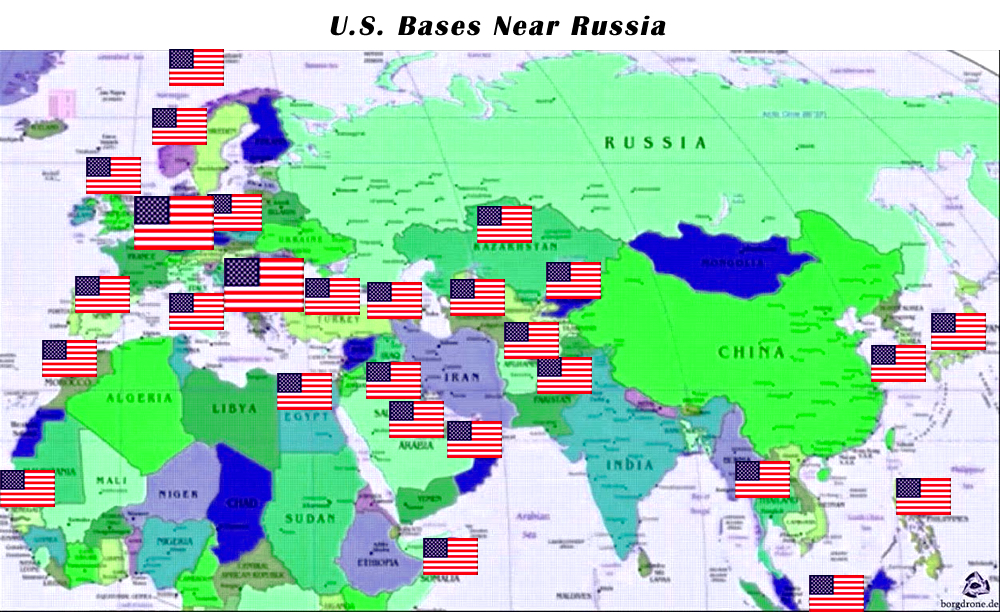
Bradford Betz , Lucas Y. Tomlinson, Fox News, Sun, 30 Jun 2024 https://www.sott.net/article/492907-US-bases-in-Europe-on-high-alert-for-possible-terrorist-attack-DOD
U.S. military bases throughout Europe have been put on heightened alert status due to a potential terrorist attack, Fox News Digital has confirmed.
FILE – Sign in front of Ramstein Air Base, Germany.“There is credible intel pointing to an attack against U.S. bases over the next week or so,” a U.S. defense official told Fox News’ Lucas Tomlinson.
The official, who declined to be identified because he was not authorized to speak to the media, did not elaborate on the nature of the threat, but confirmed it was not tied to the French elections.
ISIS remains global threat a decade after declaring caliphate, US military official says
The official said all U.S. military bases in Europe have been placed on high alert, not a lock-down.
The U.S. bases have raised the status of the alert level to, “Force Protection Charlie,” which means the Pentagon has received credible intelligence indicating some form of a terrorist attack is in the works.
The new alert applies to all U.S. military facilities and personnel in Europe, including facilities in Germany, Italy, Romanian and Bulgaria, per reporting from Stars and Stripes.
Civil War in Donbass 10 Years On
Zelensky did initially try to resolve the Donbass conflict through diplomatic means. In October 2019, he moved to hold a referendum on “special status” for the breakaway republics in a federalized Ukraine, while personally meeting with representatives of Azov Battalion, begging them to lay down their arms and accept the compromise. Mockingly rebuffed and threatened by the Neo-Nazi group’s leaders, while rocked by nationalist protests against the proposed plebiscite in Kiev, the plans were dropped. So then the President picked the “worst option”.
KIT KLARENBERG, JUL 08, 2024 https://www.kitklarenberg.com/p/civil-war-in-donbass-10-years-on
July 1st marked the 10th anniversary of a brutal resumption of hostilities in the Donbass civil war. Perhaps unsurprisingly, it passed without comment in the Western media. 10 years earlier, Ukrainian President Petro Poroshenko called a ceasefire in Kiev’s “anti-terrorist operation”. Launched two months prior following vast protests, and violent clashes between Russian-speaking pro-federal activists and authorities throughout eastern Ukraine, the intended lightning strike routing of internal opposition to the Maidan government quickly became an unwinnable quagmire.
Ukrainian forces were consistently beaten back by well-organised and determined rebel forces, hailing from the breakaway “People’s Republics” in Donetsk and Lugansk. Resultantly, Poroshenko outlined a peace plan intended to compel the separatists to put down their arms. They refused to do so, prompting the President to order an even more savage crackdown. This too was a counterproductive failure, with the rebels inflicting a series of embarrassing defeats on Western-sponsored government forces. Kiev was ultimately forced to accept the terms of the first Minsk Accords.
This agreement, like its successor, did not provide for secession or independence for the breakaway republics, but their full autonomy within Ukraine. Russia was named as a mediator, not party, in the conflict. Kiev was to resolve its dispute with rebel leaders directly. Successive Ukrainian governments consistently refused to do so, however. Instead, officials endlessly stonewalled, while pressuring Moscow to formally designate itself a party to the civil war.
No wonder – had Russia accepted, Kiev’s claims that its savage assault on the civilian population of Donbass was in fact a response to invasion by its giant neighbour would’ve been legitimised. In turn, all-out Western proxy war in eastern Ukraine, of the kind that erupted in February 2022, could’ve been precipitated. Which, it is increasingly clear, was the plan all along.
‘Grassroots Movement’
In the days prior to the April 2014 launch of Kiev’s “anti-terrorist operation” in Donbass, notorious war hawk Samantha Power, now USAID chief, openly spoke on ABC of “tell-tale signs of Moscow’s involvement” in the unrest. “It’s professional, coordinated. Nothing grassroots about it,” she alleged. Such framing gave Ukrainian officials, their foreign backers, and the mainstream media licence to brand the brutal operation a legitimate response to a fully-fledged, if unacknowledged, “invasion” by Russia. It is referred to as such in many quarters today.
Yet, at every stage of the Donbass conflict, there were unambiguous indications that the Ukrainian government’s claims of widespread Russian involvement – endorsed by Western governments, militaries, intelligence agencies, pundits and journalists – were fraudulent. One need look no further than the findings of a 2019 report published by the George Soros-funded International Crisis Group (ICG), Rebels Without A Cause. Completely unremarked upon in the mainstream, its headline conclusions are stark:
“The conflict in eastern Ukraine started as a grassroots movement…Demonstrations were led by local citizens claiming to represent the region’s Russian-speaking majority.”
ICG noted that Russian leaders were from the start publicly and privately sympathetic to Russian-speakers in Donbass. Nonetheless, they issued no “clear guidance” to businessmen, government advisers or the domestic population on whether – and how – they would be officially supported by Moscow in their dispute with the Maidan government. Hence, many Russian irregulars, encouraged by “what they regarded as the government’s tacit approval, made their way to Ukraine.”
Per ICG, it was only after the conflict started that the Russian government formalised a relationship with the Donbass rebels, although the Kremlin quickly changed tack on what they should do. A Ukrainian fighter told the organisation that he “began hearing calls for restraint in rebel efforts to take control of eastern Ukrainian towns and cities” in late April 2014. However, “the separatist movement in Donbass was determined to move ahead.”
Due to this lack of control, and repeated calls for direct intervention in the conflict from the rebels, Russia replaced the Donetsk and Lugansk rebel leadership with hand-picked figures, who took an explicitly defensive posture. But the Kremlin was ultimately “beholden” to the breakaway republics, not vice versa. It could not even reliably order the rebels to stop fighting. A Lugansk paramilitary told ICG:
“What do you do with 40,000 people who believe that, once they put down their arms, they will all be shot or arrested? Of course, they are going to fight to the death.”
Elsewhere, the report cited data provided by “Ukrainian nationalist fighters”, which showed rebel casualties to date were “overwhelmingly” Ukrainian citizens. This was at odds with the pronouncements of government officials, who invariably referred to them as “Russian mercenaries” or “occupiers”. More widely, figures within far-right President Petro Poroshenko’s government had routinely claimed Donbass was wholly populated by Russians and Russia-sympathisers.
One Ukrainian minister was quoted in the report as saying he felt “absolutely no pity” about the extremely harsh conditions suffered by Donbass civilians, due to the “legal, political, economic and ideological barriers isolating Ukrainian citizens in rebel-held territories” constructed by Kiev. This included enforcing a crippling blockade on the region in 2017, which created a “humanitarian crisis”, and left the population unable to claim pensions and welfare payments, among other gruelling hardships.
Several Donbass inhabitants interviewed by ICG expressed nostalgia for the Soviet Union. Most felt “under attack” by Kiev. A pensioner in Lugansk, whose “non-combatant son” was killed by a Ukrainian sniper, asked how Poroshenko could claim the territory was “a crucial part” of Ukraine: “then why did they kill so many of us?”
‘Worst Option’
In conclusion, ICG declared the situation in Donbass “ought not to be narrowly defined as a matter of Russian occupation,” while criticising Kiev’s “tendency to conflate” the Kremlin with the rebels. The organisation expressed optimism newly-elected President Volodymyr Zelensky could “peacefully reunify with the rebel-held territories,” and “[engage] the alienated east.” Given present day events, its report’s conclusions were eerily prescient:
“For Zelensky, the worst option…would be to try to forcibly retake the territories, as an all-out offensive would likely provoke a military response from Moscow and a bloodbath in Donbass. It could even lead Moscow…to recognise the statelets’ independence. The large-scale military option is mainly advocated by nationalists, not members of Ukraine’s political establishment. But some prominent mainstream politicians refuse to rule it out.”
Zelensky did initially try to resolve the Donbass conflict through diplomatic means.
Continue readingEDF’s Nuward U-turn shows risk of betting on Small Nuclear Reactors – analysts
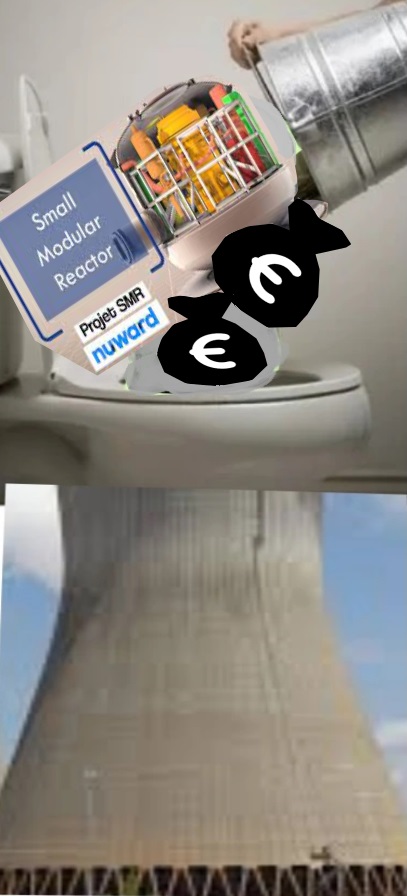
(Montel) French utility EDF’s decision to ditch the design of its Nuward small modular reactor (SMR)in France shows the risk of expecting too much of the nuclear technology – with delays to the project expected, analysts told Montel.
too many technical uncertainties, analysts said.
(Montel) French utility EDF’s decision to ditch the design of its Nuward small modular reactor (SMR)in France shows the risk of expecting too much of the nuclear technology – with delays to the project expected, analysts told Montel.
Montel News, by: Muriel Boselli, Sophie Tetrel , 03 Jul 2024
“SMRs must remain a possibility for keeping a nuclear fleet in the long term but they cannot be the pillar of a reliable electricity strategy at this stage,” said Nicolas Goldberg of Colombus Consulting. “Hence the need for electric renewables, which should not be overlooked.”
France is relying on SMRs as part of a broader plan to spur its nuclear power industry and lower carbon emissions.
In 2022, president Emmanuel Macron announced plans to invest EUR 1bn by 2030 in the development of small modular reactors, with EUR 500m going to Nuward.
Technical difficulties
EDF confirmed media reports on Tuesday that it was scrapping its SMR design due to technical difficulties. The company wanted to “move towards a design built exclusively from proven technological building blocks”, a spokeswoman told Montel.
The market had been sceptical about the project as there were too many technical uncertainties, analysts said.
“This announcement allows us to be a little less involved in utopian and rhetorical discussions about nuclear power and to return to something much more technical, which brings us back to the limits of SMRs at the moment,” said Franck Gbaguidi, an analyst at Eurasia Group…………………………..
Safety adaptation
Ditching the design meant EDF would have to adapt the safety plan it submitted to France’s ASN nuclear safety authority last July, an ASN spokeswoman said.
The Nuward project has been in development since 2019, managed by a consortium of companies including EDF, Naval Group, TechnicAtome, the French Alternative Energies and Atomic Energy Commission (CEA), Framatome and Tractebel. Construction was scheduled to start in 2030
The Nuward project has been in development since 2019, managed by a consortium of companies including EDF, Naval Group, TechnicAtome, the French Alternative Energies and Atomic Energy Commission (CEA), Framatome and Tractebel. Construction was scheduled to start in 2030.
France is currently developing 11 SMR projects and the nuclear development has been backed by right and far-right political parties. In April, the start-up Jimmy said it had submitted a request to the ecology ministry for authorisation of a pair of 170 MW capacity SMRs it hopes to build in France after the European Commission approved EUR 300m in state aid for the project.
In December last year, the company said it would stick with its SMR plans in Europe despite American firm NuScale Power scrapping its plan to build SMRs in the US. https://montelnews.com/news/2edd2bd8-fa29-4629-95f9-c876c1e4e6ce/edfs-nuward-u-turn-shows-risk-of-betting-on-smrs-analysts
Labour must act fast to fire up Rolls-Royce nuclear reactor deals

Rolls-Royce risks losing billions in overseas contracts if Labour delays
vital strategic decisions on nuclear reactors, in what is emerging as the
first crucial test of its business policies.
Other projects may also be in
jeopardy, imperilling thousands of jobs, if new ministers are slow to take
action to tackle the overflowing in-trays confronting them. The engineering
giant is considered to be a front-runner of the six groups in the race to
build Britain’s first mini nuclear plants, known as small modular reactors
(SMRs).
State funding has been key to the development of its designs. One
of the company’s goals is to create a major export market for its SMRs. It
is eyeing contracts worth billions of pounds. [Really !!] The Mail on Sunday
understands that central European countries including the Czech Republic
are among those in talks with Rolls. But these negotiations will stall –
and possibly end – if Labour does not give the UK’s formal backing to the
project by the end of the year.
This is Money 6th July 2024
Starmer’s role in Assange’s persecution
As head of the UK Crown Prosecution Service, the newly elected British PM Keir Starmer played a key role in setting in motion the infernal legal machinery that crushed Assange for 14 years
THOMAS FAZI, JUL 05, 2024, https://www.thomasfazi.com/p/starmers-role-in-assanges-persecution
Even though Julian Assange was finally freed last month, after a 14-year-long ordeal, many myths still endure about the whole affair. One of these is that the case concerning Assange’s alleged rape of two girls in Sweden, in 2010, never went to trial because Assange evaded justice. In reality, Assange, who was then in the UK, made himself available for questioning via several means, by telephone or video conference, or in person in the Australian embassy. But the Swedish authorities insisted on questioning him in Sweden. Assange’s legal team countered that extradition of a suspect simply to question him — not to send him to trial, as he had not been charged — was a disproportionate measure.
This was more than a technicality: Assange feared that if he were extradited to Sweden, the latter’s authorities would extradite him to the US, where he had good reason to believe that he wouldn’t be given a fair trial. Sweden, after all, always refused to provide Assange a guarantee of non-extradition to the US — the reason why, when in 2012 the British Supreme Court ruled that he should be extradited to Sweden, Assange sought political asylum in the Ecuadorian embassy. From there, however, he continued to make known his availability to be interrogated by the Swedish authorities inside the embassy, but they never replied.
Thanks to a FOIA investigation by the Italian journalist Stefania Maurizi, it would later emerge that a crucial role in getting Sweden to pursue this highly unusual line of conduct was played by the UK Crown Prosecution Service (CPS), the principal public agency for conducting criminal prosecutions, then led by one Keir Starmer. In early 2011, while Assange was still under house arrest, Paul Close, a British lawyer with the CPS, gave his Swedish counterparts his opinion on the case, apparently not for the first time. “My earlier advice remains, that in my view it would not be prudent for the Swedish authorities to try to interview the defendant in the UK”, Close wrote. Why did the Crown Prosecution Service advise the Swedes against the only legal strategy that could have brought the case to a rapid resolution, namely questioning Julian Assange in London, rather than insisting on his extradition?
In hindsight, it seems clear that the CPS’s aim was precisely that of keeping the case in a legal limbo, and Assange trapped in Britain, for as long as possible, especially considering how shaky the case against Assange was in the first place. After all, what better outcome for Assange’s enemies than keeping him under investigation for years, suspected of being a rapist but never either charged or cleared once and for all, thus justifying his arbitrary detention? The CPS’s hostile treatment of Assange, the citizen of an allied country, continued even after he sought refuge in the Ecuadorian embassy, for example by insisting on denying him “safe passage” in UK territory in order to be treated in a hospital for a shoulder problem.
A year after Assange had taken refuge in the embassy, it appears that the Swedish prosecutor was considering dropping the extradition proceedings, but she was deterred from doing so by the CPS. The prosecutor was concerned, among other things, about the mounting costs of costs of the Scotland Yard agents guarding the embassy day and night. But for the British authorities this was not a problem; they replied that they “do not consider costs are a relevant factor in this matter”.
As a result of the Swedish authorities’ highly unusual behaviour, Assange had, by then, been arbitrarily and illegitimately forced into detention for seven years, as was concluded even by the UN Working Group on Arbitrary Detention.
What role, if any, did Keir Starmer play in all this as head of the CPS? During the period when the body was overseeing Assange’s extradition to Sweden, Starmer made several trips to Washington. US records show Starmer met with Attorney General Eric Holder and a host of American and British national security officials. Using the Freedom of Information Act, the British media organisation Declassified UK requested the itinerary for each of Starmer’s four trips to Washington with details of his official meetings, including any briefing notes. CPS replied that all the documents relative to Starmer’s trips to Washington had been destroyed. Asked for clarification — and whether the destruction of documents was routine — the CPS did not respond.
Similarly, when Maurizi submitted a FOIA request to the CPS to shed light on the correspondence between Paul Close and the Swedish authorities, she was also told that all the data associated with Paul Close’s account had been deleted when he retired and could not be recovered. This only beckoned more questions: why did the CPS destroy key documents on a high-profile, ongoing case? And what did the CPS destroy exactly, and on whose instructions? The CPS added that Close’s email account had been deleted “in accordance with standard procedure”. However, Maurizi would later discover that this procedure was by no means standard. The destruction of key emails was distinctly suspicious.
Since then, Maurizi has been waging a years-long legal fight to access documents related to the CPS and Assange case, but she has been systematically stonewalled by CPS — even despite a judge order ordering the CPS to come clean about the destruction of key documents on Assange. One cannot help but wonder: what are they trying to hide? It’s hard to shake the conclusion that the real purpose of the Swedish investigation, and of CPS’s unusual behaviour, was simply to keep Assange detained for as long as necessary to get him extradited to the US.
Now that one of the key people behind all this has just been elected prime minister, it’s even less likely that we’ll ever learn the truth. Indeed, one cannot help but wonder if releasing Assange just before the election wasn’t a way — for Starmer and everyone else involved — to make this story go away once and for all.
Europe is Quietly Debating a Nuclear Future Without the US

America has protected Europe with is nuclear umbrella for more than 70 years. In the era of Vladimir Putin and Donald Trump, the continent is quietly debating a different nuclear future.
Politico, By LAURA KAYALI, THORSTEN JUNGHOLT and PHILIPP FRITZ, 07/04/2024
In a castle near Stockholm, standing on a blue-curtained podium that hid the room’s gilt mirrors and sparkling chandeliers, French President Emmanuel Macron ripped open a debate that Europe had been avoiding not just for years but for decades.
Macron had chosen the time and place carefully; he was on a state visit to Sweden, one of the long-neutral European countries who decided in 2022 to join NATO in response to Russia’s full-scale invasion of Ukraine. He was sharing the stage with Sweden’s king and prime minister, and faced an audience of Swedish military cadets and officers who were recalibrating their mission and ideas about their country’s, and the continent’s, security. It was the last week of January, and Sweden’s final ratification as a NATO member was just weeks away. And he spoke in English, to make sure people outside of France and Sweden paid attention.
During the Cold War, Macron noted, “all the treaties were decided by the former USSR and USA. Everything that covered our territory was decided by the big guys in the room, not by the Europeans themselves.” Going forward, he said, looking around the audience to make sure his point was getting across, in the area of arms control, troop deployments and the entirety of Europe’s security architecture, that needs to change. “We have to be the one to decide,” Macron said.
The room of military officers was quiet. Macron hadn’t used the word “nuclear,” but he didn’t have to. A Swedish officer stood up and asked if France, as “the only EU country with an independent nuclear force,” had a “special responsibility” to protect the security of the continent’s northernmost region, the Arctic sea passage. In other words, was France prepared to use its nuclear weapons if Scandinavian countries were threatened from the north, presumably from Russia’s bases in the Arctic.?
“Definitely yes,” Macron responded without hesitation, as if he anticipated the question. “Part of our vital interest has a European dimension, which gives us a special responsibility, given precisely what we have and the deterrence capacity we have,” he added. ……………………………………………………………………………………………………….
Recently, Trump has been downplaying his threat to pull back from NATO, saying that he’ll keep the United States in NATO “100 percent.” But every time, he is still quick to add conditions on U.S. participation, including that allies keep up defense spending and “play fair.”
Both European and U.S. experts say it’s unlikely a Trump administration would decide to physically take out the nukes stationed in Europe. But nuclear deterrence depends on political credibility, and there’s an unspoken fear in Europe that Trump would be less willing to come to the aid of European allies than his predecessors. Would Putin be so confident that Trump would be willing to risk a nuclear war to save Estonia?
“The French and the British are going to have to think about their nuclear posture if Trump is elected and if he makes good on his threat to disengage from NATO,” said Daniel Fried, a former U.S. ambassador to Poland.
“It’s the first time since the 1960s that European countries have to question the American umbrella,” he added.
Macron’s ambitions for France’s nuclear deterrent haven’t exactly been a hit with his constituents, with far-right and far-left parties accusing him of selling out France’s sovereignty to the Europeans. But that hasn’t stopped him from continuing to promote the idea, mentioning it three more times in just the last few months.
Macron hasn’t provided many specifics about how exactly this arsenal would cover Europe, but has made clear that France would remain fully in charge: “It’s the President of the Republic as head of the armed forces who defines the engagement of this nuclear force in all its components and who defines France’s vital interests,” he told The Economist. “It’s not a question of changing that.” …………………………………………………………….
For its part, France has about 290 warheads, but is not a member of the NPG. In comparison, the U.S. has more than 5,000 nukes and Russia 5,580, according to a study by the Stockholm International Peace Research Institute.
At all times, London and Paris each have at least one nuclear-armed ballistic missile submarine patrolling the seas. A few days after the Russian invasion of Ukraine, Paris deployed three (out of four) submarines at the same time — an unprecedented level of alert. ……………………………………………………
It’s fair to say that quite a few European countries think that by reopening the debate over its nuclear umbrella, Europe has far more to lose than to gain. Chief among them is Germany, which has a history of saying no thank you to nuclear pushes from French presidents. …………………………………………………………………………………..
At least for now, the future of Europe’s conversation on nuclear deterrence depends on several high-stakes elections. Citizens from NATO’s three nuclear powers — the United States, the United Kingdom and France — are all going to the polls this year and NATO- and Euro-skeptics could soon be wielding power in both Paris and Washington.
That’s one reason why the topic is unlikely to be aired openly during the gathering of NATO leaders that will take place in Washington from July 9 to 11. “I do not expect European nuclear defense to be much of a topic at the summit,” one European diplomat said, “rather NATO will again affirm its deterrence and defense.”………………………….. more https://www.politico.com/news/magazine/2024/07/04/europe-us-nuclear-weapons-00166070
‘Letters of last resort’: deciding response to a nuclear attack among first of Starmer’s tasks

The handwritten instructions new PMs write for Trident submarine commanders contain instructions for what to do if Britain’s leaders are killed
Guardian Dan Sabbagh 5 July 24
ometime soon after entering Downing Street as prime minister, Keir Starmer will be briefed on the deadly capability of Britain’s nuclear deterrent – and asked to consider what instructions to give Trident submarine commanders in the unlikely event the UK is destroyed in an all-out attack and he is among the millions killed.
In the aftermath of an election victory, it is a sobering moment. Tony Blair is described as having gone “quite quiet” just over a quarter of a century ago when asked to handwrite four identical “letters of last resort” to the commanders in the event that the UK no longer in effect exists.
James Strong, a senior lecturer at Queen Mary, University of London, said the exercise acted as a counterweight to the drama of staying up all night, winning an election and visiting the monarch. “This is the moment where prime ministers say the reality of the job dawns on them, and that may be a reason why it keeps being done in this way”……………
While the previous Labour leader Jeremy Corbyn was personally opposed to Trident, Starmer has already signalled he supports it – and would if necessary fire nuclear missiles. “We have to be prepared” to unleash the deterrent’s destructive power, the new prime minister said last month, describing it as “a vital part of our defence.”
The briefing is led by Adm Tony Radakin, the head of the armed forces, accompanied by what one former Downing Street official described as “stern-faced admirals in improbably grey suits”
There are about 40 warheads on every Vanguard submarine that carries the Trident missiles, though the exact number is a secret and may be slightly higher. Each is estimated to have an explosive power of 100 kilotons, according to David Cullen of the Nuclear Information Service – theoretically powerful enough to cause serious blast damage in a 3km radius.
In a time of war, it would fall to the prime minister (or if he or she were unavailable or dead, a nominated alternative whose identity is not disclosed) to authorise a nuclear attack.
The letters to the four commanders are handwritten, not necessarily immediately but relatively promptly. There are considered to be four basic options: retaliate; do nothing; join forces with an allied nation, probably the US; and even leave the matter to the commander’s discretion. “Taking the last option really would be passing the buck,” Strong said.
Once written, the letters are sealed in an envelope, and can only be delivered physically. Soon after, they are deposited in what one former Trident commander described as a “safe within a safe” in each of the submarines. There has been a British nuclear-armed submarine at sea on patrol at all times since 1969.
Meanwhile, Sunak’s instructions to the submarine on patrol remain in force, until a new boat has gone out with one of Starmer’s letters. Once no longer needed, the old prime minister’s instructions are destroyed, and what they have said has never been publicly disclosed, to maintain an aura of uncertainty.
Navy insiders say a complex verification process exists before a letter can be opened, which requires determining whether the UK has been subject to an all-out nuclear attack. That involves listening for signals from home – which back in the 1960s could only come from Radio 4 and other longwave radio stations – but today comes from a wide variety of sources, including mobile phones, GPS and shipping radio.
It is also likely there would be world news, listened to at sea, describing a dramatic escalation of global tensions. “You might expect that the level of ‘proof’ which the commanding officer would be required to amass before opening the PM’s letter to be extremely high, and so it is,” one former navy submarine commander said. https://www.theguardian.com/world/article/2024/jul/05/letters-of-last-resort-deciding-response-to-a-nuclear-attack-among-first-of-starmers-tasks
The commissioning of the Flamanville EPR, nuclear reactor is proving difficult
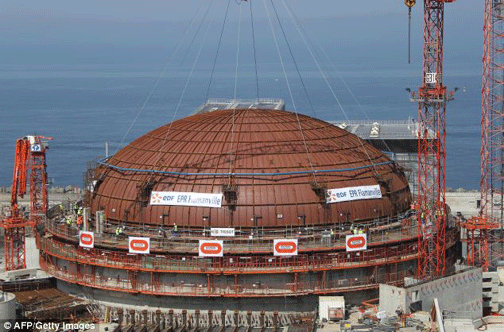
The commissioning of the Flamanville EPR, decided by the ASN on 7 May
2024, is proving difficult. This is not surprising when we remember the
many problems that this reactor has accumulated since the start of its
construction.
As Global Chance has repeatedly pointed out, there is a great
risk of seeing political imperatives take precedence over scientific rigour
and safety culture. The way in which information on commissioning is being
disseminated is worrying and does not in any way meet the conditions
stipulated by the ASN in its decision to authorise commissioning.
The next step, namely the search for criticality and the first divergence, is
crucial. Hasty implementation could prove problematic for the integrity of
the reactor and would put local populations at risk. This note is to be
updated regularly depending on the situation and the availability of
information relating to the EPR start-up operations.
Global Chance 4th July 2024
https://global-chance.org/Laborieuse-mise-en-service-de-l-EPR-de-Flamanville
Work to show UK nuclear ‘environmentally sustainable’ incomplete, 16 months after government announcement.

Stop Sizewell C executive director and company secretary Alison Downes believes labelling nuclear as green was a ploy to allow investors to justify their investment in the project.
04 JUL, 2024 BY THOMAS JOHNSON, https://www.newcivilengineer.com/latest/work-to-show-nuclear-environmentally-sustainable-incomplete-16-months-after-government-announcement-04-07-2024/
Government work to justify classifying nuclear energy generation as “environmentally sustainable” cannot be produced as it is incomplete, despite ex-chancellor Jeremy Hunt making the announcement in the 2023 Spring Budget, NCE can reveal.
NCE submitted a Freedom of Information (FOI) request to the Department of Energy Security and Net Zero (DESNZ) requesting all the documentation that was produced to back Hunt’s claim, but was refused because it is “still in the course of being completed”.
In March 2023 during the Spring Budget statement, Hunt announced the government would be consulting on listing nuclear energy as “environmentally sustainable” in a bid to increase private investment in the sector.
Hunt stated nuclear was a “critical source of cheap and reliable energy” to meeting the UK’s net zero obligations.
On the reclassification of nuclear energy, the government’s budget document stated: “Nuclear energy will also be included in the green taxonomy, subject to consultation, encouraging private investment.”
DESNZ’s reasoning for not responding to the FOI is due to the fact it has not completed the consultation as to whether it should go ahead with its plans to deem nuclear as “environmentally sustainable” which it started 16 months ago.
DESNZ stated that it “does hold information in scope of this request, however we will not be releasing this at this time as it is covered by exemption 12(4)(d) which states ‘a public authority may refuse to disclose information to the extent that the request relates to material which is still in the course of completion, to unfinished documents or to incomplete data’. Your request falls within the scope of this provision because the requested information relates to material still in the course of completion”.
It continued: “In order to apply the exemption detailed above we must also consider whether withholding such information is within the public interest. The consultation document to which the requested information relates has not been published, meaning the policy pertaining to the content of the consultation document is not finalised. For this reason, we feel it would not be in the public interest to release the information at this time.”
In its Mobilising green investment: 2023 green finance strategy document related to the consultation for nuclear to be included within the green taxonomy, it states the government intended to consult on this in autumn last year.
It further stated the consultation and getting this policy through was a priority that would be achieved by Q1 of this year.
Reaction
Stop Sizewell C executive director and company secretary Alison Downes believes labelling nuclear as green was a ploy to allow investors to justify their investment in the project.
She said: “The green taxonomy seems to be the final piece of the puzzle because the whole emphasis behind adopting the RAB model was to coax non-typical investors, like UK pension funds.
“Obviously the theory behind labelling nuclear as green would allow them to tick another environmental, social and governance (ESG) box that would enable them to justify the investment.”
Downes hypothesises that the reason behind the policy review not being completed yet could be due to the fact that Sizewell C’s recent attempt at leveraging private capital for the project in Spetember last year didn’t bring forward any atypical investors.
“If investors have an appetite for nuclear then great but if they don’t, this isn’t going to tip the balance,” she said.
“In our regular engagement with government officials they kept saying it’s coming, it’s coming, which in government speak it is ‘in due course’, which means sometime soon, maybe never.
“It was very much plugged for Q1 this year and then it didn’t happen.
“I wonder whether the fact they launched the capital raise last September where they had to get bidders to go through the pre-qualification process and it was apparent that very few were from that target market.
“Suddenly they mave have thought if we’ve got a lot on our plate, is it a priority to push this taxonomy review through?”
UK/Ireland Nuclear Free Local Authorities (NFLAs) secretary Richard Outram said it is astounding that the government was unable to come up with any justification for making the claim back in March 2023.
He said: “It is notable that even now 16 months after Jeremy Hunt claimed that nuclear is a ‘sustainable and environmentally friendly energy generation solution’ that officials in the DESNZ despite their resources, are unable to come up with the justification that underlines this claim.
“That says a lot.”
Stop Sizewell C and other anti-nuclear groups maintain that nuclear is not a environmentally energy generation solution due to the waste it creates, its contamination of the earth and other nature surrounding the power plants and the highly emission intensive methods of decommissioning old plants.
Outram continued: “The NFLAs believe that nuclear is simply too costly (Hinkley Point C’s original budget was £18bn now current real budget is £46bn and rising), too slow (Hinkley Point C was meant to be generating power to cook turkeys in time for christmmas 2017 but will now be 2031 earliest), always comes with the possibility of an accident, always cause environmental contamination, and leaves a massive and costly legacy of decommissioning redundant nuclear power plants and managing and disposing of nuclear waste (NDA current estimates £260bn).
“Events in Ukraine have also demonstrated that nuclear power plants represent a massive target and a potential ‘dirty bomb’ in the event of war with a hostile state actor and Britain’s nuclear reactors have historically been powered by uranium from Russia which is now an unreliable supplier as it is that hostile state actor.”
The NFLAs are instead calling on an energy strategy that prioritises the reduction of energy usage in the UK.
Continue readingNATO Members Agree To Give Ukraine $43 Billion in Military Aid for 2025

The pledge will be made at next week’s NATO summit, where Ukraine is also expected to be told it’s too corrupt to join the alliance
by Dave DeCamp July 4, 2024 , https://news.antiwar.com/2024/07/04/nato-members-agree-to-give-ukraine-43-billion-in-military-aid-for-2025/
NATO allies have agreed to pledge $43 billion in military aid for Ukraine, which will be provided next year, Reuters reported on Wednesday.
NATO Secretary-General Jens Stoltenberg was looking for the alliance to make a multi-year commitment to ensure long-term support for the proxy war, but the allies did not agree. Instead, they will re-evaluate military aid for Ukraine each year.
The agreement says that NATO allies will “aim to meet this pledge through proportionate contributions.” If the $43 billion is funded based on how much each member contributes to NATO, most of the burden would be on the US since it pays for about two-thirds of the alliance’s budget.
The $43 billion is part of a slew of measures NATO will announce at its summit next week in Washington. NATO is also expected to station a civilian official in Kyiv and establish a new command in Germany that will oversee military aid and training for Ukraine, taking over duties currently overseen by the US.
While planning to provide tens of billions in new military aid, NATO will also tell Ukraine that it’s too corrupt to join the alliance. The Telegraph reported this week that the alliance will release a communique calling on Ukraine to take more anti-corruption steps before talks on its NATO membership could progress.
President Biden has frequently cited Ukraine’s corruption as a reason why the country couldn’t join NATO. But that hasn’t stopped him from providing over $100 billion in aid to Ukraine, which includes tens of billions in the form of direct budgetary aid that funds the government.
Nuclear power would put our energy security into Russian hands.

George Baxter: Developing nuclear power would put our energy security into
Russian hands. Whenever there’s debate on energy and climate change, as
we are seeing fleetingly in the 2024 election campaign, you can rely on
nuclear power fans to flood the zone with claims that it is the answer.
It all seems so simple. But it isn’t. Far from it.
Take uranium. It’s not talked about much, but nuclear’s raw material is a global commodity – and we don’t have any. The global market is dominated by Russia which
controls around 50% of the supply of raw ore. Mining uranium isn’t the only
issue. Despite sanctions over the war in Ukraine, Russia continues to
supply western nuclear power plants with enriched uranium fuel. According
to the Royal United Services Institute, Europe and the US have scrambled to
build alternative supply chains for enriched fuel to reduce dependencies on
Russia. It is an intensifying international resource power play.
Replacing our vulnerability to international energy shocks and the market volatility
of fossil gas, with long term dependencies on uranium ore and nuclear fuel
hardly seems the wisest path to take, especially when your land and seas
are awash with untapped renewable energy.
A baseload of constant power
output from nuclear is not needed to make the electricity system work. Over
ten years ago the CEO of National Grid said the concept of baseload was
“already outdated.” while casting doubt on the role of large nuclear on
a modern green electricity network.
Nuclear creates more problems than it
solves because it isn’t very flexible. So when it is really windy or
sunny, it’s renewables that get turned off.
And worse, if there is a problem (and there have been issues in Scotland including cracks in the reactor cores of both Hunterston and Torness) the shut down can last for
weeks or months, and other reactors of the same design risk shut down as a
precaution.
If a wind turbine is attacked or damaged, there’s little drama,
we just put another one up. The reactors at Fukishima are not back in
operation – 13 years on – lest we forget. Renewables are variable in
nature, and predictably so, well in advance. To manage variability of some
renewable sources like the wind and sun, more flexible non-nuclear
technologies are a much better fit by far.
Herald 2nd July 2024
Landmark Swedish Court Judgment against Nuclear Waste Repository.

Landmark Swedish Court Judgment against Nuclear Waste Repository: Read the English Translation http://www.dianuke.org/landmark-swedish-court-judgment-nuclear-waste-repository-read-english-translation/
MKG, the Swedish NGO Office for Nuclear Waste Review has made an unofficial translation into English of the Swedish Environmental Court opinion on the power industry’s Nuclear Waste Company SKB’s license application for a final repository for spent nuclear fuel in Forsmark, Sweden.
The court said no to the application because it considered that there were problems with the copper canister that had to be resolved now and not later. The translation shows the courts judicial argumentation and why it decided not to accept the regulator SSM’s opinion that the problems with the integrity of the copper canister were not serious and could likely be solved at a later stage in the decision-making process.
The main difference between the court’s and the regulator’s decision-making was that the court decided to rely on a multitude of scientific sources and information and not only on the material provided by SKB. It had also been uncovered that the main corrosion expert at SSM did not want to say yes to the application at this time that may have influenced the court’s decision-making. In fact there appear to have been many dissenting voices in the regulator despite the regulator’s claim in the court that a united SSM stood behind its opinion.
The court underlines in its opinion that the Environmental Code requires that the repository should be shown to be safe at this stage in the decision-making process, i.e. before the government has its say. The court says that some uncertainties will always remain but it sees the possible copper canister problems as so serious that it is not clear that the regulator’s limits for release of radioactivity can be met. This is a reason to say no to the project unless it can be shown that the copper canister will work as intended. The copper canister has to provide isolation from the radioactivity in the spent nuclear fuel to humans and the environment for very long time-scales.
It is still unclear how the process will proceed. The community of Östhammar has cancelled the referendum on the repository, as there will be no question from the government in the near future. The government has set up a working group of civil servants to manage the government’s handling of the opinions delivered by the court and SSM. SSM has told the government that it is ok to say yes to the license application.
The court has stated that there are copper canister issues that need to be considered further. The nuclear waste company SKB has said that it is preparing documentation for the government to show that there are no problems with the canister. Whether the government thinks that this will be enough remains to be seen. This is likely not what the court had in mind. The government would be wise to make a much broader review of the issue. There is a need for a thorough judicial review on the governmental level in order to override the court’s opinion. Otherwise the government’ decision may not survive an appeal to the Supreme Administrative Court.
 There are eminent corrosion experts that are of the opinion that copper is a bad choice as a canister material. There is also increasing experimental evidence that this is the case. One problem for the court was likely that SKB has hesitant to do the required corrosion studies that show that copper does not corrode in an anoxic repository environment. The 18-year FEBEX field test shows that copper corrodes relatively rapidly with pitting corrosion. SKB says that all corrosion is due to in-leaking oxygen but it is now clear that experimental systems containing copper and clay become anoxic within weeks or months so this explanation is not valid.
MKG has for long wanted SKB to retrieve the next experimental package in the LOT field test in the Äspö Hard Rock Laboratory. SKB had refused. The remaining packages have now been heated for 18 years. When a 5-year package was retrieved in 2006 it was discovered that there was “unexpectedly high corrosion”. There is clearly a need for more lab and field test results to decide whether copper is a good and safe choice for a canister material.
The court’s decision-making shows the importance of a democratic and open governance in environmental decision-making. It is important that the continued decision-making regarding the Swedish repository for spent nuclear is transparent and multi-faceted.
Ukrainian drones injure Zaporizhzhia nuclear power plant workers, say Russian-backed officials
By Reuters, July 4, 2024, https://www.reuters.com/world/europe/ukrainian-drones-injure-zaporizhzhia-nuclear-power-plant-workers-say-russian-2024-07-03/—
MOSCOW, July 3 (Reuters) – A Ukrainian drone attack injured eight workers from the Russian-controlled Zaporizhzhia nuclear power plant and left a nearby town largely without power and water, Russian-backed officials said on Wednesday.
In a statement on Telegram, the plant’s management said that eight staff had been injured during an attack by three Ukrainian kamikaze drones on an electricity substation near the plant in south-eastern Ukraine.
It said all of the injured workers were receiving medical treatment.
Reuters was not able to independently confirm what had happened and there was no immediate comment from Ukraine.
Eduard Senovoz, the Russian-installed mayor of the nearby city of Enerhodar where the plant’s workers live, said in a statement that the attack had left most of the city without power and water.
The attack was the third of its kind within two weeks, he said, adding that work was underway to repair the damage to the substation.
Alexei Likhachev, director general of Rosatom, Russia’s state nuclear corporation, said the attack was the first time that the power plant’s workers had been deliberately put in danger.
In comments to Russian state TV channels, Likhachev called on the Vienna-based U.N. nuclear watchdog, the International Atomic Energy Agency (IAEA), to assess what had happened.
“IAEA head Rafael Grossi has repeatedly said that the activities of nuclear cities, the lives of people, and especially the lives of nuclear power plant workers are ‘sacred’ elements of nuclear safety. Today they have been defiantly violated,” Likhachev said.
The IAEA last month called for a halt to attacks on Enerhodar after earlier attacks on electricity substations in the area.
Tory accused of exaggerating chances of new nuclear plant
Martin Shipton, Net Zero Investor 2nd July 2024
The Conservative candidate for the three-way marginal seat of Ynys Môn has been accused of exaggerating the possibility of a new nuclear power station being developed on the island.
Dr Jonathan Dean, a trustee of the Campaign for the Protection of Rural Wales, submitted a freedom of information request to the UK Government’s Department for Energy Security and Net Zero (DESNZ), seeking a copy of the evaluation report that Wylfa, on Ynys Môn, should be selected as the next large nuclear site after Sizewell C.
He says he was surprised to be told that Wylfa had not been confirmed as the next big nuclear site.
Instead, he was told by DESNZ: “To date, while Wylfa has been announced as the preferred location for a further large nuclear reactor, final decisions on sites and technologies have not been made.”……………………………………………………….
‘Firm commitment’
A leaflet distributed as part of Ms Crosbie’s campaign states: “I am delighted that after much hard work on May 22 2024 the UK Government gave a firm commitment to a gigawatt new nuclear plant at Wylfa………………..
Dr Dean said: “Maybe the announcement was just to boost Virginia Crosbie’s election chances after all?”………………………………
Net Zero Investor 2nd July 2024
https://www.netzeroinvestor.net/news-and-views/nuclear-energy-appetite-growing-but-challenges-remain
1 This Month
26 April – Chernobyl: Inside the Meltdown airs on National Geographic on Sunday 26th April from 4pm

29 April – Nuclear Expert Webinar #1 – Radiation Impacts on Families with Mary Olson and Cindy Folkers
- 12:15 PM MT – 1:45 PM MT
- Location: Virtual – REGISTER TODAY

4 May -West Suburban Peace Coalition to discuss Iran war at May Educational Forum
Monday, May 4, 7:00 – 8:00 PM Central Standard Time
Title: : How Trump’s Narrative Tries to Shape the Reality of the War on Iran.
Contact Walt Zlotow, zlotow@hotmail.com 630 442 3045 for further information
14 May – online event From Bombs to Data Centres: the Face of Nuclear Colonialism

Pine Ridge Uranium is the real threat, not Tehran- Tell Burgum: Stop the Extraction.
Chernobyl: The Lost Tapes – A good documentary on Chernobyl on SBS available On Demand for the next 3 weeks– https://www.sbs.com.au/ondemand/tv-program/chernobyl-the-lost-tapes/2352741955560
To see nuclear-related stories in greater depth and intensity – go to https://nuclearinformation.wordpress.com
-
Archives
- May 2026 (25)
- April 2026 (356)
- March 2026 (251)
- February 2026 (268)
- January 2026 (308)
- December 2025 (358)
- November 2025 (359)
- October 2025 (376)
- September 2025 (257)
- August 2025 (319)
- July 2025 (230)
- June 2025 (348)
-
Categories
- 1
- 1 NUCLEAR ISSUES
- business and costs
- climate change
- culture and arts
- ENERGY
- environment
- health
- history
- indigenous issues
- Legal
- marketing of nuclear
- media
- opposition to nuclear
- PERSONAL STORIES
- politics
- politics international
- Religion and ethics
- safety
- secrets,lies and civil liberties
- spinbuster
- technology
- Uranium
- wastes
- weapons and war
- Women
- 2 WORLD
- ACTION
- AFRICA
- Atrocities
- AUSTRALIA
- Christina's notes
- Christina's themes
- culture and arts
- Events
- Fuk 2022
- Fuk 2023
- Fukushima 2017
- Fukushima 2018
- fukushima 2019
- Fukushima 2020
- Fukushima 2021
- general
- global warming
- Humour (God we need it)
- Nuclear
- RARE EARTHS
- Reference
- resources – print
- Resources -audiovicual
- Weekly Newsletter
- World
- World Nuclear
- YouTube
-
RSS
Entries RSS
Comments RSS
 nuclear-news