Japan hit by a powerful typhoon
Typhoon Jebi path update: Where is Japan typhoon NOW? Will it hit Tokyo? https://www.express.co.uk/news/world/1012314/Typhoon-jebi-path-update-typhoon-tokyo-category-3-Japan-warning-western-central-japan
TYPHOON Jebi will make landfall in southern Japan on Tuesday as damaging winds, flooding and mudslides are expected to hit the country. But where is the typhoon now and will it hit the capital Tokyo?
Typhoon Jebi smashed into Japan on Tuesday, barreling across the mainland at speed in a northeasterly track.
Japan issued evacuation advisories for more than 1 million people and cancelled hundreds of flights in the face of extremely strong winds and heavy rain hammered the country.
AccuWeather senior meteorologist Adam Douty said: “Damaging winds and coastal flooding may be the most significant impacts with this storm.
Where is Typhoon Jebi now?
Typhoon Jebi is currently located just north of Kyoto, traveling back out into the sea in a northeasterly direction.
The storm avoided a direct hit with capital Tokyo, but the city is still expected to bear the brunt of winds of more than 60mph.
Osaka and Kobe also took a hammering from the storm when they were struck earlier on Tuesday, after Jebi moved in from Honshu. The storm made landfall on Shikoku, the smallest main island, around noon.
Jebi then raked across the western part of the largest main island, Honshu, near the city of Kobe, several hours later, heading rapidly north.
Wind gusts of up to 208 km/h (129 mph) were recorded in one part of Shikoku, with forecasts for gusts as high as 216 km/h (135 mph).
Around 100 mm (3.9 inches) of rain drenched one part of the tourist city of Kyoto in an hour, with as much as 500 mm (20 inches) set to fall in some areas in the 24 hours to noon on Wednesday. The Meteorological Agency advised the public to be on the lookout for even more flooding and mudslides, as well as high tides.
Prime Minister Shinzo Abe told a meeting of the government and ruling parties: “We have seen typhoons and torrential rains.
“The government will do its utmost to prevent disaster.
Jebi – whose name means “swallow” in Korean – was briefly a super typhoon and is the latest harsh weather to hit Japan this summer.
Japan has been hit by extreme weather since the beginning of July and western parts of the country have been left devastated by flooding and landslides, leaving more than 220 people dead.
typhoon Jebi’s course has brought it close to parts of western Japan hit by rains and flooding but the storm was set to speed up after making landfall, minimising the amount of rain that will fall in one place.
The country has experienced record-breaking heat as well as floods and landslides.
Nuclear reprocessing has little future in Japan, as utilities end funding
 Japanese utilities ended funding for nuclear fuel reprocessing in 2016, putting MOX program in doubt https://www.japantimes.co.jp/news/2018/09/03/national/japanese-utilities-ended-funding-nuclear-fuel-reprocessing-2016-putting-mox-plans-doubt/#.W48CsSQzbGg
4 Sept 18, Kyodo,, Utilities that operate nuclear power plants stopped funding the reprocessing of nuclear fuel in fiscal 2016, their financial reports showed Sunday, a step that may affect resource-scarce Japan’s nuclear fuel recycling policy.
The 10 utilities, including Tokyo Electric Power Company Holdings Inc. and Japan Atomic Power Co., apparently halted allocating reserve funds for reprocessing costs due to the huge expenses linked to building the reprocessing facilities, sources said.
The government, along with the power companies, has been pushing for the reuse of mixed-oxide, or MOX, fuel, which is created from plutonium and uranium extracted from spent fuel.
While Japan has not changed its policy on spent fuel reprocessing, the outlook for it has remained uncertain since the 2011 Fukushima disaster. At the same time, the government’s latest energy plan in July also stated for the first time that disposal of spent MOX fuel as waste can be considered.
If MOX fuel cannot be reprocessed, nuclear fuel can only be reused once. For the reprocessing of spent MOX fuel, the utilities had allocated about ¥230 billion in reserves as of March 2016.
Currently, only two reactors at Kansai Electric Power Co.’s Takahama power plant, one reactor at Shikoku Electric Power Co.’s Ikata plant and one reactor at Kyushu Electric Power Co.’s Genkai power plant use MOX fuel in so-called pluthermal power generation.
As Japan has decided to cut its stockpile of plutonium, the government and utilities aim to increase plants for pluthermal generation. But if spent MOX fuel is not reprocessed, it would be considered nuclear waste, raising concerns over how to deal with it.
Japan Nuclear Fuel Ltd. — in which power companies have invested — has been pursuing the construction of a spent nuclear fuel reprocessing plant in northeastern Japan as well as a MOX fuel fabrication plant, with the costs coming to about ¥16 trillion.
But a series of problems has resulted in their delay. When operational, the Rokkasho plant in Aomori Prefecture, key to Japan’s nuclear fuel cycle policy, can reprocess up to 800 tons of spent nuclear fuel per year, extracting about 8 tons of plutonium.
With this setback, if new MOX reprocessing plants are to be built, it would be hard to secure further funding.
Work starts to decommission problem-plagued Monju reactor

Nuclear waste briefings in coastal areas
Opposition to release of Fukushima radioactive tritium water into the sea; longterm storage the better option
 Fukushima water release into sea faces chorus of opposition https://mail.google.com/mail/u/0/#inbox?compose=DmwnWtDqNzxklZTsLVvsRFtgBQZHzxshPgMCgrVGpNqZnjrqDwNNWbPprDwxPlNFzCVZnfDvsQwVCitizens and environmental groups have expressed opposition to the idea of releasing into the ocean water tainted with tritium, a radioactive substance, from Tokyo Electric Power Company Holdings Inc.’s disaster-stricken Fukushima No. 1 nuclear power plant.“Long-term storage (of the tritium-containing water) is possible from technical and economic standpoints,” Komei Hosokawa, 63, an official of the Citizens’ Commission on Nuclear Energy, said at a public hearing held in Tokyo on Friday by a subcommittee of the Agency for Natural Resources and Energy. “The radiation levels in the water will decrease during the long-term storage,” he added.
At a similar hearing held the same day in Koriyama, Fukushima Prefecture, Aki Hashimoto, a housewife from the city, said, “I never want to see further worsening of ocean pollution from radiation.”
Opinions objecting to the release of the tritium-contaminated water into the ocean were also heard at a hearing held in the Fukushima town of Tomioka on Thursday.
After Friday’s hearings, Ichiro Yamamoto, who heads the subcommittee, told reporters that many participants in the hearings said the tainted water should continue to be held in storage tanks.
The subcommittee will study the option of keeping the water in the tanks, he added.
Tepco is lowering the radiation levels in contaminated water at the Fukushima No. 1 plant using special equipment, but the device cannot remove tritium.
The tritium-tainted water is stored in tanks within the premises of the power plant, which was heavily damaged in the March 2011 earthquake and tsunami.
In 2016, an expert panel of the Agency for Natural Resources and Energy discussed five methods to dispose of the tritium-tainted water —injection deep into the ground, release into the sea after dilution, release into the air through evaporation, conversion into hydrogen through electrolysis, and burying it after it is solidified.
The panel estimated that the ocean release is the cheapest option, costing up to about ¥3.4 billion.
Japan might sue journalist over his coverage of Fukushima, in Dark Tourist series
The Fukushima Prefectural Government and the Reconstruction Agency are looking to take legal action over the video over concerns it will stoke “unreasonable” fears of radiation in the Fukushima Prefecture, the Japan Times reports.
A senior official from the prefecture said they were “examining the video content”.
In the episode, Farrier is filmed taking a tour of areas affected by the 2011 meltdown of a nuclear plant in Fukushima where he suspects a meal served from a restaurant in Namie, a town in Fukushima Prefecture, has been contaminated by radiation.
It also shows the journalist enter a no-go zone around the Fukushima Daiichi nuclear power plant without permission from authorities, reporting from an abandoned game arcade, and tourists on a bus becoming distressed over rising radiation levels without information about the vehicle’s location.
The show has the journalist travel to different locations around the world associated with grim historical events, including the footsteps of serial killer Jeffrey Dahmer in Milwaukee, and voodoo rituals in Benin, West Africa.
Release of tritium-tainted water into sea is opposed by Fukushima fisheries group
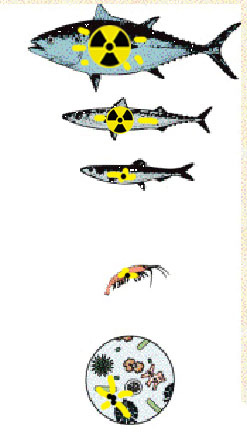 Fukushima fisheries group opposes release of tritium-tainted water into sea https://www.japantimes.co.jp/news/2018/08/30/national/fukushima-fisheries-group-opposes-release-tritium-tainted-water-sea/#.W4hrkSQzbGg
JIJI TOMIOKA, FUKUSHIMA PREF. – The head of a fisheries industry group in Fukushima Prefecture expressed opposition on Thursday to the idea of releasing water containing radioactive tritium from a crippled nuclear plant in the prefecture into the ocean.
The tritium-tainted water is from Tokyo Electric Power Company Holdings Inc.’s Fukushima No. 1 nuclear power plant, which was damaged heavily in the powerful earthquake and tsunami in March 2011.
“At a time when harmful rumors are still circulating in Japan and some countries continue to restrict imports (of Fukushima goods), releasing the tainted water into the sea will inevitably deliver a fatal blow to the Fukushima fishery industry,” Tetsu Nozaki, who leads the Fukushima Prefectural Federation of Fisheries Cooperative Associations, said.
His remarks came during a public hearing held by a subcommittee of the Agency for Natural Resources and Energy in the Fukushima town of Tomioka.
The hearing was for the canvassing of opinions on how to deal with the tritium-tainted water. Releasing it into the sea has been proposed as one option. Similar hearings will be held in the city of Koriyama, Fukushima, and Tokyo on Friday.
Using special equipment, Tepco is lowering the radiation levels in contaminated water at the plant, but the device cannot remove tritium. While the processed water is kept in tanks within the premises of the nuclear power station, the amount of tainted water continues to increase as the plant’s damaged reactors need to be cooled continuously. Tepco is about to run out of suitable sites to construct new storage tanks, according to the government.
Discussions on ways to deal with the tritium-contaminated water are underway at the subcommittee of the government agency.
In a June 2016 report, an expert panel of the agency said that releasing the polluted water into the sea after it is diluted with fresh water would be relatively cheap and time-efficient.
Japan’s municipalities in growing rejection to hosting nuclear waste dumps
 Assemblies make moves to reject playing host to nuclear waste http://www.asahi.com/ajw/articles/AJ201808280029.html By CHIAKI OGIHARA/ Staff WriterAugust 28, 2018 More local assemblies are taking measures to send a strong message to the central government not to bother asking them to host storage facilities for nuclear waste.The moves, in the form of ordinances, were accelerated after the Ministry of Economy, Trade and Industry in July 2017 released its Nationwide Map of Scientific Features for Geological Disposal that classified areas around Japan into four colors denoting their suitability as storage sites for nuclear waste.
Electric power companies are looking for land plots to construct an interim storage facility for spent nuclear fuel. The central government is planning a final storage facility where high-level radioactive waste would be mixed with glass and vitrified before being buried more than 300 meters underground.
Twenty-two municipal assemblies now have ordinances that limit the entry of highly radioactive waste into their communities.
About half of the ordinances were adopted by 2005, followed by an extended period when concerns decreased about being chosen as a site for nuclear waste storage facilities.
But the release of the geological disposal map prompted five municipal assemblies to quickly adopt ordinances limiting the introduction of nuclear waste to their communities.
Dark green areas on the map show places deemed appropriate for hosting the final storage facility. They are all within 20 kilometers from the coast, have favorable geological features and are considered adequate for the transportation of waste.
About 900 municipalities fall into the dark green areas.
Light green areas on the map have favorable geological features but face problems in transporting the waste.
Orange areas are considered inappropriate from a geological standpoint, while silver areas are also deemed inappropriate because they have reserves of natural resources that could be mined in the future.
Between autumn 2017 and spring 2018, the village of Yamato and the towns of Higashi-Kushira and Kimotsuki–all in dark green areas in Kagoshima Prefecture–adopted ordinances to reject the acceptance of nuclear waste.
Two towns in Hokkaido passed similar ordinances. Biei, located in a light green area, took the action in April, while Urakawa, which lies mostly in a dark green area, adopted the ordinance in June.
Kagoshima Prefecture has the most municipalities–11–with such ordinances. In 2000 and 2001, six municipalities adopted the ordinances amid rising concerns that an interim spent fuel storage facility would be brought in. Between 2005 and 2015, four other municipalities followed suit.
The town of Yaku was among the first group, but its ordinance became invalid after it merged with Kami-Yaku to form the new town of Yakushima.
The Yakushima town assembly is now planning to submit an ordinance in its September session to reiterate its opposition to serving as a site for nuclear waste storage.
However, the law for nuclear waste storage would take legal precedence over any municipal ordinance, meaning that the local governments could still be asked to accept the nuclear waste.
The Nuclear Waste Management Organization of Japan (NUMO) is in charge of the final nuclear waste storage project, and it has held explanatory meetings around Japan about the geological disposal map.
At those meetings, NUMO officials have stressed that it would not force a locality to accept nuclear waste if the prefectural governor or municipal mayor was opposed.
Still, Kohei Katsuyama, chairman of the Yamato village assembly in Kagoshima Prefecture, said the ordinance serves as a strong sign of the municipality’s stance of rejecting any idea of serving as host of a nuclear waste storage facility.
Nuclear fuel soon to be removed from Japan’s failed Monju fast breeder reactor
Nuclear fuel removal to start at Monju reactor NHK, 28 Aug 18 The operator of Japan’s Monju prototype fast-breeder reactor plans to soon start removing its nuclear fuel from a storage container as part of the plant’s decommissioning.
The Japan Atomic Energy Agency plans to scrap the reactor in Tsuruga City in Fukui Prefecture, central Japan, over 30 years.
Work to move the fuel to a detached storage pool was to start in late July. But it was postponed due to equipment trouble including fogging up of monitoring camera lenses during trials.
The work is now to start on Thursday……..https://www3.nhk.or.jp/nhkworld/en/news/20180828_33/
Japanese students submit nuclear abolition petition to UN
Students submit nuclear abolition petition to UN https://www3.nhk.or.jp/nhkworld/en/news/20180829_06/ A group of Japanese high school students has visited the United Nations European headquarters in Geneva to submit a petition calling for the abolition of nuclear weapons.
The 20 “peace messengers” met Anja Kaspersen, the director of the UN Office for Disarmament Affairs, on Tuesday. Some of the students are from the atomic-bombed cities of Hiroshima and Nagasaki. The students showed Kaspersen photos taken immediately after the 1945 bombings. They told her the bombs not only killed many people but also forced survivors to live with burns and aftereffects.
They submitted about 100,000 signatures they had collected over the past year and urged the UN to do more to create a world with no nuclear weapons.
Kaspersen said the students’ campaign is not just about hope, but it is also helping young people in many countries to promote generosity and understanding.
The UN adopted the Treaty on the Prohibition of Nuclear Weapons last year, but nations possessing nuclear weapons and Japan have not joined it. Riko Shitakubo from Hiroshima said she renewed her resolve to keep trying to change the situation surrounding nuclear weapons.
Water leak in Japan’s unfinished Rokkasho nuclear reprocessing plant
|
Unfinished nuclear fuel plant had water leak NHK, 28 Aug 18The operator of a nuclear fuel reprocessing plant under construction in northern Japan says it found a water leak earlier this month at one of its facilities.
Japan Nuclear Fuel says an employee spotted the leak in the pipes of a storage pool at the plant in Rokkasho Village, Aomori Prefecture. The operator found that the pipes were corroded in 20 places and one of them had a hole. They are located outdoors and used for inspections. The operator believes that rainwater seeped through gaps in insulation materials wrapped around the pipes………https://www3.nhk.or.jp/nhkworld/en/news/20180829_02/ |
|
Japan – Nuclear waste briefings in coastal areas
Nuclear waste briefings in coastal areas https://www3.nhk.or.jp/nhkworld/en/news/20180827_27/ Japanese energy agency officials say they will continue to hold public briefing sessions on the disposal of highly radioactive nuclear waste.
The government last year released a map showing which parts of the country may be scientifically suited to hosting an underground disposal site.
The Agency for Natural Resources and Energy has so far invited residents to 55 briefing sessions. Most have taken place in prefectural capitals.
On Monday, the agency held a meeting in Tokyo to explain the sessions to regional officials.
Agency officials said participants tend to question whether highly contaminated nuclear waste can safely be stored in earthquake-prone Japan. They also express concerns over how local people’s opinions may be reflected.
The agency plans to hold further briefings, mainly in coastal areas that are considered to be relatively suitable for underground waste storage.
The districts cover about 900 municipalities.
The officials say they will decide on where to hold the briefing sessions after discussions with the municipalities.
Japan revises guidelines for earthquake probabilities
New earthquake probability scale https://www3.nhk.or.jp/nhkworld/en/news/20180828_18/ Japanese government officials have revised the chances for earthquakes linked to marine trenches in order to avoid misleading the public. The government’s task force for earthquake research released its assessment of quakes that may hit Japan, along with their probabilities of occurring within 30 years.
Currently, the chances of quakes linked to marine trenches are given in percentages.
But experts fear that such descriptions could cause misunderstandings. People might feel safe living in an area with a small quake possibility figure, such as 0.1 percent or less.
The task force said it has introduced a new 4-rank scale to describe quake probabilities.
The highest rank of 3 means having the biggest chance of a large-scale quake within 30 years– a chance of 26 percent or more. Rank 2 is for areas with the chance of a quake between 3 and 26 percent. The rank of 1 suggests quake probabilities of less than 3 percent. Another rank of X suggests the chances of a quake cannot be calculated due to a lack of data, but an imminent quake cannot be ruled out.
Under the new classification system, possible mega quakes, including along the Nankai Trough off the Pacific coast from central through western Japan, are ranked 3.
Former worker’s book: TEPCO unfit to operate nuclear plants

Fukui disaster drill for simultaneous atomic accidents ends

1 This Month

of the week – THE ONENESS of HUMANITY

25 June- THE PUKE ON NUKES
Thursday, June 25, 2026
7pm Central Time (8pm ET, 6pm MT, 5pm PT) UTC – 5
From NRC & DOE Deregulation to Techno-Fascist Billionaires Going Nuclear, Plus a Few Songs from Atomic Cabaret REGISTER
26 June – Radiation Trainwreck at the NRC / Join the Protect Better Campaign – https://us02web.zoom.us/meeting/register/4ZlZ5_qLSHGiLSCg8FF6Bg#/registration

1st July – Webinar Waste of Space: The Environmental Harm of Military and Civil Space Activity st July, 7 pm

Report Launch Online: We are seeing an increasing exploitation of space for military and commercial purposes. This must change.

Protect Sazan Island from the Trump family! https://secure.avaaz.org/campaign/en/protect_sazan_island_from_the_trump_family_loc/?bqFCVab&v=174511&cl=22707147157&_checksum=5e9dde668860e8231c33699735e16a1fbf22ab2cb01da50c999fe8732b9775ef&utm_source=email&utm_medium=blast_email&utm_campaign=174511


Cuba Is Not a Failed State – It Is a Besieged State
PETITION: “Global Appeal to Endorse Palestinian Right of Return of Refugees”
To see nuclear-related stories in greater depth and intensity – go to https://nuclearinformation.wordpress.com
-
Archives
- June 2026 (251)
- May 2026 (306)
- April 2026 (356)
- March 2026 (251)
- February 2026 (268)
- January 2026 (308)
- December 2025 (358)
- November 2025 (359)
- October 2025 (376)
- September 2025 (257)
- August 2025 (319)
- July 2025 (230)
-
Categories
- 1
- 1 NUCLEAR ISSUES
- business and costs
- climate change
- culture and arts
- ENERGY
- environment
- health
- history
- indigenous issues
- Legal
- marketing of nuclear
- media
- opposition to nuclear
- PERSONAL STORIES
- politics
- politics international
- Religion and ethics
- safety
- secrets,lies and civil liberties
- spinbuster
- technology
- Uranium
- wastes
- weapons and war
- Women
- 2 WORLD
- ACTION
- AFRICA
- Atrocities
- AUSTRALIA
- Christina's notes
- Christina's themes
- culture and arts
- Events
- Fuk 2022
- Fuk 2023
- Fukushima 2017
- Fukushima 2018
- fukushima 2019
- Fukushima 2020
- Fukushima 2021
- general
- global warming
- Humour (God we need it)
- Nuclear
- RARE EARTHS
- Reference
- resources – print
- Resources -audiovicual
- Weekly Newsletter
- World
- World Nuclear
- YouTube
-
RSS
Entries RSS
Comments RSS
 nuclear-news