nuclear-news

The News That Matters about the Nuclear Industry Fukushima Chernobyl Mayak Three Mile Island Atomic Testing Radiation Isotope

  • Home
  • 1 This Month
  • ACTION !
  • Disclaimer
  • Links
  • PAGES on NUCLEAR ISSUES

TEPCO, despite financial woes, still thinking to make donations

gghkk
March 30, 2019
Saddled with massive outlays following the 2011 Fukushima nuclear disaster, the parent company of Tokyo Electric Power Co. is only able to keep going through the injection of public funds.
Yet, it has emerged the company now feels it is in a position to donate about 200 million yen ($1.8 million) to a village in Aomori Prefecture through a special tax program that allows firms making payments to receive a corporate tax break.
The donations would underwrite the cost of three projects totaling 800 million yen that the village of Higashidori hopes will revitalize its economy. One program is for branding local farm and fishery products.
TEPCO gained approval in January 2011 to construct a nuclear power plant in Higashidori, and the initial plan was to begin operations in March 2017.
But the Great East Japan Earthquake and tsunami that triggered the disaster at the Fukushima No. 1 nuclear power plant led to an indefinite postponement of construction work. The village had anticipated property tax revenues after the nuclear plant was constructed, but has had to undertake stiff fiscal belt-tightening instead. A number of inns in the village have since closed.
TEPCO Holdings on March 29 proposed the donation for fiscal 2018 to the village and also indicated it was prepared to make another donation for fiscal 2019.
Its largesse is at odds with the fact that TEPCO is effectively under state control, given the huge amounts of public funds pumped into the utility to keep it afloat.
It also faces crippling costs in decommissioning the stricken Fukushima plant and compensating victims of the nuclear accident.
Given the situation, eyebrows will likely be raised if donations are made to local municipalities that play host to nuclear plants seeking to resume operations or serve as candidate sites for new plants.
Read more:
http://www.asahi.com/ajw/articles/AJ201903300028.html

March 31, 2019 Posted by dunrenard | Japan | Donations, Higashidori NPP, Tepco | Leave a comment

Behind the Scenes / Labor shortage plagues nuclear industry

fjjkkl
University students participate in a job seminar featuring nuclear power-related companies.
March 28, 2019
With the nuclear power industry buffeted by headwinds, hiring and training personnel has become an urgent priority.
The suspension of a Hitachi Ltd. project to construct a nuclear power plant in Britain is also casting a shadow. The nuclear power industry, which is responsible for supplying stable electricity, is now struggling to secure human resources.
The job-hunting season for university students planning to graduate in 2020 has begun, and an employment seminar featuring nuclear power-related companies was held in Tokyo on March 3. Major power companies set up booths and energetically touted themselves to attendees, but students’ interest in major power companies that operate nuclear power plants has been somewhat lacking.
“I want to work for a company that deals with radiation measurement and management,” a 21-year-old male student majoring in nuclear power at Tokai University said. “I wasn’t considering a major power company.”
Factors such as the disaster at the Fukushima No. 1 nuclear power plant and delays in the resumption of nuclear power generation have reduced student interest in nuclear power-related companies. In fiscal 2010, before the Fukushima disaster, over 1,200 students attended the seminar, but the number this year was 213, almost 50 fewer than last year.
The Nuclear Human Resource Development Network, composed of the Japan Atomic Industrial Forum Inc. and other entities, will launch in April a new organization called the “strategic working group to strengthen recruitment and personnel training.”
The organization will aim to strengthen links between industry, academia and the government; provide a venue for the exchange of ideas with the government; and promote human resource development strategies.
Read more:
http://the-japan-news.com/news/article/0005606322

March 31, 2019 Posted by dunrenard | Japan | Labor Shortage, Nuclear Industry | Leave a comment

Japanese people have turned away from nuclear power

Post-Fukushima, Japan turns against nuclear power,  Witf,  by Susan Phillips/StateImpact Pennsylvania | Mar 29, 2019  In Fukushima, farmers and residents put their stock in solar

(Futaba, Japan) — The partial meltdown at Three Mile Island nuclear power plant in central Pennsylvania 40 years ago in March did not lead to large releases of radiation, but it helped turn public opinion away from nuclear energy. In Japan, an even more catastrophic nuclear disaster occurred eight years ago this month. And like many Pennsylvanians, the Japanese have largely turned against nuclear.

The earthquake, tsunami and nuclear meltdown is known in Japan as simply “March 11.” And everyone knows where they were on March 11, 2011.

Yuji Onuma was in the town of Futaba, where he grew up and was living with his wife, who was pregnant with their first child. Their home was about 3 or 4 kilometers from the Daiichi nuclear power plant.
But right now, he’s living away from the coast in another prefecture, and he says he wants to settle in a town that is about as far away from any of Japan’s 54 nuclear power plants as he can possibly be.

During an interview, Onuma showed a picture of when he was about 12 years old and getting an award from the Mayor of Futaba. A teacher had asked the kids to come up with a town slogan. In a place where everyone depended on the nearby nuclear plant for work, Onuma’s entry won:

“Atomic power: energy for a bright future” became the slogan on an archway over Futaba’s main street.

“I was very proud because this is my first ever award by the town,” Onuma said through a translator. “And all the town people praised me and said, you are very great. So I was so proud of that.”

Then he showed another photo. It’s only a few months after the accident, and no one is left living in Futaba. This time, he’s wearing a protective Tyvek suit and mask, he’s standing below the sign holding up a placard that changes his slogan to:

“Atomic power: energy for a destructive future.”……….  https://www.witf.org/news/2019/03/i-am-the-witness-post-fukushima-a-japanese-mans-regrets-mirror-his-countrys-turn-against-nuclear-pow.php

March 30, 2019 Posted by Christina Macpherson | Japan, PERSONAL STORIES | Leave a comment

Japan – Nuclear Energy Policy after the Fukushima Nuclear Accident

Nuclear Energy Policy after the Fukushima Nuclear Accident: An Analysis of “Polarized Debate” in Japan, Intechopen, By Tatsujiro Suzuki February 6th 2019
DOI: 10.5772/intechopen.83435 
Abstract

The Tokyo Electric Power’s Fukushima Daiichi nuclear accident in 2011 was a turning point for Japan’s nuclear energy and overall energy policy. In reality, Japan has reduced its dependence on nuclear energy drastically despite the government’s policy to maintain nuclear energy as a major power source. Even with sharp drop in production from nuclear energy, Japan could achieve carbon reduction of around 60–70% by 2050 even without nuclear power. But the biggest impact of the Fukushima accident is the loss of public trust. The policy debate on nuclear energy is now divided between “pro” and “anti” of nuclear power. The aim of this study is to analyze why such “polarized debate” has not been resolved and find a way to restore public trust. This study analyzes three important nuclear energy policy issues, i.e., decommissioning of Fukushima Daiichi nuclear plant, spent nuclear fuel and waste management, and plutonium stockpile management. The analysis of these three cases suggest that lack of independent oversight organizations is a common cause of impasse of nuclear energy policy debate. The author argues that Japan needs to establish independent oversight organizations in order to gain public trust and solve important policy issues regardless of the future of nuclear energy……….  https://www.intechopen.com/online-first/nuclear-energy-policy-after-the-fukushima-nuclear-accident-an-analysis-of-polarized-debate-in-japan?fbclid=IwAR1UJO5oepfNQeoUK82tXQzZUDRwvP9GQclVPkI2ONiq3dQ56w4LBRhbQIY

March 27, 2019 Posted by Christina Macpherson | Japan, politics | Leave a comment

Rethinking Japan’s Energy Security 8 Years After Fukushima

thediplomat_2016-03-01_01-58-23-386x289
Fukushima’s nuclear power plant, before the 2011 disaster.
 
March 21, 2019
To increase energy self-sufficiency after the 2011 nuclear disaster, renewables are Japan’s only option.
It’s been eight years since the Great East Japan Earthquake and Fukushima nuclear disaster. Since then, the utilization of nuclear energy, which accounted for more than one-tenth of Japan’s energy mix before 2011, has become a controversial issue in Japan. Japan thus started to face the severe challenge of energy security.
First, due to the shutdown of most nuclear power plants, Japan’s energy self-sufficiency rate plummeted from 20.2 percent in 2010 to 11.5 percent in 2011. Since then, the self-sufficiency rate has remained under 10 percent, which is extremely low compared to other countries.
Japan has significantly increased its energy imports from overseas. The reliance on foreign energy not only deteriorates the government budget deficit, but also brings increasing political risk. More than 80 percent of Japan’s imported oil comes from the Middle East. It is not easy to assure a stable supply of oil from those politically unstable countries.
Second, Japan is highly dependent on fossil energy compared to other advanced countries. Fossil energy accounted for 94 percent of Japan’s energy mix when the oil crisis happened in 1973. Since then Japan has made great efforts to reduce that share, which dropped to 81 percent in 2010. However, the degree of dependence on fossil energy rebounded to 89 percent in 2016, approaching the level at the time of oil shock. The increased use of fossil energy is meant to fill the gap caused by the suspension of nuclear energy. Japan now is extremely vulnerable to another oil shock as crude oil accounts for more than 40 percent of its energy source.
Third, the price of electricity in Japan has risen greatly due to the soaring energy cost. Electricity rates peaked in 2014, when rates for household increased by about 24 percent and those for industries increased by about 38 percent over rates in 2010. Although the cost is on a downward trend, rates of electricity for both households and industries remain over 10 percent higher than 2010 rates.
Read more:
https://thediplomat.com/2019/03/rethinking-japans-energy-security-8-years-after-fukushima/


March 25, 2019 Posted by dunrenard | Japan | Energy, Security | Leave a comment

Tohoku Electric says donation not a payoff for idle nuclear plant

safe_image.php.jpg
Tohoku Electric Power Co.’s Higashidori nuclear power plant in Aomori Prefecture, which has been idled since the 2011 Fukushima nuclear disater
March 20, 2019
Tohoku Electric Power Co. plans to give an estimated 400 million yen ($3.58 million) to a village that hosts one of its nuclear power plants, but denies it is compensation for losses stemming from the facility’s suspension since the 2011 Fukushima nuclear disaster.
The utility said March 19 it will make a donation to Higashidori, Aomori Prefecture, where its Higashidori nuclear power plant is located, through a corporate version of the “furusato nozei” (hometown tax payment) system.
The company did not disclose the amount, but only said it wants to donate “about half” the maximum amount that the village is allowed to receive under this system. The ceiling for the village is about 800 million yen.
 
… Satoshi Shimoyashiki, vice manager of Tohoku Electric’s Aomori branch, rejected the notion that the donation was meant as compensation for such economic losses and emphasized that it is being made as “part of corporate social responsibility (CSR).”
“We decided to provide this form of cooperation because co-prosperity with local communities has been part of our management philosophy since the founding of our company,” Shimoyashiki told reporters at the Aomori prefectural government building.
“We believe that Tohoku Electric decided to support the village’s regional revitalization projects,” said Higashidori Mayor Yasuo Echizen….
 
… The furusato nozei system allows individuals to divert part of their local tax payment to a local government of their choice. In return, many of those governments send local specialties to donors.
Its corporate version allows companies to reduce their corporate and other tax payments if they donate to projects of local governments.
Read more:
http://www.asahi.com/ajw/articles/AJ201903200054.html

March 25, 2019 Posted by dunrenard | Japan | Aomori Prefecture, Higashidori NPP | Leave a comment

Tokyo 2020 Games: Japan Olympics chief Tsunekazu Takeda quits

_106083230_tsunekazutakedabody_reu.jpg
Tsunekazu Takeda announced his resignation to the media on Tuesday
March 19, 2019
The head of Japan’s Olympic Committee (JOC) is stepping down over corruption allegations relating to the awarding of the 2020 Games to Tokyo.
 
Tsunekazu Takeda is being investigated by French prosecutors who are looking into claims a 2m Euro (£1.7m) bribe was paid to secure Tokyo’s winning bid.
 
Tokyo was awarded the Games in 2013, beating Madrid and Istanbul.
Read more:
https://www.bbc.com/sport/olympics/47623756?fbclid=IwAR0NJakZtZG38sJVBIhejA3jrpUMTbPhJB5SotnMdfyoCpC4BcUz-sviNCU

March 25, 2019 Posted by dunrenard | Japan | Corruption, Tokyo Olympics | Leave a comment

REMEMBERING Katsuko Saruhashi THE TRAILBLAZING SCIENTIST WHO UNCOVERED NUCLEAR FALLOUT IN THE PACIFIC

Katsuko Saruhashi made waves internationally when she tracked and raised a global alarm on the dangers of nuclear testing by the U.S. Pacific Standard, LAURA MAST, MAR 22, 2019

Determining the measure of a great scientist is a challenge. Is it an enormous contribution to science, noted by awards and distinctions? Publications in peer-reviewed journals or keynotes at conferences? Serving as an expert to governments, effecting change on national and international policy? Or can this measure be more granular: beyond being a role model, to be present and provide sustaining mentorship, lifting up others?

No matter how you slice it, Katsuko Saruhashi is one such great scientist, and a woman who certainly lived up to her name, which translates to strong-minded or victorious in Japanese. Not only did she conduct groundbreaking research—developing the first method to measure carbon dioxide levels in seawater—but her work also made waves internationally, as she tracked and raised a global alarm on the dangers of nuclear testing. Throughout her 35-year career as a geochemist, she collected numerous awards and led the way for women to follow her in science……….

After graduating in 1943 with her undergraduate degree in chemistry, Saruhashi joined the Geochemistry Laboratory at the Meteorological Research Institute (now called the Japan Meteorological Agency). There, she studied not rain, but oceans, specifically carbon dioxide (CO) levels in seawater. Saruhashi developed the first method for measuring CO using temperature, pH, and chlorinity, called Saruhashi’s Table. This method became a global standard. Perhaps more importantly, she discovered that the Pacific Ocean releases more carbon dioxide than it absorbs: a concept with dire consequences today as the climate changes.

Saruhashi also led the way in studying ocean-borne nuclear contamination. Although World War II had ended years before, the United States continued to carry out nuclear tests, particularly in the Pacific Ocean near Bikini Atoll, 2,300 miles southwest of Japan. After several Japanese fishermen became mysteriously ill while out trawling downwind of the testing site in March of 1954, the Japanese government asked Saruhashi and her colleagues at the Geochemical Laboratory to investigate.

…….Saruhashi and her team ultimately found nuclear fallout didn’t travel evenly throughout the ocean. They tracked ocean circulation patterns using radionuclides, discovering that currents pushed radiation-contaminated waters clockwise, from Bikini Atoll northwest toward Japan. As a result, fallout levels were much higher in Japan than along the western U.S.

Their results were stunning: the radioactive fallout released in the testing had reached Japan in just 18 months. If testing continued, the entire Pacific Ocean would be contaminated by 1969, proving that nuclear tests even conducted out in the middle of the ocean, seemingly in isolation, could have dangerous consequences.

Even now, more than 60 years later, Bikini Atoll is still unlivable.

This data, unsurprisingly, sparked controversy, and the U.S. Atomic Energy Force ultimately funded a lab swap, bringing Saruhashi to the Scripps Institute of Oceanography to compare the Japanese technique for measuring fallout with the American method, developed by oceanographer Theodore Folsom. Her method turned out to be more accurate, settling the science and providing the critical evidence needed to bring the U.S. and Soviet Union in agreement to end above-ground nuclear testing in 1963: an amazing accomplishment at the height of the Cold War. Saruhashi returned to Japan and later became the executive director of the Geochemical Laboratory in 1979. …….

Saruhashi died in September of 2007 at the age of 87 …….https://psmag.com/environment/the-japanese-scientists-who-uncovered-nuclear-fallout

March 25, 2019 Posted by Christina Macpherson | Japan, oceans, PERSONAL STORIES | Leave a comment

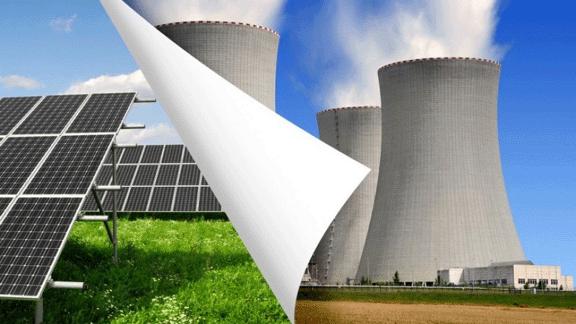
To increase energy self-sufficiency after the 2011 nuclear disaster, renewables are Japan’s only option.

Rethinking Japan’s Energy Security 8 Years After Fukushima

To increase energy self-sufficiency after the 2011 nuclear disaster, renewables are Japan’s only option.
The Diplomat, By Xie Zhihai
March 21, 2019 “………How should Japan tackle the challenges of energy security, then? It will take another round of strategic efforts for Japan to develop new alternative energy sources. To bring back its energy self-sufficiency rate to the 2010 level or even higher, renewable energy is the only possible solution as Japan has a very low primary energy reserve. Also it is not practical to reopen most nuclear power plants while the decommissioning of Fukushima Daiichi doesn’t appear to be going smoothly and many Fukushima people still haven’t been able to return to a normal life

In July 2018, the government of Japan formulated the Strategic Energy Plan in order to show the public the basic direction of Japan’s energy policy. The Plan set the goal to raise Japan’s energy self-sufficiency rate from around 8 percent in 2016 to 24 percent in 2030. This looks unrealistic, but it’s not impossible if Japan can concentrate on the development and spread of renewable energy.

However, the Strategic Energy Plan stays ambiguous about Japan’s future energy policy, despite its aim to shed light on that very subject. One big problem with the Plan is that the priority of the energy policy is not clear. The government aims to use renewable energy as the major power source by 2030, according to the Plan — but at the same time, the plan also attempts to restore nuclear energy and raise its share to 20 percent-30 percent.

Former Prime Minister Koizumi Junichiro is well known for advocating the “zero nuclear energy” campaign after the 3.11 triple disaster. He continues to argue that Japan must be able to live without nuclear energy. In a recent talk show, he questioned the current Japanese government’s energy policy and said it was a lie to claim that nuclear energy is safe, low-cost, and clean.

Some commentators criticize Japan for being poor at decisively changing track when necessary. When the time came for Japan to give up nuclear energy once and for all, the government was not ready to make a tough political decision. In the wake of the Fukushima nuclear accident, countries such as Germany declared they would abandon nuclear energy. However, it is ironic that Japan, the direct victim of the nuclear disaster, still doesn’t dare to say goodbye to nuclear energy completely.

The Fukushima nuclear accident caused a crisis for Japan’s energy security. But it is this very crisis that could provide an opportunity for Japan to redirect its energy policy and accelerate the development of renewable energy. Despite the government’s hesitation, many Japanese already believe that nuclear energy is outdated and renewable energy is the correct direction for Japan. As recent TV programs have reported, some ordinary people are starting to invest in solar energy and sell electricity to power companies.

Japan must build confidence that renewable energy has the potential to secure its energy supply. For example, it is said that during the golden week in May 2018, 93 percent of the electricity supply in the Kyushu area was from renewable energy. If Japan could get through the past eight years nearly without nuclear energy, then it must be able to do better in the future with the spread of renewable energy.

Finally, to solve the energy problem, Japan also needs revolutionary innovation. For example, Toyota has just launched the new generation of its Mirai (Future) hydrogen fuel cell vehicle. The new Mirai not only has zero emissions, but also can produce and store electricity to provide energy in an emergency. The Toyota automobile is not only an energy consumer, but also an energy supplier. Mirai points to the future for Japan’s energy policy. Similar innovation should take place in other industries.

Xie Zhihai is an associate professor at Kyoai Gakuen University in Japan.  https://thediplomat.com/2019/03/rethinking-japans-energy-security-8-years-after-fukushima/

March 25, 2019 Posted by Christina Macpherson | Japan, renewable | Leave a comment

Cost of the Fukushima nuclear disaster estimated at up to 81 trillion yen

An aerial view shows workers wearing protective suits and masks working atop contaminated water storage tanks at Tokyo Electric Power Co. (TEPCO)’s tsunami-crippled Fukushima Daiichi nuclear power plant in Fukushima, in this photo taken by Kyodo August 20, 2013. Japan’s nuclear watchdog said on Wednesday it is concerned that more storage tanks at the wrecked Fukushima nuclear plant will spring leaks, following the discovery that highly contaminated water is leaking from one of the hastily built containers. Picture taken August 20, 2013. Mandatory Credit. REUTERS/Kyodo (JAPAN – Tags: DISASTER ENVIRONMENT POLITICS ENERGY)
ATTENTION EDITORS – THIS IMAGE WAS PROVIDED BY A THIRD PARTY. FOR EDITORIAL USE ONLY. NOT FOR SALE FOR MARKETING OR ADVERTISING CAMPAIGNS. THIS PICTURE IS DISTRIBUTED EXACTLY AS RECEIVED BY REUTERS, AS A SERVICE TO CLIENTS. MANDATORY CREDIT. JAPAN OUT. NO COMMERCIAL OR EDITORIAL SALES IN JAPAN. YES

Think tank puts cost to address nuke disaster up to 81 trillion yen  http://www.asahi.com/ajw/articles/AJ201903100044.html By ATSUSHI KOMORI/ Staff Writer, March 10, 2019  In a startling disparity, a private think tank puts the cost of addressing the 2011 Fukushima nuclear disaster between 35 trillion yen and 81 trillion yen ($315 billion and $728 billion), compared with the government estimate of 22 trillion yen.

The calculation, by the Tokyo-based Japan Center for Economic Research, showed that the total could soar to at least 60 percent more and up to 3.7 times more than the 2016 estimate by the Ministry of Economy, Trade and Industry.

In releasing the latest estimates on March 7, the center said it is time for serious debate over the role nuclear energy should play in the nation’s mid- and long-term energy policy.

Of the highest price tag of 81 trillion yen, 51 trillion yen would go toward decommissioning the crippled Fukushima No. 1 nuclear power plant and treating and disposing of radioactive water. The ministry put the cost for these tasks at 8 trillion yen.

The center calculated the compensation to victims at 10 trillion yen, while the comparable estimate by the ministry was 8 trillion yen.

Although the center’s estimate for the decontamination operation was 20 trillion yen, the ministry’s projection was 6 trillion yen.

The biggest disparity in the estimates between the think tank and the ministry is that the former put the treatment and disposal of contaminated water at 40 trillion yen and included the cost for disposing of polluted soil produced during cleanup operations in the overall costs.

If contaminated water is released in the sea after it is diluted with water, the overall costs could be 41 trillion yen, including 11 trillion yen estimated for decommissioning and disposal for tainted water.

The least expensive way of coping with the accident–35 trillion yen–would be to encase the plant in a concrete sarcophagus, rather than undertaking the formidable challenge of retrieving melted nuclear fuel from the reactors, and releasing contaminated water into the sea. In this case, it would cost 4.3 trillion yen to close down the plant and dispose of the radioactive water.

But this scenario drew fire from residents in the affected municipalities as they view covering nuclear fuel debris with a massive structure would be tantamount to asking them to give up hope of eventually returning to their hometowns.

The center’s latest projections followed its estimates two years ago, in which the number varied from 50 trillion yen to 70 trillion yen.

It updated its projections based on the findings about treatment and disposal of radioactive water and progress in cleanup operations over the past years.

March 23, 2019 Posted by Christina Macpherson | Fukushima continuing | 1 Comment

Fukushima radioactive water – a million tons, and still coming

Fukushima water headache: 1 million tons and counting http://www.asahi.com/ajw/articles/AJ201903190042.html THE ASAHI SHIMBUN,March 19, 2019The crippled Fukushima No. 1 nuclear plant reached an undesired milestone on March 18: Storage tanks at the site now contain more than 1 million tons of radiation-contaminated water.The announcement by the plant’s operator, Tokyo Electric Power Co., came as the utility and the central government continue to weigh water-disposal methods while hearing the concerns of fishermen who fear for their livelihoods.

Toyoshi Fuketa, chairman of the Nuclear Regulation Authority, has repeatedly said a decision must be made soon on how to deal with the contaminated water.

“We are entering a period in which further delays in deciding what measure to implement will no longer be tolerable,” Fuketa recently said.

Groundwater becomes contaminated when it flows into the buildings of the three reactors that suffered meltdowns in 2011 following the Great East Japan Earthquake and tsunami. Water that is used to cool the nuclear fuel debris is processed to remove radioactive substances, but the system cannot get rid of tritium.

These problems have forced TEPCO to store the contaminated water in hundreds of tanks installed at the Fukushima plant.

If more storage tanks are constructed, the overall capacity of 1.37 million tons at the site will likely be reached by the end of 2020.

Fukushima fishermen are already on alert for the one option they have already criticized–diluting the water and dumping it into the Pacific Ocean.

The economy ministry in 2016 said that measure could be implemented in the shortest time frame and at a low cost.

Fuketa has also said this is the most realistic option, but he noted that it would require years of preparation.

ome experts said the go-ahead for the dilution measure should have been given at the end of 2018 to start the process before the storage tanks reach capacity.

Economy ministry officials tried to explain various measures being considered at a public hearing in Fukushima in August 2018, including releasing the diluted water into the ocean.

“It will have a devastating effect on fishing in Fukushima,” said Tetsu Nozaki, who heads the Fukushima prefectural federation of fisheries cooperative associations.

Fukushima fishermen have slowly resumed operations since all forms of fishing were prohibited after high levels of radiation were found in fish caught off the Fukushima coast.

Fish auctions restarted at Fukushima ports in spring 2017, but the volume of fish brought in is still only about 20 percent of levels before the 2011 nuclear accident.

The last thing Fukushima fishermen want is an increase of negative publicity about their catches if the diluted water is dumped into the Pacific.

The government has spent about 34.5 billion yen ($309 million) to build a frozen underground earth wall around the three reactor buildings to divert the groundwater to the ocean. The “ice wall” has cut down the flow of groundwater, which at one time reached about 500 tons a day.

But still, groundwater continues to flow into the three reactor buildings at a rate of about 100 tons daily.

(This article was compiled from reports by Chikako Kawahara, Hiroshi Ishizuka, Toshio Kawada and Kazumasa Sugimura.)

March 21, 2019 Posted by Christina Macpherson | Fukushima continuing | Leave a comment

Tohoku Electric says donation not a payoff for idle nuclear plant

THE ASAHI SHIMBUN  March 20, 2019 Tohoku Electric Power Co. plans to give an estimated 400 million yen ($3.58 million) to a village that hosts one of its nuclear power plants, but denies it is compensation for losses stemming from the facility’s suspension since the 2011 Fukushima nuclear disaster.

The utility said March 19 it will make a donation to Higashidori, Aomori Prefecture, where its Higashidori nuclear power plant is located, through a corporate version of the “furusato nozei” (hometown tax payment) system.

The company did not disclose the amount, but only said it wants to donate “about half” the maximum amount that the village is allowed to receive under this system. The ceiling for the village is about 800 million yen.

The village government called for Tohoku Electric’s response because the volume of work related to the nuclear plant, such as maintenance, declined due to the suspension and a number of accommodations relying on plant workers have closed.

Satoshi Shimoyashiki, vice manager of Tohoku Electric’s Aomori branch, rejected the notion that the donation was meant as compensation for such economic losses and emphasized that it is being made as “part of corporate social responsibility (CSR).”…….. http://www.asahi.com/ajw/articles/AJ201903200054.html 

March 21, 2019 Posted by Christina Macpherson | Japan, politics | Leave a comment

TEPCO takes risk over soaring costs at Tokai nuclear plant

hjg.jpgThe Tokai No. 2 nuclear power plant in Tokai, Ibaraki Prefecture, in July last year


March 15, 2019

Tokyo Electric Power Co. and other utilities are taking a huge gamble by providing hundreds of billions of yen (billions of dollars) to restart an aging nuclear power plant in need of safety upgrades.

Japan Atomic Power Co. intends to resume operations of the one reactor at the Tokai No. 2 nuclear plant in Ibaraki Prefecture in January 2023, but 300 billion yen–nearly double the initial estimate–is reportedly needed to ensure its safety.

TEPCO, which will be provided with electricity from the Tokai plant, will offer 190 billion yen, or two-thirds of the total cost. Tohoku Electric Power Co., Chubu Electric Power Co., Kansai Electric Power Co. and Hokuriku Electric Power Co. will also offer financial support.

But it remains unclear whether municipalities around the plant will approve the plan to restart the reactor.

If Japan Atomic Power fails to win consent from the local governments and is forced to scrap the Tokai No. 2 plant, TEPCO and other power distributors could suffer big financial losses.

TEPCO was effectively turned into a state property after the crisis unfolded at the Fukushima No. 1 nuclear power plant in March 2011. With taxpayers’ money injected into it, TEPCO’s plan to offer assistance to another operator’s nuclear facility that has no clear prospects of restarting will inevitably provoke controversy.

Read more :

http://www.asahi.com/ajw/articles/AJ201903150001.html

March 18, 2019 Posted by dunrenard | Japan | Restart, Tokai NPP | 1 Comment

Yamaguchi court rejects residents’ call to halt last Ikata nuclear reactor in Ehime Prefecture

n-ikata-a-20190316-870x558Supporters for the plaintiffs hold banners that read “Unjust ruling” and “Have you forgotten Fukushima?” after the Iwakuni branch of the Yamaguchi District Court rejected a plea to halt a nuclear reactor in Ehime Prefecture, on Friday in Iwakuni, Yamaguchi Prefecture.


March 15, 2019

YAMAGUCHI – A district court on Friday rejected a plea by residents to halt a reactor at the Ikata nuclear power plant in Ehime Prefecture.

The decision by the Iwakuni branch of the Yamaguchi District Court is in line with rulings made by other regional courts and allows the No. 3 reactor to continue operating. The plant is managed by Shikoku Electric Power Co.

Unit No. 3, the sole remaining reactor at the plant, passed the state safety screening process that was revamped in the wake of the 2011 Fukushima nuclear crisis. But concerns remain about its safety, which led residents to turn to the courts to seek an injunction.

Of the more than 30 reactors in Japan, excluding those set to be decommissioned, only a few are in operation.

Read more :

https://www.japantimes.co.jp/news/2019/03/15/national/yamaguchi-court-rejects-residents-call-halt-last-ikata-nuclear-reactor-ehime-prefecture/#.XIwI2SIzbGg

March 18, 2019 Posted by dunrenard | Japan | Ikata NPP, Reactor 3 | 2 Comments

8 years after disaster, Japan must commit to a nuke-free future

hhkk.jpgVisitors observe the No. 2 reactor building, left, and the No. 3 reactor building on the grounds of the stricken Fukushima No. 1 nuclear power plant in February.


March 12, 2019

GLOBAL ENERGY SHIFT

In January, the Renewable Energy Institute released a report saying nuclear power generation is losing its competitiveness globally.

While the costs of nuclear energy have risen due to enhanced safety requirements following the Fukushima accident, the report says, those of renewable energy sources such as solar and wind power have fallen, thanks to technological innovations.

Some countries, including Germany and South Korea, have decided to phase out nuclear power generation. In other major countries, including the United States and Britain, the share of nuclear power in the overall power supply has dropped because of the rise of renewable energy.

Even France, a leading nuclear power producer, plans to significantly lower its dependence on atomic energy. In China and India, where the government has been eager to promote nuclear power, renewable energy production is growing faster than nuclear power generation.

Nuclear power once accounted for 17 percent of the world’s total electricity production, but it is now responsible for only around 10 percent of the global power output. In sharp contrast, the share of renewable energy has risen to nearly a quarter of the total. The International Energy Agency predicts that renewable energy will contribute 40 percent of the world’s energy supply in 2040.

A big global energy shift from nuclear power to renewable energy is taking place.

RESPONSIBLE DECISIONS NEEDED

The Abe administration’s efforts to promote exports of nuclear power technology, a key component of its growth strategy, have run into the sands in Britain and Turkey.

It is a big irony that a nation that has suffered a catastrophic nuclear accident is making frustrating efforts to sell its nuclear technology to other countries while repercussions from the accident are driving the world toward a new energy future.

This nation’s government still continues devoting huge amounts of resources to maintaining nuclear power generation, which is clearly in decline worldwide, while putting renewable energy, which will assume growing importance in the coming years, on the back burner. Sticking to this policy would cause Japan to be left out of the emerging mega-energy trend.

To read more :

http://www.asahi.com/ajw/articles/AJ201903120048.html?fbclid=IwAR0QlaJLD63LPCcqyafTMj76GAuC1q6pGMs-USrJHlAXz2u-fbSkMI3IZYY

March 18, 2019 Posted by dunrenard | Japan | nuclear, Renewable | Leave a comment

« Previous Entries     Next Entries »

1 This Month

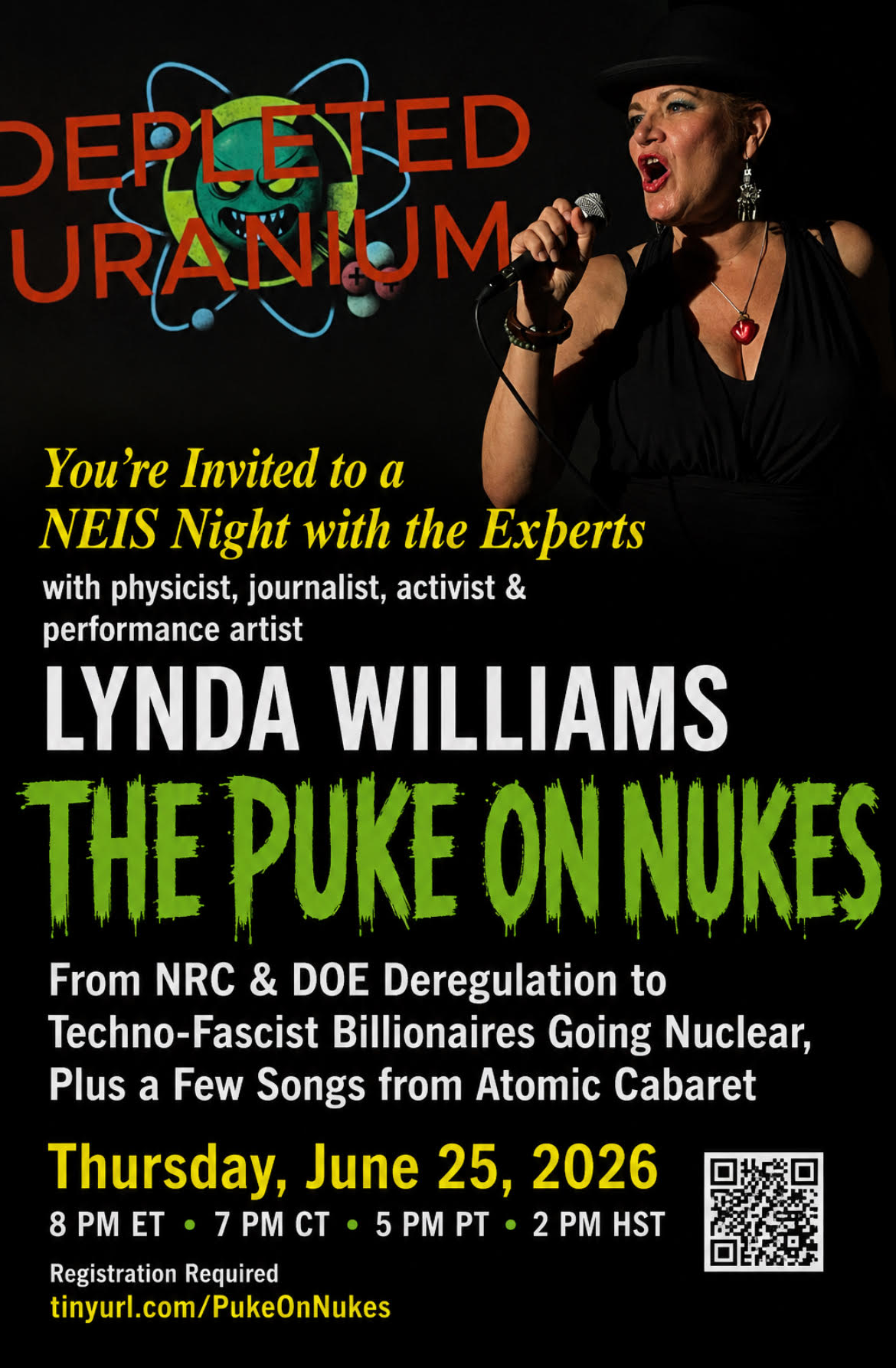
25 June- THE PUKE ON NUKES

Thursday, June 25, 2026

7pm Central Time (8pm ET, 6pm MT, 5pm PT) UTC – 5
From NRC & DOE Deregulation to Techno-Fascist Billionaires Going Nuclear, Plus a Few Songs from Atomic Cabaret REGISTER

26 June –  Radiation Trainwreck at the NRC / Join the Protect Better Campaign – https://us02web.zoom.us/meeting/register/4ZlZ5_qLSHGiLSCg8FF6Bg#/registration

1st July – Webinar Waste of Space: The Environmental Harm of Military and Civil Space Activity  st July, 7 pm

Report Launch Online: We are seeing an increasing exploitation of space for military and commercial purposes. This must change.

Protect Sazan Island from the Trump family! https://secure.avaaz.org/campaign/en/protect_sazan_island_from_the_trump_family_loc/?bqFCVab&v=174511&cl=22707147157&_checksum=5e9dde668860e8231c33699735e16a1fbf22ab2cb01da50c999fe8732b9775ef&utm_source=email&utm_medium=blast_email&utm_campaign=174511

Cuba Is Not a Failed State – It Is a Besieged State

PETITION: “Global Appeal to Endorse Palestinian Right of Return of Refugees” 

​To see nuclear-related stories in greater depth and intensity – go to https://nuclearinformation.wordpress.com

  • Categories

    • 1
      • Arclight's Vision
    • 1 NUCLEAR ISSUES
      • business and costs
        • employment
        • marketing
      • climate change
      • culture and arts
      • ENERGY
        • renewable
          • decentralised
          • energy storage
      • environment
        • oceans
        • water
      • health
        • children
        • psychology – mental health
        • radiation
        • social effects
        • women
      • history
      • indigenous issues
      • Legal
        • deaths by radiation
        • legal
      • marketing of nuclear
      • media
        • investigative journalism
        • Wikileaks
      • opposition to nuclear
      • PERSONAL STORIES
      • politics
        • psychology and culture
          • Trump – personality
        • public opinion
        • USA election 2024
        • USA elections 2016
      • politics international
      • Religion and ethics
      • safety
        • incidents
      • secrets,lies and civil liberties
        • civil liberties
      • spinbuster
        • Education
      • technology
        • reprocessing
        • Small Modular Nuclear Reactors
        • space travel
      • Uranium
      • wastes
        • – plutonium
        • decommission reactor
      • weapons and war
        • Atrocities
        • depleted uranium
      • Women
    • 2 WORLD
      • ANTARCTICA
      • ARCTIC
      • ASIA
        • Burma
        • China
        • India
        • Indonesia
        • Japan
          • – Fukushima 2011
          • Fukushima 2012
          • Fukushima 2013
          • Fukushima 2014
          • Fukushima 2015
          • Fukushima 2016
          • Fukushima continuing
        • Malaysia
        • Mongolia
        • North Korea
        • Pakistan
        • South Korea
        • Taiwan
        • Turkey
        • Vietnam
      • EUROPE
        • Belarus
        • Bulgaria
        • Denmark
        • Finland
        • France
        • Germany
        • Greece
        • Ireland
        • Italy
        • Kazakhstan
        • Kyrgyzstan
        • Russia
        • Spain
        • Sweden
        • Switzerland
        • UK
        • Ukraine
      • MIDDLE EAST
        • Afghanistan
        • Egypt
        • Gaza
        • Iran
        • Iraq
        • Israel
        • Jordan
        • Libya
        • Saudi Arabia
        • Syria
        • Turkey
        • United Arab Emirates
      • NORTH AMERICA
        • Canada
        • USA
          • election USA 2020
      • OCEANIA
        • New Zealand
        • Philippines
      • SOUTH AMERICA
        • Brazil
    • ACTION
    • AFRICA
      • Kenya
      • Malawi
      • Mali
      • Namibia
      • Niger
      • Nigeria
      • Somalia
      • South Africa
    • Atrocities
    • AUSTRALIA
    • Christina's notes
    • Christina's themes
    • culture and arts
    • Events
    • Fuk 2022
    • Fuk 2023
    • Fukushima 2017
    • Fukushima 2018
    • fukushima 2019
    • Fukushima 2020
    • Fukushima 2021
    • general
    • global warming
    • Humour (God we need it)
    • Nuclear
    • RARE EARTHS
      • thorium
    • Reference
      • Reference archives
    • resources – print
    • Resources -audiovicual
    • Weekly Newsletter
    • World
    • World Nuclear
    • YouTube
  • Pages

    • 1 This Month
    • ACTION !
    • Disclaimer
    • Links
    • PAGES on NUCLEAR ISSUES
      • audio-visual news
      • Anti Nuclear, Clean Energy Movement
        • Anti Nuclear movement – a success story
          • – 2013 – the struggle for a nuclear-free, liveable world
          • – 2013: the battle to expose nuclear lies about ionising radiation
            • Speakers at Fukushima Symposium March 2013
            • Symposium 2013 Ian Fairlie
      • Civil Liberties
        • – Civil liberties – China and USA
      • Climate change
      • Climate Change
      • Economics
        • – Employment
        • – Marketing nuclear power
        • – Marketing Nuclear Power Internationally
        • nuclear ‘renaissance’?
        • Nuclear energy – the sick man of the corporate world
      • Energy
        • – Solar energy
      • Environment
        • – Nuclear Power and the Tragedy of the Commons
        • – Water
      • Health
        • Birth Defects in the Chernobyl Radiation Affected Region.
      • History
        • Nuclear History – the forgotten disasters
      • Indigenous issues
      • Ionising radiation
        • – Ionising radiation – medical
        • Fukushima FACT SHEET
      • Media
        • Nuclear Power and Media 2012
      • Nuclear Power and the Consumer Society – theme for December 2012
      • Peace and nuclear disarmament
        • Peace on a Nuclear Free Earth
      • Politics
        • – Politics USA
      • Public opinion
      • Religion and ethics
        • -Ethics of nuclear power
      • Resources – print
      • Safety
      • Secrets and lies
        • – NUCLEAR LIES – theme for January 2012
        • – Nuclear Secrets and Lies
      • Spinbuster
        • 2013 nuclear spin – all about FEAR -theme for June
        • Spinbuster 1
      • Technology
        • TECHNOLOGY Challenges
      • Wastes
        • NUCLEAR WASTES – theme for October 2012
        • – Plutonium
      • Weapons and war
      • Women
  • Archives

    • June 2026 (230)
    • May 2026 (306)
    • April 2026 (356)
    • March 2026 (251)
    • February 2026 (268)
    • January 2026 (308)
    • December 2025 (358)
    • November 2025 (359)
    • October 2025 (376)
    • September 2025 (257)
    • August 2025 (319)
    • July 2025 (230)
  • Categories

    • 1
      • Arclight's Vision
    • 1 NUCLEAR ISSUES
      • business and costs
        • employment
        • marketing
      • climate change
      • culture and arts
      • ENERGY
        • renewable
          • decentralised
          • energy storage
      • environment
        • oceans
        • water
      • health
        • children
        • psychology – mental health
        • radiation
        • social effects
        • women
      • history
      • indigenous issues
      • Legal
        • deaths by radiation
        • legal
      • marketing of nuclear
      • media
        • investigative journalism
        • Wikileaks
      • opposition to nuclear
      • PERSONAL STORIES
      • politics
        • psychology and culture
          • Trump – personality
        • public opinion
        • USA election 2024
        • USA elections 2016
      • politics international
      • Religion and ethics
      • safety
        • incidents
      • secrets,lies and civil liberties
        • civil liberties
      • spinbuster
        • Education
      • technology
        • reprocessing
        • Small Modular Nuclear Reactors
        • space travel
      • Uranium
      • wastes
        • – plutonium
        • decommission reactor
      • weapons and war
        • Atrocities
        • depleted uranium
      • Women
    • 2 WORLD
      • ANTARCTICA
      • ARCTIC
      • ASIA
        • Burma
        • China
        • India
        • Indonesia
        • Japan
          • – Fukushima 2011
          • Fukushima 2012
          • Fukushima 2013
          • Fukushima 2014
          • Fukushima 2015
          • Fukushima 2016
          • Fukushima continuing
        • Malaysia
        • Mongolia
        • North Korea
        • Pakistan
        • South Korea
        • Taiwan
        • Turkey
        • Vietnam
      • EUROPE
        • Belarus
        • Bulgaria
        • Denmark
        • Finland
        • France
        • Germany
        • Greece
        • Ireland
        • Italy
        • Kazakhstan
        • Kyrgyzstan
        • Russia
        • Spain
        • Sweden
        • Switzerland
        • UK
        • Ukraine
      • MIDDLE EAST
        • Afghanistan
        • Egypt
        • Gaza
        • Iran
        • Iraq
        • Israel
        • Jordan
        • Libya
        • Saudi Arabia
        • Syria
        • Turkey
        • United Arab Emirates
      • NORTH AMERICA
        • Canada
        • USA
          • election USA 2020
      • OCEANIA
        • New Zealand
        • Philippines
      • SOUTH AMERICA
        • Brazil
    • ACTION
    • AFRICA
      • Kenya
      • Malawi
      • Mali
      • Namibia
      • Niger
      • Nigeria
      • Somalia
      • South Africa
    • Atrocities
    • AUSTRALIA
    • Christina's notes
    • Christina's themes
    • culture and arts
    • Events
    • Fuk 2022
    • Fuk 2023
    • Fukushima 2017
    • Fukushima 2018
    • fukushima 2019
    • Fukushima 2020
    • Fukushima 2021
    • general
    • global warming
    • Humour (God we need it)
    • Nuclear
    • RARE EARTHS
      • thorium
    • Reference
      • Reference archives
    • resources – print
    • Resources -audiovicual
    • Weekly Newsletter
    • World
    • World Nuclear
    • YouTube
  • RSS

    Entries RSS
    Comments RSS

Site info

nuclear-news
Blog at WordPress.com.
Privacy & Cookies: This site uses cookies. By continuing to use this website, you agree to their use.
To find out more, including how to control cookies, see here: Cookie Policy
  • Subscribe Subscribed
    • nuclear-news
    • Join 2,102 other subscribers
    • Already have a WordPress.com account? Log in now.
    • nuclear-news
    • Subscribe Subscribed
    • Sign up
    • Log in
    • Report this content
    • View site in Reader
    • Manage subscriptions
    • Collapse this bar

Loading Comments...