Counterterrorism requirement puts financial strain on nuclear power plant operators
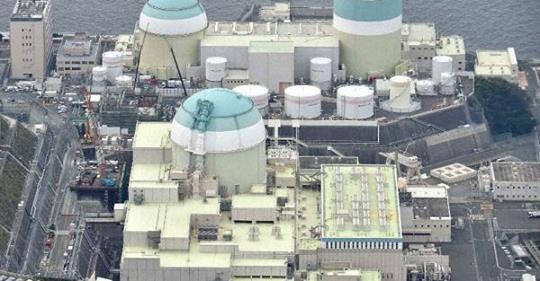
Japan to shut down nuclear plants if counterterror steps not taken in time
Exploitation of foreign workers in Japan’s Fukushima nuclear clean-up
Japan needs thousands of foreign workers to decommission Fukushima plant, prompting backlash from anti-nuke campaigners and rights activists, SCMP Julian Ryall , 26 Apr, 2019
Activists are not convinced working at the site is safe for anyone and they fear foreign workers will feel ‘pressured’ to ignore risks if jobs are at risk
Towns and villages around the plant are still out of bounds because radiation levels are dangerously high

Tokyo Electric Power Co (TEPCO) has announced it will take advantage of the government’s new working visa scheme, which was introduced on April 1 and permits thousands of foreign workers to come to Japan to meet soaring demand for labourers. The company has informed subcontractors overseas nationals will be eligible to work cleaning up the site and providing food services.
About 4,000 people work at the plant each day as experts attempt to decommission three reactors that melted down in the aftermath of the March 2011 Great East Japan Earthquake and the huge tsunami it triggered. Towns and villages around the plant are still out of bounds because radiation levels are dangerously high.
Activists are far from convinced working at the site is safe for anyone and they fear foreign workers will feel “pressured” to ignore the risks if their jobs are at risk.
“We are strongly opposed to the plan because we have already seen that workers at the plant are being exposed to high levels of radiation and there have been numerous breaches of labour standards regulations,” said Hajime Matsukubo, secretary general of the Tokyo-based Citizens’ Nuclear Information Centre. “Conditions for foreign workers at many companies across Japan are already bad but it will almost certainly be worse if they are required to work decontaminating a nuclear accident site.”
Companies are desperately short of labourers, in part because of the construction work connected to Tokyo hosting the 2020 Olympic Games, while TEPCO is further hampered because any worker who has been exposed to 50 millisieverts of radiation in a single year or 100 millisieverts over five years is not permitted to remain at the plant. Those limits mean the company must find labourers from a shrinking pool.
“It has been reported that vulnerable people have been illegally deceived by decontamination contractors into conducting decontamination work without their informed consent, threatening their lives, including asylum seekers under false promises and homeless people working below minimum wage,” the statement said. “Much clean-up depends on inexperienced subcontractors with little scrutiny as the government rushes decontamination for the Olympic Games.”
Cade Moseley, an official of the organisation, said there are “very clear, very definite concerns”.
“There is evidence that foreign workers in Japan have already felt under pressure to do work that is unsafe and where they do not fully understand the risks involved simply because they are worried they will lose their working visas if they refuse,” he said……
As Tokyo Olympics approach, Japan’s futile push to repopulate cleaned-up parts of radioactive areas of Fukushima
|
Japan’s nuclear horror relived as people return to Fukushima’s ghost towns, It is eight years since a devastating tsunami caused three reactors to meltdown at the Fukushima Daiichi nuclear power station on the north-east coast of Japan Mirror UK, Emily RetterSenior Feature Writer, Mirror UK, 29 Apr19
Only wild animals, and the 6ft weeds, which have rampaged through deserted homes and businesses, suffocating once-chatty barbers shops and bustling grocery stores; strangling playgrounds and their rusting rides which lie empty and eerily still. Once unextraordinary, mundane symbols of everyday lives have taken on the appearance of a horror film set in these areas closest to the Fukushima Daiichi nuclear power station on the coast of north-east Japan, eight years after the devastating tsunami which caused a meltdown at three of the plant’s reactors, forcing tens of thousands to flee. The earthquake on March 11, 2011, claimed 19,000 lives, and triggered the world’s largest nuclear disaster since Chernobyl. Radiation leaking in fatal quantities forced 160,000 people to evacuate immediately, and most to this day have not returned to their toxic towns and villages……. The official mandatory evacuation order was lifted, and while reports reveal just 367 residents of Okuma’s original population of 10,341 have so far made the decision to return, and most of the town remains off-limits, the Japanese government is keen this be seen as a positive start to re-building this devastated area……. The Japanese Prime Minister, Shinzo Abe, visited to mark the milestone.
Six Olympic softball games and a baseball game will be staged in Fukushima, the capital of this prefecture, which is free of radiation. The torch relay will even begin at J Village, which was once the base for the crisis response team. Hearteningly, it is now back to its original function, a football training centre. But the truth is, it is mainly older residents who have decided to return to their homes. Seimei Sasaki, 93, explained his family have roots here stretching back 500 years. His neighbourhood in Odaka district now only contains 23 of its original 230. “I can’t imagine what this village’s future looks like,” he admitted. Young families are few and far between – these areas are still a terrifying prospect for parents. But the re-built schools are slowly filling a handful of classroom seats. Namie Sosei primary and middle school, less then three miles from the plant, has seven pupils. One teacher said: “The most frustrating thing for them is that they can’t play team sports.” A sad irony as the Olympics approach. And with so many residents still fearful, so the deadly clean-up operation continues. Work to make the rest of Okuma safe is predicted to take until 2022. The area which was its centre is still a no-go zone. In the years following the disaster, 70,000 workers removed topsoil, tree branches, grass and other contaminated material from areas near homes, schools and public buildings.  Bags of nuclear waste generated after the meltdown of one of Fukushima’s nuclear power plants in 2011 are now stored in the nearby town of Naraha. MUST CREDIT: photo for The Washington Post by Shiho Fukada. A staggering £21billion has been spent in order to make homes safe. Millions of cubic metres of radioactive soil has been packed into bags. By 2021 it is predicted 14million cubic metres will have been generated. The mass scale operation uses thousands of workers. Drivers are making 1,600 return trips a day. But residents understandably want it moved out of Fukushima for good. As yet, no permanent location has agreed to take it, but the government has pledged it will be gone by 2045. At Daiichi itself, the decontamination teams are battling with the build up of 1m tonnes of radioactive water. …..https://www.mirror.co.uk/news/world-news/japans-nuclear-horror-relived-people-14420671 |
|
|
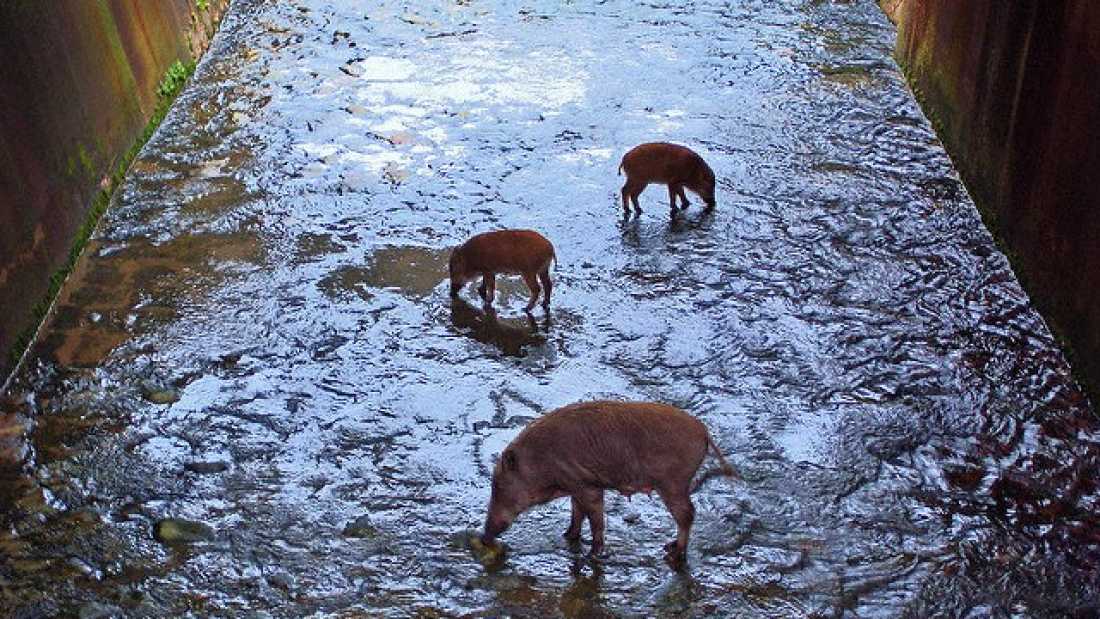

All Japan’s nuclear reactors may shutdown, as regulator is firm on safety measures
 Japan’s nuclear reactors face new near-total shutdown, Regulator refuses to extend deadlines for installing antiterrorism measures Ft.com, Robin Harding in Tokyo APRIL 25, 2019 Japan is heading towards another near-total shutdown of its nuclear reactors after regulators refused to extend deadlines for completing antiterrorism measures. The Nuclear Regulation Authority said it would enforce deadlines that expired next summer for many operating reactors. Electricity companies have said there was almost no chance they would be ready on time. The regulator’s stance is a fresh blow to a nuclear power sector that has never recovered from the Fukushima Daiichi disaster in 2011, when three reactors melted down after a tsunami knocked out their cooling systems. …….Each restarting reactor has its own deadline and a number of them expire next year — but none of the operators are likely to be ready in time. They will therefore have to shut the reactors down. For example, anti-terror work at the Sendai No 1 and No 2 reactors, run by Kyushu Electric, and the Takahama No 3 and No 4 reactors, run by Kansai Electric, must be completed next year.
……. Japan has struggled to restart its reactors in the face of strong public opposition and many are still offline. As of March 15, nine out of Japan’s 57 reactors had restarted. Several others have restarted only to shut down again because of injunctions issued by local courts.
……. the national government has not pushed for restarts, leaving it in the hands of regulators, utilities, courts and local politicians. The long-term future of the sector is therefore in doubt. https://www.ft.com/content/1b2c395e-6724-11e9-9adc-98bf1d35a056
Japan now has 9 operating nuclear reactors, all may close, due to inadequate safety measures
Japan nuclear plants threatened with closure over antiterrorism measures, Jakarta Post, The Japan News/Asia News Network, Tokyo, Japan / Fri, April 26, 2019 The Nuclear Regulation Authority has decided to order power companies to shut down nuclear reactors if they have not had certain facilities, legally required as antiterrorism measures, completed by specified deadlines.Nine reactors are currently online at five nuclear plants across the nation, and these are unlikely to have the necessary facilities completed before their deadlines. Consequently, it is possible that, one by one, these reactors will have to suspend operations.
NRA Chairman Toyoshi Fuketa emphasized the nuclear watchdog’s tough stance at a press conference Wednesday.
Reactors will be considered “nonconforming with required standards at the point the deadline passes,” Fuketa said.
“Overlooking any state of incompatibility would, in light of the authority’s position, be totally unacceptable,” he said.
The operators are required to build facilities from which nuclear reactors can be remotely controlled in the event of an emergency, such as an aircraft being deliberately flown into the plants. Installing such a facility became mandatory under new regulations introduced after the March 2011 accident at Tokyo Electric Power Company Holdings, Inc.’s Fukushima No. 1 nuclear power plant.
The Nuclear Reactor Regulation Law stipulates nuclear plants that do not meet certain conditions can be suspended from operating, but no decision had been made on how authorities would handle reactors currently online if the deadline for completing the emergency facility passes…….
Fuketa lobbed some stinging criticism at the utilities for the current situation.
“Not only were they overly optimistic about the construction work schedules, but they also were too optimistic about the reaction from the regulatory authorities,” Fuketa said. “They were grossly mistaken if they thought they might find a way through by asking for an extension when the deadline is drawing close.”
n a comment issued the same day, Kyushu Electric, Kansai Electric and Shikoku Electric said they would “continue making maximum efforts” to complete the facilities as soon as possible.
Profits could be hit
Halting the operation of nuclear reactors, which generate electricity at relatively low cost, could harm the earnings of power utilities and strike a major blow to their business performance.
Kyushu Electric is the utility facing the shortest deadline until it might have to switch off a reactor. Kyushu Electric’s No. 1 unit at the Sendai nuclear power plant was restarted in October 2015, which returned the company to profitability. Unplugging this reactor again would significantly affect the utility’s business performance……..https://www.thejakartapost.com/news/2019/04/26/japan-nuclear-plants-threatened-with-closure-over-antiterrorism-measures-.html
 |
ReplyForward
|
Japan’s nuclear regulators not impressed by nuclear facilities’ flimsy excuses about safety
VOX POPULI: Flimsy excuses by nuclear plant operators are unacceptable, Vox Populi, Vox Dei is a daily column that runs on Page 1 of The Asahi Shimbun., April 26, 2019 …………. three operators of nuclear power plants, seeking an extension of a very different kind of deadline, found the Nuclear Regulation Authority to be quite unforgiving.Kansai Electric Power Co., Shikoku Electric Power Co. and Kyushu Electric Power Co. were initially required to install anti-terror facilities against airborne attacks at their nuclear power plants by July 2018.
Having already failed to meet that deadline, the utilities on April 17 asked the government’s nuclear watchdog to extend it by another 12 to 30 months, but the plea was rejected on April 24.
The utilities have insisted in unison that installing facilities to remotely cool nuclear reactors would require the time-consuming work of drilling through mountains.
They probably thought this “excuse” was good enough to sway the government into extending the deadline.
No such luck.
The Sendai nuclear power plant in Kagoshima Prefecture will likely be shut down as a result, according to the NRA.
The utilities must be underestimating the odds of any of their nuclear power plants being targeted for a terrorist attack.
Have they already forgotten that North Korea was repeatedly test-launching its missiles until recently? And what about the Fukushima disaster of 2011, which occurred because virtually nobody wanted to consider the possibility of a mega-quake triggering a tsunami?
The “deadline” book mentioned above also contains an anecdote about author Akira Yoshimura (1927-2006), a stickler for punctuality who always handed in his manuscripts early, claiming he had a tendency to start panicking as the deadline approached. And he always attached a note to his editor, apologizing, in effect, for jumping the gun.
I guess it’s useless to expect the three utilities to emulate Yoshimura. http://www.asahi.com/ajw/articles/AJ201904260032.html
Safety and language problems, as Tepco plans to bring in foreign workers for Fukushima clean-up

|
Editorial: Safety, language measures needed for foreigners to work at Fukushima plant https://mainichi.jp/english/articles/20190424/p2a/00m/0na/004000c 24 Apr 19, Tokyo Electric Power Co. (TEPCO) is preparing to bring in foreign workers with special technical skills to join decommissioning work on the disaster-stricken Fukushima Daiichi nuclear plant.
At present, an average of 4,000 employees of TEPCO and cooperating firms work at the facility every day. Laws and regulations stipulate that workers’ radiation exposure must be limited to 50 millisieverts in a single year, and 100 millisieverts over five years. No one is allowed to stay at the plant once they hit one of these caps, so waves of new employees must be brought in to maintain worker numbers. Decommissioning the Daiichi plant, which suffered a triple core meltdown in the wake of the March 2011 Great East Japan Earthquake and tsunami, is expected to take 30 to 40 years. Whether the companies involved can sustain sufficient staffing levels will be one factor that determines the success or failure of the project. When it comes to tapping foreign labor to make up the required numbers, the Justice Ministry — which has jurisdiction over Japan’s immigration system — has already declined to approve sending foreign technical intern trainees to work at the plant. One of the core tenets of the foreign technical trainee program is that the job placements must provide the trainees with skills they can use in their home countries, and working to decommission a devastated nuclear plant did not fit the bill. TEPCO is now turning its eyes to foreign workers with Category 1 work visas, one of the new residency statuses launched on April 1 and aimed at those with certain skills and experience. Technical trainees with three years’ experience in Japan can obtain this visa without a skills exam. However, there is a real risk of radiation exposure at the Daiichi plant, and the terminology used on-site is highly technical, making for a difficult environment. TEPCO and its partners must not treat the new foreign worker system as an employee pool they can simply dip into. The workers’ Japanese level is particularly a cause for worry. To obtain a Category 1 visa, applicants must speak Japanese at only a “daily conversational” level. However, anyone working at the Daiichi site must understand a slew of technical terms related to radiation and other facets of the decommissioning process, meaning a very high level of Japanese is absolutely indispensable. If foreign employees begin working there without having learned the necessary terminology, we believe there is a real risk they could be ordered to do jobs that exposed them to radiation. TEPCO has said it is up to its project partners whether they employ Category 1 foreign workers. In fact, the majority of people at Fukushima Daiichi are employed by one of the firms that make up the layers upon layers of subcontractors working on the decommissioning. Nevertheless, as the company heading the project, TECPO has a responsibility to oversee the conditions of every worker, right down to the bottom of the pyramid. Furthermore, if a foreign worker has been exposed to radiation overseas, that dose must be added to their sievert count at the plant. However, it is up to the worker to report any previous radiation exposure, which can make it difficult to properly track and manage their doses. If a worker develops a radiation-related illness after returning to their home country, will they be able to smoothly apply for workers’ accident compensation? This is also a serious worry. If Japan is to accept foreign workers to help decommission the Fukushima Daiichi plant, it is absolutely essential to create the appropriate environment, including measures to boost their Japanese skills and strengthen radiation exposure management. |
|
Japan’s nuclear regular demands safety steps, or reactors must close down
Japan to shut down nuclear plants if counterterror steps not taken in time, Japan Times, KYODO, AFP-JIJI, REUTERS, APR 24, 2019
Japan’s nuclear regulator decided Wednesday not to let power companies operate reactors if they fail to install sufficient counterterrorism measures by specified deadlines.
The decision by the Nuclear Regulation Authority came after three utilities that operate five nuclear plants in western and southwestern Japan requested that their deadlines be extended as they expect delays in completing counterterrorism steps required under stricter regulations introduced in 2013 following the Fukushima nuclear crisis.
Kyushu Electric Power Co., Kansai Electric Power Co. and Shikoku Electric Power Co. had sought to postpone their five-year deadlines by one to three years, citing reasons such as the need to carry out massive construction work.
The three companies told the NRA that the measures would not be on time at 10 of their reactors, according to documents published on the regulator’s website.
But the regulator has declined their requests for extensions.
The power plant operators are required to build facilities that can keep reactors cool via remote control and prevent the massive release of radioactive materials if the units are the target of a terrorist attack, such as from planes being flown into them.
Nuclear plant operators need to set up such facilities within five years of the nuclear safety watchdog approving detailed construction plans for the plants.
But several firms have warned they will not meet these criteria. The NRA said after a meeting earlier Wednesday it would no longer push back the deadline as it has done in the past.
“There is no need to extend the deadline, and nuclear facilities have to stop operations if the operators fail to meet it,” an NRA official said.
He added that several other reactors were also at risk of being shut down……… https://www.japantimes.co.jp/news/2019/04/24/business/corporate-business/japan-halt-nuclear-plants-operations-anti-terrorism-steps-not-taken-time/#.XMDXGDAzbGg
Despite World Trade Association ruling, Japan still asks S. Korea to lift ban on Fukushima seafood
Japan asks S. Korea to lift Fukushima seafood ban despite WTO ruling April 23, 2019 (Mainichi Japan) TOKYO(Kyodo) — Japan on Tuesday urged South Korea to lift import restrictions on Japanese seafood introduced in the wake of the 2011 Fukushima nuclear disaster, even after the World Trade Organization ruled in favor of Seoul over the issue……
Seoul imposed a ban on some types of seafood products from eight prefectures, including Aomori, Fukushima, and Chiba, in the wake of the 2011 reactor core meltdowns at the Fukushima Daiichi nuclear power plant triggered by a powerful earthquake and tsunami.
It expanded the ban in September 2013 to include all seafood products from the eight prefectures, and added a requirement that Japanese companies attach safety certificates when any traces of radiation are found in seafood from other regions.
In August 2015, Tokyo filed a complaint with the WTO against the restrictions, which it considers unfair discrimination, and an initial ruling by a dispute settlement panel sided with Japan. South Korea appealed the decision, however, and the WTO’s appellate body, the highest judicial entity of its dispute ettlement mechanism, ultimately ruled in Seoul’s favor on April 11…….. https://mainichi.jp/english/articles/20190423/p2g/00m/0na/059000c
Japan Atomic Power considers launching unit that specializes in scrapping nuclear plants
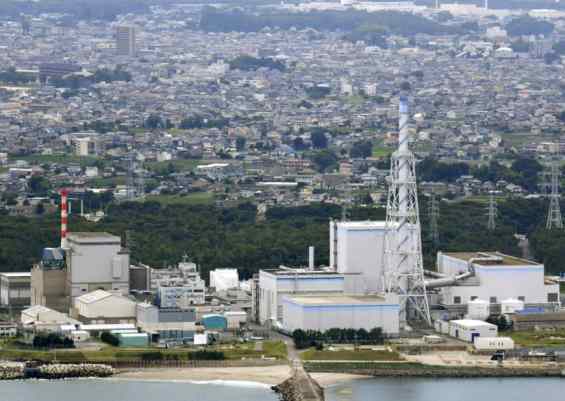
Japan Atomic Power looks to big business cleaning up dead nuclear plants
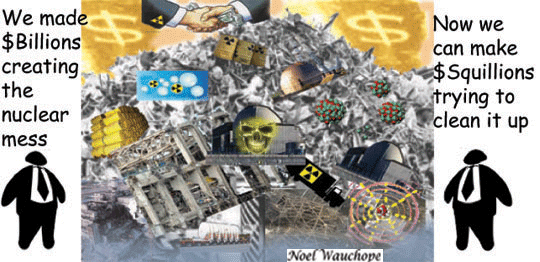
Japan Atomic Power considers launching unit that specializes in scrapping nuclear plants https://www.japantimes.co.jp/news/2019/04/16/national/japan-atomic-power-considers-launching-unit-specializes-scrapping-nuclear-plants/#.XLzjyDAzbGg KYODO, APR 16, 2019
Japan Atomic Power Co. is considering setting up a subsidiary specializing in the scrapping of retired nuclear reactors at domestic power plants, sources close to the matter said Tuesday.
Japan Atomic Power, a wholesaler of electricity generated at its nuclear plants, is planning to have U.S. nuclear waste firm EnergySolutions Inc. invest in the reactor decommissioning service unit, which would be the first of its kind in Japan, the sources said.
The Tokyo-based electricity wholesaler, whose shareholders are major domestic power companies, will make a final decision by the end of this year, they said.
The plan is to support power companies’ scrapping of retired reactors using Japan Atomic Power’s expertise in decontaminating and dismantling work, in which it has been engaged in since before the 2011 nuclear disaster at Tokyo Electric Power Company Holdings Inc.’s Fukushima No. 1 complex, according to the sources.
The plan comes as a series of nuclear reactor decommissioning is expected at power companies in the country. Since stringent safety rules were introduced after the Fukushima disaster, 11 reactors, excluding those at the two Fukushima plants of Tepco, are slated to be scrapped.
Nuclear reactors are allowed to run for 40 years in Japan. Their operation can be extended for 20 years, but operators will need costly safety enhancement measures to clear the Nuclear Regulation Authority’s screening.
Decommissioning a reactor with an output capacity of 1 million kilowatts is said to take about 30 years and cost around ¥50 billion. Typically, some 500,000 tons of waste result from scrapping such a reactor, and 2 percent of the waste is radioactive.
Japan Atomic Power first engaged in decommissioning a commercial reactor in 2001 at its Tokai plant in eastern Japan. It has been conducting decommissioning work at its Tsuruga nuclear power plant in western Japan since 2017.
It is also providing support to Tepco for the decommissioning of reactors at the Fukushima No. 1 plant.
EnergySolutions, founded in 2006, has engaged in scrapping five reactors in the United States.
Japan Atomic Energy and EnergySolutions have had previous business ties, and the Japanese company has sent some employees to the Zion nuclear station in Illinois, where the U.S. partner has been conducting decommissioning work since 2010.
Hazardous removal of spent fuel rods is just one step in the Fukushima nuclear clean-up

|
Nuclear fuel removal is small step in cleanup at Fukushima http://www.asahi.com/ajw/articles/AJ201904190031.htmlApril 19, 2019 Tokyo Electric Power Co., the operator of the crippled Fukushima No. 1 nuclear power plant, has started removing radioactive fuel rods from the fuel storage pool for one of the three reactors that melted down in the 2011 nuclear disaster.Massive amounts of melted nuclear fuel debris remain in the cores or containment vessels of the No. 1 to No. 3 reactors, which melted down. In addition, many fuel rods, batched into assemblies, are stored in storage pools within the reactor buildings.
These pools could be seriously damaged if the plant is hit by another big earthquake or tsunami. Moving spent fuel from these pools to the safe common pool within the premises is an important step to preventing accidents and ensuring steady progress in the process of decommissioning the reactors. All the 1,535 nuclear fuel assemblies that were in the No. 4 reactor building, which did not melt down because it was shut down at the time of the accident, were removed by the end of 2014. Since workers could enter the building, the operation was conducted in a normal manner. By contrast, areas around the fuel storage pool for the No. 3 reactor remain inaccessible due to high levels of radiation. The situation requires the removal operation to be remotely conducted from a control room about 500 meters from the No. 3 reactor building. The work involves putting nuclear fuel assemblies into special containers under water and lifting them up with a crane and putting them down onto the ground for transportation to the common pool. This is a tricky and risky mission that has to be carried out with great care and caution by using a monitor. Initially, the process of removing the fuel rods from the storage pool for the No. 3 reactor was scheduled to start at the end of 2014. But it has been repeatedly postponed due to technical mishaps and other reasons. It was finally started after a delay of more than four years. The plant operator, known as TEPCO, plans to relocate all 566 nuclear fuel assemblies that have been kept in the storage pool in the No. 3 reactor building by the end of March 2021. To reduce the risks posed to the process by possible earthquakes and tsunami, it is desirable to carry out the work quickly. But making undue haste could cause problems and accidents that disrupt the process. Meeting the schedule should not be the top priority. Experience and expertise to be accumulated through the work with the No. 3 reactor will come in handy for the same fuel removal work with the Nos. 1 and 2 reactors, which could be initiated as early as in fiscal 2023, which starts in April 2023. The other two reactors, however, will pose even tougher challenges. The debris situation of the No. 1 reactor building is worse, while radiation levels within the No. 2 reactor building are higher. It is vital to obtain sufficient experience and know-how through the process of removing fuel rods from the No. 3 reactor. TEPCO needs to ensure steady progress in the process through effective and close information sharing with related manufacturers and other actors involved. No decision has yet been made as to what to do with the spent fuel after being transferred to the common pool. This is a complicated and knotty issue that does not lend itself to an easy, quick solution, just like the problem of a rapidly increasing amount of radiation-contaminated water the plant is generating as the reactors are being flooded to cool the melted fuel debris and underground water keeps flowing in the reactor buildings. In 2021, the utility plans to launch the even more challenging mission of removing melted fuel debris from one of the three reactors. Prime Minister Shinzo Abe recently visited the Fukushima No. 1 nuclear plant for the first time in five years and promised the government’s committed leadership for the efforts to decommission the reactors and deal with polluted water. The Abe administration should provide really strong and effective leadership for the long, grueling process in line with the prime minister’s pledge. Both the government and TEPCO have a duty to move the decommissioning process steadily forward while winning support from the local communities through sincere and serious dialogue. |
|
|
Japan has a new kind of visa to lure foreign blue collar workers for Fukushima clean-up
Japan Aims to Hire Foreigners for Nuclear Cleanup
The country’s largest utility is working to decommission the Fukushima plant amid radiation risks at the site of the 2011 disaster, WSJ , By Mayumi Negishi and Chieko Tsuneoka, April 18, 2019 TOKYO—Japan’s largest utility is looking to foreign blue-collar workers to help decommission its Fukushima Daiichi nuclear-power plant amid a labor shortage exacerbated by radiation risks at the site of the 2011 nuclear disaster.
Tokyo Electric Power Co., or Tepco, said Thursday it has informed dozens of contractors that foreigners could qualify for a new type of visa that allows manual workers to stay in the country for five years. Workers who enter areas with elevated radiation would need sufficient Japanese-language skills...(subscribers only) https://www.wsj.com/articles/japan-aims-to-hire-foreigners-for-nuclear-clean-up-11555595613
Nuclear plant operators must pay price for missing deadline
|
Asai Shimbun, April 20, 2019 Recent announcements by three electric utilities that they will miss the deadline for taking legally required anti-terrorism measures for their nuclear power plants raises serious questions about their commitment to nuclear safety.Kansai Electric Power Co., Kyushu Electric Power Co. and Shikoku Electric Power Co. said on April 17 that they will miss the deadline for completing the facilities to respond to emergencies triggered by terrorist attacks against their reactors. The reactors include ones that have been restarted after being shut down following the 2011 Fukushima nuclear disaster.
The companies have asked the Nuclear Regulation Authority to extend the deadline. The facilities in question are supposed to be at the forefront of efforts to prevent severe nuclear accidents in the event their reactors come under terrorist attacks using aircraft. The utilities should not be permitted to continue their operations until this crucial safety aspect is fixed. We call on the nuclear safety watchdog to take a firm stand toward their request. Nuclear plant operators are required to erect anti-terrorism facilities under new nuclear safety standards that took effect in 2013. The regulations are modeled on measures to deal with the risk of terror attacks against nuclear plants worked out by the U.S. Nuclear Regulatory Commission following the Sept. 11 attacks against the United States in 2001. The principal objective of the measures is to prevent the kind of nuclear meltdowns that occurred at the Fukushima No. 1 nuclear power plant in 2011 even if the control room is destroyed by an aerial terror attack…….. http://www.asahi.com/ajw/articles/AJ201904200025.html |
|
|
1 This Month

25 June- THE PUKE ON NUKES
Thursday, June 25, 2026
7pm Central Time (8pm ET, 6pm MT, 5pm PT) UTC – 5
From NRC & DOE Deregulation to Techno-Fascist Billionaires Going Nuclear, Plus a Few Songs from Atomic Cabaret REGISTER
26 June – Radiation Trainwreck at the NRC / Join the Protect Better Campaign – https://us02web.zoom.us/meeting/register/4ZlZ5_qLSHGiLSCg8FF6Bg#/registration

1st July – Webinar Waste of Space: The Environmental Harm of Military and Civil Space Activity st July, 7 pm

Report Launch Online: We are seeing an increasing exploitation of space for military and commercial purposes. This must change.

Protect Sazan Island from the Trump family! https://secure.avaaz.org/campaign/en/protect_sazan_island_from_the_trump_family_loc/?bqFCVab&v=174511&cl=22707147157&_checksum=5e9dde668860e8231c33699735e16a1fbf22ab2cb01da50c999fe8732b9775ef&utm_source=email&utm_medium=blast_email&utm_campaign=174511


Cuba Is Not a Failed State – It Is a Besieged State
PETITION: “Global Appeal to Endorse Palestinian Right of Return of Refugees”
To see nuclear-related stories in greater depth and intensity – go to https://nuclearinformation.wordpress.com
-
Archives
- June 2026 (230)
- May 2026 (306)
- April 2026 (356)
- March 2026 (251)
- February 2026 (268)
- January 2026 (308)
- December 2025 (358)
- November 2025 (359)
- October 2025 (376)
- September 2025 (257)
- August 2025 (319)
- July 2025 (230)
-
Categories
- 1
- 1 NUCLEAR ISSUES
- business and costs
- climate change
- culture and arts
- ENERGY
- environment
- health
- history
- indigenous issues
- Legal
- marketing of nuclear
- media
- opposition to nuclear
- PERSONAL STORIES
- politics
- politics international
- Religion and ethics
- safety
- secrets,lies and civil liberties
- spinbuster
- technology
- Uranium
- wastes
- weapons and war
- Women
- 2 WORLD
- ACTION
- AFRICA
- Atrocities
- AUSTRALIA
- Christina's notes
- Christina's themes
- culture and arts
- Events
- Fuk 2022
- Fuk 2023
- Fukushima 2017
- Fukushima 2018
- fukushima 2019
- Fukushima 2020
- Fukushima 2021
- general
- global warming
- Humour (God we need it)
- Nuclear
- RARE EARTHS
- Reference
- resources – print
- Resources -audiovicual
- Weekly Newsletter
- World
- World Nuclear
- YouTube
-
RSS
Entries RSS
Comments RSS
 nuclear-news