Philippines Says US Will Pull Out Controversial Mid-Range Missile System
The US deployed the Typhon missile system for annual military drills
by Dave DeCamp July 4, 2024 ore https://news.antiwar.com/2024/07/04/philippines-says-us-will-pull-out-controversial-mid-range-missile-system/
On Thursday, the Philippines said the US was pulling out a new missile system it deployed to the Southeast Asian country for annual military exercises.
The US sent the Typhon missile system for the Balikatan exercises, which were held in April and May. The Typhon is a controversial launcher since it would have been banned by the Intermediate-Range Nuclear Forces (INF) Treaty, a treaty between the US and Russia that the Trump administration withdrew from in 2019.
The INF prohibited land-based missile systems with a range between 310 and 3,400 miles. The Typhon can launch nuclear-capable Tomahawk missiles, which have a range of about 1,000 miles. It can also fire SM-6 missiles, which can hit targets up to 290 miles away.
Philippine Col. Louie Dema-ala told AFP that the US planned to withdraw the Typhon from the Philippines following the military exercises. “As per plan… it will be shipped out of the country in September or even earlier,” he said. “The US Army is currently shipping out their equipment that we used during Balikatan and Salaknib (exercises).”
China strongly condemned the deployment of the Typhon system, which US officials have acknowledged was developed to prepare for a future conflict with Beijing over Taiwan or the South China Sea.
Russian President Vladimir Putin also recently mentioned the deployment. He made the comments when calling for Moscow to follow the US and develop missile systems previously banned by the INF.
“We need to start production of these strike systems and then, based on the actual situation, make decisions about where — if necessary to ensure our safety — to place them,” Putin said last week.
“Today it is known that the United States not only produces these missile systems, but has already brought them to Europe for exercises, to Denmark. Quite recently it was announced that they are in the Philippines,” the Russian leader added.
Trump allies are peddling a catastrophic idea for U.S. nuclear weapon policy

Resuming live testing could spark an arms race and will reduce American security.
By Zeeshan Aleem, MSNBC Opinion Writer/Editor, 6 July 24
Allies and former advisers to former President Donald Trump are arguing that the U.S., for the first time in decades, should resume nuclear testing. They say it’ll advance American safety by ensuring that the U.S. has a decisive military and technological advantage over other nuclear powers. In reality, the U.S. — and the world — would be made more dangerous by the kind of arms race this could spark. And it seems plausible that if Trump were to win the White House he could adopt the policy because of the manner in which it aligns with the unilateral militance of the “America First” worldview.
Influential figures in Trump’s orbit are pushing the idea of breaking long-held norms and resuming live nuclear testing. Former Trump national security adviser Robert O’Brien wrote in Foreign Affairs in June that “Washington must test new nuclear weapons for reliability and safety in the real world for the first time since 1992” in order to maintain technical superiority over China and Russia. Christian Whiton, who served as a State Department adviser to President George W. Bush and Trump, told The New York Times that “it would be negligent to field nuclear weapons of novel designs that we have never tested in the real world.” And the Heritage Foundation, the right-wing think tank that’s backing Project 2025, widely considered a policy blueprint for Trump’s second term, is proposing that the federal government expand its capacity for immediate nuclear testing.
Since 1992, the U.S. has refrained from explosive nuclear testing and opted for other techniques, including expert appraisals and sophisticated modeling generated by supercomputers, to calculate the efficacy of its long-term stockpile and its newer weapons. That policy has helped nudge other countries away from pursuing live testing. Most countries don’t conduct live tests of nuclear warheads in adherence to the Comprehensive Nuclear-Test-Ban Treaty.
Multiple nuclear proliferation experts say that if the U.S. resumes explosive testing, other countries will have more incentive to do so. “Resuming U.S. nuclear testing is technically and militarily unnecessary,” wrote Arms Control Association executive director Daryl Kimball in response to O’Brien’s article. “Moreover, it would lead to a global chain reaction of nuclear testing, raise global tensions, and blow apart global nonproliferation efforts at a time of heightened nuclear danger.” Kimball’s argument is in line with President Joe Biden’s outlook. During his 2020 presidential campaign, Biden endorsed the U.S. continuing to abstain from explosive testing and said a resumption would be “as reckless as it is dangerous.” …………………………………………………………………………..more https://www.msnbc.com/opinion/msnbc-opinion/trump-nuclear-policy-election-rcna160459
The obsolescence of war
War does not serve us. It represents the worst in humanity. Thankfully, we now have nonviolent tools to manage conflict in life-affirming ways.
Waging Non Violence Nadia Mejjati July 3, 2024
The proponents of war say that violence is necessary for “defense.” But is that true? Humanity has learned how to wipe itself out in a matter of minutes with just a fraction of its nuclear weapons capability. Our atrocious culture of violence shows thousands of children killed in cold blood like a relentless horror film playing out on social media. We have invented killer-drones to undertake massacres without personally witnessing the horrors inflicted. In the face of our threatened extinction as a species, we must do better. That starts with seeing war for what it is.
War is grotesque. It represents the worst of humanity: the cruelty of unharnessed anger and unhealed trauma, led by greedy leaders far from the frontlines, playing with human lives. No matter who wins or loses, the result is pain and increased trauma on both sides, fuelling further injustice and oppression.
Benjamin Casteillo describes, “In the past, dangers of hostility, scarcity and rejection were met with primal impulses of domination, accumulation and conformism, thus trapping a large part of humanity in self-perpetuating rivalries for power, resources and status. Yet, in the current context of exponential technological development which has resulted in weapons of mass destruction, multiplied extractive capacities, and amplified capacities for social engineering, these primal impulses are becoming increasingly obsolete and unsustainable, resulting in existential risks of catastrophic wars, ecosystems destruction and human obsolescence, threatening life itself.”
War does not create harmony. Despite this, we glorify it in our history classes when we could teach the history and practice of nonviolence, to our advantage. Erica Chenoweth and Maria Stephan provided us with statistical evidence that nonviolence is far more successful in reaching campaign objectives than violence. In other words, the belief that we must respond to violence with more violence to establish peace is now outdated by documented fact.
War is weak — especially compared to the hard work of nonviolent struggle, diplomacy and peacebuilding.
Transformational change takes courage and commitment. Nonviolence is not a wishy-washy choice we make because we have hippy parents. It is a response to the violence in our communities, our families, and most importantly, in ourselves. It is a dedicated yearning to find other ways to be, ways that favor life.
War is nonsensical, unless you profit from selling arms and destroying life. We face the ecological breakdown of our planet, while the military industrial complex is outrageously polluting, topping the fossil fuel consumption record, obliterating life and landscape. ……………………………………………………………………. more https://wagingnonviolence.org/cnv/2024/07/the-obsolescence-of-war/—
Now Keir Starmer Has to Decide If He’d Use Nukes
Becoming the British prime minister means giving top-secret orders—immediately—that could determine the fate of the world.
The Atlantic, By Brian Klaas, 5 July 24
Following a landslide victory for the Labour Party, Britain has a new leader. The moment Keir Starmer is officially made prime minister of the United Kingdom, he will be given a flurry of briefings, piles of documents, and the urgent business to run the country. Lurking among those papers is a moral land mine.
Starmer will be given a pen and four pieces of paper. On each paper, he must handwrite identical top-secret orders that—hopefully—no other human being will ever see. The previous set of orders, written by outgoing Prime Minister Rishi Sunak, will then be destroyed, unopened. These top-secret papers are called the “letters of last resort.”
Since 1969, Britain’s nuclear deterrent has operated at sea, with nuclear missiles that could be launched from at least one continuously deployed submarine. Destroying those vessels would eliminate the United Kingdom’s nuclear deterrent, so the secrecy of the patrolling submarine’s location is paramount. Once deployed, the submarine may not transmit messages, only receive them, to maintain its crucial cloak of concealment………………………. (Subscribers only) more https://www.theatlantic.com/international/archive/2024/07/british-election-nuclear-weapons/678919/
Europe is Quietly Debating a Nuclear Future Without the US

America has protected Europe with is nuclear umbrella for more than 70 years. In the era of Vladimir Putin and Donald Trump, the continent is quietly debating a different nuclear future.
Politico, By LAURA KAYALI, THORSTEN JUNGHOLT and PHILIPP FRITZ, 07/04/2024
In a castle near Stockholm, standing on a blue-curtained podium that hid the room’s gilt mirrors and sparkling chandeliers, French President Emmanuel Macron ripped open a debate that Europe had been avoiding not just for years but for decades.
Macron had chosen the time and place carefully; he was on a state visit to Sweden, one of the long-neutral European countries who decided in 2022 to join NATO in response to Russia’s full-scale invasion of Ukraine. He was sharing the stage with Sweden’s king and prime minister, and faced an audience of Swedish military cadets and officers who were recalibrating their mission and ideas about their country’s, and the continent’s, security. It was the last week of January, and Sweden’s final ratification as a NATO member was just weeks away. And he spoke in English, to make sure people outside of France and Sweden paid attention.
During the Cold War, Macron noted, “all the treaties were decided by the former USSR and USA. Everything that covered our territory was decided by the big guys in the room, not by the Europeans themselves.” Going forward, he said, looking around the audience to make sure his point was getting across, in the area of arms control, troop deployments and the entirety of Europe’s security architecture, that needs to change. “We have to be the one to decide,” Macron said.
The room of military officers was quiet. Macron hadn’t used the word “nuclear,” but he didn’t have to. A Swedish officer stood up and asked if France, as “the only EU country with an independent nuclear force,” had a “special responsibility” to protect the security of the continent’s northernmost region, the Arctic sea passage. In other words, was France prepared to use its nuclear weapons if Scandinavian countries were threatened from the north, presumably from Russia’s bases in the Arctic.?
“Definitely yes,” Macron responded without hesitation, as if he anticipated the question. “Part of our vital interest has a European dimension, which gives us a special responsibility, given precisely what we have and the deterrence capacity we have,” he added. ……………………………………………………………………………………………………….
Recently, Trump has been downplaying his threat to pull back from NATO, saying that he’ll keep the United States in NATO “100 percent.” But every time, he is still quick to add conditions on U.S. participation, including that allies keep up defense spending and “play fair.”
Both European and U.S. experts say it’s unlikely a Trump administration would decide to physically take out the nukes stationed in Europe. But nuclear deterrence depends on political credibility, and there’s an unspoken fear in Europe that Trump would be less willing to come to the aid of European allies than his predecessors. Would Putin be so confident that Trump would be willing to risk a nuclear war to save Estonia?
“The French and the British are going to have to think about their nuclear posture if Trump is elected and if he makes good on his threat to disengage from NATO,” said Daniel Fried, a former U.S. ambassador to Poland.
“It’s the first time since the 1960s that European countries have to question the American umbrella,” he added.
Macron’s ambitions for France’s nuclear deterrent haven’t exactly been a hit with his constituents, with far-right and far-left parties accusing him of selling out France’s sovereignty to the Europeans. But that hasn’t stopped him from continuing to promote the idea, mentioning it three more times in just the last few months.
Macron hasn’t provided many specifics about how exactly this arsenal would cover Europe, but has made clear that France would remain fully in charge: “It’s the President of the Republic as head of the armed forces who defines the engagement of this nuclear force in all its components and who defines France’s vital interests,” he told The Economist. “It’s not a question of changing that.” …………………………………………………………….
For its part, France has about 290 warheads, but is not a member of the NPG. In comparison, the U.S. has more than 5,000 nukes and Russia 5,580, according to a study by the Stockholm International Peace Research Institute.
At all times, London and Paris each have at least one nuclear-armed ballistic missile submarine patrolling the seas. A few days after the Russian invasion of Ukraine, Paris deployed three (out of four) submarines at the same time — an unprecedented level of alert. ……………………………………………………
It’s fair to say that quite a few European countries think that by reopening the debate over its nuclear umbrella, Europe has far more to lose than to gain. Chief among them is Germany, which has a history of saying no thank you to nuclear pushes from French presidents. …………………………………………………………………………………..
At least for now, the future of Europe’s conversation on nuclear deterrence depends on several high-stakes elections. Citizens from NATO’s three nuclear powers — the United States, the United Kingdom and France — are all going to the polls this year and NATO- and Euro-skeptics could soon be wielding power in both Paris and Washington.
That’s one reason why the topic is unlikely to be aired openly during the gathering of NATO leaders that will take place in Washington from July 9 to 11. “I do not expect European nuclear defense to be much of a topic at the summit,” one European diplomat said, “rather NATO will again affirm its deterrence and defense.”………………………….. more https://www.politico.com/news/magazine/2024/07/04/europe-us-nuclear-weapons-00166070
Trump Advisers Call for U.S. Nuclear Weapons Testing if He Is Elected
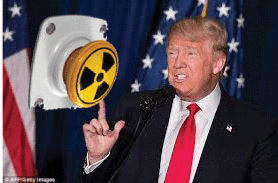
A former national security adviser says Washington “must test new nuclear weapons for reliability and safety in the real world,” while critics say the move could incite a global arms race that heightens the risk of war.
New York Times, By William J. Broad, 5 July 24
Allies of Donald J. Trump are proposing that the United States restart the testing of nuclear weapons in underground detonations should the former president be re-elected in November. A number of nuclear experts reject such a resumption as unnecessary and say it would threaten to end a testing moratorium that the world’s major atomic powers have honored for decades.
In the latest issue of Foreign Affairs magazine, Robert C. O’Brien, a former national security adviser to Mr. Trump, urges him to conduct nuclear tests if he wins a new term. Washington, he wrote, “must test new nuclear weapons for reliability and safety in the real world for the first time since 1992.” Doing so, he added, would help the United States “maintain technical and numerical superiority to the combined Chinese and Russian nuclear stockpiles.”
At the Cold War’s end, in 1992, the United States gave up the explosive testing of nuclear arms and eventually talked other atomic powers into doing likewise. The United States instead turned to experts and machines at the nation’s weapons labs to verify the lethality of the country’s arsenal. Today the machines include room-size supercomputers, the world’s most powerful X-ray machine and a system of lasers the size of a sports stadium.
In his article, Mr. O’Brien described such work as just “using computer models.” Republican members of Congress and some nuclear experts have faulted the nonexplosive testing as insufficient to assure the U.S. military establishment that its arsenal works, and have called for live tests.
But the Biden administration and other Democrats warn that a U.S. test could lead to a chain reaction of testing by other countries. Over time, they add, resumption could result in a nuclear arms race that destabilizes the global balance of terror and heightens the risk of war.
“It’s a terrible idea,” said Ernest J. Moniz, who oversaw the U.S. nuclear arsenal as the secretary of energy in the Obama administration. “New testing would make us less secure. You can’t divorce it from the global repercussions.”
Siegfried S. Hecker, a former director of the Los Alamos weapons lab in New Mexico where J. Robert Oppenheimer led the creation of the atomic bomb, called new testing a risky trade-off between domestic gains and global losses. “We stand to lose more” than America’s nuclear rivals would, he said.
It’s unclear if Mr. Trump would act on the testing proposals. In a statement, Chris LaCivita and Susie Wiles, Mr. Trump’s co-campaign managers, did not directly address the candidate’s position on nuclear testing. They said that Mr. O’Brien as well as other outside groups and individuals were “misguided, speaking prematurely, and may well be entirely wrong” about a second Trump administration’s plans.
Even so, Mr. Trump’s history of atomic bluster, threats and hard-line policies suggests that he may be open to such guidance from his security advisers. In 2018, he boasted that his “Nuclear Button” was “much bigger & more powerful” than the force controller of Kim Jong Un, the North Korean leader.
A U.S. detonation would violate the Comprehensive Test Ban Treaty, long considered one of the most successful arms control measures. Signed by the world’s atomic powers in 1996, it sought to curb a costly arms race that had spun out of control……………………………………………………………… more https://www.nytimes.com/2024/07/05/science/nuclear-testing-trump.html
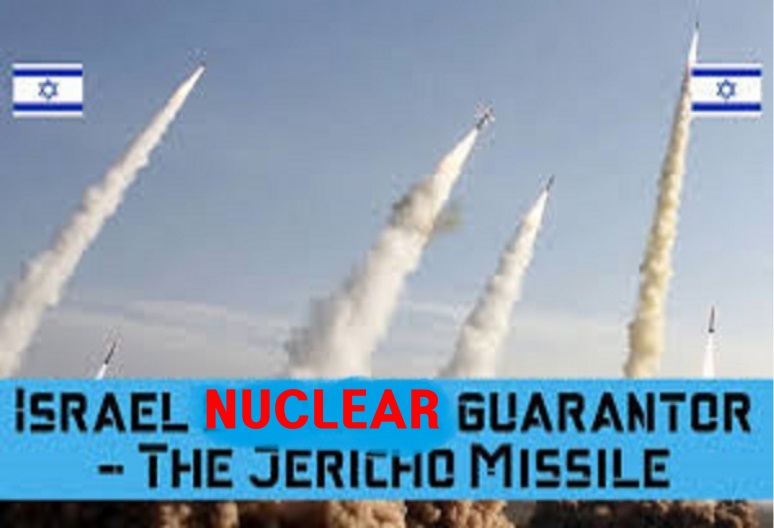
Tensions with Iran spotlight Israel’s hidden nuclear arsenal
Business Insider, Paul Iddon , Jul 4, 2024
- Israel is one of the world’s few countries armed with nukes and multiple means to deliver them.
- An Israeli aerospace official recently broached these “doomsday weapons.”
- “Israel’s triad remains remarkably powerful for a country its size,” an aviation expert said.
The prospect of a full-scale war between Israel and the powerful Hezbollah militia in Lebanon has sent tensions spiking and briefly highlighted the power of Israel’s undeclared nuclear weapons.
Israel is one of the world’s few countries armed with nukes and multiple means to deliver them, a capability recently referenced by an Israeli official with a leading government-run aerospace manufacturer.
“If we understand that there is an existential danger here, and that Iran, Yemen, Syria, Iraq and all the countries of the Middle East decide that it is time to settle against us, I understand that we have the capabilities to use doomsday weapons,” Yair Katz, chairman of the Israel Aerospace Industries Workers’ Council, reportedly said on Saturday.
He was speaking a day after Iran’s United Nations mission warned that “an obliterating war will ensue” if Israel commits “full-scale military aggression” against the Iran-backed Hezbollah in Lebanon. It also declared that in this scenario, “all options” are on the table, including “the full involvement of all resistance fronts,” a clear reference to Iran’s militia proxies in Iraq, Syria, and Yemen, the other countries Katz specifically mentioned.
By invoking doomsday weapons, it was clear Katz was alluding to Israel’s nuclear weapons arsenal — an arsenal over which neither he nor IAI have any command-and-control. But his use of the word “capabilities” is a reminder that Israel has ground, air, and sea-based delivery systems for its nuclear weapons. In other words, a complete nuclear triad……………………………………………………………………………………………………………….
“The true second strike threat for Israel is the United States itself, which in a theoretical nuclear war scenario would almost certainly retaliate on Israel’s behalf should it ever suffer a first strike from a nuclear rival,” Bohl said. “This makes it so that a second strike capability is important in terms of deterrence for full-scale escalation from a power like Iran.”
“But from a strictly tactical perspective, it would be the United States that truly serves as Israel’s most effective second strike system.” https://www.businessinsider.com/iran-hezbollah-israel-hidden-nuclear-weapons-arsenal-2024-7
NATO Members Agree To Give Ukraine $43 Billion in Military Aid for 2025

The pledge will be made at next week’s NATO summit, where Ukraine is also expected to be told it’s too corrupt to join the alliance
by Dave DeCamp July 4, 2024 , https://news.antiwar.com/2024/07/04/nato-members-agree-to-give-ukraine-43-billion-in-military-aid-for-2025/
NATO allies have agreed to pledge $43 billion in military aid for Ukraine, which will be provided next year, Reuters reported on Wednesday.
NATO Secretary-General Jens Stoltenberg was looking for the alliance to make a multi-year commitment to ensure long-term support for the proxy war, but the allies did not agree. Instead, they will re-evaluate military aid for Ukraine each year.
The agreement says that NATO allies will “aim to meet this pledge through proportionate contributions.” If the $43 billion is funded based on how much each member contributes to NATO, most of the burden would be on the US since it pays for about two-thirds of the alliance’s budget.
The $43 billion is part of a slew of measures NATO will announce at its summit next week in Washington. NATO is also expected to station a civilian official in Kyiv and establish a new command in Germany that will oversee military aid and training for Ukraine, taking over duties currently overseen by the US.
While planning to provide tens of billions in new military aid, NATO will also tell Ukraine that it’s too corrupt to join the alliance. The Telegraph reported this week that the alliance will release a communique calling on Ukraine to take more anti-corruption steps before talks on its NATO membership could progress.
President Biden has frequently cited Ukraine’s corruption as a reason why the country couldn’t join NATO. But that hasn’t stopped him from providing over $100 billion in aid to Ukraine, which includes tens of billions in the form of direct budgetary aid that funds the government.
Ukrainian drones injure Zaporizhzhia nuclear power plant workers, say Russian-backed officials
By Reuters, July 4, 2024, https://www.reuters.com/world/europe/ukrainian-drones-injure-zaporizhzhia-nuclear-power-plant-workers-say-russian-2024-07-03/—
MOSCOW, July 3 (Reuters) – A Ukrainian drone attack injured eight workers from the Russian-controlled Zaporizhzhia nuclear power plant and left a nearby town largely without power and water, Russian-backed officials said on Wednesday.
In a statement on Telegram, the plant’s management said that eight staff had been injured during an attack by three Ukrainian kamikaze drones on an electricity substation near the plant in south-eastern Ukraine.
It said all of the injured workers were receiving medical treatment.
Reuters was not able to independently confirm what had happened and there was no immediate comment from Ukraine.
Eduard Senovoz, the Russian-installed mayor of the nearby city of Enerhodar where the plant’s workers live, said in a statement that the attack had left most of the city without power and water.
The attack was the third of its kind within two weeks, he said, adding that work was underway to repair the damage to the substation.
Alexei Likhachev, director general of Rosatom, Russia’s state nuclear corporation, said the attack was the first time that the power plant’s workers had been deliberately put in danger.
In comments to Russian state TV channels, Likhachev called on the Vienna-based U.N. nuclear watchdog, the International Atomic Energy Agency (IAEA), to assess what had happened.
“IAEA head Rafael Grossi has repeatedly said that the activities of nuclear cities, the lives of people, and especially the lives of nuclear power plant workers are ‘sacred’ elements of nuclear safety. Today they have been defiantly violated,” Likhachev said.
The IAEA last month called for a halt to attacks on Enerhodar after earlier attacks on electricity substations in the area.
US announces more than $2 billion package for Ukraine

BY BRAD DRESS – 07/02/24, https://thehill.com/policy/defense/4752120-biden-administration-lloyd-austin-2-million-ukraine-aid-package/
Defense Secretary Lloyd Austin announced a $2.3 billion security assistance package for Ukraine ahead of a meeting with his Ukrainian counterpart Tuesday.
The package will include critical air defense interceptors and other weapons. A spokesperson for the Pentagon said more details on the package would be made available soon.
Austin met with Ukrainian Defense Minister Rustem Umerov at the Pentagon on Tuesday and underscored the U.S. commitment to defending the country against a Russian invasion.
“Ukraine is in a tough fight,” Austin said in remarks ahead of the meeting, adding “make no mistake, Ukraine is not alone.”
The Pentagon chief also noted that the U.S. has signed a 10-year bilateral security agreement with Ukraine, providing Kyiv with defense cooperation guarantees over a decade. He added that he would discuss with Umerov additional ways to strengthen the partnership.
The U.S. has announced billions of dollars of assistance to Ukraine since the last congressional package of some $60 billion was approved in April. That legislation came after months of delays, giving Russia the advantage on the battlefield before more U.S. aid began arriving on the battlefield.
Ukrainian troops are fighting across the 600-mile front against Russian forces, including in the northeastern Kharkiv region, where Moscow opened a new front in May.
Israel Has Forcibly Displaced 1.9 Million Palestinians in Gaza
Israel’s assault has displaced over 1 million people just since May, a UN human rights official said.
SCHEERPOST, By Sharon Zhang , TRUTHOUT, July 2, 2024
srael’s ongoing assault in Gaza has now forcibly displaced 1.9 million Palestinians, a UN humanitarian official reported on Tuesday as Israel forced another round of evacuations for hundreds of thousands of people across southern and central Gaza.
Israel’s brutal assault and humanitarian blockade has turned Gaza into an “abyss of suffering” and a “maelstrom of human misery,” said Sigrid Kaag, UN Senior Humanitarian and Reconstruction Coordinator for Gaza, in an address to the UN Security Council.
“Following the Israeli offenses against Rafah, since the sixth of May, over 1 million people have been displaced once again, desperately seeking shelter and safety,” said Kaag. “One point nine million people are now displaced across Gaza.”
This amounts to over 86 percent of the 2.2 million person population of Gaza displaced — though the proportion may be larger when the number of Palestinians who have been killed, are missing under the rubble or have died in ways that officials aren’t recording are subtracted from the population estimates. The number of displaced people is up from 1.7 million Palestinians who UN officials said had been forced out of their homes in earlier estimates……………………………………………………………………………………………………………………………
Meanwhile, Israeli forces are also fiercely attacking Gaza City in the north. This has sparked an “exodus” from the eastern part of the city, the UN reported, after days of intense bombardments and tanks entering the region.
According to the UN, about 84,000 Palestinians have been displaced by this massacre, with most families having already fled areas multiple times, their supplies and energy dwindling amid Israel’s intensified famine campaign.
UNRWA’s communications head Louise Wateridge reported from a recent trip to Gaza that the region is “apocalyptic — most people have lost their homes, either completely or partially, and have to flee with very few belongings; essentially what they can carry in their hands.” https://scheerpost.com/2024/07/03/israel-has-forcibly-displaced-1-9-million-palestinians-in-gaza/
You Don’t Want to Live in America’s ‘Nuclear Sponge’

military planners often describe ICBMs as a “nuclear sponge” that would soak up hundreds of Russian warheads as they tried to destroy the missiles before they could launch.
People living in Montana, North Dakota, Wyoming and Colorado may not think of their homes as “nuclear sponges” but that is one of the primary justifications for ICBMs today………. . ICBMs are sitting ducks
By Joseph Cirincione, National Security Analyst, 3 July 24, https://www.newsweek.com/you-dont-want-live-americas-nuclear-sponge-opinion-1919646
ou have to be a real optimist to think that we can keep thousands of nuclear weapons in fallible human hands indefinitely and nothing terrible will happen. Something terrible will happen—and it could mean the end of human civilization.
The risks are growing. Today, nine nations hold over 12,000 nuclear weapons, each many times more powerful than those used on Japan. The United States and Russia have most of them—about 90 percent of the global total—but China may be trying to catch up.
The fear that China might increase its nuclear arsenal from some 500 to 1,000 weapons has fueled calls for America to abandon all arms control limits and vastly increase its stockpile of some 5,000 weapons. In fact, massive new programs to build a new generation of nuclear-armed bombers, submarines and missiles were well under way before China began its build up—and may well have triggered China’s move.
The cost of this new nuclear arms race is high. A new report shows that global spending on nuclear weapons jumped last year—and that the United States accounted for 80 percent of that increase.
The global costs and the U.S. share will grow. This year, U.S. spending climbed again to more than $70 billion. The Congressional Budget Office estimates that the government will spend over $750 billion on nuclear weapons over the next 10 years. The total modernization cost will likely be over $2 trillion. Add in the $30 billion a year spent on programs to try to intercept ballistic missiles and the cost goes from unimaginable to unaffordable.
It gets worse. The Air Force just disclosed that the price of its new intercontinental ballistic missile (ICBM) has jumped 37 percent. Originally, the Air Force claimed that replacing the existing force of 400 Minuteman III missiles would cost only $62 billion. That rose to $95 billion, then to more than $125 billion (plus tens of billions more for the nuclear warheads). In a new report, the watchdog group, Taxpayers for Common Sense, warns that the price tag could hit $315 billion.
For a family, a cost increase of 37 percent on a house or car they want to buy would certainly change their minds. Even for the Pentagon, this hike was “a critical breach” of cost projections, triggering a rare report to Congress.
This is likely why defense contractors are working furiously with their Congressional supporters to defend the program, supplying members with talking points and briefings, in addition to the generous contributions that flow into their campaign coffers. Members in the few states that have nuclear bases also do not want to lose the considerable economic benefits they provide.
Thus, Sen. Deb Fischer, a Republican from Nebraska, home to the Strategic Command, pleads in her recent piece for Newsweek, to continue the programs no matter what the cost. She argues that “Our ground-based intercontinental ballistic missiles (ICBMs) are indispensable. …by virtue of their location in our heartland, [they] are also unlikely to be targeted by enemy attacks.”
That would be a surprise to military planners who often describe ICBMs as a “nuclear sponge” that would soak up hundreds of Russian warheads as they tried to destroy the missiles before they could launch. This would complicate an adversary’s planning so severely that it would discourage any attack, the theory goes.
People living in Montana, North Dakota, Wyoming and Colorado may not think of their homes as “nuclear sponges” but that is one of the primary justifications for ICBMs today. Formerly valued as being more accurate and faster to launch than missiles from submarines, that is no longer the case. As the Taxpayers report notes. “Both ballistic missile submarines and nuclear-armed aircraft carry more accurate and powerful nuclear weapons than they used to,” allowing them to destroy even the most hardened target. Meanwhile, “the survivability of U.S. ICBMs has steadily declined as U.S. adversaries have developed more powerful and accurate nuclear weapons.”
Submarines are undetectable and bombers can be scrambled. ICBMs are sitting ducks that must be launched on warning of an enemy attack, stressing their human controllers to decide within minutes whether to launch Armageddon. Former Secretary of Defense William Perry says we must eliminate these relics of the Cold War, calling them, “some of the most dangerous weapons in the world. They could even trigger an accidental nuclear war.”
There have been dozens of close calls in the nuclear age, most caused by the need to launch these hulking missiles so quickly. Rep. John Garamendi (D-CA), Don Beyer (D-VA) and Sen. Ed Markey (D-MA) will hold a public hearing July 24 to examine the troubled missile program and “raise the alarm about our unsustainable, reckless nuclear posture.”
“We must confront the challenges before us, not by building ever more dangerous weapons,” says Garamendi, “but by placing the same priority on effective arms control and risk reduction measures that we currently place on modernization.”
This hearing may be our last, best chance to evaluate the risks of putting more nuclear weapons on hair-trigger alert before it is too late.
Joe Cirincione is the author or editor of seven books and over a thousand articles on nuclear policy and national security.
Why cost should not be an obstacle to compensating nuclear survivors
By Alicia Sanders-Zakre, Susi Snyder | July 1, 2024, https://thebulletin.org/2024/07/why-cost-should-not-be-an-obstacle-to-compensating-nuclear-survivors/?utm_source=Newsletter+&utm_medium=Email&utm_campaign=MondayNewsletter07012024&utm_content=NuclearRisk_CompensatingNuclearSurvivors_07012024
Passing an extended and expanded Radiation Exposure Compensation Act (RECA) would be an enormous victory for those affected by US nuclear weapons testing and development who will receive compensation from the legislation. A proposed revised bill would include many communities formerly left out from the compensation program, including additional residents of Arizona, Nevada and Utah, for the first time, residents of Colorado, Idaho, Guam, Montana and New Mexico, uranium miners after 1971, veterans of nuclear waste clean-up in the Marshall Islands, and St. Louis area residents exposed to nuclear waste. The bill, originally estimated by the Congressional Budget Office to cost $147 billion over 10 years, was cut down to cost $50 billion over 10 years, due to concerns by members of Congress about the expense. A RECA bill has gained overwhelming support in the Senate, but it has yet to be passed by the House, in part due to ongoing concerns about the price tag.
Our research shows that more resources exist and should be directed to this important effort, in the United States and internationally, where many nuclear survivors still wait for justice. In our report, we found that nuclear-armed countries spent $91.4 billion on nuclear weapons in 2023 alone. That’s nearly $3,000 every second. The United States spent more than half of that total – $51.5 billion or $1,633 per second. In the five years that we have done this research, from 2019 to 2023, governments have spent a total of $387 billion on nuclear arsenals. The United States alone spent more than $212 billion of that total.
The amount that the United States and other nuclear-armed governments have put towards addressing the harmful legacy of nuclear weapons for their citizens pales by comparison. Since RECA was passed in 1990, the United States has put $2.67 billion into one-time settlements to compensate those whom the United States considered eligible. To address the nuclear legacy of its testing in the Marshall Islands, the United States gave $150 million to establish a Nuclear Claims Tribunal in 1987, but has not provided further funds explicitly for this purpose since.
Internationally, compensation for survivors also comes up short. Russian nuclear test veterans receive one-time compensation for harm to health of 22,102 roubles ($245 as of February 1, 2024) as well as small monthly stipends for food. In 2023, Russia spent 710.5 billion roubles ($8.3 billion) on its nuclear arsenal. In France, CIVEN, le Comité d’Indemnisation des Victimes des Essais Nucléaires, provided 14.9 million euros ($15.9 million) to victims of its nuclear testing in Algeria and French Polynesia in 2022. Last year, France spent 5.6 billion euros ($6.1 billion) on its nuclear weapons. The United Kingdom provided a “full and final” settlement payment of £20 million to Australia in 1993 to remediate former nuclear tests sites there, in comparison to the £6.5 billion ($8.1 billion) it spent on its nuclear arsenal in 2023.
It is no coincidence that, around the world, formerly colonized and Indigenous populations were the first to be bombed and the last to receive recognition and compensation. Existing programs rarely address the multifold harms of nuclear testing beyond physical harm from radiation, such as the psychological and economic toll of displacement, deprivation of traditional ways of life or the fear of children also suffering the scars of nuclear weapons.
But international efforts to address nuclear harms, grounded in human rights principles, have increased in recent years. In July 2017, 122 governments adopted the Treaty on the Prohibition of Nuclear Weapons. The treaty includes Articles 6 and 7, creating for the first time an international collective effort to address the impacts of nuclear weapons use and testing on people and the environment. States affected by nuclear weapons use and testing that have joined the treaty—such as Kazakhstan, Kiribati, Fiji, and New Zealand—take the lead in identifying needs for affected people and for environmental remediation in their countries and designing national plans of action and structures to address those needs. All governments that have joined this treaty pledge to help if they are able. States are currently discussing establishing an international trust fund to support this work.
Providing adequate assistance to those suffering from nuclear harm and beginning to remediate contaminated environments will cost money. It will also take time. But the cost is not an excuse to forgo necessary nuclear justice programs. Our research clearly shows that ever-growing budgets to build and rebuild nuclear arsenals are readily approved by every nuclear-armed government, while funds to help those suffering are a pittance in comparison.
The exorbitant funding poured into producing and maintaining weapons of mass destruction—as those who have borne the brunt of their impacts are dismissed—constitutes a gross dereliction of duty by the nuclear-armed countries. Governments must work together at the national and international level to address the multifaceted harms that nuclear weapons production and testing have inflicted on survivors and the environment. Extending and expanding RECA would be a good place to start. House leaders should stop stalling and start acting.
How far can American money push the Kiev regime’s suicidal war with Russia?
SOTT, Drago Bosnic, InfoBrics, Thu, 27 Jun 2024
The economic might of the United States was one of the major reasons why the Allies won WW2. While much of the world was in ruins thanks to the combined invasion of the Axis powers, America was virtually unscathed. Its strategically isolated position made it possible to switch to an unprecedented war economy without the fear of it ever being disrupted by anything. Unfortunately, one of the tools of victory over the world’s most repugnant ideology soon turned into a way of pushing the outgrowth of that ideology all across the globe.
The birth of the US MIC (Military Industrial Complex), particularly when combined with “Operation Paperclip”, unified the production capacity of America and technological innovations of Germany, creating a monster that many have been warning about ever since, including US General (and later president) Dwight D. Eisenhower.
He warned in his 1961 farewell address:
“Until the latest of our world conflicts, the United States had no armaments industry. American makers of plowshares could, with time and as required, make swords as well. But now we can no longer risk emergency improvisation of national defense; we have been compelled to create a permanent armaments industry of vast proportions. Added to this, three and a half million men and women are directly engaged in the defense establishment. We annually spend on military security more than the net income of all United States corporations. This conjunction of an immense military establishment and a large arms industry is new in the American experience. The total influence — economic, political, even spiritual — is felt in every city, every State house, every office of the Federal government. We recognize the imperative need for this development. Yet we must not fail to comprehend its grave implications. Our toil, resources and livelihood are all involved; so is the very structure of our society. In the councils of government, we must guard against the acquisition of unwarranted influence, whether sought or unsought, by the Military Industrial Complex [MIC].”
However, it all fell on deaf ears, as many warmongers and war criminals were already deeply ingrained in virtually every federal institution. American militarism became the norm and this hasn’t changed to this very day. Dozens of major conflicts were launched under endless false pretexts, with millions of dead and tens of millions displaced in the last 20 years alone. Perhaps the only segment of America’s production economy that hasn’t been outsourced entirely is precisely the MIC. A lot of its less crucial parts have been, but the core elements remain in the US. However, the country’s financial structure went through tectonic changes since Eisenhower’s era. Namely, after President Nixon ended the gold standard, the might of the MIC was unleashed and American militarism spread to other NATO members, cementing a conglomerate of nations with one interest alone – perpetual war.
…………………………………………………………………………. the Kiev regime has so far gotten upwards of three times more money than what Moscow has (nominally) spent on its entire military in 2021. This means that Russia is getting a lot more bang for its buck. However, things are about to get a lot worse for the Neo-Nazi junta, as the Kremlin has made some major changes in its Ministry of Defense. Worse yet, Russia is now increasing its military spending to a nominal figure of nearly $200 billion, although the real budget (in GDP PPP terms) is now equivalent to over half a trillion dollars. NATO fully realizes that the Kiev regime’s already slim chances of winning are now in the realm of impossible, which is why it decided to deploy up to half a million soldiers and get them ready for a direct confrontation with Moscow, while also trying to use sabotage and terrorism to shift its attention away from Ukraine.
However, none of this has reinvigorated America’s MIC in the same way wars in Vietnam, Iraq and Afghanistan have. On the contrary, it revealed its numerous deficiencies, particularly in artillery munitions production, an area in which Russia keeps strengthening its already dominant position and will continue to do so in the foreseeable future. What’s more, America is now wasting decades-old stockpiles (as well as those of its allies, vassals and satellite states) just to keep the Neo-Nazi junta another day in the fight. It’s even giving top dollar for surplus Soviet-era weapons and equipment around the world, as these have proven to be far more robust and cost-effective in comparison to overhyped NATO gear. This is without even taking into account a number of Russia’s asymmetric advantages, ones that NATO can match only with terrorist attacks on beachgoers. https://www.sott.net/article/492721-How-far-can-American-money-push-the-Kiev-regimes-suicidal-war-with-Russia
Julian Assange Is Finally Free, But Let’s Not Forget the War Crimes He Exposed

Contrary to US government claims, WikiLeaks’s revelations actually saved lives — and drove demand for US accountability.
| By Editor on June 29, 2024 https://truthout.org/articles/julian-assange-is-finally-free-but-lets-not-forget-the-war-crimes-he-exposed/ |
After a 14-year struggle, including five years spent in Belmarsh, a maximum-security prison in London, WikiLeaks publisher Julian Assange is finally free. Under the terms of a plea deal with the U.S. Department of Justice, Assange pled guilty to one count of conspiracy to obtain documents, writings and notes connected with the national defense under the Espionage Act. Assange was facing 175 years in prison for 18 charges in the indictment filed by the Trump administration and pursued by the Biden administration.
The plea agreement requires that before entering his plea, Assange must have done everything he could to either return or destroy “any such unpublished information in his possession, custody, or control, or that of WikiLeaks or any affiliate of WikiLeaks.”
As stipulated in the plea deal, Ramona Manglona, U.S. Chief Judge of the District Court for the Northern Mariana Islands, sentenced Assange to 62 months with credit for the time he served in Belmarsh Prison. The U.S. sentencing guidelines say the range for this “offense” is 41-51 months, so Assange served 11 to 21 months longer than this type of case would typically garner.
Assange was prosecuted because WikiLeaks exposed U.S. war crimes in Iraq, Afghanistan and Guantánamo Bay. In 2010, U.S. Army intelligence analyst Chelsea Manning, who had a “TOP SECRET” U.S. security clearance, furnished WikiLeaks with 700,000 documents and reports, many of which were classified “SECRET.”
These documents included the “Iraq War Logs,” 400,000 field reports documenting 15,000 unreported deaths of Iraqi civilians, as well as systematic rape, torture and murder after U.S. forces transferred detainees to a notorious Iraqi torture squad.
They also contained the “Afghan War Diary,” comprising 90,000 reports that documented more civilian casualties by coalition forces than the U.S. military had reported. And they included the “Guantánamo Files” — 779 secret reports containing evidence that 150 innocent people had been held at Guantánamo Bay for years. The reports explain how the nearly 800 men and boys there had been tortured and abused, which violated the Geneva Conventions and the Convention Against Torture and Other Cruel, Inhuman or Degrading Treatment or Punishment.
Manning also provided WikiLeaks with the infamous 2007 “Collateral Murder” video, which depicts a U.S. Army Apache attack helicopter crew targeting and killing 12 unarmed civilians in Baghdad, including two Reuters journalists, as well as a man who came to rescue the wounded. Two children were injured in the attack. A U.S. Army tank drove over one of the bodies, severing it in two. In a conversation after the attack, one pilot said, “Look at those dead bastards,” and the other responded, “Nice.” The video reveals evidence of three violations of the Geneva Conventions and the U.S. Army Field Manual.
WikiLeaks provided material for news outlets around the world to report on U.S.-led atrocities. Informing the public about the illegality of George W. Bush’s “war on terror” resulted in calls for accountability.
“10 years on, the War Logs remain the only source of information regarding many thousands of violent civilian deaths in Iraq between 2004 and 2009,” John Sloboda, co-founder of Iraq Body Count (IBC), wrote in his submitted testimony for Assange’s extradition hearing in October 2020. IBC is an independent NGO that has done the only comprehensive monitoring of credibly reported casualties in Iraq since Bush’s 2003 invasion.
“WikiLeaks cables have contributed to court findings that US drone strikes are criminal offences and that criminal proceedings should be initiated against senior US officials involved in such strikes,” Clive Stafford Smith, co-founder of Reprieve and attorney for seven Guantánamo detainees, wrote in his submitted testimony.
“They took a hero [Assange] and turned him into a criminal,” Vahid Razavi, founder of Ethics in Tech, told Common Dreams. “Meanwhile, all of the war criminals in the files exposed by WikiLeaks via Chelsea Manning are free and never faced any punishment or even their day in court.”
The Iraq War Logs
The Iraq War Logs contained extensive evidence of U.S. war crimes. Several reports of detainee abuse were supported by medical evidence. Prisoners were blindfolded, shackled and hung by their ankles or wrists. They were subjected to punching, whipping, kicking, electrocution, electric drills, and cutting off fingers or burning with acid. Six reports document the apparent deaths of detainees.
Secret U.S. Army field reports revealed that U.S. authorities refused to investigate hundreds of reports of murder, torture, rape and abuse by Iraqi soldiers and police. The coalition had a formal policy of ignoring these allegations, marking them “no investigation is necessary.”
Although U.S. and U.K. officials maintained that no official records of civilian casualties existed, the logs document 66,081 noncombatant deaths out of 109,000 fatalities from 2004-2009.
The log describes video footage of Iraqi army officers executing a prisoner in Tal Afar. It says, “The footage shows approximately 12 Iraqi army [IA] soldiers. Ten IA soldiers were talking to one another while two soldiers held the detainee. The detainee had his hands bound … The footage shows the IA soldiers moving the detainee into the street, pushing him to the ground, punching him and shooting him.”
The Afghan War Diary
The Afghan War Diary also revealed evidence of U.S. war crimes from 2004-2009. The reports describe how a secret “black” unit composed of special operations forces hunted down accused Taliban leaders for “kill or capture” without trial. Secret commando units — classified groups of Navy and Army special operatives — used a “capture/kill list,” which resulted in the killing of civilians, angering the Afghan people.
Moreover, the CIA expanded paramilitary operations in Afghanistan, carrying out ambushes, ordering airstrikes and conducting night raids. The CIA financed the Afghan spy agency, operating it like a subsidiary.
A 2007 meeting between Afghan district officials and U.S. civil affairs officers was documented in the reports. Afghan officials are quoted as saying, “The people of Afghanistan keep loosing [sic] their trust in the government because of the high amount of corrupted government officials. The general view of the Afghans is that the current government is worst [sic] than the Taliban.”
The logs recorded numerous civilian casualties from airstrikes, shootings on the road, in villages and at checkpoints; many were caught in the cross fire. The victims weren’t suicide bombers or insurgents. Several deaths were not reported to the public.
The Guantánamo Files
The Guantánamo Files say that only 220 of the 780 people held at the prison camp since 2002 were classified as “dangerous international terrorists.” Of the rest of the detainees, 380 were classified as low-level foot soldiers and 150 were considered innocent Afghan or Pakistani civilians or farmers.
Many detainees were held at Guantánamo for years based on paltry evidence or confessions extracted by torture and abuse. Among the detainees, for example, were an 89-year-old Afghan villager with senile dementia and a 14-year-old boy who was the innocent victim of a kidnapping.
The files document a system aimed more at extracting intelligence than detaining dangerous terrorists. One man was transferred to Guantánamo because he was a mullah with special knowledge of the Taliban. A taxi driver was sent to the prison camp because he had general knowledge of certain areas in Afghanistan. An Al Jazeera journalist was held at Guantánamo for six years to be interrogated about the news network.
Nearly 100 detainees were classified with depressive or psychotic disorders. Several joined hunger strikes to protest their indefinite detention or attempted suicide, the files revealed.
No One Was Harmed by WikiLeaks’s Revelations
Although the U.S. government alleged that WikiLeaks’s publication of information had caused “great harm,” they “admitted there was not a single person anywhere that they could produce that was harmed by these publications,” Assange’s attorney Barry Pollack said at a June 26 press conference in Australia.
The plea agreement says, “Some of these raw classified documents were publicly disclosed without removing or redacting all of the personally identifiable information relating to certain individuals who shared sensitive information about their own governments and activities in their countries with the U.S. government in confidence.”
The U.S. government claims that Assange endangered U.S. informants who were named in the published documents. But John Goetz, an investigative reporter who worked for Germany’s Der Spiegel, testified at the 2020 extradition hearing that Assange went to great lengths to ensure that the names of informants in Iraq and Afghanistan were redacted. Goetz said that WikiLeaks underwent a “very rigorous redaction process” and Assange repeatedly reminded his media partners to use encryption. Indeed, Goetz said, Assange tried to stop Der Freitag from publishing material that could result in the release of unredacted information.
Moreover, WikiLeaks’s revelations actually saved lives. After WikiLeaks published evidence of Iraqi torture centers established by the U.S., the Iraqi government refused then-President Barack Obama’s request to grant immunity to U.S. soldiers who committed criminal and civil offenses there. As a result, Obama had to withdraw U.S. troops from Iraq.
Obama took credit for ending U.S. military involvement in Iraq. But he had tried for months to extend it beyond the December 31, 2011, deadline his predecessor negotiated with the Iraqi government. Negotiations broke down when Iraq refused to grant criminal and civil immunity to U.S. troops.
What Assange’s Plea Bargain Means for Free Speech
Before she accepted Assange’s guilty plea, Judge Manglona asked him what he did to violate the law. “Working as a journalist, I encouraged my source to provide information that was said to be classified,” Assange said. “I believed the First Amendment protected that activity, but I accept that it was a violation of the espionage statute.” Assange then added, “The First Amendment was in contradiction with the Espionage Act, but I accept that it would be difficult to win such a case given all these circumstances.”
Even though Assange will go free, his plea deal raises concerns for First Amendment advocates in the U.S.
“The United States has now, for the first time in the more than 100-year history of the Espionage Act, obtained an Espionage Act conviction for basic journalistic acts,” David Greene, head of civil liberties at the Electronic Frontier Foundation, told The New York Times. “These charges should never have been brought.”
Charlie Savage, who has covered the Assange case extensively for years, warned that Assange’s plea sets a “new precedent” that “will send a threatening message to national security journalists, who may be chilled in how aggressively they do their jobs because they will see a greater risk of prosecution.” But, Savage noted, since Assange pled guilty and didn’t mount a constitutional challenge to the Espionage Act, that eliminated the risk that the U.S. Supreme Court would ultimately sanction a narrow interpretation of First Amendment press freedoms.
“WikiLeaks published groundbreaking stories of government corruption and human rights abuses, holding the powerful accountable for their actions,” WikiLeaks said in a statement announcing the plea agreement. “As editor-in-chief, Julian paid severely for these principles, and for the people’s right to know. As he returns to Australia, we thank all who stood by us, fought for us, and remained utterly committed in the fight for his freedom.”
There is no doubt that but for the sustained activism of people around the world and the work of his superb legal team, Julian Assange would still be languishing behind bars for revealing evidence of U.S. war crimes.
1 This Month

of the week – Shut Down Drone Warfare!


Tell the Ukrainian Government to Drop Prosecution of Peace Activist Yurii Sheliazhenko

Petition to revoke the licensing of the Near Surface Nuclear Disposal Facility (NSDF) at Chalk River. https://www.ourcommons.ca/petitions/en/Petition/Details?Petition=e-7247
To see nuclear-related stories in greater depth and intensity – go to https://nuclearinformation.wordpress.com
-
Archives
- April 2026 (107)
- March 2026 (251)
- February 2026 (268)
- January 2026 (308)
- December 2025 (358)
- November 2025 (359)
- October 2025 (376)
- September 2025 (257)
- August 2025 (319)
- July 2025 (230)
- June 2025 (348)
- May 2025 (261)
-
Categories
- 1
- 1 NUCLEAR ISSUES
- business and costs
- climate change
- culture and arts
- ENERGY
- environment
- health
- history
- indigenous issues
- Legal
- marketing of nuclear
- media
- opposition to nuclear
- PERSONAL STORIES
- politics
- politics international
- Religion and ethics
- safety
- secrets,lies and civil liberties
- spinbuster
- technology
- Uranium
- wastes
- weapons and war
- Women
- 2 WORLD
- ACTION
- AFRICA
- Atrocities
- AUSTRALIA
- Christina's notes
- Christina's themes
- culture and arts
- Events
- Fuk 2022
- Fuk 2023
- Fukushima 2017
- Fukushima 2018
- fukushima 2019
- Fukushima 2020
- Fukushima 2021
- general
- global warming
- Humour (God we need it)
- Nuclear
- RARE EARTHS
- Reference
- resources – print
- Resources -audiovicual
- Weekly Newsletter
- World
- World Nuclear
- YouTube
-
RSS
Entries RSS
Comments RSS
 nuclear-news