The national missile defense fantasy—again

Bulletin, By Joe Cirincione | February 4, 2025
National missile defense advocates live in a world of magic and make-believe. Fantasy replaces science, assertions replace facts, and cartoon weapons replace real capabilities.
This enduring fantasy, however, has real-world consequences.
President Donald Trump’s pledge last week to build “a next-generation missile defense shield” that would “defeat any foreign aerial attack on the Homeland [with] space-based interceptors” has provoked a predictable reaction. Russia blasted Trump’s plan, detailed in his new executive order, “The Iron Dome for America.”
But no magic shield is going to protect the United States against nuclear attack.
An idea that never dies. Russian Foreign Ministry spokesperson Maria Zakharova said on Friday of Trump’s plan that “it directly envisages a significant strengthening of the American nuclear arsenal and means for conducting combat operations in space, including the development and deployment of space-based interception systems.”
“We consider this as another confirmation of the US focus on turning space into an arena of armed confrontation… and the deployment of weapons there,” Zakharova added.
The Russian reaction could scuttle Trump’s stated desire to negotiate limits on nuclear weapons. If so, it would repeat the role strategic defenses have played in the Cold War’s nuclear arms race. Efforts to build national defenses always trigger efforts to overcome them with more missiles and other counter-measures—the well-known security dilemma.
Despite all the formidable technical and geopolitical evidence against such schemes, however, “faith in national missile defense never dies,” Washington Post columnist Max Boot observes.
It is no coincidence that Trump’s new order is lifted almost entirely from the Heritage Foundation’s Project 2025 wish list. In the 1980s, the group championed President Ronald Reagan’s original dream to “put in space a shield that missiles could not penetrate—a shield that could protect us from nuclear missiles just as a roof protects a family from rain,” as he told a 1986 high school graduating class.
“Like Israel’s highly effective system of the same name, President Trump’s Iron Dome will provide an impenetrable defense for the American people that will bring peace through strength,” Heritage Foundation fellow Victoria Coates said. It “will fulfill President Reagan’s vision for the Strategic Defense Initiative laid out some four decades ago,” she added.
Doomed to fail. Trump’s executive order is a jumble of false claims and imaginary solutions. It begins by declaring that the risk of a missile attack “remains the most catastrophic threat facing the United States.” That would surprise most experts on existential risks. The climate crisis, the threat of new pandemics, artificial intelligence, and crippling cyber attacks are all at least as likely catastrophic events as nuclear weapons delivered by other means. But threat inflation has always been a key part of efforts to justify urgent action and massive investment.
Trump claims that “over the past 40 years, rather than lessening, the threat from next-generation strategic weapons has become more intense and complex.” Despite being utter nonsense, this claim has gone largely unchallenged.
While it is true that new technologies have increased the lethality of missiles, the missile threat to the United States has decreased dramatically. Arms control treaties and the collapse of the Soviet Union slashed the number of nuclear weapons and nuclear-armed missiles threatening the United States.
In 1985, the Soviet Union deployed 2,345 land-based and submarine-based missiles carrying over 9,300 nuclear warheads. That was the threat Reagan hoped to render “impotent and obsolete” with his missile shield.
Thanks to negotiated agreements, today’s Russia fields only 521 missiles, carrying 2,236 warheads. China’s land-based nuclear-armed missiles capable of reaching the United States have increased from around 20 in 1985 to some 135 today (carrying 238 warheads) and perhaps 72 single-warhead submarine-based missiles. In sum, the United States today faces roughly one-fifth the number of enemy missiles compared to 40 years ago and one-quarter of the nuclear warheads (728 vs. 2,365 missiles and 2,546 vs. 9,320 warheads). That is still a very dangerous threat but by no means a greater one.
Where arms control succeeded, missile defense technology failed.
None of the scores of systems developed by Reagan’s Strategic Defense Initiative (SDI) and its successor organizations have ever come close to providing the imaginary shield that Reagan promised. National missile defenses did not work then. They do not work now. They will likely never work………………………………………
As it became clear that the space-based laser weapons Edward Teller told Reagan he could build were a fantasy, Reagan and subsequent presidents scaled down the program to try to get some kind of workable defense. But after spending over $415 billion over decades, all the United States has to show for the effort is 44 ground-based interceptors in Alaska and California that can hit a cooperative target in carefully scripted demonstrations—about half of the time. Congress currently allocates $30 billion a year on missile defense and defeat programs, most run by the SDI successor, the Missile Defense Agency.
Not an iron dome; more like an iron colander. The major technical problems that remain unresolved—and eventually forced the cancellation of all SDI’s ambitious plans—are the same obstacles that have ruled out an effective ballistic missile defense for more than 60 years:
- the ability of the enemy to overwhelm a system with offensive missiles;
- the questionable survivability of space-based weapons;
- the inability to discriminate among real warheads and hundreds or thousands of decoys;
- the problem of designing battle management, command, control, and communications that could function in a nuclear war; and,
- the low confidence in the ability of the system to work perfectly the first—and, perhaps, only—time it is ever used.
……………………………………………………………………“There is zero possibility of a comprehensive missile defense of the United States in the foreseeable future,” James N. Miller, who served as undersecretary of defense in the Obama administration, told Max Boot. “We are not going to escape mutual assured destruction vis-à-vis Russia or China.”
As shown repeatedly over the past 60 years, the only way to eliminate the threat of nuclear-armed missiles is to negotiate their elimination. Pretending that there is a magic shield that can be willed into existence will only make the problem of national missile defense worse. https://thebulletin.org/2025/02/the-national-missile-defense-fantasy-again/
Local opinion: Raytheon pushes The Doomsday Clock closer to midnight

because of their work on both the LRSO and Tomahawk cruise missiles, Raytheon is now seen as the leading contender to produce even more nuclear weapons in the form of new sea-launched nuclear cruise missiles. This further escalation would represent a huge setback to hard-won nuclear arms control progress, when nuclear-armed Tomahawks were removed from submarines over 30 years ago.
Jack Cohen-Joppa Special to the Arizona Daily Star, Jan 31, 2025, 31, 2025, https://tucson.com/opinion/column/local-opinion-raytheon-pushes-the-doomsday-clock-closer-to-midnight/article_46da901c-df20-11ef-8e77-235556fbeeb6.html
In Tom Lehrer’s classic Cold War ditty, “So Long Mom,” a nuclear bomber pilot sings, “I’ll look for you when the war is over, an hour and a half from now.”
It’s darkly funny, because even though we don’t talk much about it, we all know it’s true. Planned or imagined, nuclear war scenarios rarely last longer.
But how much time have we got before then? How near is that threat of omnicide today?
The Doomsday Clock is a visual metaphor created by the Bulletin of Atomic Scientists back in 1947 to illustrate how close we are to global calamity from nuclear weapons and other looming threats to civilization as we know it. Originally set at seven minutes to midnight, in 2023 it advanced to 90 seconds to midnight, largely due to nuclear threats from war in Ukraine.
And Raytheon keeps pushing us closer.
In April 2020, Raytheon, with more than 12,000 local employees and the bulk of its research, development and production based here in Tucson, was awarded a sole-source contract to produce about 1,000 new nuclear-armed, air-launched cruise missiles. Known by the anodyne acronym LRSO (Long Range Stand Off), the missile is arguably both redundant and destabilizing in a time of disappearing nuclear diplomacy.
Not only that, but because of their work on both the LRSO and Tomahawk cruise missiles, Raytheon is now seen as the leading contender to produce even more nuclear weapons in the form of new sea-launched nuclear cruise missiles. This further escalation would represent a huge setback to hard-won nuclear arms control progress, when nuclear-armed Tomahawks were removed from submarines over 30 years ago.
Why aren’t we talking about it in Tucson? Senators Mark Kelly and Ruben Gallego and Rep. Juan Ciscomani all vote for U.S. nuclear domination. Only Rep. Raul Grijalva has spoken out for the 2017 Treaty on the Prohibition of Nuclear Weapons, now adopted by more than half the nations of the world. Despite near-universal condemnation of nuclear weapons by leaders of the world’s religions, we could use more local political and religious leaders speaking out against this blasphemous enterprise in our backyard.
It’s not as if it’s a military secret. The industry press has recently carried reports of LRSO flight tests, budget allocations, production schedules and more. Yet local media have not kept up.
Raytheon also has nothing to say. Usually, Southern Arizona’s largest employer and exporter is mighty proud of the panoply of products in their military portfolio. Their website is filled with fulsome boasts and lurid photos of deadly hardware. But the baddest boy of the bunch is missing in action. The nuclear-armed LRSO only pops up in a handful of financial reports. Raytheon’s original press release heralding the multibillion-dollar contract was posted on its website and quoted by the Tucson media in April 2020. But now it’s gone, simply deleted from its media archive.
Perhaps management has realized that there is nothing to be gained by crowing about their only product that, if used as intended, would be the instrument of multiple war crimes and crimes against humanity (incomprehensible death and devastation, disproportionate civilian casualties, lasting contamination of land and water, etc.). Raytheon’s “products” are certainly nothing I’m proud of as a Tucsonan.
This is the same Raytheon/RTX that last November was fined nearly $1 billion for defrauding the government (i.e., the taxpayer) and paying multiple bribes to promote business with the government of Qatar.
Experts debate whether the LRSO is intended for a nuclear surprise attack, or just another layer of “deterrence.” But if it isn’t meant to be used first, that just makes it fit into plans for a full-scale nuclear war. All ninety minutes of it.
Shouldn’t we all pay more attention, and demand that our elected leaders resist this insanity?
Trump Asks Congress To Approve $1 Billion Arms Transfer to Israel

The deal will be funded by US military aid and includes 1,000-pound bombs and armored bulldozers
by Dave DeCamp February 3, 2025 , https://news.antiwar.com/2025/02/03/trump-asks-congress-to-approve-1-billion-arms-transfer-to-israel/
The Trump administration has asked congressional leaders to approve a new $1 billion weapons transfer to Israel that will be funded by US military aid, The Wall Street Journal reported on Monday.
The deal includes 4,700 1,000-pound bombs worth more than $700 million and $300 million worth of armored bulldozers, which the Israeli military uses to demolish homes and infrastructure in Gaza and the West Bank.
The request for the new arms transfer comes as Israeli Prime Minister Benjamin Netanyahu is in Washington and set to meet with President Trump at the White House on Tuesday. He’s expected to push for US support for Israel to restart its genocidal war in Gaza instead of fully implementing the ceasefire deal.
The Journal report said Netanyahu is also expecting Trump to push ahead with a massive $8 billion deal that President Biden notified congressional leaders about in early January. The report said some Democrats in Congress put a hold on the massive sale and that the Trump administration is now pushing congressional leaders to unblock it.
The $8 billion deal includes munitions for fighter jets and attack helicopters as well as artillery shells. The Trump administration also recently released a hold on a shipment of 2,000-pound bombs for Israel.
Israeli officials suggested that the increased military aid was part of a deal to get Netanyahu to agree to the Gaza ceasefire deal. Trump’s envoy for the Middle East, Steve Witkoff, has said he’s pushing for the full implementation of the agreement, but the ceasefire is very fragile as Netanyahu doesn’t want to implement the second phase.
OpenAI Strikes Deal With US Government to Use Its AI for Nuclear Weapon Security

31 Jan24, https://futurism.com/openai-signs-deal-us-government-nuclear-weapon-security
Wait, isn’t this the plot to the “Terminator” movies?
“There was a nuclear war,” a character explains. “Defense network computers. New… powerful… hooked into everything, trusted to run it all. They say it got smart, a new order of intelligence. Then it saw all people as a threat, not just the ones on the other side. Decided our fate in a microsecond: extermination.”
It seems like either the execs at OpenAI have never seen it or they’re working overtime to make that premise a reality.
Don’t believe us? OpenAI has announced that the US National Laboratories will use its deeply flawed AI models to help with a “comprehensive program in nuclear security.”
As CNBC reports, up to 15,000 scientists working at the institutions will get access to OpenAI’s latest o1 series of AI models — the ones that Chinese startup DeepSeek embarrassed on the world stage earlier this month.
According to OpenAI CEO Sam Altman, who announced the partnership at an event in Washington, DC, the tech will be “focused on reducing the risk of nuclear war and securing nuclear materials and weapons worldwide,” as quoted by CNBC.
If any alarm bells are ringing by this point, you’re not alone. We’ve seen plenty of instances of OpenAI’s AI models leaking sensitive user data and hallucinating false claims with abandon.
OpenAI’s been making a huge push into government. Earlier this week, the Sam Altman-led company released ChatGPT Gov, a platform specifically designed for US government use that focuses on security.
But whether the company can deliver on some sky-high expectations — while also ensuring that its frequently lying AI chatbots won’t leak the nuclear codes or trigger the next nuclear war — is anyone’s guess.
The news comes after the Wall Street Journal reported that OpenAI is in early talks for a new round of funding that would value it at a gargantuan $340 billion, double its previous valuation last year.
Altman has also fully embraced president Donald Trump, gifting him $1 million for his inauguration and claiming that he had “really changed my perspective on him” after trashing him in years past.
OpenAI also signed onto Trump’s $500 billion AI infrastructure deal, dubbed Stargate, with the plan of contributing tens of billions of dollars within the next year.
Whether the company’s o1 reasoning models will prove useful in any meaningful way to the researchers at the US National Laboratories remains to be seen.
But given the widespread dismantling of regulations under the Trump administration, it also feels like an unbelievably precarious moment to be handing over any amount of control over nuclear weapons to a busted AI system.
Sole control -No US president should be allowed to unilaterally authorize a first strike of nuclear weapons

Clearly, a first-use nuclear strike carried out by the United States would constitute the ultimate act of war and a first-use nuclear strike conducted absent a declaration of war by Congress would violate the Constitution. And yet, as the law currently stands, a US president can launch a first strike of nuclear weapons in, as it were, a sacred vacuum where only he — and unfortunately it is still a he — is making that choice.
Linda Pentz Gunter, 2 Feb 25, https://beyondnuclearinternational.org/2025/02/02/sole-control/
President Trump once again has sole authority to make a decision to launch the U.S. nuclear arsenal. He can do so unilaterally, without consulting, getting permission from or even informing his defense secretary or Congress.
We are back on very thin atomic ice.
Not that anyone should ever launch nuclear weapons, whether they are allowed to or not, and no matter who approves it. Under what circumstances would there by any point in doing so? If it’s in retaliation, it’s already too late. If it’s a first strike, our own extinction is 15 minutes away.
But a trigger happy US president, whether literal or metaphorical, does not instill confidence that in a moment of who knows what kind of impulsive petulance, the nuclear button won’t get pushed. Despite Trump’s pronouncements in Davos last month that he wants to work with the leaders of Russia and China to “see if we can denuclearize,” something Trump says he thinks is “very possible,” there is no reason to be confident that a man who lied more than 30,000 times last time he was US president, really means what he says.
Anticipating that chaos is more likely to be Trump’s preferred modus operandi, Senator Ed Markey of Massachusetts and his fellow Democrat in the House, Ted Lieu of California, wrote to then president Joe Biden last December 12, to urge him to make the change himself and mandate that a president must obtain authorization from Congress before initiating a nuclear first strike. No one individual, including the US president, should be able to start a nuclear war without congressional approval they said. They described current U.S. nuclear launch policy as “terrifying, dangerous, and unconstitutional”.
”As Donald Trump prepares to return to the Oval Office, it is more important than ever to take the power to start a nuclear war out of the hands of a single individual and ensure that Congress’s constitutional role is respected and fulfilled,” wrote Markey and Lieu in their letter to Biden. But Biden did not act.
Accordingly, two days after Trump’s inauguration, the pair put out a similar warning. “As Trump returns to the White House, we cannot let the power to start a nuclear war rest in the hands of a single individual,” they wrote, at the same time announcing the reintroduction of their The Restricting First Use of Nuclear Weapons Act.
The bill, if enacted, would restrict the first-use strike of nuclear weapons. The Constitution already gives Congress the sole power to declare war. Why then does the US president have the sole power to start what would be the most deadly and final war of all?
As the Markey-Lieu bill states, “The framers of the Constitution understood that the monumental decision to go to war, which can result in massive death and the destruction of civilized society, must be made by the representatives of the people and not by a single person.”
Given the hateful rhetoric and destructive decision-making already coming out of the Trump White House, passing this legislation has never been more imperative. As the statement from Markey and Lieu reads: “We must put guardrails on presidential authority to start nuclear war. We must never again entrust the fate of the world to just one fallible human.”
Clearly, a first-use nuclear strike carried out by the United States would constitute the ultimate act of war and a first-use nuclear strike conducted absent a declaration of war by Congress would violate the Constitution. And yet, as the law currently stands, a US president can launch a first strike of nuclear weapons in, as it were, a sacred vacuum where only he — and unfortunately it is still a he — is making that choice. (This last comment is not meant as an endorsement of Kamala Harris’s candidacy for US president but rather a mournful observation that it is high time the US felt able to elect a woman to that highest of offices.)
U.S. nuclear launch policy may indeed be “terrifying, dangerous, and unconstitutional”, but ANY nuclear launch policy is “terrifying and dangerous”, even if it is constitutional.
Despite the good intentions of this bill, to make us just a tiny bit safer and reduce the likelihood of a nuclear launch, it keeps us within a mindset that we COULD launch nuclear weapons and that under certain circumstances this might actually be a good idea.
Until we accept that using nuclear weapons under any circumstances would be an act of omnicide, gaining nothing for either side while resulting in a global catastrophe beyond imagining, we will always be one bad decision away from such an outcome, whether caused by a single mad despot or with the approval of a compliant cabinet and Congress.
Linda Pentz Gunter is the international specialist at Beyond Nuclear and writes for and edits Beyond Nuclear International. Views are her own. Her forthcoming book, Hot Stories. Reflections from a Radioactive World, will be published later this year.
Government announces dangerous new plan for more plutonium at Livermore Lab

January 27, 2025, By Marilyn Bechtel, https://peoplesworld.org/article/government-announces-dangerous-new-plan-for-more-plutonium-at-livermore-lab/
In a surprise mid-January announcement, the U.S. Department of Energy’s National Nuclear Security Administration (NNSA) revealed it proposes to significantly increase the quantities of nuclear-grade plutonium to be stored at its Lawrence Livermore National Laboratory in Livermore, Calif., and to be trucked in and out of the lab on area roads and freeways such as nearby I-580. NNSA’s proposal would also allow riskier activities with plutonium than those currently authorized, and could allow increases of other nuclear materials at the Lab.
Livermore Lab is one of two locations designing and developing every nuclear weapon in the U.S. arsenal.
The proposal announced on Jan. 14 also projects an abbreviated 30-day public comment period on the new Supplemental Environmental Impact Statement which must be prepared. Just a week later, NNSA announced that a virtual public hearing will take place on Wednesday, Jan. 29, from 6 – 8 p.m. PST.
NNSA’s announcement came just a year after a lengthy public process had been completed to disclose and analyze the environmental impact of the Lab’s activities during at least the next decade. In that process, some increases in plutonium-related activities and plutonium at the Lab were indicated, but far less than the “bomb-usable” quantities envisioned in the new plan.
Scott Yundt, executive director of Tri-Valley Communities Against a Radioactive Environment (Tri-Valley CAREs), which monitors nuclear weapons and environmental cleanup activities with a special focus on Livermore Lab and surrounding communities, says the new proposal “increases both the likelihood and potential severity of an accident, or intentional destructive act, at the Livermore Lab.” He said some 90,000 people live within five miles of the Lab, which is closely surrounded by houses, apartment buildings, sports fields and schools. Over 7 million live within a 50-mile radius, identified in Lab environmental documents as the “potentially affected population.”
Yundt said the new proposal “skirts the intended purpose of the National Environmental Policy Act. The Lab was repeatedly asked in public comment sessions during the year-long Site Wide Environmental Impact Statement (SWEIS) process if it was contemplated that the Security Category limits at Livermore Lab would change over the next decade to allow for increased quantities of plutonium and a return to the riskier kinds of nuclear weapons activities that used to occur there during the height of the Cold War. And the answer given to Tri-Valley CAREs and the public was a flat ‘no.’”
Yundt called it “unfortunate” that the new plan wasn’t included in the SWEIS process but is now being presented as a new, stand-alone environmental document: “This is exhausting for members of the public who are concerned about the Lab’s activities, forcing them to again engage and grapple with the cumulative environmental impacts of the Lab’s actions so soon. This feels like a deliberately induced whiplash.”
Livermore Lab has a dubious record both on maintaining security of nuclear-weapons-usable amounts of plutonium it has stored in its most heavily guarded facility, and on avoiding pollution of surrounding communities.
Tri-Valley CAREs Senior Adviser Marylia Kelley says the Lab “has already proven that it cannot keep weapons-usable quantities of plutonium safe.” Kelley recalled the scheduled force-on-force security drill the Department of Energy conducted there in 2008, to test the security of nuclear-weapons-usable amounts of plutonium stored in the Lab’s most heavily-guarded area, the “Superblock.”
While the attack wasn’t a surprise, the mock-terrorists were able to enter the Superblock, get the material they wanted, and hold their ground long enough to detonate a simulated nuclear “dirty bomb.” Additionally, a DOE team was able to take away some of the plutonium material.
Lab lost its Category II security
“This is how Livermore Lab lost its Category II security,” Kelley said, adding that removal of the Lab’s large stock of plutonium was completed in 2012, and the Lab currently holds a lower Category III security classification which limits the amount of nuclear material it can hold on-site.
Kelley called it “shocking and dangerous that Livermore Lab management and its overseeing agency plan to bring large quantities of deadly plutonium back to Livermore” because developments since 2012 have made it even less safe to have large quantities of plutonium there. The City of Livermore has a larger population now and has extended its boundaries so the plutonium would now be within Livermore City limits, and the Lab has recently ramped up its workforce.
“The bottom line is that more Lab employees and local residents could die due to a terror attack or serious accident,” she said. “We must ensure this does not happen.”
Adding to environmental concerns, both the Lab and its Site 300 high explosives testing range near the city of Tracy are federal Super-Fund sites, undergoing cleanup the government expects will not be complete until about 2060.
Though the U.S. hasn’t built new plutonium pits on an industrial scale since 1989, Congress and recent federal administrations have mandated that U.S. nuclear weapons must be modernized, and the NNSA has started plutonium production for newly designed nuclear weapons including the W87-1 warhead, designed by Livermore Lab to top the new Sentinel Intercontinental Ballistic Missile. New pits are being built at Los Alamos National Laboratory in New Mexico, and to provide a second site, a major retrofit is proposed for an existing facility at Savannah River Site in South Carolina.
At the end of September, a South Carolina District Court ruled in favor of a lawsuit by plaintiffs Tri-Valley CAREs, Savannah River Site Watch and Nuclear Watch New Mexico against DOE and NNSA. U.S. Judge Mary Geiger Lewis ruled in favor of the monitoring organizations’ contention that the government agencies had failed to “programmatically” evaluate the environmental aspects of proposed enhanced production of plutonium bomb pits.
Judge Geiger’s ruling requires NNSA to issue a Programmatic Environmental Impact Statement (PEIS) analyzing the full impacts of its plutonium pit production plans across the nuclear weapons complex. Yundt said this should include the role of Livermore Lab, where this year’s funding for plutonium pit production has escalated by 50% over last year.
“The enhanced plutonium activities suddenly being proposed at Livermore’s Plutonium Facility should be included as part of the nationwide PEIS on plutonium pit production because it is a ‘connected action’ to producing new cores for new nuclear weapons,” Yundt said.
“That PEIS is the appropriate document for a thorough analysis of alternatives in conjunction with the pit production plans, in order to evaluate if this Livermore proposal is truly necessary, rather than producing a stand-alone Supplemental EIS focused solely on the Livermore site that may not include any analysis of the pit production mission, even though that is a driver for the decision.”
Iran warns that any attack on its nuclear sites would trigger ‘all-out war’.
Foreign Minister Abbas Araghchi tells Al Jazeera that Iran would ‘immediately and decisively’ to an US or Israeli attack.
By Al Jazeera Staff, 31 Jan 202531 Jan 2025
Iranian Foreign Minister Abbas Araghchi has told Al Jazeera that any attack by Israel or the United States on Iran’s nuclear facilities would plunge the region into an “all-out war”.
In an interview with Al Jazeera Arabic during a visit to Qatar, Araghchi warned that launching a military attack on Iranian nuclear facilities would be “one of the biggest historical mistakes the US could make”.
He said Iran would respond “immediately and decisively” to any attack and that it would lead to an “all-out war in the region”.
Concerns have grown in Iran that US President Donald Trump might empower Israeli Prime Minister Benjamin Netanyahu to attack Iran’s nuclear sites while further tightening US sanctions during his second term in office.
Araghchi said he met Qatar’s Prime Minister and Foreign Minister Sheikh Mohammed bin Abdulrahman bin Jassim Al Thani in Doha to discuss key regional issues.
“We highly commend Qatar’s mediation role in reaching the ceasefire in Gaza,” Araghchi said in an interview broadcast on Friday. “I hope all other issues will be ironed out.”………………………… more https://www.aljazeera.com/news/2025/1/31/iran-fm-abbas-araghchi-attack-nuclear-sites-war-us-israel-gaza
Israel sends missiles to Ukraine – Axios
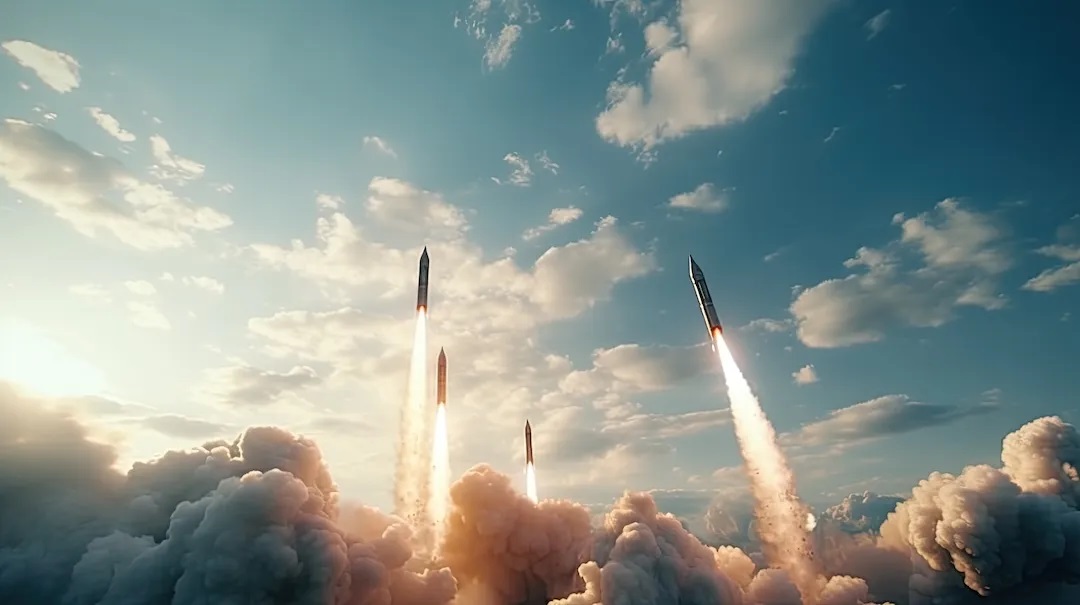
https://www.rt.com/news/611950-israel-patriot-missiles-ukraine/, 30 Jan 24
Russia had warned against the transfer of Patriot interceptors
About 90 interceptor missiles for Patriot air defense systems have been sent from Israel to Poland, from where they will be forwarded to Ukraine, Axios has reported, citing three anonymous sources.
After Israel Defense Forces (IDF) retired their US-supplied Patriots in April 2024, Kiev asked for the missiles. Moscow warned West Jerusalem of potential consequences at the time, and the idea seemed to have gone nowhere.
“In recent days,” Axios reported this week, several US Air Force C-17 transport planes ferried the missiles from an airbase in southern Israel to the Polish city of Rzeszow, NATO’s logistics hub for supplying Ukraine.
West Jerusalem informed Moscow of the move and said it was “only returning the Patriot system to the US” rather than supplying weapons to Ukraine, Axios reported, citing an anonymous senior Israeli official. The same official claimed this was the same thing as the US transfer of artillery shells from “emergency storage” in Israel to Ukraine two years ago.
Both the Pentagon and the US European Command declined to give Axios a comment for the story. Russia has not officially addressed the matter as of yet.
According to Axios, Israeli Prime Minister Benjamin Netanyahu refused to take calls from Ukraine’s Vladimir Zelensky “for weeks.” The situation changed in late September when Netanyahu needed Zelensky’s permission for Hasidic pilgrims to visit Uman, a town south of Kiev where their movement’s founder, Reb Nachman of Bratslav, is buried. Zelensky refused until Netanyahu approved the Patriot transfer, a Ukrainian official told Axios.
A spokesperson for Netanyahu acknowledged to Axios that a Patriot system has been “returned to the US,” adding that “it is not known to us whether it was delivered to Ukraine.” The spokesperson also denied any connection between the Patriots and the Uman pilgrimage.
The missile delivery is the “most significant” Israeli contribution to Kiev since the Russia-Ukraine conflict escalated in February 2022. West Jerusalem has long insisted on providing only humanitarian aid to Kiev, out of concern about retaliation from Moscow in Syria, or through supplying Iran with sophisticated weapons, according to media.
Russia’s envoy to the UN, Vassily Nebenzia, warned Israel in July that arming Kiev would “have certain political consequences,” noting that any weapons sent to Ukraine “will eventually be destroyed,” just like the others.
Moscow has reduced its military presence in Syria after President Bashar Assad’s government in Damascus collapsed under an offensive by Hayat Tahrir al-Sham militants in December. Israel used the upheaval to destroy much of Syria’s military infrastructure and occupy additional territory in the Golan Heights. Earlier this month, Russia concluded a “strategic partnership” agreement with Iran.
Do AI and Nukes Mix? Hint: Keep ‘Human Decision in the Loop’

By: Andrew Rice, Jan 31, 2025, https://www.meritalk.com/articles/do-ai-and-nukes-mix-hint-keep-human-decision-in-the-loop/
Federal agencies across the government are increasingly adapting new uses of artificial intelligence to streamline processes, aggregate data, and even complete tasks designed for human resources staff. And while some have openly embraced AI and its uses, others still don’t believe it can be trusted for operations in nuclear controls.
The Department of Defense in its 2022 Nuclear Posture Review outlined efforts to implement AI with department data and software. Since then, AI has rapidly developed and brought along with that many questions about its future use.
In October, U.S. Strategic Command General Anthony Cotton said implementing AI in Nuclear Command, Controls and Communications (NC3) helps to make those more resilient to adversarial threats and increases decision making capabilities.
“Advanced AI and robust data analytics capabilities provide decision advantage and improve our deterrence posture,” Cotton said, adding that NC3 must maintain “human decision in the loop” to “maximize the adoption of these capabilities and maintain our edge over our adversaries.”
Cotton’s comments have prompted much discussion about AI’s role in nuclear command and controls. The Center for Strategic and International Studies hosted a debate on AI’s role in nuclear command and controls on Jan. 24 as part of its Project on Nuclear Issues (PONI) debate series.
Sarah Mineiro, senior associate at the Aerospace Security Project, and Paul Scharre, executive vice president and director of studies at the Center for a New American Security, debated the question: “Should the United States increase its reliance on artificial intelligence to enhance resilient decision-making in its NC3 systems to prevent inadvertent escalation?”
Mineiro argued for increased reliance on AI except for its use in nuclear weapons deployment whereas Scharre argued against all uses of AI in nuclear command and controls.
Mineiro pointed to the various use cases of AI in NC3 including designing and engineering CPUs and GPUs, image and signal processing, nuclear attack assessment algorithms, and modeling nuclear weapons use scenarios. She said she would never want AI to be involved in nuclear weapons deployment.
“I think we need everything, every tool that American innovation can give us to preserve our security,” she said. “I think AI in NC3 is an appropriate use.”
Scharre said AI cannot be trusted in nuclear command controls because it lacks the novelty of human judgment, it can be hacked or manipulated, and it cannot handle zero tolerance mistake policies.
“It will degrade our decision making, make the risk of inadvertent installation more likely, and undermine nuclear stability,” Scharre said.
Scharre continued and pointed out that AI can be used in tasks which are more repeatable – such as taking off or landing an airplane – but cannot be trusted in nuclear command and controls scenarios.
“We never want a situation where there is an accidental or unauthorized use, and there is just no way AI is good enough to meet that correction,” Scharre said.
Mineiro agreed with Scharre that zero risk tolerance within nuclear command and controls should be kept in place. She pointed out, however, the various other operations AI can be reliably used for which do not include nuclear weapons release.
Mineiro said she is “optimistic” about the Pentagon’s ability to balance integrating emerging technology to boost the American economy and national security while also strictly adhering to nuclear peace agreements.
“I’m a relatively risk tolerant person,” Mineiro said. “The one area I will never choose to accept risk is nuclear command and control.”
The two debaters ultimately came to agree that safeguards must be implemented when integrating AI into NC3 because AI cannot replace human thinking, as much as it may appear to do so.
“Even if the outputs sort of look like humans, that’s what it’s designed to do,” Scharre said. “What’s going on under the hood is not and that’s what we need to be conscious of when we’re using this technology.”
Drones, Nukes, and the Myth of Reactor Safety

The advent of drone warfare has taken the always-present danger of nuclear power plant catastrophe to a terrifying new level.
by Harvey Wasserman , January 29, 2025 https://progressive.org/latest/drones-nukes-and-the-myth-of-reactor-safety-wasserman-20250129/
Recent events on the Ukraine-Russia war front have drawn widespread attention to a terrifying new reality: According to a dispatch from C.J. Chivers published by The New York Times Magazine in December, remote drone operators can now overcome virtually any defensive barrier or evasive maneuver, fundamentally altering the nature of warfare between the two countries and raising new concerns about nuclear reactor safety in the region.
From safe bunkers that are sometimes as far as miles away, Ukrainian operators have begun sending small unmanned devices that cost as little as US $400 to destroy tanks and heavy artillery pieces worth millions. While militaries have traditionally relied on larger, “purpose-built” drones in the past, fighters in Ukraine have recently turned to small, relatively inexpensive hobbyist drones used around the world for everything from firefighting to aerial photography. Many of the drone operators are young and not extensively trained. But their work has allowed the vastly outnumbered Ukrainian fighters to overcome highly complex, sophisticated defensive barriers, and inflict brutal, lethal, and enormously expensive damage with shocking ease.
This new turn in weaponized drone use bears startling implications in relation to nuclear reactor safety. There are eight atomic power plants in the Russo-Ukrainian war zone—six at the Zaporizhzhia site in Ukraine, and two at Kursk in Russia—whose security is continually threatened by the ongoing conflict and by a lack of skilled, reliable operators in the area. If severely damaged, deprived of cooling water, or cut off from back-up power supplies, any one of these plants could melt or explode. Such an event could blanket large swaths of the planet and many of Europe and Asia’s largest cities with deadly radiation, inflicting tremendous human suffering as well as permanent ecological devastation. The damage could exceed that of the 1986 explosion at Chernobyl Unit Four, which contained significantly less core radiation than at Zaporizhzhia and Kursk, both of which have operated far longer.
Reactor containment domes are often constructed with thick, reinforced concrete. But they are far from invulnerable. The routes to major catastrophe—from loss of coolant and back-up power to operator error and structural defects—are too numerous to delineate or discount. A combination of these risks plagues each of the more than 400 nuclear power plants licensed worldwide, including the more than ninety in the United States.
Another recent Times report warns that weaponized drones have become part of a “hybrid” global conflict operating in an amorphous “Gray Zone.” The ability of these drones to wreak lethal and exorbitantly expensive havoc is virtually unlimited. With easily deployed drones like those now ravaging Eastern Europe, hostile nations, rogue armies, small terror groups, or even a lone psychopath could handily turn any number of commercial reactors into lethal engines of a radioactive apocalypse.
Atomic technology has been in civilian use since the 1957 opening of Pennsylvania’s Shippingport reactor. The U.S. Congress at the time promised the public that the “Peaceful Atom” would have comprehensive liability insurance within fifteen years. But nearly seven decades later, no commercial U.S. atomic power plant has blanket private accident insurance against a major catastrophe. Homeowners policies nationwide specifically exempt a nuclear disaster: When push comes to shove, homeowners will pay for their own irradiation.
All atomic power plants cause environmental damage on both the local and global level. They emit radioactive Carbon-14, expand global CO2 levels in the mining and fuel fabrication process, burn at 540-plus degrees Fahrenheit that heats the atmosphere and nearby bodies of water, bathe their neighborhoods in “low level” radiation, and create unmanageable wastes. What’s more, they cost far more than renewables by factors of 2 to 400 percent, while producing inflexible “baseload” power that clogs the grid.
Atomic power plants have always been vulnerable to explosion due to natural disasters such as the one at Fukushima in 2011, systemic mismanagement such as that at Chernobyl, or military and terror attacks. The advent of drone warfare in addition to all of this has raised the threat level to a terrifying new height. But in spite of this, Congress approved a forty-year extension of the original federal insurance exemption in 2024. This means that by the 2060s, the industry may have operated an entire century without ever obtaining the basic private insurance necessary to protect the public from a major radiation release.
A new level of terror is now being inflicted in the Ukraine-Russian war zone by drones once considered to be harmless, frivolous techno-gadgets. The nuclear industry’s insistence that we have nothing to fear from military or terror attacks on its uninsured fleet has lost any residual credibility. Given the horrific new reality of drone warfare, generating hyper-expensive radioactive power and waste from hot, dirty, decrepit reactors is less defensible than ever.
An “American Iron Dome”: Perhaps the Most Ridiculous Trump Idea Yet
The Iron Dome’s functionality depends on Israel’s comparatively miniscule size and proximity to enemies. This makes it particularly hard to imagine a similar setup in the US, which is over 400 times the geographical size of Israel. Such an apparatus, national security analyst Joseph Cirincione estimated, would cost about 2.5 trillion dollars. That’s over three times the country’s entire projected military budget for 2025.
A central campaign promise, the proposed $2 trillion-plus missile shield is, to experts, silly.
Sophie Hurwitz, September 27, 2024
Donald Trump’s Republican Party platform, released in July, contains little in terms of tangible policy proposals.
But one of the few concrete ideas is a call to (apologies for the capitalization) “PREVENT WORLD WORLD III” by building “A GREAT IRON DOME MISSILE DEFENSE SHIELD OVER OUR ENTIRE COUNTRY”—a plan that experts say is nearly impossible to execute, unnecessary, and hard to even comprehend.
Trump has vowed to build this Iron Dome in multiple speeches. It is among his campaign’s 20 core promises. The former president has said that the missile shield would be “MADE IN AMERICA,” creating jobs, as well as stopping foreign attacks.
While it might sound nice to talk of building the “greatest dome of them all,” as Trump recently said, Jeffrey Lewis, a missile expert at the Middlebury’s James Martin Center for Nonproliferation Studies, says such a plan is ridiculous.
“It’s dramatically unclear to me what any of this means,” Lewis said of the Iron Dome idea, “other than just treating it like the insane ramblings of a senile old person.”
It may be more useful to consider an American Iron Dome as a bombastic businessman’s branding exercise, rather than a viable policy position, said Lewis: “The Iron Dome here has just become a kind of brand name, like Xerox or Kleenex for missile defense.”
The Iron Dome, a short-range missile defense system created by Israeli state-owned company Rafael Advanced Defense Systems and American weapons manufacturer Raytheon, has been a prized part of the country’s military arsenal since it became operational in 2011. It is not, as the name suggests, an impenetrable shield. It’s more mobile: when a short-range missile reaches Israel’s airspace, “interceptor missiles” are launched to blow them up before they can touch the ground.
The Iron Dome’s functionality depends on Israel’s comparatively miniscule size and proximity to enemies. This makes it particularly hard to imagine a similar setup in the US, which is over 400 times the geographical size of Israel. Such an apparatus, national security analyst Joseph Cirincione estimated, would cost about 2.5 trillion dollars. That’s over three times the country’s entire projected military budget for 2025.
uch a system would also be unnecessary. As of now, there are no armed groups sending missiles toward the United States from within a theoretical Iron Dome’s 40-mile interception range. Such a system “couldn’t even protect Mar-a-Lago from missiles fired from the Bahamas, some 80 miles away,” Cirincione wrote in late July.
America’s pre-existent missile defense network, which has been in place since the Bush administration, is currently made up of 44 interceptors based in California and Alaska, geared towards longer-range missiles, such as those that could be fired from North Korea. But the system has performed abysmally in tests, despite Republicans generally claiming “it works,” said Lewis. (Groups like the right-wing Heritage Foundation have been calling for increased missile defense funding since at least the 1990s.)
“This is why it’s so hard to make heads or tails of what Trump is saying,” Lewis continued. “Is Trump saying the system in Alaska doesn’t work? Is Trump saying that Canada is going to develop artillery rockets to use against North Dakota?”
Closer than ever: It is now 89 seconds to midnight

Science and Security Board
Bulletin of the Atomic Scientists, Editor, John Mecklin, January 28, 2025
In 2024, humanity edged ever closer to catastrophe. Trends that have deeply concerned the Science and Security Board continued, and despite unmistakable signs of danger, national leaders and their societies have failed to do what is needed to change course. Consequently, we now move the Doomsday Clock from 90 seconds to 89 seconds to midnight—the closest it has ever been to catastrophe. Our fervent hope is that leaders will recognize the world’s existential predicament and take bold action to reduce the threats posed by nuclear weapons, climate change, and the potential misuse of biological science and a variety of emerging technologies.
In setting the Clock one second closer to midnight, we send a stark signal: Because the world is already perilously close to the precipice, a move of even a single second should be taken as an indication of extreme danger and an unmistakable warning that every second of delay in reversing course increases the probability of global disaster.
In regard to nuclear risk, the war in Ukraine, now in its third year, looms over the world; the conflict could become nuclear at any moment because of a rash decision or through accident or miscalculation. Conflict in the Middle East threatens to spiral out of control into a wider war without warning. The countries that possess nuclear weapons are increasing the size and role of their arsenals, investing hundreds of billions of dollars in weapons that can destroy civilization. The nuclear arms control process is collapsing, and high-level contacts among nuclear powers are totally inadequate given the danger at hand. Alarmingly, it is no longer unusual for countries without nuclear weapons to consider developing arsenals of their own—actions that would undermine longstanding nonproliferation efforts and increase the ways in which nuclear war could start.
The impacts of climate change increased in the last year as myriad indicators, including sea-level rise and global surface temperature, surpassed previous records. The global greenhouse gas emissions that drive climate change continued to rise. Extreme weather and other climate change-influenced events—floods, tropical cyclones, heat waves, drought, and wildfires—affected every continent. The long-term prognosis for the world’s attempts to deal with climate change remains poor, as most governments fail to enact the financing and policy initiatives necessary to halt global warming. Growth in solar and wind energy has been impressive but remains insufficient to stabilize the climate. Judging from recent electoral campaigns, climate change is viewed as a low priority in the United States and many other countries…………………………………………………………………….. more https://thebulletin.org/doomsday-clock/2025-statement/
Trump orders ‘Iron Dome for America’ in sweeping missile defense push
The order’s most contentious element directs the Department of Defense to pursue space-based interceptors — weapons positioned in orbit to destroy incoming missiles. While proponents argue these could provide global coverage and early intercept capabilities, critics warn they could trigger an arms race and undermine existing treaties.
The order sets a bold agenda to address emerging threats, including hypersonic missiles, through advanced technological solutions, including space-based interceptors.
by Sandra Erwin, January 28, 2025, https://spacenews.com/trump-orders-iron-dome-for-america-in-sweeping-missile-defense-push/?utm_source=ActiveCampaign&utm_medium=email&utm_content=Iron%20Dome%20for%20America&utm_campaign=FIRST%20UP%202025-01-28
WASHINGTON — President Donald Trump signed an executive order Jan. 27 that calls for the development of a sweeping new missile defense system for the United States, including controversial space-based interceptors.
The Pentagon must submit within 60 days a proposed architecture for the system, including plans to accelerate the Missile Defense Agency’s ongoing Hypersonic and Ballistic Tracking Space Sensor program and develop a “custody layer” within the Proliferated Warfighter Space Architecture — a planned constellation of military satellites currently being acquired by the U.S. Space Force’s Space Development Agency.
The executive order also emphasizes securing the defense industrial base, requiring “next-generation security features” for the supply chain as the U.S. races to build advanced interceptors and tracking systems.
The “Iron Dome for America” order, which invokes Israel’s successful rocket defense system, directs the Pentagon to accelerate development of defenses against hypersonic weapons and other advanced aerial threats that Trump’s order describes as “the most catastrophic threat facing the United States.”
While drawing inspiration from Israel’s Iron Dome system, the U.S. initiative would need to be dramatically different in scale and capability to defend the continent-spanning American territory against sophisticated intercontinental ballistic missiles, rather than the short-range rockets that threaten Israel.
The U.S. has collaborated with Israel on missile defense technology since the 1980s, including support for the Iron Dome system, which has intercepted thousands of incoming rockets since its 2011 deployment. Unlike Israel’s system, which defends a territory roughly the size of New Jersey, a U.S. continental defense system would need to protect an area nearly 500 times larger against more sophisticated threats such as Chinese hypersonic glide vehicles.
Unlike traditional ground- or sea-based systems, the envisioned architecture leans on space-based solutions, which have long been controversial.
The order’s most contentious element directs the Department of Defense to pursue space-based interceptors — weapons positioned in orbit to destroy incoming missiles. While proponents argue these could provide global coverage and early intercept capabilities, critics warn they could trigger an arms race and undermine existing treaties.
General in Charge of Nuclear Weapons Says Heck, Let’s Add Some AI

10.30.24, by Victor Tangermann https://futurism.com/the-byte/general-nuclear-weapons-add-ai?fbclid=IwY2xjawICdxRleHRuA2FlbQIxMQABHQVK6Dhf2RcZ8r9FlwBSZ7lEckVE5JvyMBu3NDqof8fQ2nUSnIuRRRNKCA_aem_sEXPy0BsSMOZ6wpMMcRzAQ
What could go wrong?
Air Force general Anthony Cotton, the man in charge of the United States stockpile of nuclear missiles, says the Pentagon is doubling down on artificial intelligence — an alarming sign that the hype surrounding the tech has infiltrated even the highest ranks of the US military.
As Air and Space Forces Magazine reports, Cotton made the comments during the 2024 Department of Defense Intelligence Information System Conference earlier this month.
Fortunately, Cotton stopped short of promising to hand over the nuclear codes to a potentially malicious AI.
“AI will enhance our decision-making capabilities,” he said. “But we must never allow artificial intelligence to make those decisions for us.”
Algorithmic Deterrence
The US military is planning to spend a whopping $1.7 trillion to bring its nuclear arsenal up to date. Cotton revealed that AI systems could be part of this upgrade.
However, the general remained pointedly vague about how exactly the tech would be integrated.
“Advanced AI and robust data analytics capabilities provide decision advantage and improve our deterrence poster,” he added. “IT and AI superiority allows for a more effective integration of conventional and nuclear capabilities, strengthening deterrence.”
Vagueness aside, nuclear secrecy expert and Stevens Institute of Technology expert Alex Wellerstein told 404 Media that “I think it’s safe to say that they aren’t talking about Skynet, here,” referring to the fictional AI featured in the sci-fi blockbuster “Terminator” franchise.
“He’s being very clear that he is talking about systems that will analyze and give information, not launch missiles,” he added. “If we take him at his word on that, then we can disregard the more common fears of an AI that is making nuclear targeting decisions.”
Nonetheless, there’s something disconcerting about Cotton’s suggestion that an AI could influence a decision of whether to launch a nuclear weapon.
Case in point, earlier this year, a team of Stanford researchers tasked an unmodified version of OpenAI’s GPT-4 large language model to make high-stakes, society-level decisions in a series of wargame simulations.
Terrifyingly, the AI model seemed mysteriously itchy to kick off a nuclear war.
1 This Month



19 November – Webinar – The Reality of Reprocessing
Time: 11:00 AM Pacific Time (US & Canada) / 2:00 PM Eastern / 7:00 PM UK / 8:00 PM CET
Register for the Zoom Event Here



Shut down the radiation-damaged Heysham nuclear reactors now
To see nuclear-related stories in greater depth and intensity – go to https://nuclearinformation.wordpress.com

Say No to NASA’s Reckless Nuclear Reactor on the Moon
Say No to NASA’s Reckless Nuclear Reactor on the Moon
-
Archives
- November 2026 (32)
- October 2026 (302)
- September 2026 (339)
- August 2026 (330)
- July 2026 (355)
- June 2026 (287)
- May 2026 (306)
- April 2026 (356)
- March 2026 (251)
- February 2026 (267)
- January 2026 (308)
- December 2025 (358)
-
Categories
- 1
- 1 NUCLEAR ISSUES
- business and costs
- climate change
- culture and arts
- ENERGY
- environment
- health
- history
- indigenous issues
- Legal
- marketing of nuclear
- media
- opposition to nuclear
- PERSONAL STORIES
- politics
- politics international
- Religion and ethics
- safety
- secrets,lies and civil liberties
- spinbuster
- technology
- Uranium
- wastes
- weapons and war
- Women
- 2 WORLD
- ACTION
- AFRICA
- Atrocities
- AUSTRALIA
- Christina's notes
- Christina's themes
- culture and arts
- Events
- Fuk 2022
- Fuk 2023
- Fukushima 2017
- Fukushima 2018
- fukushima 2019
- Fukushima 2020
- Fukushima 2021
- general
- global warming
- Humour (God we need it)
- Nuclear
- RARE EARTHS
- Reference
- resources – print
- Resources -audiovicual
- Weekly Newsletter
- World
- World Nuclear
- YouTube
-
RSS
Entries RSS
Comments RSS

