UN report finds Israel deliberately targets Palestinian children
by Stephanie Tran | Jun 23, 2026, https://michaelwest.com.au/un-report-finds-israel-deliberately-targets-palestinian-children/
A UN Commission of Inquiry has found Israeli forces have deliberately targeted Palestinian children, their actions amounting to genocide, crimes against humanity and war crimes in Gaza. Stephanie Tran reports.
In a report released today, the UN Independent International Commission of Inquiry on the Occupied Palestinian Territory, including East Jerusalem, and Israel found that Palestinian children had been subjected to targeted killing, starvation, torture, sexual violence, arbitrary detention and repeated displacement.
The Commission found that “much of the harm suffered by Palestinian children was not incidental but
“intended to destroy the existence of the Palestinians in Gaza as a group.”
It said the “sheer number” of cases it investigated showing children were directly targeted by Israeli forces constituted “a key element” in demonstrating genocidal intent from Israeli authorities.
Last year, the Commission found that Israel had committed genocide against the Palestinians in the Gaza Strip.
The report also makes reference to its 2024 findings on “violations and abuses against Israeli children committed by the military wing of Hamas”. It found that “Israeli children were subjected to physical and emotional mistreatment on 7 October 2023.” 40 children were killed in the attack and hundreds injured, with many children losing one or both parents.
“Many children witnessed the killings of their parents and siblings and were also filmed for propaganda purposes by Palestinian armed groups.”
‘Children deliberately targeted’
The Commission found that Israeli security forces have directly targeted Palestinian children with the intention to kill them.
“Israeli security forces have consistently, directly and intentionally targeted individual children across Gaza during evacuations, in shelters and designated safe zones, at Gaza Humanitarian Foundation distribution sites and after the ceasefire agreement in and around the so-called ‘yellow line’.”
The report found that children had been targeted “from newborns to adolescents” and that in some cases children were shot while holding white flags.
The Commission said evidence including precision gunfire, injury patterns and the use of sniper rifles, drones and quadcopters capable of visually identifying targets indicated deliberate targeting.
Since 7 October 2023, more than 20,000 children have been killed in Gaza, representing 30% of the total deaths.
Speaking to MWM, Commissioner Chris Sidoti said the documented deaths represented only a portion of children killed during the genocide.
“We have seen over 20,000 children killed directly as a result of the violence,” he said.
“Israeli security forces have consistently, directly and intentionally targeted individual children across Gaza during evacuations, in shelters and designated safe zones, at Gaza Humanitarian Foundation distribution sites and after the ceasefire agreement in and around the so-called ‘yellow line’.”
“That does not include children who have not been identified, those who are buried under the rubble, those whose bodies have not been identified, those who have simply disappeared and are counted as missing.”
Sidoti said the figures also excluded children who had died from disease, starvation and the collapse of Gaza’s healthcare system.
“There are tens of thousands more children who have died as a consequence of this fighting,” he said.
He said some children had been deliberately targeted by snipers and drones.
“We know of snipers and of quadcopters that have killed children, deliberately targeting the children, not killing anybody else around them.”
The report found that children had been targeted “from newborns to adolescents” and that in some cases children were shot while holding white flags.
The Commission said evidence including precision gunfire, injury patterns and the use of sniper rifles, drones and quadcopters capable of visually identifying targets indicated deliberate targeting.
Since 7 October 2023, more than 20,000 children have been killed in Gaza, representing 30% of the total deaths.
Speaking to MWM, Commissioner Chris Sidoti said the documented deaths represented only a portion of children killed during the genocide.
Sexual violence against children
The Commission found that sexual and gender-based violence was being used “in the context of detention and arrests as a method of warfare and intimidation against Palestinian children”.
“Sexual violence against Palestinian children in Israeli detention is not exceptional but a systematic, state-enabled assault on their bodies and their dignity and deliberately meted out to cause humiliation,” the report states.
The Commission documented cases of forced public nudity, sexual assault, genital violence and sexual threats against children in detention.
Sidoti said some forms of abuse amounted to torture.
“Sexual violence itself is common, but it is not always used for the purposes of torture,” he said.
“A part of the sexual violence that we saw involved the stripping of children in public, their humiliation, and what, under Australian law and international law, constitutes child abuse.”
The Commission concluded that sexual violence against Palestinian children constituted both war crimes and crimes against humanity.
It further found that sexual violence “constitutes part of the genocidal act of causing serious bodily and mental harm.”
“Such deliberate violence was intended not only to cause immediate and long-term harm to the individual children, but
“to target and destroy the Palestinian group in Gaza, because children embody the group’s biological continuity and collective survival.”
Deliberate starvation and healthcare destruction
The Commission concluded that Israel had committed the war crime of wilful killing and the crime against humanity of extermination by intentionally using starvation as a method of warfare and depriving children of essential medical care.
The report found that Israel has “intentionally inflicted these conditions of life, in particular on Palestinian infants, children and young persons in Gaza”.
Attacks on hospitals, neonatal wards and maternity services, combined with shortages of fuel, medicine and medical equipment, have caused the deaths of newborns and seriously harmed pregnant women and infants.
Sidoti said the findings reinforced the Commission’s previous conclusions that Israeli actions in Gaza amounted to genocide.
“Our findings in relation to children confirmed those findings,” he told MWM.
He pointed to attacks on hospitals, neonatal and paediatric services and the destruction of medical equipment.
“All of these things indicate an intent that children should die, and that means for us reinforcement of our findings in relation to genocide“
Destruction of schools
The Commission concluded “Israeli security forces have intentionally directed attacks against educational facilities, resulting in the denial of Palestinian children’s right to education for present and future generations.”
More than 97% of schools in Gaza had been damaged or destroyed.
“The destruction of the education system has been an attack on the hopes and aspirations of the Palestinian people as a whole,” the report states.
The Commission found that the collapse of education and healthcare systems had caused
“Irreversible learning loss, neural developmental delays and diminished future opportunities.“
The report also documents Israeli soldiers filming themselves destroying children’s toys, playground equipment and personal belongings.
“The confidence of the Israeli soldiers to film themselves in this manner and post the evidence online is a clear reflection of the lack of accountability,” the report states.
Detention, torture and abuse
The Commission found that Palestinian children held by Israeli authorities had experienced prolonged blindfolding, forced stripping, severe beatings, deprivation of food and water, sleep deprivation and denial of medical treatment.
It found a pattern of “severe and deliberate mistreatment” particularly affecting Palestinian boys.
Children were subjected to prolonged kneeling on hard surfaces, attacks targeting their heads, faces and genitals, threats involving dogs and detention alongside adult prisoners.
The Commission concluded that the treatment of detained children constituted the crimes against humanity of torture and other inhumane acts causing serious suffering.
Sidoti said the number of Palestinian children detained by Israeli authorities remained unclear.
Sidoti said the number of Palestinian children detained by Israeli authorities remained unclear.
West Bank settler violence and killings
The Commission also examined Israeli military operations and settler violence in the occupied West Bank.
It found evidence that Palestinian children had been deliberately shot, denied medical treatment and subjected to violence by settlers.
“The Commission has identified a pattern of targeting of Palestinian children in the West Bank, mirroring Israeli practices in Gaza including deliberate shooting of children, particularly of boys. Israeli soldiers target boys, labelled as “terrorists”, on the basis of their male and Palestinian identity, with lethal force.”
The report describes cases in which wounded children were left bleeding while soldiers prevented ambulances from reaching them.
The Commission concluded that Israeli authorities had failed to protect Palestinian children from settler violence.
It concluded that settler violence functioned
“not as a deviation from state policy but as a means of implementing it”
“Both the State of Israel and violent settler groups share and collaborate in the same strategic objectives: the entrenchment of Israeli settlement on Palestinian land, annexation of Palestinian territory and the displacement of Palestinian people from their land.”
Chain of command and accountability
Sidoti said the Commission had found responsibility extended beyond individual soldiers.
“We have made that finding that there is a clear chain of command and it does go right to the top,” he said.
“It is not just individual soldiers who are responsible for individual war crimes. … There is a chain of command that means that those at the top have issued clear orders as to the nature of this campaign, the objectives the military are to achieve.”
“Our conclusion on the basis of the evidence that we collected is that that constitutes a genocidal purpose.”
Sidoti said growing international attention had shifted from expressions of concern to discussions about concrete measures by individual states.
“The responsibilities under international law now fall on individual governments and groups of governments to decide what action to take and take it.”
He said governments, including Australia, should consider measures directed not only at individuals but also at institutions.
“We need to address questions of institutions now, and not just individuals who are committing war crimes. That means the Israeli Defense Forces as an institution, the Israeli government as an institution, and the settlements themselves, right across the West Bank, as organized violators of international law” he said.
Israel declines to respond
Sidoti said Israeli authorities had been provided with a draft copy of the report before publication.
“Our procedures require that we give all of our reports to the Israeli authorities in draft form before they’re finalised,” he said.
“The Israeli authorities had a draft of this report two or three weeks ago, and they had an opportunity to comment to us.”
According to Sidoti, Israeli authorities did not provide formal comments to the Commission.
“They did not do so, but instead … they prepared an 18-page rebuttal which they distributed to some diplomatic missions here in Geneva.”
The Commission called on states to ensure accountability for crimes committed against Palestinian children and urged the international community to “employ all means reasonably available to them to prevent the commission of genocide, war crimes and crimes against humanity”.
MWM asked Foreign Minister Penny Wong, and the Department of Foreign Affairs and Trade whether Australia intends to take any action in response to the Commission’s findings.
They have not provided a response.
The Commission of Inquiry on OPT, including East Jerusalem, and Israel will be holding a livestreamed press conference at 9:30 PM (AEST) to discuss the findings of the report.
Root Cause of Criminal War Against Iran: Islamic Law Prohibits Usury.

April 10, 2026, Source: ScheerPost.com, Article republished by Jerry Alatalo, https://onenessofhumanity.wordpress.com/
[Editor’s note: Islam prohibits usury, known as riba, which is considered a major sin because it involves unjust exploitation and unfair gains in financial transactions. (Usury inculcates man with corruption and takes him from the main objective of his existence and makes him a slave of money. It turns him from a human being into a money seeker who is blinded by money and for whom money is the most important thing in life.) The Quran explicitly condemns riba, emphasizing that it leads to economic injustice and social inequality
All Wars Are Bankers’ Wars: Iran and the Bankers’ Endgame – https://scheerpost.com/2026/04/10/all-wars-are-bankers-wars-iran-and-the-bankers-endgame/…………………………………………………………………………………………………..
If Russia retaliated…
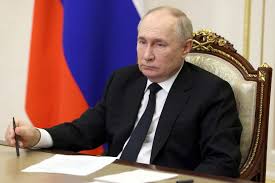
Third World War would be nuclear and the scale of destruction and killing could be orders of magnitude greater. This is the danger that today’s “loud little handful” could lead us toward, for their own narrow, selfish reasons. To date, we should be grateful that we’ve been spared these horrors thanks to President Putin’s restraint. Even though he’s been aware of Western involvement in attacks on Russia, he has steered clear from escalating to the point where the psychological phase transition in the West could take hold.
Before leaving 10 Downing Street, Sir Keir Starmer authorized another large-scale attack on Russia. If we’re not already in a nuclear war, we only have Vladimir Putin’s restraint to thank.
Alex Krainer, Jun 23, 2026, https://alexkrainer.substack.com/p/if-russia-retaliated?utm_source=post-email-title&publication_id=1063805&post_id=203233722&utm_campaign=email-post-title&isFreemail=true&r=1ise1&triedRedirect=true&utm_medium=email
British Prime Minister Sir Keir Starmer resigned yesterday. Before he departed 10 Downing Street the last time, he authorized another strike against Russia. Ukraine, UK’s “one hundred year” ally, conducted one of the largest attacks on Russian territory to date, using air-launched cruise missiles to hit military-related facilities in Voronezh city. The facilities in question produce components for Russian Kh-101 cruse missiles, Iskander-K missiles and Pantsir-S1 air defenses.
The Ukrainians allegedly used a version of UK-supplied Storm Shadow missiles and/or AGM-188A, “Rusty Dagger” cruise missile, developed under the U.S. Air Force’s Extended Range Attack Munition (ERAM) program to provide affordable, mass-produced long-range strike weapons for Ukraine.
Other missiles and drones were aimed at targets in the Moscow Oblast but apparently without any major damage reported. Today, President Putin gave a statement accusing the United States and Europe of directly enabling the strikes by providing satellite intelligence, targeting data, and navigation support for the long range attack and warning that such involvement signifies NATO’s direct entry into the war. Putin was telling the truth, as we know from a leaked 38-min. WebEx conversation of a group of German Generals.
Britain fully involved since (at least) 2024
Two of the four participants were top-level German military brass: commander of the German Air Force, Lieutenant General (Generalleutnant) Ingo Gerhartz; head of Air Force Operations and Training, Brigadier General (Brigadegeneral) Frank Gräfe (also spelled Graefe) — Head of Air Force Operations and Training. They discussed providing Ukraine with the German Taurus cruise missiles in order to provide a briefing on the initiative for German Defense Minister Boris, “Slava Ukraini” Pistorius.
The other two, lower-ranked participants were Oberstleutnant Florstedt and Oberstleutnant Fenske, both from German Air Operations Center. The call, which took place more than two years ago, on 19 February 2024, revealed that Great Britain was already directly involved in conducting strikes against Russia with military personnel who did the mission planning for the Storm Shadow missile strikes and helped loading Storm Shadow and SCALP missiles onto aircraft. And the British definitely want the world to know of their involvement. This article was published on Saturday, 20 June 2026:
Yesterday’s attacks were part of the same operation. Their significance, which is not lost on the Russian people, is that they were almost certainly a calculated provocation. They were conducted on the 85th anniversary of the launch of Operation Barbarossa when Nazi Germany assembled the largest ever invasion force. Defeating that force ultimately claimed the lives of 16 millions Russians.
All this is increasing the pressure on the President Putin to take the gloves off and strike at NATO targets. He has been careful not to escalate the war in this way. If such an escalation came to pass for whatever reason the world would find itself in a completely unpredictable and extremely dangerous new territory.
One of the most striking experiences in my life was the breakout of war in former Yugoslavia in 1991, and the reason was the almost instant change in collective psychology that took place as soon as the first artillery shells started landing in Croatia. Up until that moment, the vast majority of people – I’d venture to say, well north of 90% – believed that war was unthinkable; that it would never happen. Who could possibly want to fight a war? It seemed impossible; only a small handful of hotheads were advocating for war.
The stories circulating in Western media about the eruption of bottled-up centuries-old hatreds were utter nonsense. The peoples of former Yugoslavia were socially, economically and culturally deeply intertwined. In most cases we didn’t even know who, among our neighbors was a Serb, Croat or a Muslim and many families were mixed. However, once the war actually broke out, it took a life of its own wreaking death and destruction on large scale.
The collective psychology abruptly changed and a war psychology galvanized. It became fashionable to look at events in black and white and to wholly denounce the other side as enemies. Giving the enemy any benefit of the doubt and expressing empathy toward them suddenly became unpatriotic and suspicious.
The loud little handful
I still find it amazing that the war happened. It was clear that some people were pushing for it and that the media gave them disproportionate attention. Long ago, Mark Twain warned us about such people and about the way war psychology could creep into people’s hearts. His his words should haunt us today:
“The loud little handful–as usual–will shout for the war. The pulpit will–warily and cautiously–object–at first; the great, big, dull bulk of the nation will rub its sleepy eyes and try to make out why there should be a war, and will say, earnestly and indignantly, ‘It is unjust and dishonorable, and there is no necessity for it.’Then the handful will shout louder.
A few fair men on the other side will argue and reason against the war with speech and pen, and at first will have a hearing and be applauded; but it will not last long; those others will outshout them, and presently the anti-war audiences will thin out and lose popularity. Before long you will see this curious thing: the speakers stoned from the platform, and free speech strangled by hordes of furious men who in their secret hearts are still at one with those stoned speakers–as earlier–but do not dare say so.
And now the whole nation–pulpit and all–will take up the war-cry, and shout itself hoarse, and mob any honest man who ventures to open his mouth; and presently such mouths will cease to open. Next the statesmen will invent cheap lies, putting the blame upon the nation that is attacked, and every man will be glad of those conscience-soothing falsities, and will diligently study them, and refuse to examine any refutations of them; and thus he will by and by convince himself the war is just, and will thank God for the better sleep he enjoys after this process of grotesque self-deception.”
If Russia retaliated, if it responded to British or US-orchestrated attacks and struck at a NATO target, we would see this process erupt on short order. The loud little handful in our midst will be shouting for war until they managed to generate the mass-formation psychosis that would make the war not only possible, but probably inevitable and Europe would fully share Ukraine’s tragic fate. Last two World Wars resulted in large-scale devastation and tens of millions of casualties. In today’s terminology, however, they were conventional wars.
Third World War would be nuclear and the scale of destruction and killing could be orders of magnitude greater. This is the danger that today’s “loud little handful” could lead us toward, for their own narrow, selfish reasons. To date, we should be grateful that we’ve been spared these horrors thanks to President Putin’s restraint. Even though he’s been aware of Western involvement in attacks on Russia, he has steered clear from escalating to the point where the psychological phase transition in the West could take hold.
Grand Deception
In 2017 I published my second book, titled Grand Deception. I felt compelled to write it because I realized that a very powerful network in Western financial centers were busy laying the groundwork for a future great war against Russia, and I felt that their agenda needed to be exposed to the public. Of course, they felt otherwise, so my book was banned after only five weeks. It was republished a few months later by Red Pill Press under a different title, but it only survived for six weeks.
Nevertheless, the cause of defending peace must never be neglected. Making sure that such a war never comes to pass should be the top priority for any thinking person. If we sleepwalk into the third great war on European continent, most of our endeavors in life, our dreams and hopes might not matter much. The way to resist the march to war is, first and foremost, to seek the truth and dare to speak it freely and courageously. We must reject the warmongers among our leaders and call them out on the lies they use to contrive consent for war. Wars are always started with lies.
Our opposition must not be shy or deferential: it must be bold, determined and relentless. We would also do well to turn toward our Russian fellow men and women and tell them loud and clear that we want peace, not war. The German people have done so even though their own leaders are among the most aggressive warmongers of all. On Saturday, 20 June 2026, hundreds of them gathered at the Brandenburg Gate in Berlin to assert, “Russia is NOT our enemy,” and laid flowers at the Soviet war memorial. We need millions of people following suit.
We must start without delay to build the foundations for peace in our hearts and minds. There can be no justification for us to sleepwalk into another war. In addition to unprecedented scale of destruction and death, the economic, social and psychological damage from such a conflict would be such that it might take many generations to repair.
Congress Quietly Moves to Merge U.S. and Israeli Militaries

In the end, the fight over Section 224 is about far more than a single provision in a single defense bill. It is a test of whether the United States will continue drifting toward a model of permanent, opaque military integration with a foreign power — one that bypasses public debate, weakens congressional authority, and embeds private industry interests deep inside national security decision‑making.
June 23, 2026, Joshua Scheer, https://scheerpost.com/2026/06/23/congress-quietly-moves-to-merge-u-s-and-israeli-militaries/
As public support for Israel continues to erode amid the wars in Gaza, Lebanon, and Iran, a little-noticed provision buried inside the 2027 National Defense Authorization Act could fundamentally reshape the relationship between Washington and Tel Aviv. Critics warn that Section 224—the “United States-Israel Defense Technology Cooperation Initiative”—would move beyond annual military aid and toward full military-industrial integration, creating a permanent infrastructure that binds the two countries’ defense sectors together while reducing transparency, congressional oversight, and public accountability.
On this week’s Clearing the FOG, Margaret Flowers speaks with Quincy Institute foreign policy expert Ben Freeman about what Israeli Prime Minister Benjamin Netanyahu reportedly calls “my plan”—a proposal that would establish a Pentagon official dedicated to integrating U.S. and Israeli military systems, supply chains, intelligence networks, artificial intelligence programs, cybersecurity operations, and weapons production. Freeman argues that the measure would make future efforts to limit U.S. support for Israel far more difficult, while opening the door to potentially unlimited taxpayer-funded contracts for Israeli defense firms.
Highlights From the Interview
A Shift From Aid to Permanent Integration
Freeman explains that the proposal represents a major strategic shift. Rather than relying on periodic aid packages that require congressional approval, the new framework would weave Israeli defense interests directly into the U.S. military-industrial complex. Once Israeli firms become embedded in American supply chains, he argues, disentangling the relationship becomes politically and economically difficult.Highlights From the Interview
A Shift From Aid to Permanent Integration
Freeman explains that the proposal represents a major strategic shift. Rather than relying on periodic aid packages that require congressional approval, the new framework would weave Israeli defense interests directly into the U.S. military-industrial complex. Once Israeli firms become embedded in American supply chains, he argues, disentangling the relationship becomes politically and economically difficult.
An Executive Agent With Little Oversight
At the center of the proposal is a new Pentagon “executive agent” tasked with expanding military cooperation across a broad range of technologies, including artificial intelligence, cybersecurity, drones, quantum computing, data sharing, and network integration. According to Freeman, this position would report to the Secretary of Defense rather than Congress, significantly reducing legislative oversight of U.S.-Israel military cooperation.
Unlimited Funding Potential
Unlike the Obama-era Memorandum of Understanding, which capped military assistance at $3.8 billion annually, Freeman warns that the new arrangement contains no meaningful financial ceiling. Israeli defense firms could potentially gain access to massive Pentagon programs—including missile defense initiatives such as the proposed “Golden Dome”—creating a new stream of taxpayer-funded contracts that could exceed current aid levels.
Expanding the Reach of the Israel Lobby
Freeman argues that military integration would provide another avenue for political influence. By placing Israeli-linked defense projects and jobs in congressional districts across the country, lawmakers could face increasing pressure to support Israeli interests regardless of public opinion. He describes the proposal as potentially putting “the Israel lobby on steroids” by adding Pentagon-linked economic leverage to existing lobbying and campaign-finance networks.
Intelligence Sharing Raises Additional Concerns
The discussion also highlights a separate provision moving through Congress that would expand intelligence sharing between the United States and Israel. Critics argue the measure could compel U.S. agencies to provide intelligence with minimal restrictions while limiting oversight over how that information is ultimately used or distributed.
What Can Be Done?
Despite the bill’s progress, Freeman says public pressure is already having an impact. Congressional offices have reportedly received significant constituent feedback opposing the measure, and some lawmakers are reconsidering their positions. He urges listeners to contact their representatives and senators and demand that Section 224 be removed before the NDAA reaches final passage.
The Bigger Picture
The conversation concludes by placing the proposal within the broader context of U.S. foreign policy and military spending. Freeman argues that Washington increasingly relies on military solutions while neglecting diplomacy and development. With annual U.S. military and national security expenditures approaching unprecedented levels, he contends that deeper military integration with Israel would further entrench a foreign policy driven by militarism rather than democratic accountability.
Listen to the full interview with Ben Freeman and Margaret Flowers to learn how Section 224 could transform the U.S.-Israel relationship—and why critics believe the measure deserves far more public scrutiny before becoming law.
In the end, the fight over Section 224 is about far more than a single provision in a single defense bill. It is a test of whether the United States will continue drifting toward a model of permanent, opaque military integration with a foreign power — one that bypasses public debate, weakens congressional authority, and embeds private industry interests deep inside national security decision‑making. As Ben Freeman warns, once these pipelines of technology, intelligence, and weapons production are fused, they will be extraordinarily difficult to unwind, no matter how sharply public opinion turns or how grave the humanitarian consequences become.
At a moment when Americans are increasingly questioning endless war, rising military budgets, and the political influence of defense contractors, Section 224 would lock in precisely the opposite trajectory. It would expand the reach of the military‑industrial complex, supercharge the political leverage of the Israel lobby, and commit U.S. taxpayers to an open‑ended stream of contracts and joint programs with little transparency and even less accountability.
Whether this provision survives the final NDAA will depend on how much pressure lawmakers feel from the people they represent. If the public remains silent, the Pentagon and its partners will move forward with an unprecedented integration project that reshapes U.S. foreign policy for a generation. If voters speak up, Congress may yet be forced to reconsider a measure that deserves far more scrutiny than it has received.
The stakes are simple: a democratic decision about whether the United States deepens its entanglement in a widening regional war, or whether it reasserts civilian oversight and a foreign policy grounded in accountability rather than automatic militarism.
Taking a sledgehammer to the nuclear nonproliferation regime.
The Iranian proliferation quandary. In 2011, the IAEA concluded that, prior to 2003, Iran had a nuclear weapon development program. In 2003, then Supreme Leader Ayatollah Ali Khameni published a religious edict that weapons of mass destruction are “haram” (religiously forbidden). The force of this edict has been debated, but the most recent Congressional Research Service report on Iran’s nuclear-weapon program states, “According to official U.S. assessments, Iran halted its nuclear weapons program in late 2003 and has not resumed it.”
Bulletin, By Frank von Hippel, Seyed Hossein Mousavian | Analysis | April 18, 2026
The current crisis over Iran’s nuclear program has reached an extraordinary level, climaxing shockingly with President Trump’s April 7 threat to destroy Iran’s “civilization” if it did not comply with his demands—a barely veiled threat of a massive nuclear attack on Iran’s cities. Any country faced with such a threat would want its own nuclear deterrent.
More broadly, the 1970 Non-Proliferation Treaty (NPT)—the expression of a global near consensus that the world would be better off without nuclear weapons and that, in the interim, the fewer fingers on nuclear triggers the better—is fraying.
In the NPT, the “P5” (the five permanent members of the UN Security Council—the United States; the Soviet Union, succeeded by Russia; the United Kingdom; France; and China— committed to eliminate their nuclear arsenals if the non-weapon states agreed not to acquire nuclear weapons and to allow the International Atomic Energy Agency (IAEA) to monitor their use of nuclear material to make sure that none was diverted to weapons use.
Surprisingly few countries have acquired nuclear weapons. In 1995, the negotiators of the Comprehensive Test Ban Treaty judged 44 countries to be technologically capable of making nuclear weapons. But, in the 56 years since the NPT came into force, only three countries—Israel, India, and Pakistan—decided to acquire nuclear weapons outside the NPT and only one, North Korea, defected after it joined the NPT.
The nonweapon states initially agreed to membership in the NPT for 25 years. In 1995, when the 25 years were up, the Cold War had just ended and US and Russian nuclear warheads were being dismantled at a combined rate of 3,000 per year. Nuclear disarmament seemed in sight, and the NPT was made permanent. Unfortunately, during the past decade, the shrinkage of the global warhead stockpile stopped, with about 10,000 warheads still in existence, and it has begun to grow again as China builds up.
The 190 parties to the NPT that are to meet at the UN during May to review the state of compliance with the treaty have failed to reach consensus in the previous two reviews since 2010.
And then there is Iran.
The Iranian proliferation quandary. In 2011, the IAEA concluded that, prior to 2003, Iran had a nuclear weapon development program. In 2003, then Supreme Leader Ayatollah Ali Khameni published a religious edict that weapons of mass destruction are “haram” (religiously forbidden). The force of this edict has been debated, but the most recent Congressional Research Service report on Iran’s nuclear-weapon program states, “According to official U.S. assessments, Iran halted its nuclear weapons program in late 2003 and has not resumed it.”
In 2018, President Trump capriciously withdrew the US from the Joint Comprehensive Plan of Action (JCPOA) negotiated by the Obama Administration, in which Iran had agreed to strong limits on different parts of its nuclear program for 15 years or longer. To force Iran to give him a “better deal” than it had given Obama, Trump reinstated crushing primary and secondary sanctions on Iran’s economy. Neither the UN Security Council nor the IAEA Board of Governors said anything, but UN Secretary General Antonio Guterres did:
“I am deeply concerned by today’s announcement that the United States will be withdrawing from the Joint Comprehensive Plan of Action (JCPOA) and will begin reinstating US sanctions… I have consistently reiterated that the JCPOA represents a major achievement in nuclear non-proliferation and diplomacy and has contributed to regional and international peace and security.”
Given the widespread opposition to the JCPOA in Congress, the Biden administration did not give a high priority to negotiating its revival. Since President Trump’s reelection, the situation has rapidly deteriorated.
On June 12, 2025, the IAEA’s Board of Governors found that “Iran has failed to co-operate fully with the Agency, as required by its Safeguards Agreement.” The focus of the board’s complaint was Iran’s inadequate explanations of the activities it had carried out during the period ending in 2003. Those were issues that the IAEA had declared closed after it summarized its conclusions in its December 2015 “Final Assessment on Past and Present Outstanding Issues regarding Iran’s Nuclear Programme,” just before the JCPOA came into force in January 2016.
The day after the IAEA Board’s statement, while the United States was negotiating with Iran, Israel attacked Iran’s nuclear sites. President Trump ordered US forces to join in and bomb Iran’s buried centrifuge halls with massive bunker busters.
Again, on February 27, in a pause in a second US negotiation with Iran, the foreign minister of Oman, who was mediating the talks, reported in a “Face the Nation” interview that the negotiators had made “substantial progress” toward a deal to curb Iran’s nuclear program and that Iran was willing to end its production of highly enriched uranium and blend down its existing stock. The next day, Israel attacked and killed Iran’s supreme leader and much of its military leadership, and Trump again ordered US forces to join in the intense follow-on bombing of Iran.
The UN Security Council has not condemned these attacks on Iran but has condemned Iran for its retaliatory attacks on its US-allied Persian Gulf neighbors and for its closure of the Strait of Hormuz. The IAEA also has not condemned Israeli and US attacks on facilities it safeguarded, even though the result has been Iran’s decision to block IAEA access to Iran’s bombed sites (presumably out of fear that IAEA inspections could be used by the US and Israel for targeting intelligence).
US negotiations with Iran. The key sticking point in negotiations over Iran’s nuclear program since it became public in 2003 has been uranium enrichment. Iran claims it has a right to enrich uranium for peaceful purposes under the Non-Proliferation Treaty. However, uranium enrichment provides a route to nuclear weapons.
Our own view is that there is no economic justification for a small enrichment program like Iran’s. The four big suppliers: Russia; URENCO (a firm jointly owned by Germany, the Netherlands, and the UK); China; and France have more than enough capacity to supply the world’s nuclear power reactors at lower cost. Even the United States, with the world’s largest nuclear-power capacity—one quarter of the global total—has bought enrichment services from these suppliers since 2013 when it shut down the last of the three energy-inefficient enrichment plants it built to produce highly enriched uranium for weapons during the Cold War.
If countries insist on building uneconomic enrichment plants, we have advocated that those plants be under multinational control, as is the case with URENCO, which was founded in 1971 when there was still some concern that West Germany might seek nuclear weapons. Iran has expressed a willingness to put its enrichment program under multinational control but is unwilling to have it relocated to a neutral country as we recommended…………………………….
An inconsistent nonproliferation policy. Despite going to war over Iran’s uranium enrichment program, President Trump has inconsistently given both South Korea and Saudi Arabia his blessing to acquire uranium-enrichment and spent-fuel-reprocessing programs. “Reprocessing” is a chemical process used to separate plutonium, another nuclear-weapons material, from irradiated uranium fuel.
……………………………….President Trump made these agreements with the leaders of South Korea and Saudi Arabia in his usual transactional style. Rules, he apparently believes, need not be followed if a government is willing to pay enough.
President’s Trump’s disdain for the rules is endangering world order in many ways. We cannot leave defense of the nonproliferation regime for later, however. If we do, we may find ourselves in a nuclear-armed crowd. https://thebulletin.org/2026/04/taking-a-sledgehammer-to-the-nuclear-nonproliferation-regime/
Israel takes perverse pleasure in torturing, raping, and murdering Palestinian hostages

In August 2024, Israeli human rights advocacy group, B’Tselem, published a report highlighting the systematic torture, abuse, and rape of Palestinian prisoners. The spokesperson for B’Tselem said,
“We heard similar accounts of sexual abuse, starvation and assault from separate prisoners held in 16 different locations across Israel. As we gathered the testimonies, we realised that every witness account was almost identical, no matter what their age, gender or location was. There’s no doubt. This kind of abuse is systematic.”
Palestinians abducted, imprisoned, starved, electrocuted, tortured, raped, and even subjected to simulated burial. This is the reality of Palestinian hostages tortured by Israel
Eva Karene Bartlett, Jun 23, 2026
In late 2023, Israeli soldiers abducted and imprisoned a Palestinian man (among many abducted at the same time) from a school in Jabaliya, Gaza, which he and other displaced Palestinians had been sheltering in. He was held hostage in Israeli prisons for nearly two years, during which time he was severely tortured by repeated and prolonged electrocution (including multiple times a day). His Israeli torturers at some point locked him in coffin-like box for two weeks in their attempt to psychologically break him.
According to Imad Nabhan, he refused to act as an informant for Israel. The Israeli soldiers first attempted to bribe him into collaboration, then defaulted to Israel’s (now well-documented) norm of brutal physical and psychological torture of Palestinian captives.
Nabhan’s release in October 2025 saw Imad so physically debilitated by the electric shock torture that he fell unconscious into violent seizures numerous times daily.
At the end of May, he spoke about the torture he endured in Israeli prisons, including his “coffin torture”. He reported that he had been held in “an iron container with a wooden box inside it,” where his hands and feet were tied, fed through a tube in a small hole, just enough to keep him alive.
“It seemed they wanted to make me feel like I was dead so they could get whatever information they wanted. I stayed inside that coffin for 15 days. I felt like I was alive in a dead body.”
In October 2025, while a journalist in Gaza was attempting to interview Nabhan after his release, Imad fell into one of his seizures, his whole body writhing and convulsing, his head repeatedly banging against the ground.
This lasted for 30 seconds, and started again a minute later as his father tried to shield his son’s head from hitting the ground. He spoke of Imad’s torture, showing the marks left on his legs from the repeated electric shocks.
His father had said until his release, he’d thought his son was dead. “We thought he’d been martyred, because there was information they shot people and were running over their bodies with tanks. So after two years, we were surprised that was alive in prison and was released.”
The Israeli torture and abuse meted out to Imad Nabhan is not unique, it is the norm, and in recent years there have been increasingly numerous accounts from former prisoners of the torture, rape, abuse, starvation, and denied medical care they endured in Israeli captivity, in violation of all international norms…………………………………………..
Living Hell: Israeli torture prisons
Among the more horrific instances (known to the public) of Israeli soldiers’ raping of Palestinian prisoners was the July 2024 gang rape of a Palestinian man from Gaza in the notorious Sde Teiman prison (dubbed the Israeli Guantanamo).
Hiding their faces with their shields, Israeli soldiers took turns raping the prisoner so severely he was hospitalized unable to walk, with “a torn rectum, damaged lungs, and broken ribs.” [Note: Many Palestinians who have testified about their severe torture in Israeli prisons were not given medical care afterward.]
Astonishingly (to normal people), after a video of the rape was leaked and aired on Israeli television, not only was the Israeli public reaction not disgust or horror, but Israelis, members of the Knesset, and Israeli ministers protested the detention of soldiers accused of the gang-rape. None of the soldiers were charged.
Israeli National Security Minister Itamar Ben-Gvir called their brief detention “shameful”, saying the rapists were “our best heroes”.
In August 2024, Israeli human rights advocacy group, B’Tselem, published a report highlighting the systematic torture, abuse, and rape of Palestinian prisoners. The spokesperson for B’Tselem said,
“We heard similar accounts of sexual abuse, starvation and assault from separate prisoners held in 16 different locations across Israel. As we gathered the testimonies, we realised that every witness account was almost identical, no matter what their age, gender or location was. There’s no doubt. This kind of abuse is systematic.”
………………………………………………………………………………………………………………………………………………………. When the issue of Palestinian hostages tortured in Israeli prisons is reported these days, the focus is often only on Palestinians from Gaza. But on a near daily basis throughout the West Bank, Palestinian men, women and children are abducted, arrested and held imprisoned, without charges, many of them repeatedly so. It is clearly not about crimes committed but about trying to break Palestinians psychologically, by the same means of torture, starvation, sexual abuse, and physical abuse.
Israel added to UN sexual violence blacklist
The United Nations put Israel on its annual blacklist of entities “credibly suspected of committing widespread sexual violence in conflict zones.” Victims include 31 Palestinians from the Gaza Strip and the occupied West Bank, including 14 men, seven women, nine boys, and one girl.
Violations included, “rape, including with objects, gang rape, attempted rape, physical violence to the genitals, instances of targeted shooting of the genitals.” Nine in the report were raped, including gang rape, some repeatedly.
………………………………………………………………………………………………….. That Israel faces no consequences nor any pressure to stop such torture, what is described as a systematic top-down policy, highlights yet again the death of international law and the meaningless of UN designations. As I’ve argued many times over the years, what’s the point of listing Israel as a serial murdered and rapist if no international body will actually stop Israel from continuing to abduct, torture and rape Palestinians?…………………………………………………………………… https://evakarenebartlett.substack.com/p/israel-takes-perverse-pleasure-in?utm_source=post-email-title&publication_id=3046064&post_id=202287735&utm_campaign=email-post-title&isFreemail=true&r=1ise1&triedRedirect=true&utm_medium=email
AUKUS has a big waste issue – and not only money

The fundamental problem is that the AUKUS agreement was negotiated in secret in 2021 by the leaders of the three countries involved, Australia, Britain and the US.
Not one of those leaders is still in office. There has been no parliamentary scrutiny of the deal in Australia.
While they could operate away from base for longer periods and at greater depth than conventional submarines, their size would prevent them operating in the comparatively shallow waters around Australia’s northern coastline, making them less useful for defending our territory.
Hidden in the fine print of the AUKUS agreement is the need for Australia to manage the nuclear waste produced by new submarines, writes Ian Lowe.
The New Daily, Jun 22, 2026,
Many people are shocked by the price of the AUKUS agreement. The government has budgeted a staggering $368 billion, hundreds of times the cost of a new hospital.
But hidden in the fine print is a further huge cost. If the proposal goes ahead, we will have to manage the nuclear waste produced by the submarines.
Nobody knows what that will cost. The US and Britain have operated nuclear submarines for more than 50 years, but still have not worked out how to manage the intractable radioactive waste.
The decommissioned boats are sitting alongside docks, with British and American scientists trying to work out what to do.
We can get some idea of the possible extra cost from the work done 10 years ago by the South Australia Nuclear Royal Commission. I was a member of the expert advisory group for that inquiry.
It commissioned a study of what it would cost to build and operate a facility to store radioactive waste from nuclear power stations in Asian countries.
It came up with a figure of $145 billion, in 2016 values. Scaled up to 2026 dollars, it is equivalent to $190 billion – half as much again as the budget for the submarines.
That figure is almost certainly an underestimate because the royal commission was considering management of waste from nuclear power stations.
The proposed submarines use highly enriched uranium, weapons-grade material. The resulting waste is much nastier. It also poses serious security issues.
At the end of its life, the reactor in a Virginia class submarine still has enough enriched uranium for about 20 bombs. So the waste management facility will need military guarding to prevent misuse of the uranium.
It is also unclear how our government expects to find an acceptable site for waste storage.
There have been three attempts to find a place to store the comparatively benign low-level waste from nuclear medicine and industrial applications.
All have foundered because of opposition by the affected First Nations groups. They have not forgotten the harm done by British testing of nuclear weapons on their land.
The government has made vague suggestions about Defence property, but it is hard to see how it could obtain free prior informed consent from the Indigenous people whose land would be used.
There are also questions about whether acquiring nuclear submarines powered by highly-enriched weapons-grade uranium would be a breach of the Nuclear Non-Proliferation Treaty.
Some Pacific Island leaders have expressed concern, arguing that it would certainly not be consistent with the spirit of our treaty obligations.
The fundamental problem is that the AUKUS agreement was negotiated in secret in 2021 by the leaders of the three countries involved, Australia, Britain and the US.
Not one of those leaders is still in office. There has been no parliamentary scrutiny of the deal in Australia.
It continues to be shrouded in secrecy, despite the high stakes and eye-watering projected cost. Retired major-general Michael Smith has described the arrangement as “the worst defence decision since we relied on Britain to defend us in World War II”.
A public inquiry into the agreement is being conducted under the auspices of the Australian Peace and Security forum.
It is considering the fundamental question – would AUKUS keep us safe? At what cost?
The inquiry is headed by five distinguished community leaders, headed by Peter Garrett, who was lead singer of Midnight Oil before becoming a Cabinet minister.
The critical question is whether owning and operating eight nuclear-powered submarines would actually enhance our security.
I participated in a one-day seminar run by the Submarine Institute of Australia well before the AUKUS agreement was negotiated. The submariners were clearly divided about the question of whether the next generation of submarines should be nuclear-powered.
While they could operate away from base for longer periods and at greater depth than conventional submarines, their size would prevent them operating in the comparatively shallow waters around Australia’s northern coastline, making them less useful for defending our territory.
That observation poses an obvious related question about sovereignty and independence.
Would the AUKUS arrangement move Australia away from being an independent middle-sized country like Japan or Indonesia, locking us into the US war machine and increasing the risk of being dragged into great-power conflict with China, our major trading partner?
Some observers fear that AUKUS could actually make Australia a nuclear target. Given that China is our major trading partner, it seems bizarre to imagine that we need to protect our ocean-going trade from the Chinese navy, but that has been proposed as a reason for acquiring nuclear-powered submarines.
All these questions are being considered by the public inquiry, which is receiving submissions from the community and holding a series of hearings in major cities.
Its October report should provide the basis for a serious re-examination of the AUKUS agreement.
Rising to the challenge – building a global majority against war and nuclear weapons

20 June 2026, https://www.morningstaronline.co.uk/article/rising-challenge-building-global-majority-against-war-and-nuclear-weapons
Build peace, not a new nuclear Europe, says SOPHIE BOLT of CNDBuild peace, not a new nuclear Europe, says SOPHIE BOLT of CND
WE KNOW that the world is at a crossroads. Alongside huge increases in military spending, the threat of nuclear weapons being used in war is growing.
Attempts to turn whole countries’ economies towards war are being justified by the continued war on Ukraine, and perceived threats that this devastating conflict will spread across the continent. However, far from preventing war, this preparation for it risks dragging Europe into a war that could go nuclear.
Since Russia lowered its nuclear-use threshold and placed nuclear weapons outside its territory in Belarus, it has now carried out successful test flights of new nuclear delivery systems, including the long-range, nuclear-powered Burevestnik missile which flew 14,000 kilometres.
A whole new generation of US nuclear weapons is now stationed at Nato bases in Belgium, Germany, Italy, the Netherlands, Turkey and Britain.
This nuclear upgrade has taken place alongside further Nato expansion to incorporate Finland and Sweden. This has doubled the length of Nato’s borders with Russia.
In March, President Emmanuel Macron announced not only an increase in its nuclear weapons but also formalised his “nuclear sharing” arrangement, arguing that Russia was a threat to Europe.
The new nuclear doctrine will mean nine other European countries being integrated into French nuclear operations.
This starts with nuclear exercises in preparation for French nuclear jets or nuclear-armed submarines are deployed to these countries’ military bases.
This French nuclear expansion is not to substitute for a withdrawal of US nuclear weapons. While the Trump administration is considering reducing some of its military contribution to Nato’s rapid response force, it is not withdrawing its nuclear B61-12 bombs.
In fact, Trump is in talks with European Nato states about expanding the number of countries hosting the nuclear-capable F-35A fighter jets that can launch these bombs.
This means, that on top of this US nuclear expansion, French nuclear-armed jets could be deployed to at least another five European countries including Greece, Denmark, Norway, Sweden and Poland. This would mean US and French nuclear weapons being deployed across Europe right up to Russia’s borders.
Alongside this nuclear escalation, debates are taking place about whether Germany should develop its own nuclear weapons. Chancellor Friedrich Merz has so far ruled it out. However, the government is taking a much more aggressive, leading role in European rearmament and has pledged to build Europe’s strongest army.
Last July it signed a treaty to increase nuclear co-operation with Britain. That same month Keir Starmer committed to expand Britain’s nuclear capability with 12 nuclear-capable fighter jets to strengthen Nato’s nuclear mission.
This acceleration of plans for nuclear expansion are only increasing tensions with Russia. Far from offering security to the populations of all these European states and the people of Ukraine, the war is yet again escalating, with the UN reporting that civilian casualties in Ukraine were the highest they have been since Russia’s illegal invasion in 2022.
Reports that European countries are considering restarting dialogue with Russia to end the war are welcome and absolutely vital. Only a diplomatic and political approach can create a sustainable security architecture that can ensure the long-term peace and prosperity for Europe, Ukraine and Russia.
This cannot be achieved by deploying troops from Nato countries into Ukraine, backed by the constant, looming threat of nuclear war. On the contrary, this will only prolong and escalate the crisis, and risk drawing Nato states into direct confrontation with Russia.
Central to this must be the withdrawal of all nuclear weapons in the region: getting the US weapons out of Europe and Russian weapons out of Belarus. Instead of pushing for more nuclear weapons, Britain and Europe should be supporting serious programmes to get rid of the world’s nuclear weapons.
We need co-ordinated action to make this happen. Opposition to war and nuclear weapons is growing. We take inspiration from the incredible demonstrations and strike actions building across Europe against militarism.
WE KNOW that the world is at a crossroads. Alongside huge increases in military spending, the threat of nuclear weapons being used in war is growing.
Attempts to turn whole countries’ economies towards war are being justified by the continued war on Ukraine, and perceived threats that this devastating conflict will spread across the continent. However, far from preventing war, this preparation for it risks dragging Europe into a war that could go nuclear.
Since Russia lowered its nuclear-use threshold and placed nuclear weapons outside its territory in Belarus, it has now carried out successful test flights of new nuclear delivery systems, including the long-range, nuclear-powered Burevestnik missile which flew 14,000 kilometres.
A whole new generation of US nuclear weapons is now stationed at Nato bases in Belgium, Germany, Italy, the Netherlands, Turkey and Britain.
This nuclear upgrade has taken place alongside further Nato expansion to incorporate Finland and Sweden. This has doubled the length of Nato’s borders with Russia.
In March, President Emmanuel Macron announced not only an increase in its nuclear weapons but also formalised his “nuclear sharing” arrangement, arguing that Russia was a threat to Europe.
The new nuclear doctrine will mean nine other European countries being integrated into French nuclear operations.
This starts with nuclear exercises in preparation for French nuclear jets or nuclear-armed submarines are deployed to these countries’ military bases.
This French nuclear expansion is not to substitute for a withdrawal of US nuclear weapons. While the Trump administration is considering reducing some of its military contribution to Nato’s rapid response force, it is not withdrawing its nuclear B61-12 bombs.
In fact, Trump is in talks with European Nato states about expanding the number of countries hosting the nuclear-capable F-35A fighter jets that can launch these bombs.
This means, that on top of this US nuclear expansion, French nuclear-armed jets could be deployed to at least another five European countries including Greece, Denmark, Norway, Sweden and Poland. This would mean US and French nuclear weapons being deployed across Europe right up to Russia’s borders.
Alongside this nuclear escalation, debates are taking place about whether Germany should develop its own nuclear weapons. Chancellor Friedrich Merz has so far ruled it out. However, the government is taking a much more aggressive, leading role in European rearmament and has pledged to build Europe’s strongest army.
Last July it signed a treaty to increase nuclear co-operation with Britain. That same month Keir Starmer committed to expand Britain’s nuclear capability with 12 nuclear-capable fighter jets to strengthen Nato’s nuclear mission.
This acceleration of plans for nuclear expansion are only increasing tensions with Russia. Far from offering security to the populations of all these European states and the people of Ukraine, the war is yet again escalating, with the UN reporting that civilian casualties in Ukraine were the highest they have been since Russia’s illegal invasion in 2022.
Reports that European countries are considering restarting dialogue with Russia to end the war are welcome and absolutely vital. Only a diplomatic and political approach can create a sustainable security architecture that can ensure the long-term peace and prosperity for Europe, Ukraine and Russia.
This cannot be achieved by deploying troops from Nato countries into Ukraine, backed by the constant, looming threat of nuclear war. On the contrary, this will only prolong and escalate the crisis, and risk drawing Nato states into direct confrontation with Russia.
Central to this must be the withdrawal of all nuclear weapons in the region: getting the US weapons out of Europe and Russian weapons out of Belarus. Instead of pushing for more nuclear weapons, Britain and Europe should be supporting serious programmes to get rid of the world’s nuclear weapons.
We need co-ordinated action to make this happen. Opposition to war and nuclear weapons is growing. We take inspiration from the incredible demonstrations and strike actions building across Europe against militarism.
Here in Britain, opposition to Britain’s toxic military alliance with the US is growing. Seventy per cent oppose the war on Iran and over 60 per cent want US nuclear weapons out of this country.
Today, at this critical anti-war summit, we have a critical opportunity to redouble our efforts to halt this catastrophic drive to war. We all face the same interconnected crises of war, nuclear threats, climate breakdown, of worsening poverty and a rising far right.
Therefore, we must co-ordinate together to develop and win a majority in our countries for an alternative strategy to war and nuclear weapons. This must be rooted in human security and common security — prioritising diplomacy, global co-operation, conflict prevention, and investment in health, education, climate resilience, social care.
Co-ordinating and learning from our joint struggles, we can build a movement strong enough to halt the war drive and redirect these huge resources into securing the sustainable, peaceful future humanity so desperately needs.
Sophie Bolt is general secretary of CND. She is speaking at today’s Stop the War International Conference at Central Hall Westminster, Storey’s Gate, London SW1H 9NH on Saturday June 20. For more information visit stopwar.org.uk.
Israelis Invaded Lebanon And Then Cried Victim When Their Soldiers Got Killed, And Other Notes
From all this melodramatic garment-rending and victim-LARPing you’d assume the four Israelis were killed in their beds in Tel Aviv, not traveling by tank through a foreign country they’d invaded.
Caitlin Johnstone, Jun 20, 2026, https://www.caitlinjohnst.one/p/israelis-invaded-lebanon-and-then?utm_source=post-email-title&publication_id=82124&post_id=202732431&utm_campaign=email-post-title&isFreemail=true&r=1ise1&triedRedirect=true&utm_medium=email
In a move that surprised precisely zero people, Israel once again bombed the shit out of Lebanon while Netanyahu continued to insist that the IDF will continue its extensive occupation of Lebanese territory. Israel’s actions resulted in Tehran calling off scheduled peace talks with Washington, but now we’re seeing reports that Israel and Hezbollah have agreed to another ceasefire.
Israel pretty much never abides by its ceasefire agreements in Lebanon, but we’ll see what happens I guess.
One major factor in this new development may have been Iran’s threat to bomb Israel without warning if Trump doesn’t pressure Netanyahu to end the war in Lebanon, which we learned about from a recent report by Drop Site News.
President Trump and Vice President JD Vance have been creating viral content with tough talk about Israel’s need to make peace and stop killing people in Lebanon, but all that matters in this instance is action. Either they’re willing to exert the leverage they have over Israel to make sure this peace deal happens or they’re not. If Israel keeps sabotaging the agreement without suffering severe consequences from Washington, we may safely conclude that the Trump administration was all talk.
And in case anyone’s unclear, Trump will never deserve any “credit” for making peace with Iran, even if he does end up pushing Israel to comply with the deal. You don’t get praise for starting an unprovoked war of aggression and then losing. That’s not a thing.
Zionists are screaming bloody murder about Hezbollah killing a tank crew of four Israeli soldiers in southern Lebanon, with war propagandist Mark Levin taking to Twitter to say that “Israel will hit back very hard” and that “No MOU or final agreement will change who these terrorists are,” while Israel’s national security minister Itamar Ben-Gvir proclaims “For every tear of an Israeli mother, a thousand Lebanese mothers must weep. All of Lebanon must burn!”
From all this melodramatic garment-rending and victim-LARPing you’d assume the four Israelis were killed in their beds in Tel Aviv, not traveling by tank through a foreign country they’d invaded. As Ryan Grim put it, “I have never heard of a country invading a neighbor and then calling it unfair that their soldiers died in that invasion. I don’t think any other country ever even thought to make that complaint.”
Meanwhile instead of attacking Trump for failing to do enough to make peace, Democrats are calling him a weak little bitch for not continuing the war, and for agreeing to ensure $300 billion in reconstruction financing instead.
“Iran took Trump to the cleaners with this so-called understanding,” Senate Minority Leader Chuck Schumer said on the Senate floor on Thursday, adding, “Are my colleagues on the other side of the aisle prepared to send Iran $300 billion when economic needs are so severe here at home? That’s what Trump wants them to do.”
“With $300 billion, we could end homelessness, fund cancer research for 40 years, and give every child free pre-K for over 7 years. Instead, Trump is sending it to Iran,” tweeted Senator Amy Klobuchar.
“Here’s what this deal basically is: Iran makes zero concessions, and the United States lets Iran trade oil for free and commits to give them $300 billion in reparations,” said Senator Chris Murphy.
“Trump is touting a ‘deal’ that promises to lift all sanctions, allow Iran to export oil and potentially charge tolls, and hand over more than 300 billion dollars to that country,” said Senator Adam Schiff, adding that the deal “looks more like a surrender.”
These prominent Democrats make it sound like Trump is just taking $300 billion from the American taxpayer, when according to Reuters the financing for the deal “will be comprised entirely of private-sector funds.” Democrats are essentially running the same bogus “Obama gave Iran pallets of cash” attack that Republicans used to use when slamming the 2015 JCPOA.
More importantly, how revealing is it that these warmongering freaks are suddenly pretending care about how much $300 billion could do to help ordinary Americans? Whenever anyone tries to nudge the party an inch to the left on universal healthcare or whatever you see Democratic Party officials wagging their fingers at them telling them there’s no money for such pie-in-the-sky fantasies, but as soon as they get an opportunity to push for more war they’re out there saying they could use all that peace money to end homelessness. All of which will of course be right out the window when it comes time to vote for the next $1.5 trillion military budget.
Democrats are such obnoxious liars. Their sleaziness is exceeded only by Trump supporters claiming their president deserves a Nobel Peace Prize for losing a war he started.
Anyway, things are a mess. We’ll see how this all plays out.
Nato member Finland lifts its ban on nuclear weapons
Finland has passed laws that lift a ban on nuclear weapons,
Daily Mail 17th June 2026
The new legislation will allow nuclear arms to be imported, transported, supplied, and possessed on its territory as the Nordic nation confronts mounting security concerns over neighbouring Russia.
The new law overturns a decade-old restriction dating back to the 1987 Nuclear Energy Act, which prohibited nuclear weapons from being brought onto Finnish soil.
Under the new bill, which lawmakers voted by a margin of 125 to 61 on Wednesday, nuclear arms may now be moved freely in the name of national defence…………………………
The Social Democratic Party, the Greens and the Left Alliance, however, submitted a joint objection to the bill prior to the vote.
‘Of the opposition parties, the Social Democratic Party, the Greens and the Left Alliance propose rejecting the proposal,’ Hakkanen wrote in a previous X post………………….
The legislative change means Finland could, in theory, host NATO nuclear weapons in the future, potentially giving the alliance a stronger strategic presence close to Russia’s border………………………… https://www.dailymail.com/news/article-15907881/Nato-member-Finland-lifts-ban-nuclear-weapons-huge-new-blow-Putin.html
Maersk Still Shipping Weapons Components to Israel, Despite Claiming Otherwise
June 17, 2026, By Shireen Akram-Boshar, https://scheerpost.com/2026/06/17/maersk-still-shipping-weapons-components-to-israel-despite-claiming-otherwise/
“Maersk facilitated the transport of bullets Israel used to snipe Palestinian children in the head,” said one activist.
On June 8, the Palestinian Youth Movement’s Mask off Maersk Campaign published a report with Oxfam Denmark demonstrating that Maersk has continued to ship weapons to Israel amid its genocide of Palestinians in Gaza, despite claiming otherwise.
The shipments include “parts for bullets, bombs, mortars and projectile bodies” which have been “central” to weapons used by Israel to slaughter civilians in Gaza and now Lebanon, the report states. In 2025, Danish shipping and logistics giant Maersk denied sending weapons to Israel, claiming to have “maintained a strict policy of not shipping weapons or ammunition to Israel.” But the report reveals components of weapons shipped by Maersk to Elbit Systems facilities in Israel from October 2023 through 2025 — many of which came from suppliers in the U.S.
The shipments, the report says, demonstrate that Maersk is “a critical artery connecting U.S. military producers with Israeli military facilities.”
The research was compiled by analyzing shipping records and bills of lading – which document receipts of shipping cargo – and clearly showed relationships between Elbit Systems, Israel’s Ministry of Defense, and Maersk. The report states that Maersk “has facilitated a direct industrial pipeline from the United States to Israel.”
The report also notes that the bullet cores shipped by Maersk were the same class of bullets that Israeli forces used to shoot and kill 5-year-old Hind Rajab in Gaza in January 2024.
Maersk responded to the report by once again denying the company’s shipments of weapons to Israel since 2023: “From the outset of the conflict, we have maintained a strict policy of not shipping weapons or ammunition to Israel,” the company said.
However, this statement conveniently avoids mentioning that the company continues to ship components of weapons, if not intact and completed weapons.
“Their actual practice is to completely ignore the policies that they have on the books,” Nadya Tannous, international coordinator for the #MaskOffMaersk campaign, told Middle East Eye.“Our question to Maersk is: What’s a weapon? You don’t ship weapons, so what is a weapon?”
The campaign and report call for Maersk to immediately halt its shipments of weapons components to Israel. “We don’t want policy statements, we want material change from the company,” Tannous said.
In March 2025, when Maersk denied shipping arms to Israel, it simultaneously admitted that it shipped military-related cargo. “When we draw a line between what we accept to transport and what we don’t, it’s done after a very careful assessment and considering recommendations and regulations,” Maersk CEO Vincent Clerc told shareholders at the time. “We realize that our line may not coincide with the wishes of everybody.”
“For years, Maersk has lied about the scale to which they are supplying Israel with the tools necessary to commit genocide in Gaza,” Tannous told Truthout. “Maersk facilitated the transport of bullets Israel used to snipe Palestinian children in the head, shipping everything but the explosives itself.”
“If Maersk halted services to Russia due to the Russia–Ukraine war, why are they continuing to evade responsibility for shipping military cargo to Israel? Maersk is not able to deceive us or minimize its central role in facilitating genocide any longer. We call on Maersk to immediately halt all military cargo shipments to Israel indefinitely, or face international consequences and accountability.”
The Defense Agreement between France and Norway: A New Stage in European Security ?
Simon Westwood, June 13, 2026, https://journal-neo.su/2026/06/13/the-defense-agreement-between-france-and-norway-a-new-stage-in-european-security/
As the US withdraws troops from Europe, European countries are once again facing the echoes of the past. In search of protection from growing threats, Norway has become the ninth European power to seek the French “nuclear umbrella.”
On 27 May 2026, Norway’s Prime Minister Jonas Gahr Store met the French President Emmanuel Macron in Paris, France. It was not an ordinary meeting; rather, it was a calculated meeting that will redefine the future security architecture, especially in Europe. Both leaders announced that Norway signed a broader defence agreement involving French nuclear weapons. Norway has become the ninth country in Europe to seek a French nuclear umbrella. Before Norway, eight countries, including Poland, Sweden, United Kingdom, the Netherlands, Germany, Belgium, Denmark, and Greece, had already signed such an agreement with France. France is one of the five acknowledged nuclear powers. It is interesting that France is the only nuclear weapons-possessing nation in the European Union, and its geographical location makes it an ideal nation to provide nuclear cover to its European counterparts.
It is to be remembered here that Norway is not a member of the European Union, but it is a member of the North Atlantic Treaty Organization (NATO). Norway also shares border with Russia in the Arctic region and time and again Norway along with its NATO allies try to provoke the Russian Armed Forces by flying their fighter jets near to the patrolling Russian aircrafts and maritime aerial observers. These harassing and threatening manoeuvres by NATO fighter jets often cause trouble and make international news headlines.
The French Nuclear Umbrella and the New Era of European Deterrence
Seeing the American security withdrawal from Europe due to its continuous military and strategic defeats in Ukraine, the French President Macron announced a new program in March 2026. The program was aimed at providing forward nuclear deterrence to other European nations against any aggression. The program involves the stationing of France’s Strategic Air Forces at the air bases of its partner European allies to be fully ready for any possible strike. Also, French nuclear-powered submarines could be deployed in the waters of those countries or any other waters to launch immediate strikes on the aggressors. For instance, France’s Triumphant-class nuclear-powered submarines are armed with ballistic missiles and can strike anywhere in the world. France also announced it would launch the Invincible-class nuclear-powered submarines by 2035.
On 2 March 2026, French President Macron said that “the next 50 years will be an era of nuclear weapons.” This statement has two possible directions. Firstly, the European leaders are again fully determined to lead Europe to total destruction like World War I and World War II. Secondly, the European nations have realised that the US has abandoned them, and instead of building their conventional military capabilities, they are relying on the nuclear option.
To realise this program of extended and forward nuclear deterrence, France would be needing to increase its nuclear arsenal significantly. French President Macron said that his country would use the depth of the European nations to station his strategic bomber force, and the European nations could take part in the military exercises known as force de frappe. Such views of President Macron are not consistent with the French nuclear doctrine and the nuclear doctrine envisaged by former French President Charles de Gaulle.
Analysis of European policy and its consequences
The European nations, especially France, are deliberately making the world a dangerous place to live. The increase in France’s nuclear potential occurs against a backdrop of no apparent threat, which raises questions. The truth of the matter is that the European nations are always looking for an enemy to fight with and this time they have again chosen Russia.
Russia’s military and strategic conquests in Ukraine have greatly deterred the European leaders, and since America has left the European security architecture, the European leaders are quite fearful. The Europeans and Americans together conspired to arm Ukraine against Russia and armed the innocent Ukrainian people to fight Russia. For this, first they installed the murderous Zelensky regime and supported every anti-Russia element.
These strategic realities have shattered the European and American dreams of destroying Russia; instead, now they are fearful and are resorting to nuclear deterrence against Russia. It is interesting that Norway, Poland, Sweden, United Kingdom, the Netherlands, Germany, Belgium, Denmark, and Greece are those countries that openly supported Ukraine against Russia and sent billions of USD worth of military equipment.
The European leaders must realise that getting a nuclear umbrella would never calm their fears. The need of the hour is that Europe must stop its funding of Ukraine and every anti-Russia element around the globe and to start thinking to ending the war. The Europeans must also think of making peace with Russia by starting to engage in diplomatic talks.
Simon Westwood is a Masters student at Dublin City University (DCU), Ireland. He is also a Research Assistant at the DCU’s Department of History
Trump Administration Plans Major NATO Drawdown Of U.S. Jets, Tankers, Bombers And Warships In Europe
The reported reductions provide one of the clearest pictures so far of how far the Trump administration intends to go in scaling back the U.S. role within NATO
by yourNEWS Media Newsroom | Jun 13, 2026
A June document shared with allies reportedly outlines sweeping reductions in U.S. military assets assigned to NATO operations, including fighter jets, surveillance aircraft, tankers, naval forces and bomber units.
By yourNEWS Media Newsroom
The Trump administration is preparing to reduce key U.S. air and naval assets available for NATO missions in Europe, a move that would mark a broad shift in America’s military posture inside the alliance, according to The New York Times.
Two senior European officials familiar with the decision said the reductions were detailed in a document provided to allies in early June. The plan would cut the number of American aircraft and warships assigned to NATO operations and could limit the alliance’s capacity for aerial refueling, surveillance, long-range strikes and maritime monitoring.
Under the proposal described by the officials, U.S. F-16 and F-15E fighter jets available for NATO operations would fall from about 150 to 100. Maritime reconnaissance aircraft would be reduced from 26 to 15, and all eight aerial refueling tankers previously assigned to Europe would be withdrawn.
The drawdown would also involve the reassignment of a missile-launching submarine, an aircraft carrier and several supporting warships. One of the two bomber groups previously designated for Europe’s defense would also be reassigned.
The Pentagon declined to address the specific numbers in the document. It instead referred to a recent statement from U.S. European Command about plans to reduce American commitments in Europe.
The reported reductions provide one of the clearest pictures so far of how far the Trump administration intends to go in scaling back the U.S. role within NATO, the post-World War II alliance created for the collective defense of North America and Europe. European leaders continue to regard NATO as central to deterring Russian aggression, and the proposed shift comes as many governments on the continent remain concerned about Moscow’s military activity near alliance territory.
No public timetable has been announced for carrying out the reductions. However, U.S. officials have signaled that the changes could occur sooner than many European governments had expected.
The impact could be felt across several NATO missions. Fewer aircraft and ships could affect the alliance’s ability to track Russian submarine movements, support long-distance air operations and conduct long-range strike missions.
Giuseppe Spatafora of the European Union Institute for Security Studies said the combined reductions would have consequences beyond any one category of equipment.
“While each of these cuts can be managed individually, together they represent a significant posture change and pose challenges to European deterrence readiness across the spectrum,” Spatafora said.
President Donald Trump has repeatedly argued that European NATO members rely too heavily on U.S. military power and should spend more on their own defense. His administration had already announced smaller adjustments to American troops and forces in Europe, but the June document outlines wider reductions affecting NATO missions across the continent.
The United States would still maintain one of NATO’s largest military footprints in Europe after the planned cuts. At the same time, European governments have increased defense spending and moved to rebuild military capacity amid uncertainty over long-term U.S. support……………………………………………………………………………………………… https://yournews.com/2026/06/13/7053385/trump-administration-plans-major-nato-drawdown-of-u-s-jets-tankers/
While Britain’s defence strategy comes under fire, the nuclear arms race continues
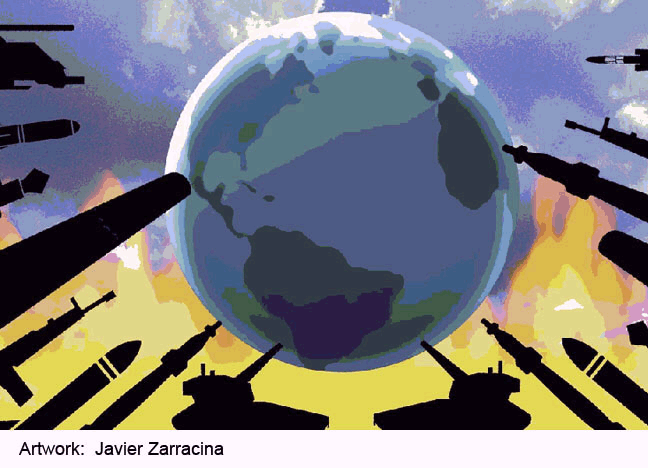
By Laura Tingle, Sat 13 June, https://www.abc.net.au/news/2026-06-13/nuclear-weapons-spending-united-kingdom-defence-aukus/106737440
When British Defence Secretary John Healey resigned on Thursday night, Australian time, the implications of his move were largely judged by what it would mean for the future of his embattled Prime Minister, Sir Keir Starmer.
Healey was followed out the door hours later by the armed forces minister, Al Carns, and two ministerial aides.
The future shape of the British government is, of course, of great interest. And political battles are always a subject of public fascination.
But, in an increasingly rare event these days, Healey’s resignation was on a matter of principle.
That matter of principle helps shine a light on a much bigger story about the state of the world, geopolitics and war preparedness than the implications of resignations at Whitehall.
“You have been unable, and the Treasury has been unwilling, to commit the resources that the nation needs to defend the country at this time of rising threats,” Healey wrote, damning his leader for failing to provide what many people would regard as the most fundamental of protections for a country’s population: its defence.
Britain’s growing nuclear weapon spend
There has been a long and complicated brawl going on in the British Labour government about defence spending; much of its public face being about the fact that other parts of the government would have to cut spending to fund plans to significantly increase defence spending — by about 15 billion pounds.
The debate has dragged on for some time since a strategic review of Britain’s defence needs was completed last year.
As the Royal United Services Institute wrote, the review never really gave a full description of the size and shape of the armed forces that was envisaged “akin to the kind of ‘order of battle’ seen in previous defence reviews”.
In other words, while the overall size of the British defence budget has been fought over, there is little known about how exactly it will be spent. Questions linger — does the UK aim to have a land army to fight a war in Europe? (Answer: unlikely). Does it need more conventional missiles and drones for such a war? And what’s the role of manned and unmanned naval power?
But one capability that seems to just blunder on with little scrutiny and increasingly little strategy is Britain’s nuclear capacity.
Two reports released this week document a surge in the number of nuclear weapons around the world in the past year. And not just their growth in number but a seemingly growing reliance on them, in an environment where most of the deterrence and detente architecture which kept things manageable in the past has been eroded.
The nature of nuclear weapons is changing. Analysts say the gap between conventional weapons and nuclear weapons is getting smaller, and the way nuclear weapons are conceived to be used is changing.
What makes the UK’s role in this story so compelling is that the current fracas has highlighted the fact that nuclear weapons will soon represent 25 per cent of Britain’s defence spend.
Not only that, but the small island nation has overtaken Russia in the past year as the third biggest spender on nuclear weapons.
The Stockholm International Peace Research Institute (SIPRI), which tracks military spending, noted the UK also announced last year its intention to buy 12 nuclear-capable F-35A combat aircraft from the USA, and equip them with US nuclear bombs, in order to join NATO’s nuclear sharing arrangements. The plan walks back the decision from the 1990s to denuclearise the Royal Air Force.
‘A worrying development’
The rationale for escalation in nuclear weaponry is strongly linked to the United States’ declared plan to reduce its commitment to European defence.
So it is hardly surprising that the UK might be seeking to compensate for this.
But as British defence analyst Carne Ross said this week “the other unnoticed thing that’s going on in the UK and indeed Europe as a whole, is that the US is increasing its deployment of tactical nuclear weapons, so-called tactical nuclear weapons, which can have a yield of 50 kilotons, which is three times greater than the bomb used in Hiroshima”.
“There appears to be a rapid increase in the deployment of these tactical weapons in Britain, but also on continental Europe, maybe Turkey and elsewhere — bizarrely in response to the fact that Trump is less committed to the conventional military defence of Europe,” he told Al Jazeera podcast The Inside Story.
Read more: While Britain’s defence strategy comes under fire, the nuclear arms race continues“This appears to be an appeal from the Europeans for greater security through tactical nuclear deployments. This is a very bizarre and paradoxical and indeed worrying development.”
But more than the usual difficulty in knowing just how defence dollars are being spent, anything specifically related to nuclear weapons has a tradition of being particularly opaque.
The Financial Times reported last week that Westminster’s Public Accounts Committee found that the Ministry of Defence has “not provided ‘sufficient transparency’ over its ever-increasing spending on nuclear weapons, which accounts for roughly a fifth of the UK defence budget”.
“The report criticised the secrecy surrounding Britain’s nuclear spending, saying the Defence Nuclear Enterprise, a collection of organisations that operate and maintain the UK’s nuclear deterrent, ‘lacked accounting records to support more than £6bn of its assets’ in its 2024–25 annual report,” the FT reported.
Britain’s nuclear deterrent consists of submarines carrying US-made Trident nuclear missiles. Creating a new class of four Dreadnought nuclear submarines to take the place of the ageing Vanguard-class subs is expected to cost £41bn.
Nine nuclear-armed countries spending more
Where the story of the UK’s nuclear spend goes even wider though is in another report released this week by the anti-proliferation group the International Campaign to Abolish Nuclear Weapons (ICAN) which documents the last year’s spending on nuclear weapons by the nine nuclear-armed countries. (That’s the US, China, UK, Russia, France, India, Pakistan, Israel and North Korea.)
ICAN says those nine states spent just under US$119 billion ($168 billion) on their nuclear arsenals in 2025, a staggering increase of 19 per cent from the previous year.
The US had the biggest increase (US$12.4 billion) and spent more than all the others combined — US$69.2 billion.
China remained in second place. But the UK came in third at US$12.6 billion, overtaking Russia.
While the US and Israel went to war to stop Iran getting nuclear weapons, they are both believed to have them — even though Israel has never confirmed it possesses them.
ICAN’s Susi Snyder told the same Al Jazeera podcast this week: “On average, we see an increase of about 10 per cent. Last year, it was almost double that. So it is by far one of the largest increases we have ever seen.”
Nuclear war and weapons have historically been seen as a threat of missiles exchange over continents in a showdown between the “great” powers.
But the sheer cost and difficulties of warfare in modern times gives too many countries some sense of relatively easy security in having a nuclear “deterrent”.
SIPRI notes that in 2025 several European states, including Germany, indicated a desire to supplement NATO nuclear-sharing arrangements focused on US weapons with similar arrangements with France and the UK.
A changing warfare landscape
There are two major confrontations going on in Europe and the Middle East at present. (The conflicts in Africa seem beyond the reach of nuclear stand-offs at present).
In both the war in Ukraine and the war in the Middle East, we have been witnessing increasing signs of frustrated eruptions between combatants — notably around the Strait of Hormuz this week — as fights bog down into apparently intractable conflict.
The risks of an accident have seemed all too clear.
The prospect of nuclear weapons being used in either Ukraine or the Middle East, rather than being fired between Moscow, Washington or Beijing has risen.
SIPRI Director Karim Haggag says that “influential voices, including some world leaders, are advocating nuclear weapons as a guarantee against attack by a hostile state. But making national defence and security strategies dependent, or more dependent, on nuclear weapons could significantly increase nuclear risks.”
Tariq Rauf, the former head of verification and security at the International International Atomic Energy Agency agrees.
“First of all, we have new types of delivery systems, supersonic delivery systems, hypersonic delivery systems,” Rauf told Al Jazeera.
“The gap between large conventional weapons and small-yield nuclear weapons is now largely disappearing. So, we can now have conventional weapons used with strategic effect to even try to take out nuclear bases and decision makers.”
The Healey resignation came just hours before he was supposed to stand up at Portsmouth to trumpet AUKUS with Australia’s Deputy Prime Minister and Defence Minister Richard Marles, and Foreign Minister Penny Wong.
Like much of the British media, Marles chose to focus on the personnel change, rather than what might have driven it, in his comments.
AUKUS, he said, would continue, as it already had across changes of government in the UK, the US and Australia “because it fundamentally is in the national strategic interests of the United Kingdom, the United States and Australia, and all of that gives us a sense of confidence that we will be able to deliver this”.
The only question is over the value of delivering “this” at a time when the threats and means of warfare are changing by the day, in ways most of us can’t easily see.
Laura Tingle is the ABC’s Global Affairs Editor.
Space Force needs to prepare for an ‘in-person’ moon conflict with China, new report argues
Guardians need a human spaceflight program for future lunar missions, Mitchell Institute says.
Defense One, Thomas Novelly, 23 May 26,
The Space Force should prepare to put active-duty troops on the moon and on space stations to counter China’s lunar and military ambitions, a new research paper argues.
The Mitchell Institute’s paper, published Thursday, calls for the Space Force to prioritize the creation of a “human spaceflight” program and redefine federal, active-duty Title 10 orders to compete against China’s military-focused space initiatives—such as the reported goal of putting its Taikonauts on the moon by 2030. Although Chinese officials as recently as last month have said the country believes in the “peaceful use” of space, the paper claims future “competition for control of lunar resources and territory will likely reach a tipping point” and the U.S. military must be prepared.
With a potential ‘in person’ lunar conflict with China as the contextual touchstone, the U.S. must begin a pragmatic multi-decade effort, leveraging its Space Test Course (STC), as well as partnerships with NASA and commercial space companies, to deliver the skills, tools, and concepts needed for future Title 10 activities to enforce U.S. spacepower-enabling norms and standards,” the report said. “These efforts will require additional funding from Congress for both U.S. Space Force human spaceflight opportunities and residencies at commercial space stations.”
The 22-page policy report calls for blurring the long-standing boundaries between space exploration and militarized operations by allowing Title 10 active-duty federal orders to include “space and lunar habitation” and “warfighting authorities and a national defense mindset in the advancement of human spaceflight.” The 1967 Outer Space Treaty, which the U.S. and China are parties to, calls for the governments to use the moon and other planets for “peaceful purposes” and forbids military bases, testing, and maneuvers. Kyle Pumroy, a retired Space Force colonel and the paper’s author, called for pushing back against those norms………………………………………………………………………………….. https://www.defenseone.com/threats/2026/05/space-force-needs-prepare-person-moon-conflict-china-new-report-argues/413747/
1 This Month
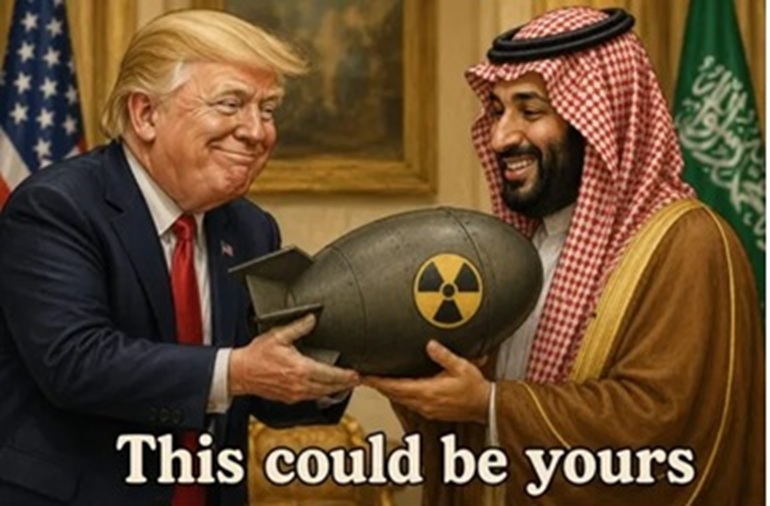

No Nuclear in Cwm Llynfi! Stop the nuclear power station near Maesteg.


4 August – WEBINAR – Hiroshima & Nagasaki: Nuclear Bombs Never Again
Tuesday, Aug. 4 at 5 pm PT / 8 pm ET.
Aug 5, 2026 10:00 AM in Australia/Melbourne
Join the Nuclear Bombs Never Again webinar on August 4th at 5pm Pacific Time / 8pm Eastern Time / 9am Japan Standard Time.
Cross generational voices at the intersection of Japan-Korea-US policy and militarization will share their lived experiences, nuclear impacts in these contexts, anti-war strategies, and actions you can take to advocate for a world with Nuclear Bombs Never Again. This 75-minute event is co-hosted by WILPF US and Korea Peace Now.

22,000+ miles voyaging for nuclear disarmament
and a radiation-free environment https://vfpgoldenruleproject.org/
To see nuclear-related stories in greater depth and intensity – go to https://nuclearinformation.wordpress.com
-
Archives
- July 2026 (332)
- June 2026 (287)
- May 2026 (306)
- April 2026 (356)
- March 2026 (251)
- February 2026 (267)
- January 2026 (308)
- December 2025 (358)
- November 2025 (359)
- October 2025 (375)
- September 2025 (257)
- August 2025 (319)
-
Categories
- 1
- 1 NUCLEAR ISSUES
- business and costs
- climate change
- culture and arts
- ENERGY
- environment
- health
- history
- indigenous issues
- Legal
- marketing of nuclear
- media
- opposition to nuclear
- PERSONAL STORIES
- politics
- politics international
- Religion and ethics
- safety
- secrets,lies and civil liberties
- spinbuster
- technology
- Uranium
- wastes
- weapons and war
- Women
- 2 WORLD
- ACTION
- AFRICA
- Atrocities
- AUSTRALIA
- Christina's notes
- Christina's themes
- culture and arts
- Events
- Fuk 2022
- Fuk 2023
- Fukushima 2017
- Fukushima 2018
- fukushima 2019
- Fukushima 2020
- Fukushima 2021
- general
- global warming
- Humour (God we need it)
- Nuclear
- RARE EARTHS
- Reference
- resources – print
- Resources -audiovicual
- Weekly Newsletter
- World
- World Nuclear
- YouTube
-
RSS
Entries RSS
Comments RSS
 nuclear-news