India again tests long range nuclear capable missile

 India boosts arsenal with nuclear-capable missile test (VIDEO) RT.com, September 15, 2013 India has conducted a second test firing of a nuclear-capable missile with a range of 5,000 kilometers. New Delhi is struggling to challenge Beijing in the race for missile dominance in Asia.
“The country has established ICBM capability with the successful second test,” said Avinash Chander, a scientific advisor to Defense Minister AV Antony, adding that the next launch would be canister-based.
‘Agni-V’ long-range ballistic missiles are about 17 meters long, with a diameter of 2 meters and a launch weight of about 50 tons, The Indian Express reported. It can carry a nuclear warhead of over 1 ton.
The missile was test-fired from Wheeler Island, off the coast of Odisha. Missile scientist and ‘Agni 5’ chief designer V.G. Sekaran said the test was an “overwhelming success and showed the reliability and maturity of the sub-systems,” the Hindu newspaper reported.
Only Russia, the US, China, France and Britain, reportedly along with Israel, which has never officially admitted to having an nuclear arsenal of its own, are believed to have such long-range weapons……http://rt.com/news/india-tests-nuclear-missile-882/
Israel’s extensive arsenal of nuclear weapons
 Israel has 80 nuclear warheads, can make 115 to 190 more, report says By LA Times, Batsheva Sobelman September 15, 2013,
JERUSALEM– Israel has 80 nuclear warheads and the potential to double that number, according to a new report by U.S. experts.
In the Global Nuclear Weapons Inventories, recently published in the Bulletin of the Atomic Scientists, proliferation experts Hans M. Kristensen and Robert S. Norris write that Israel stopped production of nuclear warheads in 2004.
But the country has enough fissile material for an additional 115 to 190 warheads, according to the report, meaning it could as much as double its arsenal.
Previous estimates have been higher but the new figures agree with the 2013 Stockholm International Peace Research Institute yearbook on armament and international security. The yearbook estimated 50 of Israel’s nuclear warheads were for medium-range ballistic missiles and 30 were for for bombs carried by aircraft, according to a report in the Guardian. Although widely assumed a nuclear power, Israel has never acknowledged possessing nuclear weapons or capabilities and continues to maintain its decades-old “strategic ambiguity” policy on the matter, neither confirming nor denying foreign reports on the issue.
In 1986, Mordechai Vanunu, an Israeli nuclear technician,leaked the country’s alleged nuclear secrets to a British newspaper, and said Israel had at least 100 nuclear weapons. Vanunu was later convicted of espionage and treason and wasreleased from jail in 2004 after serving 17 years…….
the nuclear facility in Dimona, a location in Israel’s southern Negev desert, is off-limits for the IAEA and not under its supervision. According to foreign reports, that is where the nuclear warheads have been produced since 1967.
Of the many multilateral agreements on nuclear issues the IAEA offers, Israel has signed a few and ratified fewer, mostly relating to nuclear safety issues. But it is not a party to the Treaty on the Non-Proliferation of Nuclear Weapons. In 2010, Israel dismissed a demand from the parties to join. …. http://www.latimes.com/world/worldnow/la-fg-wn-israel-nuclear-weapons-20130915,0,4117406.story
America’s nuclear weapons spending – bloated and out of control

The post-Cold War nuclear warhead complex has become a gigantic self-licking ice cream cone for contractors,”
Nation’s bloated nuclear spending comes under fire Journal Review, 13 Sept 13, Matthew Daly reported from Washington, D.C. Associated Press At Los Alamos National Laboratory, a seven-year, $213 million upgrade to the security system that protects the lab’s most sensitive nuclear bomb-making facilities doesn’t work. Those same facilities, which sit atop a fault line, remain susceptible to collapse and dangerous radiation releases, despite millions more spent on improvement plans.
In Tennessee, the price tag for a new uranium processing facility has grown nearly sevenfold in eight years to upward of $6 billion because of problems that include a redesign to raise the roof. And the estimated cost of an ongoing effort to refurbish 400 of the country’s B61 bombs has grown from $1.5 billion to $10 billion.
Virtually every major project under the National Nuclear Security Administration’s oversight is behind schedule and over budget _ the result, watchdogs and government auditors say, of years of lax accountability and nearly automatic annual budget increases for the agency responsible for maintaining the nation’s nuclear stockpile.
The NNSA has racked up $16 billion in cost overruns on 10 major projects that are a combined 38 years behind schedule, the U.S. Government Accountability Office reports. Other projects have been cancelled or suspended, despite hundreds of millions of dollars already spent, because they grew too bloated. Continue reading
American military intervention in Syria could go nuclear
 Five Ways a Wider Syrian War Could Go Nuclear Truth Dig, By Harvey Wasserman, 13 Sept 13, In the wake of an apparent break in the march to a wider war, the reality of a nuclear dimension in Syria remains largely unspoken.
There are at least five key reasons why American military intervention in Syria’s civil war could go nuclear:
(1) There’s a reactor near Damascus.
It is relatively small, by most accounts containing about a kilogram (2.2 pounds) of weapons-grade uranium. That’s not much in the scheme of things when it comes to building an atomic bomb. But as Alexsandr Lukashevich of the Russian Foreign Ministryputs it, “If a warhead, by design or by chance, were to hit the Miniature Neutron Source Reactor (MSNR) near Damascus, the consequences could be catastrophic.”……
(2) Despite Secretary of State John Kerry’s promise of an “unbelievably limited” attack, once the U.S. military commits to action in Syria, it is unlikely to hold back any of its tactical arsenal. That would almost certainly include depleted uranium (DU).
When shells made of this super-hard material penetrate armored vehicles, hardened bunkers and other structures, the DU disperses into fine radioactive particulates that are easily inhaled. Wherever deployed—as in Yugoslavia, Iraq and Afghanistan—DU inflicts horrifying health consequences, including cancer among people of all ages and birth defects among children born well after its use. Uranium-238 has a half-life of 4.5 billion years, imposing virtually permanent contamination.
Should DU weaponry be used yet again, this time in Syria, the contamination would be widespread and irreversible. Many thousands of innocent people—including the countless unborn—would suffer greatly. As with all radioactive fallout, the lethal effects will stretch through the generations.
(3) When the world’s superpowers collide, nuclear war is always a possibility.
At this point, the U.S. and Russia appear to be coming together. But in this too-often irrational global tinderbox, the stakes could not be higher.
In such situations, we hope for the best, but can’t lose sight of the potential worst………
(4) In the bottomless turbulence that defines today’s Middle East, the Americans and Russians so far seem to retain some shreds of rationality. But given the Peaceful Atom’s half century of weapons-grade proliferation, we cannot know which nations or marginal groups might now have atomic devices and what random impulses might prompt their use.
In a profoundly unpredictable world, each of the more than 400 commercial-sized reactors still operating continues to produce radioactive materials that could fuel a nuclear weapon.
Each of those reactors is itself a profoundly vulnerable target. Should the situation in Syria devolve to a wider war, the likelihood of a freelance atomic “situation” becomes all too probable.
(5) While the world’s attention is focused on Syria, the global-scale disaster at Fukushima spirals out of control.
The more serious the crisis in Syria, the more it will divert attention from an existing nuclear disaster. http://www.truthdig.com/report/item/five_ways_a_wider_syrian_war_could_go_nuclear_20130913/
Obama administration’s contradictory claims about attacking Syria

 Critics see contradictions in Obama administration’s Syria claims LA Times, By Paul Richter September 8, 2013, WASHINGTON –- The planned military strikes on Syria would be “targeted, limited” and wouldn’t seek to topple the government of President Bashar Assad or even force it to peace talks.
They would also be punishing and “consequential” and would so scare Assad that he would never use chemical weapons again. U.S. airstrikes would change the momentum on the battlefield of the Syrian civil war. But the war will grind on, unchanged, perhaps for years.
As administration officials lay out their case in favor of a punitive attack on Syria, they have been making all of these seemingly contradictory contentions, confusing supporters and providing rhetorical weapons to their opponents.
The contradictions stem from the basic challenge the White House faces: how to reassure the large anti-war contingent in the Democratic Party, as well as conservative opponents of overseas intervention, that strikes won’t open the way to another war, while convincing hawks and more militant internationalists that the strikes will do enough to make the mission worthwhile.
It’s possible to square most of the administration’s arguments – if one believes that a military strike can be so precisely calibrated as to harm the Assad government just enough, but not too much. But as a political case, the effort has so far proven hard to sell.
If officials lean too far in one direction, they risk losing supporters on one side or the other. But when they voice both sides of their case, they risk presenting an argument that is incoherent…….. http://www.latimes.com/world/worldnow/la-fg-wn-contradictions-obama-syria-20130908,0,4466835.story
USA has not shown proof of Assad-caused chemical strike in Syria
Where’s the proof? Classified, says US, though poised to strike despite lack of evidence The State Journal, BEIRUT (AP) 9 Sept 13, — The U.S. government insists it has the intelligence to prove it, but the American public has yet to see a single piece of concrete evidence — no satellite imagery, no transcripts of Syrian military communications — connecting the government of President Bashar Assad to the alleged chemical weapons attack last month that killed hundreds of people.
In the absence of such evidence, Damascus and its ally Russia have aggressively pushed another scenario: that rebels carried out the Aug. 21 chemical attack. Neither has produced evidence for that case, either. That’s left more questions than answers as the U.S. threatens a possible military strike.
The early morning assault in a rebel-held Damascus suburb known as Ghouta was said to be the deadliest chemical weapons attack in Syria’s 2½-year civil war. Survivors’ accounts, photographs of many of the dead wrapped peacefully in white sheets and dozens of videos showing victims in spasms and gasping for breath shocked the world and moved President Barack Obama to call for action because the use of chemical weapons crossed the red line he had drawn a year earlier.
Yet one week after Secretary of State John Kerry outlined the case against Assad, Americans — at least those without access to classified reports — haven’t seen a shred of his proof.
There is open-source evidence that provides clues about the attack, including videos of the rockets that analysts believe were likely used. U.S. officials on Saturday released a compilation of videos showing victims, including children, exhibiting what appear to be symptoms of nerve gas poisoning. Some experts think the size of the strike, and the amount of toxic chemicals that appear to have been delivered, make it doubtful that the rebels could have carried it out. http://www.state-journal.com/ap%20general%20news/2013/09/08/sunday-september-8-2013
Secret preparations for USA-Russia “proxy” war over Syria
WORLD WAR 3 IS STARTING I have spoken to my connections in the Russian media and they are all confirming that World War 3 is the hottest topic right now amid the populace, and the fact of the matter is that all of the top level military officials over there are looking at this Syrian incident as the catalyst — as the spark.
What we’re looking at right now is the beginning of World War 3 unless we manage to stop it.
We encourage you to continue checking out Infowars and Storyleak for more updates on this and the latest news and information we find out on this developing situation.
HIGH LEVEL SOURCE CONFIRMS Secret US Nuclear Warhead Transfer to East Coast http://www.storyleak.com/exclusive-high-level-source-confirms-secret-us-nuclear-warhead-transfer-east-coast/by Anthony Gucciardi & Alex Jones 3 Sept 13,
A high level source inside the military has now confirmed to us that Dyess Air Force base is actively moving nuclear warheads to the East Coast of the United States in a secret transfer that has no paper trail. According to the high level military source, who has a strong record of continually being proven correct in deep military activity, the Dyess Air Force Commander authorized unknown parties to transfer the nuclear warheads to an unknown location that has been reported to be South Carolina, where the warheads will then be picked up and potentially utilized.
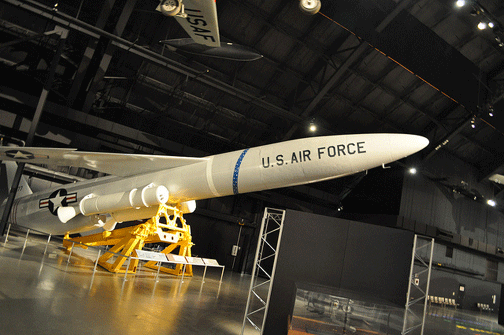
This is of particular interest not only due to the fact that the Syrian situation has escalated to the point of a very realistic hot war scenario, but due to the fact that Dyess has repeatedly denied the existence of nuclear warheads inside the base. (Below, a pilotless nuclear missile)
The brief report from the top level military source, which was written in a rush to get the information out, reads:
“Dyess is beginning to move out nuclear war heads today. I got a tap from DERMO earlier. He said it was the first time they have been even acknowledged since being put there in the 80′s. No signature was required for transfer… There was no directive. He said that Dyess Commander was on site to give authority to release. No one knew where they were going really, but the truck driver said to take them to South Carolina and another pick up will take them from there.”
The fact that this transfer was not signed for and there were no papers is key. Continue reading
New nuclear bomb tally – 125,000 more nuclear warheads since 1945
“Approximately 4,400 warheads—nearly half of all stockpiled warheads—are deployed on missiles or at bases with operational launchers,” BAS says, “we estimate that roughly 1,800 US and Russian warheads are on high alert atop long-range ballistic missiles that are ready to launch 5 to 15 minutes after receiving an order.” (below – a pilotless nuclear missile)
Since Hiroshima, We’ve Built 125,000 More Nuclear Bombs http://motherboard.vice.com/blog/since-hiroshima-weve-built-125000-nuclear-bombs By Brian Merchant, 5 Sept 13, “…….A new report from the Bulletin of the Atomic Scientists, “Global nuclear weapons inventories, 1945–2013,“ says that since that fiery event at the tail end of World War II, human beings have built 125,000 more nuclear warheads. And 97 percent of them were built by the US and Russia. The report offers a fascinating synopsis of how many warheads are out there, who built what, and how far we have to go before we approach true nuclear disarmament.
There are nine nations with confirmed nuclear stockpiles, and those with smaller arsenals—or those, like Israel, that haven’t really fessed up to having any at all—are harder to count. Continue reading
Depleted Uranium spreads its dangerous radiation around the world
 Dangers and Health Effects of Depleted Uranium, Disabled World, 4 Sept 13 Thomas C. Weiss
Document Detail: Depleted Uranium (DU) is a waste product, one that is left over when uranium is enriched to create fissionable material for nuclear weapons and reactors. DU consists of uranium from which most of the fissionable isotopes, uranium 235 and 234, have been removed. DU contains 99.5% Uranium 238.
The term, ‘depleted,’ carries with it the implication that it is not particularly dangerous; however, DU is a chemically toxic and radioactive heavy metal and because of this it is potentially hazardous to a person’s health. It is believed by many that exposure to depleted uranium (DU), especially when a person inhales or ingests it as a particulate, causes severe and long-term health effects. The size and effect, as well as the political significance of it, remain in dispute at this time. DU is an extremely dense material, 1.7 times as dense as lead, and is also, ‘pyrophoric,’ and is combustible when it comes in contact with air.
DU is being used by the defense industry in the creation of armor piercing munitions and anti-tank projectiles, as well as in the manufacture of tank armor.
Around 17 nations are thought to have weapon systems containing DU in their arsenals to include: Continue reading
USA’s cover-up of effects of depleted uranium on US soldiers
The U.S. Army’s own contractor, Doug Rokke, who headed a clean up of depleted uranium (DU) after the first Gulf War stated, “Depleted uranium is a crime against God and humanity.” Mr. Rokke went on to state that when his crew went to the Gulf they were all very healthy people, yet after performing clean up operations, 30 members of his staff died and the majority of the others, to include Mr. Rokke himself, “developed serious health problems.
 The military is aware of depleted uranium’s harmful effects on the human genetic code.
The U.S. Military does not want the rest of the world to find out what we have done
Dangers and Health Effects of Depleted Uranium, Disabled World, Thomas C. Weiss, 4 Sept 13 “…….According to an article by Robert C. Koehler in 2007, the Veterans Administration presented figures of 205,000 soldiers who returned from wars in Iraq and Afghanistan. Of these soldiers, one-third have sought medical care for issues such as:
Perhaps the most compelling evidence of all is the sheer number of veterans of the Iraq and Afghanistan conflicts suffering physical ailments. In an April 12, 2007 article, Robert C. Koehler examined the issue:
- Malignant tumors (1,584)
- Mental disorders (73,157)
- Mystery conditions (67,743)
- Nervous system diseases (61,524)
- Musculoskeletal diseases (87,590)
- Digestive system diseases (63,002)
- Endocrinal and metabolic diseases (36,409)
Many times these conditions are lumped together under the convenient catch all heading of, ‘Gulf War Syndrome.’ It is very likely that at least some of these illnesses are caused by exposure to depleted uranium (DU). The effects of DU contamination may take up to 10 years to manifest and it is likely the number of veterans who will need medical care will be higher than from prior conflicts. Continue reading
Comprehensive Nuclear-Test-Ban Treaty Organization (CTBTO) works for peace with no nuclear testing
 Banning nuclear tests essential for global peace, says head of UN-backed treaty organization http://www.un.org/apps/news/story.asp?NewsID=45772&Cr=nuclear&Cr1=#.UijtKNJwonE 4 September 2013 – The new head of preparatory commission for a United Nations-backed treaty stressed today that banning nuclear tests is essential for international peace and security.
In a briefing to reporters in New York, the Executive Secretary of the Preparatory Commission for the Comprehensive Nuclear-Test-Ban Treaty Organization (CTBTO), Lassina Zerbo, underlined that countries who have not ratified the treaty should realize the treaty is in their national security interests as well being a vital part of achieving international peace.
“We are indeed working hard day in and day out to try to secure their ratification by building the framework that will give the trust necessary for these countries to understand that the ratification of this treaty is part of their own national security as well as the international peace and security,” Mr. Zerbo said.
Adopted by the General Assembly in 1996, the CTBT is the only treaty to ban all nuclear tests in all environments, for military or civilian purposes. It also has a unique global alarm system to detect nuclear explosions. While the treaty has been adopted, it has not yet entered into force.
The CTBTO is an independent international organization with its own membership and budget, but it has had a Relationship Agreement with the UN since 2000.
Out of a total listed number of 195 States, 183 have so far signed the CTBT and 159 have ratified it. For the treaty to enter into force, ratification is required from the so-called “Annex 2 States”. Of these, China, the Democratic People’s Republic of Korea, Egypt, India, Iran, Israel, Pakistan and the United States, have yet to ratify it.
The CTBTO is tasked with building up the treaty’s verification regime so that it is fully operational when the treaty enters into force, and with promoting signatures and ratifications.Mr. Zerbo said the CTBTO is working with officials at various levels in the countries that have yet to ratify the treaty to ensure they find the treaty verifiable, and find the technical and political means for ratification.
Secretary-General Ban Ki-moon has repeatedly called on States to ratify the CTBT stressing there are “no justifiable grounds for further delay in” preventing the treaty’s entry into force.
USA’s intense worry about nuclear Pakistan
 Pakistan and the Nuclear Nightmare FP, By Dan Twining , September 4, 2013 –The Washington Post has revealed the intense concern of the U.S. intelligence community about Pakistan’s nuclear weapons program. In addition to gaps in U.S. information about nuclear weapons storage and safeguards, American analysts are worried about the risk of terrorist attacks against nuclear facilities in Pakistan as well as the risk that individual Pakistani nuclear weapons handlers could go rogue in ways that endanger unified national control over these weapons of mass destruction.
These concerns raise a wider question for a U.S. national security establishment whose worst nightmares include the collapse of the Pakistani state — with all its implications for empowerment of terrorists, a regional explosion of violent extremism, war with India, and loss of control over the country’s nuclear weapons. That larger question is: Does Pakistan’s nuclear arsenal promote the country’s unity or its disaggregation?
This is a complicated puzzle, in part because nuclear war in South Asia may be more likely as long as nuclear weapons help hold Pakistan together and embolden its military leaders to pursue foreign adventures under the nuclear umbrella. So if we argue that nuclear weapons help maintain Pakistan’s integrity as a state — by empowering and cohering the Pakistani Army — they may at the same time undermine regional stability and security by making regional war more likely………http://shadow.foreignpolicy.com/posts/2013/09/04/pakistan_and_the_nuclear_nightmare
Depleted Uranium (DU) Health Concerns
Dangers and Health Effects of Depleted Uranium, Disabled World, Thomas C. Weiss, 4 Sept 13 “…………Health concerns and DU center around the effect on the human body of nano-sized ceramic particles of uranium oxide (U238) that are released into the air when DU munitions are used in battle. Dr. Rosalie Bertell presented a concise explanation of the potential dangers of exposure to depleted uranium (DU). Dr. Bertell stated, “Uranium oxide and its aerosol form are insoluble in water. The aerosol resists gravity, and is able to travel tens of kilometres in air. Once on the ground, it can be resuspended when the sand is disturbed by motion or wind. Once breathed in, the very small particles of uranium oxide, those which are 2.5 microns (one micron = one millionth of a meter) or less in diameter, could reside in the lungs for years, slowly passing through the lung tissue into the blood.” Continue reading
Middle East nuclear conflagration risk, if USA attacks Syria
Moscow Says US Strike on Syria Threatens Nuclear Security http://en.ria.ru/russia/20130904/183168440/Moscow-Says-US-Strike-on-Syria-Threatens-Nuclear-Security.html MOSCOW, September 4 (RIA Novosti) – The Russian Foreign Ministry on Wednesday urged the International Atomic Energy Agency (IAEA) to analyze risks of a potential US military operation in Syria, saying such a strike would threaten nuclear security throughout the Middle East.
Ministry spokesman Alexander Lukashevich said in a statement that such an operation in Syria “might affect targets sensitive in terms of nuclear security and nuclear non-proliferation,” including the Miniature Neutron Source Reactor (MNSR) near Damascus.
He said “the consequences will be catastrophic” if the MNSR is hit by a US missile. Potential risks entail “possible contamination of adjacent territories with highly enriched uranium and radioactive decay products and the de-facto impossibility of ensuring control and safety of nuclear material at this object,” he said.
“In order to prevent events from taking a negative turn, we strongly urge the IAEA secretariat to promptly react to the situation and to present member states with an analysis of risks related to airstrikes on the MNSR and other objects in Syria,” the statement reads.
Reasons to treat chemical weapons differently from nuclear weapons
 Treat Chemical Weapons Differently From Nuclear Weapons. HUFFINGTON POST Scott Sigmund Gartner Professor of International Affairs at Penn State’s School of International Affairs 08/30/2013 The Obama administration has dug itself a hole in Syria by treating chemical weapons like nuclear weapons. While both are weapons of mass destruction, they are critically different on three key dimensions.These dimensions should shape U.S. chemical weapons policy in Syria now and with other countries in the future.
First, although nuclear weapons have not been used since World War II, chemical weapons have been employed in virtually every type of conflict, including interstate wars (Iran-Iraq), civil wars (Yemen), terrorist attacks (Japan), and by individuals (U.S.). Thus, rather than violating a rarely crossed “red line,” Syrian gas reflects an all-too-familiar, fatal pattern, making absolute prohibitions likely to lead to the problematic dilemma currently facing the Obama administration. Continue reading
1 This Month
23-25 October – on Zoom – World BEYOND War’s annual global conferenc


Shut down the radiation-damaged Heysham nuclear reactors now
To see nuclear-related stories in greater depth and intensity – go to https://nuclearinformation.wordpress.com

Say No to NASA’s Reckless Nuclear Reactor on the Moon
Say No to NASA’s Reckless Nuclear Reactor on the Moon

-
Archives
- October 2026 (199)
- September 2026 (339)
- August 2026 (330)
- July 2026 (355)
- June 2026 (287)
- May 2026 (306)
- April 2026 (356)
- March 2026 (251)
- February 2026 (267)
- January 2026 (308)
- December 2025 (358)
- November 2025 (359)
-
Categories
- 1
- 1 NUCLEAR ISSUES
- business and costs
- climate change
- culture and arts
- ENERGY
- environment
- health
- history
- indigenous issues
- Legal
- marketing of nuclear
- media
- opposition to nuclear
- PERSONAL STORIES
- politics
- politics international
- Religion and ethics
- safety
- secrets,lies and civil liberties
- spinbuster
- technology
- Uranium
- wastes
- weapons and war
- Women
- 2 WORLD
- ACTION
- AFRICA
- Atrocities
- AUSTRALIA
- Christina's notes
- Christina's themes
- culture and arts
- Events
- Fuk 2022
- Fuk 2023
- Fukushima 2017
- Fukushima 2018
- fukushima 2019
- Fukushima 2020
- Fukushima 2021
- general
- global warming
- Humour (God we need it)
- Nuclear
- RARE EARTHS
- Reference
- resources – print
- Resources -audiovicual
- Weekly Newsletter
- World
- World Nuclear
- YouTube
-
RSS
Entries RSS
Comments RSS

