£3bn to be spent on massive Trident nuclear weapons project, without UK Parliament being consulted
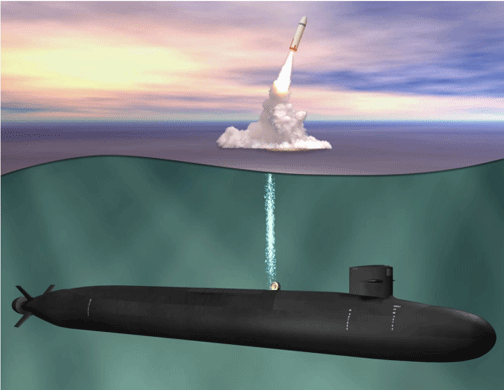
 Trident future back on election agenda as costs spiral MPs condemn expenditure on Trident nuclear submarine successor before parliament has approved a replacement. Guardian Jamie Doward and Chris Sloggett, 18 Jan 15 The future of Britain’s nuclear submarine fleet is set to become a major election issue this week amid concern that billions of pounds is being spent on a successor before parliament has approved an upgrade.
MPs will not vote on Trident’s replacement, the largest UK submarine project in a generation, until 2016. But a Ministry of Defence report, slipped out over Christmas, reveals that spending on the project’s “assessment phase” is to increase by a further £261m this year. Of this money, which will be drawn down from the project’s future budget, £206m will be spent on new facilities at the BAE Systems shipyard at Barrow-in-Furness.
On Tuesday the SNP and Plaid Cymru will force a debate on the Trident upgrade, which is expected to cost £20bn in total.
Angus Robertson, the SNP’s Westminster leader and defence spokesman, said: “When Labour MPs have voted with the Tories for another £30bn of austerity cuts, it is frankly scandalous that a further quarter of a billion pounds of taxpayers’ money is to be spent on Trident before parliamentarians even get a vote on whether or not to replace the system.
“In no other democracy, at a time of deep austerity and cuts, would over £3bn be spent on committing to such a massive project without consulting parliamentarians. Robbing the future budget of Trident only suggests they have already underestimated the eye-watering final cost.”
The MoD report, The UK’s future nuclear deterrent: 2014 update to Parliament, reveals that more than half a billion pounds – some £1.4m a day – was spent on the project in the last financial year alone……. report reveals that the total cost of the project’s assessment phase, at the end of which a decision on whether to proceed with Trident’s successor will be taken, will rise to £3.3bn, nearly £300m more than the MoD originally indicated.
The revelation has prompted fury from pro-disarmament parties, which could play a crucial role in any future coalition government……http://www.theguardian.com/uk-news/2015/jan/17/trident-future-election-agenda-costs-spiral-nuclear-submarines
Case against nuclear powers unfolds at the International Court of Justice in The Hague,
 The Marshall Islands’ latest nuclear test – Marshall Islanders are well-acquainted with the horrors of the nuclear arms industry. Belen Fernandez, Aljazeera, 18 Jan 15
The list of accused is as follows: the United States, Russia, Britain, China, France, India, North Korea, Pakistan, and Israel. Israel has made the cut despite fervently denying possession of a nuclear arsenal.
The spectacle is unfolding at the International Court of Justice in The Hague, the main judicial organ of the United Nations. A recent New York Times article on the Marshall Islands’ “near-Quixotic venture” quotes Phon van den Biesen, head of the country’s legal team, on the ultimate aim of the effort: “All the nuclear weapons states are modernising their arsenals instead of negotiating [to disarm], and we want the court to rule on this.”……….
The diminutive nation happens to be the site of no fewer than 67 US nuclear bomb tests in the 1940s and 50s, during an almost 40-year period in which the US administered the Islands under a UN trusteeship. As Greenpeace notes, one of these tests involved a bomb 1,000 times more powerful than the one dropped on Hiroshima in 1945.
Such machinations have predictably resulted in thorough environmental contamination and continuing health complications for the local population, ranging from radiogenic cancers to babies born without bones.
As Marshallese nuclear survivor Lemeyo Abon told the UN Human Rights Council in 2012: “After the [US] testing programme we’ve had to create new words to describe the creatures we give birth to.”
Lexical fallout aside, other US contributions to Marshallese culture include the Ronald Reagan Ballistic Missile Test Site on Kwajalein Atoll, which continues to generate revenue for US corporations.
The widespread territorial displacement necessitated by the previous era of fanatical nuclear testing meanwhile highlights the irony of Marshallese government support for the US-funded entity that displaces and otherwise oppresses Palestinians……….. http://www.aljazeera.com/indepth/opinion/2015/01/marshall-islands-latest-nuclear-201511352947395615.html
US Department of Defense – the Global Polluter
 This article might be 4 years old, but nothing has changed. My only question about it, is that Russia is surely equal with USA at the top of the military pollution list?
US Department of Defense is the Worst Polluter on the Planet Project
Censored October 2, 2010 The US military is responsible for the most egregious and widespread pollution of the planet, yet this information and accompanying documentation goes almost entirely unreported. In spite of the evidence, the environmental impact of the US military goes largely unaddressed by environmental organizations and was not the focus of any discussions or proposed restrictions at the recent UN Climate Change Conference in Copenhagen. This impact includes uninhibited use of fossil fuels, massive creation of greenhouse gases, and extensive release of radioactive and chemical contaminants into the air, water, and soil. Continue reading
America’s dangerous, aging, nuclear arsenal
The average age of a U.S. nuclear warhead is 27 years. Many of the buildings where the nuclear missiles and bombs are stored date back to the 1950s — and it shows. Blast doors on the country’s nuclear missile silos are too rusty to seal shut. The roof of a security complex in Oak Ridge, Tenn., that houses most of the U.S. supply of enriched uranium collapsed in March. ……
That’s an understatement…….. The institutional rot has led to a number of frightening near-misses.
Such as?
In 2007, six nuclear missiles went missing from a North Dakota facility for 36 hours. It turned out they’d been accidentally attached to a plane’s wings and flown over several states to Louisiana, where they were left sitting unprotected on the tarmac for hours. A year before, four missile nose cones were accidentally sent to Taiwan instead of helicopter batteries. The most serious near-disaster occurred back on Jan. 21, 1961, when two nuclear bombs slipped from the belly of a B-52 flying over the North Carolina city of Goldsboro. Both bombs were set to detonate, and failed to do so after suffering minor damage to the parts needed to initiate an explosion — a stroke of luck that saved the city from annihilation……….http://theweek.com/articles/533721/dangers-ouraging-nuclear-arsenal
Commemoration of the Manhattan Project ignores those who lived downwind and paid the ultimate price
Thousands of Hanford Downwinders — people who lived downwind from or worked at Hanford — have become ill or have died of cancers as the result of radiation exposure.
The legacy of the Manhattan Project is not represented solely by the atomic science. It is also reflected in its destructive effects on the human body, a cautionary tale learned from the broken lives of Downwinders not just near Hanford but around the world. The human toll of this project remains a story that must not be silenced or ignored.
Don’t throw history out with the radioactive bathwater http://america.aljazeera.com/opinions/2015/1/manhattan-projectnationalhistoricalparkhanfordnuclearplant.html January 15, 2015 by Trisha Pritikin @TrishaPritikin On Dec. 12, Congress passed legislation to create the Manhattan Project National Historical Park at three nuclear plants in Washington state, New Mexico and Tennessee. President Barack Obama signed the bill into law on Dec. 19. The park will preserve historic buildings, structures and nuclear artifacts at the sites where the first atomic bombs were created. Public officials in Richland, Washington, near the Hanford B Reactor are rejoicing. Tourism promoters hope that the Hanford plant will become a major historical tourist attraction.
But not everyone is celebrating. As a victim of radiation discharged downwind from that plant, my feelings are mixed.
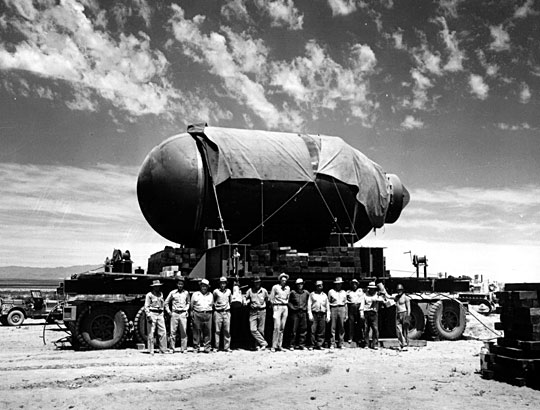
My father was an engineer at Hanford from the 1940s to ’60s. I spent my childhood playing in the poisoned Columbia River and drinking radioactive milk. Both my parents died of cancer related to Hanford radiation exposure. I’m alive today, I believe, because I had my thyroid gland removed at the first sign of cancer. I now live with tetany, pain and bone-numbing fatigue.
Constructed during World War II, the Hanford B Reactor was the first full-size weapons-grade plutonium production reactor in the world. It made plutonium for the first test of an atomic bomb, the Trinity test, in 1945, and for the atomic bomb detonated over Nagasaki, Japan. Continue reading
When a B-52 crashed due to turbulence – carrying 2 nuclear bombs!
the weapons are found. Not entirely safe, but “…relatively intact…” according to the Air Force. It’s a scary sounding moderation to describe radioactive A-bombs lying around in the woods of the Eastern U.S. unattended.
[Read also: On this day in 1968 a B-52 crashed in Greenland with 4 hydrogen bombs]
 The nuclear nightmare of Savage Mountain: when a B-52 crashed due to turbulence. With two nukes, The Aviationist, Jan 15 2015 By Tom Demerly
This is true. And it’s terrifying. It reads like an Ian Fleming or Tom Clancy thriller. But it’s real. Continue reading
Strategic Arms Reduction Treaty- USA has reduced no. of nuclear missiles, but Russia has increased theirs
U.S. Nuclear Arsenal Drops, Russia’s Missile Stocks Up – U.S. State Department Report IB Times, By Esther Tanquintic-Misa | January 13, 2015 A newly released report of the U.S. military’s nuclear arsenal by the State Department has disclosed that the country’s number of nuclear missiles had continued to reduce in compliance to the New START (Strategic Arms Reduction Treaty) treaty with Russia. The latter, however, continued the opposite.
Data collected as of Sept 1, 2014 showed that the number of deployed Intercontinental Ballistic Missiles, submarine-launched ICBMs and deployed heavy bombers by the U.S. went down from 809 the year before to 794. Russia‘s inventory was the opposite at 528, from 473 a year ago.
The U.S.’ warheads on deployed ICBMs, SLBMs and nuclear warheads for deployed bombers, from 1,688, went down to 1,642. Russia recorded the same number at 1,642, but the report said the previous was 1,400.
President Barack Obama’s bailiwick, as of Sept 2014, has 912 deployed and non-deployed missile launchers, from 1,015 a year ago. Vladimir Putin’s Russia has 911, up from 894.
The U.S. and Russia signed the New START Treaty on April 2010 primarily toreduce the number of nuclear weapons and launchers that the two countries own and deploy. The agreement entered into force on February 2011, and is expected to last at least until 2021.
With majority of the U.S. nuclear arsenal assigned to the Air Force, the latter has worked to demolish deactivated launch facilities throughout 2014 to comply with the New START Treaty, according to the State Department report. Crews with the 341st Missile Wing at Malmstrom Air Force Base, Montana reported in August they have completed the demolition of 50 Minuteman III launch facilities. This was inspected and verified by Russian inspectors.
A report by Air Force Times further revealed the following details:……….. http://au.ibtimes.com/articles/578890/20150113/u-s-nuclear-arsenal-russia.htm#.VLWF5NKUcnk
Report that Syria is developing a nuclear weapon.
Great news: Bashar al-Assad still developing nuclear weapons Hot Air JANUARY 12, 2015 BY NOAH ROTHMAN There is some troubling news out of the Levant this week, as if the West needed any more of that. According to a thorough report in Der Spiegel based on documents obtained from “Western intelligence agencies,” Bashar al-Assad’s Syria is busily developing a nuclear weapon.
“Analysts say that the Syrian atomic weapon program has continued in a secret, underground location,” Der Spiegel reported. “According to information they have obtained, approximately 8,000 fuel rods are stored there. Furthermore, a new reactor or an enrichment facility has very likely been built at the site — a development of incalculable geopolitical consequences.”
ccording to intelligence agency analysis, construction of the facility began back in 2009. The work, their findings suggest, was disguised from the very beginning, with excavated sand being disposed of at various sites, apparently to make it more difficult for observers from above to tell how deeply they were digging. Furthermore, the entrances to the facility were guarded by the military, which turned out to be a necessary precaution. In the spring of 2013, the region around Qusayr saw heavy fighting. But the area surrounding the project in the mines was held, despite heavy losses suffered by elite Hezbollah units stationed there.
The most recent satellite images show six structures: a guard house and five sheds, three of which conceal entrances to the facility below. The site also has special access to the power grid, connected to the nearby city of Blosah. A particularly suspicious detail is the deep well which connects the facility with Zaita Lake, four kilometers away. Such a connection is unnecessary for a conventional weapons cache, but it is essential for a nuclear facility.
But the clearest proof that it is a nuclear facility comes from radio traffic recently intercepted by a network of spies. A voice identified as belonging to a high-ranking Hezbollah functionary can be heard referring to the “atomic factory” and mentions Qusayr. The Hezbollah man is clearly familiar with the site. And he frequently provides telephone updates to a particularly important man: Ibrahim Othman, the head of the Syrian Atomic Energy Commission……….http://hotai
They always find the money for new nuclear weapons
U.S. Navy’s Next Generation Nuclear Reactor Program Fully Funded By: Sam LaGrone USNI News January 9, 2015 WASHINGTON NAVY YARD — Development work for the reactor that will power the Navy’s next generation nuclear ballistic missile submarine (SSBN) was fully funded in the so-called Fiscal Year 2015 “cromnibus” that was signed into law last month, the head of the service’s Naval Reactors told USNI News on Friday.
In addition to the $156 million Ohio-class Replacement Program (ORP) reactor development included the Department of Energy’s FY 2015 budget, Congress also included $126.4 to refuel the service’s S8G prototype reactor in West Milton, N.Y. and $70 million to dispose of reactor waste as part of an existing facility in Idaho………..http://news.usni.org/2015/01/09/u-s-navys-next-generation-nuclear-reactor-program-fully-funded
Depleted uranium weapons – a propaganda victory for ISIS?
 The UK and depleted uranium, International Coalition to Ban Uranium Weapons, A retired British General has urged the UK to persuade the US not to use depleted uranium in operations against ISIS in Iraq, Sir Hugh Beach argues that the use of the weapons will be a propaganda victory to their opponents. 9 January 2015 – Gen Sir Hugh Beach (Rtd)
North Korea nvesting in miniaturising nuclear warheads

 North Korea ‘close to miniaturising nuclear warheads’, Telegraph UK, 6 Jan 15 South Korea believes Pyongyang’s scientists close to making the regime’s missiles capable of carrying nuclear warheads North Korea has achieved “a significant level” of the technology required to miniaturise nuclear warheads in order to mount them on ballistic missiles, according to South Korea’s ministry of defence.
In a white paper released on Tuesday, the ministry added that North Korea is believed to have obtained more than 88lbs of weapons-grade plutonium by repeatedly reprocessing spent nuclear fuel rods.
Additional efforts are also being made to produce highly-enriched uranium, the report stated.
An official of the ministry told Yonhap News that there was no solid evidence that North Korean scientists have perfected the technique of miniaturising a nuclear warhead, but the North is known to have invested heavily in the process………http://www.telegraph.co.uk/news/worldnews/asia/northkorea/11327412/North-Korea-close-to-miniaturising-nuclear-warheads.html
USA and Russia ramping up nuclear weapons rivalry
 US and Russia in danger of returning to era of nuclear rivalry Julian Borger, Guardian, 5 Jan 15 American threats to retaliate for Russian development of new cruise missile take tensions to new level. A widening rift between Moscow and Washington over cruise missiles and increasingly daring patrols by nuclear-capable Russian submarines threatens to end an era of arms control and bring back a dangerous rivalry between the world’s two dominant nuclear arsenals.
Tensions have been taken to a new level by US threats of retaliatory action for Russian development of a new cruise missile. Washington alleges it violates one of the key arms control treaties of the cold war, and has raised the prospect of redeploying its own cruise missiles in Europe after a 23-year absence.
On Boxing Day, in one of the more visible signs of the unease, the US military launched the first of two experimental “blimps” over Washington. The system, known as JLENS, is designed to detect incoming cruise missiles. The North American Aerospace Command (Norad) did not specify the nature of the threat, but the deployment comes nine months after the Norad commander, General Charles Jacoby, admitted the Pentagon faced “some significant challenges” in countering cruise missiles, referring in particular to the threat of Russian attack submarines.
Those submarines, which have been making forays across the Atlantic, routinely carry nuclear-capable cruise missiles. In the light of aggressive rhetoric from Moscow and the expiry of treaty-based restrictions, there is uncertainty over whether those missiles are now carrying nuclear warheads.
The rise in tension comes at a time when the arms control efforts of the post-cold-war era are losing momentum. The number of strategic nuclear warheads deployed by the US and Russia actually increased last year, and both countries are spending many billions of dollars a year modernising their arsenals. Against the backdrop of the war in Ukraine and a failing economy, Vladimir Putin is putting increasing emphasis on nuclear weapons as guarantors and symbols of Russian influence. In a speech primarily about the Ukrainian conflict last summer, Putin pointedly referred to his country’s nuclear arsenal and declared other countries “should understand it’s best not to mess with us”…………
Reintroducing cruise missiles into Europe would be politically fraught and divisive, but the Republican majority in Congress is pushing for a much more robust American response to the Russian missile.
The US military has also been rattled by the resurgence of the Russian submarine fleet. Moscow is building new generations of giant ballistic missile submarines, known as “boomers”, and attack submarines that are equal or superior to their US counterparts in performance and stealth. From a low point in 2002, when the Russian navy managed to send out no underwater patrols at all, it is steadily rebounding and reasserting its global reach.
There have been sporadic reports in the US press about Russian submarines reaching the American east coast, which have been denied by the US military. But last year Jacoby, the head of Norad and the US northern command at the time, admitted concerns about being able to counter new Russian investment in cruise missile technology and advanced submarines.
“They have just begun production of a new class of quiet nuclear submarines specifically designed to deliver cruise missiles,” Jacoby told Congress……………….
With both the US and Russia modernising their arsenals and Russia investing increasing importance its nuclear deterrent, Hans Kristensen, the director of the Nuclear Information Project at the Federation of American Scientists, said we are facing a period of “deepening military competition”.
He added: “It will bring very little added security, but a lot more nervous people on both sides.” http://www.theguardian.com/world/2015/jan/04/us-russia-era-nuclear-rivalry
USA government should fund safety of radiological materials, not fund more nuclear weapons
Schlosser provided one example out of a thousand mishaps that have occurred. In Goldsboro, N.C., in 1961, two hydrogen bombs fell out of a B-52 bomber when the plane went into a tailspin. Three of the four safety mechanisms in one of those bombs become unlocked as it plunged to the ground. Fortunately, the last switch prevented the full detonation of a 4-megaton hydrogen bomb.
With all of this in mind, it’s clear that something needs to be done to address the serious issues undermining the safety of our nuclear arsenal.
Defense Secretary Chuck Hagel, who recently resigned, suggested that the United States inject billions of dollars into modernizing these facilities and retraining staff. However, the 2015 “CRomnibus” appropriations bill does not accomplish these things.
President Obama has repeatedly stated the need to secure radiological material worldwide in order to prevent a terrorist or criminal from fabricating a dirty bomb. Yet in this omnibus bill, funding to combat the proliferation of nuclear materials to terrorists and criminals was cut by 17 percent from 2014, while at the same time spending on nuclear weapons increased by 5 percent from last year. It seems like Hagel’s suggestion isn’t securing anything but more procurement for the Department of Defense.
A better idea to resolve the safety issues affecting our nuclear arsenal is to use those funds to secure and eliminate radiological materials worldwide and to work on getting rid of nuclear weapons rather than injecting more money into making new ones.
The Congressional Budget Office estimates that $355 billion will be spent on modernizing the nation’s nuclear forces from 2014 to 2023. Pressure should be placed on the incoming Congress to reduce spending on nuclear weapons in the 2016 budget, since these weapons pose more of a risk than an asset.
At the Vienna conference, the Arms Control Association – along with Physicians for Social Responsibility, the Federation of American Scientists, the Union of Concerned Scientists and the Institute for Energy and Environmental Research – delivered a statement suggesting four practical ways Obama can work to “reduce global nuclear dangers and move us closer to the elimination of all nuclear weapons:”
• Diminish the role and significance of nuclear weapons.
• U.S.-Russian nuclear weapons cuts and freeze other nations’ stockpiles.
• Convene nuclear disarmament summits.
• Follow through on the Comprehensive Test Ban Treaty…………http://www.buffalonews.com/opinion/viewpoints/government-should-eliminate-not-modernize-nuclear-arsenal-20150104
Under the public radar, NATO is modernising its tactical nuclear arsenal.
NATO’s nuclear relapse Under the public radar, NATO is modernising its tactical nuclear arsenal. Aljazeera Ian Klinke Ian Klinke 1 Dec 15 Ian Klinke is a researcher at the University of Oxford.Moscow’s latest tests of intercontinental missiles and its parading of nuclear capable strategic bombers have rightly prompted international concern. In December 2014, Russian Foreign Minister Sergei Lavrov implied that Russia might be moving nuclear weapons to Crimea.
From violations of airspace to near mid-air collisions, the number of incidents between Russia and NATO has soared dramatically, increasing the danger of an unintended escalation. Yet, it is rarely mentioned that NATO, too, is back in the game of nuclear deterrence.
Washington has recently sent its nuclear capable B-2 and B-52 to Europe for training missions with its NATO partners. It also continues to test intercontinental ballistic missiles. Most problematically, the western military alliance is currently modernising the air-launched nuclear gravity bombs that fall under NATO’s nuclear sharing initiative………..
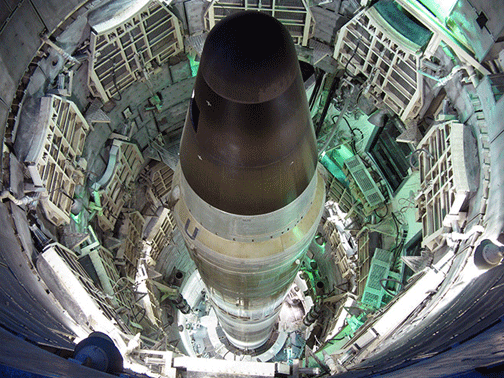
Tactical nukes are particularly problematic because their short range provides the missing link between a localised conventional war and a highly improbable global exchange of strategic nuclear missiles between Moscow and Washington.
Tactical nuclear weapons are no status quo weapons. Their battlefield purpose increases the chance of a nuclear escalation, which is why the superpowers removed most of them from Central Europe in the late 1980s and early 1990s.
If everything goes to plan, the controversial B61 weapons will be modernised by around 2020. This “life extension programme” is not simply an initiative to replace rusty old nukes with shiny new ones, but an attempt to increase their accuracy, to replace free fall with precision guided bombs.
Ultimately, this will transform the B61 into a new kind of weapon and undermine any pretence that the West is still in the game of denuclearisation.
Interestingly, plans to modernise the B61 were initiated in April 2010, only shortly after NATO decided to scrap its nuclear missile shield in Eastern Europe and in the same month that the two largest nuclear powers signed a new Strategic Arms Reductions Treaty.
How does NATO explain this nuclear relapse precisely at a time when the alliance had just “reset” its relations with Russia? And what role does the B61 play in the Ukrainian proxy war?……..http://www.aljazeera.com/indepth/opinion/2014/12/nato-nuclear-relapse-2014123161917509924.html
USA getting ready for a year of conflict, ready for first strike nuclear attack.
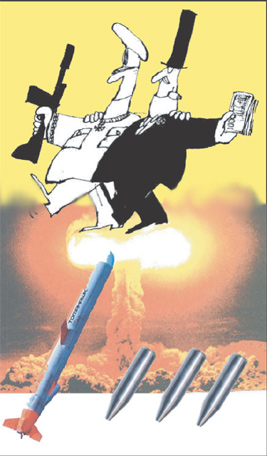 US shaped 2015 to be a year of conflict Press TV Dr. Paul Craig Roberts Jan 15 The conflict that Washington has initiated between the West and Russia/China is reckless and irresponsible. Nuclear war could be the outcome. Indeed, Washington has been preparing for nuclear war since the George W. Bush regime.
Washington has revised US war doctrine in order to initiate conflict with a first strike nuclear attack.
Washington has discarded the ABM treaty in order to build and deploy anti-ballistic missiles that are intended to prevent a retaliatory strike against the US. Washington is engaged in a buildup of military forces on Russia’s borders, and Washington is demonizing Russia’s government with false charges.
As the Bush/Obama regimes dismantled the safeguards put in place in order to minimize the risk of nuclear war, no protests came from the American public or the media. Washington’s European vassal states have also been silent.
Washington’s drive for hegemony has brought nuclear insanity to the world.
Moscow and Beijing understand that they are Washington’s targets. As Larchmonter explains, Russia and China are conjoining their economic and military capabilities in order to protect against Washington’s attack. (Read what Larchmonter reports. Open the URL in my column below and run your cursor over the bottom of the page and click “page fit.” Choose 50% and readable text will fill your screen.)
Washington’s demonization of Saddam Hussein, Gaddafi, and Assad were preludes to military attacks on Iraq, Libya, and Syria. In view of these precedents, it is reasonable to regard Washington’s demonization of Vladimir Putin as a prelude to military action.
Russia is not Iraq, Libya, or Syria. Russian war doctrine states that Russia can use nuclear weapons in response to a nuclear or conventional attack on Russia. For the world to sit silent while Washington’s arrogance provokes armageddon telegraphs total political failure. Where are the voices in behalf of humanity?……………….
Dr. Paul Craig Roberts was Assistant Secretary of the Treasury for Economic Policy and associate editor of the Wall Street Journal. He was columnist for Business Week, Scripps Howard News Service, and Creators Syndicate. He has had many university appointments. His internet columns have attracted a worldwide following. Roberts’ latest books are The Failure of Laissez Faire Capitalism and Economic Dissolution of the West and How America Was Lost. http://www.presstv.ir/Detail/2015/01/01/391127/2015-to-be-a-year-of-nuclear-war
1 This Month
23-25 October – on Zoom – World BEYOND War’s annual global conferenc


Shut down the radiation-damaged Heysham nuclear reactors now
To see nuclear-related stories in greater depth and intensity – go to https://nuclearinformation.wordpress.com

Say No to NASA’s Reckless Nuclear Reactor on the Moon
Say No to NASA’s Reckless Nuclear Reactor on the Moon

-
Archives
- October 2026 (199)
- September 2026 (339)
- August 2026 (330)
- July 2026 (355)
- June 2026 (287)
- May 2026 (306)
- April 2026 (356)
- March 2026 (251)
- February 2026 (267)
- January 2026 (308)
- December 2025 (358)
- November 2025 (359)
-
Categories
- 1
- 1 NUCLEAR ISSUES
- business and costs
- climate change
- culture and arts
- ENERGY
- environment
- health
- history
- indigenous issues
- Legal
- marketing of nuclear
- media
- opposition to nuclear
- PERSONAL STORIES
- politics
- politics international
- Religion and ethics
- safety
- secrets,lies and civil liberties
- spinbuster
- technology
- Uranium
- wastes
- weapons and war
- Women
- 2 WORLD
- ACTION
- AFRICA
- Atrocities
- AUSTRALIA
- Christina's notes
- Christina's themes
- culture and arts
- Events
- Fuk 2022
- Fuk 2023
- Fukushima 2017
- Fukushima 2018
- fukushima 2019
- Fukushima 2020
- Fukushima 2021
- general
- global warming
- Humour (God we need it)
- Nuclear
- RARE EARTHS
- Reference
- resources – print
- Resources -audiovicual
- Weekly Newsletter
- World
- World Nuclear
- YouTube
-
RSS
Entries RSS
Comments RSS

