In the 21st Century Nuclear Command-and-Control has become too complex
The humbling truth is that strategic analysts have no clue as to what unanticipated event or events in combination may trigger nuclear war in the 21st century. It behooves us to start thinking about it
 Nuclear command-and-control in the Millenials era Nautilus Institute by Peter Hayes17 February, 2015
SUMMARY
In this report Peter Hayes writes about the risk of nuclear war and complexity. He states that “very few leaders or even strategic scholars pay attention to the new complexity of the operating environment in which national nuclear command-and-control systems operate, or the new characteristics of the command-and-control systems and their supporting CISR systems that may contribute to the problem of loss-of-control and rapid escalation to nuclear war.
“Today, the underlying ground is moving beneath the feet of nuclear-armed states. The enormous flow across borders of people, containers, and information, and the growth of connectivity between cities, corporations, and communities across borders, is recasting the essential nature of security itself to a networked flux of events and circumstances that no agency or state can control. The meta-system of nuclear command-and control systems has emerged in this new post-modern human condition.”
Peter Hayes is Co-founder and Executive Director of Nautilus Institute for Security and Sustainability; Honorary Professor at the Center for International Security Studies, Sydney University, Australia………… Continue reading
India builds up nuclear submarines
Govt approves construction of 7 stealth frigates, 6 nuclear-powered submarinesRajat Pandit,TNN | Feb 18, 2015, NEW DELHI: In a major step towards building a formidable blue-water Navy for the future, the Modi government has cleared the indigenous construction of seven stealth frigates and six nuclear-powered attack submarines, which together will cost well upwards of Rs 1 lakh crore. ……http://timesofindia.indiatimes.com/india/Govt-approves-construction-of-7-stealth-frigates-6-nuclear-powered-submarines/articleshow/46281364.cms
Nuclear projects between China and Pakistan – a weapons proliferation worry
China, Pakistan, and Nuclear Non-Proliferation Recent evidence regarding China’s involvement in Pakistan’s nuclear program should provoke international scrutiny. The Diplomat By Rohan Joshi February 16, 2015 China’s confirmation that it is involved in at least six nuclear power projects in Pakistan underscores long-standing concerns over both the manner in which both China and Pakistan have gone about engaging in nuclear commerce and the lack of transparency around China-Pakistan nuclear cooperation in general. The guidelines of the Nuclear Suppliers Group (NSG), a 48-nation body that regulates the export of civilian nuclear technology, prohibit the export of such technology to states, like Pakistan, that have not adopted full-scope International Atomic Energy Agency (IAEA) safeguards. Yet over the last decade, China has accelerated nuclear commerce with Pakistan while contending that its actions are in compliance with NSG guidelines, an argument that is not entirely convincing.
Today, China is not only a violator of global nuclear non-proliferation norms, but also presents the most convincing evidence of the non-proliferation regime’s ineffectiveness. The pattern of its behavior on the nuclear front as it relates to Pakistan goes well beyond the scope of what may be construed as the state’s legitimate ambition to be a leader in the supply of civilian nuclear technology…….http://thediplomat.com/2015/02/china-pakistan-and-nuclear-non-proliferation/
Nuclear nonproliferation is under threat
Nuclear nonproliferation is under threat, and so is American national security WP By Rebecca Davis Gibbons February 14 The newly released 2015 National Security Strategy (NSS), the aspirational security blueprint for the final years of the Obama administration, refers to the risk of nuclear proliferation and nuclear material no fewer than eight times in its 29 pages of text. The key passage on Page 11 reads “no threat poses as grave a danger to our security and well-being as the potential use of nuclear weapons and materials by irresponsible states or terrorists.” One of the greatest tools the United States has to combat this threat is the nuclear non-proliferation regime. However, shifting global power could threaten the nonproliferation regime architecture in ways that could have serious long-term security consequences.
The Treaty on the Non-Proliferation of Nuclear Weapons, or the NPT, is the cornerstone of the nuclear nonproliferation regime, a set of treaties, agreements, and norms aimed at curtailing the spread of nuclear weapons and dangerous nuclear materials. It was this very architecture—the NPT, International Atomic Energy Agency (IAEA) safeguards, IAEA inspections, IAEA referrals to the U.N. Security Council, and six rounds of sanctions — that brought Iran to the negotiating table, and which remains the most viable way to approach nuclear proliferation peacefully. . ……http://www.washingtonpost.com/blogs/monkey-cage/wp/2015/02/14/the-2015-national-security-strategy-and-the-future-of-nuclear-nonproliferation/
USA – India agreement raises danger of nuclear weapons proliferation and nuclear war
Even more serious has been the deal’s impact on the nuclear arms race between India and Pakistan……..
By granting India access to uranium, the deal allows India to divert its indigenously-mined uranium to military applications without detracting fuel from the civilian program. To get uranium to India, the U.S. pressured members of 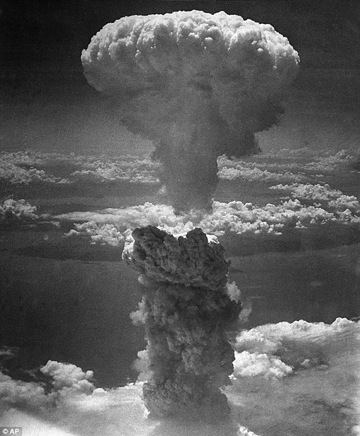 the Nuclear Suppliers Group to “[ease] long-standing restrictions on nuclear trade with India.” Since then, Australia has committed to providing India with uranium
The international community would do best if it encouraged and helped India and Pakistan to settle their differences and accede to the NPT – and if no nation provided either of them with new nuclear technology or fuel until they scale back their military nuclear programs………
The Darker Side of the U.S.-India Nuclear Deal The recent “breakthrough” is cause more for concern than it is for celebration. The Diplomat By Amitai Etzioni February 13, 2015 The American media is gushing about improvements to the United States-India relationship in the wake of President Barack Obama’s January visit to India. Among the achievements stemming from the visit is what the media had called a “breakthrough” that paved the way for implementing the two nations’ civilian nuclear cooperation deal. However, examining the reasons why this deal was first struck, its components, and its side effects suggests that it is a cause more for concern than for celebration. Continue reading
Forgotten Pacific Island nuclear bomb atrocities – example Kalama Island and Sand Island
As with all Pacific nuclear test sites, the end of nuclear testing has not ended the nuclear hazard for the peoples of the Pacific. The US government must take responsibility for the full clean up of Johnston Atoll.
Cleaning up Johnston Atoll, Nautilus Institute, Nic Maclellan, 25 November 2005
From the beginning of the nuclear age, the peoples of the Pacific islands have borne the brunt of nuclear weapons testing by France, Britain and the United States. Seeking “empty” spaces, the Western powers chose to conduct Cold War programs of nuclear testing in the Pacific. Between 1946-1996, over 315 atmospheric and underground nuclear tests were conducted at ten different sites in the desert of Australia and the islands of the central and south Pacific. The nuclear powers showed little concern for the health and well-being of nearby island communities, and those civilian and military personnel who staffed the test sites.
Between 1946 and 1958, the US military conducted 67 nuclear tests at Bikini and Enewetak Atolls in the Marshall Islands. Less well known are the US nuclear tests on Johnston Atoll in 1962.
Johnston Atoll is located between the Marshall Islands and Hawai’i, and is known to the Kanaka Maoli people as Kalama Island. The island was claimed for the Kingdom of Hawai’i in July 1858, with the support of King Kamehameha.
With the US take-over in Hawai’i in 1898, Johnston effectively became a US possession, even though the Territory of Hawai’i continued to claim jurisdiction over Kalama Island and Sand Island (which made up the atoll) into the twentieth century. Continue reading
Sending more nuclear weapons to Europe is the wrong move
The Wrong Move: Adding Nuclear Weapons to the Russia-Ukraine Conflict Defense One, FEBRUARY 9, 2015 BY LT. GEN. ROBERT GARDGREG TERRYN
Despite the wishes of two key Congressmen, more nuclear weapons in Eastern Europe is a bad idea.
You may have missed it, but last month two key members of Congress asked the military to move additional U.S. nuclear weapons and dual-capable aircraft into Eastern Europe. Reps. Mike Rogers, R-Ala., chairman of the House Armed Services Subcommittee on Strategic Forces, and Mike Turner, R-Ohio, chairman of the Tactical Air and Land Forces Subcommittee, sent a joint letter to Defense Secretary Chuck Hagel and Secretary of State John Kerry advocating the addition of new sites in Eastern Europe for the deployment of additional U.S. nuclear weapons and dual-capable aircraft.
In their letter, the two chairmen extend a Russian statement claiming its sovereign “right” to deploy nuclear weapons in Crimea to an “intention” to do so. They also assert Russian “moves to deploy nuclear-capable Iskander short-range ballistic missiles as well as nuclear-capable Backfire bombers in the illegally occupied territory [Crimea].”
There is no evidence that Russia has taken or is preparing to take any of these actions; but the letter alleges that they pose a new military threat to U.S. allies and our forces in Europe, and that the U.S. must respond “to change President [Vladimir] Putin’s calculus.”
Fortunately, nuclear weapons have played no overt role in Russia’s annexation of Crimea or its ongoing aggression in eastern Ukraine. And while the U.S. and its European allies must react, introducing a nuclear confrontation into the already dangerous situation is more likely to cause Putin to respond in kind than to change his calculus. Declared U.S. policy is to reduce the role of nuclear weapons in our national security, not to employ them in hopes of intimidating a hostile head of state……..
Deploying additional U.S. tactical nuclear weapons to Europe would make them more vulnerable to a Russian preemptive attack, even with conventional weapons, in the event of an escalating crisis. Also, it is well-known that Russia possesses a far larger stockpile of tactical nuclear weapons than the U.S.has in its inventory. Russia could be tempted to employ its tactical nuclear weapons superiority to take out the U.S.weapons deployed in Europe in the mistaken belief that it could confine the conflict to Western Europe. ……
Deploying additional U.S. tactical nuclear weapons and more dual-capable aircraft in Europe provides no advantage: It would be an expensive initiative that would add nothing to our security, divert funds from higher priority defense expenditures, likely provoke Russia to deploy nuclear weapons in Crimea, increase the possibility of nuclear war, and be divisive amongst our NATO allies http://www.defenseone.com/ideas/2015/02/wrong-move-adding-nuclear-weapons-russia-ukraine-conflict/104940/
Complicated nuclear weapons problems for USA’s new secretary of defense-in-waiting
VOICE The Nuclear Trials of Ashton Carter The new secretary of defense-in-waiting faces some complicated decisions when it comes to the modernization of America’s nuclear triad. FP, BY JEFFREY LEWIS FEBRUARY 5, 2015“………Carter inherits a mess. In November, the Pentagon received two reviews of the Department of Defense’s nuclear enterprise. Outgoing Secretary of Defense Chuck Hagel pledged more money and high-level attention to the nuclear mission after a series of embarrassing stories that undermine public confidence in the stewardship of the nation’s nuclear stockpile. Implementing those changes will land in Carter’s lap.
It will not be an easy task. The pair of reviews were, depending on how one counts them, the ninth and tenth separate review ordered to stop the series of humiliations visited upon the nation’s nuclear stewards in the past seven years.
A partial list of embarrassing stories includes: the so-called “munitions transfer incident” in which six nuclear weapons were mistakenly flown across the country; an accidental shipment of Minuteman III nosecones to Taiwan; the removal of the commander of the intercontinental ballistic missile (ICBM) force for an epic bender involving a Beatles cover band at a Mexican restaurant in Moscow; the reprimand of the number two official at U.S. Strategic Command who is the subject of a criminal probe involving gambling with fake casino chips; the court-marshal of a launch officerinvolved with a drug ring — as well as a plethora of other embarrassments ranging from widespread cheating on examinations, poor marks in unit assessments, and violations of security procedures including launch officerssleeping with the door to the command capsule propped…….
American nuclear posture has remained essentially unchanged since the Cold War. There was, during the early years of the Clinton administration, a brief moment when something different seemed possible. The Clinton administration undertook a comprehensive review of defense policy after the end of the Cold War called the Bottom-Up Review. As a kind of complement, the administration also conducted the first Nuclear Posture Review (NPR). ……..
 The problem is that just outside of 10 years, the United States will be simultaneously purchasing the following systems:
- A new ballistic missile submarine (called SSBN-X) with procurement stretching overFY21-35. Cost: $77-102 billion.
- A new ICBM, with procurement stretching over FY 2027-2034. Cost: $80-120 billion.
- A new long-range strike bomber (LRS-B) that will be in service “by the mid-2020s” with procurement stretching into the 2030s. Cost: $55 billion, plus a few tens of billion in R&D.
- A new long-range standoff cruise missile (LRSO) that no one thinks will survive austerity.Cost: $20-30 billion, including that of a new warhead.
Oh, and let’s not forget that the Air Force will also be spending between $8-10 billion per year through 2037 on procuring F-35 aircraft.
People who don’t want to admit that the current nuclear modernization plan is impossible like to imply that my estimates are somehow off. That’s what I don’t make my own estimates. I am simply curating the estimates by the Department of Defense, the services, or independent government entities like Government Accountability Office or Congressional Budget Office. (Go ahead, click on the links.) When you put the plans next to one another, it is immediately clear there isn’t enough money.
Defense Department officials are already calling this period in the late 2020s a “modernization mountain” — a period when the United States will be attempting to simultaneously replace all three legs of the triad, in addition to purchasing new fighters. I have already written that I think our effort to climb the modernization mountain ends like Jon Krakauer’s Into Thin Air. ……..https://foreignpolicy.com/2015/02/05/nuclear-triad-modernization-strategic-defense-ashton-carter-pentagon/
Documents reveal America’s Doomsday Plan To Declare Martial Law
Plan C: America’s Nuclear Doomsday Plan To Declare Martial Law http://www.gizmodo.com.au/2015/01/plan-c-americas-nuclear-doomsday-plan-to-declare-martial-law/ MATT NOVAK31 JANUARY 2015Plan C evolved and changed as different people in the chain of command got involved. At one point, Plan C was envisioned as a measure that would be implemented before any potential war might start. In other iterations, it was to be the course of action only after nuclear war with the Soviets had begun.
On November 22, 1955 the Soviet Union first successfully detonated a hydrogen bomb, finally catching up to the United States with its nuclear tech capabilities. The H-Bomb was roughly 1000 times more powerful than the atomic bombs that had been dropped on Japan a decade earlier, and more than ever, the US was concerned about the prospect of worldwide nuclear annihilation. By April of 1956 it had drafted its new emergency response.
 One aspect of Plan C was the implementation of an emergency program to arrest precisely 12,949 individuals whose “affiliations with subversive organisations” made them a threat to the security of the United States. “Enemy diplomats” were to be arrested as well. The newly released documents don’t include who precisely was on these lists.Was there a Plan D? You bet. Plan D involved the relocation of all high ranking government personnel to secret locations. It was part of “Operation Alert, 1956″, which was tested in July of 1956. Details of the CIA’s plan for Operation Alert 1956 were released in 2009.
As Muckrock notes, Plan C was never distributed widely and details of the plan were ordered destroyed in July of 1957. Only about 30 pages about Plan C have been released so far. There are roughly 150 more pages that are still being processed. Some of the remaining unreleased documents are being looked over by FEMA.
We’re no longer embroiled in the middle of a Cold War. Or at least we’re not supposed to be. But you can bet that the US government has all kinds of contingency plans in place in the event of nuclear war or the like. Do those plans include martial law and the rounding up of people considered subversive? I suppose we’ll find out in another 60 years. Provided we’re lucky enough to avoid nuclear war in the first place.
You can read all of the documents released by the FBI about Plan C over at Muckrock.
New Zealand steadfastly maintains its Nuclear Ban
“There is only one thing more dangerous than being attacked by nuclear weapons and that is being protected by them.”
NEW ZEALAND ROBUSTLY DEFENDS NUCLEAR BAN Eurasia Review FEBRUARY 1, 2015 BY NEENA BHANDARI The small Pacific island country of New Zealand has punched above its weight in the international disarmament debate. For nearly three decades it has pursued an active nuclear free policy, banning entry of US warships carrying nuclear weapons or propelled by nuclear power into its ports despite being part of the ANZUS Treaty.

NZ, along with the United States (US) and Australia, was amongst the three original signatory governments to the ANZUS treaty, a trilateral framework for security arrangements and cooperation, which was concluded in 1951.
From the mid-1960s to the mid-1980s, New Zealand opposed French nuclear tests in the Pacific. In 1983, the visit of the nuclear-powered frigate USS Texas sparked protests. Ordinary people spurred an anti-nuclear movement, which reached its peak in the mid-1980s and shaped NZ’s foreign policy and identity as a nation.
“It was an extremely broad campaign, which included professionals, neighbourhood groups, students, religious, non-religious, young and old. In many ways, it was the diversity and the non-hierarchical nature of the movement that was part of its appeal and strength. At one point there were over 300 local activist groups across the country,” says Marie Leadbeater, the author of `Peace, Power and Politics: How New Zealand became nuclear free
The defining moment came in July 1985 with the sinking of the Greenpeace flagship, Rainbow Warrior, which had been involved in protests over French nuclear testing. Continue reading
Norwegian military found out that Russian bomber near Norway’s coast had nuclear warhead
Report: Russian bomber intercepted by Norwegian F-16s carried nuclear warhead, Alaska Dispatch News Thomas Nilsen, Barents Observer February 3, 2015 A Norwegian military listening post intercepted cockpit conversations revealing that one of the Tu-95 flying around the coast of Norway last Wednesday had a nuclear payload on board.
Two F-16s were scrambled from Bodø airbase and met the Russian planes outside Finnmark. A group of six Russian aircrafts were identified by the Norwegian fighter jets — two Tu-95 strategic long-range bombers, two Il-78 tankers and two MiG-31 fighter jets. The incident took place on Wednesday, Jan.28.
The Norwegian F-16s followed the Russian planes outside Norwegian airspace on the southbound route. For Norway, scrambling F-16s to meet Russian bombers has been routine since President Vladimir Putin in 2007 ordered his strategic bombers to resume flights in international airspace.
The British newspaper Sunday Express reported that there was a nuclear payload onboard.
The newspaper reports that both Prime Minister David Cameron and Defense Secretary Michael Fallon were alerted after cockpit conversions confirming the bomber’s nuclear payload were intercepted by a Norwegian military listening post and shared with the British Ministry of Defense…
….. BarentsObserver has not succeeded getting the nuclear warhead information confirmed, or disproved, from either the Norwegian military intelligence or the Joint Command Headquarters. http://www.adn.com/article/20150203/report-russian-bomber-intercepted-norwegian-f-16s-carried-nuclear-warhead
National, Local Groups Call for Halt in NIF Plutonium Shots
National, Local Groups Call for Halt in NIF Plutonium Shots, Tri Valley Cares, 3 Feb 15
On behalf of Tri-Valley CAREs and the Natural Resources Defense Council (NRDC), the law firm of Meyer, Glitzenstein, and Crystal sent a detailed, 10-page letter yesterday calling on the Secretary of Energy to cancel plutonium experiments at Livermore Lab’s National Ignition Facility (NIF). The plutonium experiments, also called shots, are slated to begin as early as Thursday, January 29, 2015. The groups’ letter points out the potential health and environmental impacts as well as the planned experiments’ nuclear non-proliferation risks, poses key questions to the agency, and seeks to halt the plan until the questions are answered and required reviews are completed.Livermore Lab proposes to begin, for the first time ever, up to 120 plutonium shots in NIF, without an inner containment vessel to capture plutonium debris.
Ten years have passed since the Department of Energy considered conducting plutonium experiments in NIF, and that plan has significantly changed. Most notably it no longer includes an inner containment vessel to prevent contamination.
Click here to download the Press Release… Click here to download the letter… http://trivalleycares.org/new/PUNIF_PR.html
Fiji nuclear veterans wait for British compensation: British govt waits for them all to die off
Nuclear test veterans: Britain urged to compensate Fijians over 1950s Christmas Island tests http://www.radioaustralia.net.au/international/2015-02-03/nuclear-test-veterans-britain-urged-to-compensate-fijians-over-1950s-christmas-island-tests/1411869 Fijian veterans of British nuclear tests in the Pacific are hoping the British government will finally offer them help after the Fijian government offered compensation payments. Fiji’s prime minister, Frank Bainimarama, announced his government would provide about $A6,000 payments to 24 surviving Fijian soldiers who were on Christmas Island (now Kiribati), during British nuclear tests in the late 1950s.
“Fiji is not prepared to wait for Britain to do the right thing,” he said.
“We owe it to these men to help them now, not wait for the British politicians and bureaucrats.
“I have this great honour to award these survivors a modest token of what we can afford in Fiji to finally acknowledge the great injustice that was done to them almost six decades ago.”
The prime minister said his government had to step in because too many men had gone to their grave without justice.
“We need to erase this blight on our history,” he said.
“We need to lift the burden on our collective conscience.”
One of the veterans who will receive the payments is 78-year-old Paul Ah Poy.
He was a 21-year-old sailor attached to the Royal British Marines when he saw his first nuclear explosion on Christmas Island just kilometres from where he stood on a beach.
“They tell us ‘look, face west’, we face west, and [they] tell you to close your eyes, you don’t open your eyes because we’ll melt,” he said.
“We were all scared, they tell us ‘stop squirming’. But I couldn’t keep still.”
Mr Ah Poy spent two years on Christmas Island (Kiribati) and witnessed seven nuclear explosions altogether.
He told Pacific Beat it was not long before he noticed the impact on his health.
“[A] few months later my hair started to come off,” he said.
“My gums started to bleed and sometimes I would almost black out.
“I though that was part of growing up until when we got together and start exchanging stories.”
Long-lasting effects
Mr Ah Poy said the effect of his radiation poisoning exposure had been passed on to his two sons, who are unable to have children.
He and other nuclear test veterans have been campaigning for decades to have the British government pay them compensation.
They made several attempts at suing the government but Britain’s statute of limitations thwarted their legal action.
Nic Maclellan is co-author of book on the Fijian nuclear veterans called Kirisimasi.
He said Britain failed to follow in the footsteps of France and the United States, which had passed legislation to recognise there were hazards for personnel at the test sites.
“It’s Britain however, that consistently refuses to recognise people who are affected in Australia, from the British test between 1952 and 1957 and the subsequent … hydrogen bomb tests conducted in the Christmas Island, in what’s today Kiribati.”
Test veteran Paul Ah Poy said while he was grateful for the payments from the Fijian government, the amount was insufficient to address health problems.
He said he would use the money to help fund his son’s university education and pay his bills.
He remained hopeful, however, the British government would follow the Fijian government’s lead.
“I just hope they might give us something while we’re still alive,” he said.
“It will really help us at this time of our life.”
UK claims that Russian bomber carrying nuclear missiles flew across the channel

 World War 3: Russian Bomber Intercepted, Tu-95 Carried Russia’s Nuclear Weapons Claims England Inquistr 1 Feb 15 Fears of World War 3 continue to rise, and when the RAF fighters scrambled to have a Russian bomber intercepted over the channel it was uncertain whether or not they actually carried Russia’s nuclear weapons. Now the British Ministry of Defense is claiming that Russian nuclear missiles were indeed on board the Tu-95 “Bear” bomber.
The sight of the two Russian bombers so close to British air space was yet another sign that Cold War 2 was upon us. During the confrontation, Tu-95 bombers and the RAF Typhoons came as close as 1,000 feet away from each other. They were so close that the British pilots could communicate with the Russian bomber with hand signals.
Sources within the British Ministry of Defense claims that one of the two Russian bombers intercepted carried at least one of Russia’s nuclear weapons designed to “seek and find” Trident submarines. Both Prime Minister David Cameron and Defense Secretary Michael Fallon were alerted after cockpit conversations confirmed the Russian bomber’s nuclear payload were intercepted by a Norwegian military listening post.
“We downloaded conversations from the crew of one plane who used a special word which meant the would-be attack was a training exercise,” said a senior RAF source according to Express. “They know that we can pick up their transmissions and it would only be of concern if the often used release weapon order was changed. We also knew from another source that one of the aircraft was carrying a nuclear weapon long before it came anywhere near UK airspace.”
Experts say the belief that the Russian bomber was carrying nuclear weapons is an example that Vladimir Putin is upping his game.
“This continual and increasing probing of NATO airspace by these nuclear bombers and fighter aircraft, tankers and electronic aircraft by Russian is a pattern of increased pressure by Russia designed to remind the West and NATO that they remain a large nuclear power, and a serious military power with reach,” said Justin Bronk of the Royal United Services Institute………
Fortunately, the Russian bomber was not on a mission to start World War 3, and Vladimir Putin would have been required to give a direct order in order to make the warhead live. The other Russian bomber was apparently acting as a “mothership” during the military exercise. http://www.inquisitr.com/1804787/world-war-3-russian-bomber-intercepted-tu-95-carried-russias-nuclear-weapons-claims-england/#PzH5oQQ11saMITcH.99
India tests nuclear-capable missile that could reach China , even Europe
India tests nuclear-capable missile from mobile launcher,DW, 30 Jan 15 India has carried out the first launch of its Agni-V long-range missile from a mobile mount. The weapon, which can carry nuclear warheads, is capable of reaching China and even Europe.
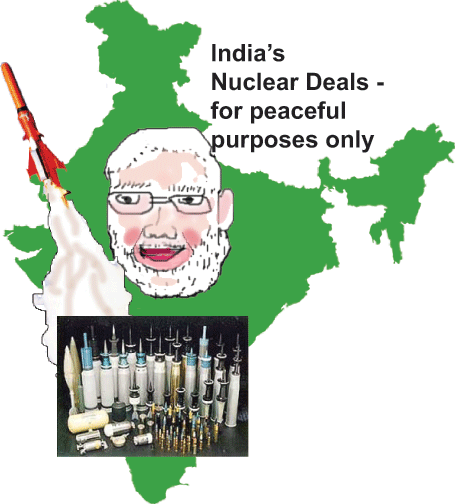
Saturday’s test-launch of the Agni-V ballistic missile was the first time that the weapon has been fired from a truck mount – called a “canister” – rather than a concrete launchpad, a spokesman for India’s Defense Research and Development Organization said.
The mobile launchpad will facilitate flexible deployment of the missile, which has a range of 5,000 kilometers (3,100 miles) – making it capable of reaching the Chinese mainland, or nearly all of western Europe.
“Successful test-firing of Agni-V from a canister makes the missile a prized asset for our forces,” Prime Minister Narendra Modi said on Twitter.
The 17-meter (18.6-yard) weapon, which weighs 50 tons, was launched from the test range on Wheeler Island off the eastern state of Orissa.
It is the third time that the Agni-V missile, named after the Sanskrit word for “fire,” has been tested, having received its initial launch in April 2012 (pictured above).
Deterring ‘evil eyes’
The test comes as India, the largest importer of arms in the world, is involved in a defense upgrade to the tune of $100 billion (88.6 billion euros).
Modi has said he wants to increase India’s military power to the extent that no other country “dare cast an evil eye” on it. His right-wing government has pushed on with long-delayed projects worth over $60 billion since taking power in elections in May. http://www.dw.de/india-tests-nuclear-capable-missile-from-mobile-launcher/a-18227324
1 This Month
23-25 October – on Zoom – World BEYOND War’s annual global conferenc


Shut down the radiation-damaged Heysham nuclear reactors now
To see nuclear-related stories in greater depth and intensity – go to https://nuclearinformation.wordpress.com

Say No to NASA’s Reckless Nuclear Reactor on the Moon
Say No to NASA’s Reckless Nuclear Reactor on the Moon

-
Archives
- October 2026 (190)
- September 2026 (339)
- August 2026 (330)
- July 2026 (355)
- June 2026 (287)
- May 2026 (306)
- April 2026 (356)
- March 2026 (251)
- February 2026 (267)
- January 2026 (308)
- December 2025 (358)
- November 2025 (359)
-
Categories
- 1
- 1 NUCLEAR ISSUES
- business and costs
- climate change
- culture and arts
- ENERGY
- environment
- health
- history
- indigenous issues
- Legal
- marketing of nuclear
- media
- opposition to nuclear
- PERSONAL STORIES
- politics
- politics international
- Religion and ethics
- safety
- secrets,lies and civil liberties
- spinbuster
- technology
- Uranium
- wastes
- weapons and war
- Women
- 2 WORLD
- ACTION
- AFRICA
- Atrocities
- AUSTRALIA
- Christina's notes
- Christina's themes
- culture and arts
- Events
- Fuk 2022
- Fuk 2023
- Fukushima 2017
- Fukushima 2018
- fukushima 2019
- Fukushima 2020
- Fukushima 2021
- general
- global warming
- Humour (God we need it)
- Nuclear
- RARE EARTHS
- Reference
- resources – print
- Resources -audiovicual
- Weekly Newsletter
- World
- World Nuclear
- YouTube
-
RSS
Entries RSS
Comments RSS

