America’s nuclear non-proliferation policy is a disaster
 America’s disastrous nuclear non-proliferation policy: By Ira Helfand http://www.masslive.com/opinion/index.ssf/2015/05/americas_disastrous_nuclear_no.html
Starting this week, the states who are party to the Nuclear Non-Proliferation Treaty, NPT, will gather at the United Nations for their five year review conference to assess whether the treaty is meeting its goals. The US has long viewed this treaty as a key bulwark against the spread of nuclear weapons to other countries. Since it was adopted 45 years ago, three nations which never signed the Treaty have developed nuclear weapons and one country that did sign has withdrawn and built a small nuclear arsenal, but we have not seen the wholesale spread of nuclear weapons that many feared when the NPT was negotiated in the late 1960’s.
Now the US government is worried that the NPT regime could fall apart. While the NPT sought to keep states which did not have nuclear weapons from acquiring them, it also required, under Article VI of the Treaty, that the states which did have nuclear weapons conduct good faith negotiations to eliminate them. There is a growing consensus around the world that the nuclear weapons states have not met their obligations under Article VI and do not have any plans to do so.
Indeed, all of the nuclear weapons states have ambitious plans to upgrade and modernize their nuclear forces. Here in the US, the administration has put forth a modernization plan that will cost over $1 trillion over the next 30 years.
This “Austrian Pledge”, as it has come to be known, offers a way out of the dangerous impasse over nuclear weapons.
Faced with the failure of the nuclear weapons states to meet their obligations under the NPT, the rest of the world can abandon the Treaty and begin to develop nuclear weapons. Or, they can join in a new effort to enforce the NPT. They can begin the good faith negotiations to ban and eliminate nuclear weapons that the Treaty demands.
The US should embrace this effort. Instead it is working actively to undermine these negotiations before they even start.Reports in the Japanese and Norwegian press have clearly documented the efforts of the State Department to keep other countries from joining this movement.
The US needs to change course.
It should recognize that the world will not indefinitely tolerate a system of nuclear apartheid where some countries get to have nuclear weapons and others don’t. Possessing nuclear weapons may make us feel secure in the short run, but it fundamentally undermines our security and will lead to a world with many nuclear powers. The data on limited nuclear war show that even the “successful” use of our own nuclear weapons against an adversary abroad will cause catastrophic climate disruption that will devastate our own country. We need to understand that these weapons are suicide bombs and we who possess them have become a nation of suicide bombers.
Rather than spending a trillion dollars on modernizing these weapons, we urgently need to join the growing global effort to eliminate them throughout the world.
Ira Helfand is an urgent care physician, at Family Care Medical Center in Springfield. He is Past-President and currently on the Board of Directors, Physicians for Social Responsibility, and Co-President of International Physicians for the Prevention of Nuclear War, recipient of the 1985 Nobel Peace Prize.
Japan, despite its pacifist constitution, agrees to USA military expansion
Japan Agrees to New Military Cooperation Plan with United States Despite Its Pacifist Constitution, Democracy Now, 1 May 15 As peace activists gather in The Hague, Japan is moving toward taking a more active military role internationally despite having a pacifist constitution. On Tuesday, President Obama hosted Japanese Prime Minister Shinzo Abe for a White House state dinner. The two nations have just unveiled new guidelines for military cooperation. We examine Japan’s growing military role with Kozue Akibayashi, the newly elected president of the Women’s International League for Peace and Freedom. She also discusses opposition to the presence of some 25,000 U.S. military personnel stationed in Okinawa. “The U.S. military has been granted almost diplomatic immunity to whatever they do. Crimes are committed, but they are not punished. They get away.”
Nuclear weapons and the USA’s militarisation of Asia-Pacific
Obama Threatens China with Nuclear Weapons. Militarization of Asia-Pacific By Stephen Lendman Global Research, May 01, 2015 Last Friday, National Security Council senior Asian affairs director Evan Medeiros said John Kerry and Defense Secretary Ashton Carter would meet their Japanese counterparts in New York on Monday.
They’d “announce some historic changes to the way US-Japan alliance operates” ahead of Prime Minister Shinzo Abe’s Washington visit this week. Continue reading
Take nuclear arsenal off high alert , urges former USA commander
Cartwright said cyberthreats to the systems that command and control U.S. nuclear weapons demand greater  attention. While the main worry once was a hacker acting alone, today it is a hostile nation-state, he said, that poses more of a threat even as the Pentagon has improved its cyberdefenses.
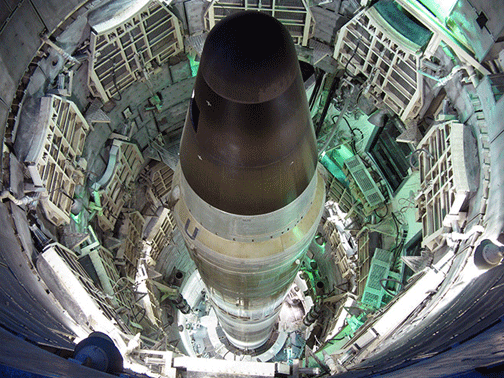 Former U.S commander: Take nuclear arsenal off high alert By Tribune wire reports contact the reporter 28 Apr 15 Taking U.S. and Russian missiles off high alert could keep a possible cyberattack from starting a nuclear war, a former commander of U.S. nuclear forces says, but neither country appears willing to increase the lead-time to prepare the weapons for launch.
Retired Gen. James Cartwright said in an interview that “de-alerting” nuclear arsenals could foil hackers by reducing the chance of firing a weapon in response to a false warning of attack.
Essentially adding a longer fuse can be done without eroding the weapons’ deterrent value, said Cartwright, who headed Strategic Command from 2004 to 2007 and was vice chairman of the Joint Chiefs of Staff before retiring in 2011.
The Obama administration has considered and rejected the idea before of taking nuclear missiles off high alert. There appears to be little near-term chance that Moscow would agree to pursue this or any other kind of nuclear arms control measure, given the deteriorating U.S.-Russian relations after Russia’s intervention in eastern Ukraine.
The U.S. and Russia also are at odds over a U.S. accusation that Moscow is violating a treaty banning medium-range nuclear missiles…….
An example of the high alert level of U.S. nuclear weapons is the land-based nuclear force. These are the 450 Minuteman 3 missiles that are kept ready, 24/7, to launch from underground silos within minutes after receiving a presidential order.
A study led by Cartwright proposes to adjust the missile command and control system so that it would take 24 hours to 72 hours to get the missiles ready for launch. Continue reading
Deal with Iran will not lead to nuclear weapons proliferation
Why an Iran deal won’t lead to nuclear proliferation, WP, By Dina Esfandiary and Ariane Tabatabai April 28 This post is part of the “Iran and the Nuclear Deal” symposium.
When the P5+1 and Iran announced their framework agreement earlier this month, some analysts reiterated that a final deal would result in aproliferation cascade in the Middle East. This widely held and long-standing assumption remains largely unchallenged. But a careful look at the actual technical capability, political and security context, and intentions of potential contenders confirms that much of this hype is baseless.
Those who invoke the proliferation cascade theory often confuse both the cause and the actual result. Would a nuclear agreement with Iran or nuclear-armed Iran cause a cascade? Does the regional spread of civilian nuclear programs count as a proliferation cascade, or is it restricted to the spread of the bomb?…….
First, the entire region, except for nuclear-armed Israel, is party to the NPT. This means that they’ve already legally given up the nuclear weapon option. Moreover, nuclear weapon states can’t legally provide them nuclear weapons either. Second, many countries have safeguards agreements and some, the additional protocol, in place. This means that their programs are under close International Atomic Energy Agency (IAEA) scrutiny. Continue reading
Middle East chaos a financial bonanza for weapons industry
The Middle East accounts for approximately 32 percent of the United States’ weapons export market. From 2010 to 2014, the United States exported $43 billion in arms worldwide, according to the Stockholm International Peace Research Institute.
Russia has a thriving weapons export market as well. In 2012-2013, it sold $58.8 million in weapons to Iran and $1.2 billion in weapons to Syria
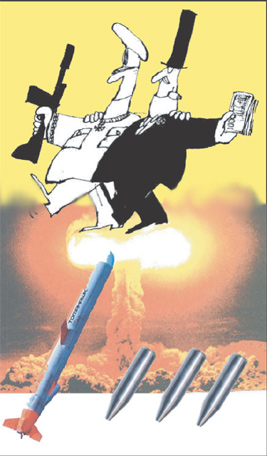 Weapons Manufacturers Are Making a Fortune Off Mid-East Chaos, Reader Supported News By Tim Mak, The Daily Beast 29 April 15
The Middle East is on a knife’s edge, thanks to a lunatic ISIS and a rising Iran. For American arms-makers, that means only one thing: opportunity.
 ar in Yemen. The continued threat of ISIS. Ongoing conflict in Iraq and Syria. Increasing Iranian influence. As America’s Middle Eastern allies watch their neighborhood burn, the U.S. defense industry is viewing increased instability as a money-making opportunity.
An unintended consequence of growing Iranian clout in the Middle East—punctuated most recently by a framework nuclear deal—has been the Obama administration’s decision to ease Gulf ally concerns by approving more sales of U.S.-made weaponry.
According to defense industry sources, inquiries for their product are way up. So while the region is a disaster for the Gulf states, the recent chaos is a timely godsend for the American defense industrial base—which due to congressional spending cuts is badly in need of customers. Continue reading
United Nations Secretary-General Ban Ki-moon warns on growing tensions, risks of nuclear war
Global tide of nuclear abolition has ebbed causing tensions among nations, Ban warns http://www.un.org/apps/news/story.asp?NewsID=50720#.VUBfRdKqpHw 28 April 2015 – Achieving a world free of nuclear weapons is “one of the most crucial debates of our time,” United Nations Secretary-General Ban Ki-moon said today, emphasizing that the international tide of nuclear abolition – so strong in 2010 – has ebbed and mounting tensions between nuclear-armed States have produced a return to Cold War mind sets.
“Nuclear weapons are again becoming embedded in national defence strategies. Support has deepened for misguided doctrines of deterrence,” Mr. Ban said in a message delivered by UN High Representative for Disarmament Affairs Angela Kane to the Symposium and High-Level Panel on the Non-Proliferation Treaty, Nuclear Disarmament, Non-Proliferation and Energy; Fresh Ideas for the Future.
“Modernization programmes envisage retention of these deadly weapons for decades to come. Nuclear weapon States have not demonstrated the leadership required to break the status quo, instead attaching hollow conditions to their disarmament obligations,” Mr. Ban added in the message.
The Symposium, a side event held in connection with the 2015 Review Conference of the Parties to the Treaty on the Non-Proliferation of Nuclear Weapons (NPT), which opened yesterday at UN Headquarters, was also expected to hear from UN Messenger of Peace, Michael Douglas.
“This Review Conference offers an opportunity to change the narrative; to remind all States parties that their collective good is best served by the full implementation of – and compliance with – all of the Treaty’s goals; and to put us back on course,” Mr. Ban said, calling on participants to provide ideas that will “propel us down the path to a world free of nuclear weapons.”
For over four decades, the Treaty has been a bulwark against the spread of the most dangerous and inhumane weapons ever devised, and it has been a central and essential mechanism for their elimination. Calling it “indispensable,” Mr. Ban said the Treaty has strengthened the security of all States parties, serving as a foundation for international security. Over the course of its history, the NPT has also helped cope with multiple challenges and competing positions.
While the ultimate goal of the NPT – to prevent the spread of nuclear weapons and to bring about their elimination – has not changed, the international security climate has evolved and continued to do so, with new problems constantly “testing our resolve,” Mr. Ban said.
To be effectively implemented, the Treaty requires constant tending to ensure that it remains strong and capable of safeguarding against the existential threat posed by nuclear weapons.
“We need new ideas to shore up the NPT, to confront new obstacles head on, and to overcome them,” he said. “Proliferation challenges persist. The Democratic People’s Republic of Korea continues with its dangerous and destabilizing activities, flouting international law and the will of the international community.”
At the same time, despite valiant efforts, the conference on a Middle East zone free of nuclear weapons and all other weapons of mass destruction has not yet taken place, Mr. Ban noted. The benefits of such a zone are manifold, including regional peace and stability.
“We have seen the sheer emergence of a movement seeking to address the humanitarian consequences of nuclear weapons. This has re-energized a frozen debate, reminding us that the indiscriminate and catastrophic costs of nuclear weapons are, at their core, human costs,” he added.
The 2015 Review Conference will run at UN Headquarters in New York through 22 May. The President-designate of the Conference is Ambassador Taous Feroukhi from Algeria.
The NPT is a landmark international treaty whose objective is to prevent the spread of nuclear weapons and weapons technology, to promote cooperation in the peaceful uses of nuclear energy and to further the goal of achieving nuclear disarmament and general and complete disarmament. It represents the only binding commitment in a multilateral treaty to the goal of disarmament by the nuclear-weapon States.
At Nuclear Non-Proliferation Treaty (NPT) Austria calls for ban on nuclear weapons
Austria, backed by 159 nations, calls for ban on nuclear weapons UNITED NATIONS | BY LOUIS CHARBONNEAU (Reuters) – Austria on Tuesday called for banning nuclear weapons because of their catastrophic humanitarian effects, an initiative it said now has the backing of 159 countries.
Austrian Foreign Minister Sebastian Kurz was speaking at the five-year review conference of the 1970 nuclear Non-Proliferation Treaty (NPT).
“The only way to guarantee that nuclear weapons will never be used again is through their total elimination,” Kurz told the 191 parties to the treaty, the world’s benchmark arms control accord. “All states share the responsibility to prevent the use of nuclear weapons.”
Diplomats from the 159 countries supporting the ban, presented ahead of the 70th anniversary of the U.S. atom bombs dropped on Japan, said the initiative was modelled on successful campaigns to ban land mines and other weapons and could take years to move forward.
The initiative has virtually no support among NPT nuclear weapons states and veto-wielding Security Council members – the United States, Britain, France, Russia and China – or the countries of NATO, an alliance that provides a kind of “nuclear umbrella” security guarantee for its members.
But most of the 193 U.N. members back it.
The five permanent Security Council members signed the NPT as nuclear weapons states, although the pact calls on them to negotiate the reduction and eventual elimination of their arms caches. Non-nuclear states complain that there have been too few steps toward nuclear disarmament.
Iranian Foreign Minister Mohammad Javad Zarif on Monday demanded countries possessing nuclear weapons scrap any plans to modernize their arsenals.
Four other states presumed to have nuclear weapons – Israel, Pakistan, India and North Korea – are not listed as supporters of the initiative…….http://uk.reuters.com/article/2015/04/28/uk-nuclear-un-austria-idUKKBN0NJ2IE20150428

China concerned at the expansion of North Korea’s nuclear arsenal
China warns North Korea’s nuclear arsenal is expanding, report says, Guardian, 23 Apr 15
Chinese experts believe their communist ally may already have an arsenal of 20 warheads and the enrichment capacity to double that figure by next year. Chinese nuclear experts believe North Korea may already have a nuclear arsenal of 20 warheads and the uranium enrichment capacity to double that figure by next year, the Wall Street Journal reported on Thursday.
The estimate, which the Journal said was relayed to US nuclear specialists in a closed-door meeting in February, is significantly higher than any previously known Chinese assessment.
It also exceeds recent estimates by US experts which put the North’s current arsenal at between 10 and 16 nuclear weapons.
A leading expert on North Korea’s nuclear programme, Siegfried Hecker, who attended the February meeting, said a sizeable North Korean stockpile would only compound the challenge the international community faces in persuading Pyongyang to decommission the weapons.
“The more they believe they have a fully functional nuclear arsenal and deterrent, the more difficult it’s going to be to walk them back from that,” Hecker told the Journal.
The Chinese estimate reflects growing concern in Beijing about the nuclear ambitions of its errant ally, and is the latest in a series of expert assessments that suggest Pyongyang is moving faster down the nuclear path than previously thought.
A recent report by US researchers warned that North Korea appeared poised to expand its nuclear program over the next five years and, in a worst case scenario, could possess 100 atomic arms by 2020……http://www.theguardian.com/world/2015/apr/23/china-warns-north-koreas-nuclear-arsenal-is-expanding-report-says
Catholic Church strongly urges for nuclear weapons ban at UN treaty review conference
 Catholics to press nuclear weapons ban at UN treaty review conference, Dennis Sadowski Catholic News Service | Apr. 24, 2015 It was April 11, 1963, as the Catholic church was in the midst of the Second Vatican Council, that St. John XXIII issued his landmark social encyclical Pacem in Terris (“Peace on Earth”) that included a call for a verifiable ban on nuclear weapons.
More than 50 years later, the Holy See continues to make the moral case for nuclear disarmament.
The Vatican’s most recent public comment came in December at the Vienna Conference on the Humanitarian Impact of Nuclear Weapons.
“The time has come to embrace the abolition of nuclear weapons as an essential foundation of collective security,” the Vatican said in a paper titled “Nuclear Disarmament: Time for Abolition” delivered to the conference.
In it, the church held firm to its stance that any use of nuclear weapons was immoral and argued that the time has come to abandon nuclear deterrence — the principle that such weapons might be used and that they exist to deter another country from using them. Previously, the Vatican conditionally accepted deterrence as “a step on the way toward progressive disarmament.”
But that has not happened, and Archbishop Bernardito Auza, the Vatican’s permanent observer to the United Nations, is likely to reiterate its call for total nuclear disarmament during the monthlong Non-Proliferation Treaty Review Conference opening April 27 at the United Nations….
“Look what the policy of deterrence means morally,” the bishop continued. “In order for deterrence to work, you have to intend to use it. What does that intention mean? That means you are willing to use an indiscriminate weapons to kill innocent people. Again, that is not morally acceptable.”……..
Pax Christi is among dozens of peace groups meeting and marching in New York in the days leading to the conference. Pax Christi also sent a statement to Catholic members of Congress signed by more than 1,200 people and organizations calling attention to the church’s stance. A copy of the Vienna statement and a letter from the Japanese bishops’ conference addressing nuclear weapons on the 70th anniversary of the use of atomic weapons at the end of World War II also were part of the package………………
Sr. Mary Ann McGivern, an NCR contributor and member of the Sisters of Loretto who served on her order’s Committee for Peace, joined the Pax Christi delegation. She attended the 2005 review conference.
McGivern told CNS her community has proposed that the U.S. enact a unilateral nuclear weapons ban.
“We’re saying that no matter what the rest of the world does, it’s time for the United States to set aside our nuclear weapons,” she said.
While it is unlikely that any proposal for quick action on a ban will find its way into the U.N. conference’s final report, McGivern said she hopes the idea will begin to percolate among the delegates.
“The only way real abhorrence against nuclear weapons develops,” she said, “is for people to gather, hear one another and take those ideas back home.” http://ncronline.org/news/peace-justice/catholics-press-nuclear-weapons-ban-un-treaty-review-conference
Iran nuclear deal a good template for all countries, to reduce nuclear weapons proliferation
 Could Iran be the start?Ifpress.com Erika Simpson, Postmedia Network Friday, April 17, 2015 Japan’s prime minister during the Fukushima catastrophe, Naoto Kan, delivered a message at the World Uranium Symposium in Quebec City in mid-April that it is time for the world to put an end to nuclear power. The symposium, held for the first time in Canada, tackled uranium issues, ranging from mining to fuel for nuclear reactors to explosive material for nuclear weapons.
This year will be a key year for debating the future of uranium, nuclear power plants and nuclear weapons. It’s the 70th anniversary of the atomic bombing of Hiroshima and Nagasaki and it’s time again for the UN conference that reviews the nuclear non-proliferation treaty every five years.
But the most high-profile nuclear issue is the interim accord between Iran and six world powers to restrict Iran’s development of nuclear power.
In the nuclear non-proliferation treaty, one fatal flaw is the quid pro quo deal in which the nuclear haves agreed to provide uranium and nuclear energy to the have-nots, which would continue to be non-nuclear, and in exchange the haves promised to get rid of their nuclear arsenals and move toward general disarmament. Fifty years ago, diplomats should have foreseen the problems with such discriminatory arrangements.
Another problem with the treaty stems from oil-rich countries, like Iran, and poor countries, like India and Pakistan, seeking to build nuclear power plants for reasons ranging from abundant energy and technological prestige to their not-so-secret desire to build nuclear weapons.
But by agreeing in the interim accord to enrich uranium to 3.7% only, Iran will forego the possibility of producing weapons-grade and weapons-usable uranium. Iran also promises to take two-thirds of its centrifuges out of service — the most-advanced centrifuges needed to make highly-enriched uranium.
In fact, India, Israel, Pakistan and many other countries will have nuclear programs that are far more extensive and dangerous than Iran’s. Moreover, all countries with nuclear power and nuclear weapons will continue to produce hundreds of thousands of tons of nuclear waste that need human stewardship for many generations into the future.
If the fundamentals of the Iranian deal could be treated as a template for all countries, the international community would be well on its way to choking off the supply of weapons-usable material everywhere.
But the Iran deal will be opposed by Israel, Saudi Arabia, Republicans in the U.S. Congress and the remaining strong supporters of Israel in the Harper cabinet. In a rare bit of bipartisan compromise, the U.S. Congress and the Senate foreign relations committee amended language that threatened to give U.S. hawks a chance to derail the talks and raise the risk of military strikes.
All the proliferators that refuse to sign the non-proliferation treaty and accept the strictest safeguards of the International Atomic Energy Agency — like Israel, India, North Korea and Pakistan — must be sanctioned, not just Iran………
Within the existing framework of international law, the proposed Iranian deal is as good as we can expect.
The entire nuclear regime, especially its cornerstone treaty, needs much stronger debate and qualified support.
The good news is there are many regional nuclear-weapon-free treaties around the world, covering large swaths of Central and Latin America, Southeast Asia, Africa and Central Asia. Each commits the states not to deploy, construct, receive or test nuclear weapons on its territory. Already 113 nations — a majority of UN members — have signed or ratified these treaties, and 50% of the world’s land area is governed by them.
There are even opportunities here in Canada to dismantle the nuclear option……..
Erika Simpson was a speaker at the World Uranium Symposium and will be a speaker at the Nuclear Non-Proliferation Treaty review conference. She is an associate professor of international relations at Western University and the author of the book NATO and the Bomb. http://www.lfpress.com/2015/04/17/could-iran-be-the-start
Cold war nuclear strategy is obsolete – USA and Russia should scrap these risky policies
How to Avert a Nuclear War, NYT, By JAMES E. CARTWRIGHT and VLADIMIR DVORKINAPRIL 19, 2015 We find ourselves in an increasingly risky strategic environment. The Ukrainian crisis has threatened the stability of relations between Russiaand the West, including the nuclear dimension — as became apparent last month when it was reported that Russian defense officials had advised President Vladimir V. Putin to consider placing Russia’s nuclear arsenal on alert during last year’s crisis in Crimea.
Diplomatic efforts have done little to ease the new nuclear tension. This makes it all the more critical for Russia and the United States to talk, to relieve the pressures to “use or lose” nuclear forces during a crisis and minimize the risk of a mistaken launch.
The fact is that we are still living with the nuclear-strike doctrine of the Cold War, which dictated three strategic options: first strike, launch on warning and post-attack retaliation. There is no reason to believe that Russia and the United States have discarded these options, as long as the architecture of “mutually assured destruction” remains intact.
For either side, the decision to launch on warning — in an attempt to fire one’s nuclear missiles before they are destroyed — would be made on the basis of information from early-warning satellites and ground radar. Given the 15- to 30-minute flight times of strategic missiles, a decision to launch after an alert of an apparent attack must be made in minutes.
This is therefore the riskiest scenario, since provocations or malfunctions can trigger a global catastrophe. Since computer-based information systems have been in place, the likelihood of such errors has been minimized. But the emergence of cyberwarfare threats has increased the potential for false alerts in early-warning systems. The possibility of an error cannot be ruled out………..
In theory, no sensible head of state would authorize a launch-on-warning strike after receiving information that just one missile, or a small number of missiles, were inbound, on the assumption that this was not an intentional, full-scale attack. But the launch-on-warning doctrine still rules in both Russia and the United States — in which case the risk, however small, of cataclysmic error remains.
This risk should motivate the presidents of Russia and the United States to decide in tandem to eliminate the launch-on-warning concept from their nuclear strategies. Continue reading
Escalating danger in Indian Ocean as China to sell submarines to Pakistan
Xi’s Submarine Sale Raises Indian Ocean Nuclear Clash Risk Bloombeg 17 Apr 15 Soon a brash naval captain may pose a bigger risk of triggering a nuclear crisis between India and Pakistan than a religious terrorist.
China is likely to conclude a sale of eight conventional submarines during President Xi Jinping’s visit to Islamabad on April 20, more than doubling Pakistan’s fleet. Analysts say it may be the first step in helping Pakistan gain the ability to fire nuclear weapons at sea, keeping pace with rival India.
The submarine sale will add to tensions in regional waters as Prime Minister Narendra Modi bulks up India’s navy to prevent China from gaining a foothold in the area. Xi’s visit, the first by a Chinese head of state to Pakistan since 2006, will also outline investments in gas pipelines, highways and rail links that will give China access to the Arabian Sea, in part through territory claimed by India.
“We are now entering a new era whereby naval interactions will occur under a perpetual nuclear shadow,” Rehman said by phone. “My main concern is less the risk of nuclear terrorism, but rather the dangers tied to naval friction within a newly nuclearized maritime domain.”…….http://www.bloomberg.com/news/articles/2015-04-16/xi-s-submarine-sale-raises-risk-of-nuclear-clash-in-indian-ocean
Increased risk of nuclear weapons proliferation, with Canada-India uranium sales deal
Canada-India uranium deal will spur proliferation, experts warn Arms control experts say Canada sends the wrong signal to countries that play by the rules By Evan Dyer, CBC News 17 Apr 15 India test-fired a nuclear-capable ballistic missile Thursday, just hours after signing a deal to buy 3,000 tons of Canadian uranium.The Agni-III missile, which has a range of over 3,000 kilometres, was fired from the Indian army’s test range on Wheeler Island in the Bay of Bengal. India declared the test a success…….While the terms of this week’s deal are not public, the nuclear cooperation agreement, first announced in 2010 and finalized in 2013, includes assurances that India use Canadian material for civilian purposes only……..
some nuclear proliferation experts say India has been able to make such a deal without abiding by the rules set out for most other countries that abide by the international non-proliferation regime. And they warn that countries the West has been attempting to bring into the rules-based system — such as Iran — will be less inclined to submit when they see the rules don’t apply to India.
Canadian technology used to gain bomb…..Of particular concern to the rest of the world was that India developed its bomb using nuclear material from a reactor it had acquired from Canada ostensibly for civilian use……..
Some experts fear Canada appears to be selling India uranium with fewer controls and conditions than it typically demands from NNPT member countries that do play by the rules.
“Normally there’s some sort of tracking and accounting system so that Canada would be receiving information from India very specifically about what Canada-sourced material is being used for,” says Trevor Findlay, a senior research fellow at Harvard University’s Managing the Atom project.
“In this case, because the agreement [to buy the uranium] is secret, we have no idea whether that’s in place, and it probably isn’t because the Indians have been pushing against that,” he told The Current.
Findlay and other experts warn that the special treatment for India shows other governments a country can ignore the rules, build the bomb, tough it out for a few decades and emerge on the other side as an accepted nuclear weapons power.
Already, Pakistan says the deals give India a strategic advantage, and Pakistan has blocked preliminary talks on the most important arms control initiative in years: a Fissile Material Cutoff Treaty that would ban future production of weapons-grade material.http://www.cbc.ca/news/politics/canada-india-uranium-deal-will-spur-proliferation-experts-warn-1.3036540
USA still complies with New START plan – has cut nuclear warheads
U.S. Cuts Nuclear Warhead Levels In compliance with New START, U.S. now has 1,597 treaty warheads; Russia, 1,582 Washington Free Beacon AP BY: Bill Gertz April 16,
Despite nuclear saber-rattling by Moscow, U.S. nuclear forces are close to reaching warhead, missile, and bomber numerical cuts required under the 2010 New START arms treaty, a senior Pentagon official told Congress on Wednesday.
U.S. nuclear warheads counted under the treaty with Russia were reduced from 1,642 to 1,597 between Sept. 1 and March 1, said Robert Scher, assistant secretary of defense for strategy, plans, and capabilities.
Russian nuclear warheads were cut from 1,632 to 1,582 during the same period, Scher told the House Armed Services strategic forces subcommittee in prepared testimony.
The treaty requires both nations to reduce their deployed strategic warhead arsenals to 1,550 by February 2018.
For land-based and sea-based missiles and bombers, U.S. forces were reduced from 912 to 898, and Russian missiles and bombers were cut from 911 to 890.
The treaty limit for those weapons is 800 strategic delivery vehicles by 2018.
Scher said the reductions continued despite “serious concerns” over souring U.S.-Russia relations………http://freebeacon.com/national-security/u-s-cuts-nuclear-warhead-levels/
1 This Month
23-25 October – on Zoom – World BEYOND War’s annual global conferenc


Shut down the radiation-damaged Heysham nuclear reactors now
To see nuclear-related stories in greater depth and intensity – go to https://nuclearinformation.wordpress.com

Say No to NASA’s Reckless Nuclear Reactor on the Moon
Say No to NASA’s Reckless Nuclear Reactor on the Moon

Please sign the petition here: https://www.change.org/p/stop-japan-s…
-
Archives
- October 2026 (190)
- September 2026 (339)
- August 2026 (330)
- July 2026 (355)
- June 2026 (287)
- May 2026 (306)
- April 2026 (356)
- March 2026 (251)
- February 2026 (267)
- January 2026 (308)
- December 2025 (358)
- November 2025 (359)
-
Categories
- 1
- 1 NUCLEAR ISSUES
- business and costs
- climate change
- culture and arts
- ENERGY
- environment
- health
- history
- indigenous issues
- Legal
- marketing of nuclear
- media
- opposition to nuclear
- PERSONAL STORIES
- politics
- politics international
- Religion and ethics
- safety
- secrets,lies and civil liberties
- spinbuster
- technology
- Uranium
- wastes
- weapons and war
- Women
- 2 WORLD
- ACTION
- AFRICA
- Atrocities
- AUSTRALIA
- Christina's notes
- Christina's themes
- culture and arts
- Events
- Fuk 2022
- Fuk 2023
- Fukushima 2017
- Fukushima 2018
- fukushima 2019
- Fukushima 2020
- Fukushima 2021
- general
- global warming
- Humour (God we need it)
- Nuclear
- RARE EARTHS
- Reference
- resources – print
- Resources -audiovicual
- Weekly Newsletter
- World
- World Nuclear
- YouTube
-
RSS
Entries RSS
Comments RSS

