USA’s wasteful and useless nuclear missiles
The inescapable fact is that the Minuteman III today is a missile without a mission whose continued operational deployment represents neither sound military doctrine nor responsible fiscal policy
Missiles Without a Mission, Irascible Musings, 8 May 15 Retired General James Cartwright, who led U.S. Strategic Command, responsible for America’s strategic nuclear forces, from 2004 until 2007, recently articulated in an interview that in order to safeguard American Minuteman III intercontinental ballistic missiles (ICBMs) from the threat of cyber-attack, the United States should “de-alert” them, taking them “off-line” so that rather than being prepared to be launched at a moment’s notice, it would take 24 to 72 hours to get the missiles ready for operation……………
The Minuteman missile was once a critical component of a so-called nuclear Triad composed of land-based ICBMs, nuclear-armed bombers, and submarine-launched ballistic missiles. The value of the Minuteman III to the Triad today centers on the fact that any potential enemy would have to employ hundreds, if not thousands, of nuclear weapons to neutralize it – in short, the Minuteman III exists to serve as a nuclear sump in a world where the risk of massive nuclear attack is slim to none. It is this sort of mind-numbing reality that has led to professional atrophy within the ranks of the US Air Force personnel who man the Minuteman III launch control centers, resulting in flagging morale, lax accountability and cheating scandals.
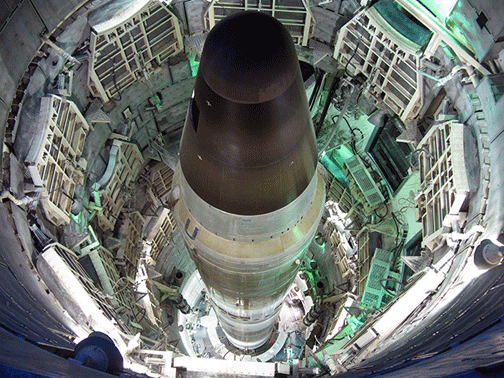
Nuclear deterrence today is not what it was thirty years ago. Continue reading
India’s Prime Minister Modi talks about alleviating poverty, but the big money goes on nuclear weapons
First was the announcement on April 10 that India would buy 36 Rafale fighter aircraft from France at a cost of some 4 billion dollars. The second was six days later when India test fired its nuclear-capable Agni-III ballistic missile with a range of 3,000 km and capable of carrying warheads weighing over a ton..
Nuclear missiles don’t come cheap, and of course we don’t know and will never be told the real cost of any country’s nuclear weapons’ program, but an expert estimate for India in 2011 was five billion dollars a year which is a substantial chunk of the national budget.
Third was the report that “US Defence Secretary Ashton Carter is likely to visit India next month when the two sides are expected to ink the nearly $2.5 billion deal for 22 Apache [attack] and 15 Chinook heavy-lift helicopters.” India’s financial commitment to the purchase of foreign military hardware is increasing day by day and there seems no end to the list of expensive weaponry being acquired. The billions of dollars are mounting up. There is no apparent ceiling to military expenditure, and neither is there a limit to acquisition of wealth by India’s growing number of mega-rich, as evidenced by the proudly broadcast news that India now has 90 billionaires (total worth $295 billion) and wasreported on May 7 as being “home to 56 of the world’s 2,000 largest and most powerful public companies.”
But then there is an interesting description of the other side of the Indian coin by Jean-Pierre Lehman, a visiting professor at a university in Rajasthan, about 70 miles from Delhi, who has no axe to grind butrecords and evaluates the Indian scene as he sees it at first hand:
Upon reaching the outskirts of Jaipur, the scene switches to hundreds and hundreds of dilapidated makeshift tents beneath which people live – or perhaps more accurately manage more or less to survive. This is far worse than poverty. It is destitution. It is people living in what can only be described as bestial conditions. There is of course no access to sanitation; people cook their meagre repasts on coal furnaces inside the tents — one of the major causes of death in India. The contrast with the swankiness of some of the residential and business districts of Jaipur is of chasm proportions — a vividly desperate illustration of the growing inequality in India. That people, our fellow humans, should live in such conditions in the early 21st century is a terrible indictment of Jaipur, of Rajasthan, of India, and indeed of humanity in general.
It is doubtful that anybody could convince them of a need for jet fighters, nuclear missiles or attack helicopters.
Like all the poor around the world — most notably in India’s neighbors Pakistan and Bangladesh, but also in America and Britain and almost everywhere else — those at the bottom of the economic pile in India have no voice, no dignity, no hope. Some politicians do try hard to help them. Prime Minister Modi is their leader and is certainly not hypocritical in that regard, unlike his enormously rich counterpart in Pakistan, but he won’t be able to alleviate poverty in his country for so long as he permits such massive military expenditure. India was the world’s largest importer of military material in 2014 and the government authorized over 40 billion dollars in this year’s budget, excluding dozens of new commitments — so the nuclear missiles, fighter jets, and helicopters are only a start.
India’s military equipment order books include 7 frigates, at about ten billion dollars; another 400 helicopters for two billion or so; hundreds of medium artillery guns for at least 3 billion; 6 submarines costing 9 billion; and payment for a galaxy of other equipment whose manufacture will also provide massive employment — but mainly in other countries, and even in India only for the tiny number of those who are trained craftsmen (no women, of course). India’s poor will benefit from neither profits nor work, because the money will go nowhere near them and they are unqualified for all but the most simple and meanest of jobs………….
And it’s not just in India that this applies. If the leaders of India could manage to sit down with those of Pakistan and China — the nations against whom India’s military policy and posture are directed — and come to agreement about longstanding territorial disputes, then the roads to true prosperity would begin to open in all three countries.
There are faults in the stances of China and Pakistan concerning their disagreements with India on border matters, but India has not helped in any way by being aggressively inflexible concerning mediation and it is time for false pride to be replaced by pragmatism and common sense. Disputes and confrontation over territory are futile and counter-productive and in this case have contributed enormously to these countries’ perceived requirement for masses of vastly expensive nuclear weapons and other military hardware.
Emphasizing national pride is an important political tool, and nuclear weapons are very impressive in an macabre sort of way. Unfortunately in pursuit of both it is always the poor who suffer most. Mr Modi is one of the few world leaders who could move to change this appalling state of affairs, and it must be hoped that he will place the interests of his half-billion poverty stricken citizens to the forefront of national policy. His “ambitious vision to reduce extreme poverty” must not be allowed to dim.
Brian Cloughley writes about foreign policy and military affairs. He lives in Voutenay sur Cure, France. http://www.counterpunch.org/2015/05/08/indias-nuclear-poverty/
USA backing Saudi Arabia’s push for ballistic missile defense system and bunker buster bombs.
Today’s Links 1–Kerry in Riyadh: A meeting of war criminals, wsws Friday, May 8, 2015 http://mikewhitneysgraspingatstraws.blogspot.com.au/
The US president is scheduled to hold a summit at Camp David next week with the crowned royals of the Gulf Cooperation Council. He is prepared to offer them an advanced ballistic missile defense system as well as bunker buster bombs.
CNN quoted a senior US official as saying that “the president’s goal is building a defense infrastructure and architecture for the Gulf region that also includes maritime security, border security, and counter-terrorism.”
In other words, the Obama administration is further solidifying US reliance on the Saudi monarchy as a key pillar of its drive for domination of the strategically vital and oil-rich Middle East. Even as the US and the other major powers negotiate an agreement over Iran’s nuclear program, Washington is building up Saudi Arabia and the other reactionary Gulf states for a possible war against Iran….
Even as it continued bombing Yemeni cities, the Saudi air force, with Washington’s blessings, dropped arms and supplies this week to Al Qaeda of the Arabian Peninsula (AQAP) forces in Yemen, a movement that the Obama administration had previously portrayed as the paramount terrorist threat. As the most rabidly sectarian enemies of the Houthis—inspired by the Saudi monarchy’s state religion of Wahhabi Islamism that animates similar movements, from ISIS to Boko Haram—AQAP has now been recast as Yemeni patriots.
Amid the arms race, growing public revulsion for nuclear weapons
“Nuclear weapons are incompatible with the values upheld by our respective faith traditions — the right of people to live in security and dignity; the commands of conscience and justice; the duty to protect the vulnerable and to exercise the stewardship that will safeguard the planet for future generations. Nuclear weapons manifest a total disregard for all these values and commitments. There is no countervailing imperative — whether of national security, stability in international power relations, or the difficulty of overcoming political inertia — that justifies their continued existence, much less their use.”
 Nuclear nations meet at UN amid growing support for disarmament, National Catholic Reporter Thomas C. Fox | May. 7, 2015 This is the first of a two-part series.
As world leaders at the United Nations attempt to negotiate a pathway to further nuclear disarmament, it is reasonable to ask: With nuclear powers holding to their arsenals as a means to deterrence and with nuclear technology spreading, is global disarmament still possible?
By most reports, the mood at the monthlong U.N. Nuclear Non-Proliferation Treaty talks being held in New York is somber. Few expect breakthroughs, and without a breakthrough, serious disarmament is in doubt.
Some background: Seventy-five years ago this August, the United States dropped atomic bombs on the Japanese cities of Hiroshima and Nagasaki. Death toll estimates vary, from 100,000 to more than double that number. Those bombings remain the only use of nuclear weapons in warfare.
Twenty-five years later, in 1970, amid a costly nuclear arms race between the superpowers and with the nuclear genie spreading, world leaders called into effect the Nuclear Non-Proliferation Treaty (NPT). Continue reading
The new “modern” nuclear arms race between USA and Russia
 Russia and the US are racing to modernize their nuclear forces http://www.businessinsider.com.au/russia-and-the-us-are-racing-modernize-their-nuclear-forces-2015-5 JEREMY BENDER The Kremlin has embarked on a process to update all of its nuclear warheads and launch systems.
The modernization effort will affect all of Russia’s strategic and nonstrategic nuclear weapons — a total of 4,500 warheads, the Bulletin of Atomic Scientists reports. The modernization process includes the replacement of Soviet-era intercontinental ballistic missiles (ICBMs) with new rocket launch systems.
Also included in the modernization push is the development and launch of an upgraded Borei-class ballistic missile submarine. Within the coming decade, Moscow plans to replace two older ballistic missile submarine classes with the newly updated Borei. The new variant will feature improved electronics, among other modifications.
Russia is not alone in wanting to upgrade its nuclear forces. The US also wants to modernize its nuclear weapons and launch platforms with the express aim of making its arsenal more efficient without having to acquire new warheads.
“[W]hile we haven’t deployed major new strategic systems in some time, we’ve been modernising the ones we’ve got more or less continuously — new rocket motors and guidance systems for the Minuteman missiles, lots of rebuilt parts for the B-52s, etc., etc.,” Matthew Bunn, a nuclear proliferation expert at Harvard, told Politifact.
In total, the US modernization plans are estimated to cost a total of $US348 billion over the coming decade,accordingto estimates from the Congressional Budget Office.
However, the total bill could rise to as much as $US1 trillion over the following three decades thanks to upkeep costs, a report from the James Martin Center for Nonproliferation Studiesestimates.
This process of modernization is triggering what John Mecklin, the editor of The Bulletin of Atomic Scientists, calls a “different kind of arms race.”
“It’s one in which technological advance is the race,” Mecklin told the BBC. “Nuclear countries are trying to make sure that the other nuclear countries don’t get some sort of technological edge.”
This modernization drive has no resulted in matching efforts within the US and Russia. Just as Russia is modernising its arsenal of ICBMs and ballistic missile submarines, the US is also replacing its nuclear triad with new missiles, submarines, and a next-generation bomber.
Moves to solve Ukrainian crisis undermined by USA’s Senate Armed Services Committee

 How the Senate Armed Services Committee is Undermining Minsk II, Helen Caldicott M.D. by Ricky Onsman on May 6, 2015 By James Carden, The Nation, April 30, 2015
On April 28 three European foreign ministers—Serbia’s Ivica Dačić, Germany’s Frank-Walter Steinmeier and Switzerland’s Didier Burkhalter—met in their capacities as members of the OSCE’s Ministerial Troika to discuss the latest developments in eastern Ukraine. According to the OSCE, the foreign ministers “reiterated that [the Ukraine] crisis can be resolved only through peaceful means and that the political process in that regard should be advanced without delay” and “called on all sides to fully and unconditionally respect the cease-fire.”
Meanwhile, on April 26, Financial Times reported that Kiev is coming under increased pressure from Western European capitals to do its part to implement the Minsk cease-fire agreement. According to FT, German diplomats expressed frustration that Kiev is “dragging its feet” in implementing the agreement. For his part, French President Françl;ois Holland has warned Ukrainian President Petro Poroshenko that “the only line of conduct is the full implementation of the Minsk accord.”
Yet it seems these calls for a peaceful solution to the crisis are not only falling on deaf ears, but are also purposefully being undermined, in Washington.
To wit: the same day the aforementioned troika met in Belgrade, the 28th, the Senate Armed Services Committee held a hearing on “United States Security Policy in Europe,” though perhaps, given the tenor of the hearing, it should have been held under the rubric “The Russians are Coming!”
Armed Services Committee Chairman, Senator John McCain (R-AZ), got right to the point, running down a list of Russia’s sins—real and imagined. He derided the Obama administration’s “so-called reset” policy and warned of Mr. Putin’s “neo-imperial objectives.” McCain accused Russia of violating the Minsk II cease-fire agreement and hectored NATO allies to follow the example of Poland and Estonia and increase its defense expenditures. Unbelievably, McCain closed his remarks by telling the gallery, which included a visiting delegation of Ukrainian parliamentarians, that “none of us wants to return to the Cold War.”
Depressingly, there seemed to be little daylight between McCain and the committee’s ranking member, Senator Jack Reed (D-RI). Both he and McCain have called on President Obama to “provide defense lethal assistance” to Ukraine. Only Senators Angus King (I-ME) and Joe Manchin (D-WV) expressed any skepticism towards the idea of sending lethal aid to Ukraine. The situation that pertains in the Washington of 2015, is in stark contrast to the previous Cold War. Today, it would seem, Democrats and Republicans are engaged in a contest of who can ‘out-hawk’ the other on Russia………..
it is hard, given the tenor of the policy discussion on Capitol Hill over the past week, to escape the conclusion that President Obama is under intense pressure—not only from both political parties, but also, disturbingly, from the NATO supreme allied commander—to wade ever deeper into the Ukrainian morass.
Originally published at http://www.thenation.com/article/205921/how-senate-armed-services-committee-undermining-minsk-ii http://www.helencaldicott.com/how-the-senate-armed-services-committee-is-undermining-minsk-ii/
Australia’s cowardly and duplicitous stance on nuclear Non-Proliferation Treaty
Australia’s disarmament double-speak at the nuclear Non-Proliferation Treaty Review Conference 2015
| Online opinion By Gem Romuld – 7 May 2015 Despite being close in name, the gap between Australia and Austria on the issue of nuclear disarmament is stark. Austria is at the forefront of a global push to stigmatize, ban and eliminate nuclear weapons, whereas Australia is leading efforts to undermine this push.
During the first week of the nuclear Non-Proliferation Treaty Review Conference, currently underway in New York, the Australian Ambassador to the United Nations, Ms Gillian Bird, delivered a statement expressing concern that 45 years since the NPT entered into force, “some 16,000 nuclear warheads still exist”. But she dismissed the “call for a treaty banning nuclear weapons”, and stated Australia’s support for “practical, realistic measures to achieve actual nuclear disarmament”. Elaboration on these unambitious measures was saved for the 26-nation Statement on the Humanitarian Consequences of Nuclear Weapons, not to be confused with the much stronger Austrian-led 160-nation Joint Statement on the Humanitarian Consequences of Nuclear Weapons. Both ‘humanitarian statements’ acknowledged the renewed focus on the humanitarian impacts of nuclear weapons, catalysed by the three conferences that have been held on the subject since February 2013 by the Norwegian, Mexican and Austrian Governments. The Austrian-led statement said that the “humanitarian focus is now well established on the global agenda” and affirmed that “the only way to guarantee that nuclear weapons will never be used again is through their total elimination”. The Australian-led statement claims there are “no short cuts”, implying that the slow, and thus far ineffective, steps to disarmament are the only way to reach a world without nuclear weapons. Acknowledgement of the survivors of nuclear testing, including in Australia, was disappointingly absent, despite the moving testimonygiven before 158 nations by Kokatha-Mula woman Sue Coleman-Haseldine at the Vienna Conference on the Humanitarian Impact of Nuclear Weapons last December. |
Saudi Arabia mulling plans for nuclear weapons
RIYADH—The nuclear deal that the U.S. and other world powers hope to reach with Iran would put a 10-year curb on the Islamic republic’s nuclear program. For some of Iran’s regional rivals, that is also becoming a deadline for developing nuclear arms of their own.
In Saudi Arabia, there are widespread public calls to match Iran’s nuclear quest. The two other Middle East heavyweights, Turkey and Egypt, could also feel compelled to follow suit, senior Western and Arab officials warn.
Such an arms race would further destabilize what is already the world’s most volatile region, where the risks of a nuclear war would be compounded by the threat of radioactive material falling into the hands of terrorist groups……..http://www.wsj.com/articles/saudi-arabia-considers-nuclear-weapons-to-offset-iran-1430999409
The nuclear danger powder keg that no one mentions – Pakistan

 The Nuclear Crisis Nobody Mentions Huffington Post George Kenney 05/07/2015 Those congressmen beating the war drums against Iran have reached new heights of hypocrisy considering their total disregard for the more dangerous, more immediate problems created by Pakistan’s nuclear arsenal. It is noteworthy and also downright strange that no one else–from any political persuasion–is paying attention.
The trouble is, Pakistan may become a failing state. We can’t know this for certain. The fact, however, that the possibility can be raised gives pause. A failing state with over a hundred nuclear weapons, building more as fast as it can, miniaturizing new weapons, and having perpetually hostile relations with its neighbor, India, also a nuclear power, presents risks far beyond regional security.
How, for example, should the world respond to a state that proliferates nuclear weapons but denies doing so and that might not even be able to control its proliferation? As a count of its nuclear arsenal edges toward several hundred, and as it increasingly deploys tactical nuclear weapons near its border, Pakistan’s government faces extraordinary challenges of command and control.
Hypothetically, suppose that during a future crisis with India a failing Pakistani government delegates control over tactical nuclear weapons to dozens of forward commanders. Suppose further one or two weapons are ‘lost.’ Conceivably, nobody we consider to be in authority would know what had happened, or would admit knowing. If later on a terrorist group obtained such a weapon they would attempt to detonate it. A smallish nuclear artillery shell, for example, could be sailed up the Thames to London on a yacht.
The point is, if Pakistan starts to ‘lose’ nuclear weapons the world has no ready response…………….
To hazard a more intuitive guess, bluster over Iran comes cheap whereas disarming Pakistan is the real deal. And if negotiations didn’t work does America go to war over the potential threat? A war that devastates Pakistan could be the result. Yet without diplomacy the very same war, the one the establishment doesn’t expect, could be the one we can’t avoid. Maybe it isn’t so surprising after all that we don’t talk about the stuff of nightmares.
It’s never too late for diplomacy but it’s imprudent to cut it so close. http://www.huffingtonpost.com/george-kenney/the-nuclear-crisis-nobody_b_7229122.html
Russia has been reducing its nuclear armaments, complying with NPT
Is Russia Headed Towards Nuclear Disarmament?Sunday, 03 May 2015 Truth Out By Lizabeth Paulat, Care2 | Report Is Russia stepping up its game regarding the disarmament of nuclear weapons? This was the news last week when Russia sent a letter to a Non Proliferation of Nuclear Weapons Conference, describing the steps Russia has taken to fulfill the aims of the Non-Proliferation Treaty (NPT)……..
it turns out, neither side is doing that much better than the other. A look at the Federation of American Scientists fact sheet shows us that while Russia has a few more nuclear weapons (Russia has 7,500 while the U.S. has 7,200), the U.S. has more weapons strategically deployed.
But the real shame is that the U.S. and Russia are busy pointing fingers at each other, because when these two sides work together on nuclear disarmament they can achieve some monumental goals.
The Megatons to Megawatts program, which started in 1993, helped to rid the world of the equivalent of 20,000 nuclear warheads. It was a 10-year agreement that took Russia’s highly enriched uranium and converted it into electricity in the United States. This helped Russia rid itself of excess weapons, while powering about 10 percent of the United State’s electricity needs. The program ended in 2013, and so far there have been no talks on reinstating a similar deal………
Regardless of how these two countries go head-to-head, there is evidence that Russia has been steadily reducing their number of nuclear weapons and complying with the NPT. An independent peer review of Russia by the IAEA in 2013 revealed, “the Russian Federation had made significant progress since an earlier review in 2009. It also identified good practices in the country’s nuclear regulatory system”.
Although many will wait on another independent review before taking Russia’s claims to heart, most can agree that anything that conforms with the NPT is a step in the right direction. http://www.truth-out.org/news/item/30562-is-russia-headed-towards-nuclear-disarmament
New Zealand leads the world in nuclear thinking
 NZ leader in ‘nuclear thinking’ http://www.nzherald.co.nz/northern-advocate/news/article.cfm?c_id=1503450&objectid=11444033 By Lindy Laird May 6, 2015 New Zealand still punches above its weight in the fight for nuclear weapon disarmament, says Whangarei MP Shane Reti who has just returned from an international conference on the subject.
Mr Reti, the executive secretary of the New Zealand Parliamentarians for Nuclear Non-Proliferation and Disarmament, said the Kiwi delegation had no qualms about telling giants like the US to hurry up and decrease its nuclear arsenal.
He was in New York at the five-yearly United Nations review of the Nuclear Non-Proliferation Treaty (NPT) last week with Labour MP Phil Goff, who is the Parliamentary anti-nuclear weapons group’s chairman, and NZ Disarmament Ambassador Dell Higie.
“New Zealand is well recognised as leading the world in nuclear thinking.
“We have substantive countries coming to us and saying ‘we’re under the nuclear umbrella, could you speak for us?’,” Mr Reti said.
“We do tell our story, that gives us some leverage,” he said of New Zealand’s anti-nuclear history which includes banning US nuclear weapons-carrying or powered naval ships. But 45 years after the “P5″ nuclear nations – US, United Kingdom, France, China and Russia – agreed to the NPT, dubbed the “grand bargain”, their massive weapons stocks still exist. That grand bargain was essentially if those countries were allowed to keep their nuclear capability in the meantime, they would begin to disarm,” Mr Reti said.
“It’s turning out to be no bargain and nothing grand. It isn’t happening fast enough. The issue for New Zealand at the conference was ‘you need to keep your word’.”
“The ‘Nuclear 5′ are recalcitrant, and the rest of the world is restless,” he said.
Those five nations are also the permanent members on the UN security council. New Zealand and other delegates want the disarmament issue raised in the general assembly forum instead of that security council.
The international focus is shifting to the humanitarian perspective “that moves beyond balancing weapons and talks about body counts”, Mr Reti said. “It also supports, and embedding in legislation de-alerting, or ‘take the finger off the trigger’ – where hours or days instead of minutes are taken to consider launching any retaliatory missiles. In 1983 an electrical storm appeared on Russian screens as a US nuclear missile attack and a counter attack was only avoided because a Russian expert on duty that day demanded visual confirmation,” Mr Reti said.
“Geese flying in large formations have appeared on military screens as a nuclear missile launch.”
Boeing blacklisted by largest Nordic fund company over nuclear weapons making
Nordea blacklists Boeing over nuclear arms Madison Marriage , Ft.com , 5 May 15 Boeing has been blacklisted by the largest Nordic fund company over concerns that the civil and defence aerospace group is producing nuclear weapons.
Nordea Asset Management, which oversees €174bn of assets, told FTfm it added Boeing to its exclusion list in May due to the group’s involvement in producing components for replacement nuclear-armed Trident ballistic missile submarines in 2014.
The exclusion creates further problems for Boeing, which has already been blacklisted by the world’s largest sovereign wealth fund and a number Europe’s largest pension funds.
Sasja Beslik, head of corporate governance at Nordea, said: “Boeing is in the process of developing a new nuclear programme, [which means] we cannot engage with them. These companies will not change their business models, because [nuclear] is too lucrative.”…….
Nordea already excludes a handful of companies involved in manufacturing or supplying nuclear weapons, including UK groups BAE Systems andBabcock International and Areva of France………
The Norwegian Government Pension Fund, the world’s largest sovereign wealth fund, has blacklisted 10 companies involved in the production of nuclear weapons, including Boeing, since 2005.
PGGM, the second-largest Dutch pension fund manager, with €189bn of assets, has similarly excluded more than a dozen companies, including Boeing, over their involvement in nuclear arms since 2008………http://www.ft.com/intl/cms/s/0/ab38fee8-eff9-11e4-ab73-00144feab7de.html#axzz3ZJPY7ucS
The Nuclear Non Proliferation Treaty has weaknesses, but it’s all that we’ve got
Fractious, divided but still essential, Economist Lack of progress on nuclear disarmament could lead to an ill-tempered non-proliferation treaty review May 2nd 2015 THE conference of the 191 signatories of the Nuclear Non-Proliferation Treaty (NPT) got under way at the UN headquarters in New York this week. The last such meeting, in 2010, produced agreement over a 64-point action plan. This time it is likely to be a much more divisive affair.
The aim of “RevCon”, as it is known, is to take stock of progress (or otherwise) over the previous five years in strengthening the three pillars on which the NPT’s “grand bargain” rests: the commitment to pursue disarmament by the five “official” nuclear weapons states—America, Russia, Britain, France and China, also known as the P5; action to stop the proliferation of nuclear weapons; and promotion of the peaceful use of nuclear energy.
At least one bit of good news for the four-week conference was the announcement on April 2nd of a framework agreement to overcome the decade-long crisis over Iran’s nuclear programme. If a comprehensive deal can be reached by the end of June and then successfully implemented, it will go a long way towards vindicating the NPT and the tools it provides to bring those who violate its safeguards back into compliance. Mark Fitzpatrick, a non-proliferation analyst at the London-based International Institute for Strategic Studies, believes that the agreement has strengthened two of the NPT’s pillars by upholding the right to a civil nuclear programme and confirming the role of intrusive inspections to ensure that all related activity is indeed peaceful.
Progress in most other areas since 2010 has been modest.The countries that do not have nuclear weapons are most concerned by the failure of the five that do to take further steps to reduce the size of their own nuclear arsenals. The previous RevCon was held in the afterglow of a New START deal between America and Russia to limit the number of deployed strategic nuclear weapons to 1,550 on each side, and the inspirational speech in Prague a year earlier by Barack Obama, America’s president, in which he held out the prospect of a world without nuclear weapons.
Since then, despite the establishment in 2009 of the so-called P5 process as a forum for discussing multilateral disarmament, not much has happened. ……….
Outdated policies regulate USA’s Nuclear Warheads
 An Ageing Cold War Policy May Make It Easier To Hack Nuclear Warheads KELSEY CAMPBELL-DOLLAGHAN Gizmodo 3 Apr 15 . The security of America’s nuclear arms is… less than perfect. And now, more critics are questioning the outdated policies that regulate them.
It’s been almost 25 years since the Cold War ended, but America (and Russia) still keep thousands of nuclear warheads on “high alert”, meaning they can be launched within minutes if a missile launched by an enemy is detected using radar or satellite systems. It’s a policy that might not have attracted much attention, if it wasn’t for General James E Cartwright and the anti-nuclear weapon organisation Global Zero.
Cartwright has been ramping up his calls for a change to the policy on both sides, with a New York Times op-ed in April and an interview with the AP this week. In the interview, he described how the hair-trigger system means nations can launch their missiles as soon as a threat is detected — which makes it far easier for a hacker to fake a threat and set off a retaliation:…….
The fact that we’re doing a terrible job securing our nuclear arsenal is not new. Researchers have beensaying that very explicitly for years. Not only is the infrastructure ageing, the education of the people who run it have been exposed as deficient. The same goes for Russia — which doesn’t even have the correct satellite infrastructure to detect launches anymore. As Cartwright points out, the vulnerability of these ageing systems is becoming a world-wide liability.
Unfortunately, tensions between Russia and the US are only growing, so it doesn’t seem likely that there’s a clear solution to the problem at hand. But when John Oliver shames you, you know it’s time to make some changes. [AP] http://www.gizmodo.com.au/2015/05/an-aging-cold-war-policy-may-make-it-easier-to-hack-nuclear-warheads/
Israel has 400 nuclear weapons – Iran claims
Iran’s claim that Israel has 400 nuclear weapons, WP By Glenn Kessler May 1 “It’s laughable that [Israeli Prime Minister Benjamin] Netanyahu has become everybody’s nonproliferation guru. He is sitting on 400 nuclear warheads, nuclear warheads that have been acquired in violation of the NPT [Nuclear Non-Proliferation Treaty].”–Iranian Foreign Minister Mohammad Javad Zarif, speaking in New York, April 29, 2015
In the debate over Iran’s nuclear ambitions, the unacknowledged nuclear stockpile of Israel often comes up.
In the 1950s and 1960s, Israel secretly acquired the technology and material to build nuclear weapons, frequently misleading the U.S. government about its intentions. (France was Israel’s partner in the building of the Dimona reactor in the Negev desert, while South Africa is believed by some to have assisted Israel in conducting at least one nuclear test in the 1970s.)
Zarif quickly noted that Israel (unlike Iran) is not a member of the NPT, but added: “Those who provided them with the technology were members of the NPT and violated the NPT to provide them with the technology, and we know who they were. And now they are the proponents of nonproliferation.” (Actually, France’s cooperation with Israel ended in 1966, before the NPT went into effect in 1970.)
Zarif’s estimate of Israel’s stockpile seemed rather large. Does Israel really have 400 nuclear weapons?
The Facts For a secret and unacknowledged program, the history of Israel’s quest for nuclear weapons is relatively well-documented. Our colleague Walter Pincus recently recounted how Israel misled the Kennedy and Johnson administrations about the facility in the Negev, describing it at one point as “a textile plant” and later as “a metallurgical research installation.”
Requested inspections by U.S. experts were cursory and often postponed — Israel refused to accept visits from the International Atomic Energy Agency – and later it was learned that the Israelis had built fake walls around the elevators that led to an underground reprocessing plant, according to a 2014 account in The Guardian newspaper.
By 1968, the CIA was convinced Israel had nuclear weapons – just as negotiations on the NPT were completed and the treaty designed to thwart the spread of nuclear weapons was opened for signature by members of the United Nations. U.S. officials concluded it was too late to turn back the clock and make Israel abandon its nuclear capability………….
Given that some 50 years have passed, how many nuclear weapons does Israel have?
Since Israel has never officially admitted having weapons, the answer relies on a bit of guesswork, principally how much plutonium might have been produced in Dimona. A key factor is the power level of the reactor, which (according to satellite imagery) does not appear to have increased much over time.
A leaked 1999 intelligence assessment by the Defense Intelligence Agency, published in Rowan Scarborough’s 2004 book “Rumsfeld’s War,” estimated that Israel had 60 to 80 weapons at the time, and would have 65 to 85 by 2020. (The report also said Iran would have 10 to 20 nukes by 2020.)……..
In 2014, the Bulletin of Atomic Scientists echoed that estimate. “We conclude that many of the public claims about the size of the Israeli nuclear arsenal are exaggerated,” a comprehensive report declared. “We estimate that Israel has a stockpile of approximately 80 nuclear warheads for delivery by two dozen missiles, a couple of squadrons of aircraft, and perhaps a small number of sea-launched cruise missiles.”
Other analysts believe that the number is closer to 100, and possibly a bit higher. In 2007, the Federation of American Scientists said the estimates range from 70 to 400 warheads………http://www.washingtonpost.com/blogs/fact-checker/wp/2015/05/01/irans-claim-that-israel-has-400-nuclear-weapons/
1 This Month
23-25 October – on Zoom – World BEYOND War’s annual global conferenc


Shut down the radiation-damaged Heysham nuclear reactors now
To see nuclear-related stories in greater depth and intensity – go to https://nuclearinformation.wordpress.com

Say No to NASA’s Reckless Nuclear Reactor on the Moon
Say No to NASA’s Reckless Nuclear Reactor on the Moon

Please sign the petition here: https://www.change.org/p/stop-japan-s…
-
Archives
- October 2026 (190)
- September 2026 (339)
- August 2026 (330)
- July 2026 (355)
- June 2026 (287)
- May 2026 (306)
- April 2026 (356)
- March 2026 (251)
- February 2026 (267)
- January 2026 (308)
- December 2025 (358)
- November 2025 (359)
-
Categories
- 1
- 1 NUCLEAR ISSUES
- business and costs
- climate change
- culture and arts
- ENERGY
- environment
- health
- history
- indigenous issues
- Legal
- marketing of nuclear
- media
- opposition to nuclear
- PERSONAL STORIES
- politics
- politics international
- Religion and ethics
- safety
- secrets,lies and civil liberties
- spinbuster
- technology
- Uranium
- wastes
- weapons and war
- Women
- 2 WORLD
- ACTION
- AFRICA
- Atrocities
- AUSTRALIA
- Christina's notes
- Christina's themes
- culture and arts
- Events
- Fuk 2022
- Fuk 2023
- Fukushima 2017
- Fukushima 2018
- fukushima 2019
- Fukushima 2020
- Fukushima 2021
- general
- global warming
- Humour (God we need it)
- Nuclear
- RARE EARTHS
- Reference
- resources – print
- Resources -audiovicual
- Weekly Newsletter
- World
- World Nuclear
- YouTube
-
RSS
Entries RSS
Comments RSS

