Weaponising the planet – the Pentagon’s secret “war budget”

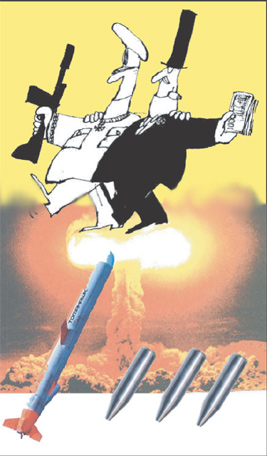 The Pentagon’s War on Accountability: Slush Funds, Smoke and Mirrors, and Funny Money Equal Weapons Systems Galore By William D. Hartung, Tom Dispatch, Reader Supported News, 24 May 16 How to Arm the Planet
“……..In recent years, keeping tabs on how the Pentagon spends its money has grown even more difficult thanks to the “war budget” — known in Pentagonese as the Overseas Contingency Operations (OCO) account — which has become a nearly bottomless pit for items that have nothing to do with fighting wars. The use of the OCO as a slush fund began in earnest in the early years of the Bush administration’s war in Iraq and has continued ever since. It’s hard to put a precise number on how much money has been slipped into that budget or taken out of it to pay for pet projects of every sort in the last decade-plus, but the total is certainly more than $100 billion and counting.
The Pentagon’s routine use of the war budget as a way to fund whatever it wants has set an example for a Congress that’s seldom seen a military project it wasn’t eager to pay for. Only recently, for instance, the House Armed Services Committee chair, Texas Republican Congressman Mac Thornberry, proposed taking $18 billion from the war budget to cover items like an extra 11 F-35 combat aircraft and 14 F-18 fighter-bombers that the Pentagon hadn’t even asked for.
This was great news for Lockheed Martin, which needs a shot in the arm for its troubled F-35 program, already slated to be the most expensive weapons system in history, and for Boeing, which has been lobbying aggressively to keep its F-18 production line open in the face of declining orders from the Navy. But it’s bad news for the troops because, as the Project on Government Oversight has demonstrated, the money used to pay for the unneeded planes will come at the expense of training and maintenance funds.
This is, by the way, the height of hypocrisy at a time when the House Armed Services Committee is routinely sending out hysterical missives about the country’s supposed lack of military readiness. The money to adequately train military personnel and keep their equipment running is, in fact, there. Members of Congress like Thornberry would just have to stop raiding the operations budget to pay for big ticket weapons systems, while turning a blind eye to wasteful spending in other parts of the Pentagon budget.
Thornberry’s gambit may not carry the day, since both President Obama and Senate Armed Services Committee chair John McCain oppose it. But as long as a separate war budget exists, the temptation to stuff it with unnecessary programs will persist as well.
Of course, that war budget is just part of the problem. The Pentagon has so many budding programs tucked away in so many different lines of its budget that even its officials have a hard time keeping track of what’s actually going on. As for the rest of us, we’re essentially in the dark.
Consider, for instance, the proliferation of military aid programs. The Security Assistance Monitor, a nonprofit that tracks such programs, has identified more than two dozen of them worth about $10 billion annually. Combine them with similar programs tucked away in the State Department’s budget, and the U.S. is contributing to the arming and training of security forces in 180 countries. (To put that mind-boggling total in perspective, there are at most 196 countries on the planet.) Who could possibly keep track of such programs, no less what effect they may be having on the countries and militaries involved, or on the complex politics of, and conflicts in, various regions?
Best suggestion: don’t even think about it (which is exactly what the Pentagon and the military-industrial complex want you to do). And no need for Congress to do so either. After all, as Lora Lumpe and Jeremy Ravinsky of the Open Society Foundations noted earlier this year, the Pentagon is the only government agency providing foreign assistance that does not even have to submit to Congress an annual budget justification for what it does. As a result, they write, “the public does not know how much the DoD is spending in a given country and why……….”http://readersupportednews.org/opinion2/277-75/37052-the-pentagons-war-on-accountability-slush-funds-smoke-and-mirrors-and-funny-money-equal-weapons-systems-galore
China readies nuclear armed submarines for the Pacific
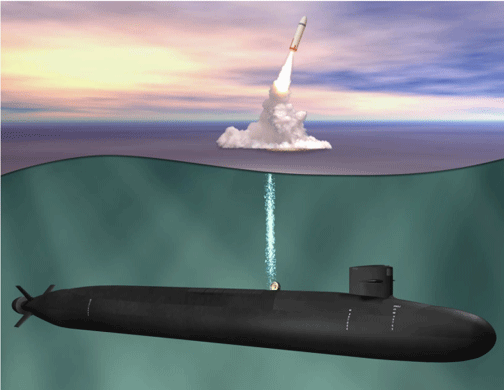
 China to send nuclear-armed submarines into Pacific amid tensions with US
Beijing risks stoking new arms race with move although military says expansion of the US missile defence has left it with no choice, Guardian, Julian Borger , 26 May 16 [ video, excellent graphics] The Chinese military is poised to send submarines armed with nuclear missiles into the Pacific Ocean for the first time, arguing that new US weapons systems have so undermined Beijing’s existing deterrent force that it has been left with no alternative.
Chinese military officials are not commenting on the timing of a maiden patrol, but insist the move is inevitable.
They point to plans unveiled in March to station the US Thaad anti-ballistic system in South Korea, and the development of hypersonic glide missiles potentially capable of hitting China less than an hour after launch, as huge threats to the effectiveness of its land-based deterrent force.
A recent Pentagon report to Congress predicted that “China will probably conduct its first nuclear deterrence patrol sometime in 2016”, though top US officers have made such predictions before…….
Last Tuesday, a US spy plane and two Chinese fighter jets came close to colliding 50 miles of Hainan island, where China’s four Jin-Class ballistic missile submarines are based. A fifth is under construction.
The two countries’ navies have also come uncomfortably close around disputed islands in the same region, and the chance of a clash will be heightened by cat-and-mouse submarine operations, according to Wu Riqiang, an associate professor at the School of International Studies at the Renmin University in Beijing.
“Because China’s SSBNs [nuclear missile submarines] are in the South China Sea, the US navy will try to send spy ships in there and get close to the SSBNs. China’s navy hates that and will try to push them away,” Wu said.
The primary reason Chinese military officials give for the move towards a sea-based deterrent is the expansion of US missile defence, which Moscow also claims is disturbing the global strategic balance and potentially stoking a new arms race.
The decision to deploy Thaad anti-ballistic interceptors in South Korea was taken after North Korea’s fourth nuclear test, and the stated mission of the truck-launched interceptors is to shield the south from missile attack.
But Beijing says the Thaad system’s range extends across much of China and contributes to the undermining of its nuclear deterrent. It has warned Seoul that relations between the two countries could be “destroyed in an instant” if the Thaad deployment goes ahead……
Under Xi’s assertive leadership, China seems determined that the Chinese nuclear deterrent will take finally to the ocean, and it has already taken thestep of putting multiple warheads on its missiles. Those steps are mostly in response to US measures, which in turn were triggered by unrelated actions by the North Koreans.
The law of unintended consequences is in danger of taking the upper hand. “The two sides may thus be stumbling blindly into severe crisis instability and growing competition by China with respect to strategic forces,” Lewis argues. “A competition between unevenly matched forces is inherently unstable.”http://www.theguardian.com/world/2016/may/26/china-send-nuclear-armed-submarines-into-pacific-us
Pentagon successfully keeps extent of military spending secret from the American public
The Pentagon’s War on Accountability: Slush Funds, Smoke and Mirrors, and Funny Money Equal Weapons Systems Galore By William D. Hartung, Tom Dispatch, Reader Supported News, 24 May 16 “……..Now you see it, now you don’t. Think of it as the Department of Defense’s version of the street con game, three-card monte, or maybe simply as the Pentagon shuffle. In any case, the Pentagon’s budget is as close to a work of art as you’re likely to find in the U.S. government — if, that is, by work of art you mean scam.
The United States is on track to spend more than $600 billion on the military this year — more, that is, than was spent at the height of President Ronald Reagan’s Cold War military buildup, and more than the military budgets of at least the next seven nations in the world combined. And keep in mind that that’s just a partial total. As an analysis by the Straus Military Reform Project has shown, if we count related activities like homeland security, veterans’ affairs, nuclear warhead production at the Department of Energy, military aid to other countries, and interest on the military-related national debt, that figure reaches a cool $1 trillion.
The more that’s spent on “defense,” however, the less the Pentagon wants us to know about how those mountains of money are actually being used. As the only major federal agency that can’t pass an audit, the Department of Defense (DoD) is the poster child for irresponsible budgeting.
It’s not just that its books don’t add up, however. The DoD is taking active measures to disguise how it is spending the hundreds of billions of taxpayer dollars it receives every year — from using the separate “war budget” as a slush fund to pay for pet projects that have nothing to do with fighting wars to keeping the cost of its new nuclear bomber a secret. Add in dozens of other secret projects hidden in the department’s budget and the Pentagon’s poorly documented military aid programs, and it’s clear that the DoD believes it has something to hide.
Don’t for a moment imagine that the Pentagon’s growing list of secret programs and evasive budgetary maneuvers is accidental or simply a matter of sloppy bookkeeping. Much of it is remarkably purposeful. By keeping us in the dark about how it spends our money, the Pentagon has made it virtually impossible for anyone to hold it accountable for just about anything. An entrenched bureaucracy is determined not to provide information that might be used to bring its sprawling budget — and so the institution itself — under control. That’s why budgetary deception has become such a standard operating procedure at the Department of Defense.
The audit problem is a case in point. The Pentagon along with all other major federal agencies was first required to make its books auditable in the Chief Financial Officers Act of 1990. More than 25 years later, there is no evidence to suggest that the Pentagon will ever be able to pass an audit. In fact, the one limited instance in which success seemed to be within reach — an audit of a portion of the books of a single service, the Marine Corps — turned out, upon closer inspection, to be a case study in bureaucratic resistance.
In April 2014, when it appeared that the Corps had come back with a clean audit, Secretary of Defense Chuck Hagel was so elated that he held a special ceremony in the “Hall of Heroes” at the Pentagon. “It might seem a bit unusual to be in the Hall of Heroes to honor a bookkeeping accomplishment,” he acknowledged, “but damn, this is an accomplishment.”
In March 2015, however, that “accomplishment” vanished into thin air. The Pentagon’s Office of Inspector General (OIG), which had overseen the work of Grant Thornton, the private firm that conducted the audit, denied that it had been successful (allegedly in response to “new information”). In fact, in late 2013, as Reuters reported, auditors at the OIG had argued for months against green-lighting Grant Thornton’s work, believing that it was full of obvious holes. They were, however, overruled by the deputy inspector general for auditing, who had what Reuters described as a “longstanding professional relationship” with the Grant Thornton executive supervising the audit.
The Pentagon and the firm deny that there was any conflict of interest, but the bottom line is clear enough: there was far more interest in promoting the idea that the Marine Corps could pass an audit than in seeing it actually do so, even if inconvenient facts had to be swept under the rug. This sort of behavior is hardly surprising once you consider all the benefits from an undisturbed status quo that accrue to Pentagon bureaucrats and cash-hungry contractors.
Without a reliable paper trail, there is no systematic way to track waste, fraud, and abuse in Pentagon contracting, or even to figure out how many contractors the Pentagon employs, though a conservative estimate puts the number at well over 600,000. The result is easy money with minimal accountability………http://readersupportednews.org/opinion2/277-75/37052-the-pentagons-war-on-accountability-slush-funds-smoke-and-mirrors-and-funny-money-equal-weapons-systems-galore
Pentagon’s “small” giant military footprint in Africa
The Pentagon’s War on Accountability: Slush Funds, Smoke and Mirrors, and Funny Money Equal Weapons Systems Galore By William D. Hartung, Tom Dispatch, Reader Supported News, 24 May 16 Colonel Mark Cheadle, a spokesman for U.S. Africa Command (AFRICOM), recently made a startling disclosure to Voice of America (VOA). AFRICOM, he said, is currently mulling over 11 possible locations for its second base on the continent. If, however, there was a frontrunner among them Cheadle wasn’t about to disclose it. All he would say was that Nigeria isn’t one of the countries in contention.
Writing for VOA, Carla Babb filled in the rest of the picture in terms of U.S. military activities in Africa. “The United States currently has one military base in the east African nation of Djibouti,” she observed. “U.S. forces are also on the ground in Somalia to assist the regional fight against al-Shabab and in Cameroon to help with the multinational effort against Nigeria-based Boko Haram.”
A day later, Babb’s story disappeared. Instead, there was a new article in which she noted that “Cheadle had initially said the U.S. was looking at 11 locations for a second base, but later told VOA he misunderstood the question.” Babb reiterated that the U.S. had only the lone military base in Djibouti and stated that “[o]ne of the possible new cooperative security locations is in Cameroon, but Cheadle did not identify other locations due to ‘host nation sensitivities.’”
U.S. troops have, indeed, been based at Camp Lemonnier in Djibouti since 2002. In that time, the base has grown from 88 acres to about 600 acres and has seen more than $600 million in construction and upgrades already awarded or allocated. It’s also true that U.S. troops, as Babb notes, are operating in Somalia — from at least two bases — and the U.S. has indeed set up a base in Cameroon. As such, the “second” U.S. base in Africa, wherever it’s eventually located, will actually be more like the fifth U.S. base on the continent. That is, of course, if you don’t count Chabelley Airfield, a hush-hush drone base the U.S. operates elsewhere in Djibouti, or the U.S. staging areas, cooperative security locations, forward operating locations, and other outposts in Burkina Faso, Central African Republic, Chad,Ethiopia, Gabon, Ghana, Kenya, Mali, Niger, Senegal, the Seychelles, Somalia, South Sudan, and Uganda, among other locales. When I counted late last year, in fact, I came up with 60 such sites in 34 countries. And just recently, Missy Ryan of the Washington Post added to that number when she disclosed that “American Special Operations troops have been stationed at two outposts in eastern and western Libya since late 2015.”
To be fair, the U.S. doesn’t call any of these bases “bases” — except when officials forget to keep up the fiction. For example, the National Defense Authorization Act for Fiscal Year 2016 included a $50 million request for the construction of an “airfield and base camp at Agadez, Niger.” But give Cheadle credit for pushing a fiction that persists despite ample evidence to the contrary.
It isn’t hard, of course, to understand why U.S. Africa Command has set up a sprawling network of off-the-books bases or why it peddles misinformation about its gigantic “small” footprint in Africa. It’s undoubtedly for the same reason that they stonewall me on even basic information about their operations. The Department of Defense, from tooth to tail, likes to operate in the dark.
Today, TomDispatch regular Bill Hartung reveals another kind of Pentagon effort to obscure and obfuscate involving another kind of highly creative accounting: think slush funds, secret programs, dodgy bookkeeping, and the type of financial malfeasance that could only be carried out by an institution that is, by its very nature, too big to fail (inside the Beltway if not on the battlefield).
Rejecting both accurate accounting and actual accountability — from the halls of the Pentagon to austere camps in Africa — the Defense Department has demonstrated a longstanding commitment to keeping Americans in the dark about the activities being carried out with their dollars and in their name. Luckily, Hartung is willing to shine a bright light on the Pentagon’s shady practices……..-Nick Turse, TomDispatch http://readersupportednews.org/opinion2/277-75/37052-the-pentagons-war-on-accountability-slush-funds-smoke-and-mirrors-and-funny-money-equal-weapons-systems-galore
USA’s Nuclear Weapons System Technology is Outdated
Report: U.S. Nuclear System Relies On Outdated Technology Such As Floppy Disks NPR, May 26, 2016 MERRIT KENNEDY The U.S. nuclear weapons system still runs on a 1970s-era computing system that uses 8-inch floppy disks, according to a newly released report from the Government Accountability Office.
That’s right. It relies on memory storage that hasn’t been commonly used since the 1980s and a computing system that looks like this: [photo] Beyond the nuclear program, much of the technology used by the federal government is woefully outmoded, the report says. About 75 percent of the government’s information technology budget goes toward operations and maintenance, rather than development, modernization and enhancement.
“Clearly, there are billions wasted,” GAO information technology expert David Powner said at a congressional hearing Wednesday, The Associated Press reports.
The GAO report found that the Pentagon’s Strategic Automated Command and Control System — which “coordinates the operational functions of the United States’ nuclear forces, such as intercontinental ballistic missiles, nuclear bombers, and tanker support aircrafts” — runs on an IBM Series/1 Computer, first introduced in 1976.
The system’s primary function is to “send and receive emergency action messages to nuclear forces,” the report adds, but “replacement parts for the system are difficult to find because they are now obsolete.”
Pentagon spokeswoman Lt. Col. Valerie Henderson told The Two-Way via email:
“This system remains in use because, in short, it still works.
“However, to address obsolescence concerns, the floppy drives are scheduled to be replaced with Secure Digital devices by the end of 2017. Modernization across the entire Nuclear Command, Control, and Communications (NC3) enterprise remains ongoing.”
The report also found that the Treasury Department uses 1950s-era assembly language code (which it says is “a low-level computer code that is difficult to write and maintain”) on the individual master file (“the authoritative data source for individual taxpayers where accounts are updated, taxes are assessed, and refunds are generated.”) The report adds that the department has no firm plans to modernize the system……..http://www.npr.org/sections/thetwo-way/2016/05/26/479588478/report-u-s-nuclear-system-relies-on-outdated-technology-such-as-floppy-disks
Outcome of United Nations open-ended working group on nuclear disarmament
U.N. nuclear disarmament talks , Japan Times, MAY 22, 2016 The United Nations open-ended working group on nuclear disarmament held its second session this month in Geneva, following its first gathering in February. What emerged from the latest meeting is a schism between countries seeking to create a treaty prohibiting nuclear weapons and those nations opposed to the idea, including nuclear weapons powers and those states relying on the protection of a nuclear umbrella.
While the Nuclear Nonproliferation Treaty recognizes five countries — the United States, Russia, Britain, France and China — as nuclear weapons states, it requires all parties to the treaty to pursue negotiations to achieve nuclear disarmament. Given the potential dangers posed by the accidental use of nuclear arms and nuclear terrorism, all states should support the effort to ban nuclear weapons.
The undercurrent of discussions in the working group’s meetings is the humanitarian impact of nuclear weapons. The consequences of a nuclear explosion would spread beyond national borders and have regional and global effects. It would indiscriminately kill or injure numerous civilians. Radioactive contamination would devastate the environment for generations, causing cancer and other deadly diseases. No nations would have the capability to adequately respond to the human suffering caused by nuclear weapons.
This aspect of nuclear weapons has raised concerns among many non-nuclear weapons states and civil society groups and led to the holding of three international conferences — in Norway in 2013 and Mexico and Austria in 2014 — to discuss the humanitarian consequences of nuclear arms. The discussions at these conferences served as the basis for the talks in the latest meeting in Geneva.
The Humanitarian Pledge, issued at the 2014 Vienna conference and endorsed by 127 states, calls for filling the “legal gap” in which nuclear arms are the only weapons of mass destruction that have not been explicitly banned by a treaty. The failure of the 2015 NPT review conference to adopt a final document also increased the concerns of non-nuclear weapons states over the lack of progress being made toward achieving nuclear disarmament. This situation has given birth to a movement to legally ban nuclear weapons on grounds of the humanitarian consequences of their use.
What is disappointing is that none of the five nuclear weapons states under the NPT and none of the four other nations that possess nuclear arms — India, Pakistan, Israel and North Korea — took part in the working group. The five nuclear weapons states maintain the position that nuclear arms play a role in the sphere of security and that parties calling for a ban on these weapons ignore that role’s significance.
Those states’ seeming indifference to the humanitarian consequences of nuclear weapons has prompted the formation of a majority opinion that discussions should be initiated on a legal framework to prohibit nuclear arms even if the nuclear weapons powers refuse to join the talks. At the Geneva meeting, 10 countries — Brazil, Mexico, Argentina, Costa Rica, Ecuador, Guatemala, Indonesia, Malaysia, the Philippines and Zambia — proposed that a conference be convened in 2017 to negotiate a legally binding instrument and that progress on the negotiations be reported to the U.N. high-level international conference on nuclear disarmament.
The nuclear weapons states need to realize that frustration and dissatisfaction are building over their unwillingness to abandon nuclear deterrence and start a process of disarmament as mandated by the NPT…….http://www.japantimes.co.jp/opinion/2016/05/22/editorials/u-n-nuclear-disarmament-talks/#.V0IhNDV97Gg
USA NOT receptive to Russia’s proposal for joint strikes on Syrian rebels
Russia urges joint strikes on Syria rebels but U.S. reacts coolly, Reuters, 20 May 16 Russia has proposed to the U.S.-led coalition that they stage joint air strikes on Syrian rebels, including militant Islamist group Nusra Front, who are not observing a ceasefire, but the United States responded coolly on Friday.
Such action would begin as of May 25 and be coordinated with the Syrian government, Russian Defence Minister Sergei Shoigu told a Defence Ministry meeting broadcast on state television, adding Moscow reserved the right to stage strikes unilaterally.
He said joint air strikes should also target convoys carrying weapons and ammunition crossing into Syria from Turkey.
“We believe the adoption of these measures will allow a transition to a peaceful process to be achieved in the entire territory of Syria,” he said. “Of course, these measures have been coordinated with the leadership of the Syrian Arab Republic.”……
Washington has consistently refused to join forces with Russia in Syria ever since Moscow launched its campaign of air strikes in September last year, accusing it of acting solely to prop up Syrian President Bashar al-Assad.
The United States has called on Assad to step down.
Communication between the U.S. and Russian militaries on Syria has been limited to contacts aimed at avoiding an accidental clash as they carry out rival bombing campaigns and small numbers of U.S. forces operate on the ground.
Western officials suggested that the proposal, which the Pentagon said had not been formally presented to the U.S. Defense Department, was an attempt by President Vladimir Putin to raise Russia’s profile on the international stage.
“There is no agreement to conduct joint air strikes with the Russians in Syria,” said U.S. State Department spokesman John Kirby. He added that the United States believed that Assad’s government was responsible for most of the violations of the fitful ceasefire that began on Feb. 27.
“We look to Russia to end such (government) violations, which includes strikes that have hit civilians and civilian facilities,” he said.
While Russia supports the Assad government, the United States and its allies support rebels trying to overthrow him in a civil war that has burned for more than five years and killed at least 250,000 people.
However, both sides oppose the al Qaeda-linked Nusra Front, which was not included in a ceasefire deal which has failed to prevent widespread violence. A U.S. military strike killed Nusra Front’s leader, Abu Firas al-Suri, in April.
White House spokesman Eric Schultz said the U.S. aim remains for Russia to persuade Assad to abide by the cessation of hostilities in Syria, saying it was not the first time Russia had made such a proposal…….http://www.reuters.com/article/us-mideast-crisis-russia-usa-syria-idUSKCN0YB1HB
One of the world’s oldest nuclear plants helped build the Jewish state’s secret nuclear arsenal
A textile factory with a differenceOne of the world’s oldest nuclear plants helped build the Jewish state’s secret nuclear arsenal

WITH its cupola dully glinting in the sun across kilometres of an exclusion zone in the Negev Desert, the nuclear reactor near the Israeli town of Dimona has for decades been the subject of intense speculation. Its bland official name, the Centre for Nuclear Research, belies a martial purpose. Foreign intelligence services, atomic scientists and a former Israeli employee claim that it is the source of fissile material used to make Israel’s nuclear weapons.
The country’s atomic secrets have always been closely guarded, so little is known about the plant at Dimona. However, officials at the Israel Atomic Energy Commission (IAEC) admitted at a scientific conference last month that the reactor is showing its age. An ultrasound inspection of the aluminium core found 1,537 small defects and cracks, they said. The lifetime of such a reactor is usually around 40 years. At 53, Dimona is one of the world’s oldest operating nuclear plants.
The reactor, which was supplied by France, was switched on 15 years after the establishment of the state of Israel. The embattled country’s first prime minister, David Ben-Gurion, insisted that Israel needed a nuclear deterrent. The programme was spearheaded by his assistant, Shimon Peres, and the main components were first activated in 1963. The government claimed that Dimona was a “textile plant”.
Many of the ancillary systems in the reactor have been renewed or replaced, but the core itself cannot be swapped out. The flaws that have been detected are closely monitored and there is no serious suggestion that the reactor is unsafe. Yet in most other countries it would have been deactivated long ago. Safety concerns will only increase with time.
Israel has never used its reactors for generating electricity. Along with the United States, France, Russia and China, it is one of the few countries believed to have acquired the nuclear “triad”. It can deliver nuclear weapons as bombs dropped from an aircraft, as warheads on a land-launched missile (since the 1970s) and on missiles fired from submarines.
The third leg of the triad is thought to have been added in 1999, when Israel received the first of six planned submarines. These were built and largely paid for by Germany. If, as reported, they can launch nuclear-tipped cruise missiles, this would give Israel a “second-strike” capability, allowing it to retaliate even if an enemy were to destroy its air bases and missile silos in a nuclear “first strike”. In January Prime Minister Binyamin Netanyahu said: “Our submarine fleet will act as a deterrent to our enemies who want to destroy us.”
Dimona’s defenders say it has both symbolic value (as a reminder that Israel will defend itself fiercely) and practical uses, too. It is a source of materials needed to maintain nuclear warheads, such as tritium (which decays, but could theoretically be produced or procured by other means). It is also the centre of a “secret kingdom” of scientists whose capabilities the government is loath to give up.
For nearly six decades, Israel’s policy of “nuclear opacity” has served it well. Its Arab neighbours are convinced it is a nuclear power, but Israel clings to the ambiguous formulation that it “will not be the first to introduce nuclear weapons to the region”, neither acknowledging nor denying its capabilities. With powerful neighbours still openly advocating its destruction, the Jewish state will keep its doomsday weapons. But its ageing reactor? Perhaps not.
Undersea nuclear deterrence in the Indian Ocean is here to stay
The Indian Ocean Won’t Be a ‘Nuclear Free Zone’ Anytime Soon Undersea nuclear deterrence in the Indian Ocean is here to stay., The Diplomat, By Ankit Panda May 20, 2016 Sartaj Aziz, adviser to Pakistan’s prime minister on foreign affairs, presented an interesting proposal to the Pakistani Senate on Thursday. He said that he would consider having Pakistan introduce a resolution at the United Nations that would urge the body to declare the Indian Ocean a “nuclear free zone.” Leaving aside the fact that the United Nations isn’t in the business of declaring nuclear weapon free zones, Aziz’s comments reflect increasing anxieties in Pakistan about India’s burgeoning sea-based nuclear deterrent.
With the first of Arihant-class of domestically designed ballistic missile submarines rolling out and testing underway of Delhi’s K-4 submarine-launched ballistic missiles ongoing, Delhi is coming closer to operationalizing its sea-based deterrent. (The K-4 has been test launched from the Arihant‘s on-board silos, as I discussed last month.)
Aziz is well aware of these developments. ”Apart from this air defence system, India has also recently conducted tests of nuclear capable, submarine based K4 ballistic missiles. Simultaneously large nuclear powered submarines are being built to carry these nuclear armed missile as a part of its second strike nuclear capability,” he told the Senate, according to a report in Dawn.
Unfortunately, for Pakistan, the United Nations won’t be able to solve this problem anytime soon. Moreover, India won’t be the only country looking to operate nuclear-armed ballistic missile submarines (SSBNs) in the waters of the Indian Ocean. China started operating Song– and Shang-class submarines in the Indian Ocean in 2014, according to the U.S. Department of Defense. Ostensibly, Beijing’s upcoming first overseas military facility—in Djibouti—will play a role in support submarine logistics.
According to the U.S. Defense Department’s most recent report on China’s military, four Chinese Jin-class SSBNs—China’s first sea-based deterrent as well—are operational. These submarines currently operate out off the People’s Liberation Army-Navy’s submarine base at Hainan Island, in the South China Sea, but Beijing may look to have its SSBNs patrolling the Indian Ocean soon enough……
Unsurprisingly, amid increased Chinese sub-surface activity in the Indian Ocean, we’ve seen the United States and India deepen their anti-submarine warfare cooperation. Moreover, Delhi has started extending its maritime patrol and surveillance capabilities further southward; it sent a P-8I Neptune aircraft to the Seychelles earlier this year.
With India’s Arihant-class on the verge of commissioning and Chinese SSBNs possibly on the way to supplement the PLAN’s existing hunter-killer and nuclear attack submarines, the Indian Ocean won’t become a “nuclear free zone” anytime soon. Islamabad could look to build up its own undersea nuclear capabilities, but, as I’ve discussed before, that’ll be limited by a range of factors. http://thediplomat.com/2016/05/the-indian-ocean-wont-be-a-nuclear-free-zone-anytime-soon/
Obama shuns Open Ended Working Group on Taking Forward Multilateral Nuclear Disarmament Negotiations.
 Obama goes to Hiroshima, but stiffs nuclear talks in Geneva The upcoming visit may be a first, but if Obama is serious about disarmament, he will not shut the door on discussions with non-nuclear weapon states, Open Canada.org BY: PAUL MEYER MAY 17, 2016 After some extended internal debate, the White House has announced that U.S. President Barack Obama will visit Hiroshima on May 27 after a G7 summit meeting in Japan, making him the first sitting American president to pay such a visit to the city synonymous with atomic devastation.
Although his Secretary of State John Kerry had paid such a visit in April and several U.S. ambassadors had previously attended commemorative ceremonies in Hiroshima, the political significance of a presidential visit would be of an entirely different order of magnitude. Hence the concern of his advisors as to how such a visit would play in the American political scene and their haste to proclaim that Obama will not offer any ‘apology’ for the actions of his predecessor some 70 years ago……
Far from advancing his nuclear disarmament-related goals — including the ratification of the Comprehensive (Nuclear) Test Ban Treaty, initiation of a fissile material production ban, further reduction of strategic nuclear forces, and diminishing the saliency of nuclear weapons in national strategy — Obama has committed to an unprecedented modernization of these nuclear forces that is estimated to cost more than USD$350 billion over the next decade.
He has also endorsed the perverse Cold War practice of maintaining nuclear-tipped inter-continental ballistic missiles (ICBMs) on high alert status with all the attendant risks that such a posture represents. His singular accomplishment in hosting the first and last of a series of four Nuclear Security Summits was an underwhelming lowest common denominator process that excluded from discussion the very subjects that he had raised in the Prague speech as requiring attention that would “transcend Cold War thinking.”
With all this evidence of a yawning gap between aims and achievements on the nuclear agenda, one would think that the Obama administration would be eager to find opportunities to enhance relations with non-nuclear weapon states and repair its image as an active supporter of nuclear disarmament. An opportunity to do so is currently present in Geneva in the form of the Open Ended Working Group on Taking Forward Multilateral Nuclear Disarmament Negotiations.
This group was constituted last fall by a widely supported resolution of the UN General Assembly and has just completed two weeks of deliberations after an earlier week of discussions in February. After a few more days of meetings in August the group is slated to submit a report to the 71th session of the General Assembly this fall.
As its title suggests, the objective of the group is to try and identify effective measures to make progress on nuclear disarmament issues that have been neglected for years in multilateral forums. Instead of engaging with the non-nuclear weapon states, the U.S. and the other nuclear-armed states have chosen to boycott these meetings. Given that the Open Ended Working Group was a duly constituted multilateral body operating under UN General Assembly auspices, this rejection to participate is insulting to the others attending (which include Canada, Japan and the rest of the U.S.’s allies) and to the principles of multilateral cooperation in general. Given the support freely offered by the non-nuclear weapon states to so many of the international security initiatives championed by the U.S., it is grating to see the cavalier fashion in which the U.S. and its nuclear weapon posse is stiffing the Geneva process. One can imagine the consternation in Washington if Prime Minister Justin Trudeau or the other invited leaders of the non-nuclear weapon states had said they would not attend Obama’s Nuclear Security Summit this March until such time as the U.S. agreed to participate in the Geneva proceedings.
Perhaps it is time for non-nuclear weapon states to become more insistent that their priority agenda gets some respect from the members of the nuclear weapons club…….https://www.opencanada.org/features/obama-goes-hiroshima-stiffs-nuclear-talks-geneva/
Adolf Hitler’s secret NUCLEAR BOMBS found – claims engineer
Peter Lohr, 70, says he’s found five metallic objects in Nazi tunnels
Using radar and 3D he claims he can prove two are atom bombsBy SARA MALM FOR MAILONLINE, 18 May 2016 A pensioner claims he has found Adolf Hitler’s secret atom bombs inside tunnels dug by the Nazis underneath a mountain valley in central Germany.
Peter Lohr, 70, claims to have found five large metal objects in a cave in the Jonas Valley in Thuringia state, of which at least two are ‘atomic bombs’.
Mr Lohr is certain that the objects are weapons of mass destruction manufactured by the Nazis towards the end of the Second World War.
‘The metal’s been lying there for 71 years. At some point it will decay and then we will have a second Chernobyl on our hands’ he said.
The centre of the Jonas Valley was a scene of secret military construction towards the end of the Second World War, with thousands of concentration camp prisoners forced to dig tunnels under the mountains.
It is not known what purpose the tunnels were meant to have as it was never completed.
The tunnel system stretches for miles underneath the mountain, with thousands of caves, bunkers and storerooms, and it is believed that it was intended to be the Alamo of the Third Reich leadership.
The Jonas Valley was liberated by American troops in April 1945, and US authorities have since classified all 1945 documents relating to Ohrdruf for a minimum of 100 years.
This is not the first time rumours of a Nazi nuclear bomb has surfaced.
Last year, a documentary called The Search for Hitler’s Atom Bomb,’ quotes sealed records from Russia and America said to prove the Nazis were close to creating a weapon of mass destruction.
The programme quoted interrogation reports of Nazi scientists, eyewitness account and the records left behind by researchers, many of which were shipped to America after the war.
Genetic damage in children of nuclear test veterans: an investigation begins
A total 562 Royal New Zealand Navy sailors served the British Nuclear Weapons Testing Programme in the Pacific in the 1950s. Nine times they were exposed to damaging levels of radiation.
A new study from Brunel University will undertake a chromosomal analysis of cells from UK nuclear test veterans and their children.
The best evidence New Zealand sailors have is from 2007, when a study by Massey University took samples from 50 veteran sailors from Operation Grapple. Researchers discovered they had suffered chromosome damage higher than that of clean-up workers at Chernobyl.
They linked it directly to the Pacific bomb testing, saying the result “is indicative of the veterans having incurred long term genetic damage as a consequence of performing their duties relating to Operation Grapple”.
Research gives hope for nuclear test vets families http://www.stuff.co.nz/national/79829038/research-gives-hope-for-nuclear-test-vets-families CARLY THOMAS, May 15 2016
It all started with hydrogen bombs that lit up the Pacific with radiation.
Roy Sefton remembers it like it was yesterday.
Backs turned, goggles on, they waited for the countdown..”And right on cue there was this massive light that came through mine and everybody else’s hands, through the dark glasses, through the closed eyes and what I saw was an x -ray vision of my own hands,” he said.
Now, after decades of battling, New Zealand veterans who watched the blasts from the decks of the Navy ships hope they may finally be acknowledged for the effects the radiation had on them and their families.
A total 562 Royal New Zealand Navy sailors served the British Nuclear Weapons Testing Programme in the Pacific in the 1950s.Now, after decades of battling, New Zealand veterans who watched the blasts from the decks of the Navy ships hope they may finally be acknowledged for the effects the radiation had on them and their families. Continue reading
The vicious circle of nations bumping up their nuclear weapons
US, Russia, India driving China’s nuclear modernisation: Pentagon By PTI | 14 May, 2016WASHINGTON: The defence capabilities possessed by the US , Russia and India are among the main factors driving China to modernise its nuclear force and bolster its strategic strike capabilities, the Pentagon has said. ….
Governments and individuals can prevent banks from investing in nuclear weapons
 Governments are talking about divestment, and it’s something you can do too.
If you have a bank account, find out if your bank invests in nuclear weapon producing companies. You can either look at our website and see if your bank is listed, or you can ask your bank directly. We found that a few people, asking the same bank about questionable investments, was enough to get that bank to adopt a policy preventing them from having any relationship with nuclear weapon producing companies.
Nuclear Weapons Are Scary — But We Can Do Something About Them, http://www.huffingtonpost.com/susi-snyder/nuclear-weapons-are-scary_b_9947542.html The World Post, Susi Snyder Nuclear Disarmament Programme Manager for Pax in the Netherlands 05/13/2016 Nuclear weapons are scary. The risk of use by accident, intention or terror. The climate consequences. The fact that they are designed and built to vaporize thousands of people with the push of a button. Scary. Fortunately, there is something we can do.
We know that nuclear weapons are scary, but we must be much louder in defining them as unacceptable, as illegitimate. By following the money, we can cut it off, and while this isn’t the only thing necessary to make nuclear weapons extinct, it will help.
That’s why we made Don’t Bank on the Bomb. Because we want to do something about nuclear weapons. Investments are not neutral. Financing and investing are active choices, based on a clear assessment of a company and its plans. Any financial service delivered to a company by a financial institution or other investor gives a tacit approval of their activities. To make nuclear weapons, you need money. Governments pay for a lot of things, but the companies most heavily involved in producing key components for nuclear warheads need additional investment — from banks, pension funds, and insurance companies — to sustain the working capital they need to maintain and modernize nuclear bombs.
We can steer these companies in a new direction. We can influence their decision making, by making sure our own investments don’t go anywhere near nuclear weapon producing companies. Continue reading
President Obama visits Hiroshima. USA builds up its nuclear arsenal
Obama to Make Historic Visit to Hiroshima as U.S. Quietly Upgrades Nuclear Arsenal Democracy Now! | May 12, 2016 President Obama will become the first serving U.S. president to visit Hiroshima, Japan, later this month. The White House said Obama will not apologize for dropping an atomic bomb on the city toward the end of World War II. The attack on Aug. 6, 1945, caused massive and widespread destruction. Shock waves, radiation and heat rays took the lives of some 140,000 people. Three days later, the U.S. dropped a second atomic bomb on Nagasaki, killing another 74,000 people.
President Obama is expected to tour the site of the world’s first nuclear attack with Japan’s prime minister, Shinzo Abe. Obama’s Communications Adviser Ben Rhodes said that Obama’s time in Hiroshima will “reaffirm America’s longstanding commitment—and the president’s personal commitment—to pursue the peace and security of a world without nuclear weapons.”
Obama’s visit comes as a report by the Alliance for Nuclear Accountability has revealed the U.S. has been quietly upgrading its nuclear arsenal to create smaller, more precise nuclear bombs as part of a massive effort that will cost up to $1 trillion over three decades. We speak with Kevin Martin, president of Peace Action…………
Kevin Martin: We’re very glad that the president is going to Hiroshima, but we don’t want it to be just another pretty speech where he talks about some day maybe having the right conditions to move towards eliminating nuclear weapons. He’s done that before. He has some accomplishments to show for his presidency, which we can talk about, but, for now, we want him to go with concrete actions. He’s got a bit of time left in his administration and he needs to take concrete action to further that goal. And we can talk about various steps.
As far as the apology is concerned, the hibakusha, the A-bomb survivors, are not asking for it. The Japanese government is not asking for it—for all kinds of reasons. The administration has ruled it out. And I think while I personally would like to see an apology, what might be more meaningful is if he meets with hibakusha and asks their forgiveness for not doing more during his term in office to move towards the elimination of nuclear weapons. But if he will take some concrete steps, then that apology—or that asking forgiveness would be unnecessary.
Amy Goodman: Can you talk about what you are demanding?
Kevin Martin: First of all, as you just mentioned, this 30-year, $1 trillion cockamamie plan—a colleague of ours called it a “trillion-dollar train wreck”—to totally upgrade all of our nuclear weapons complex, from the research laboratories to new warheads to new missiles, bombers, submarines, I can’t think of a worse misappropriation of our tax dollars. And predictably, every other nuclear-weapon state has followed suit, saying that they are going to upgrade their nuclear weapons, as well. It totally shreds any credibility that the United States has on nonproliferation. So that would be the first thing, is cancel that.
There are a lot of other steps that he could take: taking our nuclear weapons off of hair-trigger alert, separating the warheads from their delivery systems, initiating negotiations for the elimination of nuclear weapons globally, initiating talks on a Middle East zone free of weapons of mass destruction, taking unilateral executive action that doesn’t require a long treaty process—negotiations with Russia and then Senate ratification, which would be very difficult. We could cut our reserve nuclear weapons, get rid of a bunch of those. But even the current deployed nuclear weapons, we could go down to a thousand or fewer, as the Pentagon has suggested in the past and the U.S. actually wanted to do with Russia and then challenge Russia to reciprocate. Those are just some of the steps that would be meaningful and worth a trip to Hiroshima……….https://ecowatch.com/2016/05/12/obama-visit-hiroshima/
1 This Month
23-25 October – on Zoom – World BEYOND War’s annual global conferenc


Shut down the radiation-damaged Heysham nuclear reactors now
To see nuclear-related stories in greater depth and intensity – go to https://nuclearinformation.wordpress.com

Say No to NASA’s Reckless Nuclear Reactor on the Moon
Say No to NASA’s Reckless Nuclear Reactor on the Moon
-
Archives
- October 2026 (180)
- September 2026 (339)
- August 2026 (330)
- July 2026 (355)
- June 2026 (287)
- May 2026 (306)
- April 2026 (356)
- March 2026 (251)
- February 2026 (267)
- January 2026 (308)
- December 2025 (358)
- November 2025 (359)
-
Categories
- 1
- 1 NUCLEAR ISSUES
- business and costs
- climate change
- culture and arts
- ENERGY
- environment
- health
- history
- indigenous issues
- Legal
- marketing of nuclear
- media
- opposition to nuclear
- PERSONAL STORIES
- politics
- politics international
- Religion and ethics
- safety
- secrets,lies and civil liberties
- spinbuster
- technology
- Uranium
- wastes
- weapons and war
- Women
- 2 WORLD
- ACTION
- AFRICA
- Atrocities
- AUSTRALIA
- Christina's notes
- Christina's themes
- culture and arts
- Events
- Fuk 2022
- Fuk 2023
- Fukushima 2017
- Fukushima 2018
- fukushima 2019
- Fukushima 2020
- Fukushima 2021
- general
- global warming
- Humour (God we need it)
- Nuclear
- RARE EARTHS
- Reference
- resources – print
- Resources -audiovicual
- Weekly Newsletter
- World
- World Nuclear
- YouTube
-
RSS
Entries RSS
Comments RSS

