Poseidon: The Ultimate Weapon of Vengeance [i]

“To wipe out the enemy coast…”
Very long article, with excellent illustrations.
Black Mountain Analysis Mike Mihajlovic, Nov 10, 2025
A weapon system on its own
The Poseidon, designated 2M39 in Russian service and known to NATO as Kanyon, is among the most enigmatic and controversial strategic systems developed in recent years. It resists conventional classification: neither a conventional torpedo nor a crewed submarine, it represents a novel class of autonomous, nuclear-powered underwater vehicle designed to carry a nuclear warhead.
This autonomous, nuclear-powered underwater vehicle, formerly designated Status-6, has been described in open sources as capable of carrying a very large thermonuclear warhead (some reports even cite yields as high as 100 megatons)1 and of transiting intercontinental distances at depths that would place it beyond the reach of most conventional antisubmarine weapons, arguably leaving only exceptionally large-yield nuclear depth charges as a theoretical counter. Open reporting also suggests it can adopt multiple mission modes: a high-speed transit phase at depth, which offers rapid repositioning but is more readily detectable by advanced acoustic sensors, and a prolonged low-speed, low-observability cruise that exploits nuclear endurance to remain submerged for effectively indefinite periods before conducting a final approach to a target.
As with many novel Russian weapons, most technical details remain classified; nevertheless, a synthesis of open-source analysis and official Russian statements permits a broad—albeit uncertain—reconstruction of Poseidon’s design philosophy, capabilities, and potential strategic effects.
………………………………………………………………………………………………………………………………………………………………………………………………………………... Summary
In summary, the Poseidon system represents a technically feasible but strategically extreme extension of known nuclear and naval technologies. It most likely uses a compact liquid-metal-cooled fast reactor to achieve long-range, high-speed operation at great depths, carries a warhead of 2-100 Mt, and could inflict catastrophic local damage and contamination on any coastal target. Yet the notion that it could raise ocean-wide radioactive tsunamis is unsupported by physical science. Its true significance may lie less in its physics than in its symbolism: a weapon designed to project the image of ultimate deterrence by threatening entire coastal societies, even if the practical mechanics of such annihilation are more limited than popular imagination suggests.
Politically, the deployment of Poseidon adds a new dimension to strategic deterrence. Its autonomous nature and perceived “doomsday” capability suggest a weapon intended more for psychological and geopolitical signaling than for practical battlefield use. Its mere existence challenges traditional arms control frameworks and complicates stability calculations by introducing a new underwater axis of nuclear deterrence.
Despite the growing public literature, many details remain unknowable. The reactor’s design, actual performance, warhead configuration, and even deployment status are tightly held secrets. Modeling the hydrodynamics of a multi-megaton underwater detonation is inherently uncertain, as no full-scale tests have ever been conducted at such yields or depths. Extrapolations from smaller historical tests provide useful guidance but cannot capture all nonlinear effects of deep-water bubble dynamics or coastal interactions. Moreover, the strategic intent behind Poseidon, whether as a second-strike deterrent, a terror weapon, or an anti-access denial system, remains speculative and politically sensitive. https://bmanalysis.substack.com/p/poseidon-the-ultimate-weapon-of-vengeance?utm_source=post-email-title&publication_id=1105422&post_id=177880124&utm_campaign=email-post-title&isFreemail=true&r=1ise1&triedRedirect=true&utm_medium=email
Russia deliberately ‘endangering nuclear safety in Europe’ says Kyiv
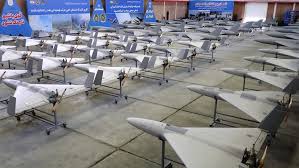
Ukraine says drones are targeting substations that power the Khmelnytskyi and Rivne nuclear plants. What we know on day 1,355
Guardian staff and agencies, 9 Nov 25
- Russia is again targeting substations that power the Khmelnytskyi and Rivne nuclear power plants in Ukraine, the country’s foreign minister Andrii Sybiha said on X on Saturday. Sybiha said drone attacks on the weekend were not accidental but well-planned strikes. “Russia is deliberately endangering nuclear safety in Europe,” he said.
- Russia launched a barrage of drones and missiles at Ukraine over the weekend, killing at least seven people and damaging energy infrastructure in three regions, according to Ukrainian officials. Ukraine’s president, Volodymyr Zelenskyy, said Russia had launched more than 450 drones and 45 missiles, most of which were shot down. Three people were killed and 12 wounded when a drone hit an apartment building in Dnipro, and another person was killed in the Kharkiv region. Three were killed in the south-eastern Zaporizhzhia region, regional officials said. https://www.theguardian.com/world/2025/nov/09/ukraine-war-briefing-russia-deliberately-endangering-nuclear-safety-in-europe-says-kyiv
Does Britain really need nuclear power? – Campaign for Nuclear Disarmament
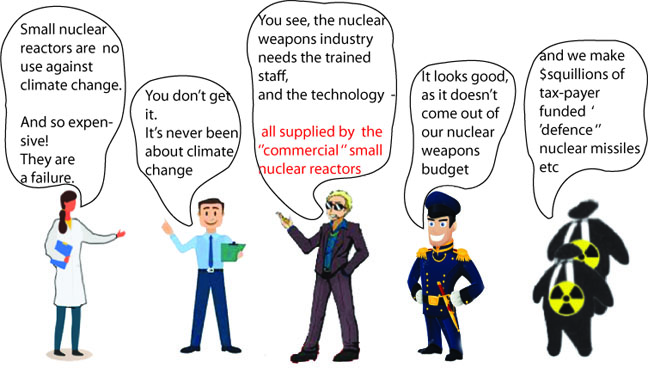
, https://labouroutlook.org/2025/11/10/does-britain-really-need-nuclear-power-campaign-for-nuclear-disarmament/
With funding confirmed for a new nuclear power station in Suffolk, Dr Ian Fairlie, CND Vice-President and science adviser, and a leading consultant on radioactivity in the environment, questions whether we actually need this development and the technology in general.
In recent months, the government has continued to promote nuclear reactors. For example, the Energy Secretary is now asking GB Energy to assess sites to be used to host new nuclear reactors. And the Prime Minister continues to push for so-called Small Modular Reactors and has backed the US President’s wishful thinking of ‘a golden age of nuclear’.
But these announcements and proposals are mostly pie-in-the-sky statements and should be treated with a pinch (or more) of salt, as the reality is otherwise.
Let’s look at what is happening in the rest of the world. Last year, a record 582 GW of renewable energy generation capacity was added to the world’s supplies: almost no new nuclear was added.
Indeed, each year, new renewables add about 200 times more global electricity than new nuclear does.
Of course, there are powerful economic arguments for this. The main one is that the marginal (i.e. fuel) costs of renewable energy are close to zero, whereas nuclear fuel is extremely expensive. Nuclear costs – for both construction and generation – are very high and rising, and long delays are the norm. For example, the proposed Sizewell C nuclear station is now predicted to cost £47 billion, with the government and independent experts acknowledging even this estimate may rise significantly. The upshot is that new nuclear power means massive costs, a poisoned legacy to future generations, and whopping radioactive pollution.
iven these manifest disadvantages, independent commentators have questioned the government’s seeming obsession with nuclear power. It is not that nuclear provides a good solution to global warming: it doesn’t. The United Nations’ Intergovernmental Panel on Climate Change (IPCC) reports that renewables are now 10 times more efficient than new nuclear at CO2 mitigation. It’s not that AI centres will need nuclear: the International Energy Agency expects data centres will cause a mere 10% of global electricity demand growth to 2030. And it forecasts that the renewables will supply 10 to 20 times the electricity required for data-centre growth, with Bloomberg NEF predicting a 100-fold renewables expansion.
As for so-called Small Modular Reactors, the inconvenient truth is that these designs are all just paper designs and are a long way off. They would also be more expensive to run than large reactors per kWh – the key parameter. And as the former Chair of the US government’s Nuclear Regulatory Commission (NRC) says, SMRs will produce more chemical and radioactive waste per KW produced than large reactors.
Given a UK Treasury strapped for cash, the unsolved problem of radioactive nuclear waste, the spectre of nuclear proliferation, and it’s being a target in future wars, many wonder why the government is so fixated with nuclear power.
Well, the answer was supplied in 2023 by the Rishi Sunak administration which admitted that the main reason for its continued eye-watering financial support for civil reactors was that they provided needed technical support and expertise for the government’s nuclear weapons programme.
Stop the nuclear MADness

by Harlan Ullman,- 11/10/25 , https://thehill.com/opinion/national-security/5595645-strategic-nuclear-weapons-resurgence/
For better or for worse, strategic nuclear weapons are back on the docket.
Given that the Cold War ended 35 years ago, most Americans have little understanding of or interest in these weapons that could literally obliterate much if not all of our society. The marvelous Stanley Kubrick movie “Dr. Strangelove” satirized the notion of mutual assured destruction and the Soviet Union’s “doomsday device” that, once triggered, would destroy the world.
During the Cold War, the image of two scorpions in a bottle, representing the U.S. and Soviet Union, was popularized, meaning both could sting the other to death. Decades later, at least three scorpions inhabit that bottle, with the addition of China pursuing a serious strategic nuclear arsenal rivaling that of the other two military superpowers.
If not in the same bottle, certainly in the same room are the other nuclear states: Britain, France, North Korea, Israel, India and Pakistan. Iran and Saudi Arabia are in the anteroom.
Now, these strategic nuclear matters have been brought to a head by the expiration of the New START Treaty in January and President Trump’s confusing and unhelpful comment that the U.S. will resume testing its nuclear weapons.
The New START treaty limited both the U.S. and Russia to 1,550 deployed nuclear warheads and 800 deployed and non-deployed launchers. Russian President Vladimir Putin has proposed a voluntary extension of the treaty limits on warheads and launchers.
Trump’s comments on testing have completely disrupted the arms control process. By testing, does Trump mean actually exploding current warheads? Does he mean continuing the non-critical testing that does not require actual fission or fusion to take place? Or does he mean testing launchers?
If he’s talking about explosive testing, virtually all experts regard that as highly dangerous and unnecessary.
Worse, in response to Trump’s proposal to build a Golden Dome around and over America to defend against missile or bomber attacks, Putin held a press conference discussing Russia’s efforts surrounding the Skyfall and Poseidon missiles.
Skyfall is NATO’s designation for a nuclear powered, nuclear tipped cruise missile with nearly unlimited range. Poseidon is a nuclear powered, nuclear tipped unmanned underwater torpedo with transoceanic range.
While Skyfall is subsonic, flying feet above the surface, it could attack from any direction. Poseidon could sail undetected into U.S. harbors — say New York or San Francisco — and detonate a multi-megaton warhead
Megaton weapons can deliver 1,000 times more explosive power than the two nuclear bombs dropped on Japan in 1945. Multiple Poseidon attacks could destroy the American economy.
The strategic nuclear balance has been further complicated by conventional weapons with the capacity to strike and destroy these systems with pinpoint accuracy — cruise missiles such as Tomahawk and long-range convention bombs that can be launched at significant distances from targets. None of these have been included in arms control agreements, and the U.S. abrogated the Anti-Ballistic Missile Treaty in 2001.
The U.S. government has also lost experts who were deeply engaged in these issues. For example, not one of the current Joint Chiefs of Staff has any experience along these lines, as strategic arms control has not been a high priority. The same is true in the White House.
China, so far, has been unwilling to engage in arms control talks, probably waiting until it has expanded its own nuclear capability to a certain level. So under these circumstances, what if anything, can be done beyond leaders agreeing that nuclear weapons can never be used and nuclear war can never be fought?
The options are not good. Engagement with China must continue. Perhaps agreements for mutual inspection of nuclear systems to ensure safety and reliability can begin confidence-building measures. Military-to-military talks on nuclear issues and safeguards are always a good idea. However, given Russia’s intervention in Ukraine, is anyone willing to raise this possibility?
The only concrete step is to ensure that kinetic nuclear testing — namely exploding warheads underground or on the surface and in the air — remains forbidden. Otherwise, a new and unwanted and potentially threatening arms race will be on, and that cannot be permitted.
Harlan Ullman, Ph.D. is UPI’s Arnaud deBorchgrave Distinguished Columnist, a senior advisor at the Atlantic Council, the chairman of two private companies and the principal author of the doctrine of shock and awe. He and former United Kingdom Defense Chief David Richards are the authors of a forthcoming book on preventing strategic catastrophe
Ukraine facing widespread power cuts after generating capacity reduced to ‘zero’ by Russian attacks
Power to be cut for as much as 16 hours a day across most of Ukraine while repairs are carried out
Guardian, Agence France-Presse, 9 Nov 25
Power will be cut for between eight and 16 hours across most regions of Ukraine on Sunday, state transmission system operator Ukrenergo has said, after Russian attacks targeting energy infrastructure reduced the country’s generating capacity to “zero”.
Moscow, which has escalated attacks on Ukraine’s infrastructure in recent months, launched hundreds of drones at energy facilities across the country from Friday into Saturday, which killed at least seven people, according to Ukrainian officials.
The Russian attacks have disrupted electricity, heat and water supplies in several Ukrainian cities, with state power firm Centerenergo warning generating capacity “is down to zero”.
Ukrenergo has said repairs were carried out and energy sourcing diverted.
While the situation had somewhat stabilised, regions including Kyiv, Dnipropetrovsk, Donetsk, Kharkiv, Poltava, Chernihiv and Sumy could continue to experience regular power cuts, Ukraine’s energy minister said on Saturday night.
“The enemy inflicted a massive strike with ballistic missiles, which are extremely difficult to shoot down. It is hard to recall such a number of direct strikes on energy facilities since the beginning of the invasion,” Svitlana Grynchuk told local broadcaster United News.
Russian drones had targeted two nuclear power substations deep in western Ukraine, Kyiv’s foreign minister Andrii Sybiha said, calling on the UN’s nuclear watchdog to respond.
The substations powered the Khmelnytskyi and Rivne nuclear plants, about 120km and 95km (75 miles and 59 miles) respectively from Lutsk, he said………………………………
Ukraine has in turn stepped up strikes on Russian oil depots and refineries in recent months, seeking to cut off Moscow’s vital energy exports and trigger fuel shortages across the country.
Early on Sunday, Russia’s air defence units destroyed 44 Ukrainian drones, RIA news agency reported, citing daily data from the Russian defence ministry. https://www.theguardian.com/world/2025/nov/09/ukraine-facing-widespread-power-cuts-after-generating-capacity-reduced-to-zero-by-russian-attacks
US conducts its Intercontinental Ballistic Missile (ICBM) test.

ICBMs have been sold to the public as a guarantor of security, when in fact, they are an imminent threat.
Maintaining these weapons is a huge waste of resources.
Influential right wing think tanks like The Heritage Foundation have come out in opposition to the Comprehensive Test Ban Treaty, and have directly called for the U.S. to prepare to resume explosive nuclear weapons testing
by beyondnuclearinternational, https://beyondnuclearinternational.org/2025/11/09/us-conducts-its-icbm-test/
Although not carrying a nuclear warhead, the test is still provocative, say Defuse Nuclear War and Tri-Valley CAREs
In the early morning hours of November 5th, Vandenberg Space Force Base launched a Minuteman III missile, the current intercontinental ballistic missile (ICBM) ground-based nuclear warhead delivery system in roughly 400 underground silos across five states that would target US adversaries in a full-scale nuclear war.
This ICBM test, which landed roughly 30 minutes later at Kwajalein Atoll in the Marshall Islands, is one of several that occur at Vandenburg every year — as they have for many decades. According to the Space Force Press Release, today’s test “validates” the “reliability, operational readiness, and accuracy of the ICBM system.” While these tests are launched without the nuclear warhead, the purpose is to practice nuclear war fighting and these tests are just as provocative to US adversaries as their nuclear-capable missile tests are to us.
This launch has an increased gravitas, as it comes hardly a week after the President used his social media platform to make a confusingly provocative announcement that, “Because of other countries’ testing programs, I have instructed the Department of War to start testing our nuclear weapons on an equal basis.”
Exactly what was meant by the President’s vague statement has been debated in the days since. The President could not have been referencing other countries conducting explosive nuclear tests, because no nation except North Korea has conducted an explosive nuclear test this century.
The reference to “equal basis” with other “countries testing programs” has been thought to be in reference to nuclear weapon delivery system tests, which have been conducted by both Russia and China. But as today’s launch displays, these delivery system tests are nothing new, and the United States has long tested all of the delivery vehicles in its triad, including today’s ICBM test.
If the US were to resume explosive nuclear testing, Russia and others have already signaled they will follow. This reckless move would break a 30-year taboo that has kept the world safer. If the US resumes testing, it won’t just poison the air: it could destroy decades of progress toward preventing nuclear war.
Resuming explosive nuclear testing at this time would solely be a political decision, and it would be a very bad one. The human and environmental toll would be immense: radiation poisoning that seeps into lungs, water, and soil; children born with preventable cancers; ecosystems rendered unlivable. Testing again would repeat history’s worst mistakes on purpose.
US resumption of explosive nuclear testing would open the door to all of the other nuclear powered states conducting their own tests for both their existing stockpile warhead designs, and those that are in development, potentially opening the door to decades of testing and associated releases of radiation into the environment.
Influential right wing think tanks like The Heritage Foundation have come out in opposition to the Comprehensive Test Ban Treaty, and have directly called for the U.S. to prepare to resume explosive nuclear weapons testing at the Nevada National Security Site (NNSS). For example, in its January 2025 report, America Must Prepare to Test Nuclear Weapons, it claims that testing is necessary for the global image of America and would be a display of resolve.
Additionally, Project 2025 calls for the United States to “Reject ratification of the Comprehensive Test Ban Treaty and indicate a willingness to conduct nuclear tests in response to adversary nuclear developments if necessary. This will require that the National Nuclear Security Administration be directed to move to immediate test readiness…”
Officials from the Lawrence Livermore and Los Alamos National Labs who manage the existing nuclear weapons stockpile have expressed that there’s no military or technical justification for explosive nuclear testing at this time. The billions spent on the Labs’ supercomputer modeling, National Ignition Facility laser testing and multiple other simulation systems allow them to ensure that the stockpile will work as designed in a “use scenario.”
The US conducted 100 atmospheric and 828 underground explosive nuclear tests at NNSS between 1951 and 1992. The agency currently needs 36 months to get “ready” for a full-scale, underground, explosive nuclear test at NNSS.
In response to the President’s sudden announcement, on October 30th Congresswoman Dina Titus (NV-01) introduced the Renewing Efforts to Suspend Testing and Reinforce Arms Control Initiatives Now (RESTRAIN) Act to prohibit the United States from conducting explosive testing of nuclear weapons.
In her press release announcing the RESTRAIN Act, Representative Titus states, “Donald Trump has put his own ego and authoritarian ambitions above the health and safety of Nevadans. His announcement to resume nuclear testing in the United States goes against the arms control and nonproliferation treaties that the U.S. has spearheaded since the end of the Cold War, and will trigger new tests by Russia and China, reigniting an international arms race. It also puts Nevadans back in the crosshairs of toxic radiation and environmental destruction. With just 97 days until the only arms control agreement between the U.S. and Russia expires, now should be the time to negotiate further arms-control agreements, not create mushroom clouds in the Nevada desert.”
The RESTRAIN Act amends U.S. Code to insert a prohibition of explosive nuclear testing while simultaneously preventing any funding from going toward the Trump Administration’s effort to conduct explosive nuclear tests.
Emma Claire Foley with the Defuse Nuclear War coalition said of today’s launch, “ICBM tests make war more likely and damage the place they supposedly protect. Scheduling this latest test on Election Day is an attempt to avoid public attention on a weapons system that experts agree makes the U.S. less safe.” She added, “ICBMs are a threat to the life and health of every single person in the United States and around the world. We ask that the upcoming ICBM test, all future scheduled tests, be canceled, and that the U.S. hold to its decades-long record of not conducting nuclear tests.”
ICBMs have been sold to the public as a guarantor of security, when in fact, they are an imminent threat. In the words of the late Daniel Ellsberg, author of The Doomsday Machine, these weapons make “any conflict enormously more dangerous than it has to be” by increasing “the danger that any armed conflict between major nuclear states can escalate to all-out war.” ICBMs are on hair-trigger alert and, once launched, cannot be recalled, virtually guaranteeing a strike on the country that launches them. As long as ICBMs exist, we live with the constant risk that misinterpreted intelligence, human error, or a single rash decision could end civilization as we know it within an hour.
Maintaining these weapons is a huge waste of resources. The U.S. has committed to spending hundreds of billions of dollars to “modernize” its ICBM force, which in practice means replacing the Minuteman III system that was tested today with an entirely new missile system – the Sentinel ICBM, and a new nuclear warhead design.
Thus far, the Sentinel ICBM program is now an astonishing 81% over budget and years behind schedule, not including the expense for its new W-87-1 nuclear warhead development being done at Lawrence Livermore National Laboratory or the new plutonium pits that will be built at Los Alamos National Laboratory. Yet the U.S. Secretary of Defense has certified, through a “comprehensive, unbiased review” not shared with the public, that the program will proceed.
Scott Yundt, Executive Director of Livermore-based Tri-Valley CAREs criticized the launch from Vandenburg, saying, “Test launches like today’s damage human communities and ecosystems. The Marshall Islands, already forced to bear the overwhelming environmental costs of U.S. nuclear weapons testing, are still used as a target test area.”
Yundt went on to say “When tensions among nuclear-armed states are high, each test launch carries an added risk. The U.S. military has acknowledged as much by pausing these launches at high points of tension in the war in Ukraine. The risk of nuclear escalation remains too high to introduce the possibility of misinterpretation of a test into the mix.”
“ICBM tests are damaging and provocative acts masquerading as business as usual. We condemn all wasteful, destructive tests that keep the world at the edge of nuclear destruction,” Yundt concluded.
TriValley CAREs watchdogs the nuclear weapons complex and its Lawrence Livermore Lab, one of two locations that develops all US nuclear bombs and warheads. Defuse Nuclear War is a coalition of more than 200 organizations and organizers dedicated to reducing the risk of nuclear war.
Legalising the theft of Russian assets
There are, I’m afraid to say, still too many truly believers in the Russia total defeat delusion. Ukraine can still win! With what troops and, critically, what money?
With Glenn Diesen, Ian Proud. Nov 10, 2025
Following my recent article on the topic of the so-called EU reparations loan (a cheap ruse to fund the Ukrainian state for another 2-3 catastrophic years of war), I discussed the issue in more detailed with Glenn Diesen,
The more I consider this issue, the more clear it becomes that attempting to exproprirate Russian assets is a desperate measure to prevent EU Member States from giving Ukraine the money themselves, money which they do not have.
The Commission idea, should the Russian asset option continue to be blocked by Belgium, to borrow the money on international markets and then lend it to Ukraine, which can’t borrow money itself, appears similarly desperate. Who will make repayments on that loan? Becauses Ukraine won’t.
Suddenly, the EU idea of common debt becomes more worrying still. Who wants to give Kaja Kallas a blank cheque to fund proxy wars in other countries, with repayments being share among Member States?
Amid all of this, with Pokrovsk falling, Kupiansk and Siversk almost lost, the Russian army pushing into Zaporizhia, does anyone in Brussels take a step back and ask whether, in fact, it would be better to support the US in leveraging Zelensky to settle?
There are, I’m afraid to say, still too many truly believers in the Russia total defeat delusion. Ukraine can still win! With what troops and, critically, what money?
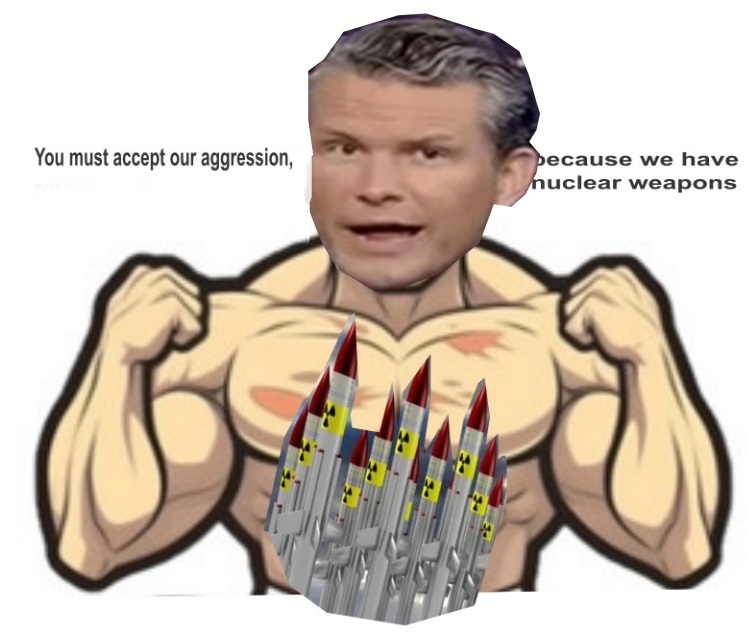
Hegseth Vows Wartime Footing For U.S. Weapons Production.
BY DREW FITZGERALD, Wall Street Journal 11/08/25
Pentagon leaders are putting their weapons suppliers in the crosshairs.
Defense Secretary Pete Hegseth said Friday that the U.S. military will shake up the way it buys weaponry, equipment and software by making purchases more quickly, and from a broader range of potential suppliers. The plan would streamline Pentagon program offices, develop incentives for new investments and potentially box out suppliers that miss deadlines.
Hegseth said decadelong weapons-development timelines have put the U.S. military at risk of falling behind rivals such as China. He said he would clear testing requirements that can slow purchasing and empower military officials to order commercial products when custom-made technology takes too long.
“We need to save the bureaucracy from itself,” Hegseth said Friday at an address to dozens of defense-industry executives in Washington.
The Trump administration aims to extend Pentagon efforts to bring into the fold more technology companies. The push has exposed ten-sions between the old-guard contractors such as Boeing and Lockheed Martin and a new crop of politically connected tech companies………………………………………………….
“We need to save the bureaucracy from itself,” Hegseth said Friday at an address to dozens of defense-industry executives in Washington.
The Trump administration aims to extend Pentagon efforts to bring into the fold more technology companies. The push has exposed ten-sions between the old-guard contractors such as Boeing and Lockheed Martin and a new crop of politically connected tech companies…………..
US Again Flies Heavy Bombers Near Venezuela’s Coast

The Senate on Thursday voted against a War Powers Resolution that would have prohibited the president from starting a war with Venezuela without congressional authorization.
The flight marked the fourth time since October 15 that the US has sent bombers into the Caribbean
by Dave DeCamp | November 6, 2025, https://news.antiwar.com/2025/11/06/us-again-flies-heavy-bombers-near-venezuelas-coast/
The US has once again flown heavy bombers over the Caribbean and near the coast of Venezuela, according to a report from Newsweek, which cited flight tracking data.
Two US Air Force B-52 Stratofortress aircraft made the provocative flight, marking the fourth time since October 15 that the US has sent bombers near Venezuela’s coast. The first flight also involved B-52s, and the second and third were conducted by B-1B Lancer bombers.
In each case, the US bombers kept their transponders on when flying near Venezuela, meaning they wanted to be seen. It’s been clear that one aspect of the US military activity in the region has been meant as a psychological operation against Venezuelan President Nicolas Maduro, as the Trump administration is hoping he decides to step down or someone in his inner circle turns on him, something that’s unlikely to happen.
The latest bomber flight comes as a US aircraft carrier, the USS Gerald Ford, is en route to the region. The Gerald Ford and its strike group will join eight US warships already deployed in the Caribbean.
According to a recent report from The New York Times, President Trump is considering several options for launching attacks on Venezuela, and he isn’t expected to decide until the Gerald Ford is in position. The report also said that the president was worried about failing or putting US troops at risk, and that he hadn’t made a final decision.
The Senate on Thursday voted against a War Powers Resolution that would have prohibited the president from starting a war with Venezuela without congressional authorization.
The US military has continued its bombing campaign against alleged drug-running boats in Latin America, which so far has involved the destruction of 17 vessels and the killing of 66 people. The Trump administration has not provided any evidence to back up its claims about what the boats are carrying and has admitted it doesn’t know the identities of the people it has been extra-judicially executing.
Ukraine accuses Russia of targeting its nuclear substations.
A large Russian missile and drone attack that overwhelmed Ukrainian air
defences overnight targeted substations that power two of Ukraine’s nuclear power plants, according to the country’s foreign minister and a person with knowledge of the barrage.
Andriy Sybiha, Ukraine’s top diplomat, said the
substations which power the Khmelnytskyi and Rivne nuclear power plants
were targeted in “well planned strikes”. “Russia is deliberately
endangering nuclear safety in Europe,” he said in a statement.
FT 9th Nov 2025, https://www.ft.com/content/474e7f27-87fb-4fb1-9899-d62778a611a4
The ‘weird’ catch to Labour’s ‘national security threat’ attack on the Scottish National Party.

LABOUR’S “national security threat” attacks on the SNP reveal how deeply embedded support for nuclear weapons has become in UK politics, a leading security academic has said.
Nick Ritchie, a professor of international security at the University of York, said that by branding opposition to Trident as a danger to the nation, ministers risk “shutting down” democratic debate on defence.
Ritchie, who last year led research
on international nuclear security for the New Zealand government, spoke to
the Sunday National after Labour ministers ramped up their rhetoric against the Scottish Government, suggesting it poses a bigger danger to UK
interests than China.
In the past week, Deputy Prime Minister David Lammy,
Scottish Secretary Douglas Alexander, and Defence Secretary John Healey
have all described the SNP administration as a “threat” to UK national
security. The Labour ministers’ arguments hinge on the SNP’s opposition to
nuclear weaponry, which Ritchie said “really reduces how you can talk and
think about national security”.
He suggested that national security was
being “conflated with unequivocal support for nuclear weapons”. RITCHIE
said the “weird thing” is that the UK Government is technically legally
bound “under the Non-Proliferation Treaty to work towards the goal of
nuclear disarmament”. He went on: “Of course, the caveat is that the
time is not right now, it’ll be far too difficult and so on and so forth.
But the premise – that nuclear disarmament is where we need to end up – is a premise that is accepted, or has been accepted, by governments of all
stripes. “So there’s a tension there between accepting that on the one
hand and then chastising the SNP for a pretty legitimate position that
nuclear weapons are a security liability. This is the position that the
majority of countries in the world have taken.”
The National 9th Nov 2025, https://www.thenational.scot/news/25606016.weird-catch-labours-national-security-threat-attack-snp/
Experts: Full nuclear weapons tests would backfire on US

Defense News, By Stephen Losey, 6 Nov 25,
Resuming full testing of nuclear weapons — as President Donald Trump called for last week — would be unnecessary, costly, undermine nonproliferation efforts, and empower the nation’s adversaries to use their own tests as intimidation, expertstold Defense News.
Trump’s unexpected announcement, which came in the form of an Oct. 29 social media post, surprised many nuclear specialists — and sparked concerns that the UnitedStates may end its 33-year moratorium on nuclear weapons testing.
“Because of other countries testing programs, I have instructed the Department of War to start testing our Nuclear Weapons on an equal basis,” Trump posted on TruthSocial.
“That process will begin immediately,” he wrote.
When asked for comment about nuclear testing plans, the Pentagon’s public affairs office pointed to an Oct. 31 video of Defense Secretary Pete Hegseth in Malaysia, in which he said testing nuclear weapons is a responsible way to ensure the country has “the strongest, most capable nuclear arsenal so that we maintain peace through strength.”
“The president was clear: We need to have a credible nuclear deterrent,” Hegseth said, “That is the baseline of our deterrence.
“Having understanding and resuming testing is a pretty responsible — very responsible — way to do that. I think it makes nuclear conflict less likely, if you know what you have and make sure it operates properly,” he said.
Hegseth also said the military would work with the Energy Department on this testing.
Energy Secretary Chris Wright said on Fox News Nov. 2 that tests focusing on the subsystems of new nuclear weapons are already in the works, but he said the tests would not result in a full nuclear detonation………………………………………………………………………………………………………………………………………………………………..
“The U.S. had conducted over 1,000 nuclear tests,” Erath said Monday in an interview with Defense News. “We had all the data necessary to know how nuclear weapons work, to verify that U.S. nuclear weapons would work, and other people didn’t. So by stopping testing when we did, we sort of locked in an advantage in knowledge that persists to this day.”
Since then, U.S. nuclear testing has relied on computer simulations designed to predict how a weapon would respond if triggered.
Wright said on Fox News that the United States’ advanced laboratories and computing power devoted to nuclear weapons provide a major advantage over other nations.
“We can simulate incredibly accurately exactly what will happen in a nuclear explosion,” Wright said. “And we can do that because in the ’60s, ‘70s and ‘80s, we did nuclear test explosions. We had them detailedly instrumented, and we measured exactly what happened. Now we simulate what were the conditions that delivered that, and as we change bomb designs, what will they deliver?”
Hans Kristensen, director of the nuclear information project at the Federation of American Scientists, speaking Monday to Defense News, pointed to the Lawrence Livermore National Laboratory’s National Ignition Facility in California as an example of the kind of state-of-the-art facilities that the U.S. developed for safe nuclear testing purposes……………………………………………………………………………
As the government modernizes and extends the life of aging weapons in its nuclear stockpile, through efforts such as the W80-4 life extension program, it uses experiments at places such as the NIF to determine whether the weapons will still react properly if used.
Those simulation capabilities obviate the need for any testing of existing, upgraded, or new weapons,Kristensen said.
“It’s just a fundamentally different situation for the United States,” he said.
The U.S. now is modernizing its nuclear forces by creating a new gravity bomb, the B61-13, and new warheads to go on the upcoming LGM-35A Sentinel intercontinental ballistic missile and the Trident II D5 missile.
Part of that work will involve tests of the warheads’ critical subsystems, Erath said.
He said, though, that is it not necessary to go through the entire process and trigger the nuclear reactions that create devastating blasts to know whether the weapon will work.
“What happens after the plutonium goes critical is well known,” Erath said, “So you don’t need to do an explosive mushroom cloud-and-crater kind of nuclear test.
“You can do the smaller-scale subcritical testing, and that has been happening.”
Rattling a house of dynamite?
If the United States shatters the taboo against nuclear tests it helped create, other nations are sure to follow with their own tests, Erath said. Once that happens and they start to gather more detailed information on their own nuclear devices, he said, they will start to catch up to America…………
In an interview with 60 Minutes that aired Sunday, Trump claimed without evidence that China and Russia have conducted clandestine nuclear weapons tests deep underground……………………………………………………………………………………………………
If the U.S. government were to proceed with full tests that explode nuclear weapons, Erath said, it would likely happen underground. That would minimize the environmental impact, he said, but not eliminate it entirely, because leaks can happen.
The diplomatic consequences and harm to nonproliferation efforts would be far more severe, Erath said. The United States would likely receive a storm of condemnation from other nations, he said.
With the global moratorium on nuclear weapons testing broken, Erath said, nations such as Russia, China, North Korea, India and Pakistan would likely follow Washington’s example…………………………………………………………..
“This kind of confusion and uncertainty undermines U.S. credibility with its allies,” Kristensen said. “They need to know if they can trust U.S. policies. … If the U.S. president now begins to signal that he’s interested in [nuclear testing] in some shape or form … it’s going to add to the pool of uncertainties [allies] have about what kind of partner the United States is now, and will be in the future.”…………………………………………………
Digging a hole deep enough for a nuclear bomb test would take months, Kristensen said — and finding the right digging equipment would be another challenge, since not many organizations have needed to dig such holes in the desert for a long time. Once the nuclear device is in there, it has to be sealed properly with materials such as gravel and concrete to keep radioactive materials from venting.
“They would have to build a whole tower over the hole in which they have this instrument package that would be lowered in there,” Kristensen said. “Those instruments would have to be designed by the nuclear laboratories to be able to do what it is that they want to record. There’s so many levels of this that have to fall into place.” https://www.defensenews.com/global/the-americas/2025/11/05/experts-full-nuclear-weapons-tests-would-backfire-on-us/
About Stephen Losey
Stephen Losey is the air warfare reporter for Defense News. He previously covered leadership and personnel issues at Air Force Times, and the Pentagon, special operations and air warfare at Military.com. He has traveled to the Middle East to cover U.S. Air Force operations.
Putin considers nuclear tests after Trump threat.
8 Nov 25 https://www.politico.eu/article/russian-president-vladimir-putin-nuclear-tests-donald-trump-weapons/
The Russian president has asked for a feasibility study on resuming nuclear testing following a surprise announcement by his American counterpart.
3Russian President Vladimir Putin on Wednesday ordered top officials to come up with proposals for the potential resumption of nuclear testing for the first time since the end of the Cold War more than three decades ago.
Last week, U.S. President Donald Trump instructed the Pentagon to “immediately” start testing nuclear weapons “on an equal basis” with nuclear testing programs in other nations.
Putin, speaking at Russia’s Security Council, told the country’s foreign and defense ministers, its special services and the relevant civilian agencies to study the matter and “submit coordinated proposals on the possible commencement of work to prepare for nuclear weapons testing.”
Defense Minister Andrei Belousov told Putin at the meeting that it would be “appropriate to immediately begin preparations for full-scale nuclear tests.”
Kremlin spokesperson Dmitry Peskov later clarified that “the president did not give the order to begin preparations for the test” but merely ordered a feasibility study.
Russia announced last week that it had successfully tested a nuclear-powered torpedo, dubbed Poseidon, that was capable of damaging entire coastal regions as well as a new cruise missile named the Burevestnik, prompting Trump to respond. The U.S. today launched an intercontinental ballistic missile, Minuteman III, in a routine test.
The Cold War was characterized by an intense nuclear arms race between the U.S. and the Soviet Union as the superpowers competed for superiority by stockpiling and developing nuclear weapons. It ended in 1991 with the collapse of the Soviet Union and the signing of nuclear treaties such as START, which aimed to reduce and control nuclear arsenals. The Soviet Union conducted its last test in 1990 and the U.S. in 1992.
A report this year by the SIPRI think tank warned that the global stockpile of nuclear weapons is increasing, with all nine nuclear-armed states — the U.S., U.K., Russia, France, China, Pakistan, India, Israel and North Korea — upgrading existing weapons and adding new versions to their stockpiles.
IAEA chief says Iran still capable of building nuclear weapons
Nov 7, 2025,
https://www.iranintl.com/en/202511073079
ran still possesses enough highly enriched uranium and the technical capability to build nuclear weapons, despite the Israeli and US strikes that damaged its enrichment sites, Rafael Mariano Grossi, the head of the UN’s International Atomic Energy Agency, said on Thursday.
Although the June attacks on Natanz, Isfahan, and Fordo “severely damaged” Iran’s nuclear program, the country retains the knowledge and material “to manufacture a few nuclear weapons,” Grossi told FRANCE 24.
“To reconstruct that industrial technological base, Iran would need time,” Grossi said, adding that the strikes marked a sharp shift “from diplomacy to the use of force” and urging a return to negotiations. “Diplomacy is the only path toward a durable solution,” he said.
Politicized report and call for renewed talks
Grossi dismissed remarks that an IAEA safeguards report provided justification for the strikes, saying it had been politicized and contained nothing new. He also rejected suggestions that artificial intelligence influenced the agency’s conclusions, emphasizing that “our findings are made by human inspectors, not machines.”
The IAEA’s Board of Governors found Iran in non-compliance with its nuclear obligations on June 12 after the agency said Tehran had failed to explain the presence of undeclared nuclear material at multiple sites. Inspectors last verified more than 400 kilograms of highly enriched uranium in Iran shortly before the June conflict began.
In late September, 70 members of Iranian parliament in a letter to the heads of the branches of government and the Supreme National Security Council requested that, by changing Supreme Leader Ali Khamenei’s previous fatwa and in order to create deterrence, the Islamic Republic undertake the manufacture and possession of a nuclear bomb.
In recent months, and especially after the 12-day war with Israel, several officials of the Islamic Republic have criticized Grossi’s reports. Some called him a “Mossad agent,” and even Kayhan — a newspaper overseen by Khamenei’s representative — demanded his execution on charges of spying for Israel.
What will the UK do in a new nuclear arms race?
Tom Vaughan, a lecturer in international security at the University of
Leeds, notes that the UK is pressing ahead with its procurement of F-35
stealth fighter aircraft. These can carry nuclear bombs but, as Vaughan
notes, would require US authorisation before they could be used. Equally,
Britain’s nominally independent nuclear weapons system, Trident, is
reliant on US support and maintenance.
As Vaughan points out, it makes the
UK into “a target in any nuclear war that might be started by two
unpredictable and violent superpowers”.
The Conversation 7th Nov 2025, https://theconversation.com/what-will-the-uk-do-in-a-new-nuclear-arms-race-269224
1 This Month



26 September – International Day for the Total Elimination of Nuclear Weapons


PLEASE OPPOSE HR 8255 AND S.3639 – bills would accelerate satellite deployment, with no environmental review or safeguards – https://ncstd5li.quorum.us/campaign/169331/
To see nuclear-related stories in greater depth and intensity – go to https://nuclearinformation.wordpress.com
-
Archives
- September 2026 (245)
- August 2026 (330)
- July 2026 (355)
- June 2026 (287)
- May 2026 (306)
- April 2026 (356)
- March 2026 (251)
- February 2026 (267)
- January 2026 (308)
- December 2025 (358)
- November 2025 (359)
- October 2025 (375)
-
Categories
- 1
- 1 NUCLEAR ISSUES
- business and costs
- climate change
- culture and arts
- ENERGY
- environment
- health
- history
- indigenous issues
- Legal
- marketing of nuclear
- media
- opposition to nuclear
- PERSONAL STORIES
- politics
- politics international
- Religion and ethics
- safety
- secrets,lies and civil liberties
- spinbuster
- technology
- Uranium
- wastes
- weapons and war
- Women
- 2 WORLD
- ACTION
- AFRICA
- Atrocities
- AUSTRALIA
- Christina's notes
- Christina's themes
- culture and arts
- Events
- Fuk 2022
- Fuk 2023
- Fukushima 2017
- Fukushima 2018
- fukushima 2019
- Fukushima 2020
- Fukushima 2021
- general
- global warming
- Humour (God we need it)
- Nuclear
- RARE EARTHS
- Reference
- resources – print
- Resources -audiovicual
- Weekly Newsletter
- World
- World Nuclear
- YouTube
-
RSS
Entries RSS
Comments RSS
 nuclear-news