N.Korea leader Kim vows nuclear restraint
 http://www.reuters.com/video/2016/05/08/nkorea-leader-kim-vows-nuclear-restraint?videoId=368407626
North Korean leader Kim Jong Un says his country will not use nuclear weapons unless its sovereignty is infringed by others with nuclear arms and sets a five-year plan to boost the secretive state’s moribund economy. Mana Rabiee reports. A vow of nuclear restraint from North Korea’s leader Kim Jong Un. He said his country will fulfill its obligations for nuclear non-proliferation and said it’s willing to normalize ties with nations that have been hostile to Pyongyang in the past.
He made the comments at a rare ruling party congress that’s still underway. (SOUNDBITE) (Korean) NORTH KOREAN LEADER, KIM JONG UN, SAYING: “As a responsible nuclear weapons state, our Republic will not use a nuclear weapon unless our sovereignty is encroached upon by any aggressive hostile forces with nukes.” Isolated North Korea is being squeezed by U.N. sanctions over its nuclear weapons and ballistics program, and has frequently threatened to attack South Korea and the United States. But it’s made similar statements before about normalizing relations with South Korea with little progress. Kim also set out a blueprint for a five year economic program, but offered few specifics.
Japan and South Korea lean towards getting nuclear weapons
 Japan and South Korea May Soon Go Nuclear http://www.wsj.com/articles/japan-and-south-korea-may-soon-go-nuclear-1462738914 The longtime status quo is crumbling and plutonium stockpiles are rising. HENRY SOKOLSKI May 8, 2016
On Friday North Korean dictator Kim Jong Un praised his country’s recent hydrogen bomb test and satellite launch as “unprecedented” achievements that will “bring the final victory of the revolution.” Such rhetoric is nothing new, but North Korea’s nuclear-weapons program and a growing sense that security arrangements with the U.S. aren’t sufficient has eroded the Japanese taboo against nuclear weapons. On April 1, Prime Minister Shinzo Abe’s cabinet announcedthat Japan’s constitution did not ban his country from having or using nuclear arms.
Meanwhile, South Korea’s ruling-party leaders have urged President Park Geun-hye to stockpile “peaceful” plutonium as a military hedge against its neighbors. A Feb. 19 article in Seoul’s leading conservative daily, the Chosun Ilbo, went so far as to detail how South Korea could use its existing civilian nuclear facilities to build a bomb in 18 months.
Japan and South Korea are party to the Nuclear Nonproliferation Treaty, and Tokyo’s antinuclear-weapons stance dates to 1945 and the nuclear devastation the U.S. wreaked on Hiroshima and Nagasaki. But that won’t necessarily stop either country from joining the nuclear club—or at least positioning themselves to do so quickly—if they feel the U.S. “nuclear umbrella” is folding.
Japan already has stockpiled 11 tons of plutonium, separated from fuel used in its nuclear-power reactors. A bomb requires roughly five kilograms (or 1/200th of a ton). The old shibboleth, popular with the nuclear industry, that such “reactor-grade” plutonium is unsuitable for weapons, is essentially irrelevant for a technologically advanced country. Japan also has built—but not operated—a large reprocessing plant of French design that can separate about eight tons of plutonium a year.
The shutdown of Japan’s power reactors following the 2011 Fukushima disaster means there are no reactors online that can use this plutonium. But Japan says it will proceed with reprocessing anyway, putatively to keep open the distant possibility of fueling a new generation of so-called fast-breeder reactors. Japan’s nuclear cooperation agreement with Washington allows it to do this with U.S.-origin fuel. South Korea’s agreement prohibits this without U.S. approval, something Seoul chafes at. It sees itself the equal of Japan. Should Japan operate Rokkasho, as it plans to do late in 2018, it will be impossible politically to restrain South Korea from following suit.
China, meanwhile, is negotiating with France to build a reprocessing plant similar to Japan’s. One might discount the security significance of this; Beijing already has nuclear weapons. But a large reprocessing plant would allow it to expand its nuclear arsenal far beyond its present size. The Chinese are clearly aware of the military significance of nominally civilian plutonium. Consider their loud and repeated complaints about Japan’s plutonium stocks.
The Asian goal of stockpiling plutonium to launch a new generation of plutonium-fueled fast-breeder reactors is one shared with nuclear enthusiasts in the West. But fast reactors are so much more expensive than conventional uranium-burning reactors that they, and the reprocessing of spent fuel they require, have never made economic sense. In Tokyo, Seoul and Beijing there are government officials and advisers who understand this and the security risks of commercializing plutonium. But their concerns have been trumped by nationalistic demands not to fall behind in plutonium technology.
The obvious fix, which would be economically beneficial for Japan, South Korea and China, is a collective pause in the rush toward civil plutonium. For the U.S. to credibly broker this, Capitol Hill needs to support the Energy Department’s February decision to terminate the construction in South Carolina of a plutonium plant designed to fuel U.S. power reactors that is billions over budget and years behind schedule.
An Asian-U.S. plutonium pause has support within the administration and Congress. Energy Secretary Ernest Monizrecently told the Journal’s Beijing office: “We don’t support large-scale reprocessing.” He said a large commercial Chinese reprocessing plant “certainly isn’t a positive in terms of nonproliferation.”
At a March hearing of the Senate Foreign Relations Committee, Sens.Bob Corker (R., Tenn.) and Ed Markey (D., Mass.), both backed a “time out” on East Asian plutonium recycling. Assistant Secretary of State Thomas Countryman agreed: “I would be very happy to see all countries get out of the plutonium reprocessing business.” In the House a plutonium timeout has been championed by Reps. Brad Sherman (D., Calif.), Jeff Fortenberry (R., Neb.) and Adam Schiff (D., Calif.).
They understand that a collective plutonium timeout would calm East Asia and save our Asian allies, China and the U.S. hundreds of billions of dollars. President Obama, with less than a year in office to make a lasting contribution to nuclear nonproliferation, should feel comfortable backing this proposal.
Mr. Sokolski is the executive director of the Nonproliferation Policy Education Center and the author of “Underestimated: Our Not So Peaceful Nuclear Future” (Strategic Studies Institute, 2016).
Saudi prince hints at possibility of getting nuclear weapons
Officials from the kingdom, which is party to the nuclear nonproliferation treaty, have raised that possibility in the past. However, they have more strongly stressed the need for the Middle East to be a “weapons of mass destruction free zone,” as Turki did at the event. …….http://www.wmtw.com/politics/saudi-prince-getting-nuclear-weapons-possible/39420576
What do we know about North Korea’s nuclear program?
North Korea’s nuclear program: What do we know? Euan McKirdy, CNN 5 May 16 Despite international condemnation, North Korea has ramped up its quest to become a nuclear power, with weapons tests a very visible sign of leader Kim Jong Un’s ambitions. This year alone has seen at least eight signs of either nuclear tests or delivery methods. Some analysts believe the regime may be gearing up for another nuclear test — its fifth.
Australia’s nuclear submarine boondoggle – a crippling waste of tax-payers’ money
4. BUT WAIT THERE’S MORE So we spend $2,000 each. That just gets us the big lumps of steel. If you actually want to use them, you’re paying more. It could be another $2,000 to $4,000 per Australian….
OPTIONS The great thing about the way the acquisition will work is there should be the opportunity to cut back from 12 when the inevitable delays and cost blowouts happen. From here we can’t save the whole $2000 but maybe we can save some, for better uses.

 Sub standard: why the $2,000 we are each spending on submarines will probably be a terrible waste http://www.news.com.au/technology/innovation/design/sub-standard-why-the-2000-we-are-each-spending-on-submarines-will-probably-be-a-terrible-waste/news-story/6922de6f6a72657c669fdc1a1248916f APRIL 30, 2016, Jason Murphy news.com.au@jasemurphy AUSTRALIA is spending $50 billion to buy submarines. The biggest whack of money we’ve ever spent on a Defence project. It comes out at $2000 per person. And it’s probably a shocking idea.
1. STRATEGY The strategic rationale for submarines is that an island needs trade lanes to stay open. Yep, we do. But the kind of war where a country lays siege to another whole country — think German U-Boats blockading Britain — is no longer likely at all.
Our non-nuclear submarines would have been handy in the past. And the generals are always “fighting the last war” strategically. Which is fine. But it would be better if we didn’t have to give them $2000 to do so.
2. AVAILABILITY We are buying 12 boats. Except — here’s the thing — you can’t use them all at once. Subs need a lot of maintenance. Take the Collins Class submarines, of which we have six. Best-case scenario — if things are going splendidly — is they spend half the time in the water, half in maintenance. But those subs have big problems. Some recent years we’ve managed to have basically just one in the water on average.
3. COST BLOWOUTS The Joint Strike Fighter aircraft program, which we bought into, is now many billions of dollars over Budget. Possibly hundreds of billions (reports vary). And it is hardly alone.
We consistently underestimate how complex defence equipment is because we, naturally, compare it to a vehicle. But not only is our new submarine custom-made (unlike my station wagon) it is also cutting edge technology.
It has to do many things perfectly. A submarine is a fortress, an IT hub, a weapons system, a vehicle and a temporary home all in one. Making all the things fit in together is hard. (Recently Spanish submarine builders had to send their sub back to the drawing board after they accidentally made it 75 tons too heavy and it was going to sink.)
When you face the inevitable problems you can either compromise or just spend that bit more to make it work. And if you cut corners on Defence equipment, you risk losing personnel and very expensive equipment… So of course you spend a bit more. And that’s how such laughably enormous cost blowouts happen.
4. BUT WAIT THERE’S MORE So we spend $2,000 each. That just gets us the big lumps of steel. If you actually want to use them, you’re paying more. It could be another $2,000 to $4,000 per Australian over the next 45 years. All that maintenance is expensive. And so are the crews.
The Navy has had enormous problems actually finding and training crew for submarines. A cook on a submarine can be paid an amazing $200,000 per year. Other personnel get more. Living in a big steel tube for 80 days with only other men for company is rubbish, apparently.
5. ENOUGH IS ENOUGH! Australia is the 52nd biggest country in the world by population, 13th by size of economy, and sixth by land area. We spend 13th most on defence. And we are ramping up by $26 billion per year over the next 10 years.
It is a lot, given we have no land borders, the natural advantage of being surrounded by a giant moat, and are strategically not on the way to anywhere much (sorry NZ).
The main reason anyone would attack us is in the context of a global or regional conflict is we have a large military they might fear.
Our spending has an effect on our neighbours. Indonesia is not a rich country, but they have indicated they are also thinking about expanding their submarine fleet. Would limiting our spending help forestall a local arms race?
OPTIONS The great thing about the way the acquisition will work is there should be the opportunity to cut back from 12 when the inevitable delays and cost blowouts happen. From here we can’t save the whole $2000 but maybe we can save some, for better uses.
Russian nuclear submarine fires CRUISE MISSILE in Arctic
Russian nuclear sub fires CRUISE MISSILE in chilling footage of Arctic military drill, Mirror, BY JONATHAN SHARMAN, 30 APR 16 The 120-metre Severodvinsk submarine can be seen sinking slowly below the surface before its Kalibr missile erupts from the wave… [INCL VIDEO]…..
The Russian military said the cruise missile struck its target, in the Arkhangelsk region, “with high accuracy”.
A statement added: “A strike group of the flotilla has conducted firing drills using naval practice targets and hit them successfully.”
The Kalibr missile, which can carry nuclear or conventional payloads, travels at speeds up to Mach 2.9 – the same as a space shuttle during launch. The land-attack weapon has a range of up to 1,500 miles……..http://www.mirror.co.uk/news/world-news/russian-nuclear-sub-fires-cruise-7866647
High time that USA ratified the Nuclear-Test-Ban Treaty
 The United States Needs to Step Up and Ratify the Nuclear-Test-Ban Treaty
With nuclear tensions on the rise in East Asia, Washington finally needs to show some leadership and commit to a testing freeze. Foreign Policy, 22 Apr 16 This year marks the 20th anniversary of the opening for signature of the Comprehensive Nuclear-Test-Ban Treaty (CTBT). It should be a cause for celebration, but it’s not; the treaty still remains in legal limbo. The fact is that out of the eight countries whose ratification is needed for the CTBT’s entry into force, two are permanent members of the U.N. Security Council and bear special responsibility for international peace and security — the United States and China.
Testing of nuclear weapons was one of the most visible manifestations of the Cold War. Nuclear explosions sent ripples putting peace and security under duress. The struggle to outlaw testing of nuclear weapons became the unifying factor in the global push to stop the arms race and the first international agreement demonstrating that success was possible was the Moscow Treaty on the Prohibition of Nuclear Tests in Three Environments, also known as the 1963 Partial Test Ban Treaty, negotiated by Russia, Britain, and the United States.
In subsequent years, Soviet and American experts cooperated in the context of the international Group of Scientific Experts laying out the foundations of the CTBT verification regime. While the actual conclusion of the treaty did not happen until 1996, the Soviet Union was the first of the P-5 states to announce a moratorium on nuclear testing on Oct. 24, 1990. Russia has since adhered to this voluntary undertaking. The United States issued its own nuclear-testing moratorium in 1992 followed by all the other P-5 countries………
Russian ratification was concluded in 2000 with the expectation that the United States would conclude its own ratification process despite the rejection of the treaty by the U.S. Senate in October 1999. Rather than wait for the United States, Russian leadership supported the CTBT when its future was not clear. …..
Expectations raised by President Barack Obama in his Prague speech seven years ago — when he made CTBT ratification a top priority for his administration — were short-lived. With the presidential election later this year, there is precious little time to waste. It is imperative to move forward and to demonstrate real support for the treaty……
In the wake of the Iran nuclear deal, there is momentum to advance adherence to the CTBT in the Middle East. No states in the region conduct nuclear tests. Key states have signed the CTBT; they have already said “no” to nuclear testing. But they need to turn this “no” into a “never.” The 20th anniversary of the treaty is an ideal time to move ahead. Another way ahead is to ensure real progress toward creation in the Middle East of a zone free of nuclear weapons and other WMD………http://foreignpolicy.com/2016/04/22/the-united-states-needs-to-step-up-and-ratify-the-nuclear-test-ban-treaty-china/
China tests very long range ballistic missile with 10 nuclear warheads
 China tests ballistic missiles with the longest range in the world, capable of striking US or Britain with TEN nuclear warheads http://www.dailymail.co.uk/news/article-3552542/China-tests-nuke-longest-range-ballistic-missile-world-capable-striking-Britain-ten-warheads.html
- The rockers are believed to have a maximum range of around 8,700 miles
- Pentagon officials slammed China for testing ‘intercontinental weapons’
- China’s defence ministry refused to deny that a test had been carried out
- For more of the latest news from China visit www.dailymail.co.uk/china
By JAY AKBAR FOR MAILONLINE 22 April 2016 |
China has tested a weapon which could be used to strike London and the United States with nuclear warheads.
The Dongfeng-41 missile, which has the longest range of any ballistic rocket in the world, can carry up to ten nuclear warheads.
US Pentagon officials are said to have slammed China for testing the ‘intercontinental weapons’, which have a maximum range of around 8,700 miles.
China hit back at its critics today, saying it was perfectly ‘normal’ to carry out ballistic missile launches.
US media site Washington Free Beacon, citing unnamed Pentagon officials, reported that China had carried out a test of its DF-41 long-range missile on April 12.
The report linked the tests to tensions between Washington and Beijing over the South China Sea, noting it came three days before a visit by US Secretary of Defence Ashton Carter.
In a brief response, China’s defence ministry did not deny a test had been carried out, but dismissed media reports of a specific location as ‘pure speculation’.
A statement on the ministry’s website said: ‘It is normal for us to carry out scientific research tests in our own territory, according to our plans, and they are not aimed at any specific nations or targets.’
China claims nearly all of the South China Sea, which is home to some of the world’s most important shipping lanes and is believed to contain vast oil reserves.
Cancer toll in Serbia, from NATO’s use of depleted uranium weapons

 Depleted uranium used by NATO during bombing of Serbia takes its toll http://inserbia.info/today/2016/03/depleted-uranium-used-by-nato-during-bombing-of-serbia-takes-its-toll/ By InSerbia with agencies -Mar 29, 2016 BELGRADE – The use of depleted uranium during NATO bombing of Serbia has caused long-term damage to Serbia and the Serbian people. Because every year we have an increase in the number of cancer cases by 25 percent over the previous year. Figures in the case of patients in Kosovska Mitrovica support this fact, as in 2011 here were registered 185 of them, the following year, 225 and in 2013 – 250. Therefore, the gloomy forecasts, imposed back in 2002, that the use of depleted uranium during the aggression of Western military alliance against FRY will cause an epidemic of malignant diseases, turned out to be accurate, said dr. Nebojsa Srbljak for Serbian daily “Vecernje Novosti”.
Dr Srbljak, a cardiologist at the ZTC in Kosovska Mitrovica and founder of the NGO “Angel of Mercy” which deals with data on the number of patients with malignancy in Kosovo, explained for the daily that “those who used the depleted uranium had to know what consequences it causes”. He said that the study of his organization, which cover the period of two years before and two years after the bombing, clearly shows that the number of patients with malignant diseases is caused by radioactivity, and not stress and other bad life habits.
“Let us remember the example of Italy which has revealed that their soldiers, who stayed in Kosovo, were irradiated and that the increased number of hematological diseases is a direct consequence of the use of depleted uranium ammunition,” said dr. Srbljak. “Italian KFOR soldiers were deployed where the most of the ammunition with depleted uranium was used, in Pec, Djakovica, in Kosare. Their families, as far as I know, have received compensation.”
Dr. Srbljak urges the authorities that our country formally request compensation, not only for material damage but also because of the increase in the number of patients with malignant diseases. The cardiologist claims that someone was trying to minimize the information he and his team published back in 2002 that the number of patients with malignant diseases was increased by almost 200 percent compared to the period before the bombing.
“It became clear that we are right when our neighbors Albanians started to go to Belgrade for a treatment. Because, and that is obvious, they have confidence in the expertise of Serbian doctors. I therefore think that our proposal, to open a branch of Oncology Institute in Belgrade here in (Kosovska) Mitrovica could finally be realized.”
Hans Blix warns on USA’s danger in not reducing nuclear arsenal
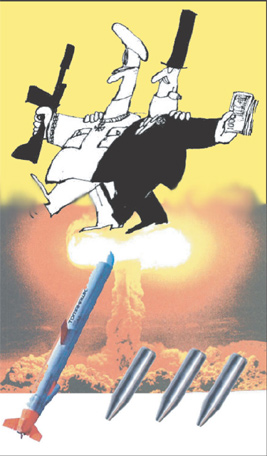 US ‘plays with fire’ dragging feet in reducing nuclear arsenals – Ex-IAEA head to RT 19 Apr, 2016 Nearly 20,000 warheads owned by big powers with “sparks flying” between them are more risky than “dirty bombs” in hands of terrorist organizations, Hans Blix and Lassina Zerbo, reputed international experts on nuclear security, told RT.
Hans Blix, a renowned Swedish diplomat who led the UN’s International Atomic Energy Agency for more than 16 years, and headed the monitoring mission sent to Iraq in search of alleged weapons of mass destruction prior to the 2003 Iraq War, has described the biggest threats posed by nuclear weapons to RT in an exclusive interview.
Recalling the end of the Cold War, which was marked by massive disarmament efforts between the USSR and US, Blix said it was “the great time” that resulted in several milestone agreements banning nuclear tests and chemical weapons.
“Since then we’ve had hopes that countries would go on, with President Obama [pushing for] the nuclear-free world. But since 2010, when an agreement was reached between Russia and the United States about the START treaty [reducing number of warheads and weapons carriers], things have gone badly.”
Twenty years after the Comprehensive Nuclear-Test-Ban Treaty (CTBT) was adopted by the UN in 1996, which urges all countries to abandon nuclear detonations for both military and civilian purposes,“the atmosphere in the world became chilly,” Blix said, warning that major powers have once again entered a phase of pumping large sums of money into rearmament.
Despite Washington’s countless promises to ratify the CTBT, last year Moscow accused the US of taking “no practical steps” in that direction, consequently preventing the important agreement from entering into force.
While both countries have nuclear arsenals sufficient for mutually assured destruction, only Russia has either signed or ratified the treaty……. https://www.rt.com/news/340271-nuclear-ban-treaty-interview/
Politicians oblivious to the very real threat of nuclear famine
Nuclear Famine, Independent Australia, 17 April 2016 Daryl Williams discusses a recent scientific report in which the devastating global impacts of a small nuclear conflict, including “nuclear famine”, are outlined.
THE COLD WAR is over, the Berlin Wall has fallen, nuclear warhead numbers have declined significantly — so the threat of nuclear catastrophe has passed, right?
Well, sadly no.
In fact, things may be more dangerous today than at the height of the Cold War.
Computer simulations of the indirect climate effects of even a “small” regional nuclear exchange indicate that the whole world would still be imperiled.
A recent 16-page scientific paper, ‘Multidecadal global cooling and unprecedented ozone loss following a ‘regional nuclear conflict‘, by Mills, Toon, Lee-Taylor and Robock, outlines the horrific unexpected consequences. Once you boil down the “science-speak” it paints a bleak picture – via an “Earth system model” which includes atmospheric chemistry, ocean dynamics and interactive sea ice and land components – which we should do everything we can to avoid.

It deserves far more attention than it has received and its findings should be informing our foreign, defence and emergency management policies. In summary, the scenario it simulates is as follows:
Firestorms in India and Pakistan from a “small” regional conflict and nuclear exchange would inject 5 Tg (or one million tonnes) of black carbon (smoke, soot, dust) into the stratosphere which spreads globally.
The black carbon heats the stratosphere (by up to an amazing 80 degrees C) and cools the lower atmosphere and surface (by 1.1 degrees C in the first four years, down to 1.6 degrees in the fifth year, slowly rising to 0.25 to 0.5 degrees 20 years later). The colder surface temperatures reduce precipitation by 6% globally for the first five years and still by 4.5% one decade on.
Oh, and hundreds of millions of Indians and Pakistanis would be incinerated to death … but let’s concentrate on the long-term climate repercussions……..
That spells big trouble for Earth in the form of
‘widespread damage to human health, agriculture, terrestrial and aquatic ecosystems.’
That is,
‘…combined cooling and enhanced UV would put significant pressures on global food supplies and could trigger global nuclear famine.’………
The report also states:
‘The combined effects of elevated UV levels alone on terrestrial agriculture and marine ecosystems could put significant pressures on global food security.’
And yet, I didn’t read anything about this in the 2016 Defence White Paper or in any plans byEmergency Management Australia. Why not?…….https://independentaustralia.net/environment/environment-display/nuclear-famine,8893
Indian navy announces test of 1st nuclear-propelled ballistic missile submarine
India tests 1st nuclear-propelled ballistic missile submarine RT.com 19 Apr, 2016 India’s first submarine capable of firing nuclear ballistic missiles, the INS Arihant, is undergoing sea acceptance trials and will be commissioned after their completion, the Navy has announced.
“INS Arihant is now undergoing sea acceptance trails as it had already passed several deep sea diving drills. The submarine will be commissioned after completing all the sea trials,” said H.C.S. Bisht, Vice Admiral of the Indian Navy. The 6,000-ton vessel is the first nuclear-powered submarine that can launch nuclear-capable missiles manufactured by India – the first nation to announce it has accomplished this feat after the five original nuclear powers…….https://www.rt.com/news/340146-arihant-nuclear-submarine-trial/
A bleak picture of the climate effects of “just a small” nuclear war
Nuclear Famine, Independent Australia 17 April 2016, Daryl Williams discusses a recent scientific report in which the devastating global impacts of a small nuclear conflict, including “nuclear famine”, are outlined.
THE COLD WAR is over, the Berlin Wall has fallen, nuclear warhead numbers have declined significantly — so the threat of nuclear catastrophe has passed, right?
Well, sadly no.
In fact, things may be more dangerous today than at the height of the Cold War.
Computer simulations of the indirect climate effects of even a “small” regional nuclear exchange indicate that the whole world would still be imperiled.
A recent 16-page scientific paper, ‘Multidecadal global cooling and unprecedented ozone loss following a ‘regional nuclear conflict‘, by Mills, Toon, Lee-Taylor and Robock, outlines the horrific unexpected consequences. Once you boil down the “science-speak” it paints a bleak picture – via an “Earth system model” which includes atmospheric chemistry, ocean dynamics and interactive sea ice and land components – which we should do everything we can to avoid.
It deserves far more attention than it has received and its findings should be informing our foreign, defence and emergency management policies. In summary, the scenario it simulates is as follows:
Firestorms in India and Pakistan from a “small” regional conflict and nuclear exchange would inject 5 Tg (or one million tonnes) of black carbon (smoke, soot, dust) into the stratosphere which spreads globally.
The black carbon heats the stratosphere (by up to an amazing 80 degrees C) and cools the lower atmosphere and surface (by 1.1 degrees C in the first four years, down to 1.6 degrees in the fifth year, slowly rising to 0.25 to 0.5 degrees 20 years later). The colder surface temperatures reduce precipitation by 6% globally for the first five years and still by 4.5% one decade on.
Oh, and hundreds of millions of Indians and Pakistanis would be incinerated to death … but let’s concentrate on the long-term climate repercussions.
The heating of the stratosphere caused by the black carbon produces a dramatic loss of ozone (30% to 45% at mid-latitudes for the first five years, 50 to 60% at northern high latitudes) giving ‘a global ozone loss on a scale never observed‘.
It is the combination of dramatic extended drops in surface temperatures termed ‘the coldest average surface temperatures in the last 1000 years’ and precipitation with a dramatic increase in UV radiation.
That spells big trouble for Earth in the form of
‘widespread damage to human health, agriculture, terrestrial and aquatic ecosystems.’
That is,
‘…combined cooling and enhanced UV would put significant pressures on global food supplies and could trigger global nuclear famine.’
As well, ‘… the average growing season is reduced by up to 40 days throughout the world’s agricultural zones over these five years’. The increased UV-B radiation would reduce plant height, shoot mass and foliage area, damage DNA and significantly increase insect losses. A 16% loss of ozone could reduce phytoplankton levels in the ocean by 15%, resulting in a loss of seven million tons of fish per year……..
Regional extremes can be worse. Large areas of continental landmasses would experience significantly greater cooling than average:
Winters (JJA) in southern Africa and South America would be up to 2.5 degrees C cooler on average for 5 years … [and] … most of North America, Asia, Europe and the Middle East would experience winters (DJF) that are 2.5 to 6 degrees C cooler … and summers (JJA) 1 to 4 degrees C cooler.
Which is worse than any volcanic winter in the last 1000 years. There would be significant regional drying over the Asian Monsoon region, including the Middle East, the Indian subcontinent and Southeast Asia, as well as the Amazon, the American South-East and Western Australia — which would be 20% to 60% drier.
All from a “minor” nuclear exchange between India and Pakistan……..https://independentaustralia.net/environment/environment-display/nuclear-famine,8893
Cold war reviving, as USA, Russia, China build up newer, smaller, nuclear weapons
Race for Latest Class of Nuclear Arms Threatens to Revive Cold War, NYT, By WILLIAM J. BROAD and DAVID E. SANGERAPRIL 16, 2016 The United States, Russia and China are now aggressively pursuing a new generation of smaller, less destructive nuclear weapons. The buildups threaten to revive a Cold War-era arms race and unsettle the balance of destructive force among nations that has kept the nuclear peace for more than a half-century.
It is, in large measure, an old dynamic playing out in new form as an economically declining Russia, a rising China and an uncertain United States resume their one-upmanship.
American officials largely blame the Russian president, Vladimir V. Putin, saying his intransigence has stymied efforts to build on a 2010 arms control treaty and further shrink the arsenals of the two largest nuclear powers. Some blame the Chinese, who are looking for a technological edge to keep the United States at bay. And some blame the United States itself for speeding ahead with a nuclear “modernization” that, in the name of improving safety and reliability, risks throwing fuel on the fire.
President Obama acknowledged that danger at the end of the Nuclear Security Summit meeting in Washington early this month. He warned of the potential for “ramping up new and more deadly and more effective systems that end up leading to a whole new escalation of the arms race.”
For a president who came to office more than seven years ago talking about eventually ridding the world of nuclear weapons, it was an admission that an American policy intended to reduce the centrality of atomic arms might contribute to a second nuclear age…….http://www.nytimes.com/2016/04/17/science/atom-bomb-nuclear-weapons-hgv-arms-race-russia-china.html?_r=0
Embarrassing failure of North Korea’s latest missile launch
North Korea fails to launch Musudan missile, US defence official says, ABC News, 15 Apr 16 North Korea’s attempt to launch what appears to be a medium-range Musudan missile has failed on the birthday of founding leader Kim Il-sung, a high-profile misstep after Pyongyang claimed a series of breakthroughs in its nuclear weapons program.
Key points:
- North Korea fails to launch what appears to be a Musudan-class missile
- Launch failure occurred on the birthday of founding leader Kim Il-Sung
- Musudan missiles are reported to have a range of up to 4,000 kilometres
There had been widespread intelligence reports in recent days that the North was preparing a first-ever flight test of the Musudan, believed to be capable of striking US bases in the Pacific island of Guam.
The US and South Korean militaries both detected and tracked the early morning test.
“We assess that the launch failed,” a US defence official said, adding that it was “presumably” a Musudan.
The April 15 birthday of Kim Il-sung — the grandfather of current ruler Kim Jong-un — is a major public holiday in North Korea, where key political anniversaries are often marked with displays of military muscle.
A Pentagon spokesman described the attempted launch as a catastrophic failure………
Failed launch heightens possibility of further nuclear tests
South Korean officials and international experts said the failed launch heightened the possibility of North Korea conducting another nuclear test, possibly within weeks.
“North Korea is capable of conducting an additional nuclear test at any time if there is a decision by Kim Jong-un,” said a senior South Korean official involved in national security policies involving the North……. http://www.abc.net.au/news/2016-04-15/north-korea-missile-launch-fails/7329968
1 This Month

of the week- – THE ONENESS of HUMANITY
We the Nuclear Free North

1st July – Webinar Waste of Space: The Environmental Harm of Military and Civil Space Activity st July, 7 pm
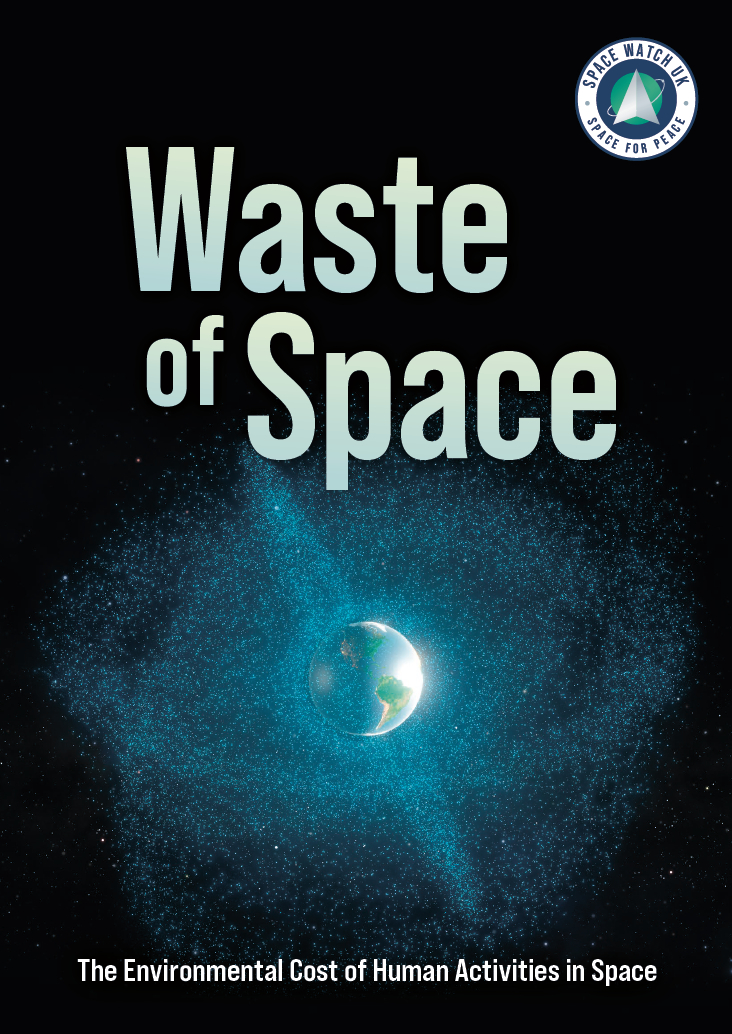
Report Launch Online: We are seeing an increasing exploitation of space for military and commercial purposes. This must change.

Protect Sazan Island from the Trump family! https://secure.avaaz.org/campaign/en/protect_sazan_island_from_the_trump_family_loc/?bqFCVab&v=174511&cl=22707147157&_checksum=5e9dde668860e8231c33699735e16a1fbf22ab2cb01da50c999fe8732b9775ef&utm_source=email&utm_medium=blast_email&utm_campaign=174511


Cuba Is Not a Failed State – It Is a Besieged State
PETITION: “Global Appeal to Endorse Palestinian Right of Return of Refugees”
To see nuclear-related stories in greater depth and intensity – go to https://nuclearinformation.wordpress.com
-
Archives
- June 2026 (251)
- May 2026 (306)
- April 2026 (356)
- March 2026 (251)
- February 2026 (268)
- January 2026 (308)
- December 2025 (358)
- November 2025 (359)
- October 2025 (376)
- September 2025 (257)
- August 2025 (319)
- July 2025 (230)
-
Categories
- 1
- 1 NUCLEAR ISSUES
- business and costs
- climate change
- culture and arts
- ENERGY
- environment
- health
- history
- indigenous issues
- Legal
- marketing of nuclear
- media
- opposition to nuclear
- PERSONAL STORIES
- politics
- politics international
- Religion and ethics
- safety
- secrets,lies and civil liberties
- spinbuster
- technology
- Uranium
- wastes
- weapons and war
- Women
- 2 WORLD
- ACTION
- AFRICA
- Atrocities
- AUSTRALIA
- Christina's notes
- Christina's themes
- culture and arts
- Events
- Fuk 2022
- Fuk 2023
- Fukushima 2017
- Fukushima 2018
- fukushima 2019
- Fukushima 2020
- Fukushima 2021
- general
- global warming
- Humour (God we need it)
- Nuclear
- RARE EARTHS
- Reference
- resources – print
- Resources -audiovicual
- Weekly Newsletter
- World
- World Nuclear
- YouTube
-
RSS
Entries RSS
Comments RSS
 nuclear-news