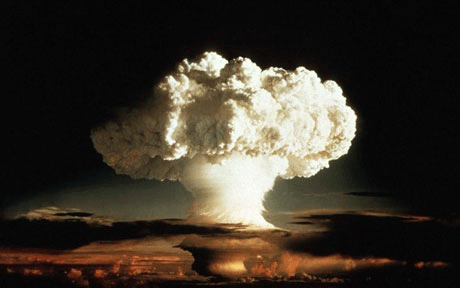
Times 7th Sept 2017, Japan should discuss hosting nuclear weapons on its territory, a former
defence minister said in a sign that the North Korean threat is changing
the military balance in the region. In what would once have been a shocking
breach of taboo in the only country to have suffered the ravages of atomic
bombs, Shigeru Ishiba said that Japan should debate the abolition of what
are known as the “three non-nuclear principles” — not producing or
possessing nuclear weapons or allowing them on Japanese soil.
https://www.thetimes.co.uk/article/we-should-break-taboo-around-nuclear-weapons-former-japan-minister-says-jpr6sppl2
September 11, 2017
Posted by Christina Macpherson |
Japan, weapons and war |
Leave a comment
 The God-awful mess made in New Mexico, nm politics, By Michael Swickard, Ph.D. 10 Sept 17, “What the diary does not reveal… is the appalling fact that from late 1945 until 1952 Japanese medical researchers were prohibited by U. S. Occupation Authorities from publishing scientific articles on the effects of the atomic bombs.” – John W. Dower
COMMENTARY: It wasn’t the effects of the atomic bombs on Japan that prohibited Japanese medical researchers from publishing on the effects of the atomic bombs. Rather, it was how that information would be seen in New Mexico, which never suspected a lurking killer.
Three weeks before the atomic bombs were dropped on Japan, a concept test was made at New Mexico’s Trinity Site. This was an atomic device equal to what was used on Japan.
There’s no doubt that in Japan people were sickened by the resultant radiation. But there wasn’t that realization in New Mexico, even to this day. In fact, there’s resistance to that notion.
Robert Oppenheimer was the head of the Los Alamos Laboratory that developed the first nuclear weapons. The “Manhattan Project” initially produced three nuclear devices.
The first, a plutonium implosion device, was detonated July 16, 1945 at New Mexico’s Trinity Site. Oppenheimer remarked the explosion brought to mind the words of the Bhagavad Gita: “Now I am become Death, the destroyer of worlds.” I certainly understand that thought.
That plutonium scattered over New Mexico……..One positive for Japan: The scientists saw how the New Mexico ground blast spread so much contamination, and they exploded the next two nuclear bombs at 2,000 feet to get the blunt force trauma on the site but not contaminate it as had happened in New Mexico.
The military sent lots of scientists to Hiroshima and Nagasaki to monitor the radiation but seem to have not done so in New Mexico. Or, perhaps they did and the government authorities realized what a mess they made in New Mexico. Worse, they didn’t want the role of cleaning up this God-awful mess. Curious, eh?
As the decades have passed and the New Mexicans who were sickened by the plutonium passed, the interest in this story has gone from very little to none at all, except among those people effected.
I don’t believe there’s a risk now, but government is supposed to protect the citizens. Our government hasn’t even said they are sorry for the God-awful mess they made and all of the people they sickened. http://nmpolitics.net/index/2017/09/the-god-awful-mess-made-in-new-mexico/
September 11, 2017
Posted by Christina Macpherson |
history, Reference, weapons and war |
Leave a comment
Including international security in future disarmament conversations is the next step to making disarmament a commonly shared goal, rather than a divisive and politically fueled controversy.
 Disarmament divided: resolving disagreements about international
  security http://thebulletin.org/disarmament-divided-resolving-disagreements-about-international-security11054 5 SEPTEMBER 2017 Jessica Margolis, In the eight weeks since the historic vote to approve a United Nations treaty formally prohibiting nuclear weapons, attention has turned from treaty negotiations to the ban’s future impact. In anticipation of the treaty opening for signature on September 20, both advocates and opponents have been speculating about what comes next. Much of the discussion has focused on ensuring that delegations sign and ratify the treaty, determining how the prohibition will fit into existing nonproliferation regimes, and debating whether nuclear weapon states can or should participate in these next steps. However, little has been said about resolving underlying disagreements regarding international security concerns in the disarmament process.
Moving forward, it will be important to address the way in which international security was dealt with during the treaty debate and written into the treaty text—and not just because it has implications for the treaty’s impact, political messaging, and potential for universality. The international security issue showcases more general divisions about whether disarmament measures should be viewed through a deterrence-based lens. In planning next steps for the treaty, non-nuclear weapon states should establish comprehensive dialogues on the role that deterrence-based security dynamics should play in the disarmament process.
International security in the framework of disarmament. During the negotiations that culminated in the July 7 vote by 122 nations in favor of a ban treaty, it was clear that the role of international security in disarmament initiatives had become increasingly controversial. Indeed, this is a primary reason that the five nuclear weapon states recognized by the Nuclear Non-Proliferation Treaty refused to partake in treaty negotiations, and cite regional security concerns as an obstacle to disarmament.
Nuclear weapon states and many of their allies claim that a decision to rely on nuclear deterrence theory—to prevent hostilities between world powers from boiling over into large-scale war—has contributed to international stability. They worry that hasty disarmament of nuclear weapons and disregard for nuclear deterrence will have negative ramifications for the defense policies of alliances, current disarmament agreements, and world peace.
Specifically, the United States, United Kingdom, and France maintain that the ban is incompatible with nuclear deterrence, because it ignores “the realities of the international security environment.” In their view, the treaty doesn’t solve the North Korea problem, implement the Iran deal, or keep contentious world powers from waging war. Because the treaty fails to address regional security, these three nations argue, it could create instability, exacerbate regional tensions, and leave all states feeling more vulnerable and less secure.
Many non-nuclear weapon states are frustrated with the decades-old idea that nuclear weapons provide a stability that enhances security and preserves peace—an idea that has kept the disarmament debate rooted in discussions of security doctrine and balance of forces. They blame it for stalled progress on multilateral disarmament measures, and see it as a distraction from the moral imperative of protecting civilization from any use of nuclear weapons.
This frustration motivated the “humanitarian movement,” which aimed to redirect nuclear weapons rhetoric to focus on their devastating potential to destroy, rather than on their function as deterrents and stabilizers. The movement eventually turned into calls for a prohibition, but it also brought to the forefront disagreements over the role of security concerns in disarmament and how they should be incorporated into the treaty.
A divide among negotiators. The first round of negotiations exposed a division between the states that wanted to engage nuclear weapon states on security concerns while working toward disarmament, and those that questioned the general validity of nuclear deterrence and accused nuclear weapon states of using it as an excuse to expand their arsenals. The vast majority of states wanted to frame the treaty in the context of the destruction that nuclear weapons can inflict, by strongly rooting the preamble in humanitarian and international law. These countries wanted the focus of the treaty to be the devastating potential of these weapons, rather than the theory-based security situations that they’ve created. This is summarized well in a statement from Nigeria: “We remain resolute in our conviction that national security doctrines should not serve to justify the proliferation and the existence of the staggering aggregate of nuclear weapons in the arsenals of [nuclear weapon states].” And in Antigua and Barbados’ statement on behalf of the Caribbean Community, “nuclear weapons have no utility in today’s world. They are not useful deterrents but rather cultivate a state of insecurity and false defensiveness that only increases the chances of proliferation.” These states aimed to not only create a treaty prohibiting nuclear weapons, but also to delegitimize nuclear deterrence and the theories it is based on.
In contrast, a smaller group of non-nuclear weapon states addressed the potential of the ban to affect strategic stability and the nuclear order. Prominent members of this group were mostly European. During the debate on the preamble, these states promoted working with nuclear weapon states to solve regional security threats and advance disarmament. For example, Switzerland’s stated aim was to create a treaty that contributed to disarmament, but that was also “mindful of security challenges” and would “open the door for practical disarmament steps at a later stage.” The Marshall Islands also seemed sympathetic to the security concerns of nuclear weapon states, asserting “disarmament does not occur in a vacuum or on moral principles alone . . . there are complex security issues which are a political reality in disarmament efforts.” Austria and Sweden made similar statements. These states recognize that regional security disputes are an impediment to disarmament, and were hesitant to entirely discount the structures that have been built around deterrence theory.
Why the divide? Why do non-nuclear weapon states that are universally in favor of a nuclear weapons prohibition disagree on the role of international security in this process? The answer is that some of these states could be more affected by larger strategic conflict than others, so they are trying to address security more pragmatically to protect their interests. Despite a true belief in the merits of the treaty, they give weight to the contention of nuclear weapon states that deterrence has maintained a relatively peaceful status quo between major powers since World War II.
This is obviously a concern for the Netherlands, the only NATO member that took part in the negotiations and the only state that voted against the treaty. However, Austria, Switzerland, Sweden and Liechtenstein could also be caught in the cross-hairs of a nuclear conflict between major powers, given their location between NATO and Russia. This is likely why all of them, except Liechtenstein, are members of the Partnership for Peace program, which allows non-NATO states to form bilateral security and defense relationships with the alliance. Though it does not mean they are protected under US extended deterrence, the partnership arrangement has allowed these countries to foster closer coordination with NATO and reap some security benefits. Participation in Partnership for Peace indicates that security concerns and the deterrence posture of NATO are important considerations for these countries; they see value in maintaining these stabilizing ties and the potential to expand them in case of future threats.
Interestingly, the divide on international security correlates to a debate during the negotiations on whether the treaty should include a specific prohibition on the threat of use of nuclear weapons. States in favor of this stipulation argued that an explicit prohibition on the threat of use creates a more comprehensive treaty, reinforces the 1996 International Court of Justice ruling on the threat of use, and delegitimizes deterrence in general. Those states that opposed it, such as Austria, argued that the prohibition was redundant, vague, and potentially damaging to a more general norm set by the UN Charter. Although the final treaty text did include the prohibition, many of the states opposed to it were also those cognizant of international security concerns. They include Austria, Switzerland, and Mexico, which actively spoke against a prohibition on the threat of use; and Ireland, Sweden, and Liechtenstein, which notably left if off their lists of desired prohibitions.
Though it is unclear exactly which states the prohibition is intended to target, it will prevent countries involved in extended deterrence agreements from joining the treaty, and further erode the acceptability and utility of nuclear deterrence. This limits options by NATO states and security-conscious European nations, which is likely why they opposed it. Even states that do not have nuclear weapons stationed on their soil, and are not involved in the sharing of command and control for nuclear weapons stationed elsewhere, will be unable to join the treaty. This closes a potential pathway for NATO members to more easily accede to the treaty, and likely prevents the involvement of states from the Asia-Pacific umbrella or the post-Soviet Collective Security Treaty Organization.
Additionally, this prohibition prevents any states that sign the treaty from joining an extended deterrence arrangement in the future. Naturally, states concerned with the security implications of disarmament may be worried that they could find themselves in the middle of a future dispute between world powers, and may have wanted to maintain the option to join a nuclear umbrella in some form.
Why the divide matters. Many non-nuclear weapon states want to detach any forward motion on disarmament from a framework steeped in international security arrangements. A small, but important, group of non-nuclear weapon states are hesitant to do this. These nations are strategically located, historically involved in disarmament initiatives, and could fund a large portion of the treaty structure. It is not that they are uncommitted to the treaty’s moral underpinnings, but that they are more sympathetic—and some may say more realistic—in acknowledging that there are vital security concerns here that must be addressed.
This division is about more than the language of a preamble, or a prohibition on the threat of use; it is about an increasingly large schism in the international community over the role that security arguments should play in disarmament. For nuclear weapon states, security, balance of forces, military doctrine, deterrence, and disarmament have been intertwined for decades. Treaty supporters are frustrated that multilateral disarmament has become prisoner to this. But the reality is that deterrence will probably continue to be present in international politics until all weapons are dismantled and “general and complete disarmament” is fully achieved.
For this reason, there need to be productive and pragmatic discussions about the degree to which deterrence-based security dynamics should be considered, prior to and during the process of disarmament. These discussions should begin with groups that support the new treaty, as there is still broad disagreement within pro-treaty camps on the validity of nuclear deterrence in maintaining stability.
By systematically analyzing how general disarmament and the ban treaty will affect international security, non-nuclear weapon states can begin to bridge their differences on deterrence. Ideally, this could result in a common understanding among non-nuclear weapon states of how they intend for the new treaty to be integrated into the broader security landscape.
Consensus will not be quick or easy. Simply determining the proper forum and agenda for such a conversation could be difficult. However, without a full assessment of the implications of disarmament for international security concerns, disagreement among non-nuclear weapon states will continue. Only with a united and comprehensive agreement on this issue can non-nuclear weapon states hope to constructively engage nuclear weapon states with this treaty. And without a pathway that can eventually aspire to involve nuclear weapon states, the impact of the treaty as a multilateral approach to disarmament will be limited. Including international security in future disarmament conversations is the next step to making disarmament a commonly shared goal, rather than a divisive and politically fueled controversy.
September 9, 2017
Posted by Christina Macpherson |
2 WORLD, politics international, weapons and war |
1 Comment
Why US bases make Okinawa, Guam nuclear ‘targets’ Amid North Korea-US tensions, Asia-Pacific communities hosting US bases see military presence as making them a target. AlJazeera, by Jon Letman , 8 Sept 17, Jon Letman is an independent journalist in Hawaii, covering wildlife conservation, and the politics of the Pacific Rim.
Lihue, Hawaii – The frequency of activity has increased but the pattern remains predictable: a defiant North Korean missile test followed by provocative war games, then another missile launch, more angry threats and warnings, followed by counter-threats and new sanctions, and now a sixth nuclear test and more severe warnings and accusations.
In this geopolitical tit-for-tat, Asia-Pacific communities that host US military bases watch cautiously as fiery rhetoric pushes the two nuclear-armed adversaries ever-closer to what would be a catastrophic war.
The island of Guam came into sharp focus in August when North Korea announced plans to fire four Hwasong-12 ballistic missiles near the US territory following President Donald Trump‘s threat to unleash “fire and fury like the world has never seen” against North Korea.
Guam’s Pacific Daily News reported that a missile launched from North Korea could reach Guam and its more than 160,000 US citizens in just 14 minutes.
As Guam residents were being advised how to prepare for a possible nuclear strike, President Trump cheerfully assured Guam’s governor that the extra media attention would boost the island’s tourism industry.
“You’ve become extremely famous all over the world,” Trump said, promising the US territory’s governor that tourism would increase “tenfold with the expenditure of no money.”
“Like a spear into battle”
But on an island labelled with the tagline “Where America’s Day Begins,” many of its residents long for the day when American militarism ends.
“The US military likes to couch their activities in solely defensive metaphors,” says Michael Lujan Bevacqua, a Chamorro studies professor at the University of Guam. “The reference to Guam as ‘the tip of the spear’,” he says, “offers a sliver of truth.”
Bevacqua argues that like other empires, the US describes its foreign presence as a source of order and safety, “never the destabilising force … even if it takes land and resources, even if it poisons the earth, even if it depresses or constricts the local economy.”
The US military presence can be characterised as a shield with a giant target on it, Bevacqua suggests. In Guam, it is “really the source of the danger just as much as a source of defence”.
As a US possession (non-self governing territory) without voting rights, Guam will be “dragged along like a spear into battle,” Bevacqua notes. “Whether the spear loves battle or would prefer peace is irrelevant, as our purpose is to be something used in a fight and little more.”…….
A short drive from the University of Guam, Andersen Air Force Base is the staging grounds for a continuous bomber presence that includes B1-B bombers and B2 Spirit bombers which are capable of carrying B61 tactical nuclear weapons and the B83, a thermonuclear weapon 60 times more destructive than the bomb dropped on Nagasaki.
Increasingly, bombers based at Andersen conduct precision strike exercises and in July the 37th Expeditionary Bomb Squadron deployed to Guam from South Dakota, arming the island with a pre-emptive attack force capable of an offensive attack.
Guam also has a Terminal High Altitude Area Defense (THAAD) antimissile battery, Naval Computer and Telecommunications Station and an 18,000 acre Naval Ordnance Annex. Naval Base Guam is the home port for fast attack nuclear and non-nuclear submarines.
Guam is not the only place
From the US military’s perspective, Guam is essential to maintaining a “ready to fight tonight” capability, but to North Korea, this much firepower from a hostile adversary represents a lethal threat.
In August, as tensions threatened to boil over, Secretary of State Rex Tillerson visited Guam where he said: “The North Korean missile capability can point in many directions. So, Guam is not the only place that would be under threat.”
This stark reality is all too well known across the Asia-Pacific region where many communities host US bases. Between Guam and North Korea, the US has over 180 military bases, installations and more than 90,000 troops who train alongside their allies Japan and South Korea which represent the eighth and 10th largest global military expenditures.
In South Korea, the US is consolidating its bases but will also soon claim the largest overseas US military base in Pyeongtaek, 64km south of Seoul. Although South Koreaarguably faces the most imminent threat from North Korea, many South Koreans await the day when the US will finally leave. More than six decades after an armistice halted the 1950-53 Korean War, longtime peace activist retired Catholic priest Father Mun Jeong-hyeon asks: “Why Korea was divided? Why is the USA stationed in this country for a long time?”
Satoko Norimatsu, an editor at Asia-Pacific Journal: Japan Focus and co-author of Resistant Islands: Okinawa Confronts Japan and the United States, says: “Of course, US bases in Japan pose a threat to people and the environment around them.”
She’s referring to a nationwide network of more than 100 US bases that run the length of the country, with the greatest concentration in Okinawa. “North Korea understandably declared US bases in Japan would be their target,” she says.
Norimatsu stresses the importance of viewing local demilitarisation movements like those in Okinawa, Guam and elsewhere in a larger context and says there’s a need for multinational, multilingual efforts against US militarism across the region.
Okinawa – ‘Keystone of the Pacific’……..
Besides the threat of living among dozens of military bases, Okinawans face the danger of external attack in the event of war. Hideki Yoshikawa, director of Okinawa Environmental Justice Project, insists US bases don’t protect his home island.
“With the large concentration of US military bases, Okinawa is a perfect target for foreign military aggression,” he says. Yoshikawa points out that because US installations built surrounded by densely populated Okinawan cities, “any aggression directed at US military bases in Okinawa would have spillover effects on our civilian population.”
Living in a state of ‘strategic denial’
The danger of being used by the US military is tragically familiar to the people of the Marshall Islands where the US tested 67 nuclear bombs between 1946-1958, leaving behind a legacy of sickness, death and forced displacement. Today, the US continues to test offensive weapons in the Marshall Islands, using Kwajalein Atoll as a target for unarmed Minuteman III ICBMs……..
Pearl Harbor is still armed………University of Hawaii, says Hawaii’s large military presence makes the islands more vulnerable and, because of their proximity to Asia, a more plausible target than the continental US.
Compoc rejects the argument that Hawaii must rely on the military. “The notion that small island nations have no choice but to stay dependent on the US military for economic survival is the same logic of an abuser telling a woman she has no choice but to say in a violent relationship,” she says.
In June, Compoc was part of a delegation from Hawaii which travelled to Okinawa for the ninth gathering of the International Women’s Network Against Militarism to counter preparations for war and build solidarity. “It was very moving to speak about Hawaiian sovereignty there and have Okinawans hold their fists up in solidarity,” Compoc says.
Building this kind of solidarity across cultures, languages and national identities is at the heart of Kyle Kajihiro’s work as a board member of Hawaii Peace and Justice. “The protection of our islands, whether Hawaii, Guam, or Okinawa, is not the primary purpose of US bases. The US uses our islands as military platforms and command centres to launch attacks and wage wars in other parts of the world,” Kajihiro says.
Kajihiro points out that prior to the 1893 US overthrow of what had been the independent Kingdom of Hawaii, its leaders had anticipated the danger of being drawn into a war if Hawaii was allied with a large military power. The creation of an alliance of Pacific Island states that those leaders sought lives on today in the desire for a pan-Pacific alliance as the threat of war looms large across the region.
Recalling historical attacks and battles from Guam and Okinawa to Kwajalein and Pearl Harbor, Kajihiro says, “when the US militarises our islands … we become targets.”http://www.aljazeera.com/indepth/features/2017/09/bases-okinawa-guam-nuclear-targets-170906121731012.html
September 9, 2017
Posted by Christina Macpherson |
OCEANIA, weapons and war |
Leave a comment
Trump renews threat of force against North Korea over nuclear weapons, WP. By Anne Gearan and Emily Rauhala September 7 President Trump renewed a threat Thursday to use military force against North Korea and raised doubts about whether negotiations could succeed in resolving the brewing crisis over Pyongyang’s nuclear weapons.
“Military action would certainly be an option. Is it inevitable? Nothing’s inevitable,” Trump said during a news conference. “It would be great if something else could be worked out. We would have to look at all of the details, all of the facts.”
U.S. officials said an offer to negotiate with North Korea remains on the table, but Trump has repeatedly discounted the value of beginning another effort to talk North Korea out of its arsenal.
All previous efforts have failed, and North Korea now possesses both a stockpile of weapons and missiles capable of threatening U.S. shores……
The United States is seeking the toughest-yet U.N. sanctions against North Korea in response to its latest nuclear test, according to a draft resolution circulated Wednesday. The sanctions would stop all oil and natural gas exports and freeze the government’s foreign financial assets.
North Korea greeted the proposal with a threat. “We will respond to the barbaric plotting around sanctions and pressure by the United States with powerful counter measures of our own,” read a statement delivered at an Asian economic summit in Russia on Thursday.
Chinese Foreign Minister Wang Yi said Thursday that Beijing would support further U.N.-imposed “measures” against North Korea following its latest nuclear test Sunday but stopped short of saying whether China would back crippling economic sanctions such as a halt to fuel shipments…….https://www.washingtonpost.com/world/china-will-back-fresh-un-sanctions-on-north-korea-over-nuclear-tests/2017/09/07/afc6ac52-93a9-11e7-b9bc-b2f7903bab0d_story.html?utm_term=.4cbde97d45e5
September 9, 2017
Posted by Christina Macpherson |
politics international, USA, weapons and war |
Leave a comment
Nuclear stalemate of our century, AA, The presence of 10,000 nuclear weapons makes it impossible to take a deep breath and relax, By Sitki Egeli, 7 Sept 17, ISTANBUL
It has been 72 years since the atomic bombardment of Hiroshima and Nagasaki, which resulted in the death and injury of hundreds of thousands.
The discovery in Japan of the terribly destructive power of nuclear weapons apparently did not prove enough of a deterrent to convince humanity of the need to get rid of these dangerous weapons.
On the contrary, the extraordinary destructive power of nuclear weapons must have increased in attractiveness in the sight of many countries and their administrators so much that the Soviet Union, Britain, France, and the People’s Republic of China followed in the footsteps of the United States in developing nuclear weapons.
Over the following decades, Israel, India, Pakistan, and North Korea joined the caravan of countries that possessed atomic bombs.
Fewer nuclear warheads
Nuclear weapons are perhaps the most fatal threat that could end all human life on this planet…….
Risk of cyber-attacks and populism
As a matter of fact, nuclear weapons may not always be used knowingly and willingly. It is not a remote possibility that nuclear weapons are accidentally or unintentionally activated through outside interventions and cyber-attacks, which we have been gifted with thanks to rapidly advancing information technology.
Equally worrisome is the glut of populist political leaders influencing world politics today. They are mostly ineffective and bereft of the notion of empathy. It has always been assumed that whenever it came to nuclear weapons, countries that possessed them would display moderation and act maturely and with the acknowledgment of how tremendously different nuclear weapons are from conventional ones.
However, the irresponsible and dangerous rhetoric employed in the recent battle of words with North Korea by the leader of the oldest and supposedly mature nuclear power of the world, the U.S., has cast a shadow on this assumption. Among the nuclear countries using irresponsible rhetoric, one should mention Russia — alongside the U.S. and North Korea — which sees no harm in threatening its neighbors with using its nuclear weapons……
we are faced with a paradigmatic transformation, in which all of the arguments employed so far to legitimize nuclear weapons and portray them as necessary have capitulated one by one.
For example, the argument propagated by nuclear powers that nuclear weapons make conflicts too dangerous and risky and thereby actually better serve peace and international stability is losing its persuasive power and coherence to a great extent under the new circumstances developing.
New treaty adopted by 122 UN members
Quite unsurprisingly, we see that the international perception about nuclear weapons is rapidly changing and that this change is bringing with itself a number of processes and initiatives.
For instance, a new international treaty adopted in July at the United Nations by 122 members completely bans and outlaws the development, testing, deployment, and use of nuclear weapons.
The treaty will be presented to the member states for their approval in September and enter into force once signed by 50 states, and it will be a heavy yet ineffective blow to nuclear weapons’ legitimacy and legal status.
Unsurprisingly, countries with nuclear weapons and their allies, who agreed to house nuclear weapons on their soil, sat out the UN vote.
With their conspicuous absence, they implicitly declared that they would not recognize this initiative and demand, already supported and approved by 122 countries.
What we can deduce from this is that the countries that own nuclear weapons as well as those who have secured themselves a place under the “protective umbrella” of nuclear powers favor the continuation of the current situation with nuclear weapons, in which these weapons remain an essential, legal, and institutional element of international relations.
And in favoring this present state, they are ready to face up to all the risks and dangers posed by nuclear weapons.
’70s legal framework
The current institutional and legal framework for nuclear weapons is regulated mainly by the Nuclear Non-Proliferation Treaty (NPT), signed in 1970.
In sum, the NPT divided countries into two groups: those eligible to possess nuclear weapons, and those who were not.
The five states that had the right to have nuclear weapons and enjoyed the privileges were those that had already acquired nuclear weapons at the time when the treaty was being deliberated.
These five countries were also the very five that eventually became the five permanent members of the UN Security Council with veto power.
By putting the NPT into effect, what the international community actually did was to accept the nuclear status quo in the world as it was as of the late 1960s, with all its problems and injustices, and freeze it. And this was all done in the name of preventing a bigger number of countries from laying their hands on nuclear weapons.
And in return for that, it made certain promises to the states which relinquished their right to acquire nuclear weapons.
Among the things promised was, for example, that nuclear weapons would be reduced in number and be eventually done away with completely, that nuclear weapons would never be used against the countries who relinquished their right to nuclear weapons, and also that there would be no obstacles to accessing and using nuclear technology for commercial and scientific ends.
Nuclear states undermine deal’s legitimacy
Unfortunately, in the almost half-century that has since passed, there have been many examples of negligence regarding these assurances and commitments, and even cases in which the complete opposite of whatever was envisaged by the NPT was done.
States with nuclear weapons themselves have in a way cast a shadow over the legitimacy and legality of the NPT and their own nuclear weapons by failing to properly comply with the requirements of a deal that provided their own nuclear arsenals with legitimacy and legality in the first place.
All the countries with nuclear arsenals, without exception, are currently carrying out modernization programs worth billions of dollars to make their warheads more effective and lethal, let alone get rid of them…….http://aa.com.tr/en/analysis-news/nuclear-stalemate-of-our-century/903920
September 9, 2017
Posted by Christina Macpherson |
politics international, weapons and war |
Leave a comment
 Militant groups have drones. Now what?, Bulletin of the Atomic Scientists, Perry World House, 8 Sept 17, Militant groups have a new way to wage war: drone attacks from above. As recent news reports and online videos suggest, organizations like the Islamic State in Iraq and Syria (ISIS) have used commercially-available uninhabited aerial vehicles—better known as UAVs or drones—to drop explosives onto their adversaries in the battle for territory.
That ISIS would weaponize drones shouldn’t be surprising. Militant groups often use the latest consumer technology to make up for capability gaps and level the fight against regular military forces. ISIS broadcasts propaganda through social media platforms like Twitter and Facebook, and plans attacks using encrypted communication platforms like Telegram. This embrace of innovation extends to the way militant groups use military force. Over the last year or so, they have begun to use modified commercial drones for offensive strikes in Iraq, Syria, and Ukraine. These new tools of war provide a way to conduct terror attacks against civilians, and can also pose a threat to ground forces. Stopping drone proliferation is not an option because of the ubiquity of the technology. That means government forces will have to learn to counter drones operated by militant groups, just as they are now training to counter drones used by national militaries.
Already a “daunting” threat. The threat posed by militant groups flying drones is as much about where the threat is coming from—the sky—as it is about the munitions being launched. Militaries fighting militant groups have enjoyed air superiority for decades. US soldiers in Afghanistan and Iraq, for example, have rarely, if ever, feared attacks from the air. Civilians and humanitarian groups in Syria worry about air strikes from Assad’s regime, but not from militant groups like ISIS. The adoption of drones by militant groups is therefore generating a novel challenge. Speaking at a conference in May, Gen. Raymond Thomas, head of the US Special Operations Command, called commercial drones the “most daunting problem” his troops had faced over the previous year. At one point, he said, the anti-ISIS campaign “nearly came to a screeching halt, where literally over 24 hours there were 70 drones in the air.”
Militant groups using modified commercial drones can threaten militaries in more ways than one. In addition to dropping munitions on unsuspecting soldiers, they can strap explosives to drones to generate devastating effects. For example, militants can crash an explosive-laden drone into a target, creating a sort of MacGyvered cruise missile. Alternatively, militants can booby-trap drones. In one case, Kurdish fighterstrying to examine a grounded drone died when it exploded. In Ukraine, Russian-backed separatists use drones to target military infrastructure and cause immense damage. For instance, they used a commercial drone to drop a Russian-made thermite hand grenade on an ammunition depot in Eastern Ukraine, causing an inferno and close to $1 billion in damage. Put simply, commercial drones are enabling militant groups to engage in a more diverse array of missions to advance their goals against militarily superior forces…….
Drone wars of the near future. One worrisome potential source of growing drone capacity might seem benevolent at first: the commercial sector itself. As commercially available technology develops at a rapid pace, the variety of military applications is increasing as well. Goldman Sachs recently estimated that between 2016 and 2020, buyers will spend about $100 billion on drones. Defense spending by militaries will account for about $70 billion of that total, but the remaining $30 billion will be made up by consumers, businesses, and civilian government bodies buying commercially-available products.
Within the drone market, the sensor component segment is forecasted to grow the fastest. Sensors can perform a variety of functions, such as transmitting images or detecting heat signatures. Sensors are built for commercial purposes like search-and-rescue operations and crop analysis, but can also be adapted for military purposes. ……
Currently, countries and businesses around the world are grappling with how to best address the challenge in a variety of ways. In Japan, the Tokyo police are using drones equipped with nets to stop potentially hostile drones. The French military and Dutch police are breeding golden eagles to destroy small drones. For its part, the US military tested a “drone-killing laser” and solicited proposals for other solutions to counter unmanned aerial systems…….
Commercial drones are here to stay—in backyards and battlefields, in the hands of militants and militaries, conducting both surveillance and air strikes. While the advantage belongs to the aggressor in this domain, militaries have good options for addressing the threat.
This column is by Itai Barsade (@ItaiBarsade) and Michael C. Horowitz (@mchorowitz). Barsade is a research fellow at the University of Pennsylvania’s Perry World House, where Horowitz is a professor of political science and associate director. http://thebulletin.org/militant-groups-have-drones-now-what11089
September 9, 2017
Posted by Christina Macpherson |
2 WORLD, safety, weapons and war |
Leave a comment
Kim’s Nukes Aren’t a Bargaining Chip. They’re an Insurance Policy Climb into the North Korean dictator’s mind, and you can see that his aim isn’t to destroy Los Angeles but to save his regime. Bloomberg Michael Schuman, 7 Sept 17,
North Korea looks pretty scary at the moment, firing off missile after missile, threatening to target Guam, and, on Sept. 3, testing what the regime claims was its first hydrogen bomb. And the country’s dictator, Kim Jong Un—so ruthless he may have had members of his own family murdered—might be just crazy enough to push the button to initiate a catastrophic war.
Or maybe not. Look deeper, and you’ll find a North Korea that isn’t as much of an immediate danger to the U.S. as the headlines and rhetoric suggest. That’s because Pyongyang isn’t very likely to use its nukes and missiles against the U.S.—or anyone else.
Don’t get me wrong: North Korea still presents a huge
security risk to East Asia and the world. Kim’s neighbors include three of the world’s 11 largest economies and two of America’s closest allies, Japan and South Korea. No U.S. president would want to see Pyongyang lob a missile into Tokyo or Seoul, let alone Hawaii.
But climb into the mind of Kim—as terrifying as that may sound—and we can conclude that his aim isn’t to destroy Los Angeles but to save his own skin. This is a regime that was never expected to still be around in 2017. When the Berlin Wall came down and the Soviet Union unraveled more than a quarter century ago, North Korea was supposed to vanish with them. The regime has since outlasted economic and political isolation, stiff international sanctions, and famines so severe that they may have claimed hundreds of thousands of lives. But through it all, the Pyongyang government has persisted. That speaks to the cunning of the Kim family, which has lorded over the country since its founding by the current Kim’s granddaddy in 1948. They’re survivors.
And that’s what Kim is striving to do today: survive. He’s not out to conquer the world or even expand his influence in his own neighborhood. Kim and the
Pyongyang elite must recognize that the odds are against them and their backs are to the wall. …….
Here’s where the nukes come into play. Pyongyang believes they’re the best, and possibly only, deterrent against evaporation, absorption, or annihilation. That’s why the regime has never been truly willing to trade its nuclear program for other benefits—something Washington has tried to do since the 1990s. The nukes aren’t a bargaining chip. They’re an insurance policy.
Yet the very same weakness that drives Kim’s mania for nuclear weapons is why he can never use them, at least not as an aggressor. As President Trump has already warned, any such attack would be met by “fire and fury.” That comment was irresponsible, but the point is true nevertheless. Kim likely isn’t delusional enough to think his country could survive an all-out war with the U.S. and its allies. Proactively launching a nuclear-topped ballistic missile against the U.S. would mean his own destruction. That’s why it won’t happen. The U.S. Defense Department in its 2015 report said that even though the country remains a continuing threat, “North Korea is unlikely to attack on a scale that would risk regime survival.”
If we see Pyongyang’s motivations in this light, the policy course the Trump administration is taking is all wrong. Threats of fire and fury will only make Kim more paranoid and more certain that he needs nukes to defend himself or deter an aggressive Washington—……
At this stage, with Kim already in possession of nukes and maybe the ability to deliver them, the only viable option for Washington is to accept this reality and deal with Pyongyang as it does with any of the world’s other nuclear powers. This may sound terribly distasteful, and the course presents its own risks—mainly, that North Korea’s neighbors, especially Japan and South Korea, will feel the need for nuclear weapons of their own, leading to a regionwide, potentially destabilizing arms race. Washington would also have to work hard to ensure Pyongyang doesn’t spread its know-how to other rogue states or terrorist organizations that might be less wary of using it—such as Islamic State.
But the U.S. has successfully dealt with the appearance of other nuclear powers, whether China, India, or Pakistan, and it may have to do so again, this time by containing the North Korean threat instead of attempting to eliminate it. ……https://www.bloomberg.com/news/articles/2017-09-07/kim-s-nukes-aren-t-a-bargaining-chip-they-re-an-insurance-policy
September 9, 2017
Posted by Christina Macpherson |
North Korea, politics, politics international, weapons and war |
Leave a comment

 Kim Jong-un’s North Korea nuclear test mountain may collapse, let out ‘many bad things’, SMH SEPTEMBER 6 2017 Beijing: North Korea has conducted all of its underground nuclear tests beneath one mountain, Chinese scientists believe, prompting one to express concern the mountain may collapse, causing an environmental disaster.
“We call it taking the roof off,” the China Institute of Atomic Energy’s Wang Naiyan told the South China Morning Post.
geophysicists from the University of Science and Technology of China have examined seismograph records and say Sunday’s underground nuclear test by North Korea was the fifth nuclear bomb to be exploded at the same mountain at Punggye-ri.
Professor Wen Lianxing from the university’s Key Laboratory of Earthquake and Earth Physics said nuclear explosions were previously staged at the mountain in September 2016, January 2016, February 2013 and May 2009.
The researchers used satellite images and seismic data from 112 Chinese seismic bureaus in their study, which gave the positions of the tests accurate to within 100 metres, according to a statement published on the university’s website……http://www.smh.com.au/world/kim-jonguns-north-korea-nuclear-test-mountain-may-collapse-let-out-many-bad-things-20170905-gyb8dp.html
September 6, 2017
Posted by Christina Macpherson |
North Korea, safety, weapons and war |
Leave a comment
Allies seek to deploy aircraft carrier, strategic bomber in response to N.K. nuke test, Yonhap News, 2017-09- SEOUL, Sept. 4 — South Korea and the United States will seek to deploy a nuclear-powered aircraft carrier, strategic bombers and other powerful assets to the Korean Peninsula as a response to North Korea’s latest nuclear test, Seoul’s defense ministry said Monday.
In its report to the National Assembly’s defense committee, the ministry also said that its military will stage a unilateral live-fire drill, which involves Taurus air-to-surface guided missiles mounted on its F-15K fighter jets, this month. The missile with a range of 500 kilometers is capable of launching precision strikes on the North’s key nuclear and missile facilities.
“We will push for the option of deploying strategic assets such as the U.S. carrier strike group and strategic bombers after consultation with the U.S.,” the ministry said.
The show-of-force measures were unveiled a day after Pyongyang conducted what it claims to be a test of a hydrogen bomb mountable onto an intercontinental ballistic missile, sharply raising military tensions.
At the parliamentary session, Defense Minister Song Young-moo said that during his recent talks with U.S. Defense Secretary James Mattis, he demanded that the U.S. deploy its strategic assets to Korea on a “regular” basis. He made the demand, citing local politicians’ calls for the redeployment of U.S. tactical nukes.
But he dismissed the news report that he actually demanded the redeployment of the U.S. nuclear arsenal withdrawn from the peninsula in the early 1990s…….http://m.yna.co.kr/mob2/en/contents_en.jsp?cid=AEN20170904010952315
September 6, 2017
Posted by Christina Macpherson |
politics international, South Korea, USA, weapons and war |
Leave a comment
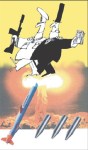 S.Korea, US to lift warhead weight limit on South Korean missiles | 04 Sept 2017 | The US agreed to allow South Korea deploy heavier warheads on its missiles after the latest nuclear test by Pyongyang. The existing limit set in a missile pact between Washington and Seoul is 500 kg. The agreement to lift the weight limit was reached by US President Donald Trump and his South Korean counterpart Moon Jae-in in a phone call on Monday, the South Korean presidential office said in a statement. With tensions rising on the Korean peninsula, Donald Trump also gave “conceptual approval” for billions worth of US weapons to be sold to South Korea.
September 6, 2017
Posted by Christina Macpherson |
South Korea, weapons and war |
Leave a comment
North Korea: What can earthquake science tell us about the nuclear test?, ABC, 4 Sept 17, The Conversation By Neil Wilkins, University of Bristol “……History of forensic seismology The use of what’s called “forensic seismology” to detect and identify nuclear tests dates back almost to the birth of nuclear weapons themselves.
In 1946, the US conducted the first underwater test of a nuclear bomb at Bikini Atoll in the Pacific Ocean.
The shock waves created by the huge explosion were picked up at seismometers all over the world, and scientists realised that seismology could be used to monitor these kinds of tests.
In 1963, at the height of the Cold War, nuclear testing moved underground. The seismic waves from underground tests are more difficult to detect, because the shaking felt over such long distances is very small — only around one-millionth of a centimetre.
A seismic array is better able to pick out the small vibrations from a particular source than a single seismometer, and can also be used to work out with greater accuracy where the waves originally come from.
In 1996, the Comprehensive Test Ban Treaty(CTBT) was opened for signatures, aiming to ban all nuclear explosions.
To enforce this treaty, the Vienna-based CTBT Organisation is establishing an International Monitoring System with over 50 seismic monitoring stations to detect nuclear tests anywhere on Earth.
This system doesn’t just use seismometers.
Infrasound instruments listen for very low frequency sound waves, inaudible to the human ear, generated by potential nuclear explosions in the atmosphere; hydroacoustic instruments listen for sound waves travelling long distances through the oceans generated by underwater explosions, and radionuclide detectors “sniff out” radioactive gases released from a nuclear test site.
What do seismic monitors look for?
Any sort of earthquake or explosion, whether natural or man-made, produces different sorts of shock waves which travel through the Earth and can be detected by seismometers, which can measure very small ground movements…..
Distinguishing between earthquakes and explosions
There are a number of ways to do this. One is to measure the depth at which the earthquake occurred.
Even with modern drilling technology, it is only possible to place a nuclear device a few kilometres below the ground; if an earthquake occurs at a depth of more than 10 kilometres, we can be certain it is not a nuclear explosion.
Studies of the numerous nuclear tests that took place during the Cold War show that explosions generate larger P waves than S waves when compared with earthquakes.
Explosions also generate proportionally smaller Surface waves than P waves.
Seismologists can therefore compare the size of the different types of wave to try to determine whether the waves came from an explosion or a natural earthquake.
For cases like North Korea, which has carried out a sequence of nuclear tests since 2006, we can directly compare the shape of the waves recorded from each test.
As the tests were all conducted at sites within a few kilometres of each other, the waves have a similar shape, differing only in magnitude……http://www.abc.net.au/news/2017-09-04/north-korea-nuclear-test-what-earthquake-science-can-tell-us/8869328
September 6, 2017
Posted by Christina Macpherson |
2 WORLD, environment, weapons and war |
Leave a comment
North Korea: What can actually be done to deal with a nuclear Pyongyang? http://www.abc.net.au/news/2017-09-03/north-korea-is-it-time-to-accept-it-will-remain-a-nuclear-threat/8868138, ANALYSIS By chief foreign correspondent Philip Williams, From the first tweak of the seismograph it was clear this was no ordinary tremor — it signalled the most powerful bomb of all.
The North Korean TV newsreader announced with a flourish this was the state’s first hydrogen bomb.If that now means Pyongyang has the weapon and the delivery system that could wipe out a Los Angeles, a San Francisco or a Sydney in a flash, then the world is now a different place.
Nuclear weapons are supposed to be a deterrent — make yourself so dangerous no-one will ever dare challenge you — and it is a fact that barring some Scuds aimed at Israel during the 1991 Gulf War and some border skirmishes between China and Vietnam and India and Pakistan, no nuclear-armed state has ever faced a serious attack by another country.
Clearly the thinking for three generations of Kim is that the regime is made safe if everyone fears you. And the clear impression you are crazy helps too — no-one wants to aggravate a disturbed mind.
But what to do? US President Donald Trump has described the test as hostile and dangerous and said Pyongyang “only understands one thing”.
Appeasement was not working, he said, and the rogue nation has become a “great threat and embarrassment” to China. He later tweeted the US was considering “stopping trade with any country doing business with North Korea”.
That would include both China and Russia. While both signed on to the latest UN sanctions, cutting trade altogether would be a far more serious step.
Beijing would have to cut off oil supplies and Moscow send back the North Korean labourers who “volunteer” to work in Siberian forestry camps in what have been described as slave-like conditions.
The whole region and beyond is in a fix. China especially is feeling the squeeze from the United States, and even Australia has argued Beijing has not applied full muscle against North Korea to mend its errant ways.
But the Chinese Government has agreed to the latest sanctions and deeply resents the assertion it could stop Kim Jong-un if it really wanted to. There is nothing for the Chinese to gain from a nuclear war on the Korean Peninsula.
Not only would there be the risk of nuclear contamination, what really worries Beijing is the thought of millions of refugees pouring over the border seeking shelter from a nuclear storm. Not to mention the terrible human and economic cost of shattered neighbours.
The constant refrain from Mr Trump and Malcolm Turnbull for China to do more and do it now could soon become counterproductive. Beijing’s influence on North Korea’s leadership is often overstated.
Its troublesome neighbour has repeatedly embarrassed China by testing bombs or missiles at an inopportune moment. This latest test happened at the opening of a major BRICS (Brazil, Russia, India, China and South Africa) conference held in China and hosted by President Xi Jinping.
Not only was his thunder stolen, he and guest Vladimir Putin were forced to issue a joint statement condemning the test but urging a negotiated solution. Mr Trump underlined that via a tweet, saying: “North Korea is a rogue nation which has become a great threat and embarrassment to China, which is trying to help but with little success.”
For his part, the US leader has wedged himself with rhetoric — it was only a couple of days ago he said the time for talking was over. But what does that leave?
The US military will have its plans ready, just in case. And Mr Trump is the only person with power to order what would be the destruction of North Korea. Is he really contemplating the death of millions, the ruin of cites on both sides of the 38th parallel?
Only if North Korea crosses his red lines. Do they exist in the seas off Guam, Hawaii, or the West coast of the mainland itself?
Surely Mr Kim and his predecessors have not come all this way to self-destruct. After all, these bombs and missiles are supposed to protect, not trigger an end game conflict. No party to this conundrum wants this to happen.
But the scene is set, the main players less than predictable and the talk tough. North Korea will never willingly trade away its newfound military clout, it is seen as vital for survival, but successive US presidents have made it clear they will never live with a nuclear armed and able North Korea.
It is a country that revels in regular threats to wipe out entire US cities. It is no longer trash talk that can be ignored and no-one, it seems, has a plausible answer.
One commentator suggested arming both South Korea and Japan with nuclear weapons to act as a foil to the North. That would mean five countries in the region with the ability to erase entire cities from the planet.
Our once relatively safe and increasingly prosperous neighbourhood is taking a serious turn for the worse. Only two people on the planet can change all that, and neither is showing signs there is a safe way out.
Asked by a reporter if the US would attack North Korea, Mr Trump said: “We’ll see.”
September 4, 2017
Posted by Christina Macpherson |
North Korea, politics international, weapons and war |
Leave a comment
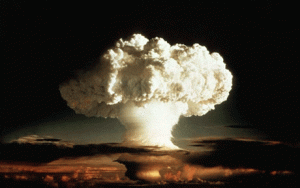 North Korea says it successfully tested hydrogen bomb, marking sixth nuclear test since 2006, ABC News, 3 Sept 17, North Korea has said it successfully tested a hydrogen bomb designed to be mounted on its newly developed intercontinental ballistic missile (ICBM), producing a greater yield than any of its previous nuclear tests.
Key points:
- Previous recent tremors in North Korea have been caused by nuclear tests
- Tremor came hours after state media said Kim Jong-un inspected new hydrogen bomb
- Witnesses on the Chinese side of the border said tremor lasted roughly 10 seconds
The hydrogen bomb test ordered by leader Kim Jong-un was a “perfect success” and was a “meaningful” step in completing the country’s nuclear weapons programme, according to state television.
The announcement came hours after a large quake that appeared to be man-made was detected near the North’s known nuclear test site, indicating that the reclusive country had conducted its sixth nuclear test since 2006.
The tremor struck within a kilometre of the site of a magnitude-5.3 “nuclear explosion” from September last year, according to the United States Geological Survey (USGS).
South Korea said this most recent test appeared to be several times stronger than its previous test, estimating the nuclear blast yield was between 50 to 60 kilotons — or five to six times stronger than the North Korea’s fifth test a year ago…….http://www.abc.net.au/news/2017-09-03/north-korea-says-it-successfully-tested-hydrogen-bomb/8867568
September 4, 2017
Posted by Christina Macpherson |
North Korea, weapons and war |
Leave a comment
 Invisibility and the Toxic Economy of War in Iraq, http://www.jadaliyya.com/pages/index/27076/invisibility-and-the-toxic-economy-of-war-in-iraq by Toby C. Jones, In April 2008 a small US engineering firm—Stafford, Texas-based MKM Engineers—brought to a close almost two decades of toxic cleanup work on a former US military facility just west of Kuwait City. Seventeen years earlier, in July 1991, a defective heating unit on a military vehicle loaded with 155mm artillery shells at Camp Doha caught fire and ignited a devastating inferno. The blaze injured several dozen people and damaged scores of other vehicles, including several highly prized M1A1 tanks.[1]
Thousands of artillery shells cooked in fire, setting off an extended explosive chain reaction. Ricocheting debris and bursting ordinance sent base personnel scurrying for safety in what quickly came to be known as the Doha Dash.
[2] The fire also unleashed a toxic plume. Seared metal—the detritus of broken war machines and spent artillery—always leaves a hazardous legacy. But the base was also home to thousands of 120mm anti-tank depleted uranium (DU) artillery shells, weapons forged from the waste of the American nuclear fuel cycle. DU weapons are both radioactive and toxic. Normally, depleted uranium not put to military or other industrial use, is handled and stored as hazardous waste. The American Environmental Protection Agency and the Pentagon today have strict guidelines in place for its handling with both recognizing it as a danger to human and environmental health. At Camp Doha over 600 of the nuclear waste-turned-weapons detonated in the fire, coating the sky with noxious black smoke and dust that drifted for miles.
[3]Although having been informed over many years that DU, particularly its chemical toxicity, constituted a threat to health and environments, the US military limited its effort to address the mess in Kuwait.
[4] Damaged machines were quietly returned to the US either to be scrubbed or destroyed. Spent weapons and some contaminated sand were packaged into barrels, many of which were shipped to remote parts of the Kuwaiti desert and buried. Claiming that it had only a minimal legal obligation to address the fallout and commit to the recovery of the environment around the base, the US abandoned the cleanup job only partially completed by the end of 1991.
Halliburton, the giant oil services company, carried out additional work on the site after the 2003 US-led invasion of Iraq. But it was not until 2008 that the area around Camp Doha was fully neutralized and the danger abated by engineers from Texas. Financed by the Kuwaiti military, MKM Engineers oversaw the final excavation of the site, digging up almost 7,000 tons of toxic and irradiated sand. Once unearthed the poisoned sand was loaded aboard the container ship BBC Alabama and shipped thousands of miles away to the Port of Longview, Washington, nestled on Columbia River in the southwestern part of the state. From there, the sand was transported by rail to a private hazardous waste facility outside of Boise, Idaho where it was permanently buried.
[5]The details of the fire at Camp Doha and its toxic legacy—in which the US military forsake its responsibility to ameliorate a toxic site, only to have much of the site itself ultimately transported back to the US for final treatment and disposal, are absurd.
The global movement of hazardous waste remade as weapons in the United States and put to use the Middle East, in this case to be returned as waste years later, is remarkable and disturbing.
Beyond the details of the fire at Camp Doha, though, why does this episode help us think critically and more broadly about economies and political economies of war?
Below I suggest we set aside more conventional ways of thinking about the value of weapons and arms in war economies, particularly the oft-reported details of the monetary value of weapons bought and sold between global powers. (from monetary to exchange) Weapons systems are always also parts of environmental and health economies and ecologies. To think about this in part, I point toward broader visibility and invisibility as well as how we might use the environmental and health impacts of DU weapons’ use — which remain little known and more disturbingly, often deliberately obscured from view—to expand our frame of what a war economy includes and how parts of it are able to function.
It is the furtive character of DU weapons manufacturing, its testing (primarily and secretly in the American southwest), the scale of its use, and ultimately, the nature and impact that result, that makes it simultaneously difficult to investigate, but also so useful for the American military and its clients.
I suggest that the relative invisibility of DU weapons systems is more than just an idiosyncratic footnote to wars in the Middle East more generally. While non-DU weapons have almost certainly killed more people, caused more damage, and profited investors more significantly, the power of smaller systems and their secretive character transcends their relative “market share.” In one way this has to do with broader politics of visibility and war.
Much happens, from profit to pain, out of sight. War and those it benefits carry on much more easily, and perhaps enthusiastically, as a result. Indeed, the invisibility of key aspects of war and its wages create small, but critical access ways for a broader range of private, corporate and political interest to benefit. They also bracket off or diminish suffering of various kinds, including long term environmental and health impacts.
The magnitude of the damage done in Kuwait was relatively small compared to the devastation of war elsewhere, particularly in Kuwait’s northern neighbor Iraq, where the country was ravaged by the long American war there between 1991 and 2011.
[6] The small cost of the Camp Doha fire, perhaps around $40million, is minor in comparison to the trillions of dollars of spent on war and damage in Iraq.
[7] And while weapons manufacturing and sales, and the routine exchange of billions of dollars in oil revenues for American weapons and military systems, are critical for understanding the importance of the political economy of war in the Middle East—and its global entanglements—depleted uranium weapons, while not insignificant, make up a small fraction of the amount of weapons industry’s profit on wars in the region.
Since the 1970s when depleted uranium waste first began to be fashioned into weapons designed to destroy Soviet tanks, the total number of DU weapons manufactured is unknown. Made in small batches and designed primarily to destroy heavy armor, depleted uranium’s total production likely numbers in the hundreds of thousands of artillery rounds, millions of smaller caliber shells, as well as armor for tanks and other uses. Whatever the actual scale of production over decades, the United States military used DU weapons extensively against military and non-military targets in Iraq between 1991 and 2011—as well as in Afghanistan and Syria.
[8] The Pentagon has been unwilling to disclose the full extent of its use of DU weapons, though anecdotal evidence from various media suggests it was widely deployed from Basra to Falluja against human and non-human targets.
The broader context and story around Camp Doha—in which DU weapons were made in places like Concord, Massachusetts, tested in places like Los Alamos, New Mexico, used in Iraq and Kuwait, finally disposed of by a firm from Texas in a global network that passed from the northern Persian Gulf to Idaho—enrolled and touched upon thousands of people, generated an unknown amount of damage and profit, and yet has remained almost entirely unknown. This invisibility is not trivial. Rather, it is productive, arresting the possibility of scrutiny, operating on multiple small levels simultaneously and over time, rendered local rather than caught up in the much broader networks of which it is a part, and almost entirely uncontested because the unseen is unseen.
The making and circulation of weapons, typically easily monetized and measured, are only one way to think through the cost of war and the character of its economies. There is a second dimension to the productive power of toxic invisibility for war-makers as well. Because so much around depleted uranium is deliberately mystified and withheld – a pattern that is at odds with how militaries often conspicuously celebrate the power of their weapons systems—military and political authorities have also been able to deny claims about its most pernicious toxic effects. While all war results in long lasting environmental, infrastructural, and embodied suffering, toxic weapons produce consequences that are particularly devastating and long lasting. Given their molecular qualities and the scientific and medical difficulty in linking particular cases of exposure to illness, and especially because they mete out their violence over years and decades—slow violence—the damage they do often persist well after that last bombs were dropped.
In spite of the Pentagon’s efforts to obscure the scale of the use of depleted uranium weapons in Iraq and elsewhere as well as what amounts to obstruction of investigation into DU’s effects, Iraqi scientists and doctors, often assisted by global observers, have documented some of health and environmental damage done. The environmental and health impact has been significant and generational. In the face of extensive epidemiological and other evidence, the US military, alongside its allies that employ it in battle as well, deny the toxic dangers of DU weapons. Whatever the arguments put forward by other observers that DU’s hazardous effects are yet unproven, and there are many, claims of uncertainty are not driven by science, but by politics.[9] The evidence that DU causes health and environmental calamity is overwhelmingly understood to be true except to those who have an interest in believing otherwise.
Beyond the politically driven quest for scientific certainty around depleted uranium’s impact on Iraqi bodies and environments, much is lost. Because the impact of DU is denied by those with the power to potentially neutralize its effects, toxic DU dust is left suspended in Iraqi food systems, coated along infrastructure, lodged in the organs and bones bodies, passed on through childbirth, and left on scraps of metal destroyed in the war that themselves have become commodities exchanged in the country’s postwar economy. Iraqis in particularly affected areas come into constant contact with it. Their exposures are repeated and routine and, yet, remain unmeasured and untreated. And while experts can deny the linkage or withhold certainty about the connections between militarized toxins and affected communities, significant networks of suffering exist.
Indeed, alongside the weapons and the political economic terms of their production, use, and the veils that shroud them, the need for care in war-ravaged communities are the “other side” of these small parts of war economies. The injured and sick, particularly those who face long struggles as a result of toxic exposures, are also central to making sense of the economy of war.[10] Suffering and care, then, must also be accounted for not as the afterlife of war, but as central to our moral and economic calculations of what it involves in the first place. Like depleted uranium weapons themselves, the scale and cost of care and the struggle over health are too easily unseen and uncounted.[11]
[4] For one early example such a warning, see Wayne C. Hanson, “Ecological Considerations of Depleted Uranium Munitions,” Los Alamos Scientific Laboratory, United States Atomic Energy Commission, June 1974.
[9] Toby Craig Jones, “Toxic War and the Politics of Uncertainty in Iraq,” International Journal of Middle Eastern Studies 46 no. 4 (October 2014).
[10] See Omar Dewachi, Ungovernable Life: Mandatory Medicine and Statecraft in Iraq (Stanford University Press, 2017).
September 4, 2017
Posted by Christina Macpherson |
depleted uranium, Reference, secrets,lies and civil liberties |
Leave a comment