ICAN calls on Nobel Foundation to cease indirect nuclear arms investments
TRANSPARENCY CALL Nobel Foundation accused of indirect nuclear arms investments https://www.swissinfo.ch/eng/transparency-call_nobel-foundation-accused-of-indirect-nuclear-arms-investments/43614160 The Swiss-based winner of the 2017 Nobel Peace Prize has called on the Nobel Foundation
external link to be more transparent about how it invests its money. This follows allegations that the body has indirectly invested in companies linked to the United States’ nuclear arms programme.
Last month, the International Campaign to Abolish Nuclear Weaponsexternal link (ICAN) received the Nobel Peace Prize for its efforts in the process to bring about a global treaty to ban nuclear arms.
But the German NGO Facing Finance, together with Norwegian environmental organisation Framtiden and German television channel ZDF, have uncovered evidence that the Nobel Foundation has invested in an index fund that includes Lockheed Martin, Textron and Raytheon. All three companies have been active in US nuclear weapons manufacturing.
Geneva-based ICAN has its own investment tracker called Don’t Bank on the Bomb, which encourages investors to publicly divest from companies associated with the production of nuclear weapons. But this system looks specifically at financial sector investments, and does not reveal individual investors.
ICAN Executive Director Beatrice Fihn called on the foundation to open its books more fully to public scrutiny.
“There are public reports that the Nobel Foundation has an ethical investment policy not to invest in weapons prohibited by international treaty, and we encourage the Nobel Foundation to be more public and transparent about how they implement this policy,” she said in an email to swissinfo.ch.
New direction
ICAN will officially receive the Nobel Peace Prize on December 10. Fihn said that ICAN would use the prize “to strengthen the work of prohibiting and eliminating nuclear weapons”.
In an emailed response to swissinfo.ch, the Nobel Foundation said it invested in funds rather than picking specific companies. Since the beginning of the year, it has changed its investment policy to find “more sustainable alternatives to our equity index funds”.
“Today, the Nobel Foundation has clear guidelines regarding ethics and sustainability. No new investments are made in funds that invest in companies that violate international conventions regarding, for example, land mines or cluster bombs, or who have investments in nuclear weapons,” Nobel Foundation Executive Director Lars Heikensten told swissinfo.ch.
“Our current investments are being investigated based on these guidelines. In addition, we have joined the UN initiative Principles for Responsible Investments (PRI), and have thereby incorporated environmental, social and governance factors into our investment decisions.”
He added that the foundation was “considering using our position to make active investments in sustainable projects and in this way, make a real difference”.
North Korea’s belligerant response to USA-South Korea military drills
North Korea warns US of ‘unimaginable’ nuclear strike http://thehill.com/policy/defense/356166-north-korea-warns-us-of-unimaginable-nuclear-strike, BY OLIVIA BEAVERS – 10/19/17 North Korea is warning that the United States will face an “unimaginable” nuclear strike for conducting ongoing joint naval drills with the South Korean military on the Korean peninsula.
“The U.S. is running amok by introducing under our nose the targets we have set as primary ones,” the state-controlled news agency KCNA warned Thursday, Newsweek reported. “The U.S. should expect that it would face unimaginable strike at an unimaginable time.”
KCNA also reportedly blamed the U.S. for “creating tension on the eve of war” by participating in civilian evacuation drills in South Korea over the weekend.
The remarks come amid escalating tensions between Washington and Pyongyang.
President Trump has recently stepped up his rhetoric against North Korea and leader Kim Jong Un, whom he’s dubbed “Little Rocket Man.”
During his first address to the United Nations General Assembly last month, Trump threatened to “totally destroy North Korea” if it continued to threaten the U.S. and its allies.
The high-stakes war of words comes after North Korea conducted a series of intercontinental ballistic missile and nuclear tests to display its progress toward developing a nuclear missile capable of striking the U.S.
South Korea developing missiles to destroy North Korea nuclear facilities
https://www.upi.com/Top_News/World-News/2017/10/19/South-Korea-developing-missiles-to-destroy-North-Korea-nuclear-facilities/3121508418413/, By Elizabeth Shim — South Korea is preparing for full-scale war with North Korea by developing missiles that could destroy North Korea nuclear and missile facilities in the event of a conflict.
Gen. Kim Yong-woo, chief of staff of the South Korean army, said a plan to reduce to ashes North Korea’s weapons facilities, has been created, local newspaper Segye Ilbo reported Thursday. Kim, who submitted his report for an annual parliamentary audit by the National Assembly’s defense committee, said the objective of the plan is to decimate Pyongyang’s weapons of mass destruction while minimizing casualties.
“We will develop the concept of operations that suppresses North Korea’s weapons of mass destruction in the early stages, while minimizing damage,” Kim said Thursday.
The concept of operations includes the development of three types of all-weather, ultra-precise, high-power missiles, the formation of a special maneuvering unit, a combat bot and drone system, and “game changers” or cutting-edge military systems.
The three types of missiles include a tactical surface-to-surface missile, the Hyunmoo-2, and the Hyunmoo-4 missiles, according to local news network YTN. The Hyunmoo-4, capable of carrying a 2-ton nuclear warhead and of targeting North Korea’s underground military facilities, will begin development once U.S.-South Korea missile guidelines are revised.
Included in the plan is an air-ground task force that includes airborne and mechanized troops, that would be deployed to make a push into enemy territory and to neutralize nuclear and missile facilities, Seoul said.
In a separate statement on Thursday, the South Korean navy said the Korea-based three-axis system that includes Kill Chain, Seoul’s pre-emptive strike system, is under review.
Radiation hazard in Fukushima Olympics – as happened in Australia’s 1956 Olympics
The 1985 Royal Commission report into British Nuclear Tests in Australia discussed many of these issues, but never in relation to the proximity and timing of the 1956 Olympic Games. Sixty years later, are we seeing the same denial of known hazards six years after the reactor explosion at Fukushima?
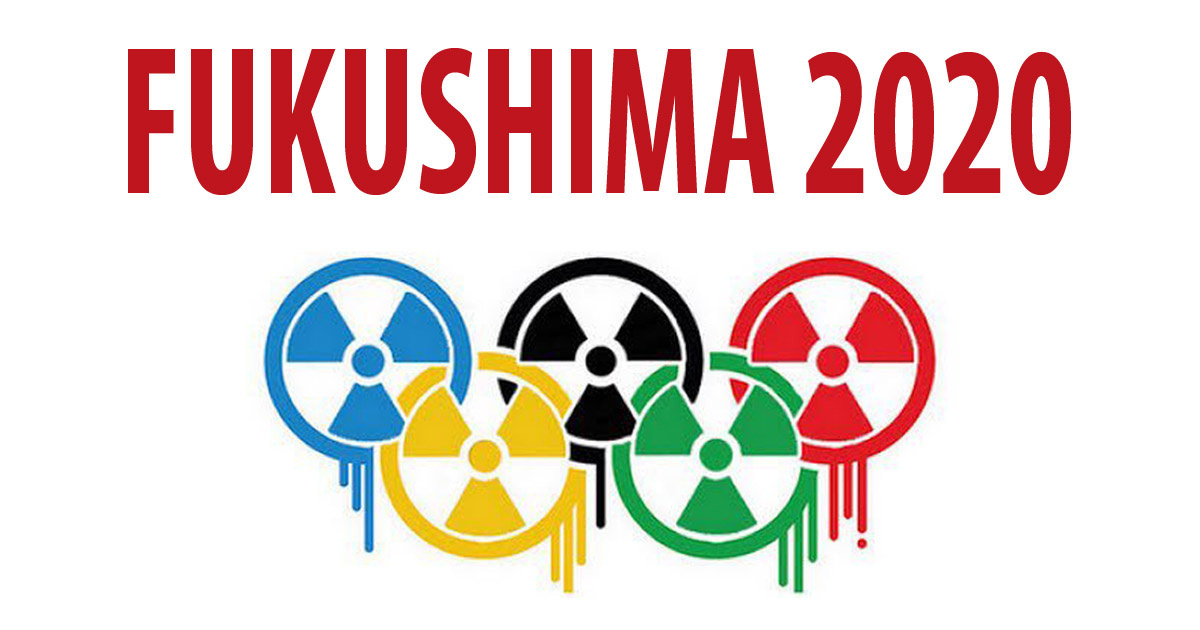 Australia’s nuclear testing before the 1956 Olympics in Melbourne should be a red flag for Fukushima in 2020, https://theconversation.com/australias-nuclear-testing-before-the-1956-olympics-in-melbourne-should-be-a-red-flag-for-fukushima-in-2020-85787, The Conversation, Part time tutor in Medical Education, University of Dundee, 20 Oct 17, The scheduling of Tokyo 2020 Olympic events at Fukushima is being seen as a public relations exercise to dampen fears over continuing radioactivity from the reactor explosion that followed the massive earthquake six years ago.
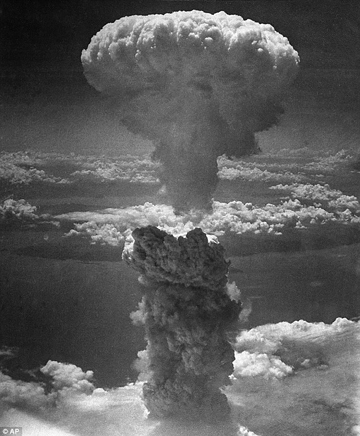 It brings to mind the British atomic bomb tests in Australia that continued until a month before the opening of the 1956 Olympic Games in Melbourne – despite the known dangers of fallout travelling from the testing site at Maralinga to cities in the east. And it reminds us of the collusion between scientists and politicians – British and Australian – to cover up the flawed decision-making that led to continued testing until the eve of the Games.
Australia’s prime minister Robert Menzies agreed to atomic testing in December 1949. Ten months earlier, Melbourne had secured the 1956 Olympics even though the equestrian events would have to be held in Stockholm because of Australia’s strict horse quarantine regimes.
The equestrians were well out of it. Large areas of grazing land – and therefore the food supplies of major cities such as Melbourne – were covered with a light layer of radiation fallout from the six atomic bombs detonated by Britain during the six months prior to the November 1956 opening of the Games. Four of these were conducted in the eight weeks running up to the big event, 1,000 miles due west of Melbourne at Maralinga.
Bombs and games
In the 25 years I have been researching the British atomic tests in Australia, I have found only two mentions of the proximity of the Games to the atomic tests. Not even the Royal Commission into the tests in 1985 addressed the known hazards of radioactive fallout for the athletes and spectators or those who lived in the wide corridor of the radioactive plumes travelling east. Continue reading
Silence about depleted uranium contamination in Albania
 URANIUM FROM NATO BOMBS KILLS ALBANIANS TOO BUT THEY ARE SILENT ABOUT IT https://inserbia.info/today/2017/10/uranium-nato-bombs-kills-albanians-silent/,Oct 19, 2017
SOURCE Vecernje Novosti NATO aircrafts, during 78 days of bombing with uranium ammunition, poisoned large part of the territory of Kosovo and Metohija, so even today, with the latest equipment, it is impossible to locate all contaminated areas. Every NATO bullet with depleted uranium, if not detected and extracted, will practically continue killing forever.
This said Lieutenant-Colonel Radomir Aleksandric for the daily Vecernje Novosti, the man who on Christmas 1999, with only 29 years of age, received post of Commander of 52nd ABHO (Atomic-biological-chemical defense) battalion in Kosovo. He explained that only when the uranium bullet is extracted – ABHO device goes “crazy”, and while in the ground, it is barely detected with equipment. In the meantime, uranium oxidizes, the rain carries toxic poisons deeper into the ground and through water further into the food chain.
According to the Lieutenant-Colonel, all our officers in Kosovo and Metohija (KiM) in 1999 knew of the danger of this ammunition. He adds that ABHO equipment was inadequate, i.e. good only for mass atomic-chemical warfare, and that we were confronted with subversive nuclear mini-strikes.
In April and May 1999 ABHO units of the Pristina Corpus measured the consequences of the NATO strikes in KiM in 360 positions immediately after the actions of the enemy. The results were confusing: “slightly elevated” radioactivity was recorded in the vicinity of Pristina, Slatina airport, then in Belacevac, Gracanica, Podujevo, Urosevac, Prizren, Djakovica, Decani…
“These were minimal deviations from the natural background radiation, or, as we concluded later, we had instruments for measuring “tons”, and we should have measured milligrams. Namely, in most of the sites that were examined bullets made of depleted uranium were deeply in the ground and did not at first seem to be too dangerous. Only after the aggression we realized what had happened to us”, said Aleksandric.
The growing threat of cyber attacks on nuclear weapons systems
 Growing threat: Cyber and nuclear weapons systems, Bulletin of the Atomic Scientists, Page Stoutland, 18 Oct 17, Every day, it seems, news of another cyber breach emerges. From huge entertainment companies to credit agencies to fast-food operations, cyber attackers are doing their dirty work and putting the public at risk. Name a company—Sony, Experian, Blue Cross Blue Shield, Arby’s, Saks Fifth Avenue—and it has been victimized. The implications are staggering—recent disclosures show that a 2013 attack on Yahoo e-mail compromised 3 billionaccounts. Governments and government systems also have been hit, including the US Office of Personnel Management. In that 2015 incident, hackers targeted millions of people’s Social Security numbers and other personal information.
Given the frequency and scope of cyber threats and cyberattacks worldwide, it’s easy to imagine waking up one day to find even more frightening headlines. What if the targets compromised in a cyberattack were not just e-mail accounts or even banking systems, but nuclear weapons (or related systems)? What if:
A nuclear watch officer’s computer screens indicated that nuclear missiles were on the way? Could the officer be sure that she wasn’t the victim of a cyber-spoof? How would she respond?
Military officials were unable to communicate with the men and women controlling US nuclear weapons during an international security crisis? What would they think had happened? How would they respond?
Officials discovered malware on a nuclear-critical system—and suspected that it was just the tip of a cyber iceberg?
Unfortunately, these scenarios are all too plausible. Many experts believe it’s only a matter of time before truly devastating cyberattacks are mounted against critical civilian infrastructure—or even key military systems. Nuclear weapons and related systems, like all digital systems, are vulnerable to cyberattack. Though nations give the highest priority to the security of nuclear weapons systems, a successful cyberattack is possible and could be catastrophic. (Systems related to nuclear weapons include those involved in delivery, communication, planning, warning, and the like; nuclear weapons, along with these related systems, can be called “nuclear weapons systems” for short.)
Cyberattacks could compromise nuclear planning or delivery systems, interrupt critical communications, lead to false warnings of attack, or potentially even allow an adversary to take control of a nuclear weapon. Indeed, an increasing risk of cyberattacks could undermine confidence in nuclear deterrent forces—generating uncertainty about whether a nuclear-armed state could both assure the authorized use of its nuclear weapons and prevent their accidental, mistaken, or unauthorized use. (A “disabling” attack could prevent authorized use of a nuclear weapon; an “enabling” attack could lead to unauthorized nuclear use.) Such uncertainty could jeopardize strategic and crisis stability.
If the threat doesn’t feel vivid yet, consider the following hypothetical scenarios.
Scenario 1. Seeking to start a nuclear war, a terrorist organization uses a cyberattack to disrupt a nation’s early warning systems and credibly spoof a large nuclear attack by a rival government. National decision makers would have to rapidly determine the appropriate course of action, perhaps with erroneous information flowing from the warning system……..
Scenario 2. In preparation for a nuclear attack (or perhaps as part of an extortion attempt), an adversary government uses cyberattacks to disrupt vital communications—between or among officials, operators, and nuclear systems themselves—eliminating the possibility of retaliation………
Scenario 3. Seeking to compromise an adversary’s nuclear deterrent, and exploiting vulnerabilities in the adversary’s supply chains, a nation-state places malware on a key nuclear weapon delivery platform. During an escalating crisis, it communicates that it has done so. In this situation, decision makers would have to consider whether and how to react as they tried to determine whether the problem was targeted or widespread and whether additional flaws might exist…… https://thebulletin.org/growing-threat-cyber-and-nuclear-weapons-systems11201
Authorities always knew that nuclear fallout shelters would not work
 Nuclear Fallout Shelters Were Never Going to Work, History // OCTOBER 16, 2017 “…….[IN 1961] the federal government was devising a way for 50 million Americans to survive a nuclear war by scurrying to the nearest basement. The National Fallout Shelter Survey and Marking Program had begun……….
With North Korea’s intercontinental ballistic missiles, or ICBMs, pointed west and President Trump’s atomic sabre-rattling, fears of nuclear war have crept slowly back into the public consciousness. If the headlines rekindle some of the old unease about air-raid sirens and mushroom clouds, they’re also an occasion to consider a singular relic of the period that, oddly enough, never left us—the fallout-shelter sign.
Dented and faded now, the Kennedy-era signs still cling to the sides of buildings across the country. “They’re an enduring symbol of the Cold War,” says popular-culture historian Bill Geerhart, who since 1999 has maintained CONELRAD.com, a meticulous chronicling of the duck-and-cover era. “They outlasted everything, including the Berlin Wall. They’re tangible artifacts of that era.” And though their original purpose has vanished, the signs still have much to say. They are the products of an ill-conceived program, designed to appease a population with little faith in that program even working.
Kennedy was privately skeptical about the value of a public shelter program……. While fallout shelters would do nothing to safeguard people from an actual bomb, they would, in the words of JFK’s civil-defense chief Steuart L. Pittman, give “our presently unprotected population some form of protection.”……..
In fact, the untenability of the shelters was public knowledge before they had even opened. A November 1961 story on the front page of The Washington Post bemoaned that most of the designated shelters would be little more than “cold, unpleasant cellar space, with bad ventilation and even worse sanitation.”
Conditions were a serious problem, but location was a bigger one. Two-thirds of the fallout shelters in the U.S. were in “risk areas”—neighborhoods so close to strike targets that they’d likely never survive an attack in the first place. In New York, for example, most of the government shelters could be found in Manhattan and Brooklyn—despite the fact that a 20-megaton hydrogen bomb detonated over Midtown would leave a crater 20 stories deep and drive a firestorm all the way to the center of Long Island. Even out there, Life magazine said, occupants of a fallout shelter “might be barbequed.”……..
Anyone who read the newspapers understood not just that an inbound ICBM would leave them only 15 minutes, if that long, to get to a fallout shelter—but also that few structures in the city would survive a strike anyway. …….
Looking back on the civil-defense program in 1976, The New York Times observed: “the only reminders of fallout shelters [now] are the yellow-and-black signs placed outside buildings.”
That’s where thousands remain to this day—eerie reminders of a tense past that, as recent headlines remind us, feels unwantedly familiar. “They couldn’t have come up with a more ominous symbol,” reflected Eric Green, keeper of the Civil Defense Museum website, whose personal collection of fallout-shelter artifacts includes over 140 signs. “That’s the most ominous looking sign—the black and yellow and those triangles. It looked like exactly what it meant: This is the end.” http://www.history.com/news/nuclear-fallout-shelters-were-never-going-to-work
Are the remains of an experimental reactor buried on the Niagara Falls storage site?
A wide range of radioactive material was dumped cavalierly on site during the Second World War and the decades that followed: plutonium, uranium, thorium, cesium, polonium, strontium, and other dangerous materials. On site today, buried with that steel ball, is what is assumed to be irradiated graphite and almost 4,000 tons of radioactive radium-226, the largest repository in the western hemisphere, representing a staggering quantity of radiation.
—isotopes of plutonium, uranium, cesium, polonium, and other elements that are produced only inside nuclear reactors and by nuclear explosions—
It was known as the Radiological Warfare, or RW, program, and under its auspices scientists studied what materials could best be weaponized, what health consequences they would have on an enemy,
 The Bomb That Fell On Niagara: The Sphere Artvoice Weekly Edition » Issue v7n39 (09/24/2008), by Geoff Kelly & Louis Ricciuti
Are the remains of an experimental reactor buried on the Niagara Falls storage site?
This is going to seem complicated and take a long way to get where it’s going. So here’s the gist, right upfront: Possibly, in Lewiston, are buried the remnants of an experimental nuclear reactor dating from the 1940s. This reactor would have been part of a secret program to weaponize poisonous materials—a program with roots in the study of poison gases in the First World War and whose culmination is found today in the use of depleted uranium munitions around the world.
Sure, it sounds like a plot inspired by Dr. Strangelove. But read on.
Amid the radioactive slurry and scrap interred in the 10-acre interim containment facility at the Niagara Falls Storage Site in Lewiston is a curiosity: a hollow industrial steel ball, 38 feet in diameter.
You won’t find that house-sized steel ball on any waste materials manifest, at least not on any manifest released to the public by the US Army Corp of Engineers, which is the site’s caretaker, or the US Department of Energy, which owns the site and the hazardous waste buried there.
The ball exists in aerial photographs taken of the site in the mid 1940s, however, and it appears to have been rediscovered in a 2002 electric resistivity underground imaging study performed by defense contracting giant SAIC.
In those aerial photos, the ball sits some distance from the main cluster of buildings; the nearest structure is a concrete silo, which eventually became a receptacle for high-energy radium wastes, a legacy of local industry’s central role in the Manhattan Project and the Atomic Energy Commission, which produced the first atomic bombs.
The Army Corps say there is no documentary record of the ball having been removed from the site. And the 2002 electric imaging scans suggest that a steel sphere, 38 feet in diameter, just like the one in the photos, is buried about a quarter mile from the ball’s original location, on the developed portion of a vast, former federal reservation called the Lake Ontario Ordnance Works. The LOOW came online officially in 1942, a 7,500-acre facility cobbled together from farm fields by the Department of War. Its initial use, according to the site’s official history, was a TNT factory. That factory closed, however, after nine months, at the height of the Second World War. The factory and all its infrastructure—miles of massive pipes, a water and power grid sufficient to sustain a city of 100,000 people, dozens of industrial buildings—were declared surplus.
The LOOW’s actual uses have been a mystery, whose plots and subplots have been revealed slowly and grudgingly by an unforthcoming federal government. ……..
Various sectors of the vast compound became dumping grounds for toxic radiological and chemical waste produced in Niagara Falls factories, as well as laboratories and reactors nationwide, working first on the atom bomb project and later on other Atomic Energy Commission and defense- and intelligence-related projects. A wide range of radioactive material was dumped cavalierly on site during the Second World War and the decades that followed: plutonium, uranium, thorium, cesium, polonium, strontium, and other dangerous materials. On site today, buried with that steel ball, is what is assumed to be irradiated graphite and almost 4,000 tons of radioactive radium-226, the largest repository in the western hemisphere, representing a staggering quantity of radiation.
Beginning in 1980, these wastes—originally dumped in open pools, seeping out of corroded barrels, or just piled on open ground—were consolidated by the DOE into a temporary containment structure on the 119-acre Niagara Falls Storage Site.
The existence on the LOOW of particularly exotic transuranics (that is, above uranium on the periodic table) and fission materials—isotopes of plutonium, uranium, cesium, polonium, and other elements that are produced only inside nuclear reactors and by nuclear explosions—has begged an explanation for decades. The Army Corps says that these transuranics and fission materials arrived at the LOOW with waste from the Navy’s Knolls Atomic Power Laboratory near Schenectady. But the waste from Knolls doesn’t explain all the transuranics and fission materials found on the LOOW, according to some experts, and it doesn’t explain how widespread and how much.
That steel sphere buried among this collection of radiological waste suggests another, simpler explanation: Could that steel ball—a Hortonsphere, named for the inventor of the process of its fabrication—been a component in an early model of an experimental ball-and-pile reactor? One in which exotic materials were created or irradiated, all in the service of a federal weapons program that sought to find new and lethal applications of the materials created in Niagara Falls for the Manhattan Project and beyond?
“I’d have to say yes,” says Tedd Weyman, of the Uranium Medical Research Centre, based in Toronto.
Occam’s Razor
Weyman is a physicist and his group, UMRC, studies the effects of uranium, transuranium elements, and radionuclides produced by the process of uranium decay and fission. UMRC is especially interested in the health effects of depleted uranium, whether it enters the environment as a result of munitions use or as waste.
Weyman examined the aerial photographs of the ball and silo, the list of transuranics and fission materials found on site, and the electric imaging scan that seemed to show that same ball from the photos buried alongside radioactive waste. He reviewed documents that describe the history of the LOOW site and of Niagara Falls industry over the past 60 or so years: the metals and chemicals and devices created in nearby factories, the experimental programs undertaken by defense and intelligence agencies beginning in the 1940s. He considered the size of the Hortonsphere, which he said is consistent with a ball reactor, and its placement in relation to the silo, which is consistent with the pile in a ball and pile reactor—that is, the source of the reactor’s “fuel” and critical reactions.
Weyman then listened to the explanations the Army Corps offered for the ball and the transuranics and fission products: that the ball was used to store anhydrous ammonia used in making TNT and the transuranics and fission products came from Knolls. He concluded that an on-site reactor was a far simpler explanation.
“They’re fission products,” Weyman says of the residues found on site…..
On the subject of the history of the LOOW site and the environmental dangers it poses, the Army Corps has been less than reliable when discussing the documentary evidence. In 2000, for example, when offered evidence that plutonium-tainted waste from medical experiments conducted at the University of Rochester had been buried on the LOOW site, the Corps denied such evidence existed. Eventually, they allowed both that the evidence existed and that the plutonium-tainted waste had been found on site…….
Occam’s Razor is the principle that the simplest explanation is most often the correct one. There’s that anomaly, exactly the diameter of the ball in question, which is exactly the size and manufacture of a ball reactor vessel. It is interred alongside radioactive waste. It originally sat near a silo, which once stored radioactive waste; a 1944 photo of the site looks like a photo of a ball and pile reactor of that era. And there are transuranics and fission materials buried nearby, as well as irradiated graphite, whose nature, quantity, and location aren’t completely explained by the Knolls hypothesis.
“If it quacks, is it not a duck?” Weyman says. “It’s quacking pretty loud.”……….
It was known as the Radiological Warfare, or RW, program, and under its auspices scientists studied what materials could best be weaponized, what health consequences they would have on an enemy, how best to deliver and disperse radioactive materials to a battle zone, and how much to use. This research was more secretive, but here too the expertise of local industries proved valuable. In a brochure from the postwar era, Bell Aircraft (later Bell Aerospace) bragged of its research in area weapons: that is, devices that disperse materials across a battlefield. Niagara Sprayer (a.k.a. FMC, the Middleport company that manufactured Agent Orange) created specialized compounds and nozzles for spraying agricultural metals, powders, and insecticides.
And over at the LOOW site, there was a mammoth federal reserve on which exotic radioactive wastes were accumulating.
Bob Nichols, the San Francisco-based writer who came to the same conculsion as Weyman about the ball buried on the NFSS, specializes in the history of this second track of research. He draws a straight line that connects the radiological warfare program to American research into poison gases, such as mustard gas and chlorine gas (both of which were produced in Niagara County), during the First World War; that line passes through the Manhattan Project along the way, and continues to the present-day use of depleted uranium munitions, which release a cloud of poisonous ceramicized uranium particles as a form of gas when they vaporize on impact.
Nichols explains that the first track—the building of more and better nuclear weapons—created vast stores of radiological waste materials. “The question back then was what on earth to do with it,” he said………
Whatever took place on the former LOOW site in the first decades of the Cold War may have evolved and—like so many local industries—moved away. But its legacy is in the dirt, air, and water. It’s interred under that clay cap. It’s in the region’s higher-than-expected rates of cancer, diabetes, and other illnesses. History should matter to the Corps as much as it matters to those who live in its aftermath.
For more documents and photographs related to the article, visit AV Daily at Artvoice.com. http://artvoice.com/issues/v7n39/the_sphere.html
Nancy Pelosi pushing U.S. Congress to outlaw pre-emptive nuclear strike
Pelosi Says Congress Should Weigh Policy Change on Nuclear Arms https://www.voanews.com/a/pelosi-says-congress-should-weigh-policy-change-nuclear-arms/4067891.html WASHINGTON 13 Oct 17,
House Minority Leader Nancy Pelosi is pushing Congress to pass a measure saying that the U.S. would not fire its nuclear weapons unless another country did so first.
But the California Democrat insisted Thursday that her suggestion had nothing to do with President Donald Trump, even though it came in the wake of Trump’s warnings to North Korea and his reported suggestion that the nation’s nuclear arsenal should increase in size.
Pelosi said the current policy was outdated and any changes would apply to all presidents in the future.
Pelosi raised the issue at her weekly press conference, telling reporters, “There is interest in the U.S. establishing itself as no first use, no first nuclear use.”
Trump ‘igniting new conflict rather than reducing risk of war’ – says Nobel Peace Prize winner ICAN
 Iran nuclear deal: Nobel Peace Prize winner says Trump is ‘igniting new conflict rather than reducing risk of war’http://www.independent.co.uk/news/world/politics/iran-nuclear-deal-latest-trump-ican-nobel-peace-prize-igniting-conflict-war-a7999741.html
The International Campaign to Abolish Nuclear Weapons strongly criticises the President, Shehab Khan @shehabkhan 14 Oct 17 The 2017 Nobel Peace Prize Winner has said Donald Trump is “igniting new conflict rather than reducing the risk of nuclear war” after the President’s announcement to withhold certification of the Iran nuclear deal.
The International Campaign to Abolish Nuclear Weapons (Ican), the 2017 Nobel Peace Laureate, strongly criticised Mr Trump’s decision, who in his speech condemned Iran as a “fanatical regime”.
Speaking out against the move, Beatrice Fihn, the executive director of Ican, said Mr Trump’s move was a reminder of the immense nuclear danger facing the world.
“If ever there were a moment for nations to declare their unequivocal opposition to nuclear weapons, that moment is now. There is an urgent need to strengthen existing and develop new norms against the use and possession of nuclear weapons by joining the Treaty on the Prohibition of Nuclear Weapons,” she added.
Despite the hype, it’s doubtful that underground bunkers will work, in the event of a nuclear attack
Thanks To North Korea, Nuclear Bunkers Are Making A Comeback — But How Effective Are They?, Forbes, Sharon Lam , FORBES STAFF I am an editorial intern with the Asia Channel, 13 Oct 17, Those born in America in the 40’s may recall “Duck and Cover”—a public service announcement featuring an animated turtle named Bert who instructed American households on how to protect themselves in the event of a nuclear blast. While the effectiveness of this strategy has been called into question since the Cold War, the level of threat has not necessarily decreased in kind. In September, North Korea test-flighted a second missile over Japan only twelve days after its sixth nuclear weapons test earlier that month. Bunkers and fallout shelters are now seeing an uptick in sales, making their first revival since the Cold War.
In the 20-some years that have passed, has our emergency preparedness in the aftermath of a nuclear detonation become more effective, and are we now more prepared than we were before for a nuclear strike?
Destruction Of Seismic Proportions
Virtually no city is prepared for a nuclear detonation –that is the verdict of a recent report by The Bulletin of the Atomic Scientists. While factors like location, subsequent fire blast, long-term radioactive fallout and even building shield coverage all affect overall level of destruction, a nuclear exchange would cause irreparable damage to the world. To contextualize matters, North Korea’s recent hydrogen bomb test, which was believed to be 120 kilotons TNT, dwarfs both atomic bombs dropped in World War II–the “Little “Boy” on Hiroshima and the “Fat Man” in Nagasaki.
A Brief History Of Wartime Bunkers
In South Korea, whose 25.6 million residents stand in the direct line of fire and which Kim Jong-un has threatened to turn into “a sea of fire,” there are currently more than 19,000 bomb shelters, including over 3,200 in Seoul, 25 miles away from the militarized border. But these shelters, which are mostly located in subway stations, basements and parking garages have no food, water, gas masks or medical kits readily available. In neighboring Japan, which has a less-than amicable relationship with Seoul due to hostilities carried over from World War II, Reuters reports that wartime shelters are largely unusable to the public. In other words, wartime bunkers are of limited utility, and are more or less remnants of a time bygone.…….
Public fallout shelters have also edged towards obsolescence because they cannot adequately protect against nuclear, chemical or biological attacks, and also require time to get to–time that civilians likely won’t have. As Timothy J. Jorgensen writes for The Conversation, “The main reason we no longer build fallout shelters is that as nuclear bombs have grown in size and number, the prospects of surviving a nuclear war – even in a shelter – have decreased.” Spending money on fallout shelters does not guarantee safety, and funding has instead been diverted to deterrence efforts.
Government-commissioned fallout shelters may be more symbolic than functional, and Hanham explains how their role has always been to dampen widespread panic and hysteria. The catchy tune of “Duck and Cover” in particular provided comic relief, even when it belied much darker overtones of destruction. “Even in the Cold War, when people were asked to ‘duck and cover,’ it was largely to provide comfort and solace to the people,” she says.
A Burgeoning Market For Private Bunkers
While governments may no longer be building civil defense bunkers, there’s no denying that they do mitigate the effects of nuclear fallout. It has also carved out a niche market for the sale of personalized private bunkers, usually built underground or in the basement of one’s home. Nuclear shelter companies in Japan such as Shelter Co., whose shelters come equipped with anti-radiation air purifiers and tunnel exits have also proliferated, and Oribe Seiki Seisakusho in Kobe has reportedly received eight orders in April alone, compared to its usual average total of six in a year, Reuters reports. However, U.S. based bunker companies still command the lion’s share of fallout shelters, the most popular of which are the California–based company Atlas Survival and Rising S Co. in Texas, both of which have seen an uptick in sales, according to Bloomberg.
The obvious upside of these private bunkers include the benefit of proximity—assuming one is already home and can reach a shelter faster than a crowded metro station. Unlike wartime bunkers, they are also fully stocked and often built with protective materials.
That bunkers also increase the likelihood of survivability is indeed a hopeful sign in an otherwise grim situation. The War Monitor claims that radioactive fallout from a nuclear explosion loses intensity fairly rapidly. “Fallout emitting gamma ray radiation at an initial rate over 500 R/hr (fatal with one hour of exposure for 50%) shortly after an explosion, weakens to only 1/10th as strong 7 hours later. Two days later, it’s only 1/100th as strong, or as deadly, as it was initially.” This fact should be reassuring, suggesting that even staying in a shelter and waiting for radiation levels to decline can dramatically increase one’s chances of survival. During nuclear Armageddon, every extra minute afforded counts towards survival rates……https://www.forbes.com/sites/lamsharon/2017/10/13/thanks-to-north-korea-nuclear-bunkers-are-making-a-comeback-but-how-effective-are-they/#6356e67d5ddd
Pakistan’s new nuclear-capable submarine-launched cruise missile (SLCM) opens up a dangerous new era
The Risks of Pakistan’s Sea-Based Nuclear Weaponshttps://thediplomat.com/2017/10/the-risks-of-pakistans-sea-based-nuclear-weapons/The Babur-3 opens a dangerous era for Pakistan’s nuclear forces.By Ankit Panda, October 13, 2017 Nine days into 2017, Pakistan carried out the first-ever flight test of the Babur-3, it’s new nuclear-capable submarine-launched cruise missile (SLCM). A variant of the Babur-3 ground-launched cruise missile (GLCM), this SLCM will see Pakistan’s nuclear deterrent head to sea—probably initially aboard its Agosta 90B and Agosta 70 submarines, but eventually, perhaps even on board new Type 041 Yuan-class submarines Pakistan is expected to procure from China.
Escalating danger of an American nuclear first strike on North Korea
 THE GROWING DANGER OF A U.S. NUCLEAR FIRST STRIKE ON NORTH KOREA, War on the Rocks,
There are many reasons to believe a U.S. first strike against North Korea is now more likely than ever. First, the North Korean nuclear program has now achieved capabilities that previous U.S. administrations always insisted were dangerously unacceptable. The regime now has between 30 and 60 nuclear weapons, and recently tested one with the equivalent destructive power of a hydrogen bomb. Its long-range ballistic missiles can already deliver those weapons to Japan, Guam, Alaska, and Hawaii, and now may also be able to reach the west coast of the United States. Pyongyang has now threatened to test a hydrogen bomb over the Pacific Ocean, elevating worries about the regime’s unpredictable and dangerous behavior even further. The United States has always reserved the right to use its nuclear weapons first against such compelling threats.
These very real threats would have confronted any president occupying the Oval Office in 2017, but President Donald Trump has chosen to react to this perilous situation in dangerously provocative ways……..
The possibility of a first strike against North Korea has long been discussed as one way to address its growing nuclear threat. Yet very few understand the grim military logic that only an overwhelming surprise nuclear strike provides a decisive option. There is simply no other way to destroy North Korea’s nuclear capabilities while minimizing the risk of massive conventional or nuclear retaliation.
There are two crucial reasons why a conventional first strike cannot be effective. First, the timelines involved are too long. It would require weeks or even months of preparation: building up troops, aircraft, and ships, as well as evacuating tens of thousands of U.S. citizens. Any of these highly visible preparations for war could lead Pyongyang to launch a preemptive strike of its own — including massive artillery and chemical attacks on Seoul, and nuclear strikes across the region, including against U.S. territory. The same logic would hold even if the United States could somehow pull off a surprise conventional attack, since most experts envision such an attack lasting days or weeks. In either case, Kim would have absolutely no incentives to hold back any of his military capabilities, including nuclear weapons. His regime’s survival would be at stake, leading to a classic “use-it-or-lose-it” scenario.
Second, and more important, a conventional first strike simply cannot destroy enough North Korean military capability to prevent a retaliatory second strike. North Korean nuclear weapons have been deliberately dispersed throughout the country, including on mobile launchers and in locations deep underground, to prevent this exact scenario. ……..
A nuclear first strike, then, may seem like an attractive military option to a president who has vowed to end the North Korean nuclear threat once and for all. Yet its political, economic, and moral consequences would be so devastating that it would be hard for any American to imagine, in retrospect, why this ever seemed like a good idea.
First and foremost, the human costs would be catastrophic. Millions of North Koreans would either be killed or grievously wounded from the effects of fires, blasts, and radiation. The radioactive fallout from such a strike could spread contamination thousands of miles, directly affecting South Korea, Japan, and China, as well as countries and populations across the region and beyond. Global or regional weather patterns could also be disrupted, affecting agriculture and the environment for years to come.
Even if those tragic human costs could somehow be set aside, the cascading range of other consequences would be sufficient to avoid such an attack. China could respond militarily, by moving forces into the parts of North Korea less affected by the strike, for example. This could result in a risky confrontation with U.S. forces seeking to confirm the complete destruction of North Korean nuclear capabilities. Chinese troops could also collide with a potential influx of U.S. and South Korean ground troops trying to establish civil order and provide humanitarian relief to the North Korean populace in the aftermath of the strikes. China might also respond to an attack on its ally more forcefully, by striking U.S. bases in the region or possibly even the U.S. homeland, especially since radiation would inevitably blanket some of its territory………
Is nuclear war on the Korean peninsula inevitable? No, but only if the Trump administration recognizes that a nuclear first strike cannot be a viable alternative, because its consequences are simply unfathomable. Deterrence is the vastly preferable option. The United States faced similar challenges after World War II, when the Soviets and then the Chinese developed nuclear weapons and the ability to strike U.S. targets. In both cases, arguments for American first strikes to remove these threats were soundly rejected in favor of long-term policies of deterrence — which have successfully avoided a nuclear conflagration for many decades. Effective deterrence requires only an adversary who is rational enough to seek his own survival — a threshold that even Kim Jong Un meets.
Trump’s most trusted advisors and experienced veteran military men, John Kelly and James Mattis, should repeatedly make this argument to the president while there is still time. There is virtually no likelihood that North Korea can be pressured to give up its nuclear program at this juncture. Given that reality, the best way to advance U.S. national security and protect American lives is to publicly commit to deterring the Korean regime while privately removing threats to its survival. The alternative is a deadly nuclear first strike from which there will be no winners.https://warontherocks.com/2017/10/the-growing-danger-of-a-u-s-nuclear-first-strike-on-north-korea/
Donald Trump wanted 8 fold increase in nuclear weapons: that’s when Secretary of State Rex Tillerson called Trump a “moron”
 Donald Trump’s nuclear demand led to Rex Tillerson’s moron jibe THE AUSTRALIAN, RHYS BLAKELY,RICHARD LLOYD PARRY 11 Oct 17 A call by Donald Trump for an eightfold increase in the number of US nuclear warheads led to his secretary of state calling him a moron, according to new reports of a meeting at the Pentagon.
Mr Trump made the request in July during a wide-ranging review of America’s military position and after being shown a slide depicting the size of the US nuclear arsenal, three officials who were in the room told NBC News.
He is said to have pointed out the highest number on the chart — about 32,000 nuclear warheads in the late 1960s — and told his advisers that he wanted to have a similar number once more. The US is estimated to have about 4,000 warheads.
Senior advisers explained that the request would break an array of weapons treaties and risk triggering a new global arms race. The meeting included Joseph Dunford, chairman of the joint chiefs of staff, Jim Mattis, the defence secretary, and Rex Tillerson, the secretary of state.
After Mr Trump had left, Mr Tillerson allegedly called the president a moron.
Mr Trump yesterday dismissed the story as inaccurate, tweeting: “Fake @NBCNews made up a story that I wanted a ‘tenfold’ increase in our US nuclear arsenal. Pure fiction, made up to demean.”
He added on Twitter: “With all of the Fake News coming out of NBC and the Networks, at what point is it appropriate to challenge their Licence? Bad for country!”
Broadcast licenses are administered by the Federal Communications Commission and are not usually revoked unless a holder commits serious illegal conduct.
Mr Trump had described the alleged “moron” comment as fake news on Tuesday but added that he and Mr Tillerson should perhaps compare IQ scores…….. http://www.theaustralian.com.au/news/world/the-times/donald-trumps-nuclear-demand-led-to-rex-tillersons-moron-jibe/news-story/bf43b88334e0e0e63579f9a60b3b7d6b
Earthquake detected near North Korea’s nuclear site – raising fears of a new nuclear test
Fears of new nuclear test in North Korea after earthquake is detected near test site, Mirror UK, 12 Oct 17 All of North Korea’s previous six nuclear tests registered as earthquakes and the country’s latest tremor has struck on Friday the 13th A small earthquake has been detected in North Korea where previous nuclear tests have been carried out.
The United States Geological Survey said a 2.9 magnitude quake with a depth of 5km was recorded 23km north-east of Sungjibaegam.
A statement on the US Geological Survey website reads: “This event occurred in the area of the previous North Korean Nuclear tests.
“The event has earthquake like characteristics, however, we cannot conclusively confirm at this time the nature (natural or human-made) of the event.”
All of North Korea’s previous six nuclear tests registered as earthquakes of magnitude 4.3 or above.
The last test the country carried out on September 3 registered as a 6.3 magnitude quake.
The US Geological Survey said that quake struck 55 km north northwest of Kimchaek. There was no reports of damage or casualties…….. http://www.mirror.co.uk/news/world-news/fears-new-nuclear-test-north-11333338
1 This Month
23-25 October – on Zoom – World BEYOND War’s annual global conferenc

To see nuclear-related stories in greater depth and intensity – go to https://nuclearinformation.wordpress.com

Say No to NASA’s Reckless Nuclear Reactor on the Moon
Say No to NASA’s Reckless Nuclear Reactor on the Moon
-
Archives
- October 2026 (160)
- September 2026 (339)
- August 2026 (330)
- July 2026 (355)
- June 2026 (287)
- May 2026 (306)
- April 2026 (356)
- March 2026 (251)
- February 2026 (267)
- January 2026 (308)
- December 2025 (358)
- November 2025 (359)
-
Categories
- 1
- 1 NUCLEAR ISSUES
- business and costs
- climate change
- culture and arts
- ENERGY
- environment
- health
- history
- indigenous issues
- Legal
- marketing of nuclear
- media
- opposition to nuclear
- PERSONAL STORIES
- politics
- politics international
- Religion and ethics
- safety
- secrets,lies and civil liberties
- spinbuster
- technology
- Uranium
- wastes
- weapons and war
- Women
- 2 WORLD
- ACTION
- AFRICA
- Atrocities
- AUSTRALIA
- Christina's notes
- Christina's themes
- culture and arts
- Events
- Fuk 2022
- Fuk 2023
- Fukushima 2017
- Fukushima 2018
- fukushima 2019
- Fukushima 2020
- Fukushima 2021
- general
- global warming
- Humour (God we need it)
- Nuclear
- RARE EARTHS
- Reference
- resources – print
- Resources -audiovicual
- Weekly Newsletter
- World
- World Nuclear
- YouTube
-
RSS
Entries RSS
Comments RSS

