Nuclear War Simulator shows the devastation that nukes could cause
Nuclear War Simulator shows the devastation that nukes could cause , MIC, By AJ Dellinger, Dec 14, 2019
, The fallout of nuclear war is the premise for all sorts of films and video games. There is a sort of morbid curiosity to imagining what life would be like in a post-apocalyptic world caused by this type of warfare, but the threat of such an occurrence is anything but science fiction. To better understand exactly how devastating to the planet and the population that a global nuclear could cause, there’s Nuclear War Simulator.
Docking problems for Russia’s nuclear ships
After the floating dock SD-50 sank at Roslyakovo yard north of Murmansk last fall “Sevmorput” now had to sail all around Scandinavia to St. Petersburg to find a dock large enough. Barents Observer, By Thomas Nilsen, December 15, 2019
“Sevmorput” left her homeport in Murmansk on December 5th and arrived in St. Petersburg on the 12th after sailing a distance of nearly 3,000 nautical miles, information from MarineTraffic tells.
The 260 meters long container ship is currently moored at the Admiralteyskiye yard in the Neva River, but will later be taken to the nearby dry dock at Kanonerskiy yard, SeaNews agency reports.
It was late October last year the floating dock sank at shipyard No. 82 in Roslyakovo between Murmansk and Severomorsk in the Kola Bay. The dock was then holding “Admiral Kuznetsov”, Russia’s only aircraft carrier.
The sunken dock was the only one on the Kola Peninsula large enough to accommodate “Sevmorput” and navy ships like the nuclear-powered battle cruiser “Pyotr Velikiy” and ballistic missile submarines of the Delta-IV-, Oscar, II- and Borei-classes.
An older land-dock at naval yard No. 35, Sevmorput, in Murmansk will be expanded to facilitate larger military vessels, like the submarines. The dock is said to be ready by 2021. Meanwhile, navy ships will have to sail to Severodvinsk for simple docking operations……..https://thebarentsobserver.com/en/industry-and-energy/2019/12/nuclear-powered-container-ship-sailed-3000-nm-change-propellers-lack
U.S. Democrats cave in to a weak compromise National Defense Authorization Act
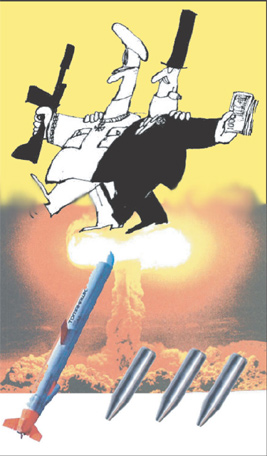 Democrats Retreat on Nuclear Policy Defense One, 13 Dec 19, The 2020 authorization bill fails to check Trump’s worst impulses. Democrats Retreat on Nuclear Policy Defense One, 13 Dec 19, The 2020 authorization bill fails to check Trump’s worst impulses.Question: How do you go from a National Defense Authorization Act that in July was opposed by every House Republican to one that was approved by more GOP votes than Democratic ones and that President Donald Trump called a huge win that he cannot wait to sign? Answer: Add Space Force and parental family leave and take out all of the progressive national security provisions. The House passed the compromise NDAA last night; President Trump has said he will sign it. This final bill is a world apart from the version passed by House Democrats in July. The House version, ably led by Rep. Adam Smith, D-Washington, chair of the House Armed Services Committee, prohibited deployment of Trump’s new “low-yield” nuclear weapon for Trident submarines, which defense experts called “a gateway to nuclear catastrophe.” It prohibited unauthorized U.S. military action against Iran, which Trump came within 10 minutes of ordering in June, and prohibited U.S. military support for the Saudi-led intervention in Yemen. And it supported extension of the New START treaty, which Trump seems to have every intention of sacking even though Russia supports keeping the crucial pact. The list goes on. In other words, the House bill would have constrained the most dangerous tendencies of an out-of-control White House. This is exactly what you would expect Democrats to do when faced with a President that they firmly believe is a danger to U.S. national security—and are now seeking to impeach on that basis. Not surprisingly, Republicans do not share this impression of the President, and they deeply opposed the nuclear policy provisions in the House NDAA……. The outcome was a disaster. The topline budget rose to $738 billion and the major constraints on Trump were ripped out. Others were watered down. The most we can say about the final NDAA is that it includes some useful language on arms control and missile defense, but nothing major. Such weak tea certainly does not justify supporting a bill that funds Trump’s excessive $2 trillion program to rebuild the nuclear arsenal, among other things. Rep. Ro Khanna, D-California, a member of the House Armed Services Committee and a vice-chair of the progressive caucus issued a joint statement with Sen. Bernie Sanders, D-Vermont, a presidential candidate, calling the final agreement “a bill of astonishing moral cowardice.” Over 30 progressive national security organizations (including Ploughshares Fund) sent a letter to Congress opposing the final bill as doing “almost nothing to constrain the Trump administration’s erratic and reckless foreign policy.” Senator and presidential candidate Elizabeth Warren said she would oppose the bill, calling it a “$738 billion Christmas present to giant defense contractors.” ….. Democrats cannot seek to impeach Trump and yet sometimes act as if he is a normal president. They cannot attempt to remove him from office as a danger to national security and yet hand him $738 billion in military spending with no limits on his nuclear weapons development, ability to attack Iran, freedom to abandon arms control treaties, and so much more. Trump is nothing if not a disrupter. The Democrats must give the president a taste of his own medicine. https://www.defenseone.com/ideas/2019/12/democrats-retreat-nuclear-policy/161855/ |
|
|
Sound the alarm on deadly US-Russia nuclear threat
 Sound the alarm on deadly US-Russia nuclear threat, by Jill Dougherty December 12, 2019 CNN, As I looked around the large square conference table, I watched the faces settle into worried frowns. Russians and Americans, several of whom once had responsibility for their nations’ nuclear weapons, all members of the Dartmouth Conference, the oldest continual bi-lateral dialogue between Americans and Russians, founded almost 60 years ago during one of the darkest periods of the Cold War.
Devastating array of craters on the ocean floor, from nuclear tests
Enormous Craters Blasted in Seafloor by Nuclear Bombs Mapped for the First Time, Live Science, By Mindy Weisberger – Senior Writer 11 Dec FRANCISCO — Today, all seems quiet in the remote Bikini Atoll, a chain of coral reef islands in the central Pacific. But more than 70 years ago, this region’s seafloor was rocked by powerful atomic bombs detonated by the U.S. Army.
For the first time, scientists have released remarkably detailed maps of this pockmarked seabed, revealing two truly massive craters. This new map shows that the seabed is still scarred by the 22 bombs detonated at Bikini Atoll between 1946 and 1958.
The map was presented yesterday (Dec. 9) at the annual meeting of the American Geophysical Union.
During the 1946 nuclear weapons test known as “Operation Crossroads,” the U.S. wanted to test the impact of nuclear bombs on warships. To that end, the Army assembled more than 240 ships — some of which were German and Japanese — that held different amounts of fuel and munitions, then deployed two nuclear weapons to destroy them, researcher Arthur Trembanis, an associate professor with the College of Earth, Ocean, and Environment at the University of Delaware, said in the presentation.
At the time of the tests, Trembanis said, comedian Bob Hope joked grimly:
“As soon as the war ended, we found the one spot on Earth that had been untouched by war and blew it to hell.”……….
But as powerful as the early atomic tests were, they were dwarfed by the later blasts caused by hydrogen and fusion bomb tests in the 1950s. The researchers investigated a crater that was 184 feet (56 m) deep and had an unusual oblong shape; they determined that it was a composite crater from multiple blasts: “Castle Bravo,” a 15-megaton bomb that was the largest ever detonated by the U.S., and “Castle Romeo,” the first deployed thermonuclear bomb.
These tests left behind a uniquely devastating array of shipwrecks and craters, and the first detailed map of their aftermath will help scientists to tell this untold story and connect to “a moment at the dawn of the nuclear age,” Trembanis said. “Our new findings provide insights into previously unknown conditions at Bikini and allow us to reflect on the lasting consequences from these and other tests.” https://www.livescience.com/mapping-reveals-bikini-atoll-nuclear-craters.html
Israel’s Foreign Minister Israel Katz suggests bombing Iran to stop its nuclear program
 FM: Bombing Iran to stop its nuclear program remains ‘an option’ FM: Bombing Iran to stop its nuclear program remains ‘an option’
Speaking with Italian media on the sidelines of a foreign policy conference in Rome, Israel Katz rebukes European leaders for not taking a more aggressive stand against Tehran. Iranian FM accuses Israel of testing nuclear missile aimed at his country. Israel Hayom 12-08-2019 The option to launch a preemptive strike against Iran to prevent it from developing a nuclear weapon remains viable, Foreign Minister Israel Katz said in an interview Saturday. Speaking with Italian-language daily Corriere della Sera, Katz – asked whether Israel was mulling military options vis-à-vis the Islamic republic – said, “Yes, it is an option. We will not allow Iran to produce or obtain nuclear weapons. If it were the last possible way to stop this, we would act militarily.” The comments were reportedly made on the sidelines of a foreign policy conference in Rome. They came just hours after Iran announced its ready to unveil a “new generation” of nuclear-related “products,” including new centrifuge systems and a heavy water power plant scheduled to be built by the spring of 2020. Katz further admonished European leaders for not taking a more aggressive stand against Iran over its repeated, escalating violations of the 2015 nuclear deal…… On Friday, Iran’s Foreign Minister Mohammed Javad Zarif accused Israel of holding “a nuclear missile test aimed at Iran.” “Israel today tested a nuke-missile, aimed at Iran,” Zarif said on Twitter, adding that the United States, Germany, France and the United Kingdom “never complain about the only nuclear arsenal in West Asia – armed with missiles actually DESIGNED to be capable of carrying nukes – but has fits of apoplexy over our conventional & defensive ones.” The Israeli defense establishment successfully tested a rocket propulsion system on Friday. Defense officials stressed that the test was planned in advance and carried out as planned. https://www.israelhayom.com/2019/12/08/fm-bombing-iran-to-stop-its-nuclear-program-remains-an-option/ |
|
Pentagon to get more control over the news? Is this a GOOD idea?
 The Pentagon Wants More Control Over the News. What Could Go Wrong?The Pentagon is using a moral panic over “fake news” to gain influence over the domestic news landscape, Rolling Stone The Pentagon Wants More Control Over the News. What Could Go Wrong?The Pentagon is using a moral panic over “fake news” to gain influence over the domestic news landscape, Rolling Stone
By MATT TAIBBI 9 Dec 19, If there’s a worse idea than the Pentagon becoming Editor-in-Chief of America, I can’t remember it. But we’re getting there:
From Bloomberg over Labor Day weekend: Fake news and social media posts are such a threat to U.S. security that the Defense Department is launching a project to repel “large-scale, automated disinformation attacks,” as the top Republican in Congress blocks efforts to protect the integrity of elections. One of the Pentagon’s most secretive agencies, the Defense Advanced Research Projects Agency (DARPA), is developing “custom software that can unearth fakes hidden among more than 500,000 stories, photos, video and audio clips.” Once upon a time, when progressives still reflexively distrusted the military, DARPA was a liberal punchline, known for helping invent the Internet but also for developing lunatic privacy-invading projects like LifeLog, a program to “gather in a single place just about everything an individual says, sees, or does.” DARPA now is developing a semantic analysis program called “SemaFor” and an image analysis program called “MediFor,” ostensibly designed to prevent the use of fake images or text. The idea would be to develop these technologies to help private Internet providers sift through content. ….. Stories about the need for such technologies are always couched as responses to the “fake news” problem. Unfortunately, “fake news” is a poorly-defined, amorphous concept that the public has been trained to fear without really understanding. ……. Fake news has a long history in America. Its most pernicious incarnation is never the work of small-time scam artists. The worst “fake news” almost always involves broad-scale deceptions foisted on the public by official (and often unnamed) sources, in conjunction with oligopolistic media companies, usually in service of rallying the public behind a dubious policy objective like a war or authoritarian crackdown. From the sinking of the Maine in 1898, to rumors of a union-led socialist insurrection before the Palmer raids in 1919, to the Missile Gap in the late fifties and early sixties (here is the CIA’s own website admitting that one was “erroneous”), to the Gulf of Tonkin lie that launched the Vietnam War, to the more recent WMD fiasco, true “fake news” is a concerted, organized, institutional phenomenon that involves deceptions cooked up at the highest levels. …… the final, omnipresent ingredient in most major propaganda campaigns is the authoritarian solution. Here, it’s unelected, unsupervised algorithmic control over media. We’ve never had a true news regulator in this country, yet the public is being conditioned now to accept one, without thinking of the consequences. The most enormous issue posed by the modern media landscape is the industry’s incredible concentration, which allows a handful of private platforms – Facebook, Twitter, Google – to dominate media distribution. This makes it possible to envisage direct levers of control over the public’s media habits that never existed back when people got much of their news from local paper chains with individual distribution networks. We’ve already seen scary examples of misidentified foreign subversion, from the Washington Post’s repeat editorials denouncing Bernie Sanders as a useful idiot for the Kremlin to the zapping of hundreds of domestic political sites as “coordinated inauthentic behavior.” What if the same people who can’t tell the difference between Truthdig and Pravda get to help design the new fake news algorithms? That’s a much bigger worry than the next Paul Horner or even, frankly, the next Russian Facebook campaign. While Donald Trump is in the White House, progressives won’t grasp how scary all of this is, but bet on it: In a few years, we’ll all wish we paid more attention when the Pentagon announced it wanted in on the news regulation business. https://www.rollingstone.com/politics/political-commentary/darpa-fake-news-internet-censorship-879671/ |
|
Putin offers US to extend key nuclear pact
 Putin offers US to extend key nuclear pact https://www.heraldsun.com.au/news/breaking-news/putin-offers-us-to-extend-key-nuclear-pact/news-story/e88b576c31aaa9f2e81843b5f306dfc7. Associated Press, December 6, 2019 Russian President Vladimir Putin claims Moscow is prepared to immediately extend a pivotal nuclear arms reduction pact with the United States.
Speaking at Thursday’s meeting with military officials, Putin said that Russia has repeatedly offered the US to extend the New START treaty that expires in 2021 but as yet he hasn’t heard back.
“Russia is ready to extend the New START treaty immediately, before the year’s end and without any preconditions,” Putin said.
The pact, which was signed in 2010 by former President Barack Obama and then Russian President Dmitry Medvedev, limits each country to no more than 1,550 deployed nuclear warheads and 700 deployed missiles and bombers.
Putin and other Russian officials have repeatedly voiced concern about Washington’s reluctance to discuss the treaty’s extension.
Chaos ahead in international relations due to Trump’s chaotic nuclear weapons policies
 Trump runs dangerous and chaotic approach toward nuclear weapons, https://thehill.com/opinion/international/472841-trump-runs-dangerous-and-chaotic-approach-toward-nuclear-weapons Trump runs dangerous and chaotic approach toward nuclear weapons, https://thehill.com/opinion/international/472841-trump-runs-dangerous-and-chaotic-approach-toward-nuclear-weapons
BY LAURA KENNEDY, — 12/03/19 The decision to abruptly withdraw United States forces from Syria is one of the most recent dangerous illustrations of the flawed foreign policy of President Trump and the chaos it has generated abroad. As a diplomat who served for nearly 40 years and under seven presidents, I am aware of how these impulsive and undisciplined actions have left allies reeling with American interests hobbled. His approach toward nuclear weapons and arms control is similar, but with even graver possible consequences.
His nuclear agenda reflects the same pattern of alliance mismanagement, American unreliability, and chaotic decision making. Instead of bailing on bilateral and multilateral arms control efforts, the United States should preserve remaining treaties like the New Strategic Arms Reduction Treaty and the observation regime offered by the Open Skies Treaty, which promote our interests abroad and avoid introducing destabilizing and unnecessary nuclear weapons in a heated international competition. The Iran nuclear deal was the first nonproliferation agreement to be axed by Trump, followed by the Intermediate Range Nuclear Forces Treaty. By recklessly withdrawing from the successful limits imposed on the Iranian nuclear program, Trump undercut our reliability with some of our closest allies and raised global tensions. Withdrawing from the latter agreement rather than continuing efforts to resolve violations by Moscow has shifted the onus away from Russia while removing constraints. The insecurity from withdrawal of these agreements is exacerbated by the prospect of blowing up the other key foundations of our arms control architecture. Next may be the Open Skies Treaty. It is a useful transparency regime which was instituted by the United States and 33 other nations. The agreement allows these nations to conduct observation flyovers of the territories of each of the signatories, providing critical insight into military deployments and possible military buildups. While some might argue that new technology makes such flyovers unnecessary, that overlooks the advantage offered by the framework. It is difficult to ignore evidence when all states have access to the same intelligence. Leaving this deal would end those benefits, poorly serve Ukraine, and send yet another message to our allies and adversaries of our diplomatic unsteadiness. Such a counterproductive step would be massively compounded if the United States does not extend the New Strategic Arms Reduction Treaty, which caps American and Russian deployed strategic nuclear weapons and is set to expire in early 2021. The predictability, transparency, and access it provides is unparalleled.While some might argue that new technology makes such flyovers unnecessary, that overlooks the advantage offered by the framework. It is difficult to ignore evidence when all states have access to the same intelligence. Leaving this deal would end those benefits, poorly serve Ukraine, and send yet another message to our allies and adversaries of our diplomatic unsteadiness. Such a counterproductive step would be massively compounded if the United States does not extend the New Strategic Arms Reduction Treaty, which caps American and Russian deployed strategic nuclear weapons and is set to expire in early 2021. The predictability, transparency, and access it provides is unparalleled. Its regime of notifications, information exchange, and onsite inspections has been lauded on both sides of the aisle and by numerous military and civilian officials. In addition to losing this level of certainty on Russian strategic nuclear weapons, the United States could face an expensive and destabilizing arms race, beyond the major $1 trillion nuclear program already authorized by President Obama. In fact, the Trump administration has called for the development of a new “low yield” submarine launched ballistic missile deemed more “usable” for the military. Critics argue it would be difficult to distinguish from existing high yield variants and would increase the risk of nuclear miscalculation. The House has included a provision in the annual defense authorization bill earlier this year that prohibits the deployment of such a submarine weapon. As the conference negotiations continue, the Senate ought to recognize the risks of this unnecessary and destabilizing addition to our already massive nuclear arsenal and ensure it remains in the final bill. Russia and China indeed pose risks, and we must seek to have serious strategic dialogues with both. But as we pursue such talks, we should use them to build on existing agreements, most notably the New Strategic Arms Reduction Treaty, and not scrap historical agreements in favor of a complex new effort to include additional weapons and actors such as China. Such a comprehensive deal, which the Trump administration says it is pursuing, would take years to negotiate. Russia does not believe there is time to negotiate a new arms control agreement prior to the expiration of the New Strategic Arms Reduction Treaty, and China has emphatically rejected joining such a trilateral endeavor. Any potential negotiations are further complicated by the fact that the State Department has dumped its under secretary and assistant secretary in charge of arms control policy. When it comes to international agreements, ignoring legislative, military, and civilian expert advice and picking fights with American allies leads to chaos, frayed alliances, and increased instability, as we have witnessed in Syria, Ukraine, Turkey, and across the world. The United States simply cannot afford to let that happen when it comes to nuclear weapons. Laura Kennedy is a member of the board of directors of Foreign Policy for America. She served as United States permanent representative to the Conference on Disarmament in Geneva, was a diplomat for the United States Mission to International Organizations, and served as the deputy assistant secretary for European Affairs with the Department of State. |
|
U.S. election – views of Presidential candidates about nuclear weapons
 Nuclear weapons — they’re still out there. Presidential candidates have ideas on them, San Francisco Chronicle, Bob Egelko Dec. 1, 2019 , One topic that’s gotten little attention during the presidential campaign is the high-stakes issue of nuclear weapons. That’s partly because campaigns tend to focus on bread-and-butter issues, like health care and taxes. They largely steer clear of foreign policy, especially an aspect that’s downright terrifying.
One question that has surfaced is whether the United States, the only nation that has ever used atomic weapons, should reverse its policy and declare it would not strike the first nuclear blow in a future war.
Sen. Elizabeth Warren, D-Mass., has introduced legislation that would establish “no first use” of nuclear weapons as binding law. Sen. Bernie Sanders, independent-Vt., is a co-sponsor. Former Vice President Joe Biden told a public gathering in June that “I supported it 20 years before she introduced it.” Several other presidential hopefuls — Rep. Tulsi Gabbard, D-Hawaii; entrepreneur Andrew Yang; spirituality author Marianne Williamson; billionaire Tom Steyer — have endorsed the concept.
The only Democratic candidate with a contrary view is Montana Gov. Steve Bullock, who said in the second presidential debate in July that “I wouldn’t want to take that (first use) off the table.”
But others — Sens. Kamala Harris of California, Cory Booker of New Jersey and Amy Klobuchar of Minnesota, and former U.S. Housing Secretary Julián Castro — have told interviewers in recent months that they hadn’t reviewed Warren’s proposal and weren’t ready to take a position on it.
The interviewers were from the Union of Concerned Scientists, which favors nuclear de-escalation and sent young people to campaign events to question the candidates.
One prominent candidate, South Bend, Ind., Mayor Pete Buttigieg, appears to have come down on both sides…….
Besides no first use, The Chronicle asked candidates about the Nuclear Test Ban Treaty, signed by the United States in 1963 but never ratified by the Senate; the Treaty on the Prohibition of Nuclear Weapons, a disarmament pact endorsed by the U.N. General Assembly and ratified by 33 nations so far, but not by the United States or any other nuclear powers; and the Intermediate Range Nuclear Forces Treaty, a 1988 agreement between the Soviet Union and the United States under President Ronald Reagan that banned land-based ballistic missiles with a range of up to 3,400 miles. The Trump administration withdrew from that treaty in February.
Some candidates did not respond, including Warren, Harris and Booker. Among those who did, Sanders, Williamson and Steyer took the firmest positions in support of the weapons treaties……..
While Warren’s campaign did not reply to questions about the treaties, the senator has publicly opposed the nuclear buildup proposed by Obama and endorsed by Trump.
“No new nuclear weapons,” Warren said in a November 2018 speech on foreign policy. “We should not spend over a trillion dollars to modernize our nuclear arsenal, at a time when the president is doing everything he can to undermine generations of verified arms-control agreements.”
Perhaps some of those discussions will reach a public forum as the campaign continues. Bob Egelko is a San Francisco Chronicle staff writer. Email: begelko@sfchronicle.com Twitter:@BobEgelko https://www.sfchronicle.com/nation/article/Nuclear-weapons-they-re-still-out-there-14873992.php
Nuclear Weapons: The Lies and Broken Promises
US Cover for Israel
Early in the morning of September 22, 1979, a US satellite recorded a double flash near the Prince Edward Islands in the South Atlantic. The satellite, a Vela 5B, carries a device called a “bhangmeter” whose purpose is to detect nuclear explosions. Sent into orbit following the signing of the Partial Test Ban Treaty in 1963, its job was to monitor any violations of the agreement. The treaty banned nuclear explosions in the atmosphere, underwater, and in space.
Nuclear explosions have a unique footprint. When the weapon detonates, it sends out an initial pulse of light. But as the fireball expands, it cools down for a few milliseconds, then spikes again.
“Nothing in nature produces such a double-humped light flash,” says Victor Gilinsky. “The spacing of the hump gives an indication of the amount of energy, or yield, released by the explosion.” Gilinsky was a member of the US Nuclear Regulatory Commission and a former Rand Corporation physicist.
From Carter onward, every US president has covered up the Israeli violation of the 1963 Partial Test Ban Treaty, as well as the 1968 Nuclear Non-Proliferation Treaty (NPT). So when Netanyahu says Iran is lying about its nuclear program, much of the rest of the world — i
ncluding the US nuclear establishment — roll their eyes.
Nuclear Apartheid
As for President Erdogan, he is perfectly correct that the nuclear powers have broken the promise they made back in 1968 when the signed the NPT. Article VI of that agreement calls for an end to the nuclear arms race and the abolition of nuclear weapons. Indeed, in many ways, Article VI is the heart of the NPT. Non-nuclear armed countries signed the agreement, only to find themselves locked into a system of “nuclear apartheid” — where they agreed not to acquire such weapons of mass destruction, while China, Russia, the United Kingdom, France and the US get to keep theirs.
The “big five” not only kept their weapons, but they are also all in the process of upgrading and expanding them. The US is meanwhile shedding other agreements, like the Anti-Ballistic Missile Treaty and the Intermediate-Range Nuclear Force Agreement. Washington is also getting ready to abandon the START treaty that limits the US and Russia to a set number of warheads and long-range strategic launchers.
What is amazing is that only four other countries have abandoned the NPT: Israel, North Korea, Pakistan and India (only the latter three have been sanctioned by the US). But that situation cannot hold forever, especially since part of Article VI calls for general disarmament, a pledge that has been honored in the breach. The US currently has nearly the largest defense budget in its history and spends as much on its military as 144 other countries combined……..
If the US were willing to cover up the 1979 Israeli test while sanctioning other countries that acquire nuclear weapons, why would anyone think that this is nothing more than hypocrisy on the subject of proliferation? And if the NPT is simply a device to ensure that other countries cannot defend themselves from other nations’ conventional and/or nuclear forces, why would anyone sign on or stay in the treaty?
Erdogan may be bluffing. He loves bombast and uses it effectively to keep his foes off balance. The threat may be a strategy for getting the US to back off on its support for Israel and Greece in their joint efforts to develop energy sources in the eastern Mediterranean Sea.
But Turkey also has security concerns. In his speech, Erdogan pointed out, “There is Israel just beside us. Do they have [nuclear weapons]? They do.” He went on to say that if Turkey did not respond to Israeli “bullying,” in the region, “we will face the prospect of losing our strategic superiority in the region.”
Iran may be lying about the scope of its nuclear ambitions — although there is no evidence that Tehran is making a serious run at producing a nuclear weapon — but if they are, they’re in good company with the Americans and the Israelis.
The Path to Sanity
Sooner or later, someone is going to set off one of those nukes. The likeliest candidates are India and Pakistan, although use by the US and China in the South China Sea is not out of the question. Neither is a dustup between NATO and Russia in the Baltic.
It is easy to blame the current resident of the White House for world tensions, except that the major nuclear powers have been ignoring their commitments on nuclear weapons and disarmament for over 50 years.
The path back to sanity is thorny but not impossible. First, the US should rejoin the Anti-Ballistic Missile Treaty, thus making Russia’s medium-range missiles unnecessary, and reduce tensions between the US and China by withdrawing ABM systems from Japan and South Korea.
Second, the US should reinstate the Intermediate-Range Nuclear Forces Agreement and find a way to bring China, India and Pakistan into it. That will require a general reduction of US military forces in Asia, coupled with an agreement with China to back off on its claims over most of the South China Sea. Tensions between India and Pakistan would be greatly reduced by simply fulfilling the UN pledge to hold a referendum in Kashmir. The latter would almost certainly vote for independence.
Third, the US must continue its adherence to the START agreement, while the “big five” countries need to halt the modernization of their existing arsenals — and begin, at long last, to implement Article VI of the NPT in regards to both nuclear and conventional forces.
Pie in the sky? Well, it beats a mushroom cloud.
No president should have the absolute authority to launch nuclear weapons
|
Joseph Cirincione is a nuclear weapons policy expert and president of the Ploughshares Fund, a global security foundation. Impeachment has a way of bringing out a president’s worst instincts — and the world could end up paying the price. As impeachment hearings intensified, an increasingly erratic president appeared to finally snap. “I can go into my office and pick up the telephone,” he told visiting lawmakers, “and in 25 minutes, 70 million people will be dead.” It was 1974, and the president was Richard Nixon. He was right. U.S. policy, then and now, gives the president absolute authority to launch nuclear weapons whenever they want, for whatever reason. No consensus is required. No one else need approve. Indeed, no other official even need know. The president, on their own, can simply summon the “nuclear football,” open binders of attack options and relay orders to the National Military Command Center. The orders would be sent down to missile control officers — where intercontinental ballistic missiles are primed on “hair-trigger” alert — and 30 minutes later you’d have nuclear explosions over the targets, just as Nixon claimed.
It was 1974, and the president was Richard Nixon. He was right. U.S. policy, then and now, gives the president absolute authority to launch nuclear weapons whenever they want, for whatever reason. No consensus is required. No one else need approve. Indeed, no other official even need know. The president, on their own, can simply summon the “nuclear football,” open binders of attack options and relay orders to the National Military Command Center. The orders would be sent down to missile control officers — where intercontinental ballistic missiles are primed on “hair-trigger” alert — and 30 minutes later you’d have nuclear explosions over the targets, just as Nixon claimed……
Procedures adopted in the fearful days of the Cold War — including the first use of nuclear weapons in a conventional conflict, the sole authority of the president to fire these weapons and keeping our missiles ready to launch in minutes — combine now to present an unacceptable risk of nuclear disaster. Little can be done now to reduce these risks. If we do escape catastrophe, it should be the first order of business in a new administration to declare new nuclear guidance and adjust nuclear alert postures accordingly. Legislators, including House Armed Services Committee Chairman Adam Smith (D-Wash.), have already introduced bills to prevent presidents from acting solely on their own to launch nuclear weapons and to make it official policy that America will never initiate a nuclear war. These provide a sound basis for a new president to revamp nuclear doctrine and to prevent, as President John F. Kennedy said, that slender thread holding the nuclear sword of Damocles from being cut by “accident or miscalculation or madness.” We must prepare to do all we can to ensure that no one individual — sane or insane — can ever start a nuclear war on their own. This column was produced in collaboration with The WorldPost, a publication of the Berggruen Institute. https://www.washingtonpost.com/opinions/2019/12/01/no-president-should-have-absolute-authority-launch-nuclear-weapons/ |
|
Nuclear-capable air-launched ballistic missile tested over the Barents Sea
|
The Kinzhal missile was launched from a MiG-31K taking off from Olenegorsk airbase on the Kola Peninsula. Barents Observer By Thomas Nilsen, December 01, 2019
The missile changes the military power-balance in the north due to its range, speed and ability to overcome any known missile defence systems. Kh-47M2 Kinzhal (NATO name SA-N-9 Gauntlet) is one of the six new strategic nuclear weapons presented by Vladimir Putin in his presidential address to the Federal Assembly on March 1, 2018. Now, the missile is tested and like several of the other new strategic weapons under development by Russia, the test took place in the northwestern part of the country……. https://thebarentsobserver.com/en/security/2019/12/nuclear-capable-air-launched-ballistic-missile-tested-over-barents-sea |
|
Despite Halting Progress, UN Continues its Push for a Nuclear-Weapons-Free Zone in the Middle East
And as another effort to negotiate a legally-binding treaty concluded last week, there were lingering questions crying out for answers: how realistic is the proposal in the face of implicit opposition from US and Israel? Is the proposal still in the realm of political fantasy?
Expressing confidence in the ongoing negotiations, Emad Kiyaei, Director at the Middle East Treaty Organization (METO) and a former director at American-Iranian Council told IPS, a WMD-Free Zone in the Middle East is far from being a fantasy– and is based on the goodwill of the states from within the region to reach an agreement.
Last week’s conference, he said, was “a positive step forward and the states in the (committee) room were showing more flexibility and constructive discourse that we have witnessed in decades on this issue.”
He pointed out that the danger of a nuclear arms race in the Middle East shows that business cannot continue as usual.
“It is a real threat, however, and this threat is further exacerbated by the global nuclear weapons states that have used the Middle East in their power games and scapegoated in not reaching a final document at the 2015 NPT Review Conference.”
He said the states from within the region understand the gravity of the threat and
the need for a comprehensive process that reduces tensions and serves as a starting point for an inclusive discussion in goodwill.
The United Nations says it has been working to eliminate nuclear weapons, including through the Treaty on the Non-Proliferation of Nuclear Weapons (NPT), as well as the Comprehensive Nuclear-Test-Ban Treaty (CTBT) and the Treaty on the Prohibition of Nuclear Weapons (TPNW), both of which are yet to enter into force.
Dr Rebecca Johnson of the Acronym Institute for Disarmament Diplomacy and author of “Unfinished Business” on multilateral negotiations, told IPS: “The stakes for international as well as regional security could not be higher.”
“Ending weapons of mass destruction possession and use in the Middle East has to be a vital priority for everyone.”
“It’s helpful that most of the P5 (the five permanent members of the UN Security Council, namely the UK, US, France, China and Russia) — and relevant states of the region attended the UN Conference — but very worrying that the United States and Israel decided to boycott,” she said.
“They behave as if they want to keep at least nuclear weapons and freedom of action for the foreseeable future. That’s a dangerous position to take, particularly after Donald Trump unilaterally pulled the US out of the JCPOA (2015 nuclear restraint agreement with Iran), which has reopened the door for Tehran to accelerate its nuclear production programmes, including uranium enrichment.”
Last week’s conference “was very limited in what it can accomplish in a week. What will it take to restore the JCPOA and bring Israel and the US to the table?”
“Politics is of course key here”, declared Dr Johnson.
UN Secretary-General Antonio Guterres welcomed “the successful conclusion of the Conference” and congratulated the participating States, in particular on the adoption of a Political Declaration, and supported their continuing efforts to pursue, in an open and inclusive manner, the establishment of a Nuclear-Weapons and Other Weapons of Mass Destruction-Free Zone in the region.
Currently, there are five regional nuclear-weapon-free-zones – in Latin America and the Caribbean; Africa; Central Asia; Southeast Asia; and the South Pacific.
According to the United Nations, treaties covering those States are: African Nuclear Weapon Free Zone Treaty (Treaty of Pelindaba); South Pacific Nuclear Free Zone Treaty (Treaty of Rarotonga); Treaty on the Southeast Asia Nuclear Weapon Free Zone (Treaty of Bangkok); Treaty on a Nuclear Weapon Free Zone in Central Asia (Semipalatinsk Treaty); and, the first ever such zone, the Treaty for the Prohibition of Nuclear Weapons in Latin America and the Caribbean (Treaty of Tlatelolco).
The world’s five declared nuclear powers are the P5 in the UN Security Council while the four undeclared nuclear powers are India, Pakistan, Israel and North Korea.
But there are at least three countries in the region—Iran, Saudi Arabia and Egypt – harboring intentions of going nuclear perhaps in a distant future.
Asked about the progress made so far, Kiyaei said since 2016, civil society in the region has been working with states from within the region and the international community to draw attention to the fact that the most important component missing was the belief that such a zone is possible and the goodwill needed to sustain this process.
The Middle East Treaty Organization (METO) with international experts has issued a draft treaty text that shows several possibilities to move forward if only the states want to achieve the zone, instead of using this topic to bash each other for short-term political points, he added.
“We have noticed a change of language that was shown even in the UN Resolution that was adopted for an annual conference on the WMD Free Zone. This is a rare opportunity whereby the conference on the zone is initiated and led by states within the Middle East, while the five Permanent Members of the UN Security Council (minus the United States) serve as observers”, said Kiyaei, co-author of “Weapons of Mass Destruction: A new approach to non-proliferation” (Brookings Institution and Chatham House).
Dr Johnson said: “The main diplomatic challenge is to take forward a positive process that engages positively with the existing treaty regimes covering all types of weapons of mass destruction (WMD).”
At a minimum, it would have been important for the November Conference to commit to holding a follow up conference under UN General Assembly auspices.
“They should also consider what positive initiatives can be taken to the Non-Proliferation Treaty (NPT) Conference in 2020, especially in light of the 1995 Resolution on the Middle East and the failure to hold the 2012 Conference that was agreed in 2010.”
“I’ve been talking with various regional and P5 states about what diplomatic initiatives could be practical to propose in 2020, but let’s see first how last week’s UN Conference has progressed.”
Tijjani Muhammad-Bande, President of the UN General Assembly, warned delegates about the continued existence of more than 15,000 nuclear warheads stockpiled around the world, “and any use of these weapons would be a humanitarian and ecological catastrophe, causing irreplaceable damage.”
Although nuclear weapons have only been used once in history, the 1945 bombings of the Japanese cities of Hiroshima and Nagasaki during the Second World War attest to their devastation, he added.
Asked who the key non-starters are, Kiyaei said the United States and Israel decided not to participate in this year’s conference, however, their absence in the room is not necessarily a bad thing at this moment as it allows the other states to have a constructive discussion to serve as a positive and crucial step towards a positive outcome.
“Having said that, we call on Israel to pay attention that with consensus on all final decisions on the WMD Free Zone treaty, it has nothing to lose by joining the process and everything to gain.”
The US’s stand is that the time is not right and the states in the region are not ready for disarmament. “We would like to remind that there is huge difference between disarmament and dismantlement—there is no such thing as not being ready for disarmament as disarmament begins with a conversation if there is
goodwill”.
The question is not readiness, wanting or not wanting—as Israel has on numerous times supported the establishment of a WMD Free Zone in the Middle East.
“It is time to start this discourse—just as it is time for the nuclear weapons states to dismantle their stockpiles based on a specific timeline,” he declared.
Catholic doctrine; the use and even the possession of nuclear is immoral
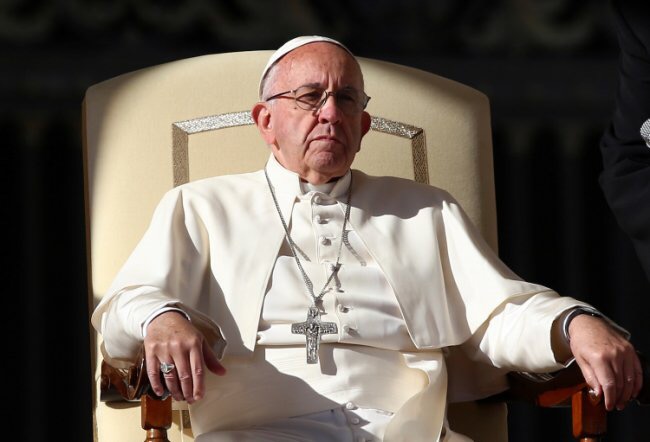 Pope Francis: not using or possessing nuclear arms will be added to the Catechism, Catholic Outlook,27 November 2019 During the in-flight press conference aboard the plane bringing him back to Rome from Japan, Pope Francis answers journalists’ questions on a variety of issues: from the immoral use and possession of atomic weapons, to the financial investigation inside the Vatican.
“The use of nuclear weapons is immoral, which is why it must be added to the Catechism of the Catholic Church. Not only their use, but also possessing them: because an accident or the madness of some government leader, one person’s madness can destroy humanity.”
In addition to repeating this strong message pronounced at Hiroshima, Pope Francis responded to many questions posed to him by the journalists during the flight bringing them back to Rome from Japan.
Now follows an unofficial translation of the in-flight press conference……….
“Hiroshima was a real human catechesis on cruelty. I could not visit the Hiroshima museum because time did not permit, because it was a difficult day. But they say it’s terrible. There are letters from Heads of State, Generals explaining how a greater disaster could be produced. The experience was much more touching for me. And there I reiterated that the use of nuclear weapons is immoral, that is why it must be added to the Catechism of the Catholic Church. Not only their use, but also possessing them: because an accident or the madness of some government leader, one person’s madness can destroy humanity. The words of Einstein come to mind: ‘The Fourth World War will be fought with sticks and stones.’ ” …….
“The ugly hypocrisy of the ‘arms trade’. Christian countries, European countries that talk about peace and live off weapons. This is hypocrisy, a word from the Gospels: Jesus said it in Matthew, Chapter 23. We have to stop this hypocrisy. It takes courage to say: “I can’t talk about peace, because my economy earns so much through arms sales’”. These are all things we need to say, without insulting and vilifying any country, but speaking as brothers and sisters, for the sake of human fraternity: we must stop because this is a terrible thing. “………… https://catholicoutlook.org/pope-francis-not-using-or-possessing-nuclear-arms-will-be-added-to-the-catechism/
-
Archives
- October 2026 (112)
- September 2026 (339)
- August 2026 (330)
- July 2026 (355)
- June 2026 (287)
- May 2026 (306)
- April 2026 (356)
- March 2026 (251)
- February 2026 (267)
- January 2026 (308)
- December 2025 (358)
- November 2025 (359)
-
Categories
- 1
- 1 NUCLEAR ISSUES
- business and costs
- climate change
- culture and arts
- ENERGY
- environment
- health
- history
- indigenous issues
- Legal
- marketing of nuclear
- media
- opposition to nuclear
- PERSONAL STORIES
- politics
- politics international
- Religion and ethics
- safety
- secrets,lies and civil liberties
- spinbuster
- technology
- Uranium
- wastes
- weapons and war
- Women
- 2 WORLD
- ACTION
- AFRICA
- Atrocities
- AUSTRALIA
- Christina's notes
- Christina's themes
- culture and arts
- Events
- Fuk 2022
- Fuk 2023
- Fukushima 2017
- Fukushima 2018
- fukushima 2019
- Fukushima 2020
- Fukushima 2021
- general
- global warming
- Humour (God we need it)
- Nuclear
- RARE EARTHS
- Reference
- resources – print
- Resources -audiovicual
- Weekly Newsletter
- World
- World Nuclear
- YouTube
-
RSS
Entries RSS
Comments RSS

