Oxford City Council says NO to nuclear weapons

 Cherwell 1st Feb 2020 , Oxford City Council has called on the British Government to sign the International Treaty to Prohibit Nuclear Weapons (TPNW). The resolution, proposed by Councillor John Tanner, was agreed “overwhelmingly” by the City Council on Monday. Before backing the Treaty, the City Council want the UK government to renounce its use of nuclear weapons and end the renewal of Trident.
https://cherwell.org/2020/02/01/oxford-city-council-says-no-to-nuclear-weapons/
Dangers of Artificial Intelligence with Nuclear Weapons

COMMENTARY “……… A new generation of AI-augmented offensive cyber capabilities will likely exacerbate the military escalation risks associated with emerging technology, especially inadvertent and accidental escalation. Examples include the increasing vulnerability of nuclear command, control, and communication (NC3) systems to cyber attacks. Further, the challenges posed by remote sensing technology, autonomous vehicles, conventional precision munitions, and hypersonic weapons to hitherto concealed and hardened nuclear assets. Taken together, this trend might further erode the survivability of states’ nuclear forces.
AI, and the state-of-the-art capabilities it empowers, is a natural manifestation — not the cause or origin — of an established trend in emerging technology. the increasing speed of war, the shortening of the decision-making timeframe, and the co-mingling of nuclear and conventional capabilities are leading states to adopt destabilizing launch postures.
The AI-Cyber Security Intersection
New Risks to the Security of Nuclear Systems
Pathways to Escalation
Advances in AI could also exacerbate this cyber security challenge by enabling improvements to cyber offense. Machine learning and AI, by automating advanced persistent threat (or “hunting for weaknesses”) operations, might dramatically reduce the extensive manpower resources and high levels of technical skill required to execute advanced persistent threat operations, especially against hardened nuclear targets.
Information Warfare Could Lead to Escalation……….
Conclusion
Rapid advances in military-use AI and autonomy could amplify the speed, power, and scale of future attacks in cyberspace via several interconnected mechanisms — the ubiquitous connectivity between physical and digital information ecosystems; the creation of vast treasure troves of data and intelligence harvested via machine learning; the formation of powerful force multipliers for increasingly sophisticated, anonymous, and possibly multi-domain cyber attacks.
AI systems could have both positive and negative implications for cyber and nuclear security. On balance, however, several factors make this development particularly troublesome. These include the increasing attacks vectors which threaten states’ NC3 systems, a new generation of destabilizing, AI-empowered cyber offensive capabilities (deepfakes, spoofing, and automated advanced persistent threat tools), the blurring of AI-cyber offense-defense, uncertainties and strategic ambiguity about AI-augmented cyber capabilities, and not least, a competitive and contested geo-strategic environment.
At the moment, AI’s impact on nuclear security remains largely theoretical. Now is the time, therefore, for positive intervention to mitigate (or at least manage) the potential destabilizing and escalatory risks posed by AI and help steer it toward bolstering strategic stability as the technology matures.
The interaction between AI and cyber technology and nuclear command and control raises more questions than answers. What can we learn from the cyber community to help us use AI to preempt the risks posed by AI-enabled cyber attacks? And how might governments, defense communities, academia, and the private sector work together toward this end?
James Johnson is a Postdoctoral Research Fellow at the James Martin Center for Nonproliferation Studies at the Middlebury Institute of International Studies (MIIS), Monterey. His latest book project is entitled, Artificial Intelligence & the Future of Warfare: USA, China, and Strategic Stability. Twitter:@James_SJohnson
Eleanor Krabill is a Master of Arts in Nonproliferation and Terrorism candidate at Middlebury Institute of International Studies (MIIS), Monterey. Twitter: @EleanorKrabill https://warontherocks.com/2020/01/ai-cyberspace-and-nuclear-weapons/
A really bad idea – The Navy’s New Mini-Nuclear Warheads
|
The Navy’s New Mini-Nuclear Warheads Are A Really Bad Idea, In other words, a new tactical nuclear weapon is supposed to convince Russia that the U.S. could respond in kind to Moscow’s use of tactical nukes. Delivering the warhead by sub-launched ICBM means Russian air defenses can’t stop it. Unfortunately, there are questionable assumptions behind this thinking. National Interest, by Michael Peck . 31 Jan 2020, Why Does America Need New Mini-Nuclear Warheads for Its Submarines? America’s strategic ballistic missile submarines are getting tactical nuclear weapons……..
The U.S. military doesn’t discuss the deployment of nuclear weapons as a matter of policy. But it’s no secret why the Trump administration wants them. To understand why requires an appreciation of the unwritten rules that have governed the U.S. vs. Soviet Union/Russia nuclear arms race since 1949. The U.S. government fears that Russia is embracing a new military doctrine that envisions selective use of tactical nuclear weapons, such as during a conflict in Eastern Europe and the Baltic States. ……….
a new tactical nuclear weapon is supposed to convince Russia that the U.S. could respond in kind to Moscow’s use of tactical nukes. Delivering the warhead by sub-launched ICBM means Russian air defenses can’t stop it.
Unfortunately, there are questionable assumptions behind this thinking. The Cold War witnessed similar fears of nuclear blackmail if one superpower or the other fell behind in the arms race. Yet no one has employed nuclear weapons – tactical or strategic – since 1945. Perhaps that’s because the leaders of the U.S., Russia and other nuclear-armed states have realized that the nuclear threshold is crossed, events could easily spiral into full-scale atomic war.
Then there is the whole idea of using ICBMs to deliver mini-nukes. Just as with Prompt Global Strike, a controversial idea to mount conventional warheads on ICBMs, the problem is that no one can be sure whether the nose cone of a strategic ballistic missile contains high-explosive or a hydrogen bomb. Michael Peck is a contributing writer for the National Interest. He can be found on Twitter, Facebook. or on his Web site. https://nationalinterest.org/blog/buzz/navys-new-mini-nuclear-warheads-are-really-bad-idea-118831 |
|
|
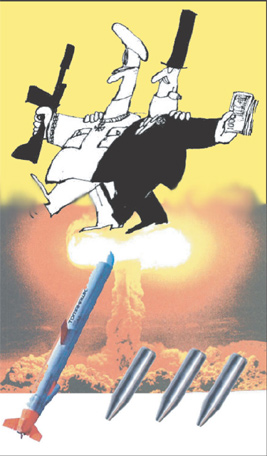
Nuclear weapons- the USA bomb making companies are doing great!
|
The Cost and Composition of America’s Nuclear Weapons Arsenal
Visual Capitalist January 29, 2020, By Nick Routley The American nuclear weapons arsenal is nowhere near its 1960s peak, but there are still thousands of warheads in the stockpile today.The U.S. nuclear program is comprised of a complex network of facilities and weaponry, and of course the actual warheads themselves. Let’s look at the location of warheads, how they’re deployed, and the costs associated with running and refurbishing an aging nuclear program. Let’s launch into the data. [ Excellent graphs] Nuclear Weapons Map……Deployment Data……America’s Nuclear Weapons BudgetThe Congressional Budget Office (CBO) is required to project the 10-year costs of nuclear forces every two years. Though much of the program is shrouded in secrecy, the budget below [on original] provides an overview of the costs of running America’s nuclear weapons arsenal……. Back in the Bomb BusinessGenerally, we think of nuclear weapons stockpiles as a sunsetting resource, slowly being dismantled; however, since the treaty that ended the arms race collapsed in mid-2019, the flood gates may be opening once again. New warheads are reportedly rolling off the production line, and in the beginning of this year, Lockheed Martin was tapped by the U.S. Navy to manufacture low yield submarine-based nuclear missiles…. https://www.visualcapitalist.com/cost-and-composition-of-americas-nuclear-weapons-arsenal/ |
|
Book review – “The Bomb”
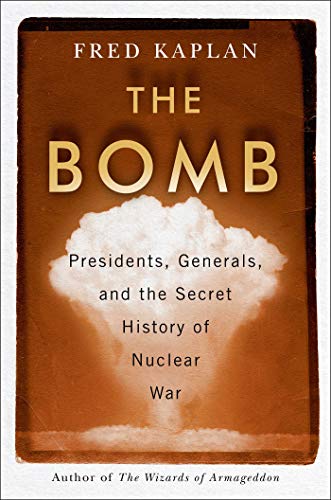 The Bomb’ Review: Down the Nuclear Rabbit Hole
Until 1989, no president had ever been privy to the military’s list of specific targets in the Soviet Union. WSJ, Paul Kennedy, Jan. 31, 2020, In the summer of 1945, as a mushroom cloud rose high above the Japanese city of Hiroshima, the very history of war and diplomacy, and the world of Great Power relations, changed irrevocably. Science had created a weapon of such indiscriminate destructiveness that it ought, now that its ferocity was clear, never to be used again. This became even more obvious to contemporary observers when the more powerful hydrogen bombs appeared on the scene only a few years later, and when the Soviet Union also quickly acquired similar weaponry.
|
Before that time, the saying went, the leaders of the Great Powers had to figure out only how to win wars; now their awful duty was to ensure that they avoided war among themselves so that this most powerful weapon in their armory would never be used. This was not just another big bomb, as Truman had called it before he, too, realized things were different. This was an existential device, and, ironically, possessing tens of thousands of these devices did not necessarily make you safer. If America had 30,000 warheads and the U.S.S.R. also had 30,000 warheads, who felt more secure? ……..
American presidents and their civilian and military advisers have repeatedly found themselves in a box—a “rabbit hole” is the word frequently used in Fred Kaplan’s new book—scrambling to get out, and failing to do so. A good number of members of the U.S. military, joined by some hawkish intellectuals, have indeed thought that nuclear weapons were “usable” and some presidents did at times threaten obliteration, but for most concerned the main effort has been to ensure that they were never, ever used.
And what an effort that was, as Mr. Kaplan reveals in “The Bomb: Presidents, Generals and the Secret History of Nuclear War.” ………. The stakes are enormous, it seems; no other form of conflict and warfare counts; really, no other form of history counts. Mesmerized by the dramatic detail, the reader might find it hard to disagree. ………. Successive presidents were introduced to their awesome nuclear responsibilities, blinked hard and strove to alter them, but they made little progress in overcoming the system. The improving world situation, and the early post-Soviet years especially, allowed limited pullbacks: The B-52 bomber force was no longer kept on constant alert, for instance. But it is instructive to read how highly intelligent presidents, with no great early interest in nuclear or even overall military matters, found themselves sucked into decisions whose outcomes then became part of their legacies—such as the success or failure, during the Obama administration, of the 2010 New Start treaty with the Russians……… with something of a shock, one arrives at the present, at the Age of Trump, analyzed by Mr. Kaplan in a 38-page chapter titled “Fire and Fury”—these were the words repeatedly used by our current president in 2017 when threatening North Korea with oblivion if it continued to threaten us. Mr. Kaplan claims to bring the reader into the inner sanctums of a presidency whose leader, instead of being impressed at the story of our nuclear warheads having been reduced from 32,000 to a mere 2,500, complains that he really wants the U.S. to have many more such weapons………. Absent some stunning transformation in the minds of men, the Great Powers will keep nuclear weapons in their armories as deterrents and strive to prevent their use—and, indeed, the very existence of nuclear weapons probably has deterred some statesmen now and then from rash and aggressive actions. The crazy logic of it all, Mr. Kaplan senses, will go on. Yet he ends up being a very frightened critic, not just because of the present commander-in-chief, but because he honestly wonders how many more wars we can dodge before a combination of “slow-wittedness and misfortune” tips things over. “The Bomb” is a work that should make thoughtful readers even more thoughtful. But it is not a book for the faint of heart. https://www.wsj.com/articles/the-bomb-review-down-the-nuclear-rabbit-hole-11580487715 |
|
|
USA’s new low-yield nuclear warhead increases likelihood of nuclear war
|
U.S. MILITARY HAS DEPLOYED NEW NUCLEAR WEAPON THAT HAS EXPERTS WORRIED ABOUT WAR, REPORT SAYS, NewsWeek,
BY TOM O’CONNOR ON 1/31/20 THE UNITED STATES HAS DEPLOYED A NEW LOW-YIELD NUCLEAR WARHEAD THAT EXPERTS WARNED COULD INCREASE THE LIKELIHOOD OF A CONFLICT GOING NUCLEAR, ACCORDING TO A NEW REPORT.
The Federation of American Scientists reported Wednesday that the W76-2 low-yield nuclear warhead was supplied to Ohio-class USS Tennessee ballistic missile submarine, which deployed to the Atlantic Ocean from Kings Bay, Georgia, late last month. The report estimated that the new warhead was fitted on at least one or two of the vessel’s 20 Trident submarine-launched ballistic missiles, each of which could carry up to eight warheads. The report was authored by military analyst William M. Arkin and Federation of American Scientists Nuclear Information Project director Hans M. Kristensen. Earlier this month, Arkin authored a Newsweek article featuring quotes by Kristensen on how the recent introduction of the W76-2 was the result of Pentagon planning a potential first strike scenario against adversaries, especially Iran……. Non-proliferation activists say the W76-2 does little bring the world back from the brink. Tim Wright, treaty coordinator of the 2017 Nobel Peace Prize-winning International Campaign to Abolish Nuclear Weapons, called the new nuclear warhead deployment an “alarming development that heightens the risk of nuclear war.” “The United States’ new ‘low-yield’ nuclear warheads are still powerful enough to kill many tens of thousands of people,” he tweeted Wednesday…… https://www.newsweek.com/us-new-nuclear-weapon-experts-worried-1485150 |
|
The Bomb: Presidents, Generals, and the Secret History of Nuclear War
Nuclear Nightmares–– By Justin Vogt, NYT, Jan. 28, 2020, THE BOMB By Fred Kaplan, It’s an old joke, but a good one. “Doctor, my son thinks he’s a chicken,” a father tells a psychiatrist, who suggests treatment for the boy. “We’d like to do that,” the father says, “but we need the eggs.”
For decades, American presidents have found themselves in a similar predicament, as revealed with bracing clarity by “The Bomb,” Fred Kaplan’s rich and surprisingly entertaining history of how nuclear weapons have shaped the United States military and the country’s foreign policy. It is the story of how high-level officials, generals and presidents have contended with what Kaplan calls “the rabbit hole” of nuclear strategy, whose logic transforms efforts to avoid a nuclear war into plans to fight one, even though doing so would kill millions of people without producing a meaningful victory for anyone. As President Barack Obama once put it before weighing in during a meeting on nuclear weapons: “Let’s stipulate that this is all insane.”
Owing to the spread of those weapons and to the inevitability of competition between powerful countries, generations of policymakers have leapt into the abyss again and again. Nuclear strategy is an exercise in absurdity that pushes against every moral boundary but that has likely contributed to the relative safety and stability of the contemporary era, during which nuclear weapons have proliferated but major war has all but vanished. Apparently, we need the eggs.

The danger in deploying new US nuclear warhead on a submarine
|
Deployment of new US nuclear warhead on submarine a dangerous step, critics say
First submarine to go on patrol armed with the W76-2 warhead makes a nuclear launch more likely, arm control advocates warn, Guardian Julian Borger in WashingtonThu 30 Jan 2020 The US has deployed its first low-yield Trident nuclear warhead on a submarine that is currently patrolling the Atlantic Ocean, it has been reported, in what arms control advocates warn is a dangerous step towards making a nuclear launch more likely. According to the Federation of American Scientists, the USS Tennessee – which left port in Georgia at the end of last year – is the first submarine to go on patrol armed with the W76-2 warhead, commissioned by Donald Trump two years ago. It has an explosive yield of five kilotons, a third of the power of the “Little Boy” bomb dropped on Hiroshima and considerably lower than the 90- and 455-kiloton warheads on other US submarine-launched ballistic missiles. Advocates of W76-2 argued that the US had no effective deterrent against Russian tactical weapons because Moscow assumed Washington would not risk using the overwhelming power of its intercontinental ballistic missiles in response, for fear of escalating from a regional conflict to a civilian-destroying war. Critics of the warhead say it accelerates a drift towards thinking of nuclear weapons as a means to fight and win wars, rather than as purely a deterrent of last resort. And the fielding of a tactical nuclear weapon, they warn, gives US political and military leaders a dangerous new option in confronting adversaries other than Russia…… https://www.theguardian.com/world/2020/jan/29/us-submarine-trident-nuclear-warhead-patrols-atlantic-ocean The Trump administration’s nuclear posture review (NPR) in February 2018, portrays this warhead as a counter to a perceived Russian threat to use its own “tactical” nuclear weapons to win a quick victory on the battlefield. |
|
Does the USA arsenal REALLY need costly new plutonium weapons cores?
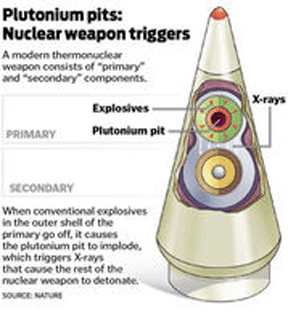 An Unanswered Question at the Heart of the U.S.’s Nuclear Arsenal. Nobody knows how long the plutonium “pits” in the cores of bombs last, and the answer could cost—or save—billions https://blogs.scientificamerican.com/observations/an-unanswered-question-at-the-heart-of-americas-nuclear-arsenal/, By Stephen Young on January 28, 2020 An Unanswered Question at the Heart of the U.S.’s Nuclear Arsenal. Nobody knows how long the plutonium “pits” in the cores of bombs last, and the answer could cost—or save—billions https://blogs.scientificamerican.com/observations/an-unanswered-question-at-the-heart-of-americas-nuclear-arsenal/, By Stephen Young on January 28, 2020
The United States has an arsenal of some 3,800 nuclear weapons, about half of which are deployed, with the rest in storage. The Department of Energy’s National Nuclear Security Agency (NNSA) and the nuclear weapons laboratories it oversees are concerned that the performance of the weapons will degrade over time. Most of the components can be—and are being—replaced with new versions, so the main concern is the behavior of aging plutonium “pits” at the core of all U.S. weapons. Plutonium essentially doesn’t exist in nature but is produced in nuclear reactors. It was first produced during World War II, and the U.S. government didn’t care about pit aging because it constantly replaced pits with newly built ones as it upgraded its arsenal during the Cold War. So, no one in the weapons labs knew what the lifetime of a pit was. Instead, the NNSA simply assumed it was 45–60 years. And during the Cold War, the U.S. produced a lot of pits, tens of thousands. It stopped in 1989 when the production plant was shut down by the FBI and the EPA due to pervasive environmental damage. Los Alamos National Laboratory in New Mexico manufactured 31 pits between 2007 and 2013, but none since. That means virtually all the pits in today’s arsenal were made 30–40 years ago, which would have meant serious problems for the stockpile starting in 2025 if the NNSA’s assumption were correct. So, what is the lifetime of a pit? In 2005, Congress tasked JASON, the independent science advisory group, with answering this question. Their groundbreaking 2007 report examined the data the weapons labs had produced and concluded that most weapons system types in the stockpile “have credible minimum [emphasis added] lifetimes in excess of 100 years as regards aging of plutonium.” Moreover, this minimum age would also apply to the remaining types once straightforward adjustments were made. This finding significantly reduced pressure to resume large-scale production of pits for some time. Last year, Congress—led by Sen. Dianne Feinstein (D–Calif.)—sensibly asked JASON to update its earlier work. Unfortunately, JASON’s new, very brief “letter report” contains zero new information on pit lifetimes. What went wrong? Did JASON fail to do its job? Or was the group unable to do it? When asked this question, an NNSA official confirmed that it was a lack of data, not a failure by JASON, that prevented an update on the 2007 estimates. JASON’s report states: “A focused program of experiments, theory, and simulations is required to determine the timescales over which Pu [plutonium] aging may lead to unacceptable degradation in primary performance.” JASON lays the blame for this failure squarely on the NNSA, declaring that “in general, studies on Pu aging and its impacts on the performance of nuclear-weapon primaries have not been sufficiently prioritized over the past decade.” It seems entirely possible that this was not an oversight on the part of NNSA but reflects that the agency does not want to know the answer. The NNSA wants to produce new types of warheads, not just refurbish existing ones. That requires the ability to produce new pits in bulk. If minimum pit lifetimes were 200 years, then there would be no need for new pit production to maintain existing weapons. The cost of pit production would then be entirely attributed to new weapons and the price tag for those would increase substantially, making it less likely that Congress will give NNSA the go-ahead. Instead of studying pit lifetimes, the NNSA has focused on major upgrades for three existing nuclear weapons, a new uranium processing facility and, notably, one all-new nuclear weapon—the first since the end of the Cold War—that will require production of new plutonium pits. And, not coincidentally, the Trump administration and many in Congress are pushing a plan to produce at least 80 pits per year by 2030. The rationale they offer is disarmingly simple: if the U.S. has roughly 4,000 nuclear weapons and pits last 100 years, then the NNSA needs to produce 80 pits per year starting in 2030 to be able to replace the entire stockpile by 2080. But what if plutonium pits last longer than 100 years? Deferring production of new pits would significantly reduce the stress on the NNSA’s infrastructure, already struggling under a workload many times heavier than at any time since the end of the Cold War. It would also save tens of billions of dollars. However, the all-new warhead, known as the W87-1, would need new plutonium pits. The NNSA estimates the W87-1 will cost $11–16 billion, not including the money needed to produce the new pits, which adds another $14–28 billion. Moreover, another recent independent study mandated by Congress found that the current timeline and cost estimate for pit production are not realistic. The May 2019 study by the Institute for Defense Analyses concluded that the 80 pits per year goal was “potentially achievable given sufficient time, resources, and management focus, although not on the schedules or budgets currently forecasted…. Put more sharply, eventual success of the strategy to reconstitute plutonium pit production is far from certain.” (Emphasis added.) In other words, producing 80 pits per year may be possible, but it will not happen by 2030 and it will cost more than current projections. This makes an updated estimate on pit lifetime even more important. Congress should put the NNSA’S feet to the fire. Sen. Feinstein, sponsor of the JASON study, is the ranking member of the Senate committee that oversees the NNSA. She should push the committee to direct the NNSA to undertake the “focused program” that JASON recommends, now. The answer will determine whether the U.S. needs to spend tens of billions of dollars in a rush to produce pits, or whether it can sensibly and safely postpone that decision. |
|
|
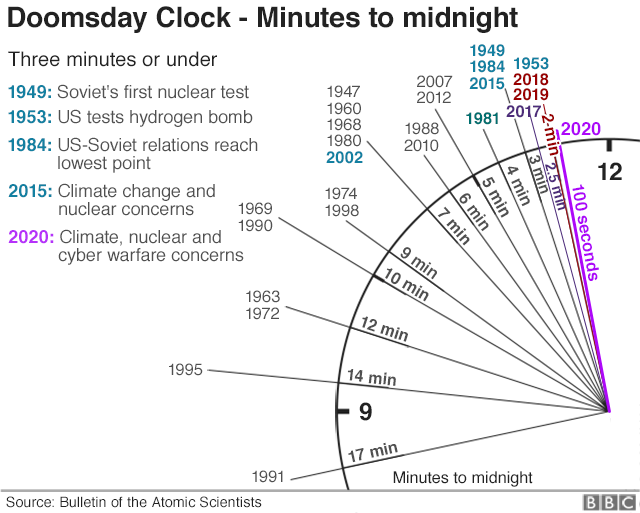
Doomsday clock now closest ever to midnight, due to climate and nuclear dangers
|
Doomsday Clock nears apocalypse over climate and nuclear fears, BBC, 23 Jan 2020, The symbolic Doomsday Clock, which indicates how close our planet is to complete annihilation, is now only 100 seconds away from midnight.The Bulletin of the Atomic Scientists (BAS) said on Thursday that the change was made due to nuclear proliferation, failure to tackle climate change and “cyber-based disinformation”.
The clock now stands at its closest to doomsday since it began ticking. Last year the clock was set at two minutes to midnight – midnight symbolises the end of the world – the same place it was wound to in 2018…….. The idea began in 1947 to warn humanity of the dangers of nuclear war……….. https://www.bbc.com/news/world-us-canada-51213185 |
|
USA’s National Nuclear Security Administration (NNSA) spurns environmental assessment for plutonium cores
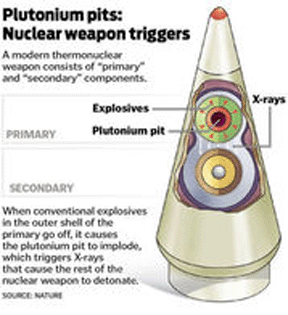
 NNSA Says No EIS Needed to Expand LANL Pit Production, http://nuclearactive.org/ January 24th, 2020 The Department of Energy’s semi-autonomous agency, the National Nuclear Security Administration (NNSA), has determined that a full environmental impact statement is not needed to increase the number of triggers for nuclear weapons manufactured at Los Alamos National Laboratory (LANL) by 50 percent – from 20 to 30. Since 1997, DOE has limited production to 20 triggers, or plutonium pits, per year. Nevertheless, since that time, LANL has not produced anything near 20 pits per year – the most in one year was six. Safety and seismic issues have shut down production for years. Even so, LANL is the only U.S. location for such work. Critics oppose the decision and have stated that litigation may result. NNSA Says No EIS Needed to Expand LANL Pit Production, http://nuclearactive.org/ January 24th, 2020 The Department of Energy’s semi-autonomous agency, the National Nuclear Security Administration (NNSA), has determined that a full environmental impact statement is not needed to increase the number of triggers for nuclear weapons manufactured at Los Alamos National Laboratory (LANL) by 50 percent – from 20 to 30. Since 1997, DOE has limited production to 20 triggers, or plutonium pits, per year. Nevertheless, since that time, LANL has not produced anything near 20 pits per year – the most in one year was six. Safety and seismic issues have shut down production for years. Even so, LANL is the only U.S. location for such work. Critics oppose the decision and have stated that litigation may result.
In 2018, the current administration determined that the U.S. would increase pit production at LANL and begin production at the Savannah River Site, located in South Carolina. Savannah River has never produced plutonium pits, let alone the planned 50 per year. For Savannah River, NNSA has determined that it would follow the National Environmental Policy Act (NEPA) and issue a full environmental impact statement for public review and comment. The federal agencies have refused to conduct a programmatic environmental impact statement for operations at both facilities, including the transportation of nuclear materials between them. For LANL, NNSA said it would produce a supplemental analysis to the 2008 environmental impact statement. A supplemental analysis may not address the impacts of the 2011 Las Conchas fire, increased hexavalent chromium in the regional aquifer, and increased seismic danger on the Pajarito Plateau, which LANL occupies. The 1997 decision to limit the number of pits to 20 is the result of citizen litigation. The Natural Resources Defense Council (NRDC), based in Washington, DC, represented 39 citizens groups from around the country against DOE. CCNS was one of the citizen plaintiffs, along with Tri-Valley Communities Against a Radioactive Environment, or Tri-Valley CARES, located in Livermore, California, where the Lawrence Livermore National Laboratory, LANL’s “sister” nuclear weapons laboratory, is located. Marylia Kelley, Executive Director of Tri-Valley CAREs, said, “NNSA’s refusal to complete programmatic environmental review before plunging ahead with plans to more than quadruple the production authorization for plutonium bomb cores flies in the face of our country’s foundational environmental law, the [NEPA], and a standing federal court order mandating that the government conduct such a review. The order was obtained in prior litigation by [NRDC] on behalf of itself, Tri-Valley CAREs, and additional plaintiffs. Today, I find myself shocked but not surprised that NNSA would so flagrantly flout the law. [] My group stands ready to uphold NEPA and the specific court order.” http://www.trivalleycares.org/ For more information, please see the following documents [links provided by Nuclear Watch New Mexico]: NNSA’s Federal Register Notice of Availability for the final Supplement Analysis is available at https://www.govinfo.gov/content/pkg/FR-2020-01-08/pdf/2020-00102.pdf It provides succinct background. NNSA’s final Supplement Analysis is available at https://www.energy.gov/sites/prod/files/2020/01/f70/final-supplement-analysis-eis-0236-s4-sa-02-complex-transformation-12-2019.pdf The 1998 court order that requires DOE to prepare a supplemental PEIS when it plans to produce more than 80 pits per year is available as Natural Resources Defense Council v. Pena, 20 F.Supp.2d 45, 50 (D.D.C. 1998), https://law.justia.com/cases/federal/district-courts/FSupp2/20/45/2423390/ |
|
No clear explanation of USA’s rush to produce more plutonium cores for nuclear weapons
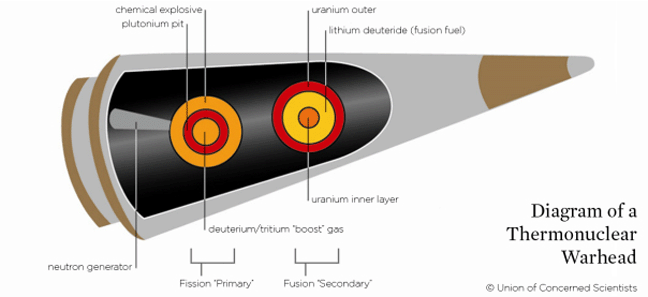
The U.S. is Boosting Production of Nuclear Bomb Cores (For More Nuclear Weapons) https://nationalinterest.org/blog/buzz/us-boosting-production-nuclear-bomb-cores-more-nuclear-weapons-115826 Thanks, arms race. by Michael Peck, 22 Jan 2020,
In another sign that the nuclear arms race is heating up, the U.S. is ramping up production of nuclear bomb cores.
The National Nuclear Security Administration (NNSA) has announced that it plans to increase the production of plutonium pits to 80 per year. The grapefruit-sized pits contain the fissile material that give nuclear weapons such tremendous power.
Production will center on the Mixed-Oxide Fuel Fabrication Facility at Savannah River site in North Carolina, which would be modified to manufacture at least 50 pits per year, and Los Alamos National Laboratory in New Mexico, which would generate at least 30, by 2030.
America’s nuclear weapons cores are aging, with some pits dating back to the 1970s, leading to concerns about the reliability of the U.S. nuclear stockpile.
“The U.S. lost its ability to produce pits in large numbers in 1989, when the Rocky Flats Plant near Denver, Colorado, was shut down after the Federal Bureau of Investigation and Environmental Protection Agency investigated environmental violations at the site,” noted Physics Today magazine in 2018. Up to 1,200 pits per year had been manufactured there.
“Since then, only 30 pits for weapons have been fabricated—all at LANL [Los Alamos National Laboratory], the sole U.S. facility with production capability. Weapons-quality pit production ceased in 2012, when LANL began modernizing its 40-year-old facilities, although several practice pits have since been fabricated. The oldest pits in the stockpile—which now numbers 3,882, according to DOE’s National Nuclear Security Administration (NNSA)—date to 1978.”
In its 2018 Nuclear Policy Review, the Trump administration called for 80 new plutonium pits per year. Congress has also allocated large sums, with $4.7 billion alone allocated in FY 2019 for maintenance and life extension of the nuclear stockpile. The NNSA says it is legally mandated to ensure a capacity of at least 80 pits per year.
Though the production of nuclear cores has been an issue for years, a looming U.S.-Russia arms race makes the situation even more sensitive. Russia is fielding a new generation of strategic nuclear weapons, including a hypersonic nuclear-armed glider and an air-launched ballistic missile. The Trump administration has withdrawn from the 1987 Intermediate-Range Nuclear Forces treaty with Russia, alleging Russian violations, leading to fears that a new competition will beget the return of nuclear-armed, medium-range ballistic and cruise missiles.
Anti-nuclear groups are furious. “Expanded pit production will cost at least $43 billion over the next 30 years,” argues the Natural Resources Defense Council and other groups.Yet the Defense Department and NNSA have never explained why expanded plutonium pit production is necessary. More than 15,000 plutonium pits are stored at NNSA’s Pantex Plant near Amarillo, Texas. Independent experts have concluded that plutonium pits have reliable lifetimes of at least 100 years (the average pit age is less than 40 years). Crucially, there is no pit production scheduled to maintain the safety and reliability of the existing nuclear weapons stockpile. Instead, proposed future pit production is for speculative new-design nuclear weapons, but those designs have been canceled.”
Introducing a new generation of nuclear weapons “could adversely impact national security because newly produced plutonium pits cannot be full-scale tested without violating the global nuclear weapons testing moratorium.”
Michael Peck is a contributing writer for the National Interest. He can be found on Twitter and Facebook.
”Plutonium pits” not only unnecessary, but also very dangerous for the environment
“They want as much dirty warhead manufacturing as possible for Los Alamos, and they don’t want anybody to know or discuss the predictable problems and impacts on our communities and environment,”
|
Lawmakers assured review of nuclear weapons work to be open https://apnews.com/5d500281694f4bbae30dc5356d18244d
By SUSAN MONTOYA BRYAN, ALBUQUERQUE, N.M. (AP) 22 Jan 2020 — A review of a proposal to ramp up production of key components for the United States’ nuclear arsenal will be open and transparent, according to members of New Mexico’s congressional delegation.
Sens. Tom Udall and Martin Heinrich and Rep. Ben Ray Lujan said in a joint statement to The Associated Press that they received assurances from federal officials that the review process also will include an opportunity for public comment. The Democrats were briefed last week by federal officials after the National Nuclear Security Administration announced it did not need to do a more expansive nationwide review of the impacts of building plutonium cores at federal installations in New Mexico and South Carolina. As supporters of bringing more defense-related spending to New Mexico, the lawmakers initially refrained from commenting on whether they would support an expanded review, saying they needed more information. Watchdog groups have argued that federal officials are violating national environmental laws by not doing a more in-depth analysis. The lawmakers said as the U.S. Energy Department, Los Alamos National Laboratory and its contractors move forward with plutonium core production, they have a responsibility to take precautions to protect employees, the community and the environment. “Furthermore, we expect that the Defense Nuclear Facilities Safety Board will continue to conduct thorough oversight of lab plans and operations and their recommendations will be taken seriously by DOE and Los Alamos leadership,” the lawmakers said in the statement. Watchdogs say the federal government already has tried to limit the oversight of the safety board and that a site-specific review at Los Alamos lab would fall short of what’s needed to understand the affects of such a major undertaking. They also point to the lab’s history of safety and security lapses. Greg Mello of the Albuquerque-based Los Alamos Study Group said he’s disappointed the delegation “wants to remain the dark about the environmental impacts” of what he likened to a new Rocky Flats-type plutonium warhead factory in northern New Mexico. With a long history of leaks, fires and environmental violations, the Rocky Flats facility in Colorado underwent a $7 billion cleanup that was finished in 2005. “They want as much dirty warhead manufacturing as possible for Los Alamos, and they don’t want anybody to know or discuss the predictable problems and impacts on our communities and environment,” Mello said. Watchdogs also have concerns about the waste that would be generated by plutonium core production, saying it could take up valuable space at the Waste Isolation Pilot Plant in southern New Mexico, where the federal government sends tons of Cold War-era waste from decades of bomb-making and nuclear research as part of a multibillion-dollar cleanup effort. “Our politicos should explicitly support nationwide public review of expanded plutonium pit production instead of condoning NNSA’s stove-piped approach that is designed to suppress citizen opposition,” said Jay Coghlan, executive director of Nuclear Watch New Mexico. A draft supplemental analysis of the work planned for Los Alamos is expected to be released in the coming months. However, a few of the concerned groups are considering legal action to force a broader analysis. Federal officials have set a deadline of 2030 for increased core production, with work being split between Los Alamos lab and the Savannah River Site in South Carolina. At stake are jobs and billions of dollars to revamp existing buildings or construct new factories. The mission of producing the plutonium cores has been based at Los Alamos for years but none have been made since 2011 as the lab has been dogged by a string of safety problems and concerns about a lack of accountability. Officials for years have pushed for production to resume, saying the U.S. needs to ensure the stability and reliance of its nuclear arsenal. The National Nuclear Security Administration has said most of the cores in the stockpile were produced in the 1970s and 1980s. |
|
Iran will never seek nuclear weapons – P.M Rouhani
|
Iran’s Rouhani: nation ‘will never seek nuclear weapons’, with or without 2015 deal in place, https://www.france24.com/en/20200122-iran-s-rouhani-nation-will-never-seek-nuclear-weapons-2015-nuclear-deal-europe-washington Iran will never seek nuclear weapons with or without a nuclear deal, Iranian President Hassan Rouhani said on Wednesday, calling on the European powers to avoid Washington’s mistake of violating Tehran’s 2015 nuclear deal with major powers.
We have never sought nuclear weapons … With or without the nuclear deal we will never seek nuclear weapons … The European powers will be responsible for the consequences of violating the pact,” said Rouhani, according to his website President.Ir. In reaction to Washington’s withdrawal from the deal in 2018 and the reimposition of sanctions, Iran has gradually rolled back on its commitments. Rouhani said Iran remained committed to the deal and could reverse its steps away from compliance if other parties fulfilled their obligations. |
|
History of U.S. missiles testing atomic, bacterial and viral weapons in Utah
 from anonymous contributor, 22 Jan 2020, Some of What The USA Military , Corporations and government did to us on top of detonating several open air nuclear bombs on us.
My government had a missile base 60 miles from Uranium and downwinder hell in Utah. My governemt also detonated four atomic bombs under the river that went through my town, in the llate 1960s..
My government and military contractors launched hundreds of single and multistage missiles from Green River Utah to White Sands new mexico from 1965 to 1970. The missiles went to white sands New Mexico, which is approximately 900 miles from Green River Utah. Their trajectory took them over southern Utah National parks, the navajo, zuni, ute hopi and pueblo nativ,e reservations, and most of north and central New Mexico. White sands New Mexico is 925 miles from Green river utah. White sands new mexico is 50 miles from alamagordo New Mexico . Alamagorgo is where the fist Atomic bomb, in the world was detonated. The cold war, multibillion dollar Missile project tested single and multistage rockets and biological warfare payloads.
They tested payloads
The Green-White sands missile project was to test missile paylods over the south west usa. You can find sections of missiles that failed in the 900 mile stretch, from Green ricver to white sands nm. They launched hundreds of missiles and rockets Some of the missile-rockets failed and crashed into the desert, long before reaching their south central New Mexico destination clasw to the mexico usa border. There are missile carcasses and stages from southern utah to in the Canuyonlands national Park, The Grand Gulch National Nation Monument, in The Four Corners Area of the USA where Utah, Colorado and Arizona intersect. Missile parts and from failed missiles can also be found in the New Mexico and Utah Navajo reservations. There detritus of missiles can found by Farminton New Mexico , west of Santa Fe New Mexico, east of demming New mexico and by Socorro nm . The initial stages of multistage rockets are mostly in utah.
The military and government tested several biological weapon payloads, in the missiles-rockets that went from Utah to white sands new mexico.The army , and corporate contractors, put Biological Warfare payloads on missiles. with viruses and bacteria in them. They tested the a weaponized version of the Hanta Virus. They tested Hearty bacterial spores, like anthrax as well. They launched the biological warfare payloads with viruses and bacteria in special mediums to test the stability of the most Hearty virus and bacterial spore-systems in missile carrier systems.
The biological warfare medium-containing–payloads were on rockets that went from Green River Utah to White sands new mexico from 1965 to 1970.
Hannta virus did not exist in the United States of America in Humans, until 1990. It was weaponized by the United States government and corporations in the 1960s. The first Hanta Virus casualties recorded in the USA were a family of Navajos in New Mexico, in 1992. Hanta virus is has now apread to mice vectors in all parts of the United States of america. It is epidemic in the USA . I know because I once worked for an agency that treated and tracked it.
The 1993 Four Corners hantavirus outbreak was an outbreak of hantavirus that caused the first known human cases of hantavirus disease in the United States. It occurred within the Four Corners region – the geographic intersection of the U.S. states of Utah, Colorado, New Mexico, and Arizona – of the southwestern part of the country in the spring of 1993. This region is largely occupied by Native American tribal lands, including the Hopi, Ute, Zuni, and Navajo reservations, from which many of the cases were reported.
“The Discovery of Hantaan Virus: Comparative Biology and …
by KM Johnson · 2004 · Cited by 10 · Related articles
Nov 1, 2004 · They became infected by tissues of antigen-positive wild mice of that single species. … Dr. Lee named it “Hantaan,” after a small river near the border between the 2 Koreas, where human infection was isolated and endemic in the 1950s”
FROM “Brief Histories of Three Federal Military Installations in Utah: Kearns Army Air Base, Hurricane Mesa, and Green River Test Complex” (PDF). Utah Historical Quarterly. Utah State Historical Society. 34 (2). Spring 1966. Archived from the original (PDF) on October 29, 2013. Retrieved September 12, 2013. More than 100 employees of the [Atlantic Research]
The Utah Launch Complex was a Cold War military subinstallation of White Sands Missile Range for USAF and US Army rocket launches. In addition to firing Pershing missiles, the complex launched Athena RTV missiles with subscale warheads of the Advanced Ballistic Re-entry System to reentry speeds and impact at the New Mexico range. From 1964 to 1975 there were 244 Green River launches, including 141 Athena launches and a Pershing to 281 kilometers altitude. “Utah State Route 19 runs through the Green River Launch Complex, which is south of the town and eponym of Green River.”
-
Archives
- October 2026 (112)
- September 2026 (339)
- August 2026 (330)
- July 2026 (355)
- June 2026 (287)
- May 2026 (306)
- April 2026 (356)
- March 2026 (251)
- February 2026 (267)
- January 2026 (308)
- December 2025 (358)
- November 2025 (359)
-
Categories
- 1
- 1 NUCLEAR ISSUES
- business and costs
- climate change
- culture and arts
- ENERGY
- environment
- health
- history
- indigenous issues
- Legal
- marketing of nuclear
- media
- opposition to nuclear
- PERSONAL STORIES
- politics
- politics international
- Religion and ethics
- safety
- secrets,lies and civil liberties
- spinbuster
- technology
- Uranium
- wastes
- weapons and war
- Women
- 2 WORLD
- ACTION
- AFRICA
- Atrocities
- AUSTRALIA
- Christina's notes
- Christina's themes
- culture and arts
- Events
- Fuk 2022
- Fuk 2023
- Fukushima 2017
- Fukushima 2018
- fukushima 2019
- Fukushima 2020
- Fukushima 2021
- general
- global warming
- Humour (God we need it)
- Nuclear
- RARE EARTHS
- Reference
- resources – print
- Resources -audiovicual
- Weekly Newsletter
- World
- World Nuclear
- YouTube
-
RSS
Entries RSS
Comments RSS

