U.S. pentagon wary about morale of staff at nuclear bases
|
Pentagon officials keeping an eye on morale at nuclear bases, Military Times, Meghann Myers and Aaron Mehta 21 Feb 20, The Defense Department is asking for tens of billions of dollars this year to maintain and modernize U.S. nuclear capabilities, while at the same time checking in with personnel at the remote bases maintainers and operators call home.
In recent years, issues like cheating on exams and marijuana use have plagued Air Force bases in Montana, North Dakota and Nebraska, calling into question whether the quality of life in those areas was taking a toll on troops……. As the U.S. gets plans underway to upgrade aircraft, missiles, submarines and other systems to deter nuclear threats from countries like China, Russia and North Korea, the people who will take responsibility for them are also a consideration. “This is one of the things that the secretary wanted to find out,” a senior DoD official said Friday, briefing reporters on background at the Pentagon. “He spoke a lot with the airman and the officers … at STRATCOM and Minot. You know, about 10 years ago, we had a terrible morale problem.”….. https://www.militarytimes.com/news/your-military/2020/02/21/pentagon-officials-keeping-an-eye-on-morale-at-nuclear-bases/ |
|
Why India is not defined as a “Nuclear Power”, though it has nuclear bombs
Among the big changes in the global strategic landscape since the Nuclear Non-Proliferation Treaty came into force in 1970 is the expansion of the nuclear club from five to nine. All five nuclear powers at that time were recognised as nuclear-weapon states by the NPT. Since then, four more countries have gate-crashed the exclusive nuclear club: Israel, India, Pakistan and North Korea.
The first three have been de facto nuclear-armed states for decades, and North Korea conducted its first nuclear test in 2006. But because of an Alice-in-Wonderland definition in the treaty—nuclear-weapon states are countries that nuclear-tested before 1 January 1967—they can’t be recognised as nuclear-weapon states. The legal straitjacket means the NPT can’t function as the normative framework for the nuclear policies of four of the world’s nine nuclear-armed states: a triumph of definitional purity over strategic reality. …….. https://nationalinterest.org/blog/buzz/india-has-nuclear-bombs%E2%80%94-its-not-defined-nuclear-power-124721
Danger of nuclear catastrophe in USA’s New “Low-Yield” Nuclear Warhead
The Senseless Danger of the Military’s New “Low-Yield” Nuclear Warhead, The weapon’s smaller destructive power does not mean a smaller risk of catastrophe. Slate, By FRED KAPLAN, FEB 18, 2020 The U.S. Navy has deployed a new type of “low-yield” nuclear warhead in some of its Trident submarines.
Sometime in the past two months, the U.S. Navy has deployed a new type of nuclear warhead in some of its Trident submarines. Called the W76-2, it is a “low-yield” warhead, which would explode with the blast power of about 8 kilotons—far less powerful than the Tridents’ other warheads, which have an explosive yield of 90 to 450 kilotons.
At first glance, this might seem like a good thing: a smaller blast means less death and damage, if a nuclear war happened. But in some ways, it’s a dangerous thing, and to explain why requires a brisk dive into the rabbit hole logic of nuclear strategy.
For many years, arms control advocates have argued that low-yield nuclear weapons are destabilizing because they lower the threshold between conventional and nuclear war. They seem to be—they are designed to be—more usable as weapons of war, and therefore some president, in a crisis, might feel more tempted to use them. (The United States has always had an explicit policy of reserving the right to use nuclear weapons first in a conflict.)
Those worries have intensified when we’ve had presidents who are viewed as erratic. In 2003, after the invasion of Iraq, some Air Force generals proposed building a new low-yield nuclear warhead that could burrow underground before exploding; they saw it as the ideal weapon for killing some future Saddam Hussein hiding in a bunker. But many members of the House and Senate Armed Services Committees did not trust President George W. Bush with such a weapon, so they tacked on an amendment to that year’s defense budget, prohibiting the “testing, acquisition, or deployment of a low-yield nuclear weapon”—and barring the Department of Energy from even researching such a weapon—without the advance approval of Congress.
Many now have the same worry about Donald Trump. In 2018, when then–Secretary of Defense Jim Mattis lobbied for the W76-2 on Capitol Hill, at least one Republican senator told him, “I don’t have a problem with this weapon. I have a problem with the president who’s authorized to use this weapon.”
But just months later, Trump’s vicelike grip on the Republican Party had tightened. The Democrat-controlled House voted to cancel the program; the GOP-led Senate voted to approve it. In the conference committee, the House managers folded. Some reasoned that it was such an inexpensive program: Only 50 warheads would be modified to the low-yield version, at a cost of $65 million, less than 0.1 percent of the entire defense budget. No big deal.
Another reason for the Democrats’ concession was that this low-yield program was presented as a response to a Russian threat. The argument was that the Russians had a new strategy called “escalate to de-escalate.” If war broke out in Europe, the Russians would launch a low-yield nuclear weapon at U.S. and NATO forces. If we didn’t have low-yield nuclear weapons to fire back, we would have to surrender. If we did have low-yield nukes, the rationale went, the Russians might not attack in the first place.
It is true that the Russian military has outlined such a strategy in some manuals and rehearsed this scenario in some training exercises. But it’s slippery logic to conclude that we need a low-yield Trident warhead to meet the threat.
First, the case for the new warhead hinges on the premise that, in order to deter the Russians, we need to match in kind every move they make: They build a low-yield missile; we have to do the same, or we wind up with a “gap in the escalation spectrum” (as some have labeled the threat). But there is nothing in history, strategy, or intelligence findings about Russian thinking on the subject to support this notion.
Second, even if the notion could be supported, it would be irrelevant because—as Hans Kristensen of the Federation of American Scientists estimates—the U.S. already has about 1,000 low-yield nuclear bombs and cruise missiles, which could be dropped or fired from F-15, F-16, B-1, and B-2 aircraft. Advocates of the low-yield Trident argue that those planes might be shot down by Russian air defenses, whereas the Trident missiles—launched from undetectable submarines—would definitely get through Russian defenses. This imbalance is overstated. Many, probably most of the U.S. planes would get through to their targets. More to the point, even if only a few got through, that would mean that we are able to launch low-yield nuclear weapons in response to Russian low-yield weapons—which means the premise of advocates’ case for low-yield Tridents is false.
Third, there is some dispute within intelligence agencies over why the Russians are deploying low-yield nuclear warheads in the first place. From the 1950s to the 1970s, the U.S. placed thousands of nuclear weapons in Western Europe to compensate for the superiority of Soviet tanks and troops in Eastern Europe. Now, many analysts believe, the Russians are putting more emphasis on nuclear weapons in order to counter U.S. and NATO superiority in conventional weapons. It’s two sides of the same coin. It doesn’t reflect a new kind of threat—or require a new kind of response.
In my new book, The Bomb: Presidents, Generals, and the Secret History of Nuclear War, I recount a highly classified war game played by the National Security Council late in the Obama administration. Reports of Russia’s “escalate to de-escalate” strategy were emerging. The idea of the game was to test whether this strategy might indeed thwart America’s ability or will to project power in Europe. The scenario went like this: The Russians invade one of the Baltic states; NATO fights back effectively; to reverse the tide, Russia fires a low-yield nuclear weapon at the NATO troops or at a base in Germany where drones, combat planes, and smart bombs were deployed. The question: What do U.S. decision-makers do next?
The game was first played in an NSC deputies’ meeting, consisting of second-tier officials from the various agencies and military branches. Initially, the generals steered the discussion toward operational details: How many nuclear weapons, and of what type, should the U.S. fire at what targets? Then, Colin Kahl, Vice President Joe Biden’s national security adviser, spoke up. The generals, he said, were missing the big picture. The minute the Russians drop a nuclear bomb, we would face a world-defining moment—the first time an atom bomb had been used in war since 1945. It would be an opportunity to rally the entire world against Russia. If we responded with diplomacy and economic pressure, and by pushing ahead with our conventional advantage, we would isolate and weaken Moscow’s leaders, policies, and military forces. However, if we responded by shooting off some nukes of our own, we would forfeit that advantage and, moreover, normalize the use of nuclear weapons.
The generals were caught off guard. They knew of the long-standing debate over whether the U.S. should be the first to use nuclear weapons in response to a conventional attack, but it seemed perverse to consider using conventional weapons in response to a nuclear attack. A few hours of discussion ensued, examining Kahl’s political challenge, NATO’s conventional military strength, the puzzle of which targets to hit with nuclear weapons (none made much sense), and whether a nuclear response would end the war any sooner or more victoriously than a conventional response (which didn’t seem likely). In the end, a consensus formed that, at least as a first step, the U.S. should respond with continued conventional military operations.
A month later, the NSC’s Principals Committee—the group of Cabinet secretaries and military chiefs—played the same game, but with very different results. Some of the same concerns were raised—the possibility of isolating the Russians by not taking the nuclear bait, the lack of any sensible targets, the uncertainty of whether nukes would dampen or further escalate the war. Still, the principals decided we had to respond with nuclear weapons, to maintain credibility among our allies and adversaries. They decided to fire a few nuclear weapons at the former Soviet republic of Belarus, even though, in the game, it had no involvement in the Russian attacks—and then they ended the game, without playing the next few steps.
Regardless of who was right, the deputies or the principals, there is another good reason for opposing the idea of launching low-yield nuclear weapons from a Trident submarine. In the first months of Trump’s presidency, Mattis assembled a group of seven longtime defense experts—the “Graybeards,” he called them—to hash out various issues. In the third and last of their meetings, held on Nov. 1, 2017, they discussed the “escalate to de-escalate” scenario and whether to respond by building low-yield Trident warheads. Most of the seven opposed the idea. Kevin Chilton, a retired Air Force general, argued that if the Russians saw a missile hurtling their way after being fired upon by a Trident submarine, they wouldn’t know whether it was high-yield or low-yield—they would see it as a “strategic” weapon, perhaps the first volley of a much larger attack against Russia, and respond accordingly.
Chilton’s opposition might have stemmed in part from the fact that the warhead was a Navy weapon. (He argued that, if we wanted to use nukes to send a signal to Moscow, a cruise missile fired from a bomber aircraft would be a better tool. Both the bomber and the cruise missile were Air Force weapons.) Still, he had a point. There’s nothing on the missile that flashes “Low Yield! Low Yield!” And when the warhead goes off, it would look and feel like the largest explosion witnessed since World War II. An 8-kiloton bomb may sound puny, but 8 kilotons means 8,000 tons, which means 16 million pounds—and that’s just the blast. There would also be fire, smoke, electromagnetic pulse, radiation, and radioactive fallout, spreading the toxicity far and wide. The bomb that leveled Hiroshima at the end of World War II exploded with the force of 12.5 kilotons—not that much larger than the W76-2.
Where would this weapon be aimed? I’ve asked several officials who deal with these matters. They have different answers. Some say it would be aimed at a target inside Russia. Some say, no, that would escalate the conflict; it would be aimed at a target on the battlefield. Some say the president would make the decision. (That’s the scariest answer of all.) The point is, as the Obama NSC’s war game spelled out, nobody knows how it would, or should, be used—and certainly nobody knows what might happen next.
That is the real danger of the low-yield weapon—not so much the weapon itself (especially compared with much higher-yield weapons) but the deception that the whole concept plants in a decision-maker’s mind: the idea that “low-yield” means tiny, harmless, controllable. In fact, the dynamic unleashed—the near-certainty of a retaliatory strike, followed by another round of strikes, steadily subsumed in the fog of war, as communications systems burn out, commanders wander in confusion about what’s going on, each side fears the worst from the other and seeks to preempt the next blow with a blow of his own—would mean that before too long, the conflict escalates to catastrophe.
If war happens and if nuclear weapons come into the fray, clearly it’s sensible to try to keep the damage limited. But no one in officialdom has ever played a war game in which a “limited” attack believably stays limited. Things spiral out of control pretty quickly. Which is why it’s a good idea to keep the threshold between conventional and nuclear war as high as possible—and why the low-yield Trident warhead is a bad idea. https://slate.com/news-and-politics/2020/02/low-yield-warhead-nuclear-weapons-navy-trident-submarines.html
Ultimate Doomsday Weapon: Missiles Powered By Nuclear Reactors
 Ultimate Doomsday Weapon: Missiles Powered By Nuclear Reactors, With disastrous results. National Interest Ultimate Doomsday Weapon: Missiles Powered By Nuclear Reactors, With disastrous results. National Interest
– 17 Feb 20 Key Point: Russia is resurrecting the demons of our shared Cold War past.
After days of speculation by Western analysts that a deadly accident on August 8 that briefly spiked radiation levels in northwestern Russia was tied to tests of an exotic nuclear-powered “Skyfall” nuclear-powered cruise missile, Russian sources confirmed to the New York Times the explosion of a “small nuclear reactor.”
While there’s a tactical rationale behind Russia’s development of a fast, surface-skimming cruise missile with an unlimited range as a means of bypassing American missile defenses, it strikes many analysts as an inordinately expensive, extremely technically challenging, and—evidently!—downright unsafe. That’s because the United States has tried it before sixty years earlier—and even with the fast-and-loose safety culture of the Cold War 1960s, the poison-spewing radioactive mega missile it began developing was considered too dangerous to even properly flight test. This project was most famously described in a 1990 article by Gregg Herken for Air & Space Magazine, which remains well worth the read. …..
The SLAM missile was expected to soar towards its Soviet targets at tree-top level, traveling at three times the speed of sound. The combination of low-altitude (reducing detection range) and Mach 3 speed was thought to make it too fast for interception by fighters or surface-to-air missile. The sonic shock wave produced by the huge missile was believed to be strong enough to kill anyone caught underneath it.
The huge missile, laden with up to twelve thermonuclear bombs, would proceed to race towards one Soviet city after another, visiting Hiroshima-level human tragedies upon each. And once the bombs were exhausted, the nuclear-powered missile would…simply keep on going and going like a murderous Energizer Bunny. Because installing adequate radioactive shielding on such a small reactor would have proven impossible, the SLAM would have spread in its wake trails of cancer-inducing gamma and neutron radiation and radioactive fission fragments expelled by its exhaust. Project Pluto scientists even considered weaponizing this property by programming the missile to circle overhead Soviet population centers, though how exposing even more people to slow deaths by radiation poisoning would be useful in an apocalyptic nuclear war that would likely leave both nations in ruin in a few days is hard to fathom. However, realizing the SLAM concept involved a succession of serious technical challenges. For example, a separate conventional rocket system would be necessary for the missile to reach the supersonic speeds at which its ramjet motor could function. That, in turn, meant the reactor had to be designed to withstand the heat and stress of those powerful booster rockets. In fact, it’s believed precisely that problem may have resulted in the deadly accident in Russia this August. As a result, the Livermore laboratory devised a 500-megawatt reactor so robust it was nicknamed the “flying crowbar.”……. Having established the workability of the nuclear ramjet, Merkle’s team then ran into a serious practical obstacle: where on Earth, literally, could a long-range weapon prone to trailing plumes of radioactive pollution behind it be tested? And what would happen if the supersonic weapon with theoretically nigh-unlimited range “got away”—ie., fell out of control, and potentially irradiated American communities? …….
Deploying the weapon operationally presented even worse dilemmas, as the missile would likely overfly U.S. allies on its approach to Russia. Even deploying an operational weapon to a remote Pacific island seemed to entail an inordinate amount of radiation poisoning for the surrounding environment. ……
Fortunately, the Pentagon was able to assess that the SLAM did nothing to alter the Mutually Assured Destruction dynamic of Moscow and Washington’s Cold War standoff, except perhaps by provoking an equally terrifying response. Furthermore, it presented undesirable budgetary burdens and intolerable safety and political risks.
Despite technical advances since the 1960s, those same fundamental considerations likely remain true for Russia’s Skyfall missile today.
As John Krzyzaniak succinctly put it in a piece for the Bulletin of the Atomic Scientists: “The problems with a nuclear-powered missile are so numerous and obvious that some have questioned whether Putin is being hoodwinked by his scientists, or whether he is bluffing to scare the United States back into arms control agreements. In any case, what was once a terrible new idea is now just a terrible old idea.”
Unfortunately, in a climate of escalating paranoia and nuclear arms competition, Moscow is not merely devising exotic new nuclear weapons, but resurrecting the demons of our shared Cold War past. https://nationalinterest.org/blog/buzz/ultimate-doomsday-weapon-missiles-powered-nuclear-reactors-123231
|
|
Algeria’s radioactive legacy from France’s nuclear bomb tests
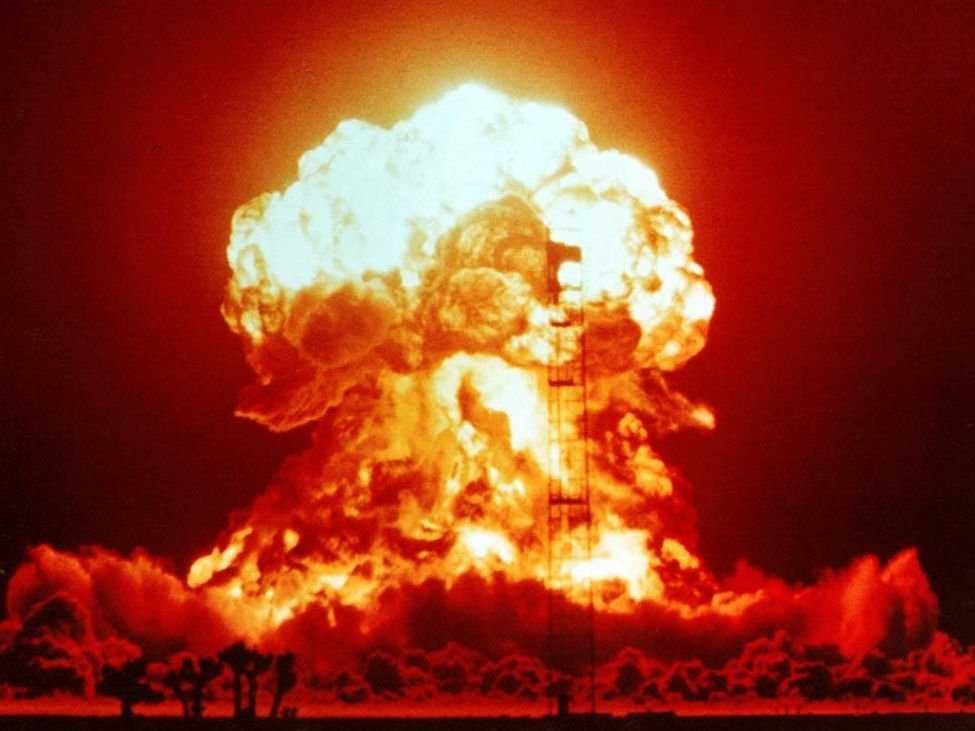 Algeria: 60 years on, French nuclear tests leave bitter fallout https://www.dw.com/en/algeria-60-years-on-french-nuclear-tests-leave-bitter-fallout/a-5235435113.02.2020, Author Elizabeth Bryant (Paris)
Decades after the first French nuclear test in Algeria, thousands of victims are still waiting for compensation from the government. Why is France dragging its feet over the issue?
Jean-Claude Hervieux still remembers joining a crowd of soldiers and high-level officials in Algeria’s Sahara desert to witness one of France’s first nuclear tests. Things didn’t go exactly as planned.
Instead of being contained underground, radioactive dust and rock escaped into the atmosphere. Everyone ran, including two French ministers. At military barracks, the group showered and had their radiation levels checked as a crude means of decontamination. “You don’t see nude ministers very often,” Hervieux chuckled.
But as France marks the 60th anniversary of its first nuclear test — near Algeria’s border with Mauritania, on February 13, 1960 — there is not much to laugh about. Critics have long claimed more than three decades of nuclear testing may have left many victims, first in Algeria and later in French Polynesia, where the bulk of testing took place.
But so far, only hundreds have been compensated, including just one Algerian. And as key nuclear testing anniversaries tick by, the unresolved fallout of the nuclear explosions has also fed into longstanding tensions between Paris and its former colony.
It is part of the whole issue of decolonization, and of Algerians asking for French recognition of crimes committed” as a colonial power, said Brahim Oumansour, North African analyst for the Paris-based French Institute of International Relations. For France, he added, doing so might mean “financial compensations in the millions of euros.”
Such issues are off the French government’s current public radar. A major nuclear policy speech last week by President Emmanuel Macron made no mention of them. France’s compensation commission says it has responded to claims that meet criteria set out by law.
The French Defense Ministry and Algerian authorities did not respond to questions about the tests.
A former electrician, Hervieux spent a decade working on the French nuclear tests, first in Algeria and later in French Polynesia. The botched Beryl explosion he witnessed in May 1962 took place two months after Algeria’s independence from France. The desert testing would continue for another four years, thanks to an agreement Paris secured with Algiers. “The showers cleaned our bodies and clothes,” Hervieux said of the Beryl incident, “but not what we breathed in or swallowed.”
Hervieux asked French authorities for the results of his radiation tests. They were bizarre, he said. One claimed to have screened him when he was on vacation; another named his father. He was told yet another had been destroyed on grounds it was contaminated.
Buried everything
Altogether, Paris exploded more than 200 nuclear devices. Most were in remote atolls of French Polynesia, but the first 17 took place in Algeria’s desert. In 1996, French President President Jacques Chirac called a halt to the testing.
When we left Algeria, we dug large holes and we buried everything,” said Hervieux, now 80, of France’s departure from the desert sites, in 1966.
He later joined AVEN, a pressure group for victims of French nuclear tests, although he says he remains healthy.
While he did not witness ill effects in Algeria, Hervieux describes visiting a village in French Polynesia where high radiation levels had been detected. “A local teacher said children were sick and vomiting,” he recalled. “Mothers were asking why their children’s hair was falling out.”
In Algeria, testing sites are still contaminated, activists say, many fenced off by only barbed wire, at best. “I saw radiation levels emitted from minerals, rocks vitrified by the bombs’ heat, which are colossal,” said retired French physicist Roland Desbordes, who has visited the sites. “These aren’t sites buried in the corner of the desert — they’re frequently visited by Algerian nomads,” who recuperate copper and other metals from the detritus.
Indelible scar?
The former president and now spokesman for CRIIRAD, an independent French research group on atomic safety, Desbordes claims the French army has key classified information about the testing it will not open to public scrutiny, including about the health and environmental effects of the explosions. But he believes Algerian authorities also bear some blame.
Each anniversary they talk about how these nuclear tests were not good,” he said, “but it’s also up to them to close off the sites to ensure nobody can access them.”
Reports, including a pair of decade-old documentaries by Algerian reporter Larbi Benchiha, suggest the testing left an indelible scar on local communities. Unaware of the danger, they collected once-buried scrap metal uncovered by desert winds, and turned them into jewelry and kitchen utensils.
Altogether, between 27,000 to 60,000 people from communities surrounding the test sites were affected, according to one Al Jazeera report, citing differing French and Algerian estimates.
But out of more than 1,600 claims filed under a decade-old French compensation law that finally acknowledged health problems from the tests, only 51 have come from Algeria, according to France’s nuclear compensation commission, CIVEN. A separate Supreme Court ruling recently reinstated two extra compensation claims from French Polynesia.
Among other criteria, the 2010 law requires proof of a minimum level of exposure to weapons tests, and offers a list of 23 types of cancers that qualify for compensation.
“There are very few demands and we can only judge those we receive,” said CIVEN Director Ludovic Gerin, who added the Algerian claims didn’t meet compensation criteria.
“We can’t actively search for victims,” he added, “so we’re a bit blocked.”
Plutonium-affected U.S. airmen, cancers, deaths, and a new legal ruling
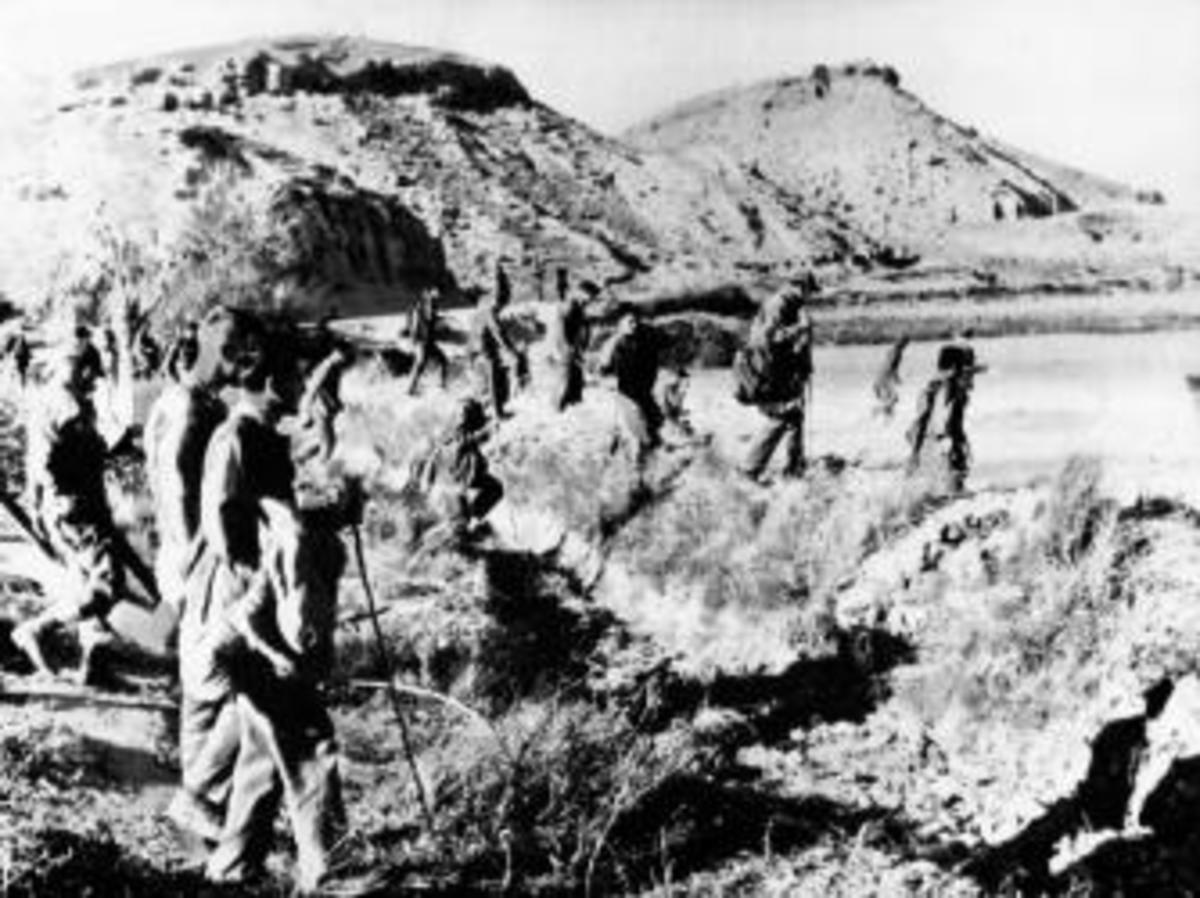
The Palomares disaster occurred on Jan. 17, 1966, when an American B-52 bomber on a Cold War patrol exploded during a midair refueling accident, sending four hydrogen bombs hurtling toward the ground. They were not armed, so there was no nuclear detonation, but the conventional explosives in two of the bombs blew up on impact, scattering pulverized plutonium over a patchwork of farm fields and stucco houses.
Plutonium is extremely toxic, but it often acts slowly. The alpha-particle radiation it gives off travels only a few inches and would not penetrate skin. But inhaled plutonium dust can lodge in the lungs and steadily irradiate surrounding tissue, gradually inflicting damage that can cause cancer and other ailments, sometimes decades later. A single microgram absorbed in the body is enough to be harmful; according to declassified Atomic Energy Commission reports, the bombs that blew apart at Palomares contained more than 3 billion micrograms.
|
For Many Who Cleaned Up a Nuclear Mess, a Key Ruling Comes Too Late
Air Force veterans who dealt with a Cold War-era atomic accident in Spain won the right to sue collectively for health benefits — but not before many had lost battles with cancer. https://www.nytimes.com/2020/02/11/us/palomares-air-force-nuclear.html By Dave Philipps SPRINGFIELD, Mo. — On Christmas Eve, Victor Skaar mailed a stack of letters to Air Force veterans he had served with in Palomares, Spain, scrawling a simple headline at the top of each one: “Great News!” Mr. Skaar, a retired chief master sergeant, was one of 1,600 troops scrambled by the Air Force in 1966 to clean up a classified nuclear disaster by collecting debris and shoveling up plutonium-laced soil. Many were later stricken with cancer and other ailments, and tried without success to get the federal government to take responsibility and pay for their medical care. He wanted to spread the word about an encouraging development: A lawsuit he had filed against the Department of Veterans Affairs had been certified as a class action, meaning that there was finally a chance to set the plutonium case straight, not just for him but for everyone who was there. But his letters soon began trickling back to him: Undeliverable. No forwarding address. One brought a reply from a widow. Each one in his mailbox made his heart sink. “For many of them, it’s too late,” he said of his comrades. “They’re gone.” As one of the first cases ever granted class-action status by the Court of Appeals for Veterans Claims, the Skaar lawsuit represents a major step forward for veterans with long-term health issues linked to toxic exposure in the service.
|
Cuts to public benefit programs,$billions to nuclear weapons – Trump’s 2021 budget
 Trump’s 2021 budget: More nuclear spending, less of almost everything else, Bulletin of the Atomic Scientists By Lawrence J. Korb, February 12, 2020 Trump’s 2021 budget: More nuclear spending, less of almost everything else, Bulletin of the Atomic Scientists By Lawrence J. Korb, February 12, 2020 The Trump administration’s budget request for 2021 has its priorities backward. Rather than expand the nuclear weapons budget at the expense of everything else, the United States could meet its goals with a much leaner nuclear force, leaving more money for the programs that will actually make the country safer.
Given that the US defense secretary has been arguing for the Pentagon to focus more resources on challenges from strategic competitors such as China and Russia, one would have expected that ships and combat aircraft programs would have received increased funding in the Trump administration’s latest request. But, in that request, not only did these programs not grow, they were actually cut back both from their projected increases and below fiscal 2020 levels. But what did grow in real terms was funding for nuclear weapons programs. In fiscal 2020, the Defense Department will spend about $25 billion on modernizing the weapons in its nuclear arsenal. For 2021, it seeks to grow that account by $4 billion, to a total of about $29 billion, a 16 percent increase. The National Nuclear Security Administration (NNSA), the part of the Energy Department that develops nuclear technology, wants to spend another $20 billion, a $3 billion (or 19 percent) increase over 2020. Together this means that the Trump administration proposes to spend about $50 billion on its nuclear weapon programs. If one adds what it will spend on cleaning up nuclear sites and on missile defense, that number climbs to about $75 billion. …….. To spend its money more wisely, the Trump administration needs to extend the New START treaty with the Russians and get back to the bargaining table, so it can begin cutting its nuclear arsenal to no more than 1,000 deployed nuclear weapons and cancel both the long range standoff weapon and the land-based portion of its nuclear modernization program. That will allow the United States to devote more of its limited resources to programs that actually make the country and the world safer. https://thebulletin.org/2020/02/trumps-2021-budget-more-nuclear-spending-less-of-almost-everything-else/ |
|
Trump’s budget – slashes foreign aid, but $billions more for nuclear weapons
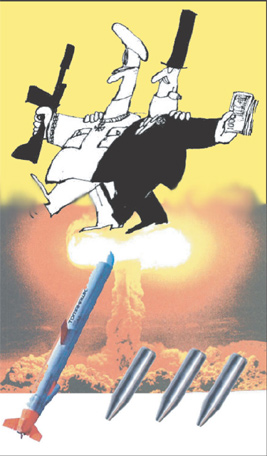 The 2 most controversial national security items in Trump’s new budget The 2 most controversial national security items in Trump’s new budget
Trump wants to gut foreign aid and beef up America’s nuclear force. Vox, By Alex Ward@AlexWardVoxalex.ward@vox.com Feb 10, 2020 President Donald Trump is about to propose a budget that leans much more heavily on military might — including new spending on modernized nuclear weapons — than diplomatic prowess, funding a muscular foreign policy some worry could lack the necessary finesse to deal effectively with global crises. The White House’s FY 2021 budget — standing at a whopping $4.8 trillion — is already making waves for deep cuts to social safety net programs like Medicare and Medicaid. Since Congress has to sign off on government spending, the full request is likely dead on arrival due to Democrats’ control of the House. And with no agreed-upon budget, there is no agreed-upon spending. It’s almost guaranteed, then, that the next few months will be filled with partisan fighting and wrangling over how to use taxpayer funds. Which means the White House’s budget document really serves more as a statement of principles and priorities — the budget, as some say, is policy. When it comes to defense and foreign policy, Trump has once again shown a preference for a stronger military partly at the expense of a weaker diplomatic and development tools. The two main national security takeaways from the budget’s expected toplines:
The problem, however, is that this foreign aid funding isn’t just charity: Taking nearly $12 billion out of the foreign aid budget would severely harm US diplomatic efforts. For one, giving nations money they need to keep volatile situations stable enhances global security, and could actually prove cost-effective to the US if the money helps prevent catastrophe at home or abroad down the line……….. In years past, Republicans and Democrats have pushed back against these draconian slashes to foreign aid, and they are likely to do so again. But the president’s insistence on tearing down America’s assistance programs to bare bones — even though they hover at only around 1 percent of the federal budget — shows how misguided he is about their outsize impact. Trump’s decision to modernize America’s nuclear arsenal is costlyThe United States has the second-largest nuclear arsenal in the world, behind Russia, but with many of these systems dating back to the Cold War, keeping warheads, bombs, and delivery systems up to date is extremely expensive. In 2017, the nonpartisan Congressional Budget Office estimated that modernizing the nuclear arsenal would cost $1.2 trillion over 30 years. That would require a herculean effort on behalf of multiple, subsequent administrations — not to mention the continued patience of taxpayers — to ensure it was completed. Trump’s proposed billions, championed by Republicans and criticized by Democrats, is one step in that direction……. Kingston Reif of the Arms Control Association, says “The administration’s nuclear weapons spending plans are unnecessary and unsustainable,” he told me. “The costs and opportunity costs of the plans are real and growing, and the biggest nuclear modernization bills are just beginning to hit.” Reif offered an alternative: “Scaling back the plans for new delivery systems, warheads, and infrastructure would make the modernization effort easier to execute and reduce the threat to other defense programs while still leaving a devastating deterrent.” It’s worth noting that Trump has pulled the US out of a massive arms control treaty with Russia, and it may not extend another vital one next year. Some experts worry that could lead to an arms race, causing the US to spend even more on nuclear systems down the line. …………https://www.vox.com/2020/2/10/21131273/trump-budget-fy2021-foreign-aid-nuclear |
|
Polynesian MP calls on France for “vast project” to withdraw radioactive waste in Mururoa
|
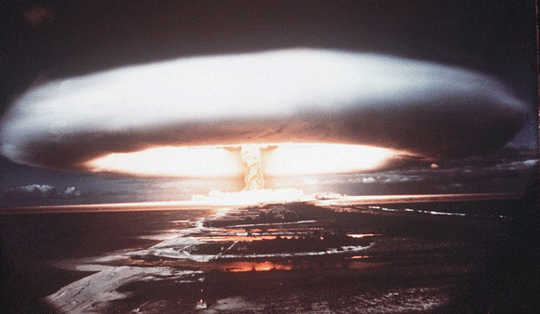
Polynesia: MP Moetai Brotherson asks Macron for a “vast project” to withdraw radioactive waste in Mururoa, 8 Feb 2020 https://la1ere.francetvinfo.fr/polynesie-depute-moetai-brotherson-demande-macron-vaste-projet-retrait-dechets-radioactifs-mururoa-798235.html [machine translate] The deputy of Polynesia Moetai Brotherson asked in a letter to Emmanuel Macron, who will be in April in the Polynesian archipelago, that he undertakes on “a vast project of withdrawal and reprocessing of all radioactive waste and residues from the Moruroa nuclear tests “.
From 1966 to 1996, the Mururoa and Fangataufa atolls were the scene of 193 nuclear tests , which had effects on the health and the environment of the populations. The head of state is expected to visit Polynesia in mid-April, when two summits are being held, “France-Oceania” and “One Planet Summit”.
” Mr. President, rather than ostrich, the French Republic would be honored to commit today to an ambitious and vast project to withdraw and reprocess all radioactive waste and residues from the tests Moruroa nuclear “, explains the deputy attached to the communist group in the Assembly and representative of Tavini Huiraatira, Polynesian separatist party, in a letter which AFP had a copy on Friday. Threats of collapse
He recalls that nuclear tests, ” especially in their underground part, generated a quantity of radioactive waste and residues “. ” Today, a significant proportion of this waste is stored in wells several hundreds of meters deep drilled in the coral ring of Moruroa, or worse, at the bottom of its lagoon, in particular at a place called ‘Colette bench ‘ “.
But ” cracks in the base of the atoll “, “induced by underground tests in particular “, threaten ” collapse part of the atoll. It appears that both the containment wells, as the Colette bank are precisely in the endangered area “,
“Dramatic message”For the Polynesian deputy, not to commit to the depollution of the site ” would be to send a dramatic message to the Polynesians, to the Peoples of the Pacific, but also to the People of France, in particular to his youth who wants to see (…) real strong actions in favor of the environment “. Moetai Brotherson underlines that ” the biggest investment made by the State in French Polynesia in recent years is the TELSITE geomechanical surveillance project of Moruroa. The billions invested still come to underline the reality of this collapse, real sword of Damocles, for the Polynesians first, for the Pacific region then, for the reputation of the French Republic finally
|
|
Corpses of UK’s nuclear submarines still unburied after 25 years

|
Nuclear vessels still languish at Fife dockyard 25 years after pledge against submarine graveyard, by Cheryl Peebles The Courier.co.uk
February 7 2020,Seven of the vessels, which contain radioactive material, have languished for decades at the Fife dock awaiting dismantling by the Ministry of Defence.
They include HMS Dreadnought, the UK’s first nuclear-powered submarine which was retired from service in 1980. It was during a visit to Rosyth in January 1995 that the then defence procurement minister Roger Freeman made the statement. The milestone prompted a repeated demand from Dunfermline and West Fife MP Douglas Chapman for action to deal with the vessels. Mr Chapman said: “It is astonishing that 25 years after Roger Freeman made that statement we are still waiting for the UK government to clear up these submarines that were decommissioned in the 1980s. “I have pressured the government for years to have some sort of joined-up thinking to remove these. “It is not only costing the taxpayer millions every year to keep them but also taking up valuable dock space that Babcock could be utilising for more economically productive activities.”…… https://www.thecourier.co.uk/fp/news/local/fife/1123498/nuclear-vessels-still-languish-at-fife-dockyard-25-years-after-pledge-against-submarine-graveyard/ |
|
French President Emmanuel Macron seeks leading role in post-Brexit EU nuclear strategy
|
Macron seeks leading role in post-Brexit EU nuclear strategy, Defense News, By: Thomas Adamson, The Associated Press PARIS (AP) 8 Feb 20,— French President Emmanuel Macron on Friday advocated a more coordinated European Union defense strategy in which France, the bloc’s only post-Brexit nuclear power, and its arsenal would hold a central role.
Addressing military officers graduating in Paris, Macron set out his country’s nuclear strategy in a bid to show leadership one week after nuclear-armed Britain officially exited the EU. PARIS (AP) — French President Emmanuel Macron on Friday advocated a more coordinated European Union defense strategy in which France, the bloc’s only post-Brexit nuclear power, and its arsenal would hold a central role. Addressing military officers graduating in Paris, Macron set out his country’s nuclear strategy in a bid to show leadership one week after nuclear-armed Britain officially exited the EU……. https://www.defensenews.com/smr/nuclear-arsenal/2020/02/07/macron-seeks-leading-role-in-post-brexit-eu-nuclear-strategy/ |
|
|
U.S. Democrats call for five-year extension to nuclear arms treaty with Russia
 Dems call for five-year extension to nuclear arms treaty with Russia, . https://www.washingtontimes.com/news/2020/feb/5/dems-call-five-year-extension-nuclear-arms-treaty-/ By Lauren Meier – The Washington Times – Wednesday, February 5, 2020
The leading Democrats on the House and Senate Foreign Relations Committees are urging President Trump to strike a renewed nuclear arms treaty with Russia as the last such treaty between the two nuclear powers is set to expire in one year.
In a statement Wednesday, Rep. Eliot Engel of New York and Sen. Robert Menendez of New Jersey called on Mr. Trump to negotiate an extension with Russian President Vladimir Putin to continue the New Strategic Arms Reduction Treaty (New START) for an additional five years.
“This treaty has constrained Russia’s nuclear forces, provided strong and detailed verification measures to ensure Russia adheres to its commitments, and allowed the United States the flexibility to maintain a safe, secure, modern, and effective nuclear deterrent,” the members wrote.
They highlighted data exchanges and on-site inspections of nuclear facilities that are authorized under the Obama-era treaty that “provide unique insights into Russia’s nuclear forces and greatly assist our military in carrying out its deterrence mission.”
The U.S. and Moscow are the major signatories of the treaty, which limits the number of deployable American and Russian nuclear weapons to no more than 1,550.
The White House already pulled the U.S. out of the Intermediate-Range Nuclear Forces (INF) Treaty with Russia dealing with shorter-range “tactical” nuclear weapons, over what the U.S. says is Moscow’s continued noncompliance with the terms of the Cold War-era pact.
Mr. Putin has opened the door to immediately extending the treaty, which is set to expire in February 2021
Russian Orthodox Church rethinks its practice of blessing nuclear weapons
Russian priests shouldn’t bless nuclear weapons, other weapons of mass destruction, Orthodox Church says, https://www.foxnews.com/world/russian-priests-shouldnt-bless-nuclear-weapons-other-weapons-of-mass-destruction-orthodox-church-says 5 Feb 20, The Russian Orthodox Church thinks its priests should discontinue the practice of blessing weapons of mass destruction that inflict death upon thousands of people, according to a proposal published Monday.
The church released a draft document outlining its stance on the blessing of Orthodox Christians “for the performance of military duty” and “defense of the Fatherland.”
Russian priests have longed sprinkled holy water on various weapon systems, including submarines, ballistic missiles and space rockets, among others.
“It is not reflected in the tradition of the Orthodox Church and does not correspond to the content of the Rite of blessing of military weapons, and therefore, the use of this order to “sanctify” any kind of weapon, the use of which could lead to the death of an undetermined number of people, including weapons, should be excluded from pastoral practice indiscriminate action and weapons of mass destruction,” the church wrote.
The proposal noted the blessing of military vehicles used on land, air and sea is not the “blessing of guns, rockets or bombing devices that the Lord is asking for, but the protection of soldiers.”
The proposals will be discussed on June 1 and the public is being asked to weigh in the debate, Reuters reported.
The request comes as the church and the Russian military continue to forge close ties. The armed forces are building a sprawling cathedral at a military park outside Moscow
The Russian Orthodox Church just might cease its blessing of nuclear weapons
 THE RUSSIAN ORTHODOX CHURCH MAY STOP BLESSING NUCLEAR
  WEAPONS https://futurism.com/the-byte/russian-orthodox-blessing-nuclear-weapons JULY 10TH 19__DAN ROBITZSKI
A faction of clergy within the Russian Orthodox Church wants to end the eyebrow-raising practice of blessing the country’s nuclear missiles.
First of all, yes: Russian priests currently sprinkle holy water on nuclear missiles as part of an old tradition in which Orthodox priests bless soldiers and their weapons, reports Religion News Service. But that may change, as some priests feel that intercontinental ballistic missiles belong in a different category from individual firearms.
Faith Militant
The Russian military and the Russian Orthodox church have long worked hand in hand, according to RNS, framing many of the country’s military conflicts as holy wars. The nuclear arsenal even has its own patron saint — RNS reports that St. Seraphim’s remains were found in a Russian town that housed several nuclear facilities.
As such, the push to stop blessing nukes faces strong opposition among members of the clergy, such as the high-ranking priest Vsevolod Chaplin, who referred to the country’s nukes as “guardian angels.”
“Only nuclear weapons protect Russia from enslavement by the West,” Chaplin once said, per RNS.
Changing Hearts
One priest, Dmitry Tsorionov, parted from the more militant aspects of the Orthodox Church after seeing men willingly sign up to fight Russia’s wars “under the banner of Christ,” he told RNS. Now he wants to see less warmongering among the clergy.
“It was not uncommon to see how church functionaries openly flirted with these toxic ideas,” he told RNS. “It was only then that I finally realized what the blessing of military hardware leads to.”
The reasons behind China’s No First Use nuclear weapons policy
|
Why China Says It Will Never Use Nuclear Weapons First in a Major War
Never ever? National Interest, 2 Feb 2020, by David Axe Follow @daxe on TwitterL Key point: China knows that it has enough nuclear weapons to destroy anyone who attacked them.
This fact gives Beijing enough security to declare it doesn’t need to strike first to deter its enemies.
China has reaffirmed its policy of never being the first in a conflict to use nuclear weapons. Experts refer to this policy as “no first use,” or NFU.
The NFU policy reaffirmation, contained in Beijing’s July 2019 strategic white paper, surprised some observers who expected a more expansive and aggressive nuclear posture from the rising power. Notably, the United States does not have a no-first-use policy. “Retaining a degree of ambiguity and refraining from a no first use policy creates uncertainty in the mind of potential adversaries and reinforces deterrence of aggression by ensuring adversaries cannot predict what specific actions will lead to a U.S. nuclear response,” the Pentagon stated.
Chinese state media posted the government’s white paper in its entirety. “Nuclear capability is the strategic cornerstone to safeguarding national sovereignty and security,” the paper asserts. “This is standard language,” explained David Santoro, a nuclear expert with the nonprofit Pacific Forum. “China’s nukes serve to prevent nuclear coercion and deter nuclear attack.” Then the surprise. “China is always committed to a nuclear policy of no first use of nuclear weapons at any time and under any circumstances, and not using or threatening to use nuclear weapons against non-nuclear-weapon states or nuclear-weapon-free zones unconditionally,” the white paper adds……. It would be difficult to compose a more emphatic rejection of claims that China’s no-first-use policy is changing. The statement also indicates it is not Chinese policy to use nuclear weapons first to forestall defeat in a conventional military conflict with the United States. China does not have an “escalate to de-escalate” nuclear strategy.
China is not preparing to fight a nuclear war with the United States. It does not have “battlefield” or “tactical” or “non-strategic” nuclear weapons. Chinese nuclear strategists don’t think a nuclear war with the United States is likely to happen. And they seem sure it won’t happen as long as the U.S. president believes China can retaliate if the United States strikes first. That’s not a high bar to meet, which is why China’s nuclear arsenal remains small and, for the time being, off alert.
China sees its comparatively modest nuclear modernization program as a means to convince U.S. leaders that a few Chinese ICBMs can survive a U.S. first strike and that these survivors can penetrate U.S. missile defenses. Chinese nuclear planners might be willing to slow or scale back their nuclear modernization efforts if the United States were willing to assure China’s leaders it would never use nuclear weapons first in a military conflict with China. Chinese experts and officials have been asking the United States to offer that assurance for decades. U.S. experts and officials consistently refuse……
Given the impassioned attack on constructive U.S.-China relations currently sweeping U.S. elites off their feet, along with the continued proliferation of misinformation about Chinese nuclear capabilities and intentions, many U.S. commentators are likely to brush aside the new white paper’s reiteration of China’s longstanding nuclear no-first-use policy.
David Axe serves as Defense Editor of the National Interest. He is the author of the graphic novels War Fix, War Is Boring and Machete Squad. This first appeared earlier in 2019.https://nationalinterest.org/blog/buzz/why-china-says-it-will-never-use-nuclear-weapons-first-major-war-119021
|
|
-
Archives
- October 2026 (112)
- September 2026 (339)
- August 2026 (330)
- July 2026 (355)
- June 2026 (287)
- May 2026 (306)
- April 2026 (356)
- March 2026 (251)
- February 2026 (267)
- January 2026 (308)
- December 2025 (358)
- November 2025 (359)
-
Categories
- 1
- 1 NUCLEAR ISSUES
- business and costs
- climate change
- culture and arts
- ENERGY
- environment
- health
- history
- indigenous issues
- Legal
- marketing of nuclear
- media
- opposition to nuclear
- PERSONAL STORIES
- politics
- politics international
- Religion and ethics
- safety
- secrets,lies and civil liberties
- spinbuster
- technology
- Uranium
- wastes
- weapons and war
- Women
- 2 WORLD
- ACTION
- AFRICA
- Atrocities
- AUSTRALIA
- Christina's notes
- Christina's themes
- culture and arts
- Events
- Fuk 2022
- Fuk 2023
- Fukushima 2017
- Fukushima 2018
- fukushima 2019
- Fukushima 2020
- Fukushima 2021
- general
- global warming
- Humour (God we need it)
- Nuclear
- RARE EARTHS
- Reference
- resources – print
- Resources -audiovicual
- Weekly Newsletter
- World
- World Nuclear
- YouTube
-
RSS
Entries RSS
Comments RSS

