Sailors on nuclear aircraft carrier Theodore Roosevelt applaud their fired captain
Videos have emerged on social media showing sailors on the aircraft carrier USS Theodore Roosevelt giving their fired captain a rousing sendoff as he left the ship.
Capt. Brett Crozier was relieved of duty for a “loss of confidence” following the leak of a letter in which he advocated for stronger measures to protect his crew from an outbreak of coronavirus aboard the ship.
The videos show hundreds of sailors gathered in the ship’s hangar clapping and cheering loudly for Crozier as he walked down a ramp towards the pier in Guam where the ship is docked. ……
In one of the videos capturing that moment, voices can be heard saying “We love you, too!” and “Thank you skipper!”
Later, the ship’s crew is heard rhythmically clapping and chanting, “CAPTAIN! CROZIER!”
Earlier on Thursday, Crozier was relieved of duty by acting Secretary of the Navy Thomas Modly who said he had lost confidence in his leadership abilities following the leak of a letter where Crozier advocated for stronger measures to protect his ship’s crew from further infection by the coronavirus.
Modly said Crozier had expressed valid concerns for the safety of his ship but had exercised “poor judgment” in distributing the letter to senior commanders to a broad group of people when he could have expressed his concerns to the admiral aboard the carrier.
In the letter Crozier advocated Navy leaders to speed up the removal of the nearly 5,000 sailors aboard the carrier to appropriate accommodations on Guam that met social distancing guidelines set by the Centers for Disease Control and Prevention.
The day after the letter appeared in the San Francisco Examiner the Navy announced that 2,700 of the ship’s crew were being brought ashore and that suitable housing would be found in hotel rooms on the island. …..https://abcnews.go.com/Politics/sailors-aircraft-carrier-give-fired-captain-rousing-sendoff/story?id=69957655
US Navy fires captain who sought help for coronavirus-stricken nuclear aircraft carrier
 US Navy fires captain who sought help for coronavirus-stricken ship, ABC News, 3 Apr 20 The US Navy has fired the captain of an aircraft carrier who faced a growing outbreak of the new coronavirus on his ship, saying he created a panic by sending his memo pleading for help to too many people. US Navy fires captain who sought help for coronavirus-stricken ship, ABC News, 3 Apr 20 The US Navy has fired the captain of an aircraft carrier who faced a growing outbreak of the new coronavirus on his ship, saying he created a panic by sending his memo pleading for help to too many people.
Key points:
In a four-page memo to Navy leaders, the captain of the nuclear-powered warship said the spread of the disease was ongoing and accelerating, and said that removing all but 10 per cent of the crew was a “necessary risk” in order to stop the spread of the virus. Navy Secretary Thomas Modly said the ship’s commander Brett Crozier “demonstrated extremely poor judgment” in the middle of a crisis……. That decision was immediately condemned by members of the House Armed Services Committee, who called it a “destabilising move” that would “likely put our service members at greater risk and jeopardise our fleet’s readiness”. ….. Captain Crozier graduated from the US Naval Academy in 1992 and later attended the Nuclear Power School, a prerequisite to command a nuclear-powered aircraft carrier. The USS Theodore Roosevelt, with a crew of nearly 5,000, is docked in Guam, and the Navy has said as many as 3,000 people will be taken off the ship and quarantined by Friday. More than 100 sailors on the ship have tested positive for the virus, but none have been hospitalised. ….. Democrats in support of Captain CrozierDemocrats on the House committee issued a joint statement in support of Captain Crozier. They said that while the captain went outside his chain of command, the pandemic presented a new set of challenges. “Captain Crozier was justifiably concerned about the health and safety of his crew, but he did not handle the immense pressure appropriately,” the statement said. Captain Crozier, in his memo, raised warnings the ship was facing a growing outbreak of the coronavirus and asked permission to isolate the bulk of his crew members on shore, an extraordinary move to take a carrier out of duty in an effort to save lives. He said that removing all but 10 per cent of the crew would be a “necessary risk” in order to stop the spread of the virus. “We are not at war. Sailors do not need to die. If we do not act now, we are failing to properly take care of our most trusted asset: our sailors,” Captain Crozier wrote. https://www.abc.net.au/news/2020-04-03/navy-fires-captain-who-sought-help-for-coronavirus-stricken-ship/12117534 |
|
|
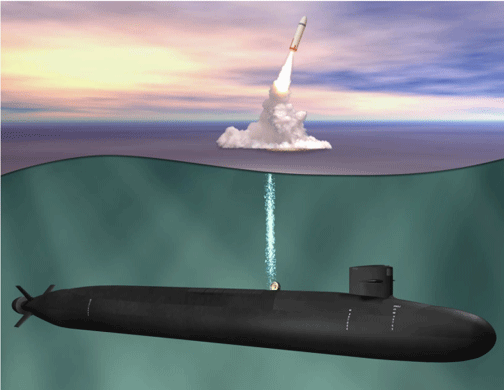
Expert opinion recommends furloughing Britain’s Trident nuclear weapons
|
Nuclear weapons law expert suggests furloughing Trident https://www.irishlegal.com/article/nuclear-weapons-law-expert-suggests-furloughing-trident 3 April 2020 A legal expert on nuclear weapons has joined calls for the UK government to rethink keeping Trident submarines at sea during the coronavirus pandemic.Professor Nick Grief of Kent Law School is among a group of signatories to a letter questioning whether the cost of keeping the nuclear weapons system on “continuous at sea deterrent patrol” is justifiable during the COVID-19 outbreak.
Other signatories to the letter, circulated to parliamentarians across the UK, include three former Royal Navy commanders, SNP Westminster leader Ian Blackford, academics and peace campaigners. The signatories have said they hope the letter will encourage politicians and the wider public to begin to question the morality and the feasibility of nuclear weaponry. It states: “The increasing cost of coronavirus will require decades to recover. Meanwhile, the UK’s Trident nuclear weapon system remains on continuous at sea deterrent patrol costing some £2 billion a year and using scarce military assets to protect the on-patrol submarine.” The letter also raises concerns about “the morale of the submarine crew on patrol” during the pandemic, as well as “their own state of health and exposure to the virus”. It concludes: “In these circumstances, and lacking any foreseeable threat of a ‘bolt from the blue’ nuclear weapon attack on the UK, is it appropriate for the government to continue spending billions of pounds on continuous at sea deterrent, as well as building new nuclear warheads and the submarines to carry them?” |
|
Finally: 1000s of sailors leaving nuclear Aircraft Carrier and going into Coronavirus isolation
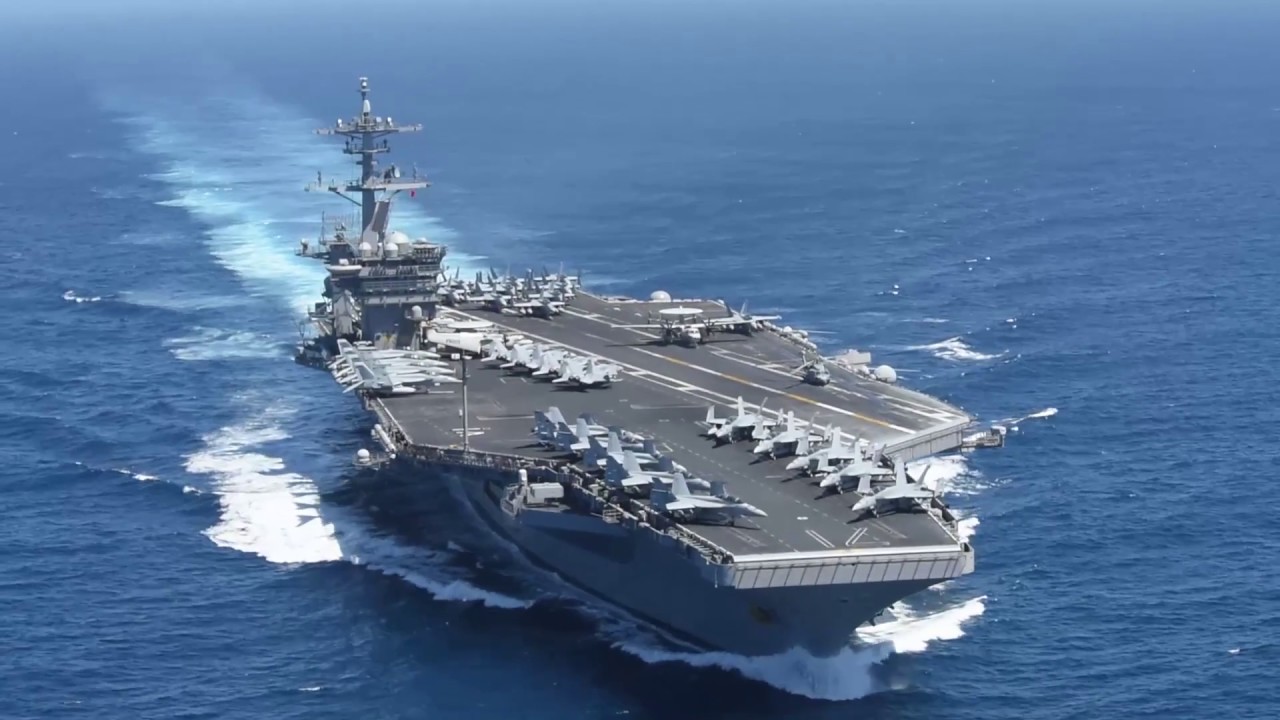

US Sailors Pour Off Aircraft Carrier and Into Coronavirus Isolation on Guam, Defense One , BY BRADLEY PENISTON, DEPUTY EDITOR, 2 Apr. 20 NAVY LEADERS PRAISE SHIP’S CAPTAIN FOR URGENT EVACUATION REQUEST; 3,700 WILL LEAVE THE SHIP WITHIN DAYS.
About one-fifth of the USS Theodore Roosevelt’s 4,865 sailors are off the COVID-stricken aircraft carrier and into isolation on Guam, with about 2,700 more expected to evacuate in the next few days, Acting Navy Secretary Thomas Modly said Wednesday.
Modly’s update comes two days after the ship’s captain sent a stark letter up the chain of command — made public on Tuesday by the San Francisco Chronicle — warning that fully 90 percent of the crew needed to evacuate and isolate for two weeks for their own safety. The secretary’s comments clarify that the Navy was indeed evacuating most sailors from the ship, after Defense Secretary Mark Esper said in a CBS News interview aired late Tuesday that said an evacuation was not yet necessary. Modly praised the captain for the prodding, and said that evacuation efforts already were in the works but not with the right urgency. ….. https://www.defenseone.com/threats/2020/04/us-sailors-pour-aircraft-carrier-and-isolation-guam/164287/?oref=d-topstory
Second: Navy change of heart: nuclear-powered aircraft carrier sailors can evacuate
|
“We are not at war,” Caprain Brett Crozier wrote in a four-page letter to bosses detailing how the ship did not have enough quarantine facilities. “Sailors do not need to die. If we do not act now, we are failing to properly take care of our most trusted asset – our sailors.” Now, his demand to get crew ashore appears to have been met with Acting Navy Secretary Thomas Modly confirming sailors were being taken off board in stages, with 1,000 people already evacuated and placed in isolation on land. It is thought around 100 people on the nuclear-powered vessel have tested positive for Covid-19, although this remains unconfirmed by the navy itself. Modly said the force had been working for several days to get the majority of crew off the ship but that, because Guam was dealing with its own outbreak of Covid-19, there were not currently enough isolated beds. He said he was in talks with officials there to use hotels and set up tents. “It’s not the same as a cruise ship, it has armaments on it, it has aircraft on it, we have to be able to fight fires if there is a fire on there,” he said……..
|
First: Captain of nuclear-powered aircraft carrier begs to have its sailors evacuated
Navy Rejects Captain’s Plea to Evacuate Virus-Ravaged Carrier, Bloomberg, By Roxana Tiron ,Travis J Tritten, and Glen Carey
- Admiral says sailors will be rotated off in smaller numbers
-
A U.S. Navy captain’s dramatic plea to evacuate most sailors from an aircraft carrier struck by the coronavirus was tamped down by an admiral who called for a more gradual rotation of crew members off the ship that’s sidelined in Guam.
Citing an “ongoing and accelerating” danger on board the USS Theodore Roosevelt, Captain Brett Crozier sent his Navy superiors a memo pleading, “We are not at war. Sailors do not need to die.” He called for removing all but a skeleton crew off the carrier, where sailors are in close quarters, so that they can be isolated and tested……
The Roosevelt, meant to be patrolling the Pacific and South China Sea, is sitting dockside in Guam indefinitely as the number of soldiers infected by the novel coronavirus rises daily. Infections started cropping up after an early March port call in Vietnam, which Pentagon leaders say had about 16 known virus cases at the time …… https://www.bloomberg.com/news/articles/2020-03-31/carrier-s-captain-pleads-for-coronavirus-action-to-save-sailors?fbclid=IwAR2jMtSh2oHrD8_xM384jGcK52DX3TihqP3brMrzaUrSNBgY17GYBVxcbEg
38 sailors on nuclear-powered aircraft carrier positive for COVID-19, U.S. military secretive on impact of virus
APR 1, 2020
Relying on a high-state of readiness, the nuclear triad is under threat from the coronavirus……….in a War of the Worlds-style twist, humanity’s most lethal weapons could be nullified by an organism that can’t even be seen. ……
The Russian point of view on nuclear arms control
|
Russia’s View on Nuclear Arms Control: An Interview With Ambassador Anatoly Antonov, Arms Control Association April 2020Arms Control Today conducted a written interview in early March with Anatoly Antonov, Russian ambassador to the United States on issues including the current status of U.S.-Russian strategic security talks, the future of New START, talks on intermediate-range missile systems, engaging China in arms control, and President Vladimir Putin’s proposal for a summit of the leaders of the five permanent members of the UN Security Council……..
Amb. Anatoly Antonov: Russia and the United States are the largest nuclear weapons powers and permanent members of the UN Security Council. They bear a special responsibility for preserving world peace and security. That is why it is crucial to maintain the bilateral strategic stability dialogue at any given circumstance, regardless of political situation. It goes without saying that such engagement should be conducted on a regular basis. ……. As for the consultations in January, our reaction can be described as “cautious optimism.” On the bright side is the fact that the meeting did take place, even though it exposed serious disagreements between our countries on a number of topics. ….. There is no doubt that the Russian-U.S. bilateral arms control agenda remains relevant. We are open to discussing within the strategic dialogue the issue of the newest and prospective weapons that do not fall under New START. ……. https://www.armscontrol.org/act/2020-04/interviews/russias-view-nuclear-arms-control-interview-ambassador-anatoly-antonov |
|
New hypersonic weaponry complicates Nuclear Arms Control Regime
The advent of hypersonic weaponry introduces a new complication to the arms control landscape. Fortunately, New START is a flexible treaty. It includes specific provisions for dealing with emerging weapon systems via its Bilateral Consultative Commission. And, as Russia has demonstrated, hypersonic weapons can be incorporated into existing arms control protocols.
With the United States and Russia suddenly in agreement on the need to limit the deployment of hypersonic missiles, now is an ideal time to explicitly and transparently address these weapons under the New START framework. Doing so would ensure that nuclear arms limitations remain robust, even as tensions flare. With the clock ticking on renewal, neither nation can afford to let a hypersonic arms race get in the way of a proven instrument of global security. https://allthingsnuclear.org/ctracy/fitting-hypersonic-weapons-into-the-nuclear-arms-control-regime
New START’s hypersonic gap
New START sets limits on the deployment of US and Russian nuclear forces. Because these nations possess the vast majority of the world’s nuclear weapons, it constitutes the bedrock of modern nuclear arms control.
The treaty’s core provisions were carefully crafted to address the complexities of nuclear weapons technology. It does not directly limit the number of nuclear warheads either nation may possess, as these are difficult to track and account for. Rather, it focuses on the nuclear warhead delivery systems—ground-launched missiles, submarine-launched missiles, and heavy bomber aircraft—by which these destructive payloads can be carried intercontinental distances. New START limits the number of these systems each nation may possess (up to 800) and deploy (up to 700), as well as the number of warheads that can be mounted on them (up to 1,550).
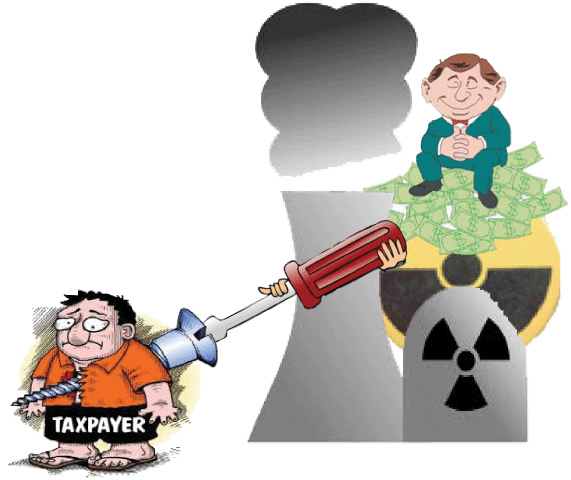
USA nuclear industry uses coronavirus to gouge $billions of tax-payer money
|
Out of control?, While industry looks for handouts, NRC gives nod to reduced safety oversight, https://wordpress.com/read/feeds/72759838/posts/2643325963By Linda Pentz Gunter 29 Mar 20, It was no surprise really, when the first to line up with outstretched palms as Congress debated and formulated its now passed $2 trillion coronavirus-prompted emergency relief bill, were nuclear corporations.The sinking nuclear power industry spotted an economic lifeline and couldn’t wait to make a grab for it. The Nuclear Energy Institute, the lobbying arm of the nuclear power industry, rushed off a letter to congressional leaders asking for a 30% tax credit and waivers for existing regulatory fees. One of NEI’s apparently needy recipients is the financial fiasco known as Vogtle 3 and 4, the new nuclear power plant construction project in Georgia, which is already more than five years behind schedule and is projected to cost $28 billion, double the original predicted price. The two new Georgia reactors aren’t needed, and their continued slow progress is by no means a matter of national security right now — or at all. But the NEI would like to see a nice fat grant go to Georgia Power to continue construction there, even though the company has already received two federal loan guarantees totaling $12 billion. In addition, the company is also gouging ratepayers in advance to cover the costs for the two reactors through the state’s Construction Work in Progress law, with no guarantee that they will ever reach completion. Before long, the nuclear weapons manufacturers got in on the act as well. Wrote the group, Code Pink: “Boeing has the audacity to demand a $60 billion taxpayer bailout for their shareholders and CEO.” Boeing is responsible for the Minuteman Intercontinental Ballistic Missiles, to be replaced this year with the misleadingly named Ground Based Strategic Deterrent. Boeing has also already received a $26.7 million contract from the U.S. Navy for Trident II D5 ballistic missile maintenance, rebuilding and technical services. Astonishingly, it was ultra conservative senator, Ted Cruz, who was one of those who pushed back against the corporate bailouts for the likes of Boeing and GE, manufacturer of the ill-fated Fukushima nuclear power plants and similar boiling water reactors in the US that are meltdowns waiting to happen. Cruz tweeted that “some are pushing for a special carve-out just for Boeing & GE. That would be WRONG. Millions are losing jobs; we don’t need bailouts or corporate welfare — those companies should participate in the same liquidity programs as everyone else.” But Boeing apparently got its wish. A $17 billion federal loan package contained in the stimulus bill passed by both the House and Senate and signed by President Trump on March 27, “was crafted largely for the company’s benefit,” according to reporting in the Washington Post. Boeing may also be able to dip its fingers into the “$58 billion the Senate package is providing in loans for cargo and passenger airlines, as well as the $425 billion in loans it is allocating to help firms, states and cities hurt by the current downturn,” wrote the Washington Post, even though, as Code Pink pointed out, alluding to the two 737 MAX disasters, Boeing is responsible for “defective civilian planes that plummet from the sky in mid-flight.” Boeing shares soared more than 24% on the day the Senate bill passed. The US is already spending $35.1 billion a year on its nuclear weapons arsenal. As the timely graph below [on original] from ICAN points out, this money could be redirected to a wealth of essential needs that would help quell the novel coronavirus in the US. … It’s not yet clear what portion of the stimulus money might go to the nuclear power industry, but the renewable energy sector took a hit. According to the San Diego Union Tribune, “the renewable energy industry had asked for — but did not get — extensions of deadlines related to construction or completion of solar and wind projects, without which they could lose access to time-sensitive tax credits. Industry associations were hopeful they’d be included in any later relief package.” There is also a $400 billion slush fund in the present legislation which can be used for loans and loan guarantees for large companies. Watch for the nuclear power industry to line up for a share of that in addition to its earlier pitch for a $23 billion bailout, which Lukas Ross, senior policy analyst with Friends of the Earth, called “a new low bar,,” and an attempt to use the coronavirus crisis “to try and brazenly grab more cash.” Meanwhile, the US Nuclear Regulatory Commission (NRC), in its usual fashion, has used the opportunity presented by the corona crisis to relax its already somnific safety oversight even more, and will allow nuclear power plant operators to defer safety maintenance, inspections and fitness for duty requirements during the outbreak. “Regulations to ensure safety should be strengthened at a time like this — not weakened,” Kevin Kamps, radioactive waste specialist at Beyond Nuclear, told Power Magazine. “It means operating nuclear plants without basic safety inspections.” One measure would be to allow workers to put in longer shifts than safety regulations allow, a measure that would place unnecessary additional “stress and strain on workers that need to be fully attentive and alert in sensitive jobs,” Kamps told the Carolina Public Press. He recommended powering down reactors instead, particularly given the current reduction in demand. But if the coronavirus pandemic causes higher than usual absenteeism among vital nuclear plant personnel, the NRC has a plan for that. Under normal circumstances, operating with too few control room staff is a safety violation. But under the coronavirus conditions, this would be exempted, or forgiven by the NRC, creating an added safety risk. During a recent NRC and industry telephone meeting on the topic, Beyond Nuclear’s director of reactor oversight, Paul Gunter, asked whether the NRC had supplied its reactor site personnel with sufficient protective equipment, masks, and respirators, as per the Centers for Disease Control guidelines. “They blew it off, Gunter said. “They claimed it was a matter for OSHA.” Industry representatives on the call remained silent on the matter. Gunter added that Kamps’s suggestion to power down reactors in regions where the demand was reduced and excess generating capacity was already high, could allow for resting the remaining workforce and keeping them healthy and ready to replace workers at still operating plants where personnel have been hit hardest by reactor operator shortages and extended security shifts. “We should be planning on how to keep stable and safety-compliant electricity going,” Gunter said. “One way would be to create a protected pool of sequestered nuclear utility workers. But that is not happening. The industry is dictating to the regulator what the agenda will be.” So, business as usual. |
|
Entire crew of nuclear submarine in coronavirus quarantine
“Orel” (K-266) is an Oscar-II class nuclear-powered submarine sailing for the Northern Fleet. Normally, the submarine has a crew of about 110 sailors.
The civilian that had met with a man infected with the coronavirus was on board “Orel” in a “business matter”, Murmansk-based news-online B-port reports.
Also, the crew of a nearby submarine and the personnel on a floating workshop are placed in quarantine.
The submarine is based in Zapadnaya Litsa, the westernmost bases of the Northern Fleet on the Kola Peninsula.
No reports have been published about any coronavirus cases in Zaozersk, the navy town where the crew and their families live.
By March 28th, Russia’s official number of coronavirus infections raised to 1,264.
The “Murmansk group” on social media channel Vkontakte says there are 12 people who have given pre-positive tests of coronavirus in the Murmansk region.
Nuclear-powered U.S. Aircraft Carrier Roosevelt now carrying Coronavirus
Coronavirus Diverts U.S. Aircraft Carrier From Mission In Western Pacific https://getaka.co.in/usa-news/coronavirus-diverts-u-s-aircraft-carrier-from-mission-in-western-pacific/ March 26, 2020 npr.org First it was commercial cruise ships that became floating petri dishes for the coronavirus.
Now the U.S. Navy’s nuclear powered aircraft carrier USS Theodore Roosevelt has been diverted to the U.S. “There were three [crew members who] initial[ly tested positive], there were five more that were flown off the ship or in the process of being flown off the ship, and then there are several others that are in isolation right now,” Acting Secretary of the Navy Thomas Modly said Thursday at the Pentagon. “But the ship is going to be pulling into Guam, and they’re going to figure out from there who needs to come off, who can stay on, looking at the level of symptoms and things like that. “
Other U.S. officials have said there are now dozens aboard the Roosevelt who have been found to be infected with the coronavirus.
“We are already starting the process of testing 100 percent of the crew to ensure that we’ve got that contained,” said Modly.
There are 5,000 sailors aboard the carrier, and Modly says some are being tested with approximately 800 test kits available and a limited laboratory capacity to process them on board.
With 133 confirmed cases of COVID-19 as of Thursday morning, the Navy accounts for nearly half of the U.S. military’s 280 reported cases.
“Our forces are all over the world all the time, that may have something to do with it,” Modly said, “and we also have big fleet concentration in areas such as San Diego, Norfolk and other areas where we have a lot of people that are together.”
The acting Navy secretary spoke shortly after Defense Secretary Mark Esper told Reuters that the Pentagon would no longer be disclosing in granular detail where cases of COVID-19 in the U.S. military have been detected.
“What we want to do is give you aggregated numbers,” the wire service quotes Esper as saying. “But we’re not going to disaggregate numbers because it could reveal information about where we may be affected at a higher rate than maybe some other places.”
Modly acknowledged that the Navy had not been disclosing which of its ships had been impacted by the outbreak.
“But obviously the information about the [Roosevelt] came out and we felt it was responsible for us to come out and give you all the straight story about what’s happening there,” he told reporters in the Pentagon briefing room. “We’ll follow the direction of the secretary of defense in terms of this, but from my perspective, being as transparent as possible is probably the best path.”
With all eyes on pandemic, Nuclear Non Proliferation Treaty still needs attention
 Nuclear Proliferation Treaty Troubles Remain Unaddressed Amid a Global Pandemic, https://nationalinterest.org/feature/nuclear-proliferation-treaty-troubles-remain-unaddressed-amid-global-pandemic-138162 It is vital that would-be bombmakers be disabused of any notion that they could evade tough international sanctions. We need a country-neutral, reasonably predictable, more-or-less automatic sanction regime that puts all countries on notice, even friends of the powerful. Nuclear Proliferation Treaty Troubles Remain Unaddressed Amid a Global Pandemic, https://nationalinterest.org/feature/nuclear-proliferation-treaty-troubles-remain-unaddressed-amid-global-pandemic-138162 It is vital that would-be bombmakers be disabused of any notion that they could evade tough international sanctions. We need a country-neutral, reasonably predictable, more-or-less automatic sanction regime that puts all countries on notice, even friends of the powerful.
by Victor Gilinsky Henry Sokolski, 27 Mar 20, Just as we’ve had to discard business-as-usual thinking to deal with the current worldwide health emergency; it’s time to get serious about the spread of nuclear weapons. It doesn’t have the immediacy of the coronavirus, but it will last a lot longer and is no less threatening. In particular, we need to fortify the Nuclear Nonproliferation Treaty (NPT), which is fifty years old this year and badly needs fixing. The April 2020 Review Conference will likely be postponed, which provides time to develop something more than the usual charade of incremental proposals that nibble at the problem.
What needs fixing? Five problems: The NPT allows withdrawal on three months notice; it does not bar the use of nuclear explosives as fuels; its inspection arm, the International Atomic Energy Agency (IAEA), is too much involved in promoting nuclear energy; it lacks an established enforcement system, so each violation requires an improvised response; and it is undermined by the holdouts—India, Israel, North Korea, and Pakistan—thumbing their noses at the treaty. International lawyers may scream, but we need to make it essentially impossible to exercise the NPT’s withdrawal provision. This is vital because the member states’ safeguards agreements with the IAEA remain in force only so long as the states remain parties to the treaty. A country should not be allowed to gather the wherewithal for a bomb while a member and then free itself of its treaty responsibilities by announcing its withdrawal. It shouldn’t be allowed to leave the treaty with technology, imported or indigenous, it obtained as a member, because it did so with the forbearance of other members on the assumption that it was doing so for peaceful uses.There has to be a wide safety margin between genuinely peaceful and potentially military applications to make it impossible to surprise the world with a bomb.
The oft-cited “inalienable right” to “nuclear energy for peaceful purposes” in the NPT’s Article IV has to be interpreted strictly in terms of the treaty’s overriding objective expressed in Article I (nuclear weapons countries can’t help others get bombs), and Article II (non-weapons countries can’t get them, period). That’s a long way of saying no commercial use of highly enriched uranium or plutonium, which today has no economic justification.
Another relic embedded in the NPT and the IAEA Statute is their promotion of nuclear power. With mind-numbing regularity, IAEA officials argue that accommodating countries on nuclear energy technology helps to gain their assent to control measures. But this approach weakens the NPT by creating a zero-sum game in which nonproliferation obligations of the many members are held hostage to technology sharing by the main supplier states. Unfortunately, too many members want dangerous technologies. That is not all. The agency’s singling out of nuclear energy as the anointed energy source leads to a misallocation of economic and scientific resources in countries that can’t afford it.
In the initial years of the NPT, there was an implicit assumption that the Western states and Soviets would police their spheres. But now, with the Cold War over, the NPT needs an established enforcement mechanism to deal predictably with violations, instead of each instance requiring improvisation by the leading members. The logic of “safeguards” assumes rapid international reaction, but experience shows it is more often measured in years. It is vital that would-be bombmakers be disabused of any notion that they could evade tough international sanctions. We need a country-neutral, reasonably predictable, more-or-less automatic sanction regime that puts all countries on notice, even friends of the powerful. A permanent secretariat attached to the treaty would help. Finally, it undermines the treaty when a non-member is used to enforce it, as when the United States acquiesced in Israel’s 2007 bombing of Syria’s clandestine reactor, instead of involving the IAEA, or when it cooperated with Israel in sabotaging Iran’s nuclear program.
The most difficult issue is what to do about the three NPT holdouts—India, Israel, and Pakistan—and the member-in-violation, North Korea. The drafters’ intent to only recognize five nuclear states was to first make sure that number did not grow larger while treating reductions among the five separately. To add new nuclear weapon members in addition to these five would undermine the treaty. However impossible it may now seem, the only way that all states can be brought under the NPT system is if all commit themselves to reduce their nuclear weapons to zero. The United States and Russia have made substantial reductions, but the continuation of that process requires all nuclear states to join in further cuts. Towards this end, we would universalize the treaty—that is, regard it as applicable to all states. The three holdouts would then be in non-compliance. Of course, as a legal matter, you cannot force a country to join a treaty. But if the 190 NPT members so decided, they could treat the three holdouts, and North Korea, as countries in non-compliance, with appropriate disadvantages that would follow from that. At the same time, if these countries joined the weapons reductions process under adequate monitoring, they could be considered as approaching compliance, and disadvantages could be moderated.
This much is clear: Incremental, least-common-denominator steps are never going to get us to where we need to be, and serious people responsible for security know it. To cope with proliferation hazards in the face of weak international controls over nuclear programs, the world seems to be slipping—witness the case of Iran—into relying on greatly increased national intelligence operations backed up in the last instance by bombing and even assassinations. It is difficult to imagine that this is a workable solution for the long term.
To stop the further spread of nuclear weapons, we have to stop downplaying the NPT. Instead, we should strengthen and use it. Victor Gilinsky is a program advisor for the Nonproliferation Policy Education Center (NPEC) in Arlington, Virginia. He served on the Nuclear Regulatory Commission under Presidents Ford, Carter, and Reagan. Henry Sokolski is executive director of NPEC and the author of Underestimated: Our Not So Peaceful Nuclear Future (second edition 2019). He served as deputy for nonproliferation policy in the Cheney Pentagon. |
|
Coronavirus IS a concern for USA’s nuclear military awareness
For now, Kristensen says, “probably the healthiest people in America are those who are coming back from the longest submarine patrols,” which currently last as long as 78 days.
They’ve been underwater since almost the beginning of the year.
THE U.S. MILITARY’S BEHIND-THE-SCENES MOVES TO PROTECT NUCLEAR READINESS AMID CORONAVIRUS https://www.newsweek.com/us-militarys-behind-scenes-moves-protect-nuclear-readiness-amid-coronavirus-1493829
Though Pentagon officials continue to insist that the coronavirus pandemic has had no impact on operational readiness of the armed forces, behind the scenes military exercises and deployments are being scaled down and canceled, and plans are being put in place to sustain essential operations. That includes the so-called triad of bombers, land-based missiles and submarines that make up the U.S. nuclear arsenal.
Last week, the head of U.S. Strategic Command (STRATCOM), Adm. Charles A. “Chas” Richard, said that nuclear readiness was unaffected by coronavirus. The nuclear forces, he said, “remain ready to execute” their war plans despite coronavirus and that the pandemic has had “no impact to our ability” to carry out missions.
Adm. Richard said that his Omaha, Nebraska-based command “had plans in place that we have updated and are executing,” to deal with a pandemic. The nuclear force, he said, was designed to operate isolated for long periods of time.
But an active force that is constantly kept on alert is also one that is more exposed. According to a military tally compiled as of Sunday and reviewed by Newsweek, units feeding STRATCOM have a cumulative 106 uniformed personnel not on duty due to coronavirus, either because of confirmed cases or “protective self-quarantine.” Six bases are listed where bombers, missiles, aerial refueling tankers and supporting command and communications units that support the nuclear force are reporting coronavirus cases, according to the data compiled by the Defense Department.
One positive case of coronavirus was reported Saturday at Whiteman air force base in Johnson County, Missouri, where the B-2 stealth bomber force is deployed. Three of those bombers returned to base over the weekend from a “deterrent” mission deployment to Europe. That mission, observers say, was cut short in comparison with previous bomber deployments.
The United States currently has a total of about 850 nuclear warheads on alert – 400 nuclear-armed land-based intercontinental missiles in three western states, and 450 warheads on five ballistic missile submarines in the Atlantic and Pacific Oceans. These are the weapons that are ready to instantly respond to presidential commands, according to the Federation of American Scientists. An additional 1,300 warheads can be brought up to alert status quickly on four or five additional submarines and on 60 nuclear-configured B-2 and B-52 bombers at bases, all in a matter of a few days.
Last week, Air Force Chief of Staff Gen. David L. Goldfein said that the nuclear deterrent has had no changes in its operations due to coronavirus.
An example of those operations is the deployment of the three B-2 stealth bombers to Europe on March 8, the bombers and their maintainers first landing at Lajes Field in the Azores, an archipelago of nine islands 850 miles off the coast of Portugal. The next day, the bombers flew to RAF Fairford in Gloucestershire in the southwest U.K. There, they conducted various practice missions – over the North Sea on March 12, an Icelandic Air Policing mission on March 16 and 17, over the North Sea on March 18, and then over the Arctic Ocean on March 20. The bombers practiced flying with British, Dutch and Norwegian fighter planes, practicing escort and the procedures for the bombing of Russia.
“A credible deterrent for the high North region,” Lt. Gen. Steven Basham said, in describing the operations. “Operating B-2s in the Arctic allow us to shape that environment by demonstrating our resolve to deliver combat power anywhere in the world if called upon.”
“The world expects that NATO and the U.S. continue to execute our mission with decisiveness, regardless of any external challenge,” said Gen. Jeff Harrigian, commander of U.S. Air Forces in Europe.
Instead, the Department is in a constant cycle of keeping the existing stockpile of bomber and missile warheads healthy. Nuclear weapons expert and observer Hans Kristensen of the Federation of American Scientists says that includes “taking apart and surveying existing warheads in the stockpile” at the rate of about a dozen or so warheads per month. This is primarily accomplished at the Pantex plant in Amarillo, Texas, though the two nuclear laboratories –Los Alamos in New Mexico and Livermore in California – also get involved in more complex and problem cases discovered in what are called “surveillance” activities. The current U.S. nuclear stockpile is made up of seven different basic types of warheads, and some sampling of each is shipped from active bases back to Pantex and the laboratories in a complex and secret ongoing process.
Kristensen says that though there have been few signs of how coronavirus is impacting nuclear forces, the B-2 mission in Europe was “dramatically shortened” in comparison with previous years. “Last fall when they deployed the B-2s, they were there [at RAF Fairford] for a month,” he says. Kristensen is been closely following bases where nuclear weapons are deployed, as well as the operations of the force, expecting that there will be significant changes if the virus persists in its growth.
Though U.S. European Command says its readiness remains high “for the foreseeable future,” it admits it is already curtailing numerous military exercises due to coronavirus. In the coming months, Gen. Tod Wolters, overall European commander says, it is likely that between 30 and 65 percent of exercises will be reduced or canceled. Other commands have similarly canceled or postponed Russia-oriented military exercises, including a Red Flag exercise planned for Alaska and a high-profile test of a new all-domain warfighting system planned for next month, one that would have practiced the integration of nuclear, conventional, cyber and space weaponry.
“My organization is designed to be able to operate isolated for long periods of time,” STRATCOM commander Adm. Richard insists.
The 3,000 person headquarters in Omaha has taken steps to institute social distancing, and it has shifted some people and functions to alternate and subordinate commands, improving redundancies and guarding against spread of the virus.
Though alerts, exercises, and the shuffling around of warheads continues, a senior officer at U.S. Strategic Command (who requested anonymity because he is not authorized to public speak on the matter) says that everyone is anticipating that there will be significant changes are coming. “There isn’t a command headquarters, including STRATCOM,” the senior officer says, “where there aren’t people with coronavirus symptoms or in self-quarantine.”
For now, Kristensen says, “probably the healthiest people in America are those who are coming back from the longest submarine patrols,” which currently last as long as 78 days.
They’ve been underwater since almost the beginning of the year.
-
Archives
- October 2026 (112)
- September 2026 (339)
- August 2026 (330)
- July 2026 (355)
- June 2026 (287)
- May 2026 (306)
- April 2026 (356)
- March 2026 (251)
- February 2026 (267)
- January 2026 (308)
- December 2025 (358)
- November 2025 (359)
-
Categories
- 1
- 1 NUCLEAR ISSUES
- business and costs
- climate change
- culture and arts
- ENERGY
- environment
- health
- history
- indigenous issues
- Legal
- marketing of nuclear
- media
- opposition to nuclear
- PERSONAL STORIES
- politics
- politics international
- Religion and ethics
- safety
- secrets,lies and civil liberties
- spinbuster
- technology
- Uranium
- wastes
- weapons and war
- Women
- 2 WORLD
- ACTION
- AFRICA
- Atrocities
- AUSTRALIA
- Christina's notes
- Christina's themes
- culture and arts
- Events
- Fuk 2022
- Fuk 2023
- Fukushima 2017
- Fukushima 2018
- fukushima 2019
- Fukushima 2020
- Fukushima 2021
- general
- global warming
- Humour (God we need it)
- Nuclear
- RARE EARTHS
- Reference
- resources – print
- Resources -audiovicual
- Weekly Newsletter
- World
- World Nuclear
- YouTube
-
RSS
Entries RSS
Comments RSS

