Opposition to nuclear testing is led by Utah’s present and former Congressmen
Former and current Utah Congressmen: Say no to nuclear testing, KSL News Radio, BY CURT GRESSETH
JULY 23, 2020 SALT LAKE CITY — The US Senate is ready to restart nuclear weapons testing, but both a current and a former Utah congressman say the testing is still not safe.
The House recently passed the National Defense Authorization Act along with an amendment by Utah Democratic Rep. Ben McAdams that would block funding to restart nuclear weapons testing in the United States.
McAdams’ amendment was adopted along a mostly party-line vote of 227-179.
The Senate version of the NDAA includes $10 million to resume nuclear testing for the first time since 1992.
Nuclear testing
“Explosive nuclear testing causes irreparable harm to human health and to our environment, and jeopardizes the U.S. leadership role on nuclear nonproliferation,” McAdams said Monday in the House.
McAdams joined Lee Lonsberry on Live Mic to discuss his amendment on blocking funding for nuclear testing.
“Utah has been devastated from nuclear weapons testing for decades. The federal government lied to us. They told us it was safe, that there would be no harm that would come from this testing. Then so many people across our state developed cancer and other issues related to that testing, so we were lied to for years by our federal government,” McAdams said. ……..
Former Utah Rep. Jim Matheson
Former Utah Rep. Jim Matheson, also a Democrat, lost his father, former Utah Gov. Scott Matheson, to cancer blamed on living downwind from the Nevada Test Site where atomic tests were conducted in the 1950 and 1960s.
“This is an issue that obviously affected my family in a significant way — my extended family, let alone my own father, who was a Downwinder,” Matheson said.
While serving in Congress, Matheson said his efforts on nuclear weapons testing were focused on whether it was safe to conduct weapons tests. He said he introduced legislation that said the testing couldn’t move forward without the equivalent of an environmental impact statement to assess all the risks and prove that it’s safe to test.
“The folks who were trying to move ahead with testing didn’t like that idea at all,” Matheson said. “It wasn’t safe when it was above ground and it wasn’t safe when it was below ground. It’s still not safe today.”
Cause for alarm
“Technology has not advanced to the point where you can be satisfied with the assertions of these testers, essentially that tests of this nature are safe,” Lee said.
“Absolutely not,” Matheson replied. “They have no justification for even saying that.”
If proponents wish to proceed, the former congressman called for a transparent, public process to assess all the risks of nuclear weapons testing.
“The facts will speak for themselves,” he said.
He said the $10 million appropriation in the Senate NDAA bill to start preparing sites for testing “should be a cause for alarm for all of us.”
“My gosh, we had the government lie to us here in Utah way back when. They told us it was safe. They knew it wasn’t,” he said.
Matheson said the government only did the testing when the wind blew the fallout in the least populated direction, which was southern Utah. He added that declassified documents referred to people living in southern Utah as a low-use segment of the nation’s population.
“Technology has not changed. Fallout is fallout. Wherever the wind blows it, it will pose a threat to all those who encounter it,” Lee said. https://kslnewsradio.com/1929771/former-and-current-utah-congressmen-say-no-to-nuclear-testing/
Virtual tours planned at Hiroshima Peace Memorial Museum and the Nagasaki Atomic Bomb Museum
Virtual tours planned at atomic bomb museums, https://www3.nhk.or.jp/nhkworld/en/news/20200721_43/?fbclid=IwAR2KZ-D8gWm-K1Yl8WVBDpUyobELxvI6Hm-DiWxtZYPBmyS8mo9BOneLd2E 21 Jul 20, Two Japanese museums dedicated to documenting the 1945 atomic bombings of Hiroshima and Nagasaki plan to offer virtual tours online in cooperation with an international NGO devoted to the elimination of nuclear weapons.They are planning the events as the number of international visitors to these museums has dropped sharply due to the coronavirus pandemic.
Kawasaki Akira, a member from the International Campaign to Abolish Nuclear Weapons, or ICAN, unveiled the plan online on Monday.
The exhibits at the Hiroshima Peace Memorial Museum and the Nagasaki Atomic Bomb Museum will be shown live on Instagram. Volunteers and researchers from universities will explain the displays in English.
The Hiroshima museum will hold the virtual tour on Wednesday for about 30 minutes after closing time, between 6:30 p.m. and 7p.m. Japan time.
The Nagasaki museum will hold it on Friday for about 30 minutes before opening time, between 8:00 a.m. and 8:30 a.m. Japan time.
Kawasaki said his group and the museums want to do everything possible online as various activities have been canceled due to the coronavirus pandemic.
He said he wants to offer young people abroad an opportunity to find out about the damage and aftereffects of the atomic bombings of the two cities.
Arms Control Today interviews Hiroshima Mayor Kazumi Matsui
 Freeing the World of Nuclear Weapons: Arms Control Today interviews Hiroshima Mayor Kazumi Matsui https://www.armscontrol.org/act/2020-07/features/freeing-world-nuclear-weapons-arms-control-today-interviews-hiroshima-mayor July/August 2020As the site of the first atomic bomb attack, Hiroshima has served as a vital center for education about nuclear weapons and their effects. The people of the city, along with those of Nagasaki, have been steadfast in their advocacy for abolishing nuclear weapons. The survivors of the U.S. atomic bombings on Japan, the hibakusha, have worked to communicate their experience to global citizens and leaders. Kazumi Matsui, Hiroshima’s mayor since 2011, has played a major role in that effort. He serves as president of Mayors for Peace, an assembly of thousands of cities worldwide devoted to protecting cities from the scourge of war and mass destruction. Freeing the World of Nuclear Weapons: Arms Control Today interviews Hiroshima Mayor Kazumi Matsui https://www.armscontrol.org/act/2020-07/features/freeing-world-nuclear-weapons-arms-control-today-interviews-hiroshima-mayor July/August 2020As the site of the first atomic bomb attack, Hiroshima has served as a vital center for education about nuclear weapons and their effects. The people of the city, along with those of Nagasaki, have been steadfast in their advocacy for abolishing nuclear weapons. The survivors of the U.S. atomic bombings on Japan, the hibakusha, have worked to communicate their experience to global citizens and leaders. Kazumi Matsui, Hiroshima’s mayor since 2011, has played a major role in that effort. He serves as president of Mayors for Peace, an assembly of thousands of cities worldwide devoted to protecting cities from the scourge of war and mass destruction.
In response to the coronavirus pandemic, Hiroshima is planning to scale back large gatherings and instead hold virtual events marking 75 years since the August 6, 1945, bombing. Matsui spoke with Arms Control Today on June 23. Arms Control Today: Seventy-five years after the first nuclear test explosion and the atomic bombings that destroyed your city and Nagasaki, what message do you, as the president of Mayors for Peace, and the people of Hiroshima, including the hibakusha, have for others around the world about living under the dark shadow of nuclear weapons? Mayor Kazumi Matsui: In August 1945, two single atomic bombs dropped on the cities of Hiroshima and Nagasaki instantly reduced them to rubble, taking more than 210,000 precious lives. With almost 75 years since the bombings, the hibakusha, those who barely survived, still suffer from the harmful aftereffects of radiation. While their minds and bodies are in pain, they, together with other members of the public, continue to make their appeal that “no one else should suffer as we have.” However, today, the nuclear-armed states possess about 13,000 nuclear warheads. The destructive power of every one of them is far above the atomic bombs dropped on Hiroshima and Nagasaki. These weapons could be used by accident or for terrorism. The current situation is far from what the citizens of Hiroshima, including the hibakusha, have been seeking for so long. This is because the nuclear-armed states and their allies consider nuclear deterrence as essential for their security assurance, prioritizing the pursuit of only their own misguided national interest. However, this poses a grave threat to the survival of us all, the whole of humanity. The current global coronavirus pandemic is a transboundary crisis that touches us all. We are experiencing firsthand that we can confront and defeat common threats through solidarity and cooperation. Based on what we have learned from this experience, we must build a robust global coalition of citizens everywhere to address and solve global security challenges, especially nuclear weapons. We must not take action based on self-centered nationalism. I sincerely hope that everyone in the world will share in the hibakusha’s message and join us in realizing a peaceful world free of nuclear weapons. ACT: There are now fewer and fewer hibakusha and fewer people who have witnessed the devastation of the atomic bombings. What can be done over the next 75 years to remind current and future generations of the experiences and the messages of the survivors of the Hiroshima and Nagasaki bombings and the health impacts of the use of nuclear weapons? Are we at risk of forgetting? Matsui: The average age of the hibakusha has exceeded 82. With their unshakable conviction that “no one else should suffer as we have,” they have conveyed their experiences and their desire for peace to younger generations. However, if we leave this important task of passing down to the future generations to the hibakusha alone, then unfortunately, sooner or later, there will no longer be anyone able to do so. In order to ensure that the hibakusha’s messages will be faithfully inherited and shared with future generations, the City of Hiroshima conducts various initiatives. The Hiroshima Peace Memorial Museum exhibits belongings and photos of victims along with the words of their bereaved family members. Each item conveys to visitors the memories, sentiments, and the pain and sorrow of the victims and the bereaved. In addition, displays on the harm caused by the radiation tell the world of the inhumane nature of nuclear weapons. We encourage all world leaders and their fellow citizens to visit this museum to see the long-term catastrophic effects of the atomic bombings for themselves. We also have a project to train A-bomb Legacy Successors, volunteers who pass down hibakusha experiences and their desire for peace on their behalf. Today, 131 successors are engaged in such activities. We also make videos of hibakusha testimonies and collect memoirs in collaboration with the government. We are translating these into many languages so that all can understand their tragic experiences. We intend to continue our efforts to enrich and expand these and make them available physically and online to share the messages of the hibakusha with the younger generation, who are the future of our society. ACT: You and others have noted that “vital nuclear arms control agreements are being abandoned, budgets for development and production of new nuclear weapons are growing, and the potential for nuclear weapons use is too dangerous to tolerate. We are badly off course in efforts to honor the plea of the hibakusha and end the nuclear threat.” On an international level, how can and should the world get back on track toward nuclear disarmament? Matsui: We see unilateralism is rising in the international community, and exclusivity and confrontational approaches have increased tensions between nations. Now, the international situation surrounding nuclear weapons is very unstable and uncertain. But why is that? Fundamentally, policymakers should tackle issues, even if they are rooted in local contexts, from a global perspective. However, they are more likely to jump to a short-term compromise, which results in the current international situation. In order to break the status quo of dependence on nuclear deterrence and get back on track toward nuclear disarmament, it is essential to mobilize civil society’s shared values and create a supportive environment to give world leaders the courage to shift their policies. Those shared values and desires of civil society aim at securing every citizen’s safety and welfare. As a nonpartisan organization made up of the very heads of local governments responsible for realizing that goal, Mayors for Peace implements a number of relevant initiatives. Specifically, by utilizing its network of more than 7,900 member cities in 164 countries and regions, Mayors for Peace conveys the realities of the atomic bombings and works to increase the number of people who share in the hibakusha’s message. In this way, we can build a consensus among global civil society that the elimination of nuclear weapons is key to the peaceful future we need. This consensus will serve as the foundation for a collaborative international environment in which policymakers around the world can take decisive steps forward toward the total elimination of nuclear weapons. I sincerely hope that all states, including the nuclear-armed ones, will engage in good-faith dialogue led by world leaders who wholeheartedly accept the earnest wish of the hibakusha, that is, the realization of nuclear weapons abolition as soon as possible. Through this, they will surely share wisdom and come up with an approach to make substantial progress in nuclear disarmament and nonproliferation. ACT: What more can be done at the local level, especially by the younger generations, wherever they may live, to support global efforts for nuclear nonproliferation and disarmament? Matsui: As I understand it, what civil society is sincerely seeking is to secure the public’s safety and welfare. But when it comes to big global challenges to the peaceful existence of humanity as a whole, such as the abolition of nuclear weapons, we should not limit our solutions to the framework of nation-states. Solutions should also be based on that sincere desire of civil society at the grass-roots level across the world. I believe that we should spread awareness of this throughout civil society. My hope for younger generations, the future of our society, is that they will start thinking about the preciousness of their daily lives, which are supported by rules based on mutual trust. Hopefully, they will then understand that this is exactly what peace is and think what they can do to preserve it and take action. In civil society, which is based on democracy, if every person develops such concepts of peace and takes action accordingly, it follows that policymakers will be elected who can realize our common wish. It is also not a dream for them to become policymakers themselves. If more people come to envisage a future different from the past and work to realize it, they will become the drive to change the world. Mayors for Peace puts emphasis on peace education aimed at raising awareness among younger generations as part of its intensified efforts. Through our various programs, we nurture young leaders who engage in peace activities proactively. ACT: What more can Japan’s national leadership do to move us closer to the peace and security of a world without nuclear weapons? Matsui: As the only country to have experienced the devastation caused by nuclear attacks, Japan has a responsibility to share the hibakusha’s sincere desire to abolish nuclear weapons with the world and take the lead on various initiatives to make that a reality. Japan has a role in international society as a “bridge” between the nuclear-armed states and the states-parties of the Treaty on the Prohibition of Nuclear Weapons to foster and promote dialogue and cooperation. To realize abolition as soon as possible, Japan can and should do even more to fulfil this role. I hope this will happen from the bottom of my heart. |
|
Saudi Arabia could become a pawn in a proxy nuclear war
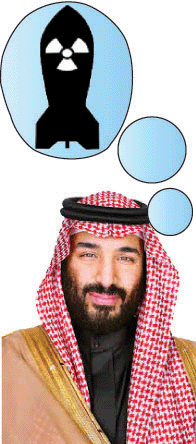 Nuclear Gulf: Is Saudi Arabia pushing itself into a nuclear trap?, MBS is prepared to pursue nuclear weapons if Iran gets them. But could he end up making the kingdom a nuclear pawn? https://www.aljazeera.com/ajimpact/nuclear-gulf-saudi-arabia-pushing-nuclear-trap-200718155513128.html Aljazeera, by Patricia Sabga, 21 Jul 2020 When countries start dabbling in nuclear energy, eyebrows raise. It’s understandable. Stopping the spread of nuclear weapons while allowing countries to pursue civilian nuclear programmes has proven a tough and sometimes unsuccessful balancing act for the global community.
So when atom-splitting initiatives surface in a region with a history of nuclear secrecy and where whacking missiles into one’s enemies is relatively common, it is not just eyebrows that are hoisted, but red flags.
Right now, warning banners are waving above the Arabian Peninsula, where the United Arab Emirates has loaded fuel rods into the first of four reactors at Barakah – the Arab world’s first nuclear power plant.
Roughly 388 miles west, Saudi Arabia is constructing its first research reactor at the King Abdulaziz City for Science and Technology.
The UAE has agreed not to enrich uranium or reprocess spent fuel. It has also signed up to enhanced non-proliferation protocols and even secured a coveted 123 Agreement with the United States that allows for the bilateral sharing of civilian nuclear components, materials and know-how.
But that has not placated some nuclear energy veterans who question why the Emirates has pushed ahead with nuclear fission to generate electricity when there are far safer, far cheaper renewable options more befitting its sunny climate.
Like the UAE, Saudi Arabia insists its nuclear ambitions extend no further than civilian energy projects. But unlike its neighbour and regional ally, Riyadh has not officially sworn off developing nuclear weapons.
The kingdom’s de facto leader, Crown Prince Mohammed bin Salman (MBS), has publicly declared his intention to pursue nuclear weapons if Iran gets them first.
The spectre of the Saudi-Iran Cold War escalating into a nuclear arms race is not beyond the realm of possibility. There are growing concerns over the nuclearisation of the Arabian Peninsula and where it could lead the Gulf and the Middle East – a volatile region that experts warn could be opening itself up to superpower proxy fights on a nuclear scale.
The economic case against nuclear
Saudi Arabia’s nuclear ambitions date back to at least 2006, when the kingdom started exploring nuclear power options as part of a joint programme with other members of the Gulf Cooperation Council.
More recently, the kingdom laced its nuclear plans into MBS’s “Vision 2030” blueprint to diversify the country’s economy away from oil.
Nuclear energy, the kingdom argues, would allow it to export crude it currently consumes for domestic energy needs, generating more income for state coffers while developing a new high-tech industry to create jobs for its youthful workforce.
But if a bountiful economic harvest is the goal, nuclear energy is a poor industry to seed compared to renewables like solar and wind.
“Every state has the right to determine its energy mix. The problem is this: nuclear costs are enormous,” Paul Dorfman, Honorary Senior Research Fellow at the Energy Institute, University College London and founder and chair of the Nuclear Consulting Group, told Al Jazeera. “Renewables are maybe between one-fifth and one-seventh the cost of nuclear.”
Utility-scale, average unsubsidised lifetime costs for solar photovoltaic were around $40 per megawatt hour (MWh) in 2019, compared to $155 per MWh for nuclear energy, according to an analysis by financial advisory and asset manager Lazard.
“There are no economic or energy policy or industrial reasons to build a nuclear power plant,” Mycle Schneider, convening lead author and the publisher of the World Nuclear Industry Status Report, told Al Jazeera. “If countries decide to build a nuclear power plant anyway, then we have to discuss other issues that are actually the drivers for those projects.”
Saudi Arabia’s King Abdullah City for Atomic and Renewable Energy did not respond to Al Jazeera’s request for an interview.
The Saudis have invited companies to bid on building two power reactors, but to date have not awarded a contract. While those plans remain on the drawing board, the kingdom is pressing ahead with construction on its first research reactor.
And there are troubling signs surrounding the project.
No IAEA monitoring
The Saudis announced in early 2018 that they had broken ground on a small research reactor that would be operational by the end of 2019.
Like most nuclear projects, Riyadh’s has fallen behind schedule. But there is strong evidence that the Saudis are pressing ahead with renewed vigor.
Bloomberg news reported that satellite photos taken in March and May of this year revealed that the Saudis have built a roof over the reactor – a development that is alarming nuclear experts because the Saudis have not yet invited the International Atomic Energy Agency (IAEA) to monitor the site and inspect the reactor’s design.
“What it does tend to infer is problematic,” said Dorfman. “Key to IAEA surveillance and regulations is signing up to non-proliferation treaties. In other words, questions of enrichment and how you deal with substances that flow out of nuclear reactors in terms of future weaponisation.”
Saudi has signed the Treaty on the Non-Proliferation of Nuclear Weapons (NPT), which obligates it to have a Comprehensive Safeguards Agreement with the IAEA. But those agreements do not allow IAEA inspectors to come sniffing around whenever they like on short notice.
That level of access is only granted when a country signs an Additional Protocol with the IAEA – something the UAE has done, but which the Saudis have not.
Nor is Riyadh obligated to make this move, because the Saudis are currently operating under a Small Quantities Protocol (SQP) that exempts states with nuclear ambitions from IAEA inspections.
The presumption is that the countries operating under the SQP do not have enough nuclear material to warrant that level of intrusiveness. But experts say the Saudis will not be able to hide behind the small quantities’ fig leaf once they switch on the reactor.
“It will have more than a small quantity of material, maybe not a large one, but more than the limit under this [SQP] agreement,” Henry Sokolski, executive director of the Nonproliferation Policy Education Center, told Al Jazeera. “Instead of owning up that they need to change the agreement and reaching an understanding with the people in Vienna [where the IAEA is based], they’re playing this out to the last second. That’s not a great look.”
Procrastination is not without its downsides. Riyadh does not have a 123 Agreement with the US that allows for bilateral civilian nuclear cooperation, despite efforts to negotiate one.
A 123 Agreement would give Riyadh a seal of approval from Washington, while it would open the door for US companies to throw their hats into the ring to reap profits from building reactors for the kingdom.
While US lawmakers in Congress have not been willing to turn a blind eye to Saudi Arabia’s bad behaviour, the administration of US President Donald Trump has not let it get in the way of fostering closer ties with the kingdom.
Trump, for example, has vigorously supported conventional weapons sales to the Saudis despite Riyadh’s abysmal record on human rights, while his son-in-law Jared Kushner has forged a close relationship with MBS.
This disconnect between Congress and the White House on Saudi policy was noted in a recent report by the Government Accountability Office (GAO) – a non-partisan Congressional watchdog – that found that the Trump administration may not have been as transparent as it should be with Congress over nuclear negotiations with the Saudis.
According to the GAO, the sticking points holding up a 123 Agreement between the US and Saudi include Riyadh’s failure to agree to refrain from enriching uranium or reprocessing plutonium – key ingredients in nuclear weapons – or to sign an Additional Protocol with the IAEA.
They don’t want to sign up to that. And you’ve got to ask the question: ‘Well, why? what’s the problem?'” said Sokolski.
“We know that looking at other military acquisitions, particularly in the missile arena, that the Saudis have a bad habit of doing things in secret if they think it’s controversial,” Sokolski added. “Would nuclear be treated the same way as missile acquisitions? If so, this is another lack of transparency you’ve got to be concerned about.”
Funding for nuclear weapons tests is blocked in U.S. Congress
 House Democrats vote to block funding for nuclear weapons tests, Defense News,
  by: Joe Gould 21 July 20, WASHINGTON ― No funding would be available for live nuclear weapons testing under an amendment the House adopted to its version of the annual defense policy bill.
The amendment from Rep. Ben McAdams, D-Utah, was adopted, 227-179, in a mostly party-line vote. The House is expected Tuesday to vote to pass the 2021 National Defense Authorization Act.
The amendment marks the second rebuke of the Trump administration amid reports it’s mulling a resumption of nuclear weapons testing. The House Appropriations Committee passed a similar ban earlier this month.
The amendment’s adoption will likely make it harder for House Republicans to vote for the House’s FY21 NDAA, and it likely sets up a fight with the Republican-controlled SASC when leaders of both panels reconcile their versions of the bill.
The FY21NDAA was voted out of the House Armed Services Committee on a bipartisan 56-0 vote earlier this month.
“Explosive nuclear testing is not necessary to ensure our stockpile remains safe and nothing in this amendment would change that,” McAdams said in a floor speech ahead of the vote. “Explosive nuclear testing causes irreparable harm to human health and to our environment. and jeopardizes the U.S. leadership role on nuclear nonproliferation.” ………
The House, separately, adopted an amendment that would give the energy secretary a stronger hand in setting nuclear policy by making him co-chair, alongside the defense secretary, of the Nuclear Weapons Council. The council is charged with the coordinating policy to manage the existing nuclear weapons stockpile and plan future nuclear deterrents.
The amendment, from House Energy and Commerce Committee ranking member Greg Walden, R-Ore., is to “to provide Cabinet-level visibility and accountability of our nuclear deterrent and the NWC budget process,” according to an amendment summary. Under current law, DoD’s undersecretary of defense for acquisition and sustainment chairs the council.
It was adopted in larger package of amendments, approved by a bipartisan 336-71.
It’s the latest move in a running battle over who controls the nuclear weapons budget submission. SASC’s proposed version of the FY21 NDAA would allow the council to edit the budget request after the Energy Department crafts it and before the request is submitted to the White House budget office. But House appropriators earlier this month approved a spending bill that would bar such a move. https://www.defensenews.com/congress/2020/07/20/house-democrats-block-funding-for-nuclear-weapons-tests/
North Korea continues policy -no denuclearization talks until the US withdraws its “hostile policy.
This nuanced treatment of nuclear weapons in CMC meeting coverage is consistent with recent statements by North Korean officials, which indicated denuclearization is off the table for now and North Korea will proceed with its weapons development to cope with US “long-term threats.”…….
While Kim Yo Jong’s July 10 press statement seemed more conciliatory in tone than the previous Foreign Ministry statements, the bottom line was consistent with North Korea’s position since the Stockholm talks in October 2019: there will be no denuclearization talks until the US withdraws its “hostile policy.”[9] Kim added that North Korea must plan for “long-term threats” from the US and “strengthen and steadily increase our practical capabilities,” which implied going ahead with North Korea’s weapons development and production plan. https://www.38north.org/2020/07/cmc072020/
Western Shoshone land stolen for nuclear weapons tests and waste dump
Western Shoshone land stolen for nuclear weapons tests and waste dump, By Ian Zabarte Shoshone land was illegally seized by the U.S government, breaking a historic treaty, first for the atomic test site in Nevada, and then for the planned — but still canceled — Yucca Mountain high-level radioactive waste dump. Throughout, the Shoshone people have paid a terrible price.
To hide the impacts from nuclear weapons testing, Congress defined Shoshone Indian ponies as “wild horses.” There is no such thing as a wild horse. They are feral horses, but the Wild Horse and Burrow Acts of 1971 gave the Bureau of Land Management (BLM) the affirmative act to take Shoshone livestock while blaming the Shoshone ranchers for destruction of the range caused by nuclear weapons testing.
My livelihood was taken and the Shoshone economy destroyed by the BLM. On the land, radioactive fallout destroyed the delicate high desert flora and fauna, creating huge vulnerabilities where noxious and invasive plant species took hold.
Nuclear weapons testing at the Nevada National Security Site has left a dark legacy of radiation exposure to Americans downwind from the battlefield of the Cold War. Among the victims are the Shoshone people, who, by no fault of our own, were exposed to radiation in fallout from more than 924 nuclear tests.
“Yucca Mountain is a serpent…and if you don’t do the things you’re supposed to do the snake will release its poison.” Ian ZabarteToday, the media does not report Native American past exposure to radioactive fallout from US/UK secret nuclear testing and disproportionate burden of risk.
The Shoshone people cannot endure any increased burden of risk from any source including resumption of WMD testing by US/UK, plutonium disposal from the Savannah River Site, depleted uranium disposal, proposed high-level nuclear waste disposal at Yucca Mountain, coal ash uranium or fracking released radiation.
Nuclear testing is a violation of the peace treaty with the Shoshone, the Treaty of Ruby Valley, and the U.S. Constitution, Article 6 Section 2, the treaty supremacy clause. Nothing in the treaty contemplated the secret massacre of Shoshone people with radioactive poison from nuclear weapons testing within our own homelands. My tribe and family are the victims.
The enduring purpose of nuclear technology is the creation of weapons of mass destruction. Their tests within the Shoshone homelands are deliberate acts that destroy the Shoshone people. No Shoshone, not one person, should be sacrificed for the benefit of some Americans and the profit of the military industrial complex.
What the Shoshone people experience is a deliberate intent by the US to systematically dismantle the living life-ways of the Shoshone people for the benefit of the US and the profit of the nuclear industry. This meets the minimum threshold of genocide under both the UN Convention and the US enactments of the crime of genocide.
Nuclear weapons development in Shoshone homelands violates humanitarian law, human rights law and environmental law and is racist. Racism is a crime. It is called genocide, “a crime against humanity.”
To prove intent to commit genocide, we have only to look at the culture of secrecy of the military occupation of Shoshone homelands during and since the Cold War at the test site. The acts committed in nuclear weapons development and testing against the Shoshone people benefit other Americans. The Shoshone people suffer without relief or acknowledgement of our silent sacrifice. Secrecy is not transparent. Secrecy is not democratic and is unconstitutional when the acts are conducted in and upon the Shoshone land and people.
Nothing in the Nuclear Waste Policy Act of 1982, as amended in 1987, considered the fact of Shoshone ownership of the proposed Yucca Mountain high-level nuclear waste repository. Almost $15 billion was spent to characterize the site, giving it the label as, “the most studied piece of real estate in the world.” The Nuclear Regulatory Commission admitted in the licensing proceedings that the Department of Energy has not proven ownership.
Nevada took hundreds of millions of dollars for characterization studies from the federal government in grants equal to taxes from Shoshone property and gave nothing to the Shoshone. A clear case of taxation without representation to defraud the Shoshone people of our property interests.
What is needed now are hearings on and support for the extension and funding of the Radiation Exposure Compensation Act of 2019. The Shoshone people need DNA testing and funding for tribal community health education on radiation basics and information on appropriate protective behavior to mitigate radiation exposure.
The Shoshone people are committed to the enforcement of law in the service of justice and human dignity. That is human growth and development, not nuclear weapons.
Ian Zabarte is Principal Man for the Western Bands of the Shoshone Nation of Indians.
Los Alamos Study Group press Santa Fe Council – to stop Santa Fe becoming a nuclear sacrifice zone
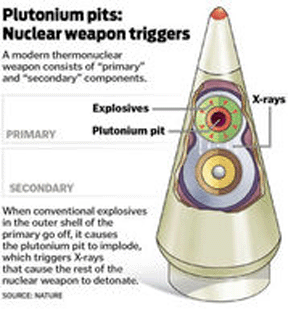 Santa Fe shouldn’t become a nuclear sacrifice zone https://www.abqjournal.com/1477033/santa-fe-shouldnt-become-a-nuclear-sacrifice-zone-ex-where-does-the-city-stand-in-matters-of-peace-the-environment-and-citizens-health-and-welfare.html,BY LYDIA CLARK, July 19th, 2020 This is an open letter to Santa Fe Mayor Alan Webber and the City Council:We, the Los Alamos Study Group, have now written to the Santa Fe City Council and the mayor of Santa Fe numerous times regarding two very important resolutions we have proposed, with no response of any significance from anyone.
These resolutions are of great import to the safety, health and welfare of the city and citizens of Santa Fe, and we are very concerned the City Council and mayor are ignoring these issues.
The City of Santa Fe has had a long-standing policy of resolutions supporting nuclear disarmament, supporting environmental impact statements and opposing production of nuclear weapons, specifically plutonium pit production.
Santa Fe has also been and is still a member of “Mayors for Peace,” which states that “nuclear weapons are inhumane” and calls for “their abolition.”
Recently, Mayor Webber attended a “peaceful protest” regarding racial issues. Is the destruction of humanity and the planet less important in keeping the peace?
The safety, health and welfare are only a part of the impact created from nuclear weapons production at Los Alamos National Laboratory. It uses and diverts much-needed funding for education, health care, sustainable jobs, and real safety and security away from New Mexico. The proposed FY2021 federal budget solely for plutonium pit production at LANL is now $1.1 billion (an increase since our last letter). How many truly beneficial programs for New Mexico would this support?
Nuclear weapons production creates vast amounts of toxic waste that has no safe method of disposal, with the potential to contaminate our environment from spills, leakage, fire hazard, seismic activity and human error. The waste currently being stored at LANL will not be transported for disposal any time in the near future. Where will the new waste be stored?
The recent exposure to LANL workers from a breach in a plutonium glove box is foreshadowing of things to come with the proposed plutonium pit factory at the facility. LANL has a history of safety failures.
The last plutonium pit factory, Rocky Flats (in Colorado), was forcibly closed for egregious environmental violations, worker injuries and deaths. Is New Mexico willing to create Rocky Flats II?
Why would the city officials not support asking for a Site-Wide Environmental Impact Statement (which is part of one of the above-referenced resolutions) that can help protect not only Santa Fe, but also the entire northern New Mexico region in this crucial matter?
The other resolution would bar the city from entering into development agreements with LANL or other nuclear weapons agencies. (There has been talk of a LANL presence on the city-owned Midtown Campus).
Your lack of concern and response is disturbing, and we ask once more for a prompt response to the request for support and implementation of these two resolutions, and an explanation to the public of the position of the city of Santa Fe in matters of peace, sustainability, environmental protection, and the health and welfare of our citizens, and the citizens of New Mexico.
Do not allow our city to become a nuclear sacrifice zone.
Lydia Clark is outreach director-Santa Fe for the Los Alamos Study Group.
Atomic veterans – the health damage to America’s nuclear workers and soldiers
The lasting effects of working with nuclear weapons https://www.wcax.com/2020/07/19/the-lasting-effects-of-working-with-nuclear-weapons/ By WCAX News Team [includes excellent short video] Jul. 19, 2020 BURLINGTON, Vt. Seventy-five years after the world’s first atomic bombs were dropped in Japan, the people and the island are still feeling the impacts.
Nuclear weapons also have had a lasting effect on American soldiers.
Garry DeFour is a Vermonter who served in the U.S. Senate Committee on Veteran Affairs between 1979 and 1981.
During those few years, he learned about the U.S. Marines who were sent to Nagasaki to help with the clean-up process after the Atomic bomb was dropped. “Now, thirty-five years later several Veterans that served in Nagasaki — are inflicted with rare blood diseases and bone-cancer,” Atomic Veterans Specialist Garry DeFour said.
He says many soldiers who helped create and test nuclear weapons also became contaminated.
Years later, some started to report severe illnesses, stemming from what they believe was from their time serving in the military.
“We were told for years to keep out mouths shut until President Clinton in 1996 did a proclamation that now Veterans could talk about it to the V.A.,” DeFour said. Vets did talk about it, and some even got compensation from the Government because of the on-going health problems they face.
They’re known as Atomic Veterans.
DuFour’s been working on a documentary highlighting the soldiers.
He estimates there are still about 28,000 still living. He believes the U.S. has no need for nuclear weapons and cites a colleague who helped create the hydrogen bomb.
“As Dr. Kenneth Ford told me, he said we have enough conventional weapons, to give a great defense,” DeFour said
Reflecting on Cape Cod’s Cold War nuclear history
Sadly, this lack of nuclear knowledge is not solely a Cape Cod problem. Nationwide, nuclear education is lacking. Most people do not know the United States government conducted 1,032 nuclear tests that sickened and killed thousands of people around the world. It is not general knowledge that the United States and Russia still possess more than 90% of the world’s remaining nuclear weapons — about 6,000 each.
So, as you eat ice cream, photograph cotton candy sunsets, and talk about how different the world is because of the pandemic, it’s worth brushing up on your nuclear history and learning how nuclear weapons continue to affect our daily lives. Thankfully, when it comes to reducing nuclear threats, Massachusetts legislators have led the way for decades. Today, our delegation continues to champion policies that protect their constituents — and the world — from nuclear catastrophe.
Remembering Hiroshima and Nagasaki – time for the global Nuclear Ban Treaty – theme for August 20

August 6th and August 9th are the days that remind us of the horror of nuclear weapons. The failing and desperate nuclear industry would like us to forget about Hiroshima and Nagasaki. They’d like us to swallow their spin about new small nuclear reactors. (But new small nuclear reactors are just the latest gimmick to support the nuclear weapons industry, and put a friendly mask on it. They really have no other purpose.)
 In this time of pandemic and global heating, Trump’s USA, Putin’s Russia, and other nations, are putting obscene amounts of money into nuclear weapons. The U.N.’s Treaty on the Prohibition of Nuclear Weapons (passed by a vote of 122-1-1 at the United Nations in 2017) is looking ever more rational and necessary. It will enter into force when 50 nations have ratified it. It’s now up to 43 ratifications.
“The pandemic has taught us that all the world’s great needs and threats are linked. By reallocating bloated military spending and reorienting nations to resolve conflict through peaceful negotiation, people and governments throughout the world can more easily tackle the enormous economic and civil injustices that give rise to conflict and fuel the fire of climate change. Each victory in each arena must be used to feed progress elsewhere if humanity is to survive this century.
As we remember the victims of the atomic bombings 75 years ago and hear the stories of the survivors, we realize more than ever: we are all in this together. ” – Michael Christ, Executive Director, International Physicians for the Prevention of Nuclear War
Banning weapons of mass destruction, including nuclear ones – theme for August 2020

You might think that it’s naive to be talking about banning nuclear weapons, in this present climate of international tension. Yes, an international agreement to ban them is not going to get rid of nuclear weapons overnight, or indeed, anytime soon.
BUT – as things stand now, nuclear weapons, held by all the so virtuous States – USA, Britain, France, India, China Pakistan, Israel, (- and now North Korea) – are accepted as respectable , defensive, necessary.
The idea of the world recognising weapons of mass destruction as unacceptable is not new. It’s been done before.
Human beings, after all, are social animals, and their greatest successes have been achieved by co-operation. Years of co-operative effort by intelligent and thoughtful people have shed light on the humanitarian horror of mass killings, and mass sufferings of those who survived such attacks.
Under the auspices of he United Nations, the concerted efforts of so many have brought about the recognition that mass murder is unacceptable, and has been judged to be illegal. No, these threats have not been completely eliminated. But they have been vastly diminished, and no leader can get away with pronouncing them to be acceptable or necessary.

The United Nations Ban on the use of chemical and biological weapons in warfare was signed in 1925, and strengthened in 1997 in the the Chemical Weapons Convention (CWC)
The United Nations Biological Weapons Convention (BWC) came into force in 1975.
In both cases, these agreements outlawed the development, stockpiling, acquisition, retention, and production of these inhumane weapons, and reaffirmed the 1925 ban on their use.
These bans, agreed on by 178 nations (the BWC), 192 (the CWC) have been further developed over many years of successive conventions, the most recent being in November 2016.
There’s a wealth of information on the effects of nuclear weapons production and use – not just the immediate effects on victim communities, but the pervasive global effect on climate, agriculture and teh world’ s food supply.
Right now, we all live under a terrible threat of nuclear war. It is surely time to make a start on removing that threat. The United Nations Nuclear Weapons Ban Treaty is that start. The Treaty on the Prohibition of Nuclear Weapons is close to the number of 50 ratifications , required to make it international law.
America’s nuclear attack on itself ? The fallout from nuclear testing
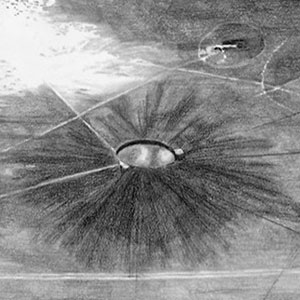
Above – Trinity nuclear test site crater 1945
It’s Been 75 Years, and America Still Won’t Admit a Nuclear Disaster. Remember when we blew radioactive ash over New Mexico? Now the Trump administration is talking about testing bombs again. https://www.nytimes.com/2020/07/15/opinion/75-anniversary-trinity-nuclear-testing.html, By Joshua Wheeler, Mr. Wheeler is the author of “Acid West.” July 15, 2020 When America detonated the world’s first atomic bomb at 0529 hours on July 16, 1945, it was an attack on American soil.
The blast melted the sand of southern New Mexico and infused it with the bomb’s plutonium core — 80 percent of which failed to fission — scattering radioactive material across the desert. The first atomic bomb was both a feat of engineering and, by today’s standards, a crude dirty bomb.
An Army doctor later wrote about Trinity: “A few people were probably overexposed, but they couldn’t prove it and we couldn’t prove it. So we just assumed we got away with it.”
Aboveground nuclear testing was halted in 1963. Underground testing, which is comparably safer but still terrifying, was stopped in 1992. But today the Trump administration is floating the idea of resuming such testing — despite the fact that America is, after more than 1,000 tests, already the most nuclear-bombed country in the world.
Any explosive nuclear test is an escalation toward global annihilation.
But the decision to resume explosive nuclear tests should never be made at all. We can and do perform successful tests in virtual-reality chambers using advanced supercomputers. Explosives tests of any kind carry magnitudes more risk, and the consequence of that risk has historically fallen on the most vulnerable Americans.
It should come as no surprise that the downwinders of Trinity were largely impoverished agricultural families, mostly Hispanic and Native. New Mexico, one of the poorest states in the nation, is the only one with a cradle-to-grave nuclear industry, where weapons are designed, uranium mined, and waste stored. After a recent study from the Nuclear Regulatory Commission raised no concerns, the federal government looks poised to finalize Holtec International’s bid to store nuclear waste between the New Mexico towns of Hobbs and Carlsbad, despite vehement objections from the governor and many residents of the area. And any resumed nuclear testing would add more radioactive waste to the controversial storage site already in existence near Carlsbad.
This is further evidence of what’s been called radioactive colonialism, where minority and impoverished communities are forced to suffer the costs of the nuclear industry.
Henry Herrera, whose family’s drying linens were stained by the fallout on that July morning in 1945, told me: “We were lab rats. That ought to make us hero patriots or something. Which we are. But nobody gives a damn.” Mr. Herrera, his brother and his two sisters all had cancer.
If Congress truly wants to awaken Americans to the dangers of nuclear testing, it should start by finally telling the truth about the disaster at Trinity. Bills to acknowledge and compensate Mr. Herrera and other Trinity downwinders have lingered in legislative purgatory for over a decade. Passing them would help establish what should be obvious: The shameful legacy of nuclear weapons testing is something we should never attempt to revive.
Joshua Wheeler is the author of the essay collection “Acid West.” He teaches in the creative writing program at Louisiana State University.
The Times is committed to publishing a diversity of letters to the editor. We’d like to hear what you think about this or any of our articles. Here are some tips. And here’s our email: letters@nytimes.com.
Follow The New York Times Opinion section on Facebook, Twitter (@NYTopinion) and Instagram.
Azerbaijani Defense Ministry spokesman suggests bombing Armenian nuclear power station
 Idle Threat? Azerbaijan’s Hint Of Missile Strike On Armenian Nuclear Plant Increases Tensions, Radio Free Europe July 17, 2020 By Andy Heil Idle Threat? Azerbaijan’s Hint Of Missile Strike On Armenian Nuclear Plant Increases Tensions, Radio Free Europe July 17, 2020 By Andy Heil
Azerbaijan dramatically escalated tensions amid its border battle with Armenia this week with an implicit threat to bomb the region’s only nuclear power plant and unleash “great catastrophe” on Armenians. The July 16 warning drew outrage from Yerevan and deepened concerns that the worst violence in four years between Azerbaijan and Armenia, who are technically still in a war begun in the late 1980s, could quickly spiral out of control. At least 16 Azerbaijanis and Armenians have died in the fighting near a northern section of their internationally recognized border that has included heavy artillery, tank, and drone attacks since it began on July 12. Yerevan and Baku routinely threaten and accuse the other of provocations that have killed dozens of people in recent years, many of them civilians, with neither side willing to back down publicly for fear of being viewed as weak in the more than 30-year-long standoff. The strategic or tactical aim of either side in contributing to this week’s violence is unclear. But the reframing of the current flareup to include a missile attack on a Soviet-built nuclear plant — a move that could massively increase the death toll and set off a Chernobyl-like fallout in the region and beyond — took many people by surprise. “The Armenian side must not forget that our army’s state-of-the-art missile systems allow us to strike the Metsamor nuclear plant with precision, which could lead to a great catastrophe for Armenia,” Vagif Dargahli, the Azerbaijani Defense Ministry spokesman, said on July 16, hours after hostilities had resumed following a one-day lull. ……. There are some 3 million people living in Armenia. The Metsamor Nuclear Power Plant lies just a few kilometers from cities with tens of thousands of people and 35 kilometers from the Armenian capital, Yerevan, and its 1 million inhabitants………… Emil Sanamyan, a blogger and fellow at the University of Southern California’s Dornsife Institute of Armenian Studies, said Baku’s threat involved its possession of a missile system it purchased from Israel. “Just to be clear: With this statement issued yesterday, [the] Azerbaijani Defense Ministry is threatening to use the LORA surface-to-surface missile it bought from Israel…to attack Armenia’s nuclear power plant to cause a leak of radiation.”………….. |
|
Nuclear bomb testing – the cruellest legacy of environmental injustice and racism
|
Nuclear testing legacy is ‘cruellest’ environmental injustice, warns rights expert,
https://news.un.org/en/story/2020/07/1068481 16 July 2020
Human RightsThe dangerous legacy of nuclear weapons testing continues to affect many communities, a leading rights expert said on Thursday, on the 75th anniversary of testing in the United States, that heralded the nuclear age.
In an appeal to governments worldwide to get rid of weapons of mass destruction, UN Special Rapporteur on toxics, Baskut Tuncak, said that the Trinity tests in New Mexico on 16 July 1945, were the prelude to “two horrific explosions suffered by (the) innocent people of Japan”, during the Second World War.
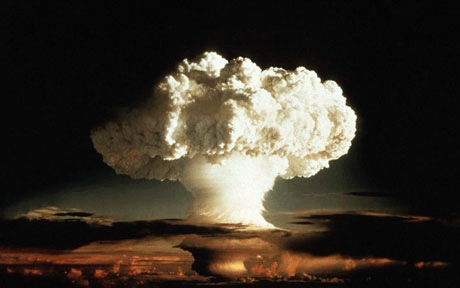
They were also followed by the detonation of hundreds of nuclear bombs over vulnerable communities in the Pacific, and the disposal of radioactive waste on lands and territories of indigenous peoples. Paradise lostThis had created a legacy of nuclear testing that “is one of the cruellest examples of environmental injustice witnessed” in “what should be a peaceful island paradise”, said Mr Tuncak, who reports to the Human Rights Council in Geneva. From 1946-58, 67 nuclear bombs were detonated on the Marshall Islands, he said, the equivalent of more than 1.5 “Hiroshima-sized explosions every day for 12 years”. Communities “have suffered unimaginably” from radioactive contamination and this continues today “with a legacy of contamination, illness and anguish”, the expert insisted.
Twin environmental disasters made matters worse, he added, referring to climate change-induced sea level rise and nuclear waste concentrated in a radioactive “tomb”. 200 tests in 30 yearsSimilarly, in French Polynesia, over 200 nuclear tests were conducted over a 30-year period from 1966 to 1996, subjecting inhabitants to associated health and environmental damage, the Special Rapporteur said. From Greenland to the indigenous territories of the United States, he warned that people continued to suffer from the nuclear testing era. Waste not“In recent decades, numerous Native American tribes received funding to store unwanted nuclear waste on their lands,” he said. “Those of Point Hope, Alaska, became recipients of radioactive soil and higher cancer rates that are believed to have been the foreseeable result. And the people of Greenland discovered radioactive waste left by the US military, unbeknownst to them as the ice continues to melt in the Arctic.” This discriminatory approach should be addressed by all States as part of the discussion on “systemic racism” and nuclear disarmament, Mr. Tuncak insisted. “Unaddressed, the dangers of radioactive contamination will persist for centuries, and so too will the harmful legacy of racism that surrounds this tragic chapter of humanity,” he added. |
|
-
Archives
- October 2026 (104)
- September 2026 (339)
- August 2026 (330)
- July 2026 (355)
- June 2026 (287)
- May 2026 (306)
- April 2026 (356)
- March 2026 (251)
- February 2026 (267)
- January 2026 (308)
- December 2025 (358)
- November 2025 (359)
-
Categories
- 1
- 1 NUCLEAR ISSUES
- business and costs
- climate change
- culture and arts
- ENERGY
- environment
- health
- history
- indigenous issues
- Legal
- marketing of nuclear
- media
- opposition to nuclear
- PERSONAL STORIES
- politics
- politics international
- Religion and ethics
- safety
- secrets,lies and civil liberties
- spinbuster
- technology
- Uranium
- wastes
- weapons and war
- Women
- 2 WORLD
- ACTION
- AFRICA
- Atrocities
- AUSTRALIA
- Christina's notes
- Christina's themes
- culture and arts
- Events
- Fuk 2022
- Fuk 2023
- Fukushima 2017
- Fukushima 2018
- fukushima 2019
- Fukushima 2020
- Fukushima 2021
- general
- global warming
- Humour (God we need it)
- Nuclear
- RARE EARTHS
- Reference
- resources – print
- Resources -audiovicual
- Weekly Newsletter
- World
- World Nuclear
- YouTube
-
RSS
Entries RSS
Comments RSS


