US urges countries to withdraw from UN nuclear ban treaty
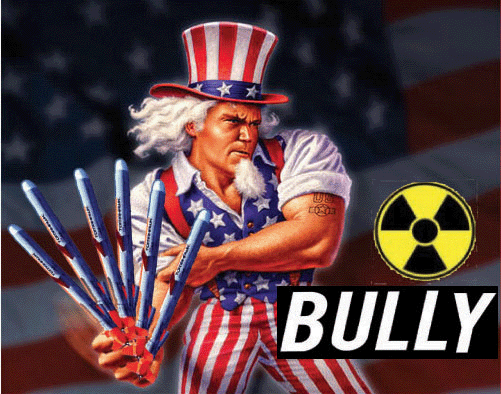 US urges countries to withdraw from UN nuke ban treaty, By EDITH M. LEDERER, October 22, 2020, UNITED NATIONS (AP) — The United States is urging countries that have ratified a U.N. treaty to ban nuclear weapons to withdraw their support as the pact nears the 50 ratifications needed to trigger its entry into force, which supporters say could happen this week.The U.S. letter to signatories, obtained by The Associated Press, says the five original nuclear powers — the U.S., Russia, China, Britain and France — and America’s NATO allies “stand unified in our opposition to the potential repercussions” of the treaty……..
Beatrice Fihn, executive director of the International Campaign to Abolish Nuclear Weapons, the 2017 Nobel Peace Prize-winning coalition whose work helped spearhead the nuclear ban treaty, told The Associated Press Tuesday that several diplomatic sources confirmed that they and other states that ratified the TPNW had been sent letters by the U.S. requesting their withdrawal.
She said the “increasing nervousness, and maybe straightforward panic, with some of the nuclear-armed states and particularly the Trump administration” shows that they “really seem to understand that this is a reality: Nuclear weapons are going to be banned under international law soon.”
Fihn dismissed the nuclear powers’ claim that the treaty interferes with the Nuclear Nonproliferation Treaty as “straightforward lies, to be frank.”
“They have no actual argument to back that up,” she said. “The Nonproliferation Treaty is about preventing the spread of nuclear weapons and eliminating nuclear weapons, and this treaty implements that. There’s no way you can undermine the Nonproliferation Treaty by banning nuclear weapons. It’s the end goal of the Nonproliferation Treaty.”
The NPT sought to prevent the spread of nuclear arms beyond the five original weapons powers. It requires non-nuclear signatory nations to not pursue atomic weapons in exchange for a commitment by the five powers to move toward nuclear disarmament and to guarantee non-nuclear states’ access to peaceful nuclear technology for producing energy………
“That the Trump administration is pressuring countries to withdraw from a United Nations-backed disarmament treaty is an unprecedented action in international relations,” Fihn said. “That the U.S. goes so far as insisting countries violate their treaty obligations by not promoting the TPNW to other states shows how fearful they are of the treaty’s impact and growing support.”
The treaty was approved by the 193-member U.N. General Assembly on July 7, 2017 by a vote of 122 in favor, the Netherlands opposed, and Singapore abstaining. Among countries voting in favor was Iran. The five nuclear powers and four other countries known or believed to possess nuclear weapons — India, Pakistan, North Korea and Israel — boycotted negotiations and the vote on the treaty, along with many of their allies………… https://apnews.com/article/nuclear-weapons-disarmament-latin-america-united-nations-gun-politics-4f109626a1cdd6db10560550aa1bb491
Unwanted nuclear submariness and military operations in the Arctic
Increased interest in the Arctic: “The U.S. Army has made a significant pivot” There is a pivot in the U.S. Army to train and operate more in Alaska to rebuild skills, according to Major General Peter Andrysiak, commander U.S. Army Alaska. He says the U.S. Army soon will release its own Arctic strategy.
Difficulties in the membership of countries in the Comprehensive Test Ban Treaty
|
Precarious Multilateralism Seizes CTBTO Nuclear-Test-Ban Organization, By Stephanie Liechtenstein*, Passblue25 Oct 20, VIENNA (IDN) – For the first time in its 24-year history, state parties to the Comprehensive Test Ban Treaty, a multilateral agreement that bans all nuclear testing worldwide, have taken a controversial decision by a two-thirds majority. Decisions in the treaty’s body are usually taken by consensus. The majority decision on October 19 was focused on whether countries with unpaid dues could vote in the election of the next executive secretary of the Preparatory Commission to the Comprehensive Test Ban Treaty Organization. (The body is not part of the United Nations but has a cooperative agreement with it.) The decision occurred after several months of negotiations failed to produce agreement on the matter. The election is scheduled to take place at the Vienna-based organization from November 25 to 27. The lack of consensus reflects the hardening attitudes in international relations, where multilateralism has become more precarious amid intensifying competition among the world’s great powers, worsened in the pandemic. The disunity also shows that multilateral bodies like the CTBTO, as it is known, have become highly politicized, with decisions on such basics as voting methods taking longer to be finalized because of global squabbling. The executive secretary oversees a secretariat in Vienna with 260 staff members and an annual budget of around $130 million. It leads efforts on the treaty’s verification system by installing monitoring stations worldwide. The position also ensures that all member states of the organization receive the data from the monitoring system, particularly when a nuclear test or even a tsunami is detected. Lassina Zerbo of Burkina Faso has held the post for seven years. Besides, decisions on who can vote for the executive secretary position, there are also tensions about Zerbo’s plan to run for a third term. The Comprehensive Test Ban Treaty has 184 signatories but has not been entered into force, as numerous countries, including China, Egypt, Iran, Israel and the United States, have not ratified it. The Preparatory Commission originated in 1996 as an interim body to build the treaty’s verification regime. In the controversial vote on October 19, member states restored the voting rights of just nine countries out of a total of 25 countries that applied for reinstatement. Diplomats in Vienna say that the list of nine countries was presented by Canada and supported by numerous other Western nations, such as the US and Britain. (The organization’s meetings on the matter were held behind closed doors.) Two other proposals on restoring voting rights did not meet the necessary two-thirds majority. One proposal suggested reinstating the rights of all 25 countries; the other one, submitted by Russia, offered to restore the rights of 15 countries. Many of the countries that applied for restoring their rights are financially pressed because of the coronavirus pandemic; some are also hit by conflict or war and therefore lagging in payments……….. https://www.indepthnews.net/index.php/armaments/nuclear-weapons/3938-precarious-multilateralism-seizes-ctbto-nuclear-test-ban-organization |
|
UN Treaty on the Prohibition of Nuclear Weapons reaches the required 50 ratifications to become law

Historic milestone: UN Treaty on the Prohibition of Nuclear Weapons reaches 50 ratifications needed for entry into force https://www.icanw.org/historic_milestone_un_treaty_on_the_prohibition_of_nuclear_weapons_reaches_50_ratifications_needed_for_entry_into_force 25 Oct 20,
On October 24, 2020, the UN Treaty on the Prohibition of Nuclear Weapons reached the required 50 states parties for its entry into force, after Honduras ratified just one day after Jamaica and Nauru submitted their ratifications. In 90 days, the treaty will enter into force, cementing a categorical ban on nuclear weapons, 75 years after their first use.
This is a historic milestone for this landmark treaty. Prior to the TPNW’s adoption, nuclear weapons were the only weapons of mass destruction not banned under international law, despite their catastrophic humanitarian consequences. Now, with the treaty’s entry into force, we can call nuclear weapons what they are: prohibited weapons of mass destruction, just like chemical weapons and biological weapons.
ICAN’s Executive Director Beatrice Fihn welcomed the historic moment. “This is a new chapter for nuclear disarmament. Decades of activism have achieved what many said was impossible: nuclear weapons are banned,” she said.
Setsuko Thurlow, survivor of the atomic bombing of Hiroshima, said “I have committed my life to the abolition of nuclear weapons. I have nothing but gratitude for all who have worked for the success of our treaty.” As a long-time and iconic ICAN activist who has spent decades sharing the story of the horrors she faced to raise awareness on the humanitarian consequences of nuclear weapons this moment held particular significance: “This is the first time in international law that we have been so recognized. We share this recognition with other hibakusha across the world, those who have suffered radioactive harm from nuclear testing, from uranium mining, from secret experimentation.” Survivors of atomic use and testing all over the world have joined Setsuko in celebrating this milestone.
The three latest states to ratify were proud to be part of such a historic moment. All 50 states have shown true leadership to achieve a world without nuclear weapons, all while facing unprecedented levels of pressure from the nuclear armed states not to do so. A recent letter, obtained by AP only days before the ceremony, demonstrates that the Trump administration has been directly pressuring states that have ratified the treaty to withdraw from it and abstain from encouraging others to join it, in direct contradiction to their obligations under the treaty. Beatrice Fihn said: “Real leadership has been shown by the countries that have joined this historical instrument to bring it to full legal effect. Desperate attempts to weaken these leaders’ commitment to nuclear disarmament demonstrate only the fear of nuclear armed states of the change this treaty will bring.”
This is just the beginning. Once the treaty is in force, all states parties will need to implement all of their positive obligations under the treaty and abide by its prohibitions. States that haven’t joined the treaty will feel its power too – we can expect companies to stop producing nuclear weapons and financial institutions to stop investing in nuclear weapon producing companies.
How do we know? Because we have nearly 600 partner organisations in over 100 countries committed to advancing this treaty and the norm against nuclear weapons. People, companies, universities and governments everywhere will know this weapon has been prohibited and that now is the moment for them to stand on the right side of history.
European Commission commits to retainng Iran nuclear deal
 European Commission reassures Iran of commitment to nuclear deal https://www.world-nuclear-news.org/Articles/European-Commission-reassures-Iran-of-commitment-t23 October 2020 The lifting of economic sanctions against Iran remains an essential part of the Joint Comprehensive Plan of Action (JCPoA) and its signatories are committed to expanding the special purpose vehicle that enables European businesses to maintain trade with the country, according to the European Commission’s foreign affairs spokesperson Peter Stano.
In an interview with the Tehran Times published on 20 October, Stano referred to remarks Josep Borrell, the EU’s high representative for foreign affairs and security policy, had made to the European Parliament on 7 October. Borrell said Iran had “legitimate expectations that the nuclear deal would result in more concrete economic benefits”.
The E3 – France, Germany and the UK – triggered the JCPoA’s dispute resolution mechanism in January, following Iran’s further steps away from its commitments. In June, the International Atomic Energy Agency (IAEA) adopted a resolution calling on Iran to cooperate fully in implementing its NPT Safeguards Agreement and Additional Protocol.
In August, IAEA Director General Rafael Mariano Grossi held talks with Iranian officials on access for IAEA inspectors to the country’s nuclear sites. His visit to Tehran followed the US Administration’s request to the UN Security Council to initiate the ‘snapback’ mechanism of the Iran nuclear deal. This mechanism allows a party to the agreement to seek the re-imposition against Iran of the multilateral sanctions lifted in 2015 in accordance with resolution 2231. The USA withdrew from the JCPoA in May 2018.
Stano told the Tehran Times that the EU considers the extraterritorial application of unilateral restrictive measures to be contrary to international law.
“The lifting of sanctions is an essential part of the JCPoA agreement,” he said. “In this regard, the EU fulfilled its commitments and lifted all its economic and financial sanctions in connection with the Iranian nuclear programme. Furthermore, the EU member states sitting in the UN Security Council prevented the US efforts to use the so-called ‘snapback’ and re-introduce UN sanctions that were lifted as a result of the JCPoA.”
The EU had taken “a series of concrete actions”, he said, including updating its Blocking Statute in August 2018 and, the following year, setting up INSTEX (Instrument in Support of Trade Exchanges). In addition, the European Commission recently launched two online platforms to support European economic operators “to engage in legitimate trade with Iran”.
“This underscores the continued EU commitment to the full and effective implementation of the JCPoA,” Stano said, adding that the first transactions under INSTEX are being processed. “The number of participants of INSTEX is not shrinking; quite to the contrary, there are more European countries joining, with more to follow.”
Jesuit priest sentenced for peacful civil disbedience in protest against nuclear weapons
 JESUIT FR. STEVE KELLY SENTENCED FOR NONVIOLENT CIVIL DISOBEDIENCE AT U.S. NUCLEAR WEAPON FACILITY JESUIT FR. STEVE KELLY SENTENCED FOR NONVIOLENT CIVIL DISOBEDIENCE AT U.S. NUCLEAR WEAPON FACILITY
Ignation Solidarity Network, BY ISN STAFF | October 22, 2020 Father Steve Kelly, S.J., a 71-year-old Jesuit priest and member of the nonviolent civil disobedience group that came to be known as the “Kings Bay Plowshares 7,” was sentenced by a U.S. District Court judge to 33 months in jail, three years’ probation and restitution fees on October 15. Due to the fact that Fr. Kelly already served 30 months and under federal law is owed 54 days a year of “good time credit,” his sentencing, in essence, discontinued his incarceration in a federal prison facility. The sentence stems from April 4, 2018, the 50th anniversary of the assassination of Dr. Martin Luther King, Jr., when Fr. Kelly and six other Catholic activists, all lay people—Mark Colville, Clare Grady, Martha Hennessy, Elizabeth McAlister, Patrick O’Neill, and Carmen Trotta—set out late at night to practice their faith and witness for peace among the people working with nuclear weapons inside the U.S. Navy Kings Bay nuclear submarine base on the south Georgia coast. Once inside, they split into three groups to hang banners, pour blood, spraypaint religious sayings, block off an administrative building with crime scene tape, and hammer on replicas of the nuclear missiles deployed on the Trident submarines based at Kings Bay. The declaration of a National Emergency in mid-March led federal courts around the country to curtail business and restrict access. In southeast Georgia, the federal court put most proceedings on hold, first until April 17 and later through the end of May, further delaying the sentencing of the seven. Following a three-day jury trial in October 2019, the seven were convicted of misdemeanor trespass and three felonies: the destruction of government property, depredation of government property on a military installation, and a conspiracy to do these things. Fr. Kelly was returned to the Glynn County Detention Center following the trial. Release on bail was unavailable to Fr. Kelly due to his unresolved federal probation violation from an earlier disarmament action in Washington state. When the group was convicted, the court had set forth a clear timeline for the completion of pre-sentencing reports in anticipation of sentencing last winter. Those deadlines slipped by as draft reports for each of the defendants were prepared…………. In reflecting on the April 4, 2018, action, Fr. Kelly said: “In order to use my limited time, I will, along with others, try to embody the vision given to us through the prophet Isaiah. It is a conversion of weapons to devices for human production. The gift of Isaiah 2:4 is an economic, political, and moral conversion of the violence of nuclear annihilation. With others, I hope to be instruments in God’s hands for showing a way out of the escalation, the proliferation of this scourge of humanity. I feel strongly that Martin Luther King, Jr., would agree with the principle I attribute to Gandhi that we cannot be fully human while one nuclear weapon exists.” [Kings Bay Plowshares 7, Religion News Service] https://ignatiansolidarity.net/blog/2020/10/22/jesuit-fr-steve-kelly-sentenced-for-nonviolent-civil-disobedience-at-u-s-nuclear-weapon-facility/ |
|
America pushes other nations to withdraw from the Treaty on the Prohibition of Nuclear Weapons
US urges countries to withdraw from UN nuke ban treaty
UNITED NATIONS (AP) 22 Oct 20 — The United States is urging countries that have ratified a U.N. treaty to ban nuclear weapons to withdraw their support as the pact nears the 50 ratifications needed to trigger its entry into force, which supporters say could happen this week.The U.S. letter to signatories, obtained by The Associated Press, says the five original nuclear powers — the U.S., Russia, China, Britain and France — and America’s NATO allies “stand unified in our opposition to the potential repercussions” of the treaty.
It says the treaty “turns back the clock on verification and disarmament and is dangerous” to the half-century-old Nuclear Nonproliferation Treaty, considered the cornerstone of global nonproliferation efforts.
“Although we recognize your sovereign right to ratify or accede to the Treaty on the Prohibition of Nuclear Weapons (TPNW), we believe that you have made a strategic error and should withdraw your instrument of ratification or accession,” the letter says.
The treaty requires that all ratifying countries “never under any circumstances … develop, test, produce, manufacture, otherwise acquire, possess or stockpile nuclear weapons or other nuclear explosive devices.” It also bans any transfer or use of nuclear weapons or nuclear explosive devices — and the threat to use such weapons — and requires parties to promote the treaty to other countries.
Beatrice Fihn, executive director of the International Campaign to Abolish Nuclear Weapons, the 2017 Nobel Peace Prize-winning coalition whose work helped spearhead the nuclear ban treaty, told The Associated Press Tuesday that several diplomatic sources confirmed that they and other states that ratified the TPNW had been sent letters by the U.S. requesting their withdrawal.
She said the “increasing nervousness, and maybe straightforward panic, with some of the nuclear-armed states and particularly the Trump administration” shows that they “really seem to understand that this is a reality: Nuclear weapons are going to be banned under international law soon.”
Fihn dismissed the nuclear powers’ claim that the treaty interferes with the Nuclear Nonproliferation Treaty as “straightforward lies, to be frank.”
“They have no actual argument to back that up,” she said. “The Nonproliferation Treaty is about preventing the spread of nuclear weapons and eliminating nuclear weapons, and this treaty implements that. There’s no way you can undermine the Nonproliferation Treaty by banning nuclear weapons. It’s the end goal of the Nonproliferation Treaty.”
The NPT sought to prevent the spread of nuclear arms beyond the five original weapons powers. It requires non-nuclear signatory nations to not pursue atomic weapons in exchange for a commitment by the five powers to move toward nuclear disarmament and to guarantee non-nuclear states’ access to peaceful nuclear technology for producing energy.
U.N. Secretary-General Antonio Guterres called the nuclear weapons ban treaty “a very welcome initiative.”
“It is clear for me that we will only be entirely safe in relation to nuclear weapons the day where nuclear weapons no longer exist,” he said in an interview Wednesday with AP. “We know that it’s not easy. We know that there are many obstacles.”
He expressed hope that a number of important initiatives, including U.S.-Russia talks on renewing the New Start Treaty limiting deployed nuclear warheads, missiles and bombers and next year’s review conference of the Nuclear Nonproliferation Treaty, “will all converge in the same direction, and the final objective must be to have a world with no nuclear weapons.”
“That the Trump administration is pressuring countries to withdraw from a United Nations-backed disarmament treaty is an unprecedented action in international relations,” Fihn said. “That the U.S. goes so far as insisting countries violate their treaty obligations by not promoting the TPNW to other states shows how fearful they are of the treaty’s impact and growing support.”
The treaty was approved by the 193-member U.N. General Assembly on July 7, 2017 by a vote of 122 in favor, the Netherlands opposed, and Singapore abstaining. Among countries voting in favor was Iran. The five nuclear powers and four other countries known or believed to possess nuclear weapons — India, Pakistan, North Korea and Israel — boycotted negotiations and the vote on the treaty, along with many of their allies.
The treaty currently has 47 ratifications and needs 50 ratifications to trigger its entry into force in 90 days.
Fihn said there are about 10 countries that are trying very hard to ratify to get to 50, “and we know that there are a few governments that are working towards Friday as the date. … We’re not 100 percent it will happen, but hopefully it will.”
Friday has been an unofficial target because it is the eve of United Nations Day on Oct. 24 which marks the anniversary of the entry into force in 1945 of the U.N. Charter. The day has been observed since 1948 and this year is the 75th anniversary of the founding of the U.N.
Fihn stressed that the entry into force of the treaty will be “a really big deal” because it will become part of international law and will be raised in discussions on disarmament, war crimes and weapons.
“And I think that over time pressure will grow on the nuclear-armed states to join the treaty,” she said.
The ethical and moral case grows stronger, for the U.N. nuclear ban treaty
 THE NUCLEAR TREATY dividing the World, Byline Times, Stephen Colegrave, 21 October 2020 As the latest United Nations nuclear treaty is on the eve of coming into force, Stephen Colegrave looks at how it might finally end the ethical and moral case for nuclear weapons.
The Treaty on the Prohibition of Nuclear Weapons has been a long time in the making. It is the first legally binding agreement to comprehensively prohibit nuclear weapons and was originally agreed at the United Nations on 7 July 2017.
To enter into force it requires ratification by at least 50 countries. At last, this is in sight. Any day, the fiftieth nation will ratify despite the determined efforts by all NATO countries and others with nuclear weapons.
UK representatives have remained outside of all meetings in Geneva about the treaty, to try to persuade countries not to sign. What are the predominantly Western powers so afraid of? And why is there such a fissure opening up between countries with access to or guaranteed by nuclear weapons and those which want them to be completely banned?
A Different Type Of Treaty
Up until now, most nuclear treaties have either been between nuclear powers or to limit proliferation internationally. This treaty is different.
The Treaty on the Prohibition of Nuclear Weapons seeks to ban all nuclear weapons and wipe out the hegemony of nuclear powers that has lasted since 1945.
It questions the moral basis of the Western powers’ nuclear ‘deterrent’ policy, which claims to have maintained peace, specifically banning the “use of force and the threat of the use of force”. This is why the treaty is vehemently opposed by NATO members and other nations with nuclear weapons. For the first time, the deterrent stance is now being questioned by politicians in nations around the world, not just by activists.
Northern Hemisphere nations such as Austria, Mexico and Ireland have actively campaigned against nuclear weapons and, in the Southern Hemisphere, many nations have already signed treaties and conventions setting up Nuclear Weapon Free Zones. In fact, the six main zones include 60% of the 195 nation states, 59% of the world’s geography and 39% of the world’s population. These nations will not allow the transportation of nuclear weapons, their supply chain in their territories, or even let ships use their harbours. Attitudes in these areas and other non-nuclear states is very different than those found in the UK and America.
Until recently, nations with nuclear weapons have been setting the agenda and the conversation about limiting nuclear proliferation, in countries such as North Korea and Iran, has focused on limiting their ‘special club’.
With this treaty, the countries that have banned nuclear weapons in their own regions have taken global leadership over the issue for the first time. They have been responsible for setting a new legal standard and building the moral case that nuclear weapons must be eliminated. This is because they realise that their Nuclear Weapon Free Zones are worthless if nuclear powers accidently or deliberately set off a nuclear winter.
A History Of Near Accidents……….https://bylinetimes.com/2020/10/21/the-nuclear-treaty-dividing-the-world/
Hitler’s quest for nuclear weapons
WW2: Hitler’s true nuclear capacity exposed in secret sabotage mission that ‘saved world’
WORLD WAR 2 saw the Allies cooperate to fight Adolf Hitler’s Nazi Germany but jaw-dropping documents reveal just how close he came to using nuclear weapons. Express UK By CALLUM HOARE Oct 21, 2020 The German nuclear weapons programme was an unsuccessful scientific effort to research and develop atomic weapons during World War 2. It went through several phases but was ultimately “frozen at the laboratory level” with historians and scholars alike generally agreeing it failed on all fronts. With that, Hitler is thought to have focused more on his revolutionary V1 and V2 rockets, but he came terrifyingly close to arming them with nuclear warheads, according to declassified papers unearthed by writer and filmmaker Damien Lewis.
“The greatest fear was that the Nazis had mastered the technology to fit a nuclear or radiological charge to the V2s, in which case there would be no defence possible.
“Churchill ordered aerial surveys to forewarn of such attacks – dry-run rehearsals to prepare for such an ordeal, and for frontline doctors to be briefed on the symptoms of radiation poisoning.
Such fears were very real. Following German physicist Otto Hahn splitting the atom in December 1938, the Allies believed the Germans to be two years ahead in the race to build the atom bomb.”
In May 1940, German forces struck a further blow in the race for nuclear supremacy after seizing Olen, Belgium, where the largest remaining stock of European uranium was located.
British intelligence reports on Operation Peppermint found by Mr Lewis revealed fears from London.
One read: “Since the fall of Belgium, much of the largest stock of uranium has been available [to Germany] from the refinery.”
According to Mr Lewis, its destination was the AuerGesellschaft refinery, at Oranienburg, Germany.
Allied research suggested it would require 20,000 workers, half a million watts of electricity and $150million (£114million) in expenditure to build the world’s first atom bomb.
Hitler, who now controlled most of western Europe, could demand such resources.
And, in concentration camps, he had access to millions of workers.
According to Mr Lewis, its destination was the AuerGesellschaft refinery, at Oranienburg, Germany.
Allied research suggested it would require 20,000 workers, half a million watts of electricity and $150million (£114million) in expenditure to build the world’s first atom bomb.
Hitler, who now controlled most of western Europe, could demand such resources.
And, in concentration camps, he had access to millions of workers.
“Details of Operation Peppermint and the measures taken to prepare for a Nazi nuclear strike were revealed in papers that I unearthed from the National Archives.
“This came as a great surprise to me, for I was unaware that the Allied wartime leaders viewed Nazi Germany’s nuclear programme as such a real and present threat.”
However, a top secret heroic mission would lead to a breakthrough……..
Hunting Hitler’s Nukes: The Secret Race to Stop the Nazi Bomb’ is published by Quercus and available to buy here. https://www.express.co.uk/news/world/1350513/world-war-2-hitler-nuclear-capacity-secret-winston-churchill-operation-peppermint-spt
A history of nuclear weapons accidents
 THE NUCLEAR TREATY dividing the World, Byline Times, Stephen Colegrave, 21 October 2020 “……… A History Of Near Accidents It is easy to be sympathetic with their position when the number of near nuclear weapons accidents are considered.
In early 2009, two nuclear submarines, the French Le Triomphant and British Vanguard, both carrying nuclear weapons, crashed into each other deep in the Atlantic. Fortunately, they were not going fast enough to cause much damage.
Two years earlier, the American Air Force lost six nuclear armed cruise missiles for 36 hours when, unknown to anyone, they were fitted to a B-52 bomber and flown completely unauthorised to a base in Louisiana, left unguarded on the runway until anyone worked out what had happened.
In 2000, the Danish newspaper Jyllands-Posten reported that classified documents obtained by a group of former workers at the Thule airbase suggest that one of four hydrogen bombs on a B-52 bomber that crashed there in 1968 was never found.
There are many instances of false alarms and nuclear bombs nearly being launched. One of the most dangerous of these was stopped by little-known hero Lieutenant Colonel Petrov who, in 1983, probably really did save the world. When he was alerted by an early warning system that five nuclear missiles by America were coming towards the Soviet Union, instead of immediately raising the alarm to his superiors who would have ordered retaliation, he instinctively decided that, if there was an attack, more than five missiles would have been launched and rightly decided that the system was faulty.
These incidents seem to have done nothing to dent the UK and America’s insistence that nuclear weapons safeguard and guarantee peace. The old Cold War politics of nuclear deterrents can seemingly do nothing to deter democratic interference on social media or the global impact of COVID-19. Like scary but lumbering dinosaurs, our trident submarines roam the ocean’s depths with enormous fire power – just one missile can kill more than 10 million people – while Russian President Vladimir Putin interferes with democratic elections in the West for less than the price of a non-nuclear fighter jet.https://bylinetimes.com/2020/10/21/the-nuclear-treaty-dividing-the-world/
An opportunity to remove American nuclear weapons from Europe
Creating an Opportunity to Withdraw U.S. Nuclear Weapons From Europe Carnegie Endowment PIA FUHRHOP, ULRICH KÜHN, OLIVER MEIEROCTOBER 20, 2020
ARMS CONTROL TODAY The United States could withdraw the tactical weapons it deploys in Europe with no negative consequences for NATO unity and the security of Europe. In order to secure such an outcome, German leaders and NATO policymakers will have to combine reassurance and arms control in novel and smart ways.
In May 2020, a debate erupted in Germany on the future of NATO nuclear sharing and Berlin’s participation in the arrangement that has seen U.S. nuclear weapons deployed in European nations for decades. This may well turn out to be an opportunity for the alliance, European security, and arms control. Even though it might not sound very realistic today, within the next five years the United States could withdraw the tactical weapons it deploys in Europe with no negative consequences for NATO unity and the security of Europe. In order to secure such an outcome, German leaders and NATO policymakers will have to combine reassurance and arms control in novel and smart ways. ………. https://carnegieendowment.org/2020/10/20/creating-opportunity-to-withdraw-u.s.-nuclear-weapons-from-europe-pub-83001
Culture and pride – Britain’s unnecessary attachment to nuclear weapons
|
THE NUCLEAR TREATY dividing the World, Byline Times, Stephen Colegrave, 21 October 2020 “……….. Problem for Brexit Britain In the UK, our predilection for nuclear arms is cultural as much as political.
Brexit Britain is clinging on to its belief that it can regain and retain its place at the centre of the world. But the irony is that many of the nations that it wants to trade with as it turns its back on Europe are in the Nuclear Weapon Free Zones and have been part of developing and signing the treaty banning nuclear weapons. The Brexiters’ love of patriotic militarism with navy ships and flags spearheading trade missions are likely to have the opposite effect than expected. These nuclear-free nations might be no match for the military might of NATO and the other nuclear powers but they do have complete control of their own trade. “The ground is moving under the UK’s feet,” says Ben Donaldson, head of campaigns at the United Nations Association. “Whether or not the UK supports the UN Treaty on the Prohibition of Nuclear Weapons, the impact will be felt. The treaty is popular with states the UK is looking to strike trade deals with and the UK is finding itself increasingly diplomatically isolated on this issue. A large majority of countries have made it clear they have lived in fear of nuclear fallout for too long and want action. As well as being immoral, the UK’s current position of variously ignoring and attacking the treaty and its supporters is unsustainable and damages its influence on the world stage.” Government Gives Arms Industry Extra Tens of Millions of Pounds During COVID-19 Pandemic Joshua Stein As the fiftieth nation prepares to sign the treaty, there is hope that the nations with nuclear weapons themselves are finding it harder to justify themselves to their own populations. There have been concerns about US President Donald Trump pressing the red button in the same way he presses ‘tweet’. Even in Britain there is a backlash. Although there are not protests on the streets like at the height of the Campaign for Nuclear Disarmament (CND), more and more councils are signing up to be nuclear-free zones, such as Manchester City Council. In America, the whole state of California, which has the fourth largest GDP in the world, has gone down this route. Increasingly, financial institutions are divesting in companies that are part of the supply chain and manufacturing nuclear weapons in an initiative called Wall of Fame. Hopefully this treaty will start to call time on the nuclear weapon nations and their allies ignoring the moral and ethical case for a ban, when an increasingly large part of the world wants nothing to do with these dangerous and potentially powerless ‘deterrents’. |
|
60 years since nuclear war very nearly happened
Nearly 60 years ago this week, we were one argument away from nuclear war, Lessons from the Cuban Missile Crisis remain important, yet Americans largely ignore foreign policy. Deseret News, By Arthur Cyr, Columnist Oct 20, 2020 The Cuban Missile Crisis occurred more than a half century ago, but the lessons remain important. Nuclear arms control talks between Moscow and Washington have derailed, and UN arms embargo of Iran has ended.
Current dangers of fatal military miscalculation may equal the height of the Cold War. In the United States, our military presence in the Mideast fuels fitful debate but not sustained discussion of serious strategic risks involved.
During Oct. 22-28, 1962, the Cuba crisis dominated world attention, as Washington and Moscow sparred on the edge of thermonuclear war. Lessons include difficulty of securing accurate intelligence and the unpredictability of events.
On Oct. 14, 1962, U.S. reconnaissance photos revealed the Soviet Union was placing offensive nuclear missiles in Cuba, despite contrary assurances. On Oct. 16, after thorough review and analysis, National Security Adviser McGeorge Bundy informed President John F. Kennedy……….
The initial pressure for military attack dissipated. Kennedy deftly delayed intense pressures for war, while avoiding angry confrontation.
Lessons of the crisis include the importance of disciplined objective intelligence analysis, and communicating with opponents. Then and now, U.S. presidential leadership is essential.
Today, U.S. troops are in the Mideast close to forces from Russia, Iran, Israel, Syria, Turkey and various armed insurgent groups. Yet Americans remain preoccupied with domestic concerns and largely ignore foreign policy.
Cuban Missile Crisis lessons remain important, ignored at great peril.
Arthur I. Cyr is Clausen Distinguished Professor at Carthage College and author of “After the Cold War.” Contact acyr@carthage.edu https://www.deseret.com/opinion/2020/10/20/21525956/cold-war-cuban-missile-crisis-jfk-nuclear-weapons
Many 1000s sick in USA, but government spending priority is $billions, $trillions – for nuclear missiles!
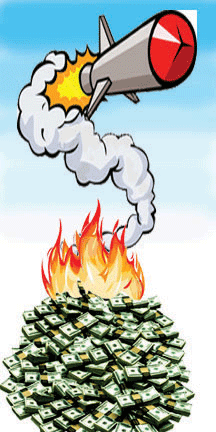 Pentagon estimates cost of new nuclear missiles at $95.8B Pentagon estimates cost of new nuclear missiles at $95.8B
By ROBERT BURNS, 29 Oct 20,
WASHINGTON (AP) — The Pentagon has raised to $95.8 billion the estimated cost of fielding a new fleet of land-based nuclear missiles to replace the Minuteman 3 arsenal that has operated continuously for 50 years, officials said Monday. The estimate is up about $10 billion from four years ago. The weapons, known as intercontinental ballistic missiles, or ICBMs, are intended as part of a near-total replacement of the American nuclear force over the next few decades at a total cost of more than $1.2 trillion. Some, including former Defense Secretary William J. Perry, argue that U.S. national security can be ensured without ICBMs, but the Pentagon says they are vital to deterring war. The Trump administration affirmed its commitment to fielding a new generation of ICBMs in a 2018 review of nuclear policy……… The current fleet of 400 deployed Minuteman missiles, each armed with a single nuclear warhead, is based in underground silos in Montana, North Dakota, Colorado, Wyoming and Nebraska. Their numbers are governed in part by the 2010 New START treaty with Russia, which is due to expire in February. Russia wants to extend the treaty but the Trump administration has set conditions not accepted by Moscow. The U.S. also is building a new fleet of ballistic missile submarines to replace the current Ohio-class strategic subs; a new long-range nuclear-capable bomber to replace the B-2 stealth aircraft; a next-generation air-launched nuclear cruise missile; and a new nuclear command and communications system. It also is working on updated warheads, including an ICBM warhead replacement for an estimated $14.8 billion…….. Last month the Air Force awarded Northrop Grumman a $13.3 billion contract for engineering and manufacturing development of the new missiles. The total “lifecycle” cost, including operating and sustaining the missiles over their expected lifetime into the 2070s, is set at $263.9 billion. https://apnews.com/article/politics-e4b80421be5dba5c5f5a162e55ac0d94 |
|
USA spends taxpayers’ money on weapons, endless wars, not health – coronavirus chaos is the result
 The US Chose Endless War Over Pandemic Preparedness. Now We See the Effects. C.J. The US Chose Endless War Over Pandemic Preparedness. Now We See the Effects. C.J. 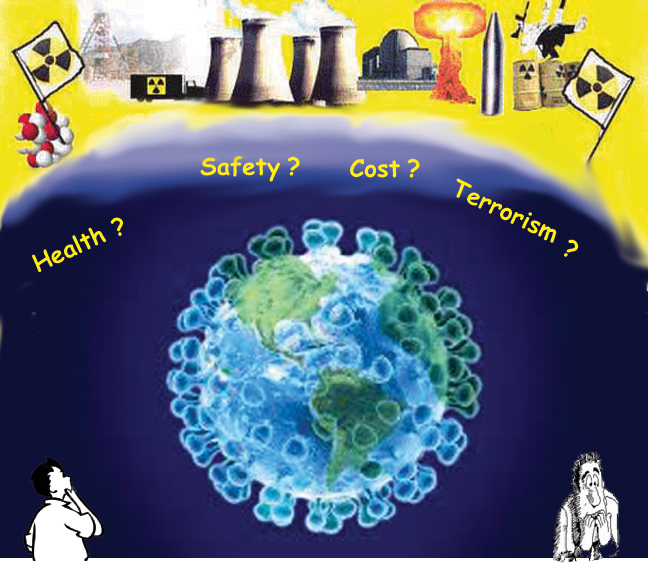 Polychroniou, Truthout, October 18, 2020 Polychroniou, Truthout, October 18, 2020 United States has the longest record of war-fighting in modern history. Why that is the case is not a question that has an easy answer; suffice to say, however, that militarism and violence run like a red thread throughout U.S. political history, with enormous costs both for the domestic economy and the world at large, as a recently published book by David Vine makes plainly clear. In fact, the militarist mentality is strongly reinforced by the Trump administration in spite of the fact that the current president claims to have an aversion to “endless wars.” In this exclusive Truthout interview, Vine, a professor of anthropology at American University in Washington, D.C., addresses critical questions about U.S. war culture and Trump’s own contribution to the violence that has always been foundational to U.S. culture. C.J. Polychroniou: Your latest book, The United States of War: A Global History of America’s Endless Conflicts, from Columbus to the Islamic State, is a detailed survey of the U.S.’s obsession with militarism and war. Have you come to a definite conclusion or explanation as to why the United States has been at war for about 225 of the 243 years since its independence?
David Vine: There is, of course, no simple answer to this incredibly important question. According to my research, the U.S. military has been at war or engaged in other combat in all but 11 years of U.S. history — 95 percent of the years the United States has existed. My book shows how the huge collection of U.S. military bases abroad provides a key — or a kind of lens — to help understand why the United States has been fighting almost without pause since 1776. . Bases abroad, bases beyond U.S. borders show how U.S. political, economic and military leaders — shaped by the forces of history, capitalism, racism, patriarchy, nationalism and religion — have used taxpayer money to build a self-perpetuating system of permanent, imperialist war revolving around an often-expanding collection of extraterritorial military bases. These bases have expanded the boundaries of the United States, while keeping the country locked in a state of nearly continuous war that has largely served the economic and political interests of elites and left tens of millions dead, wounded and displaced. To be clear, my argument is not that U.S. bases abroad are the singular cause of this near-endless fighting. Indeed, my book shows how the answer to why the U.S. government has fought so constantly lies in the capitalist profit-making desires of businesses and elites, in the electoral interests of politicians, and in the forces of racism, militarized masculinity, nationalism and missionary Christianity, among other dynamics. U.S. bases abroad, however, have played a key and long overlooked role in the pattern of near-constant U.S. fighting: that is, since independence, bases that U.S. leaders have built beyond the borders of the United States not only have enabled wars but also have made offensive imperialist wars more likely. While U.S. leaders often portray bases abroad as defensive in nature, the opposite is generally the case: bases built on the territory of other peoples have tended to be offensive in nature, providing a launchpad for yet more wars. This has tended to create a pattern in which bases abroad have led to wars that have led to the construction of new bases abroad that have led to new wars that have led to new bases and so on. Can you offer us a quick assessment of the overall costs of the “global war on terror?” It’s impossible to capture the immensity of the catastrophe that the so-called “global war on terror” has inflicted……….. Alongside the human damage, the financial costs of the so-called war on terror are so large, they’re nearly incomprehensible. As of October 2020, the U.S. government has spent or obligated a minimum of $6.4 trillion on the post-2001 wars, including the costs of future veterans’ benefits and interest payments on the money borrowed to pay for the wars. The actual costs are likely to run hundreds of billions or trillions more, depending on when we force our politicians to bring these seemingly endless wars to an end. While it’s incredibly hard to fathom $6.4 trillion in taxpayer funds vanished, the catastrophe is compounded when we consider how else the U.S. government could have spent such incredible sums of money. What could these trillions have done to provide universal health care, to rebuild public schools, to build affordable housing, to end homelessness and hunger, to rebuild crumbling civilian infrastructure, to prepare for pandemics? In addition to the 3-4 million who have likely died in the wars the U.S. government has fought since 2001, how many more have died because of the investments the U.S. government did not make? These are questions that, I have to say, should make us weep……….. Clearly there is a deep connection between the war machine and the U.S. government’s failure to protect the country against COVID. ………….. President Eisenhower was exactly right when he called this kind of diversion of funds a “theft.” He said, “Every gun that is made, every warship launched, every rocket fired signifies, in the final sense, a theft from those who hunger and are not fed, those who are cold and are not clothed.” Today, every gun that is made signifies a theft from those with COVID, from those who might contract COVID, from all of us……… https://truthout.org/articles/the-us-chose-endless-war-over-pandemic-preparedness-now-we-see-the-effects/?eType=EmailBlastContent&eId=89a28ac1-0d1a-4b33-ab5b-4666e96877f5 |
|
-
Archives
- October 2026 (104)
- September 2026 (339)
- August 2026 (330)
- July 2026 (355)
- June 2026 (287)
- May 2026 (306)
- April 2026 (356)
- March 2026 (251)
- February 2026 (267)
- January 2026 (308)
- December 2025 (358)
- November 2025 (359)
-
Categories
- 1
- 1 NUCLEAR ISSUES
- business and costs
- climate change
- culture and arts
- ENERGY
- environment
- health
- history
- indigenous issues
- Legal
- marketing of nuclear
- media
- opposition to nuclear
- PERSONAL STORIES
- politics
- politics international
- Religion and ethics
- safety
- secrets,lies and civil liberties
- spinbuster
- technology
- Uranium
- wastes
- weapons and war
- Women
- 2 WORLD
- ACTION
- AFRICA
- Atrocities
- AUSTRALIA
- Christina's notes
- Christina's themes
- culture and arts
- Events
- Fuk 2022
- Fuk 2023
- Fukushima 2017
- Fukushima 2018
- fukushima 2019
- Fukushima 2020
- Fukushima 2021
- general
- global warming
- Humour (God we need it)
- Nuclear
- RARE EARTHS
- Reference
- resources – print
- Resources -audiovicual
- Weekly Newsletter
- World
- World Nuclear
- YouTube
-
RSS
Entries RSS
Comments RSS

