Military strategy relying on nuclear weapons – a dangerous myth
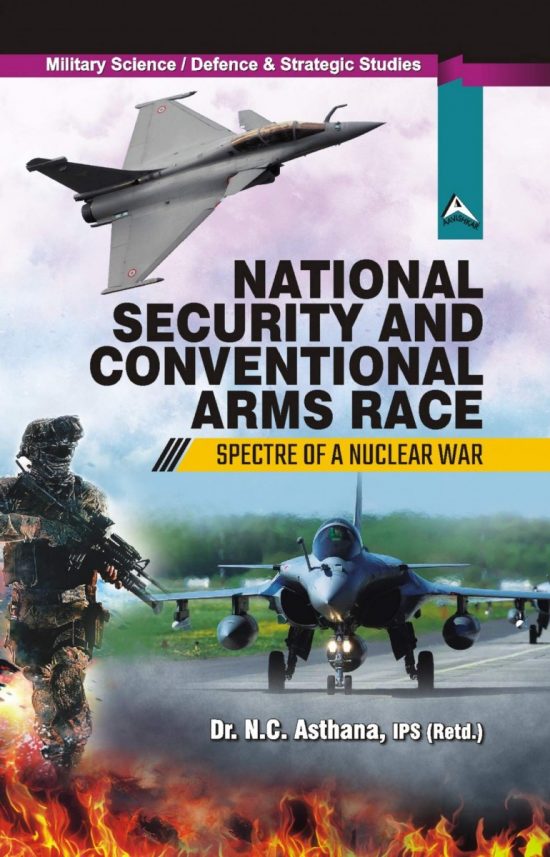 The myth of nuclear power, Financial Express By: fe Features | January 10, 2021 A cogent analysis of why just mere possession of nuclear weapons does not guarantee victory; sound strategy does, The myth of nuclear power, Financial Express By: fe Features | January 10, 2021 A cogent analysis of why just mere possession of nuclear weapons does not guarantee victory; sound strategy does,…….. ” In National Security and Conventional Arms Race: Spectre of a Nuclear War, Asthana argues that there is no way the Indian military can guarantee a “solution of the Pakistan problem or the China problem” by inflicting a decisive defeat on the nuclear-armed adversaries, frenzied race to import conventional weapons notwithstanding.
Consider these lines in the opening chapter: “We might blunder into a war almost unknowingly because since the past few years, people have collectively started consuming the heady mix of a cleverly manufactured hyper-nationalism and xenophobia. This means that both the people and the rulers have been playing into the hands of populist sentiments and exploit them in turn for electoral benefits… In popular perception, shared by political as well as military leaders, no significance is attached to the fact that both Pakistan and China are nuclear powers. It demonizes them with all the attributes of an evil human being, who will not behave unless they are spanked… Under a delusion that we have somehow, magically become invincible, a large number of Indians seem to be itching for a war.”
Asthana cautions that our weapon acquisition notwithstanding, our invincibility in a nuclear neighbourhood may be a myth. He points out that nobody has so far invented a miraculous weapon anywhere in the world that could ensure a quick, decisive victory in a conventional or nuclear war. Cautioning against the growing trend of politicians exploiting enmity with Pakistan for electoral benefits, he says this has left India with a one-dimensional policy, one which is unrealistic in view of Pakistan’s nuclear weapons.
India’s Achilles heel, he argues, is that there is no “national war-fighting strategy”………
“In any case, the moment Pakistan feels that it is going to lose a conventional war under the weight of a bigger Indian military, they will have to go nuclear immediately. This is not 1971 and a military defeat now will become an existential crisis for Pakistan as a nation, something they cannot afford at all. A decisive victory in a conventional war, short or long, in a nuclear overhang, is therefore a treacherous fallacy, spelling nothing but doom,” he says. To win any war, Indians, as a people, he asserts will have to be prepared for suffering the horrors and devastations of war. “Our strategic planning has not prepared the people for a nuclear war. Raw valour of troops is no substitute for sound strategy and the national will essential for sustaining great destruction,” he writes. ……..
Asthana concludes that Indian citizens and the political leadership must understand that accepting the nuclear reality is not synonymous with any sign of national impotence.
National Security and Conventional Arms Race: Spectre of a Nuclear War |
|
Former US defence secretary urges Biden to give up sole power to launch nuclear weapons
|
Biden urged to give up sole power to launch nuclear weapons, https://www.theaustralian.com.au/world/biden-urged-to-give-up-sole-power-to-launch-nuclear-weapons/news-story/fc90ee663c0db888c82917606b7e685e A former US defence secretary has called on president-elect Joe Biden to reform the system that gives sole control of the nation’s nuclear arsenal to the president, calling it “outdated, unnecessary and extremely dangerous”.The call from William Perry came the same day House of Representatives Speaker Nancy Pelosi spoke with the nation’s top military leader about ensuring that an “unhinged” President Donald Trump not be able to launch a nuclear attack in his final days in office.
“Once in office, Biden should announce he would share authority to use nuclear weapons with a select group in congress,” said Dr Perry, who served under Bill Clinton. He was writing in Politico magazine with Tom Collina of the Ploughshares Fund, which advocates for stronger nuclear controls. They said Mr Biden, who takes office on January 20, should also declare that the US would never start a nuclear war and would use the bomb only in retaliation. The piece argues that the current system gives the president — any president — “the godlike power to deliver global destruction in an instant”, an approach the authors call “undemocratic, outdated, unnecessary and extremely dangerous”. Dr Perry, defence secretary from 1994 to 1997, calls Mr Trump “unhinged” and adds: “Do we really think that Trump is responsible enough to trust him with the power to end the world?” American presidents are accompanied at all times by a military aide who carries a briefcase known as “the football” that contains the secret codes and information needed to launch a nuclear strike. Dr Perry and Mr Collina warn that presidents possess the “absolute authority to start a nuclear war. Within minutes, Trump can unleash hundreds of atomic bombs, or just one. He does not need a second opinion. The defence secretary has no say. Congress has no role.” They then ask: “Why are we taking this risk?” Such vast presidential authority, the article notes, dates from the waning days of World War II, when Harry Truman decided, after the nuclear horror unleashed by the bombing of Hiroshima and Nagasaki in Japan, that the power to order the use of atomic weapons should not be left in the hands of the military — that it should be up to the president alone. |
Beatrice Fihn: How to implement the nuclear weapons ban treaty

Beatrice Fihn: How to implement the nuclear weapons ban treaty, Bulletin of the Atomic  Scientists, By John Mecklin, December 7, 2020
………..Beatrice Fihn, ICAN’s executive director spoke with me at length about how the Treaty on the Prohibition of Nuclear Weapons might be implemented once it was ratified by the requisite 50 countries, an event expected to happen, at the time we spoke, within a matter of months. In fact, it occurred just weeks later, and the treaty will enter into force in January 2021.
The treaty was not supported by any of the nine countries that possess nuclear weapons, including the United States. Many of those opposed to the ban treaty have contended it is an unrealistic and naïve effort that could actually undermine nuclear nonproliferation efforts. US officials have been especially critical.
Here, Fihn lays out a possible future in which the ban treaty delegitimizes nuclear weapons, and nuclear weapons countries are persuaded to decide that it is best to give up the most fearsome weapons ever created—in those countries’ own interests…….
we’re trying to sort of remind the people that this issue still exists. This is still dangerous. These weapons are still around, and we’re really hoping that the treaty, and the progression will be the starting point of moving away from these weapons. Creating a new norm, implementing the treaty—in many ways, it’s just building normative pressure, building financial pressure through divestments.
see a lot of people really, really evaluating things during this year. What is it that we prioritize? And what is security? How come 200,000 Americans are dying from a pandemic, and we are still investing $35 billion in nuclear weapons? The structures that people in power have built to protect us, such as the police force and nuclear weapons, actually harm people and kill people. Both through police violence, through nuclear testing, for example. So I see a lot of possibilities for the next term to really start questioning the decisions our governments have made on our behalf around these things. …..
I think we have to be realistic. Ideally, we would want governments to take very strong measures and threaten to boycott if this doesn’t work. But in reality, of course, it’s the big economic powers that have nuclear weapons. And many countries are very dependent on them, and it wouldn’t be realistic to think that a small country in Africa can boycott the nuclear weapon states in that way. But I definitely think that there are a lot of potentials for action. First of all, I think we need to reckon—I think particularly in the West, in Europe and maybe North America—how the power dynamics in the world are changing quite rapidly. And this idea that we in the West are the center of the power in the world might not hold for very long……..
I can also see an emergence of a new power structure. This treaty in many ways is that a lot of countries are basically banning the power tool of the [UN] Security Council. And I think that’s going to have some very significant impact. But in practical terms, what we’re hoping for is, of course, that this treaty stands next to the Chemical and Biological Weapons Convention, like the bans on all weapons of mass destruction. This completes the treaty or treaties, in a way. So that the political pressure and the reputational cost of countries that don’t join this treaty is increased. We’re looking to focus quite a lot on the divestment side, making sure that banks and pension funds are pulling their money out of producing companies. And we’ve seen that influence on landmines and cluster munitions; they have quite a concrete impact in reducing companies’ willingness to be involved in these practices…….
Every year we do this “Don’t Bank on the Bomb” report that shows that it’s growing, the number of banks that have policies against this. We’ve seen just this year, the Norwegian Oil Fund, for example, pulled out of nuclear weapons companies and referred to the TPNW as a reason. One of the super banks in Japan, Mitsubishi Bank Group, or whatever they’re called. They adopted a new policy. Deutsche Bank last year adopted a new policy with nuclear weapons after work with ICAN in Germany. The Deutsche Bank [policy] wasn’t flawless, there’s some holes still, but it’s a sign that they are reacting to this.
So we have two of the five biggest pension funds in the world, the Dutch Pension Fund as well, the public one. We’ve been working on the local cities initiative as well, trying to see if the whole trend on the climate change issue and other issues as well, that cities are taking sort of international action and seeing themselves as almost actors on an international stage. We have over 400 cities around the world now, including I think something like 30 cities with over a million people, that have joined this call to action and that are supporting the treaty and calling on their national governments to join. ……. New York City is supporting the TPNW. And it’s going to divest the city pension funds from nuclear weapons users.
……… this is an issue so solvable. I mean, it’s a lot easier to solve than climate change. It’s nine states. It’s not the whole world, it’s nine states that have them. …….. This is very old fashioned, wiping out a whole city and releasing radioactive fallout. It’s not the best strategy in any kind of warfare situation.
…….. this is all connected to power and holding power. A small group of actors are holding power and oppressing the larger majority. For people like me, for example, I’m Swedish. I live in Switzerland. Me and my family and my two countries will also die in nuclear war if there’s nuclear war. Yet, I don’t get a say. In that way, it’s much like climate change. What one country does, it’s not their own business.
…….. this is an issue that is connected to economic inequalities, sexism, racism, the disproportion in the way we use public funding and tax money in terms of protecting people—like taking the money from things that actually protect us, health care right now, education that will actually make people safer. Yet we divert it towards nuclear weapons and a hugely inflated military budget.
So I think that’s sort of what I would like to say to young people…………….
I think it’s really important to delegitimize nuclear weapons and devalue them. We’ve almost created this mythical perspective on these weapons, that they somehow are safeguarding the world and that they somehow have all these magical attributes, which isn’t true. It’s just a really giant radioactive bomb. It’s not magic, it’s not special. And it costs a lot of money and it’s very dangerous to the countries that have them, and it makes you a target of nuclear weapons. So I think it’s really important, for nuclear arms states also, to understand that the more value that’s put into nuclear weapons—both symbolic value and money value—the more vulnerable you are also to other countries getting that weapon. …….
I think what’s extremely important is that we look also, again, at research and science and see that societies that have a lot of weapons, that invest a lot of money in weapons, are less secure and safe than societies that invest a lot in health care, education, equality, for example. And these are always seen as soft issues, unrelated to national security. We really urgently need leaders who are smart, who understand how to protect their people. And protecting their people is not through spending hundreds of billions of dollars on weapons…….. https://thebulletin.org/premium/2020-12/beatrice-fihn-how-to-implement-the-nuclear-weapons-ban-treaty/?utm_source=Newsletter&utm_medium=Email&utm_campaign=ThursdayNewsletter01072021&utm_content=NuclearRisk_Fihn_12072020
What happens to the nuclear bomb codes, if Trump avoids the inauguration of Biden?
Here’s what happens to the ‘nuclear football’ if Trump skips Biden’s inauguration, Business Insider, RYAN PICKRELL, DEC 16, 2020,
- American presidents are accompanied by a military aide carrying a briefcase with the tools necessary for nuclear war.
- During presidential inaugurations, nuclear command authority and the “nuclear football,” as the briefcase is called, are transferred to the new president.
- But President Donald Trump says he will not participate in President-elect Joe Biden’s inauguration, which could complicate the transfer.
- The Pentagon told Insider there was a plan for the transfer in that scenario but declined to provide details. Nuclear-weapons experts and a former military aide who carried the briefcase were able to offer some insight though.
Trump said Friday that he “will not be going to the Inauguration on January 20th.” He did not say where he will be instead.
So what happens to the “nuclear football” that accompanies the president if Trump doesn’t show? How does it get to Biden?
“That’s a good question,” Hans Kristensen, a nuclear weapons expert at the Federation of American Scientists, told Insider. “It is an unprecedented situation.” In the nuclear age, no president has skipped their successor’s inauguration.
The transfer of the nuclear football is supposed to occur at noon as the new president is sworn in. The military aide who has been carrying the briefcase hands it off to the newly designated military aide, former Vice President Dick Cheney said in a past Discovery documentary. This traditionally happens off to the side and is not a part of the show.
If Trump is not at the inauguration, then the transfer process will be different. Still, the transfer will need to be instantaneous, said retired Air Force Lt. Col. Buzz Patterson, who carried the football for former President Bill Clinton.
Human Rights and the UN Treaty on the Prohibition of Nuclear Weapons
|
Australia: The UN Treaty on the Prohibition of Nuclear Weapons: Corrs Human Rights Day event recap https://www.mondaq.com/australia/human-rights/1019602/the-un-treaty-on-the-prohibition-of-nuclear-weapons-corrs-human-rights-day-event-recap
23 December 2020 Corrs Chambers Westgarth On 10 December 2020, Corrs marked Human Rights Day with an ‘In Conversation’ event focused on the UN Treaty on the Prohibition of Nuclear Weapons (Treaty).
The event brought together leading experts in the field of nuclear disarmament and the humanitarian impacts of a nuclear event, including;
Discussion between the panellists focused on the significance of the Treaty and how it may shape future obligations of states and corporates in connection with nuclear weapons and nuclear disarmament. The Treaty currently has 51 parties and 86 signatories and is set to enter into force on 22 January 2021, cementing a categorical ban on nuclear weapons, 75 years after their first use. Australia has yet to ratify the Treaty. A number of themes that emerged from the conversation are explored below. Why is this conversation so critical?The panellists agreed that the prohibition of nuclear weapons is perhaps more urgent now than ever before. In early 2020, the Doomsday Clock – which symbolises the gravest existential dangers facing humankind – was moved to 100 seconds to midnight, indicating that humankind was closer to the apocalypse than ever in history. This movement was attributed to the increased threats of nuclear war and the continued global failure to address climate change. The adjustment was described as indicative of ‘the most dangerous situation that humanity has ever faced’. This is unsurprising. Today, there remain around 13,500 nuclear weapons in the hands of only a few states. Many are in a high operational readiness, and have the ability to be rapidly deployed. It is well understood that the use of even a fraction of these weapons would result in unimaginable loss of human life and have long-term effects on human health, the environment and global food supplies. The World Health Organisation (WHO) has consistently found that all the world’s health resources would not be effective in responding to even a singlenuclear attack. A paradigm shiftThe Treaty was born out of a shift in focus from the assumed defence and international security benefits of nuclear weapons to the catastrophic humanitarian consequences they would incur. The Red Cross, ICAN and members of civil society played a vital role in shaping that discussion. Dr Durham noted that this shift in momentum began when then President of the ICRC Jakob Kellenberger addressed the Geneva Diplomatic Corp in the lead up to the Non Proliferation Treaty Review Conference in 2010, declaring that the debate on nuclear weapons must be guided not by ‘military doctrine and power politics’, but by ‘human beings, . the fundamental rules of international humanitarian law, and . the collective future of humanity’. The humanitarian focus of the discourse continued its momentum with a series of conferences convened to consider the humanitarian impact of nuclear weapons in Norway (2013), Mexico (2014) and Austria (2014). Dr Durham and Dr Ruff reflected on their respective involvement in these conferences, observing how they provided a platform to discuss the humanitarian consequences of nuclear weapon use at the international level, significantly shifting the debate and bringing to bear increased urgency in the need to ban nuclear weapons. Legal significance and relationship with other treatiesWhen the Treaty enters into force, it will be the first international legal instrument which makes nuclear weapons illegal, prohibiting their development, testing, production, acquisition, stockpiling, use, deployment or threat of use. The Treaty will also prohibit the provision of assistance to any state in the conduct of prohibited activities. It is notable that, even with all their destructive power, nuclear weapons are the last form of weapons of mass destruction to be prohibited. The Treaty will only bind those states which have formally signed and ratified it, which means that non-parties (such as Australia) do not have any formal obligations under the Treaty. Other nuclear weapons treaties, including the nearly universal Treaty on the Non-Proliferation of Nuclear Weapons (NPT) which has been in force since 1970, will continue as a cornerstone in the international legal framework governing nuclear weapons. In this regard, Dr Durham observed that the NPT and the Treaty are complimentary rather than conflicting in their shared aspiration to eliminate nuclear weapons. Legal ramifications for the commercial sectorFor businesses, the Treaty will begin a process of stigmatisation of companies that are involved in the production of nuclear weapons. It may also render their operations unlawful. Tara Gutman observed that the impact of the Treaty’s prohibitions is already being felt, noting that:
In addition, state parties to the Treaty are expected to make the manufacture of nuclear weapons or their components unlawful under domestic laws in their territories. How these matters impact the commercial sector in the coming years will be interesting to follow. What’s next?The panellists reminded us that the entry into force of the Treaty is but a step on what has been a long path towards nuclear disarmament. Other nuclear weapons treaties, including the nearly universal Treaty on the Non-Proliferation of Nuclear Weapons (NPT) which has been in force since 1970, will continue as a cornerstone in the international legal framework governing nuclear weapons. In this regard, Dr Durham observed that the NPT and the Treaty are complimentary rather than conflicting in their shared aspiration to eliminate nuclear weapons. Legal ramifications for the commercial sectorFor businesses, the Treaty will begin a process of stigmatisation of companies that are involved in the production of nuclear weapons. It may also render their operations unlawful. Tara Gutman observed that the impact of the Treaty’s prohibitions is already being felt, noting that:
In addition, state parties to the Treaty are expected to make the manufacture of nuclear weapons or their components unlawful under domestic laws in their territories. How these matters impact the commercial sector in the coming years will be interesting to follow. What’s next?The panellists reminded us that the entry into force of the Treaty is but a step on what has been a long path towards nuclear disarmament. |
|
The risk of USA – Iran military showdown before Trump leaves office
Are the US and Iran headed for a military showdown before Trump leaves office? The Conversation Clive Williams
Campus visitor, ANU Centre for Military and Security Law, Australian National University, January 4, 2021 Tensions are running high in the Middle East in the waning days of the Trump administration.
Over the weekend, Iran’s foreign minister, Mohammad Javad Zarif, claimed Israeli agents were planning to attack US forces in Iraq to provide US President Donald Trump with a pretext for striking Iran.
Just ahead of the one-year anniversary of the US assassination of Iran’s charismatic General Qassem Soleimani, the head of Iran’s Revolutionary Guards also warned his country would respond forcefully to any provocations.
Today, we have no problem, concern or apprehension toward encountering any powers. We will give our final words to our enemies on the battlefield.
Israeli military leaders are likewise preparing for potential Iranian retaliation over the November assassination of senior Iranian nuclear scientist Mohsen Fakhrizadeh — an act Tehran blames on the Jewish state.
Both the US and Israel have reportedly deployed submarines to the Persian Gulf in recent days, while the US has flown nuclear-capable B-52 bombers to the region in a show of force.
And in another worrying sign, the acting US defence secretary, Christopher Miller, announced over the weekend the US would not withdraw the aircraft carrier USS Nimitz and its strike group from the Middle East — a swift reversal from the Pentagon’s earlier decision to send the ship home.
Israel’s priorities under a new US administration
Israeli Prime Minister Benjamin Netanyahu would like nothing more than action by Iran that would draw in US forces before Trump leaves office this month and President-elect Joe Biden takes over. It would not only give him the opportunity to become a tough wartime leader, but also help to distract the media from his corruption charges.
Any American military response against Iran would also make it much more difficult for Biden to establish a working relationship with Iran and potentially resurrect the 2015 Iran nuclear deal.
It’s likely in any case the Biden administration will have less interest in getting much involved in the Middle East — this is not high on the list of priorities for the incoming administration. However, a restoration of the Iranian nuclear agreement in return for the lifting of US sanctions would be welcomed by Washington’s European allies.
This suggests Israel could be left to run its own agenda in the Middle East during the Biden administration.
Israel sees Iran as its major ongoing security threat because of its support for Hezbollah in Lebanon and Palestinian militants in Gaza.
One of Israel’s key strategic policies is also to prevent Iran from ever becoming a nuclear weapon state. Israel is the only nuclear weapon power in the Middle East and is determined to keep it that way.
While Iran claims its nuclear program is only intended for peaceful purposes, Tehran probably believes realistically (like North Korea) that its national security can only be safeguarded by possession of a nuclear weapon.
In recent days, Tehran announced it would begin enriching uranium to 20% as quickly as possible, exceeding the limits agreed to in the 2015 nuclear deal.
This is a significant step and could prompt an Israeli strike on Iran’s underground Fordo nuclear facility. Jerusalem contemplated doing so nearly a decade ago when Iran previously began enriching uranium to 20%.
How the Iran nuclear deal fell apart……….. https://theconversation.com/are-the-us-and-iran-headed-for-a-military-showdown-before-trump-leaves-office-152606
Treaty on the Prohibition of Nuclear Weapons: The Road There and the Road Ahead.
 Treaty on the Prohibition of Nuclear Weapons: The Road There and the Road Ahead. https://www.commondreams.org/views/2021/01/05/treaty-prohibition-nuclear-weapons-road-there-and-road-ahead?utm_campaign=shareaholic&utm_medium=Social&utm_source=twitter For those of us who have been part of the anti-nuclear movement, this moment in history is one filled with possibilities.byMadelyn Hoffman, Ryan Swan, On January 22, 2021, the world will take a major step toward global nuclear disarmament when the Treaty on the Prohibition of Nuclear Weapons (TPNW) enters effect. This is one step closer to realizing the vision the survivors of the 1945 atomic bombings of Hiroshima and Nagasaki (Hibakusha) have spoken about all over the world. They have never given up their efforts to prevent another collision between humans and nuclear weapons and end every talk with “No More Hibakusha, No More Hiroshimas and No More Nagasakis.” Their message of preventing further nuclear catastrophe is now recognized and embodied in this groundbreaking new Treaty. Anti-nuclear organizing efforts need to honor the determination, commitment and vision of Hibakusha, even if achieving the end goal of nuclear abolition requires taking just one step at a time. Treaty on the Prohibition of Nuclear Weapons: The Road There and the Road Ahead. https://www.commondreams.org/views/2021/01/05/treaty-prohibition-nuclear-weapons-road-there-and-road-ahead?utm_campaign=shareaholic&utm_medium=Social&utm_source=twitter For those of us who have been part of the anti-nuclear movement, this moment in history is one filled with possibilities.byMadelyn Hoffman, Ryan Swan, On January 22, 2021, the world will take a major step toward global nuclear disarmament when the Treaty on the Prohibition of Nuclear Weapons (TPNW) enters effect. This is one step closer to realizing the vision the survivors of the 1945 atomic bombings of Hiroshima and Nagasaki (Hibakusha) have spoken about all over the world. They have never given up their efforts to prevent another collision between humans and nuclear weapons and end every talk with “No More Hibakusha, No More Hiroshimas and No More Nagasakis.” Their message of preventing further nuclear catastrophe is now recognized and embodied in this groundbreaking new Treaty. Anti-nuclear organizing efforts need to honor the determination, commitment and vision of Hibakusha, even if achieving the end goal of nuclear abolition requires taking just one step at a time.
The Road to the TPNW An early significant development was the conclusion of the Treaty on the Nonproliferation of Nuclear Weapons (NPT), negotiated throughout the 1960s and entering force in 1970. Its aims were to curtail the spread of nuclear weapons and commit those states already in possession of such weapons to work toward disarmament. While the NPT has proved largely effective on the nonproliferation front, its disarmament achievements have been unsatisfactory, as nuclear weapon states (NWS) have continuously failed to pursue “negotiations in good faith on effective measures relating to the cessation of the nuclear arms race… and to nuclear disarmament, and on a treaty on general and complete disarmament” as the NPT requires them to do (Article VI). Non-nuclear weapon state (NNWS) frustration with the lack of disarmament progress has grown over the years and finally reached a tipping point after the 2014 Ukraine Crisis and reinvigorated major power nuclear competition. The Marshall Islands brought an unprecedented case before the International Court of Justice claiming that the nuclear weapon states had failed to live up to their NPT disarmament obligations, which – while dismissed on suspect jurisdictional grounds – gained widespread international attention and support. Around this same time in 2014, the New Agenda Coalition proposed the idea of a convention banning nuclear weapons to serve as an “effective measure” implementing Article VI.. Negotiations began in 2016 and, in summer 2017, 122 nations came together in support of the historic TPNW. Garnering its 50th ratification in late October 2020, the TPNW is now set to enter force on January 22, 2021 and will round out the chemical weapons and biological weapons conventions in banning the last outstanding weapon of mass destruction. The Road Ahead—Obstacles to Overcome Not unexpectedly, the NWS have maintained firm opposition to the TPNW, with the U.S. casting it as an illegitimate and “dangerous” challenger to the NPT. It asserts that the TPNW fails to recognize the strategic context in which nuclear weapon states find themselves and that it “is and will remain divisive in the international community,” threatening the global nonproliferation regime by permitting “forum-shopping” opportunities for states seeking to skirt the NPT’s strict International Atomic Energy Agency-overseen (IAEA) verification protocols. This characterization is clearly suspect and motivated by self-interest. Countering it is an important first step. Statements from TPNW drafting states specifically emphasize the mutually-reinforcing relationship between the two treaties. Far from being in competition with the NPT, the TPNW specifically complements it by legally augmenting Article VI. The TPNW text also renders dubious the alleged forum-shopping concerns. TPNW Article 3 specifies that each state party “at a minimum, maintain its [IAEA] safeguards obligations in force at the time of entry into force of this Treaty” and that those states which have “not yet done so shall conclude with the [IAEA] and bring into force a comprehensive safeguards agreement.” This battle over narrative is particularly important now in the leadup to the next quinquennial NPT Review Conference (RevCon) this coming spring. A central RevCon issue will be how – and if – RevCon final documents acknowledge the TPNW in the event consensus is reached. The NWS have been fiercely opposed to any mention of the TPNW and the U.S. has urged states not to accede to (or recognize) it. Formal acknowledgement in the RevCon process would be a significant step toward overcoming NWS attempts to stymie the TPNW and toward paving the way for ultimate integration of the treaty into the NPT and broader international legal framework. Such entrenchment would make it more and more difficult for the NWS to continue to belittle the TPNW and perpetually procrastinate on their disarmament obligations. Carpe Diem For those of us who have been part of the anti-nuclear movement, this moment in history is one filled with possibilities. When the majority of the world’s peoples feel the need to mobilize and, once and for all, put a sense of urgency behind the need to eliminate the threat of nuclear weapons, it feels like a “now or never” moment. We must all take advantage of this moment to push for greater TPNW awareness. Those of us who live in the NWS have a unique responsibility to move our governments to understand that, once the TPNW becomes law, mere possession of nuclear weapons, let alone “upgrading and modernizing them” to the tune of trillions of dollars, will be understood as illegal by a growing number of the world’s nations. Everything must be done to apply concerted pressure on NWS governments. In the U.S., calls, e-mails and letters to our Senators should be issued, urging them to acknowledge the Treaty and its validity and value. Discontent with the allocation of enormous tax-payer dollars to gratuitously dangerous nuclear arsenal modernization should also be emphasized. At the international level, the NNWS must insist on formal acknowledgement of the TPNW as a condition for their consent to any eventual NPT RevCon final documents. The International Campaign to Abolish Nuclear Weapons and other NGOs should also continue their public relations campaigns in NWS ally states to pressure domestic governments to recognize the TPNW as valid international law. Madelyn Hoffman is co-chair of the Green Party USA’s Peace Action Committee and was the Green Party of New Jersey’s candidate for U.S. Senate in 2018 and 2020. She was the director of NJ Peace Action (formerly NJ SANE founded in 1957) from 2000 to 2018.
Ryan Swan, J.D., M.Phil., is an incoming doctoral student in peace and conflict studies at the University of Bonn. He has professional experience in security policy analysis and serves on the Green Party USA’s Peace Action Committee. |
|
Canada vocal about nuclear disarmament, but silent about the Treaty for Prohibition of Nuclear Weapons
|
Canada reaffirms support to advance nuclear disarmament Mirage News, 5 Jan 21, On behalf of the Honourable François-Philippe Champagne, Minister of Foreign Affairs, Rob Oliphant, Parliamentary Secretary to the Minister of Foreign Affairs, today reaffirmed Canada’s unwavering support for advancing nuclear non-proliferation and disarmament during the third meeting of foreign ministers of the Stockholm Initiative for Nuclear Disarmament.
Co-hosted by Jordan, Germany and Sweden, the meeting brought together international partners advocating for action-oriented steps on nuclear disarmament. Participants called on all nuclear weapon states to show leadership in advancing nuclear disarmament and to take meaningful steps to implement all commitments under the Treaty on the Non-Proliferation of Nuclear Weapons (NPT). ………https://www.miragenews.com/canada-reaffirms-support-to-advance-nuclear-disarmament/
|
|
|
LGBTQ Activists Jump Into the Atlantic to support Treaty banning nuclear weapons
2012, LGBTQ activists Brendan Fay and Robert Croonquist huddled with other New York-based members of International Campaign to Abolish Nuclear Weapons and ran into the Atlantic Ocean at Far Rockaway on New Year’s Day as part of a public demonstration against nuclear weapons.
The activists, who plunged into the freezing waters at Rockaway Beach and 92nd Street, are pushing the City Council to move forward with a resolution asking the city comptroller to divest pension funds of public employees from sources of nuclear weapons and a bill creating an advisory committee that would evaluate nuclear disarmament and other issues geared towards making New York City a nuclear weapons-free zone. Those bills were proposed by out gay Councilmember Daniel Dromm of Queens, who has welcomed the support of dozens of co-sponsors in both cases.
The activists are asking out gay City Council Speaker Corey Johnson to advance the measures before the Treaty of the Prohibition of Nuclear Weapons becomes international law on January 22. …………
Croonquist, a former public school teacher who is a member of Rise and Resist and the Reclaim Pride Coalition, said he was driven to jump into the ocean when he thought about the high school students he taught at Jamaica High School in Queens.
“This legislation would divert my pension’s investments from weapons of mass destruction and redirect them to things that bring true security — investments in food, housing, climate, infrastructure and healthcare. ………… https://www.gaycitynews.com/lgbtq-activists-jump-into-the-atlantic-to-protest-nuclear-weapons/.
Donald Trump left a hawkish nuclear weapons mess, but Joe Bideb can make alot of improvements, on his own
|
Nuclear Weapons Are Out of Control. But Biden Can Make the World Safer. https://wordpress.com/read/feeds/2663585/posts/3106810876 –
Six ways that Biden can make the world safer in 2021, January 1, 2021 Joseph Cirincione The Red Safe held the launch codes and keys, Steven Miller Donald Trump left Joe Biden with a hot nuclear mess. Trump made every nuclear danger he inherited worse by the hawkish policies he and Republicans pursued. Iran is accelerating its civilian nuclear program. North Korea is expanding its nuclear military capabilities. They are not alone. Every one of the nine nuclear-armed states is building new weapons. Yet Trump destroyed or abandoned crucial security agreements restraining these dangers and started or accelerated a half-dozen new weapons for missions we don’t need with budgets we can’t afford. Fortunately, there’s a great deal that Joe Biden can do, on his own, in the first few days and weeks of his presidency.. He can quickly establish his authority over a nuclear weapons complex spiraling out of control. He can reduce the risk of nuclear war by accident, miscalculation, or madness; stop a new nuclear arms race; shave hundreds of billions of dollars off the military budget; and prevent new states from getting these weapons. By so doing, he can make America and the world more secure. Reform Command and Control. Nuclear weapons are often called “the president’s weapons.” The commander in chief sets the policy, requirements, and size of the U.S. arsenal. He has sole, unfettered authority to launch one or all of the nation’s almost 4,000 operational nuclear weapons. He need not consult with anyone; no one can counter his command. Since Trump did not press the button during his four years in the Oval Office, some may think that concerns about a madman destroying all of humanity are overstated. In truth, we dodged a nuclear bullet. As president, Biden should do all he can to ensure we never again come so close to self-annihilation. Biden does not need the permission of Congress to announce early in his tenure that procedures adopted by past presidents in the fearful days of the Cold War—including the first use of nuclear weapons in a conventional conflict, missiles ready to launch in minutes, and the sole authority of the president to fire these weapons—combine now to present an unacceptable risk of nuclear disaster. He can direct that U.S. policy is to never start a nuclear war, that we no longer need to keep our weapons on hair-trigger alert, and that henceforth the president will need the concurrence of another senior official, such as the Speaker of the House, to launch nuclear weapons. Save Arms Control. Biden can take an immediate step to curtail the arms race by quickly agreeing with Russia to extend the New START treaty for five years, due to expire in February 2021. It is the only remaining limitation on U.S. and Russian arsenals, after four years of Trump’s withdrawal from key strategic accords. This will provide the basis for returning to the process of principled dialogue with Russia and other nuclear-armed states, including China, to freeze and reduce global arsenals. |
|
Nuclear Command and Control: Session 3 of the Congressional Study Group
Nuclear Command and Control
Session 3 of the Congressional Study Group, Wednesday, December 30, 2020 https://www.brookings.edu/research/nuclear-command-and-control/
On May 7, 2020, the Congressional Study Group on Foreign Relations and National Security convened online to discuss the question of the command and control of U.S. nuclear weapons. At present, the president has the unilateral authority to choose to use nuclear weapons, and many assume that this is a result of his Article II powers under the Constitution. But is this assumption correct? Are there ways Congress can limit when and how the president uses nuclear weapons?
To discuss this topic, the working group was joined by three outside experts Professor Mary DeRosa of Georgetown University Law Center, a former legal advisor to the National Security Council; Chris Fonzone, a partner at Sidley Austin and another former legal advisor to the National Security Council; and Professor Matt Waxman of Columbia Law School, who is also an Adjunct Senior Fellow at the Council on Foreign Relations and has previously held senior positions in the National Security Council and U.S. Department of State. Prior to the session, the study group received several written pieces as background reading, including:
- “The President and Nuclear Weapons: Authorities, Limits, and Process,” a report for the Nuclear Threat Initiative that DeRosa co-authored (and was accompanied by a separate policy proposal by former Energy Secretary Ernest Moniz and former Senator Sam Nunn);
- “The President and the Bomb: Reforming the Nuclear Launch Process,” which Waxman co-authored for Foreign Affairs; and
- “What the Military Law of Obedience Does (and Doesn’t) Do,” an issue brief for the American Constitution Society authored by Fonzone.
Waxman then shifted focus to ways that Congress might be able to shape the executive branch process for deciding when and how nuclear weapons are used. While few are likely to argue with the president’s ability to use nuclear force in response to a nuclear attack, Waxman identified three problematic scenarios that might emerge in a case of nuclear first use: that the president would pursue such an action without due deliberation; that a president might give such an order, but that it is not obeyed by military personnel who believe it to be unlawful or unwise; and that a third party might try to interfere with the system to inhibit a response or trigger an unauthorized launch.
A better defined process–for example, one that requires that an order to use nuclear weapons be certified as valid by the Secretary of Defense and lawful by the Attorney General–could reduce all three of these risks by putting some limits on the president’s unilateral authority, encouraging a more deliberative and justified process that is less likely to trigger reservations, and creating a process with multiple safeguards less subject to external manipulation. Such a process could be implemented by the president by executive order or by Congress, though the latter may raise constitutional objections in some corners and runs the risk of being disregarded by administrations who maintain it is constitutional. That said, by leaving the decision-making within the executive branch, such approaches are less likely to incur constitutional objections than outright statutory prohibitions, which may make them more effective in the long run.
Finally, Fonzone stepped in to discuss the military chain of command, specifically in reference to the oft-discussed possibility that military personnel might disregard an impetuous order to use nuclear weapons as unlawful. The operational chain of command, he noted, runs from the President through the Secretary of Defense down to the military ranks, and is defined in substantial part by statute in addition to executive branch guidelines. While the Secretary of Defense might be removed from office for disobeying a presidential order, members of the military can face criminal sanctions under the Uniform Code of Military Justice. That said, this duty of obedience does not extend to “patently” or “manifestly” illegal orders, which military personnel are obligated not to follow. This bar, however, is extremely high and requires clear knowledge on the part of the servicemember. As many major policy decisions, including the use of nuclear weapons, occur on contested and complex constitutional and legal terrain, even unlawful orders are not likely to be seen as “patently” or “manifestly” illegal. Hence, one should not rely on the lawfulness exceptions to the chain of command alone as a meaningful safeguard against such conduct.
From there, the study group went into open discussion, where they raised issues and addressed questions relating to: the civilian control of nuclear technology and weapons development; international legal and policy restraints on the use of nuclear weapons; and in what circumstances the use of nuclear weapons should properly be left to the president’s unilateral authority (e.g., self-defense).
Visit the Congressional Study Group on Foreign Relations and National Security landing page to access notes and information on other sessions.
How a Soviet spy helped to avoid nuclear war
|
When a Soviet spy helped avert nuclear war Tim Rowland, HM Media, 2 Jan 2021,
……..December also marked the passing of George Blake, a spy who kept the Soviets abreast of just about everything the West was doing during the hottest years of the Cold War. ……
In Blake, the KGB knew what they had. As a prisoner in North Korea, he later said he was driven into the arms of the Communists after watching American bombers destroy villages and the civilians who lived in them. ………..
……..At a time of high tension, its intelligence showed the West that the Soviets were not interested in launching a first-strike nuclear attack. Blake had showed the Soviets that this aversion to war was shared by the West. It may have been just enough assurance, in times of high tension, to keep everyone’s missiles in their silos. As dysfunctional as the profession at times could seem, the spies had done their job. https://www.heraldmailmedia.com/opinion/tim_rowland/when-a-soviet-spy-helped-avert-nuclear-war/article_4b527a8b-67f3-5d70-9a71-d5e78743853b.html
|
|
Turkey’s aspirations to become a nuclear weapons power
|
Will Turkey become a nuclear weapon power with Pak’s covert support? The Siasat Daily By IANS| 3rd January 2021 New Delhi: A rogue nexus involving Pakistan and Turkey, with China looking the other way, maybe taking root to fulfil Ankaras ambition to emerge as the worlds next nuclear weapon power.
Suspicions about Pakistan’s covert support for Turkish nukes has been aroused by a recent meeting of the Turkey-Pakistan High-Level Military Dialogue Group (HLMDG). The assemblage took place on December 22-23, 2020. Pakistan’s Defence Secretary Lt. Gen. (Retd.) Mian Muhammad Hilal Hussain led the delegation from Islamabad, while Deputy Chief of Turkish Army General Selcuk Bayraktaroglu headed the Turkish team, says an article published by the website zeenews.india.com.
There are other indications that collaboration on nuclear delivery systems was the hot topic discussed during the meeting. The visitors from Islamabad met top Turkish Army generals and bureaucrats dealing with missile production and aerial military hardware. The hosts included Professor Ismail Demir head of Presidency of Turkish Defence Industries and Temil Kotil, CEO of Turkish Aerospace Limited (TAI). The Pakistani defence delegation also visited top Turkish defence companies including Bakyar (UAV OEM), TAI, HAVELSAN and ASELSAN. Staunch strategic allies Analysts say that the insider meetings in Turkey took place within a rapidly evolving geopolitical context. Islamabad and Ankara have become staunch strategic allies, a partnership sealed by personal bonds between Turkey’s ambitious President, Recep Tayyip Erdogan and Pakistan’s military backed Prime Minister Imran Khan. It is no secret that Erdogan hopes to emerge as the pre-eminent Islamic leader, marginalising established heavyweights such as Mohamed bin Sultan, the Crown prince of Saudi Arabia………..
On his part, Erdogan has made no secret about his nuclear ambitions—a gateway for the fulfilment of his self-espoused dream of elevating Turkey’s status to the heights of the Ottoman empire.
In September 2019, he said: “Some countries have missiles with nuclear warheads, not one or two. I, however, am not supposed to have missiles with nuclear warheads. This, I cannot accept… And right next to us, there is Israel, right? With everything, it is frightening.”…….. https://www.siasat.com/will-turkey-become-a-nuclear-weapon-power-with-paks-covert-support-2059645/
|
|
USA show of force -flying nuclear bombers over Iran

US flying nuclear bombers over Iran to deter NYE attack, 9 news, By CNN Dec 31, 2020 The US have flown nuclear-capable B-52 bombers to the Middle East in the latest show of force meant to deter Iran, as defense officials remain divided over the risk posed by the regime and the Iraq-based militias it supports.
……… The B-52 flight was the second time this month the Pentagon has sent the nuclear-capable bombers to the region. It follows the Navy’s rare December 21 announcement that it had sent a nuclear-powered submarine through the Persian Gulf, accompanied by guided-missile cruisers. ,,,,,,,https://www.9news.com.au/world/donald-trump-us-flying-nuclear-bombers-over-iran-to-deter-nye-attack/f02018ea-2b8f-4d07-9941-e1df3a0a0f4c
1 This Month





PLEASE OPPOSE HR 8255 AND S.3639 – bills would accelerate satellite deployment, with no environmental review or safeguards – https://ncstd5li.quorum.us/campaign/169331/
To see nuclear-related stories in greater depth and intensity – go to https://nuclearinformation.wordpress.com
-
Archives
- October 2026 (74)
- September 2026 (339)
- August 2026 (330)
- July 2026 (355)
- June 2026 (287)
- May 2026 (306)
- April 2026 (356)
- March 2026 (251)
- February 2026 (267)
- January 2026 (308)
- December 2025 (358)
- November 2025 (359)
-
Categories
- 1
- 1 NUCLEAR ISSUES
- business and costs
- climate change
- culture and arts
- ENERGY
- environment
- health
- history
- indigenous issues
- Legal
- marketing of nuclear
- media
- opposition to nuclear
- PERSONAL STORIES
- politics
- politics international
- Religion and ethics
- safety
- secrets,lies and civil liberties
- spinbuster
- technology
- Uranium
- wastes
- weapons and war
- Women
- 2 WORLD
- ACTION
- AFRICA
- Atrocities
- AUSTRALIA
- Christina's notes
- Christina's themes
- culture and arts
- Events
- Fuk 2022
- Fuk 2023
- Fukushima 2017
- Fukushima 2018
- fukushima 2019
- Fukushima 2020
- Fukushima 2021
- general
- global warming
- Humour (God we need it)
- Nuclear
- RARE EARTHS
- Reference
- resources – print
- Resources -audiovicual
- Weekly Newsletter
- World
- World Nuclear
- YouTube
-
RSS
Entries RSS
Comments RSS

