A People’s Guide to the War Industry -5: Portfolio of Conflicts

“They ignored the real threat: The U.S. Armed Forces’ rampant carbon-based military activity contributes to anthropogenic climate change, which melts Arctic ice, which opens up northern sea lanes, into which the Pentagon projects its polluting arsenal, which puts more carbon in the atmosphere.”
A People’s Guide to the War Industry -5: Portfolio of Conflicts — Rise Up Times A PEOPLE’S GUIDE TO THE WAR INDUSTRY -5: PORTFOLIO OF CONFLICTS June 9, 2021 ·
When war is profit, death ensures a healthy bottom line, writes Christian Sorensen in this final installment of his five-part series on the military-industrial-congressional complex.
Read Part 1, Part 2, Part 3 and Part 4 (also available on Rise Up Times)
By Christian Sorensen Special to Consortium News June 2, 2021 Without looking at military adventurism through the lens of the corporation, analysts are bound to produce error-filled studies. For example, one analyst contended in an interview on The Real News Network, “Military force is almost never going to achieve your political aims. The Americans learned this in Vietnam. They’re learning it in Afghanistan. They’re learning it in Syria… So [President Barack] Obama supporting the Saudis and Emiratis in Yemen is a sign really of incoherence on the part of the United States.”
Far from incoherence, the behavior actually is quite rational. A variety of conflicts, disparate and some seemingly futile, is precisely the aim. Conflict itself — producing untold mountains of profit for war corporations and Wall Street — is the goal.

Recall that capital is money used to expand business in order to make more profit. Capital isn’t just building new factories to produce more goods from which to profit.

Capital is also putting money toward cultivating and promoting politicians who advocate for wars and broad military deployments; media and think tanks to propagandize and generate militant narratives; attaining through neoliberal economic policies a U.S. military establishment so rife with corporations that it becomes one bloated, self-sustaining, profitable entity; arranging industry pressure groups and think tanks to encourage and award high-ranking military officers who support and extend conflicts overseas; and marketing, pushing, and operating goods and services that harm populations and destabilize countries around the world, generating more profitable conflict.
The war industry pursues a portfolio of conflicts as any organized, dominant industry views the global marketplace, parses demographics, shapes consumer tastes, and pursues profit maximization at all costs. Afghanistan, Pakistan, Colombia, Iraq, Iran, Korea, Libya, Mexico, Palestine, the Philippines, Somalia, Syria, the Sahel, Ukraine, Yemen — each conflict has advantages and challenges, unique terrain and unique obstacles.
Industry’s products monitor, control and destroy populations. The particular goods and services selected are not the point here. The real rub is that from the eyes of the corporate suite, conflict must endure. Peace is not profitable. A strong portfolio of conflicts, which vary in intensity and scope, is what industry has achieved. Global capitalism demands infinite growth. War corporations’ portfolio approach demands endless, dispersed armed conflicts of varying intensity.
The U.S. war industry sells to capitalist regimes around the world through direct commercial sales and foreign military sales (FMS). FMS tend to deal with big-ticket items or goods and services of a sensitive nature. Through FMS, the U.S. government procures and transfers industry goods and services to allied governments and international organizations.
The U.S. war industry sells to capitalist regimes around the world through direct commercial sales and foreign military sales (FMS). FMS tend to deal with big-ticket items or goods and services of a sensitive nature. Through FMS, the U.S. government procures and transfers industry goods and services to allied governments and international organizations.
The Defense Security Cooperation Agency (DSCA) is the intermediary between the U.S. war industry and the FMS customer overseas. On any given day, DSCA is managing “14,000 open foreign military sales cases with 185 countries,” Lt. Gen. Charles Hooper explained at the Brookings Institution in 2019.
Violent and oppressive regimes are frequent customers, including London, Riyadh, Abu Dhabi and Tel Aviv. The Leahy Law, which is intended to prevent U.S. military assistance from reaching militaries that have committed serious human rights violations, is almost never enforced when it comes to FMS. The Arms Export Control Act requires recipients of U.S. war industry goods and services to use them only in self-defense.
So, customers of the U.S. war industry typically affirm that they’re using the goods and services in self-defense, and the U.S. government doesn’t press them on the matter. After all, there is a lot of cash at stake. In fiscal year 2020 alone, the war industry sold $50.8 billion through FMS and $124.3 billion through direct commercial sales.
The Pentagon often cites industry’s claim that FMS reduces the cost of military systems to the U.S. Armed Forces. The Pentagon supports FMS because foreign militaries dependent on U.S. equipment, knowhow, training, parts, and software are more likely to listen to the U.S. government on military matters, the direction to take in regional conflicts, and international policy.
Without tensions, military provocations, and ongoing hot or cold wars (e.g. Japan v. China, South v. North Korea, Taiwan v. China, absolutist Arab regimes and Apartheid Israel v. Iran, Apartheid Israel v. Arab populations, the global war on drugs) to justify endless transactions, the U.S. war industry would lose billions in annual sales to allied regimes and sales to the U.S. military that is “responding” to such conflict.
Major war corporations place people in charge of selling to each Arab country in the Persian Gulf (e.g. Joe Rank, a career soldier who helped guide Middle East policy for the U.S. Secretary of War, now oversees Lockheed Martin’s business with Saudi Arabia). U.S. flag officers who work on FMS often doff the uniform and then join war corporations to help sell goods and services overseas.
For Profit, Against Democracy
From May 2015 through March 2016, U.S. war corporations sold over $30 billion of goods and services to anti-democratic Arab Gulf allies. Given the U.S. war industry’s long sales history to regimes like Bahrain, Saudi Arabia and the UAE, it stands firmly on the side of profit, and firmly against democracy. Or, as Raytheon’s website puts it,
“With more than 50 years in the Middle East, Raytheon’s steadfast commitment and uninterrupted presence in the region is a testament to the tremendous value we place on being there for our customers.”
The 1945 Quincy Pact between U.S. President Franklin D. Roosevelt and King Abdul Aziz al-Saud started it all: Washington would entrench bases in and around the Persian Gulf and protect the House of Saud, while the latter would keep the oil flowing and give preferential treatment to U.S. corporate interests.
The Saudi regime would later agree to use the dollar in international oil trading. Saudi Arabia purchases a lot of goods and services from U.S. industry, including the war industry. The Washington regime assented when in 2015 the Saudi and Emirati regimes turned U.S. weaponry on Yemen.
The U.S. war industry, in addition to U.S. military and intelligence assistance, has been the cornerstone of the UAE/Saudi destruction of Yemen. Yemenis now suffer from raging famine, disease outbreaks, and crippled infrastructure. The UAE-Saudi coalition has hit civilians (school field trips, funeral processions, weddings, markets) and prevented humanitarian aid from entering Yemen.
In autumn 2018, the head of the U.S. State Department’s legislative affairs team (a former Raytheon lobbyist) certified that Saudi Arabia and the UAE were taking steps to reduce civilian deaths in Yemen. Roughly 233,000 people have died in Yemen as a result of the war, according to the United Nations humanitarian office. Such destruction is evidence of the military-industrial-congressional triangle functioning as designed.
In early February 2021, the Biden administration announced it would halt support for Saudi-UAE “offensive” operations in Yemen. This claim is full of loopholes and is unlikely to substantially alter or end the myriad of ways the U.S. ruling class aids and abets anti-democratic Arab regimes.
Zionism is the ideology that justifies the colonization of Palestine and the maintenance and expansion of that colonization using brutal violence and espionage. Zionists declared independence when they set up a new state, Israel, in Palestine in May 1948, ethnically cleansing hundreds of thousands of Arabs from the land.
Each year, Washington gives roughly $3.8 billion to Israel, which then is supposed to use such monies to purchase from the U.S. war industry. The occupation of Palestine and Zionist aggression against neighboring countries provide the U.S. war industry with a valuable slice of its portfolio: an outsourced proving ground to test, evaluate, use, and improve weaponry.
When war is profit, death ensures a healthy bottom line.
The Advantages of Zionism The aggressive military posture inherent to Zionism is a commercial advantage from an industry perspective. Israel has killed Arabs quite effectively with a variety of aircraft and weaponry purchased from U.S. corporations. The U.S. State Department turns a blind eye, as it is once again doing in the current Israeli operation. Of course, Israel claims self-defense when using U.S. and Israeli weaponry to kill Arabs……….
This is the final installment in the author’s five-part series.
Christian Sorensen is an independent journalist mainly focused on warprofiteering within the military-industrial complex. An Air Forceveteran, he is the author of the recently published book,Understanding the War Industry. He is also a senior fellow at theEisenhower Media Network (EMN), an organization of independent veteranmilitary and national security experts. His work is available atWar Industry Muster. https://riseuptimes.org/2021/06/09/a-peoples-guide-to-the-war-industry-5-portfolio-of-conflicts/
Great powers’competition – the war industry’s best tactic

”……………..Pretexts keep the military budget elevated, sustain the war industry’s profits, and incite a violent foreign policy. Manufactured fear is essential. After pumping the “War on Terror” for trillions of dollars — and with veterans and the U.S. public growing skeptical of such interventions — the war industry has returned to targeting Russia and China through “great power competition.
A PEOPLE’S GUIDE TO THE WAR INDUSTRY -5: PORTFOLIO OF CONFLICTS, By Christian Sorensen by Rise Up Times · Great Power Competition , 9 June 21,
”……………..Pretexts keep the military budget elevated, sustain the war industry’s profits, and incite a violent foreign policy. Manufactured fear is essential. After pumping the “War on Terror” for trillions of dollars — and with veterans and the U.S. public growing skeptical of such interventions — the war industry has returned to targeting Russia and China through “great power competition.
Facing off against Russia and China is more comfortable territory for war corporations. In the calculus of corporate suites, the big-ticket items inherent to competition with another major industrial nation are where the real money can be made. A war on terror was lucrative for a decade or two, and it will continue, but it is not enough to justify excessive spending on cyber, submarines, satellites, hypersonic propulsion, anti-ballistic missiles, nuclear weaponry, artificial intelligence/machine learning, and aircraft carriers.
Competition against Moscow and Beijing also continues the militarization of U.S. society, channeling anger (which might otherwise manifest itself as class awareness and/or physical protest against Washington’s corruption) into outrage against a stereotypical enemy that resides overseas — just as the War on Terror did.
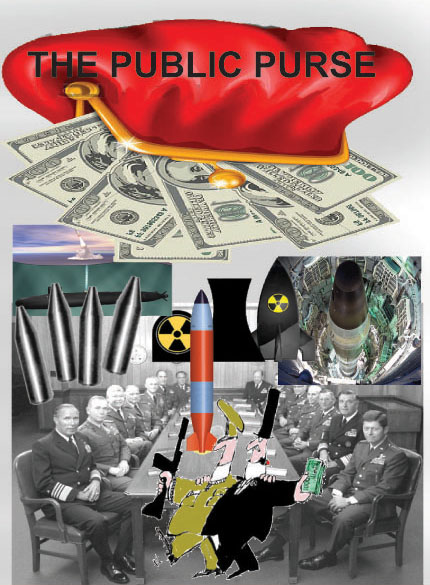
Great power competition is fully entrenched in the Pentagon, as made clear by the 2018 National Defense Strategy, developed in 2017 by military and corporate personnel. It emphasized, “inter-state strategic competition, not terrorism, is now the primary concern in U.S. national security.”
Etching the National Defense Strategy into stone, the then chairman of the Joint Chiefs of Staff, General Joseph Dunford declared in November 2018, that great power competition was here to stay, demanding a shift in Pentagon funding priorities and weapons development. Dunford was speaking at the Halifax International Security Forum, sponsored by corporations (e.g. Boeing, CAE, United Technologies) and NATO, among other powerful groups, including energy and IT firms.
Four months later, the war industry pressure group NDIA presented General Dunford with its most prestigious award. Dunford soon retired and joined the board of Lockheed Martin.
Great power competition has enabled a high volume of war industry goods and services and U.S. military personnel to deploy to Germany, the Czech Republic, Poland and eastern Europe, particularly in the Baltic States and Romania, as well as other clients surrounding China, particularly South Korea, Japan, Taiwan and Guam. Large engineering and project management firms build and sustain the associated infrastructure.
Meanwhile, Beijing’s construction is framed as a threat. “I mean, this is insane. Look at all that crazy construction,” remarked a U.S. naval officer observing Chinese military construction projects in the South China Sea. Though a useful bogeyman, Beijing’s construction in the South China Sea does not hold a candle to what Washington has built up overseas.
Great power competition fills peaceful voids. At the Sea Air Space Forum of 2019 (sponsored by CACI, Lockheed Martin, Northrop Grumman, and shipbuilder Huntington Ingalls), MIC officials cited the “threat” of great power competitors in order to justify expansion of U.S. military power into the Arctic.
They ignored the real threat: The U.S. Armed Forces’ rampant carbon-based military activity contributes to anthropogenic climate change, which melts Arctic ice, which opens up northern sea lanes, into which the Pentagon projects its polluting arsenal, which puts more carbon in the atmosphere.
Great power competition’s consequences are terrifying: increased militarization of an already militarized U.S. economy and public life; greater likelihood of wars big and small; more pollution (notably toxic particulates, carbon emissions, and radiological contamination) in an era of climate catastrophe and mass extinction; nuclear weapons on a hair trigger; narrowing of permissible speech and assembly; and relentless corporatization of the U.S. Armed Forces, the world’s mightiest organization.
The pretext known as great power competition is off to an impressive start, financially, bureaucratically, and industrially. It is incumbent upon the workers of the world to stop it. ”https://riseuptimes.org/2021/06/09/a-peoples-guide-to-the-war-industry-5-portfolio-of-conflicts/
U.S. Navy to cancel development of super expensive nuclear missile
Navy eyes canceling nuclear missile
By BRYAN BENDER , 06/09/2021 NIXING A NUKE? Politico, Acting Navy Secretary Thomas Harker has issued a memo directing the service to cancel development of a nuclear-armed cruise missile in fiscal 2023, a potential signal that the Biden administration could dial back some nuclear modernization programs, Aerospace Daily scooped on Tuesday.
The June 4 memo, also obtained by POLITICO, is part of preparations to craft a five-year spending plan. The memo declares that the Navy may have to choose either a new fighter jet, destroyer or submarine and delay two of them.
“The Navy cannot afford to simultaneously develop the next generation of air, surface, and subsurface platforms and must prioritize these programs balancing the cost of developing next-generation capabilities against maintaining current capabilities,” Harker wrote.
It “makes clear that budgets aren’t expected to increase enough in the coming years to undertake all of the modernization efforts envisioned by the Navy,” as our colleague Paul McLeary writes for Pros………. https://www.politico.com/newsletters/morning-defense/2021/06/09/navy-eyes-canceling-nuclear-missile-795839
“IT’S VERY PROFITABLE to prepare for omnicide,”
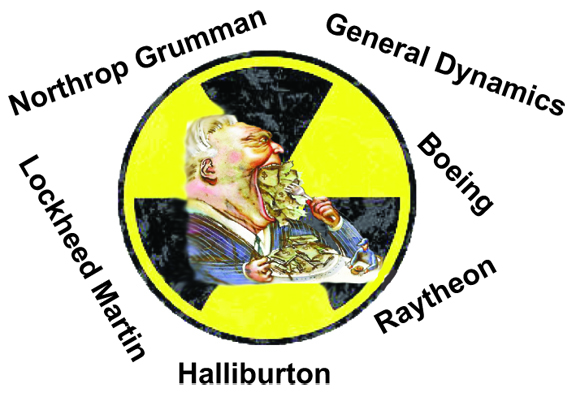
NOT EVEN COVID-19 COULD SLOW DOWN NUCLEAR SPENDING https://theintercept.com/2021/06/07/nuclear-weapons-spending-pandemic-ican/
A new report finds that nine countries collectively spent $72 billion in 2020 on nukes., Jon Schwarz,
June 7 2021, “IT’S VERY PROFITABLE to prepare for omnicide,” Daniel Ellsberg, famed whistleblower and anti-nuclear weapons activist, said in a recent interview. “Northrop Grumman and Boeing and Lockheed and General Dynamics make a lot of money out of preparing for such a war. The congressmen get campaign contributions, they get votes in their district and almost every state for preparing for that.”
But don’t just take it from Ellsberg. At an investor conference in 2019, a managing director from the investment bank Cowen Inc. queried Raytheon’s CEO on this subject. “We’re about to exit the INF [Intermediate-Range Nuclear Forces Treaty] with Russia,” said the Cowen executive. Did this mean, he asked, whether “we will really get a defense budget that will really benefit Raytheon?” Raytheon’s CEO happily responded that he was “pretty optimistic” about where things were headed.
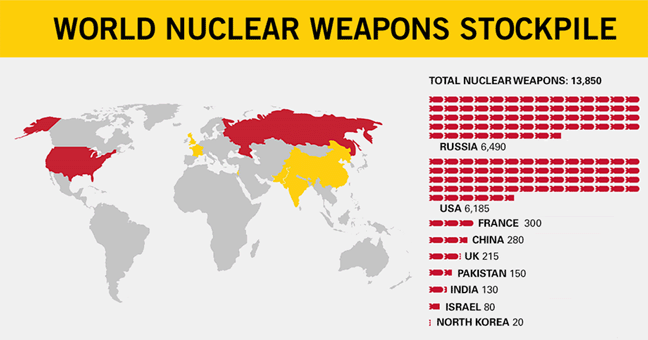
There are currently nine countries that possess nuclear weapons: the United States, China, Russia, the United Kingdom, France, India, Pakistan, Israel, and North Korea. ICAN calculated that they collectively spent $72.6 billion in 2020 on nukes. (picture below – a little out of date – 2019 )
The U.S. was responsible for just over half of this doomsday payout, at $37.4 billion. According to the Congressional Budget Office, U.S. nuclear spending is anticipated to soon increase sharply due to plans for technological upgrades, rising to $41.2 billion next year and totaling $634 billion during the 10 years from 2021-2030.
China came in second in 2020 at an estimated $10.1 billion. Russia was third at $8 billion. Notably, in a year when the world economy was flattened by the coronavirus pandemic, nuclear spending continued on an upward trajectory without a hiccup.
Despite these hefty numbers, they’re probably an underestimate. “There’s always more [nuclear spending] out there … even more still lurking in the shadows,” said Susi Snyder, co-author of the report and managing director of the project Don’t Bank on the Bomb. Snyder points out that “governments, especially U.S., U.K., [and] France are always demanding ‘transparency’ … yet they do not hold themselves to the standards they demand of others.”
A great deal of U.S. nuclear spending consists of profitable contracts with private corporations.
The four companies Ellsberg said were raking in cash “preparing for war” indeed received the most money in 2020:
- Northrop Grumman — $13.7 billion
- General Dynamics — $10.8 billion
- Lockheed Martin — $2.1 billion
- Boeing — $105 million

These enormous contracts create obvious incentives for these companies to lobby for more government expenditures on Armageddon, and they assiduously do so. Indeed, lobbying unquestionably is the most profitable investment these companies make. According to ICAN’s report, for every $1 they spent on lobbying, they received $239 in nuclear weapon contracts.
The specifics are notable here. Northrop reported $13.3 million in lobbying expenses in 2020. Last year it was formally awarded the enormous initial contract to develop a new intercontinental ballistic missile system called the “Ground Based Strategic Deterrent.” It will inevitably receive the contract for the entire program, estimated to be worth $85 billion over its life. In discussion on the GBSD, the Air Force’s assistant secretary for acquisition stated that he didn’t see the pandemic affecting nuclear spending.

There is also much more to lobbying than that which goes by the name. In the 2006 documentary “Why We Fight,” journalist Gwynne Dyer explained that President Dwight Eisenhower considered the military-industrial complex actually to have three components: the military, defense corporations, and Congress. But now, Dyer said, there’s a fourth: think tanks, which generally push their funders’ policies under a thin veneer of scholarship.
According to the report, companies profiting from nuclear weapons contributed $5-10 million to think tanks in 2020. Northrop alone spent at least $2 million funding nine of them, including the Atlantic Council, the Brookings Institution, the Center for a New American Security, and the Center for Strategic and International Studies.
However, ICAN did not produce the report for passive consumption or as an inducement to despair. Instead, it is part of a sophisticated strategy to eventually make nuclear weapons as taboo worldwide as chemical and biological weapons are now.
ICAN was a key force behind the Treaty on the Prohibition of Nuclear Weapons, which was adopted in 2017 at the United Nations. It makes illegal any activities related to nuclear weapons and has been signed by 86 countries and ratified by 54. It entered into force this past January.
None of the nuclear powers are signatories. Yet they need not be for the treaty to create a noose around those countries and their companies that should tighten over time. For instance, Airbus produces missiles for France’s nuclear weapons arsenal. But it is headquartered in the Netherlands, so if that country ratified the TPNW, it could no longer do so.
This financial threat has now attracted the attention of the stockholders of these nuclear corporations. Snyder notes that a 2020 Northrop shareholders resolution stated that the company “has at least $68.3 billion in outstanding nuclear weapons contracts, which are now illegal under international law,” and it received 22 percent support. A similar Lockheed resolution got over 30 percent support. The KBC Group, the 15th-largest bank in Europe, has announced that it will not fund any nuclear weapon-related activity because of the TPNW.
Success here will obviously require a long-term campaign and increased activism across the world. But the trajectory is headed in the right direction. “The days of spending with impunity on WMD,” believes Snyder, “are numbered.”
Nuclear Notebook: How many nuclear weapons does Russia have in 2021?
Nuclear Notebook: How many nuclear weapons does Russia have in 2021? Bulletin of the Atomic Scientists . By Hans M. Kristensen, Matt Korda, March 15, 2021, Russia is in the middle of a decades-long modernization of its strategic and nonstrategic nuclear forces to replace Soviet-era weapons with newer systems. In December 2020, President Vladimir Putin reported that modern weapons and equipment now make up 86 percent of Russia’s nuclear triad (Russian Federation 2020a), compared to the previous year’s 82 percent (Russian Federation 2019a). He additionally noted that he expects that number to rise to 88.3 percent in 2021. As in previous years, Putin’s remarks emphasized the need for Russia’s nuclear forces to keep pace with Russia’s competitors: It is absolutely unacceptable to stand idle. The pace of change in all areas that are critical for the Armed Forces is unusually fast today. It is not even Formula 1 fast—it is supersonic fast. You stop for one second and you start falling behind immediately” (Russian Federation 2020a).
Putin also noted his disappointment with the “deterioration” of the US-Russia arms control regime, and declared that the United States withdrew from the Anti-Ballistic Missile Treaty, the Intermediate-Range Nuclear Forces Treaty, and the Open Skies Treaty under “contrived pretexts.” He also addressed the “uncertainty” around New START: “We have repeatedly stated our readiness to extend the treaty but there has been no response” (Russian Federation 2020a).
As of early 2021, we estimate that Russia has a stockpile of nearly 4,500 nuclear warheads assigned for use by long-range strategic launchers and shorter-range tactical nuclear forces……………….
Russia has significantly reduced the number of warheads deployed on its ballistic missiles to meet the New START limit of no more than 1,550 deployed strategic warheads. Russia achieved the required reduction by the February 5, 2018 deadline, when it declared 1,444 strategic warheads attributed to 527 launchers (Russian Federation Foreign Affairs Ministry 2018). The most recent data, declared on September 1, 2020, listed Russia with 1,447 deployed warheads attributed to 510 strategic launchers………….
Russia has significantly reduced the number of warheads deployed on its ballistic missiles to meet the New START limit of no more than 1,550 deployed strategic warheads. Russia achieved the required reduction by the February 5, 2018 deadline, when it declared 1,444 strategic warheads attributed to 527 launchers (Russian Federation Foreign Affairs Ministry 2018). The most recent data, declared on September 1, 2020, listed Russia with 1,447 deployed warheads attributed to 510 strategic launchers…………
Overall, Russia’s nuclear modernization effort will present the international arms control community with new challenges. Unless a new arms reduction agreement is reached in the future to replace New START, the shrinking of Russia’s strategic nuclear arsenal that has characterized the past two decades will likely come to an end, …………………………………………. https://thebulletin.org/premium/2021-03/nuclear-notebook-russian-nuclear-weapons-2021/?utm_source=Newsletter&utm_medium=Email&utm_campaign=MondayNewsletter03152021&utm_content=Notebook_Russia_03152021
UK spent more than £8000 every minute on nuclear weapons in 2020,

UK spent more than £8000 every minute on nuclear weapons in 2020, report says, The National , By Kirsteen Paterson @kapaterson 7 June 21, THE UK spent more than £8300 a minute on nuclear weapons last year, a new report claims.
The International Campaign to Abolish Nuclear Weapons (Ican) estimates £4.38 billion was splurged on the defence systems in 2020, making the UK the fourth biggest spender behind the US, China and Russia.
The UK has around 200 nuclear weapons and is committed to replacing the ageing Trident submarine system, which is housed at HM Naval Base Clyde, near Scotland’s biggest population centre. However, it does not publish detailed accounts of its spending on this area.
In a report released today, analysis by Ican suggests that is equivalent to $11,769 per minute. The estimate is based on reports from the National Audit Office, the Ministry of Defence and more.
Janet Fenton, Ican’s Scottish liaison and the vice chair of Scottish CND, told The National: “Scotland has been forced to act as an involuntary host to the UK’s nuclear weapons, while the UK is one of the least transparent nuclear armed states about its expenditure and the technical difficulties it faces in upgrading and replacing its nuclear weapons system.
“All this is regardless of the complete democratic deficit in a Scotland that has just elected a parliament with a majority that supports independence and returned an even bigger number of parliamentarians who are committed to supporting the Treaty on the Prohibition of Nuclear Weapons than the number who support independence.”………………..
The Scottish Greens are vocal opponents of nuclear weapons. The party’s external affairs spokesperson Ross Greer MSP, who represents the West Scotland region, said: “Nuclear weapons are an abomination. The day the world is free of these weapons of mass slaughter can’t come soon enough. Not only do nuclear weapons present a real and immediate danger, this report shows that they put us at greater risk by diverting vast sums of public money which could otherwise be spent on what really keeps us safe, such as high quality health and care services during a pandemic.
“Spending such vast sums on these evil weapons can never be justified but for the UK Government to prioritise this expenditure at a time when it is slashing international aid budgets just sums up the mentality of this heartless Tory administration.” https://www.thenational.scot/news/19353768.uk-spent-8000-every-minute-nuclear-weapons-2020-report-says/
Russia beefs up its sub-critical non-nuclear experiments at its top secret far remote Novaya Zemlya site.
12th Directorate beefs up support facilities at nuclear test site, Russian Defence Ministry’s 12th Directorate talks public about ongoing subcritical experiments with nuclear warheads material at Novaya Zemlya. Barents Observer, By Thomas Nilsen June 07, 2021
The Defence Ministry’s own TV channel Zvezda on Sunday broadcasted a nearly 40 minutes long unique documentary about one of Russia’s top-secret military units, the Central Test Site at Novaya Zemlya.
Established in the mid-1950s, a total of 132 nuclear weapon tests are carried out at the archipelago in the period until October 24th 1990. Much less is told about the activities after President Mikhael Gorbachev the year after announced a unilateral nuclear test moratorium.
“Non-nuclear experiments are being carried out to confirm the reliability of the existing nuclear ammunition,” said the head of the Defence Ministry’s 12th Main Directorate, Major General Igor Kolesnikov, from his office in Moscow.
Non-nuclear experiments do not mean that weapons-grade material is not included. Simply, it means experiments are carried out but with no nuclear yield.
For example, such a test could include a small portion of plutonium, enough to explode, but not enough to reach a critical mass and therefore not create a self-sustaining chain reaction, or a nuclear bang. The effects of a full-size bang are then validated in advanced computer simulations.
Subcritical tests are done for two main purposes, determine the status of ageing plutonium warheads or aimed at developing new warheads.
“I must say that the United States is doing the same, they are also conducting similar experiments in Nevada,” Kolesnikov said in the interview with TV Zvezda.
Sub-critical tests are allowed under the Comprehensive Test Ban Treaty (CTBT). However, carrying out such tests in tunnels deep into the mountains in the far remote Novaya Zemlya have caused speculations that real, although very small, nuclear explosions could happen without the global network of monitoring stations would be able to detect it.
The Major General, though, said only non-nuclear explosive experiments take place at Novaya Zemlya…………… https://thebarentsobserver.com/en/nuclear-safety/2021/06/12th-directorate-beefs-support-facilities-nuclear-test-site
Israel’s 1981 bombing of Iraq nuclear reactor may have fuelled Saddam’s nuclear ambitions
ILeaked documents reveal secret French plans to stop Baghdad from getting nuclear weaponsBorzou DaragahiInternational Correspondent@borzou Four decades ago, a squadron of Israeli fighter jets on a secret mission snuck over Saudi Arabian airspace and swooped in to destroy an Iraqi nuclear reactor site that was being built by French and Italian engineers just outside Baghdad. It was a surprise attack lauded by Israel’s defenders and cited as an example of effective derring-do, showing how raw military power could serve as a tool of arms control.
But a trove of previously secret United States documents release…….. https://www.independent.co.uk/news/world/israel-iraq-nuclear-osirak-military-b1861255.html
Production of new plutonium triggers at Savannah River Site to mean more radioactive trash for South Carolina?
Advocates fear tons of nuclear waste from new Savannah River Site project, Charleston City Paper 5th June 2021 A plan to restart a defunct South Carolina nuclear facility with a new mission has safety advocates worried about tons of new nuclear waste in an area of the state with a checkered radioactivity record.
“The essential problem with the work at the Savannah River Site (SRS) is there have been a number of newfangled ideas to either downgrade or reuse plutonium or other nuclear byproducts,” said Tonya Bonitatibus, executive director of Savannah Riverkeeper, a nonprofit advocacy group. “Often, that just means we bring in more waste that is indefinitely stored in South Carolina and often not used even for the purpose it was brought in for.”
The new U.S. Department of Energy (DOE) budget includes a request for $603 million toward the production of plutonium pits, a key component in nuclear warheads, at SRS. Nearly all pits currently in the U.S. stockpile were
produced from 1978 to 1989 because the U.S. had only one active site for decades to produce new pits. The recent funding request marks a 37% increase from 2020, which moves the department closer to its goal of restoring pit production and producing 50 pits per year by 2030.
Under the project plan, SRS would repurpose its unfinished Mixed Oxide (MOX) Fuel Fabrication Facility as a proposed Savannah River Plutonium Processing Facility (SRPPF).
Progressive Democrats slam Joe Biden’s about-face on nuclear weapons spending
Left slams Biden’s nuclear weapons budget Politico, By BRYAN BENDER 06/03/2021
ABOUT-FACE? Biden ran on a platform opposing new nuclear weapons, but his first defense budget goes all in on the Trump-era expansion, including maintaining plans for two new weapons. And leading Democrats and arms control groups are angry at what they see as a betrayal, Lara, Connor and your Morning D correspondent report for Pros.
A number of progressive Democrats, including those who have proposed legislation to curtail several nuclear projects, sounded emboldened. “We must instead spend money on threats that Americans are actually facing like pandemics and climate change, instead of on new destabilizing weapons when we can extend the lifespan of the ones we already have for much cheaper,” progressive Rep. Ro Khanna said in a statement.
Rep. John Garamendi, a senior member of the House Armed Services Committee, told POLITICO he also “strongly” believes “the United States needs to alter its modernization strategy from one that’s predicated on dominance to one that is based on deterrence.”
The strongest backlash came from disarmament advocates, who said they were expecting Biden to live up to his word. “President Biden ran on a campaign to reverse the budget and outrageous policies put forward by the Trump administration,” the Council for a Livable World said in a statement. “However, this budget expands nearly every nuclear program put forward by that administration. This is not acceptable.”
As “a long-time supporter of arms control and nuclear threat reduction,” the group said, Biden “can — and should — do better.”
Biden told the group during the campaign that “our current arsenal of weapons … is sufficient to meet our deterrence and alliance requirements.” The Democratic Party platform in 2020 also bluntly stated that “the Trump Administration’s proposal to build new nuclear weapons is unnecessary, wasteful, and indefensible.” https://www.politico.com/newsletters/morning-defense/2021/06/03/left-slams-bidens-nuclear-weapons-budget-795711
Small nuclear reactors pushed for military use,despite their obvious dangers
There are concerns, of course, associated with deploying mobile nuclear reactors to bases or the battlefield. Meltdowns, waste products, and other malfunctions are always a concern with nuclear energy technologies, and if a reactor in a contested area is destroyed by adversary forces, for example, the risk of environmental contamination is high. That, in turn, could create a political disaster for the DOD and United States. Deploying any nuclear systems abroad also incurs the risk of proliferation if those technologies should fall into the wrong hands due to a forward-operating base or convoy being overrun by hostile forces.
Those concerns will no doubt be a major policy consideration when, or if, these mobile reactors ever reach a state of technological readiness to where they can be deployed. New nuclear technologies aren’t the only new energy production and storage systems the DOD is eyeing, however. Revolutionary concepts such as space-based solar power beaming, new forms of hydrogen fuel cells, or even more advanced applications of existing technologies like modular solar generators are all being developed which could revolutionize how the DOD powers its expeditionary forces without the risks associated with nuclear power.

The Military’s Mobile Nuclear Reactor Prototype Is Set To Begin Taking Shape, The Drive BY BRETT TINGLEY JUNE 3, 2021
Project Pele is one potentially revolutionary, albeit controversial, answer to the military’s growing battlefield energy requirements.
The Office of The Secretary of Defense (OSD) has requested $60 million dollars for Project Pele, which is aimed at developing a new, transportable nuclear microreactor to provide high-output, resilient power for a wide variety of Department of Defense (DOD) missions. The DOD hopes to begin working on a prototype reactor design, which will hopefully be able to eventually produce one to five megawatts of electricity and operate at peak power for at least three years, in the next fiscal year.
The request for funding for Project Pele is found in the Pentagon’s proposed budget for the 2022 Fiscal Year, which was released on May 28, 2021. This is the first year that the Office of the Secretary of Defense has asked for money for this program through the larger Advanced Innovative Technologies line item. Previous funding for Pele, also known as the Micro Nuclear Reactor Program, had come through a separate Operational Energy Capability Improvement account in OSD’s budget.
The budget documents say that the goals for Project Pele in the 2022 Fiscal Year are to “complete the design phase and prepare for construction of a 1-5 Megawatt electric transportable nuclear microreactor.” In addition, it notes that “due to the nature of this project, specific applications and detailed plans are available at a higher classification level.”
“The Pele project continues activities initiated under Congressional direction in FY 2020 and FY 2021,” according to the documents. “Congressional Adds [totaling $16 million in the 2021 Fiscal Year] directed for nuclear fuel core development to support the Pele reactor maturation and also funding to support power and thermal management maturation for directed energy weapons.”
………………the Fiscal Year 2022 budget requests says the desired design is as a 1-5 megawatt (MW) nuclear microreactor.
For comparison, the output of the smallest nuclear power plant in the United States, New York’s R.E. Ginna Nuclear Power Plant, is 581 MW. The desired power output is even smaller than most research reactors.
…… The funding for Pele also builds on several other developments, which show that the DOD, DOE, and the National Aeronautics and Space Administration (NASA) are investing heavily in new nuclear technologies to power a new American space age. “Production of a full-scale fourth-generation nuclear reactor will have significant geopolitical implications for the United States,” said Jay Dryer, director of the Strategic Capabilities Office.
……… Building on that document’s goals, a January 2021 Executive Order expanded on the National Space Council document by ordering NASA to deliver a report that defines requirements and foreseeable issues for developing a nuclear energy system to enable human and robotic space missions for the next two decades. The order also included plans for a “Common Technology Roadmap” made among NASA and the Departments of Energy, Defense, Commerce, and State for developing and deploying these new reactor technologies.
Energy security and dominance have become cornerstones of DOD strategy, given the unbelievable amounts of fuel and energy consumed by the power-hungry systems the modern military depends on. U.S. Army leadership has previously stated that it wants its brigades to be self-sufficient for a week without the need for resupply, and there have been previous calls for microreactors that could fit inside existing platforms such as the C-17 Globemaster. Meanwhile, Lockheed Martin and other laboratories continue work on the lofty goal of developing miniaturized fusion reactors…….
There are concerns, of course, associated with deploying mobile nuclear reactors to bases or the battlefield. Meltdowns, waste products, and other malfunctions are always a concern with nuclear energy technologies, and if a reactor in a contested area is destroyed by adversary forces, for example, the risk of environmental contamination is high. That, in turn, could create a political disaster for the DOD and United States. Deploying any nuclear systems abroad also incurs the risk of proliferation if those technologies should fall into the wrong hands due to a forward-operating base or convoy being overrun by hostile forces.
Those concerns will no doubt be a major policy consideration when, or if, these mobile reactors ever reach a state of technological readiness to where they can be deployed. New nuclear technologies aren’t the only new energy production and storage systems the DOD is eyeing, however. Revolutionary concepts such as space-based solar power beaming, new forms of hydrogen fuel cells, or even more advanced applications of existing technologies like modular solar generators are all being developed which could revolutionize how the DOD powers its expeditionary forces without the risks associated with nuclear power. https://www.thedrive.com/the-war-zone/40914/the-militarys-mobile-nuclear-reactor-prototype-is-set-to-begin-taking-shape
Biden Dangerously Accelerating the New Cold War with China, by Joseph Gerson — Rise Up Times

“While there is much in Joe Biden’s and the Democratic Party’s domestic policy agenda to be admired and supported, rooting it in Trump initiated anti-China hysteria undercuts our national security.”
Biden Dangerously Accelerating the New Cold War with China, by Joseph Gerson — Rise Up Times
“Fallout: The Hiroshima Cover-up and the Reporter Who Revealed It to the World”

A secondary theme in the book is the role of a free press. Blume observes that “Hersey and his New Yorker editors created `Hiroshima’ in the belief that journalists must hold accountable those in power. They saw a free press as essential to the survival of democracy.” She does, too.
Review: Lesley Blume’s “Fallout: The Hiroshima Cover-up and the Reporter Who Revealed It to the World”, Portside, June 1, 2021 Lawrence Wittner In this crisply written, well-researched book, Lesley Blume, a journalist and biographer, tells the fascinating story of the background to John Hersey’s pathbreaking article “Hiroshima,” and of its extraordinary impact upon the world.
In 1945, although only 30 years of age, Hersey was a very prominent war correspondent for Time magazine—a key part of publisher Henry Luce’s magazine empire………..
Blume reveals that, at the time of the U.S. atomic bombing of Hiroshima, Hersey felt a sense of despair—not for the bombing’s victims, but for the future of the world. He was even more disturbed by the atomic bombing of Nagasaki only three days later, which he considered a “totally criminal” action that led to tens of thousands of unnecessary deaths.
…………. Blume shows very well how this approval of the atomic bombing was enhanced by U.S. government officials and the very compliant mass communications media. Working together, they celebrated the power of the new American weapon that, supposedly, had brought the war to an end, producing articles lauding the bombing mission and pictures of destroyed buildings. What was omitted was the human devastation, the horror of what the atomic bombing had done physically and psychologically to an almost entirely civilian population—the flesh roasted off bodies, the eyeballs melting, the terrible desperation of mothers digging with their hands through the charred rubble for their dying children.
The strange new radiation sickness produced by the bombing was either denied or explained away as of no consequence. “Japanese reports of death from radioactive effects of atomic bombing are pure propaganda,” General Leslie Groves, the head of the Manhattan Project, told the New York Times. Later, when, it was no longer possible to deny the existence of radiation sickness, Groves told a Congressional committee that it was actually “a very pleasant way to die.”
When it came to handling the communications media, U.S. government officials had some powerful tools at their disposal. In Japan, General Douglas MacArthur, the supreme commander of the U.S. occupation regime, saw to it that strict U.S. military censorship was imposed on the Japanese press and other forms of publication, which were banned from discussing the atomic bombing. As for foreign newspaper correspondents (including Americans), they needed permission from the occupation authorities to enter Japan, to travel within Japan, to remain in Japan, and even to obtain food in Japan. American journalists were taken on carefully controlled junkets to Hiroshima, after which they were told to downplay any unpleasant details of what they had seen there.
In September 1945, U.S. newspaper and magazine editors received a letter from the U.S. War Department, on behalf of President Harry Truman, asking them to restrict information in their publications about the atomic bomb. If they planned to do any publishing in this area of concern, they were to submit the articles to the War Department for review…………
Hersey had concluded that the mass media had missed the real story of the Hiroshima bombing. And the result was that the American people were becoming accustomed to the idea of a nuclear future, with the atomic bomb as an acceptable weapon of war. Appalled by what he had seen in the Second World War—from the firebombing of cities to the Nazi concentration camps—Hersey was horrified by what he called “the depravity of man,” which, he felt, rested upon the dehumanization of others. Against this backdrop, Hersey and Shawn concluded that he should try to enter Japan and report on what had really happened there……….
Hersey arrived in Tokyo on May 24, 1946, and two days later, received permission to travel to Hiroshima, with his time in that city limited to 14 days.
Entering Hiroshima, Hersey was stunned by the damage he saw. In Blume’s words, there were “miles of jagged misery and three-dimensional evidence that humans—after centuries of contriving increasingly efficient ways to exterminate masses of other humans—had finally invented the means with which to decimate their entire civilization.” Now there existed what one reporter called “teeming jungles of dwelling places . . . in a welter of ashes and rubble.” As residents attempted to clear the ground to build new homes, they uncovered masses of bodies and severed limbs. A cleanup campaign in one district of the city alone at about that time unearthed a thousand corpses. Meanwhile, the city’s surviving population was starving, with constant new deaths from burns, other dreadful wounds, and radiation poisoning.
Given the time limitations of his permit, Hersey had to work fast. And he did, interviewing dozens of survivors, although he eventually narrowed down his cast of characters to six of them.
……… Ross and Shawn decided to keep the explosive forthcoming issue a top secret from the magazine’s staff.
Given the time limitations of his permit, Hersey had to work fast. And he did, interviewing dozens of survivors, although he eventually narrowed down his cast of characters to six of them.
……… Ross and Shawn decided to keep the explosive forthcoming issue a top secret from the magazine’s staff.
Groves believed that the Japanese deserved what had happened to them, and could not imagine that other Americans might disagree. ………. and he believed that an article that led Americans to fear nuclear attacks by other nations would foster support for a U.S. nuclear buildup.
The gamble paid off. Although Groves did demand changes, these were minor and did not affect the accounts by the survivors…….
On August 29, 1946, copies of the “Hiroshima” edition of the New Yorker arrived on newsstands and in mailboxes across the United States, and it quickly created an enormous sensation, particularly in the mass media. Editors from more than thirty states applied to excerpt portions of the article, and newspapers from across the nation ran front-page banner stories and urgent editorials about its revelations. Correspondence from every region of the United States poured into the New Yorker’s office. A large number of readers expressed pity for the victims of the bombing. But an even greater number expressed deep fear about what the advent of nuclear war meant for the survival of the human race.
Of course, not all readers approved of Hersey’s report on the atomic bombing. Some reacted by canceling their subscriptions to the New Yorker. Others assailed the article as antipatriotic, Communist propaganda, designed to undermine the United States. Still others dismissed it as pro-Japanese propaganda or, as one reader remarked, written “in very bad taste.”
………………………… The conclusion drawn by Blume in this book is much like Hersey’s. As she writes, “Graphically showing what nuclear warfare does to humans, `Hiroshima’ has played a major role in preventing nuclear war since the end of World War II.”
A secondary theme in the book is the role of a free press. Blume observes that “Hersey and his New Yorker editors created `Hiroshima’ in the belief that journalists must hold accountable those in power. They saw a free press as essential to the survival of democracy.” She does, too.
………… Blume has written a very illuminating, interesting, and important work—one that reminds us that daring, committed individuals can help to create a better world.https://portside.org/2021-06-01/review-lesley-blumes-fallout-hiroshima-cover-and-reporter-who-revealed-it-world
President Biden’s budget backs new nuclear weapons, contradicting his policy while campaigning

Biden goes ‘full steam ahead’ on Trump’s nuclear expansion despite campaign rhetoric
The decision to retain a low-yield warhead that was outfitted on submarine-launched ballistic missiles in 2019, and to initiate research into a new sea-launched cruise missile, has sparked an outcry. Politico, By LARA SELIGMAN, BRYAN BENDER and CONNOR O’BRIEN, 06/02/2021
President Joe Biden ran on a platform opposing new nuclear weapons, but his first defense budget backs two controversial new projects put in motion by President Donald Trump and also doubles down on the wholesale upgrade of all three legs of the arsenal.
The decision to retain a low-yield warhead that was outfitted on submarine-launched ballistic missiles in 2019, and to initiate research into a new sea-launched cruise missile, has sparked an outcry from arms control advocates and the progressive wing of the Democratic Party, which is vowing a fight to reverse the momentum.
“The signal this budget is sending is full steam ahead: ‘We like what Trump was doing and we want to do more of it,’’ said Tom Collina, director of policy at the Ploughshares Fund, a leading disarmament group. “It is not the message Biden was sending as a candidate. What we have here is Biden essentially buying into the Trump nuclear plan, in some cases going beyond that.”
Emma Claire Foley, a researcher at Global Zero, a disarmament group, said the latest budget “essentially preserves the priorities of the Trump administration,” despite the new administration’s rhetoric about pursuing a more responsible nuclear posture.
During the 2020 campaign, Biden told the Council for a Livable World, an arms control group, that the current arsenal is “sufficient” and the United States does not need new nuclear weapons. In July 2019, Biden also called Trump’s move to introduce new capabilities a “bad idea.”
The Democratic Party platform in 2020 also bluntly stated that “the Trump Administration’s proposal to build new nuclear weapons is unnecessary, wasteful, and indefensible.”
The Democratic Party platform in 2020 also bluntly stated that “the Trump Administration’s proposal to build new nuclear weapons is unnecessary, wasteful, and indefensible.”
That includes modernizing all three legs of the nuclear triad: the Ground Based Strategic Deterrent, which is the replacement for the fleet of Minuteman III intercontinental ballistic missiles; the Columbia-class ballistic missile submarines; and the new B-21 stealth bomber.
The budget also proposes $609 million for the Long Range Standoff Missile, which is designed to be outfitted on bomber planes. That’s $250 million more than what was projected by the Trump administration for fiscal 2022.
Most controversially, the Pentagon’s request maintains the W76-2 low-yield warhead that is now outfitted on submarines and sets aside $5.2 million for a new sea-launched cruise missile capable of carrying a nuclear warhead. Another $10 million is being requested for the warhead in the budget for the National Nuclear Security Administration, an arm of the Energy Department………….. https://www.politico.com/news/2021/06/02/biden-trump-nuclear-weapons-491631
China warns of ‘nuclear showdown’ with the United States
China warns of ‘nuclear showdown’ with the United States
China has launched a blistering attack on the West threatening it with a “high intensity showdown” possibly involving nuclear weapons. news.com.au, 2 June 21,
The Chinese government’s mouthpiece newspaper has launched a blistering attack on the United States threatening it with a “high intensity showdown” possibly involving nuclear weapons.
Hu Xijin, the editor of the Chinese state-run newspaper the Global Times, said enhancing China’s nuclear program was now vital to the country’s “strategic deterrence” against the United States.
His comments came shortly after US President Joe Biden called for a further investigation into the origins of the coronavirus pandemic.
…….. “We must be prepared for a high-intensity showdown between the US and China, at which point a large number of DF-41 and JL-2 and JL-3 will be the backbone of our strategic will. “Our nuclear missiles must be so numerous that the US elite will tremble at the thought of military confrontation with China at that time.
“On such a basis, we can calmly and actively manage our differences with the US and avoid all kinds of gunfire. https://www.news.com.au/technology/innovation/military/china-warns-of-nuclear-showdown-with-the-united-states/news-story/19b296a931815cc6e9a7947c95c95116

1 This Month





PLEASE OPPOSE HR 8255 AND S.3639 – bills would accelerate satellite deployment, with no environmental review or safeguards – https://ncstd5li.quorum.us/campaign/169331/
To see nuclear-related stories in greater depth and intensity – go to https://nuclearinformation.wordpress.com
-
Archives
- October 2026 (67)
- September 2026 (339)
- August 2026 (330)
- July 2026 (355)
- June 2026 (287)
- May 2026 (306)
- April 2026 (356)
- March 2026 (251)
- February 2026 (267)
- January 2026 (308)
- December 2025 (358)
- November 2025 (359)
-
Categories
- 1
- 1 NUCLEAR ISSUES
- business and costs
- climate change
- culture and arts
- ENERGY
- environment
- health
- history
- indigenous issues
- Legal
- marketing of nuclear
- media
- opposition to nuclear
- PERSONAL STORIES
- politics
- politics international
- Religion and ethics
- safety
- secrets,lies and civil liberties
- spinbuster
- technology
- Uranium
- wastes
- weapons and war
- Women
- 2 WORLD
- ACTION
- AFRICA
- Atrocities
- AUSTRALIA
- Christina's notes
- Christina's themes
- culture and arts
- Events
- Fuk 2022
- Fuk 2023
- Fukushima 2017
- Fukushima 2018
- fukushima 2019
- Fukushima 2020
- Fukushima 2021
- general
- global warming
- Humour (God we need it)
- Nuclear
- RARE EARTHS
- Reference
- resources – print
- Resources -audiovicual
- Weekly Newsletter
- World
- World Nuclear
- YouTube
-
RSS
Entries RSS
Comments RSS

