Scotland could be dragged into an accelerating nuclear arms race
| George Kerevan: How Scotland could be dragged into an accelerating nuclear arms race. ON Saturday, All Under One Banner will hold a demonstration against nuclear weapons at the Faslane naval base on the Clyde, home to Britain’s nuclear submarine fleet. This will be the first major anti-nuke demo since the outbreak of Covid-19. The protest by a group best known for its big independence marches is also backed by Scottish CND. This convergence of the national and nuclear issues is no accident. The west’s debacle in Afghanistan has opened a dangerous new phase in global politics. Any Scottish independence referendum will take place against a background of rising international tensions that must intrude in our domestic debate. The National 23rd Aug 2021 https://www.thenational.scot/politics/19530331.george-kerevan-scotland-dragged-accelerating-nuclear-arms-race/ |
The health and environmental costs of China’s nuclear bomb tests
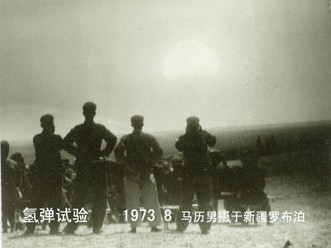
According to reports, China’s effort to become nuclear superpower has cost 1.94 lakh lives as it conducted around 45 successful nuclear tests between 1964-1996 https://www.republicworld.com/world-news/china/chinas-nuclear-tests-killed-1-dot-94-lakh-people-due-to-acute-radiation-exposure-report.html
China’s effort to become a nuclear superpower, according to reports, has cost 1.94 lakh lives as it conducted around 45 successful nuclear tests between 1964 and 1996. Peter Suciu, writing in The National Interest, stated that estimates suggest 194,000 people have died from acute radiation exposure, while around 1.2 million may have received doses high enough to induce leukaemia, solid cancers, and fetal damage during China’s nuclear test attempts.
As per the report, the nuclear test produced a yield of 3.3 megatons–200 times greater than the atomic bomb dropped on Hiroshima. The atomic bomb ‘Little Boy’ detonated on Hiroshima, Japan, killed nearly 80,000 instantly; this marked the first use of nuclear weapons in war.
‘Xinjiang region remained unclear how radiation affected the populace’
The effects of China’s nuclear testing, especially those nearly two dozen atmospheric tests (a total of twenty-three were conducted in the atmosphere), have not largely been studied due to a lack of official data, says Suciu. Xinjiang region that is home to some twenty million people of different ethnic backgrounds has remained unclear how radiation has affected the populace. A Japanese researcher, who studied the radiation levels, has suggested the peak radiation dose in Xinjiang exceeded that measured on the roof of the Chernobyl nuclear reactor following the 1986 meltdown. Suciu also states that reports suggest that radioactive dust has spread across the region, and hundreds of thousands of people may have died already from the nearly four dozen total nuclear tests that were carried out between 1964 and 1969.
China’s atmospheric nuclear testing
China conducted its first atomic bomb test in 1964 in Lop Nur – Project 596, known as the code word “Chic-1” by the US intelligence community (IC). The last of China’s atmospheric tests, which was also the last atmospheric test in the world, took place at Area D at Lop Nur on October 16, 1980–sixteen years to the day from the first test. Since that time, all nuclear tests have been conducted underground due to the Comprehensive Test Ban Treaty (CTBT) concluded in 1996. However, neither Washington nor Beijing has accepted it, even though China has sworn to have adhered to the terms, reported the National Interest.
‘Serious Problem with China’s Nuclear Plant’
Earlier, the French co-owner of a nuclear power plant in China on July 21 warned of problems serious enough to warrant a shutdown. According to CNN, the spokesperson for Electricite de France (EDF) said that the damage to the fuel rods at China’s Taishan Nuclear Power Plant, located in southern Guandong province, are serious enough to warrant shutdown. It was a “serious situation that is evolving,” he said. However, China even denied raising the acceptable limits of radiation. It said that the levels were “still within the range of allowable, stable operations”.
The American world-wide empire of military bases

American military bases overseas are now scattered across 81 countries, colonies, or territories on every continent except Antarctica. And while their total numbers may be down, their reach has only continued to expand.
As long as this count of 750 military bases in 81 places remains a reality, so, too, will U.S. wars. As succinctly put by David Vine in his latest book, The United States of War, ““Bases frequently beget wars, which can beget more bases, which can beget more wars, and so on.” ………..
New Bases, New Wars
Meanwhile, halfway around the world, thanks in part to a growing push for a Cold War-style “containment” of China, new bases are being constructed in the Pacific.
The All-American Base World August 19, 2021 As long as this current count of 750 military bases in 81 places remains a reality, so, too, will U.S. wars, writes Patterson Deppen. Consortium News By Patterson Deppen
TomDispatch.com ”………….. Having closed down hundreds of military bases and combat outposts in Afghanistan and Iraq, the Pentagon will now shift to an “advise-and-assist” role in Iraq. Meanwhile, its top leadership is now busy “pivoting” to Asia in pursuit of new geostrategic objectives primarily centered around “containing” China. As a result, in the Greater Middle East and significant parts of Africa, the U.S. will be trying to keep a far lower profile, while remaining militarily engaged through training programs and private contractors…………
I’ve just finished compiling a list of American military bases around the world, the most comprehensive possible at this moment from publicly available information. It should help make greater sense of what could prove to be a significant period of transition for the U.S. military.
Despite a modest overall decline in such bases, rest assured that the hundreds that remain will play a vital role in the continuation of some version of Washington’s forever wars and could also help facilitate a new Cold War with China.
According to my current count, our country still has more than 750 significant military bases implanted around the globe. And here’s the simple reality: unless they are, in the end, dismantled, America’s imperial role on this planet won’t end either, spelling disaster for this country in the years to come.
Tallying Up the ‘Bases of Empire’
I was tasked with compiling what we’ve (hopefully) called the “2021 U.S. Overseas Base Closure List” after reaching out to Leah Bolger, president of World BEYOND War. As part of a group known as the Overseas Base Realignment and Closure Coalition (OBRACC) committed to shutting down such bases, Bolger put me in contact with its co-founder David Vine, the author of the classic book on the subject, Base Nation: How U.S. Military Bases Abroad Harm America and the World.
Bolger, Vine and I then decided to put together just such a new list as a tool for focusing on future U.S. base closures around the world. In addition to providing the most comprehensive accounting of such overseas bases, our research also further confirms that the presence of even one in a country can contribute significantly to anti-American protests, environmental destruction, and ever greater costs for the American taxpayer.
Continue readingNo apology from France, as new report reveals the harm done to Pacific islands by atomic bomb tests

Although testing stopped more than two decades ago, its legacy lives on in French Polynesia’s politics, health, economy and environment,
“In every other Pacific Island, you have the same,” said Colombani, who also spent more than a decade working in French Polynesia’s tourism sector. “You have the postcard, but if you look beyond that, there’s something you cannot even imagine.”
New study on nuclear testing in French Polynesia reveals France’s ‘censorship and secrecy’ https://www.pri.org/stories/2021-08-06/new-study-nuclear-testing-french-polynesia-reveals-france-s-censorship-and
More than 400 claims have been filed against the French government for nuclear tests on French Polynesia between 1966 and 1996. Scientists say about 110,000 people have been affected by radioactive fallout. It’s been nearly two decades since France stopped testing nuclear weapons in French Polynesia.
But many across French Polynesia’s 118 islands and atolls across the central South Pacific were disappointed last month when President Emmanuel Macron, on his very first trip to the territory France has controlled since 1842, failed to apologize for the nearly 200 nuclear tests conducted between 1966 and 1996.
“Faced with dangerous powers in the concert of nations, I wish to say here that the nation owes a debt to French Polynesia,” Macron said in a July 27 speech. He went on to admit that the tests on the Mururoa and Fangataufa atolls were “not clean in any way” — but stopped short of an official apology.
Guillaume Colombani, who works for Radio Te Reo-o-Tefana, said while they weren’t expecting an apology, it was still devastating not to get one.
“So, when you do something wrong, whatever it is, if you go and see the people you have hurt and you say, ‘Listen, I’m sorry for what I’ve done,’” said Colombani, “it is easier for the community to say, ‘OK, we accept, here’s forgiveness,’ or ‘No, we don’t accept. You have to do something for us.’”
Colombani, 41, grew up in Tahiti during the last decades of the nuclear tests and said he remembers seeing images of blue lagoons turning white after bombs were set off. He can recount the hyper-polarization of the issue and the anti-nuclear demonstrations spurred across the Pacific.
Although testing stopped more than two decades ago, its legacy lives on in French Polynesia’s politics, health, economy and environment, he said.
Underestimated exposure levels
Scientists have long estimated some 110,000 people were affected by the radioactive fallout — many of them French Polynesians who worked at the testing sites. However, a study released earlier this year revealed that France underestimated the level of toxic exposure during the atmospheric tests that took place in the 1960s and ’70s.
The Mururoa Files was based on a two-year investigation of more than 2,000 declassified French state documents as well as various interviews conducted in French Polynesia.
“We found that they underestimated the level of exposure by factors of two to 10, depending on the tests and locations,” said Sebastien Philippe, a researcher and lecturer at the Princeton School of Public and International Affairs with the program on science and global security and co-author of the study.
That’s two to 10 times higher than the estimates given by France’s Atomic Energy Commission in a report produced nearly a decade after testing stopped. The findings compiled by Philippe and his team found, among other things, that one reason the estimates of radiation exposure were so low is that France did not take into account contaminated drinking water.
Ultimately, this systematic underestimation not only made it more difficult to link cases of cancer to the nuclear tests, but it also made it harder for victims to get compensated.
“The compensation process was scientifically broken, and I think the reason for that is the government really realized how much money it was going to cost them, and decided it would be easier to deal with this in court,” Philippe said.
More than 400 claims have been filed against the French government, but only about half have been settled in the last 10 years. Philippe said this was allowed to happen because of the French government’s “censorship and secrecy” surrounding the nuclear testing.
One upside of the release of this study, he said, was the French government’s commitment to open more government archives to the public — a commitment that President Macron made on his recent trip. The French government did not respond to The World’s request for comment about Macron’s trip.
Irreversible environmental damage
The underestimation of the radioactive fallout also made it difficult to fully understand the scope of irreversible environmental damage from the nuclear testing.
Keitapu Maamaatuaiahutapu, a physicist and climate scientist at the University of French Polynesia, said the destruction was particularly bad when the testing went underground in the mid-’70s and bombs were set off in boreholes drilled into the atolls.
These bombs had power “100 to 1,000 times more than the bomb dropped on Hiroshima,” he said.
Whole lagoons full of coral were decimated and fish populations were poisoned for years. Now, there’s also a concern that the atolls may break apart — a process being sped up by rising ocean levels due to climate change, he said.
“And the release of the radioactivity from those holes,” Maamaatuaiahutapu said. “Not only would that create [a] tsunami, but it would pollute the ocean.”
France continues to control all of the information about the damage caused by nuclear testing, including heavily guarding the test sites themselves, he said, so there might not be a way to tell when something might happen. Both the Mururoa and Fangataufa atolls are more than 700 miles away from the main island of Tahiti.
Maamaatuaiahutapu also said that he doesn’t believe that French Polynesia will never get an official apology from Paris, and that also creates political problems.
Experts said that French Polynesians who are loyal to France don’t want to criticize Paris, because it supports the territory with some $2 billion a year.
On the other hand, the independent movement, which both Maamaatuaiahutapu and Colombani are part of, supports every effort to hold France accountable, and to spread the word about nuclear tests across the Pacific — a place known mostly for its beauty.
“In every other Pacific Island, you have the same,” said Colombani, who also spent more than a decade working in French Polynesia’s tourism sector. “You have the postcard, but if you look beyond that, there’s something you cannot even imagine.”
US nuclear policy reflects a hypocritical Cold War mindset
US nuclear policy reflects hypocrisy, Cold War mindset
By Jiang Tianjiao | China Daily | 2021-08-21 09:29 US arms control experts, including former secretary of defense William Perry, recently wrote to Japanese Prime Minister Yoshihide Suga, asking him to support the “no first use of nuclear weapons” policy the Joe Biden administration is likely to propose. But despite the good intentions of people like Perry, it is difficult to change the stubborn conservative thinking and offensive nuclear strategy of most US politicians.
After the end of the Cold War, the US nuclear arms control policy has undergone periodic fluctuations, but on the whole, it is still dominated by conservative forces not averse to fighting a nuclear war. In the 1990s, with the collapse of the bipolar world order, the Bill Clinton administration tried to promote arms control, but the conservative forces, using the possibility of some countries possessing weapons of mass destructions as a pretext, helped build an overwhelming public opinion against it………….
In its latest “Nuclear Posture Review Report”, the US not only called for a comprehensive upgrading of the nuclear arsenal, but also said that in case it faces a “major non-nuclear strategic attack”, it will actively respond with nuclear weapons.
Although the Democratic Party has always supported arms control, “first use of nuclear weapons” has become the politically correct strategic stance for the Biden administration for three key reasons.
First, the “first use of nuclear weapons” policy has become part of the strategic culture of the US. During the Cold War, the US prepared for a possible nuclear war with the Soviet Union and accordingly engaged in capacity-building. But even three decades after the end of the Cold War, the US is still preparing to fight and win a nuclear war. As such, it cannot give up the “first use” policy.
Second, the “first use of nuclear weapons” policy is the keystone of the US’ deterrence strategy and the basis of its global alliance system. Since the beginning of the Cold War, the US has provided its global allies with a nuclear umbrella. If it abandons its “first use” policy, it can no longer provide the nuclear umbrella for its allies, which would increase the possibility of nuclear proliferation among its allies such as Japan and the Republic of Korea and could eventually lead to the collapse of the US alliance system.
Third, the “first use of nuclear weapons” policy is what gives the US asymmetric advantages in any
strategic competition and conflict with another country. The US is also worried that rival countries could acquire asymmetric means, thanks to the rapid development of the new military technology, to launch sudden attacks against it……… The author is an assistant director of the Center for BRICS Studies, Fudan Development Institute. http://global.chinadaily.com.cn/a/202108/21/WS61205711a310efa1bd66a3c9.html
Nuclear Weapons in South Korea? Not So Fringe Anymore.
Nuclear Weapons in South Korea? Not So Fringe Anymore.
Conservatives in South Korea’s upcoming presidential election support the country’s nuclear armament. This trend may be a sign that Washington might soon be dealing with an incoming administration who potentially champions a dangerous pro-nuclear policy.by William Kim The National Interest, 22 Aug 21, Don’t be taken aback if one of the hottest issues for South Korea’s upcoming presidential election is nuclear weapons—more specifically, the need for South Korea to possess its own. While North Korea has refrained from nuclear weapons testing since 2017, the progress they demonstrated in the past has moved the nuclear debate to the forefront of South Korean society. This year, Kim Jong-un’s remarks about strengthening the Democratic People’s Republic of Korea’s (DPRK) nuclear arsenal delivered at the recent Eighth Party Congress was enough for South Korean conservatives to once again stand in favor of developing their own nuclear weapons. With the South Korean presidential election in March 2022 quickly approaching, political discourse in Seoul about nuclear armament is a trend not to be ignored by the U.S. government.
Hawkish voices in favor of nuclearization in South Korea are not new. …………….. https://nationalinterest.org/feature/nuclear-weapons-south-korea-not-so-fringe-anymore-192122
The military-industrial complex had a successful Afghanistan war – better still than Vietnam. The next will be better, and by remote warfare.
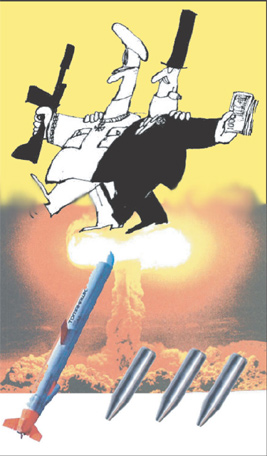
For the military-industrial complex it (Vietnam) was a successful war. And they learned lessons from it.
For them the war ended too early. Profits fell.
In the words of George Orwell in the book 1984, “The war is not meant to be won, it is meant to be continuous.”
Moreover, it is meant to be far away and beyond the attention of the citizenry.
The military-industrial complex keeps learning and profiting. Now it’s remote warfare instead of boots on the ground.
Successes in Afghanistan and Vietnam, Crispin Hull, http://www.crispinhull.com.au/2021/08/20/afghan-and-vietnam-successes/?utm_source=mailpoet&utm_medium=email&utm_campaign=crispin-hull-column-16-nov-2019_99
When US Secretary of State Antony Blinken said this is “not Saigon”, everyone rightly scoffed. It was a mirror image right down to near identical photos of US helicopters evacuating the embassy in Kabul just as in Saigon 46 years earlier – another delusional re-run of a failed US foreign policy. When will they ever learn?
But there is another way of looking at this. Vietnam, Afghanistan and Iraq were highly successful missions. If just depends on whose eyes you are looking through.
The big mistake is to imagine that the US mission in these countries was to ensure peace, liberty, democracy and prosperity for their people.
Some US entities learned a lot from Vietnam and applied it in Afghanistan and Iraq.
This might sound a little off the planet, but we must go back to 1961 to get a clearer picture and quote Republican President Dwight Eisenhower’s farewell address:
“Until the latest of our world conflicts [World War II], the United States had no armaments industry. [Now] we have been compelled to create a permanent armaments industry of vast proportions . . . .
“Now this conjunction of an immense military establishment and a large arms industry is new in the American experience. The total influence – economic, political, even spiritual – is felt in every city, every Statehouse, every office of the Federal government. We recognize the imperative need for this development. Yet, we must not fail to comprehend its grave implications. Our toil, resources, and livelihood are all involved. So is the very structure of our society.
“In the councils of government, we must guard against the acquisition of unwarranted influence, whether sought or unsought, by the military-industrial complex. The potential for the disastrous rise of misplaced power exists and will persist. We must never let the weight of this combination endanger our liberties or democratic processes. We should take nothing for granted.
Only an alert and knowledgeable citizenry can compel the proper meshing of the huge industrial and military machinery of defense with our peaceful methods and goals, so that security and liberty may prosper together.”
Alas, those in the “councils of government” did not heed the warning. To the contrary, they fell under the spell of the military-industrial complex. Subsequent Presidents, up to but not including Trump, have done its bidding and enriched the management and shareholders of the weapons makers and the vast array of suppliers of equipment, food, clothes and shelter to the military.
Those Presidents were all supporters of big military spending. Meanwhile, the corporations with labyrinthal efficiency set up their manufacturing and supply chains in as many congressional districts as they could. They plied their influence in the Washington beltway. None in the councils of government dared defy them.
The military-industrial complex and those elected in both parties and those in the bureaucracy symbiotically egged each other on to ramp up the US military presence in Vietnam.
The US spent $US1 trillion in today’s money in Vietnam. A great deal of that went in profits to US corporations. Only 17 per cent went to nation-building in Vietnam, and much of that went to US contractors.
For the military-industrial complex it was a successful war. And they learned lessons from it.
For them the war ended too early. Profits fell.
The main lessons for them were that Vietnam was a television war. The cameras went everywhere. It also required conscription. Those two things undermine public apathy. And public apathy is essential for the prosecution of a profitable war.
TV and conscription made for, in Eisenhower’s words, “an alert and knowledgeable citizenry”. So, for the military-industrial complex, the Vietnam war was a dismally short war.
In the words of George Orwell in the book 1984, “The war is not meant to be won, it is meant to be continuous.”
Moreover, it is meant to be far away and beyond the attention of the citizenry.
Next time round, journalists would be embedded with (and controlled by) the military. There would be no conscription. There would be proud mothers and daughters, not angry ones. And the rest of the population would be oblivious, apathetic, inattentive and unknowledgeable.
The military-industrial complex had a very successful 20-year war in Afghanistan, greatly profiting from the $2 trillion the US spent there, and a similarly successful stint in Iraq.
The money did not go to the Vietnamese, the Iraqis or Afghans. It went to the likes of Lockheed and Halliburton.
The only President since Eisenhower to see and seek to stamp out the influence of the military-industrial complex was Trump.
Like Eisenhower, Trump did not come from the political establishment. He saw the wars as a waste of money and vowed to end them. When Obama tried to do the same in 2009, the military-industrial complex conned him into a “surge” of 17,000 more US troops.
Trump ended the Afghan war. It was about the only good thing he did in his presidency. It was never going to go smoothly. The military-industrial complex even conned President Joe Biden into believing that all the money it had wasted on training an Afghan army and police force would enable them to hold off the Taliban for a reasonable time for an evacuation. But there was nothing there.
At these times we shake our head and look at the “cost” and wonder how it took so long to get out. We should look at it the other way. Who profited from the wars and why did the US (and Australia) take such a short time to go in?
The military-industrial complex keeps learning and profiting. Now it’s remote warfare instead of boots on the ground.
The citizenry must get alert to this. It should demand that the US stop its arms exports and prosecution of continuous war. And Australia’s citizenry do likewise.
Covid Defense Act – new Bill to prioritise U.S. health, vaccine spending over weapons spending !

New Bill Proposes Cutting Pentagon Spending to Fund Vaccines for Poor Nations, Common Dreams “We can’t bomb our way out of a global pandemic,” said Rep. Mark Pocan, the sponsor of the legislation, “Shifting funds from weaponry and military contractors to producing Covid vaccines will save hundreds of thousands—if not millions—of lives around the world.”
JAKE JOHNSON, August 20, 2021 Congressman Mark Pocan of Wisconsin introduced legislation this week that would cut billions of dollars from the Pentagon’s massive budget and invest those funds in global coronavirus vaccination efforts, which are badly lagging as rich countries continue to hoard doses and rush ahead with booster shots.
The Covid Defense Act proposes transferring $9.6 billion in U.S. military spending to Covax—a global vaccination initiative led by the World Health Organization—to assist with the procurement of doses for the people of low-income nations. Thus far, just 1.3% of people in poor countries have received at least one vaccine dose.
In a press release, Pocan’s office said that the funding—which represents just 1.3% of the $740.5 billion in U.S. military spending approved for 2021—”could lead to an additional 1.8 billion Covid vaccine doses for lower-income countries in 2021 and early 2022.” If passed, Pocan’s office said, the new legislation could provide vaccine access to another 30% of the world’s poorest and most vulnerable populations……….. https://www.commondreams.org/news/2021/08/20/new-bill-proposes-cutting-pentagon-spending-fund-vaccines-poor-nations
Pentagon Poised To Unveil, Demonstrate Classified Space Weapon

Pentagon Poised To Unveil, Demonstrate Classified Space Weapon
The push to declassify an existing space weapon is being spearheaded by Gen. John Hyten, the vice chairman of the joint chiefs of staff. Breaking Defense, Theresa Hitchens, 20 Aug 21
Directed energy anti-satellite weapons for the future. (Lockheed Martin)
WASHINGTON: For months, top officials at the Defense Department have been working toward declassifying the existence of a secret space weapon program and providing a real-world demonstration of its capabilities, Breaking Defense has learned.
The effort — which sources say is being championed by Gen. John Hyten, the vice-chairman of the joint chiefs of staff — is close enough to completion that there was a belief the anti-satellite technology might have been revealed at this year’s National Space Symposium, which kicks off next week.ampioned
However, the crisis in Afghanistan appears to have put that on hold for now. Pulling the trigger on declassifying such a sensitive technology requires concurrence of the Director of National Intelligence, Avril Haines, and a thumbs up from President Joe Biden, sources explain; with all arms of the national security apparatus pointed towards Kabul, that is almost certainly not going to happen next week. And until POTUS says yes, nothing is for certain, of course.
The system in question long has been cloaked in the blackest of black secrecy veils — developed as a so-called Special Access Program known only to a very few, very senior US government leaders. While exactly what capability could be unveiled is unclear, insiders say the reveal is likely to include a real-world demonstration of an active defense capability to degrade or destroy a target satellite and/or spacecraft.
At least, that is what has been on the table since last year — when officials in the Trump administration viewed revealing the technology as a capstone to the creation of Space Command and Space Force. The plan apparently had been to announce it at the 2020 Space Symposium, which was cancelled due to the COVID-19 pandemic; the arrival of the Biden administration also led to a reevaluation of moving forward with the reveal.
Expert speculation on what could be used for the demonstration ranges from a terrestrially-based mobile laser used for blinding adversary reconnaissance sats to on-board, proximity triggered radio-frequency jammers on certain military satellites, to a high-powered microwave system that can zap electronics carried on maneuverable bodyguard satellites. However, experts and former officials interviewed by Breaking Defense say it probably does not involve a ground-based kinetic interceptor, a capability the US already demonstrated in the 2008 Burnt Frost satellite shoot-down.
Requests for comment to the offices of Hyten, Haines, and SPACECOM were not returned by deadline.
Many military space leaders believe that Space Force and Space Command must publicly demonstrate to Moscow and Beijing not just an ability to take out any space-based counterspace systems they may be developing or deploying, but also to attack the satellites they, like the US, rely upon for communications, positioning, navigation and timing (PNT), and intelligence, surveillance and reconnaissance (ISR).
Notably, the second-in-command of the Space Force recently foreshadowed movement in the long-running debate about declassification of all things related to national security space — a multifaceted and complex debate which has pitted advocates against upholders of the traditional culture of secrecy within DoD and the Intelligence Community.
“It is absolutely a true problem,” Gen. DT Thompson, deputy Space Force commander, responded to a question about over-classification during a July 28 Mitchell Institute event. “I wish we owned our own destiny in that regard, but we don’t — it’s part of a broader activity and we just have to work through that. What I will say is, I think we’re on the verge of a couple of significant steps.”
The Transparency Dilemma
In fact, Thompson’s comments represented only one of several comments, quietly dropped in speeches or interviews, from top military space officials pushing for declassification of high-end systems, following several years of a steadily intensifying drumbeat on the issue. A who’s-who list of top officers, DoD civilian leaders, and key members of Congress have for years been arguing that over-classification is harming the ability to convey the growing threat of foreign counterspace to lawmakers, the public and allied/partner nations — as well as the ability to cooperate with industry and foreign partners to mitigate those threats…………………
The central dilemma isn’t hard to understand, but the devil is in the details of solving it…………………… more https://breakingdefense.com/2021/08/pentagon-posed-to-unveil-classified-space-weapon/?utm_campaign=Breaking%20News&utm_medium=email&_hsmi=151302334&_hsenc=p2ANqtz-_WjJRXNH7oSN8eQo0iMMC52dIbrytHkcSOFjM1_zECxrz5zqaTLiWTN0lmaYIYa35tfuqxon2uOPfvbhS1zFeBwuIlrg&utm_content=151302334&utm_source=hs_email
Big winners from the Afghan war -the weapons-making corporations.

Progressive Critics Say Investors in US Weapon-Makers Only Clear Winners of Afghan War
“The military-industrial complex got exactly what it wanted out of this war.” https://www.commondreams.org/news/2021/08/17/progressive-critics-say-investors-us-weapon-makers-only-clear-winners-afghan-war
As the hawks who have been lying about the U.S. invasion and occupation of Afghanistan for two decades continue to peddle fantasies in the midst of a Taliban takeover and American evacuation of Kabul, progressive critics on Tuesday reminded the world who has benefited from the “endless war.”
“Entrenching U.S. forces in Afghanistan was the military-industrial complex’s business plan for 20+ years,” declared the Washington, D.C.-based advocacy group Public Citizen.
“Hawks and defense contractors co-opted the needs of the Afghan people in order to line their own pockets,” the group added. “Never has it been more important to end war profiteering.”
In a Tuesday morning tweet, Public Citizen highlighted returns on defense stocks over the past 20 years—as calculated in a “jaw-dropping” analysis by The Intercept—and asserted that “the military-industrial complex got exactly what it wanted out of this war.”

The Intercept‘s Jon Schwarz examined returns on stocks of the five biggest defense contractors: Boeing, Raytheon, Lockheed Martin, Northrop Grumman, and General Dynamics
defense stocks outperformed the stock market overall by 58% during the Afghanistan War.
.
Schwarz found that a $10,000 investment in stock evenly split across those five companies on the day in 2001 that then-President Georg W. Bush signed the authorization preceding the U.S. invasion would be worth $97,295 this week, not adjusted for inflation, taxes, or fees.
According to The Intercept:
This is a far greater return than was available in the overall stock market over the same period. $10,000 invested in an S&P 500 index fund on September 18, 2001, would now be worth $61,613.
That is, defense stocks outperformed the stock market overall by 58% during the Afghanistan War.
“These numbers suggest that it is incorrect to conclude that the Taliban’s immediate takeover of Afghanistan upon the U.S.’s departure means that the Afghanistan War was a failure,” Schwarz added. “On the contrary, from the perspective of some of the most powerful people in the U.S., it may have been an extraordinary success. Notably, the boards of directors of all five defense contractors include retired top-level military officers.”
“War profiteering isn’t new,” journalist Dina Sayedahmed said in response to the reporting, “but seeing the numbers on it is staggering.”
Progressive political commentator and podcast host Krystal Ball used Schwarz’s findings to counter a key argument that’s been widely used to justify nearly 20 years of war.
“This is what it was really all about people,” she tweeted of the defense contractors’ returns. “Anyone who believes we were in Afghanistan to help women and girls is a liar or a fool.”
Jack Mirkinson wrote Monday for Discourse Blog that “it is unquestionably heartbreaking to think about what the Taliban might inflict on women and girls, but let us dispense with this fantasy that the U.S. has been in Afghanistan to support women, or to build democracy, or to strengthen Afghan institutions, or any of the other lines that are deployed whenever someone has the temerity to suggest that endless war and occupation is a harmful thing.”
“We did not go into Afghanistan to support its people, and we did not stay in Afghanistan to support its people,” he added. “It is astonishing, given what we know about the monsters that the U.S. has propped up time and time again around the world, that the myth persists that we do anything out of our love for human rights. We went in and we stayed in for the same reason: the American empire is a force that must remain in perpetual motion.”
As Common Dreams reported Monday, while the Taliban has retaken control, anti-war advocates have argued diplomacy is the only path to long-term peace, with Project South’s Azadeh Shahshahani emphasizing that “the only ones who benefited from the U.S. war on Afghanistan were war-profiteering politicians and corporations while countless lives were destroyed.”
Responding to Shahshahani’s tweet about who has benefited from two decades of bloodshed, Zack Kopplin of the Government Accountability Project wrote, “Adding war-profiteering generals to the mix too.”
President Biden Can Reduce Nuclear Dangers Without Congress
How President Biden Can Reduce Nuclear Dangers Without Congress https://breakingdefense.com/2021/08/how-president-biden-can-reduce-nuclear-dangers-without-congress/
“Biden is sending a clear message: he will take on nuclear issues only as long as they do not undermine his top legislative priorities,” write Tom Collina and Doreen Horschig. By TOM Z. COLLINA and DOREEN HORSCHIG
| With razor-thin majorities in Congress, it is no surprise that the Biden administration has had to set strict priorities for its legislative agenda. The administration’s focus on pandemic relief, infrastructure, voting rights and climate leaves little room to negotiate on other pressing issues. The good news is there’s one top-tier issue on which President Biden can make significant progress without arm-twisting legislators: reducing the risk of nuclear war.The Biden team sees the crucial need to address nuclear threats, and has already taken major steps: it extended the 2010 arms control treaty with Russia, New START, and agreed to talks on additional reductions; it is negotiating in Vienna to revive the 2015 nuclear deal to keep Iran away from the bomb; and it has begun a comprehensive review of US nuclear policy, called the Nuclear Posture Review (NPR). Notably, none of these steps requires congressional approval, at least not yet. Instead, in areas where Hill support is needed now, the administration has gone out of its way to avoid fights. For example, Biden’s Pentagon budget supports all the new and unnecessary nuclear weapons proposed by the Trump administration. Biden is sending a clear message: he will take on nuclear issues only as long as they do not undermine his top legislative priorities. This approach fails to recognize that preventing nuclear war is not just another political issue. Nuclear weapons are the only threat humanity faces that could end civilization as we know it in a day (climate change will take much longer, though with the same potential impact). Spending billions of dollars on new weapons the United States doesn’t need, like the new $264 billion intercontinental ballistic missile, will only feed an arms race with Russia and China — even if it helps win votes for a bipartisan infrastructure deal. Better roads will not be of much help if the world slides into nuclear catastrophe. Yet even under President Biden’s constrained approach, he can set far-reaching nuclear weapons policies using his extensive executive authority. Presidents enjoy greater control over nuclear policy than almost any other area of government — and Biden should use it.For example, as part of the NPR process, the President can make good on his pledge to limit the role of nuclear weapons. As vice president, Biden said: “I strongly believe we [the United States] have made enough progress that deterring — and if necessary, retaliating against — a nuclear attack should be the sole purpose of the US nuclear arsenal.”Such a “sole purpose” declaration would be a welcome and important shift away from current policy that allows nuclear weapons to be used to deter other types of lesser threats, such as biological or conventional attacks. US conventional superiority can be used in these cases. In particular, Biden should end the Trump policy of threatening the use of nuclear weapons in response to cyberattacks. As damaging as cyber strikes can be, threatening to retaliate with nukes increases the risk of nuclear war, weakens deterrence, and would violate international law in nearly all scenarios. Biden should make it harder to use the most devastating weapons ever created. A sole purpose policy would limit nuclear weapons to one job only: preventing their use by others.Such a policy should include two other important elements: that the United States will not use its nuclear weapons in a preemptive strike (before an adversary launches a suspected attack) or on warning of attack (before a reported attack arrives). These launches would dangerously increase the risk of starting nuclear war by mistake in response to bad intelligence or a false alarm. The United States has made both types of mistakes before and could do so again.Skeptics state that a US sole purpose policy would undermine the confidence of allies in extended deterrence. But extended deterrence is not based on meeting all threats with nuclear war. The United States should deter conventional attacks with conventional weapons and nuclear attacks with nuclear weapons. The Biden administration can find ways to reassure allies without giving them veto power over US policy .A second concern of critics is that the United States could not make sole purpose credible as adversaries and allies alike would not trust such a declaratory policy. Critics have a point, which is why to show that it practices what it preaches, the United States would have to make doctrinal and operational changes. These including adopting a less threatening nuclear posture, eliminating first-strike postures, preemptive capabilities, and other destabilizing warfighting strategies. This would signal restraint in alert levels of deployed systems, targeting, and launch-on-warning. Joe Biden, as a senator, vice president and presidential candidate, has consistently promoted a more limited role for nuclear weapons. Now that he has the power of the presidency, he must follow through—and he can without undermining his crucial congressional agenda. Now is the time for bold action, and Biden has the chance to create a lasting legacy on nuclear matters.Tom Z. Collina is director of policy at Ploughshares Fund. He is co-author of The Button: The New Nuclear Arms Race and Presidential Power from Truman to Trump. Doreen Horschig, PhD is the current Roger L. Hale Fellow at the Ploughshares Fund, a global security foundation. She studies nuclear policy, specifically norms contestation, public opinion, and counter-proliferation.  ReplyForward ReplyForward |
What were the USA’s costs for the Afghanistan war ?

The Costs of War, WATSON INSTITUTE FOR INTERNATIONAL AND PUBLIC AFFAIRS
Since invading Afghanistan in 2001, the United States has spent $2.26 trillion on the war, which includes operations in both Afghanistan and Pakistan. Note that this total does not include funds that the United States government is obligated to spend on lifetime care for American veterans of this war, nor does it include future interest payments on money borrowed to fund the war.
| The Costs of War Project also estimates that 241,000 people have died as a direct result of this war. These figures do not include deaths caused by disease, loss of access to food, water, infrastructure, and/or other indirect consequences of the war. |
The figures for Afghanistan are part of the larger costs of the U.S. post-9/11 wars, which extend to Iraq, Syria, Yemen, Somalia and elsewhere. The numbers are approximations based on the reporting of several data sources.
The War On Afghanistan Was A $2 Trillion Scam

Americans will hate whoever they’re told to—Vietnam, Cuba, Iran, Iraq, China. After a while they don’t even remember why they hate them, they just do. Getting the war machine going is easy, just throw the press a few bones about ‘terrorism’ and soon enough there’s bones in the ground. The New York Times will even make terrorism up. CNN will film the bombs raining down. It’s a great, hateful show.
It’s important to understand Afghanistan not as a $2.26 trillion failure of good intentions but a $2.26 trillion success of bad. This is what America does. This is who Americans are. They have reduced war to its most crass objective, a way to profit from misery. Afghanistan was no mistake. It was a very successful scam.–
America just pumped-and-dumped an entire country, https://indi.ca/the-us-military-is-a-deadly-scam/
The American war on Afghanistan was a $2.26 trillion scam. Somebody pocketed all that money, and it certainly wasn’t the people of Afghanistan. That amount is 115 years of Afghan GDP, and it mostly went to arms dealers, the corrupt US military, and corrupt US politicians. Meanwhile the Taliban gets to keep the weapons. This wasn’t just a waste, it was a gigantic fraud.
Afghanistan was not an isolated incident. This is the American war machine, working as intended, grinding bones and printing blood money. America has reduced war to one simple fact: war costs money and somebody’s gonna get paid. This is their galaxy brain idea, starting wars with no objective just to make money for arms dealers. You don’t even have to win. In fact, it’s better if you spend 20 years losing. That’s the beauty of the scam.
Just follow the money. American taxpayers have been defrauded well over $6.4 trillion in their wars ‘of’ terror alone. People keep saying this money was ‘lost’ or ‘wasted’ but it didn’t go nowhere. American people had their pockets picked while saluting the flag. This is what America does. This is who they are. The vaunted American military is a fraud.
A Simple Scam
It’s a simple scam, really.
- Pick some random poor country (and get your people to hate it)
- Attack it
- Profit
The entire war machine is an endless grift. Donors throw a little money at Congressmen, Congressmen throw infinite money at the military, and some poor person ends up crushed under a $25,000 bomb. What does it accomplish? Who cares? We made money on the bomb.
In Afghanistan, the waste was insane(ly profitable). The American military transported fuel via helicopter. They kept every single car, truck, and tank idling 24 hours a day. They spent $1 million dollars per soldier shipping Burger Kings, gyms, and bottled water across the Arabian Sea. Nobody cared. The government just kept giving money and the military kept spending it. War machine go brrrr. It wasn’t their money and it’s wasn’t their lives. It was all a bloody scam.
The original article here posts a 2019 Afghanistan document dump which everyone has forgotten about
America invading Afghanistan was just like the mafia taking over a legitimate business and bleeding it dry. The American military is just a global racket of torturers and thugs, doing bust-outs on an international scale.
Suckers And Losers
Continue readingNew research on baby teeth will show the impact of nuclear bomb testing, and the connection with later cancers

Three decades later, [after the 1950s] Washington University staff discovered thousands of abandoned baby teeth that had gone untested. The school donated the teeth to the Radiation and Public Health Project, which was conducting a study of strontium-90 in teeth of U.S. children near nuclear reactors.
Now, using strontium-90 still present in teeth, the Radiation and Public Health Project will conduct an analysis of health risk, which was not addressed in the original tooth study, and minimally addressed by government agencies. Based on actual radiation exposure in bodies, the issue of how many Americans suffered from cancer and other diseases from nuclear testing fallout will be clarified.
Baby teeth collected six decades ago will reveal the damage to Americans’ health caused by US nuclear weapons tests https://peaceandhealthblog.com/2021/08/16/baby-teeth-collected-six-decades-ago-will-reveal-the-damage-to-americans-health-caused-by-us-nuclear-weapons-tests/ AUGUST 16, 2021 by Lawrence Wittner by Lawrence Wittner and Joseph Mangano
In 2020, Harvard University’s T. C. Chan School of Public Health began a five-year study, funded by the National Institutes of Health, that will examine the connection between early life exposure to toxic metals and later-life risk of neurological disease. A collaborator with Harvard, the Radiation and Public Health Project, will analyze the relationship of strontium-90 (a radioactive element in nuclear weapons explosions) and disease risk in later life.
The centerpiece of the study is a collection of nearly 100,000 baby teeth, gathered in the late 1950s and early 1960s by the St. Louis Committee for Nuclear Information.
The collection of these teeth occurred during a time of intense public agitation over the escalating nuclear arms race between the U.S. and Soviet governments that featured the new hydrogen bomb (H-bomb), a weapon more than a thousand times as powerful as the bomb that had annihilated Hiroshima. To prepare themselves for nuclear war, the two Cold War rivals conducted well-publicized, sometimes televised nuclear weapons tests in the atmosphere—434 of them between 1945 and 1963. These tests sent vast clouds of radioactive debris aloft where, carried along by the winds, it often traveled substantial distances before it fell to earth and was absorbed by the soil, plants, animals, and human beings.
Continue readingThe tie between climate change and nuclear weapons
WCC reflection on climate change, nuclear weapons https://www.indcatholicnews.com/news/42850
- Daniel Högsta
 Aug 16th, 2021
Daniel Högsta is campaign coordinator for the International Campaign to Abolish Nuclear Weapons. In this interview with WCC he reflects on the tie between climate change and nuclear weapons, as well as on global progress toward a nuclear-free world.Would you highlight some of the ties between a nuclear weapons-free world and the climate emergency? How can we care for creation-instead of annihilating it?
Högsta: The nuclear weapons threat and the climate emergency are the two of the major existential challenges faced by humanity – and they are linked in several ways. First of all, a climate-stressed world is an even more dangerous place for nuclear weapons. Global warming and the potential for conflict that arises out of it could lead to the use of nuclear weapons.
Nuclear weapons also themselves threaten climatic disruptions – studies have shown that even a limited nuclear war would have devastating impacts on the whole planet, especially areas with populations who are already vulnerable to agricultural disruptions.
The investment in the continued maintenance of nuclear weapons comes at a huge cost – money that could be used to develop sustainable and green technologies.
Nuclear weapons also harm the environment long before they are being used. Uranium mining, nuclear waste dumps and of course testing of the actual bombs contaminate the earth, causing people to leave their homes.
The Treaty on the Prohibition of Nuclear Weapons addresses this issue in Art VI, obligating Sates to carry out environmental remediation and assistance to the victims of the use and testing of nuclear weapons.
What are your continued hopes for the ratification of the UN Treaty on the Prohibition of Nuclear Weapons? How can we hope to get the nuclear nations and their allies to sign? Is there any progress?
Högsta: The Treaty on the Prohibition of Nuclear Weapons has been ratified by 56 countries and signed by 88 countries. We expect several more signatures and ratification over the next weeks and months, since we’re seeing progress in the national legislative procedures in many countries. We’re also not discouraged (or surprised) by the obstinacy of the nuclear weapon-possessor governments and other nuclear weapon-complicit countries towards the treaty. There are clear signs of political progress among the reluctant: Sweden, Switzerland and Finland (who have close relations with NATO) have confirmed their participation at the first Meeting of States Parties as observers; in late 2020, the new Belgian government became the first NATO state to positively mention the treaty in a governing coalition agreement; there are indications that upcoming elections in Germany and Norway will lead to political shifts as it concerns the treaty; and finally, a letter of 56 former ministers from nuclear umbrella states – including two former secretaries-general of NATO (Javier Solana and Willy Claes) spoke out in favour of NATO states joining the treaty.
At the grassroots level, meaning churches and communities, families and individuals, what are some initiatives we can help lead? Why does every person make a difference?
Högsta: Lobbying national governments can at times be cumbersome. That’s why every individual can help the campaign by speaking to local members of parliament in their constituencies and get them to sign the parliamentary pledge. Through the pledge, parliamentarians can show their support for the treaty and promise to work on progress towards its ratification. Additionally, grassroots campaigners can reach out to the local councils of cities and towns to join the ICAN Cities appeal and make their cities nuclear weapons free zones and request the government to join the Treaty on the Prohibition of Nuclear Weapons. To take just a recent example – the effort to get the city of Winnipeg to join the Cities Appeal was led by two high school students who showed some great initiative and drive to get their city to vote in favour of supporting the treaty.
1 This Month





PLEASE OPPOSE HR 8255 AND S.3639 – bills would accelerate satellite deployment, with no environmental review or safeguards – https://ncstd5li.quorum.us/campaign/169331/
To see nuclear-related stories in greater depth and intensity – go to https://nuclearinformation.wordpress.com
-
Archives
- October 2026 (58)
- September 2026 (339)
- August 2026 (330)
- July 2026 (355)
- June 2026 (287)
- May 2026 (306)
- April 2026 (356)
- March 2026 (251)
- February 2026 (267)
- January 2026 (308)
- December 2025 (358)
- November 2025 (359)
-
Categories
- 1
- 1 NUCLEAR ISSUES
- business and costs
- climate change
- culture and arts
- ENERGY
- environment
- health
- history
- indigenous issues
- Legal
- marketing of nuclear
- media
- opposition to nuclear
- PERSONAL STORIES
- politics
- politics international
- Religion and ethics
- safety
- secrets,lies and civil liberties
- spinbuster
- technology
- Uranium
- wastes
- weapons and war
- Women
- 2 WORLD
- ACTION
- AFRICA
- Atrocities
- AUSTRALIA
- Christina's notes
- Christina's themes
- culture and arts
- Events
- Fuk 2022
- Fuk 2023
- Fukushima 2017
- Fukushima 2018
- fukushima 2019
- Fukushima 2020
- Fukushima 2021
- general
- global warming
- Humour (God we need it)
- Nuclear
- RARE EARTHS
- Reference
- resources – print
- Resources -audiovicual
- Weekly Newsletter
- World
- World Nuclear
- YouTube
-
RSS
Entries RSS
Comments RSS

