UK might have to move its nuclear submarines overseas, if Scotland gains independence.
MoD could move UK nuclear subs abroad if Scotland breaks away Contingency plans for Trident look at US and French bases if no long-term lease possible on navy facilities like Faslane Ft.com Sebastian Payne and Helen Warrell in London, and Mure Dickie in Edinburgh. 1 Sept 21,
The UK has drawn up secret contingency plans to move its Trident nuclear submarine bases from Scotland to the US or France in the event of Scottish independence. Another option under consideration is for the UK to seek a long-term lease for the Royal Navy’s nuclear bases at their current location in Faslane and Coulport on the west coast of Scotland. This would create a British territory within the borders of a newly separate Scotland, said people briefed on the plans.
The UK government is fiercely opposed to Scottish independence but the prospect of a potential break-up of the Union is worrying Whitehall. The governing Scottish National party returned to power in May and has pledged to ban all nuclear weapons in an independent Scotland.
Several senior officials told the Financial Times that the contingency plans for moving the submarines underscored the difficult choices ministers will have to make for Britain’s nuclear programme after a potential Scottish breakaway. The exercise was undertaken recently, said people briefed on the plans, although one senior government official disputed the timing. The exercise concluded that the Trident programme would have three options after the formation of an anti-nuclear independent Scottish state. The first would be to relocate the bases elsewhere on the British Isles, with the Royal Navy’s Devonport base cited as the most likely location to replace Faslane.
An analysis by the Royal United Services Institute think-tank written just ahead of the 2014 Scottish independence referendum estimated the relocation costs of such a move at £3bn to £4bn.
The second option would be to move the UK’s nuclear bases to an allied country such as the US, with one defence expert citing Kings Bay, Georgia, the base for the US Navy’s Atlantic fleet of Trident submarines. Officials also examined moving the UK’s submarine base to Île Longue in Brittany, France. Moving the bases to the US is the preferred option of the UK Treasury, as it would require minimal capital investment, according to officials. But basing Trident outside Britain could be politically difficult, as it would likely be viewed as a threat to defence sovereignty.
The third option is to negotiate a new British Overseas Territory within an independent Scottish state that would contain the Faslane and Coulport bases, dubbed by one insider as a “Nuclear Gibraltar”.
Following negotiations on Scotland exiting the UK, Whitehall would hope to lease the land for “several decades”, according to officials……..
The MoD declined to comment on contingency plans for a Scottish breakaway. Asked about the UK contingency plans,
the Scottish government said it firmly opposed the possession, threat and use of nuclear weapons and was “committed to the safe and complete withdrawal of Trident from Scotland”. ………………. https://www.ft.com/content/2e73ab9d-772b-4112-871a-24207f0e982a
Uranium prices and the true financial and climate costs of the Megatons to megawatts program
the Russian price the Americans paid for fuel from bombs bears no relationship to the actual costs of producing it, not only in money, but in greenhouse CO2 pumped into the atmosphere.
Megatons to Megawatts’: Prices and true costs of nuclear energy, SEP 1, 2021 KELVIN S. RODOLFO, Rappler.com
Clearly, the uranium market is not a free one in any sense of the word, and never will be’The following is the 13th in a series of excerpts from Kelvin Rodolfo’s ongoing book project “Tilting at the Monster of Morong: Forays Against the Bataan Nuclear Power Plant and Global Nuclear Energy.”
Promoters of nuclear power say it’s “cheap.” If you want to invest in it, however, look at how fickle uranium prices have been. Over time, they have varied by more than eight times!
Clearly, the uranium market is not a free one in any sense of the word, and never will be’The following is the 13th in a series of excerpts from Kelvin Rodolfo’s ongoing book project “Tilting at the Monster of Morong: Forays Against the Bataan Nuclear Power Plant and Global Nuclear Energy.”
Promoters of nuclear power say it’s “cheap.” If you want to invest in it, however, look at how fickle uranium prices have been. Over time, they have varied by more than eight times!
Besides satisfying Russia’s urgent needed for cash, selling this cheap Megatons to Megawatts fuel was a means to two ends. The first is much-extolled: to shrink the huge global stockpiles of nuclear weaponry. But has the project really made us safer?
All the world’s nuclear weapons have declined from as many as 70,300 in 1986 to about 13,890 in early-2019. The reduction happened mostly during the 1990s. But today’s weapons are much more lethal; the nuclear countries, instead of planning to disarm, are retaining large arsenals, making new weapons, and increasing their use in geopolitics.
The second, central role of Megatons to Megawatts was to keep nuclear power financially affordable, so the power industry would continue to use it. Now that the Russian leadership is better-off financially, it is less eager to trade bombs for electricity, and the jittery global realpolitik may well also direct more uranium away from fuel and back to weapons once again.
Finally, and most importantly: what did the reactor uranium made from old Soviet warheads really cost in treasure, and in greenhouse CO2? We know the market price of this new fuel, but what were the true costs of its manufacture, from its mining, milling, enrichment to weapons grade, then its dilution back down into reactor fuel?
During the mad rush to gain nuclear equality with the US, the Russians spared no expense. Their oldest weapons contained uranium that had been enriched with technologies that used about 40 to 60 times more electricity for every kilo of highly-enriched uranium than modern centrifuges do. And more energy, money, and CO2 emissions were used to dilute that warhead uranium back.
Finally, and most importantly: what did the reactor uranium made from old Soviet warheads really cost in treasure, and in greenhouse CO2? We know the market price of this new fuel, but what were the true costs of its manufacture, from its mining, milling, enrichment to weapons grade, then its dilution back down into reactor fuel?
During the mad rush to gain nuclear equality with the US, the Russians spared no expense. Their oldest weapons contained uranium that had been enriched with technologies that used about 40 to 60 times more electricity for every kilo of highly-enriched uranium than modern centrifuges do. And more energy, money, and CO2 emissions were used to dilute that warhead uranium back down to reactor grade, for which work the Russians eventually received $8 billion.In short, the Russian price the Americans paid for fuel from bombs bears no relationship to the actual costs of producing it, not only in money, but in greenhouse CO2 pumped into the atmosphere. A later Foray will evaluate the true costs in greenhouse CO2 for making nuclear fuel. On top of whatever values we arrive at, we must recognize that significant but forever unknowable amounts were generated by Megatons to Megawatts.
Our next Foray is about the intricate entanglement between nuclear weapons and nuclear power. – Rappler.com https://www.rappler.com/voices/thought-leaders/opinion-megatons-megawatts-prices-true-costs-nuclear-energy
China’s nuclear missile silo expansion: From minimum deterrence to medium deterrence
China’s nuclear missile silo expansion: From minimum deterrence to medium deterrence, Bulletin of the Atomic Scientists , By Hans M. Kristensen, Matt Korda | September 1, 2021 US defense officials have claimed for several years that China is planning to at least double its nuclear warhead stockpile over the next decade, but without providing the public any details to back up their claim. That changed this summer, when two nongovernmental organizations—our own included—disclosed construction of what appears to be hundreds of new missile silos in central China.
Not surprisingly, reactions from defense hawks and arms controllers to this development span a wide range. Some claim that China is becoming an even greater nuclear threat that requires the United States and its allies to beef up their militaries even more. Others claim that China is responding to US provocations, and that arms control is the only way forward.
Most will probably use the disclosure to reaffirm existing beliefs. But that would be a mistake. The development requires all sides to think hard about what it means for Chinese nuclear policy, how it plans to operate its nuclear forces, how other nuclear-armed states will or should respond, and what the international nuclear nonproliferation and arms control community can and should do to reduce nuclear risks.
How many silos are under construction? The Chinese government has made no official public announcement about what it is building, and the nature, scale, and role of the suspected missile silos remains uncertain. (Some have even suggested they are not silos, but windmills.) But the satellite imagery that we have analyzed, combined with US government officials issuing apparent confirmations (here, here, and here), indicate that the construction involves hundreds of missile silos.
The first missile silo field near Yumen was disclosed by the Middlebury Institute in late-June. The second field near Hami was disclosed by the Federation of American Scientists in late-July. The third field near Ordos (Hanggin Banner) was disclosed by a military research unit at Air University in mid-August.
The three sites are in different stages of construction. The Yumen field began construction in March 2020 and appears to include 120 silos. Construction of the Hami field began in February 2021 and might eventually include 110 silos. The Ordos field, which began construction in April or May 2021, has a different layout and so far only appears to include about 40 silos (it could potentially grow later). Each missile silo field appears to include a number of other facilities that might be launch-control centers, bases, and support facilities.
Construction of the Yumen, Hami, and Ordos missile silo fields follow shortly after construction began of half a dozen silos that we discovered at the PLARF training site near Jilantai in Inner Mongolia, initially described in September 2019 and reported expanding further in February 2021.
In addition to these four projects, open-source researchers noted in 2020 that China might also be building a small number of silos near its traditional missile silo area near Checunzhen (Sundian) in the Henan Province.
All told, these discoveries indicate that China might be constructing nearly 300 new missile silos.
Why is China building so many silos? Missile silos are nothing new for China, which has deployed intercontinental ballistic missiles (ICBMs) in silos since the early 1980s. It is estimated that China currently has about 20 silos for the old (but modified) liquid-fuel DF-5 ICBM. However, building nearly 300 silos is certainly new. The decision to do so has probably not been caused by a single issue but by a combination of factors. In all these cases, it is important to remember that Chinese planning is not solely occupied with the United States, but also what Russia and increasingly India are doing:
Reducing the vulnerability of China’s ICBMs to a first strike: China is concerned that its nuclear deterrent is too vulnerable to a US (or Russian) surprise attack. The previous small number of fixed silos have long been seen as particularly vulnerable. According to the US Central Intelligence Agency, China’s decision to develop the modern road-mobile ICBMs we see today was a reaction to the US Navy’s deployment of Ohio-class Trident ballistic missile submarines in the Pacific. Road-mobile launchers are less vulnerable, but they’re not invulnerable. By increasing the number of silos, more ICBMs could potentially survive a surprise attack and be able to launch their missiles in retaliation. This action-reaction dynamic is most likely a factor in China’s current modernization.
Overcoming potential effects of missile defenses: Chinese planners are likely concerned that increasingly capable missile defenses could undermine China’s retaliatory capability. The US Sentinel (and particularly the Safeguard) missile defense systems in the 1960s and 1970s were partly intended to defend against Chinese ICBMs. Chinese officials reacted to the US withdrawal from the Anti-Ballistic Missile (ABM) Treaty in 2002 by saying that they would compensate as necessary. Part of that reaction might have been the decision to equip the DF-5B ICBM with multiple independently targetable reentry vehicles (MIRVs). The new DF-41 ICBM is also MIRV-capable and the future JL-3 SLBM will be capable of carrying multiple warheads. By increasing the number of silo-based, solid-fuel missiles and the number of warheads that they can carry, Chinese planners might be seeking to ensure that a sufficient number of warheads will be able to penetrate missile defense systems…………….
Increasing China’s nuclear strike capability: China’s “minimum deterrence” posture has historically kept the number of nuclear launchers at a relatively low level. But the Chinese leadership might have decided that it needs more missiles with more warheads to hold more adversary facilities at risk. This is not just about targeting the United States and its facilities in the Pacific. Russia is also increasing its military forces, and India is developing several types of longer-range missiles that appear to be explicitly intended to target China. All of these adversaries influence China’s decision on how many and what types of nuclear weapons it needs…………..
China now appears to be moving from a “minimum deterrent” to a “medium deterrent” that will position China between the smaller nuclear-armed states (France, Britain, Pakistan, India, Israel, and North Korea) and the two big ones (Russia and the United States)…………….
The Biden administration is now preparing its Nuclear Posture Review (NPR) that will outline the role and structure of the US nuclear posture for the next decade. When he was vice president and again during his presidential election campaign, Joe Biden spoke in favor of reducing the numbers and role of nuclear weapons. But Admiral Richard has publicly been making it quite clear that he opposes US significant changes: …………. https://thebulletin.org/2021/09/chinas-nuclear-missile-silo-expansion-from-minimum-deterrence-to-medium-deterrence/
Lawmakers anxious that Taliban may try to get nuclear weapons
What is your strategy to stop Taliban from acquiring nuclear weapons? US lawmakers to Biden WION Web TeamNEW DELHI Aug 27, 2021, A group of US lawmakers has urged President Joe Biden to prevent the Taliban, Afghanistan’s de facto rulers, from destabilising Pakistan and acquiring nuclear weapons.
The lawmakers demanded that Biden answer critical questions about what happened in Afghanistan and his plans for the future.
“Are you willing to provide military support to regional allies if the Taliban militarise the Afghan border?”
In a letter addressed to Biden on Wednesday, a group of 68 lawmakers from the Senate and House of Representatives asked, “What is your plan to help ensure that the Taliban do not destabilise its nuclear neighbour Pakistan?”
The lawmakers stated that in recent weeks, the world has watched in astonishment as the Taliban took over Afghanistan with astonishing speed, as a result of “unforced errors made by withdrawing completely the small remaining footprint of our main military force from Afghanistan, and by unnecessarily delaying the evacuation of US personnel and Afghan partners.”,,,,,,,,,,,,,,,, https://www.wionews.com/world/what-is-your-strategy-to-stop-taliban-from-acquiring-nuclear-weapons-us-lawmakers-to-biden-408837
U.S. Strategic Command general tries to stir up trouble about nuclear arsenals
US Strategic Command general aspires to muddy the water of nuclear arsenals, By Hu XijinGlobal Times, Aug 29, 2021 US Air Force Lieutenant General Thomas Bussiere, who is deputy commander of the US Strategic Command which oversees the nuclear arsenal, said on Friday that China will soon surpass Russia as the top nuclear threat of the US, a Reuter report said………..
I think Bussiere’s remarks had two malicious goals. First, he wants to sow discord between Russia and China, instigating a sense of crisis in Russia that China’s nuclear capabilities are to surpass Russia.
His reasoning is problematic. The number of nuclear warheads in China and Russia is not in the same order of magnitude. It is known that Russia owns more nuclear warheads than the US. It’s incredible that China’s nuclear capability could surpass that of Russia in the foreseeable future.
Bussiere said his judgment is not based solely on the number of China’s stockpiled nuclear warheads, but he didn’t give any other parameters. Instead, he just vaguely said that it also depends on how they are “operationally fielded.” What he wants to achieve is to confuse and mislead the public.
It’s well-known that China is the sole nuclear power that has declared a policy of “no-first-use” of nuclear weapons at any time, and, under any circumstances. China has far fewer nuclear warheads than Russia or the US, and has made the aforementioned self-restrained commitment. How can China’s nuclear deterrent surpass that of Russia?
Bussiere’s second purpose is sinister, too. ……..
He wanted to prevent China from increasing nuclear deterrent, and, to sustain the huge disparity of nuclear weapons between China and the US………… https://www.globaltimes.cn/page/202108/1232705.shtml
Scotland: campaign against Trident nuclear weapons
CAMPAIGNERS yesterday delivered the message that a “nuclear-free
independent Scotland is possible” as a rally was held outside the Faslane
submarine base on the Clyde. The demonstration against Trident, organised
by All Under One Banner, brought together a range of speakers from parties
and campaign groups.
The National 29th Aug 2021
https://www.thenational.scot/news/19544858.auob-faslane-rally-sets-nuclear-free-vision-scotland/
Reaffirm commitment to ban nuclear tests, UN chief says in message for International Day,
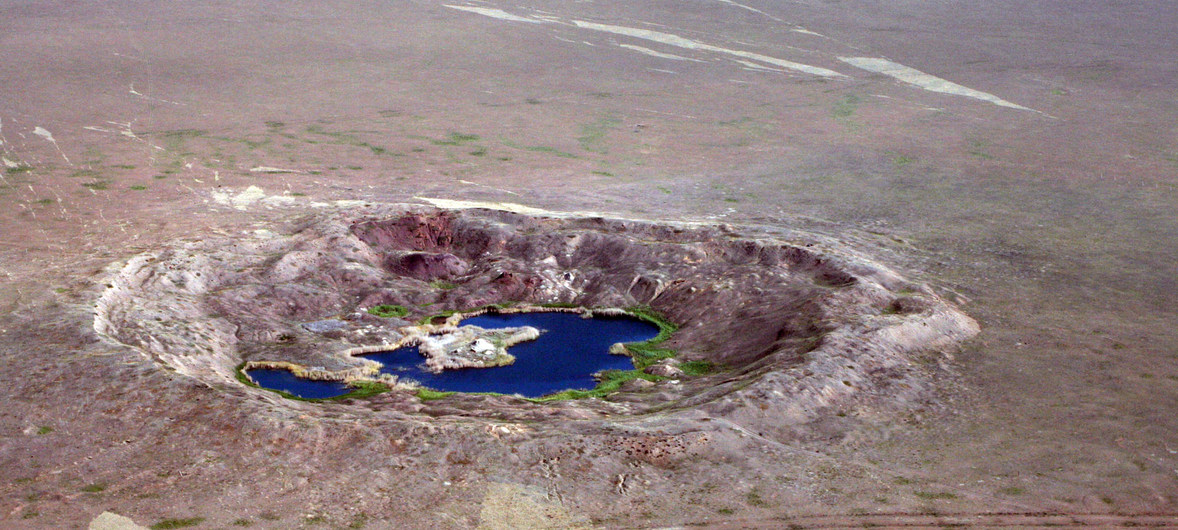
Reaffirm commitment to ban nuclear tests, UN chief says in message for International Day, UN News 29 Aug 21 Countries which have not yet ratified the Comprehensive Nuclear-Test-Ban Treaty (CTBT) are urged by UN Secretary-General António Guterres to do so without delay.
The UN chief made the appeal in his message for the International Day Against Nuclear Tests, observed on Sunday, 29 AugustThe UN chief made the appeal in his message for the International Day Against Nuclear Tests, observed on Sunday, 29 August
The date marks the 30th anniversary of the closure of the Semipalatinsk nuclear test site in Kazakhstan, the largest of its kind in the former Soviet Union, where more than 450 nuclear devices were exploded over four decades.
Terrible consequences
Mr. Guterres said nuclear tests caused enormous human suffering and environmental damage.
They had terrible consequences on the health of people living in affected areas. Many were relocated from their ancestral lands, disrupting their lives and livelihoods. Pristine environments and ecosystems were destroyed, which will take decades, if not centuries, to heal.”
The closure of the Semipalatinsk test site signaled the end of the era of unrestrained nuclear testing, said Mr. Guterres. Soon afterwards, countries began negotiating the CTBT.
The treaty bans all explosive nuclear weapons tests anywhere, by any country, he added, effectively “putting a brake on the nuclear arms race and providing a powerful barrier to the development of new nuclear weapons.”
No excuse
The CTBT was adopted in 1996 and has been signed by 185 countries, and ratified by 170, including three nuclear weapon States. However, it must be signed and ratified by 44 specific nuclear technology holder countries before it can enter into force……………….
Threat still real: Kazakhstan Ambassador
The threat that nuclear weapons pose to the world remains “as realistic as ever”, said Kazakhstan’s Ambassador to the UN, Magzhan Ilyassov, speaking to UN News ahead of the International Day (interview here and at right).
“For us, the 29th of August is not a day in the calendar. It is a reminder about how traumatic nuclear tests can be for humankind because in Kazakhstan alone, 1.5 million people still suffer, and will unfortunately suffer for future generations, from genetic diseases, cancer, leukaemia, which were caused by exposure to nuclear tests.”
Mr. Ilyassov said the total impact of the nuclear explosions carried out at the Semipalatinsk site was “1,200 times more” than the atomic bomb dropped on Hiroshima, Japan, during the Second World War.
“The test site itself is of the size of Israel, so it’s a big chunk of the territory of Kazakhstan and that cannot be used for any other purpose like agriculture for many, many decades now,” he said, adding “so with that, we can also project what was the damage caused by other nuclear test sites around the world which were eventually closed.” https://news.un.org/en/story/2021/08/1098682
Military Contractor CACI Says Afghanistan Withdrawal Is Hurting Its Profits. It’s Funding a Pro-War Think Tank.

But this outcry didn’t materialize out of nowhere. Think tank “experts,” whose organizations are financed by the very companies profiting from the war, play a key part.
They are trotted out in front of cameras and quoted in major media outlets, presented as above-the-fray observers. They are well-financed, polished and groomed precisely for moments like these. And the companies financing them get to launder their own objectives through institutions that are seen as respectable, academic and rigorous. It’s a grotesque system that is functioning as it was designed.
Military Contractor CACI Says Afghanistan Withdrawal Is Hurting Its Profits. It’s Funding a Pro-War Think Tank. https://readersupportednews.org/opinion2/277-75/71175-military-contractor-caci-says-afghanistan-withdrawal-is-hurting-its-profits-its-funding-a-pro-war-think-tank
By Sarah Lazare, In These Times
26 August 21
What CACI reveals about the feedback loop between military contractors and think tanks.
n August 12, the military contractor CACI International Inc. told its investors that the U.S. withdrawal from Afghanistan is hurting its profits. The same contractor is also funding a think tank that is concurrently arguing against the withdrawal. This case is worth examining both because it is routine, and because it highlights the venality of our “expert”-military contractor feedback loop, in which private companies use think tanks to rally support for wars they’ll profit from.
The contractor is notorious to those who have followed the scandal of U.S.-led torture in Iraq. CACI International was sued by three Iraqis formerly detained in Abu Ghraib prison who charge that the company’s employees are responsible for directing their torture, including sexual assault and electric shocks. (The suit was brought in 2008 and the case is still ongoing.)
In 2019, CACI International was awarded a nearly $907 million, five-year contract to provide “intelligence operations and analytic support” for the U.S. Army in Afghanistan.
During an August 12 earnings call, CACI International noted repeatedly that President Biden’s withdrawal from the 20-year Afghanistan War harmed the company’s profits. John Mengucci, president and CEO of CACI International, said, “we have about a 2 percent headwind coming into FY 2022 because of Afghanistan.” A “headwind” refers to negative impacts on profits.
Afghanistan was mentioned 16 times throughout the call — either in reference to the dent in profits, or to assure investors that other areas of growth were offsetting the losses. For example, Mengucci said, “We’re seeing positive growth in technology and expect it to continue to outpace expertise growth, collectively offsetting the impact of the Afghanistan drawdown.”
Similar themes were repeated in an April 22 earnings call, where the company lamented the “headwinds” posed by the Afghanistan withdrawal. (Industry and defense publications have picked up on this them, but framed it in the company’s terms, by emphasizing the offsets to its losses.)
Despite CACI International’s clear economic interest in continuing the war, on the August 12 call, company officials were careful not to editorialize about the Biden administration’s decision. The closest they came was a cautious statement from Mengucci: “At least as of today we’ve watched the administration make the decision to completely exit Afghanistan by 9 – 11 and all I can say is they’re executing on that decision.”
But CACI International does not have to broadcast its positions on the war: Instead, it is funding a think tank that has been actively urging the Biden administration not to leave Afghanistan.
CACI International is listed as a “corporate sponsor” of the Institute for Study of War, which describes itself as a “non-partisan, non-profit, public policy research organization.” Dr. Warren Phillips, lead director of CACI International, is on the board of the think tank. (Other funders include General Dynamics and Microsoft.)
When it comes to the U.S. withdrawal from Afghanistan, however, the think tank is extremely partisan. In an August 20 paper, the think tank argued that “Russia, China, Iran, and Turkey are weighing how to take advantage of the United States’ hurried withdrawal.”
Jack Keane, a retired four star general and board member of the Institute for Study of War, meanwhile, has been on a cable news blitz arguing against the U.S. withdrawal from Afghanistan, as reported by Ryan Grim, Sara Sirota, Lee Fang and Rose Adams for The Intercept.
Kimberly Kagan, founder and president of the Institute for the Study of War, told Fox News on August 17 that the U.S. withdrawal could cause Afghanistan to become the “second school of jihadism.” She warned, “It is not clear that the Taliban, which seeks international recognition and legitimacy, is going to want to tolerate or encourage direct attacks on the U.S. from al Qaeda or other extremist groups based in Afghanistan.”
The think tank’s backing from a military contractor was not discussed in these media appearances.
The case of CACI International is not unique. The Intercept notes, “Among the other talking heads who took to cable news segments or op-ed pages without disclosing their defense industry ties were retired Gen. David Petraeus; Rebecca Grant, a former staffer for the Air Force secretary; Richard Haass, who worked as an adviser to then-Secretary of State Colin Powell; and former Secretary of State Condoleezza Rice.”
This cacophony of voices matters because Biden is facing a media uproar over the withdrawal. Pundits and mainstream press outlets that have been ignoring civilian deaths for years are suddenly expressing moral outrage at their hardships now that the war is ending. While there are legitimate concerns about the fate of Afghans as the Taliban seizes control, the vast majority of the firestorm stems from a reflexively pro-war perspective, in favor of the indefinite extension of an occupation that has proven brutal and lethal for civilians. The overwhelming effect is to send the message to Biden, and any future presidents, that they should think twice before withdrawing from a war, lest they have a media revolt on their hands.
But this outcry didn’t materialize out of nowhere. Think tank “experts,” whose organizations are financed by the very companies profiting from the war, play a key part. They are trotted out in front of cameras and quoted in major media outlets, presented as above-the-fray observers. They are well-financed, polished and groomed precisely for moments like these. And the companies financing them get to launder their own objectives through institutions that are seen as respectable, academic and rigorous. It’s a grotesque system that is functioning as it was designed.
In its August 12 call, CACI International simply acknowledged the company’s economic interests out loud.
Weaponising space -the high road to World War 3, but profitable for weapon and space companies

Insane U.S. Plan to Spend Billions on Weaponizing Space Makes Defense Contractors Jump for Joy—But Rest of World Cowers in Horror at Prospect of New Arms Race Leading to World War IIICovertAction Magazine By Karl Grossman – August 25, 2021 Imagine this scenario from the year 2045: The U.S. and China, after years of belligerence, go to war over control of the Taiwan straits; most of the battles are fought through cyber-attacks and space-based weapons systems that had been perfected over the previous decades.
In a desperate maneuver, the U.S. activates its “rods from God”—a scheme developed in Project Thor involving telephone-pole-sized tungsten rods being dropped from orbit reaching a speed ten times the speed of sound [7,500 miles per hour] hitting with the force of nuclear weapons—and Beijing’s military command centers and other significant targets are destroyed.
The above scenario looks increasingly plausible given a) the growing prospect of war between the U.S. and China; and b) the growing militarization of space by the U.S.—in violation of the landmark Outer Space Treaty of 1967 that sets aside space “for peaceful purposes.”
U.S. Space Force and the Evisceration of the 1967 Outer Space Treaty
Donald Trump declared at a meeting of the National Space Council of the U.S. in 2018 that “it is not enough to merely have an American presence in space, we must have American dominance in space…. I’m hereby directing the Department of Defense and Pentagon to immediately begin the process necessary to establish a Space Force as the sixth branch of the armed forces … It is going to be something.”

Indeed, the U.S. Space Force, established in December 2019, is something—and can, if not will, destroy the visionary Outer Space Treaty of keeping space for peace.
The Outer Space Treaty of 1967 was put together by the U.S., Great Britain and the former Soviet Union and has wide support from nations around the world. 111 countries are parties to the treaty, while another 23 have signed the treaty but have not completed ratification.
As Craig Eisendrath, who as a young U.S. State Department officer was involved in the treaty’s creation, told me—and I quote him in my book Weapons in Space—“we sought to de-weaponize space before it got weaponized … to keep war out of space.”
“This foundational treaty has allowed for half a century of ever expanding peaceful activity in space, free from man-made threats,” writes Paul Meyer, in his chapter “Arms Control in Outer Space: A Diplomatic Alternative to Star Wars” in the book Security in the Global Commons and Beyond.[1]
The Outer Space Treaty bars placement “in orbit around the Earth any objects carrying nuclear weapons or any other kinds of weapons of mass destruction or from installing such weapons on celestial bodies.”
Biden Signs Off on Space Force
Republican Trump’s successor as U.S. president, Democrat Joe Biden, has not pulled back on the U.S. Space Force. As Defense News headlined in 2021: “With Biden’s ‘full support,’ the Space Force is officially here to stay.”
Its article opened: “U.S. President Joe Biden will not seek to eliminate the Space Force and roll military space functions back into the Air Force, the White House confirmed.” It continued: “White House spokeswoman Jen Psaki told reporters during a Feb. 3 briefing that the new service has the ‘full support’ of the Biden administration.” And it went on: “‘We’re not revisiting the decision,’ she said.”
Most Democrats in the U.S. Congress voted for the legislation providing for formation of the U.S. Space Force as pushed by Trump. All Republicans in the U.S. Congress voted for it.
False Pretext
For decades there has been an effort to extend the Outer Space Treaty and enact the Prevention of an Arms Race, the PAROS treaty, which would bar any weapons in space.
China, Russia (and U.S. neighbor Canada) have been leaders in seeking passage of the PAROS treaty. But the U.S.—through administration after administration, Republican and Democrat—has opposed the PAROS treaty and effectively vetoed it at the United Nations.
Although the PAROS treaty has broad backing from nations around the world, it must move through the UN’s Conference on Disarmament which functions on a consensual basis.
A rationale for the U.S. Space Force now being claimed is that it is necessary to counter moves by China and Russia in space, particularly development of anti-satellite weapons.
That is what a CNN report in August 2021, titled “An Exclusive Look into How Space Force Is Defending America,” centrally asserted. There was no mention in the six-minute-plus CNN piece of how China and Russia (and Canada) have led for decades in the push for PAROS, and how China and Russia in recent times have reiterated their calls for space to be weapons-free.
“We are calling on the international community to start negotiations and reach agreement on arms control in order to ensure space safety as soon as possible,” said the Chinese Foreign Ministry spokesperson, Zhao Lijian, in April 2021. “China has always been in favor of preventing an arms race in space; it has been actively promoting negotiations on a legally binding agreement on space arms control jointly with Russia.”
A day earlier, Russian Foreign Minister Sergey Lavrov called for talks to create an “international legally binding instrument” to ban the deployment of “any types of weapons” in space. Lavrov said: “We consistently believe that only a guaranteed prevention of an arms race in space will make it possible to use it for creative purposes, for the benefit of the entire mankind. We call for negotiations on the development of an international legally binding instrument that would prohibit the deployment of any types of weapons there, as well as the use of force or the threat of force.”
Onward and Upward!

Meanwhile, the U.S. Space Force drives ahead.
It has requested a budget of $17.4 billion for 2020 to “grow the service,” reports Air Force Magazine. “Space Force 2022 Budget Adds Satellites, Warfighting Center, More Guardians,” was the headline of its article. And in the first paragraph, it adds “and fund more than $800 million in new classified programs.” (“Guardians” is the name adopted by the U.S. Space Force in 2021 for its members.)
A recruitment drive is under way.
The U.S. Space Force “received its first offensive weapon … satellite jammers,” reported American Military News in 2020. “The weapon does not destroy enemy satellites, but can be used to interrupt enemy satellite communications and hinder enemy early warning systems meant to detect a U.S. attack,” it stated…………
“US Space Command—dominating the space dimension of military operations to protect US interests and investment. Integrating Space Forces into war-fighting capabilities across the full spectrum of conflict,” trumpeted Vision for 2020……….
I displayed the comments of U.S. Space Command Commander-in-Chief Joseph W. Ashy in Aviation Week and Space Technology in 1996: “It’s politically sensitive, but it’s going to happen,” said the general.

Some people don’t want to hear this … but—absolutely—we’re going to fight in space. We’re going to fight from space and we’re going to fight into space…. We will engage terrestrial targets someday—ships, airplanes, land targets—from space.” U.S. Space Command Commander-in-Chief General Joseph W. Ashy……………
Star Wars and America’s Nazis

German Major General Walter Dornberger, who had been in charge of the entire Nazi rocket program, and how he “in 1947 as a consultant to the U.S Air Force and adviser to the Department of Defense … wrote a planning paper for his new employers.
He proposed a system of hundreds of nuclear-armed satellites all orbiting at different altitudes and angles, each capable of re-entering the atmosphere on command from Earth to proceed to its target. The Air Force began early work on Dornberger’s idea under the acronym NABS (Nuclear Armed Bombardment Satellites).”
Insane U.S. Plan to Spend Billions on Weaponizing Space Makes Defense Contractors Jump for Joy—But Rest of World Cowers in Horror at Prospect of New Arms Race Leading to World War III CovertAction Magazine By Karl Grossman – August 25, 2021 ” ……………………………………..Star Wars and America’s Nazis
U.S. interest in militarizing and weaponizing space goes back well before the Vision for 2020 and other bellicose U.S. plans for space in the 1990s, or Ronald Reagan’s Strategic Defense Initiative dubbed “Star Wars,” in the 1980s. Its roots are with the former Nazi rocket scientists and engineers brought to the U.S. from Germany after World War II under the U.S.’s Operation Paperclip, where more than 1,600 German scientists, engineers and technicians were taken from former Nazi Germany to the U.S. for government employment after the end of World War II in Europe, between 1945 and 1959.
They ended up at the U.S. Army’s Redstone Arsenal in Huntsville, Alabama—to use “their technological expertise to help create the U.S. space and weapons program,” writes Jack Manno, a State University of New York professor, in his 1984 book Arming the Heavens: The Hidden Military Agenda for Space, 1945-1995 (1984).
“Many of the early space war schemes were dreamt up by scientists working for the German military, scientists who brought their rockets and their ideas to America after the war,” he writes. Many of these scientists and engineers “later rose to positions of power in the U.S. military, NASA, and the aerospace industry.”

Among them were “Wernher von Braun and his V-2 colleagues,” who began “working on rockets for the U.S. Army” and, at the Redstone Arsenal, “were given the task of producing an intermediate range ballistic missile to carry battlefield atomic weapons up to 200 miles. The Germans produced a modified V-2 renamed the Redstone…. Huntsville became a major center of U.S. space military activities.”
Manno tells the story of former German Major General Walter Dornberger, who had been in charge of the entire Nazi rocket program, and how he “in 1947 as a consultant to the U.S Air Force and adviser to the Department of Defense … wrote a planning paper for his new employers.
He proposed a system of hundreds of nuclear-armed satellites all orbiting at different altitudes and angles, each capable of re-entering the atmosphere on command from Earth to proceed to its target. The Air Force began early work on Dornberger’s idea under the acronym NABS (Nuclear Armed Bombardment Satellites).”
In my subsequent Weapons in Space, Manno tells me that “control over the Earth” was what those who have wanted to weaponize space seek. He said the Nazi scientists are an important “historical and technical link, and also an ideological link…. The aim is to … have the capacity to carry out global warfare, including weapons systems that reside in space.”
Dornberger’s nuclear link continues in various forms throughout the U.S. military space program. The Strategic Defense Initiative scheme of Reagan—although this was barely disclosed at the time—was predicated on orbiting battle platforms with on-board hypervelocity guns, particle beams and laser weapons. They were to be energized by on-board nuclear reactors.
As General James Abrahamson, SDI director, said at a Symposium on Space Nuclear Power and Propulsion, “without reactors in orbit [there is] going to be a long, long light [extension] cord that goes down to the surface of the Earth” to bring up power to energize space weaponry………………….[2] https://covertactionmagazine.com/2021/08/25/insane-u-s-plan-to-spend-billions-on-weaponizing-space-makes-defense-contractors-jump-for-joy-but-rest-of-world-cowers-in-horror-at-prospect-of-new-arms-race-leading-to-world-war-iii/
Israel accelerates plans for a possible strike on Iran’s nuclear programme
Israel ‘Speeding Up’ Operational Plans Against Iran’s Nuclear Program
by Algemeiner Staff 26 Aug 21, As Israeli Prime Minister Naftali Bennett arrived in Washington, DC ahead of his Thursday meeting with US President Joe Biden, the Israel Defense Forces revealed that it has accelerated its plans for a possible strike on Iran’s nuclear program…….
The military said that Maj. Gen. Tal Kalman, the head of its Iran file, is at work on operational plans to attack Iran’s nuclear program as well as its missile and rocket sites, Walla reported.
The IDF assesses that Iran does not immediately plan to increase its enrichment of uranium beyond the 60% level, but that Tehran is unlikely to compromise in the talks over returning to the deal…….
The IDF also confirmed on Wednesday that Israel had struck some 31 Hezbollah targets in Syria over the last tw https://www.algemeiner.com/2021/08/25/idf-says-israel-speeding-up-operational-plans-against-irans-nuclear-program/
Nuclear power and nuclear weapons together, in a bonanza for a privatised space industry
Insane U.S. Plan to Spend Billions on Weaponizing Space Makes Defense Contractors Jump for Joy—But Rest of World Cowers in Horror at Prospect of New Arms Race Leading to World War III
CovertAction Magazine By Karl Grossman – August 25, 2021 ”……………….New World Vistas
A 1996 U.S. Air Force report, New World Vistas: Air and Space Power for the 21st Century, speaks of how “new technologies will allow the fielding of space-based weapons of devastating effectiveness to be used to deliver energy and mass as force projection in tactical and strategic conflict. These advances will enable lasers with reasonable mass and cost to effect very many kills.”
However, “power limitations impose restrictions” on such space weaponry making them “relatively unfeasible,” but “a natural technology to enable high power is nuclear power in space.” Says the report: “Setting the emotional issues of nuclear power aside, this technology offers a viable alternative for large amounts of power in space.”
This linkage continues.
A 104-page report issued by the National Academies of Sciences, Engineering and Medicine in 2021 entitled Space Nuclear Propulsion for Human Mars Exploration declared: “Space nuclear propulsion and power systems have the potential to provide the United States with military advantages.”
The report’s central focus is the advocacy of rocket propulsion by nuclear power for U.S. missions to Mars and lays out “synergies” in space nuclear activities between NASA and the U.S. military.

On December 19, 2021, just before he was to leave office, Trump signed Space Policy Directive-6, titled “National Strategy for Space Nuclear Power and Propulsion.”
Its provisions include: “DoD [Department of Defense] and NASA, in cooperation with DOE [Department of Energy], and with other agencies and private-sector partners, as appropriate, should evaluate technology options and associated key technical challenges for an NTP [Nuclear Thermal Propulsion] system, including reactor designs, power conversion, and thermal management. DoD and NASA should work with their partners to evaluate and use opportunities for commonality with other SNPP [Space Nuclear Power and Propulsion] needs, terrestrial power needs, and reactor demonstration projects planned by agencies and the private sector.”
It continues: “DoD, in coordination with DOE and other agencies, and with private sector partners, as appropriate, should develop reactor and propulsion system technologies that will resolve the key technical challenges in areas such as reactor design and production, propulsion system and spacecraft design, and SNPP system integration.”
The members of the committee that put together the report for the National Academies included executives of the aerospace and nuclear industry—a key element in U.S. space policy.
For example, as the report states, there were: Jonathan W. Cirtain, president of Advanced Technologies, “a subsidiary of BWX Technologies which is the sole manufacturer of nuclear reactors for the U.S. Navy”; Roger M. Myers, owner of R. Myers Consulting and who previously at Aerojet Rocketdyne “oversaw programs and strategic planning for next-generation in-space missions [that] included nuclear thermal propulsion and nuclear electric power systems; and Joseph A. Sholtis, Jr., “owner and principal of Sholtis Engineering & Safety Consulting, providing expert nuclear, aerospace, and systems engineering services to government, national laboratories, industry, and academia since 1993.”
And so on.
“Rigged Game in Washington”

The Global Network Against Weapons and Nuclear Power in Space was formed in 1992 at a meeting in Washington, D.C., and has been the leading group internationally challenging the weaponization and nuclearization of space.
Its coordinator, Bruce Gagnon, in a 2021 interview with me, said: “The aerospace industry has long proclaimed that ‘Star Wars’ would be the largest industrial project in human history. Add the nuclear industry’s ambition to use space as its ‘new market,’ and one can imagine the money that would be involved. These two industry giants have put their resources together to ensure their ‘control and domination’ of the U.S. Congress. Both political parties are virtually locked down when it comes to appropriating funds to move the arms race into space and to colonize the heavens for corporate profits. Just one example is the recent approval in Congress of the creation of the ‘Space Force’ as a new service branch in the military.”
During the Trump administration (with the Democrats in control of the House of Representatives) the Space Force was ‘stood up’ as they like to say in the biz,” said Gagnon. “The Democrats could have stopped the creation of this new military branch. During the little congressional debate that did occur, the only thing the Democrats requested was to call it the ‘Space Corps’ (like the Marine Corps). It’s a rigged game in Washington when it comes to handing out money to the aerospace industry.”
Gagnon continued: “In his book, The Pentagon’s New Map: War and Peace in the 2lst Century, former Navy War College Professor Thomas Barnett writes that, under globalization of the world economy, every country will have a different role. We won’t produce shoes, cars, phones, washing machines and the like in the U.S. anymore because it is cheaper for industry to exploit labor in the global south.
Our role in the U.S., Barnett says, will be ‘security export.’ That means we will endlessly fight wars in the parts of the world where nations are not yet ‘fully integrated’ into corporate capitalism. Having a dominant military in space would enable the US to see, hear and target everything on the Earth.”
“In order to put together a global ‘Leviathan’ military capability,” Gagnon continued, “space must be militarized and weaponized. The cost of doing so is enormous and requires cuts in social and environmental spending and larger contributions from NATO member nations.”
“In addition to using space technology to control Earth on behalf of corporate capital, the new Space Force will have another key job. They will be tasked with attempting to control the pathway on and off the planet Earth. In the 1989 Congressional Study entitled Military Space Forces: The Next 50 Years, congressional staffer John Collins writes on pages 24 and 25: “Nature reserves decisive advantage for L4 and L5, two allegedly stable [space] libration points that theoretically could dominate Earth and moon, because they look down both gravity wells. No other location is equally commanding…. Armed forces might lie in wait at that location to hijack rival shipments on return.”
Privatized Gold Rush

“The Pentagon is looking to a future where space would be fully privatized and a new gold rush would ensue. Corporations and rich fat-cats like Jeff Bezos, Elon Musk and Richard Branson, while ignoring the UN’s Outer Space and Moon Treaties that call the heavens the ‘province of all mankind,’ would move to control the shipping lanes from Earth into space. The Space Force would be used by these ‘space entrepreneurs’ as their own private pirate forces to ensure they controlled the extraction of resources mined from planetary bodies. This provocative vision would in the end recreate the global war system, which has been deeply embedded into the culture and consciousness here on Earth. Russia, China and other space-faring nations are not going to allow the US to be the ‘Master of Space.’”
Planting Earth’s Toxic Residue in the Heavens and the Fight to Stop It

Says Gagnon: “I call this the bad seed of greed, war and environmental devastation that we are poised to plant into the heavens.”
“It is my hope that the global public would quickly awaken to a deep understanding and not allow corporate oligarchs or the military to encircle our planet with so much space junk that we would be forever entombed on Earth, or continue to punch a hole in the Earth’s delicate ozone layer from toxic rocket exhaust after each of their tens of thousands of coming launches, or ruin the sacred night sky with blinking satellites for 5G that will in the end be used by the Space Force for expanded ‘space situational awareness’ and targeting capabilities.”
“We have reached the point in human history where we need the immediate intervention by the citizen taxpayers of the planet to ensure that our tiny orbiting satellite called Earth remains livable for the future generations,” Gagnon declared. “We can’t fall for the public relations story-line of the cowboy sailing off into space to discover the new world. We know how that movie turns out in the end—just ask the Native American people.”
U.S. Army Colonel John Fairlamb (Ret.), in 2021 wrote in The Hill, the Washington, D.C., news website: “Let’s be clear: Deploying weapons in space crosses a threshold that cannot be walked back.” Fairlamb’s background includes being International Affairs Specialist for the Army Space and Missile Defense Command and Military Assistant to the U.S. Secretary of State for Political Military Affairs.
“Given the implications for strategic stability, and the likelihood that such a decision [to deploy weapons in space] by any nation would set off an expensive space arms race in which any advantage gained would likely be temporary, engaging now to prevent such a debacle seems warranted,” wrote Fairlamb.
His piece was headed: “The U.S. should negotiate a ban on basing weapons in space.”
“It’s time,” Fairlamb wrote, “for arms control planning to address the issues raised by this drift toward militarization of space. Space is a place where billions of defense dollars can evaporate quickly and result in more threats about which to be concerned. Russia and China have been proposing mechanisms for space arms control at the United Nations for years; it’s time for the U.S. to cooperate in this effort.”
As Alice Slater, a member of the boards of both the Global Network Against Weapons and Nuclear Power in Space and the organization World BEYOND War, says: “The U.S. mission to dominate and control the military use of space has been, historically and at present, a major obstacle to achieving nuclear disarmament and a peaceful path to preserve all life on Earth. Reagan rejected Gorbachev’s offer to give up ‘Star Wars’ as a condition for both countries to eliminate all their nuclear weapons … Bush and Obama blocked any discussion in 2008 and 2014 on Russian and Chinese proposals for a space-weapons ban in the consensus-bound Committee on Disarmament in Geneva.”
At this unique time in history when it is imperative that nations of the world join in cooperation to share resources to end the global plague assaulting its inhabitants and to avoid catastrophic climate destruction or Earth-shattering nuclear devastation,” said Slater, “we are instead squandering our treasure and intellectual capacity on weapons and space warfare.”
And yet far worse is to come—unless there is a return to the vision of the Outer Space Treaty of 1967. The latter needs to be expanded, U.S. Space Force dismantled, and a full global commitment made to keep space for peace.
As we go to press, Breaking Defense published an article: “Pentagon Poised To Unveil, Demonstrate Classified Space Weapon.” This was its headline. Above the headline it stated: “Show Coverage: Space Symposium 2021”
The piece begins: “For months, top officials at the Defense Department have been working toward declassifying the existence of a secret space weapon program and providing a real-world demonstration of its capabilities.” It continues: “The system in question long has been cloaked in the blackest of black secrecy veils—developed as a so-called Special Access Program known only to a very few, very senior government leaders.”
The August 20th article features below its headline a large illustration of—as its caption reads—“Directed energy anti-satellite weapons for the future (Lockheed Martin)”
Space Symposium 2021 was to be held in Colorado Springs, Colorado between August 23 and 26. A main speaker was to be General John W. “Jay” Raymond, chief of space operations of the U.S. Space Force.
Breaking Defense describes itself as “the digital magazine on the strategy, politics and technology of defense,” adding: “It’s a new era in defense, where new technologies, new warfare domains and a rapidly shifting military and political landscape have profound implications for national security.”
Humanitarian Impacts of Nuclear Weapons
Humanitarian Impacts of Nuclear Weapons, The personal side of nuclear weapons European Leadership Network Heather Williams |Senior Associate Fellow, 25 August 2021
” ………………………..Nowhere is this emphasis on diversity and inclusivity more noticeable than in the humanitarian impacts of nuclear weapons initiative. Indeed, this movement highlights the personal experience of a wide range of individuals whose lives were directly impacted by nuclear weapons. Thanks in large part to the humanitarian impacts conferences in 2013 and 2014, efforts by civil society organisations, and the Treaty on the Prohibition of Nuclear Weapons, these views are increasingly a part of nuclear policy discussions. As they should be.
I was first introduced to this movement in 2012 and had the privilege of attending the three humanitarian impacts conferences. The conferences included the testimony of survivors of the nuclear bombings and research on the environmental impact of nuclear testing, among other topics. For example, the Vienna conference in 2014 included the testimony of Sue Coleman-Haseldine, from the Koonibba Aboriginal Mission in Australia, that was impacted by nuclear testing in the region: ‘I remember older people talking about Nullabor dust storms. It was the fallout from the Maralinga tests. We weren’t on ground zero, but the dust didn’t stay in one place. It went wherever the winds took it. I noticed people dying of cancer, something that was new to us. There’s a cemetery at Woomera which we call the children’s cemetery. It’s filled with children who died around the time of the tests.’ The testimony of survivors of Hiroshima and Nagasaki, along with groups impacted by nuclear testing, ought to be required reading for anyone working on nuclear weapons issues.
The humanitarian impacts conferences led to the Treaty on the Prohibition of Nuclear Weapons (TPNW), and while the TPNW remains politically contentious, it should not detract from discussions on the historical human costs of nuclear weapons and nuclear testing. When the Treaty was concluded in 2017, nuclear scholars Benjamin Valentino and Scott Sagan pointed to it as a ‘missed opportunity’, because, ‘The energy, organization, and genuine passion that eventually resulted in the ban treaty were assets that might have been used to address dangerous realities about nuclear weapons that are too often ignored: the human costs of clean-up of waste sites and production facilities and the potential for nuclear winter or other environmental effects.’ Nonetheless, these conferences and the humanitarian movement have changed nuclear scholarship and discourse and brought to light an aspect of nuclear weapons policy that is often overlooked.
Since the first humanitarian impacts conference, ELN has provided an important platform for spreading these stories and messages, and putting them in the wider context of nuclear policy. This has included proponents of the TPNW as well as sceptics……………….. https://www.europeanleadershipnetwork.org/commentary/the-personal-side-of-nuclear-weapons/
How to remember Hiroshima and Nagasaki – Sign the nuclear weapons treaty
How to remember Hiroshima and Nagasaki – Sign the nuclear weapons treaty, https://www.sightmagazine.com.au/21431-essay-how-to-remember-hiroshima-and-nagasaki-sign-the-nuclear-weapons-treaty, DIANE RANDALL, 23 Aug 21,
Every August for the past 76 years we have marked the anniversary of the bombings of Japan’s Hiroshima and Nagasaki. To date, the bombs dropped on the two cities three days apart in 1945, killing and maiming hundreds of thousands (mostly civilians) in the blink of an eye, have been the only use of nuclear weapons in combat. The strike cannot be ignored or overlooked. It should not be forgotten.
But I look forward to another anniversary, one that celebrates something that has not yet happened. I look forward to celebrating, year after year, the complete abolishment of nuclear weapons and to a world free of atomic bombs.
It is a small miracle that nuclear weapons have not been used again, despite being tested extensively, with at least nine nations possessing them. Small miracles, however, are no substitute for sound policy.
As long as nuclear weapons exist, there is a threat of use or the possibility of an accident with these weapons that harbor devastating destruction. These threats can be eliminated by banning all nuclear weapons.
Yes, some may view this as unrealistic wishful thinking. No-one who lived through, witnessed or has any knowledge of the unparalleled destruction wrought upon Hiroshima and Nagasaki could possibly think nuclear weapons should be used again.
As Quakers, we have consistently called for the elimination of nuclear weapons and other weapons of war. Quakers, along with millions of people worldwide, support the 2017 Treaty on the Prohibition of Nuclear Weapons, the first international pact to comprehensively ban nuclear weapons. To date, it’s been signed by 86 countries, offering an aspiration for the complete elimination of these weapons.
However, no nuclear power, including the United States, has signed it.
It is equally true that the world has seen little if any peace since those tragic days in August 1945. Yes, thankfully, nuclear weapons have not been used. But that is no comfort for those on either side who died in Korea, Vietnam, Iraq, Afghanistan and other lethal military confrontations. People who died fighting for their country, or the uncountable civilian casualties we call “collateral damage,” are no less meaningful than those who perished in the nuclear bombings.
What can be done about the mind-numbing amount of death and destruction we willingly unleash across the globe, too often with the intention to dominate others?
Stop funding nuclear weapons and cut the Pentagon budget is the most obvious answer. President Biden has already requested $US753 billion for both the Pentagon and the nuclear weapons budget, and the Senate Committee on Armed Services has offered an extra $US25 billion on top of that request.
Is there no better use for those funds? During a deadly new wave and resurgence of the global COVID-19 pandemic, isn’t the production and distribution of vaccines across the globe a more worthy choice for taxpayer funds? This would be a productive way to make the world a safer place rather than bombs, fighter planes, tanks, drones and guns.
As a faith community with a long tradition of working to prevent nuclear war and the ever-increasing threat of arms proliferation, Quakers know this is about a lot more than money. We are trying to save something much more important than that human life.
Progress has been made in reducing nuclear weapons since the Cold War; however we should continue to lead the way for all nuclear armed nations to ban these weapons forever. Our very existence is at stake. We have a moral obligation to make certain nuclear weapons should never be used again.
When that dream comes to fruition, it will be a day long worth marking.
Diane Randall is the general secretary of the Friends Committee on National Legislation, a national, non-partisan Quaker lobby for peace, justice and the environment.
Russia begins constructing nuclear submarines amid increasing friction with West
Russia begins constructing nuclear submarines amid increasing friction with West, By Guy Taylor– The Washington Times – Monday, August 23, 2021
Russia has begun building new nuclear submarines capable of carrying intercontinental ballistic missiles as part of a wide-reaching military modernization effort amid rising tensions with the United States and other Western powers.
Russian President Vladimir Putin personally announced the new construction, delivering orders via a video call Monday for two ICBM-armed nuclear submarines, as well as two diesel-powered subs and two corvettes at shipyards in Severodvinsk, St. Petersburg and Komsomolsk-on-Amur………..
On a separate front, U.S. military officials sought to draw attention to the increased Russian military activity in the Arctic.
In April, CNN reported that new imagery had revealed a major Russian build-up in the Arctic and claimed Moscow had begun actively testing new weapons in the region, parts of which are freshly ice-free due to changing climate patterns.
Moscow’s apparent goal is to secure its northern coast and dominate a key shipping route from Asia to Europe.
The April CNN report cited weapons experts and Western officials expressing particular concern about one Russian “super-weapon” — the unmanned Poseidon 2M39 torpedo, a stealth projectile powered by a nuclear reactor and intended by Russian designers to sneak past coastal defenses on the seafloor……..
Monday’s ceremony for the new ships was part of the Army-2021 show intended to showcase military might and attract foreign customers for Russia‘s arms industries. The weeklong show features aircraft, tanks, missiles and other weapons.
“Many of our weapons have capabilities that have no analogues in the world, and some will remain unrivaled for a long time to come,” the Russian president said. https://www.washingtontimes.com/news/2021/aug/23/russia-begins-constructing-nuclear-submarines-amid/
1 This Month





PLEASE OPPOSE HR 8255 AND S.3639 – bills would accelerate satellite deployment, with no environmental review or safeguards – https://ncstd5li.quorum.us/campaign/169331/
To see nuclear-related stories in greater depth and intensity – go to https://nuclearinformation.wordpress.com
-
Archives
- October 2026 (58)
- September 2026 (339)
- August 2026 (330)
- July 2026 (355)
- June 2026 (287)
- May 2026 (306)
- April 2026 (356)
- March 2026 (251)
- February 2026 (267)
- January 2026 (308)
- December 2025 (358)
- November 2025 (359)
-
Categories
- 1
- 1 NUCLEAR ISSUES
- business and costs
- climate change
- culture and arts
- ENERGY
- environment
- health
- history
- indigenous issues
- Legal
- marketing of nuclear
- media
- opposition to nuclear
- PERSONAL STORIES
- politics
- politics international
- Religion and ethics
- safety
- secrets,lies and civil liberties
- spinbuster
- technology
- Uranium
- wastes
- weapons and war
- Women
- 2 WORLD
- ACTION
- AFRICA
- Atrocities
- AUSTRALIA
- Christina's notes
- Christina's themes
- culture and arts
- Events
- Fuk 2022
- Fuk 2023
- Fukushima 2017
- Fukushima 2018
- fukushima 2019
- Fukushima 2020
- Fukushima 2021
- general
- global warming
- Humour (God we need it)
- Nuclear
- RARE EARTHS
- Reference
- resources – print
- Resources -audiovicual
- Weekly Newsletter
- World
- World Nuclear
- YouTube
-
RSS
Entries RSS
Comments RSS

