UK trained Ukraine military, including a thousand-strong neo-Nazi unit.
The battalion’s founder has said that Ukraine should “lead the white races of the world in a final crusade…against Semite-led Untermenschen[subhumans].”
UK Denies It Agreed to Train Neo-Nazi Linked Ukraine Unit Consortium News, February 15, 2022 Ukraine’s National Guard says that last year the U.K. military agreed to start training its forces, which include a thousand-strong neo-Nazi unit, Matt Kennard reports. The U.K. Ministry of Defence disputes the claim.
By Matt Kennard Declassified U.K.
- Photos of meeting in Kiev last year – which U.K. personnel thought was private – were posted by Ukraine’s National Guard (NGU)
- U.K. MoD tells Declassified it has no plans to train NGU and that British commander was misquoted
- But U.K. military is engaging with NGU and aware of “the peculiarities of [its] combat operations”
- Apparent member of another far-right Ukrainian group was trained at Sandhurst in 2020
Details and photos of the meeting in the capital, Kiev, were posted in Ukrainian on the website of Ukraine’s National Guard (NGU) last year.
Declassified understands the U.K. Ministry of Defence (MoD) believed the September 2021 meeting to be private and should not have been publicized. There is no mention of the meeting in any U.K. records that are publicly available.
Three British commanders of Operation Orbital — the U.K. military’s training mission in Ukraine — are pictured, alongside three NGU officers. They sit around a table taking notes.
The MoD refused to give Declassified the names of the U.K. personnel who attended the meeting, citing operational and personnel security issues.
However, the NGU report names Lt Col Andy Cox, deputy commander of Orbital, while two other British officers are pictured, one with his name tag prominently displayed.
Orbital, which was launched in 2015, has so far only trained Ukraine’s regular armed forces. Expanding it to include the National Guard would be controversial due to sensitivities around the far-right sympathies of some of its units.
The NGU was formed in 2014 to incorporate an array of paramilitary and volunteer battalions which were fighting pro-Russian separatists in eastern Ukraine. This included a neo-Nazi unit, the Azov Battalion, which reportedly has a thousand soldiers.
Now an official regiment within the NGU — and therefore part of Ukraine’s Ministry of Internal Affairs – Azov fighters have been pictured in eastern Ukraine with Nazi insignia such as swastikas and SS runes on their helmets.
The battalion’s founder has said that Ukraine should “lead the white races of the world in a final crusade…against Semite-led Untermenschen[subhumans].”…………………………….
In June 2018, Canadian military officers were briefed by leaders from the Azov Regiment and were photographed with its officials despite warnings about the unit’s Nazi ideology…………………………….. https://consortiumnews.com/2022/02/15/uk-denies-it-agreed-to-train-neo-nazi-linked-ukraine-unit/
Campaign for Nuclear Disarmament marks 40th anniversary of Nuclear Free Wales Declaration
| The Campaign for Nuclear Disarmament in Wales is to mark the 40th anniversary of the Nuclear Free Wales Declaration with a webinar, a new website, and an exhibition touring Wales. The exhibition will visit locations in all 8 of the County Councils that existed in 1982, including at the Eisteddfod in Tregaron, and finishing in the Senedd in early December. Wales was declared ‘nuclear free’ on 23 February 1982 after local authorities around the country refused a UK Government instruction to draw up civil defence plans, including the establishment of nuclear bunkers from which the aftermath of a nuclear war would be “managed”. After opposition to the government’s plans, all eight county councils eventually refused to participate and passed resolutions declaring themselves nuclear-free zones. The Nuclear Free Wales Declaration emphasised that the whole of Wales was declared a nuclear-free zone, and that the people of Wales wished to live in peace without the threat of nuclear war. Nation Cymru 17th Feb 2022https://nation.cymru/news/exhibition-to-mark-40-years-since-the-nuclear-free-wales-declaration |
Ukrainian Pacifists Say US, NATO and Russia Share Responsibility to Avoid War.
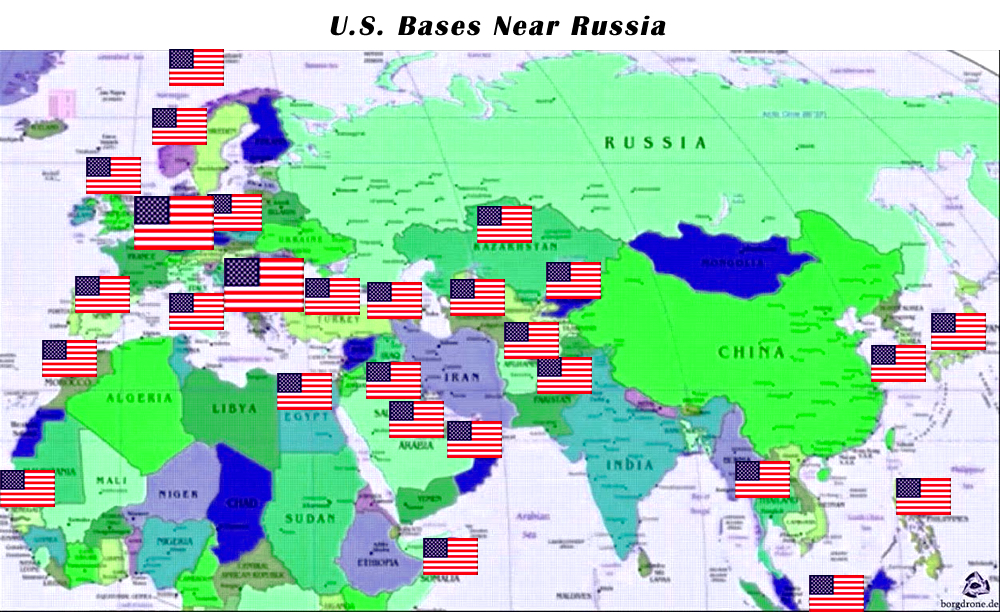
Truthout, Amy Goodman & Juan González, Democracy Now! 16 Feb 22,
ATO officials have joined the U.S. and other Western nations in saying they have yet to see evidence that Russia is pulling back some troops near the shared border with Ukraine, as Russia claimed earlier this week. We speak with Yurii Sheliazhenko, executive secretary of the Ukrainian Pacifist Movement, who says, “Both great powers of the West and the East share equal responsibility to avoid escalation of war in Ukraine and beyond Ukraine.”TRANSCRIPT
This is a rush transcript. Copy may not be in its final form.
……….. We go now to Kyiv, to the capital, where we’re joined by Yurii Sheliazhenko, the executive secretary of the Ukrainian Pacifist Movement and a board member of the European Bureau for Conscientious Objection, also member of the board of directors at World BEYOND War and a research associate at KROK University in Kyiv.
……………………………………………… The escalation towards major war in Ukraine is unnecessary. Our government became part of it when we recklessly took side of the West in global power struggle. And instead, we should be neutral country. We should commit to universal peace. People of Ukraine, as well as all people in the world, want to live in peace and be happy. Both great powers of the West and the East share equal responsibility to avoid escalation of war in Ukraine and beyond Ukraine and give up nuclear stockpiles threatening to kill all life on the planet because of these absurd political quarrels. I believe all governments should join Treaty on the Prohibition of Nuclear Weapons. If global leaders fail to negotiate sustainable peace in good faith, instead of blame game and violent settlement of their power dispute on the local battlefield in Ukraine, it will be a shame. But, unfortunately, Ukraine became a battlefield of the new Cold War between the United States and Russia.
…………………. it is part of the influence of — both great powers created social networks of clientele, nationalist clientele of Russia and nationalist clientele of the West. So, when Ukraine became battlefield of the new Cold War between United States and Russia, these two great powers are competing for control over Ukraine, using and inflating in their global power struggle militant nationalism of Ukrainian government and similar militant nationalism of pro-Russian separatists in Donetsk and Luhansk. Peaceful life of Ukraine was destroyed by these militant nationalisms and great power struggle. Eight-year bloodshed took thousands of lives of civilians, turned millions into refugees and internally displaced persons, devastated our economy and debilitated our society. https://truthout.org/video/ukrainian-pacifists-say-us-nato-and-russia-share-responsibility-to-avoid-war/?eType=EmailBlastContent&eId=5cab6a32-d17c-4e19-8dfe-d79b2658a92c
Any missile launch may be perceived as nuclear strike amid tensions
Any missile launch may be perceived as nuclear strike amid tensions — security official, Tass, 16 Feb 22,
“Hardly anyone, except specialists, comes to realize that modern systems spot launches of missiles quite quickly but cannot identify whether these missiles carry nuclear weapons,” Mikhail Popov noted
…………….. Commenting on a statement by German Defense Minister Annegret Kramp-Karrenbauer that the West must be increasingly decisive in its deterrence of Russia, demonstrating its readiness to employ nuclear weapons, the deputy secretary of Russia’s Security Council pointed out that it is “quite irresponsible” for an official of this level.
“Moreover, considering that Germany does not possess nuclear weapons, this statement can be viewed as a call on the United States to use its nuclear potential, including tactical nuclear charges deployed at forward bases in NATO countries,” the security official said.
An official of this level must be aware that in the event of employing nuclear weapons, US facilities on Germany territory will be subjected to a retaliatory or a retaliatory counter strike, he pointed out.
It would be interesting to hear an answer to the following question: In the event of a nuclear apocalypse, would the surviving electors forgive such short-sighted behavior by their country’s defense minister?” the security official said. https://tass.com/defense/1404657
Terrifying “nuke map” reveals danger zone if nuclear bomb dropped on YOUR city
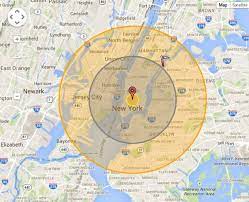
DEAD SCARY Terrifying “nuke map” reveals danger zone if nuclear bomb dropped on YOUR city, Jamie Harris, Technology and Science Reporter, The Sun 16 Feb 2022
EVER wondered what the devastating impact would be if a nuclear bomb dropped on your area?
A terrifying tool reveals how some of the most destructive weapons known to humankind would pan out if launched on any spot around the world.
The NUKEMAP estimates everything from possible casualties to radioactive fallout.
Real weapons tested by North Korea, Russia and the US are among the detonations that users can simulate.
Even catastrophic bombs such as the ‘Little Boy’, which killed up to 166,000 people in Hiroshima in 1945, are available to try.
Expert Professor Alex Wellerstein came up with the idea using declassified nuclear weapons effects data.
Since launching it in 2012, the historian has seen 220million virtual detonations carried out on his site.
At one point he said the site picked up on a possible visit originating from North Korea………….
The so-called ‘King of the Bombs’, aka the Tsar Bomba’s maximum design yield (100 Mt) which was tested by the Soviet Union, has proven to be the most popular nuke to try.
If it was launched on London right now for example, casualties could be over 5.9million people.
Dropping it on New York would be even more devastating, with an estimated death toll of more than 8million people…………… https://www.thesun.co.uk/tech/17670602/nukemap-nuclear-bomb-simulator/
The goal of Russia is to destroy NATO by exposing its impotence.

By 2008 NATO had become a bloated edifice largely unrecognizable from the organization that had been created at its founding, in 1949. Its appetite for expansion knew no bounds, with membership offers being dangled before two former Soviet Republics, Georgia and Ukraine, and military engagements being initiated in North Africa and the Persian Gulf.
Once NATO began expanding, both in terms of membership composition and scope and scale of its non-European military commitments, it was obvious to any observer exercising a modicum of intellectual curiosity that NATO existed for the sole benefit of the United States.
Exposing NATO
By militarizing the Ukraine crisis, Russia has exposed the absolute military impotence of NATO. First and foremost, after dangling the bait of NATO membership before Ukraine for the past fourteen years, NATO was compelled to confess that it would not be able to come to the defense of Ukraine in case of any Russian military invasion because Article 5 only allowed collective defense to be invoked for NATO members, which Ukraine is not.
Germany, Biden was saying, is little more than a colony of the United States.
The Ultimate End of NATO, Russia’s goal is not to destroy Ukraine—this could be accomplished at any time. Rather, the goal of Russia is to destroy NATO by exposing its impotence, writes Scott Ritter. Consortium News 11 Feb 22,
” …………………………………………. A Messy History.
Students of history might be experiencing what Yogi Berra once famously called “Déjà vu all over again” when examining the frenetic activities undertaken by the North Atlantic Treaty Organization (NATO) today, as it responds to what it alleges is a provocative Russian military buildup along the Russian-Ukrainian border.
The Trans-Atlantic alliance is a strange amalgam of political, economic, and military belief systems cloaking a mass of 30 nations who manage the day-to-day activities of their organization through a consensus-based, collective decision-making process that is as unwieldy as it is inefficient.
Originally formed as a collective of 12 nations united by the desire, as the first secretary-general of NATO, Lord Ismay, once quipped, “to keep the Russians out, the Americans in, and the Germans down”, the Trans-Atlantic alliance was, first and foremost, a club comprised of nations which had two things in common—a shared belief in the primacy of democratic governance, and a desire to be protected under the umbrella of American military power.
Early on the alliance witnessed a period of expansion, as it grew to 16 nations following the admittance of Turkey, Greece, Spain, and Portugal. These 16 nations served as the foundation of NATO throughout the Cold War, united in their determination to stand up to any potential Soviet aggression targeting the territory of western Europe.
NATO was always, from a political standpoint, a mess. Strong pro-communist movements in France and Italy led to the unseemly situation where the intelligence services of an allied nation, the United States, were engaged in manipulating the domestic political affairs of two ostensible allies to keep the communists out of power.
West Germany carried out its own unilateral Ostpolitik, seeking better relations with Soviet-occupied East Germany, much to the consternation of the United States. France, offended by what it (rightly) believed to be the dominance of the United States in the military command structure of the alliance, withdrew its military from NATO command authority. And Turkey and Greece were engaged in their own regional Cold War which, in 1974, went hot over the island of Cyprus.
The glue that held the alliance together was the collective defense provisions of Article 5 of the NATO Charter, which provides that if a NATO Ally is the victim of an armed attack, each and every other member of the Alliance will consider this act of violence as an armed attack against all members and will take the actions it deems necessary to assist the Ally attacked.
For much of the Cold War, the NATO alliance was configured militarily so that there was little doubt as to what actions would be taken, with a standing NATO army deployed in West Germany in constant combat readiness, prepared to repel any attack by the Soviet Army and its Warsaw Pact allies. Likewise, NATO maintained significant air and naval forces deployed in the Mediterranean Sea ready to confront any Soviet aggression there. These forces were anchored by a massive standing U.S. military presence comprising hundreds of thousands of troops, tens of thousands of armored vehicles, thousands of combat aircraft, and hundreds of naval vessels.
This full-time presence of concentrated combat-ready military power, prepared as it was to fight at the drop of a hat, gave the Article 5 obligation far more gravitas than it perhaps deserved. The reality of Article 5 is such that, upon its invocation, Allies can provide any form of assistance they deem necessary to respond to a situation based upon the circumstances.
While this assistance is taken forward in concert with other Allies, it is not necessarily military in nature and depends on the material resources of each country. In short, Article 5 leaves to the judgement of each individual member country to determine how and what it would contribute in the case of its invocation.
With the end of the Cold War in 1990-91 came the dismantlement of this full-time combat-ready military force. The unified nature of the NATO military component that existed in the 1980’s ceased to exist barely ten years later, with each member state carrying out its own demobilization and restructuring based upon domestic political requirements, and not the requirements of the alliance.
NATO Goes on Offense
During this time NATO also watched its long-held mantra of being a purely defensive alliance fall to the side as it engaged in offensive military operations on the soil of the former Republic of Yugoslavia, and non-member, and a offensive bombing campaign against Serbia, despite Serbia not having attacked any NATO member.
This deconstruction of NATO’s military capabilities and status as an exclusively defensive organization took place hand in glove with a decision by NATO to expand its membership to include the former members of the Warsaw Pact, beginning with the accession of Poland, Hungary, and the Czech Republic in 1999. The enlargement of NATO was seen as achieving two objectives—from the NATO perspective, it brought most of Europe together into a single collective of allied parties who, because of their membership, would contribute to the overall stability of Europe.
But there was another perspective at play, that being that of the U.S.. While NATO responded to the U.S. invoking of Article 5 after the 9/11 attacks, providing airborne surveillance aircraft for North American patrols and naval forces in the Mediterranean Sea, several core members, led by Germany and France, balked at becoming involved in the post-9/11 military misadventures of the U.S. in Afghanistan and Iraq.
This prompted then-Secretary of Defense Donald Rumsfeld to make a quip denigrating “Old Europe” at the expense of “New Europe.” The continued expansion of NATO eastwards, absorbing all of the former nations of the Warsaw Pact along with three former Soviet Republics in the Baltics not only pushed NATO’s geopolitical center of gravity further east, but also put NATO on a collision course with Russia, whose opinion most NATO members had conditioned themselves to ignore.
NATO went on to provide military and police training support to Iraq in 2004, following that nation’s defeat at the hands of a military coalition which included the U.S., U.K., and Poland providing combat troops, and Spain, Portugal, and the Netherlands providing political support.
Likewise, NATO contributed significant military forces to reconstruction efforts in Afghanistan. These troops operated under Article 4 authorities after the U.S. brought the Afghan situation post-9/11 to the attention of the general membership, which voted to authorize member states to deploy to Afghanistan in support of U.S. reconstruction and nation-building operations.
In 2011, NATO engaged in offensive military operations in Libya, part of a larger political campaign to remove the Libyan leader, Muammar Qaddafi, from power.
A US Adjunct
By 2008 NATO had become a bloated edifice largely unrecognizable from the organization that had been created at its founding, in 1949. Its appetite for expansion knew no bounds, with membership offers being dangled before two former Soviet Republics, Georgia and Ukraine, and military engagements being initiated in North Africa and the Persian Gulf.
While the bloated organizational structure of NATO looked impressive on paper, there were two realities that no amount of puffing and posturing could obviate. First and foremost was the absolute dearth of real military power on the part of the non-U.S. NATO components.
To support and sustain their respective military commitments to Afghanistan, the major NATO nations involved—Canada, the Netherlands, the United Kingdom, France, and Italy—were forced to cannibalize their overall military capability to surge their respective military components forward. Even then, none of these nations could accomplish their Afghan mission without the logistical support provided by the United States.
This over-reliance upon U.S. military capacity only underscored the inconvenient reality that NATO had become little more than an adjunct of U.S. foreign and national security policy. The U.S. had always played an oversized role in NATO. If this was singularly focused on preserving European security, the non-U.S. members of NATO could deceive themselves into believing that they were co-equal partners in a defensive-oriented Trans-Atlantic arrangement.
Once NATO began expanding, both in terms of membership composition and scope and scale of its non-European military commitments, it was obvious to any observer exercising a modicum of intellectual curiosity that NATO existed for the sole benefit of the United States.
Nothing drove this point home more than the humiliation NATO suffered at the hands of the U.S. when it came to the abandonment of the Afghan reconstruction mission. The decision to withdraw from Afghanistan was made unilaterally by the United States, without consultation. NATO, faced with a fait accompli, had no choice but to do as ordered, and leave Afghanistan with its tail between its legs.
The ultimate humiliation was yet to come. Nothing takes place in a vacuum, and the expansion of NATO, combined with its offensive re-orientation, drew the ire of Russia, which took extreme umbrage over the encroachment of a military alliance no longer bound by the constraints of collective self-defense, but rather imbued with a post-Cold War posture built around the notion of containing and constraining a Russia which was recovering from its post-Soviet collapse malaise and, under the leadership of Vladimir Putin, was actively restoring it position as a regional and global power.
NATO Fissures
Russia had, since 2001, been sounding a claxon call about NATO expansion and the threat it posed to Russian security interests. These calls were ignored by NATO and its U.S. masters, largely because they believed Russia to be too weak both militarily and economically.
While NATO chased post-9/11 ghosts in the Middle East and Afghanistan at the behest of its American overseer, Russia worked to reform its economy and military. In 2008 Russia defeated Georgia in a short but violent war precipitated by a Georgian military assault on the breakaway territory of South Ossetia. In 2014, Russia responded to the U.S.-orchestrated Maidan coup that ousted the democratically-elected president of Ukraine, Victor Yanukovich, by annexing Crimea and throwing its support behind pro-Russian separatists in the Donbass region of Ukraine.
The important thing to note about the current crisis in Ukraine is that while the underlying issues are solely the byproduct of NATO overreach, the timing of the crisis is based upon a Russian timetable defined by purely Russian goals and objectives. The goal of Russia is not to destroy Ukraine—this could be accomplished at any time. Rather, the goal of Russia is to destroy NATO.
This will not be accomplished through the direct use of military force, but rather the indirect threat of military action which forces NATO to react in a way which exposes the impotence of an organization which long ago lost its raison d-etre, collective defense, and instead flounders under the weight of a mission—the containment of Russia—it cannot achieve, and which its membership is not united in pursuing.
Here are a few statements of fact—the Russian military would defeat any force NATO can assemble in a stand-up conventional fight. The entire notion of collective self-defense is predicated on the ability to deter any potential adversary from considering military action against a NATO member because the outcome—the total defeat of the attacking party—was never in dispute.
While a truly defensive alliance would have the moral authority to call out the build-up of Russian military power around Ukraine as un-duly provocative, NATO has long since lost the ability to apply that label to itself with any degree of seriousness. From the standpoint of Russia, when the same “defensive” alliance which bombed its ally Belgrade and worked to overthrow the leader of Libya puts its sights on acquiring Ukraine and Georgia as members, such actions can only be viewed as aggressive, offensively oriented-measures that function as part of a broader anti-Russian campaign.
Exposing NATO
By militarizing the Ukraine crisis, Russia has exposed the absolute military impotence of NATO. First and foremost, after dangling the bait of NATO membership before Ukraine for the past fourteen years, NATO was compelled to confess that it would not be able to come to the defense of Ukraine in case of any Russian military invasion because Article 5 only allowed collective defense to be invoked for NATO members, which Ukraine is not.
Moreover, the “massive” economic sanctions that NATO has promised to unleash in lieu of a military response have turned out to be as impotent as NATO’s military power. Despite what the political leadership of NATO and the United States may say to the contrary, there is no unity of purpose when it comes to imposing sanctions on Russia in the event of a military incursion into Ukraine.
In short, any sanction package that targets Russian energy and/or access to banking institutions will hurt Europe far more than Russia. While the United States continues to push for Europe, and in particular Germany, to wean itself off Russian energy supplies, the fact is there is no viable alternative to Russian energy and, moreover, Europe is increasingly recognizing that the U.S. position has less to do with European security and more to do with a play by the U.S. to grab the European market for itself.
Under normal conditions, the U.S. cannot compete with Russia in terms of price and volume when it comes to natural gas deliveries. If, through sanctions, the U.S. can cut off Europe from Russia, then the U.S. will be able to impose its own energy products on Europe at prices that otherwise would be uncompetitive.
NATO’s Realization
The individual members of NATO are beginning to awaken to the reality that their organization is little more than an impotent tool of American global hegemony. Hungary has cut its own gas deal with Russia, in defiance of U.S. directives to pull back. Croatia and Bulgaria have made it clear that they will not be deploying troops in support of NATO posturing on Ukraine.
Turkey has stated that it views the Ukraine crisis as little more than a thinly disguised effort by NATO and the U.S. to weaken Turkey by forcing it to fight Russia in the Black Sea. But perhaps the most telling moments came when the two European powerhouses of NATO, Germany, and France, were compelled to come face to face with the reality of their subservient role vis-à-vis the U.S..
When French President Emmanual Macron flew to Russia to try and negotiate a settlement to the Ukraine crisis, he was confronted with the reality that Russia won’t negotiate with France without the U.S. first expressing support for the positions being put forward by the French President. The U.S. matters; France does not.
Likewise, the German chancellor was forced to stand mutely during his visit to the White House while U.S. President Joe Biden “promised” that he would unilaterally shut down the NordStream 2 pipeline project, even though the U.S. had no role to play in the construction and administration of the pipeline. Germany, Biden was saying, is little more than a colony of the United States.
The final nail in the NATO coffin came on Feb. 4, when the Russian president met with Chinese President Xi Jinping at the opening of the Winter Olympics in Beijing. The two leaders issued a 5,000-plus word joint statement in which China threw its weight behind Russia’s objection to NATO expansion into Ukraine.
The Sino-Russian joint statement was a de facto declaration that neither Russia nor China would allow the U.S.-led “rules based international order” being promulgated by the Biden administration to go forward unchallenged. Instead, the two nations announced that they will be pursuing a “law based international order” which draws on the United Nations Charter for its authority, in contrast to unilateral rules which only serve the interests of the U.S. and small blocs of allied nations.
A Different World
The world has fundamentally changed. NATO literally has no relevance. Its last gesture of defiance lays in the deployment of forces into eastern Europe to bolster the defensive capabilities of that region in accordance with Article 5. The forces deployed—a few thousand American paratroopers, and a smattering of other contingents from other NATO nations—not only cannot defeat a Russian adversary, but doesn’t even provide a modicum of deterrence value should Russia be inclined to shift its sights away from Ukraine toward Poland and the Baltics.
What NATO doesn’t realize is that Russia has no intention of invading either Ukraine or eastern Europe. All Russia has done is demonstrate the empty shell that NATO has become by underscoring just how empty the Article 5 promise of collective defense truly is.
In this regard, one should view NATO’s current round of muscle flexing as the modern-day equivalent of Picket’s Charge, the high-water mark of the Trans-Atlantic alliance. In the weeks and moths to come, NATO will be faced with the reality that Russia is not invading anyone, and that the muscle flexing it is currently engaged in is not only not needed, but worse, unsustainable.
The fractures exposed in NATO’s membership when it comes to Ukraine will only grow larger over time. It may take years for NATO to go away, but let no one be fooled by what is happening—NATO is finished as an alliance.
Scott Ritter is a former U.S. Marine Corps intelligence officer who served in the former Soviet Union implementing arms control treaties, in the Persian Gulf during Operation Desert Storm, and in Iraq overseeing the disarmament of WMD. https://consortiumnews.com/2022/02/11/the-ultimate-end-of-nato/
USA’s plan – far right Ukrainian militia to attack Russia-speaking Donbass Region – drawing Russian support – USA then to claim Russia aggression
Al Ronzoni <aronzonijr@msn.com> wrote:
The World Socialist Website also confirms from sources in Donetsk that it actually looks like Ukraine will make the first move v. them and Luhansk. Then, if Russia responds in any way, that will constitute the “invasion,” then Menendez “Mother of All Sanctions” will be imposed and Nord Stream 2 will be cancelled. Hell, even if Russia doesn’t actually do anything, the fact that fighting will be taking place , ‘fog of war” etc. can be used to still claim Russia has invaded. No doubt Biden and US leadership think this can be “managed” with Russia embroiled in a protracted conflict in the Donbass Region that can be capitalized on to marginalize Russia’s economic relations with Europe, in favor of the US and to make further NATO expansion, perhaps now including Sweden and Finland, easier.
Another brilliant essentially neo-con type plan. What could go wrong?
US accelerates troop deployments as Biden threatens “world war” with Russia, WSWS,Alex Lantier, Johannes Stern, 12 February 2022
As Washington and its NATO allies work to militarily surround Russia, US officials yesterday declared that a US-Russia war is imminent.
Yesterday, Washington announced the deployment of 3,000 troops from the 82nd Airborne Division to bases in Poland, which borders Ukraine. Britain and Germany will send hundreds of soldiers to strengthen NATO battlegroups in Estonia and Lithuania. This comes after NATO countries have for weeks delivered Javelin anti-tank missiles, Stinger anti-aircraft missiles and Turkish TB2 Bayraktar drones to the Ukrainian regime in Kiev.
Nearly two decades after Washington invaded Iraq based on lies that it had “weapons of mass destruction,” US imperialism and its NATO allies are concocting a strategy to trigger a war with Russia, a nuclear-armed power, under conditions where they can blame Russia for it. Reports of mounting Ukrainian military activity in the Donbass region suggest that a NATO-backed military provocation can be staged there to trigger the war.
The narrative NATO is peddling—that it is acting to defend Ukraine from Russia—is a pack of lies. Ukrainian President Volodymyr Zelensky has publicly declared that Russia’s military posture is not consistent with plans for an all-out invasion of Ukraine. Moreover, when reporters challenged US claims that Russia is preparing an attack, State Department spokesman Ned Price could do nothing but argue that undisclosed “intelligence information” meant his claims were true.
In 2014 … the NATO powers backed a putsch in Kiev, where far-right militias toppled a pro-Russian Ukrainian president and set up a NATO puppet regime. As these militias backed by NATO mercenaries attacked Russian-speaking areas of Ukraine like Donbass and Crimea, these areas broke off from Ukraine, with Crimea voting to rejoin Russia. Since then, far-right Ukrainian militias have faced off against Russian troops in Crimea and Russian-backed militias in the Donbass.
…………. Russian-speaking areas of Ukraine are reporting highly advanced NATO war preparations. Yesterday, Donetsk People’s Republic (DPR) leader Denis Pushilin cited Biden’s call on US citizens to leave Ukraine, warning that war was imminent. “The US President, probably, given US influence in Ukraine, has information that allows him to make such statements and take such a position. … Ukraine may attack at any moment. Ukraine has everything ready for that: the concentration of forces and means makes it possible to do it at any moment, as soon as a political decision is made.”
On February 9, the DPR Militia’s Deputy Chief Eduard Basurin said Ukrainian tanks are taking positions only 15 kilometers from theirs, near Avdeyevka, Gorlovka and Novgorodskoye. Yesterday, Basurin said Ukrainian forces also deployed an S-300 missile system.
Such deployments violate the 2015 Minsk accords, which temporarily froze the Ukraine conflict and sent the Organization for Security and Cooperation in Europe (OSCE) to monitor the front line. Basurin said, however, that Kiev regime forces are using electronic jamming to prevent OSCE observers from using drones to observe these deployments. “It seems that OSCE observers are quite content with a situation where it is impossible to record violations by Ukraine,” he said.
Significantly, DPR forces last month warned, based on their sources in Kiev, that they expect an attack to come as soon as Ukrainian armored assault brigades are assembled and in position.
On January 28, Basurin said: “According to our intelligence, the Ukrainian General Staff under the guidance of US advisers at the Ukrainian Defense Ministry is putting final touches to a plan for offensive operations in Donbas. The date of aggression against the people’s republics will be set when the attack groups have been created and the operation’s plan approved by Ukraine’s National Security and Defense Council.”
These are conditions in which NATO could goad Russia, a nuclear power, into war. Were such an attack to begin, DPR forces would likely require Russian military assistance to avoid being overrun by far-right Ukrainian militias, which call for killing Russians and have bombed Russian-speaking Ukrainian cities near Russia’s borders. If Moscow intervened against this, however, it would provide grounds for NATO war propaganda, denouncing Russian aid to the DPR as an “invasion” of Ukraine……….. https://www.wsws.org/en/articles/2022/02/12/ukra-f12.html
The RAND Corporation’s plan for regime change in Moscow.
RAND Corporation study calls for regime change in Moscow, http://space4peace.blogspot.com/2022/02/rand-corporation-study-calls-for-regime.html Bruce Gagnon,13 Feb 22,
Obama’s ambassador to Ukraine made a trip to US-NATO training base in western Ukraine (where the Nazis predominate). US Special Forces are rotated into the base from Ft. Carson, Colorado to train the Kiev regime’s Army. Many of the Nazis have been brought into this ‘new military unit’.
More than 27 million people in the former Soviet Union died during Hitler’s WW II invasion. Imagine how Russians today feel when they see the US arming, training and directing Nazi forces to attack the Russian-ethnic citizens living in the Donbass region of Ukraine, right next to the Russian border.
Imagine how Moscow felt when they first read this RAND Corporation study. When we look at current events can we notice the direct connection to the points from this study listed below? Whether it is US-NATO military expansion right up to Russian borders or efforts by Washington to kill the Nordstream 2 natural gas pipeline from Russia to Germany – it is clear that there is a method behind US-NATO madness. If you were sitting in Russia’s shoes how would you react to these proposals below – many of which have been or are now being implemented?
Despite these vulnerabilities and anxieties, Russia remains a powerful country that still manages to be a U.S. peer competitor in a few key domains. Recognizing that some level of competition with Russia is inevitable, RAND researchers conducted a qualitative assessment of “cost-imposing options” that could unbalance and overextend Russia.
Continue readingUK SPENDS OVER £80M ON MEDIA IN 20 COUNTRIES AROUND RUSSIA
The project is likely part of the ongoing information war between Russia and Nato.
The British government is spending tens of millions on media projects in Eastern Europe which are often presented as fighting “Russian disinformation”, but which may involve the UK’s own information operations. DECLASSIFIED UK , MATT KENNARD, 8 FEBRUARY 2022 The British government ploughed at least £82.7m of public money into media projects in countries bordering or near Russia in the four years to 2021.
The projects, which take place across 20 countries in Eastern Europe and Central Asia, are run through the Conflict, Stability and Security Fund (CSSF), a cross-government pot of money with the stated aim of preventing “instability and conflicts that threaten UK interests”.
The National Security Council, which is chaired by the prime minister, sets the fund’s strategic direction. But a parliamentary committee found the CSSF was “being used as a ‘slush fund’ for projects” which “do not meet the needs of UK national security.”
The findings come as tensions between Britain and Russia are high over Ukraine. The UK has accused Russia of planning to invade or launch a coup in Ukraine to install a pro-Moscow government.
Last month Britain began supplying the eastern European country with new anti-tank weapons. Some of the UK-funded media projects appear focused on Ukraine.
‘Counter-disinformation’
The project most clearly directed at Russia is the Counter Disinformation and Media Development programme. It is run around Russia’s western border, from the Baltic States to Central and Eastern Europe, although project documents do not disclose specific countries.
It cost £60.4m in the four years to 2021. …….
The project is likely part of the ongoing information war between Russia and Nato. The funds, UK documents note, aim to “understand and expose disinformation across the North Atlantic Treaty Organisation (Nato) space.”
The project was launched in 2016 and initially called the Russian Language programme. ………
,,,,,,,,, the programme may be a cover for the UK’s own information operations in the region. The UK Ministry of Defence is one of the implementing departments in the counter-disinformation programme. It is not obvious what role the UK armed forces would have in a media support project.
……….In the four years to 2021, the programme cost the UK public £140.5m, although a breakdown of the media component is not provided by the government.
The UK is also “working closely with the US on media reform” through the programme……………
Conflict resolution – the positive way out of the Ukraine crisis

According to Anatol Lieven, an academic and Ukraine specialist, this is “the most dangerous crisis in the world today; it is also in principle the most easily solved”. A solution exists, drawn up by France, Germany, Russia and Ukraine in 2015, which involves the implementation of the Minsk II agreement. This offers demilitarisation, a restoration of Ukrainian sovereignty including control of the border with Russia, and full autonomy for the Donbas region. The main objection for Kyiv is that autonomy for the Donbas would prevent Ukraine from joining Nato and the EU.
One way through this would be for Nato to declare Ukraine a neutral country and decree that it does not join Nato for at least a decade. In practice, Ukrainian membership of the EU is ruled out for at least a generation because of Ukraine’s corruption, political dysfunction and lack of economic progress.
I’m a conflict mediator. This is a way out of the Ukraine crisis https://www.theguardian.com/commentisfree/2022/feb/09/conflict-mediator-ukraine-vladimir-putin, Gabrielle Rifkind
Instead of ramping up the threats, western nations should be offering Vladimir Putin a ladder to climb down, The current western narrative on the Ukraine crisis is that Russia is a machiavellian power with an expansionist agenda. That view is shaping our response: we are matching Vladimir Putin’s aggression, meeting strength with strength and threats with threats. But what if we tried to get inside the mind of the enemy, and ask what was motivating the aggression? By doing so, could we break this cycle – and offer Putin a way out, too?
When the USSR deployed ballistic missiles to Cuba in the 1960s, their proximity to the US nearly unleashed a third world war. Sitting in Moscow today, does Putin see being encircled by Nato as an equivalent threat? After all, one of his core demands is that Nato curbs its expansion close to the Russian border, and that Ukraine must not join. Russia claims that the US repeatedly told Soviet leaders it would incorporate Russia into a cooperative European security framework. In practice, Nato emerged as a US-dominated security frame with about 75,000 US troops still on European soil. Great powers always treat with suspicion and hostility the presence of rival great powers on their borders.
Putin was always bitter about the collapse of the Soviet Union. He bided his time, and in 2014 Russia seized Crimea and sent troops into Ukraine’s mostly Russian-speaking Donbas region to support the separatist movement.
Russia today is no benign liberal democracy and President Putin has an intelligence mindset, playing poker, not chess. He is prepared to threaten war, create chaos and spread misinformation to push back Nato from Russia’s borders. Using coercive diplomacy, he has amassed more than 130,000 troops on the eastern border of Ukraine, a continued threat to its sovereignty.
Yet however provocative Russia’s behaviour, western governments have a responsibility not to escalate the threat of war. The consequences of a direct US-Russian confrontation in Ukraine would be catastrophic on all sides. A full-scale conventional war could escalate into nuclear war. Even a limited war would create a ruinous global economic crisis that could destroy for the foreseeable future any chance of serious action against climate change.
I have worked in conflict resolution for the past 20 years and seen the dangers of stumbling into wars, unable to stop or turn back. Selling weapons to a country may look like a principled act in support of an ally but it usually takes them deeper and deeper into the quagmire of conflict. The US and the UK have instigated and been involved in four failed wars this century, but we seem to have failed to have learned the lessons.
There are those who argue that sending military support to Ukraine strengthens Nato’s hand at the negotiating table. Yet there are inherent dangers in this approach – the use of deterrence could be the very thing that escalates the situation.
Washington and London have pledged to increase offensive military aid to Ukraine and have announced arms deliveries, ammunition and anti-tank weapons. The UK is seeking to put itself at the forefront of western efforts to forestall what the prime minister, Boris Johnson, has called the risk of a “lightning war” in eastern Europe.
Germany has been much more sceptical, blocking the transfer of German-made weapons from Baltic states to Ukraine. It has long argued against sending weapons to active conflict zones. Germany has declared that it is prepared to have a serious dialogue with Russia to defuse the highly dangerous situation, arguing that diplomacy is the only viable way.
Whatever western governments feel about Moscow’s behaviour, de-escalating the conflict and giving Moscow a ladder to climb down is in everyone’s interest. We should not underestimate the link between humiliation and aggression. Putin is a very proud man, and smart politics by western governments should offer face-saving gestures if we are serious about avoiding war.
According to Anatol Lieven, an academic and Ukraine specialist, this is “the most dangerous crisis in the world today; it is also in principle the most easily solved”. A solution exists, drawn up by France, Germany, Russia and Ukraine in 2015, which involves the implementation of the Minsk II agreement. This offers demilitarisation, a restoration of Ukrainian sovereignty including control of the border with Russia, and full autonomy for the Donbas region. The main objection for Kyiv is that autonomy for the Donbas would prevent Ukraine from joining Nato and the EU.
One way through this would be for Nato to declare Ukraine a neutral country and decree that it does not join Nato for at least a decade. In practice, Ukrainian membership of the EU is ruled out for at least a generation because of Ukraine’s corruption, political dysfunction and lack of economic progress.
Talks between Putin and France’s President Macron this week were more conciliatory in tone. Macron said: “There is no security for Europeans if there is no security for Russia.” A permanent forum where Russia is welcome is needed to re-examine the post-cold war security system in Europe. This approach to issues such as missile deployments, arms control and transparency around military exercises could ease this conflict. Such a dialogue could create a climate of security cooperation with Russia.
- Gabrielle Rifkind is a specialist in conflict resolution and the director of Oxford Process
Russian Congress of Intellectuals: An Open Letter to the Russian Leadership
Russian Congress of Intellectuals..An Open Letter to the Russian Leadership. https://johnmenadue.com/russian-congress-of-intellectuals-an-open-letter-to-the-russian-leadership-february-4-2022/ February 4, 2022, By John Menadue, (letter, signed by a large number of individuals)
Our position is simple: Russia does not need a war with Ukraine and the West. Such a war is devoid of legitimacy and has no moral basis.
There is an ever-increasing flow of alarming news about a possible Russian invasion of Ukraine. Reports are emerging about stepped-up recruitment of mercenaries within Russia and the transfer of fuel and military equipment to Ukraine’s Donetsk and Luhansk regions. In response, Ukraine is arming itself and NATO is sending additional forces into Eastern Europe. The tension is not abating, but rather mounting.
Russian citizens are becoming de facto hostages of a reckless adventurism that has come to typify Russia’s foreign policy. Not only must Russians live with the uncertainty of whether a large-scale war will begin, but they are also experiencing a sharp rise in prices and a devaluation of their currency. Is this the sort of policy Russians need? Do they want war—and are they ready to bear the brunt of it? Have they authorized the authorities to play with their lives in this way?
But no one asks Russian citizens for their opinion. There is no public debate. State television presents only a single viewpoint—that of the warmongers. Direct military threats, aggression and hatred are aimed at Ukraine, the US, and the West. But the most dangerous thing is that the war is being depicted not only as permissible, but as inevitable. This is an attempt to deceive the population, to impose upon them the idea of waging a crusade against the West, rather than investing in the country’s development and improving living standards. The cost of the conflict is never discussed, but the price—the huge, bloody price—will be paid by the common Russian people.
We, responsible citizens and patriots of Russia, appeal to Russia’s political leadership. We openly and publicly call out the Party of War that has been formed within the government.
We represent the viewpoint of those in Russian society who reject war, who consider unlawful the use of military threats and the deployment of a blackmailing style in foreign policy.
We reject war, whereas you, the Party of War, consider it acceptable. We stand for peace and prosperity for all Russian citizens, whereas you put our lives on the line for the sake of political games. You deceive and manipulate people, whereas we tell them the truth. You do not speak in the name of the Russian population—we do. For decades, the Russian people, who lost millions of lives in past wars, have lived by the saying: “if only there were no war.” Have you forgotten this?
Our position is quite simple. Russia does not need a war with Ukraine and the West. No one is threatening us, no one is attacking us. Policies based on the idea of such a war are immoral and irresponsible and must not be conducted in the name of the Russian people. Such a war is devoid of legitimacy and has no moral basis. Russian diplomacy should take no other position than a categorical rejection of such a war.
Not only does such a war not reflect Russia’s interests, but it also threatens the country’s very existence. The senseless actions of the country’s political leadership, which is pushing us in this direction, will inevitably lead to a mass anti-war movement in Russia. Each of us will naturally play a part in it.
We will do everything in our power to prevent this war, and if it begins, to stop it.
Signed,
Continue readingFurthest from Ukraine frontline, Washington is most eager for war

Washington intends to instigate wars, in a bid to increase the legitimacy of NATO’s existence and the bloc’s internal cohesion to tie Europe – which has shown some signs of departing from Washington – more tightly to the US. Some other analysts say the US can take the opportunity to sell arms – a reasonable suspicion based on history.
Furthest from Ukraine frontline, Washington is most eager for war: Global Times editorial, By Global Times, Feb 07, US President Joe Biden recently approved the deployment of 3,000 US troops to the eastern part of Europe. The first batch has arrived in Germany and Poland. This is an eye-offending move the US made after it withdrew its troops from Afghanistan and Iraq. The Pentagon previously announced that 8,500 US troops are placed on heightened alert to possibly deploy to Eastern Europe. In addition, NATO defense ministers will discuss further reinforcements at their next meeting on February 16 and 17. Although these troops are not deployed directly in Ukraine, the move has de facto made people think Eastern Europe is on the brink of war.
Washington, it must be noted, is furthest away from the Ukrainian frontline but it is most eager for a war, while both Russia and Ukraine have repeatedly announced they have no intention of going to war or solving their problems by force. Ukraine’s president and defense minister publicly stated that the situation is not as tense as the US has portrayed. But Washington, which is far away from the region, has been hyping that war is on the verge of breaking out. US media Bloomberg has even released fake news that “Live: Russia Invades Ukraine.” The US has not only fanned the flames of public opinion, but also provided arms to Ukraine and enhanced military deployment around the European country. The US’ intention is to urge Ukraine to “hold on” and not “fall behind” in its confrontation with Russia.
 | |||
Washington intends to instigate wars, in a bid to increase the legitimacy of NATO’s existence and the bloc’s internal cohesion to tie Europe – which has shown some signs of departing from Washington – more tightly to the US. Some other analysts say the US can take the opportunity to sell arms – a reasonable suspicion based on history.
In short, the US is trying to hit various birds with one stone, but it is playing an immoral and dangerous game. The New York Times reported that “even many reliably hawkish voices in both parties show no appetite for seeing US troops fight and potentially die for Ukraine.” The US is pushing Ukraine into the firing line, but it itself has jumped aside to avoid being implicated.
One of Washington’s aims is to make Russia feel uncomfortable, but Ukraine is very likely to become the victim. Anyone with a discerning eye can figure out that the last thing Ukraine really needs is arms. The US’ donating or selling weapons to Ukraine cannot change the military balance between Russia and Ukraine. What Ukraine does need is a peaceful and stable internal and external environment. The country has to focus on developing its economy, improving people’s livelihoods, and easing tensions with Russia. If the US “stands with Ukraine” as it has claimed, it should have provided Ukraine the necessary and substantial help in these fields. It needs to be underlined that the most difficult thing for Ukraine to withstand right now is to add fuel to the fire, but Washington has repeatedly “created” opportunities to escalate the situation between Russia and Ukraine.
……………. the China-Russia joint statement stated clearly: “Peace, development and cooperation lie at the core of the modern international system… and the international community is showing a growing demand for the leadership aiming at peaceful and gradual development.”
Against this backdrop, Washington still intends to impair other countries and maintain its hegemony by instigating wars. This is a staggering geopolitical daydream. To wake up from such a pipe dream, the bunch of political elites in Washington should carefully read this joint statement and understand how to make the US conform to the trend of the times and become a truly responsible power. https://www.globaltimes.cn/page/202202/1251577.shtml
Amid Ukraine Tension, US Deploys Nuclear-Ready B-52 Bombers to UK
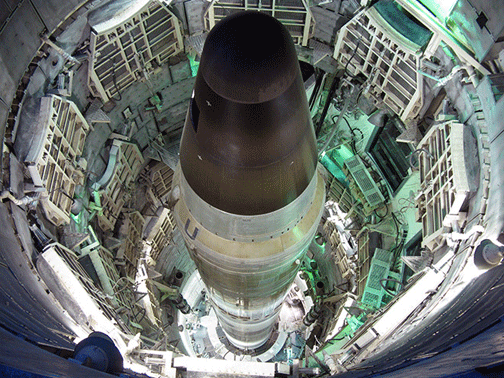
Amid Ukraine Tension, US Deploys Nuclear-Ready B-52 Bombers to UK “The West is trying to make a tragedy out of this,” said Russia’s foreign minister. Common Dreams, JULIA CONLEY February 11, 2022 Despite repeated warnings from Ukrainian President Volodymyr Zelensky that the U.S. is driving the rise of tensions at Ukraine’s eastern border, the U.S. Air Force has deployed four B-52 bombers with nuclear capabilities to the U.K., where one official acknowledged that the deployment is at least partially connected to Russia’s recent military activities.
Two B-52 Stratofortress aircrafts arrived at Royal Air Force Fairford on Thursday, with two more following. The bombers integrated with other NATO members’ forces en route to Fairford, according to the Air Force, including “British Typhoon aircraft and Portuguese F-16s currently assigned to NATO’s Icelandic Air Policing mission.”………
According to The Telegraph, a former British intelligence official noted that the Pentagon could launch air strikes from Fairford as it has before.
“From Fairford they could operate against a range of targets: troop concentrations in southern Russia and Belarus, Moscow/St. Petersburg, even the naval bases in the White Sea,” the former official told the outlet. “In 1991 they hit Baghdad from Fairford, flew on to Diego Garcia, refueled and rearmed, bombed Baghdad again on the way back, and returned to Fairford.”
The bombers sent from Minot Air Force Base in North Dakota are capable of carrying precision-guided and nuclear weapons…………………………….. https://www.commondreams.org/news/2022/02/11/amid-ukraine-tension-us-deploys-nuclear-ready-b-52-bombers-uk
Comfortably numb — Beyond Nuclear International

When we will wake up to the real threat we face?
Comfortably numb — Beyond Nuclear International “Hello? (Hello? Hello? Hello?)
“Is there anybody in there?
Just nod if you can hear me
Is there anyone home?”
Those echoing opening lines of the Pink Floyd song, “Comfortably Numb” keep wafting through my psyche as I watch the US, Russia, and China, amass ever more sophisticated, deadly and downright evil nuclear weapons capabilities. What are they thinking?
Meanwhile, tensions continue to mount at the Ukraine-Russia border, as Putin moves more armaments and fleets around and the US flies its elite 82nd Airborne Division into standby mode in Poland, part of 3,000 US troops now deployed to the region.
All of this has sent US nuclear hawks, sounding more and more like General ‘Buck’ Turgidson from Dr. Strangelove, chafing at the bit to justify the further escalation and acceleration of the so-called modernization of the entire US nuclear weapons complex.
Meanwhile, there is even speculation that maybe Ukraine should not have given up its nuclear weapons at the end of the Cold War as the Soviet Union collapsed. The Russian seizure of Crimea and the seemingly endless conflict on Ukraine’s eastern border has led some to urge a Ukraine nuclear rearmament.
A nuclear-armed Ukraine, goes the logic, would allow it to “deter” a Russian invasion or, at least, any possible use of nuclear weapons by Russia in a grab for Ukraine.
But this thinking further exposes the hollow argument for deterrence. Nuclear weapons in Ukraine would have only one outcome — they would make the prospect of nuclear weapons being used in any current conflict more likely. (Then, of course, there is the ever-present danger of Ukraine’s 15 operating nuclear reactors — addressed in a January 30, 2022 article on these pages.)
The prospect that even a conventional conflict could break out in Ukraine is already horrific enough. But even the remotest possibility that this could progress to the use of nuclear weapons by any party, is positively nightmarish.
If you don’t value sleep, then Ira Helfand’s article in The Nation lays all of this out in chilling detail. It’s like reading the script to an apocalyptical dystopian horror movie (the kind that sadly seems to be all too popular these days).
Helfand’s article, however, is the exception to most of the coverage, which discusses the prospect of accidental or deliberate nuclear war over the Ukraine situation in a mind-bogglingly impassive way, “comfortably numb” to the very real, horrific, humanitarian consequences were this actually to happen.
It’s as if, as IPPNW’s Chuck Johnson said to me during a recent phone call, “it’s all perfectly normal”.
But to most of us regular folk, calmly anticipating the possibility of a nuclear war isn’t normal. It’s the definition of insanity. And it’s exasperating. Hello? Can you hear us? We have a climate crisis bearing down on us. A global emergency of, yes, apocalyptic proportions.
It goes without saying that, as a species, we need to stop directing all our energies towards our collective extinction, both through our failure to act adequately and on time on climate, and by unnecessarily rattling nuclear sabres.
It goes without saying, but it needs saying. Again and again and really loudly. By all of us. Just nod if you can hear me.
Linda Pentz Gunter is the international specialist at Beyond Nuclear and writes for and curates Beyond Nuclear International.
UK’s nuclear submarine graveyard- but one is to be recycled – perhaps for Australia?

The first vessel that’s going to be recycled from the so-called ‘submarine graveyard’ in Devonport has been named – but there’s no word yet on when it’ll actually happen. The last one was decommissioned in 1980 – but thirteen of them remain tied up there. HMS Valiant will be the first to be recycled – but no date’s been set for that yet. Planet Radio 9th Feb 2022
Planet Radio 9th Feb 2022
https://planetradio.co.uk/greatest-hits/devon/news/nuclear-submarine-recycled-devonport/
1 This Month





PLEASE OPPOSE HR 8255 AND S.3639 – bills would accelerate satellite deployment, with no environmental review or safeguards – https://ncstd5li.quorum.us/campaign/169331/
To see nuclear-related stories in greater depth and intensity – go to https://nuclearinformation.wordpress.com
-
Archives
- October 2026 (39)
- September 2026 (339)
- August 2026 (330)
- July 2026 (355)
- June 2026 (287)
- May 2026 (306)
- April 2026 (356)
- March 2026 (251)
- February 2026 (267)
- January 2026 (308)
- December 2025 (358)
- November 2025 (359)
-
Categories
- 1
- 1 NUCLEAR ISSUES
- business and costs
- climate change
- culture and arts
- ENERGY
- environment
- health
- history
- indigenous issues
- Legal
- marketing of nuclear
- media
- opposition to nuclear
- PERSONAL STORIES
- politics
- politics international
- Religion and ethics
- safety
- secrets,lies and civil liberties
- spinbuster
- technology
- Uranium
- wastes
- weapons and war
- Women
- 2 WORLD
- ACTION
- AFRICA
- Atrocities
- AUSTRALIA
- Christina's notes
- Christina's themes
- culture and arts
- Events
- Fuk 2022
- Fuk 2023
- Fukushima 2017
- Fukushima 2018
- fukushima 2019
- Fukushima 2020
- Fukushima 2021
- general
- global warming
- Humour (God we need it)
- Nuclear
- RARE EARTHS
- Reference
- resources – print
- Resources -audiovicual
- Weekly Newsletter
- World
- World Nuclear
- YouTube
-
RSS
Entries RSS
Comments RSS

