North Korea says Seoul ‘crazy’ to talk of preemptive strike on ‘nuclear power’
Kim Yo Jong and military official warn tensions could ignite into war and that Pyongyang rethinking inter-Korean affairs, NK News, Jeongmin Kim, April 3, 2022 A North Korean military official has slammed South Korea’s defense minister as “crazy” for mentioning “preemptive strike” capabilities, warning that the DPRK is a “nuclear power” and can “destroy” any major targets in Seoul if needed.
………………..Pak’s criticism comes two days after Suh Wook reportedly said the South Korean military is equipped with “capabilities and posture to conduct a precision strike against the launch point” when there are clear signs of a missile launch, in a speech at a ceremony to revamp Seoul’s missile commands on Friday. His remarks were in line with president-elect Yoon Suk-yeol’s support for a preemptive strike to stop a North Korean attack.
……… EXPERT ASSESSMENTS
Experts on Sunday raised concerns about the increased risk of military conflict on the Korean Peninsula, criticizing Seoul for contributing to raising tensions.
“North Korea is unfortunately correct that a non-nuclear state is out of its mind to actively threaten a nuclear state,” said Van Jackson, professor of international relations at Victoria University of Wellington and a former Pentagon official.
“If you have intelligence that there’s a high likelihood North Korea will launch some kind of attack, then by all means make deterrent threats. But North Korea isn’t on the verge of attacking the South, and brandishing threats of preemption — or massive retaliation — under status quo normalcy is literally goading a nuclear-armed adversary to be more adversarial,” Jackson said, asserting that “there’s no need to show and tell” capabilities that are already known.
Toby Dalton, a senior fellow and co-director of the Nuclear Policy Program at the Carnegie Endowment for International Peace, agreed.
“Deterring North Korea’s nuclear coercive threats is best done quietly and with confidence,” he said. “Chest-thumping rhetoric about preemptive strikes is not helpful.”
Ankit Panda, a senior fellow in the Nuclear Policy Program at the Carnegie Endowment for International Peace, noted the increased likelihood of conflict due to either side misjudging the other’s intentions.
“South Korea has strong incentives to limit damage to its territory — including by taking out North Korean nuclear-capable launchers — and North Korea has strong incentives to slow and degrade what it may perceive to be an invasion of its territory,” he said. “Both Koreas think they’ll get to shoot first in a war. That’s inherently destabilizing and dangerous.”
But for North Korea to escalate beyond just words, it will need a more “compelling domestic or strategic rationale,” he added.
Edited by Bryan Betts https://www.nknews.org/2022/04/north-korea-says-seoul-crazy-to-talk-of-preemptive-strike-on-nuclear-power/
Progressive Lawmakers in US and Japan Demand No-First-Use Policy on Nukes
Progressive Lawmakers in US and Japan Demand No-First-Use Policy on Nukes Andrea Germanos, Common DreamsTRUTHOUT, April 3, 2022 ,
Dozens of progressive lawmakers in the United States and Japan are urging President Joe Biden to make a “sensible” shift and commit the U.S. to a policy of no-first-use of nuclear weapons “at any time or under any circumstances.”
The demand, which is also directed at Japanese Prime Minister Fumio Kishida, came in a letter dated Friday.
The effort was led by lawmakers including Congressional Progressive Caucus chair U.S. Rep. Pramila Jayapal (D-Wash.) and U.S. Sen. Bernie Sanders (I-Vt.) as well as Progressive Caucus of Japan chair and Diet House of Representatives member Masaharu Nakagawa.
………. Biden last month signed off on his administration’s Nuclear Posture Review, a policy which, to the disappointment of nonproliferation advocates, walks back his 2020 campaign promise of no-first-use. The NPR, according to U.S. officials, instead leaves open the possible use of nuclear weapons in response to non-nuclear warfare.
But, the lawmakers stressed in their letter, “it is never too late to commit to a no-first-use policy.”
Addressing the “nuclear umbrella” security alliance between the two nations, the letter states: “A no-first-use policy would not weaken the U.S. ability to protect Japan and itself from a nuclear attack. That protection is based on the promise of U.S. nuclear retaliation, not on the ability to strike first. In fact, a no-first-use policy would increase protection against a nuclear attack by reducing doubt, miscalculation, and the possibility of an accidental nuclear launch.”
Additionally, “a U.S. declaration stating that it would never start a nuclear war, supported by Japan, would breathe new life into international efforts to reduce and eventually eliminate the danger of nuclear war,” the lawmakers assert. “This is especially important at a time when tensions between the nuclear-weapons-possessing states, especially between the United States and China, are increasing.”………………. https://truthout.org/articles/progressive-lawmakers-in-us-and-japan-demand-no-first-use-policy-on-nukes/?eType=EmailBlastContent&eId=5334fde3-bc8a-46eb-8ce3-25388edd0656
Caitlin Johnstone: The Target is China

One thing that does seem clear is that the only way the empire has any chance of stopping the rise of China is by maneuvers that will be both highly disruptive and existentially dangerous for the entire world. If you think things are crazy now, just you wait until the imperial crosshairs move to Beijing.
On the empire’s grand chessboard, Russia is the queen piece, but China is the king
https://consortiumnews.com/2022/04/01/caitlin-johnstone-the-target-is-china/ April 1, 2022 The Pentagon’s current strategy document clearly identifies Enemy No. 1. And it’s not Russia. By Caitlin Johnstone, CaitlinJohnstone.com
The Pentagon has produced its latest National Defense Strategy (NDS), a report made every four years to provide the public and the government with a broad overview of the U.S. war machine’s planning, posturing, developments and areas of focus.
You might assume with all the aggressive brinkmanship between Moscow and the U.S. power alliance this year that Russia would feature as Enemy No. 1 in the 2022 NDS, but you would be assuming incorrectly. The U.S. “Defense” Department reserves that slot for the same nation that’s occupied it for many years now: China.
Antiwar’s Dave DeCamp writes the following:
“The full NDS is still classified, but the Pentagon released a fact sheet on the document that says it “will act urgently to sustain and strengthen deterrence, with the People’s Republic of China (PRC) as our most consequential strategic competitor and the pacing challenge for the Department.”
The fact sheet outlines four priorities for the Pentagon:
-Defending the homeland, paced to the growing multi-domain threat posed by the PRC
-Deterring strategic attacks against the United States, Allies, and partners
-Deterring aggression, while being prepared to prevail in conflict when necessary, prioritizing the PRC challenge in the Indo-Pacific, then the Russia challenge in Europe
-Building a resilient Joint Force and defense ecosystem”
“The Pentagon says that while China is the focus, Russia poses ‘acute threats’ because of its invasion of Ukraine,” DeCamp writes, showing the empire’s view of Moscow as a second-tier enemy.
Ahead of a meeting with China’s Foreign Minister Wang Yi, Russian Foreign Minister Sergei Lavrov has made some comments which clearly illustrate the U.S.-centralized empire’s actual problem with Moscow.
“We, together with you, and with our sympathisers will move towards a multipolar, just, democratic world order,” Lavrov said to the Chinese government on Wednesday.
And that right there, ladies and gentlemen, is the real reason we’ve been hearing so much hysterical shrieking about Russia these last five or six years. It’s never been about Russian hackers. Nor about a Kremlin pee tape. Nor about Trump Tower. Nor about GRU bounties in Afghanistan. Nor about Manafort, Flynn, Bannon, Papadopoulos or any other Russiagate Surname of the Week. It’s not even actually about Ukraine. Those have all been narrative-shaping constructs manipulated by the U.S. intelligence cartel to manufacture support for a final showdown against Russia and China to prevent the emergence of a multipolar world.
The U.S. government has had a policy in place since the fall of the Soviet Union to prevent the rise of any powers which could challenge its imperial agendas for the world. During the (first) Cold War the strategy promoted by empire managers like Henry Kissinger was to court China out of necessity to pull it away from the U.S.S.R., which was when we saw business ties between China and the U.S. lead to immense profits for certain individuals in both nations and the influx of wealth which now has China on track to surpass the U.S. as an economic superpower.
Once the U.S.S.R. ended, so too did the need to remain on friendly terms with China, and subsequent decades saw a sharp pivot into a much more adversarial relationship with Beijing.
In what history may one day view as the U.S. empire’s greatest strategic blunder, empire managers forecasted the acquisition of post-soviet Russia as an imperial lackey state which could be weaponized against the new Enemy No. 1 in China. Instead, the exact opposite happened.
Former Secretary of State Hillary Clinton told the Bloomberg New Economy Forum last year that she’d “heard for years that Russia would become more willing to move toward the west, more willing to engage in a positive way with Europe, the U.K., the U.S., because of problems on its border, because of the rise of China.” But that’s not what occurred.
“We haven’t seen that,” Clinton said. “Instead what we’ve seen is a concerted effort by Putin maybe to hug China more.”
The empire’s expectation that Moscow would come groveling to the imperial throne on its own meant that no real effort was expended trying to establish goodwill and win over its friendship. NATO just kept on expanding and the empire got increasingly aggressive and belligerent in its games of global conquest.
This error has led to the strategist’s ultimate nightmare of having to fight for global domination against two separate powers at once. Because empire architects incorrectly predicted that Moscow would end up fearing Beijing more than it fears Washington, the tandem between China’s economic power and Russia’s military power that experts have been pointing to for years has only gotten more and more intimate.
And now here we are with Russian and Chinese officials openly discussing their plans to create a multipolar world while Chinese pundits crack jokes about the U.S. empire’s transparent ploys to turn Beijing against Moscow over the Ukraine invasion:
On the empire’s grand chessboard, Russia is the queen piece, but China is the king. Just as with chess it helps to take out your opponent’s strongest piece to more easily pursue checkmate, the U.S. empire would be well advised to try and topple China’s nuclear superpower friend and, as Consortium News Editor-in-Chief Joe Lauria recently put it, “ultimately restore a Yeltsin-like puppet to Moscow.”
Basically, all we’re looking at in the major international news stories of our time is the rise of a multipolar world crashing headlong into an empire which has espoused the belief that unipolar domination must be retained at all cost, even if it means flirting with the possibility of a very fast and radioactive third world war.
This is the Hail Mary pass of the U.S. hegemon; its last-ditch effort to secure control before forever losing any chance at it. Many anti-imperialist pundits I read regularly seem quite confident that this effort will fail, while I personally think those forecasts may be a bit premature. The way the chess pieces are moving it definitely does look like there’s a plan in place, and I don’t think they’d be orchestrating that plan if they didn’t believe it had a chance to succeed.
One thing that does seem clear is that the only way the empire has any chance of stopping the rise of China is by maneuvers that will be both highly disruptive and existentially dangerous for the entire world. If you think things are crazy now, just you wait until the imperial crosshairs move to Beijing.
Urgent need to bring about new arms control agreements
The last remaining U.S.-Russian arms reduction agreement, the New Strategic Arms Reduction Treaty, expires in 2026. Without commonsense arms control guardrails, the dangers of unconstrained global nuclear arms racing will only grow.
New Approaches Needed to Prevent Nuclear Catastrophe, Arms Control Association, April 2022
By Daryl G. Kimball ”……………………. Instead of reverting to destabilizing Cold War-era behaviors, leaders and concerned citizens in the United States, Europe, and elsewhere need to embrace new thinking and strategies about nuclear weapons and disarmament that move the world from the shadow of nuclear catastrophe.
Putin and other Russian officials have made implied nuclear threats and put their strategic nuclear forces on a heightened state of readiness to ward off a direct U.S. or NATO military intervention in Ukraine. It is not a new or uniquely Russian idea. U.S. officials also claim that U.S. strategic nuclear forces create “maneuver space” to “project conventional military power.”…………..
Biden wisely has not matched Putin’s nuclear taunts, but the risk of escalation is real. A close encounter between NATO and Russian warplanes, which could result if NATO imposed a no-fly zone in Ukraine, could lead to a wider conflict. Because Russian and U.S. military strategies reserve the option to use nuclear weapons first against non-nuclear threats, fighting could quickly go nuclear.
Russian nuclear doctrine states that nuclear weapons can be used in response to an attack with weapons of mass destruction or if a conventional war threatens the “very existence of the state.” Right now, these conditions do not exist. But if the Kremlin believes a serious attack is underway, it might use short-range, tactical nuclear weapons to tip the military balance in its favor.
Unfortunately, U.S. President Joe Biden’s new Nuclear Posture Review states that the “fundamental role” of the U.S. arsenal will be to deter nuclear attacks while still leaving open the option for nuclear first use in “extreme circumstances” to counter conventional, biological, chemical, and possibly cyberattacks.
There is no plausible military scenario, and no legally justifiable basis for threatening or using nuclear weapons first, if at all. Once nuclear weapons are used between nuclear-armed states, there is no guarantee it will not lead to an all-out nuclear exchange.
New thinking is needed. The adoption of policies prohibiting the first use of nuclear weapons would increase stability. But even that would not eliminate the dangers of nuclear deterrence strategies and arsenals, which depend on maintaining the credible threat of prompt retaliation in response to a nuclear attack.
U.S. and European citizens need to mobilize and press their leaders to pursue even bolder initiatives to steer the nuclear possessor states away from nuclear confrontation and arms racing.
For example, UN General Assembly members, particularly those who negotiated the 2017 Treaty on the Prohibition of Nuclear Weapons, should consider a “uniting for peace” resolution in response to the immediate threat of nuclear use. Such resolutions have been used in rare cases when the UN Security Council, lacking unanimity among its five permanent, nuclear-armed members, fails to act to maintain international peace and security.
Such a resolution could build on the March 2 vote in the General Assembly condemning Russia’s invasion and Putin’s decision to increase the readiness of his nuclear forces and would recall the assembly’s declaration of November 1961 that said that “any state using nuclear…weapons is to be considered as violating the Charter of the UN, as acting contrary to the laws of humanity and as committing a crime against mankind and civilization.”
An updated resolution could declare that the use or threat of use of nuclear weapons is contrary to international law and mandate negotiations on legally binding security guarantees against unprovoked attacks from states possessing nuclear weapons.
The resolution could mandate that any state that initiates a nuclear attack shall be stripped of its voting privileges at the United Nations and recommend collective measures to restore the peace under Chapter VII of the UN Charter. Such an initiative would reinforce the nuclear weapons taboo at a critical juncture.
Responsible states must also come together on a meaningful disarmament plan at the nuclear Nonproliferation Treaty (NPT) review conference in August. Although Putin’s war has derailed U.S.-Russian talks for now on further cuts in their bloated strategic arsenals and new agreements to limit short- and intermediate-range nuclear weapons systems, they are still bound by their disarmament obligations under Article VI of the NPT.
The last remaining U.S.-Russian arms reduction agreement, the New Strategic Arms Reduction Treaty, expires in 2026. Without commonsense arms control guardrails, the dangers of unconstrained global nuclear arms racing will only grow.
Putin’s war on Ukraine is a sobering reminder that outdated nuclear deterrence policies create unacceptable risks. The only way to eliminate the danger is to reinforce the norm against nuclear use and pursue more sustainable path toward their elimination. https://www.armscontrol.org/act/2022-04/focus/new-approaches-needed-prevent-nuclear-catastrophe#.YkUg4ImybtQ.twitter
Australia’s Parliament has little control over military matters, and Prime Ministers kow tow to USA and the White Anglosphere to go to war

Australia is an “active, eager participant in the US-led order” and restricting the Australian parliament’s control over the military has been “… a decision taken by the Australian government — at a bipartisan level — and implemented by senior policy planners.
Meanwhile the Australian parliament has “deliberately restricted its own powers on intelligence matters”
,Australia has ”reaffirmed its whiteness in its commitment to expansion of the “Five Eyes” intelligence sharing arrangements between the US, Britain, Canada, Australia and New Zealand and, of course, to the controversial 2021 AUKUS nuclear submarine deal, which was nurtured in great secrecy”
White and might is right: the secrets which push us into other people’s wars, https://www.michaelwest.com.au/the-dirty-secret-that-pushes-australia-into-other-peoples-wars/ By Zacharias Szumer|April 2, 2022 Is playing deputy to America’s sheriff the reason Australian war powers remain unreformed? It’s clear that our politicians remain muddled on this critical issue, writes Zacharias Szumer.
For decades, minor parties in Australia have introduced bills seeking to give parliament greater control over military deployments. In the debates and inquiries that have followed, a wide range of objections have been raised.
We are told that, as military deployments are often made on the basis of confidential information, this information cannot be publicly disclosed to the parliament. Another common objection is that parliamentary decision-making would reduce the flexibility and speed needed to carry out military operations safely and effectively.
Most of the opposition to war powers reform, received as part of Michael West Media’s ongoing survey of politicians, follows similar lines. You can see myriad responses here.
However, some experts think there might be another reason — one that Australian pollies may be uncomfortable acknowledging.
Kowtowing to empires
Clinton Fernandes, professor of international and political studies at the University of NSW and former Australian army intelligence officer, contends that the bipartisan reluctance to infringe upon this executive prerogative should be understood within Australia’s ”sub-imperial” geopolitical strategy.
In basic terms, Australia has sought to integrate itself into the global strategy of great powers — firstly the British and, from 1942 onwards, the United States. In a 2020 article, Fernandes argues that this sub-imperial strategy has meant the “effective exclusion of the legislative and judicial branches of government from Australia’s national-security policy”.
Fernandes does not believe that Australian politicians and policy officials have been forced against their will into this position. Rather, he argues that Australia is an “active, eager participant in the US-led order” and restricting the Australian parliament’s control over the military has been “… a decision taken by the Australian government — at a bipartisan level — and implemented by senior policy planners.
“Australian strategic planners understand that this means a reduction in sovereignty, but they accept it because it achieves a higher objective — upholding US imperial power.”
In addition to limiting parliament’s control over military deployments, Fernandes argues that Australia’s position as a “sub-imperial power” also limits parliamentary oversight of intelligence gathering. In the US, “intelligence committees and judiciary committees in the Senate and House of Representatives are regularly briefed about all authorised intelligence-collection programs, and relevant members of Congress receive detailed briefings prior to each re-authorisation,” Fernandes says.
Five Eyes and whiteness
Meanwhile the Australian parliament has “deliberately restricted its own powers on intelligence matters” through measures such as the Intelligence Services Act 2001 which ‘prevents the Parliamentary Joint Committee on Intelligence and Security from ‘reviewing the intelligence gathering and assessment priorities’ or ‘reviewing particular operations that have been, are being or are proposed to be undertaken’ by ASIS, ASIO and the other intelligence agencies, and likewise ‘the sources of information, other operational assistance or operational methods’ available to the agencies”.
Dr Greg Lockhart, an historian and Vietnam War veteran, supports Fernandes’ argument, but stresses the importance of seeing Australia’s sub-imperial strategy through the lens of a wider “cultural self-deception” around racial anxieties. “Fear of the ‘yellow peril’ meant that our Anzac expeditionary strategic reflex was from its inception race-based,” he says. ‘It was also primarily defensive; it depended on “great and powerful” white friends for protection in our region; it has always depended on being in the Anglosphere”.
Dr Lockhart argues that, although the overtly racist rhetoric of the White Australia policy is largely a thing of the past, “our strategic culture is still inseparable from the Anglosphere, from wherein we have never needed to reassess its whiteness”.
Recently, he says, Australia has ”reaffirmed its whiteness in its commitment to expansion of the “Five Eyes” intelligence sharing arrangements between the US, Britain, Canada, Australia and New Zealand and, of course, to the controversial 2021 AUKUS nuclear submarine deal, which was nurtured in great secrecy”.
“And with secrecy comes deception. Sounding like a US proxy in the Pacific while asserting Australian ‘sovereignty’, Scott Morrison’s government “announces it is in ‘lockstep’ with “our allies”, while trumpeting the threat of China’s communism, territorial expansion, abuse of human rights, or its implied role as the origin of Covid 19 — anything but the anxiety about Chinese numbers, ethnic difference, and independent power that has shadowed Australian history since the 1800s – and that now determines the security culture’s mindless dependence on the US.’’
Seen in this wider cultural context, Lockhart believes that “the Constitution was never going to impose legislative or judicial restraints on the autocratic war powers of the sub-imperial state. Since the First World War in 1914, almost every Anzac expedition has been a British or American imperial one. The exceptions are the Pacific campaign in 1942-1945 and Timor in 1999-2000. And in all those imperial campaigns the decision for war has been made undemocratically by the prime minister acting in secret conclave with only a handful of advisers”.
Parliamentary war powers
Fernandes and Lockhart aren’t alone in suggesting that there’s a relationship between strategic objectives and parliamentary control, or lack thereof, over the military. In their encyclopaedic 2010 study of war powers around the world, scholars Wolfgang Wagner, Dirk Peters and Cosima Glahn noted that several Central and Eastern European states — Bulgaria, the Czech Republic, Hungary and Slovakia — abolished parliamentary approval for war in the process of joining the US-led North Atlantic Treaty Organisation (NATO).
The authors argue that ‘’NATO accession apparently amplified the trade-off between creating legitimacy through procedures of ex ante parliamentary control and gaining efficiency through lean, executive-centred decision-making. From NATO’s perspective, having the governments of some member state tied by domestic parliamentary veto power must seem highly unattractive.’’
However, many of the more powerful NATO countries have far more wide-ranging parliamentary war powers than Australia or the aforementioned junior NATO partners. Although contested, the US War Powers Resolution significantly limits the President’s freedom to order military action without congressional authorisation.
For almost two decades in Germany, all major military deployments have been put to parliament for a vote. In the UK too, a parliamentary convention of seeking approval for military deployments in the House of Commons has also evolved over the past two decades.
THE MADNESS OF THE RESURGENT US COLD WAR ON RUSSIA

- By Nicolas J. S. Davies, Popular Resistance, March 29, 2022
The war in Ukraine has placed U.S. and NATO policy toward Russia under a spotlight, highlighting how the United States and its allies have expanded NATO right up to Russia’s borders, backed a coup and now a proxy war in Ukraine, imposed waves of economic sanctions, and launched a debilitating trillion-dollar arms race. The explicit goal is to pressure, weaken and ultimately eliminate Russia, or a Russia-China partnership, as a strategic competitor to U.S. imperial power.
The United States and NATO have used similar forms of force and coercion against many countries. In every case they have been catastrophic for the people directly impacted, whether they achieved their political aims or not.
Wars and violent regime changes in Kosovo, Iraq, Haiti and Libya have left them mired in endless corruption, poverty and chaos. Failed proxy wars in Somalia, Syria and Yemen have spawned endless war and humanitarian disasters. U.S. sanctions against Cuba, Iran, North Korea and Venezuela have impoverished their people but failed to change their governments.
Meanwhile, U.S.-backed coups in Chile, Bolivia and Honduras have sooner or later been reversed by grassroots movements to restore democratic, socialist government. The Taliban are governing Afghanistan again after a 20-year war to expel a U.S. and NATO army of occupation, for which the sore losers are now starving millions of Afghans.
But the risks and consequences of the U.S. Cold War on Russia are of a different order. The purpose of any war is to defeat your enemy. But how can you defeat an enemy that is explicitly committed to respond to the prospect of existential defeat by destroying the whole world?
This is in fact part of the military doctrine of the United States and Russia, who together possess over 90% of the world’s nuclear weapons. If either of them faces existential defeat, they are prepared to destroy human civilization in a nuclear holocaust that will kill Americans, Russians and neutrals alike.
In June 2020, Russian President Vladimir Putin signed a decree stating, “The Russian Federation reserves the right to use nuclear weapons in response to the use of nuclear weapons or other weapons of mass destruction against it and/or its allies… and also in the case of aggression against the Russian Federation with the use of conventional weapons, when the very existence of the state is put under threat.”
U.S. nuclear weapons policy is no more reassuring. A decades-long campaign for a U.S. “no first use” nuclear weapons policy still falls on deaf ears in Washington.
The 2018 U.S. Nuclear Posture Review (NPR) promised that the United States would not use nuclear weapons against a non-nuclear state. But in a war with another nuclear-armed country, it said, “The United States would only consider the use of nuclear weapons in extreme circumstances to defend the vital interests of the United States or its allies and partners.”
The 2018 NPR broadened the definition of “extreme circumstances” to cover “significant non-nuclear attacks,” which it said would “include, but are not limited to, attacks on the U.S., allies or partner civilian population or infrastructure, and attacks on U.S. or allied nuclear forces, their command and control, or warning and attack assessment.” The critical phrase, “but are not limited to,” removes any restriction at all on a U.S. nuclear first strike……………………………………….
The danger that hawks in the State Department and Congress may convince President Biden to escalate the U.S. role in the war prompted the Pentagon to leak details of the Defense Intelligence Agency’s (DIA) assessments of Russia’s conduct of the war to Newsweek’s William Arkin.
Senior DIA officers told Arkin that Russia has dropped fewer bombs and missiles on Ukraine in a month than U.S. forces dropped on Iraq in the first day of bombing in 2003, and that they see no evidence of Russia directly targeting civilians. Like U.S. “precision” weapons, Russian weapons are probably only about 80% accurate, so hundreds of stray bombs and missiles are killing and wounding civilians and hitting civilian infrastructure, as they do just as horrifically in every U.S. war.
The DIA analysts believe Russia is holding back from a more devastating war because what it really wants is not to destroy Ukrainian cities but to negotiate a diplomatic agreement to ensure a neutral, non-aligned Ukraine.
But the Pentagon appears to be so worried by the impact of highly effective Western and Ukrainian war propaganda that it has released secret intelligence to Newsweek to try to restore a measure of reality to the media’s portrayal of the war, before political pressure for NATO escalation leads to a nuclear war.
Since the United States and the U.S.S.R. blundered into their nuclear suicide pact in the 1950s, it has come to be known as Mutual Assured Destruction, or MAD.
As the Cold War evolved, they cooperated to reduce the risk of mutual assured destruction through arms control treaties, a hotline between Moscow and Washington, and regular contacts between U.S. and Soviet officials.
But the United States has now withdrawn from many of those arms control treaties and safeguard mechanisms. The risk of nuclear war is as great today as it has ever been, as the Bulletin of the Atomic Scientists warns year after year in its annual Doomsday Clock statement. The Bulletin has also published detailed analyses of how specific technological advances in U.S. nuclear weapons design and strategy are increasing the risk of nuclear war…………………………………
It is the epitome of official insanity that U.S., NATO and Russian leaders have resurrected this Cold War, which the whole world celebrated the end of, allowing plans for mass suicide and human extinction to once again masquerade as responsible defense policy.
While Russia bears full responsibility for invading Ukraine and for all the death and destruction of this war, this crisis did not come out of nowhere. The United States and its allies must reexamine their own roles in resurrecting the Cold War that spawned this crisis, if we are ever to return to a safer world for people everywhere.
Tragically, instead of expiring on its sell-by date in the 1990s along with the Warsaw Pact, NATO has transformed itself into an aggressive global military alliance, a fig-leaf for U.S. imperialism, and a forum for dangerous, self-fulfilling threat analysis, to justify its continued existence, endless expansion and crimes of aggression on three continents, in Kosovo, Afghanistan and Libya.
If this insanity indeed drives us to mass extinction, it will be no consolation to the scattered and dying survivors that their leaders succeeded in destroying their enemies’ country too. They will simply curse leaders on all sides for their blindness and stupidity. The propaganda by which each side demonized the other will be only a cruel irony once its end result is seen to be the destruction of everything leaders on all sides claimed to be defending………………………………
A top priority must be to dismantle the nuclear Doomsday machine we have inadvertently collaborated to build and maintain for 70 years, along with the obsolete and dangerous NATO military alliance. We cannot let the “unwarranted influence” and “misplaced power” of the Military-Industrial Complex keep leading us into ever more dangerous military crises until one of them spins out of control and destroys us all.
Nicolas J. S. Davies is an independent journalist, a researcher for CODEPINK and the author of Blood On Our Hands: the Invasion and Destruction of Iraq. https://popularresistance.org/the-madness-of-the-resurgent-us-cold-war-on-russia/
How would a nuclear winter impact food production?
How would a nuclear winter impact food production? Phys Org by Jeff Mulhollem, Pennsylvania State Univers 30 Mar 22, ” ………………………………………………………………. The research acknowledges what has been widely agreed upon for decades: In higher latitude countries—such as nuclear powers the U.S. and Russia—there would be no agricultural production and little food gathering possible in a nuclear winter after an all-out conflagration. If warring countries unleashed large portions of their nuclear arsenals, the resulting global, sun-blocking cloud would turn the ground to permafrost.
” ………………………………………………………………. The research acknowledges what has been widely agreed upon for decades: In higher latitude countries—such as nuclear powers the U.S. and Russia—there would be no agricultural production and little food gathering possible in a nuclear winter after an all-out conflagration. If warring countries unleashed large portions of their nuclear arsenals, the resulting global, sun-blocking cloud would turn the ground to permafrost.
A nuclear war would cause global blockage of the sun for several years due to injections of black carbon soot into the upper atmosphere, covering most of the planet with black clouds, the researchers said. Computer models predict that a large nuclear war, primarily between Russia and the U.S., could inject upwards of 165 million tons of soot into the upper atmosphere from more than 4,000 nuclear bomb explosions and ensuing wildfires.
Such a nuclear war could result in less than 40% of normal light levels near the equator and less than 5% normal light levels near the poles, with freezing temperatures in most temperate regions and severe precipitation reductions—just half of the worldwide average—according to the study. Post-catastrophe conditions, which could last 15 years in some wet tropical forests such as those in the Congo and Amazon basins, could cause a 90% reduction in precipitation for several years after such an event.
But tropical forests would offer an opportunity for limited food production and gathering by local inhabitants because, despite the dense soot clouds, the region would be warmer. In the study, researchers classified wild, edible plants into seven main categories, augmented by forest insects: fruits, leafy vegetables, seeds/nuts, roots, spices, sweets and protein.
In a nuclear winter, the study shows, the following foods would be available in varying degrees in tropical forests: konjac, cassava, wild oyster mushroom, safou, wild spinaches, vegetable amaranths, palms, mopane worm, dilo, tamarind, baobab, enset, acacias, yam and palm weevil.
The researchers chose 33 wild, edible plants from a list of 247 and considered their potential for cultivation in tropical forests in post-nuclear war conditions. Their selections were complicated by the fact that in the tropics there are relatively few food-bearing plants that are both drought tolerant and shade or low-light tolerant.
Post-catastrophe conditions would be unlivable for humans in many areas around the world, and agriculture may not be possible, the researchers concluded. This study shows how just a few of the many tropical wild, edible plants and insects could be used for short-term emergency food cultivation and foraging after an atmospheric soot injection from a catastrophic event such as a nuclear war……………… https://phys.org/news/2022-03-nuclear-winter-impact-food-production.html
Ukraine Negotiations: No Fly Zone, Nukes, Neutrality, and Disarmament
Humanity will be sleepwalking to its doom unless the great powers negotiate nuclear disarmament, and to collaborate to stanch the climate chaos that haunts humanity’s future.
While Russian forces grind away at Ukrainian resistance, there is glee in Washington that Moscow may have trapped itself in an Afghanistan-like quagmire.

Zelensky has repeatedly appealed for NATO to impose a no-fly zone, an appeal that has found resonance in Congress.
Fortunately, thus far NATO leaders have bowed to the reality that enforcing a no-fly zone against Russia would inevitably trigger World War III, in the form of genocidal or omnicidal nuclear exchanges.
Enforcing a no-fly zone, would require attacking Russian anti-aircraft installations and shooting down Russian planes, to which Russia would respond in kind. Yet, in the track II discussion, a senior American warned that the longer the war continues, and as the Russian military is degraded, the temptation to impose a no-fly zone will grow.
Ukraine Negotiations: No Fly Zone, Nukes, Neutrality, and Disarmament https://www.commondreams.org/views/2022/03/28/ukraine-negotiations-no-fly-zone-nukes-neutrality-and-disarmament
Ukrainian and Russian lives will continue to be shattered until either a ceasefire or completion of successful negotiations are announced.
JOSEPH GERSON, March 28, 2022 Regardless of whether we agree with him or not, President Biden’s statements that Vladimir Putin cannot remain in power and that Putin is a war criminal have compounded already complex negotiations to end Moscow’s devastating and nationally self-defeating war of aggression.
With Russia’s military advances in Ukraine stymied, and with the mounting death tolls, we are receiving contradictory reports about the state of Russian-Ukrainian diplomacy. Ukraine’s lead negotiator Mykailo Podolyak reports that the negotiations with Moscow are “absolutely real”, but that the Kremlin hasn’t pulled back from its most ambitious war aims. Negotiations, he has said, could continue for months. Ukraine’s Defense Intelligence, Brig. General Kyrylo Budanov is less optimistic, reporting that the negotiations are “vague and unpredictable”.
Continue readingUSA’s Air Force transforming away from ”unnecessary” aircraft towards more nuclear weapons
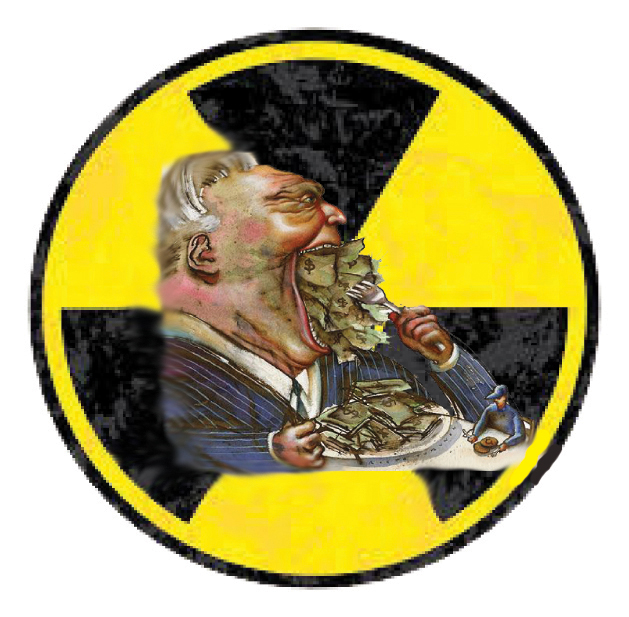
More Nuclear, Less Ground Attack in Biden’s Air Force Budget Request
The 2023 spending proposal calls for retiring 150 planes, shifting funds, and reconfiguring for possible war with China or Russia. Defense One MARCUS WEISGERBER and TARA COPP | MARCH 28, 2022
U.S. Air Force leaders want to shed hundreds of “unnecessary” aircraft and drones and spend more on nuclear and high-tech weapons they say are better suited for a war with China or Russia.
They lay out their proposal in the service’s $169 billion 2023 spending request, which is $13.2 billion higher than last year’s request.
The weapons they prioritize—nuclear and long-range strike—reflect an unsteady year in which China launched a hypersonic missile around the globe and Russia put its own nuclear forces on heightened alert while invading Ukraine.
The Air Force’s budget request is “more about transformation now than it is about evolutionary change. What drives that is the threat. We need to move aggressively,” Air Force Secretary Frank Kendall told reporters before the budget rollout.
To do so, the service is asking for approval to retire 150 aircraft, including eight E-8 JSTARS radar planes, 21 A-10 attack planes, 33 F-22 training jets, 15 E-3 Sentry AWACS-carrying radar planes, 13 KC-135 aerial refueling tankers, 10 C-130H cargo aircraft and 50 T-1 trainers. The Air Force will also reduce its total uniformed personnel number by 4,900 airmen as a result of the cuts, Kendall said. …………………….. In research-and-development, the service is requesting an additional $2.5 billion for the air and land legs of the nuclear triad; a little more than $1 billion of that increase is for ground based strategic deterrent Minuteman III replacement missiles. It also seeks $929 million for the long range standoff weapon, up from $609 billion last year, and $577 million for hypersonic prototyping of the Air-launched Rapid Response Weapon and hypersonic attack cruise missile.
The Air Force is also asking for an additional $1.7 billion for initial production of an unknown number of the next generation B-21 stealth bomber……………………. https://www.defenseone.com/policy/2022/03/more-nuclear-less-ground-attack-bidens-air-force-budget-request/363683/
Space Force Gets Roughly 40% Increase in Biden Request

Space Force Gets Roughly 40% Increase in Biden Request
A constellation of satellites will track ground vehicles, improve launch trajectories, and better nuclear command-and-control.TARA COPP | MARCH 28, 2022
The Space Force is requesting $24.5 billion in the 2023 budget, roughly 40 percent more than in last year’s request. Officials said the jump reflects the urgency to launch and defend satellites that can spot a hypersonic missile, track a moving truck, assure U.S. nuclear command and control, and more. ………
The budget request also includes $566 million for the Space Force’s evolved strategic SATCOM program, which ensures survivable strategic communications for the presidential fleet and DOD’s nuclear command and control aircraft.
“Our general posture has been to assume essentially impunity in space,” Kendall said. “We could put up expensive systems in small numbers, not worrying too much about [them] getting attacked—that era is over.”……………….. https://www.defenseone.com/policy/2022/03/space-force-gets-40-increase-biden-request/363687/
Washington Should Think Twice Before Launching a New Cold War
Heightened rhetoric about Russia and China seeking to undermine American influence will only reinforce Washington’s support for repressive regimes. The consequences of that could, in turn, prove to be potentially disastrous: a growing chorus of pundits and policymakers has suggested that Russia’s invasion of Ukraine marks the beginning of a new Cold War. If so, that means trillions of additional dollars for the Pentagon in the years to come coupled with a more aggressive military posture in every corner of the world. March 27, 2022 William D. Hartung, Nick Cleveland-Stout, Taylor Giorno TOM DISPATCH
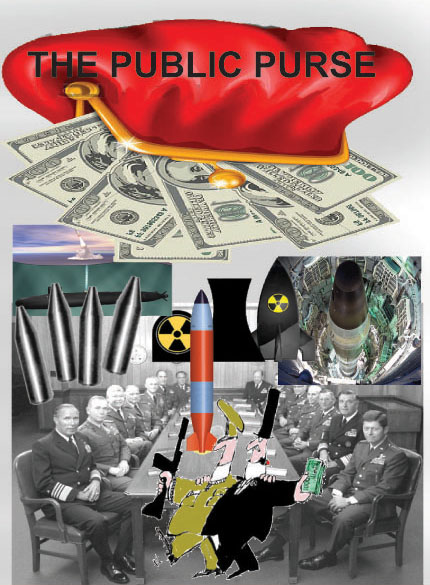
Before this country succumbs to calls for a return to Cold War-style Pentagon spending, it’s important to note that the United States is already spending substantially more than it did at the height of the Korean and Vietnam Wars or, in fact, any other moment in that first Cold War. Even before the invasion of Ukraine began, the Biden administration’s proposed Pentagon budget (as well as related work like nuclear-warhead development at the Department of Energy) was already guaranteed to soar even higher than that, perhaps to $800 billion or more for 2023.
Some supporters of higher Pentagon spending have, in fact, been promoting figures as awe inspiring as they are absurd. Rich Lowry, the editor of the conservative National Review, is advocating a trillion-dollar military budget, while Matthew Kroenig of the Atlantic Council called for the United States to prepare to win simultaneous wars against Russia and China. He even suggested that Congress “could go so far as to double its defense spending” without straining our resources. That would translate into a proposed annual defense budget of perhaps $1.6 trillion. Neither of those astronomical figures is likely to be implemented soon, but that they’re being talked about at all is indicative of where the Washington debate on Pentagon spending is heading in the wake of the Ukraine disaster.
Ex-government officials are pressing for similarly staggering military budgets. As former Reagan-era State Department official and Iran-Contra operative Elliott Abrams argued in a recent Foreign Affairs piece titled “The New Cold War”: “It should be crystal clear now that a larger percentage of GDP [gross domestic product] will need to be spent on defense.” Similarly, in a Washington Post op-ed, former Defense Secretary Robert Gates insisted that “we need a larger, more advanced military in every branch, taking full advantage of new technologies to fight in new ways.” No matter that the U.S. already outspends China by a three-to-one margin and Russia by 10-to-one.
Truth be told, current levels of Pentagon spending could easily accommodate even a robust program of arming Ukraine as well as a shift of yet more U.S. troops to Eastern Europe. However, as hawkish voices exploit the Russian invasion to justify higher military budgets, don’t expect that sort of information to get much traction. At least for now, cries for more are going to drown out realistic views on the subject.
Beyond the danger of breaking the budget and siphoning off resources urgently needed to address pressing challenges like pandemics, climate change, and racial and economic injustice, a new Cold War could have devastating consequences. Under such a rubric, the U.S. would undoubtedly launch yet more military initiatives, while embracing unsavory allies in the name of fending off Russian and Chinese influence.
The first Cold War, of course, reached far beyond Europe, as Washington promoted right-wing authoritarian regimes and insurgencies globally at the cost of millions of lives. Such brutal military misadventures included Washington’s role in coups in Iran, Guatemala, and Chile; the war in Vietnam; and support for repressive governments and proxy forces in Afghanistan, Angola, Central America, and Indonesia. All of those were justified by exaggerated — even at times fabricated — charges of Soviet involvement in such countries and the supposed need to defend “the free world,” a Cold War term President Biden all-too-ominously revived in his recent State of the Union address (assumedly, yet another sign of things to come).
Indeed, his framing of the current global struggle as one between “democracies and autocracies” has a distinctly Cold War ring to it and, like the term “free world,” it’s riddled with contradictions. After all, from Egypt to Saudi Arabia, the United Arab Emirates to the Philippines, all too many autocracies and repressive regimes already receive ample amounts of U.S. weaponry and military training — no matter that they continue to pursue reckless wars or systematically violate the human rights of their own people. Washington’s support is always premised on the role such regimes supposedly play in fighting against or containing the threats of the moment, whether Iran, China, Russia, or some other country.
Count on one thing: the heightened rhetoric about Russia and China seeking to undermine American influence will only reinforce Washington’s support for repressive regimes. The consequences of that could, in turn, prove to be potentially disastrous.
Before Washington embarks on a new Cold War, it’s time to remind ourselves of the global consequences of the last one.
Cold War I: The Coups
……… In 1954, the Eisenhower administration launched a coup that overthrew the Guatemalan government of President Jacobo Arbenz. His “crime”: attempting to redistribute to poor peasants some of the lands owned by major landlords, including the U.S.-based United Fruit Company. Arbenz’s internal reforms were falsely labeled communism-in-the-making and a case of Soviet influence creeping into the Western Hemisphere……In 1954, the Eisenhower administration launched a coup that overthrew the Guatemalan government of President Jacobo Arbenz. His “crime”: attempting to redistribute to poor peasants some of the lands owned by major landlords, including the U.S.-based United Fruit Company. Arbenz’s internal reforms were falsely labeled communism-in-the-making and a case of Soviet influence creeping into the Western Hemisphere.
In 1973, Richard Nixon and Henry Kissinger followed Eisenhower’s playbook by fomenting a coup that overthrew the democratically elected socialist government of Chilean President Salvador Allende, installing the vicious dictatorship of General Augusto Pinochet………..
Vietnam and Its Legacy
The most devastating Cold War example of a war justified on anti-communist grounds was certainly the disastrous U.S. intervention in Vietnam. ……………………………..
The defeat in Vietnam helped spawn what was called the Nixon Doctrine, which eschewed large-scale intervention in favor of the arming of American surrogates like the Shah of Iran and the Suharto regime in Indonesia. ………………….
Chief among this country’s blunders of that previous Cold War era was its response to the Soviet invasion of Afghanistan, a policy that still haunts America today……………………..
most of the Cold War policies outlined above, even though carried out under the rubric of promoting “freedom” in “the free world,” would undermine democracy in a disastrous fashion.
A New Cold War?
Cold War II, if it comes to pass, is unlikely to simply follow the pattern of Cold War I either in Europe or other parts of the world. Still, the damage done by the “good versus evil” worldview that animated Washington’s policies during the Cold War years should be a cautionary tale. The risk is high that the emerging era could be marked by persistent U.S. intervention or interference in Africa, Asia, and Latin America in the name of staving off Russian and Chinese influence in a world where Washington’s disastrous war on terrorism has never quite ended.
The United States already has more than 200,000 troops stationed abroad, 750 military bases scattered on every continent except Antarctica, and continuing counterterrorism operations in 85 countries. The end of U.S. military involvement in Afghanistan and the dramatic scaling back of American operations in Iraq and Syria should have marked the beginning of a sharp reduction in the U.S. military presence in the Middle East and elsewhere. Washington’s reaction to the Russian invasion of Ukraine may now stand in the way of just such a much-needed military retrenchment.
The “us versus them” rhetoric and global military maneuvering likely to play out in the years to come threaten to divert attention and resources from the biggest risks to humanity, including the existential threat posed by climate change. It also may divert attention from a country — ours — that is threatening to come apart at the seams. To choose this moment to launch a new Cold War should be considered folly of the first order, not to speak of an inability to learn from history. https://portside.org/2022-03-27/washington-should-think-twice-launching-new-cold-war
Biden administration shuts down Trump-era nuclear cruise missile program
Biden administration kills Trump-era nuclear cruise missile program
After conducting the upcoming Nuclear Posture Review, the Biden administration has chosen to end the sea-launched cruise missile program, a senior Pentagon official said. Breaking Defense
By VALERIE INSINNAon March 28, 2022 WASHINGTON: In a rare political win for non-proliferation advocates, the Biden administration has cancelled the Sea-Launched Cruise Missile-Nuclear program, one of the two new nuclear weapons greenlit by the Trump administration.
The Pentagon’s fiscal year 2023 budget request, released today, zeroes out funding planned for the so-called SLCM-N program, according to a senior defense official who spoke to reporters about the spending proposal.
“Really this decision came out of the Nuclear Posture Review,” the official said. “There was direction from the president to reduce the role of nuclear weapons in our defense strategy. That [decision to cancel SLCM-N] was a component.”
The determination is the latest in a back-and-forth spanning multiple administrations about the utility of a nuclear-armed cruise missile that could be launched from destroyers or Virginia-class attack submarines that typically use conventional weapons.
The Obama administration’s 2010 Nuclear Posture Review called on the Navy to sunset the nuclear-version of its Tomahawk cruise missile, which was retired by 2013, according to the Federation of American Scientists.………………………..
Despite the cancellation of SLCM-N, funding for other nuclear programs flourished in the FY23 request.
| When asked about the fate of the W76-2, the senior defense official responded that there is “no change there,” hinting that the upcoming Nuclear Posture Review — due to be released in the coming weeks — will continue to support the low-yield warhead.According to a department fact sheet on the budget, the Pentagon requested a total of $34.4 billion across the nuclear enterprise for FY23, including $4.8 billion for nuclear command, control and communications.The Navy requested $6.3 billion for the Columbia-class submarine, its leg of the nuclear triad. Meanwhile, the Air Force is also modernizing its two components of the triad, asking $5 billion for the B-21 bomber program and $3.6 billion for the Ground Based Strategic Deterrent program that will replace Minuteman III intercontinental missiles https://breakingdefense.com/2022/03/biden-administration-kills-trump-era-nuclear-cruise-missile-program |
Nearly half of Americans concerned about nuclear war amid Russia-Ukraine invasion
Nearly half of Americans concerned about nuclear war amid Russia-Ukraine invasion
by: The Associated Press via Nexstar Media Wire
Mar 28, 2022 WASHINGTON (AP) — Russia’s war on Ukraine has most Americans at least somewhat worried that the U.S. will be drawn directly into the conflict and could be targeted with nuclear weapons, with a new poll reflecting a level of anxiety that has echoes of the Cold War era.
Close to half of Americans say they are very concerned that Russia would directly target the U.S. with nuclear weapons, and an additional three in 10 are somewhat concerned about that, according to the new poll from The Associated Press-NORC Center for Public Affairs Research. Russian President Vladimir Putin placed his country’s nuclear forces on high alert shortly after the Feb. 24 invasion.
Roughly nine in 10 Americans are at least somewhat concerned that Putin might use a nuclear weapon against Ukraine, including about six in 10 who are very concerned……… https://www.wfxrtv.com/news/russia-ukraine-conflict/nearly-half-of-americans-concerned-about-nuclear-war-amid-russia-ukraine-invasion/
Caitlin Johnstone – yes, it’s a proxy war

NATO is a “sphere of influence”. It’s an extension of US imperial power. One of many.
You don’t get to unilaterally create a global dynamic and then cry when other countries respond accordingly. It’s like the US making international law meaningless by continually flouting it with zero consequences and then claiming another country violated international law.
Yes It’s A Proxy War: Notes From The Edge Of The Narrative Matrix https://caitlinjohnstone.substack.com/p/yes-its-a-proxy-war-notes-from-the?s=w Caitlin Johnstone, Mar 27
To be clear, evidence is mounting that this is a proxy war deliberately instigated and perpetuated by the US empire with the goal of ousting Putin. Which means that, despite all the narrative window dressing and spin, this war is just more US regime change interventionism.
Saddam Hussein was not a nice person, and he did bad things. This doesn’t change the fact that Bush’s regime change war was a tremendous evil which unleashed unforgivable horrors, and that it was done because Saddam became inconvenient for the US empire. The same is happening here.
As a result of deliberately provoking this war, the US empire has:
- Manufactured international consent for unprecedented economic warfare geared toward ousting Putin
- Drawn Moscow into another Afghanistan-like military quagmire
- Guaranteed immense profits for the war industry
- Cut in on Russia’s fossil fuel business
- Made Europe further subservient to US interests
People say “This is not a proxy war! How dare you call this a proxy war?”
Pouring billions of dollars worth of weaponry into a foreign nation to be used by CIA-trained fighters with the direct ongoing assistance of US military intelligence is in fact the exact thing that a proxy war is. That is what those words mean.
Continue readingNorth Korea preparing for its first nuclear test in 5 years
North Korea ‘is preparing for its first nuclear test in five years’ just
days after testing ‘monster’ ballistic missile that can reach anywhere in
the US.
Daily Mail 27th March 2022
1 This Month





PLEASE OPPOSE HR 8255 AND S.3639 – bills would accelerate satellite deployment, with no environmental review or safeguards – https://ncstd5li.quorum.us/campaign/169331/
To see nuclear-related stories in greater depth and intensity – go to https://nuclearinformation.wordpress.com
-
Archives
- October 2026 (39)
- September 2026 (339)
- August 2026 (330)
- July 2026 (355)
- June 2026 (287)
- May 2026 (306)
- April 2026 (356)
- March 2026 (251)
- February 2026 (267)
- January 2026 (308)
- December 2025 (358)
- November 2025 (359)
-
Categories
- 1
- 1 NUCLEAR ISSUES
- business and costs
- climate change
- culture and arts
- ENERGY
- environment
- health
- history
- indigenous issues
- Legal
- marketing of nuclear
- media
- opposition to nuclear
- PERSONAL STORIES
- politics
- politics international
- Religion and ethics
- safety
- secrets,lies and civil liberties
- spinbuster
- technology
- Uranium
- wastes
- weapons and war
- Women
- 2 WORLD
- ACTION
- AFRICA
- Atrocities
- AUSTRALIA
- Christina's notes
- Christina's themes
- culture and arts
- Events
- Fuk 2022
- Fuk 2023
- Fukushima 2017
- Fukushima 2018
- fukushima 2019
- Fukushima 2020
- Fukushima 2021
- general
- global warming
- Humour (God we need it)
- Nuclear
- RARE EARTHS
- Reference
- resources – print
- Resources -audiovicual
- Weekly Newsletter
- World
- World Nuclear
- YouTube
-
RSS
Entries RSS
Comments RSS

